
Radiographer role extension a paradigm shift in practice
- Slides: 24
Radiographer role extension: a paradigm shift in practice. S Mathers*+, G Mc. Kenzie*, +The Health Services Research Group, The Robert Gordon University, *NHS Grampian Aberdeen, Scotland, UK.
Factors leading to radiographer role extension Political - NHS organisations are accountable for continuously improving the quality of the service - New roles are encouraged to demonstrate innovations and (hopefully) improve quality A First-class Service, Quality in the NHS, 1998
Staff ‘The traditional demarcations between staff have held services back. . . the provision of health services should depend on the ability of the staff, not their job title. ’ A Health Service for All Talents – Developing the NHS Workforce, Dept of Health, 2000
Radiology - serious shortage of radiologists increasing waiting lists for procedures year on year increase of examinations performed additional demands on radiologist’s time
Guidance on delegation of tasks Medical practitioners may delegate medical care to non-medical health care staff – but the MP must be sure that the staff are competent. . . to carry out that task. Such health care workers must be accountable to a statutory body, i. e. state registered. GMC, Good Medical Practice, 1995
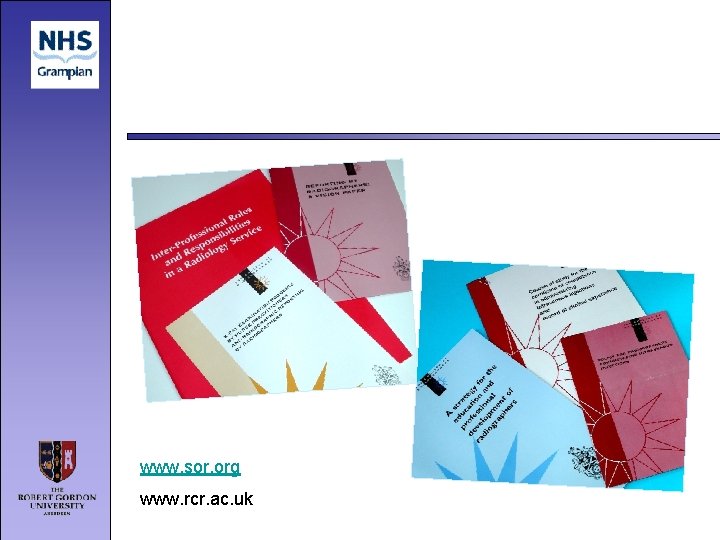
www. sor. org www. rcr. ac. uk
Main areas of role extension • In the areas of - GI, e. g. radiographer performed barium enemas - Ultrasound, e. g. general diagnostic US, O&G • Intravenous injections of contrast media - IVU, CT, nuclear medicine • Reporting of images - skeletal, US, GI, nuclear medicine, mammography, • Angiography, e. g. peripheral angiograms
Training • Initially hospital based – e. g. St James’ Leeds Barium Enema Course • Courses now University led – e. g. Salford University • You must have a supportive and enthusiastic radiologist
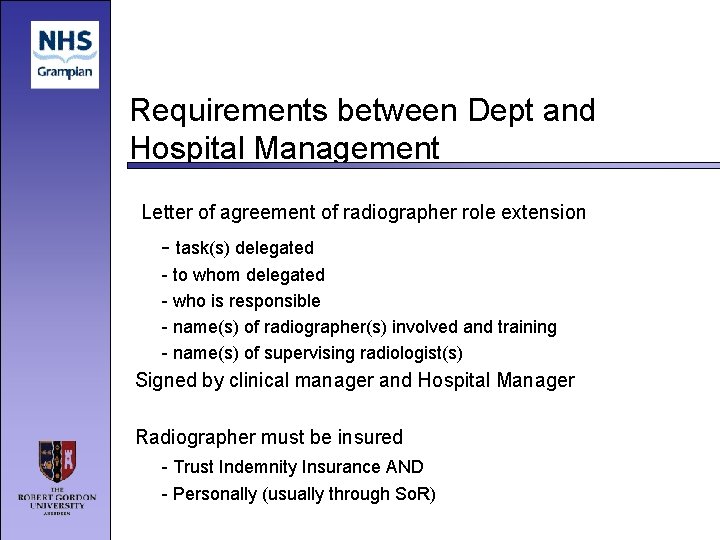
Requirements between Dept and Hospital Management Letter of agreement of radiographer role extension - task(s) delegated - to whom delegated - who is responsible - name(s) of radiographer(s) involved and training - name(s) of supervising radiologist(s) Signed by clinical manager and Hospital Manager Radiographer must be insured - Trust Indemnity Insurance AND - Personally (usually through So. R)
Radiographers experience of performing barium enemas The main aims were to: - determine characteristics of radiographers who performed BE - establish current practices - ascertain benefits and drawbacks of performing BE
Study design Sample - convenience sample of 68 radiographers (GIRSIG members) Postal questionnaires - total of 20 questions (17 closed) in 3 sections performing BE other duties personal information
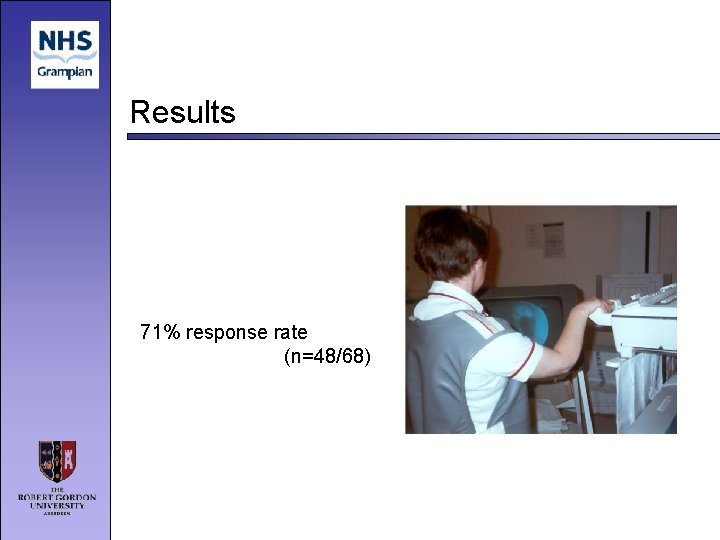
Results 71% response rate (n=48/68)
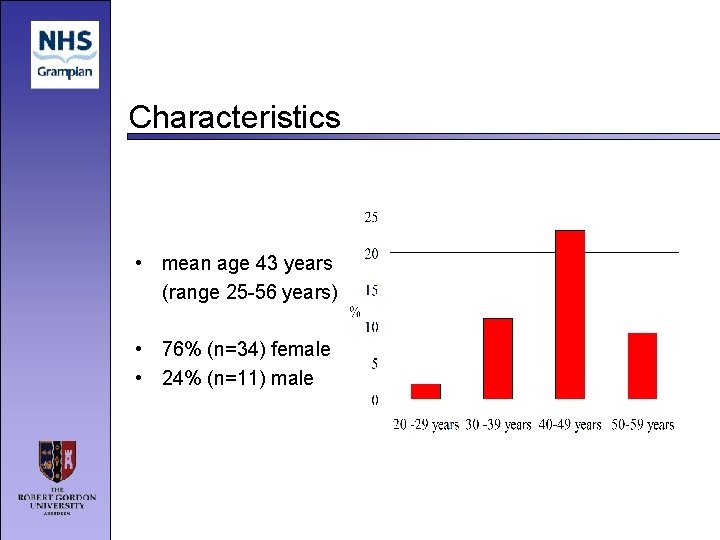
Characteristics • mean age 43 years (range 25 -56 years) • 76% (n=34) female • 24% (n=11) male
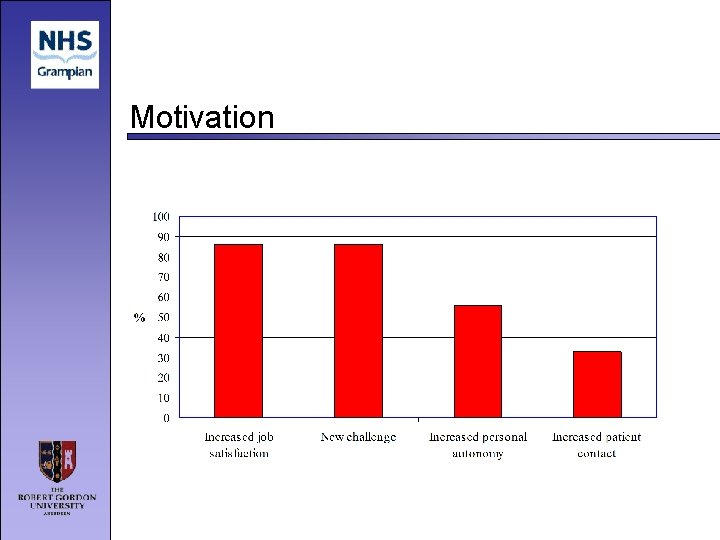
Motivation
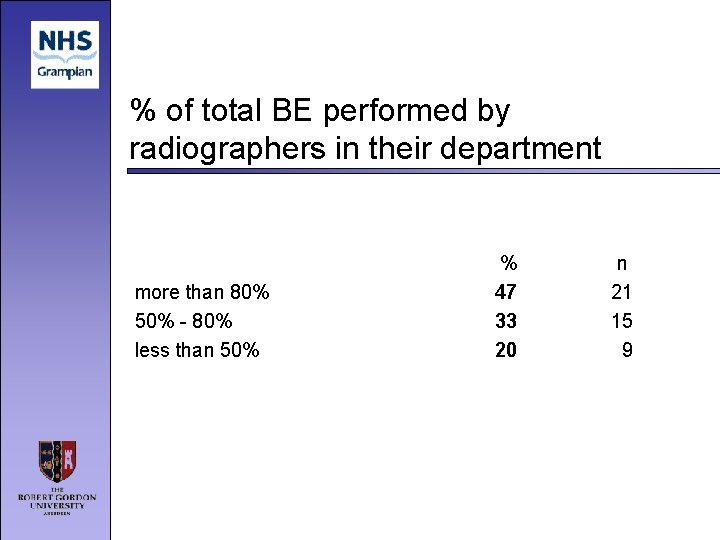
% of total BE performed by radiographers in their department more than 80% 50% - 80% less than 50% % 47 33 20 n 21 15 9
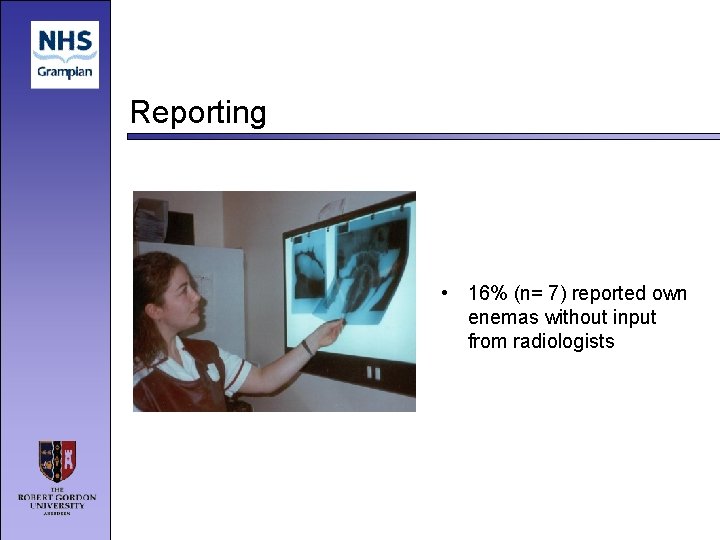
Reporting • 16% (n= 7) reported own enemas without input from radiologists
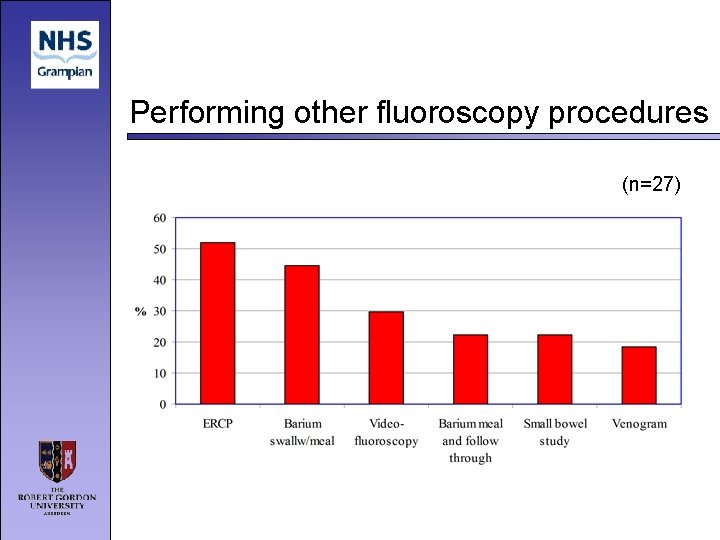
Performing other fluoroscopy procedures (n=27)
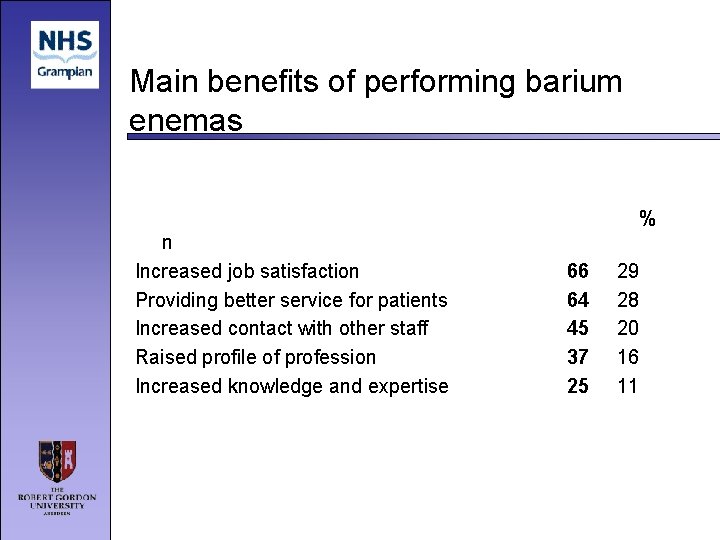
Main benefits of performing barium enemas % n Increased job satisfaction Providing better service for patients Increased contact with other staff Raised profile of profession Increased knowledge and expertise 66 64 45 37 25 29 28 20 16 11
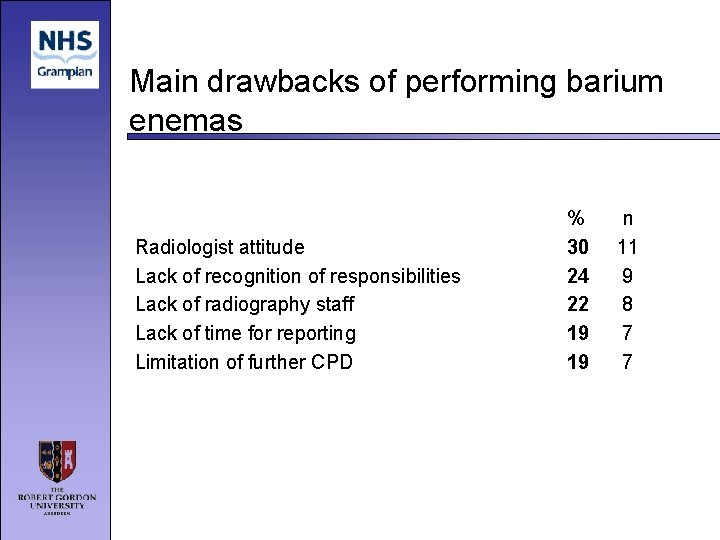
Main drawbacks of performing barium enemas Radiologist attitude Lack of recognition of responsibilities Lack of radiography staff Lack of time for reporting Limitation of further CPD % 30 24 22 19 19 n 11 9 8 7 7
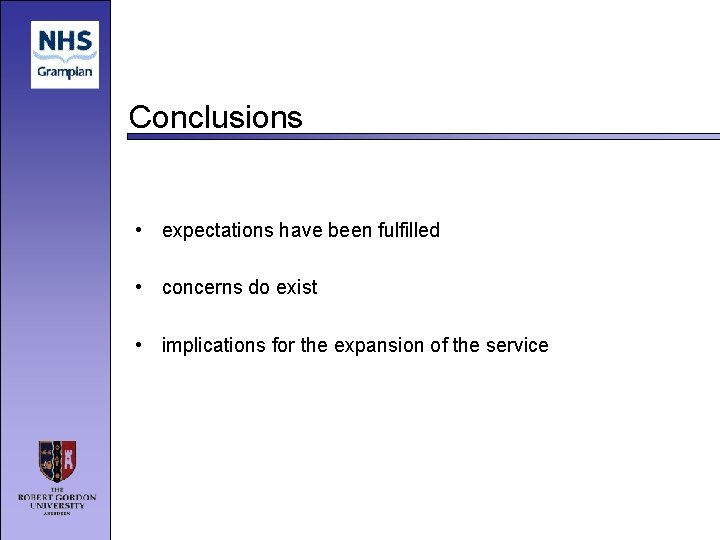
Conclusions • expectations have been fulfilled • concerns do exist • implications for the expansion of the service
BUT there are obstacles • reluctance of radiologists to delegate tasks • increasing shortage of radiographers • reluctance of radiographers to embrace the use of assistant practitioners
Experience outside UK USA - since 2003 training courses for technologists to perform BE, intravenous injections etc - they will be known as radiologist assistants - do not want to report New Zealand - radiographers performing BE
Conclusions • radiographers role extension becoming the norm in UK • number of specialty area increasing • increasing job satisfaction • new career pathways for radiographers – – Assistant practitioner Practitioner Advanced practitioner Consultant
Paradigm shift? Radiographers should provide the utmost service for radiologists Furby, Radiography, 1944 Radiographers can distinguish between normal and abnormal Swinburne, Lancet, 1971 Radiographers can report fracture radiographs Loughran, BJR, 1994 Radiographer performed BE provide an excellent quality examination with results comparing favourably with published data (for radiologists) Law et al, Clin Rad, 2002