
Radioactivity Nuclear Energy A Review of Atomic Terms
- Slides: 27
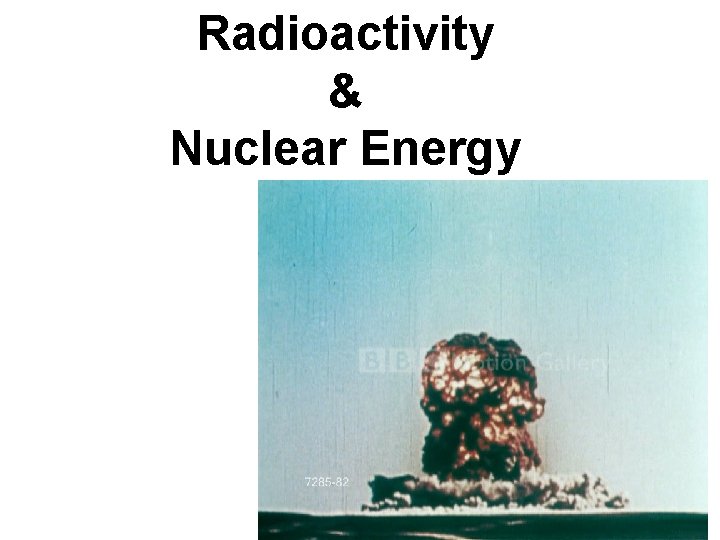
Radioactivity & Nuclear Energy
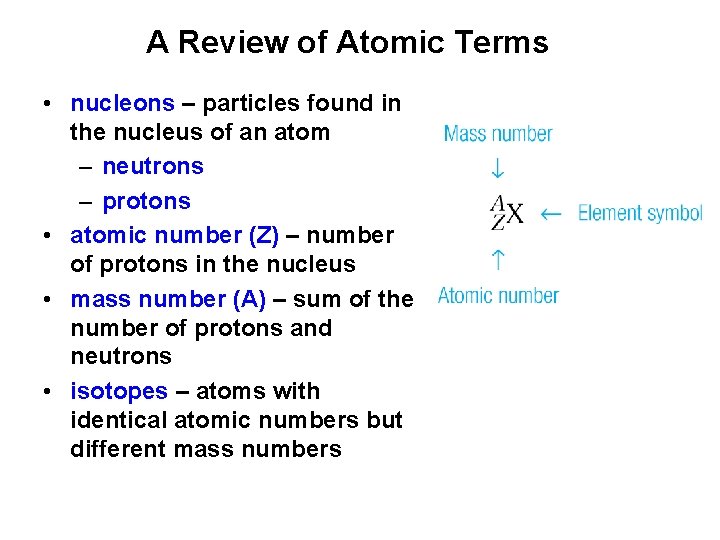
A Review of Atomic Terms • nucleons – particles found in the nucleus of an atom – neutrons – protons • atomic number (Z) – number of protons in the nucleus • mass number (A) – sum of the number of protons and neutrons • isotopes – atoms with identical atomic numbers but different mass numbers
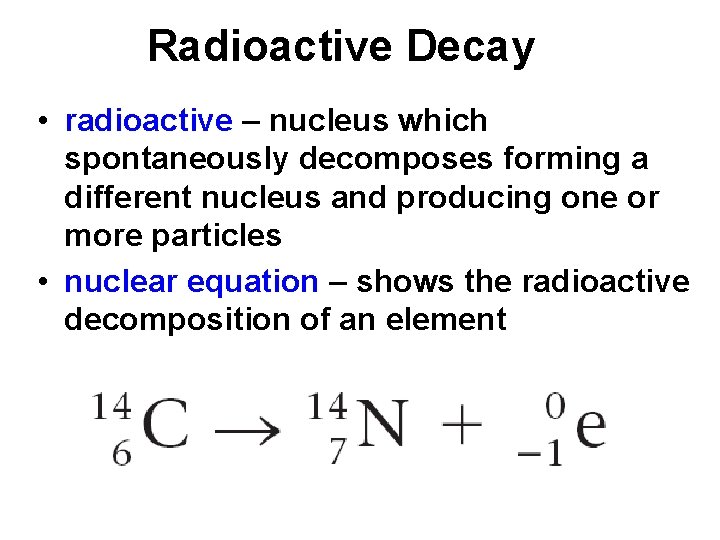
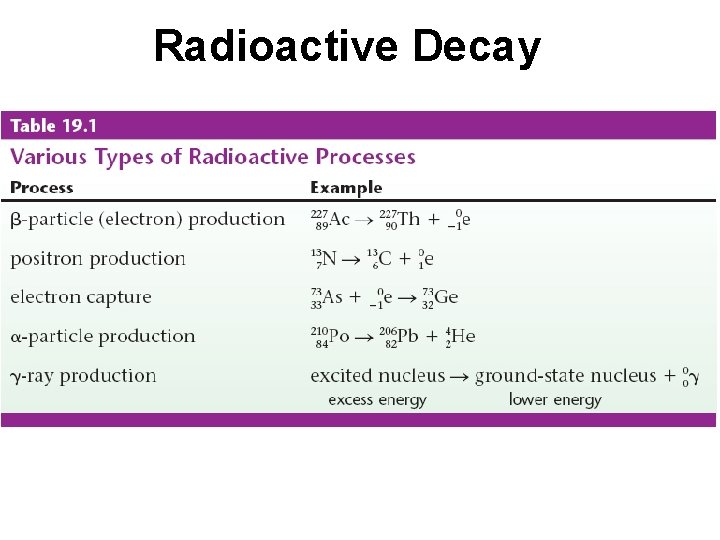
Radioactive Decay • radioactive – nucleus which spontaneously decomposes forming a different nucleus and producing one or more particles • nuclear equation – shows the radioactive decomposition of an element
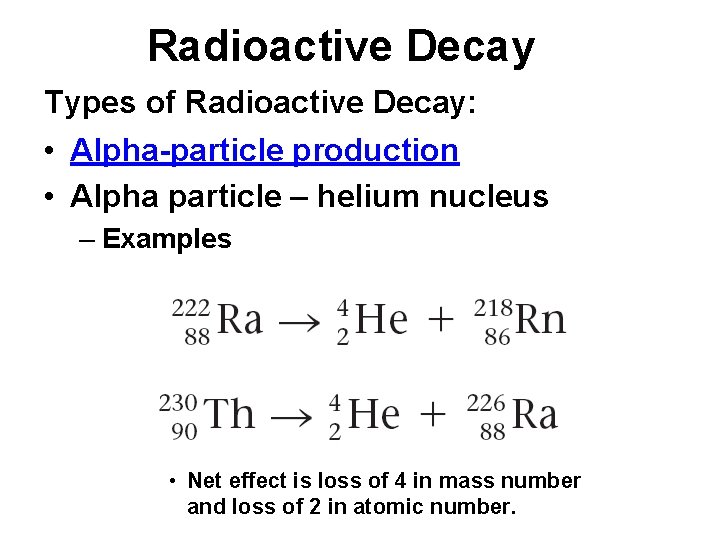
Radioactive Decay Types of Radioactive Decay: • Alpha-particle production • Alpha particle – helium nucleus – Examples • Net effect is loss of 4 in mass number and loss of 2 in atomic number.
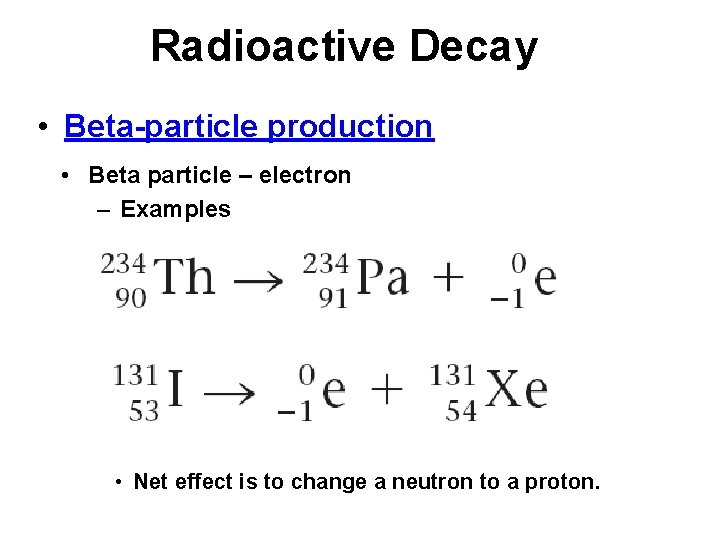
Radioactive Decay • Beta-particle production • Beta particle – electron – Examples • Net effect is to change a neutron to a proton.
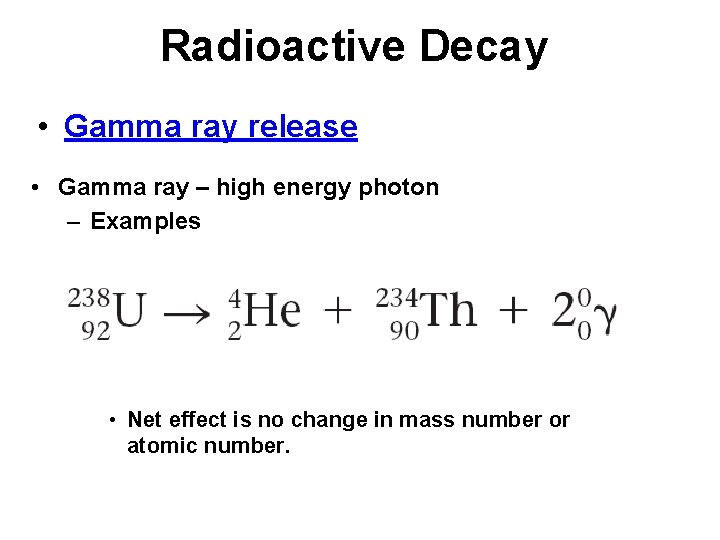
Radioactive Decay • Gamma ray release • Gamma ray – high energy photon – Examples • Net effect is no change in mass number or atomic number.
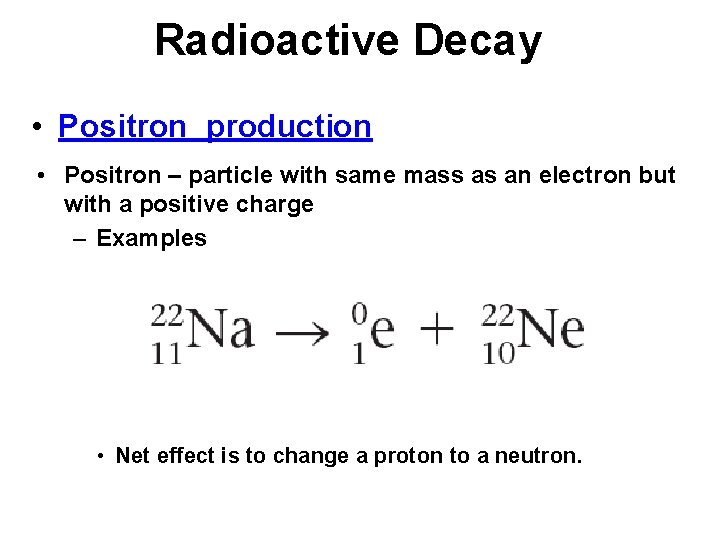
Radioactive Decay • Positron production • Positron – particle with same mass as an electron but with a positive charge – Examples • Net effect is to change a proton to a neutron.
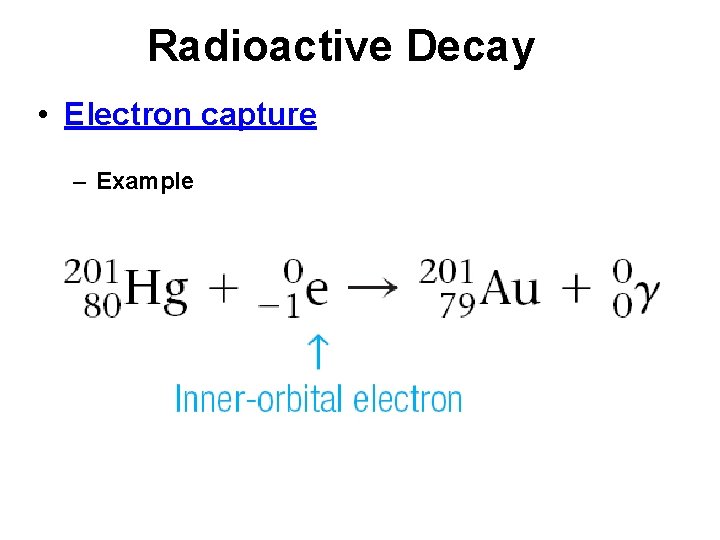
Radioactive Decay • Electron capture – Example
Assignment • Questions: p. 678 / 1 -6 p. 682 / 1 -4
Radioactive Decay
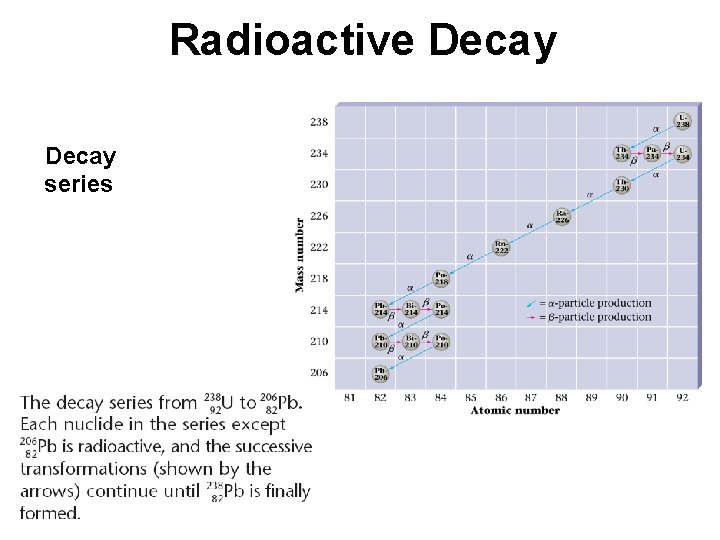
Radioactive Decay series
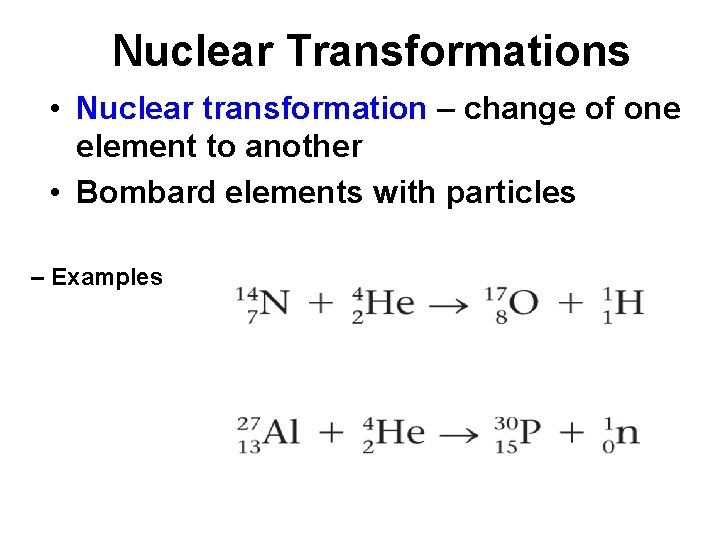
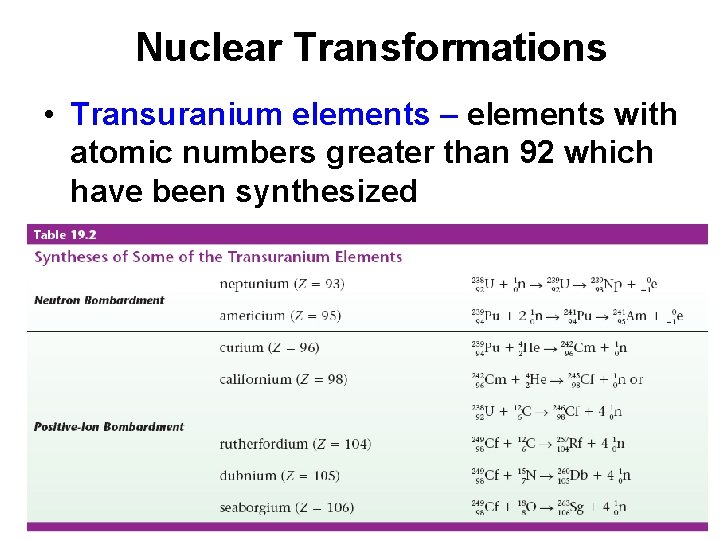
Nuclear Transformations • Nuclear transformation – change of one element to another • Bombard elements with particles – Examples
Nuclear Transformations • Transuranium elements – elements with atomic numbers greater than 92 which have been synthesized
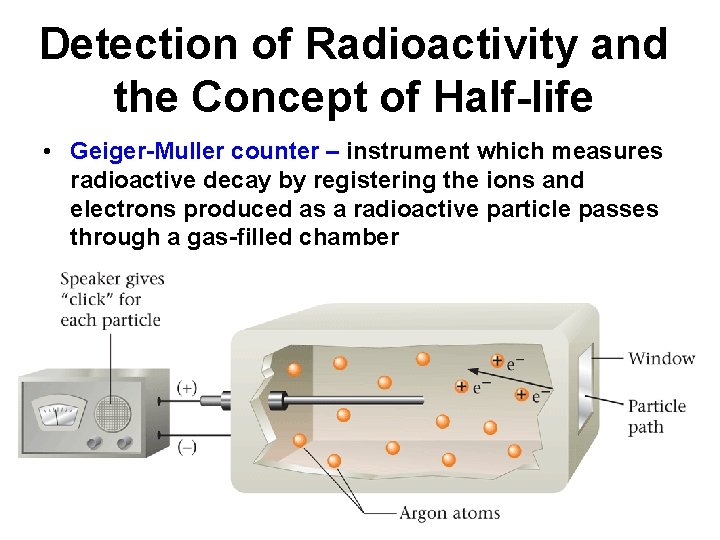
Detection of Radioactivity and the Concept of Half-life • Geiger-Muller counter – instrument which measures radioactive decay by registering the ions and electrons produced as a radioactive particle passes through a gas-filled chamber
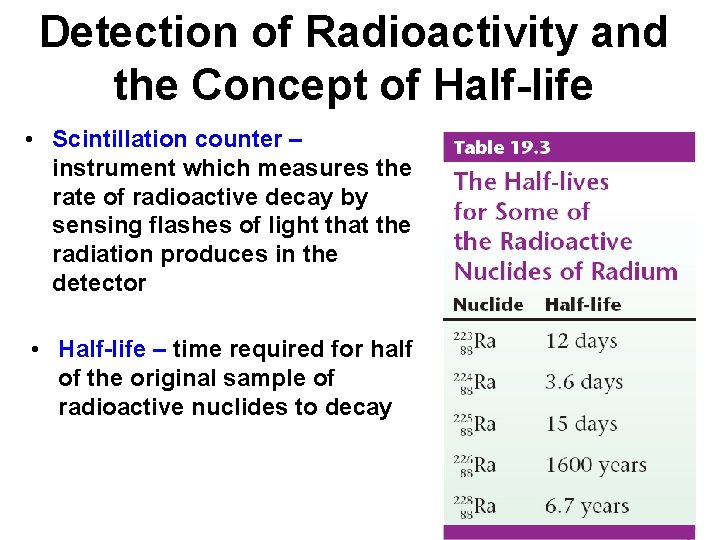
Detection of Radioactivity and the Concept of Half-life • Scintillation counter – instrument which measures the rate of radioactive decay by sensing flashes of light that the radiation produces in the detector • Half-life – time required for half of the original sample of radioactive nuclides to decay
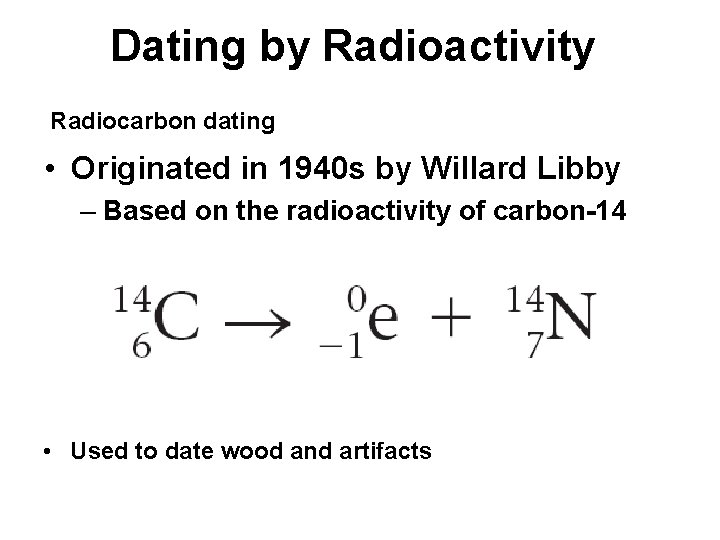
Dating by Radioactivity Radiocarbon dating • Originated in 1940 s by Willard Libby – Based on the radioactivity of carbon-14 • Used to date wood and artifacts
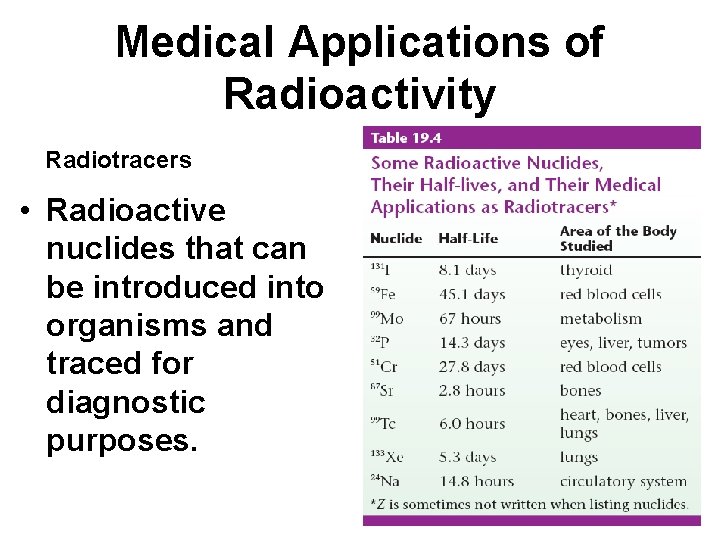
Medical Applications of Radioactivity Radiotracers • Radioactive nuclides that can be introduced into organisms and traced for diagnostic purposes.
Nuclear Energy • Two types of nuclear processes can produce energy – Splitting a heavy nucleus into 2 nuclei with smaller mass numbers - fission – Combining 2 light nuclei to form a heavier nucleus - fusion
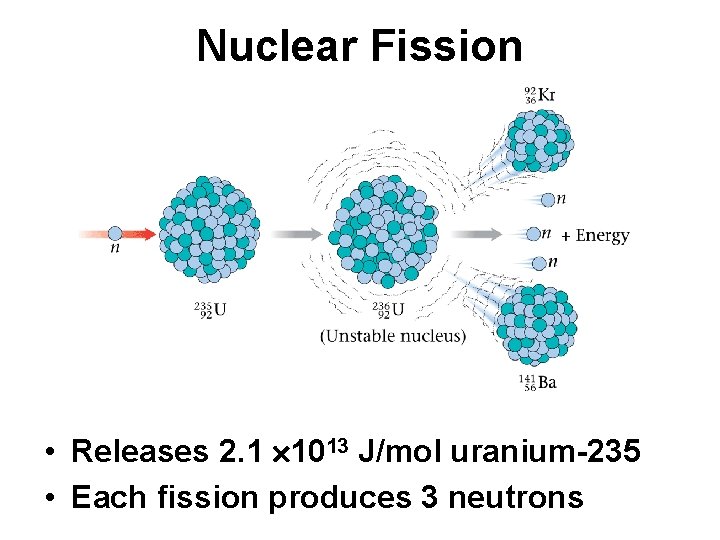
Nuclear Fission • Releases 2. 1 1013 J/mol uranium-235 • Each fission produces 3 neutrons
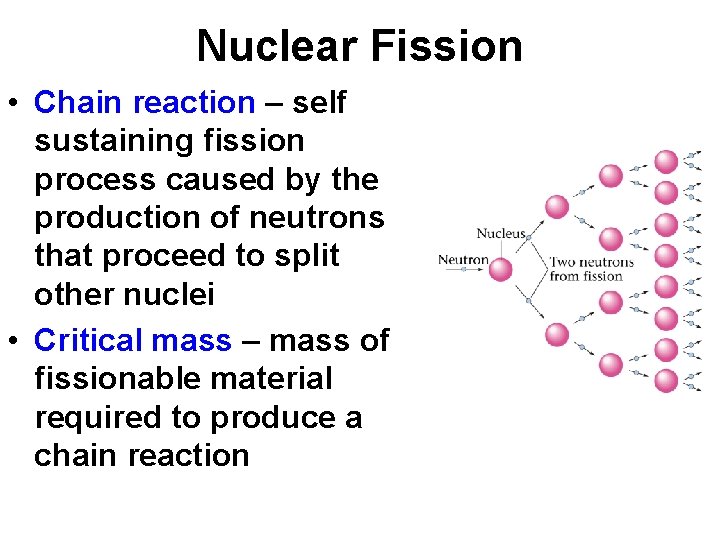
Nuclear Fission • Chain reaction – self sustaining fission process caused by the production of neutrons that proceed to split other nuclei • Critical mass – mass of fissionable material required to produce a chain reaction
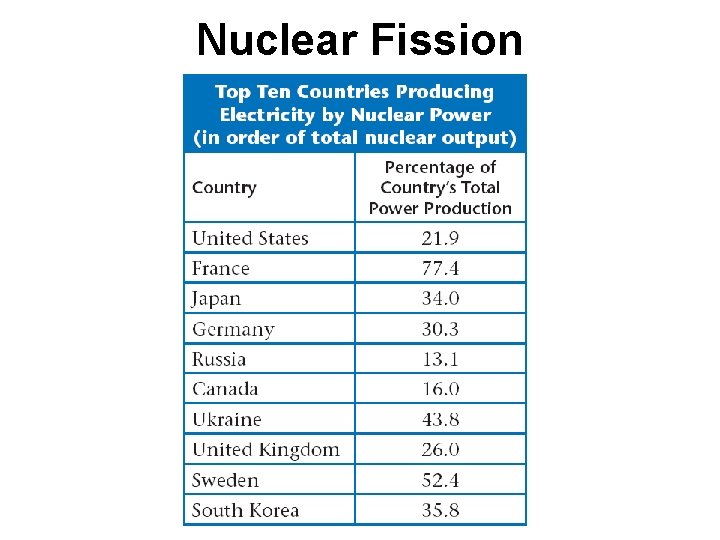
Nuclear Fission
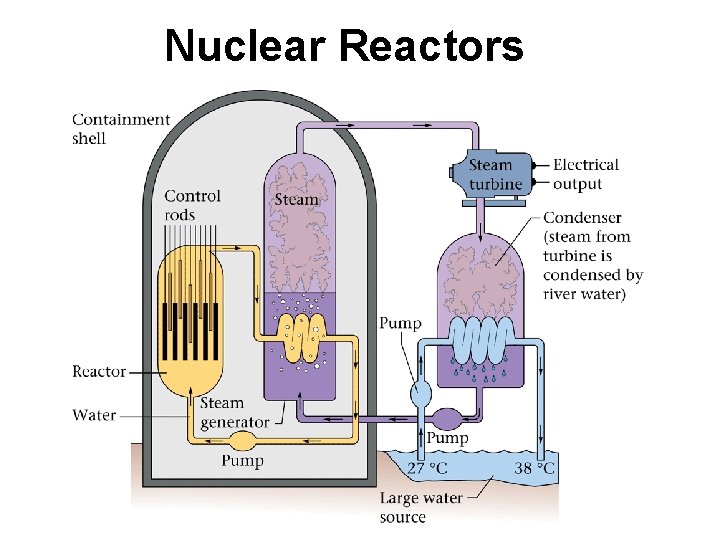
Nuclear Reactors
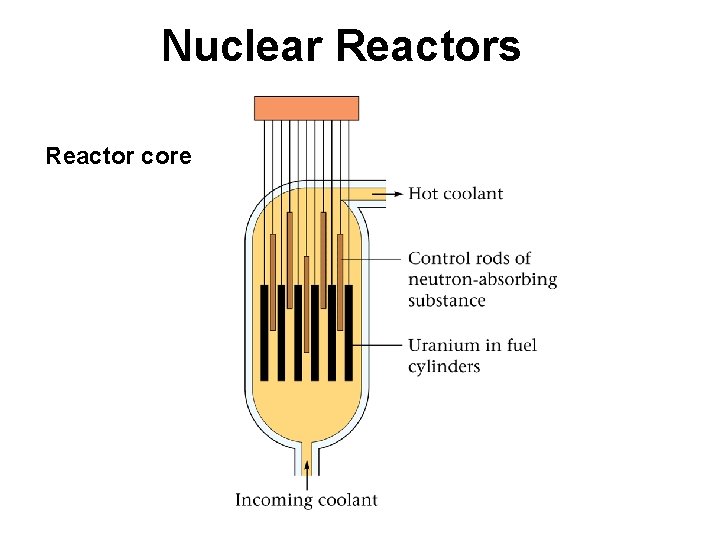
Nuclear Reactors Reactor core
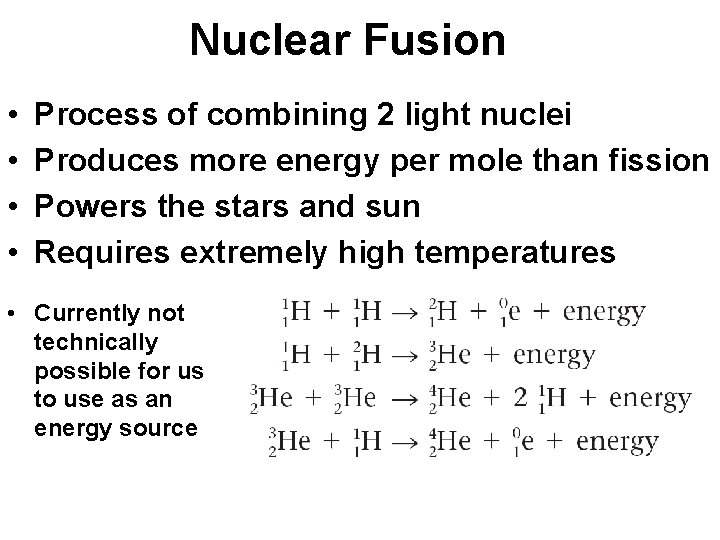
Nuclear Fusion • • Process of combining 2 light nuclei Produces more energy per mole than fission Powers the stars and sun Requires extremely high temperatures • Currently not technically possible for us to use as an energy source
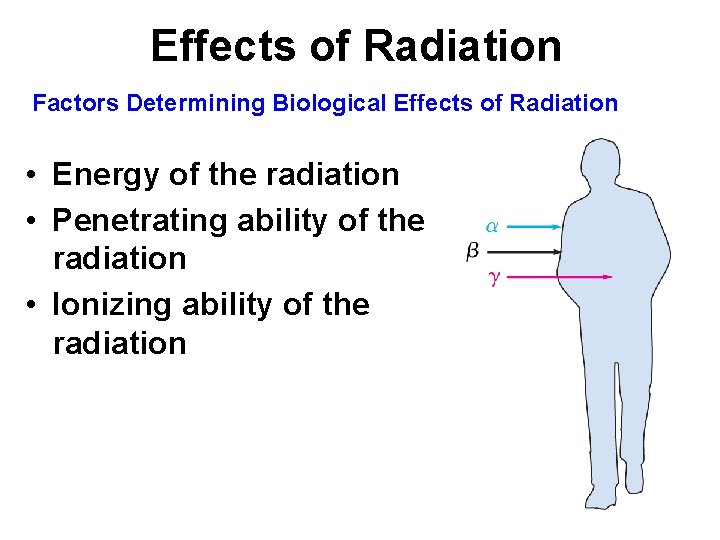
Effects of Radiation Factors Determining Biological Effects of Radiation • Energy of the radiation • Penetrating ability of the radiation • Ionizing ability of the radiation
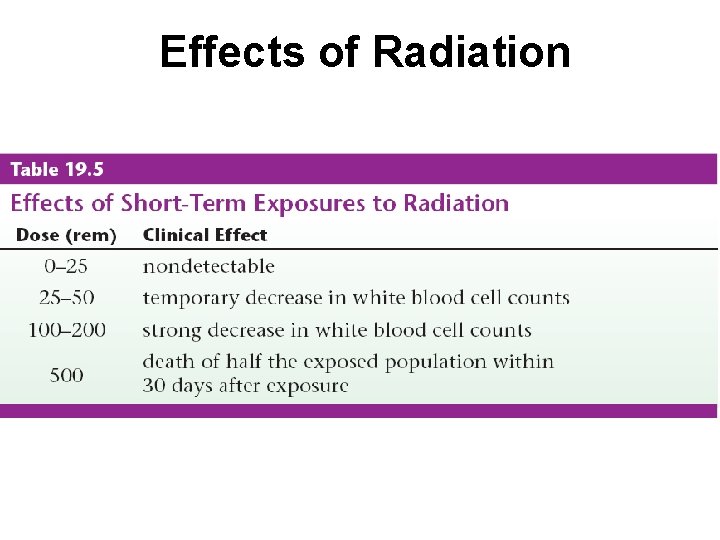
Effects of Radiation
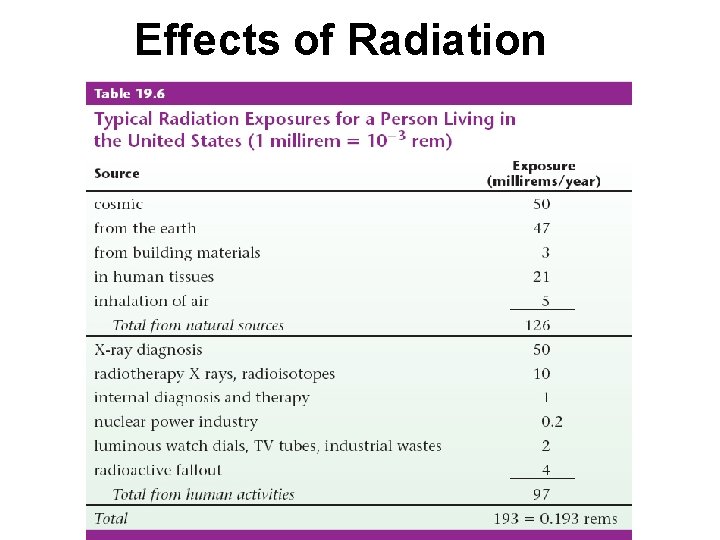
Effects of Radiation