
Radioactive waste in medicine Uro otar univ dipl
- Slides: 32
Radioactive waste in medicine Uroš Čotar, univ. dipl. fiz. , Radiation protection officer Institute of Oncology, Ljubljana
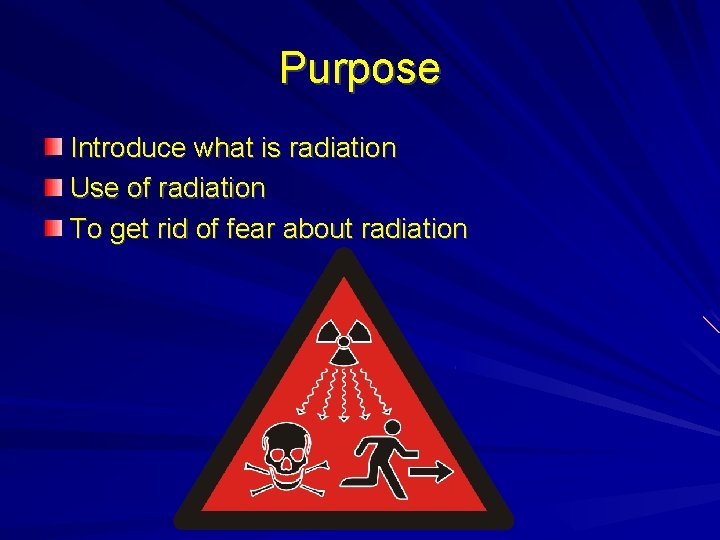
Purpose Introduce what is radiation Use of radiation To get rid of fear about radiation
Contents Definitions Use of radiation Radioactive waste and further procedures Radiation protection
Radiation is all around us! Cosmic radiation, direct radiation from Earth (NORM - natural occuring radioactive material), ingestion from food Radon inhalation: ~1/2 annual dose Artificial sources (medicine, industry): < 10% annual dose Annual dose in Slovenia 2 -3 m. Sv
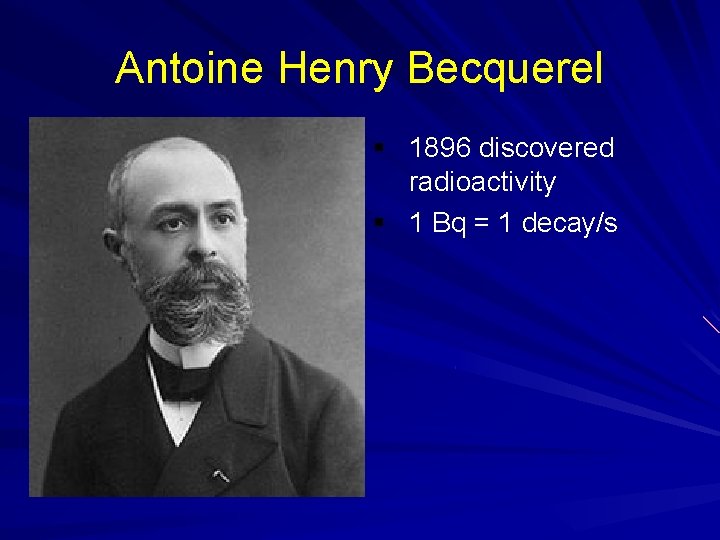
Antoine Henry Becquerel § 1896 discovered radioactivity § 1 Bq = 1 decay/s
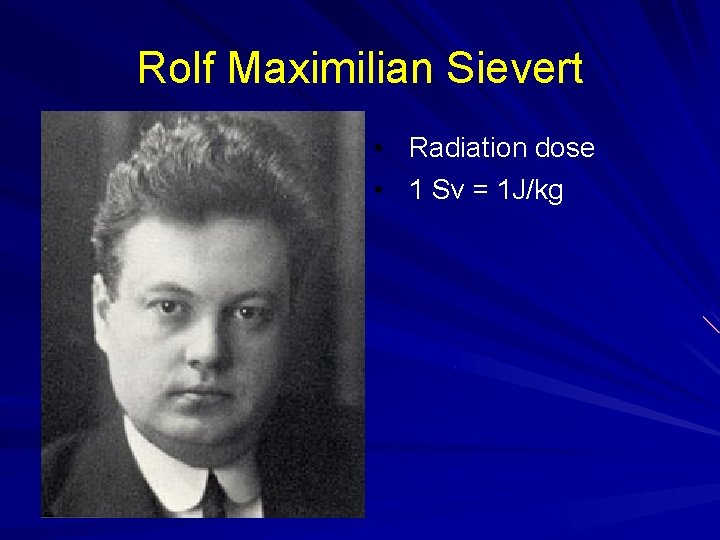
Rolf Maximilian Sievert • Radiation dose • 1 Sv = 1 J/kg
Radiation Non-ionising – can not ionise matter Ionising – enough energy to cause ionisation in matter (> 12 e. V energy, photon wavelenght < 100 nm)
Non-ionising radiation Long waves: electric circuits (50 Hz) Radiowaves: radio, TV, GSM, radio emitters Microwaves: microwave oven IR light: body heat, tungsten light 95%, IR laser (CD, DVD) Visible light: rainbow colours
Ionising radiation - - - Light: UV: part of solar spectrum responsible for skin tanning, Hg lights (solarium), welding, excimer laser for eye (cornea) operation Röntgen (X-rays): RTG machines, cathode tube (TV, CRT monitor), Linac (Linear accelerator) γ rays: radioactive athomic nuclei Particles: α, β, n
Definition of sealed and open source Sealed source – shield is strong enough for radioactive materail to proliferate contamination is not possible in any way during regular work and in case of minor accident Open source – everything which does not correspond to definition above – i. e. liquid in plastic or glass bottle
Use of radioactive sources Diagnostics Therapy Internal calibrations, tests Research
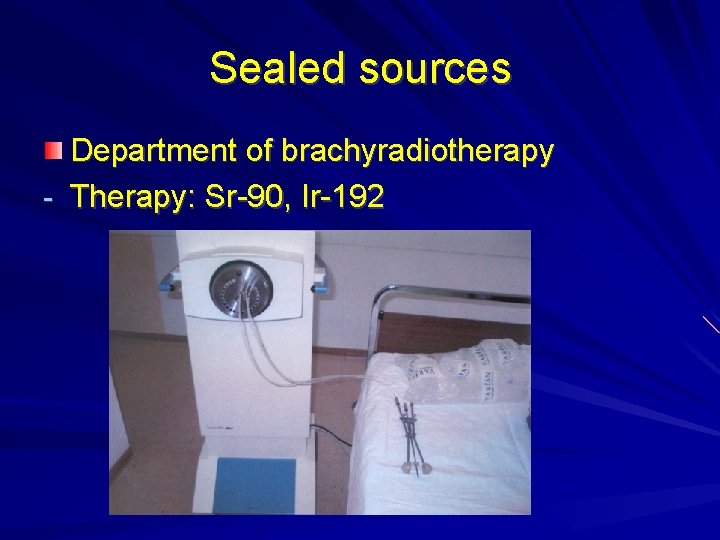
Sealed sources Department of brachyradiotherapy - Therapy: Sr-90, Ir-192
Open sources Department of nuclear medicine Diagnostics: Tc-99 m, I-131, F-18 Therapy: I-131 (β, γ emitter), Ra-223 (α emitter)
Open sources - diagnostics (1) Preparation of radiopharmaceuticals – „hot lab“ Radiopharmaceutical is adminstered to the patient and spreads around in the body Acqusition of photons with γ camera (lymphatic system, thyroid, bones, . . . )
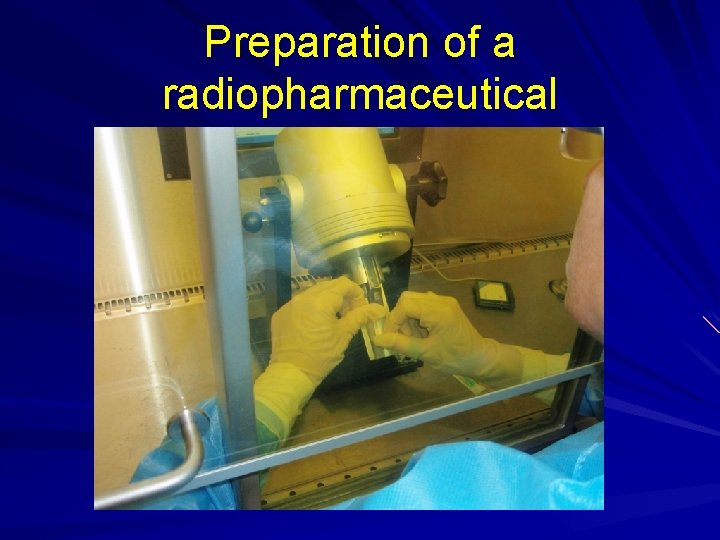
Preparation of a radiopharmaceutical
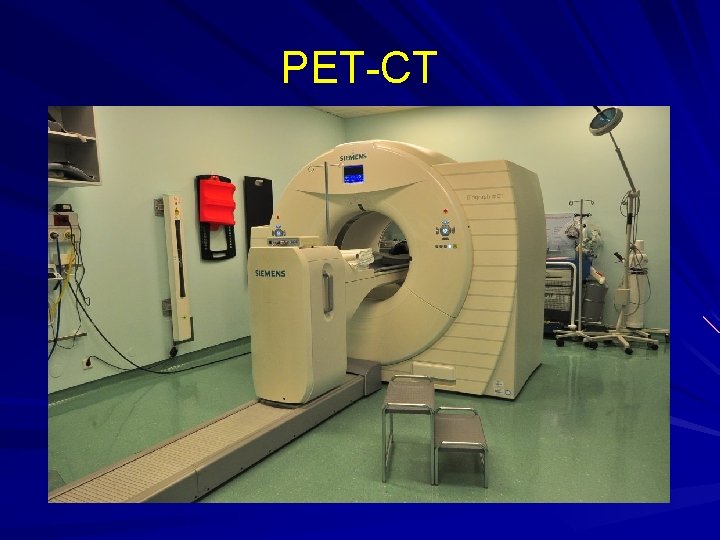
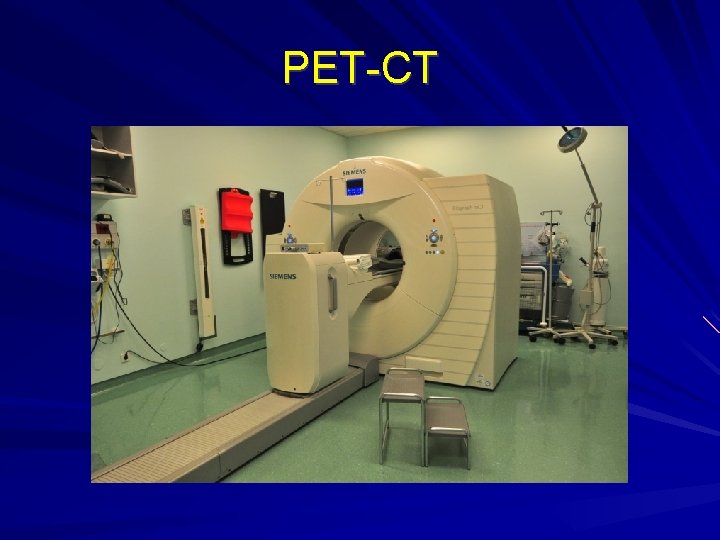
PET-CT
Open sources - diagnostics (2) Isotopes : Tc-99 m, I-131, F-18 Short-lived, decay times from few hours to several days Activity < 1100 MBq Patient is free to go home after the examination
Open sources - therapy Orally administered in capsules (for example I 131 thyroid carcinoma Activity: up to 7. 4 GBq Pacient is hospitalised 3 days on BRT department („iodine rooms“) Activity decreases due to physical decay and excretion of the isotope (physical and biological decay) Restriction by legislation: 800 MBq of remaining activity (50µSv/h @ 1 m)
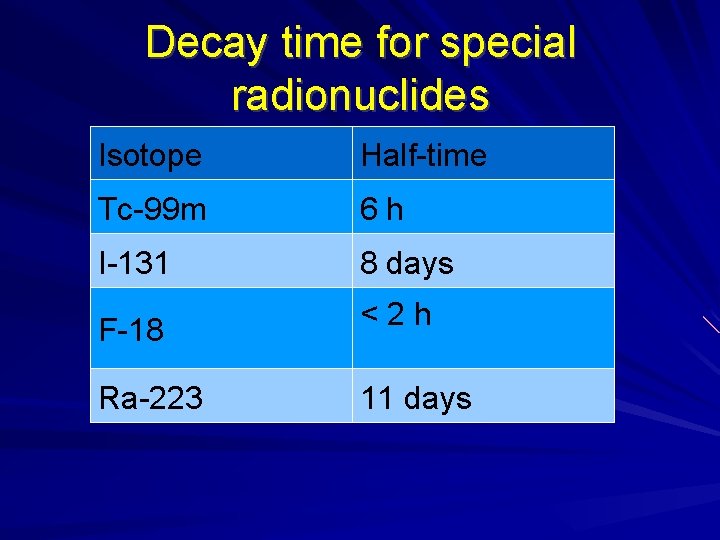
Decay time for special radionuclides Isotope Half-time Tc-99 m 6 h I-131 8 days F-18 Ra-223 <2 h 11 days
PET-CT
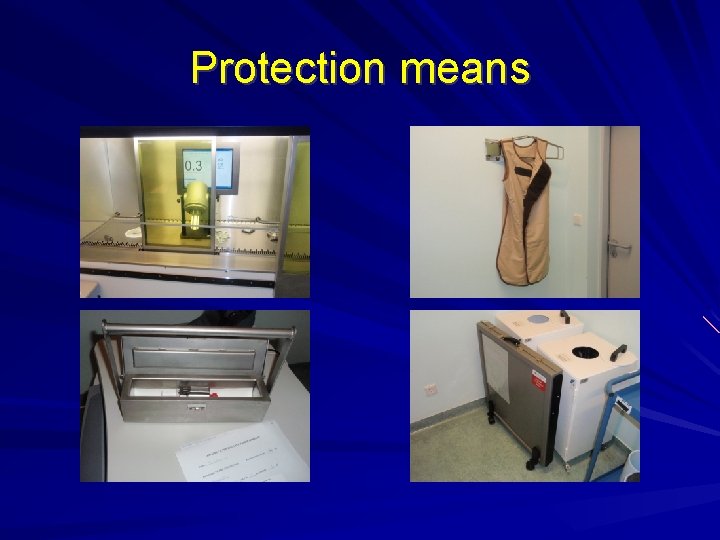
Protection means
Radioactive waste Short lived waste – release after decay Long lived waste: CS RAO (interim storage) → final diposal
Open sources - therapy Orally administered in capsules (for example I 131 thyroid carcinoma Activity: up to 7. 4 GBq Pacient is hospitalised 3 days on BRT department („iodine rooms“) Activity decreases due to physical decay and excretion of the isotope (physical and biological decay) Restriction by legislation: 800 MBq of remaining activity (50µSv/h @ 1 m)
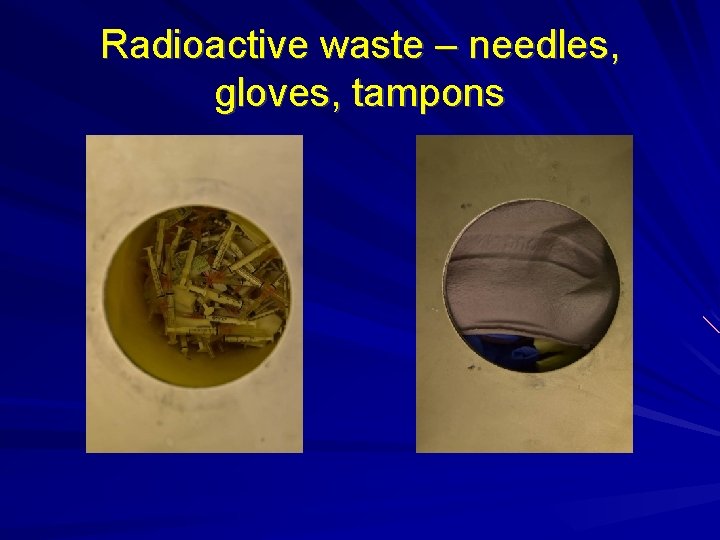
Radioactive waste – needles, gloves, tampons
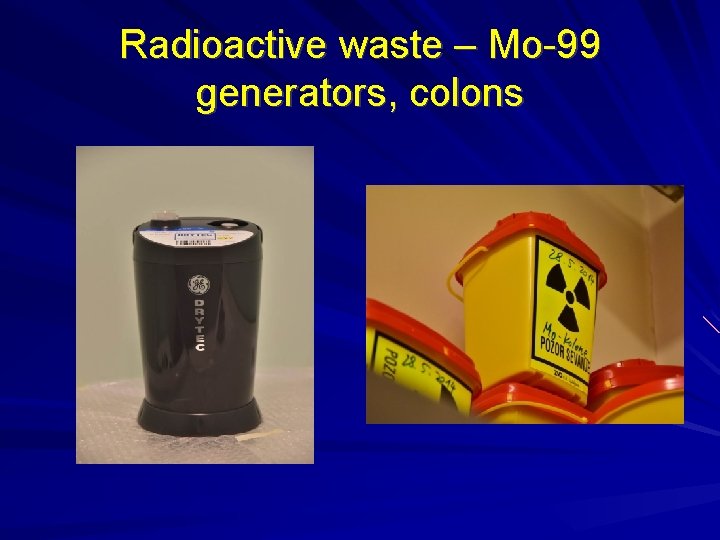
Radioactive waste – Mo-99 generators, colons
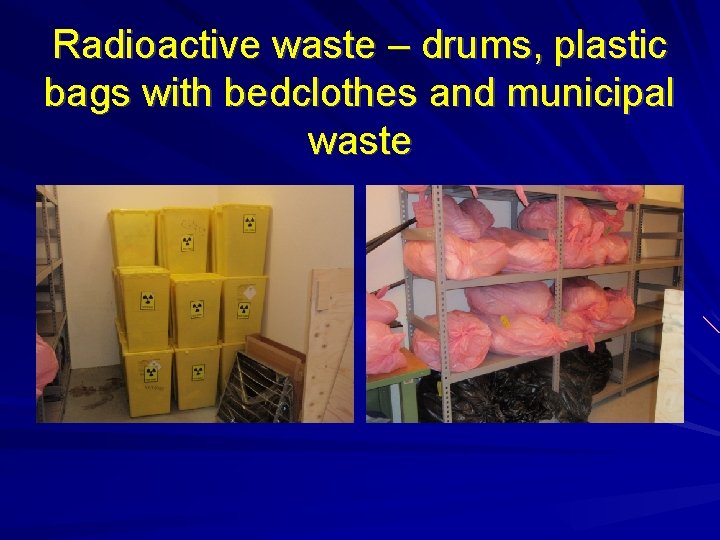
Radioactive waste – drums, plastic bags with bedclothes and municipal waste
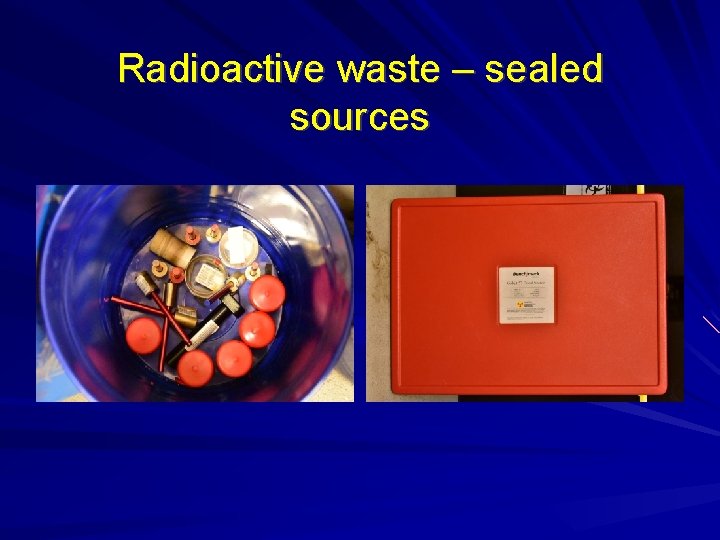
Radioactive waste – sealed sources
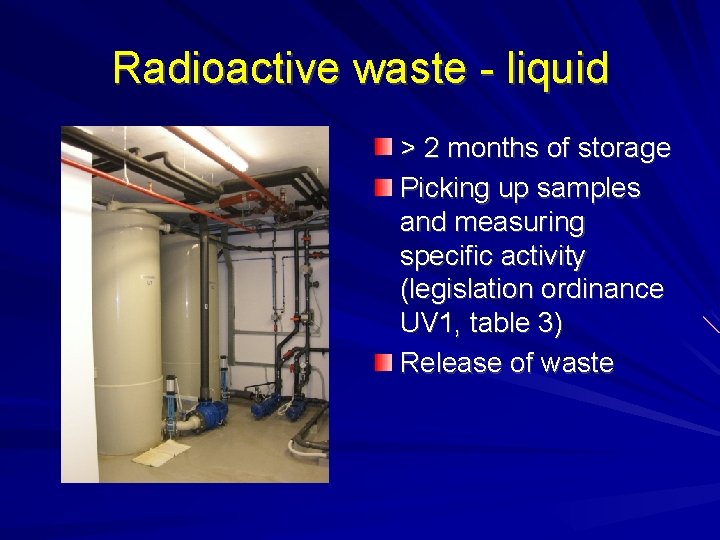
Radioactive waste - liquid > 2 months of storage Picking up samples and measuring specific activity (legislation ordinance UV 1, table 3) Release of waste
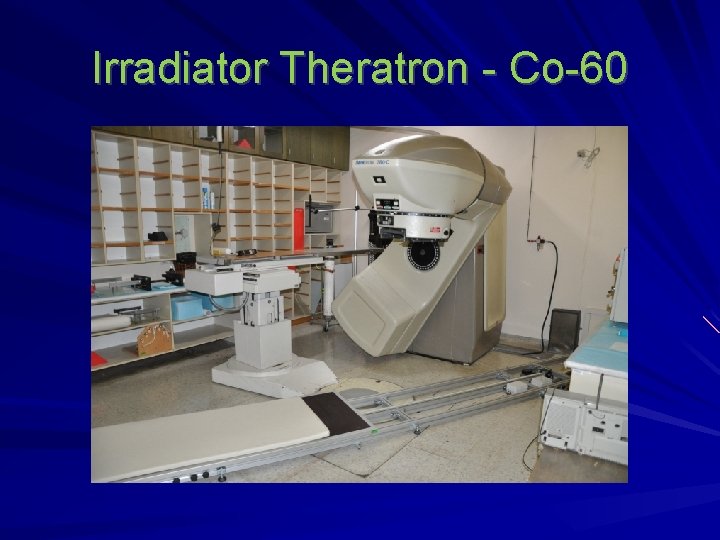
Irradiator Theratron - Co-60
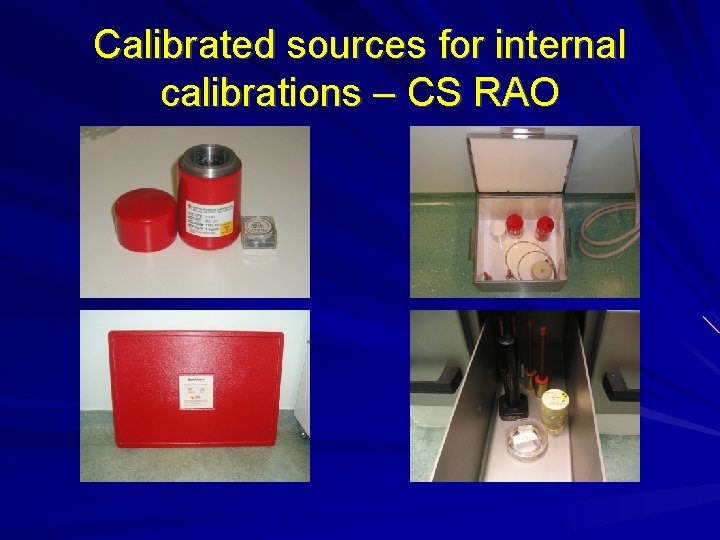
Calibrated sources for internal calibrations – CS RAO
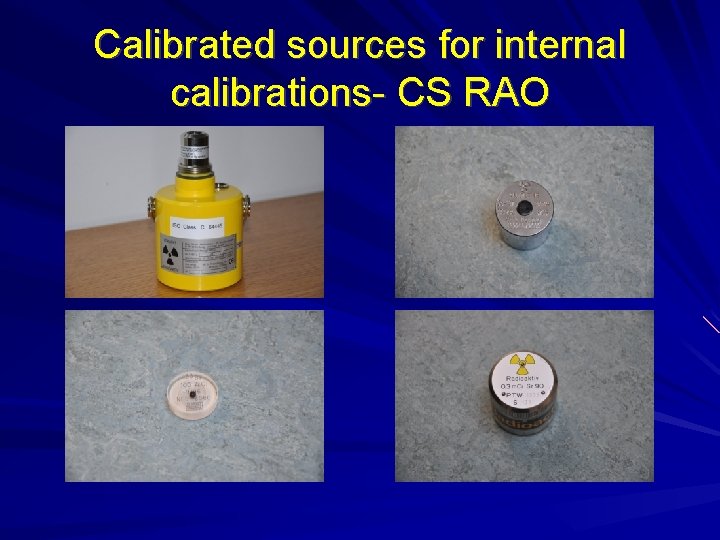
Calibrated sources for internal calibrations- CS RAO
Thank you for your attention! Questions?