
Radio Wave Propagation Ionosphere Layers Radio Waves are
- Slides: 21
Radio Wave Propagation
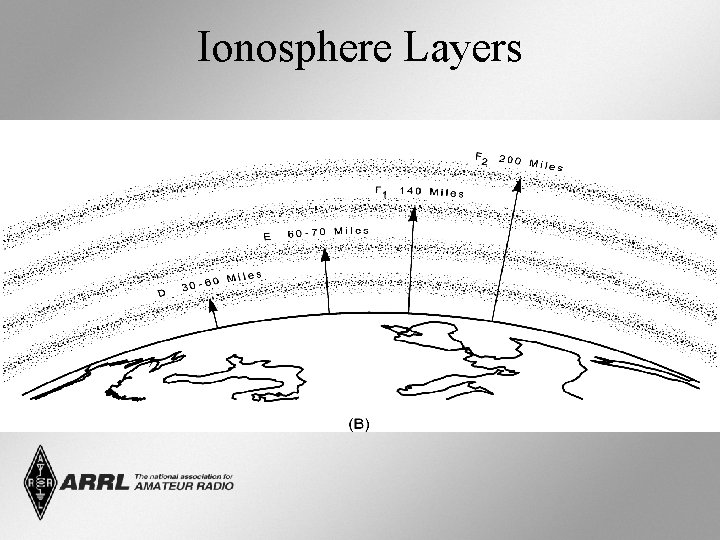
Ionosphere Layers
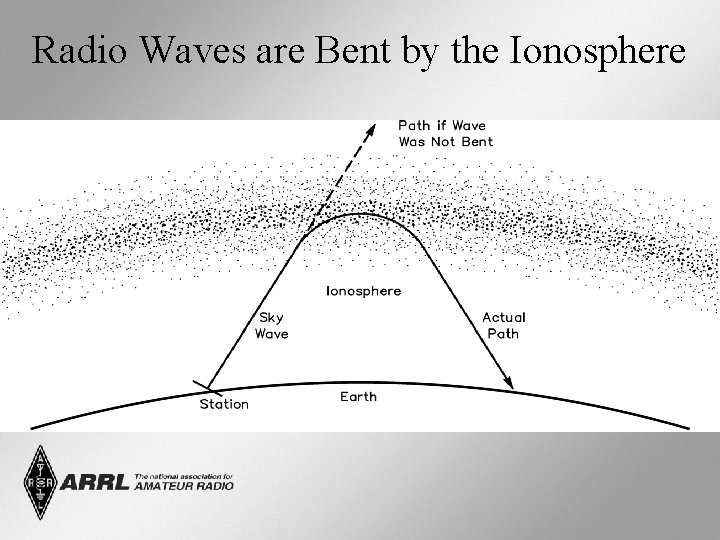
Radio Waves are Bent by the Ionosphere
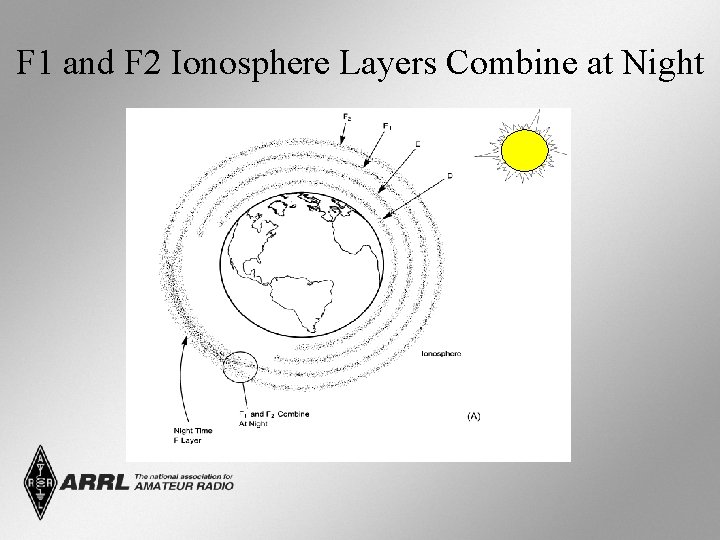
F 1 and F 2 Ionosphere Layers Combine at Night
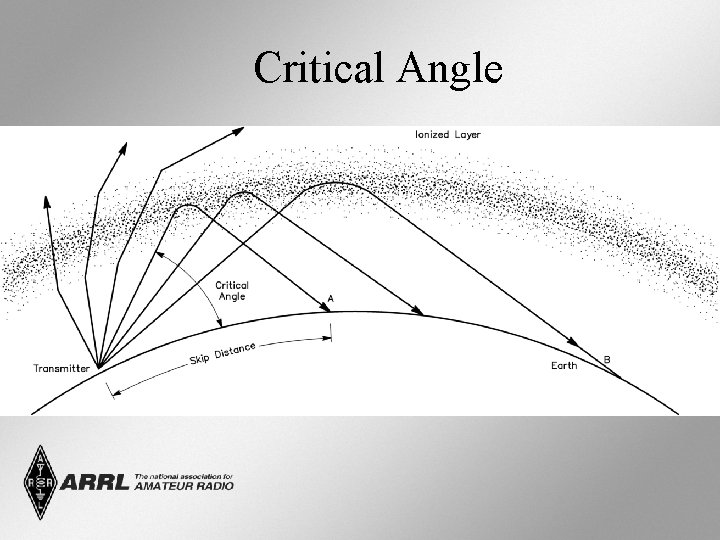
Critical Angle
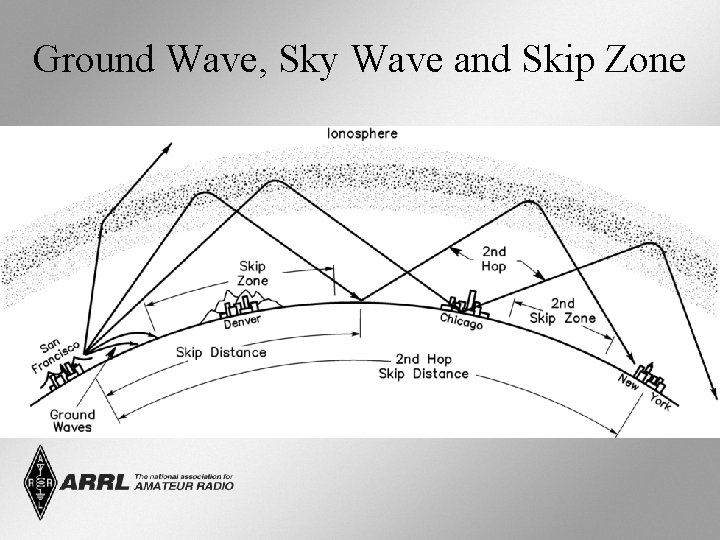
Ground Wave, Sky Wave and Skip Zone
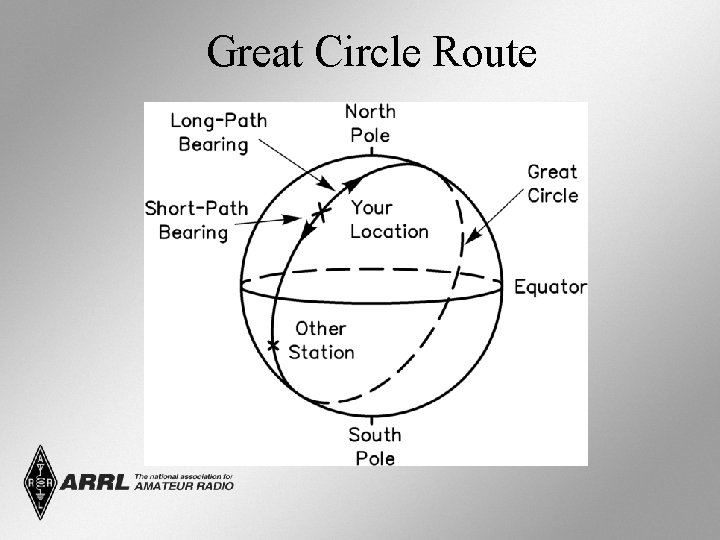
Great Circle Route
MUF: Maximum Usable Frequency • MUF is the highest frequency that allows a radio wave to reach the desired destination. • Stay below the Maximum Usable Frequency for the best chance for a successful contact. • MUF is affected by all of these: – Path, distance and locations – Time of day and seasons – Solar
LUF: Lowest Usable Frequency • LUF: The lower limit to the range of frequencies that provide useful communications between two stations. • All signals below LUF are absorbed. • When LUF exceeds MUF – No HF radio frequency will support communications along an ionosphere signal path.
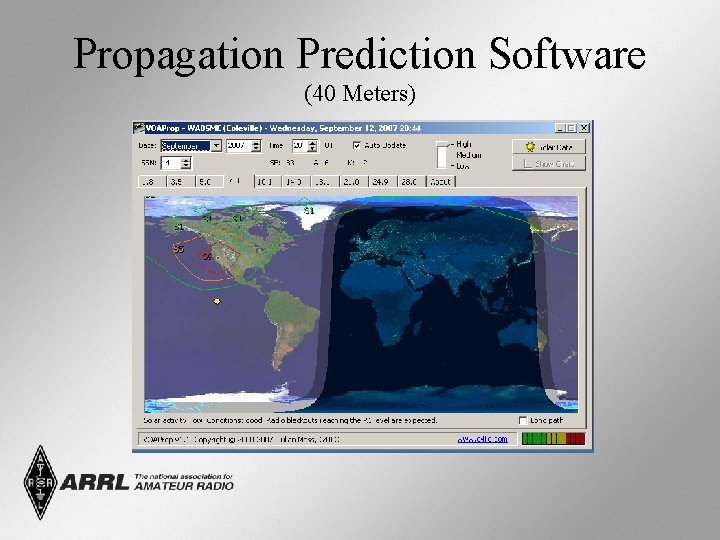
Propagation Prediction Software (40 Meters)
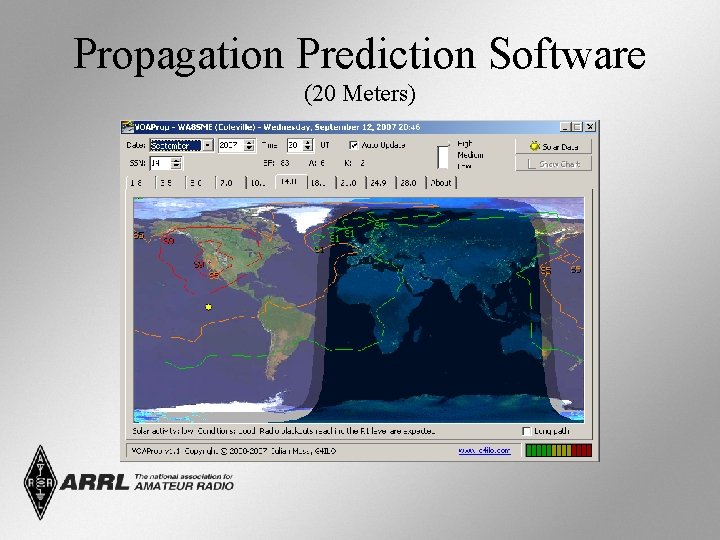
Propagation Prediction Software (20 Meters)
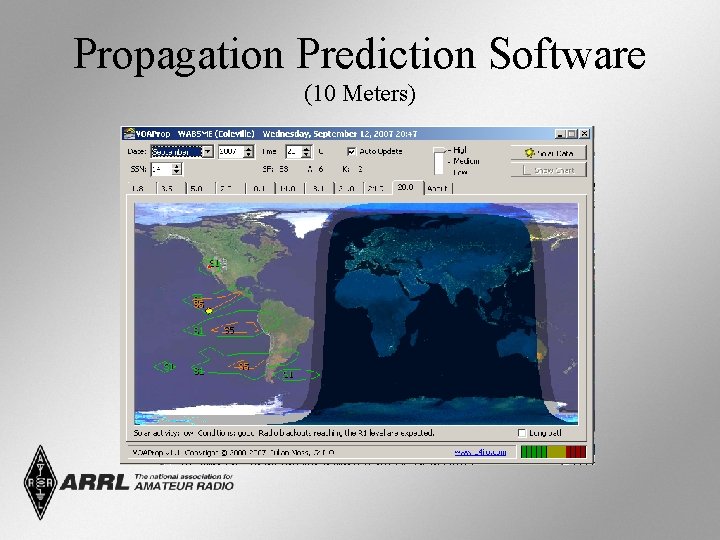
Propagation Prediction Software (10 Meters)
Solar Activity • 11 Year Cycle – Variation in the sunspot number. • We are at the bottom of Cycle 23. – Higher bands like 15 meters and 10 meters are not very good. • Sunspot Number: Daily index of sunspot activity.
Solar Activity Higher Sunspot Numbers = Better HF Propagation Above 100 is good
Solar Flux • SFI (the Solar Flux Index) is radio energy emitted by the Sun. • The higher the SFI, the better the propagation.
Solar Flux • Three Numbers: 1. SFI = Solar Flux Index. 2. “A” Index = A daily measurement of the state of activity of the Earth’s magnetic field. Based on yesterday’s K Index. 3. “K” Index = Readings of the Earth’s geomagnetic field updated every 3 hours.
Sudden Ionosphere Disturbance • Caused by a solar flare – ionizes the D Layer. • Disrupts lower HF frequencies first. – Most sensitive above 45° latitude. – So, try a higher frequency. • It takes about 8 minutes for UV and X radiation (traveling at speed of light) to reach Earth.
Geomagnetic Disturbance • A dramatic change in the Earth’s magnetic field that occurs over a short time. • Sometimes caused by a coronal mass ejection. These particles can take 20 to 40 hours to reach Earth.
Geomagnetic Disturbance • Degrades high latitude HF propagation, particularly those latitudes greater than 45 degrees. • Sometimes creates a visible aurora. • Coronal holes also disrupt HF communication.
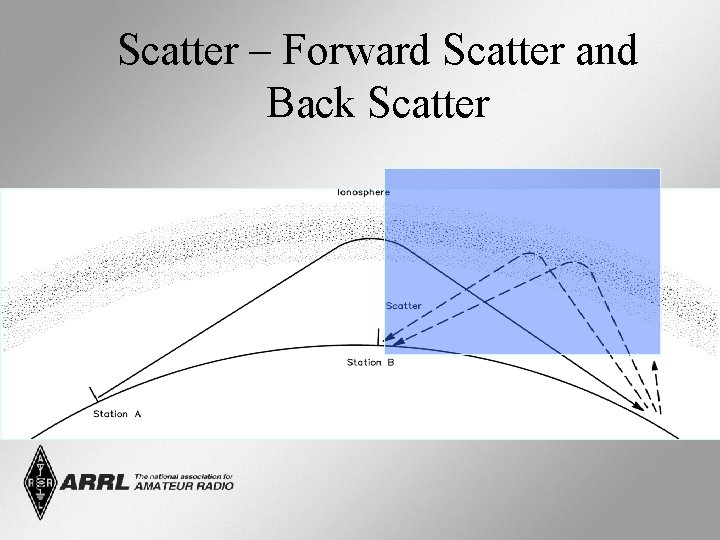
Scatter – Forward Scatter and Back Scatter
Scatter – Forward Scatter and Back Scatter • Scatter signals fall between ground wave and skip zone. • HF Scatter signals have a wavering sound. • Occur most often above the MUF. • (Also used on 6 meters with meteors!)