
Radio frequency treatment for improved stability of rice
Radio frequency treatment for improved stability of rice bran Speaker: Bo-Han Chen Advisor: Dr. Su-Der Chen National Ilan University, Taiwan Date: 2015/6/17 1 IMPI’S 49 th MICROWAVE POWER SYMPOSIUM
Outline �Introduction - Radio frequency (RF) - Rice bran �Objectives �Experimental design �Results and discussion �Conclusions 2
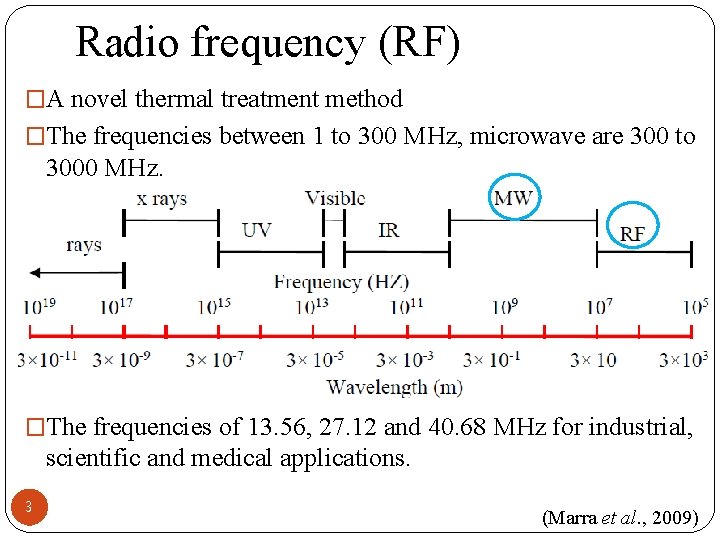
Radio frequency (RF) �A novel thermal treatment method �The frequencies between 1 to 300 MHz, microwave are 300 to 3000 MHz. �The frequencies of 13. 56, 27. 12 and 40. 68 MHz for industrial, scientific and medical applications. 3 (Marra et al. , 2009)
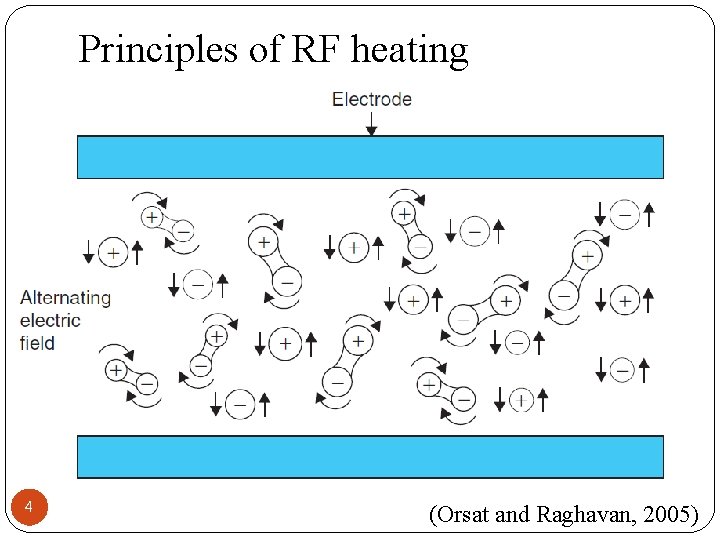
Principles of RF heating 4 (Orsat and Raghavan, 2005)
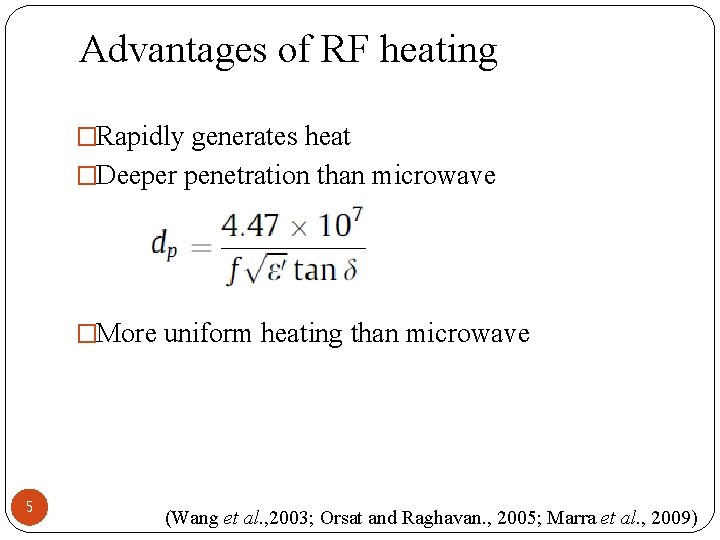
Advantages of RF heating �Rapidly generates heat �Deeper penetration than microwave �More uniform heating than microwave 5 (Wang et al. , 2003; Orsat and Raghavan. , 2005; Marra et al. , 2009)
RF applications in food industries �Pasteurization �Sterilization �Drying �Cooking �Extraction �Disinfestation �Blanching 6 (Marra et al. , 2009)
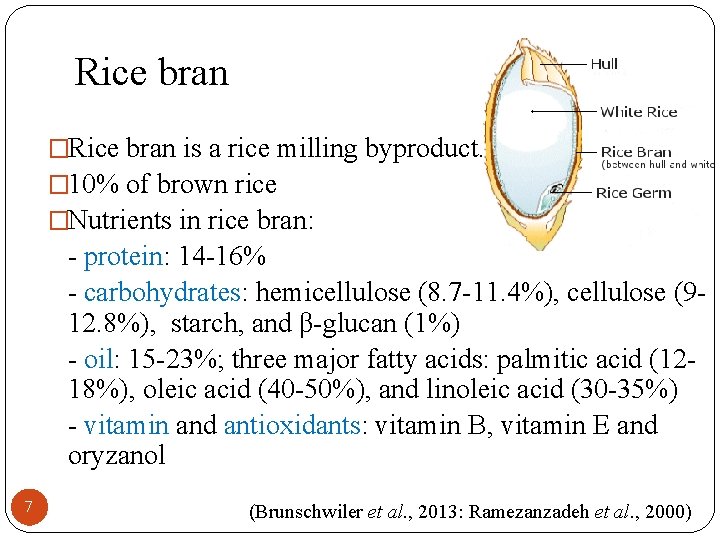
Rice bran �Rice bran is a rice milling byproduct. � 10% of brown rice �Nutrients in rice bran: - protein: 14 -16% - carbohydrates: hemicellulose (8. 7 -11. 4%), cellulose (912. 8%), starch, and β-glucan (1%) - oil: 15 -23%; three major fatty acids: palmitic acid (1218%), oleic acid (40 -50%), and linoleic acid (30 -35%) - vitamin and antioxidants: vitamin B, vitamin E and oryzanol 7 (Brunschwiler et al. , 2013: Ramezanzadeh et al. , 2000)
Rice bran and lipase �Rice bran has lipases, which catalyzes the hydrolysis of rice bran oil and leads to increase free fatty acid. �The triglycerides in the oil will formation of off-flavors and odors, because lipid peroxidation by lipases and lipoxygenases is thought to be the primary cause for bran degradation. 8 (Brunschwiler et al. , 2013: Ramezanzadeh et al. , 2000)
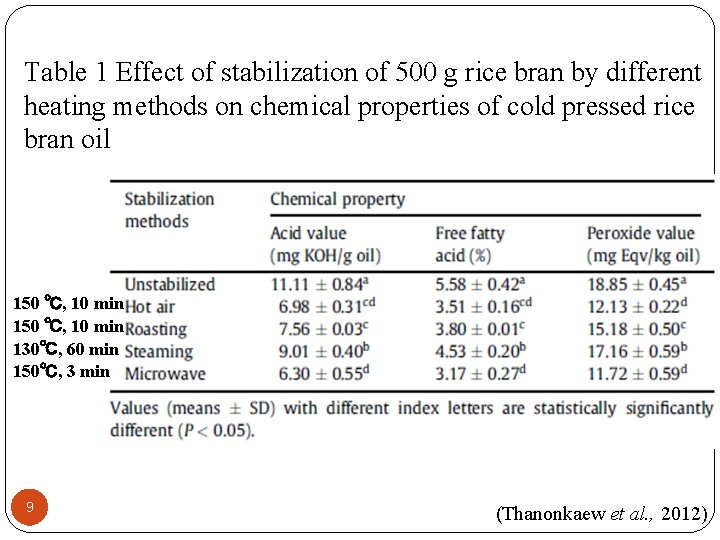
Table 1 Effect of stabilization of 500 g rice bran by different heating methods on chemical properties of cold pressed rice bran oil 150 ℃, 10 min 130℃, 60 min 150℃, 3 min 9 (Thanonkaew et al. , 2012)
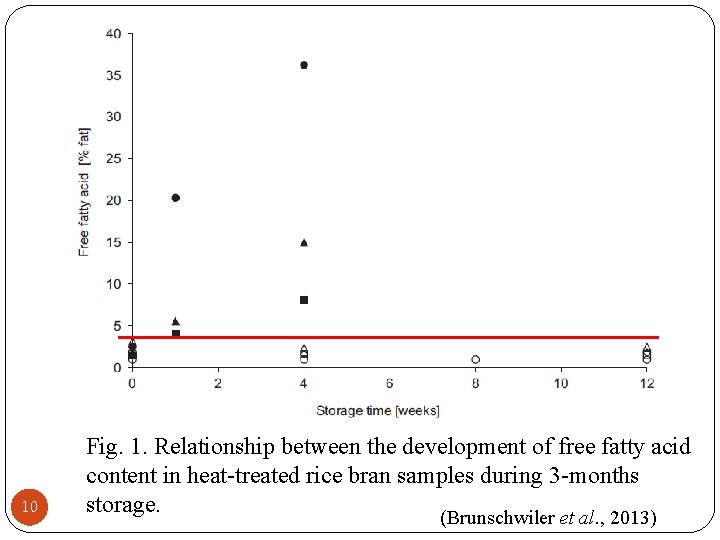
10 Fig. 1. Relationship between the development of free fatty acid content in heat-treated rice bran samples during 3 -months storage. (Brunschwiler et al. , 2013)
Objectives �To study radio frequency heating conditions on lipase inactivation in rice bran in order to achieve quality stability of rice bran during room temperature storage. 11
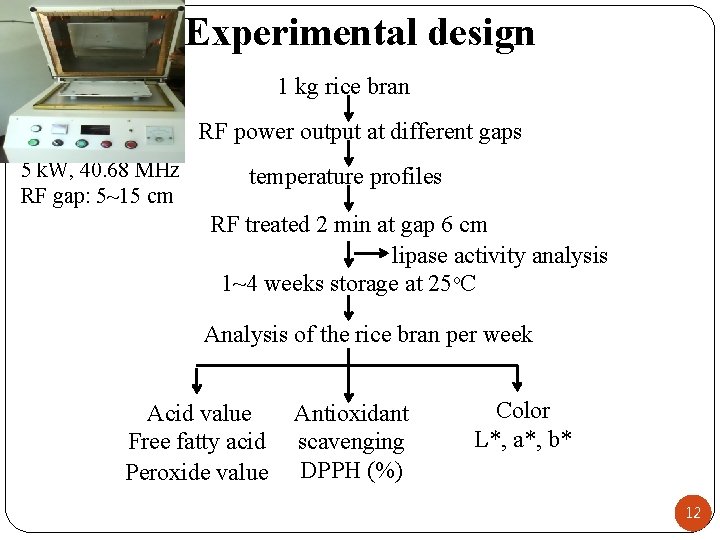
Experimental design 1 kg rice bran RF power output at different gaps 5 k. W, 40. 68 MHz RF gap: 5~15 cm temperature profiles RF treated 2 min at gap 6 cm lipase activity analysis 1~4 weeks storage at 25 o. C Analysis of the rice bran per week Acid value Free fatty acid Peroxide value Antioxidant scavenging DPPH (%) Color L*, a*, b* 12
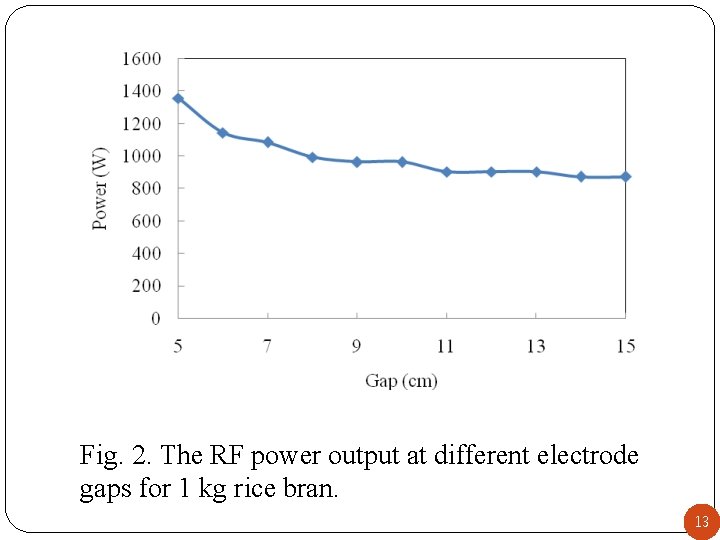
Fig. 2. The RF power output at different electrode gaps for 1 kg rice bran. 13
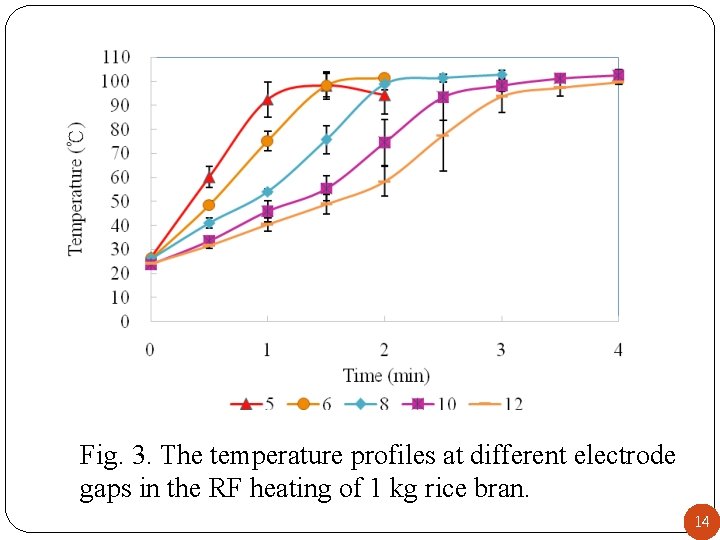
Fig. 3. The temperature profiles at different electrode gaps in the RF heating of 1 kg rice bran. 14
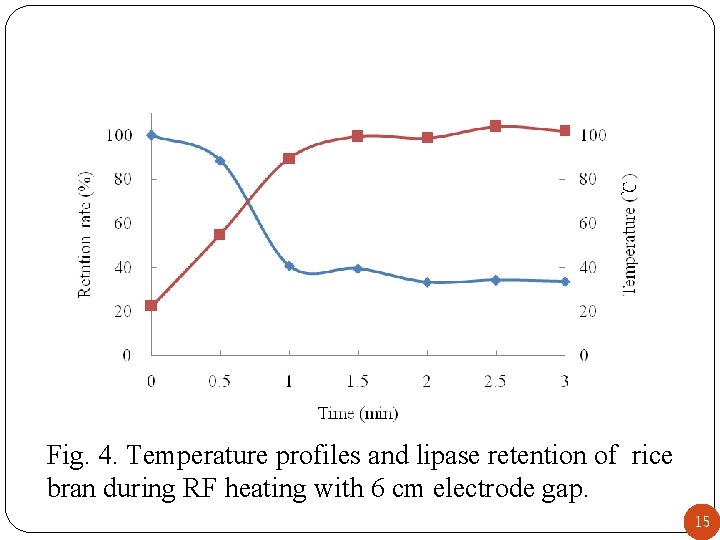
Fig. 4. Temperature profiles and lipase retention of rice bran during RF heating with 6 cm electrode gap. 15
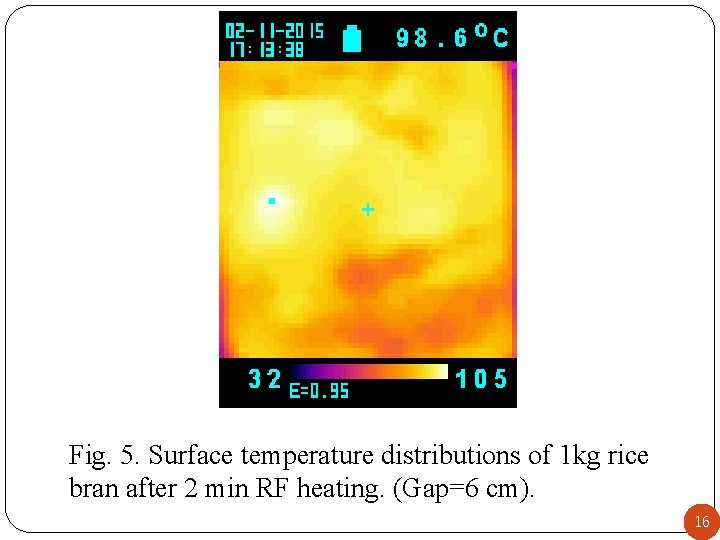
Fig. 5. Surface temperature distributions of 1 kg rice bran after 2 min RF heating. (Gap=6 cm). 16
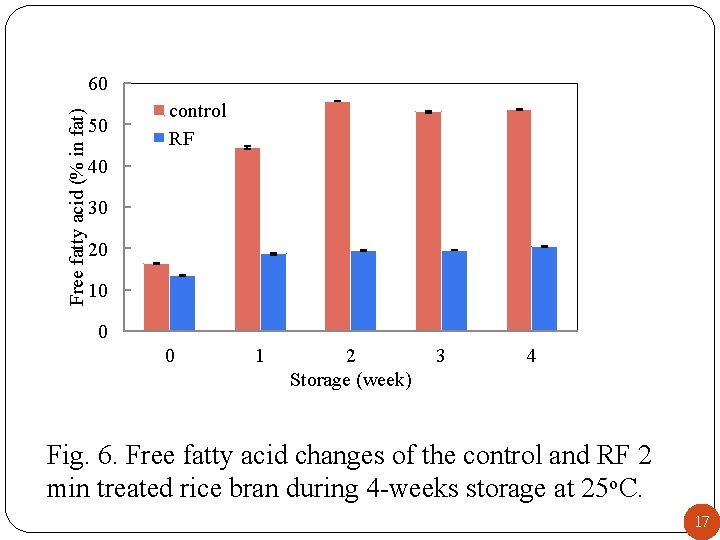
Free fatty acid (% in fat) 60 50 control RF 40 30 20 10 0 0 1 2 Storage (week) 3 4 Fig. 6. Free fatty acid changes of the control and RF 2 min treated rice bran during 4 -weeks storage at 25 o. C. 17
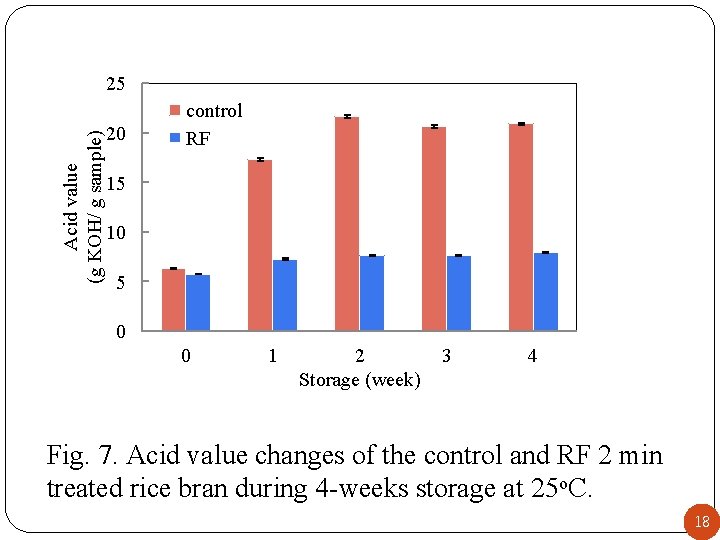
Acid value (g KOH/ g sample) 25 20 control RF 15 10 5 0 0 1 2 Storage (week) 3 4 Fig. 7. Acid value changes of the control and RF 2 min treated rice bran during 4 -weeks storage at 25 o. C. 18
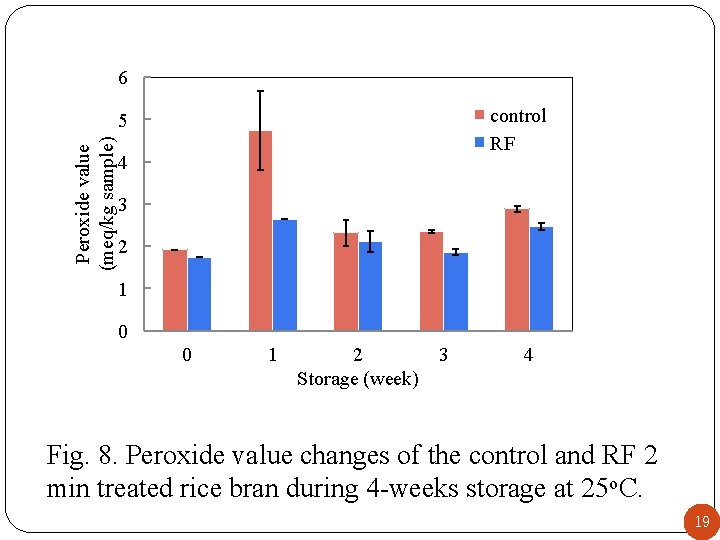
6 control RF Peroxide value (meq/kg sample) 5 4 3 2 1 0 0 1 2 3 Storage (week) 4 Fig. 8. Peroxide value changes of the control and RF 2 min treated rice bran during 4 -weeks storage at 25 o. C. 19
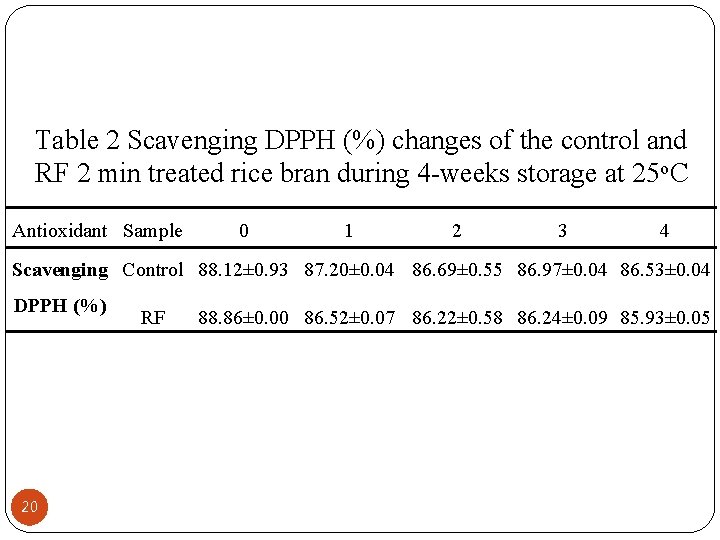
Table 2 Scavenging DPPH (%) changes of the control and RF 2 min treated rice bran during 4 -weeks storage at 25 o. C Antioxidant Sample 0 1 2 3 4 Scavenging Control 88. 12± 0. 93 87. 20± 0. 04 86. 69± 0. 55 86. 97± 0. 04 86. 53± 0. 04 DPPH (%) 20 RF 88. 86± 0. 00 86. 52± 0. 07 86. 22± 0. 58 86. 24± 0. 09 85. 93± 0. 05
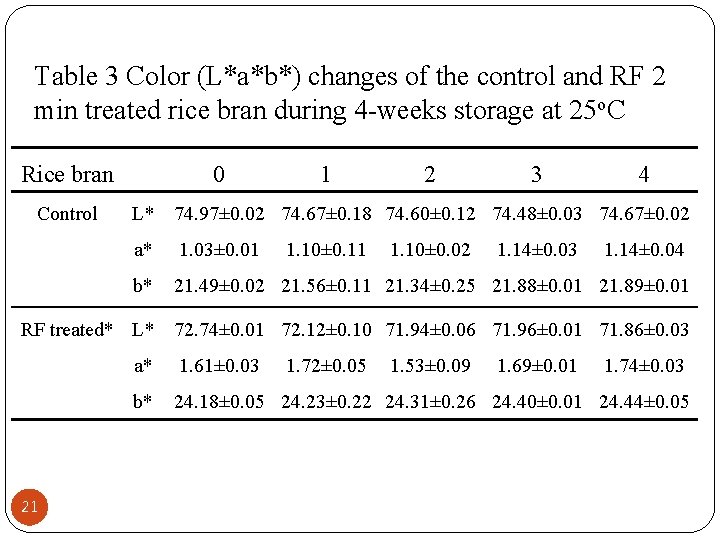
Table 3 Color (L*a*b*) changes of the control and RF 2 min treated rice bran during 4 -weeks storage at 25 o. C Rice bran Control 0 1 2 3 4 L* 74. 97± 0. 02 74. 67± 0. 18 74. 60± 0. 12 74. 48± 0. 03 74. 67± 0. 02 a* 1. 03± 0. 01 1. 10± 0. 11 1. 10± 0. 02 1. 14± 0. 03 1. 14± 0. 04 b* 21. 49± 0. 02 21. 56± 0. 11 21. 34± 0. 25 21. 88± 0. 01 21. 89± 0. 01 RF treated* L* 72. 74± 0. 01 72. 12± 0. 10 71. 94± 0. 06 71. 96± 0. 01 71. 86± 0. 03 21 a* 1. 61± 0. 03 1. 72± 0. 05 1. 53± 0. 09 1. 69± 0. 01 1. 74± 0. 03 b* 24. 18± 0. 05 24. 23± 0. 22 24. 31± 0. 26 24. 40± 0. 01 24. 44± 0. 05
Conclusions �A 2 -min RF treatment of 1 kg rice bran led to lipase inactivation; therefore, it had significantly lower acid values, free fatty acids and peroxide values than untreated rice bran after 4 -weeks storage at 25 o. C. �These were no significant changes of color and scavenging DPPH radicals activity during storage. Therefore the RF heating treatment is effective and rapid method for improved stability of rice bran. 22

Thanks for your attention! 23
- Slides: 23