
Radio Astron Yuri Kovalev ASC Lebedev MIPT Moscow
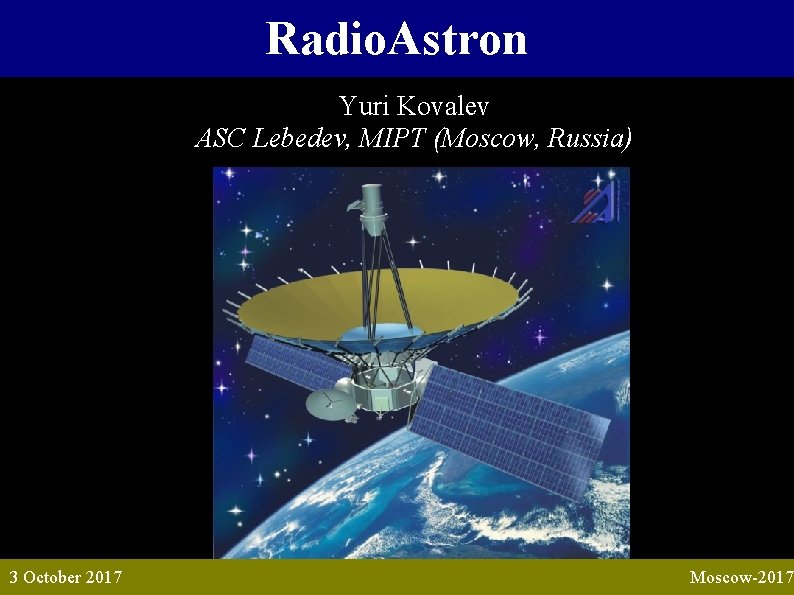
Radio. Astron Yuri Kovalev ASC Lebedev, MIPT (Moscow, Russia) 3 October 2017 Moscow-2017
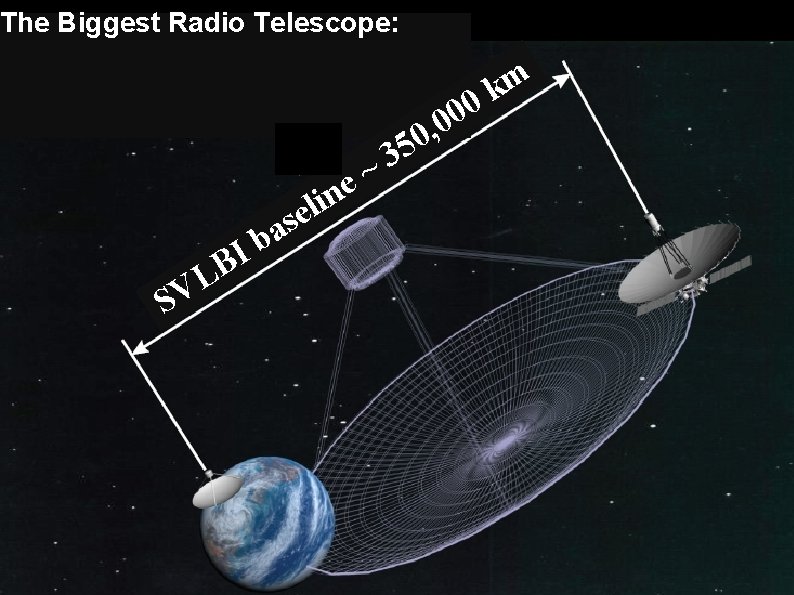
The Biggest Radio Telescope: m k 0 e s a e n li S L V b I B 5 3 ~ 0 0 , 0
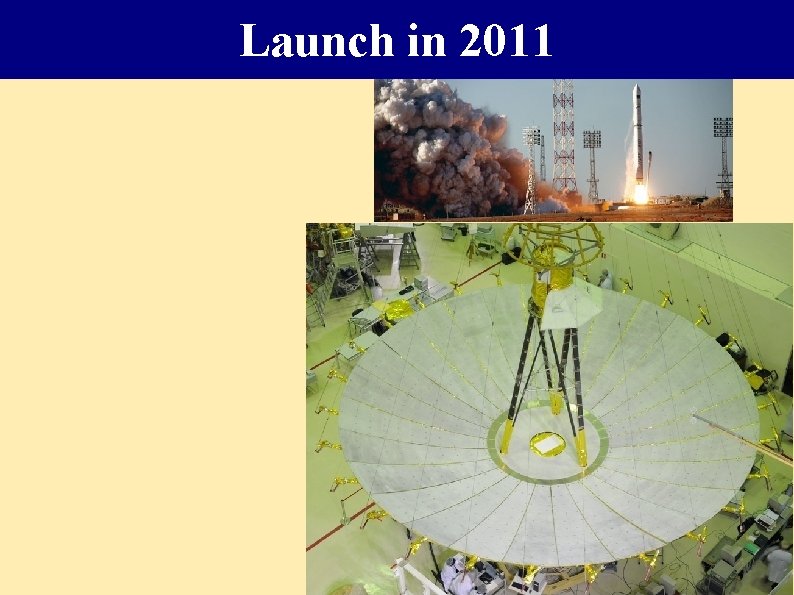
Launch in 2011
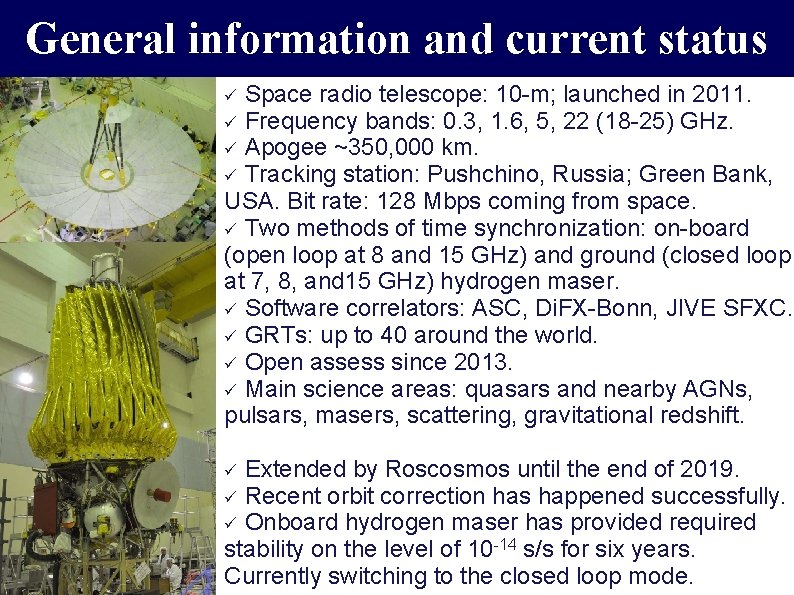
General information and current status Space radio telescope: 10 -m; launched in 2011. ü Frequency bands: 0. 3, 1. 6, 5, 22 (18 -25) GHz. ü Apogee ~350, 000 km. ü Tracking station: Pushchino, Russia; Green Bank, USA. Bit rate: 128 Mbps coming from space. ü Two methods of time synchronization: on-board (open loop at 8 and 15 GHz) and ground (closed loop at 7, 8, and 15 GHz) hydrogen maser. ü Software correlators: ASC, Di. FX-Bonn, JIVE SFXC. ü GRTs: up to 40 around the world. ü Open assess since 2013. ü Main science areas: quasars and nearby AGNs, pulsars, masers, scattering, gravitational redshift. ü Extended by Roscosmos until the end of 2019. ü Recent orbit correction has happened successfully. ü Onboard hydrogen maser has provided required stability on the level of 10 -14 s/s for six years. Currently switching to the closed loop mode. ü
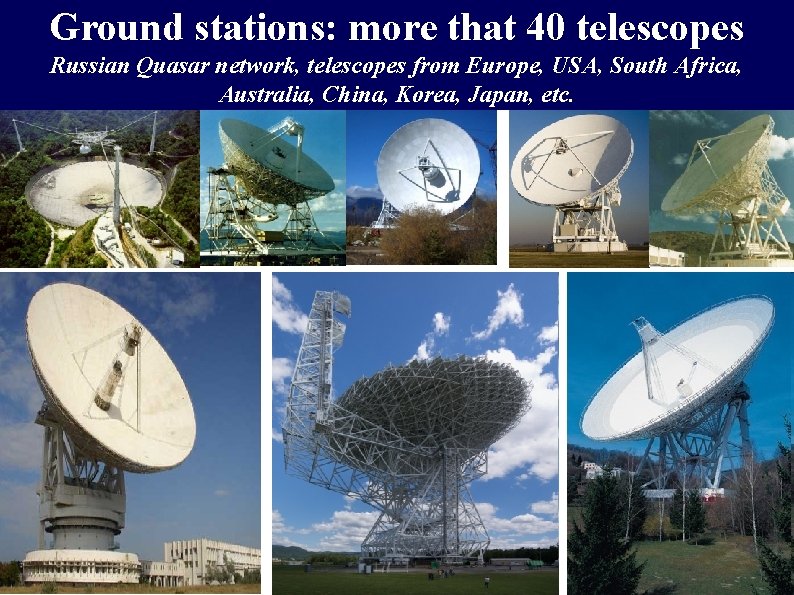
Ground stations: more that 40 telescopes Russian Quasar network, telescopes from Europe, USA, South Africa, Australia, China, Korea, Japan, etc.
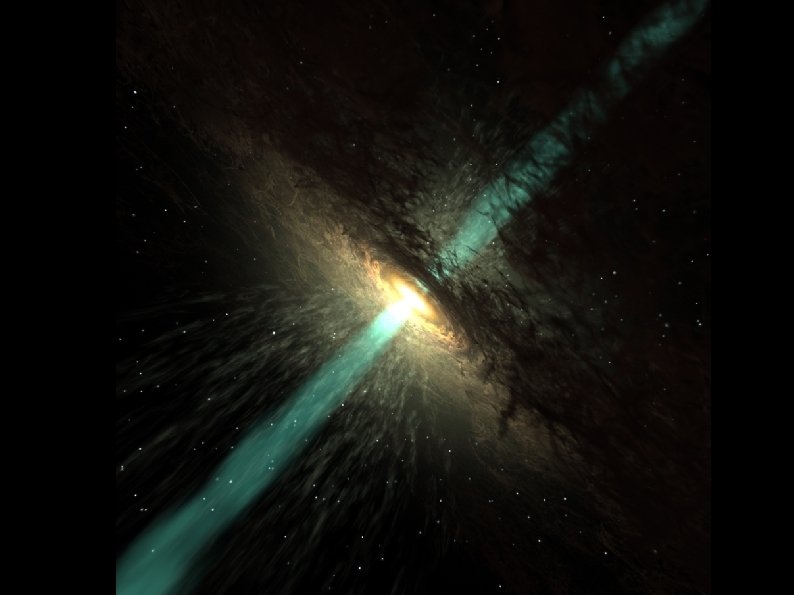
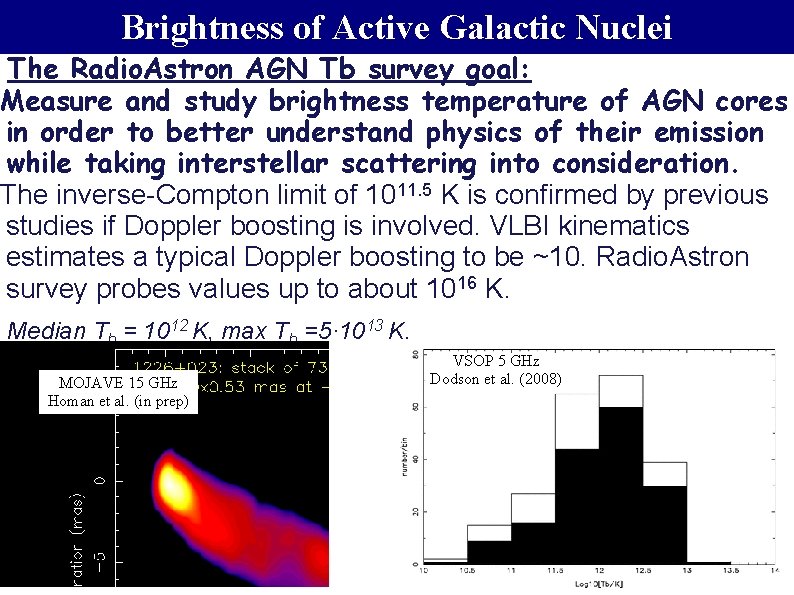
Brightness of Active Galactic Nuclei The Radio. Astron AGN Tb survey goal: Measure and study brightness temperature of AGN cores in order to better understand physics of their emission while taking interstellar scattering into consideration. The inverse-Compton limit of 1011. 5 K is confirmed by previous studies if Doppler boosting is involved. VLBI kinematics estimates a typical Doppler boosting to be ~10. Radio. Astron survey probes values up to about 1016 K. Median Tb = 1012 K, max Tb =5· 1013 K. MOJAVE 15 GHz Homan et al. (in prep) VSOP 5 GHz Dodson et al. (2008)
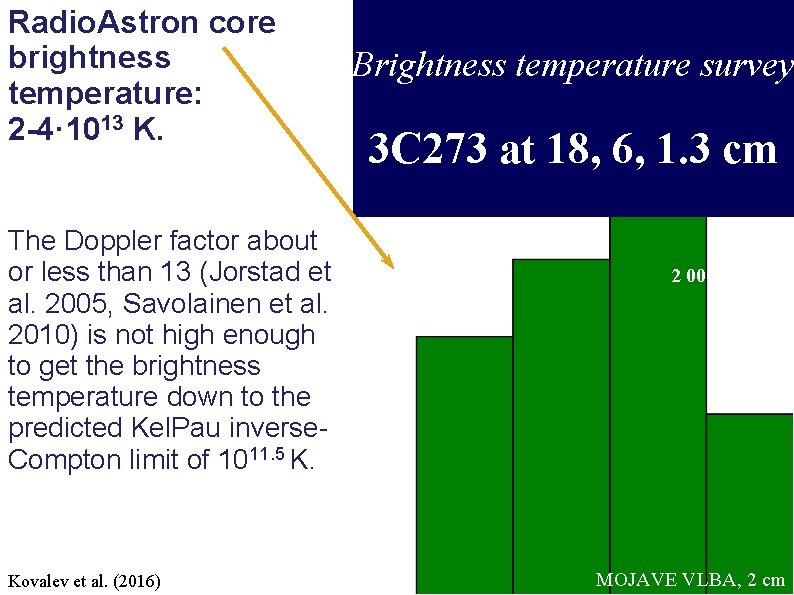
Radio. Astron core brightness temperature: 2 -4· 1013 K. The Doppler factor about or less than 13 (Jorstad et al. 2005, Savolainen et al. 2010) is not high enough to get the brightness temperature down to the predicted Kel. Pau inverse. Compton limit of 1011. 5 K. Kovalev et al. (2016) Brightness temperature survey 3 C 273 at 18, 6, 1. 3 cm 2 000 µas MOJAVE VLBA, 2 cm
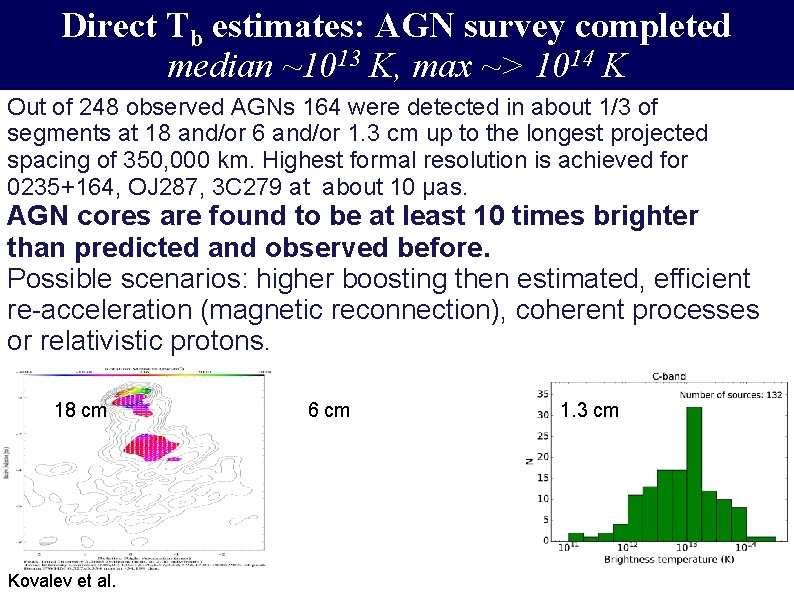
Direct Tb estimates: AGN survey completed median ~1013 K, max ~> 1014 K Out of 248 observed AGNs 164 were detected in about 1/3 of segments at 18 and/or 6 and/or 1. 3 cm up to the longest projected spacing of 350, 000 km. Highest formal resolution is achieved for 0235+164, OJ 287, 3 C 279 at about 10 µas. AGN cores are found to be at least 10 times brighter than predicted and observed before. Possible scenarios: higher boosting then estimated, efficient re-acceleration (magnetic reconnection), coherent processes or relativistic protons. 18 cm Kovalev et al. 6 cm 1. 3 cm
How to generate high brightness temperature Very high Doppler boosting with typical δ~100 – VLBI kinematics does not confirm it. ü Typical observed VLBI kinematics does not reflects the plasma bulk motion in many cases? Continuously “excited” core being most of the time at the inverse-Compton limit or continuous re-acceleration several parsecs away from the core. ü How? Flares do not happen all the time. Magnetic reconnection? Shocks? γ-ray photon flux is not high enough but radio photons could be upscattered to lower energies and increase uv / x-ray flux. ü Relativistic protons or coherent processes. Requires very efficient acceleration and high magnetic field. Many problems.
BL Lacertae: Faraday rotation 15 -43 GHz Gomez et al. (2016) observed RM gradient around the core region, its distribution is consistent with RMHD simulations of jets with a helical magnetic field. AGN survey data in turn has shown that observed fractional polarization increases with increasing resolution, formally, even up to more than 100%. This is a clear indication of existence of highly polarized extremely compact features with highly ordered magnetic field within the jet.
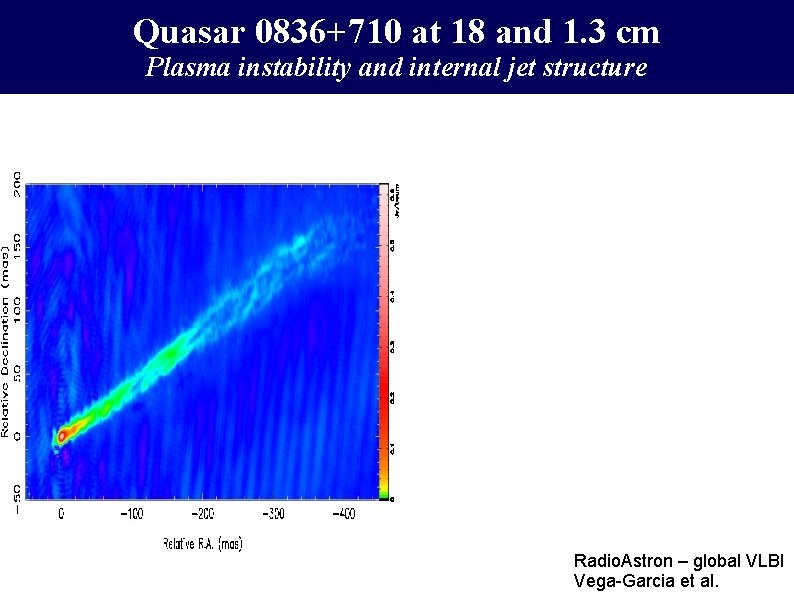
Quasar 0836+710 at 18 and 1. 3 cm Plasma instability and internal jet structure Radio. Astron – global VLBI Vega-Garcia et al.
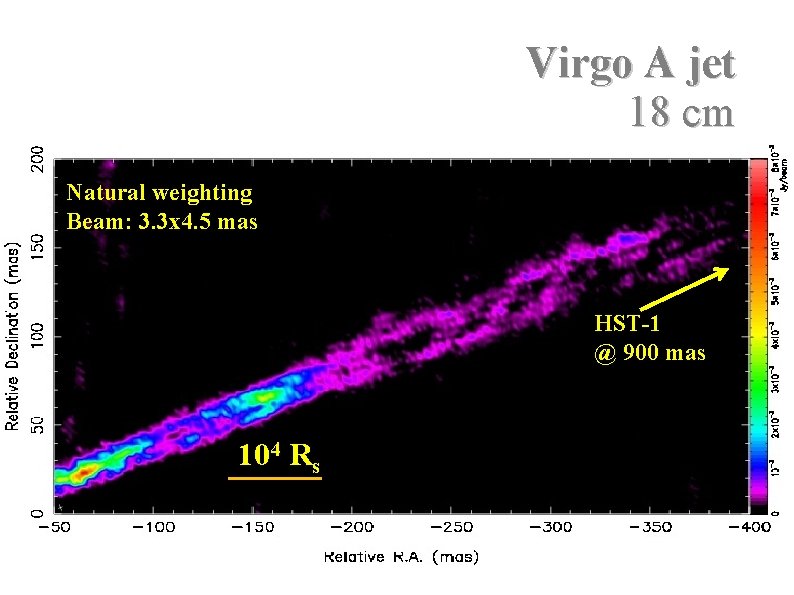
Virgo A jet 18 cm Natural weighting Beam: 3. 3 x 4. 5 mas HST-1 @ 900 mas 104 Rs Savolainen et al.
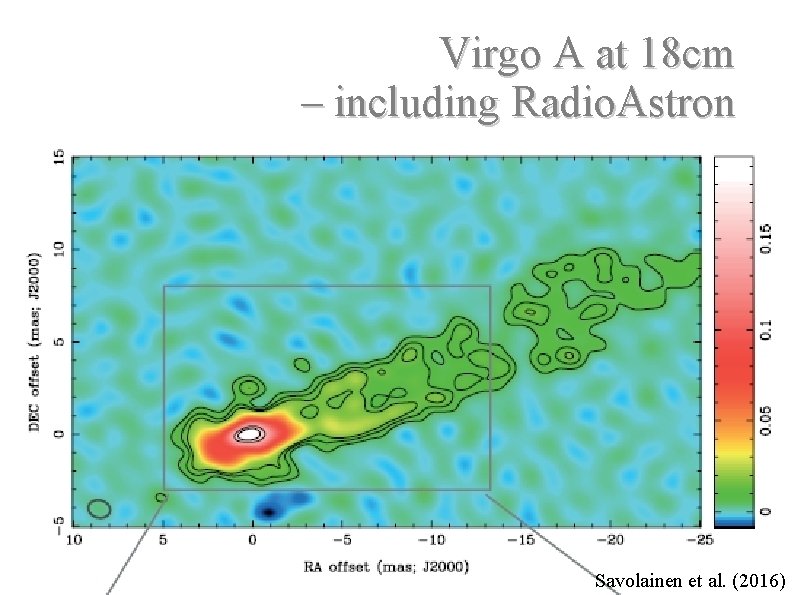
Virgo A at 18 cm – including Radio. Astron Savolainen et al. (2016)
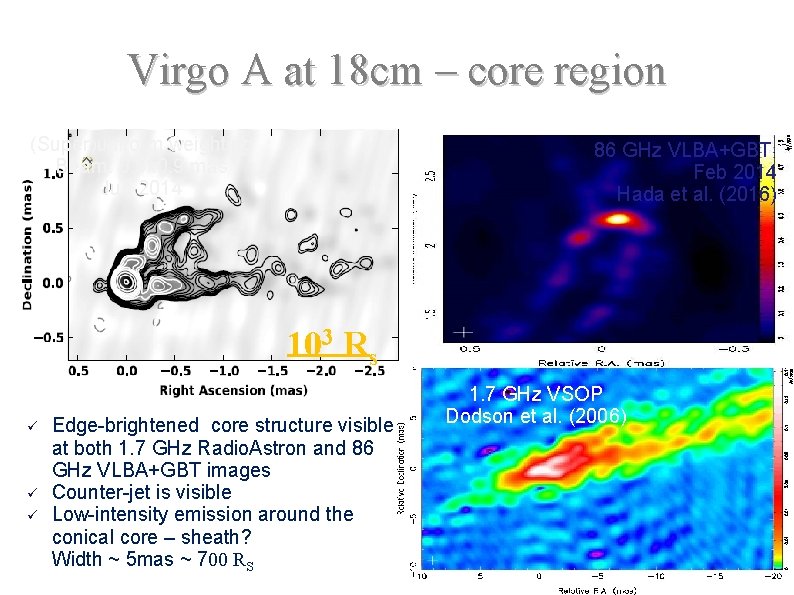
Virgo A at 18 cm – core region (Super)uniform weighting Beam: 0. 9 x 0. 9 mas Jun 2014 86 GHz VLBA+GBT Feb 2014 Hada et al. (2016) 103 Rs ü ü ü Edge-brightened core structure visible at both 1. 7 GHz Radio. Astron and 86 GHz VLBA+GBT images Counter-jet is visible Low-intensity emission around the conical core – sheath? Width ~ 5 mas ~ 700 RS 1. 7 GHz VSOP Dodson et al. (2006)
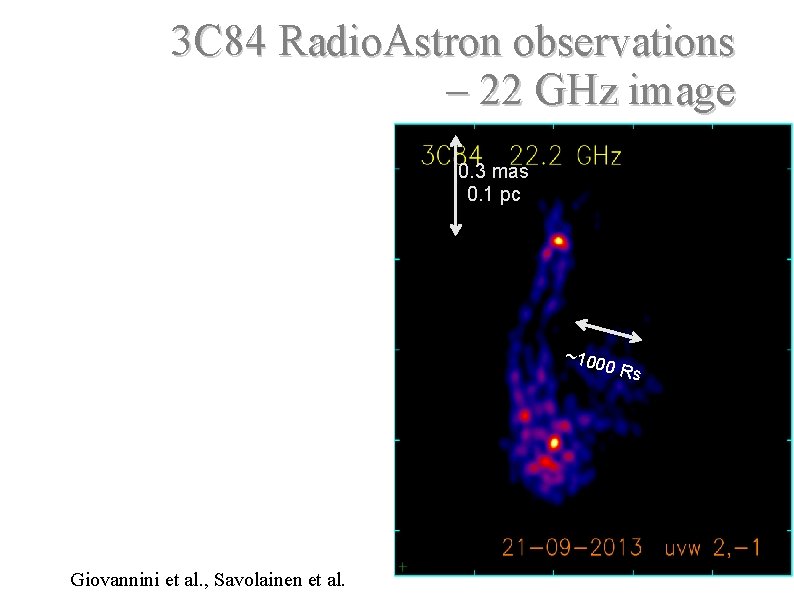
3 C 84 Radio. Astron observations – 22 GHz image 0. 3 mas 0. 1 pc ~100 0 Rs Giovannini et al. , Savolainen et al.
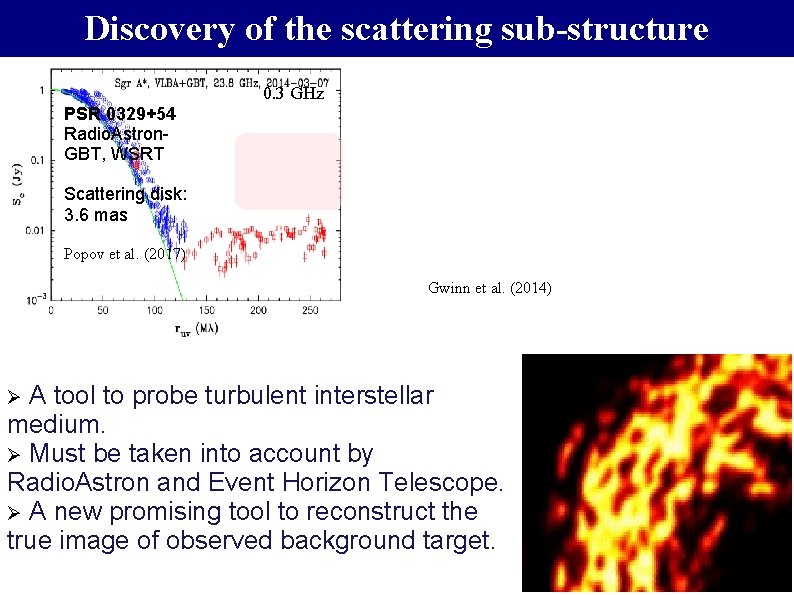
Discovery of the scattering sub-structure 0. 3 GHz PSR 0329+54 Radio. Astron. GBT, WSRT Scattering disk: 3. 6 mas Popov et al. (2017) Gwinn et al. (2014) A tool to probe turbulent interstellar medium. Ø Must be taken into account by Radio. Astron and Event Horizon Telescope. Ø A new promising tool to reconstruct the true image of observed background target. Ø
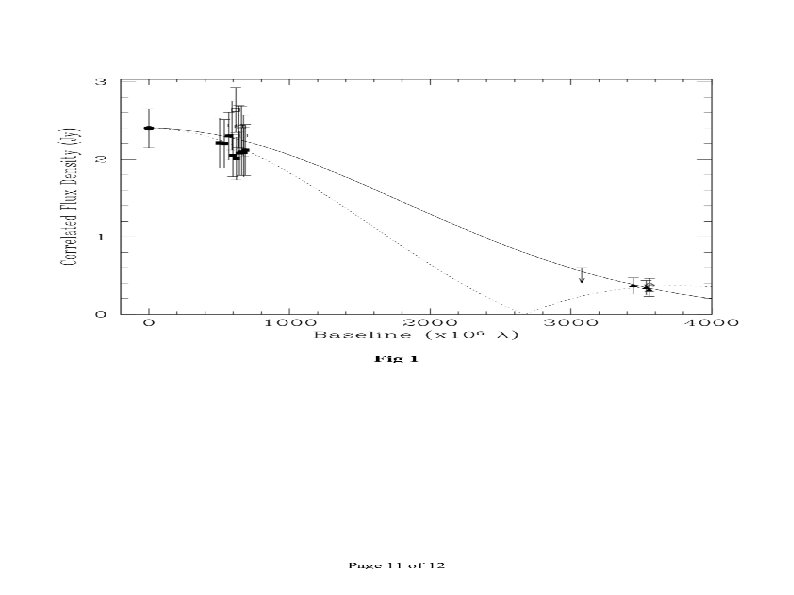
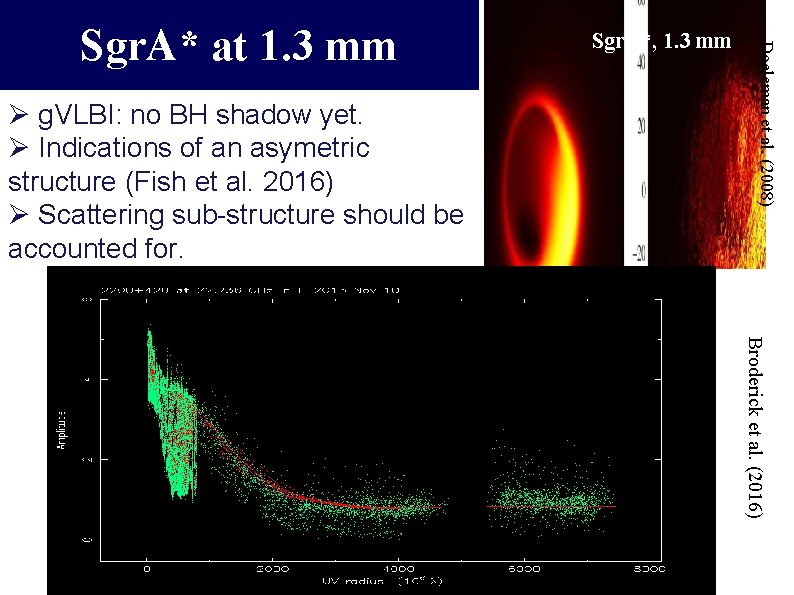
Ø g. VLBI: no BH shadow yet. Ø Indications of an asymetric structure (Fish et al. 2016) Ø Scattering sub-structure should be accounted for. Sgr. A*, 1. 3 mm Doeleman et al. (2008) Sgr. A* at 1. 3 mm Broderick et al. (2016)

Thank you
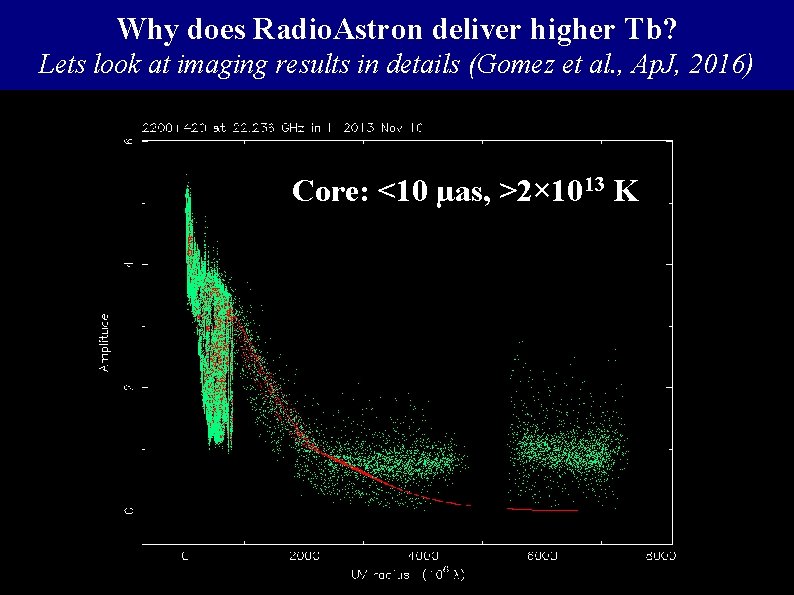
Why does Radio. Astron deliver higher Tb? Lets look at imaging results in details (Gomez et al. , Ap. J, 2016) 12 K Core: <10 42 µas, >2× 10 4× 10¹³ K Core:
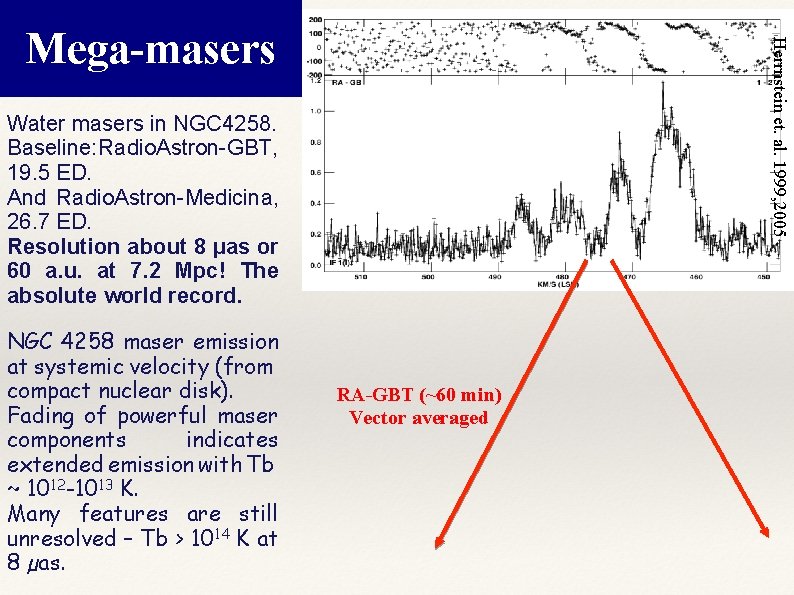
Herrnstein et. al. 1999, 2005 Mega-masers Water masers in NGC 4258. Baseline: Radio. Astron-GBT, 19. 5 ED. And Radio. Astron-Medicina, 26. 7 ED. Resolution about 8 µas or 60 a. u. at 7. 2 Mpc! The absolute world record. NGC 4258 maser emission at systemic velocity (from compact nuclear disk). Fading of powerful maser components indicates extended emission with Tb ~ 1012 -1013 K. Many features are still unresolved – Tb > 1014 K at 8 µas. RA-GBT (~60 min) Vector averaged
- Slides: 22