
Radio and Space Plasma Physics Group Tracking solar
- Slides: 15
Radio and Space Plasma Physics Group Tracking solar wind structures from the Sun through to the orbit of Mars A. O. Williams 1, N. J. T. Edberg 1, 2, S. E. Milan 1, M. Lester 1 and M. Fränz 3 1: University of Leicester, UK. 2: Institute for Space Physics, University of Uppsala, Sweden. 3: Max-Planck Institute for Solar System Research, Germany.
Outline • • • What are we tracking? How do we do it? Observations The STEREO side Conclusions Further Work
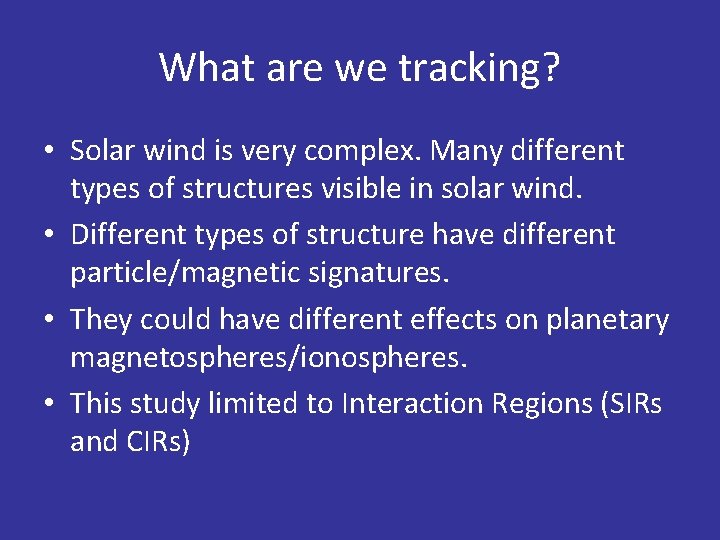
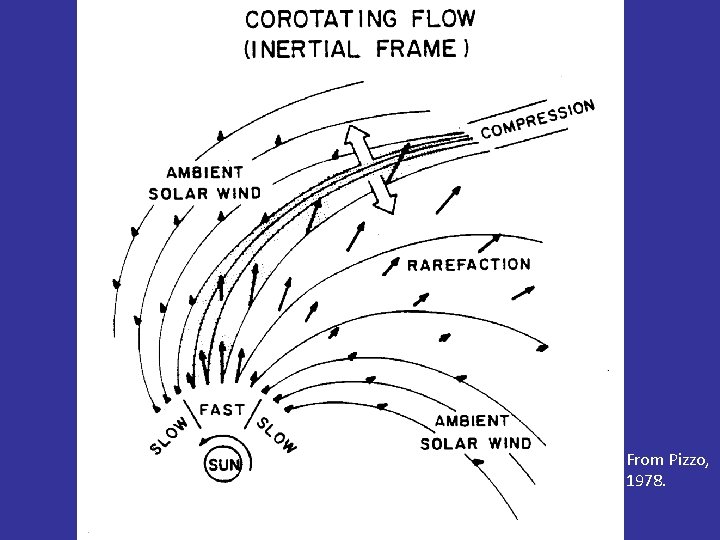
What are we tracking? • Solar wind is very complex. Many different types of structures visible in solar wind. • Different types of structure have different particle/magnetic signatures. • They could have different effects on planetary magnetospheres/ionospheres. • This study limited to Interaction Regions (SIRs and CIRs)
From Pizzo, 1978.
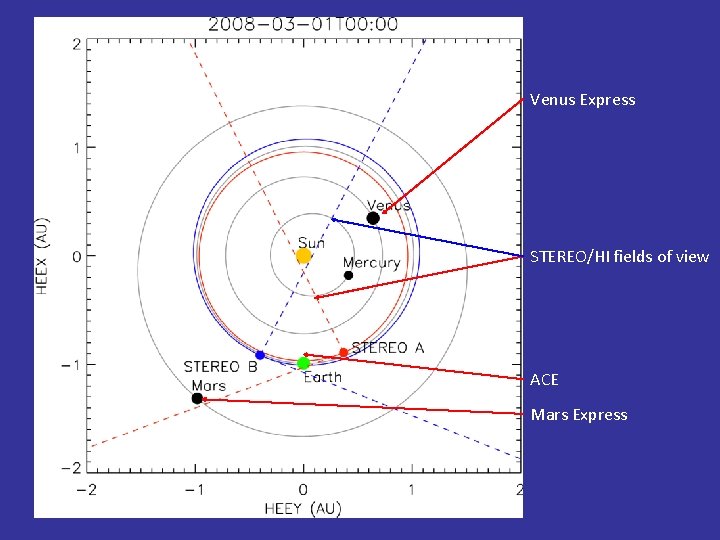
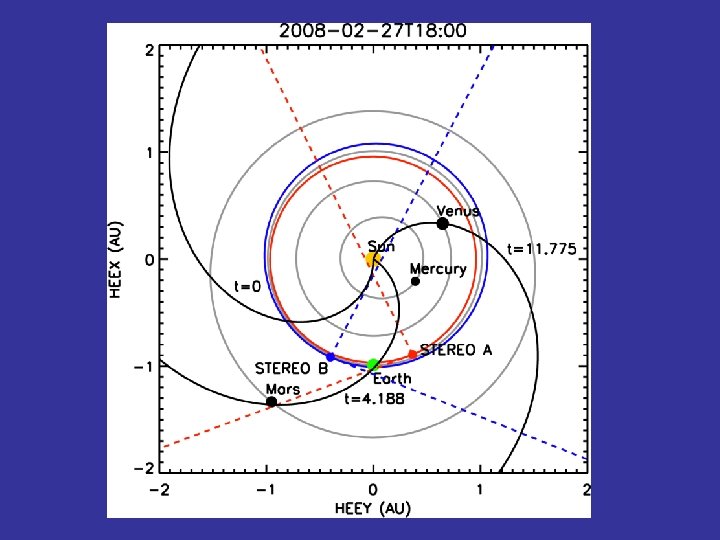
Venus Express STEREO/HI fields of view ACE Mars Express
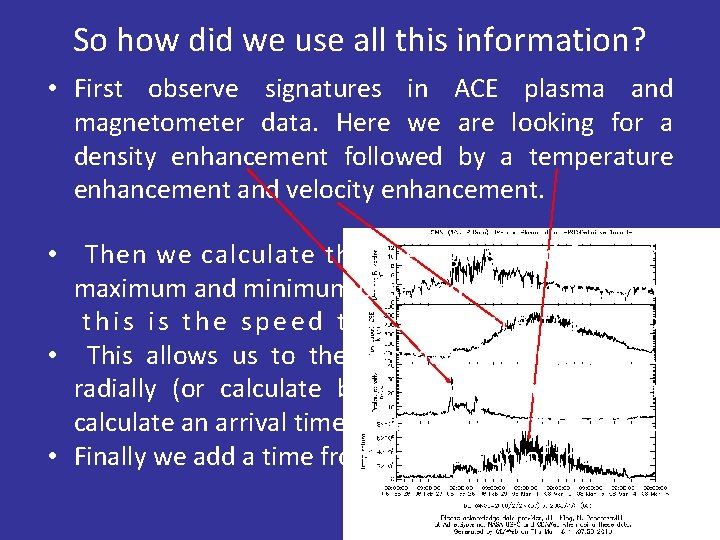
So how did we use all this information? • First observe signatures in ACE plasma and magnetometer data. Here we are looking for a density enhancement followed by a temperature enhancement and velocity enhancement. • Then we calculate the average speed from the maximum and minimum observed speed and assume this is the speed the structure travels at. • This allows us to then propagate structures out radially (or calculate back towards the sun) and calculate an arrival time at any distance from the Sun. • Finally we add a time from the rotation of the Sun
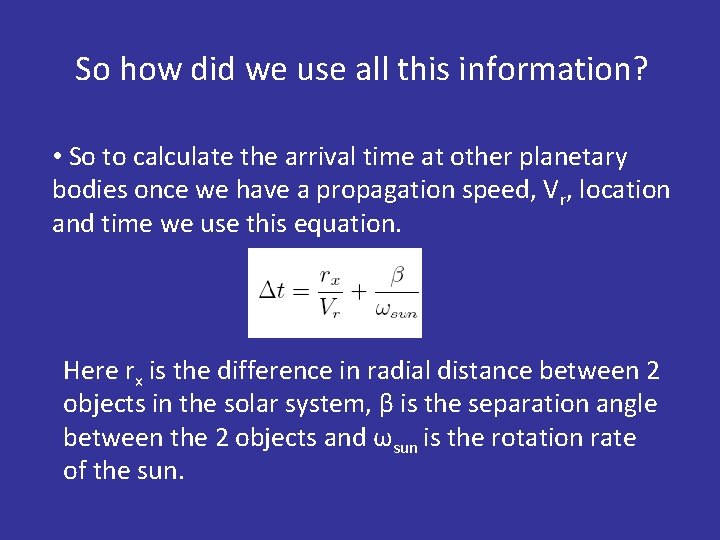
So how did we use all this information? • So to calculate the arrival time at other planetary bodies once we have a propagation speed, Vr, location and time we use this equation. Here rx is the difference in radial distance between 2 objects in the solar system, β is the separation angle between the 2 objects and ωsun is the rotation rate of the sun.
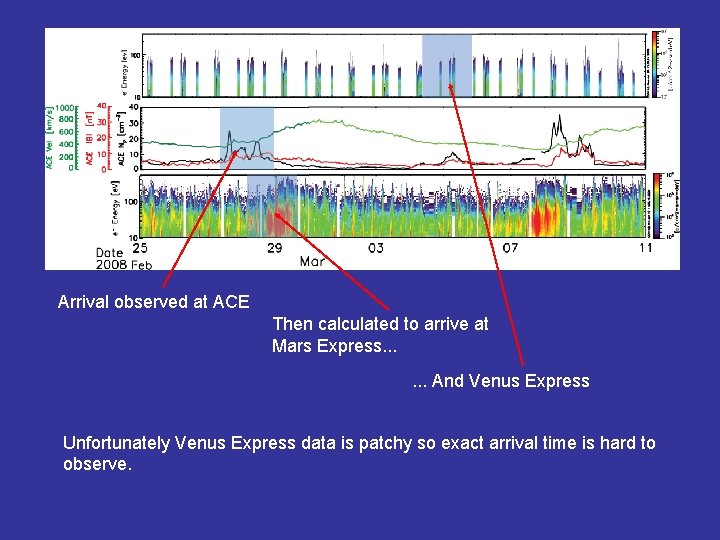
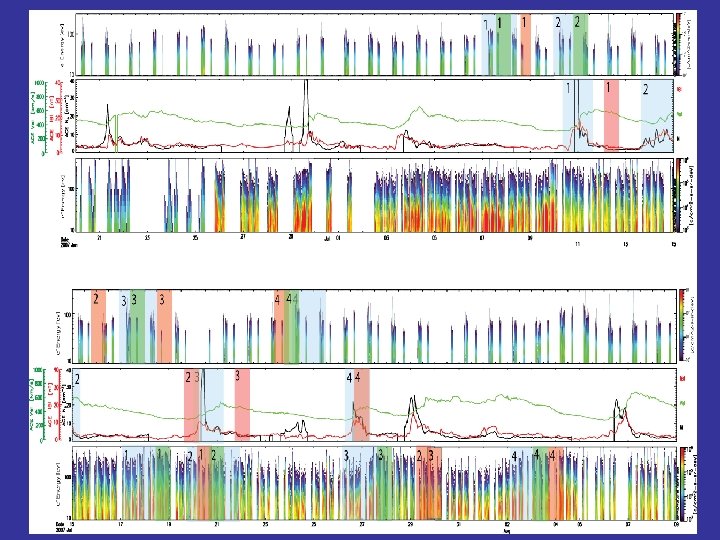
Arrival observed at ACE Then calculated to arrive at Mars Express. . . And Venus Express Unfortunately Venus Express data is patchy so exact arrival time is hard to observe.
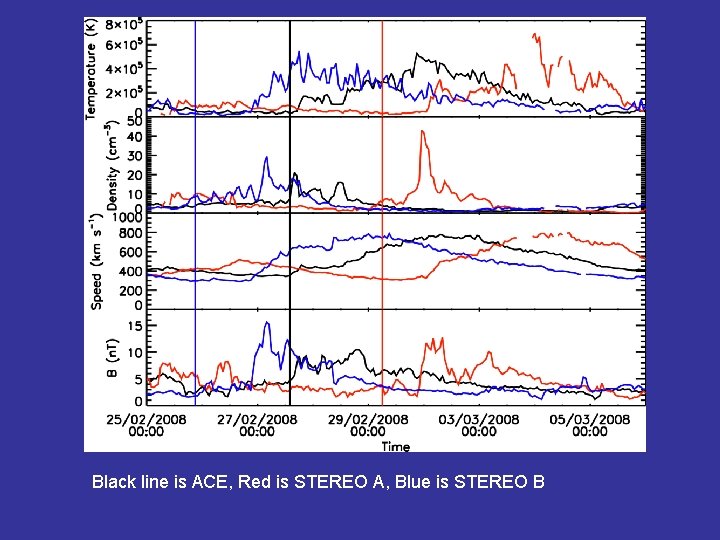
Black line is ACE, Red is STEREO A, Blue is STEREO B
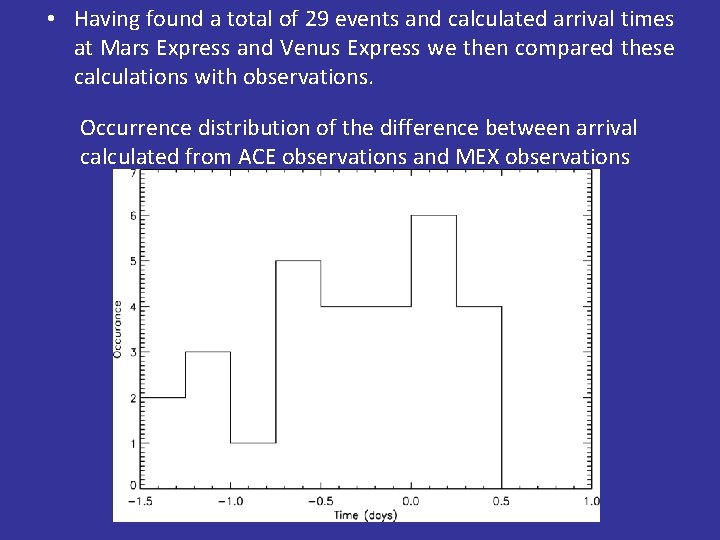
• Having found a total of 29 events and calculated arrival times at Mars Express and Venus Express we then compared these calculations with observations. Occurrence distribution of the difference between arrival calculated from ACE observations and MEX observations
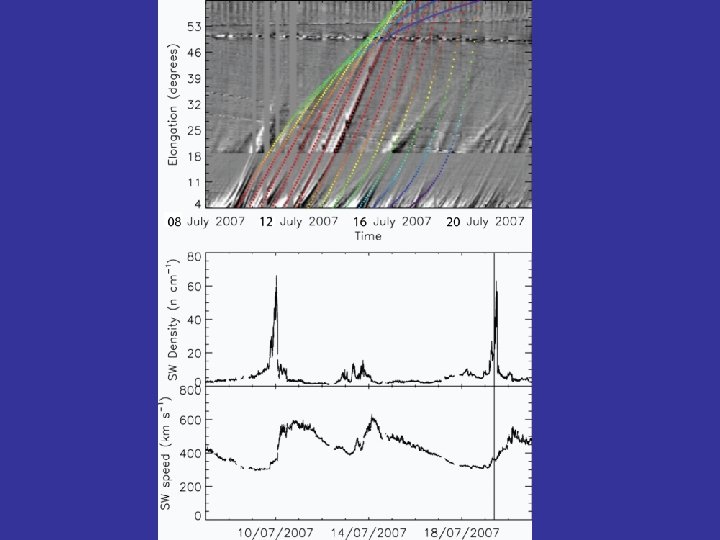
The STEREO side • We have also calculated arrival times using STEREO/HI observations and found, in general, the predicted time of arrival at Mars was off by a larger margin. • Further work is investigating why this is the case
Conclusions • Using ACE observations we are able to track SIRs (or CIRs) through the inner heliosphere and predict their arrival at the inner planets and other spacecraft within the solar system. • This should also be possible with observations from STEREO/HI but doesn’t always work • Investigations continuing along these lines.