
Radiative Transfer Prof Yuk Yung Caltech KISS Summer



- Slides: 39
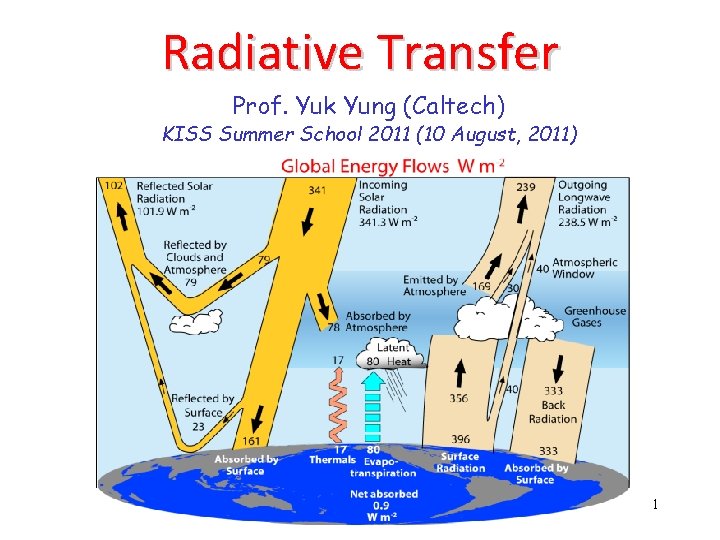
Radiative Transfer Prof. Yuk Yung (Caltech) KISS Summer School 2011 (10 August, 2011) 1
2
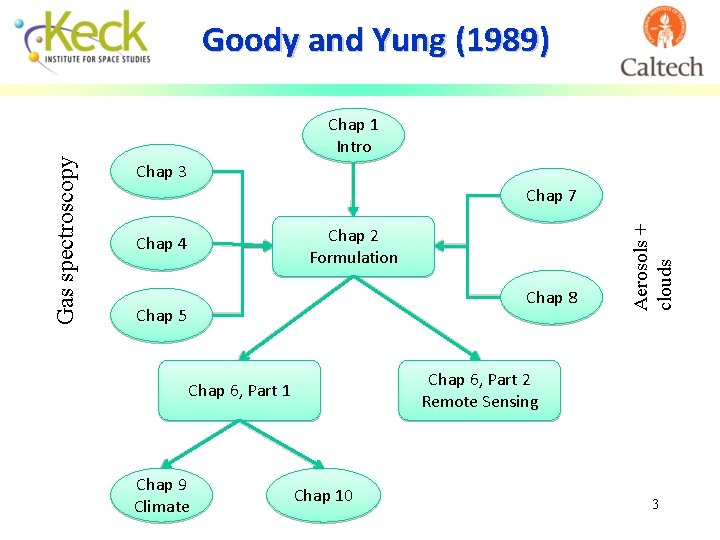
Chap 1 Intro Chap 3 Chap 7 Chap 2 Formulation Chap 4 Chap 8 Chap 5 Chap 6, Part 2 Remote Sensing Chap 6, Part 1 Chap 9 Climate Aerosols + clouds Gas spectroscopy Goody and Yung (1989) Chap 10 3
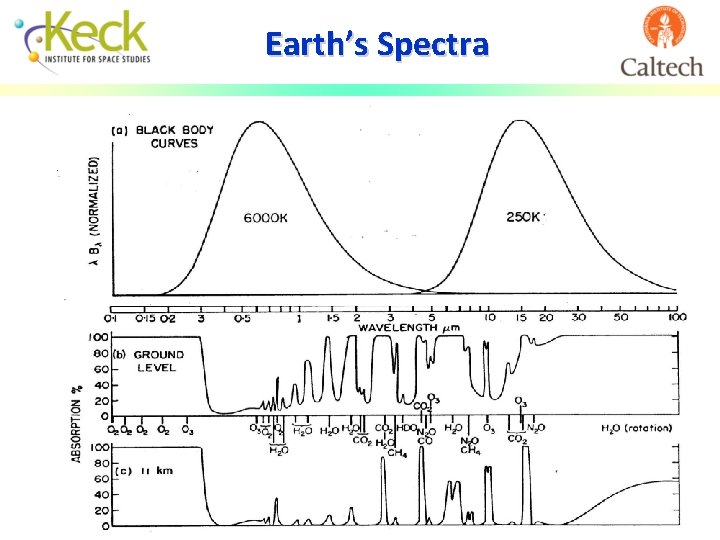
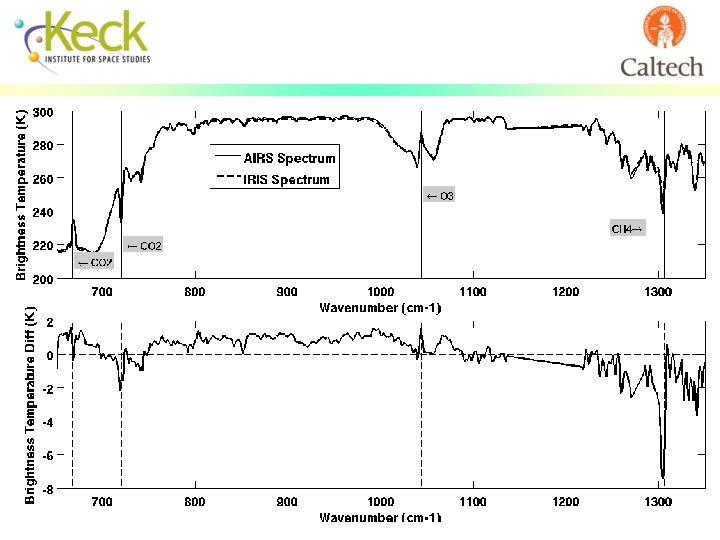
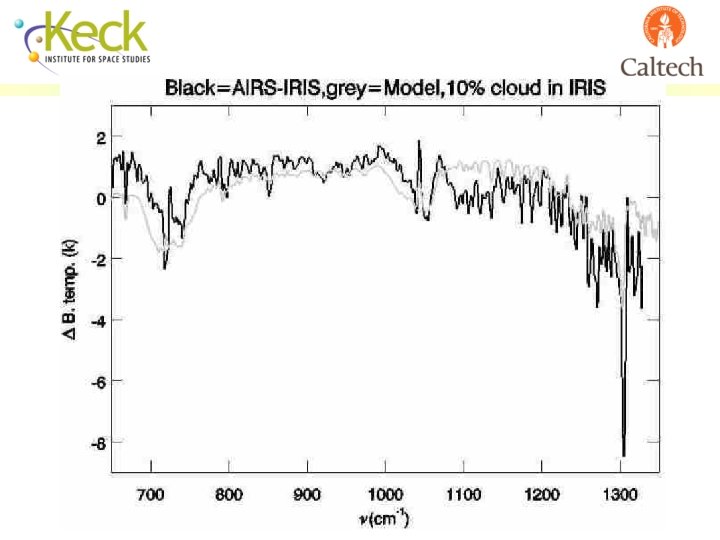
Earth’s Spectra 4
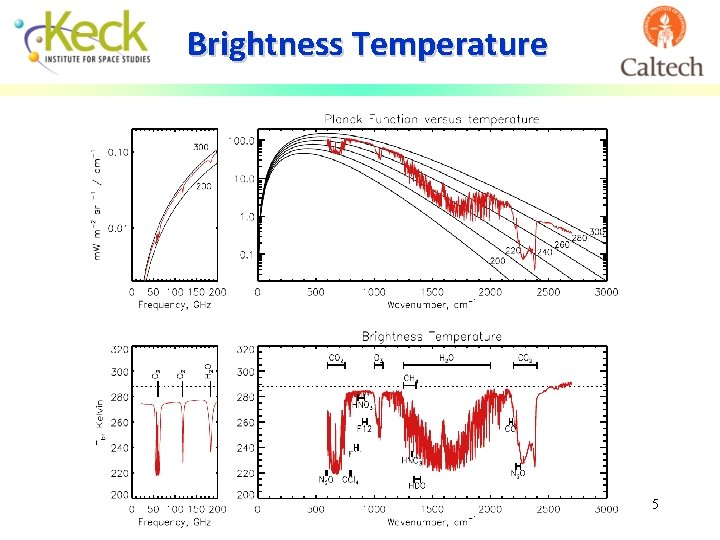
Brightness Temperature 5
6
7
8
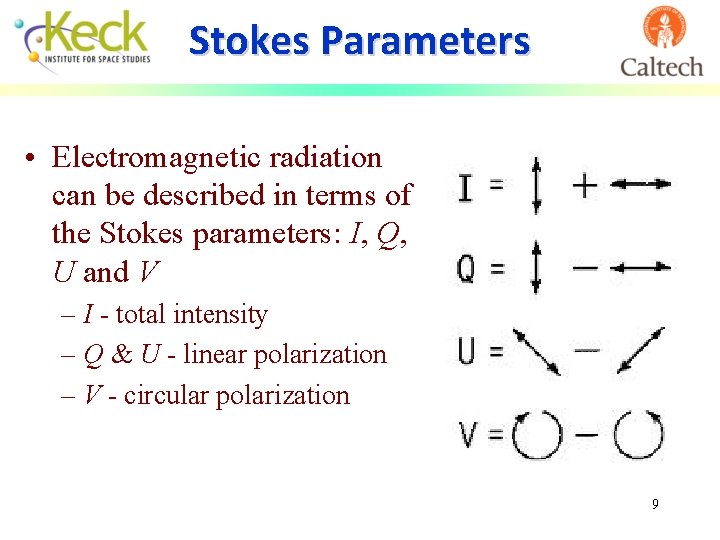
Stokes Parameters • Electromagnetic radiation can be described in terms of the Stokes parameters: I, Q, U and V – I - total intensity – Q & U - linear polarization – V - circular polarization 9
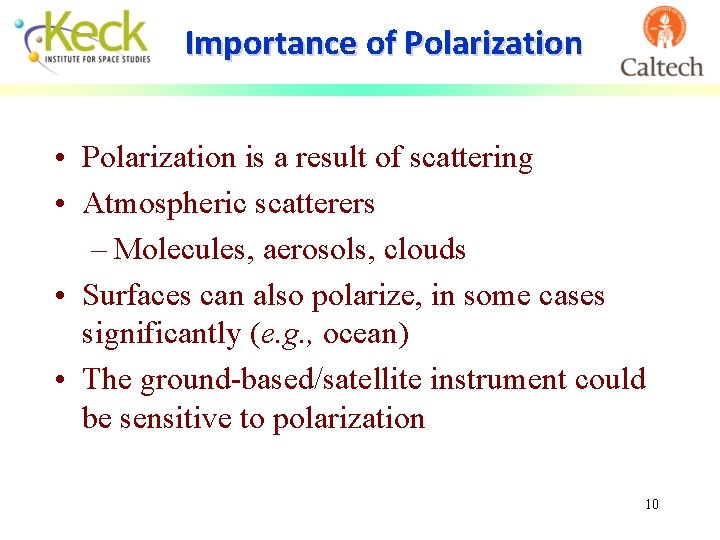
Importance of Polarization • Polarization is a result of scattering • Atmospheric scatterers – Molecules, aerosols, clouds • Surfaces can also polarize, in some cases significantly (e. g. , ocean) • The ground-based/satellite instrument could be sensitive to polarization 10
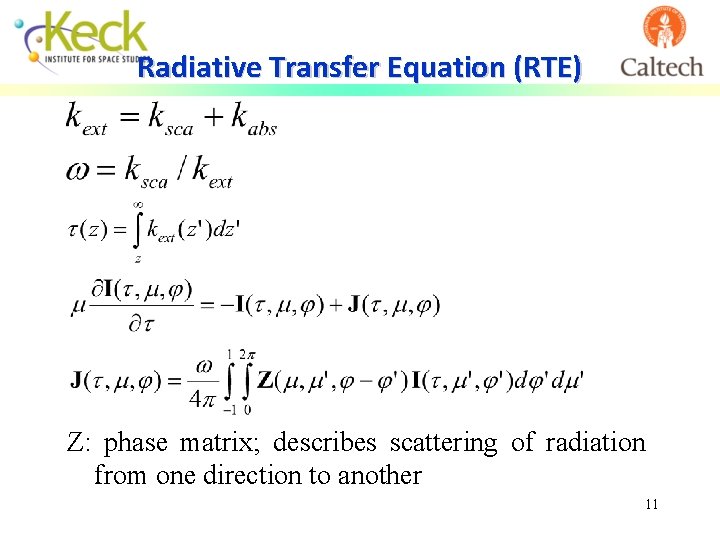
Radiative Transfer Equation (RTE) Z: phase matrix; describes scattering of radiation from one direction to another 11
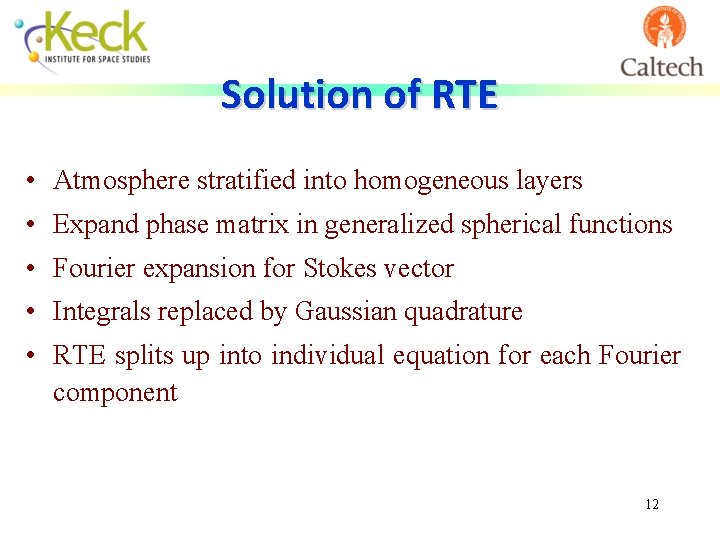
Solution of RTE • Atmosphere stratified into homogeneous layers • Expand phase matrix in generalized spherical functions • Fourier expansion for Stokes vector • Integrals replaced by Gaussian quadrature • RTE splits up into individual equation for each Fourier component 12
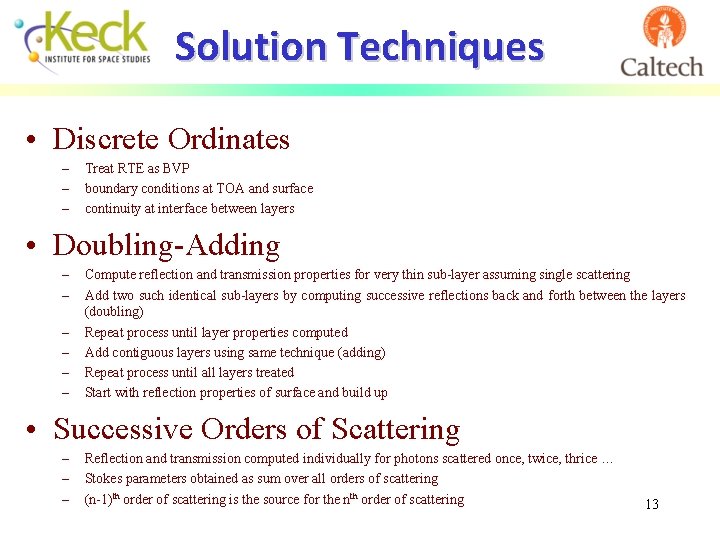
Solution Techniques • Discrete Ordinates – – – Treat RTE as BVP boundary conditions at TOA and surface continuity at interface between layers • Doubling-Adding – – – Compute reflection and transmission properties for very thin sub-layer assuming single scattering Add two such identical sub-layers by computing successive reflections back and forth between the layers (doubling) Repeat process until layer properties computed Add contiguous layers using same technique (adding) Repeat process until all layers treated Start with reflection properties of surface and build up • Successive Orders of Scattering – – – Reflection and transmission computed individually for photons scattered once, twice, thrice … Stokes parameters obtained as sum over all orders of scattering (n-1)th order of scattering is the source for the nth order of scattering 13
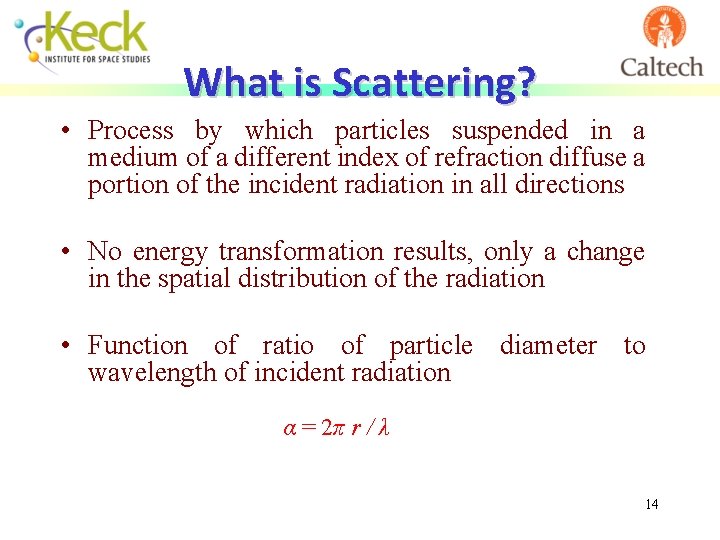
What is Scattering? • Process by which particles suspended in a medium of a different index of refraction diffuse a portion of the incident radiation in all directions • No energy transformation results, only a change in the spatial distribution of the radiation • Function of ratio of particle diameter to wavelength of incident radiation α = 2π r / λ 14
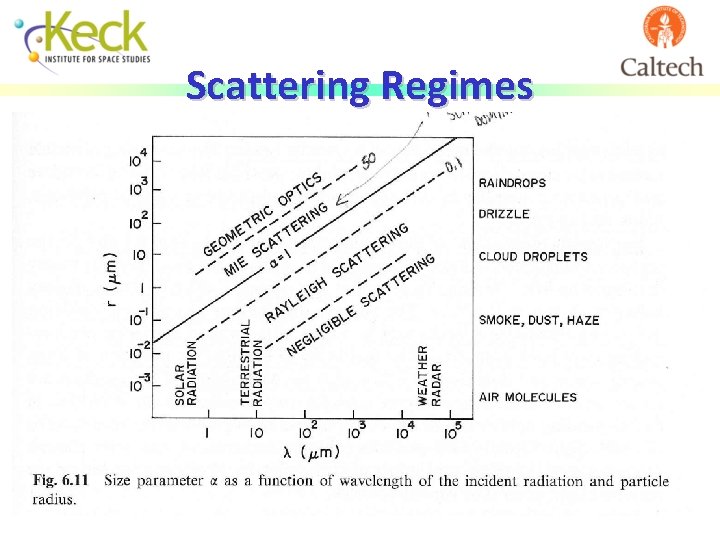
Scattering Regimes 15
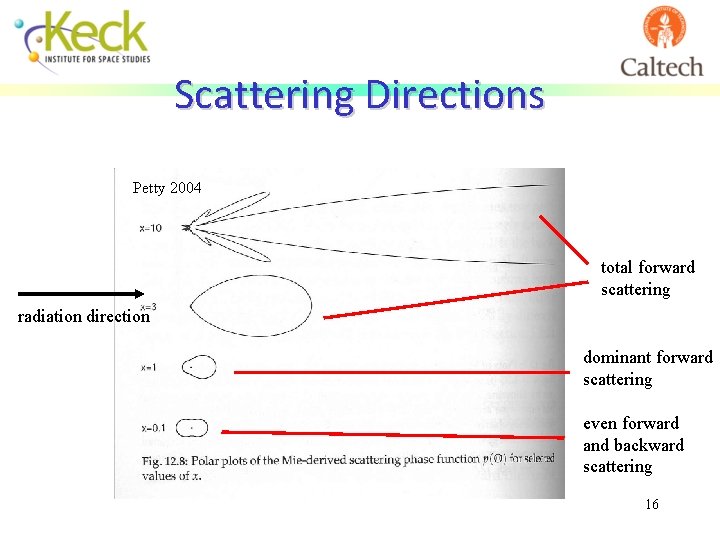
Scattering Directions Petty 2004 total forward scattering radiation direction dominant forward scattering even forward and backward scattering 16
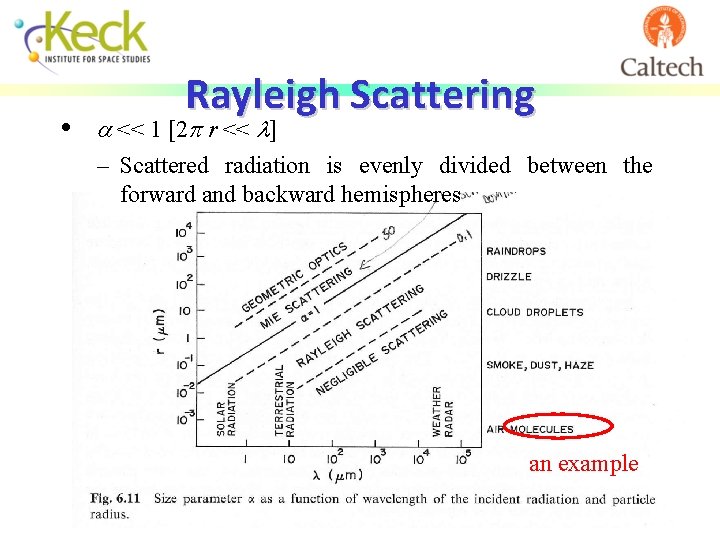
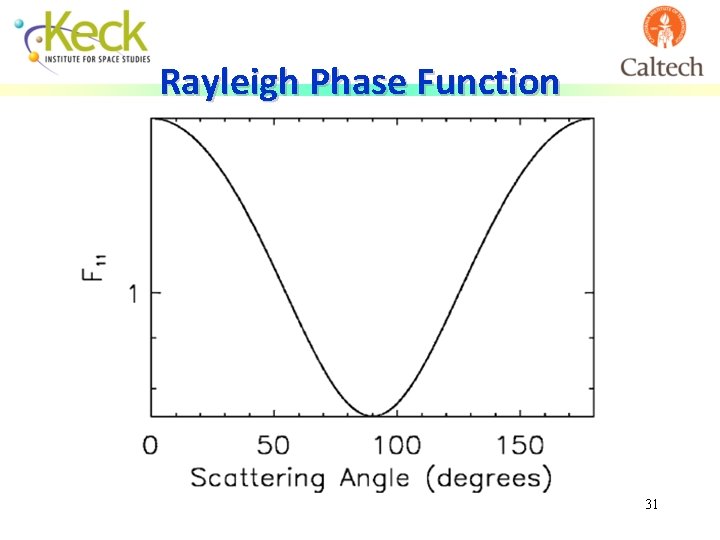
• Rayleigh Scattering a << 1 [2 p r << l] – Scattered radiation is evenly divided between the forward and backward hemispheres an example 17
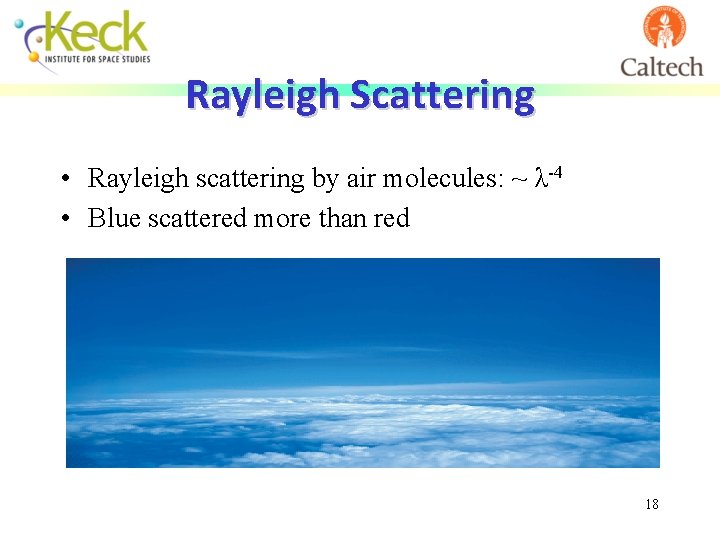
Rayleigh Scattering • Rayleigh scattering by air molecules: ~ λ-4 • Blue scattered more than red 18
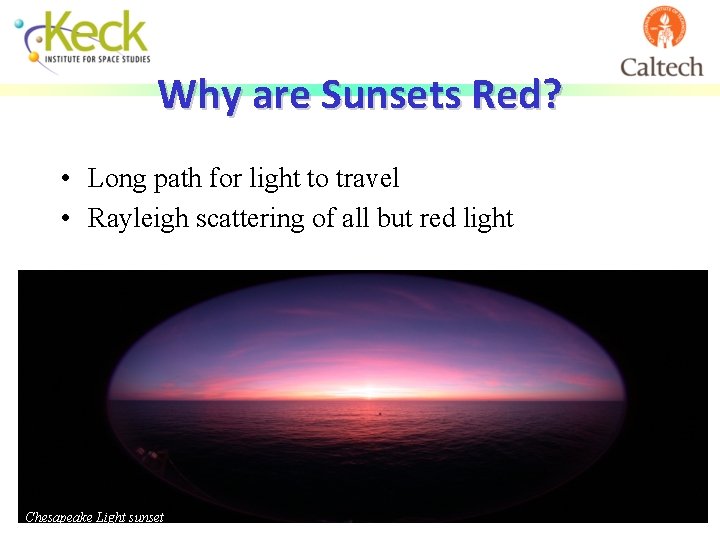
Why are Sunsets Red? • Long path for light to travel • Rayleigh scattering of all but red light Chesapeake Light sunset 19
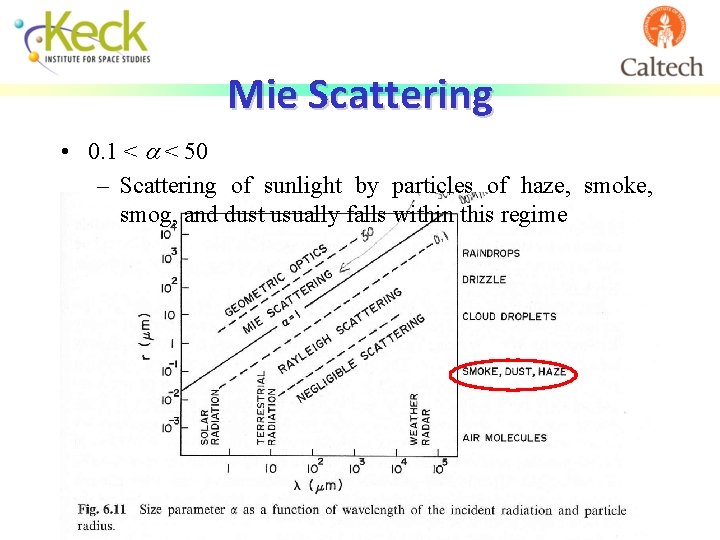
Mie Scattering • 0. 1 < a < 50 – Scattering of sunlight by particles of haze, smoke, smog, and dust usually falls within this regime 20
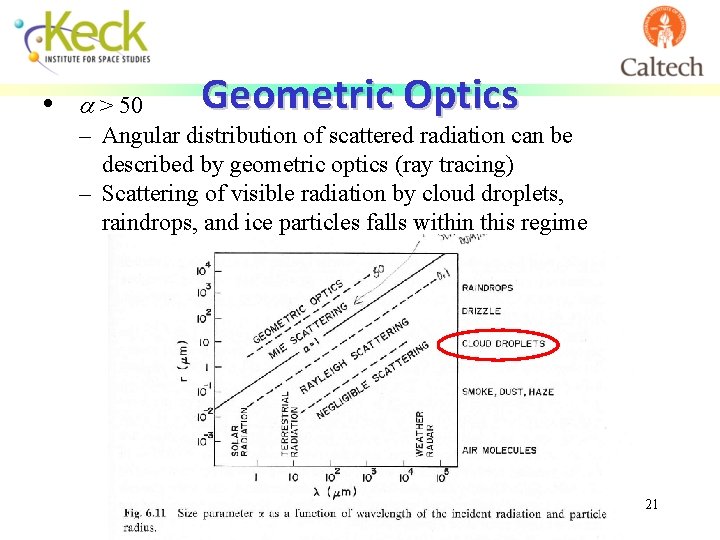
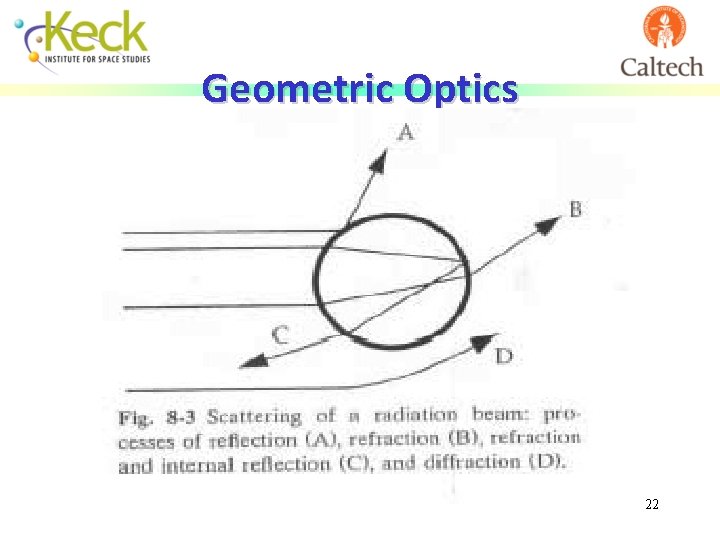
• Geometric Optics a > 50 – Angular distribution of scattered radiation can be described by geometric optics (ray tracing) – Scattering of visible radiation by cloud droplets, raindrops, and ice particles falls within this regime 21
Geometric Optics 22
Geometric Optics – small scattering angles: diffracted light predominant – other than diffraction, most of the light scattered into forward hemisphere due to rays passing through particle with two refractions – ~ 80 -120° scattering angle: reflection from outside of particles – maximum in backscattering direction (glory): incident edge rays 23
Geometric Optics – Gradual change in scattering angle at ~ 137 o (for water) results in a “bunching up” of rays • “focusing” of energy on a narrow range of scattering angle gives rise to the bright ring that we call a rainbow – Secondary rainbow arises from two internal reflections (scattering angle of ~ 130 o) and resides 7 o outside of the primary rainbow when viewed with the sun at your back 24
Aerosol Effects on Climate 25
Aerosol Effects on Climate • What if aerosols reflect incoming sunlight back to space? – Net cooling below the aerosols – Called the Direct Effect • What if dissolved aerosols in cloud droplets changes their size or optical properties? – Could enhance or decrease scattering leading to cooling or warming. – Called the Indirect Effect 26
Global Climatology of Aerosol Types – Seven basic aerosol types: sulfate(land/water), seasalt, carbonaceous, black carbon, mineral dust (accumulated/coarse) – Each mixing group is a combination of 4 aerosol components – Lognormal distribution 27
Global Climatology of Aerosol Types 28
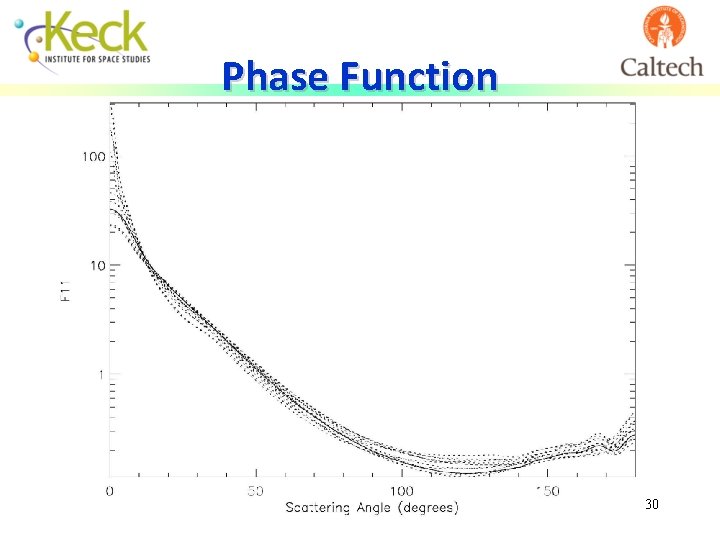
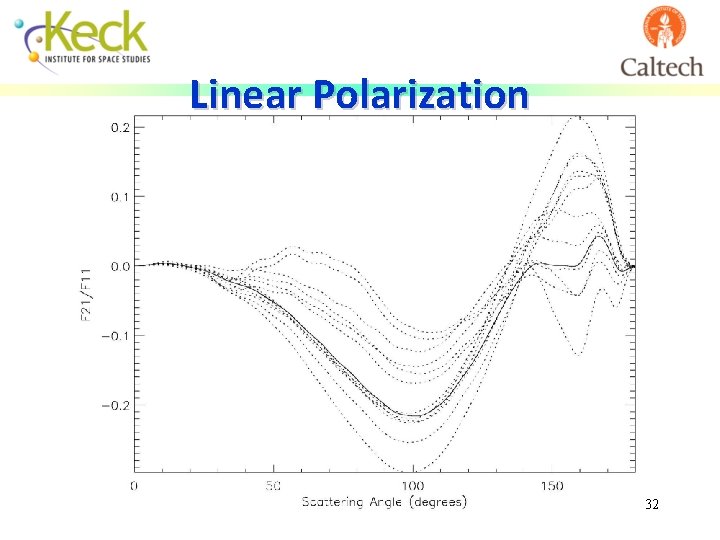
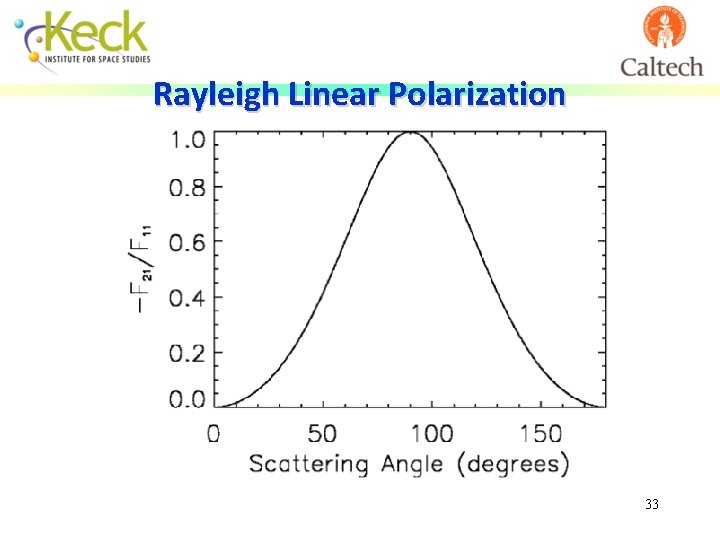
Scattering Matrix • Describes transformation from incident to viewing direction • In many cases, function only of scattering angle • (1, 1) and (1, 2) elements describe intensity and linear polarization of outgoing radiation; former called phase function 29
Phase Function 30
Rayleigh Phase Function 31
Linear Polarization 32
Rayleigh Linear Polarization 33
Thanks • Vijay Natraj • King-Fai Li, • Goody + Yung Book 34
35
36
37
38
39