
RADIATION SOURCES AND TYPES Radiation is a form





- Slides: 19
RADIATION SOURCES AND TYPES
Radiation: is a form of energy carried by waves or stream of SOME TYPES OF RADIATIONS Electromagnetic radiation: The propagation of wave-like energy (without mass) through space or matter. The energy that is propagated is accompanied by oscillating electric and magnetic fields positioned at right angles to one another. 1 -NON-IONIZING ELECTROMAGNETIC RADIATION RADIO MICROWAVES INFRA RED (HEAT) RED ORANGE YELLOW VISIBLE LIGHT (COLOR) GREEN BLUE VIOLET ULTRA VIOLET
X-RAYS GAMMA RAYS COSMIC RAYS 3 -IONIZING ATOMIC PARTICLE RADIATION BETA RAYS Are fast moving electrons emitted from the nucleus of radioactive atoms. ALPHA RAYS Are emitted from the nuclei of heavy metal and exits as two protons and neutrons, without electrons. NEUTRONS Are accelerated particles with a mass of one and no electrical charge.
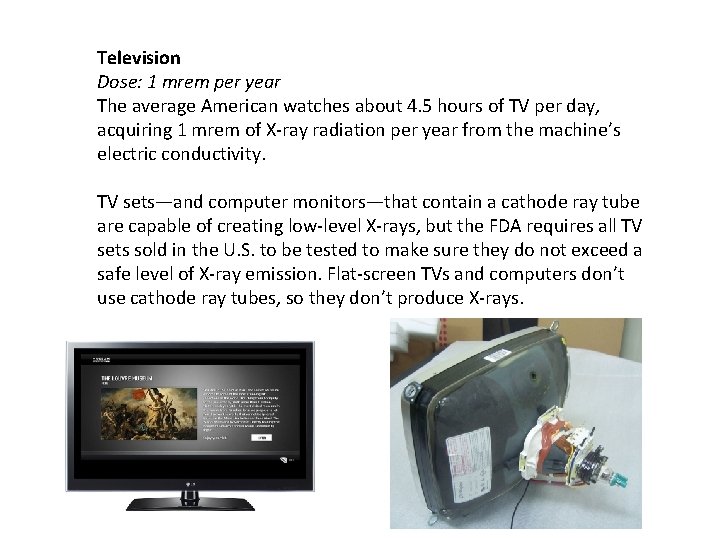
Television Dose: 1 mrem per year The average American watches about 4. 5 hours of TV per day, acquiring 1 mrem of X-ray radiation per year from the machine’s electric conductivity. TV sets—and computer monitors—that contain a cathode ray tube are capable of creating low-level X-rays, but the FDA requires all TV sets sold in the U. S. to be tested to make sure they do not exceed a safe level of X-ray emission. Flat-screen TVs and computers don’t use cathode ray tubes, so they don’t produce X-rays.
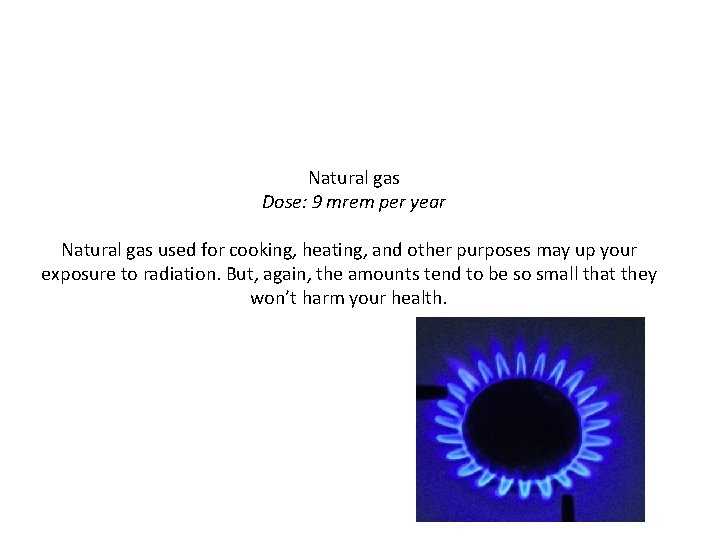
Natural gas Dose: 9 mrem per year Natural gas used for cooking, heating, and other purposes may up your exposure to radiation. But, again, the amounts tend to be so small that they won’t harm your health.
Consumer products Dose: 11 mrem per year Cell phones, fluorescent lamps, watches, clocks, televisions, computers, and even ceramics and glass all emit some form of radiation, but at low enough rates that they have no known effect on your health. Cell phones, in particular, give off radio frequency (RF) waves that aren’t as strong as X-rays, and while they might warm your cheek, the RF waves are at a low enough level that they do not damage tissue.
Cigarette smoking Dose: 1, 300 mrem per year The 20% of Americans (about 43 million) who smoke are increasing more than just their risk of lung cancer, heart disease, and stroke. They inhale small amounts of radioactive material—from both natural sources and the fertilizer used on the tobacco plants—each time they take a puff. And tar from tobacco smoke traps some of these materials, in particular lead 210 and polonium 210, in their lung passages .
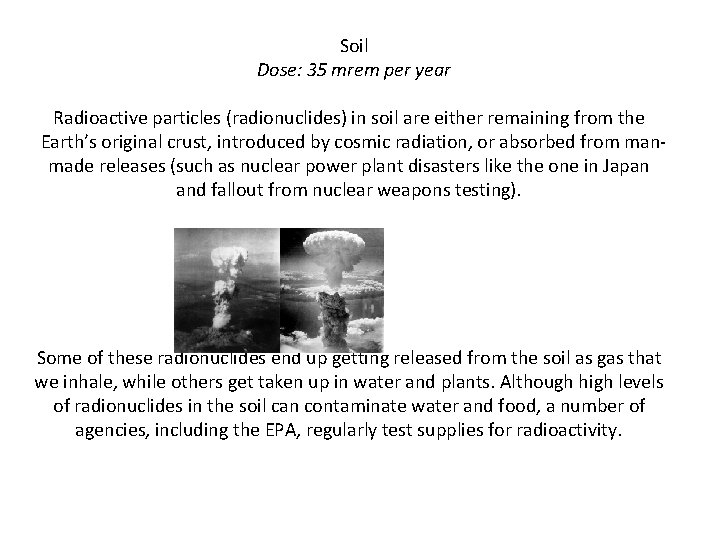
Soil Dose: 35 mrem per year Radioactive particles (radionuclides) in soil are either remaining from the Earth’s original crust, introduced by cosmic radiation, or absorbed from manmade releases (such as nuclear power plant disasters like the one in Japan and fallout from nuclear weapons testing). Some of these radionuclides end up getting released from the soil as gas that we inhale, while others get taken up in water and plants. Although high levels of radionuclides in the soil can contaminate water and food, a number of agencies, including the EPA, regularly test supplies for radioactivity.
Drinking water Dose: 5 mrem per year It’s no surprise that sources of drinking water in the U. S. contain low levels of radiation. It comes from rivers and lakes (if you live in an urban area) or wells (if you live in a rural area) where it can pick up radiation from natural sources like rocks and soil. Bodies of water that are near nuclear power plants are vulnerable to contamination with radioactive waste water, and are subject to extensive monitoring by the Environmental Protection Agency (EPA) to ensure these man-made sources of radiation do not surpass 4 mrem per year. 100 g of Brazil nuts per week=annual dose 0. 2 msv
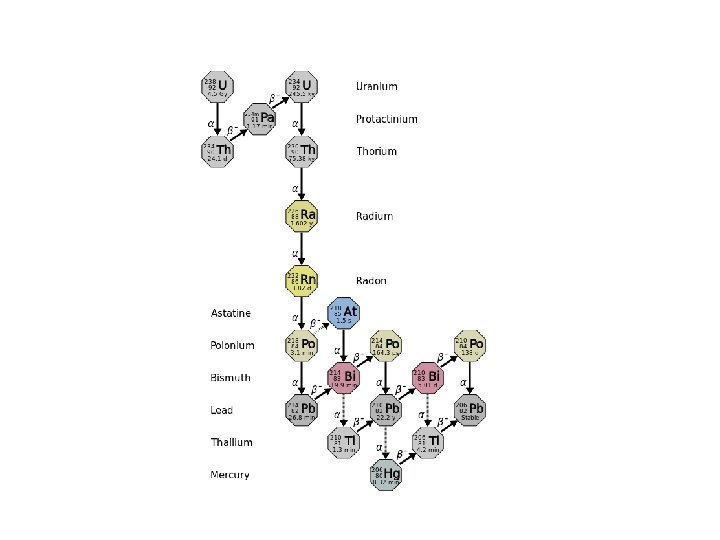
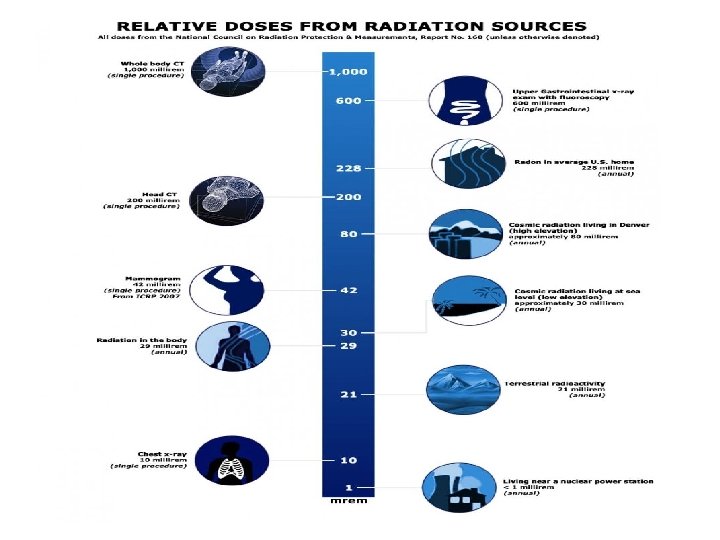
Radon Dose: 200 mrem per year Radon is a radioactive gas that you can’t see or smell, but it may be in your home. It often creeps in through the floor or walls from natural decay of uranium in the ground, and gets trapped within the building; it can also be present in construction materials. In addition to breathing radon, you may be swallowing it in water or as dust particles. Next to smoking, radon is the second leading cause of lung cancer in the U. S.
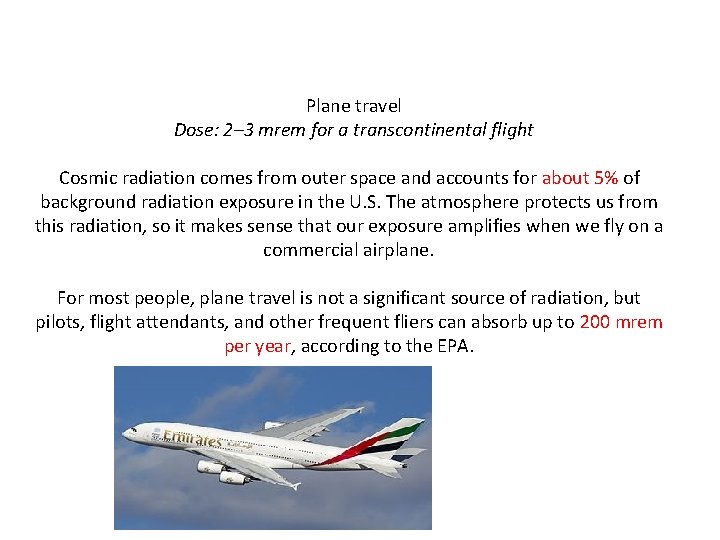
Plane travel Dose: 2– 3 mrem for a transcontinental flight Cosmic radiation comes from outer space and accounts for about 5% of background radiation exposure in the U. S. The atmosphere protects us from this radiation, so it makes sense that our exposure amplifies when we fly on a commercial airplane. For most people, plane travel is not a significant source of radiation, but pilots, flight attendants, and other frequent fliers can absorb up to 200 mrem per year, according to the EPA.
The new full-body X-ray scanners in airports are another source of radiation, but the exposure is negligible—about 0. 01 mrem per 3 -second screening.
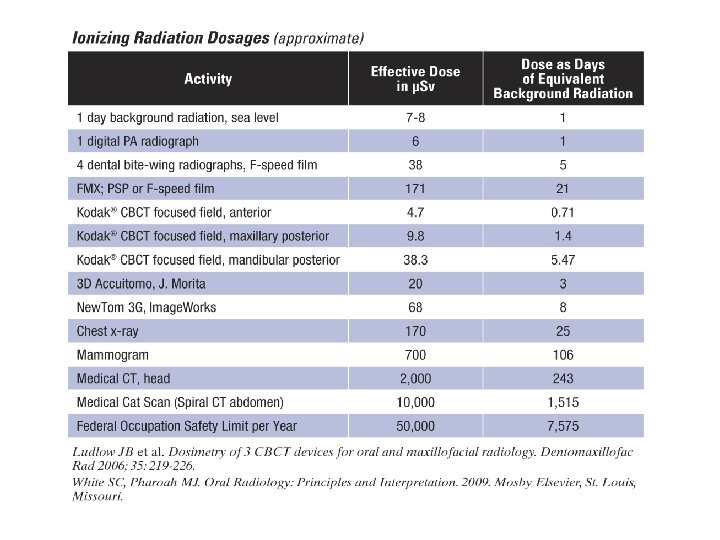
Medical imaging Dose: 10 to 1, 000 mrem per screening Many imaging techniques to diagnose medical conditions use radiation, but the dose varies widely. Chest X-rays and dental X-rays deliver about 10 mrem, while mammograms (another form of X-ray) deliver about 138 per image. CT scans can have as many as 1, 000 mrem per scan. "Outside of ordinary background radiation, the most common cause of exposure in the U. S. is from medical sources, " Frey says. "But as long as there is a good reason for that procedure, the benefits will exceed the risks. "
THANKS