
Radiation Safety in the Cath Lab is Not
Radiation Safety in the Cath Lab is Not Just for Cardiologists: What Nurses & Techs Need to Know to Maximize Safety Ryan D Madder, MD, FACC Section Chief, Interventional Cardiology Medical Director, Cardiac Cath Lab Frederik Meijer Heart & Vascular Institute Spectrum Health & Clinical Associate Professor of Medicine Michigan State University College of Human Medicine Grand Rapids, Michigan
Disclosures • Research Support: Corindus Vascular Robotics • Advisory Board: Corindus Vascular Robotics
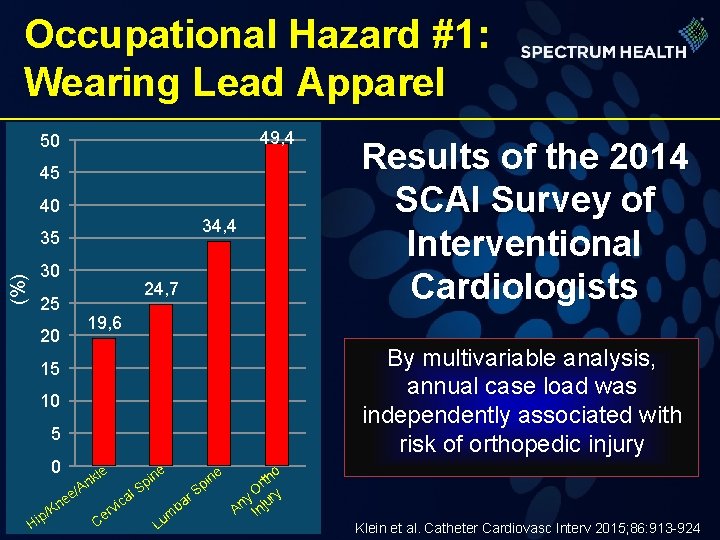
Occupational Hazard #1: Wearing Lead Apparel 49, 4 50 45 40 34, 4 (%) 35 30 25 24, 7 19, 6 20 By multivariable analysis, annual case load was independently associated with risk of orthopedic injury 15 10 5 0 e le nk A / e e Kn p/ Hi Results of the 2014 SCAI Survey of Interventional Cardiologists l r Ce a vic in Sp r L ba m u i Sp ne o rth O ry y u An Inj Klein et al. Catheter Cardiovasc Interv 2015; 86: 913 -924
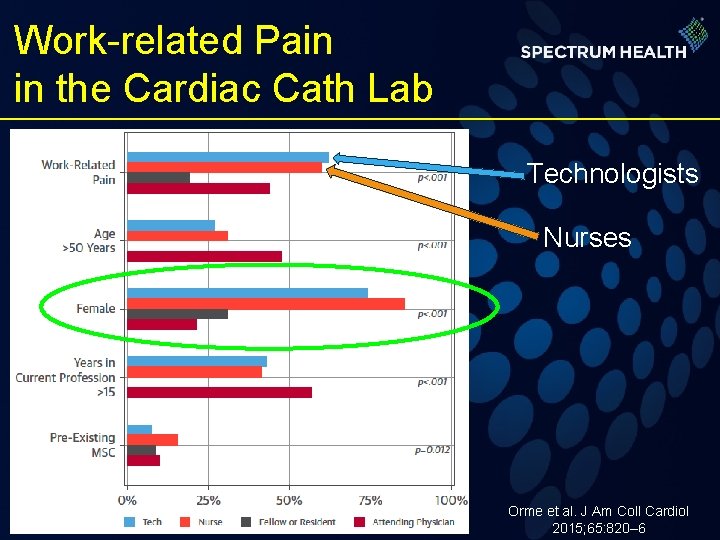
Work-related Pain in the Cardiac Cath Lab Technologists Nurses Orme et al. J Am Coll Cardiol 2015; 65: 820– 6
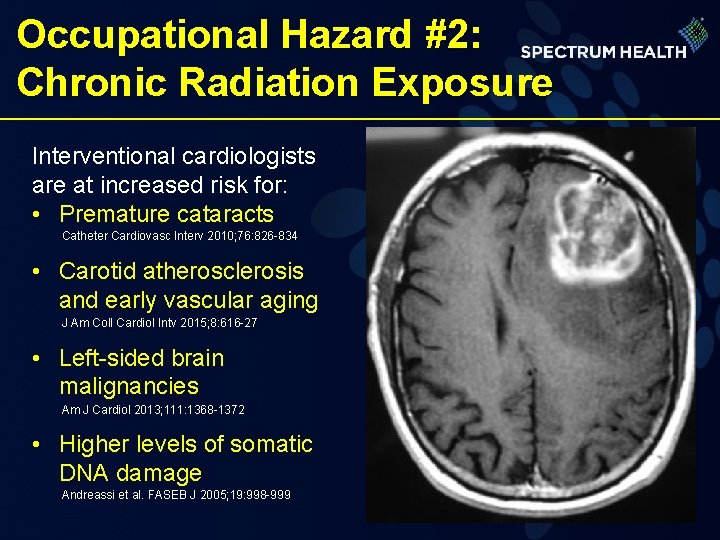
Occupational Hazard #2: Chronic Radiation Exposure Interventional cardiologists are at increased risk for: • Premature cataracts Catheter Cardiovasc Interv 2010; 76: 826 -834 • Carotid atherosclerosis and early vascular aging J Am Coll Cardiol Intv 2015; 8: 616 -27 • Left-sided brain malignancies Am J Cardiol 2013; 111: 1368 -1372 • Higher levels of somatic DNA damage Andreassi et al. FASEB J 2005; 19: 998 -999
Risk of Premature Cataract: Systematic Review & Meta-analysis Elmaraezy et al. Catheter Cardiovasc Interv. 2017; 90: 1 -9
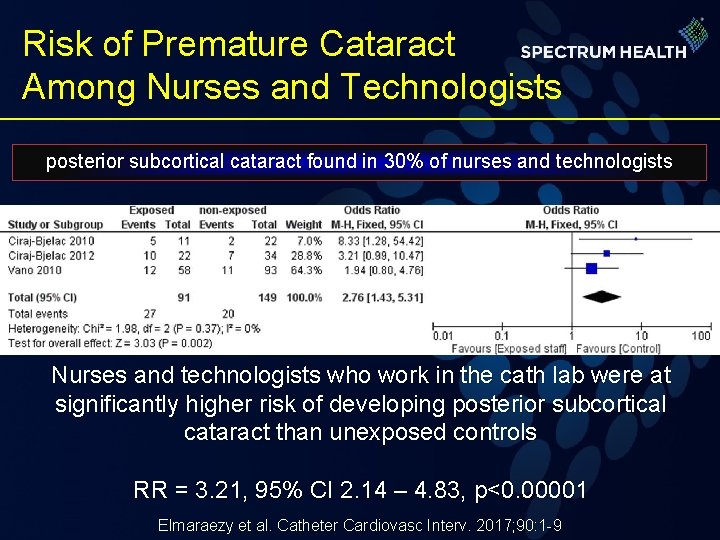
Risk of Premature Cataract Among Nurses and Technologists posterior subcortical cataract found in 30% of nurses and technologists Nurses and technologists who work in the cath lab were at significantly higher risk of developing posterior subcortical cataract than unexposed controls RR = 3. 21, 95% CI 2. 14 – 4. 83, p<0. 00001 Elmaraezy et al. Catheter Cardiovasc Interv. 2017; 90: 1 -9
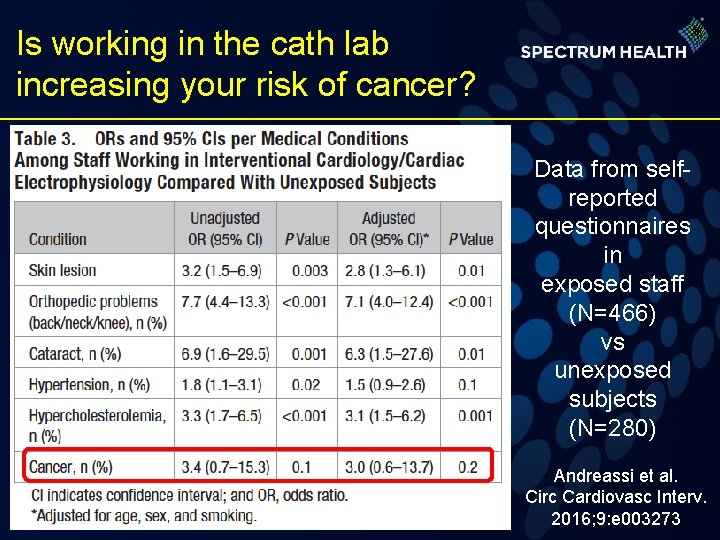
Is working in the cath lab increasing your risk of cancer? Data from selfreported questionnaires in exposed staff (N=466) vs unexposed subjects (N=280) Andreassi et al. Circ Cardiovasc Interv. 2016; 9: e 003273
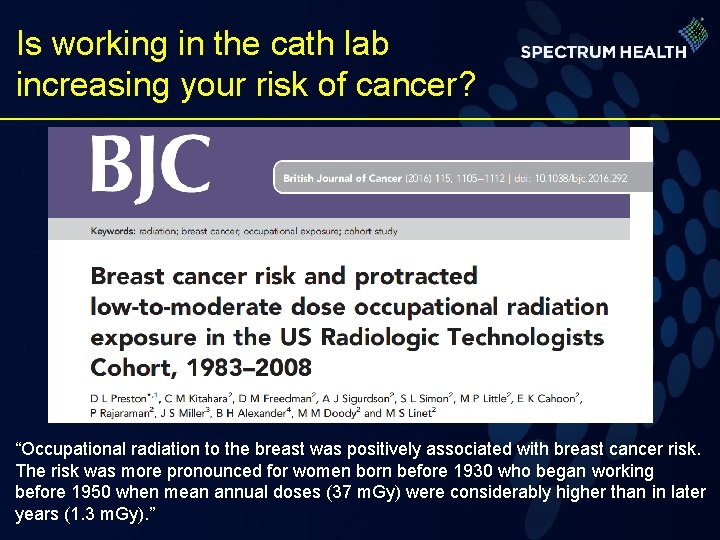
Is working in the cath lab increasing your risk of cancer? “Occupational radiation to the breast was positively associated with breast cancer risk. The risk was more pronounced for women born before 1930 who began working before 1950 when mean annual doses (37 m. Gy) were considerably higher than in later years (1. 3 m. Gy). ”
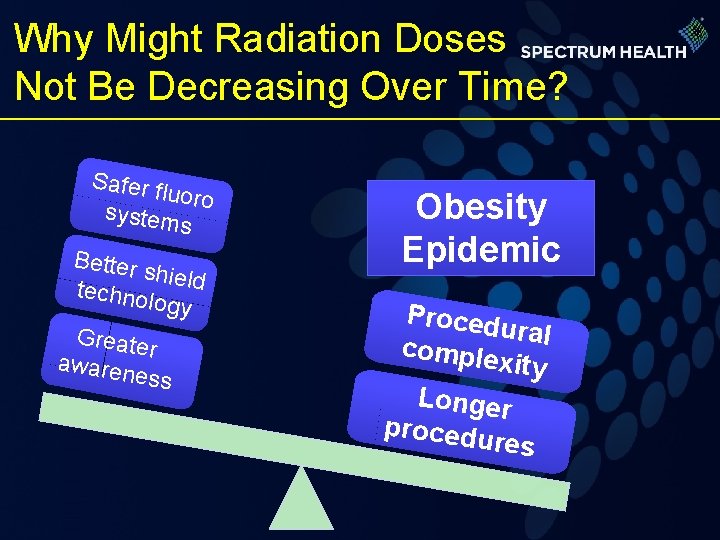
Why Might Radiation Doses Not Be Decreasing Over Time? Safer f luoro system s Better shield techno logy Greate r awaren ess Obesity Epidemic Proced ural comple xity Longer procedu res
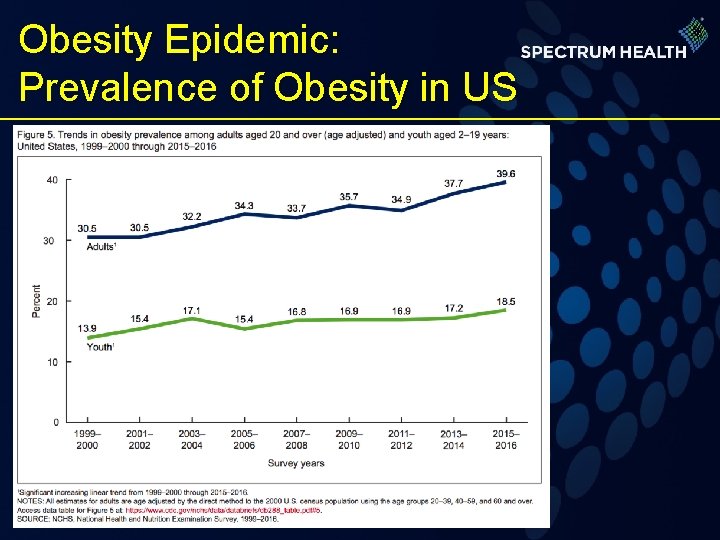
Obesity Epidemic: Prevalence of Obesity in US
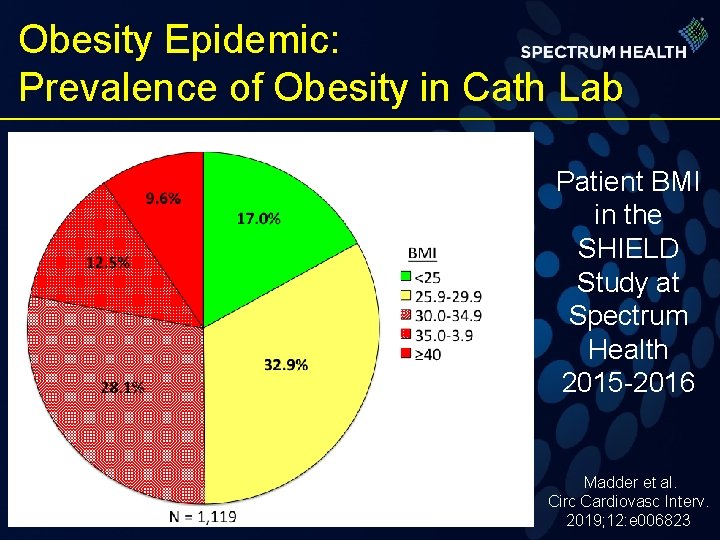
Obesity Epidemic: Prevalence of Obesity in Cath Lab Patient BMI in the SHIELD Study at Spectrum Health 2015 -2016 Madder et al. Circ Cardiovasc Interv. 2019; 12: e 006823
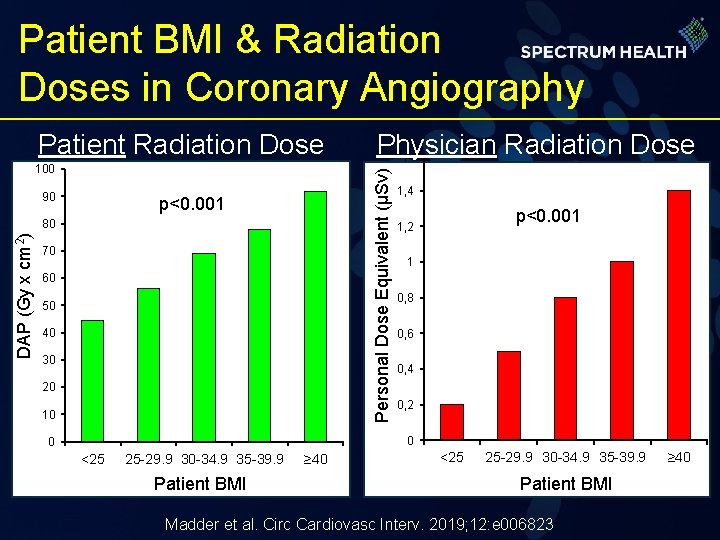
Patient BMI & Radiation Doses in Coronary Angiography Patient Radiation Dose 90 Personal Dose Equivalent (μSv) 100 p<0. 001 80 DAP (Gy x cm 2) Physician Radiation Dose 1, 6 70 60 50 40 30 20 10 1, 4 p<0. 001 1, 2 1 0, 8 0, 6 0, 4 0, 2 0 0 <25 25 -29. 9 30 -34. 9 35 -39. 9 Patient BMI ≥ 40 <25 25 -29. 9 30 -34. 9 35 -39. 9 Patient BMI Madder et al. Circ Cardiovasc Interv. 2019; 12: e 006823 ≥ 40
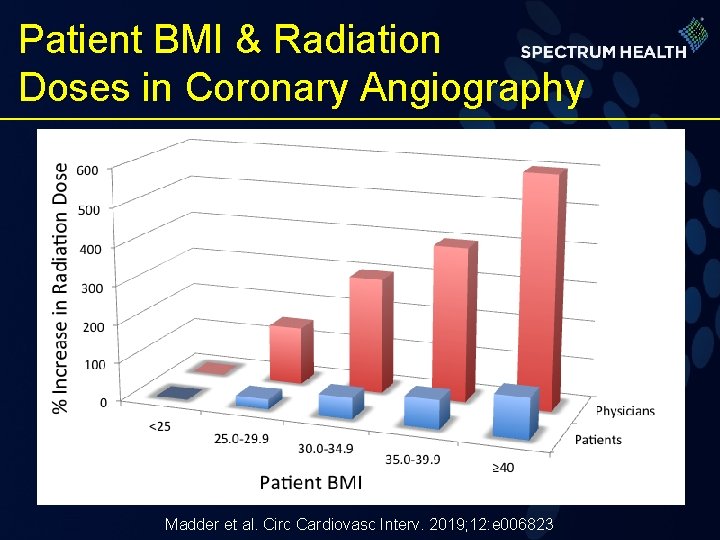
Patient BMI & Radiation Doses in Coronary Angiography Madder et al. Circ Cardiovasc Interv. 2019; 12: e 006823
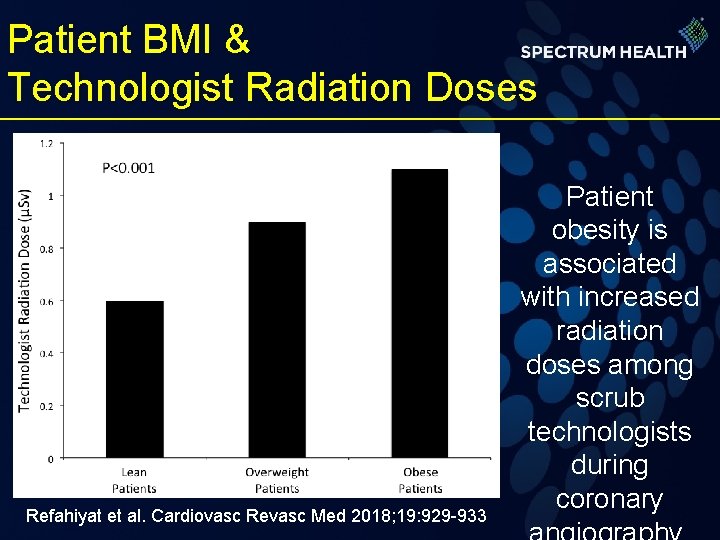
Patient BMI & Technologist Radiation Doses Refahiyat et al. Cardiovasc Revasc Med 2018; 19: 929 -933 Patient obesity is associated with increased radiation doses among scrub technologists during coronary
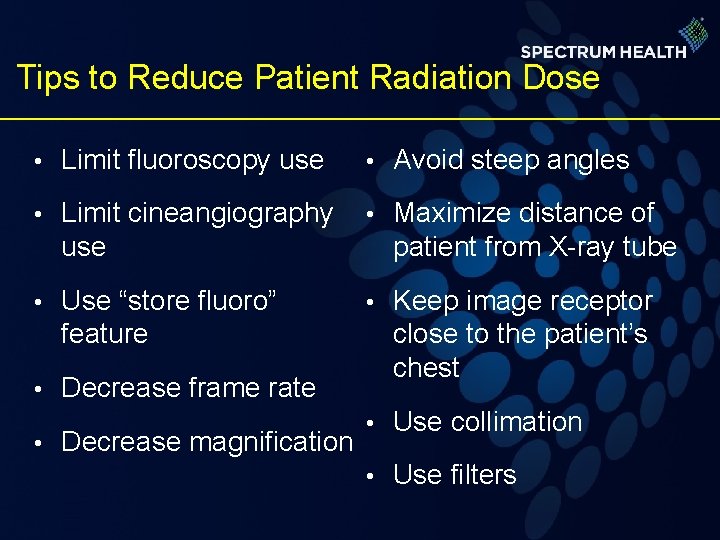
Tips to Reduce Patient Radiation Dose • Limit fluoroscopy use • Avoid steep angles • Limit cineangiography use • Maximize distance of patient from X-ray tube • Use “store fluoro” feature • • Decrease frame rate Keep image receptor close to the patient’s chest • Use collimation • Use filters • Decrease magnification
- Slides: 16