
Radiation Protection in Dental Radiology Training material developed
- Slides: 63
Radiation Protection in Dental Radiology Training material developed by the International Atomic Energy Agency in collaboration with: World Health Organization, FDI World Dental Federation, International Association of Dento. Maxillofacial Radiology, International Organization for Medical Physics, and Image Gently Alliance General Principles of Radiation Protection L 01 IAEA International Atomic Energy Agency
Educational Objectives • Understand the importance of adhering to the principles of • • • radiation protection in dentistry Understand the properties of ionizing radiation (esp. x-rays), and their effects on living tissue Distinguish between stochastic effects and tissue reactions Distinguish between absorbed dose, equivalent dose and effective dose Understand the linear-non-threshold model and its implication for radiation protection Understand the dose-risk relation of stochastic effects, and the effect of age and gender Understand the principles of justification, optimization of protection, and application of dose limits IAEA Radiation Protection in Dental Radiology L 01 General Principles of Radiation Protection 2
Overview • • • Why radiation protection in dentistry? Ionizing radiation & its biological effects Radiation dose Dose vs. risk General principles of radiation protection IAEA Radiation Protection in Dental Radiology L 01 General Principles of Radiation Protection 3
Overview • • • Why radiation protection in dentistry? Ionizing radiation & its biological effects Radiation dose Dose vs. risk General principles of radiation protection IAEA Radiation Protection in Dental Radiology L 01 General Principles of Radiation Protection 4
Why radiation protection in dentistry? • Modern dental office: 1. Variety of radiographic equipment • Intra-oral, panoramic, cephalometric, cone-beam CT, …. 2. Several people prone to radiation exposure • Patient being imaged, other patients, dentist, other dental workers, … IAEA Radiation Protection in Dental Radiology L 01 General Principles of Radiation Protection 5
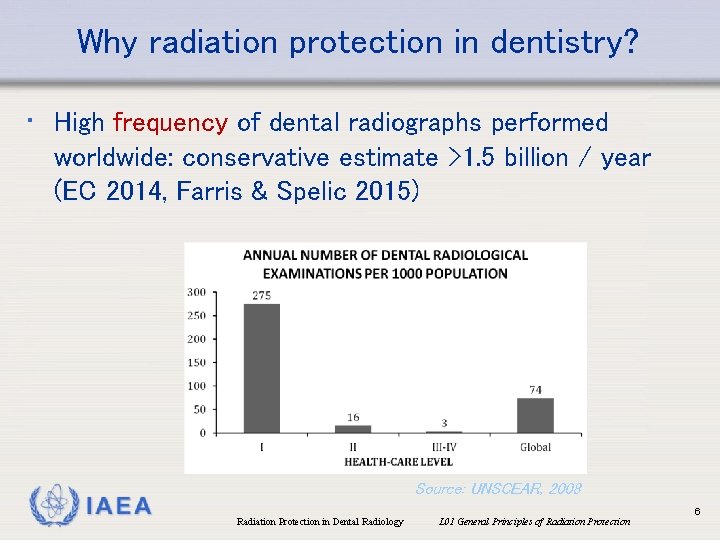
Why radiation protection in dentistry? • High frequency of dental radiographs performed worldwide: conservative estimate >1. 5 billion / year (EC 2014, Farris & Spelic 2015) IAEA Source: UNSCEAR, 2008 Radiation Protection in Dental Radiology L 01 General Principles of Radiation Protection 6
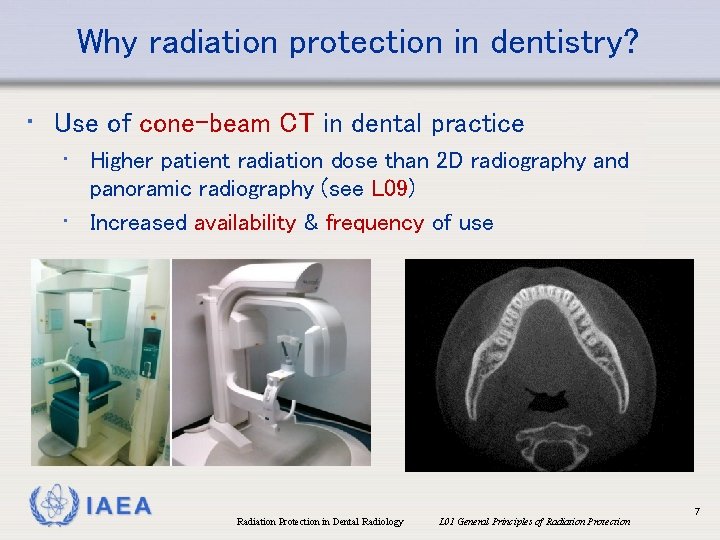
Why radiation protection in dentistry? • Use of cone-beam CT in dental practice • Higher patient radiation dose than 2 D radiography and panoramic radiography (see L 09) • Increased availability & frequency of use IAEA Radiation Protection in Dental Radiology L 01 General Principles of Radiation Protection 7
Why radiation protection in dentistry? • Relatively high % of pediatric radiographs in dentistry, e. g. for: • Caries assessment • Orthodontic planning • Developmental disorders (e. g. cleft palate) • See L 02 for general radiation protection considerations for children IAEA Radiation Protection in Dental Radiology L 01 General Principles of Radiation Protection 8
Why radiation protection in dentistry? • Self-referral issue in dentistry (Farman 2009) • May increase the frequency of imaging examinations compared with referral to a radiologist • Issue is compounded due to the introduction of CBCT in dentistry • Economical considerations • Legal considerations (“protective imaging” is not in line with the justification principle and should be avoided) • Training and expertise to interpret CBCT images IAEA Radiation Protection in Dental Radiology L 01 General Principles of Radiation Protection 9
Overview • • • Why radiation protection in dentistry? Ionizing radiation & its biological effects Radiation dose Dose vs. risk General principles of radiation protection IAEA Radiation Protection in Dental Radiology L 01 General Principles of Radiation Protection 10
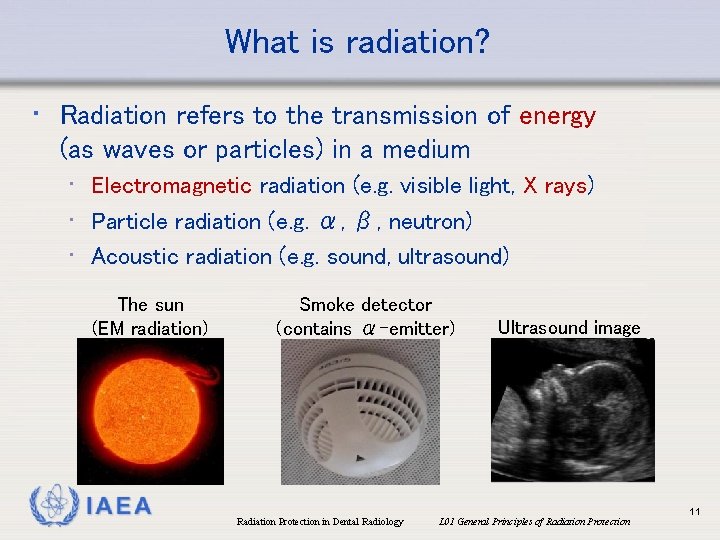
What is radiation? • Radiation refers to the transmission of energy (as waves or particles) in a medium • Electromagnetic radiation (e. g. visible light, X rays) • Particle radiation (e. g. α, β, neutron) • Acoustic radiation (e. g. sound, ultrasound) The sun (EM radiation) IAEA Smoke detector (contains α-emitter) Ultrasound image Radiation Protection in Dental Radiology L 01 General Principles of Radiation Protection 11
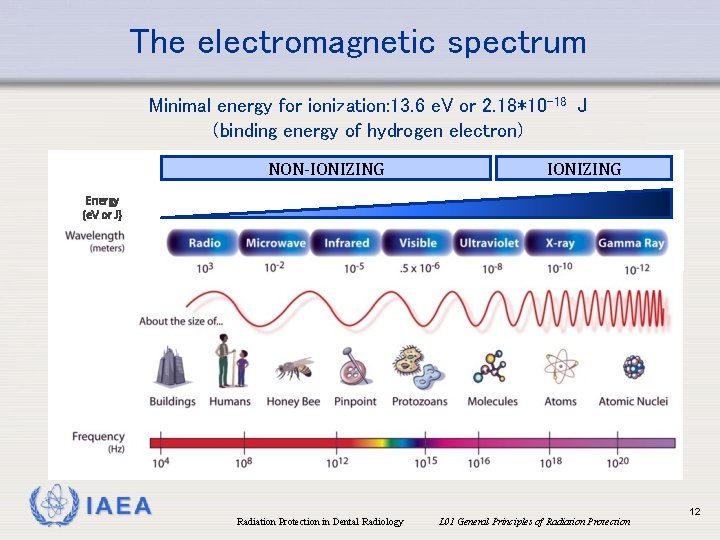
The electromagnetic spectrum Minimal energy for ionization: 13. 6 e. V or 2. 18*10 -18 J (binding energy of hydrogen electron) NON-IONIZING Energy (e. V or J) IAEA Radiation Protection in Dental Radiology L 01 General Principles of Radiation Protection 12
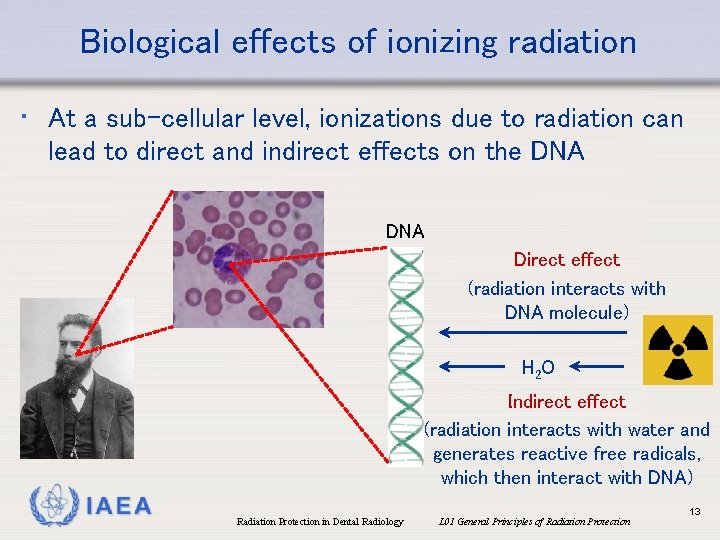
Biological effects of ionizing radiation • At a sub-cellular level, ionizations due to radiation can lead to direct and indirect effects on the DNA Direct effect (radiation interacts with DNA molecule) H 2 O Indirect effect (radiation interacts with water and generates reactive free radicals, which then interact with DNA) IAEA Radiation Protection in Dental Radiology L 01 General Principles of Radiation Protection 13
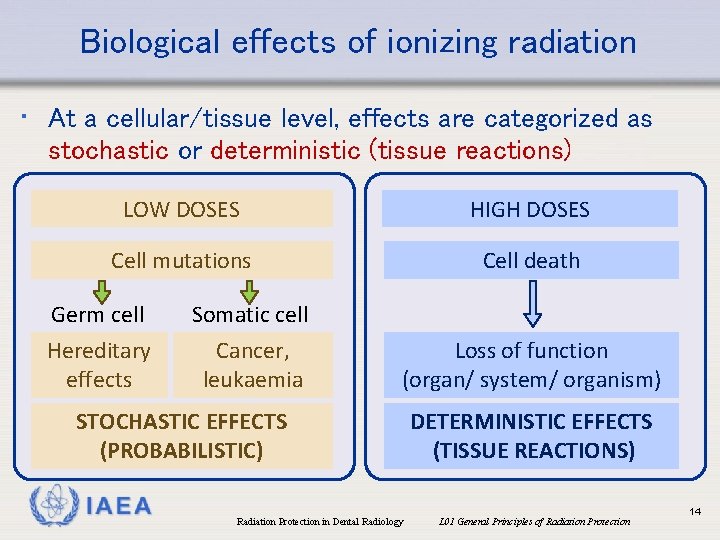
Biological effects of ionizing radiation • At a cellular/tissue level, effects are categorized as stochastic or deterministic (tissue reactions) LOW DOSES HIGH DOSES Cell mutations Cell death Germ cell Somatic cell Hereditary effects Cancer, leukaemia STOCHASTIC EFFECTS (PROBABILISTIC) IAEA Loss of function (organ/ system/ organism) DETERMINISTIC EFFECTS (TISSUE REACTIONS) Radiation Protection in Dental Radiology L 01 General Principles of Radiation Protection 14
Overview • • • Why radiation protection in dentistry? Ionizing radiation & its biological effects Radiation dose Dose vs. risk General principles of radiation protection IAEA Radiation Protection in Dental Radiology L 01 General Principles of Radiation Protection 15
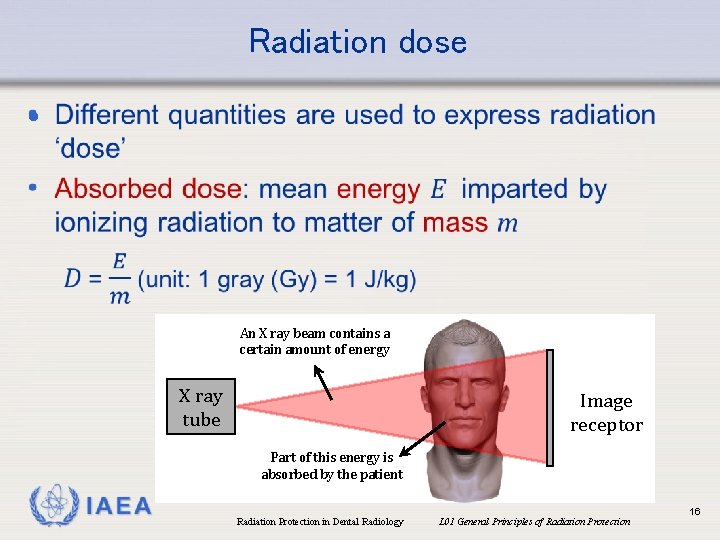
Radiation dose • An X ray beam contains a certain amount of energy X ray tube Image receptor Part of this energy is absorbed by the patient IAEA Radiation Protection in Dental Radiology L 01 General Principles of Radiation Protection 16
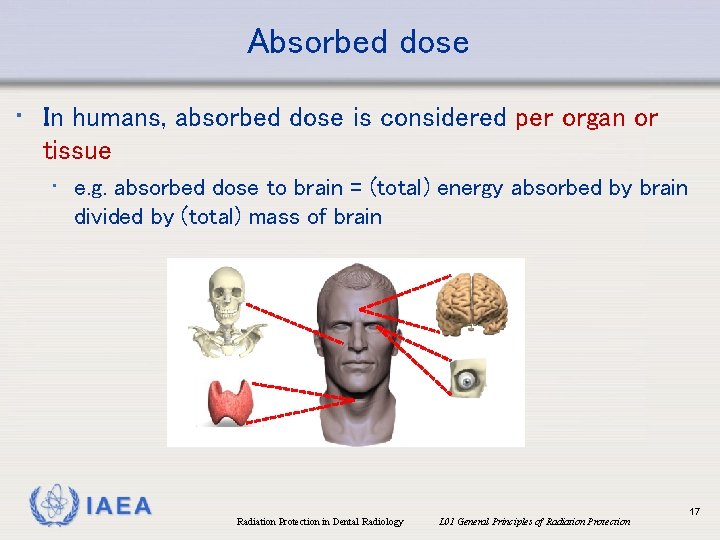
Absorbed dose • In humans, absorbed dose is considered per organ or tissue • e. g. absorbed dose to brain = (total) energy absorbed by brain divided by (total) mass of brain IAEA Radiation Protection in Dental Radiology L 01 General Principles of Radiation Protection 17
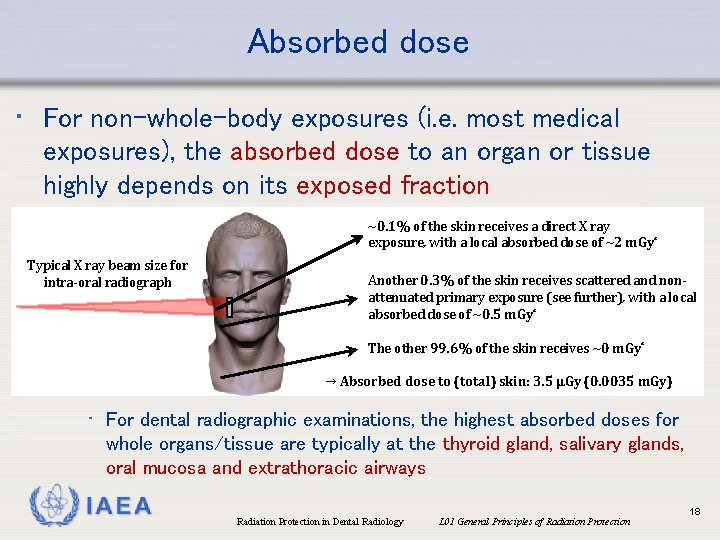
Absorbed dose • For non-whole-body exposures (i. e. most medical exposures), the absorbed dose to an organ or tissue highly depends on its exposed fraction ~0. 1% of the skin receives a direct X ray exposure, with a local absorbed dose of ~2 m. Gy* Typical X ray beam size for intra-oral radiograph Another 0. 3% of the skin receives scattered and nonattenuated primary exposure (see further), with a local absorbed dose of ~0. 5 m. Gy* The other 99. 6% of the skin receives ~0 m. Gy* → Absorbed dose to (total) skin: 3. 5 µGy (0. 0035 m. Gy) • For dental radiographic examinations, the highest absorbed doses for whole organs/tissue are typically at the thyroid gland, salivary glands, oral mucosa and extrathoracic airways IAEA Radiation Protection in Dental Radiology L 01 General Principles of Radiation Protection 18
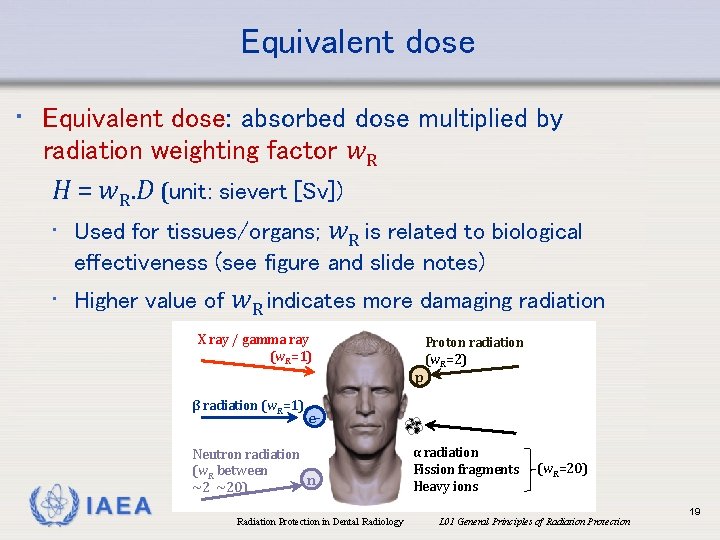
Equivalent dose • Equivalent dose: absorbed dose multiplied by radiation weighting factor w. R H = w. R. D (unit: sievert [Sv]) • Used for tissues/organs; w. R is related to biological effectiveness (see figure and slide notes) • Higher value of w. R indicates more damaging radiation X ray / gamma ray (w. R=1) p β radiation (w. R=1) IAEA Proton radiation (w. R=2) e- Neutron radiation (w. R between n ~2 ~20) α radiation Fission fragments Heavy ions (w. R=20) Radiation Protection in Dental Radiology L 01 General Principles of Radiation Protection 19
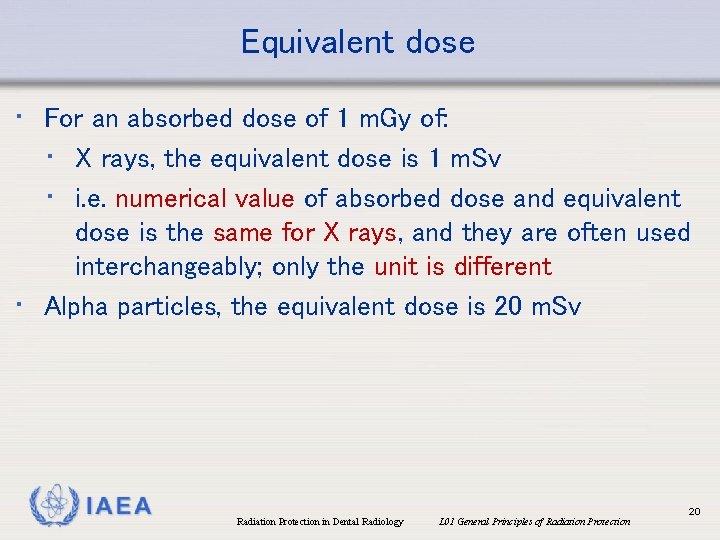
Equivalent dose • For an absorbed dose of 1 m. Gy of: • X rays, the equivalent dose is 1 m. Sv • i. e. numerical value of absorbed dose and equivalent dose is the same for X rays, and they are often used interchangeably; only the unit is different • Alpha particles, the equivalent dose is 20 m. Sv IAEA Radiation Protection in Dental Radiology L 01 General Principles of Radiation Protection 20
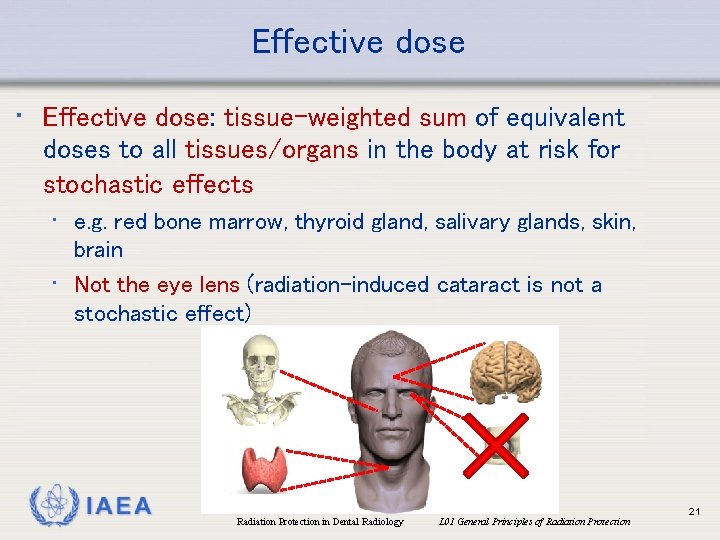
Effective dose • Effective dose: tissue-weighted sum of equivalent doses to all tissues/organs in the body at risk for stochastic effects • e. g. red bone marrow, thyroid gland, salivary glands, skin, brain • Not the eye lens (radiation-induced cataract is not a stochastic effect) IAEA Radiation Protection in Dental Radiology L 01 General Principles of Radiation Protection 21
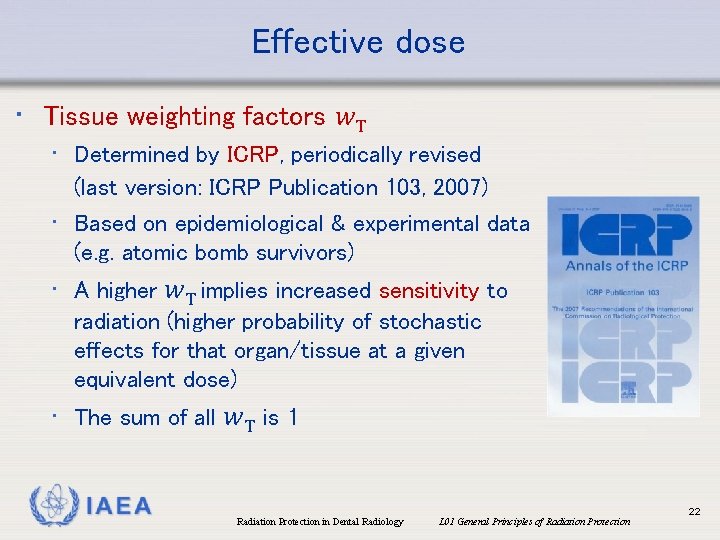
Effective dose • Tissue weighting factors w. T • Determined by ICRP, periodically revised (last version: ICRP Publication 103, 2007) • Based on epidemiological & experimental data (e. g. atomic bomb survivors) • A higher w. T implies increased sensitivity to radiation (higher probability of stochastic effects for that organ/tissue at a given equivalent dose) • The sum of all w. T is 1 IAEA Radiation Protection in Dental Radiology L 01 General Principles of Radiation Protection 22
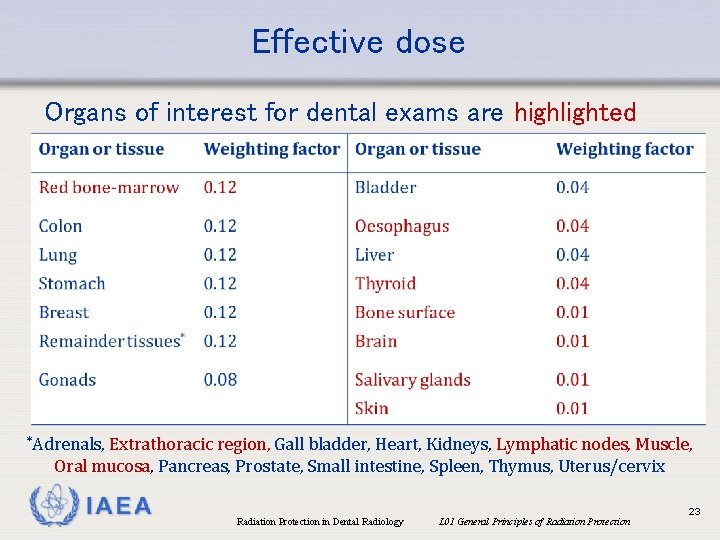
Effective dose Organs of interest for dental exams are highlighted *Adrenals, Extrathoracic region, Gall bladder, Heart, Kidneys, Lymphatic nodes, Muscle, Oral mucosa, Pancreas, Prostate, Small intestine, Spleen, Thymus, Uterus/cervix IAEA Radiation Protection in Dental Radiology L 01 General Principles of Radiation Protection 23
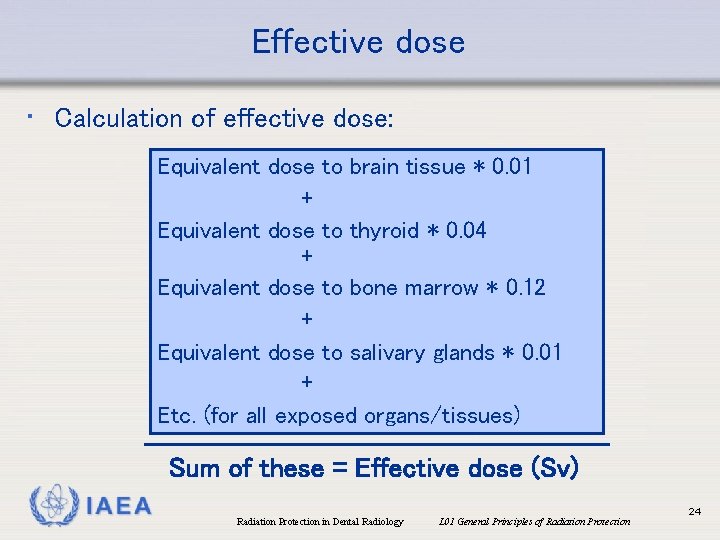
Effective dose • Calculation of effective dose: Equivalent dose to brain tissue * 0. 01 + Equivalent dose to thyroid * 0. 04 + Equivalent dose to bone marrow * 0. 12 + Equivalent dose to salivary glands * 0. 01 + Etc. (for all exposed organs/tissues) Sum of these = Effective dose (Sv) IAEA Radiation Protection in Dental Radiology L 01 General Principles of Radiation Protection 24
Effective dose • Note: tissue weighting factors (w. T) are updated by the ICRP when new evidence is available regarding dose vs. risk • Older (pre-2007) literature uses w. T from ICRP Publication 60 to calculate effective dose • More recent literature uses w. T from ICRP Publication 103 Notable changes for dental exposures: w. T for salivary glands introduced (i. e. 0. 01), thyroid w. T lowered from 0. 05 to 0. 04 • On average, doses for dental exposures estimated using ICRP 103 factors have been estimated to be 32 -422% higher than those using ICRP 60 factors (Ludlow et al. 2008) IAEA Radiation Protection in Dental Radiology L 01 General Principles of Radiation Protection 25
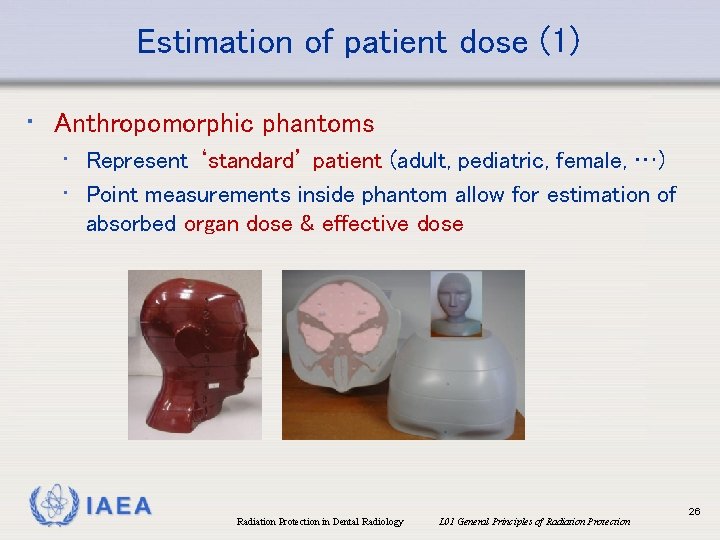
Estimation of patient dose (1) • Anthropomorphic phantoms • Represent ‘standard’ patient (adult, pediatric, female, …) • Point measurements inside phantom allow for estimation of absorbed organ dose & effective dose IAEA Radiation Protection in Dental Radiology L 01 General Principles of Radiation Protection 26
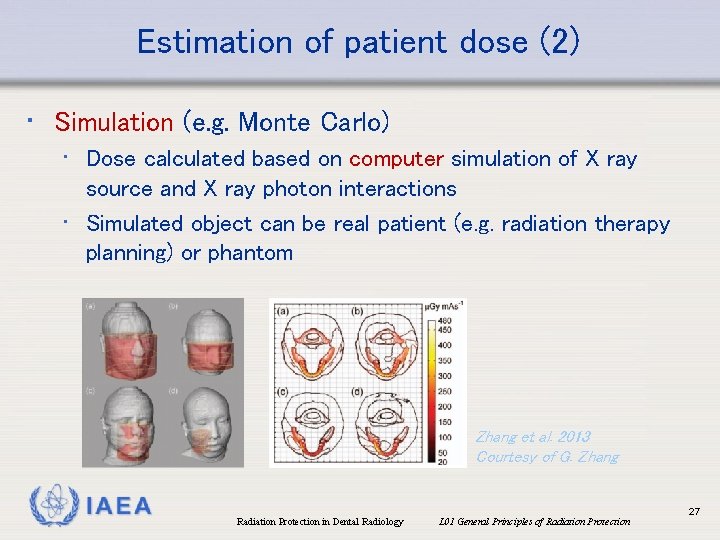
Estimation of patient dose (2) • Simulation (e. g. Monte Carlo) • Dose calculated based on computer simulation of X ray source and X ray photon interactions • Simulated object can be real patient (e. g. radiation therapy planning) or phantom Zhang et al. 2013 Courtesy of G. Zhang IAEA Radiation Protection in Dental Radiology L 01 General Principles of Radiation Protection 27
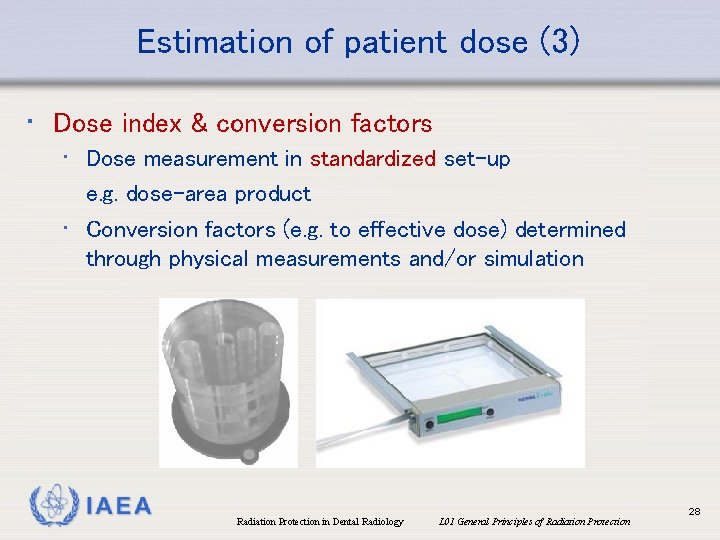
Estimation of patient dose (3) • Dose index & conversion factors • Dose measurement in standardized set-up e. g. dose-area product • Conversion factors (e. g. to effective dose) determined through physical measurements and/or simulation IAEA Radiation Protection in Dental Radiology L 01 General Principles of Radiation Protection 28
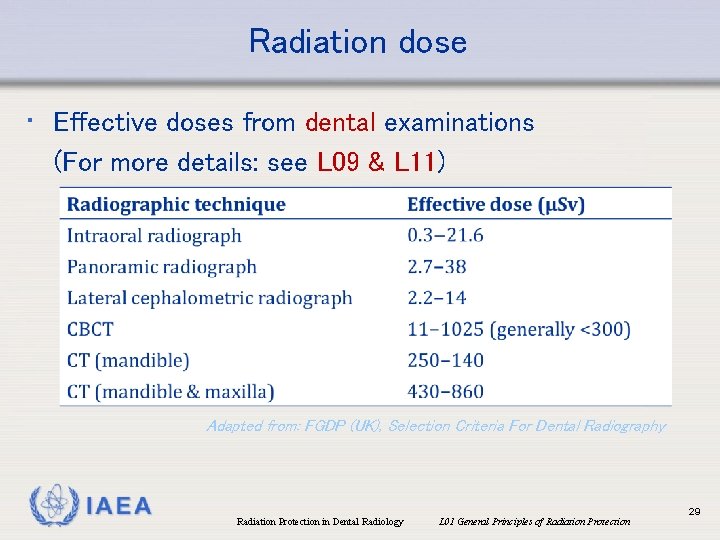
Radiation dose • Effective doses from dental examinations (For more details: see L 09 & L 11) Adapted from: FGDP (UK), Selection Criteria For Dental Radiography IAEA Radiation Protection in Dental Radiology L 01 General Principles of Radiation Protection 29
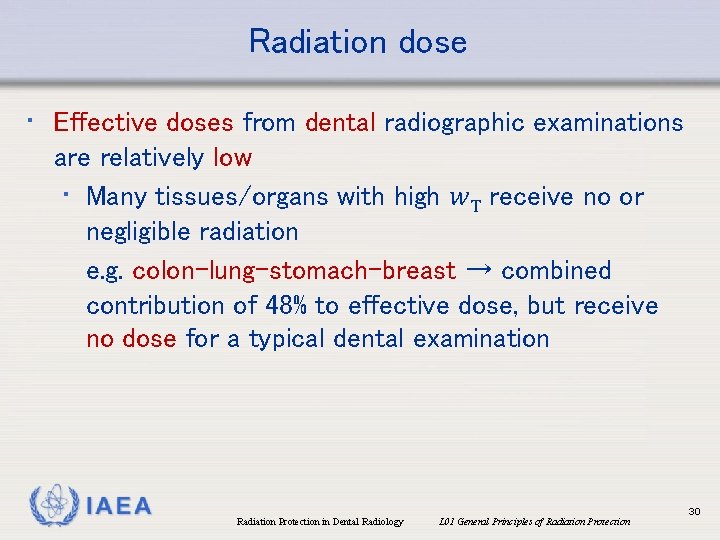
Radiation dose • Effective doses from dental radiographic examinations are relatively low • Many tissues/organs with high w. T receive no or negligible radiation e. g. colon-lung-stomach-breast → combined contribution of 48% to effective dose, but receive no dose for a typical dental examination IAEA Radiation Protection in Dental Radiology L 01 General Principles of Radiation Protection 30
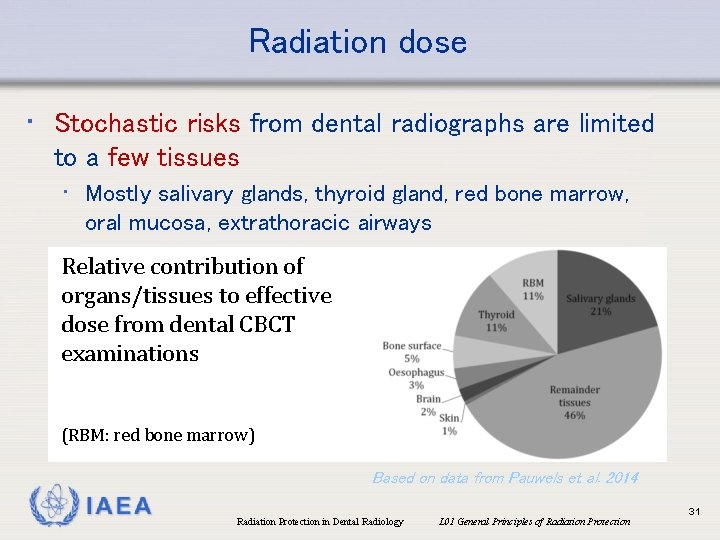
Radiation dose • Stochastic risks from dental radiographs are limited to a few tissues • Mostly salivary glands, thyroid gland, red bone marrow, oral mucosa, extrathoracic airways Relative contribution of organs/tissues to effective dose from dental CBCT examinations (RBM: red bone marrow) Based on data from Pauwels et al. 2014 IAEA Radiation Protection in Dental Radiology L 01 General Principles of Radiation Protection 31
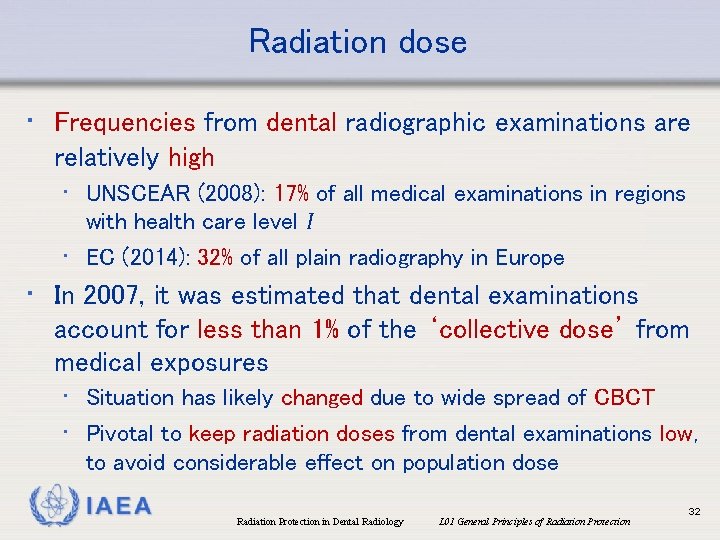
Radiation dose • Frequencies from dental radiographic examinations are relatively high • UNSCEAR (2008): 17% of all medical examinations in regions with health care level I • EC (2014): 32% of all plain radiography in Europe • In 2007, it was estimated that dental examinations account for less than 1% of the ‘collective dose’ from medical exposures • Situation has likely changed due to wide spread of CBCT • Pivotal to keep radiation doses from dental examinations low, to avoid considerable effect on population dose IAEA Radiation Protection in Dental Radiology L 01 General Principles of Radiation Protection 32
Overview • • • Why radiation protection in dentistry? Ionizing radiation & its biological effects Radiation dose Dose vs. risk General principles of radiation protection IAEA Radiation Protection in Dental Radiology L 01 General Principles of Radiation Protection 33
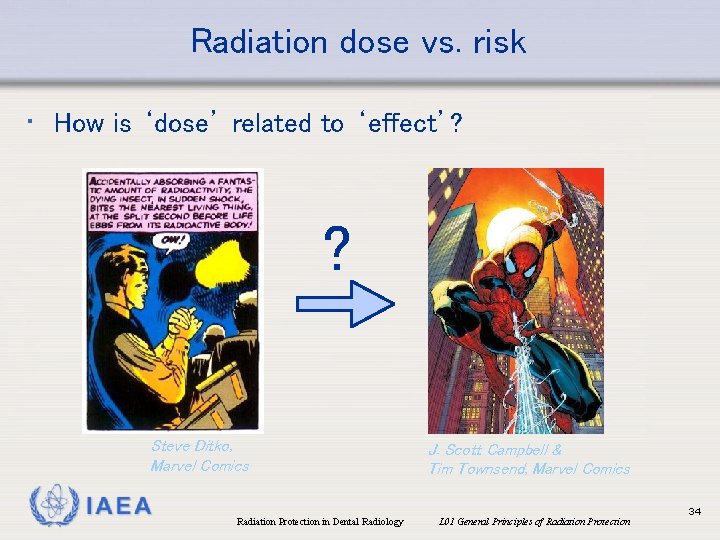
Radiation dose vs. risk • How is ‘dose’ related to ‘effect’? ? Steve Ditko, Marvel Comics IAEA J. Scott Campbell & Tim Townsend, Marvel Comics Radiation Protection in Dental Radiology L 01 General Principles of Radiation Protection 34
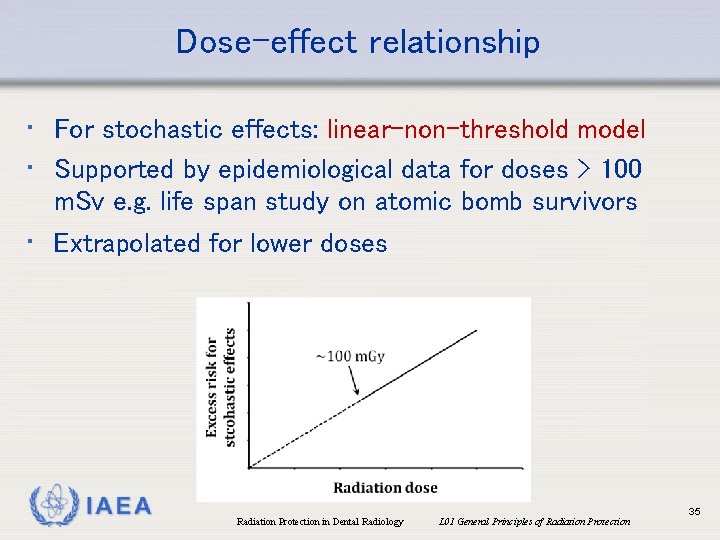
Dose-effect relationship • For stochastic effects: linear-non-threshold model • Supported by epidemiological data for doses > 100 m. Sv e. g. life span study on atomic bomb survivors • Extrapolated for lower doses IAEA Radiation Protection in Dental Radiology L 01 General Principles of Radiation Protection 35
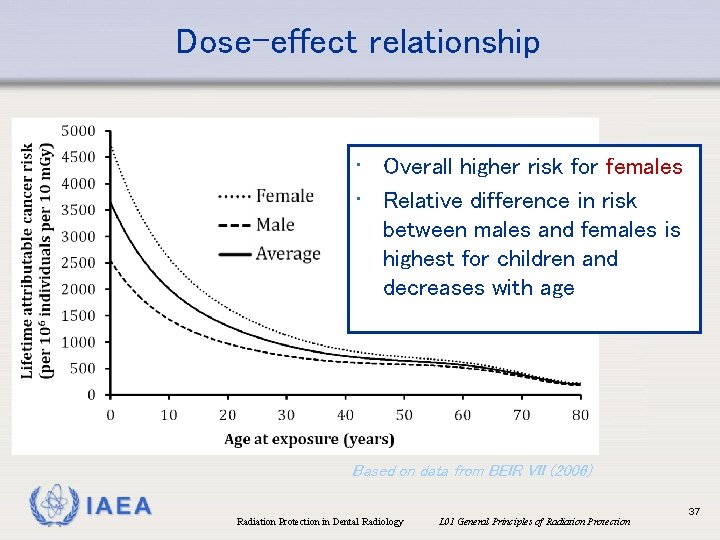
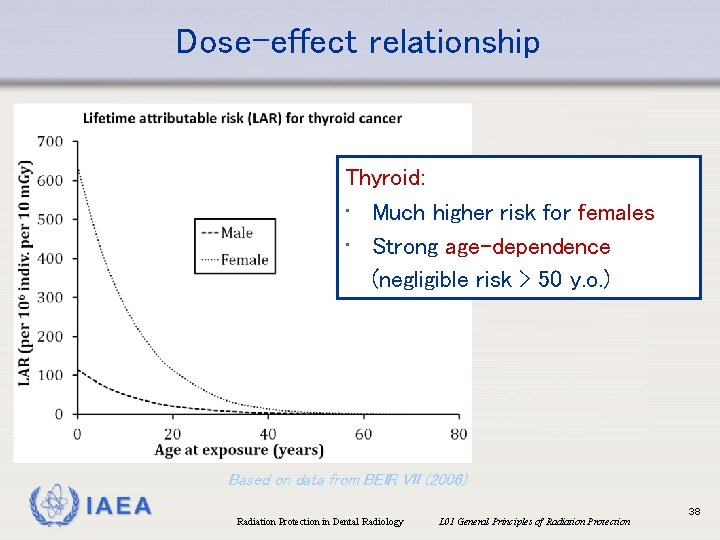
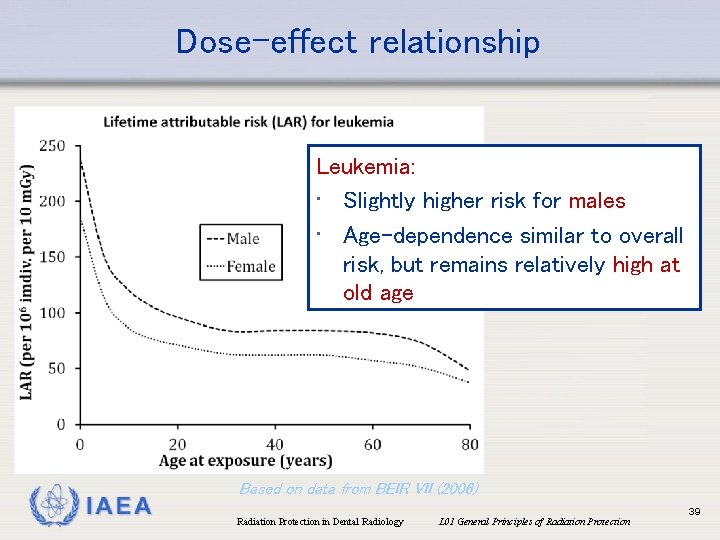
Dose-effect relationship • The cancer risk from radiation depends on additional factors: • Age (risk generally decreases with age; somewhat tissue-specific) • Gender (overall cancer risk higher for females; highly tissue-specific) • Individual sensitivity, presence of other risk factors such as obesity, smoking which increase the susceptibility to radiation-induced cancer IAEA Radiation Protection in Dental Radiology L 01 General Principles of Radiation Protection 36
Dose-effect relationship • Overall higher risk for females • Relative difference in risk between males and females is highest for children and decreases with age Based on data from BEIR VII (2006) IAEA Radiation Protection in Dental Radiology L 01 General Principles of Radiation Protection 37
Dose-effect relationship Thyroid: • Much higher risk for females • Strong age-dependence (negligible risk > 50 y. o. ) Based on data from BEIR VII (2006) IAEA Radiation Protection in Dental Radiology L 01 General Principles of Radiation Protection 38
Dose-effect relationship Leukemia: • Slightly higher risk for males • Age-dependence similar to overall risk, but remains relatively high at old age IAEA Based on data from BEIR VII (2006) Radiation Protection in Dental Radiology L 01 General Principles of Radiation Protection 39
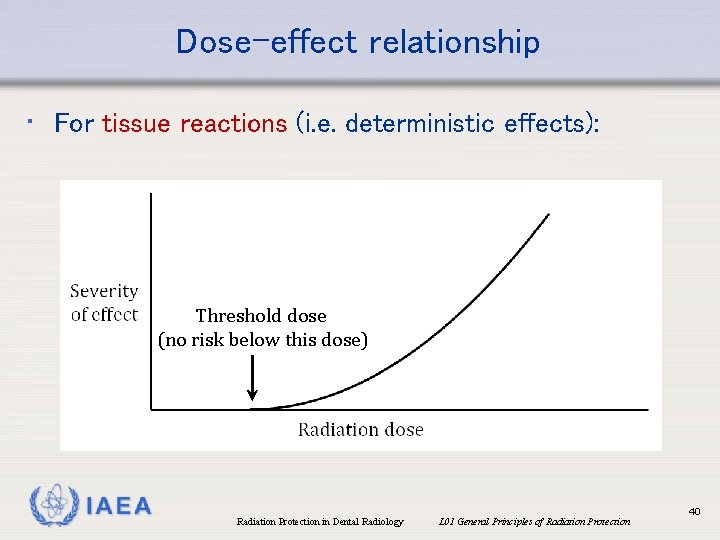
Dose-effect relationship • For tissue reactions (i. e. deterministic effects): Threshold dose (no risk below this dose) IAEA Radiation Protection in Dental Radiology L 01 General Principles of Radiation Protection 40
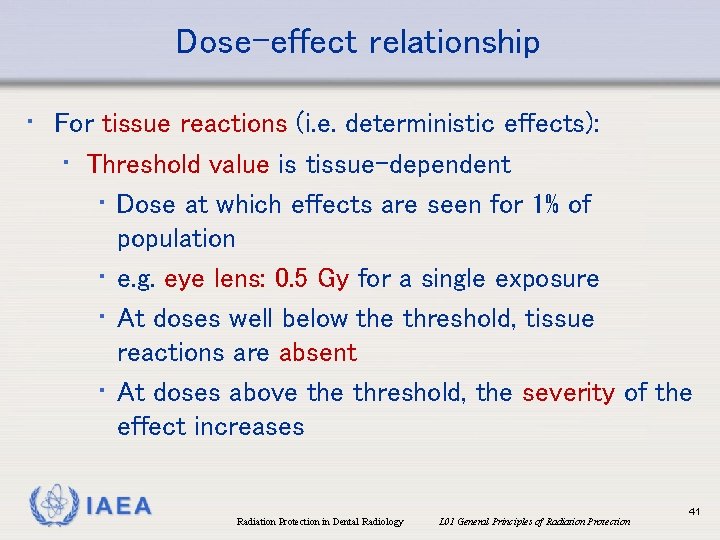
Dose-effect relationship • For tissue reactions (i. e. deterministic effects): • Threshold value is tissue-dependent • Dose at which effects are seen for 1% of population • e. g. eye lens: 0. 5 Gy for a single exposure • At doses well below the threshold, tissue reactions are absent • At doses above threshold, the severity of the effect increases IAEA Radiation Protection in Dental Radiology L 01 General Principles of Radiation Protection 41
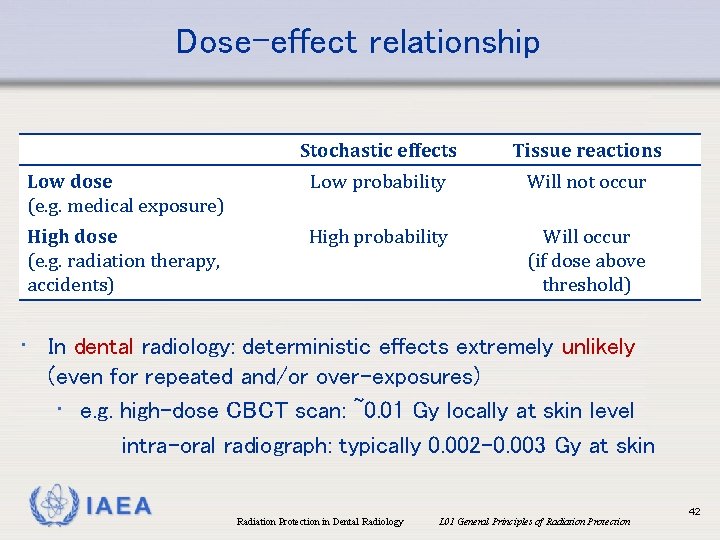
Dose-effect relationship Stochastic effects Tissue reactions Low dose (e. g. medical exposure) Low probability Will not occur High dose (e. g. radiation therapy, accidents) High probability Will occur (if dose above threshold) • In dental radiology: deterministic effects extremely unlikely (even for repeated and/or over-exposures) • e. g. high-dose CBCT scan: ~0. 01 Gy locally at skin level intra-oral radiograph: typically 0. 002 -0. 003 Gy at skin IAEA Radiation Protection in Dental Radiology L 01 General Principles of Radiation Protection 42
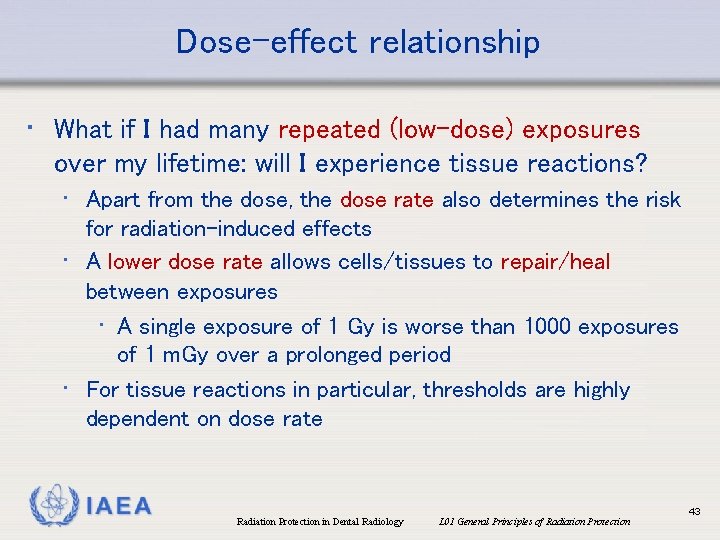
Dose-effect relationship • What if I had many repeated (low-dose) exposures over my lifetime: will I experience tissue reactions? • Apart from the dose, the dose rate also determines the risk for radiation-induced effects • A lower dose rate allows cells/tissues to repair/heal between exposures • A single exposure of 1 Gy is worse than 1000 exposures of 1 m. Gy over a prolonged period • For tissue reactions in particular, thresholds are highly dependent on dose rate IAEA Radiation Protection in Dental Radiology L 01 General Principles of Radiation Protection 43
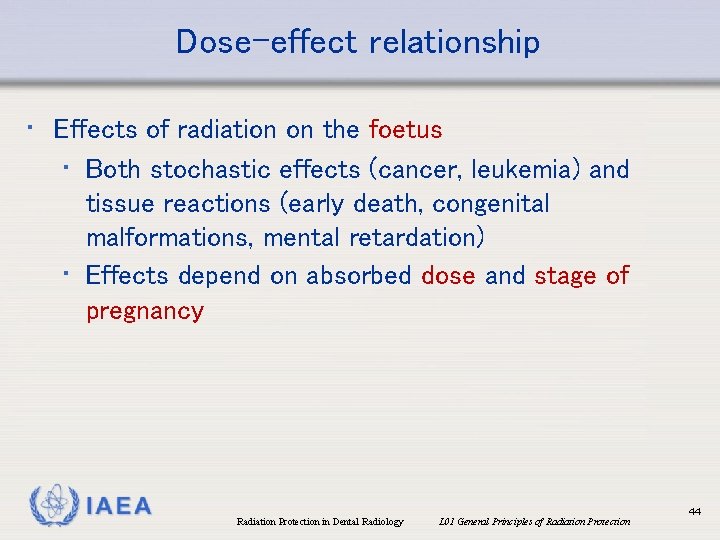
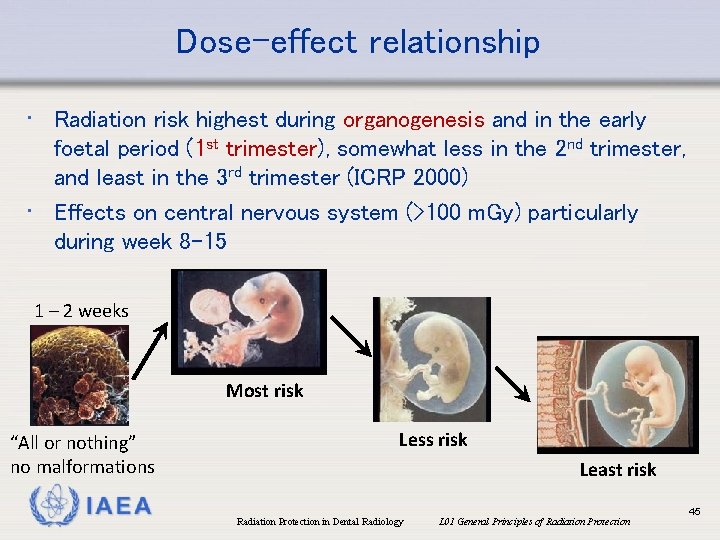
Dose-effect relationship • Effects of radiation on the foetus • Both stochastic effects (cancer, leukemia) and tissue reactions (early death, congenital malformations, mental retardation) • Effects depend on absorbed dose and stage of pregnancy IAEA Radiation Protection in Dental Radiology L 01 General Principles of Radiation Protection 44
Dose-effect relationship • Radiation risk highest during organogenesis and in the early foetal period (1 st trimester), somewhat less in the 2 nd trimester, and least in the 3 rd trimester (ICRP 2000) • Effects on central nervous system (>100 m. Gy) particularly during week 8 -15 1 – 2 weeks Most risk “All or nothing” no malformations IAEA Less risk Least risk Radiation Protection in Dental Radiology L 01 General Principles of Radiation Protection 45
Overview • • • Why radiation protection in dentistry? Ionizing radiation & its biological effects Radiation dose Dose vs. risk General principles of radiation protection IAEA Radiation Protection in Dental Radiology L 01 General Principles of Radiation Protection 46
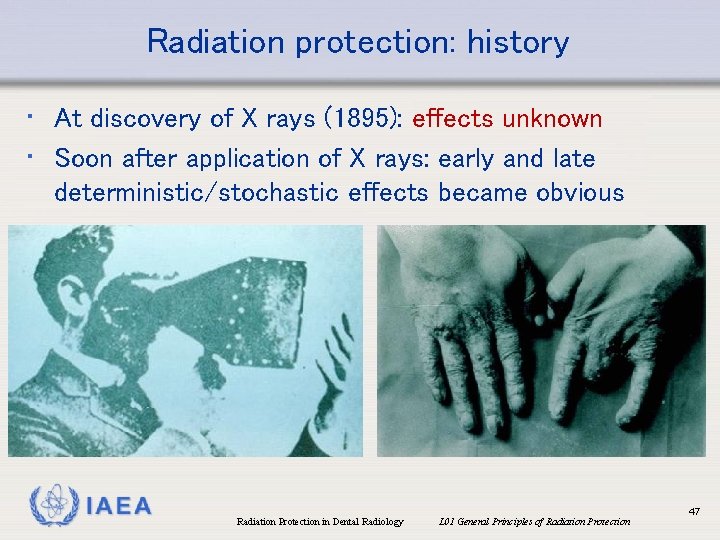
Radiation protection: history • At discovery of X rays (1895): effects unknown • Soon after application of X rays: early and late deterministic/stochastic effects became obvious IAEA Radiation Protection in Dental Radiology L 01 General Principles of Radiation Protection 47
Radiation protection: history • Early development of radiation protection was slow, with a few • • pioneers • William Rollins (dentist): leaded tube housing, collimation Recommendations by British Roentgen Society (1915) and American Roentgen Ray Society (1922) 1925: first tolerance doses reported 1928: Roentgen unit for measuring radiation 1928: International Commission on Radiological Protection (ICRP ) established (ICRU: 1925) • 1957: International Atomic Energy Agency (IAEA) established IAEA Radiation Protection in Dental Radiology L 01 General Principles of Radiation Protection 48
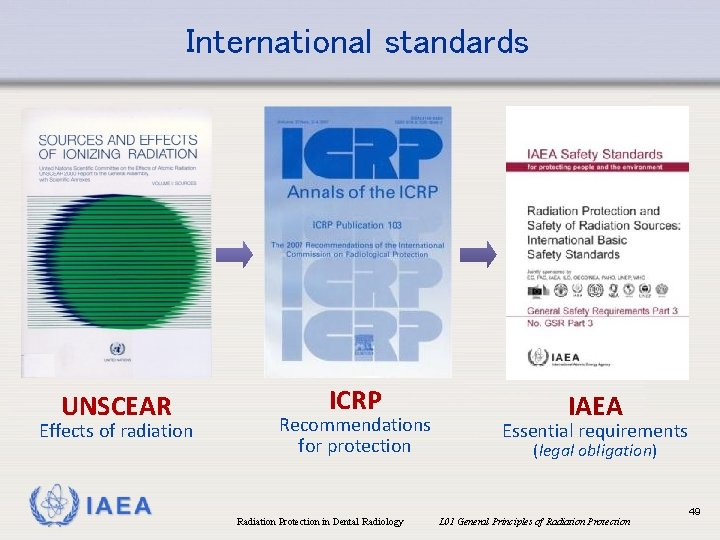
International standards UNSCEAR Effects of radiation IAEA ICRP Recommendations for protection IAEA Essential requirements (legal obligation) Radiation Protection in Dental Radiology L 01 General Principles of Radiation Protection 49
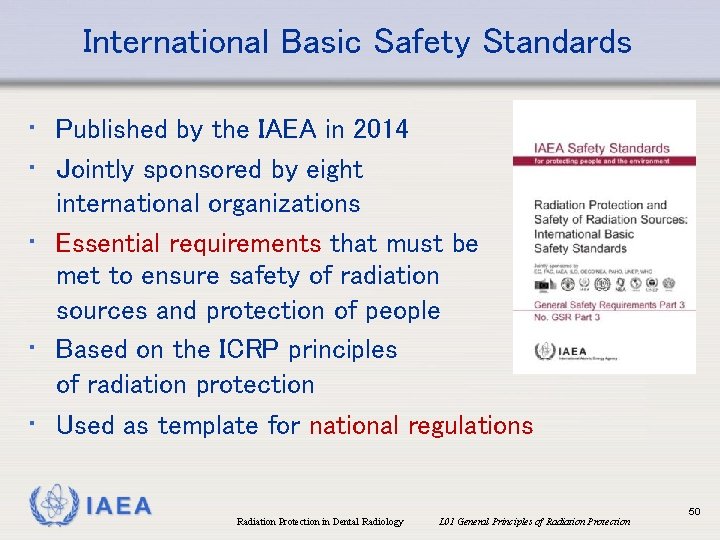
International Basic Safety Standards • Published by the IAEA in 2014 • Jointly sponsored by eight international organizations • Essential requirements that must be met to ensure safety of radiation sources and protection of people • Based on the ICRP principles of radiation protection • Used as template for national regulations IAEA Radiation Protection in Dental Radiology L 01 General Principles of Radiation Protection 50
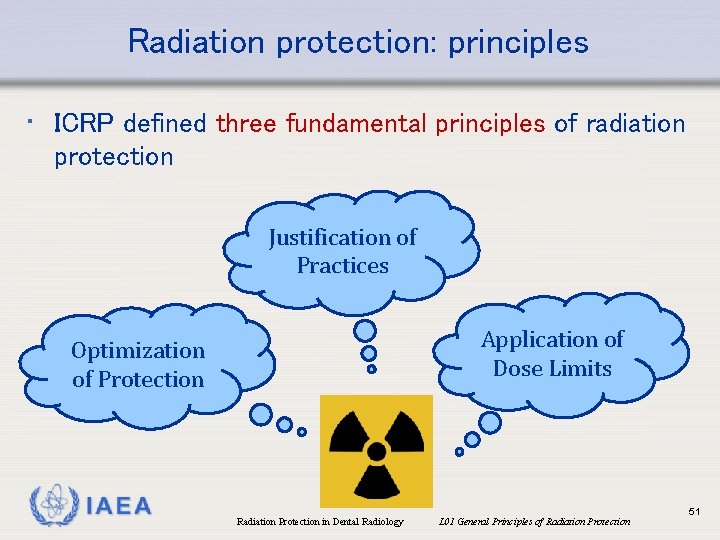
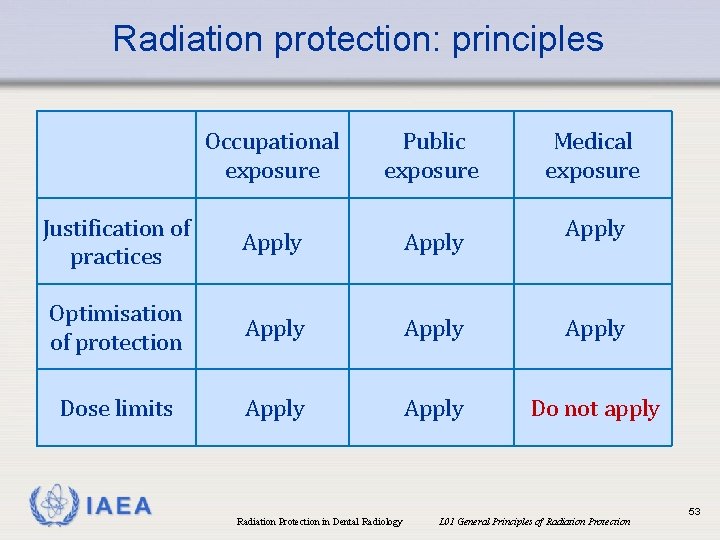
Radiation protection: principles • ICRP defined three fundamental principles of radiation protection Justification of Practices Optimization of Protection IAEA Application of Dose Limits Radiation Protection in Dental Radiology L 01 General Principles of Radiation Protection 51
Radiation protection: principles • ICRP defined three categories of exposure: • Medical exposure: exposure of patients for the purpose of medical or dental diagnosis or treatment; carers and comforters; volunteers in a programme of biomedical research involving their exposure • Occupational exposure: exposure of workers incurred in the course of their work • Public exposure: exposure of members of the public, excluding any occupational exposure or medical exposure IAEA Radiation Protection in Dental Radiology L 01 General Principles of Radiation Protection 52
Radiation protection: principles Occupational exposure Public exposure Medical exposure Justification of practices Apply Optimisation of protection Apply Dose limits Apply Do not apply IAEA Apply Radiation Protection in Dental Radiology L 01 General Principles of Radiation Protection 53
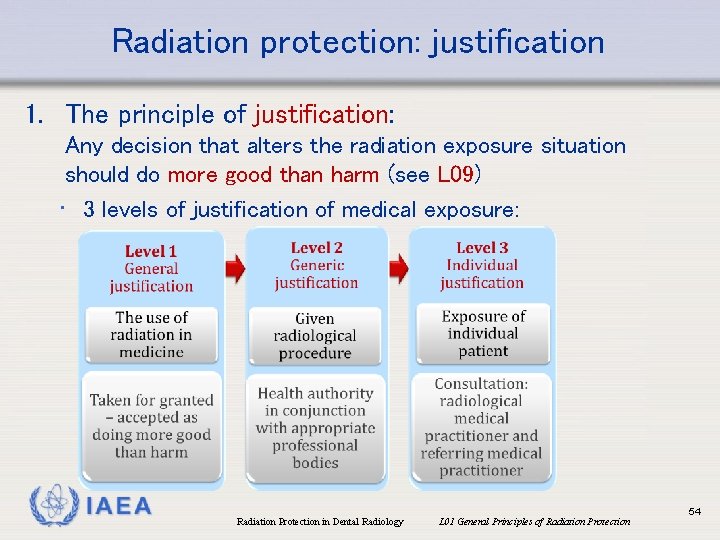
Radiation protection: justification 1. The principle of justification: Any decision that alters the radiation exposure situation should do more good than harm (see L 09) • 3 levels of justification of medical exposure: IAEA Radiation Protection in Dental Radiology L 01 General Principles of Radiation Protection 54
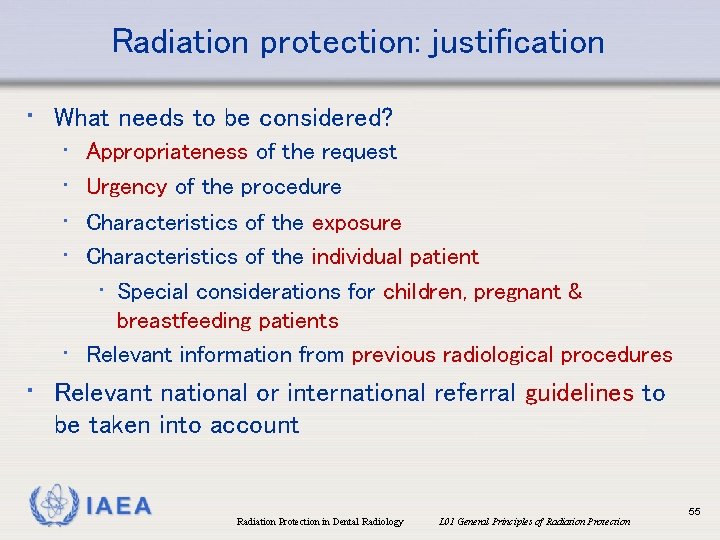
Radiation protection: justification • What needs to be considered? • • Appropriateness of the request Urgency of the procedure Characteristics of the exposure Characteristics of the individual patient • Special considerations for children, pregnant & breastfeeding patients • Relevant information from previous radiological procedures • Relevant national or international referral guidelines to be taken into account IAEA Radiation Protection in Dental Radiology L 01 General Principles of Radiation Protection 55
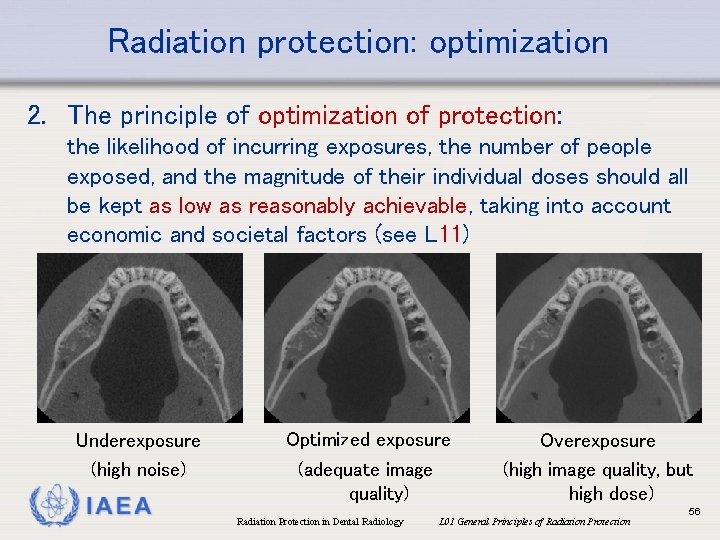
Radiation protection: optimization 2. The principle of optimization of protection: the likelihood of incurring exposures, the number of people exposed, and the magnitude of their individual doses should all be kept as low as reasonably achievable, taking into account economic and societal factors (see L 11) Underexposure (high noise) IAEA Optimized exposure (adequate image quality) Overexposure (high image quality, but high dose) Radiation Protection in Dental Radiology L 01 General Principles of Radiation Protection 56
Radiation protection: optimization • Factors to consider in optimization • Design considerations for equipment • Operational considerations • Calibration • Dosimetry of patients • Diagnostic Reference Levels (DRLs) • Quality assurance • Dose constraints IAEA Radiation Protection in Dental Radiology L 01 General Principles of Radiation Protection 57
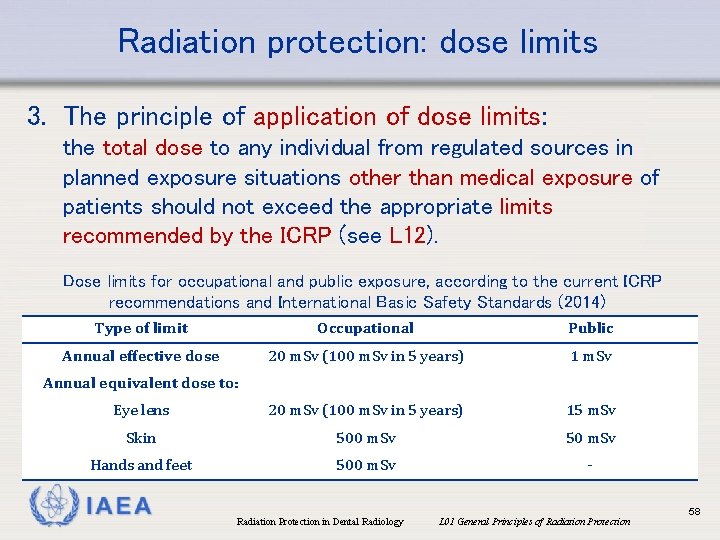
Radiation protection: dose limits 3. The principle of application of dose limits: the total dose to any individual from regulated sources in planned exposure situations other than medical exposure of patients should not exceed the appropriate limits recommended by the ICRP (see L 12). Dose limits for occupational and public exposure, according to the current ICRP recommendations and International Basic Safety Standards (2014) Type of limit Occupational Public Annual effective dose 20 m. Sv (100 m. Sv in 5 years) 1 m. Sv Eye lens 20 m. Sv (100 m. Sv in 5 years) 15 m. Sv Skin 500 m. Sv 50 m. Sv Hands and feet 500 m. Sv - Annual equivalent dose to: IAEA Radiation Protection in Dental Radiology L 01 General Principles of Radiation Protection 58
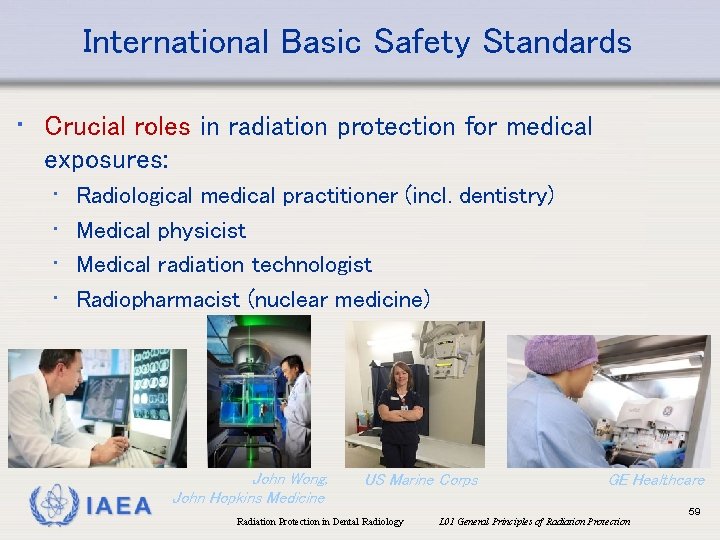
International Basic Safety Standards • Crucial roles in radiation protection for medical exposures: • Radiological medical practitioner (incl. dentistry) • Medical physicist • Medical radiation technologist • Radiopharmacist (nuclear medicine) IAEA John Wong, John Hopkins Medicine US Marine Corps GE Healthcare Radiation Protection in Dental Radiology L 01 General Principles of Radiation Protection 59
International Basic Safety Standards • Radiological medical practitioner: “A health professional with specialist education and training in the medical uses of radiation, who is competent to perform independently or to oversee radiological procedures in a given specialty (e. g. radiology, radiation therapy, nuclear medicine, dentistry, cardiology). ” IAEA Radiation Protection in Dental Radiology L 01 General Principles of Radiation Protection 60
International Basic Safety Standards “Competence of persons is normally assessed by the State by having a formal mechanism for registration, accreditation or certification of radiological medical practitioners in the given specialty. States that have yet to develop such a mechanism need to assess the education, training and competence of any individual and to decide whether such an individual could undertake the functions of a radiological medical practitioner, within the required specialty. ” IAEA Radiation Protection in Dental Radiology L 01 General Principles of Radiation Protection 61
References • EC, European Commission (2014) Medical Radiation Exposure of the European Population • Farman AG. (2009) Self-referral: an ethical concern with respect to multidimensional imaging in dentistry? J Appl Oral Sci. 17(5). • Farris K & Spelic D (2015) Nationwide Evaluation of X‐Ray Trends: Highlights of the 2014‐ 15 NEXT Dental Survey. Proceedings of the 47 th National Conference on Radiation Control. CRCPD Publication: E-15 -4, August 2015. • IAEA, International Atomic Energy Agency (2014). Radiation Protection and Safety of Radiation Sources: International Basic Safety Standards. General Safety Requirements Part 3. • ICRP, International Commission on Radiological Protection (2000) Pregnancy and Medical Radiation. ICRP Publication 84, Ann ICRP 30, • ICRP, International Commission on Radiological Protection (2007) The 2007 Recommendations of the International Commission on Radiological Protection. ICRP Publication 103. Oxford: Pergamon. IAEA Radiation Protection in Dental Radiology L 01 General Principles of Radiation Protection 62
References • ICRP, International Commission on Radiological Protection (2012) ICRP statement on • • • tissue reactions and early and late effects of radiation in normal tissues and organs threshold doses for tissue reactions in a radiation protection context. ICRP publication 118. Ann ICRP 2012; 41: 1 -322. National Research Council of the National Academies (2006) Health Risks from Exposure to Low Levels of Ionizing Radiation: BEIR VII. Washington, DC: The National Academies Press. Pantos et al (2011) Adult patient radiation doses from non-cardiac CT examinations: a review of published results. Br J Radiol. 84: 293 -303. Pauwels et al (2014) Effective radiation dose and eye lens dose in dental cone beam CT: effect of field of view and angle of rotation. Br J Radiol 87: 20130654. UNSCEAR, United Nations Scientific Committee on the Effects of Atomic Radiation (2008) Sources and Effects of Ionizing Radiation: Report to the General Assembly. Zhang et al (2013) Monte Carlo modeling for dose assessment in cone beam CT for oral and maxillofacial applications. Med Phys. 40: 072103. IAEA Radiation Protection in Dental Radiology L 01 General Principles of Radiation Protection 63