
Radiation Monitoring at CTF 3 Buildings weak spots
Radiation Monitoring at CTF 3 Buildings – weak spots Radiation Monitoring system Monitoring results – First Lessons Idelette Floret, Thomas Otto, Daniel Perrin, Markus Widorski DG-SC Radiation Protection Group 1
Strategy for Radiation Protection n n CTF 3 built in existing surface structures, built for another electron accelerator (LEP pre-injector) Wall thickness can hardly be modified “weak spots” where bulk shielding is broken or thin Monitor ambient dose rate levels and raise radiation alarm if limits exceeded Installation of the state-of-the-art RAMSES monitoring system (1 st facility after CNGS & LHC) 2
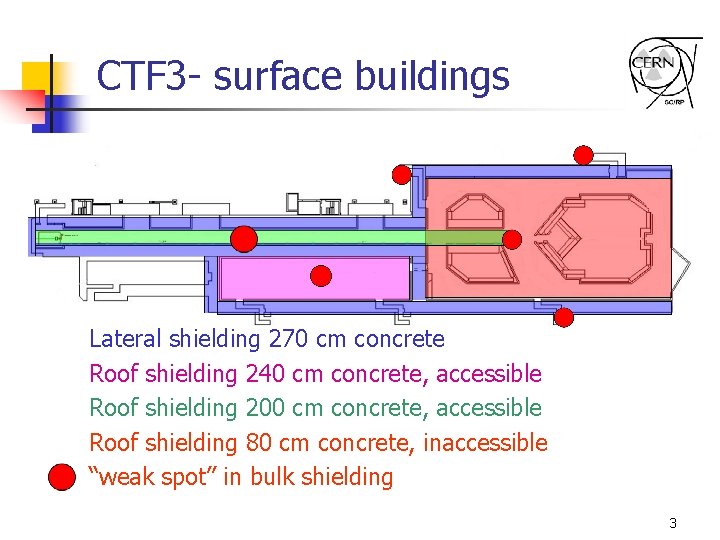
CTF 3 - surface buildings Lateral shielding 270 cm concrete Roof shielding 240 cm concrete, accessible Roof shielding 200 cm concrete, accessible Roof shielding 80 cm concrete, inaccessible “weak spot” in bulk shielding 3

Ambient dose rate limits n Area accessible to public: n n n 0. 5 m. Sv/h 2. 5 m. Sv/h for infrequently occupied areas (e. g. Parking) For example n n Public spaces around CTF 3 surface building Supervised Radiation Area: n n 3 m. Sv/h at workplaces 15 m. Sv/h in passageways Obligation to wear a personal dosimeter For example n Klystron galleries 4

What is monitored ? n During operation: n n Monitor ambient dose rate H*(10) from stray radiation at “weak spots” (representative for the whole of the facility) During Tech. Stop / Shutdown: n Monitor ambient dose rate H*(10) from activated material to determine suitable working conditions for interventions 5

High-sensitivity radiation monitor n n n For stray radiation Centronics pressurised ionisation chamber (2 MPa) Part of RAMSES system 6
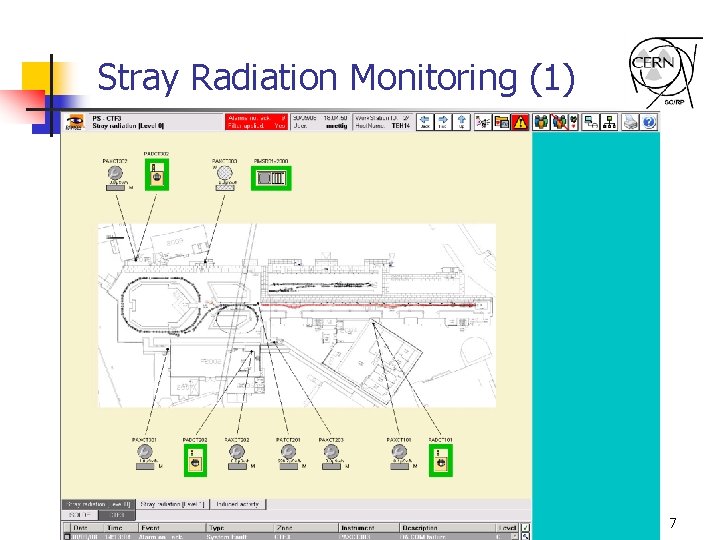
Stray Radiation Monitoring (1) 7
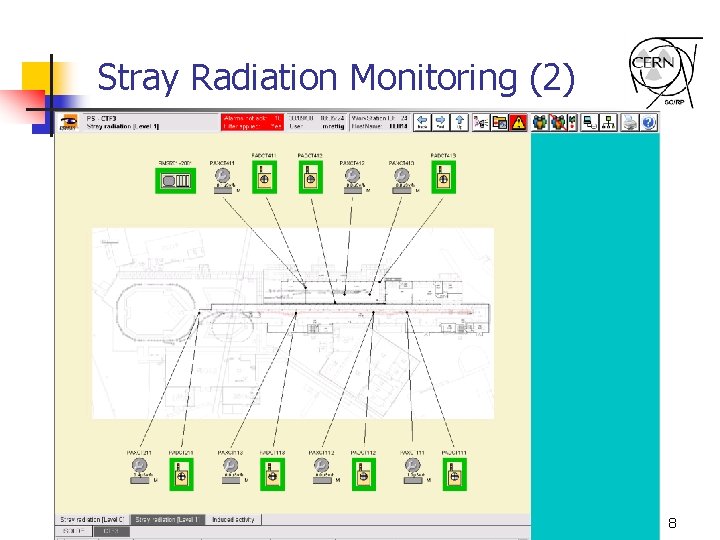
Stray Radiation Monitoring (2) 8
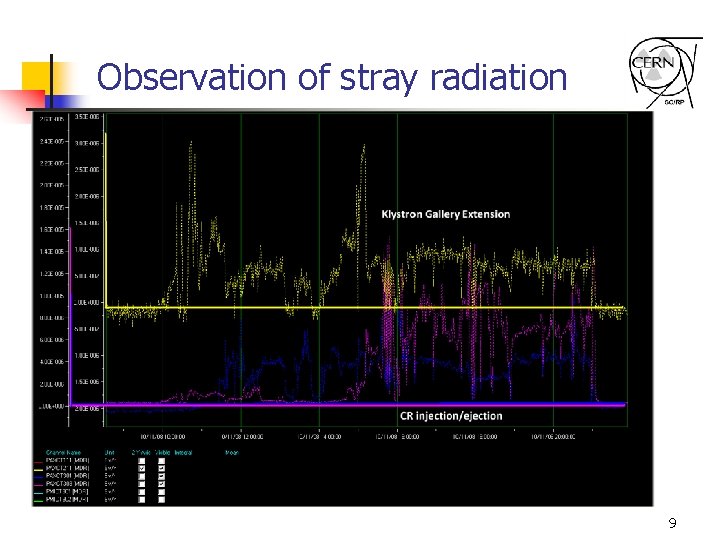
Observation of stray radiation 9

Stray Radiation n n The assumptions that the access mazes represent weak spots is confirmed Ambient dose rate limit for public area at emergency exits exceeded: n n Observation of values Consequences: n n Temporary fencing of emergency access, intensity limitation Improvement of the mazes 10
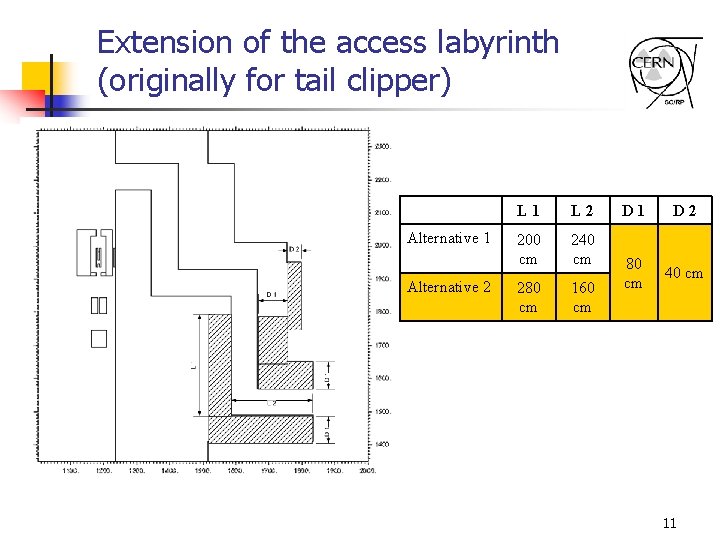
Extension of the access labyrinth (originally for tail clipper) Alternative 1 Alternative 2 L 1 L 2 200 cm 240 cm 280 cm 160 cm D 1 D 2 80 cm 40 cm 11
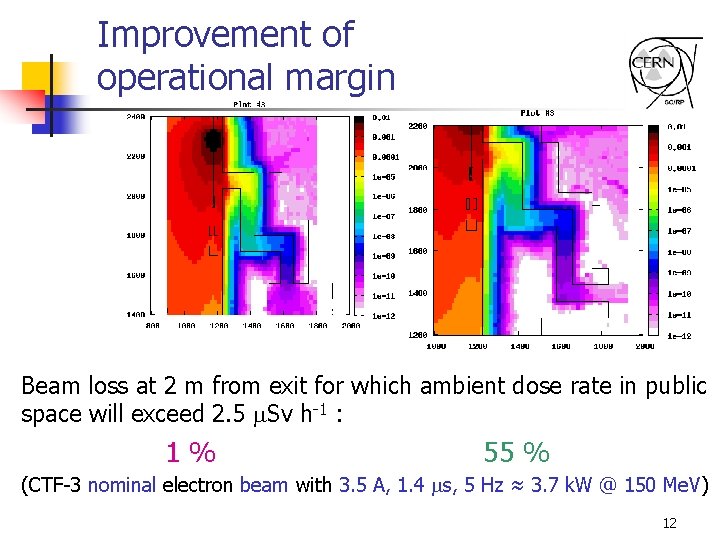
Improvement of operational margin Beam loss at 2 m from exit for which ambient dose rate in public space will exceed 2. 5 m. Sv h-1 : 1% 55 % (CTF-3 nominal electron beam with 3. 5 A, 1. 4 ms, 5 Hz ≈ 3. 7 k. W @ 150 Me. V) 12
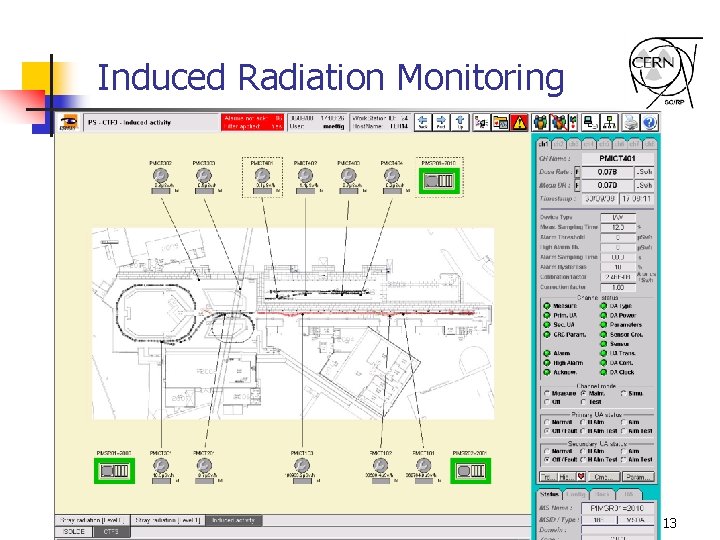
Induced Radiation Monitoring 13

Observation of induced radiation 14
Residual dose rates n n Residual dose rates varies from spot to spot over orders of magnitude, depending on previous accelerator operation While Induced Activity Monitors give a first indication, radiation survey before access remains mandatory During maintenance periods, authorised personnel can work in CTF 3 without permanent supervision by RP personnel All material dismantled from the accelerator must be stored as radioactive material/waste 15
Summary n n CTF 3 operates an electron accelerator with relatively high power (P < 7. 7 k. W) in surface buildings, designed for a different purpose In order to protect persons in accessible areas, beam loss monitoring is essential Compared to CERN’s proton accelerators, residual dose rates low, but not negligible. Activation must be further studied for waste storage/elimination purposes 16
- Slides: 16