
Radiation Health Effects Elena Buglova Incident and Emergency
Radiation Health Effects Elena Buglova Incident and Emergency Centre Department of Nuclear Safety and Security
Content • • • Historical background Primary target for cell damage Deterministic effects Stochastic effects Effects of in-utero exposure Practical application of fundamental knowledge • Summary
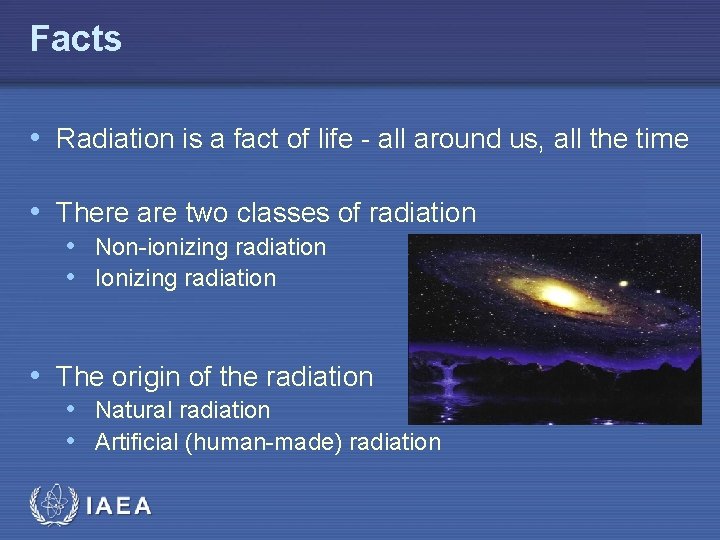
Facts • Radiation is a fact of life - all around us, all the time • There are two classes of radiation • Non-ionizing radiation • Ionizing radiation • The origin of the radiation • Natural radiation • Artificial (human-made) radiation
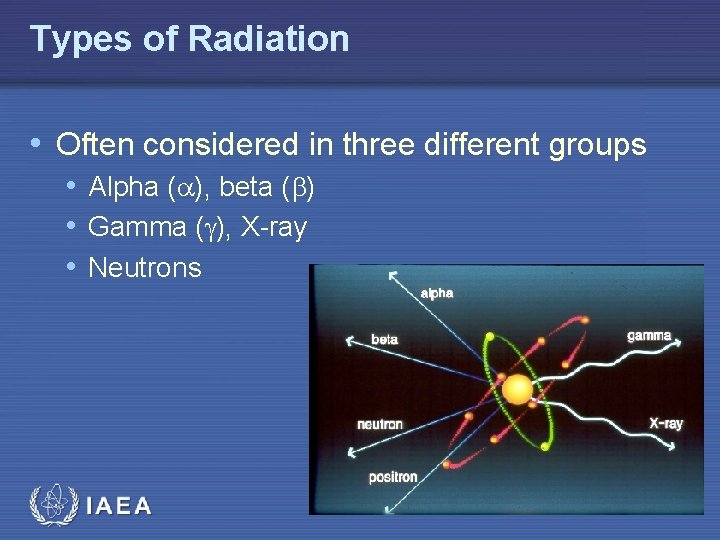
Types of Radiation • Often considered in three different groups • Alpha ( ), beta ( ) • Gamma ( ), X-ray • Neutrons
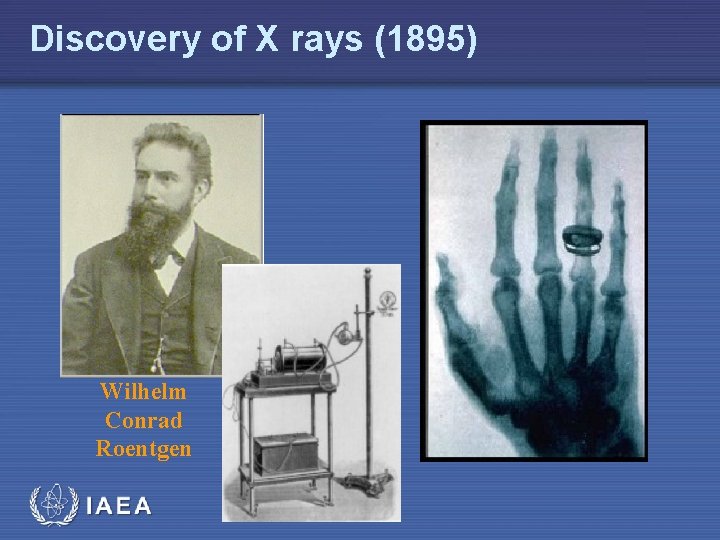
Discovery of X rays (1895) Wilhelm Conrad Roentgen
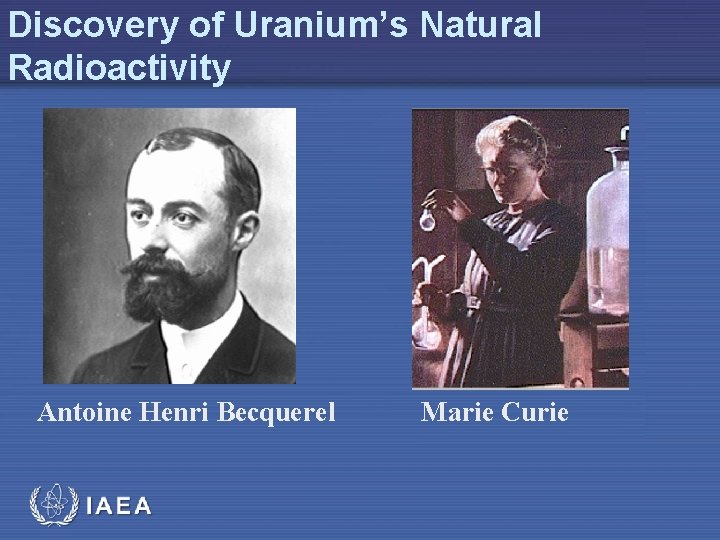
Discovery of Uranium’s Natural Radioactivity Antoine Henri Becquerel Marie Curie
Basic Terms • Activity: the quantity of radioactive material present at a given time • Unit: becquerel (one disintegration per second) • Simbol: Bq • Old unit: curie (Ci) More information on terms: IAEA safety Glossary http: //www-ns. iaea. org/standards/safety-glossary. htm
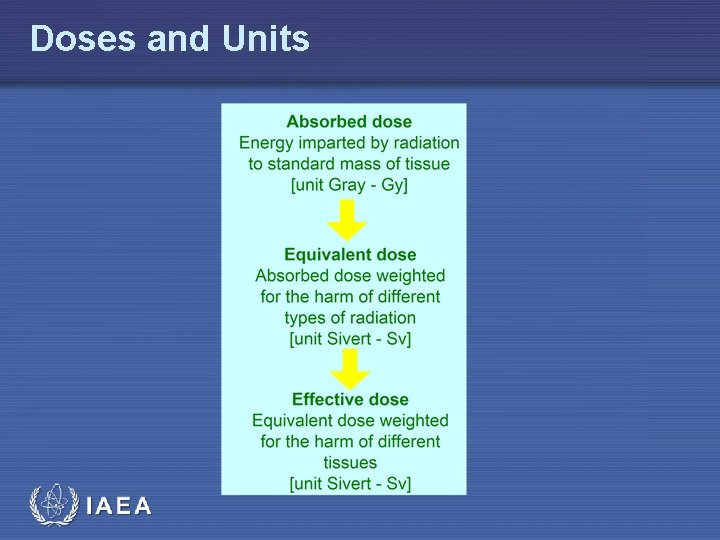
Doses and Units
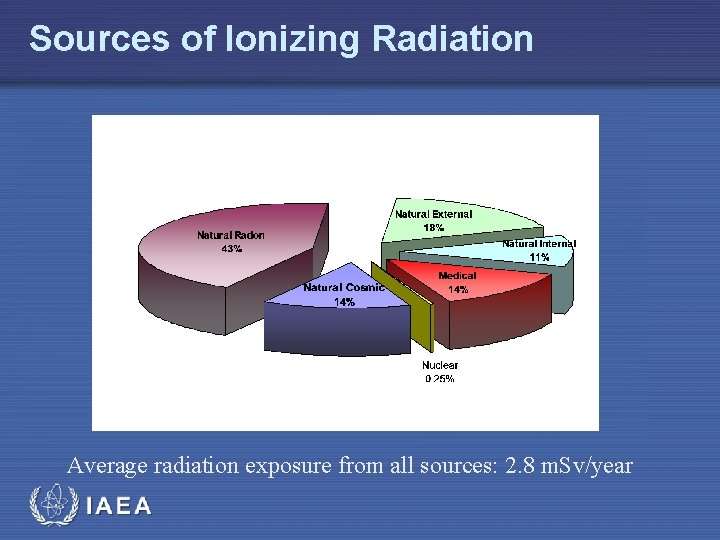
Sources of Ionizing Radiation Average radiation exposure from all sources: 2. 8 m. Sv/year
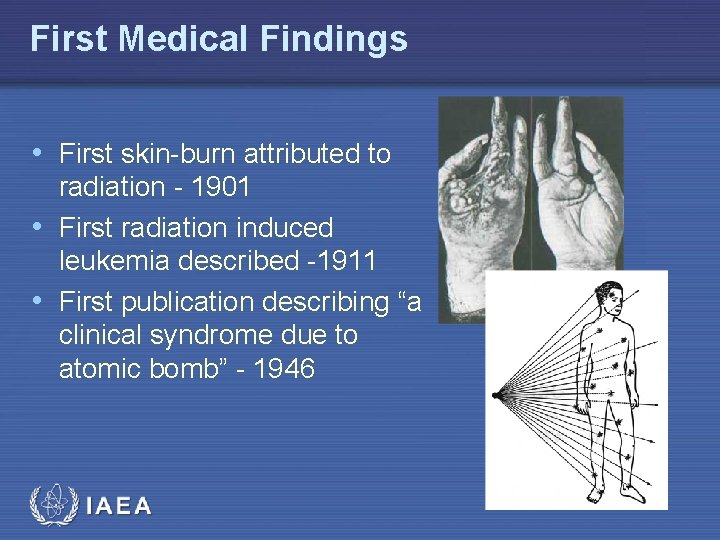
First Medical Findings • First skin-burn attributed to radiation - 1901 • First radiation induced leukemia described -1911 • First publication describing “a clinical syndrome due to atomic bomb” - 1946

Ionizing Radiation and Human Cell • Primary target for cell damage from ionizing radiation is deoxyribonucleic acid (DNA) in chromosomes of cell’s nuclei
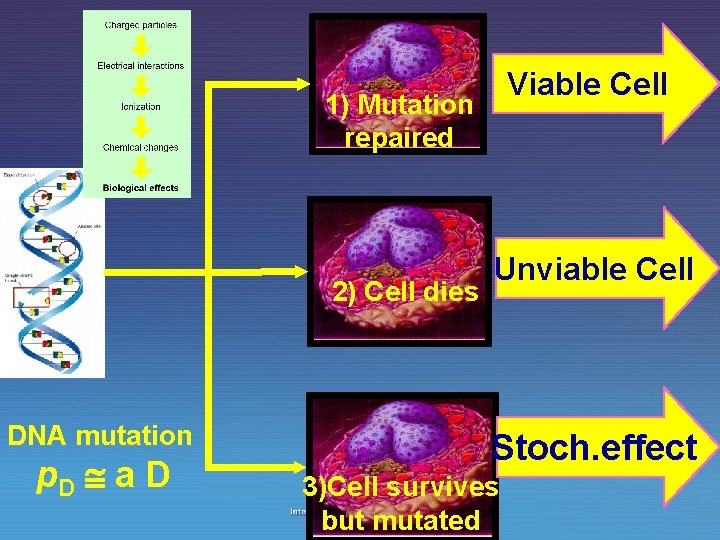
Viable Cell 1) Mutation repaired 2) Cell dies DNA mutation p. D a D Unviable Cell Stoch. effect 3)Cell survives but mutated
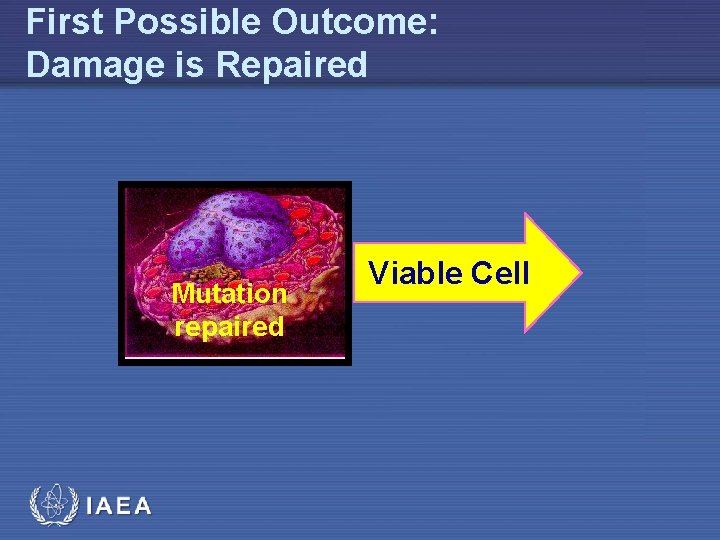
First Possible Outcome: Damage is Repaired Mutation repaired Viable Cell
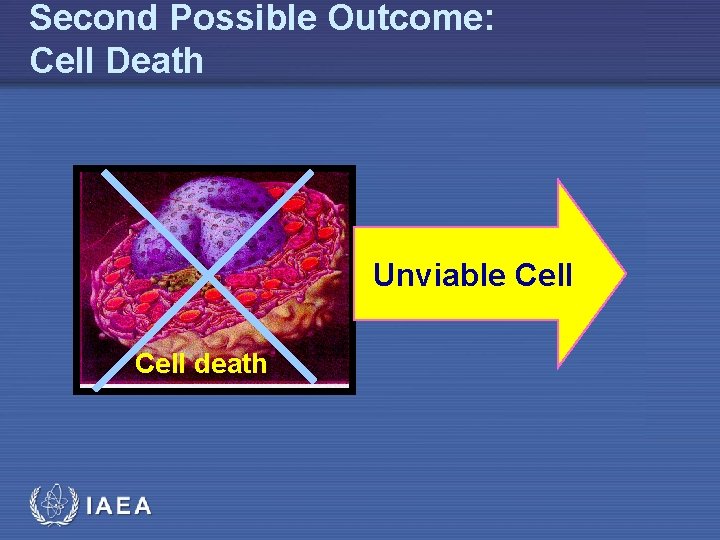
Second Possible Outcome: Cell Death Unviable Cell death
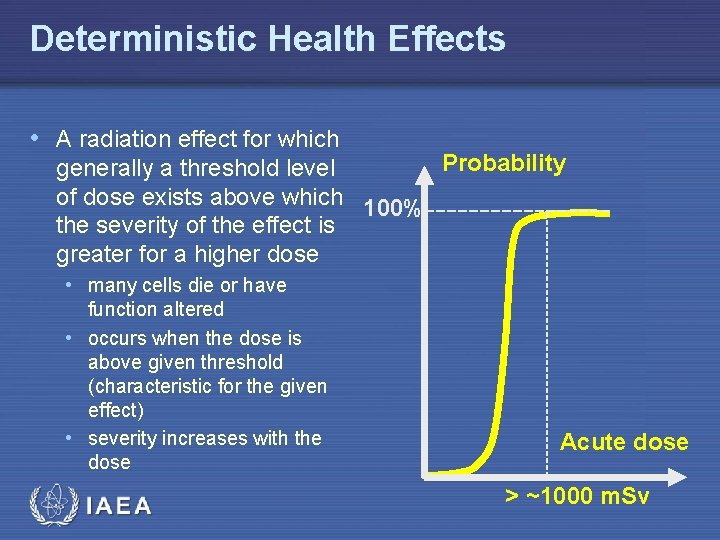
Deterministic Health Effects • A radiation effect for which Probability generally a threshold level of dose exists above which 100% the severity of the effect is greater for a higher dose • many cells die or have function altered • occurs when the dose is above given threshold (characteristic for the given effect) • severity increases with the dose Acute dose > ~1000 m. Sv
Deterministic Health Effects • Data on deterministic health effects are collected from observation of: • side effects of radiotherapy • effects on the early radiologists • effects amongst survivors of the atomic bombs at Hiroshima and Nagasaki in Japan • consequences of severe accidents • In 1944 -2004: – 428 registered emergencies (REAC/TS Registry of radiation accidents) – ~ 3000 overexposed people (whole body dose >0. 25 Sv, Hskin>6 Sv, or Hother organ>0. 75 Sv) – 134 fatalities
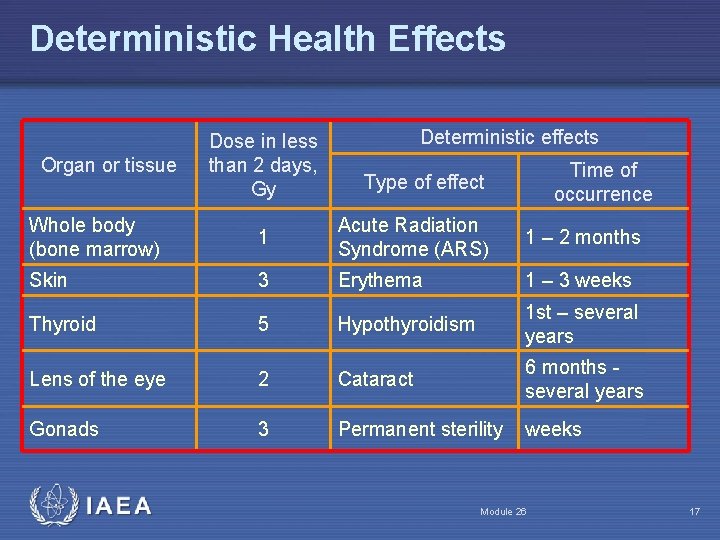
Deterministic Health Effects Organ or tissue Dose in less than 2 days, Gy Deterministic effects Time of occurrence Type of effect Whole body (bone marrow) 1 Acute Radiation Syndrome (ARS) 1 – 2 months Skin 3 Erythema 1 – 3 weeks Thyroid 5 Hypothyroidism 1 st – several years Lens of the eye 2 Cataract 6 months - several years Gonads 3 Permanent sterility weeks Module 26 17
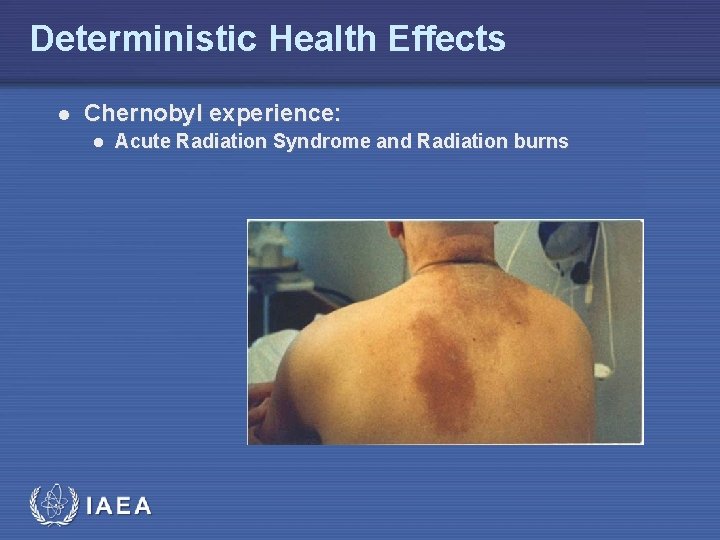
Deterministic Health Effects l Chernobyl experience: l Acute Radiation Syndrome and Radiation burns
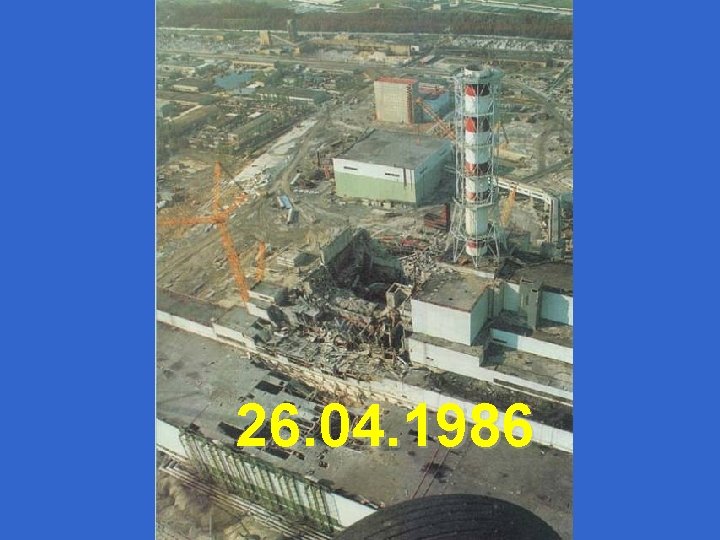
26. 04. 1986
Deterministic Health Effects After Chernobyl • Very high doses on-site • 134 cases of ARS among responders (fire fighters and recovery operation workers): • 28 died in 1986 from a combination of high external doses of -exposure (2. 2 -16 Gy) and skin burns due to -emitters • 17 died in 1987 -2004 from various causes, not all linked to radiation • No cases of acute radiation syndrome have been recorded among the general public
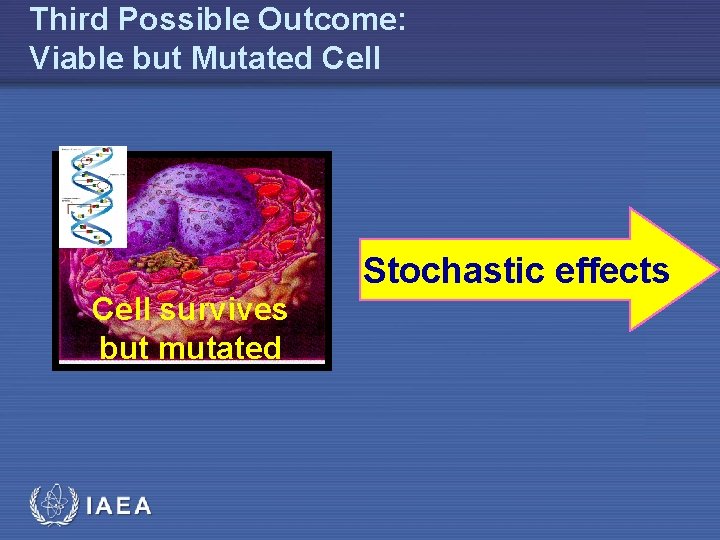
Third Possible Outcome: Viable but Mutated Cell Stochastic effects Cell survives but mutated
Stochastic Health Effects • A radiation-induced health effect, occurring without a threshold level of dose: • probability is proportional to the dose • severity is independent of the dose • Stochastic health effects: • Radiation-induced cancers • Hereditary effects • Late appearance (years) • Latency period: • Several years for cancer • Hundreds of years for hereditary effects
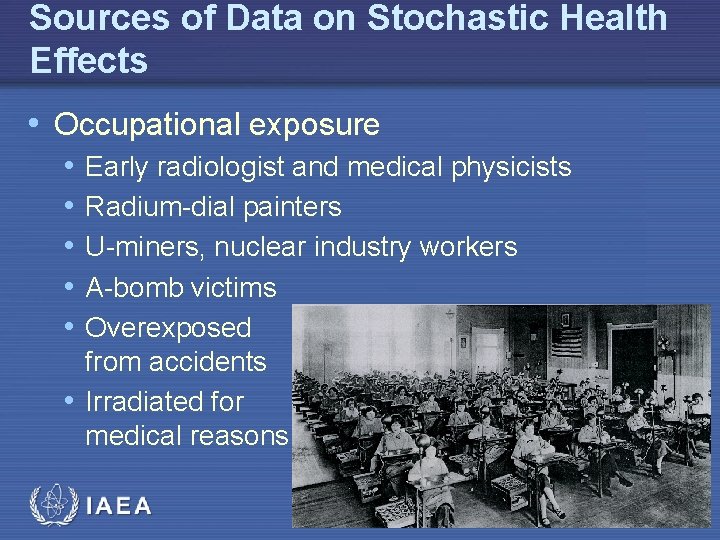
Sources of Data on Stochastic Health Effects • Occupational exposure • • • Early radiologist and medical physicists Radium-dial painters U-miners, nuclear industry workers A-bomb victims Overexposed from accidents • Irradiated for medical reasons
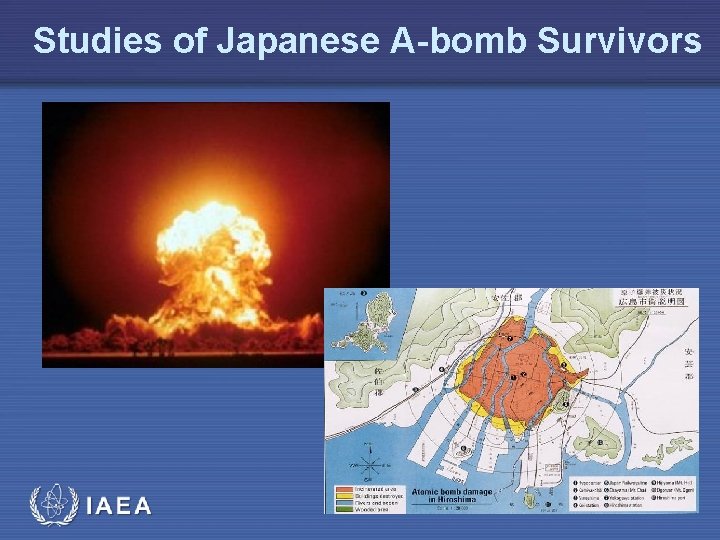
Studies of Japanese A-bomb Survivors
Cohort of Hiroshima & Nagasaki (Life Span Study, LSS) • Primary source of information: • 86, 500 individuals of: • both sexes and • all ages • dosimetric data over a range of doses • Average dose – 0. 27 Sv • ~ 6, 000 individuals exposed in dose > 0. 1 Sv • ~ 700 individuals exposed in dose > 1 Sv
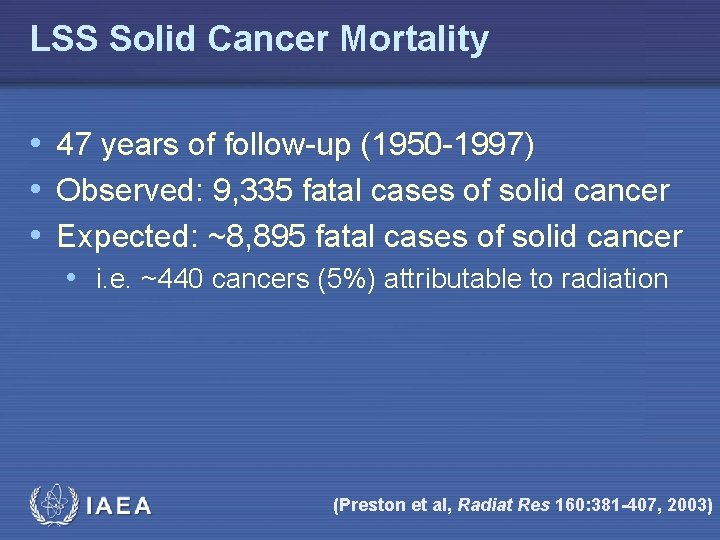
LSS Solid Cancer Mortality • 47 years of follow-up (1950 -1997) • Observed: 9, 335 fatal cases of solid cancer • Expected: ~8, 895 fatal cases of solid cancer • i. e. ~440 cancers (5%) attributable to radiation (Preston et al, Radiat Res 160: 381 -407, 2003)
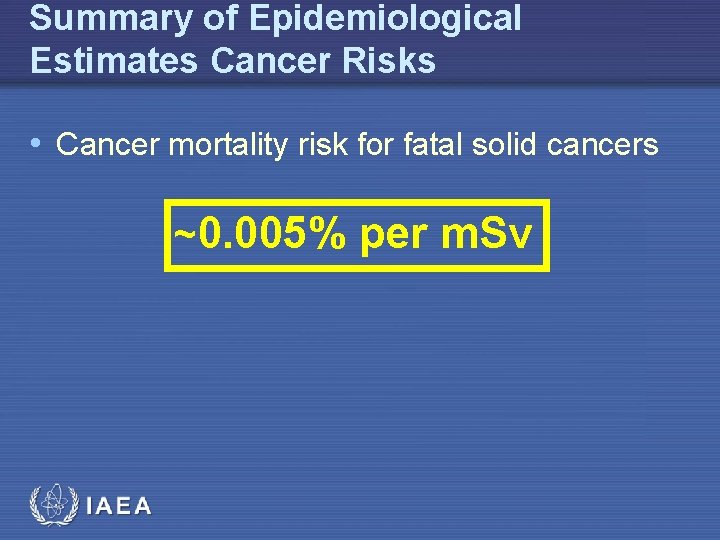
Summary of Epidemiological Estimates Cancer Risks • Cancer mortality risk for fatal solid cancers ~0. 005% per m. Sv
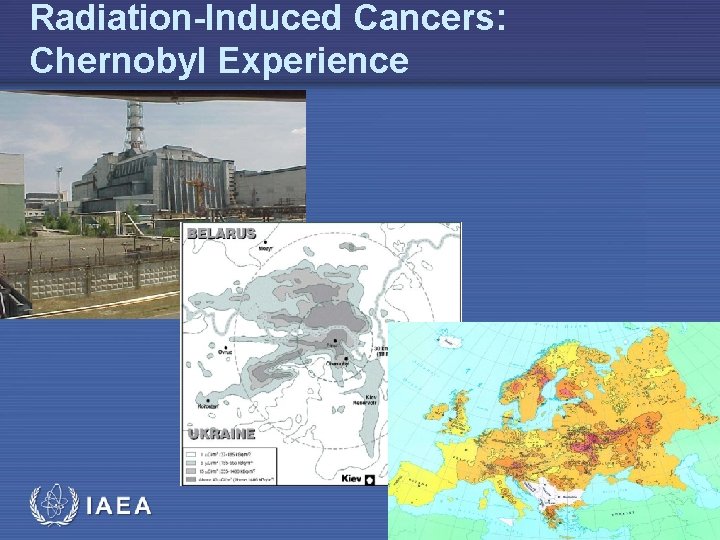
Radiation-Induced Cancers: Chernobyl Experience
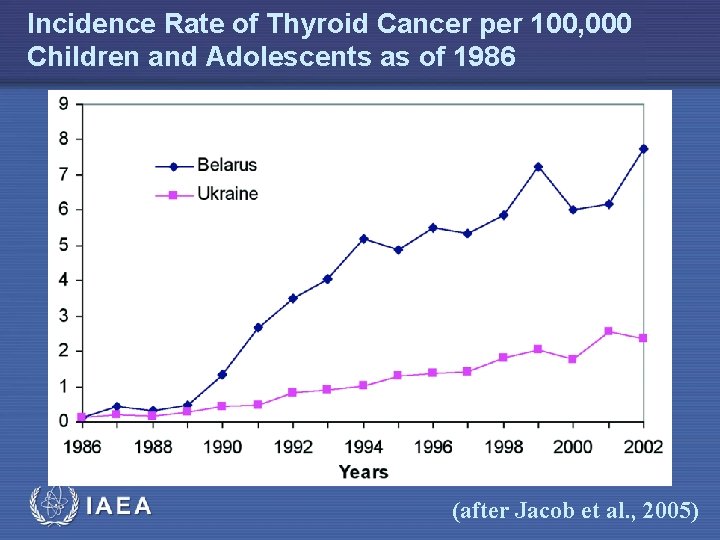
Incidence Rate of Thyroid Cancer per 100, 000 Children and Adolescents as of 1986 (after Jacob et al. , 2005)
Other Radiation-Induced Cancers • “Liquidators” • Doubling of leukaemia morbidity in workers with D>150 m. Gy • Some increase of mortality (~5%) caused by solid cancers and cardiovascular diseases • Increased cataract frequency • doses recorded in the Registries range up to about 500 m. Gy, with an average of ~ 100 m. Gy • General public • No increase of leukaemia • No increase of solid cancers except of thyroid cancer in children and adolescents (considered above) • Effective dose during 1986 -2005 range from a few m. Sv to some hundred m. Sv with an average dose 10 - 20 m. Sv
Hereditary Effects • Effects to be observed in offspring born after one or both parents had been irradiated prior to conception • Radiation exposure does not induce new types of mutations in the germ cells but increase the incidence of spontaneous mutations
Hereditary Effects • Descendents of Hiroshima and Nagasaki survivors were studied • A cohort of 31, 150 children born to parents who were within 2 km of the hypocenter at the time of the bombing was compared with a control cohort of 41, 066 children But, no statistical abnormalities were detected
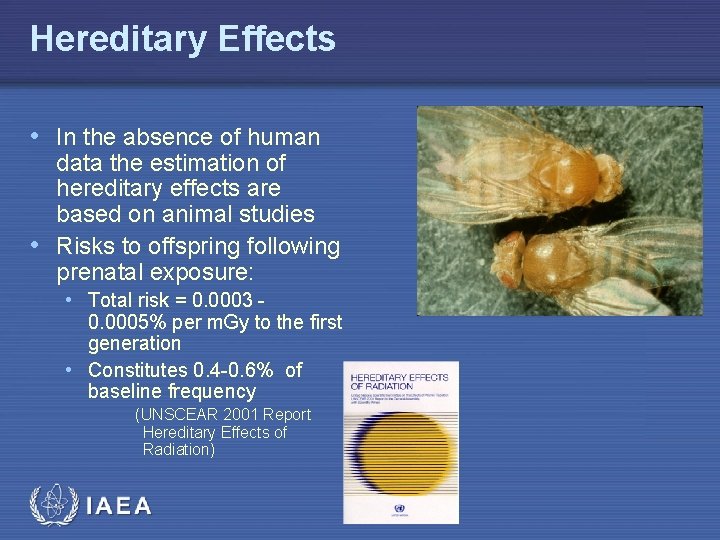
Hereditary Effects • In the absence of human data the estimation of hereditary effects are based on animal studies • Risks to offspring following prenatal exposure: • Total risk = 0. 0003 - 0. 0005% per m. Gy to the first generation • Constitutes 0. 4 -0. 6% of baseline frequency (UNSCEAR 2001 Report Hereditary Effects of Radiation)
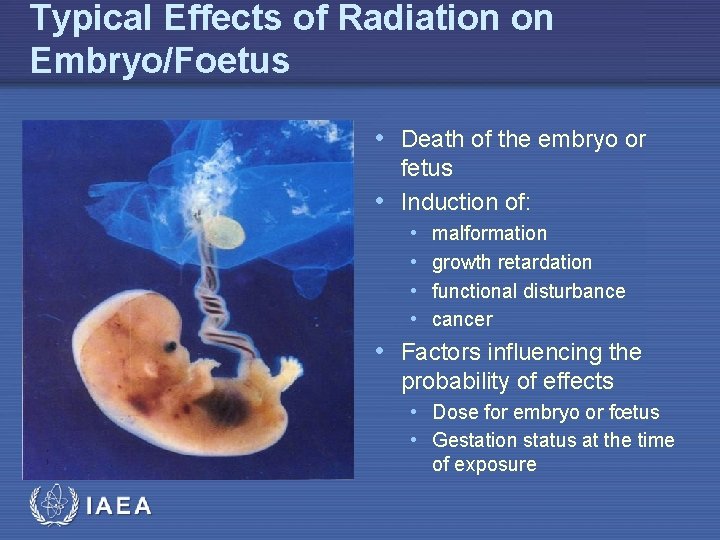
Typical Effects of Radiation on Embryo/Foetus • Death of the embryo or fetus • Induction of: • • malformation growth retardation functional disturbance cancer • Factors influencing the probability of effects • Dose for embryo or fœtus • Gestation status at the time of exposure
Severe Mental Retardation • A study of about 1, 600 children exposed inutero at Hiroshima and Nagasaki to various radiation doses and at various developmental stages: • excess mental retardation was at a maximum between 8 and 15 weeks • Risk: 0. 05% per m. Sv (8 -15 weeks)

From fundamental knowledge to practical application Fundamentals Lessons learned
In summary • Radiation may cause two types of health effects: deterministic (e. g. , radiation burns) and stochastic (e. g. , radiation-induced cancer) • Our knowledge of these effects forms the basis for the system of radiation safety and for the IAEA activities in this area • Now we will see the video of the IAEA Department of Nuclear Safety and Security

Thank you
- Slides: 38