
Radiation Exposure Dr Anas Khan Penetration Abilities of
Radiation Exposure Dr. Anas Khan
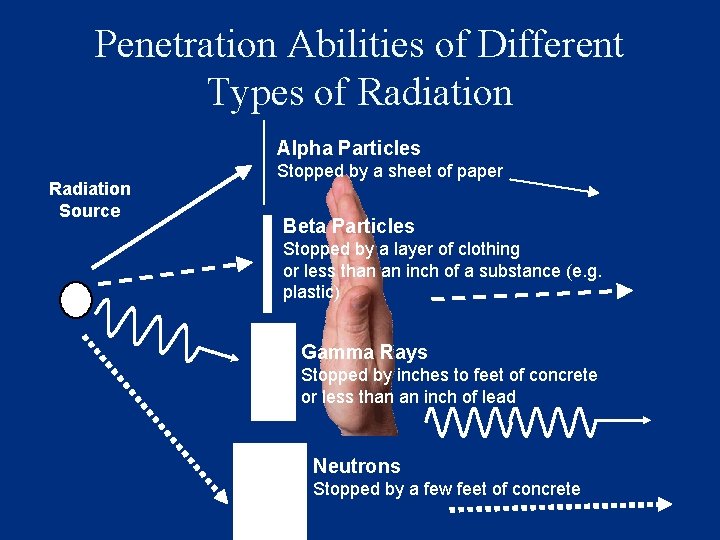
Penetration Abilities of Different Types of Radiation Alpha Particles Radiation Source Stopped by a sheet of paper Beta Particles Stopped by a layer of clothing or less than an inch of a substance (e. g. plastic) Gamma Rays Stopped by inches to feet of concrete or less than an inch of lead Neutrons Stopped by a few feet of concrete
Alpha Particles • Do not penetrate the dead layer of skin, stopped by a thin layer of paper or clothing. If ingested, can cause ionization that results in damage to tissue internally.
Beta Particles • Depending on its energy, can travel from inches to many feet in air and is only moderately penetrating in other materials, can penetrate human skin to the layer where new skin cells are produced. If high enough quantities of remained on the skin for a prolonged period of time, they may cause skin injury. May be harmful if deposited internally. Protective clothing (e. g. , universal precautions) typically provides sufficient protection against most external beta radiation.
Gamma Rays • X-rays (photons): • Able to travel many feet in air and many inches in human tissue. They readily penetrate most materials. Thick layers of dense materials are needed to shield against gamma radiation. Protective clothing provides little shielding from gamma and x radiation, but will prevent contamination of the skin with the gamma emitting radioactive material.
Neutrons • Also penetrate most materials. They are able to travel many feet in concrete and thousands of feet in air. Thick layers of materials with lots of hydrogen in them (like water or concrete) are needed to shield against neutron radiation. Protective clothing provides no shielding from neutron radiation. Neutrons are not likely to be encountered except in the initial seconds of a nuclear criticality event.
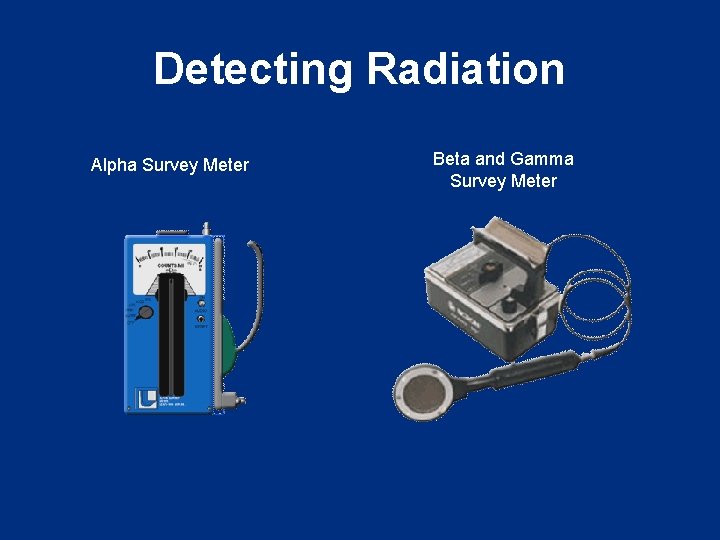
Detecting Radiation Alpha Survey Meter Beta and Gamma Survey Meter
Detecting Radiation Absorbed dose = Energy absorbed per unit mass of tissue Rad Biologically effective dose = Risk of suffering from health effects following exposure to radiation rem (USA); An annual average exposure level in US is 0. 35 rem/year (most exposure comes from Radon) All Patients and staff should be triaged/monitored by trained staff during event for radiation exposure/contamination
Radiation vs. Radioactive Material • Radiation: energy transported in the form of particles or waves (alpha, beta, gamma, neutrons) • Radioactive Material: material that contains atoms that emit radiation spontaneously

Exposure vs Contamination External Exposure External Contamination Internal Contamination
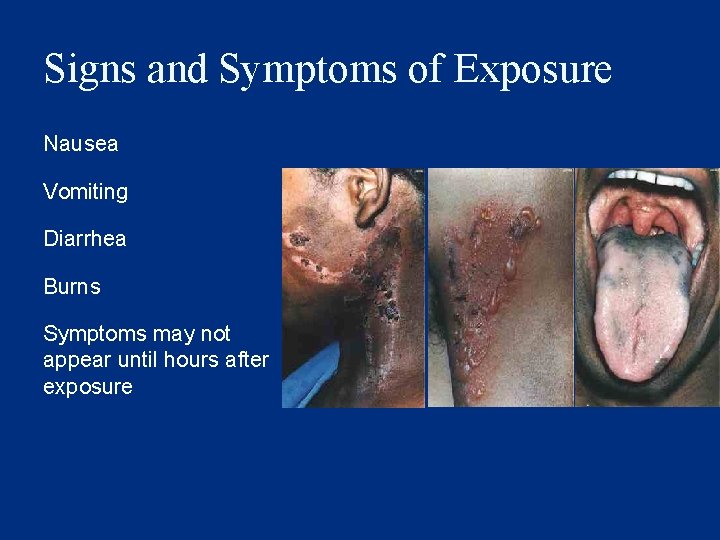
Signs and Symptoms of Exposure Nausea Vomiting Diarrhea Burns Symptoms may not appear until hours after exposure
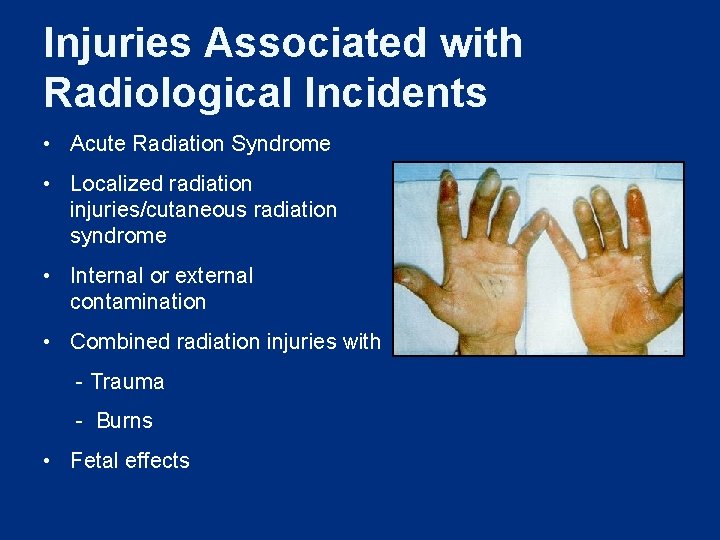
Injuries Associated with Radiological Incidents • Acute Radiation Syndrome • Localized radiation injuries/cutaneous radiation syndrome • Internal or external contamination • Combined radiation injuries with - Trauma - Burns • Fetal effects
Radiation Protection for Clinical Staff • Fundamental Principles - Time - Distance - Shielding • PPE • Contamination Control
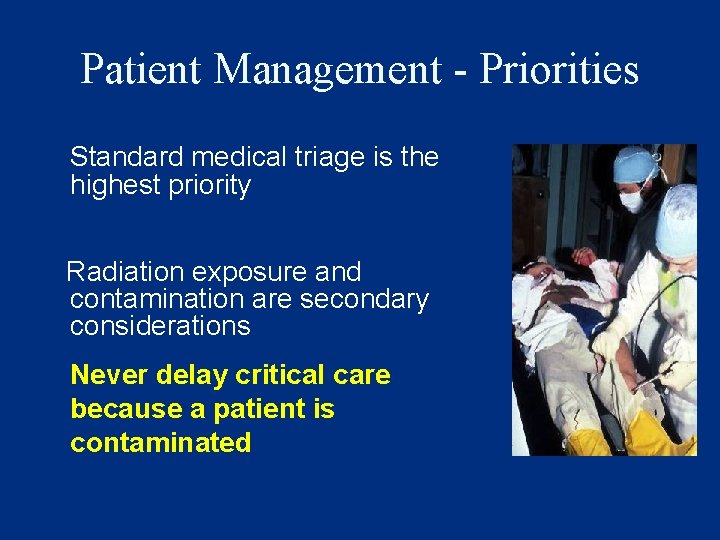
Patient Management - Priorities Standard medical triage is the highest priority Radiation exposure and contamination are secondary considerations Never delay critical care because a patient is contaminated
Required Conditions for Acute Radiation Syndrome • Large dose • Penetrating • Most of body exposed • Acute
Treatment of ARS: • supportive care in a clean environment (burn unit) • prevention and treatment of infections • stimulate hematopoiesis with growth factors • stem cell transfusions or platelet transfusions • psychological support • observation for erythema, hair loss, skin injury, mucositis, parotitis, weight loss, or fever • confirmation of initial dose estimate consultation with experts
Treatment Options: • Diethylenetriamene pentaacetate (DTPA) - Chelating agent • Prussian blue - Binds Thallium and cesium • Potassium Iodide (KI) - Competes with radioactive iodine for thyroid absorption • Neupogen
- Slides: 17