
Radiation Detection Principles and Instruments 1 Module 5








- Slides: 65
Radiation Detection Principles and Instruments 1 Module 5 - Radiation Detection Principles and Instruments NET 130
Overview • Many instruments have been developed to detect radiation • Based on knowledge of how radiation interacts with matter – Excitation – Ionization • Charged particles cause ionization directly through Coulombic interactions • EM radiation produces ion pairs in matter – Photoelectric effect – Compton scattering – Pair production • Neutrons produce ions through secondary mechanisms 2 Module 5 - Radiation Detection Principles and Instruments NET 130
Overview Four methods for detecting ionizing radiation: • 1. Ions collected to produce signal 2. Amplification of ionization to produce stronger signal 3. Fluorescence of a substance that has absorbed energy from radiation 4. Radiation-induced chemical reactions Three major types of detection instruments: • 1. Nuclear instrumentation 2. Portable survey instruments and area monitors 3. Personnel monitoring devices 3 Module 5 - Radiation Detection Principles and Instruments NET 130
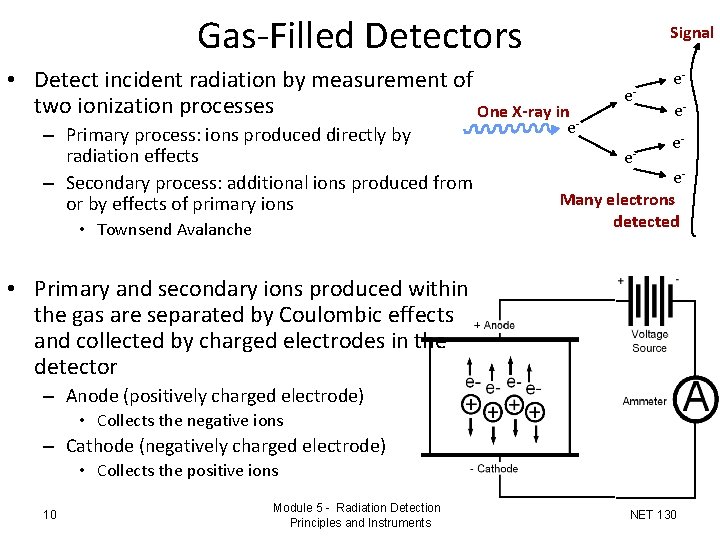
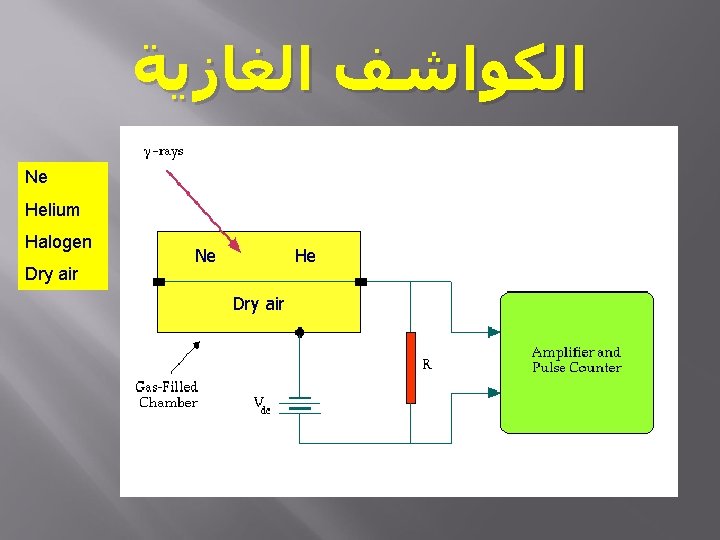
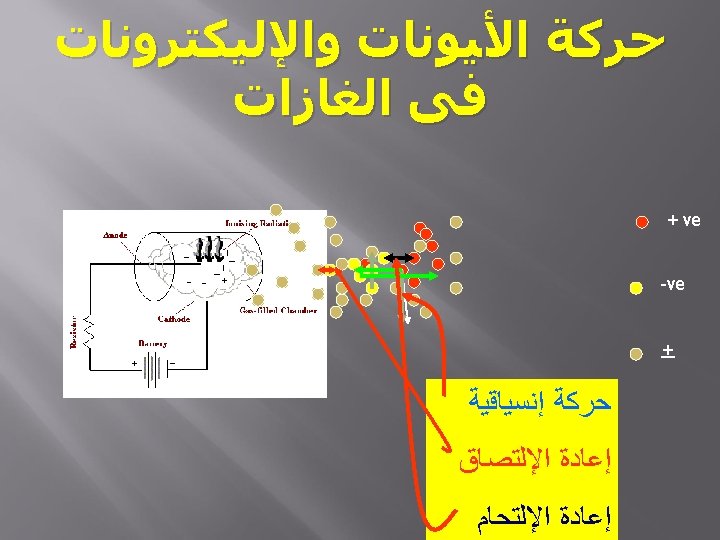
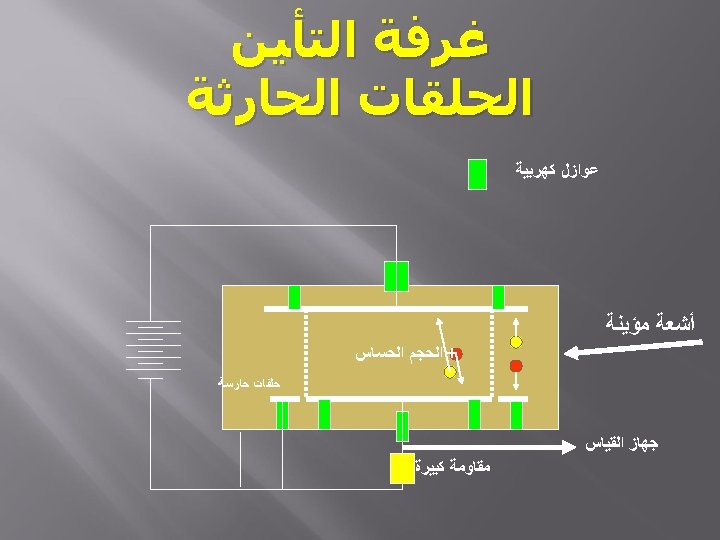
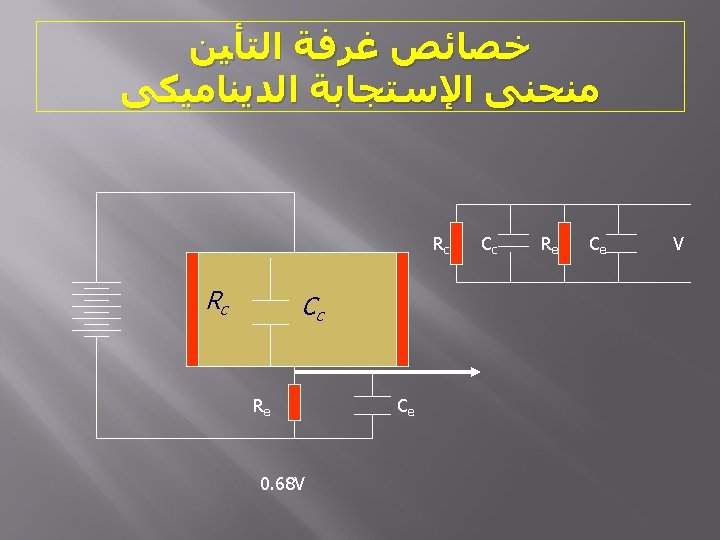
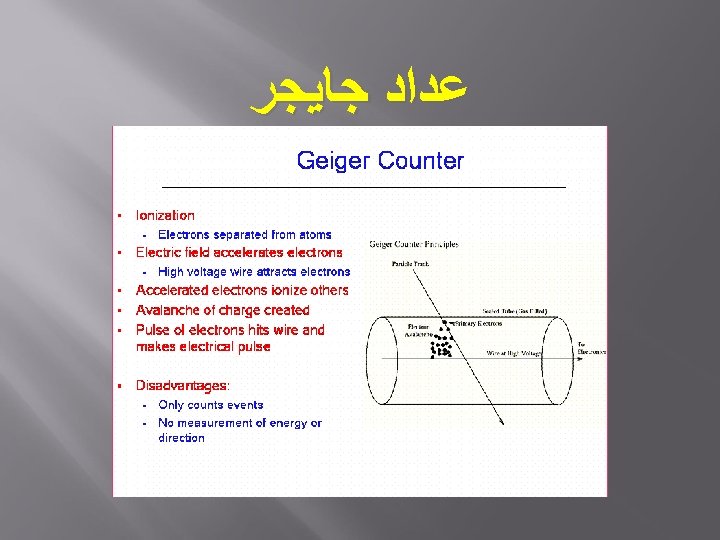
Gas-Filled Detectors Signal • Detect incident radiation by measurement of two ionization processes One X-ray in – Primary process: ions produced directly by radiation effects – Secondary process: additional ions produced from or by effects of primary ions • Townsend Avalanche e- eee- e. Many electrons detected • Primary and secondary ions produced within the gas are separated by Coulombic effects and collected by charged electrodes in the detector – Anode (positively charged electrode) • Collects the negative ions – Cathode (negatively charged electrode) • Collects the positive ions 10 Module 5 - Radiation Detection Principles and Instruments NET 130
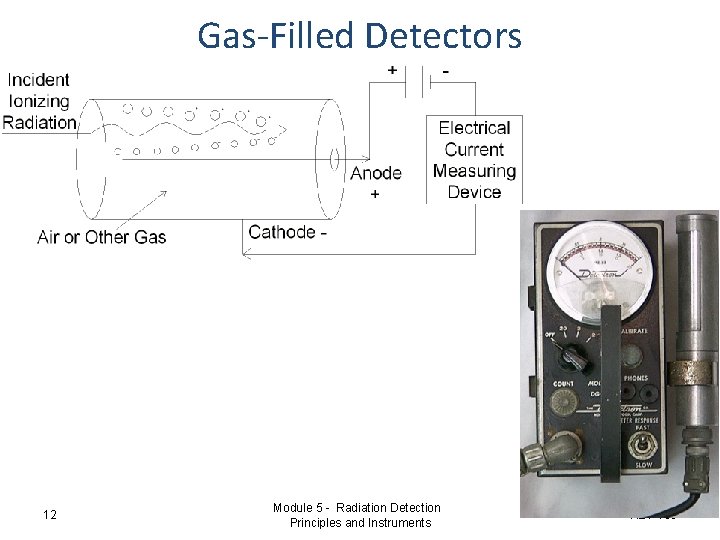
Gas-Filled Detectors 12 Module 5 - Radiation Detection Principles and Instruments NET 130
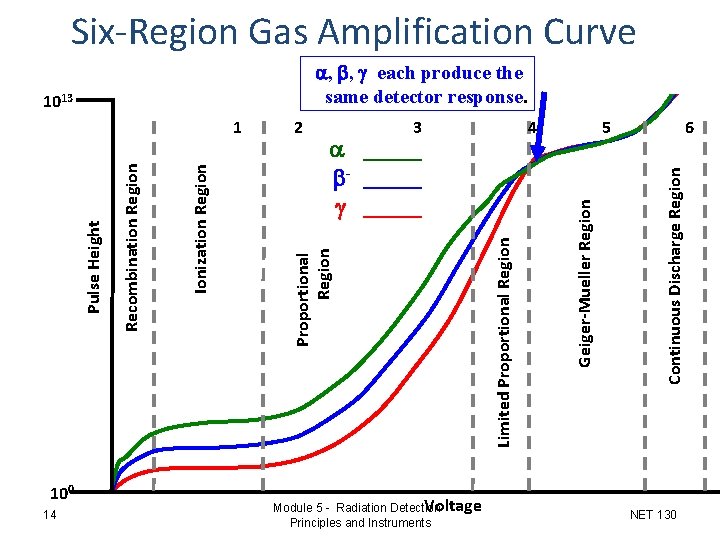
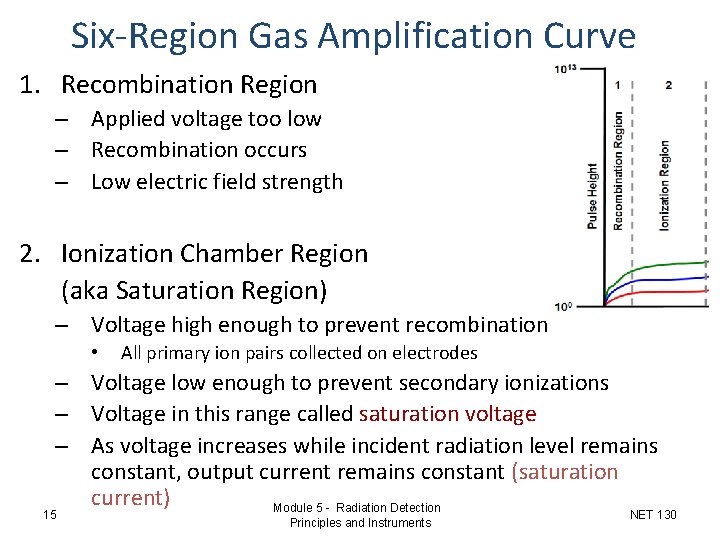
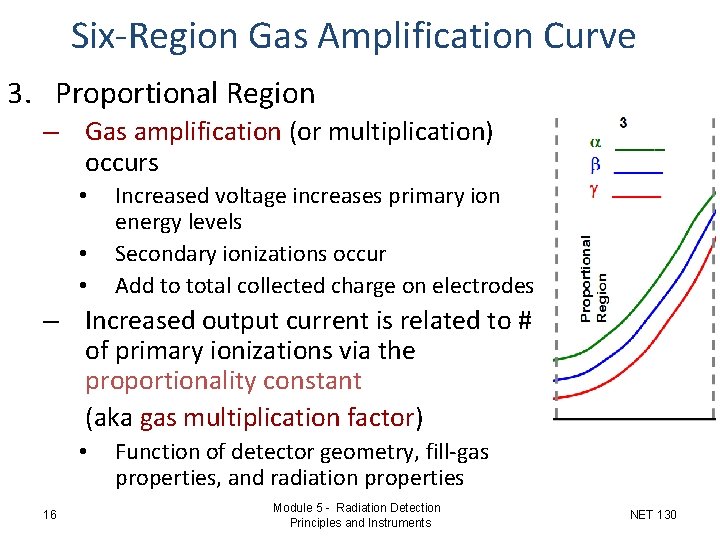
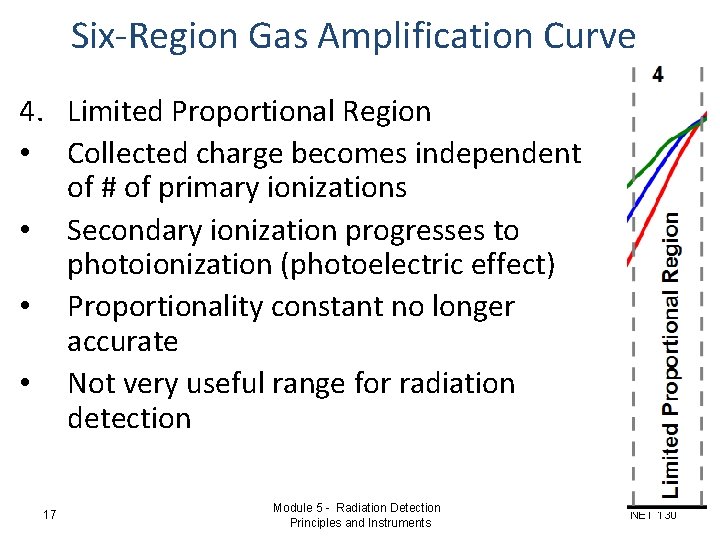
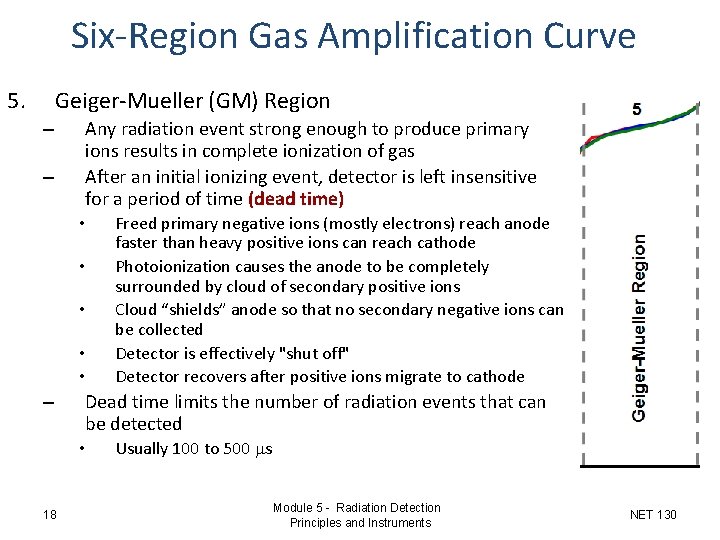
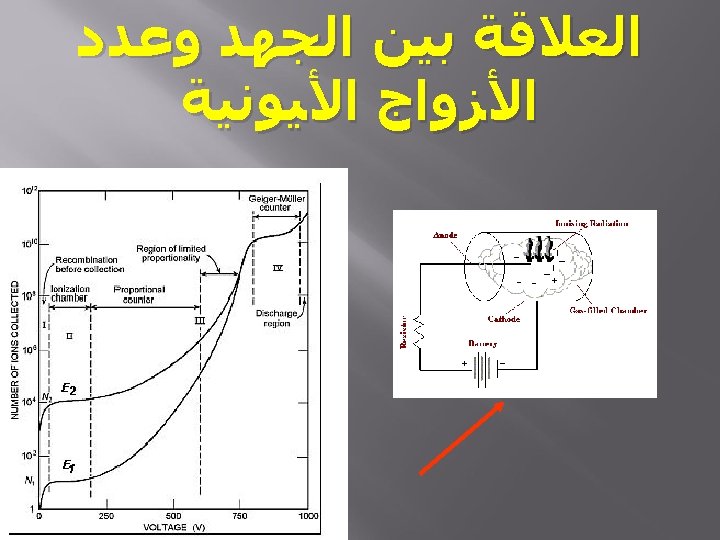
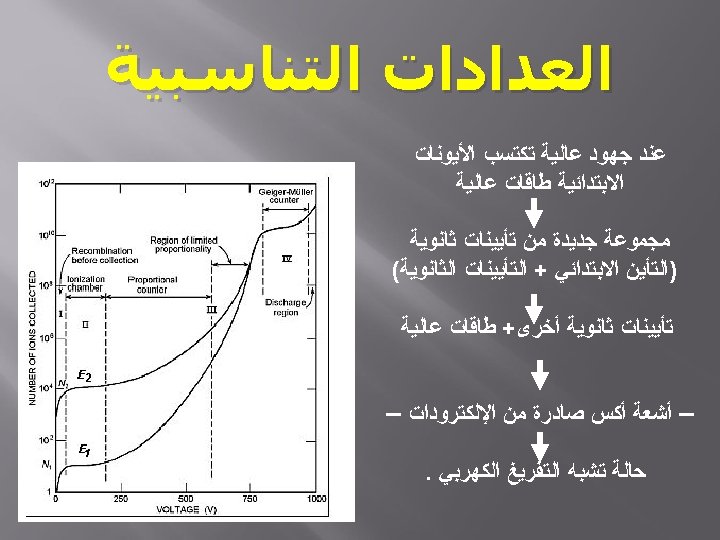
Six-Region Gas Amplification Curve , , each produce the same detector response. 100 14 4 _____ - _____ Voltage Module 5 - Radiation Detection Principles and Instruments 5 6 Continuous Discharge Region 3 Geiger-Mueller Region 2 Proportional Region Ionization Region Recombination Region Pulse Height 1 Limited Proportional Region 1013 NET 130
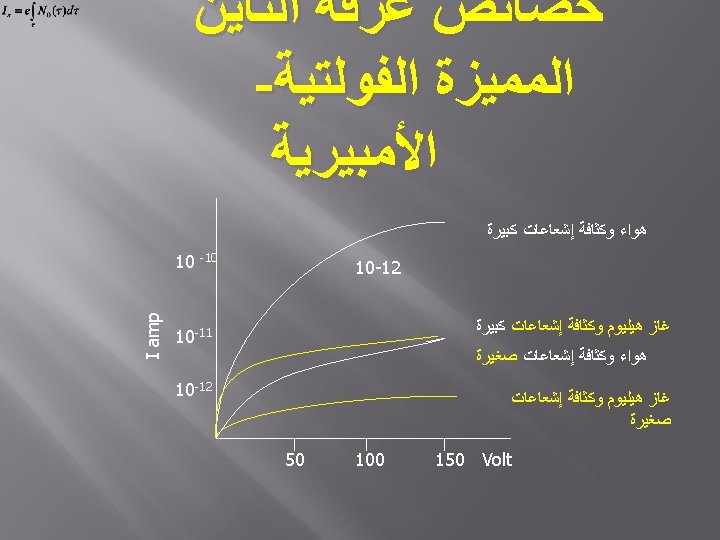
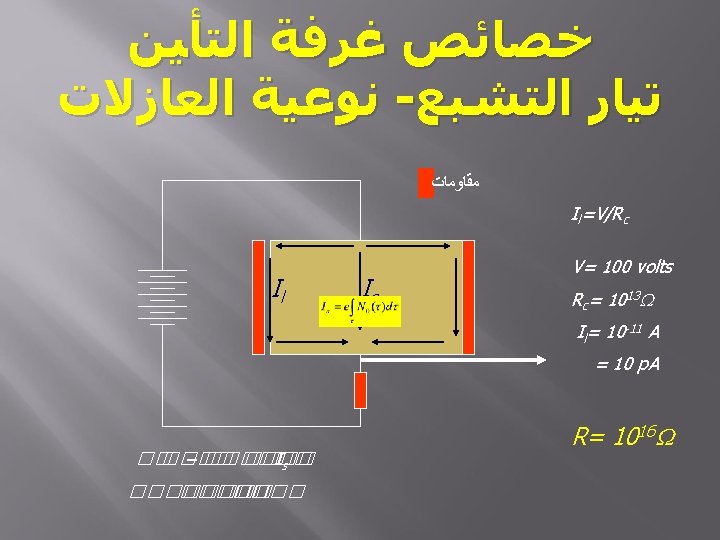
Six-Region Gas Amplification Curve 1. Recombination Region – Applied voltage too low – Recombination occurs – Low electric field strength 2. Ionization Chamber Region (aka Saturation Region) – Voltage high enough to prevent recombination • All primary ion pairs collected on electrodes – Voltage low enough to prevent secondary ionizations – Voltage in this range called saturation voltage – As voltage increases while incident radiation level remains constant, output current remains constant (saturation current) Module 5 - Radiation Detection 15 Principles and Instruments NET 130
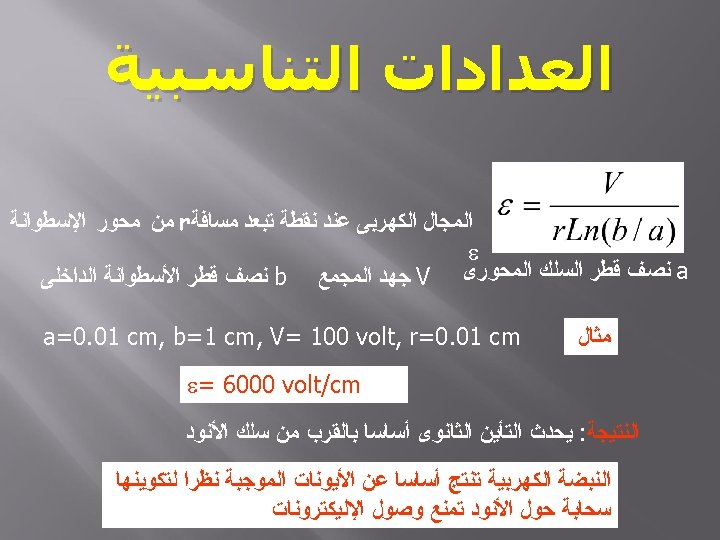
Six-Region Gas Amplification Curve 3. Proportional Region – Gas amplification (or multiplication) occurs • • • Increased voltage increases primary ion energy levels Secondary ionizations occur Add to total collected charge on electrodes – Increased output current is related to # of primary ionizations via the proportionality constant (aka gas multiplication factor) • 16 Function of detector geometry, fill-gas properties, and radiation properties Module 5 - Radiation Detection Principles and Instruments NET 130
Six-Region Gas Amplification Curve 4. Limited Proportional Region • Collected charge becomes independent of # of primary ionizations • Secondary ionization progresses to photoionization (photoelectric effect) • Proportionality constant no longer accurate • Not very useful range for radiation detection 17 Module 5 - Radiation Detection Principles and Instruments NET 130
Six-Region Gas Amplification Curve 5. Geiger-Mueller (GM) Region – – Any radiation event strong enough to produce primary ions results in complete ionization of gas After an initial ionizing event, detector is left insensitive for a period of time (dead time) • • • – Dead time limits the number of radiation events that can be detected • 18 Freed primary negative ions (mostly electrons) reach anode faster than heavy positive ions can reach cathode Photoionization causes the anode to be completely surrounded by cloud of secondary positive ions Cloud “shields” anode so that no secondary negative ions can be collected Detector is effectively "shut off" Detector recovers after positive ions migrate to cathode Usually 100 to 500 ms Module 5 - Radiation Detection Principles and Instruments NET 130
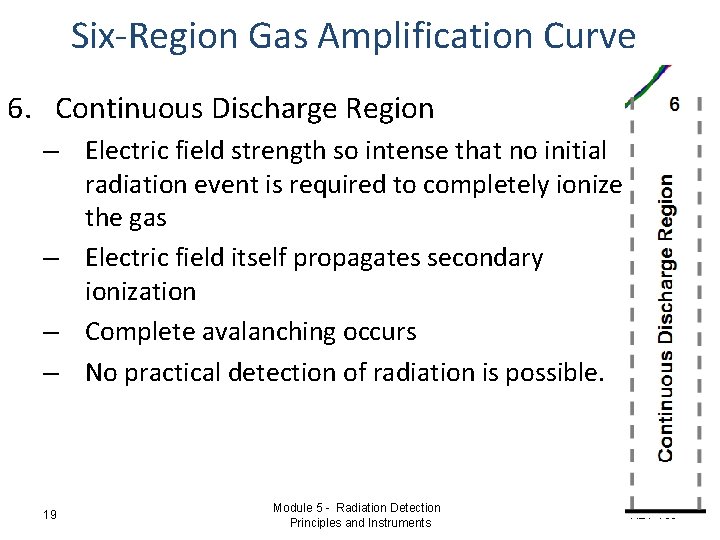
Six-Region Gas Amplification Curve 6. Continuous Discharge Region – Electric field strength so intense that no initial radiation event is required to completely ionize the gas – Electric field itself propagates secondary ionization – Complete avalanching occurs – No practical detection of radiation is possible. 19 Module 5 - Radiation Detection Principles and Instruments NET 130
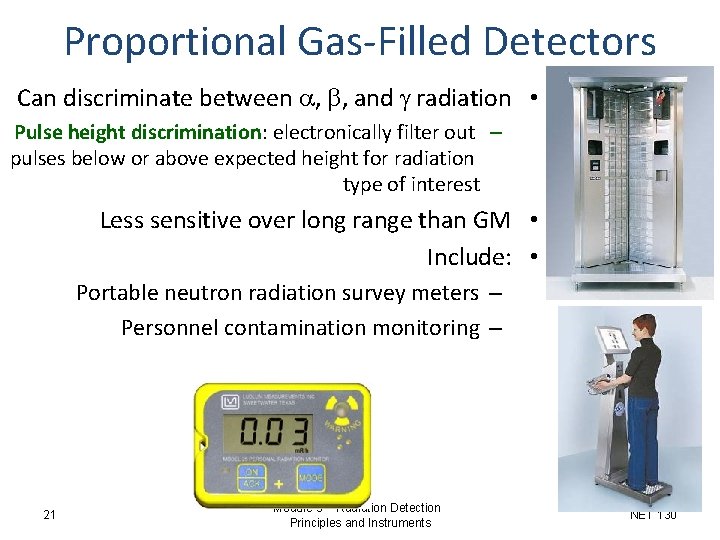
Proportional Gas-Filled Detectors Can discriminate between a, b, and g radiation • Pulse height discrimination: electronically filter out – pulses below or above expected height for radiation type of interest Less sensitive over long range than GM • Include: • Portable neutron radiation survey meters – Personnel contamination monitoring – 21 Module 5 - Radiation Detection Principles and Instruments NET 130
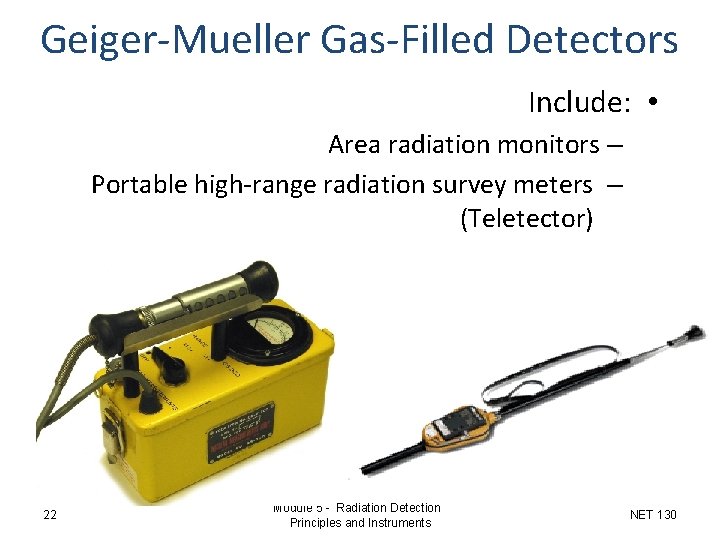
Geiger-Mueller Gas-Filled Detectors Include: • Area radiation monitors – Portable high-range radiation survey meters – (Teletector) 22 Module 5 - Radiation Detection Principles and Instruments NET 130
Geiger-Mueller Gas-Filled Detectors Advantages highly sensitive: capable of detecting low intensity radiation fields Only simple electronic amplification of the detector signal is required less insulation required to decrease “noise” interference 23 Disadvantages No single detector setup can • discriminate between α, β, γ no energy discrimination • entire gas volume ionizes • magnitude of resultant • pulse lengthens detector “dead time limited use in extreme • intensity radiation fields (> 40 R/hr) Module 5 - Radiation Detection Principles and Instruments NET 130
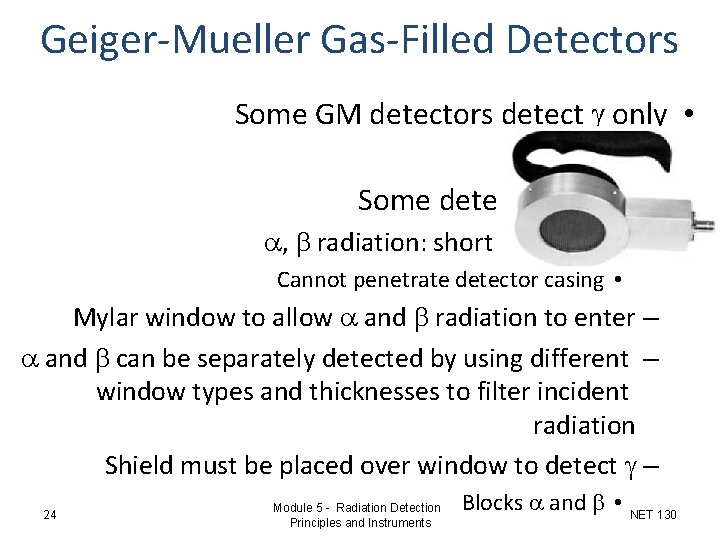
Geiger-Mueller Gas-Filled Detectors Some GM detectors detect g only • Solid casing – Some detect a, b, and g • a, b radiation: short travel range – Cannot penetrate detector casing • Mylar window to allow a and b radiation to enter – a and b can be separately detected by using different – window types and thicknesses to filter incident radiation Shield must be placed over window to detect g – 24 Module 5 - Radiation Detection Principles and Instruments Blocks a and b • NET 130
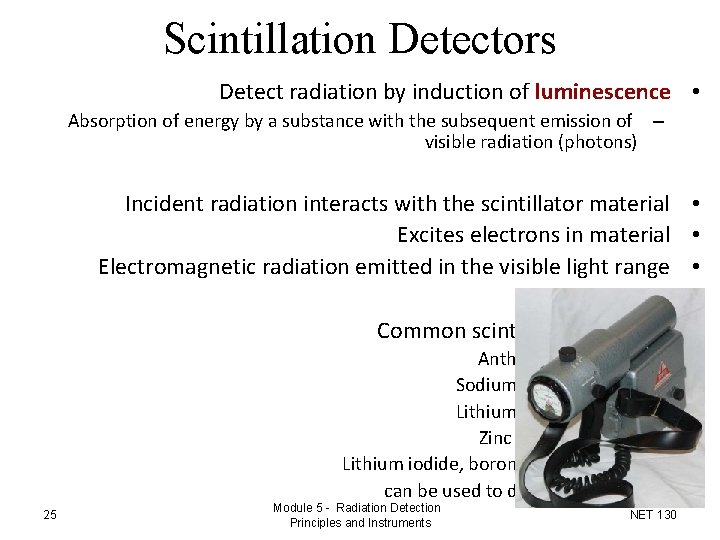
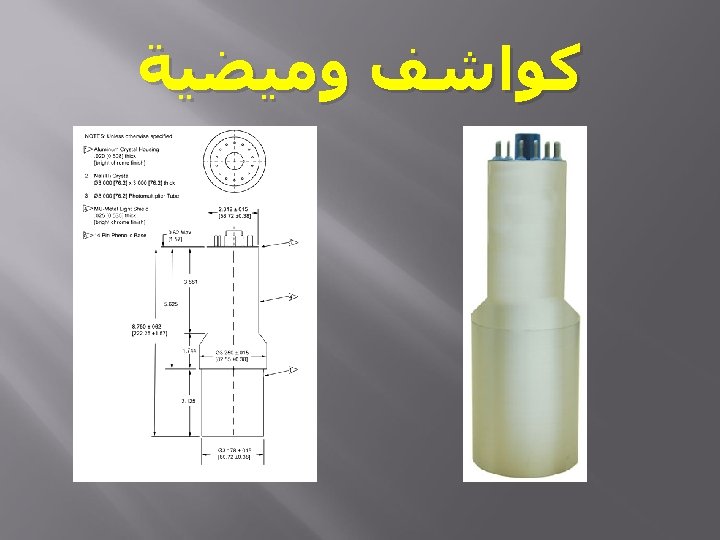
Scintillation Detectors Detect radiation by induction of luminescence • Absorption of energy by a substance with the subsequent emission of – visible radiation (photons) Incident radiation interacts with the scintillator material • Excites electrons in material • Electromagnetic radiation emitted in the visible light range • Common scintillator materials • Anthracene crystals Sodium iodide crystals Lithium iodide crystals Zinc sulfide powder Lithium iodide, boron, and cadmium can be used to detect neutrons 25 Module 5 - Radiation Detection Principles and Instruments – – – NET 130
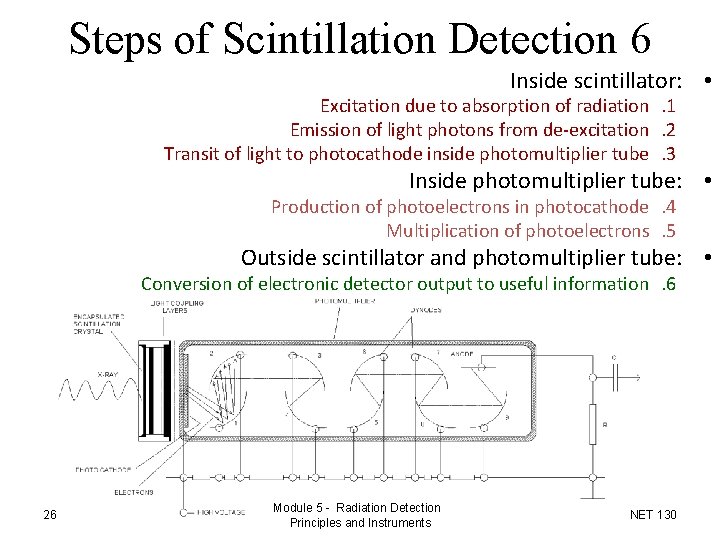
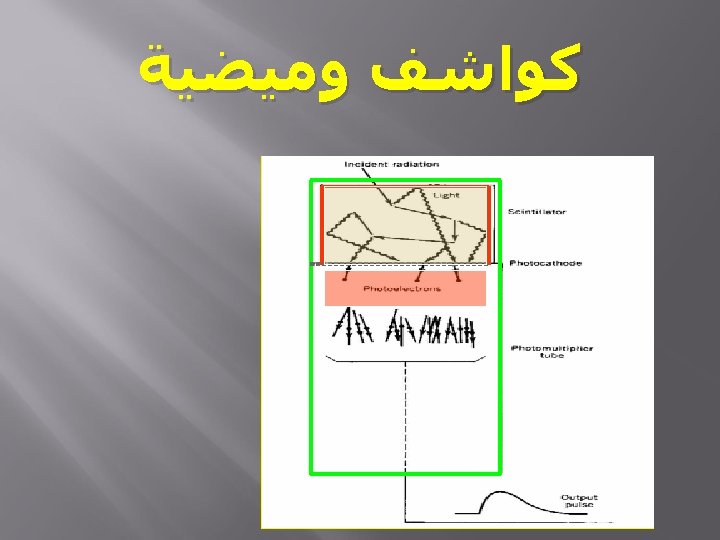
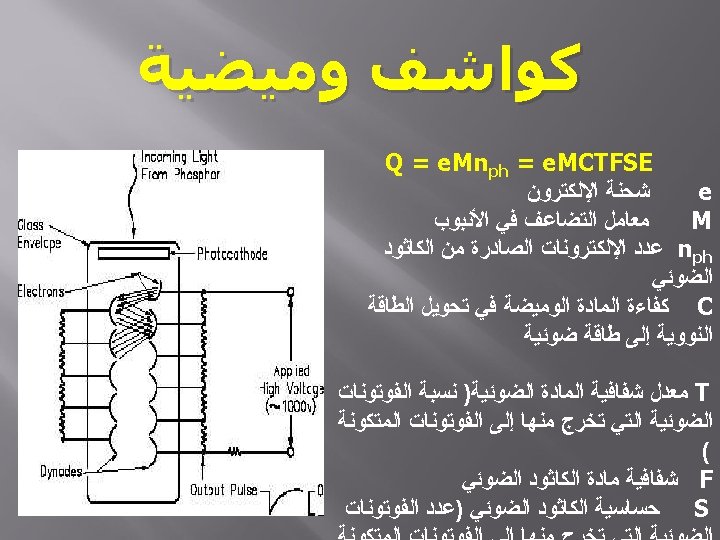
Steps of Scintillation Detection 6 Inside scintillator: • Excitation due to absorption of radiation. 1 Emission of light photons from de-excitation. 2 Transit of light to photocathode inside photomultiplier tube. 3 Inside photomultiplier tube: • Production of photoelectrons in photocathode. 4 Multiplication of photoelectrons. 5 Outside scintillator and photomultiplier tube: • Conversion of electronic detector output to useful information. 6 26 Module 5 - Radiation Detection Principles and Instruments NET 130
Common Scintillator Materials Anthracene crystals Sodium iodide crystals Lithium iodide crystals Zinc sulfide powder • • Lithium iodide, boron, and • cadmium can be used to detect neutrons 27 Module 5 - Radiation Detection Principles and Instruments NET 130
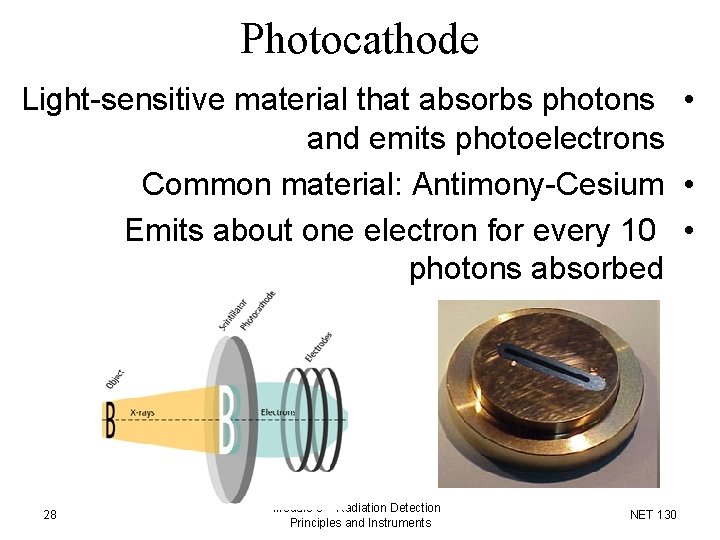
Photocathode Light-sensitive material that absorbs photons • and emits photoelectrons Common material: Antimony-Cesium • Emits about one electron for every 10 • photons absorbed 28 Module 5 - Radiation Detection Principles and Instruments NET 130
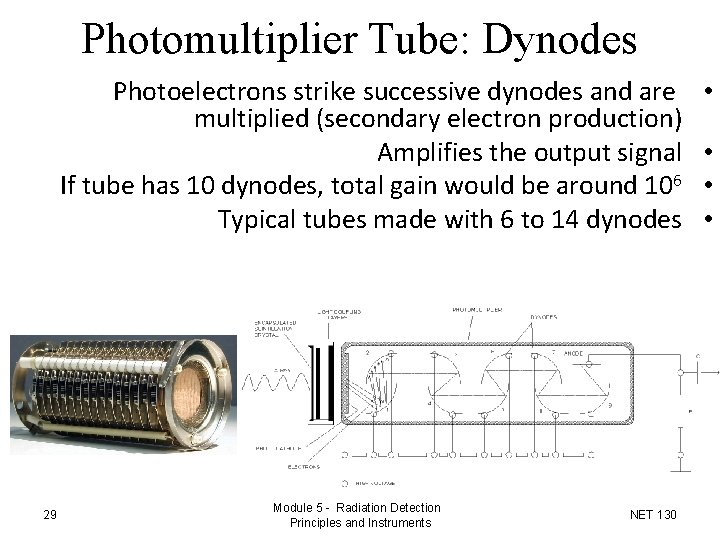
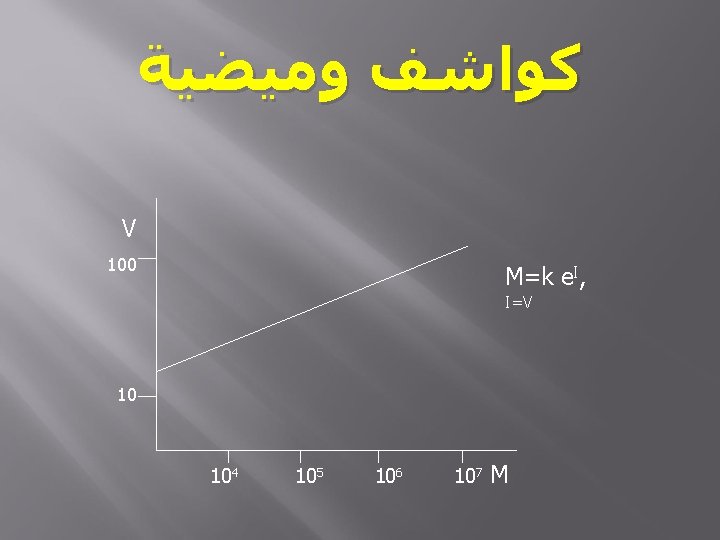
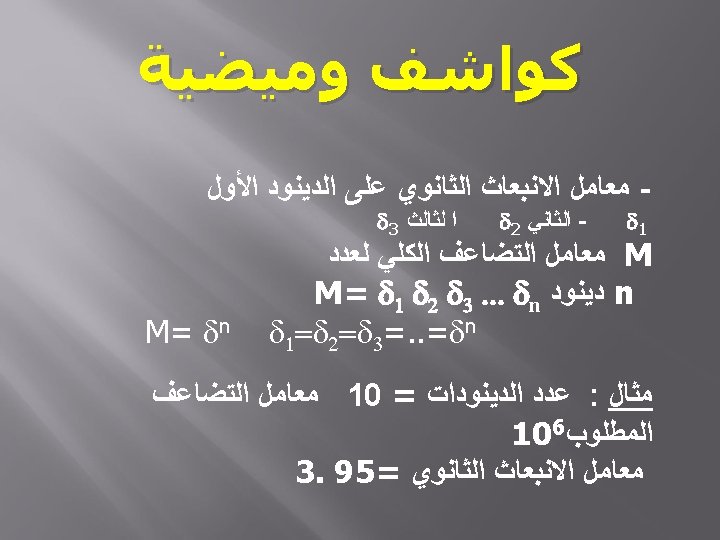
Photomultiplier Tube: Dynodes Photoelectrons strike successive dynodes and are multiplied (secondary electron production) Amplifies the output signal If tube has 10 dynodes, total gain would be around 106 Typical tubes made with 6 to 14 dynodes 29 Module 5 - Radiation Detection Principles and Instruments NET 130 • •
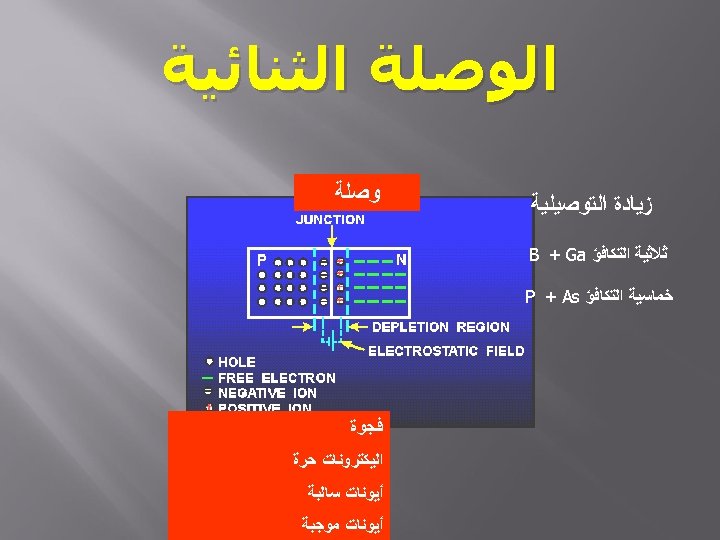
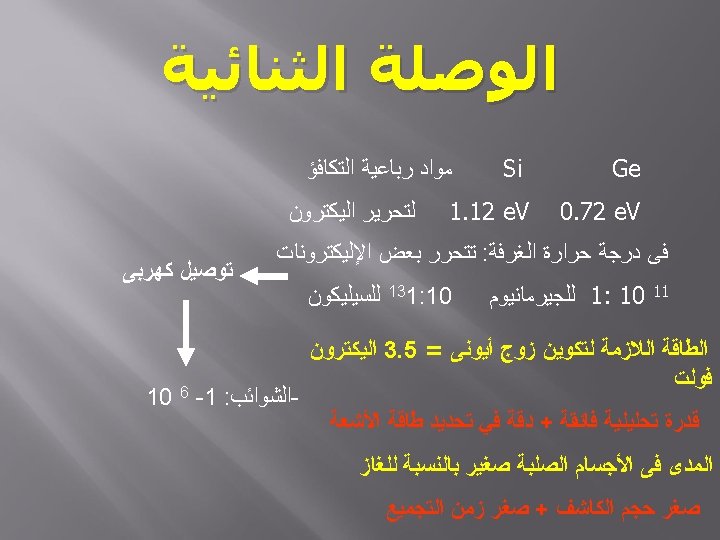
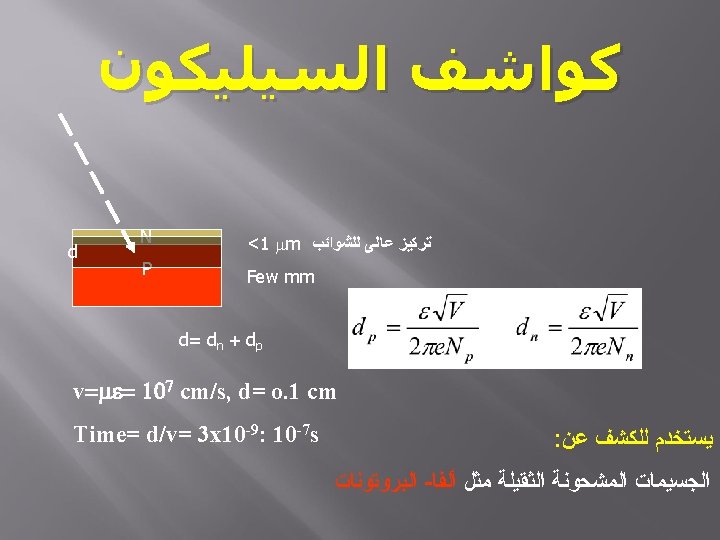
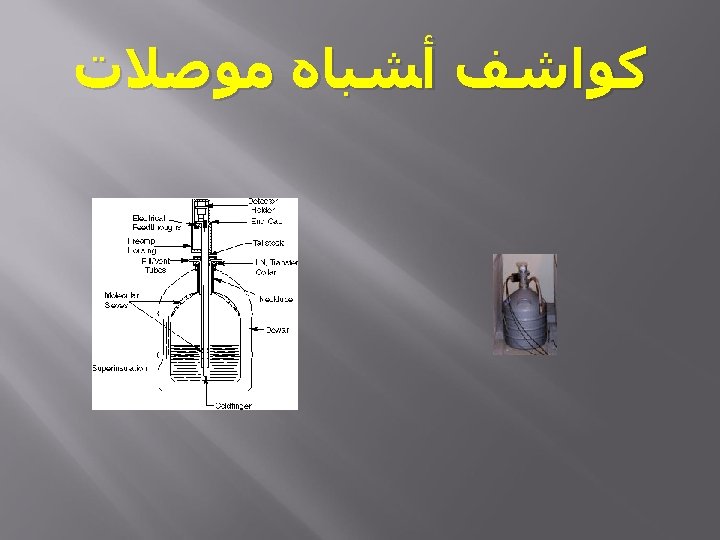
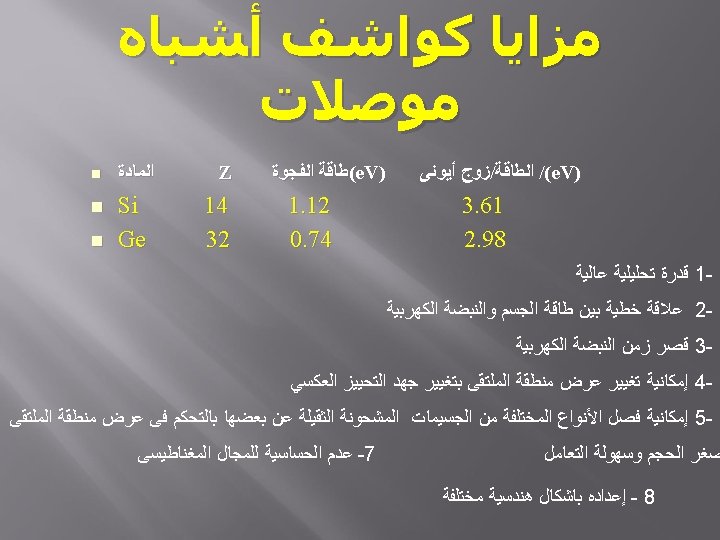
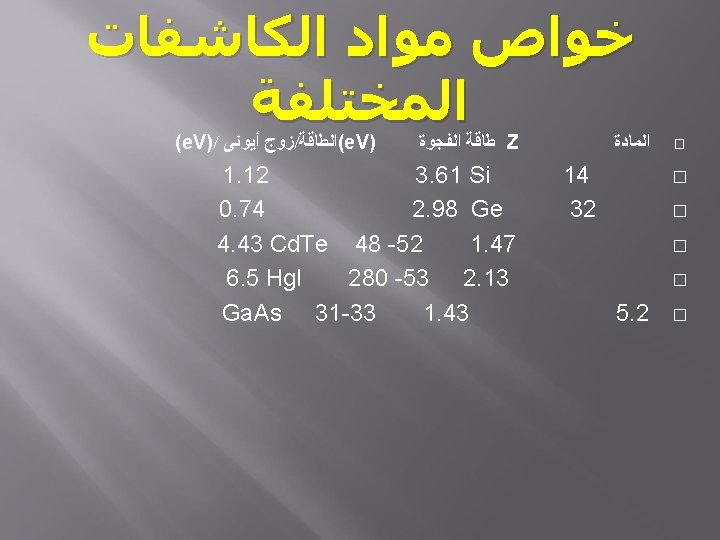
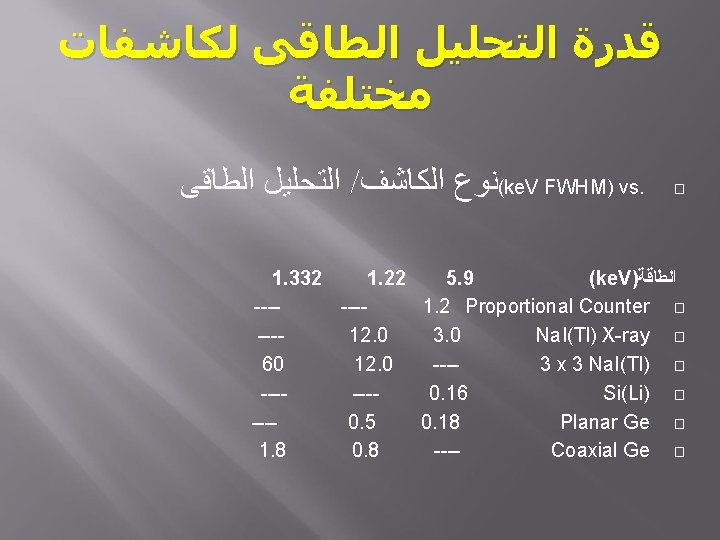
Semiconductor Detectors Operation similar to gas-filled detectors, but • chamber filled with solid semiconductor material Crystalline material whose electrical conductivity • is intermediate between that of a good conductor and a good insulator Benefits compared to other types • Very little fluctuation in output for a given energy of – radiation Fast – 30 Module 5 - Radiation Detection Principles and Instruments NET 130
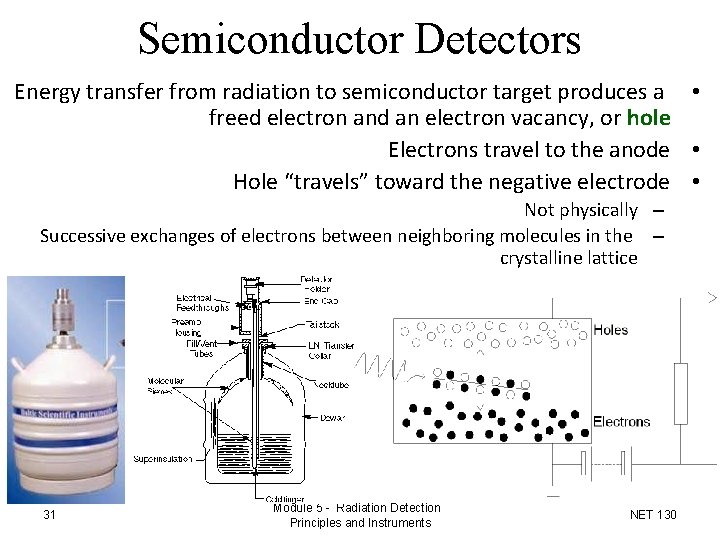
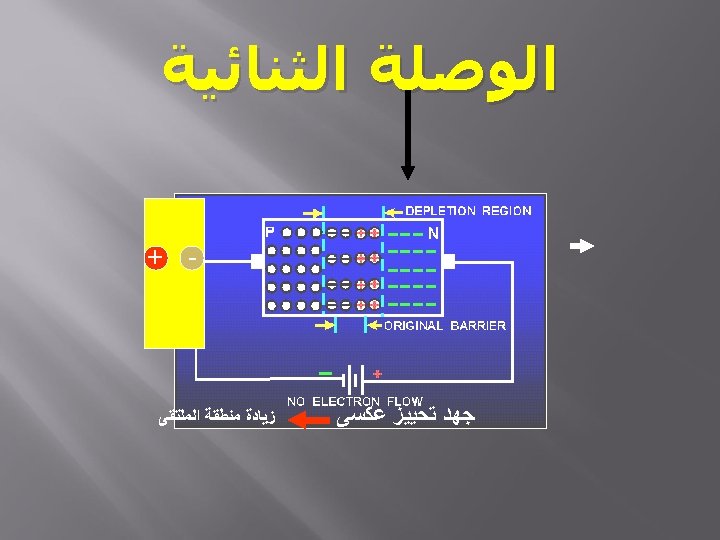
Semiconductor Detectors Energy transfer from radiation to semiconductor target produces a • freed electron and an electron vacancy, or hole Electrons travel to the anode • Hole “travels” toward the negative electrode • Not physically – Successive exchanges of electrons between neighboring molecules in the – crystalline lattice 31 Module 5 - Radiation Detection Principles and Instruments NET 130
ﺍﻟﻐﺎﺯﻳﺔ ﺍﻟﻜﻮﺍﺷﻒ Ne Helium Halogen Dry air Ne He Dry air
ﻛﻮﺍﺷﻒ ﻭﻣﻴﻀﻴﺔ V 100 M=k e. I, I=V 10 M 107 106 105 104