
Radiation Detection Measurements 1 IAEA International Atomic Energy
- Slides: 55
Radiation Detection & Measurements - 1 IAEA International Atomic Energy Agency Day 3 – Lecture 3
Objective To learn about different types of radiation detectors used in radiation protection IAEA 2
Contents • Detector Material • Detector Principles • Detector Types IAEA 3
Detectors • The detector is a fundamental base in all practice with ionizing radiation • Knowledge of the instruments potential as well as their limitation is essential for proper interpretation of the measurements IAEA 4
Detector Material • Any material that exhibits measurable radiation related changes can be used as detector for ionizing radiation. • • Change of colors Chemical changes Emission of visible light Electric charge • Active detectors: immediate measurement of the change. • Passive detectors: processing before reading IAEA 5
Detector Material • Any material that exhibits measurable radiation related changes can be used as detector for ionizing radiation. • • Change of colors Chemical changes Emission of visible light Electric charge • Active detectors: immediate measurement of the change. • Passive detectors: processing before reading IAEA 6
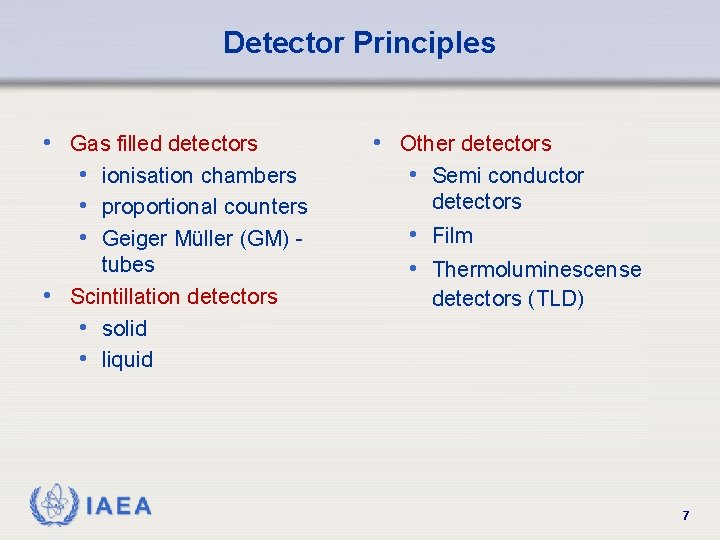
Detector Principles • Gas filled detectors • ionisation chambers • proportional counters • Geiger Müller (GM) tubes • Scintillation detectors • solid • liquid IAEA • Other detectors • Semi conductor detectors • Film • Thermoluminescense detectors (TLD) 7
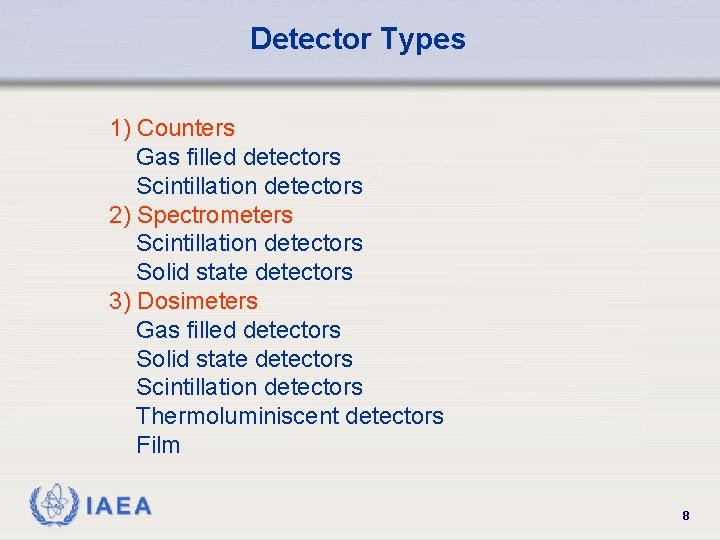
Detector Types 1) Counters Gas filled detectors Scintillation detectors 2) Spectrometers Scintillation detectors Solid state detectors 3) Dosimeters Gas filled detectors Solid state detectors Scintillation detectors Thermoluminiscent detectors Film IAEA 8
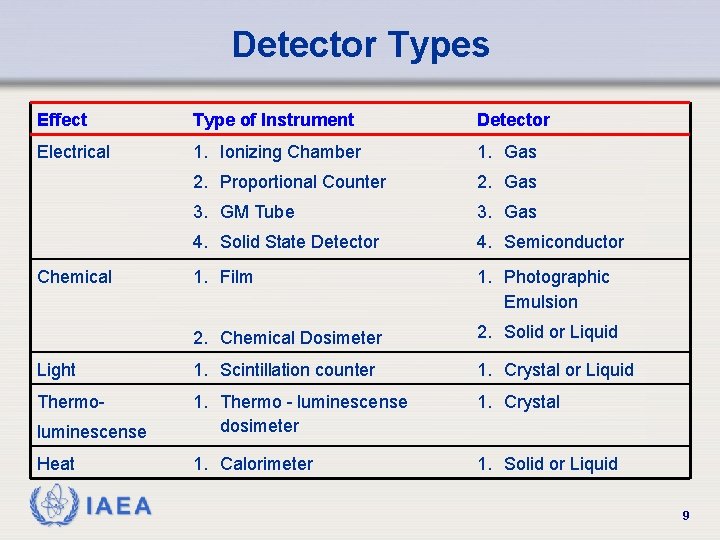
Detector Types Effect Type of Instrument Detector Electrical 1. Ionizing Chamber 1. Gas 2. Proportional Counter 2. Gas 3. GM Tube 3. Gas 4. Solid State Detector 4. Semiconductor 1. Film 1. Photographic Emulsion 2. Chemical Dosimeter 2. Solid or Liquid Light 1. Scintillation counter 1. Crystal or Liquid Thermo- 1. Crystal luminescense 1. Thermo - luminescense dosimeter Heat 1. Calorimeter 1. Solid or Liquid Chemical IAEA 9
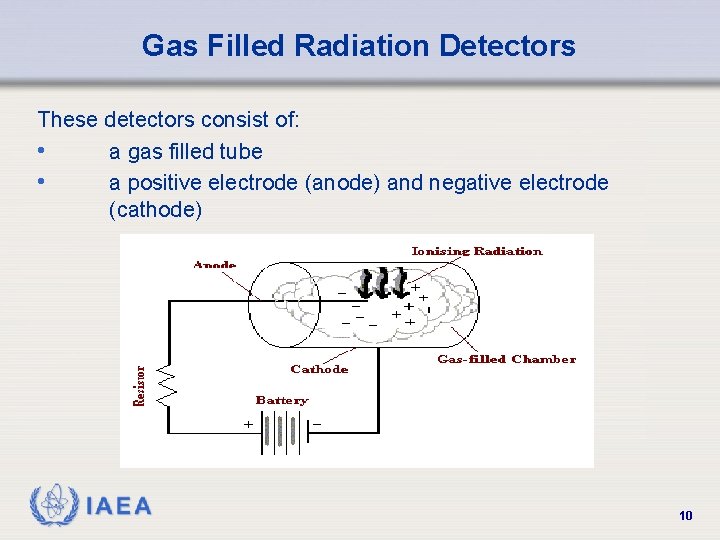
Gas Filled Radiation Detectors These detectors consist of: • a gas filled tube • a positive electrode (anode) and negative electrode (cathode) IAEA 10
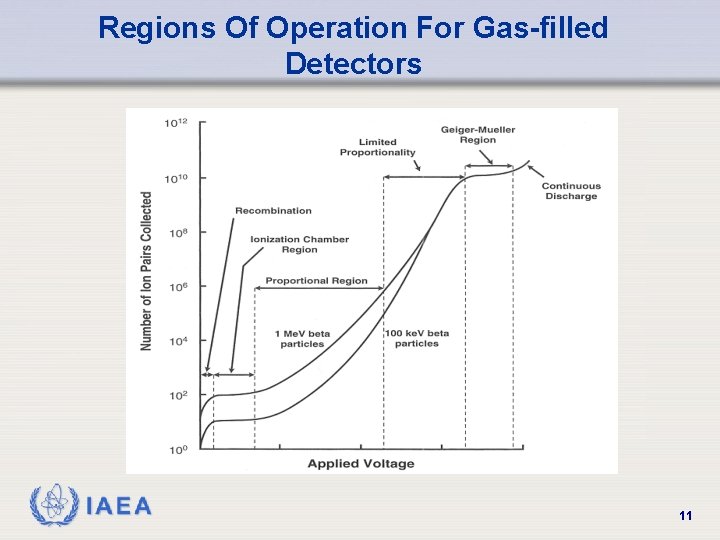
Regions Of Operation For Gas-filled Detectors IAEA 11
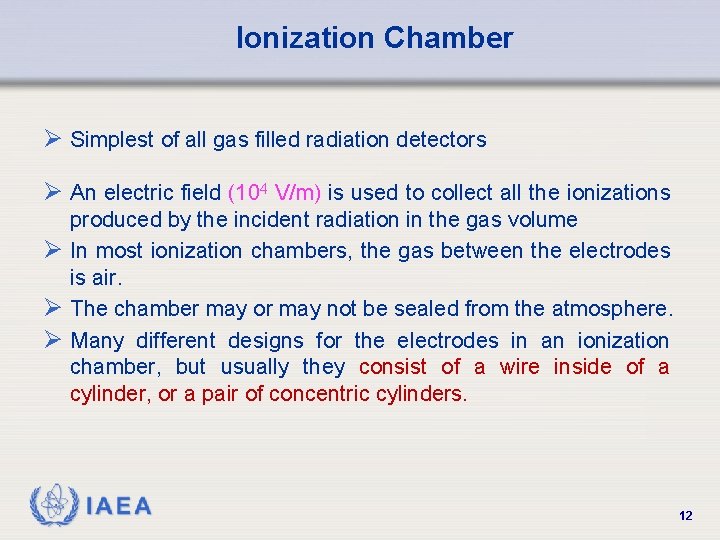
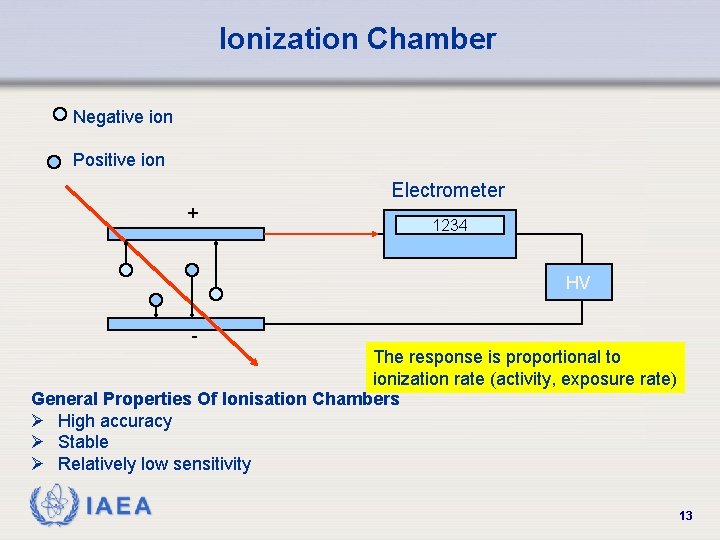
Ionization Chamber Ø Simplest of all gas filled radiation detectors Ø An electric field (104 V/m) is used to collect all the ionizations produced by the incident radiation in the gas volume Ø In most ionization chambers, the gas between the electrodes is air. Ø The chamber may or may not be sealed from the atmosphere. Ø Many different designs for the electrodes in an ionization chamber, but usually they consist of a wire inside of a cylinder, or a pair of concentric cylinders. IAEA 12
Ionization Chamber Negative ion Positive ion Electrometer + 1234 HV The response is proportional to ionization rate (activity, exposure rate) General Properties Of Ionisation Chambers Ø High accuracy Ø Stable Ø Relatively low sensitivity IAEA 13
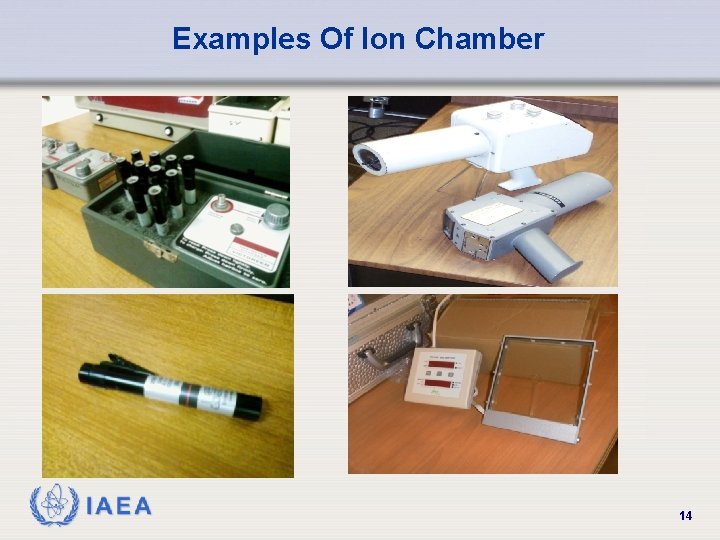
Examples Of Ion Chamber IAEA 14
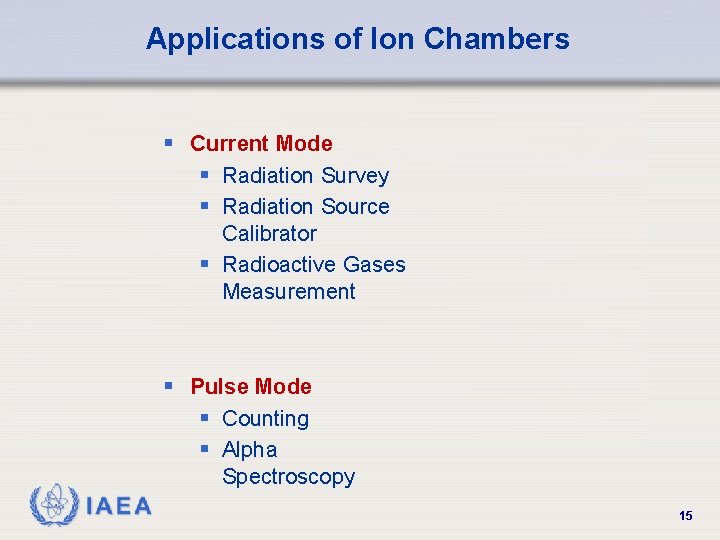
Applications of Ion Chambers § Current Mode § Radiation Survey § Radiation Source Calibrator § Radioactive Gases Measurement § Pulse Mode § Counting § Alpha Spectroscopy IAEA 15
General Properties of Ionisation Chambers • High accuracy • Stable • Relatively low sensitivity IAEA 16
Problems With Ion-chambers • A basic problem with ionization chambers is that they are quite inefficient as detectors for x and gamma-rays. • Only a very small percentage (less than 1 percent) of X- or gamma rays passing through the chamber actually interact with and cause ionization of air molecules. • for x and gamma- rays, their response changes with photon energy because photon absorption in the gas volume • detection efficiency and relative penetration of photons through the chamber walls both are energy-dependent processes IAEA 17
Proportional Counter § Proportional counter are operated at an electric field strength 106 V/m for Gases at STP causing Avalanches § Applications § Low Energy X-Radiations § Neutron Detection § Spectroscopy IAEA 18
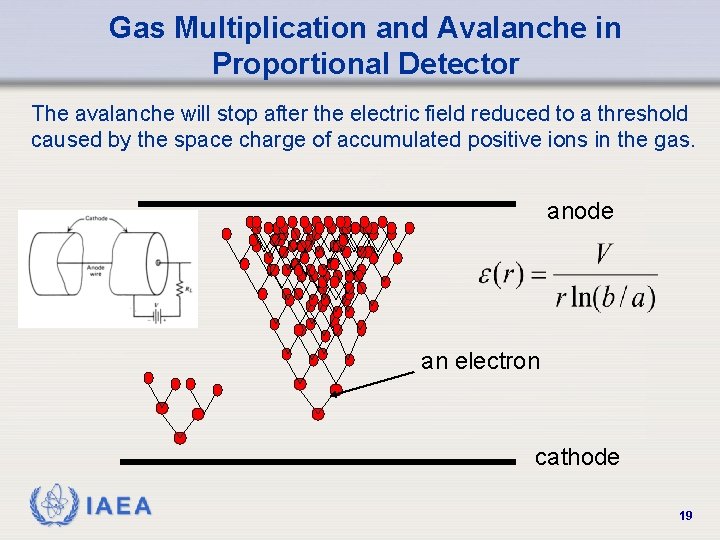
Gas Multiplication and Avalanche in Proportional Detector The avalanche will stop after the electric field reduced to a threshold caused by the space charge of accumulated positive ions in the gas. anode an electron cathode IAEA 19
Properties of Proportional Counter Ø Can be applied to situations in which the number of ion pairs generated by the radiation is too small to permit satisfactory operation in pulse-type ion chambers. Ø A little higher sensitivity than the ionisation chamber Ø Used for particles and low energy photons IAEA 20
GM Counters q When the electric field strength across a proportional counter is increased (> 106 V/m), the device enters a GM region of operation. q GM counter is gas-ionization device in which, the ionization effect creates a response which can be converted to an electrical output. q It is a gas-filled detector designed for maximum gas amplification effect. IAEA 21
GM Tube Structure Ø The center wire (anode) is maintained at high positive voltage relative to the outer cylindrical electrode (cathode). Ø The outer electrode may be a metal cylinder or a metallic film layer on the inside of a glass or plastic tube. Ø Some GM counters have a thin radiation entrance window at one end of the tube. Ø The cylinder or tube is sealed and filled with a special gas mixture, typically argon plus a quenching gas. IAEA 22
Fill Gases • Gases used in a Geiger tube must meet some of the same requirements as for proportional counters. • noble gases are widely used for the principal component of the fill gas in G-M tubes, with helium and argon the most popular choices. • A second component is normally added to most Geiger gases for purposes of quenching, the electron avalanches. IAEA 23
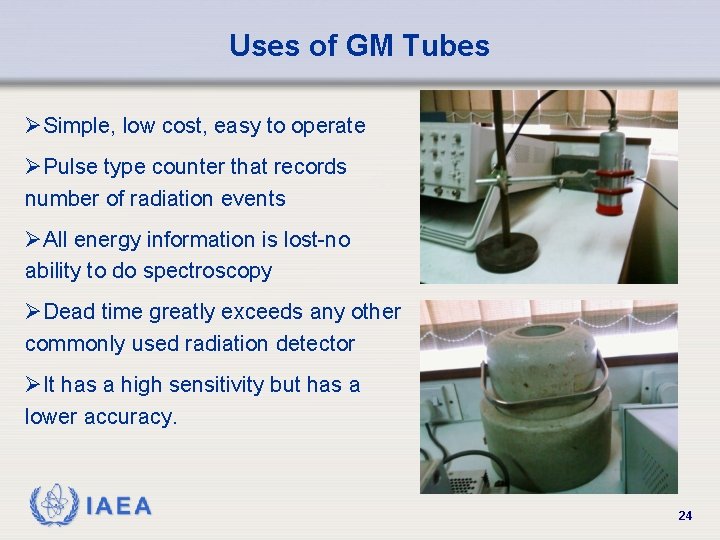
Uses of GM Tubes ØSimple, low cost, easy to operate ØPulse type counter that records number of radiation events ØAll energy information is lost-no ability to do spectroscopy ØDead time greatly exceeds any other commonly used radiation detector ØIt has a high sensitivity but has a lower accuracy. IAEA 24
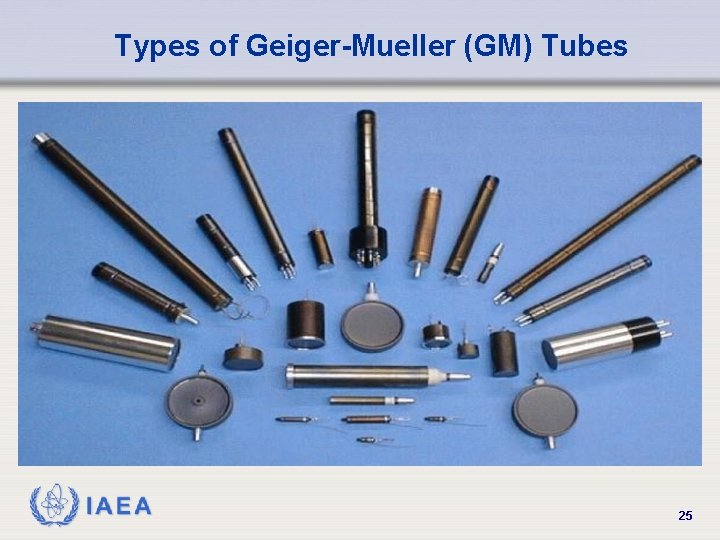
Types of Geiger-Mueller (GM) Tubes IAEA 25
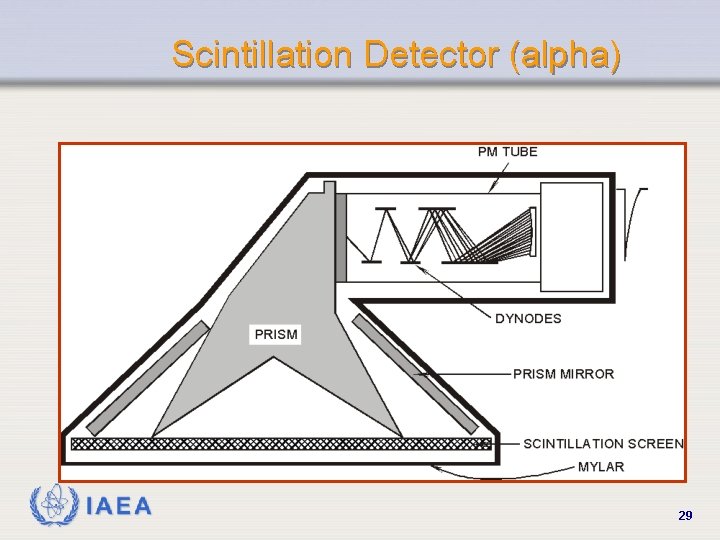
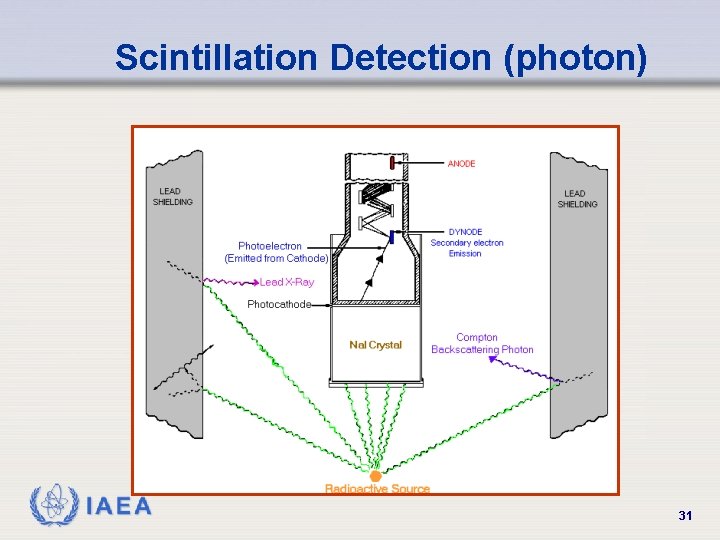
Scintillation Detectors Ø Scintillation is a means of detecting the presence of ionizing radiation Ø Ionizing radiation interacts with a scintillator which produces a pulse of light Ø This light interacts with a photocathode which results in the production of an electron Ø The electron is multiplied in a photomultiplier tube that has a series of focused dynodes with increasing potential voltage which results in an electrical signal IAEA 26
Scintillation Detectors Ø The number of counts is dependent on the activity that is present Ø The energy of the electron, and consequently the associated current is proportional to the incident energy of the ionizing radiation Ø By analyzing the energy and corresponding number of counts, the nuclide and activity may be determined IAEA 27
Scintillation Detectors There are several types of Scintillator Detectors: • scintillator Na. I (sodium iodide): restricted to the detection of the gamma; • plastic scintillator: solution of fluorescent compounds included in a transparent plastic material (gantry); • scintillator Zn. S (Zinc Sulfide): used for the detection of alpha radiation IAEA 28
Scintillation Detector (alpha) IAEA 29
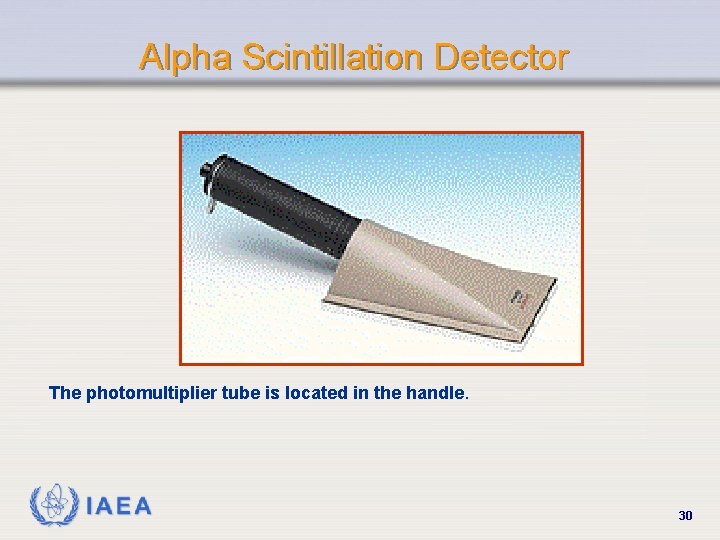
Alpha Scintillation Detector The photomultiplier tube is located in the handle. IAEA 30
Scintillation Detection (photon) IAEA 31
Spectral Analysis • Scintillation detectors, when used with a multichannel analyzer (MCA) provide information on the energy of a photon that has interacted with the detector as well as the activity present • The spectra can be analyzed to determine which isotopes are present IAEA 32
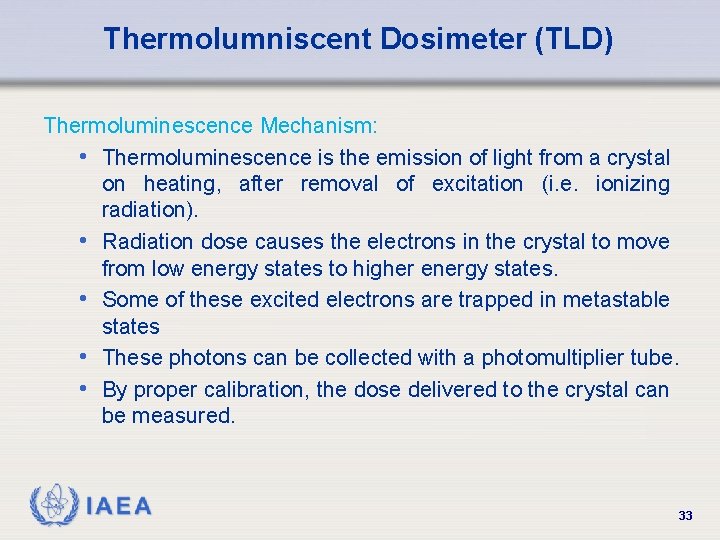
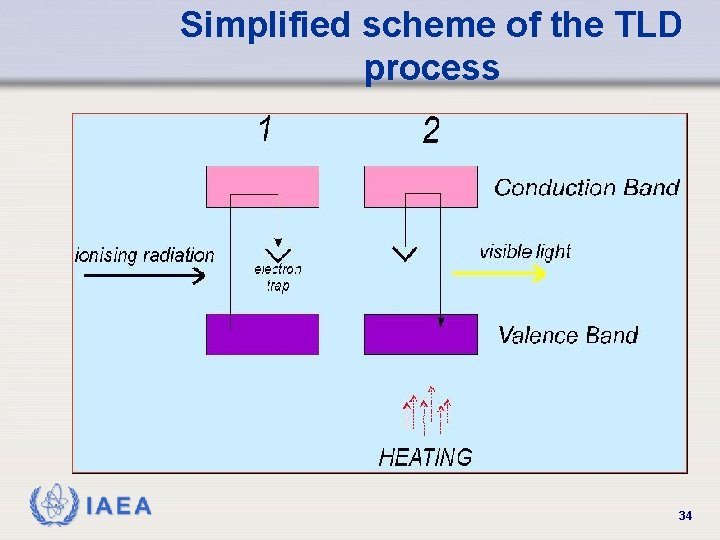
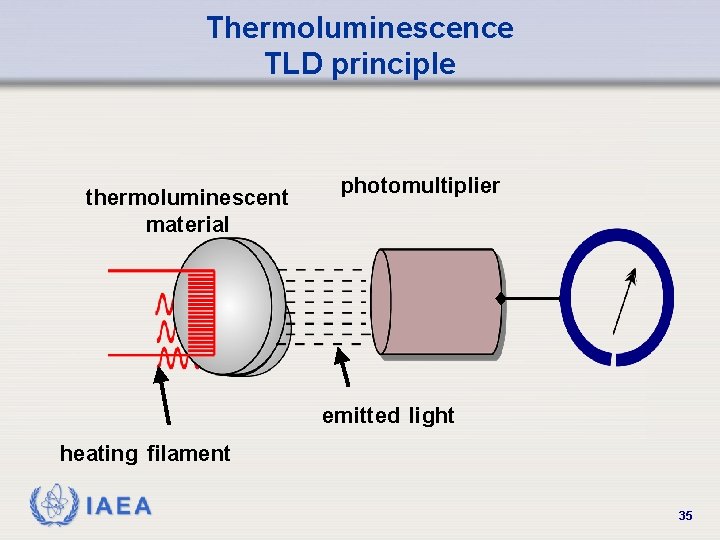
Thermolumniscent Dosimeter (TLD) Thermoluminescence Mechanism: • Thermoluminescence is the emission of light from a crystal on heating, after removal of excitation (i. e. ionizing radiation). • Radiation dose causes the electrons in the crystal to move from low energy states to higher energy states. • Some of these excited electrons are trapped in metastable states • These photons can be collected with a photomultiplier tube. • By proper calibration, the dose delivered to the crystal can be measured. IAEA 33
Simplified scheme of the TLD process IAEA 34
Thermoluminescence TLD principle thermoluminescent material photomultiplier emitted light heating filament IAEA 35
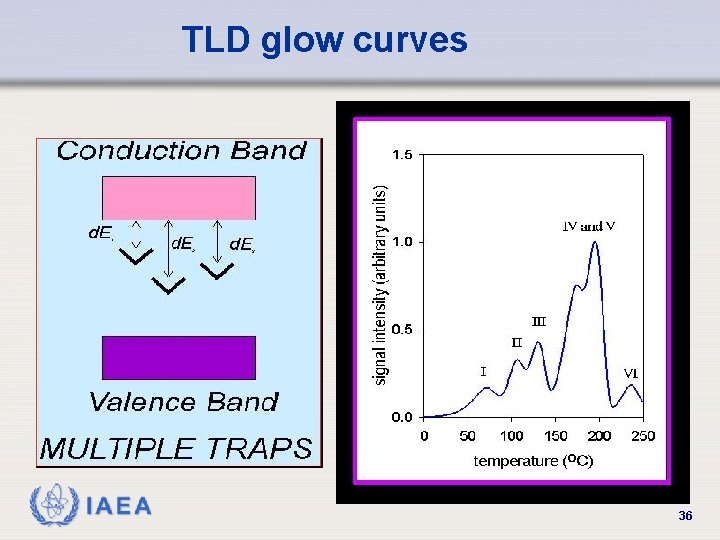
TLD glow curves IAEA 36
TLD Advantages: Disadvantages: • Small size • Time consuming • High sensitivity • No permanent record • Integrating • Tissue equivalent IAEA 38
BF 3 Neutron Detectors BF 3 Tube Construction • Tube dimensions and geometry Ø Large size tubes at higher pressure of fill gas Ø Constructed of cylindrical geometry • Cathode • Al : low neutron absorption cross-section • SS : preferred over Al because Al show alpha activity IAEA 39
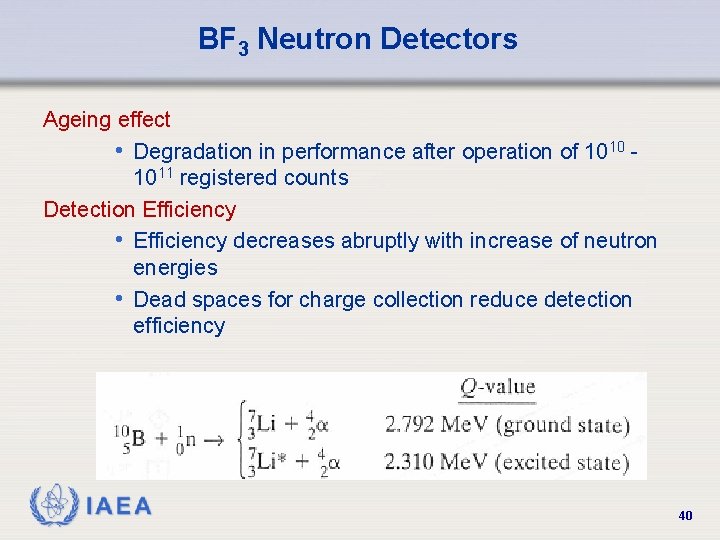
BF 3 Neutron Detectors Ageing effect • Degradation in performance after operation of 1010 1011 registered counts Detection Efficiency • Efficiency decreases abruptly with increase of neutron energies • Dead spaces for charge collection reduce detection efficiency IAEA 40
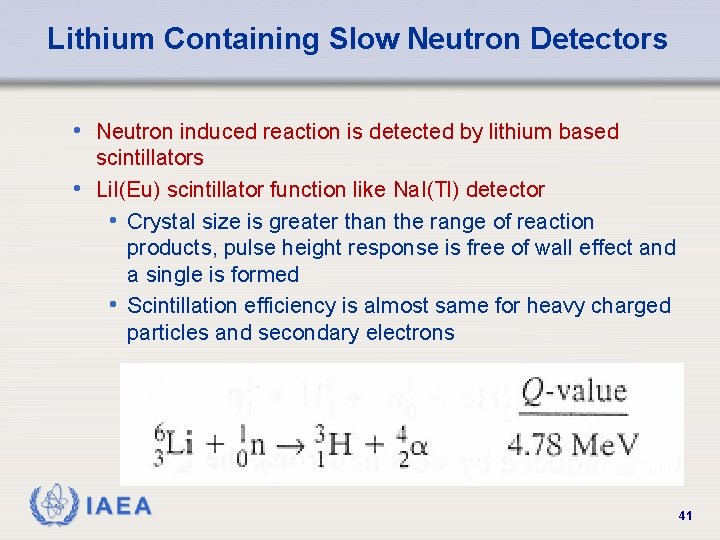
Lithium Containing Slow Neutron Detectors • Neutron induced reaction is detected by lithium based scintillators • Li. I(Eu) scintillator function like Na. I(Tl) detector • Crystal size is greater than the range of reaction products, pulse height response is free of wall effect and a single is formed • Scintillation efficiency is almost same for heavy charged particles and secondary electrons IAEA 41
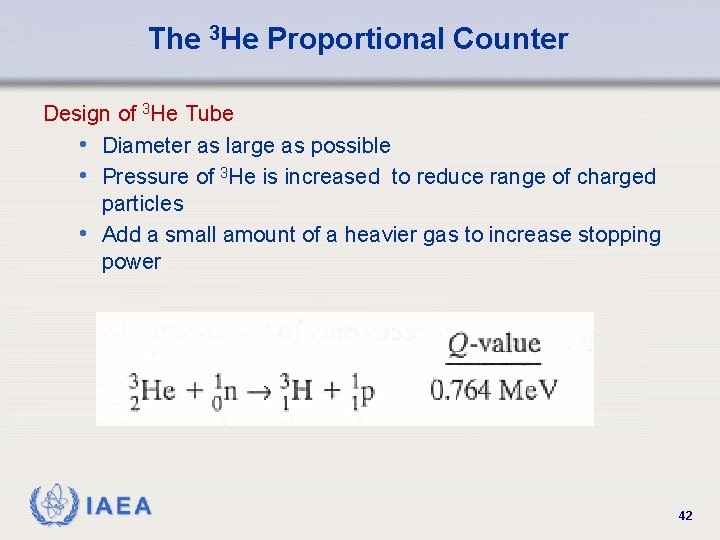
The 3 He Proportional Counter Design of 3 He Tube • Diameter as large as possible • Pressure of 3 He is increased to reduce range of charged particles • Add a small amount of a heavier gas to increase stopping power IAEA 42
Solid State Detectors • Solid State detectors are also called Semiconductor detectors • In these radiation detector, a semiconductor material such as a silicon (Si) or germanium (Ge) crystal constitutes the detecting medium. • In the detecting medium electron-hole pairs are produced when a particle of ionizing radiation pass through it • As a result a pulse of current generated is measured • Operation of HPGe detectors require Liquid Nitrogen IAEA 43
Solid State Detectors IAEA 44
Using Solid as Detection Medium § In many radiation detection applications, the use of solid medium is of great advantage § For high energy electrons and gammas, solid state detectors are much smaller than gas filled detectors § Energy resolution can be improved by increasing number of charge carriers – possible in semiconductors IAEA 45
Semiconductor Detectors • Desirable features of – (semiconductor diode detectors) or solid state detectors • Superior Energy Resolution • Compact Size • Fast Timing Characteristics • Effective Thickness – Can be varied according to the requirement • Semiconductor Materials • Silicon – Used for charged particle spectroscopy • Germanium - Used for gamma ray spectroscopy IAEA 46
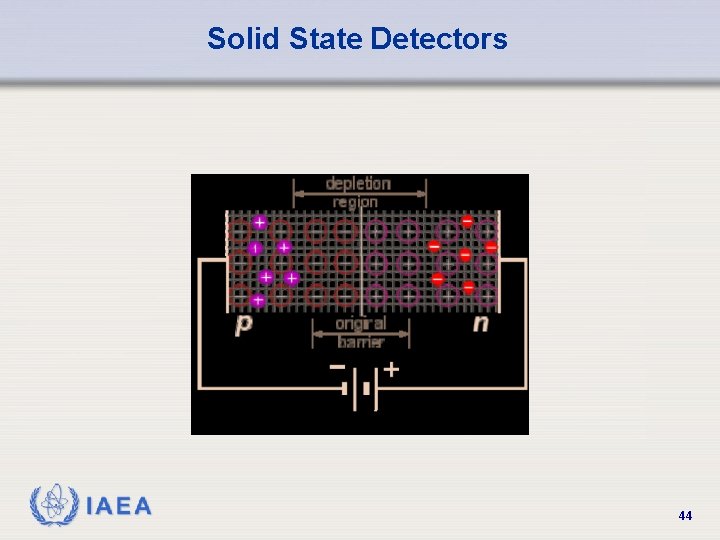
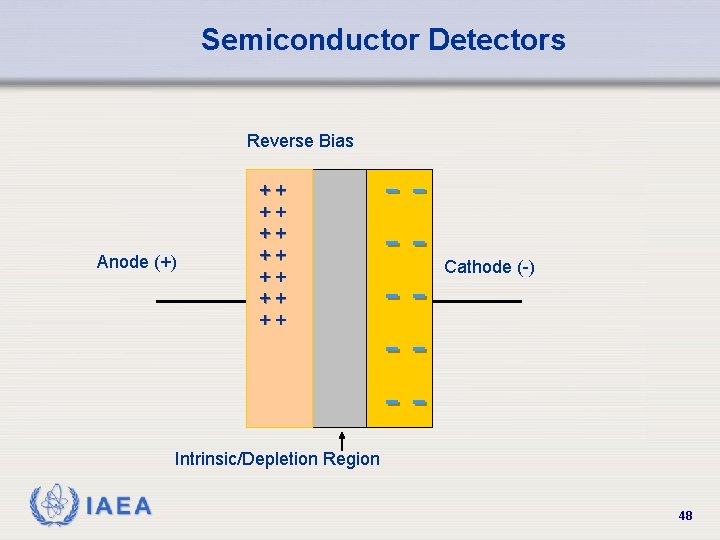
Semiconductor Detectors • When a positive voltage is applied to the n-type material and negative voltage to the p-type material, the electrons are pulled further away from this region creating a much thicker depletion region • The depletion region acts as the sensitive volume of the detector • Ionizing radiation entering this region will create holes and excess electrons which migrate and cause an electrical pulse IAEA 47
Semiconductor Detectors Reverse Bias Anode (+) ++ ++ ------ Cathode (-) Intrinsic/Depletion Region IAEA 48
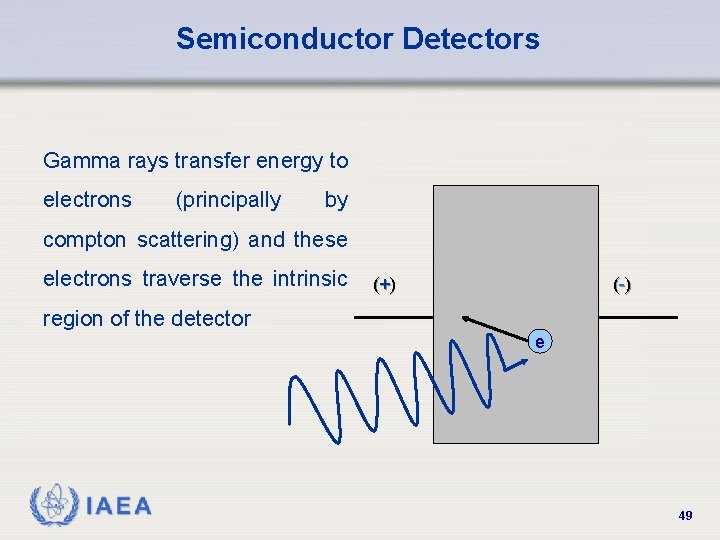
Semiconductor Detectors Gamma rays transfer energy to electrons (principally by compton scattering) and these electrons traverse the intrinsic (+ ) (-) region of the detector e IAEA 49
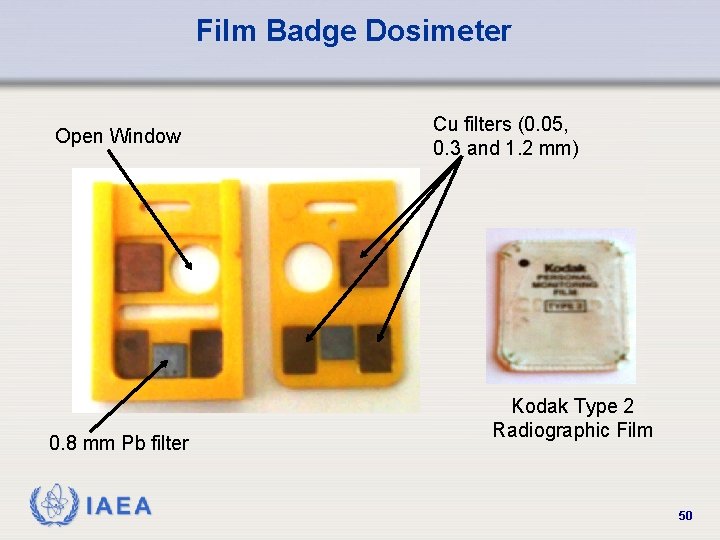
Film Badge Dosimeter Open Window 0. 8 mm Pb filter IAEA Cu filters (0. 05, 0. 3 and 1. 2 mm) Kodak Type 2 Radiographic Film 50
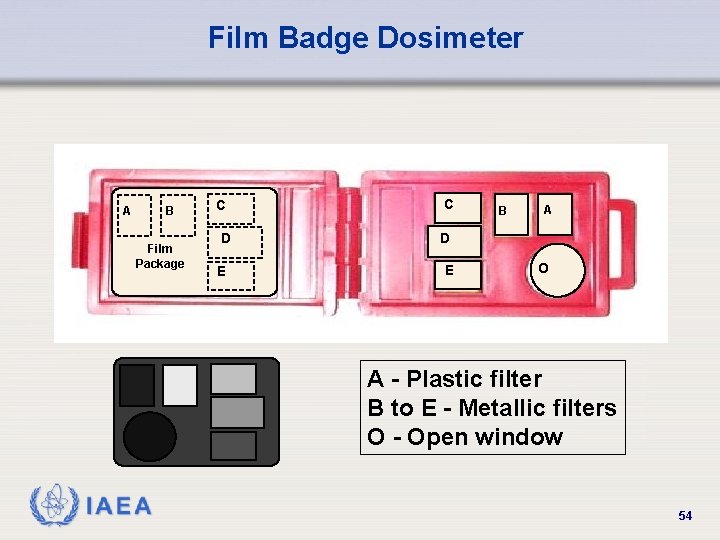
Film Dosimeter Ø Film dosimeters (commonly known as film badges) consist of a piece of photographic film in a holder Ø The holder is fitted with a range of filters which allows us to distinguish between beta, x-ray, gamma and thermal neutron radiations and also allows determination of the personal dose equivalent for Hp(10), Hp(0. 07) and Hp(3) IAEA 51
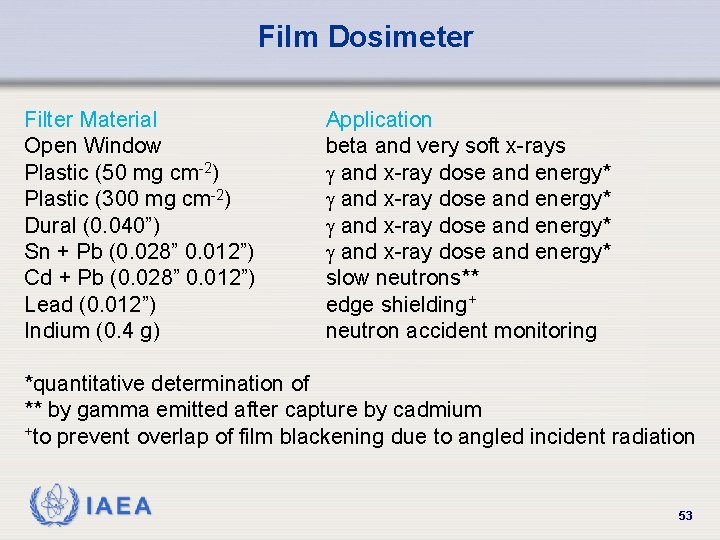
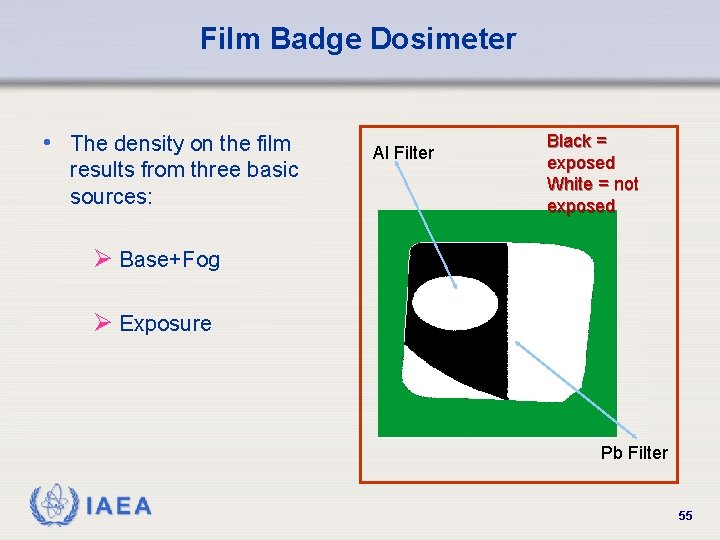
Film Dosimeter Ø By determining the degree of blackening (optical density) on the developed film and comparing it with calibrated films that have been exposed to known doses, it is possible to ascertain both the total dose received by the wearer and also the contribution to total dose by each type of radiation Ø The various filters used in film badges to ascertain whole body Hp(10), skin Hp(0. 07) and eye Hp(3) doses are shown in the following Figure and Table IAEA 52
Film Dosimeter Filter Material Open Window Plastic (50 mg cm-2) Plastic (300 mg cm-2) Dural (0. 040”) Sn + Pb (0. 028” 0. 012”) Cd + Pb (0. 028” 0. 012”) Lead (0. 012”) Indium (0. 4 g) Application beta and very soft x-rays and x-ray dose and energy* slow neutrons** edge shielding+ neutron accident monitoring *quantitative determination of ** by gamma emitted after capture by cadmium +to prevent overlap of film blackening due to angled incident radiation IAEA 53
Film Badge Dosimeter A B Film Package C D E C B A D E O A - Plastic filter B to E - Metallic filters O - Open window IAEA 54
Film Badge Dosimeter • The density on the film results from three basic sources: Al Filter Black = exposed White = not exposed Ø Base+Fog Ø Exposure Pb Filter IAEA 55
Where to Get More Information Ø Cember, H. , Johnson, T. E, Introduction to Health Physics, 4 th Edition, Mc. Graw-Hill, New York (2009) Ø International Atomic Energy Agency, Postgraduate Educational Course in Radiation Protection and the Safety of Radiation Sources (PGEC), Training Course Series 18, IAEA, Vienna (2002) IAEA 56