
RADIATION BIOLOGY Lecture 6 By Dr Zaid Shaker
RADIATION BIOLOGY Lecture (6) By Dr. Zaid Shaker Naji

Biological Effects of Radiation 1. Deterministic effect • The probability of these effects is not proportional to the absorbed dose • This effect has a threshold, below which the effect will not occur. • Severity of this effect is directly proportional to absorbed dose • This effect of radiation cause cataract, hair loss, infertility.
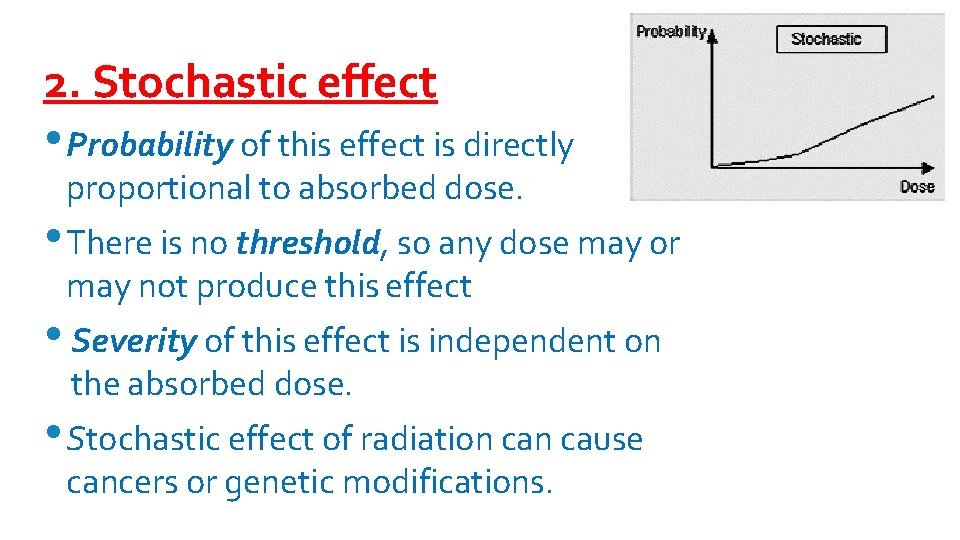
2. Stochastic effect • Probability of this effect is directly proportional to absorbed dose. • There is no threshold, so any dose may or may not produce this effect • Severity of this effect is independent on the absorbed dose. • Stochastic effect of radiation cause cancers or genetic modifications.
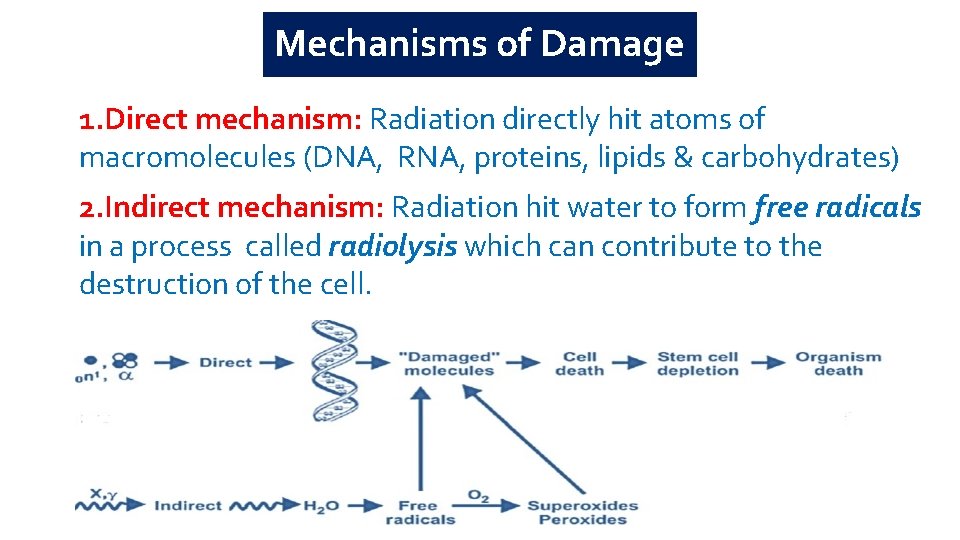
Mechanisms of Damage 1. Direct mechanism: Radiation directly hit atoms of macromolecules (DNA, RNA, proteins, lipids & carbohydrates) 2. Indirect mechanism: Radiation hit water to form free radicals in a process called radiolysis which can contribute to the destruction of the cell.

Cellular damage of radiation Transfer radiation energy to atoms and molecules in the cellular structure (DNA) lead to genomic instability due to: 1. Single-strand break 2. Double-strand break 3. Hydrogen bond breakage 4. DNA cross-linkage 5. Pyrimidine Dimer 6. Base change 7. Base loss
• within seconds (physical & biochemical effects) • within few minutes (Cell death or Cell repair) • Within hours-days-weeks or months (clinical symptoms): a) Somatic damages arise from genomic instability in somatic cells of irradiated person either appear early after exposure (hair loss, infertility), or appear late after exposure (cataract & cancer) b) Genetic damages arise from genomic instability in germ cells of irradiated parents and seen in their offspring as genetic malformations.
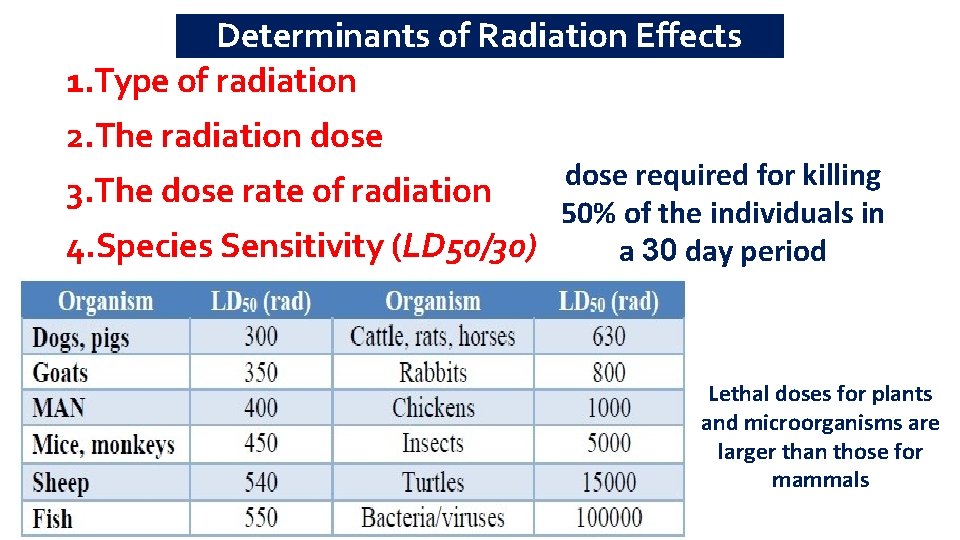
Determinants of Radiation Effects 1. Type of radiation 2. The radiation dose required for killing 3. The dose rate of radiation 50% of the individuals in 4. Species Sensitivity (LD 50/30) a 30 day period Lethal doses for plants and microorganisms are larger than those for mammals
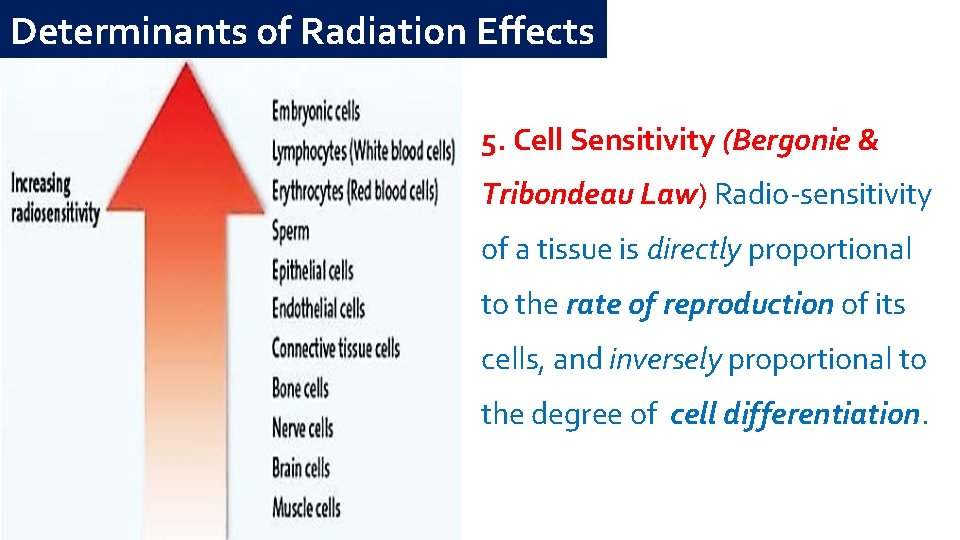
Determinants of Radiation Effects 5. Cell Sensitivity (Bergonie & Tribondeau Law) Radio-sensitivity of a tissue is directly proportional to the rate of reproduction of its cells, and inversely proportional to the degree of cell differentiation.
Determinants of Radiation Effects 6. Part of the body exposed (hands or feet) are able to receive a greater amount of radiation with less resulting damage than blood forming tissues found in the bone marrow. 7. Age of individual As a person ages, cell division slows and body is less sensitive to effects of radiation. 8. Area exposed The larger the area exposed, the greater the overall damage. Therefore, radiation therapy doses should be delivered to very limited areas (to tumor sites) rather than whole-body irradiation of the same dose.

- Slides: 10