
Radiation and its impact on the Engineered Barrier
Radiation and its impact on the Engineered Barrier System Mehran Behazin, Ph. D. ICNLC Meeting July 2020
Radiation exposure? Dose? Contamination? 2
What is Radiation? 3

Energy 4

5
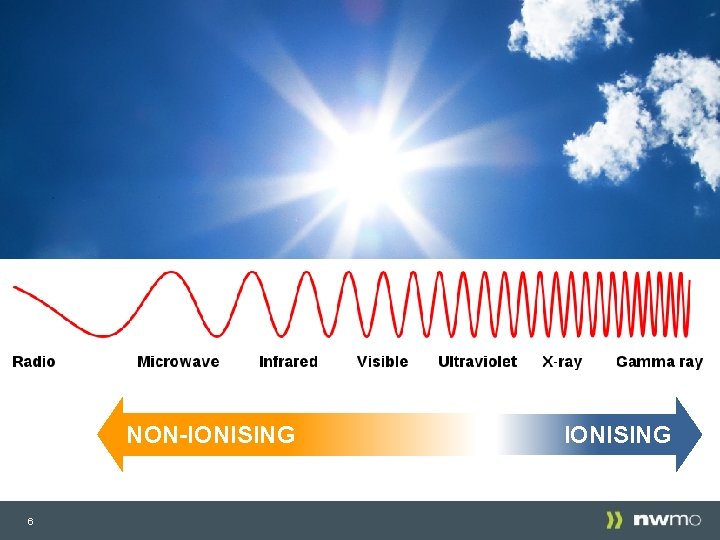
NON-IONISING 6 IONISING
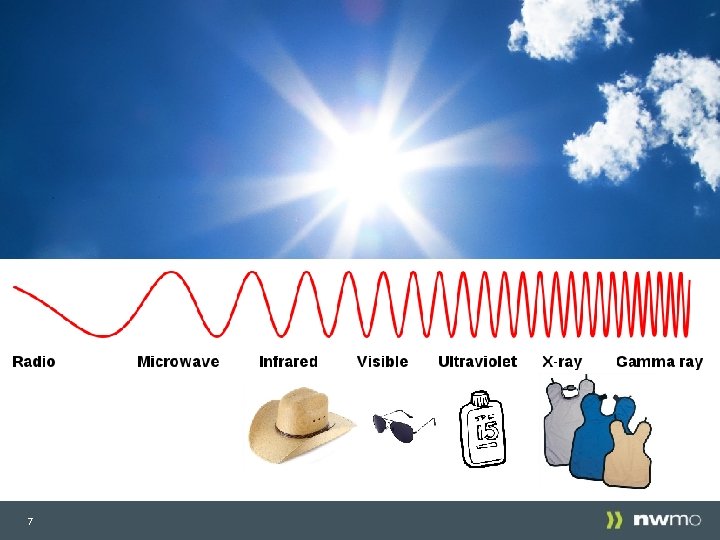
7
Where does radiation come from? 8
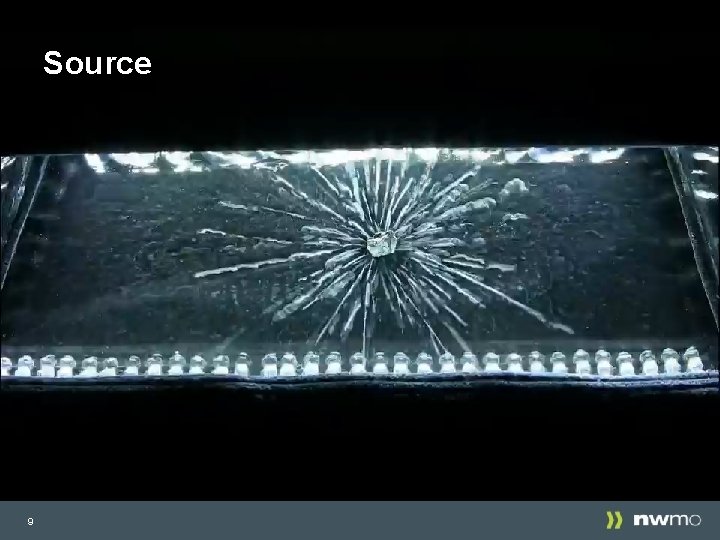
Source 9
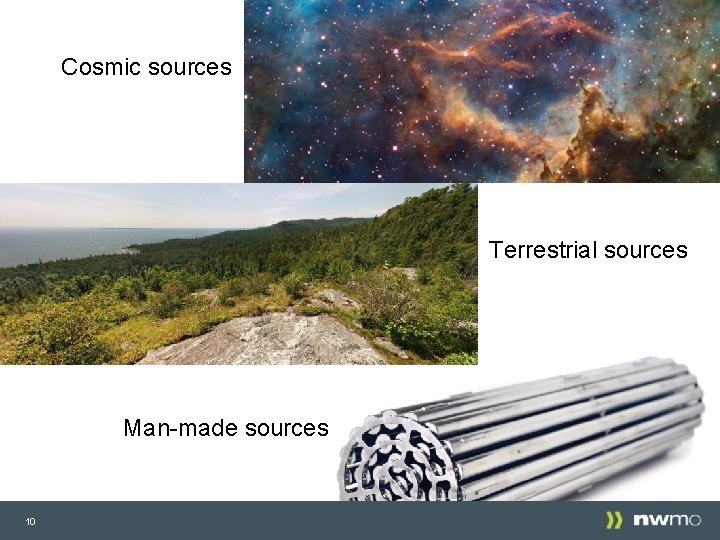
Cosmic sources Terrestrial sources Man-made sources 10
How does radiation affect us? 11
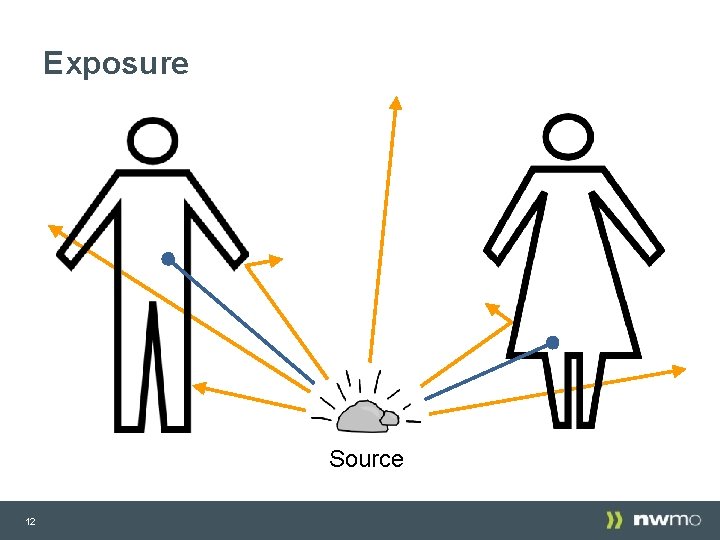
Exposure Source 12
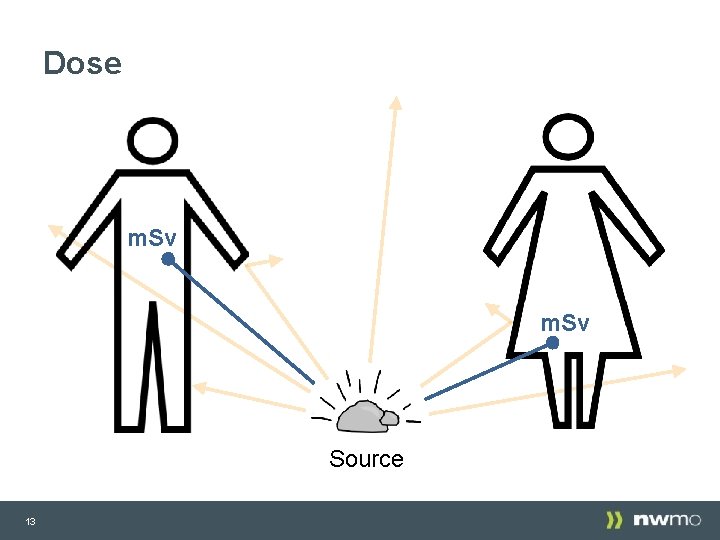
Dose m. Sv Source 13
How to minimize radiation dose? 14
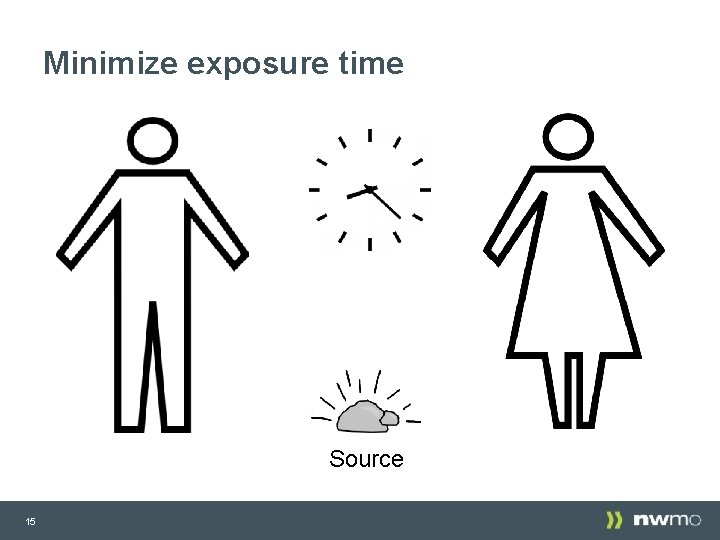
Minimize exposure time Source 15
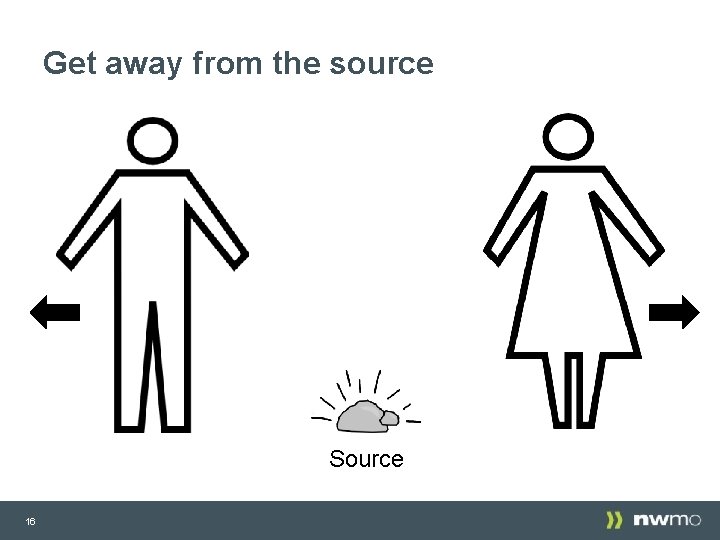
Get away from the source Source 16
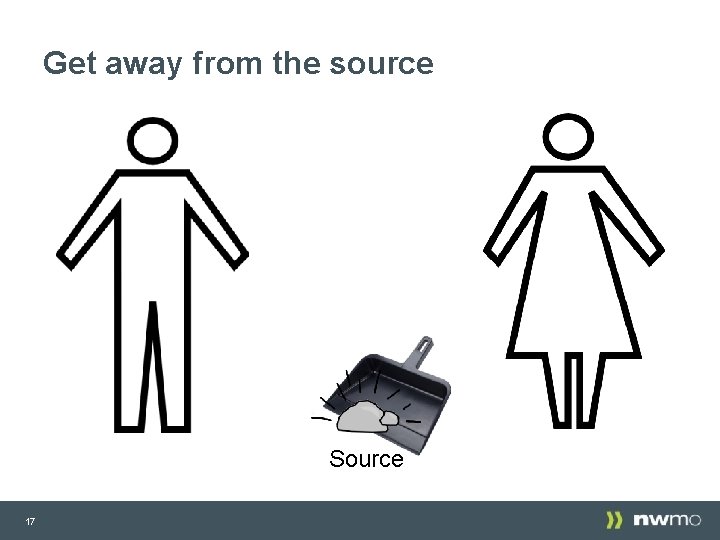
Get away from the source Source 17
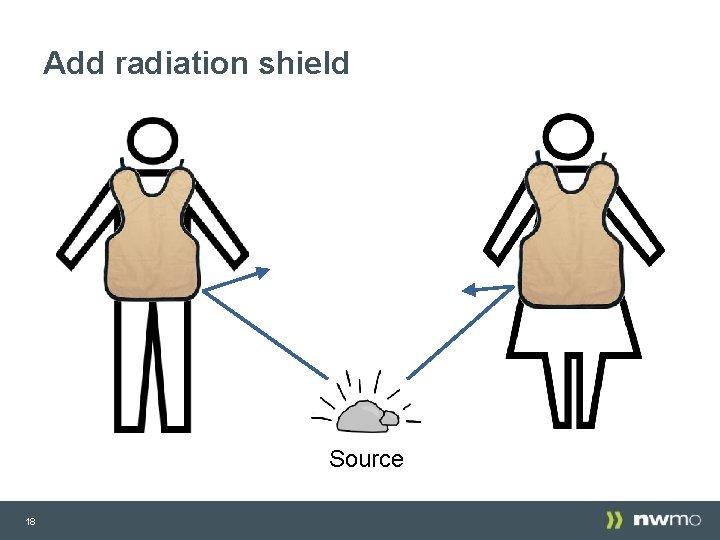
Add radiation shield Source 18
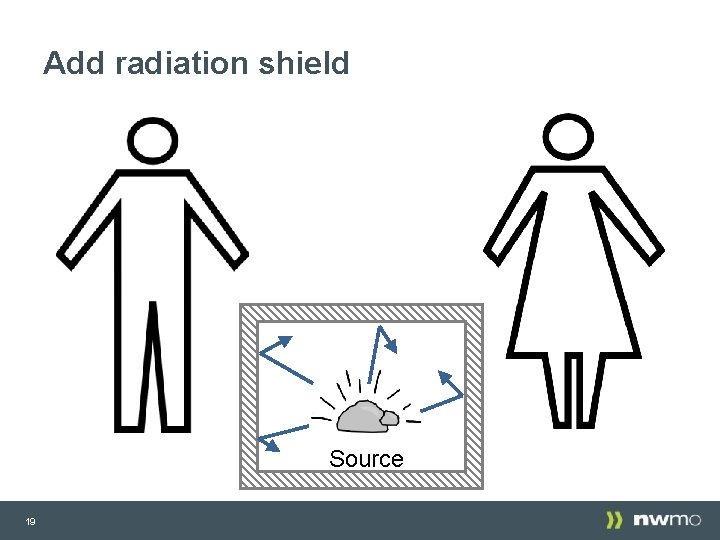
Add radiation shield Source 19

What is contamination? 20
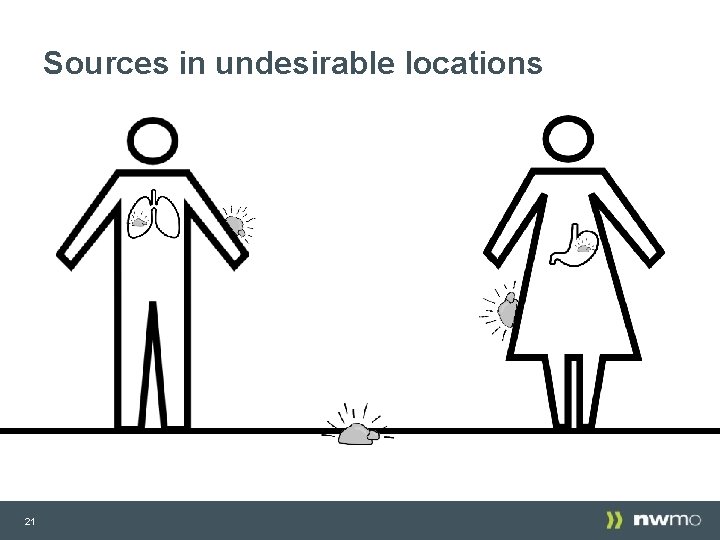
Sources in undesirable locations 21

How much dose is too much dose? 22
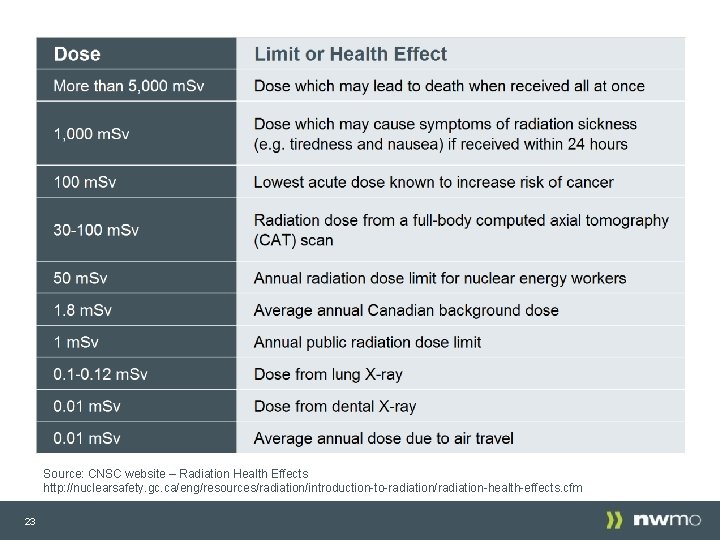
Source: CNSC website – Radiation Health Effects http: //nuclearsafety. gc. ca/eng/resources/radiation/introduction-to-radiation/radiation-health-effects. cfm 23
How does all this relate to used nuclear fuel? 24
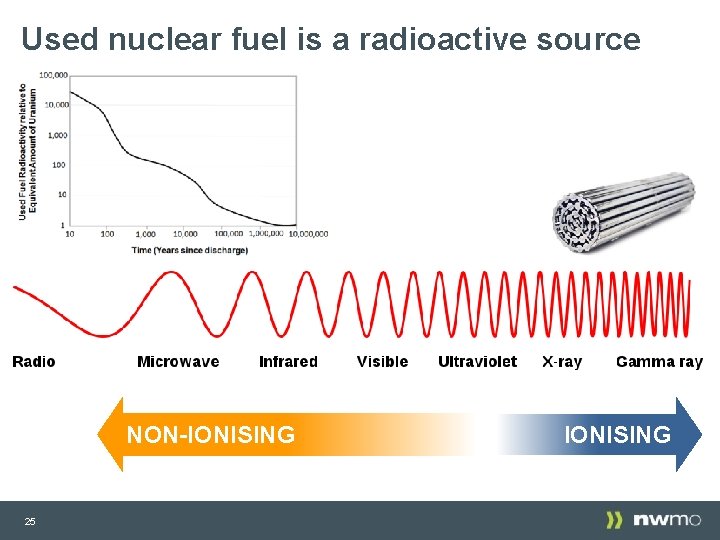
Used nuclear fuel is a radioactive source NON-IONISING 25 IONISING
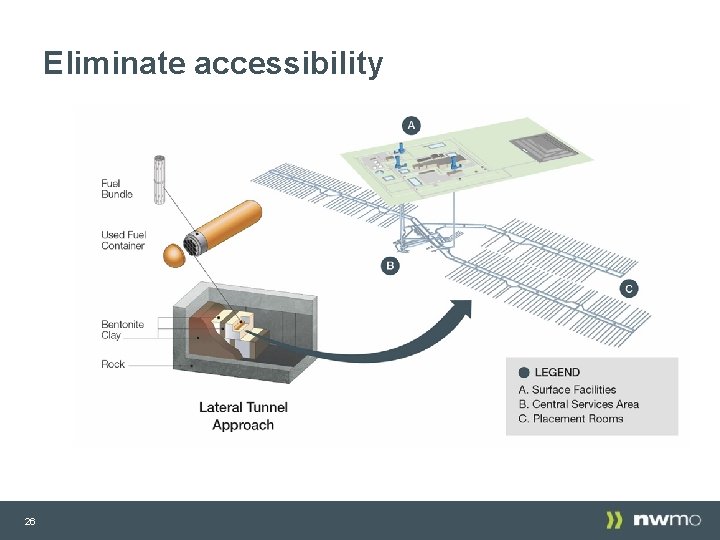
Eliminate accessibility 26
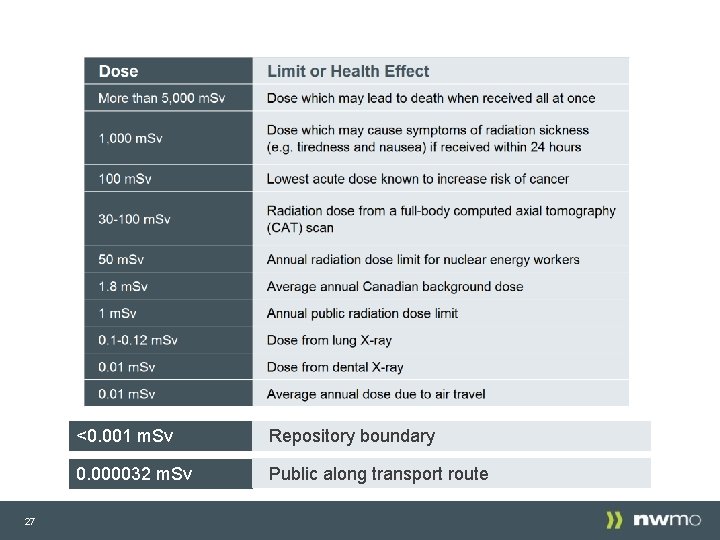
27 <0. 001 m. Sv Repository boundary 0. 000032 m. Sv Public along transport route
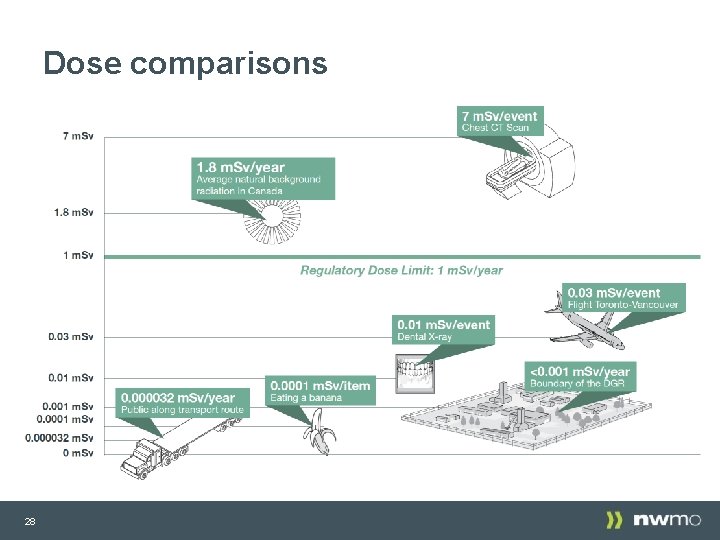
Dose comparisons 28
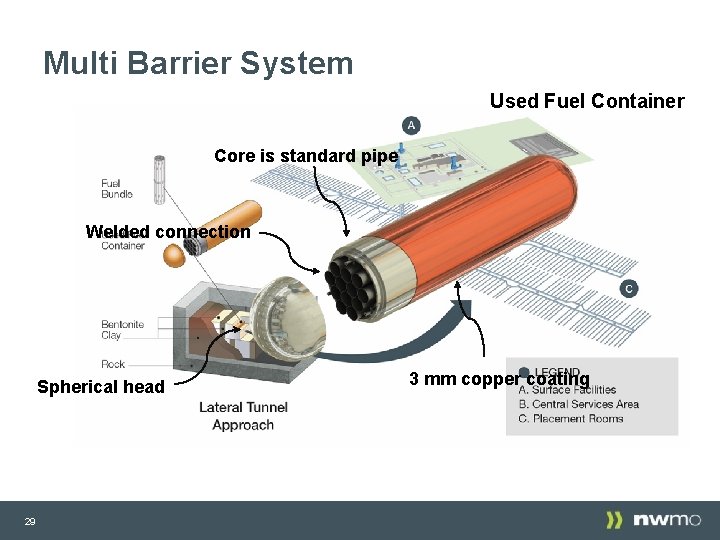
Multi Barrier System Used Fuel Container Core is standard pipe Welded connection Spherical head 29 3 mm copper coating
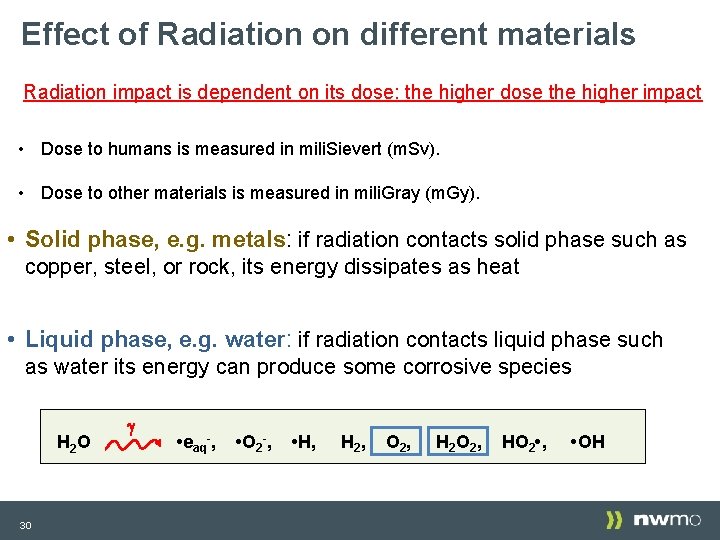
Effect of Radiation on different materials Radiation impact is dependent on its dose: the higher dose the higher impact • Dose to humans is measured in mili. Sievert (m. Sv). • Dose to other materials is measured in mili. Gray (m. Gy). • Solid phase, e. g. metals: if radiation contacts solid phase such as copper, steel, or rock, its energy dissipates as heat • Liquid phase, e. g. water: if radiation contacts liquid phase such as water its energy can produce some corrosive species H 2 O 30 • eaq-, • O 2 -, • H, H 2, O 2, H 2 O 2 , HO 2 • , • OH
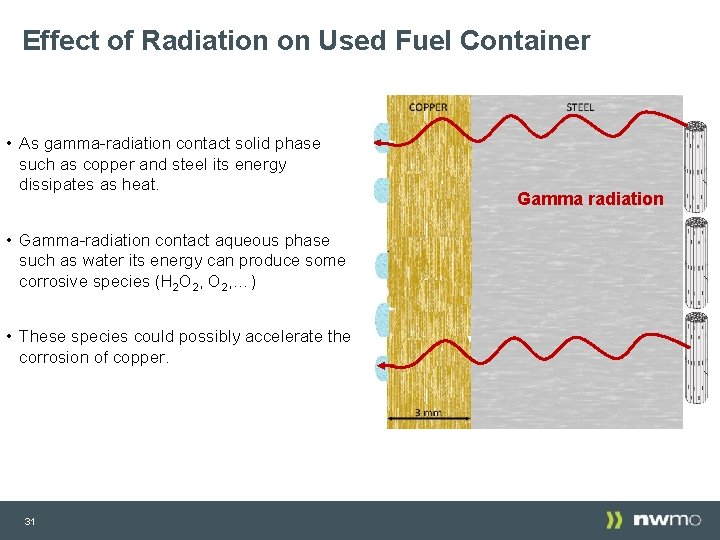
Effect of Radiation on Used Fuel Container • As gamma-radiation contact solid phase such as copper and steel its energy dissipates as heat. • Gamma-radiation contact aqueous phase such as water its energy can produce some corrosive species (H 2 O 2, …) • These species could possibly accelerate the corrosion of copper. 31 Gamma radiation
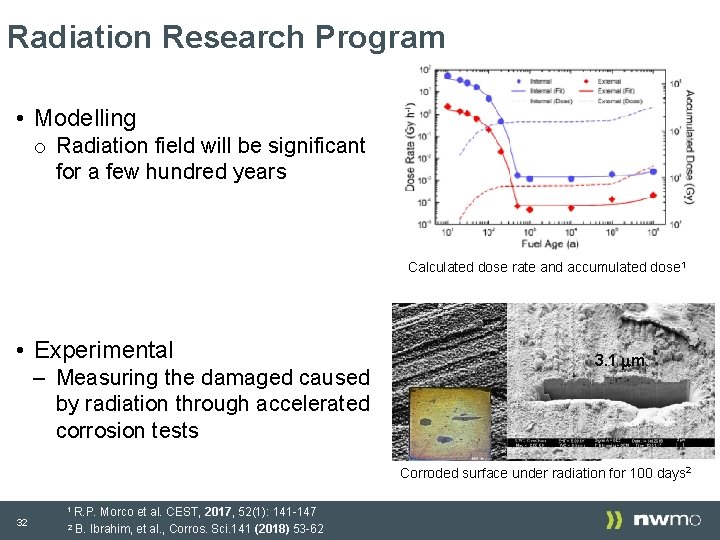
Radiation Research Program • Modelling o Radiation field will be significant for a few hundred years Calculated dose rate and accumulated dose 1 • Experimental – Measuring the damaged caused by radiation through accelerated corrosion tests 3. 1 m Corroded surface under radiation for 100 days 2 32 1 R. P. Morco et al. CEST, 2017, 52(1): 141 -147 2 B. Ibrahim, et al. , Corros. Sci. 141 (2018) 53 -62
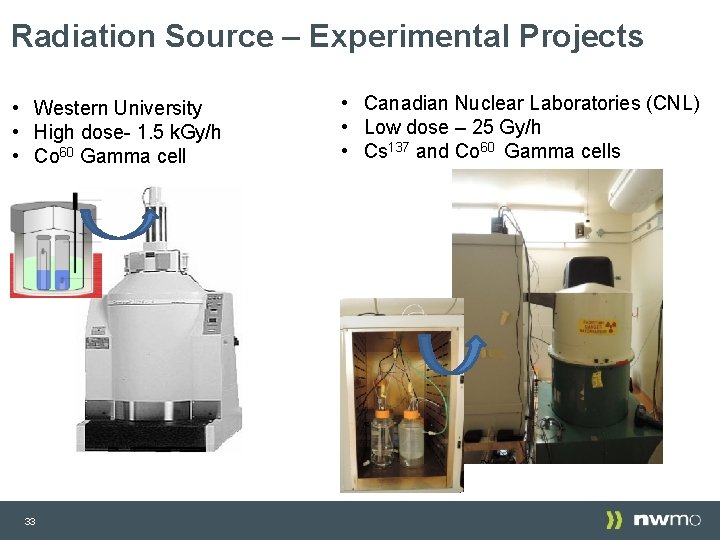
Radiation Source – Experimental Projects • Western University • High dose- 1. 5 k. Gy/h • Co 60 Gamma cell • Canadian Nuclear Laboratories (CNL) • Low dose – 25 Gy/h • Cs 137 and Co 60 Gamma cells ~ 33
Radiation-Induced Corrosion of Copper • To fully understand the impact of radiation on coppercoated used fuel containers NWMO has many active research projects, including: 1. Effect of radiation on corrosion of copper in humid environment 2. Effect of radiation on corrosion of copper in saline water 3. Effect of radiation on corrosion of steel and weld area 34
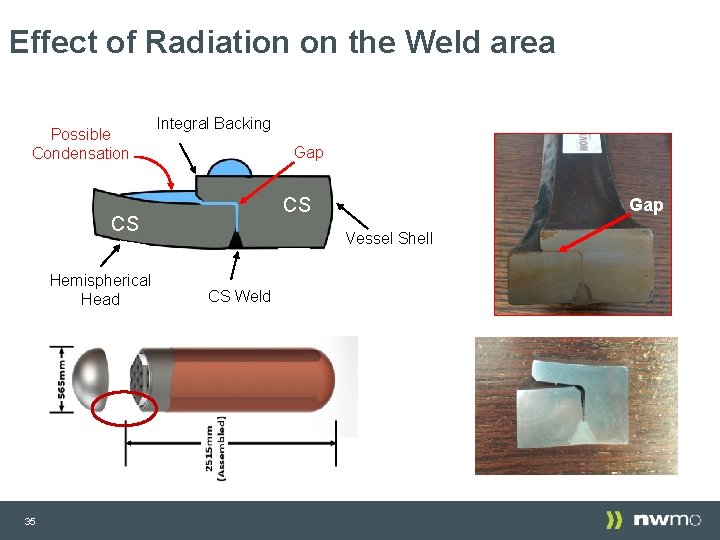
Effect of Radiation on the Weld area Possible Condensation Integral Backing Gap CS CS Hemispherical Head 35 Gap Vessel Shell CS Weld
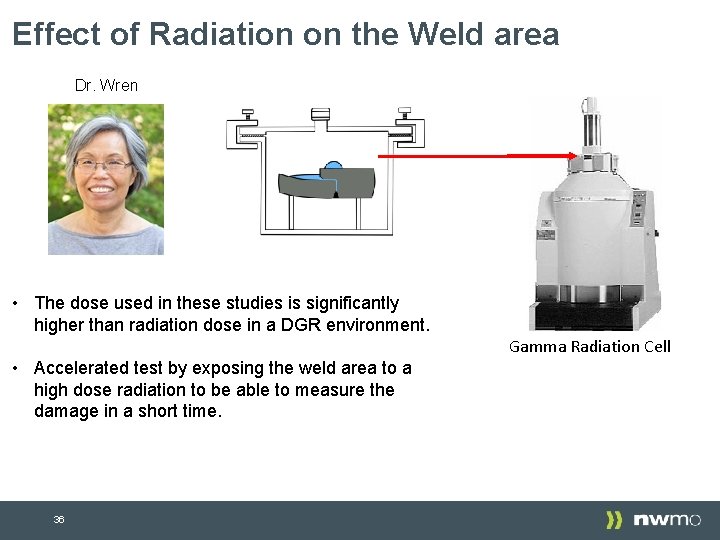
Effect of Radiation on the Weld area Dr. Wren • The dose used in these studies is significantly higher than radiation dose in a DGR environment. Gamma Radiation Cell • Accelerated test by exposing the weld area to a high dose radiation to be able to measure the damage in a short time. 36
Conclusion • Radiation is energy and is all around us in various forms. We are exposed to radiation all the time • Most radiation is blocked by our clothing or skin, or pass right through us. Some ionizing radiation can get absorbed, giving us dose • Radiation dose expected in a DGR is not enough to directly affect containers, clay or rock. • Studies are underway to investigate if radiation could potentially enhance the degradation of container over time. 37

Questions? 38
- Slides: 38