
Radiata Metazoa Ancestral colonial flagellate Deuterostomia Eumetazoa Protostomia
- Slides: 15
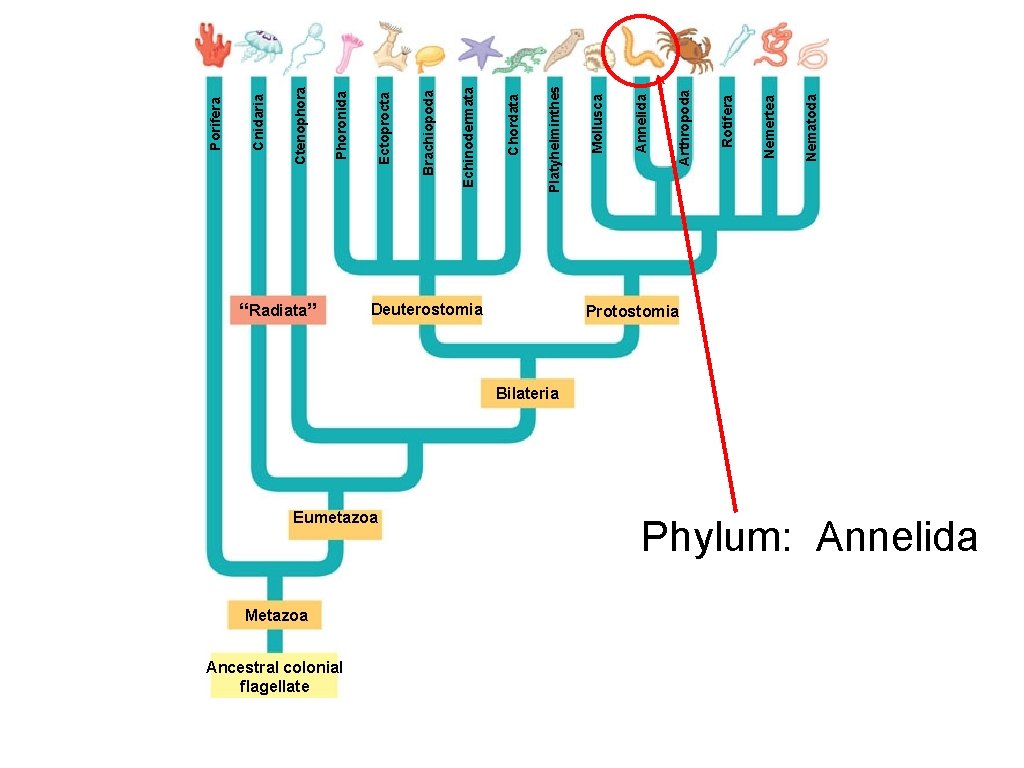
“Radiata” Metazoa Ancestral colonial flagellate Deuterostomia Eumetazoa Protostomia Bilateria Phylum: Annelida Nematoda Nemertea Rotifera Arthropoda Annelida Mollusca Platyhelminthes Chordata Echinodermata Brachiopoda Ectoprocta Phoronida Ctenophora Cnidaria Porifera
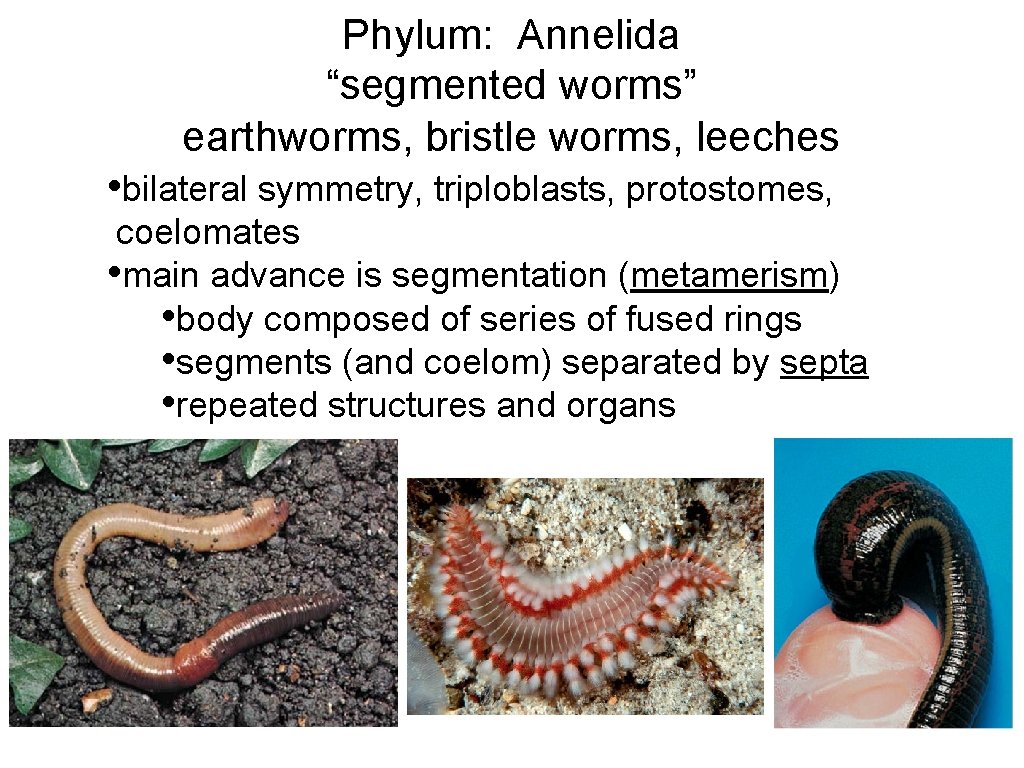
Phylum: Annelida “segmented worms” earthworms, bristle worms, leeches • bilateral symmetry, triploblasts, protostomes, coelomates • main advance is segmentation (metamerism) • body composed of series of fused rings • segments (and coelom) separated by septa • repeated structures and organs
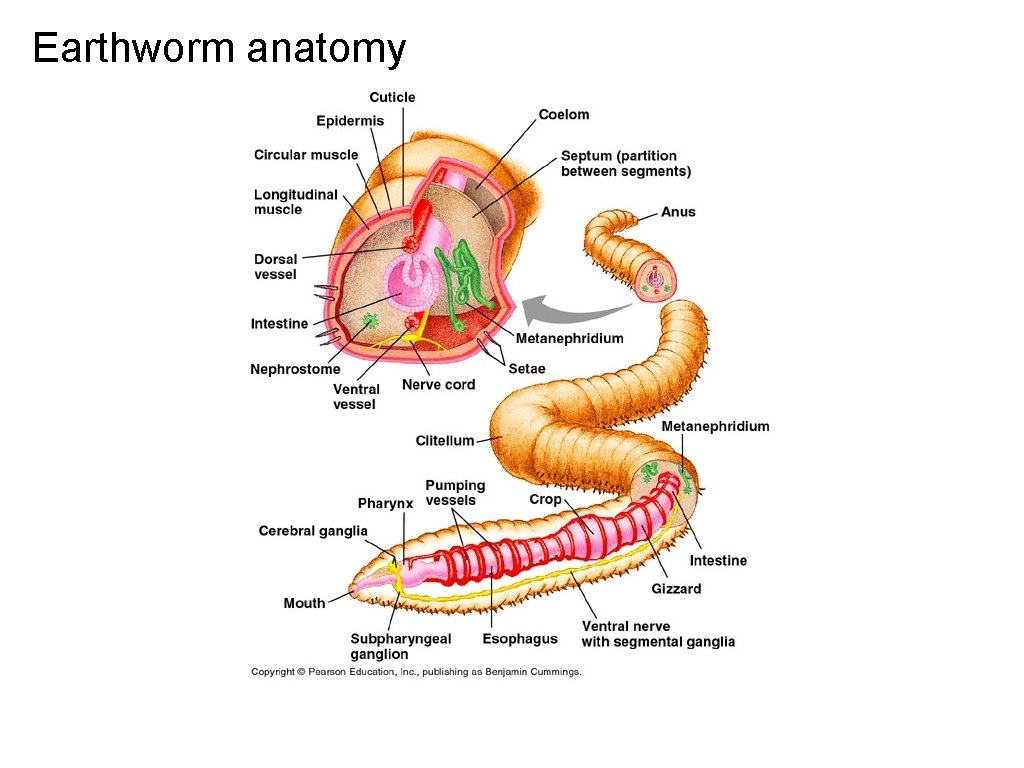
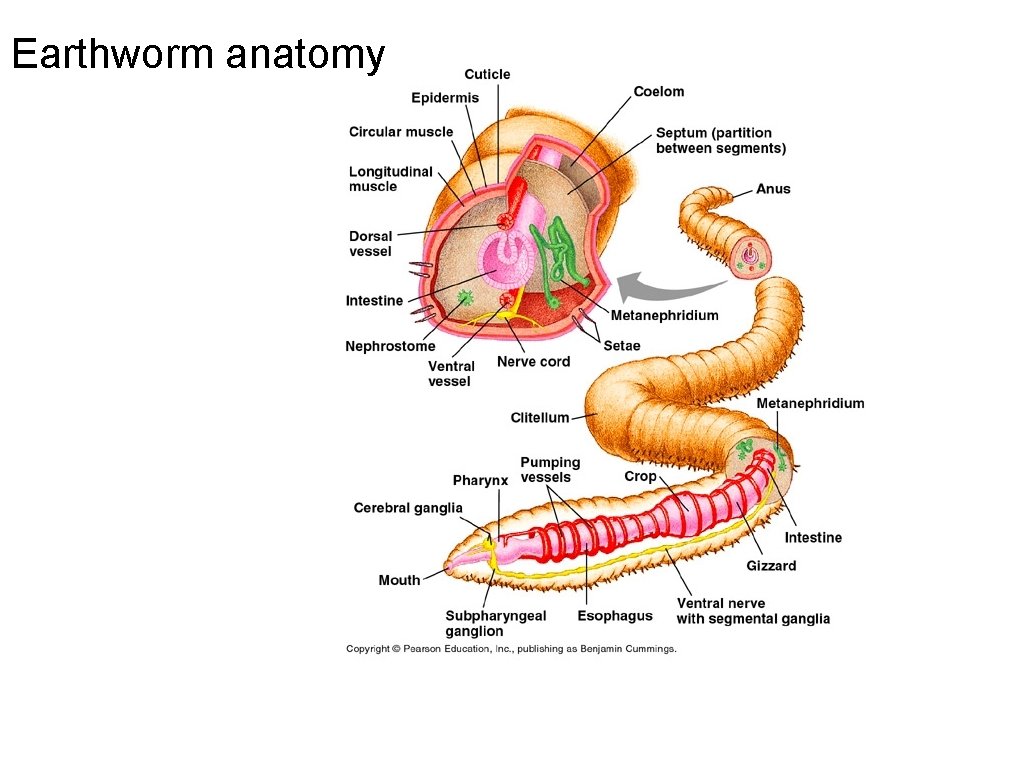
Earthworm anatomy
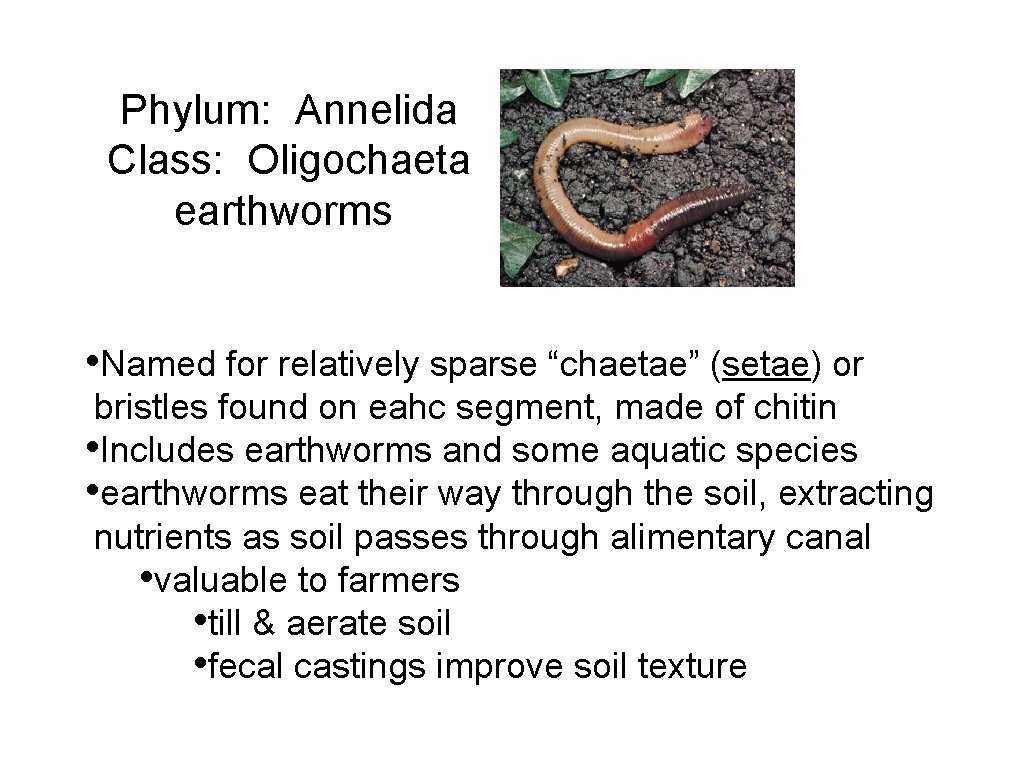
Phylum: Annelida Class: Oligochaeta earthworms • Named for relatively sparse “chaetae” (setae) or bristles found on eahc segment, made of chitin • Includes earthworms and some aquatic species • earthworms eat their way through the soil, extracting nutrients as soil passes through alimentary canal • valuable to farmers • till & aerate soil • fecal castings improve soil texture
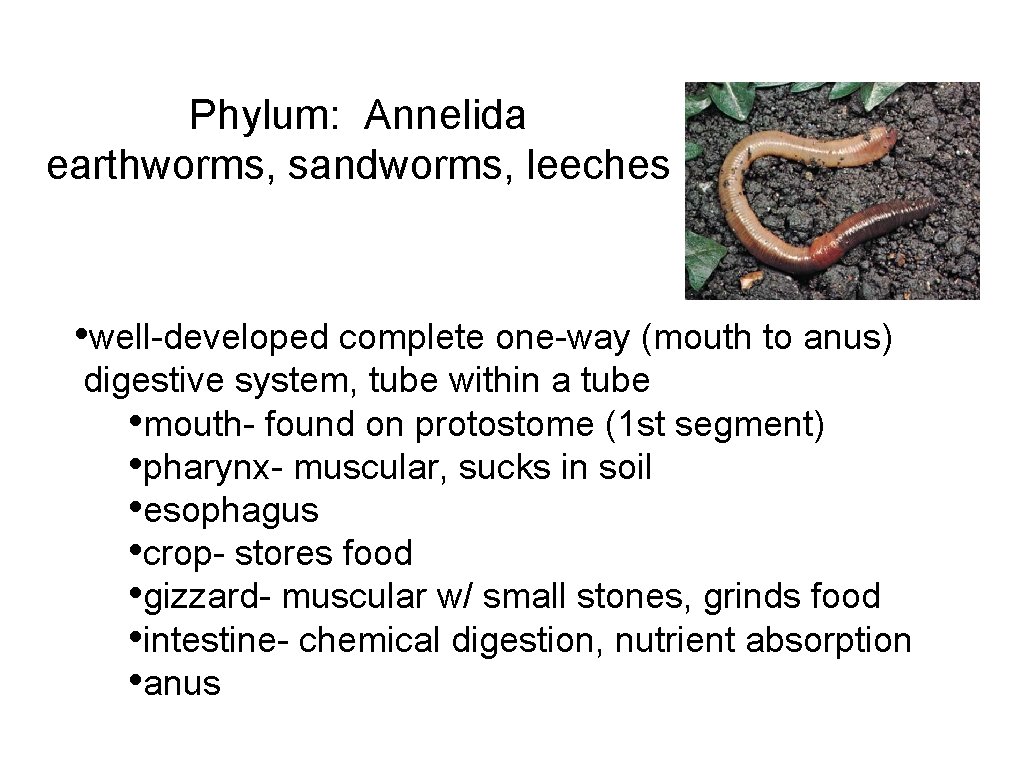
Phylum: Annelida earthworms, sandworms, leeches • well-developed complete one-way (mouth to anus) digestive system, tube within a tube • mouth- found on protostome (1 st segment) • pharynx- muscular, sucks in soil • esophagus • crop- stores food • gizzard- muscular w/ small stones, grinds food • intestine- chemical digestion, nutrient absorption • anus
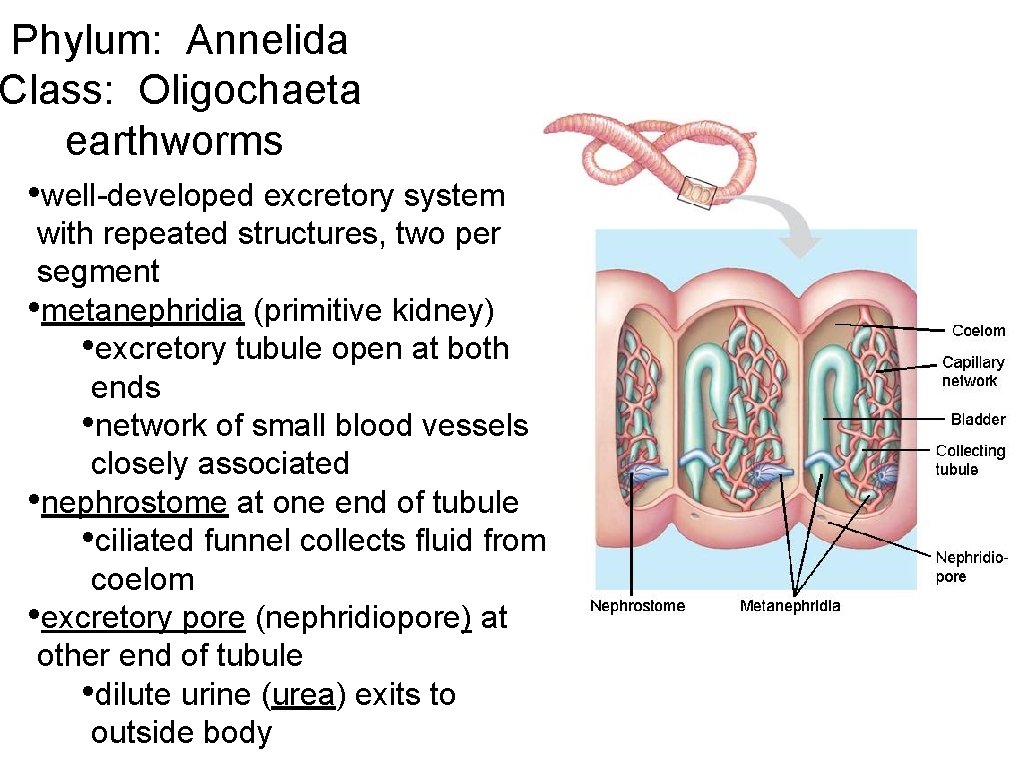
Phylum: Annelida Class: Oligochaeta earthworms • well-developed excretory system with repeated structures, two per segment • metanephridia (primitive kidney) • excretory tubule open at both ends • network of small blood vessels closely associated • nephrostome at one end of tubule • ciliated funnel collects fluid from coelom • excretory pore (nephridiopore) at other end of tubule • dilute urine (urea) exits to outside body
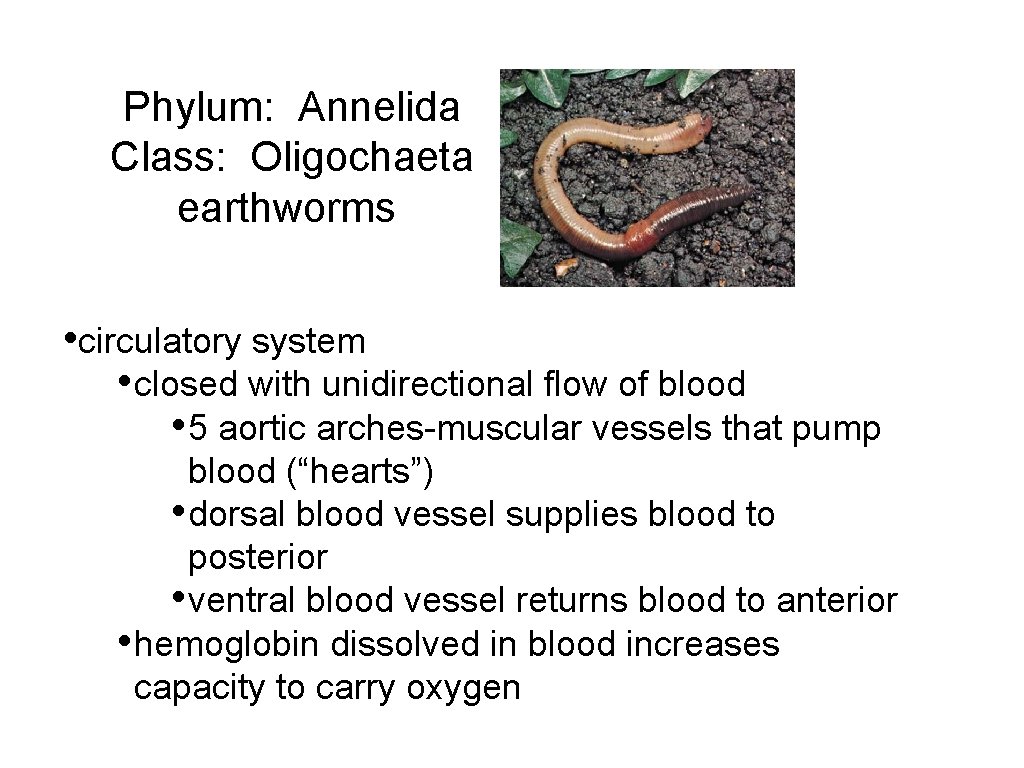
Phylum: Annelida Class: Oligochaeta earthworms • circulatory system • closed with unidirectional flow of blood • 5 aortic arches-muscular vessels that pump blood (“hearts”) • dorsal blood vessel supplies blood to posterior • ventral blood vessel returns blood to anterior • hemoglobin dissolved in blood increases capacity to carry oxygen
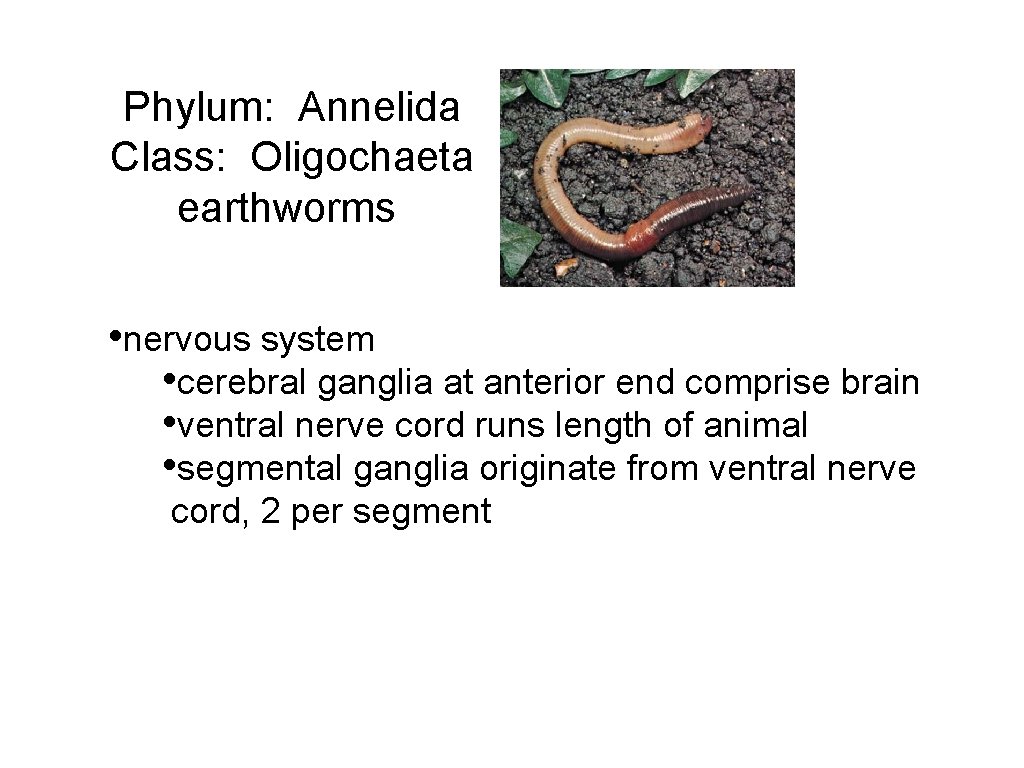
Phylum: Annelida Class: Oligochaeta earthworms • nervous system • cerebral ganglia at anterior end comprise brain • ventral nerve cord runs length of animal • segmental ganglia originate from ventral nerve cord, 2 per segment
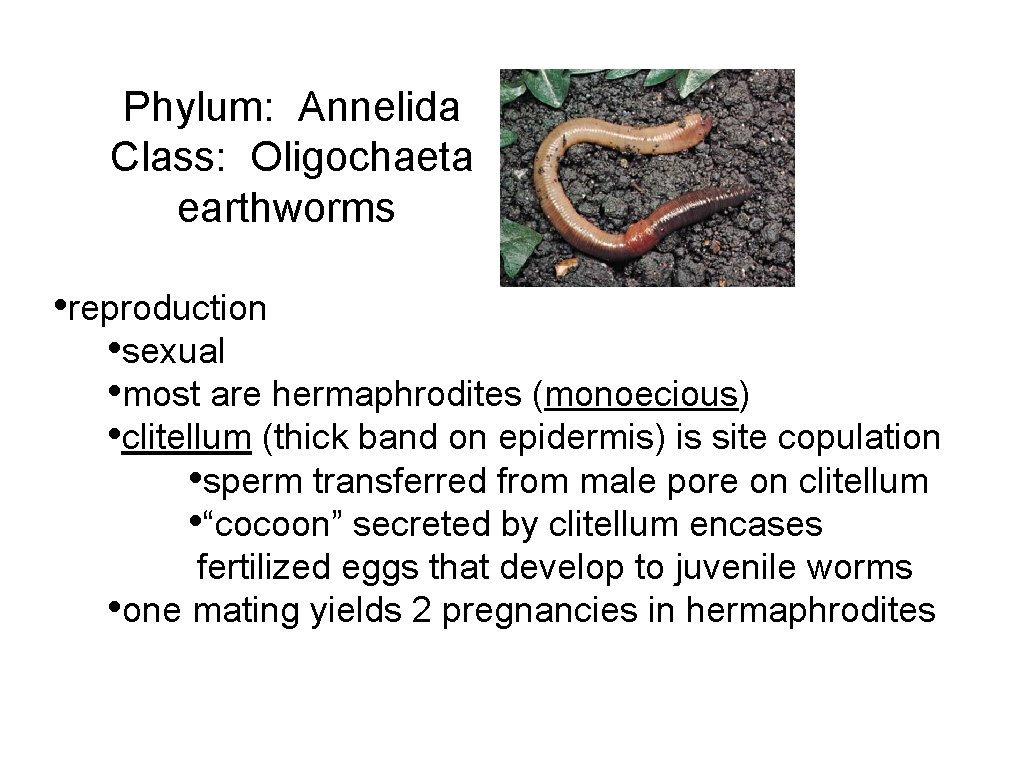
Phylum: Annelida Class: Oligochaeta earthworms • reproduction • sexual • most are hermaphrodites (monoecious) • clitellum (thick band on epidermis) is site copulation • sperm transferred from male pore on clitellum • “cocoon” secreted by clitellum encases fertilized eggs that develop to juvenile worms • one mating yields 2 pregnancies in hermaphrodites
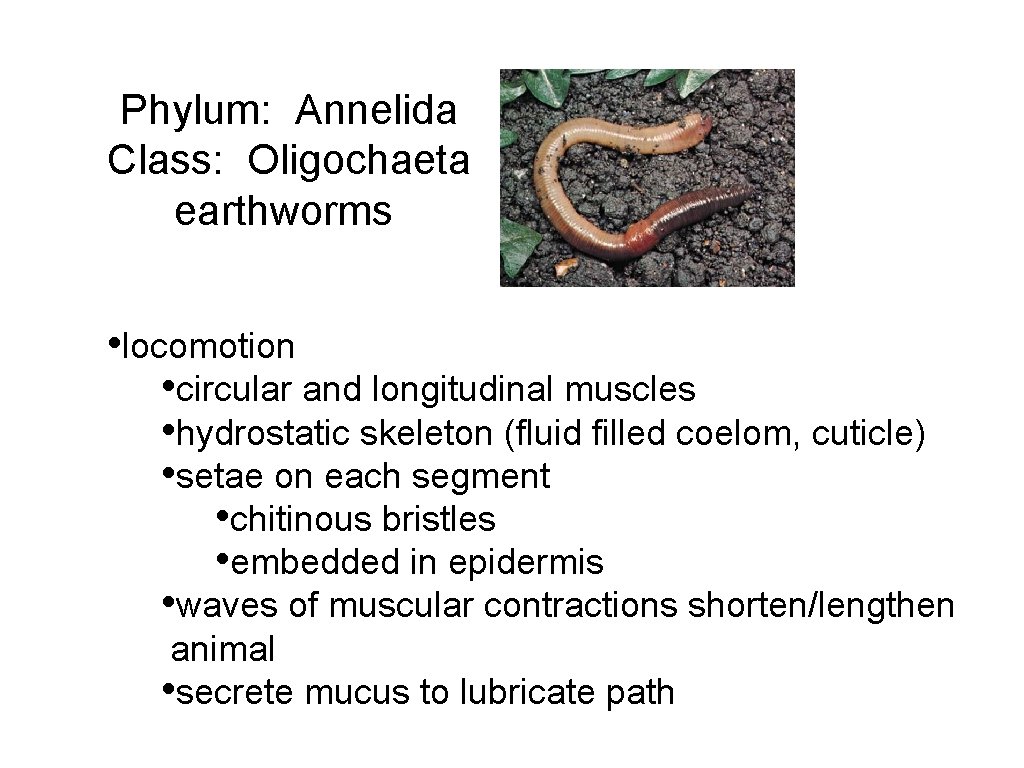
Phylum: Annelida Class: Oligochaeta earthworms • locomotion • circular and longitudinal muscles • hydrostatic skeleton (fluid filled coelom, cuticle) • setae on each segment • chitinous bristles • embedded in epidermis • waves of muscular contractions shorten/lengthen animal • secrete mucus to lubricate path
Earthworm anatomy
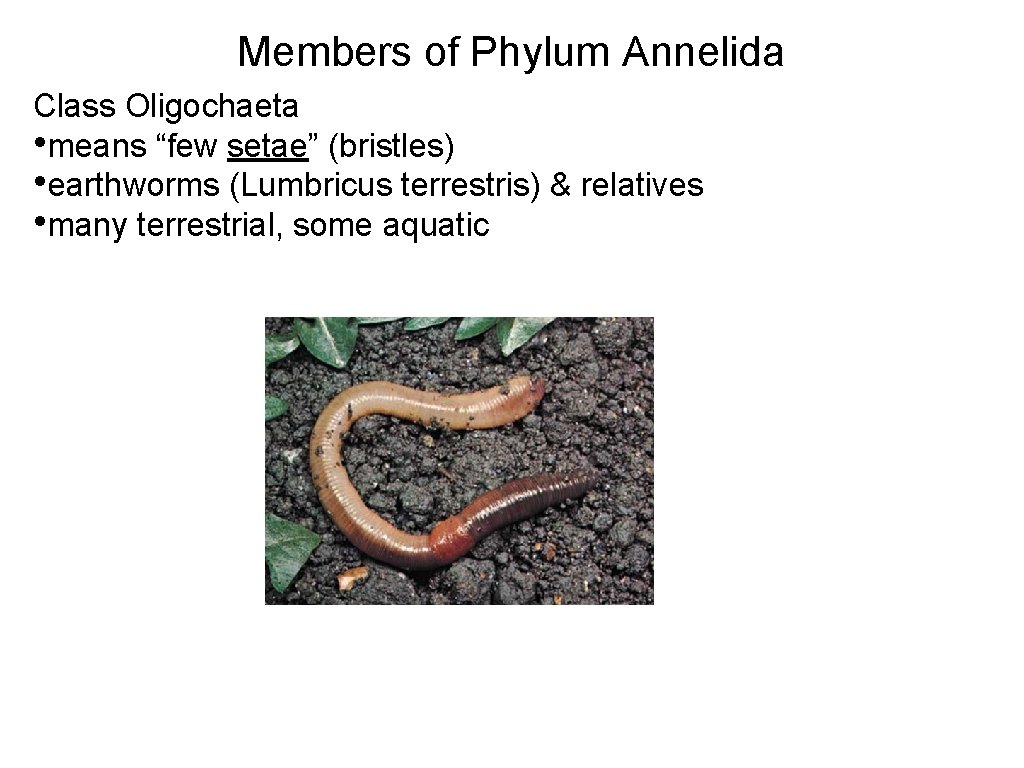
Members of Phylum Annelida Class Oligochaeta • means “few setae” (bristles) • earthworms (Lumbricus terrestris) & relatives • many terrestrial, some aquatic
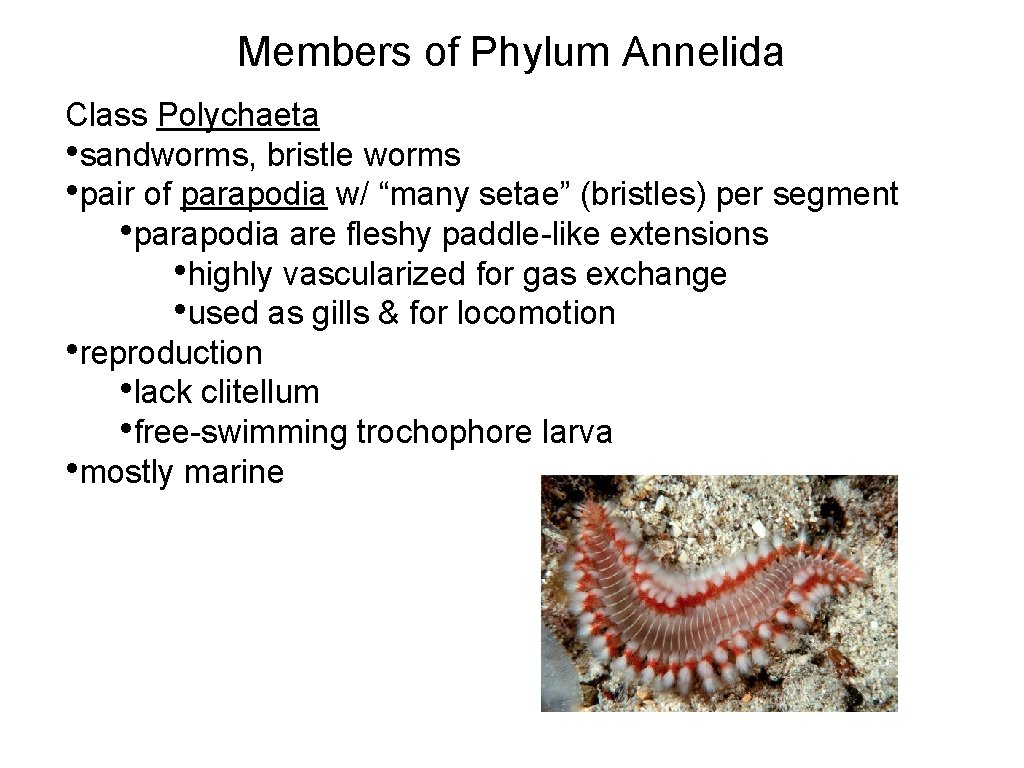
Members of Phylum Annelida Class Polychaeta • sandworms, bristle worms • pair of parapodia w/ “many setae” (bristles) per segment • parapodia are fleshy paddle-like extensions • highly vascularized for gas exchange • used as gills & for locomotion • reproduction • lack clitellum • free-swimming trochophore larva • mostly marine
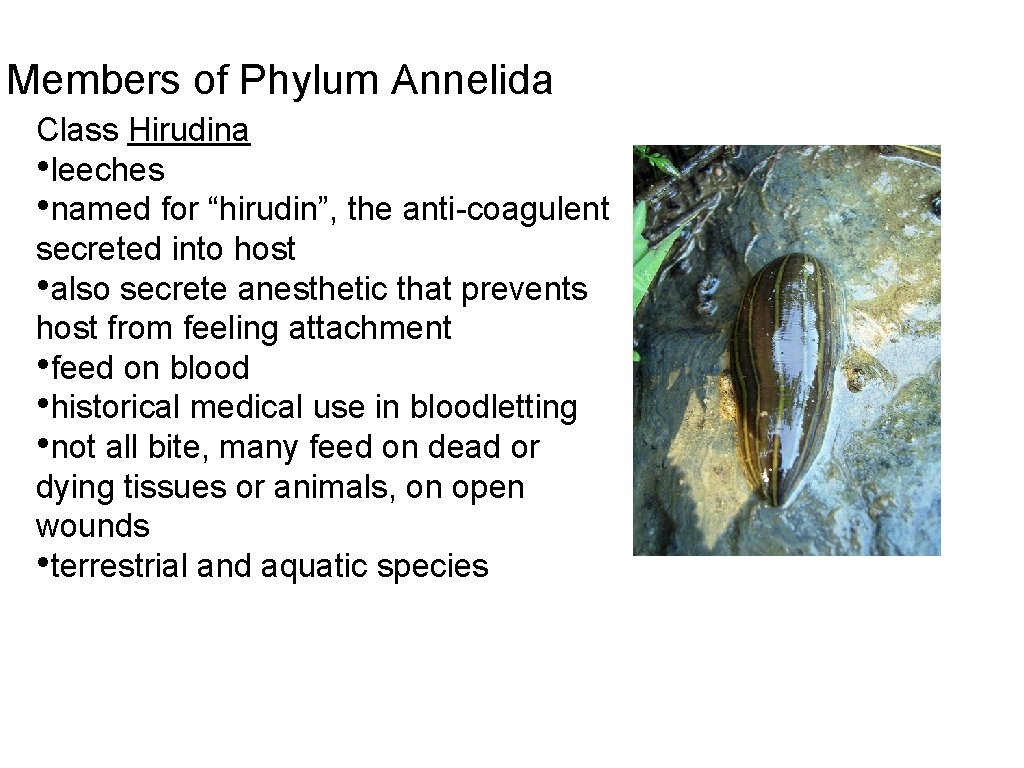
Members of Phylum Annelida Class Hirudina • leeches • named for “hirudin”, the anti-coagulent secreted into host • also secrete anesthetic that prevents host from feeling attachment • feed on blood • historical medical use in bloodletting • not all bite, many feed on dead or dying tissues or animals, on open wounds • terrestrial and aquatic species
Phylum Annelida: The Table- selected entries not covered Cleavage/cells: radial and determinate; egg is small with elsewhere little yolk Respiratory system: cutaneous breathing; skin must be kept moist for diffusion of oxygen; in Polychaeta parapodia act as external “gills” Relationship to other phyla: Mollusca- mesoderm origin, larval characteristics, cleavage pattern Arthropoda- segmentation, type of cuticle, nervous system Chordata- coelom segmentation