
Radian Measure and Coterminal Angles The Unit Circle
- Slides: 28
Radian Measure and Coterminal Angles
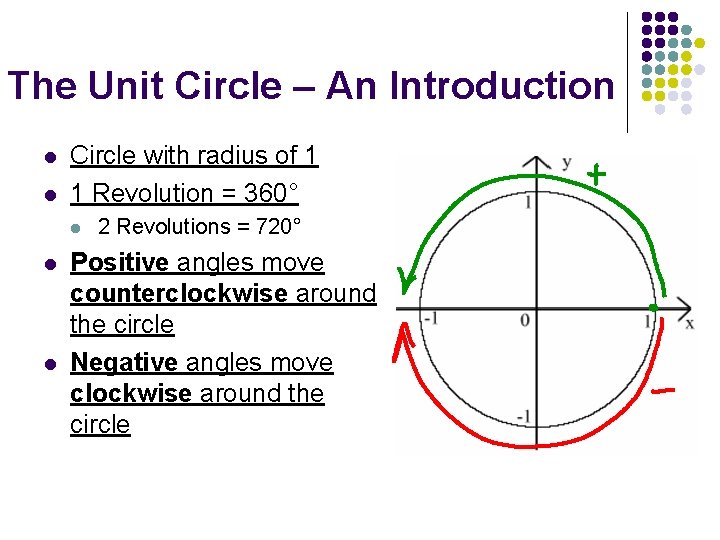
The Unit Circle – An Introduction l l Circle with radius of 1 1 Revolution = 360° l l l 2 Revolutions = 720° Positive angles move counterclockwise around the circle Negative angles move clockwise around the circle
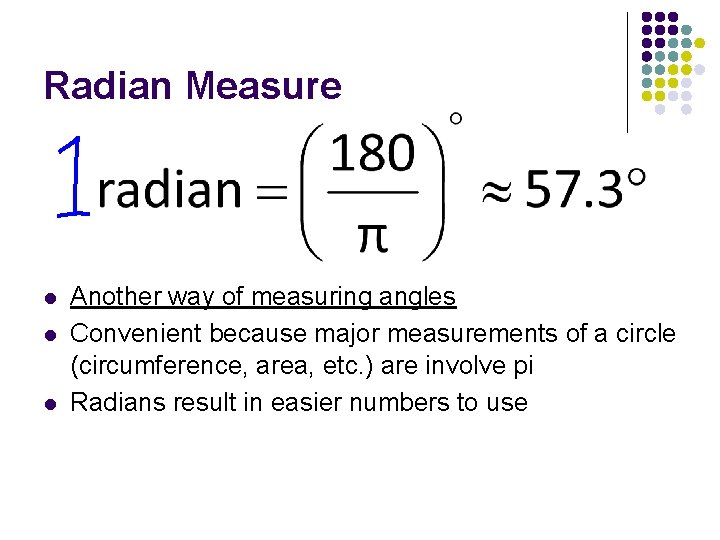
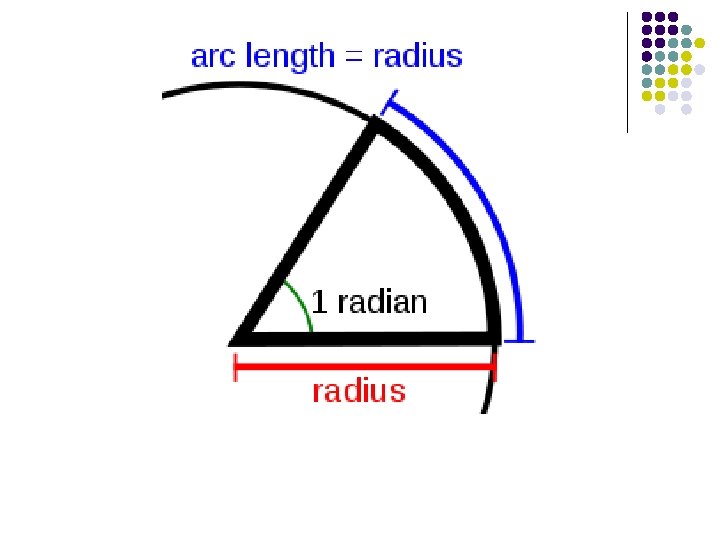
Radian Measure l l l Another way of measuring angles Convenient because major measurements of a circle (circumference, area, etc. ) are involve pi Radians result in easier numbers to use
Radian Measure, cont.
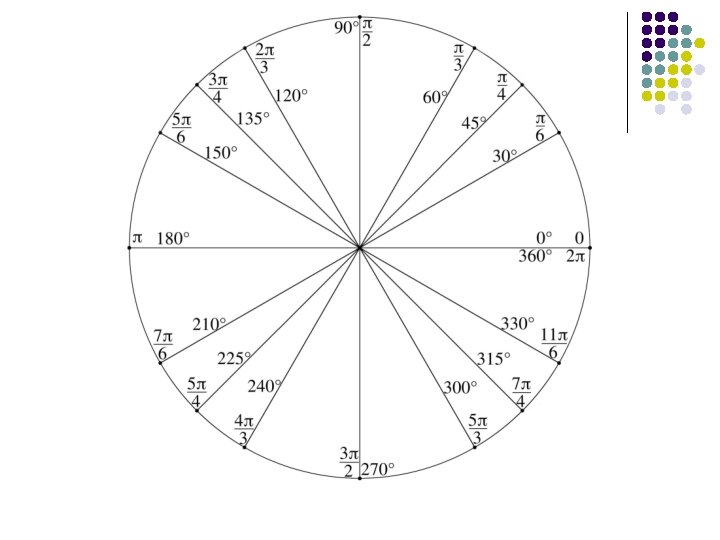
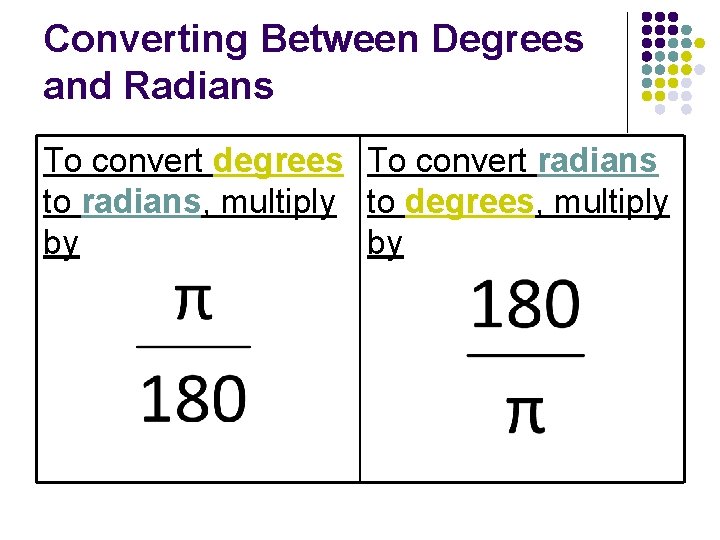
Converting Between Degrees and Radians To convert degrees To convert radians to radians, multiply to degrees, multiply by by
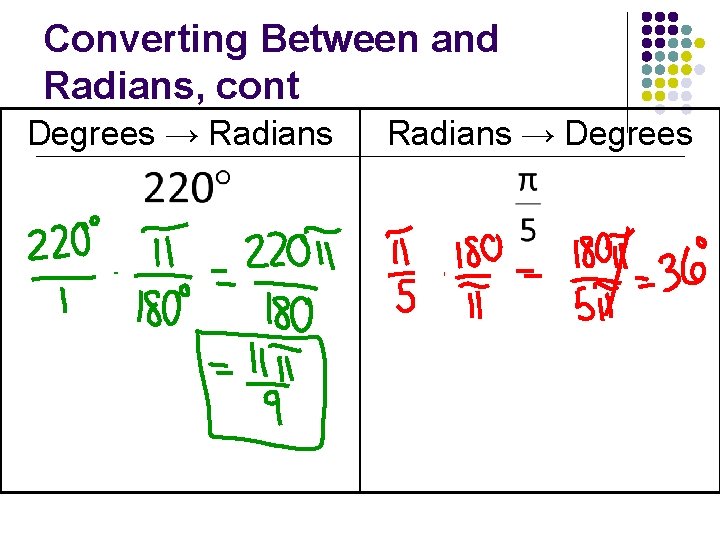
Converting Between and Radians, cont Degrees → Radians → Degrees
Your Turn: l Problems 1 – 12 on the Radian Measure and Coterminal Angles handout
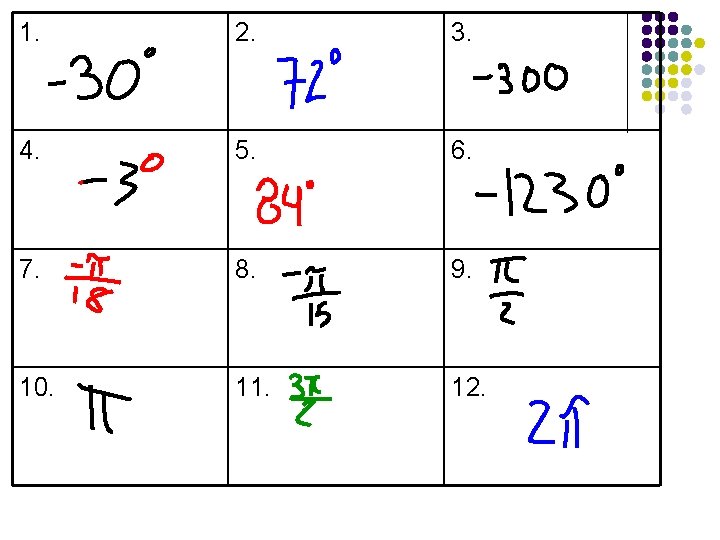
1. 2. 3. 4. 5. 6. 7. 8. 9. 10. 11. 12.
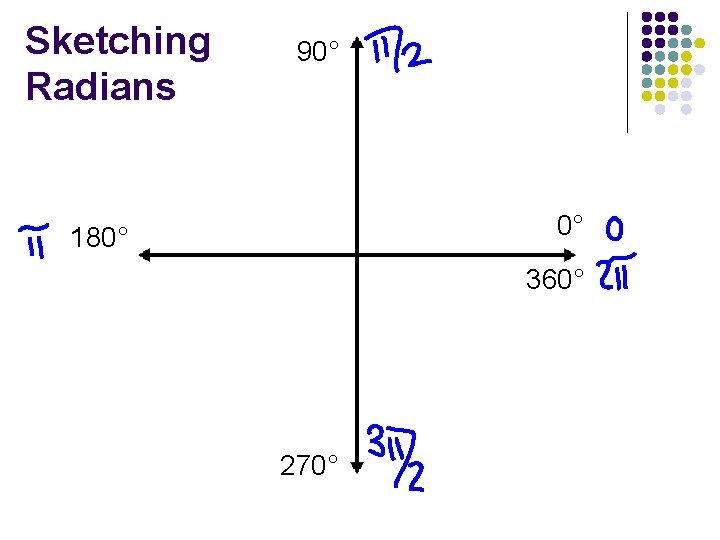
Sketching Radians 90° 0° 180° 360° 270°
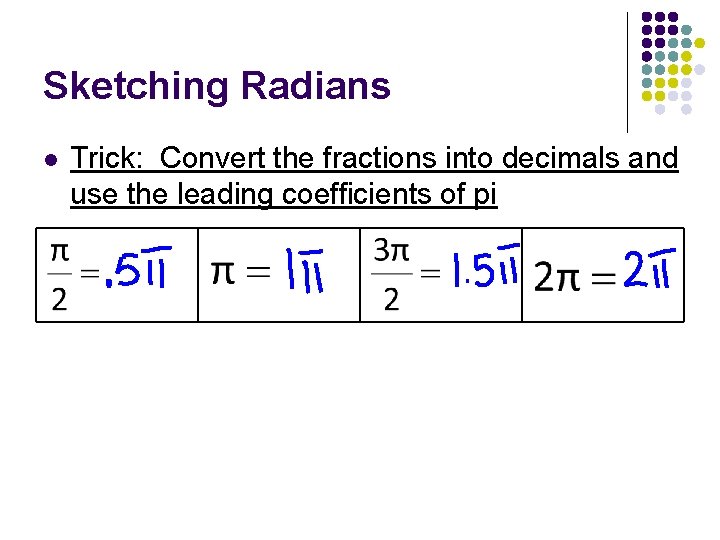
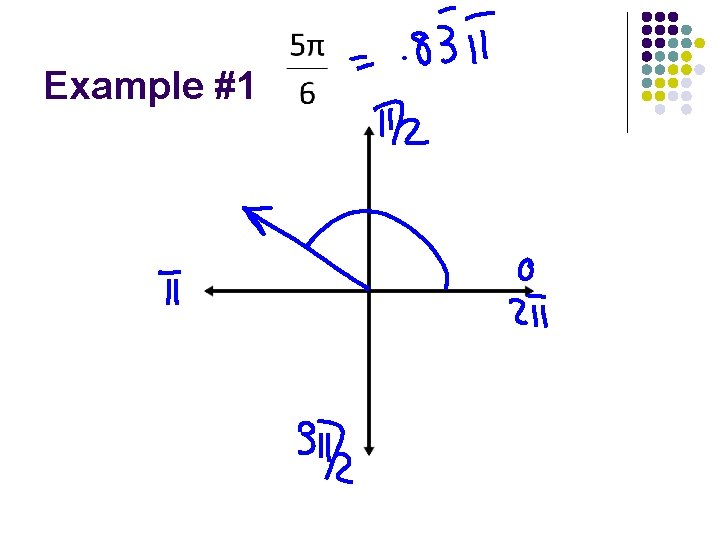
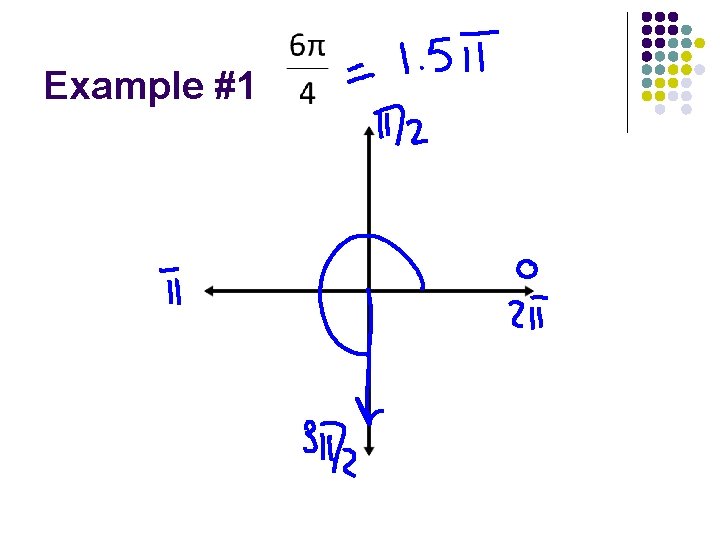
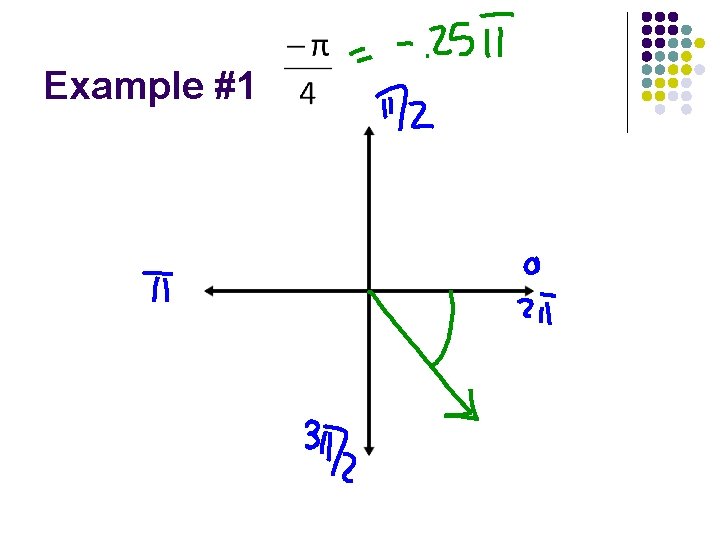
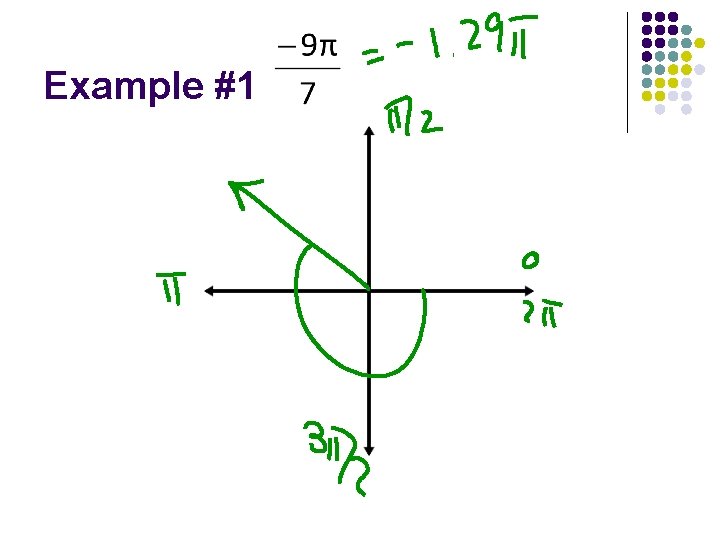
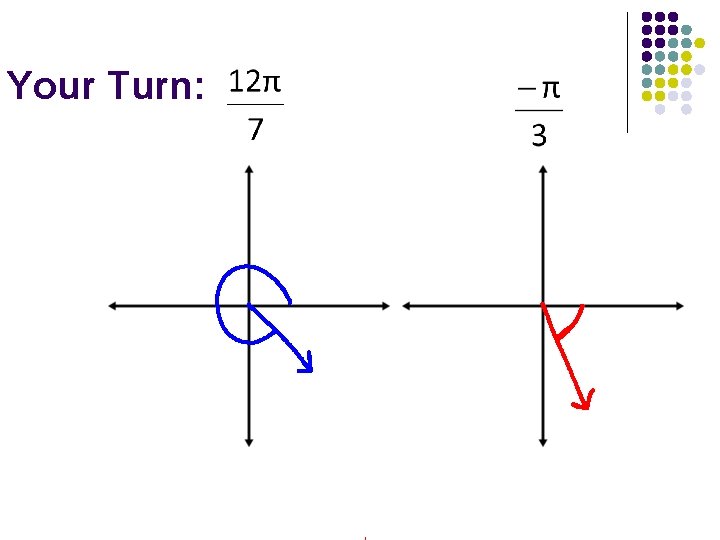
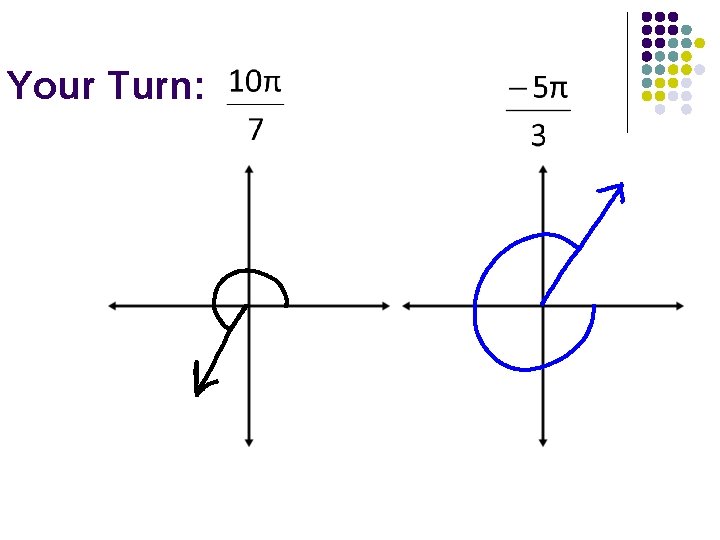
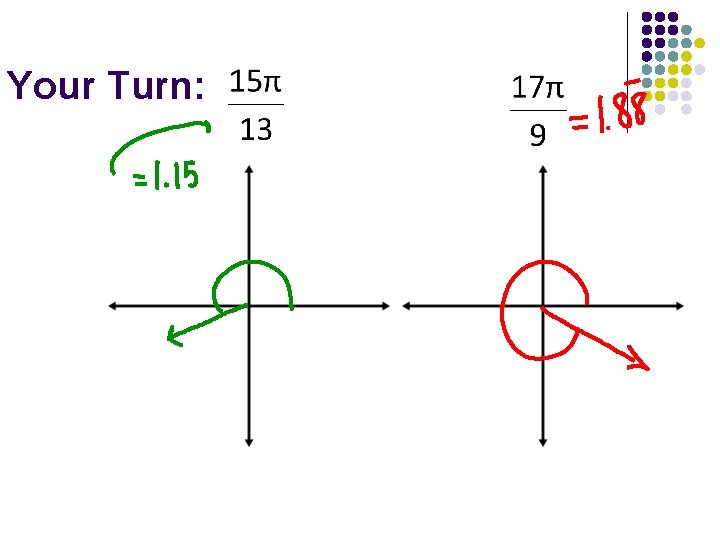
Sketching Radians l Trick: Convert the fractions into decimals and use the leading coefficients of pi
Example #1
Example #1
Example #1
Example #1
Your Turn:
Your Turn:
Your Turn:
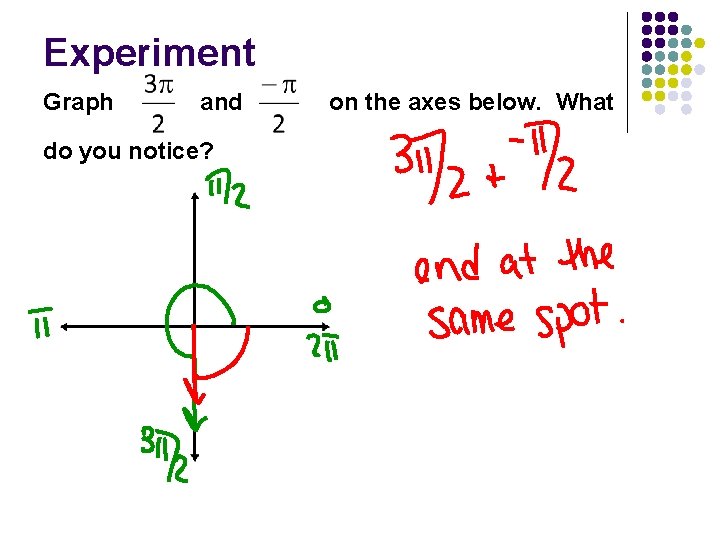
Experiment Graph and do you notice? on the axes below. What
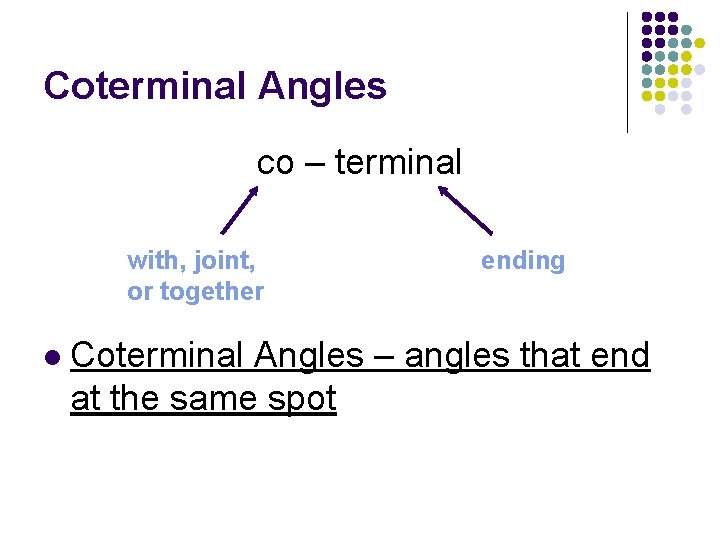
Coterminal Angles co – terminal with, joint, or together l ending Coterminal Angles – angles that end at the same spot
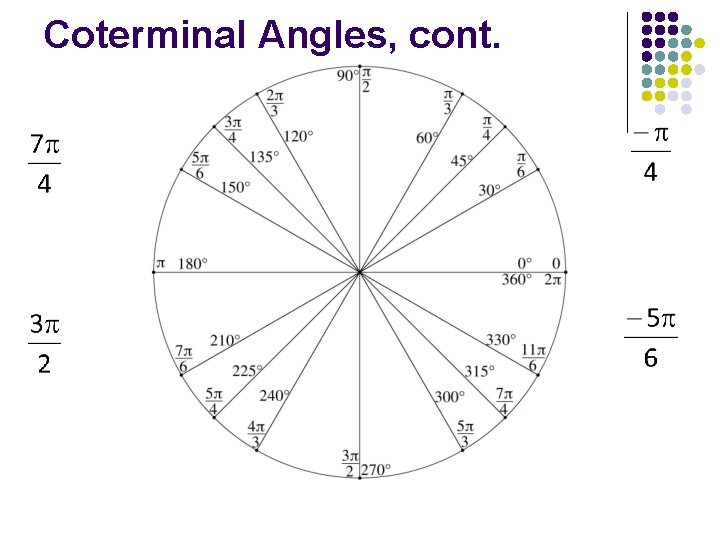
Coterminal Angles, cont. l l Each positive angle has a negative coterminal angle Each negative angle has a positive coterminal angle
Coterminal Angles, cont.
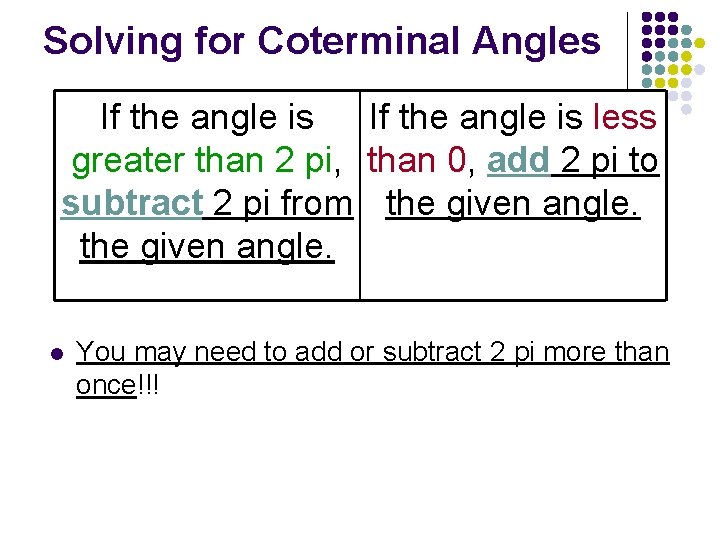
Solving for Coterminal Angles If the angle is less greater than 2 pi, than 0, add 2 pi to subtract 2 pi from the given angle. l You may need to add or subtract 2 pi more than once!!!
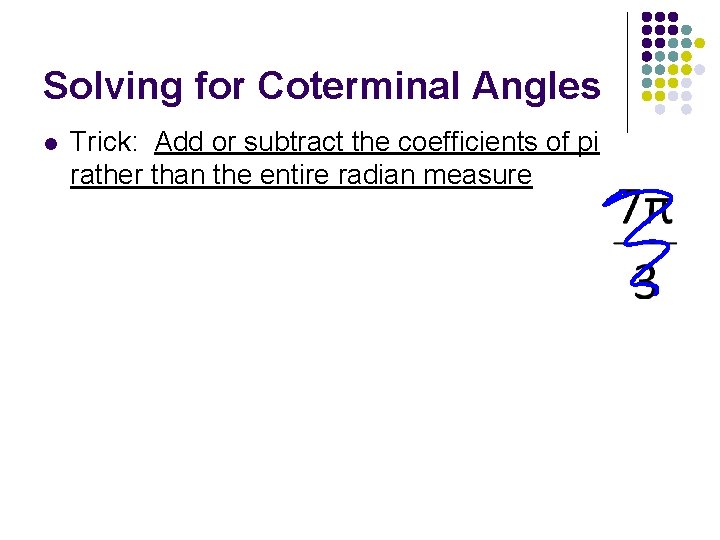
Solving for Coterminal Angles l Trick: Add or subtract the coefficients of pi rather than the entire radian measure
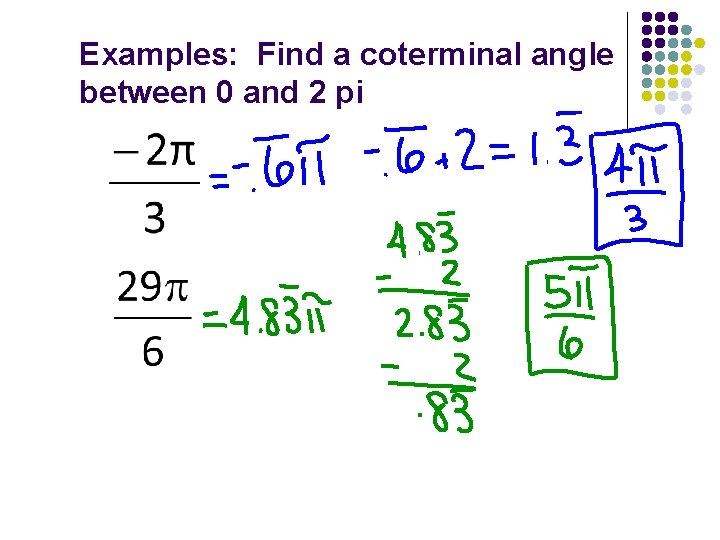
Examples: Find a coterminal angle between 0 and 2 pi
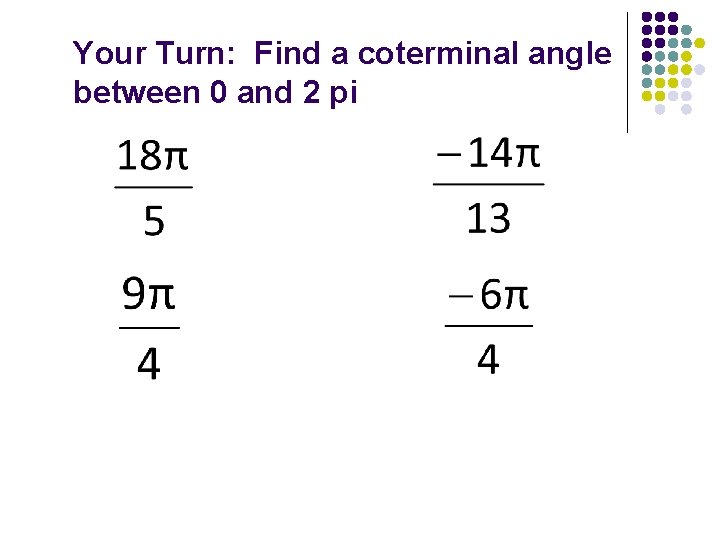
Your Turn: Find a coterminal angle between 0 and 2 pi
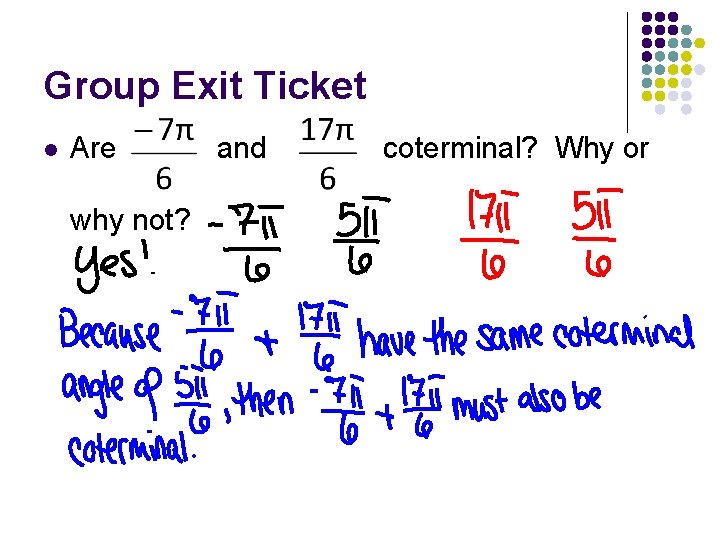
Group Exit Ticket l Are why not? and coterminal? Why or