
Radial vs Bilateral Symmetry Cephalization Bilateral Symmetry usually
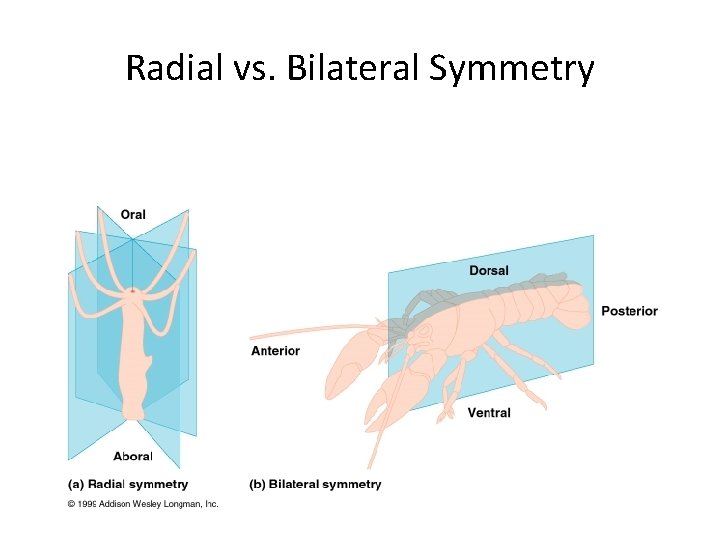
Radial vs. Bilateral Symmetry
Cephalization • Bilateral Symmetry usually has led to cephalization—the process by which sensory organs and appendages became localized in the head end of animals.
Evolutionary Trends If we analyze the basic body plans of animals, we find that they illustrate evolutionary trends. Four major “advances” (in order): 1. 2. 3. 4. Multicellular body plan (tissues) Bilaterally symmetrical body plan “Tube-within-a-tube” body plan Coelomate body plan
3 Major Bilateral Body Plans 1. 2. 3. • Acoelomates Pseudocoelomates Coelomates Each plan consists of 3 cell layers: endoderm, mesoderm, ectoderm
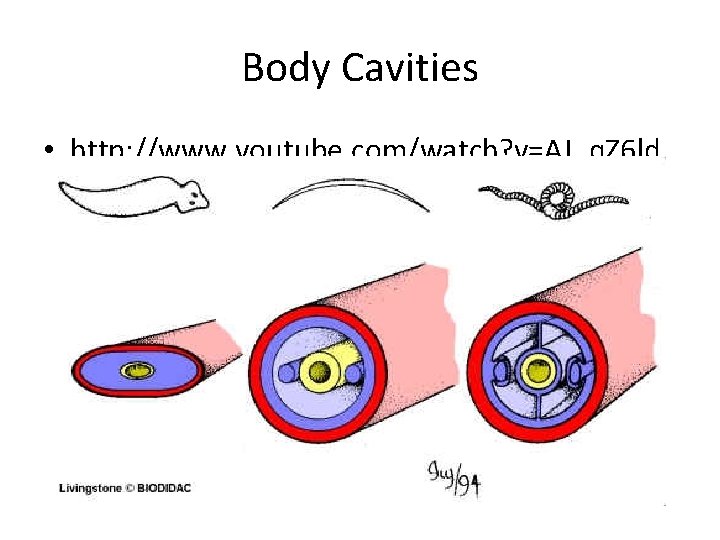
Body Cavities • http: //www. youtube. com/watch? v=AJ_q. Z 6 ld 6 A 0
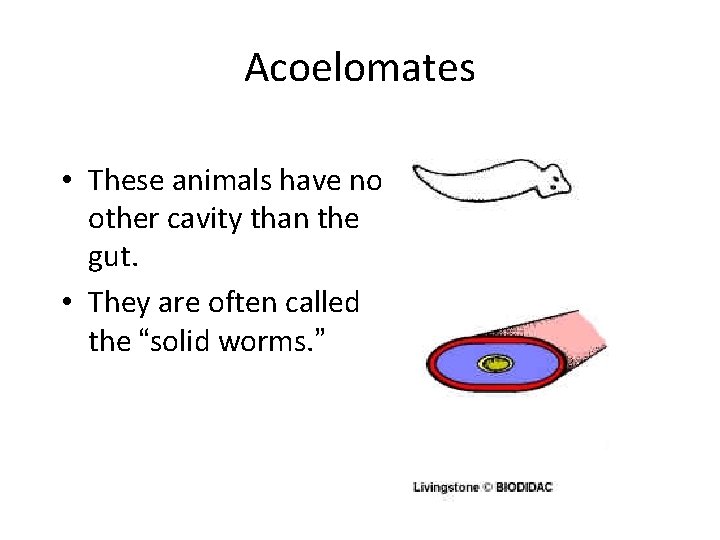
Acoelomates • These animals have no other cavity than the gut. • They are often called the “solid worms. ”
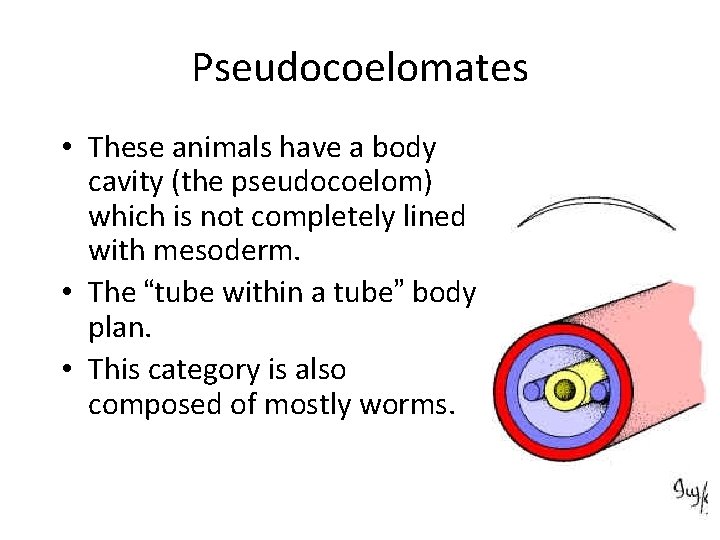
Pseudocoelomates • These animals have a body cavity (the pseudocoelom) which is not completely lined with mesoderm. • The “tube within a tube” body plan. • This category is also composed of mostly worms.
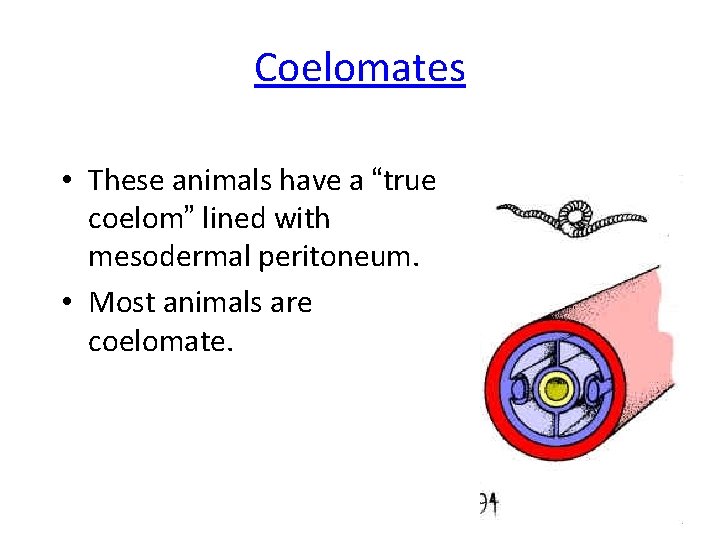
Coelomates • These animals have a “true coelom” lined with mesodermal peritoneum. • Most animals are coelomate.
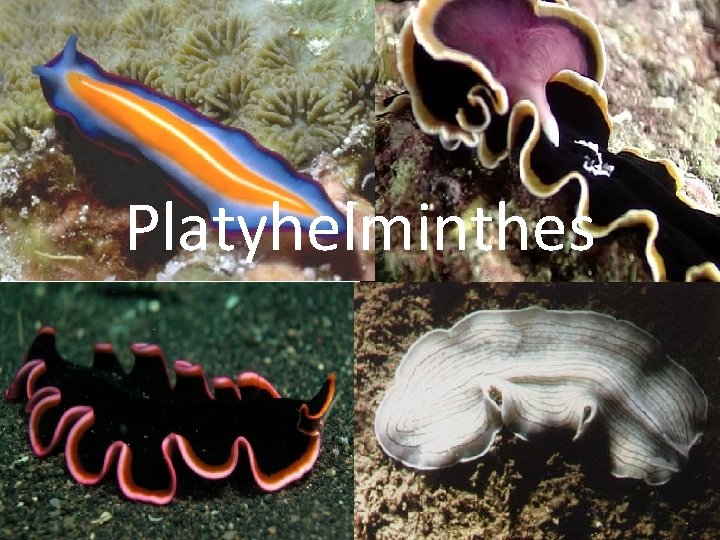
Platyhelminthes
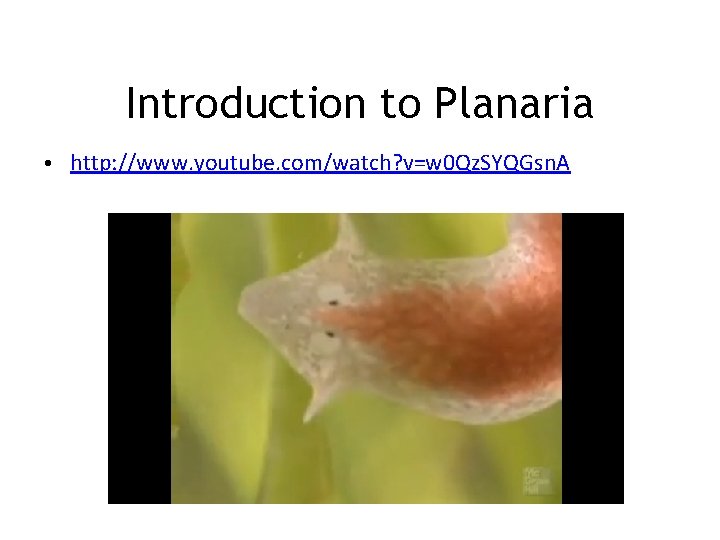
Introduction to Planaria • http: //www. youtube. com/watch? v=w 0 Qz. SYQGsn. A
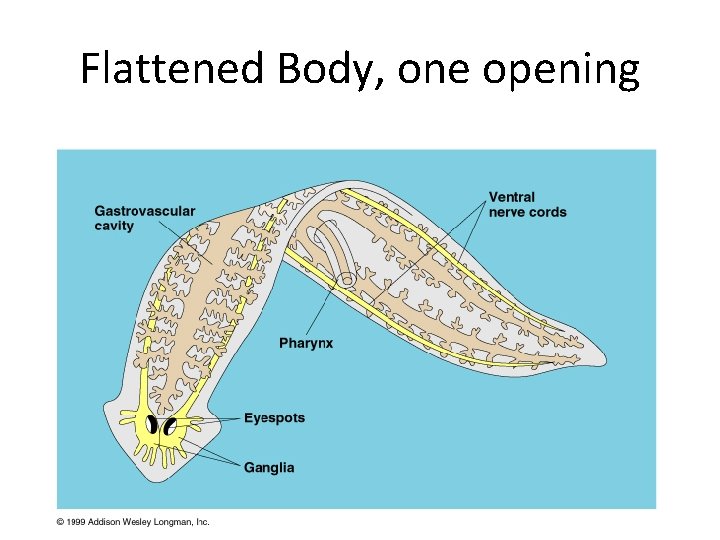
Flattened Body, one opening
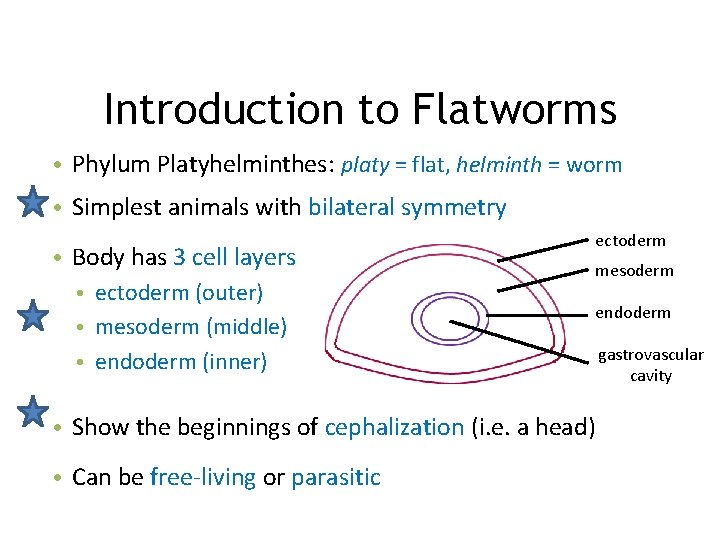
Introduction to Flatworms • Phylum Platyhelminthes: platy = flat, helminth = worm • Simplest animals with bilateral symmetry • Body has 3 cell layers • ectoderm (outer) • mesoderm (middle) • endoderm (inner) ectoderm mesoderm endoderm • Show the beginnings of cephalization (i. e. a head) • Can be free-living or parasitic gastrovascular cavity
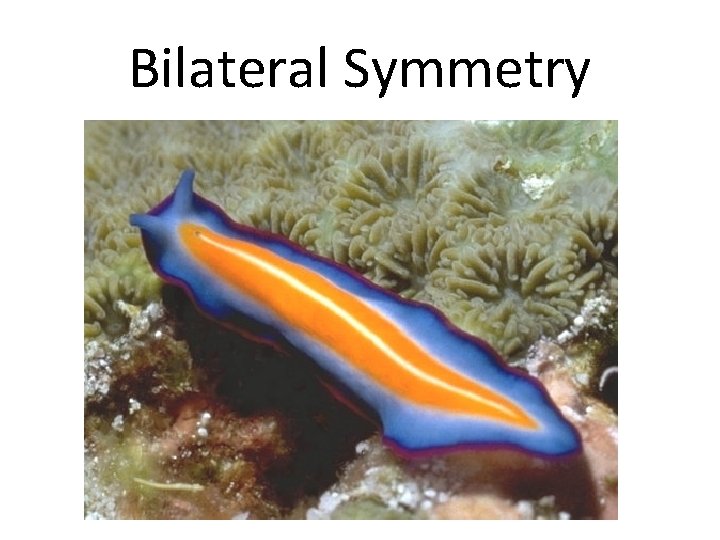
Bilateral Symmetry
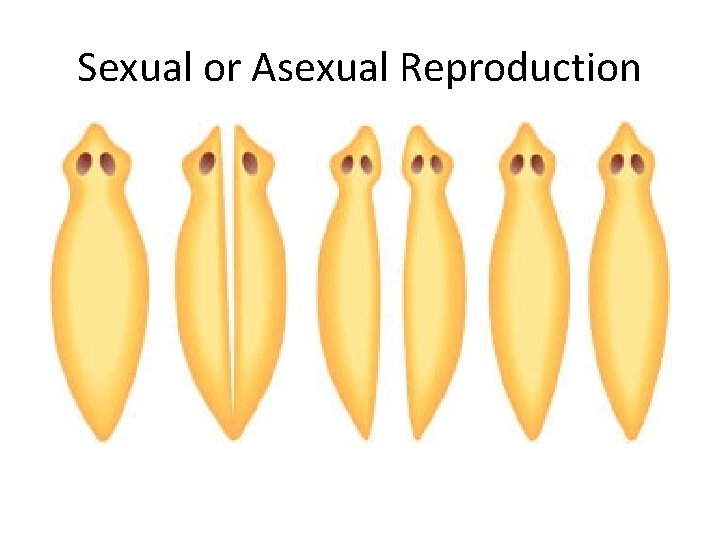
Sexual or Asexual Reproduction
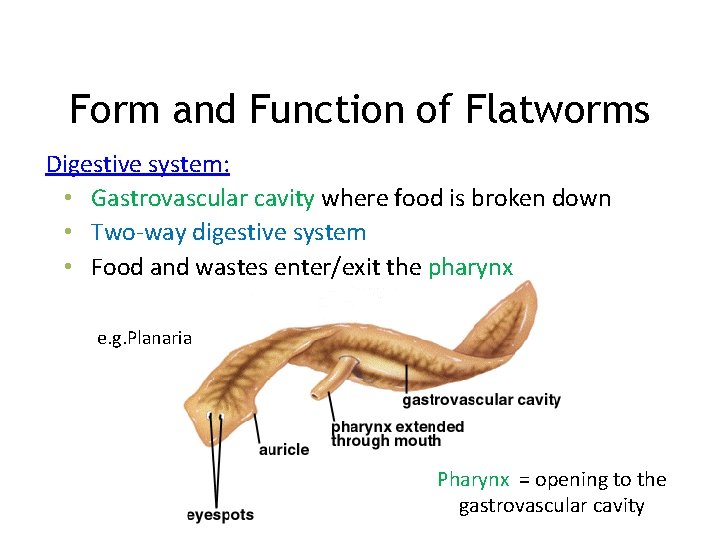
Form and Function of Flatworms Digestive system: • Gastrovascular cavity where food is broken down • Two-way digestive system • Food and wastes enter/exit the pharynx e. g. Planaria Pharynx = opening to the gastrovascular cavity
Respiratory system: Circulatory system: • No organized systems for these • O 2, CO 2 diffuse through the ectoderm Excretory system: • Flame cells - primitive excretory structures that get rid of excess water • Metabolic wastes diffuse through the skin
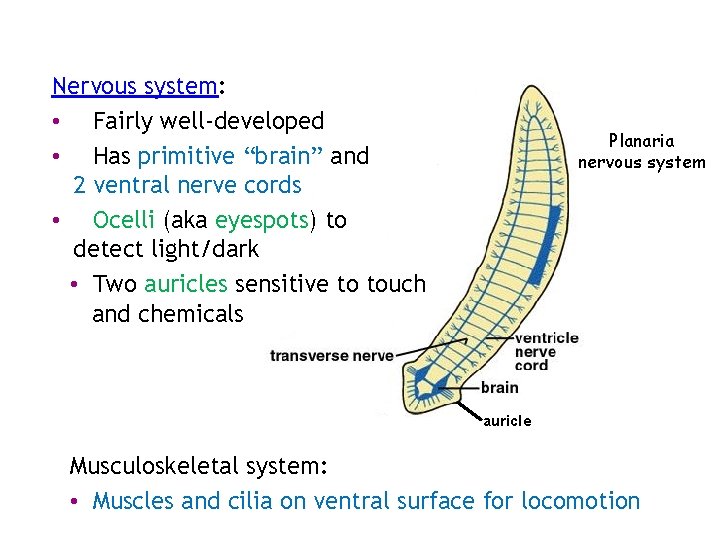
Nervous system: • Fairly well-developed • Has primitive “brain” and 2 ventral nerve cords • Ocelli (aka eyespots) to detect light/dark • Two auricles sensitive to touch and chemicals Planaria nervous system auricle Musculoskeletal system: • Muscles and cilia on ventral surface for locomotion
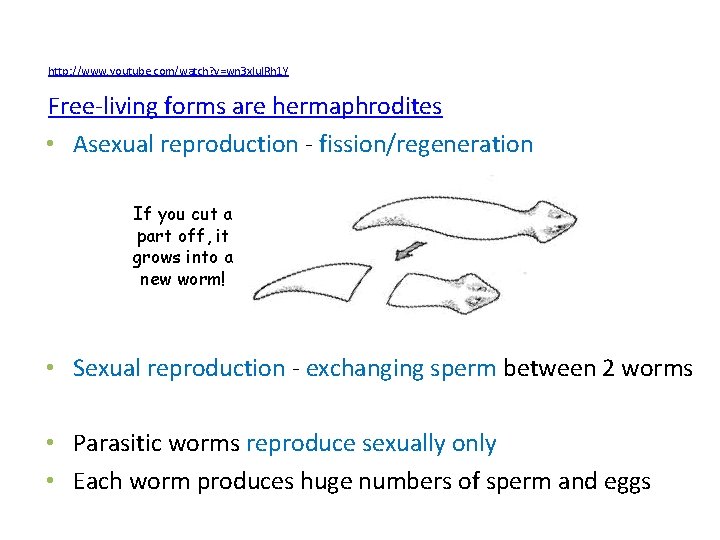
http: //www. youtube. com/watch? v=wn 3 xlu. IRh 1 Y Free-living forms are hermaphrodites • Asexual reproduction - fission/regeneration If you cut a part off, it grows into a new worm! • Sexual reproduction - exchanging sperm between 2 worms • Parasitic worms reproduce sexually only • Each worm produces huge numbers of sperm and eggs
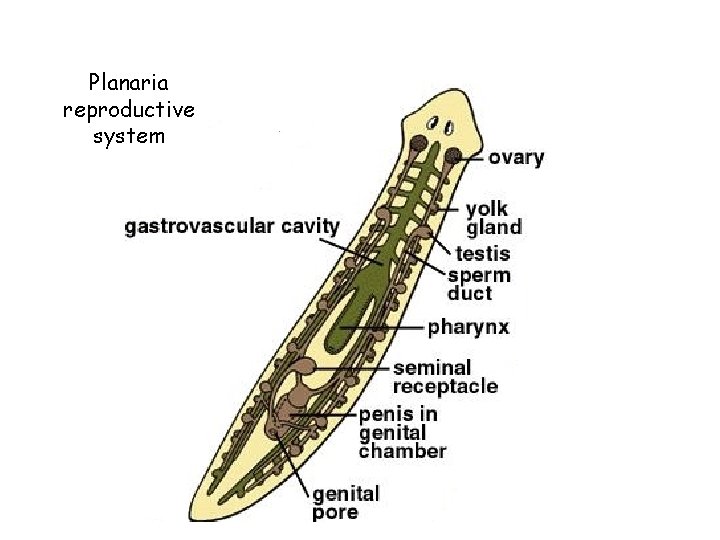
Planaria reproductive system
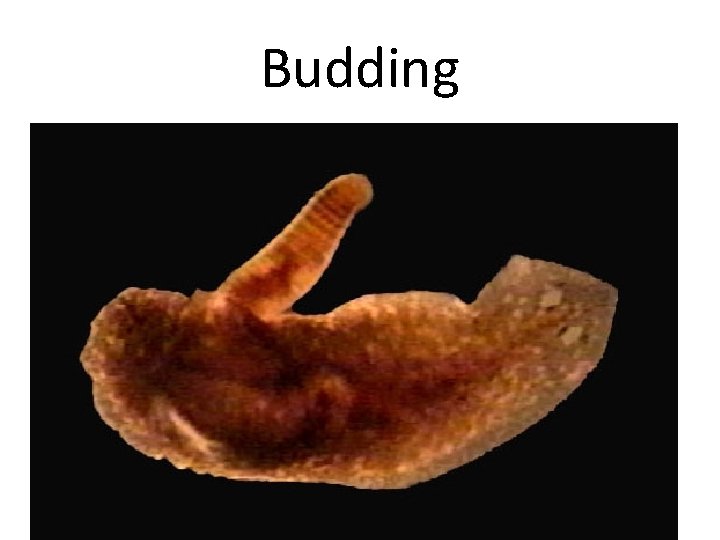
Budding
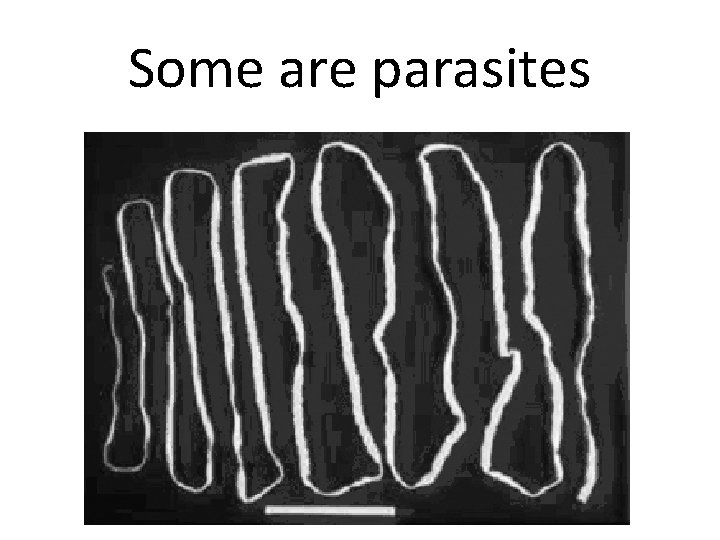
Some are parasites
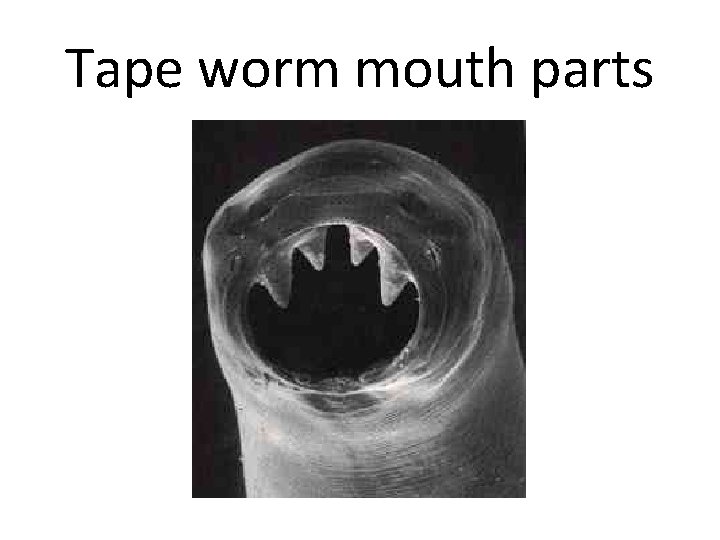
Tape worm mouth parts
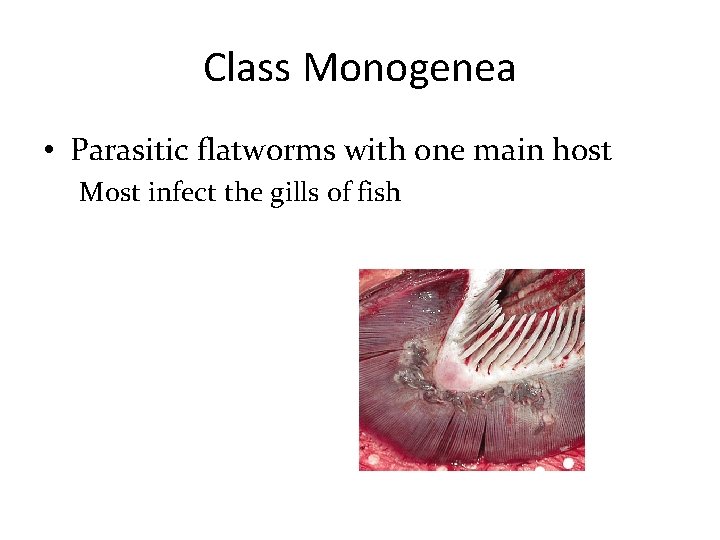
Class Monogenea • Parasitic flatworms with one main host Most infect the gills of fish
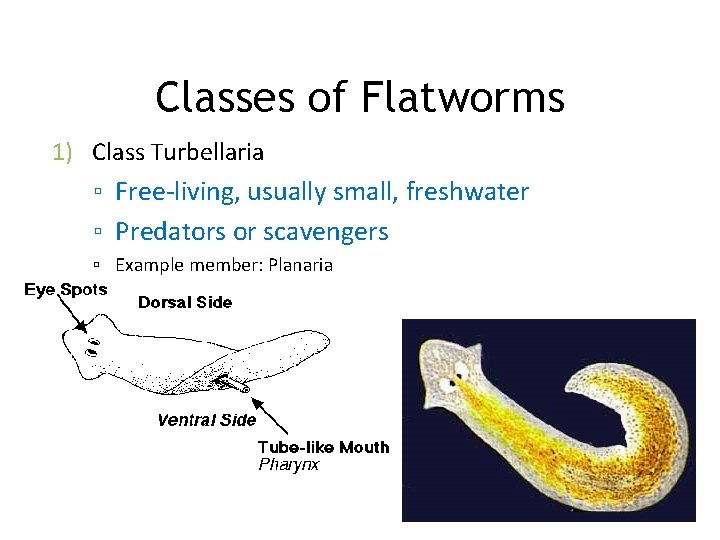
Classes of Flatworms 1) Class Turbellaria ▫ Free-living, usually small, freshwater ▫ Predators or scavengers ▫ Example member: Planaria
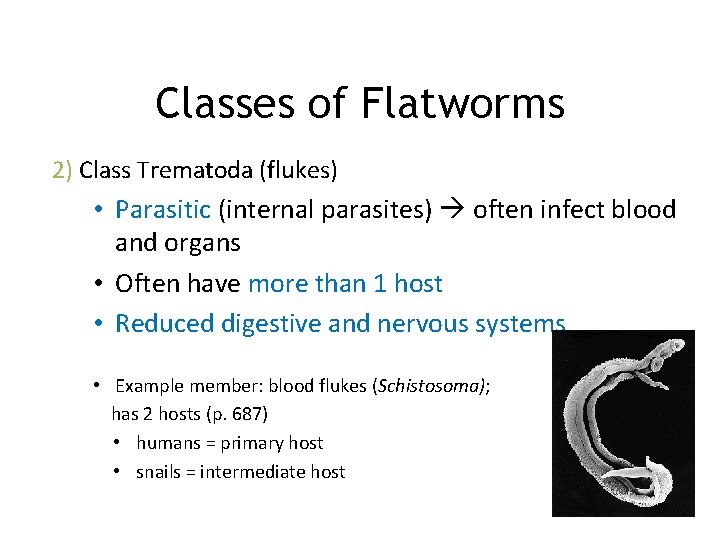
Classes of Flatworms 2) Class Trematoda (flukes) • Parasitic (internal parasites) often infect blood and organs • Often have more than 1 host • Reduced digestive and nervous systems • Example member: blood flukes (Schistosoma); has 2 hosts (p. 687) • humans = primary host • snails = intermediate host
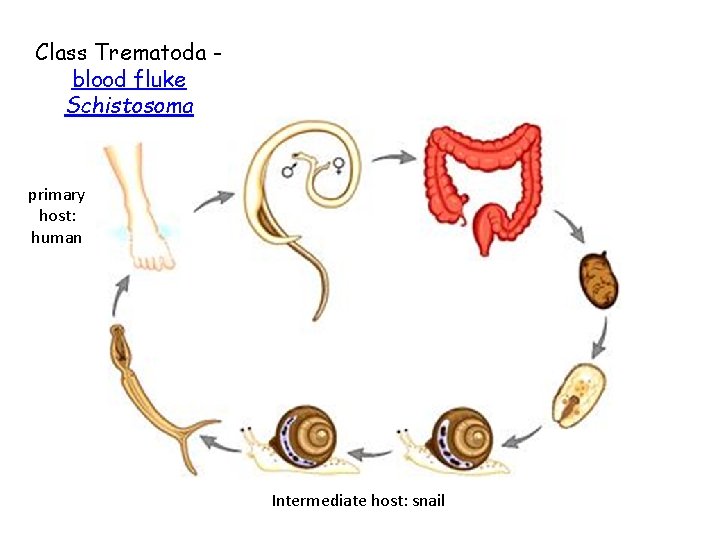
Class Trematoda blood fluke Schistosoma primary host: human Intermediate host: snail
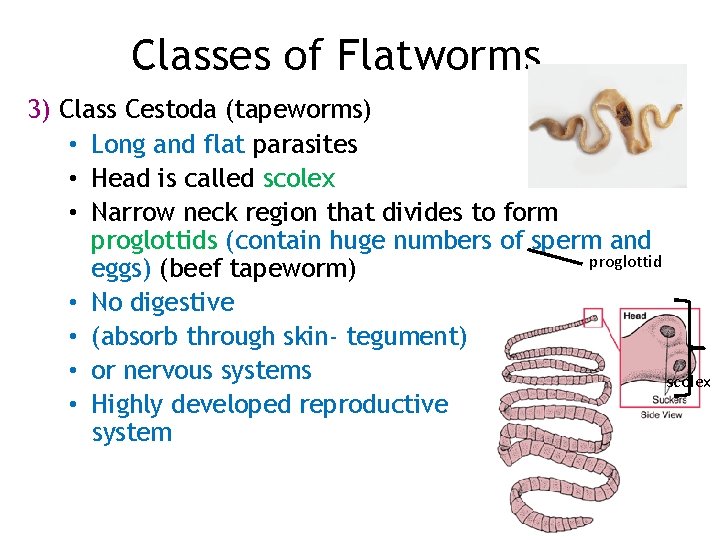
Classes of Flatworms 3) Class Cestoda (tapeworms) • Long and flat parasites • Head is called scolex • Narrow neck region that divides to form proglottids (contain huge numbers of sperm and proglottid eggs) (beef tapeworm) • No digestive • (absorb through skin- tegument) • or nervous systems scolex • Highly developed reproductive system
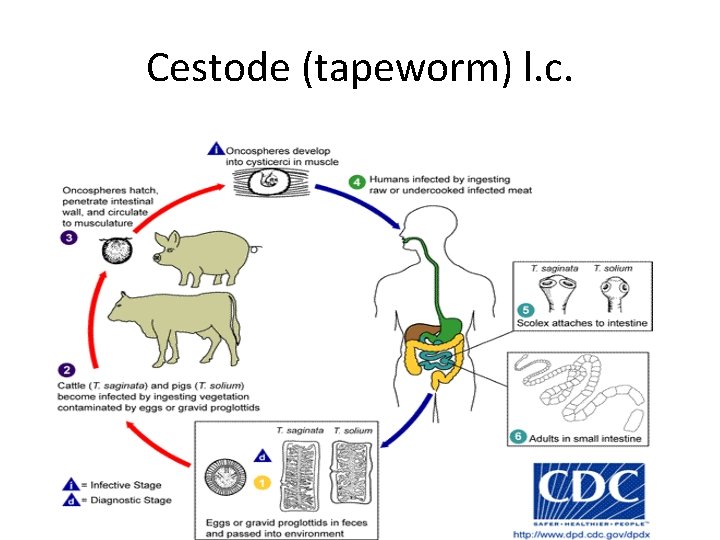
Cestode (tapeworm) l. c.
- Slides: 28