
Radar Quality Control and Quantitative Precipitation Estimation Intercomparison





- Slides: 44
Radar Quality Control and Quantitative Precipitation Estimation Intercomparison Project Status Paul Joe Environment Canada Commission of Instruments, Methods and Observations (CIMO) Upper Air and Remote Sensing Technologies (UA&RST)
Outline • • • Project Concept The Problem Overview of Data Quality Techniques Pre-RQQI Results Status
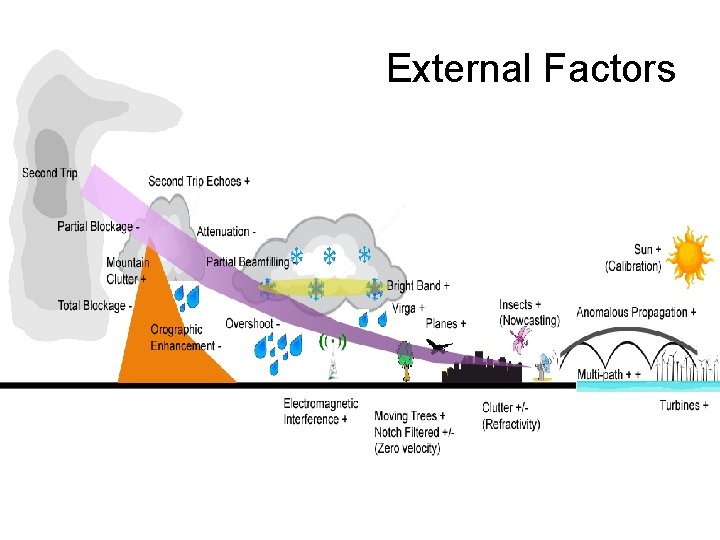
External Factors
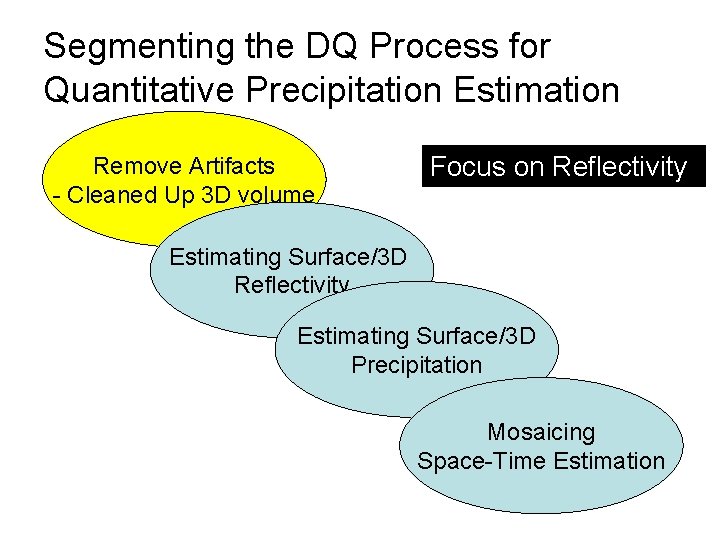
Segmenting the DQ Process for Quantitative Precipitation Estimation Remove Artifacts - Cleaned Up 3 D volume Focus on Reflectivity Estimating Surface/3 D Precipitation Mosaicing Space-Time Estimation
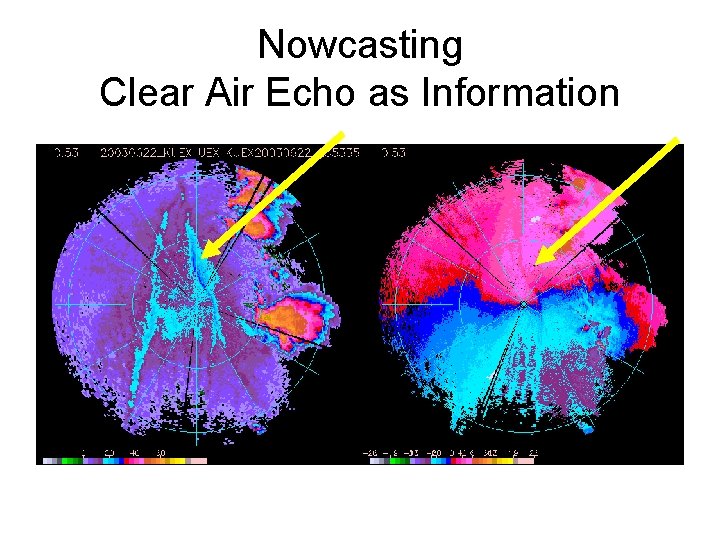
Nowcasting Clear Air Echo as Information
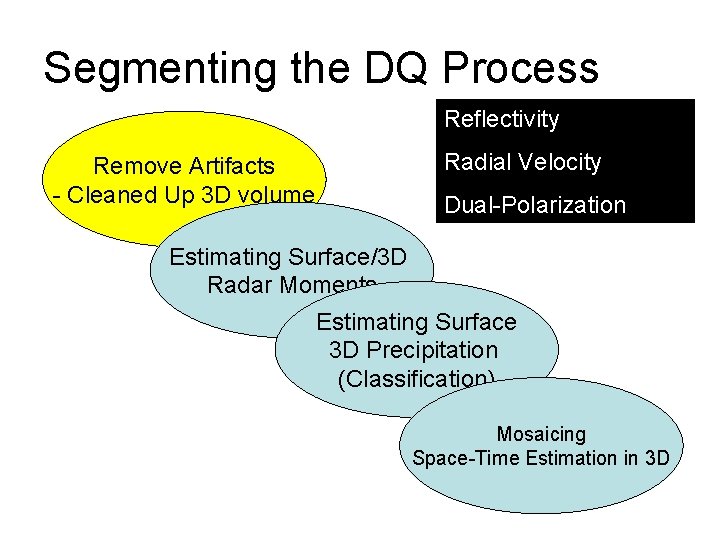
Segmenting the DQ Process Reflectivity Radial Velocity Remove Artifacts - Cleaned Up 3 D volume Dual-Polarization Estimating Surface/3 D Radar Moments Estimating Surface 3 D Precipitation (Classification) Mosaicing Space-Time Estimation in 3 D
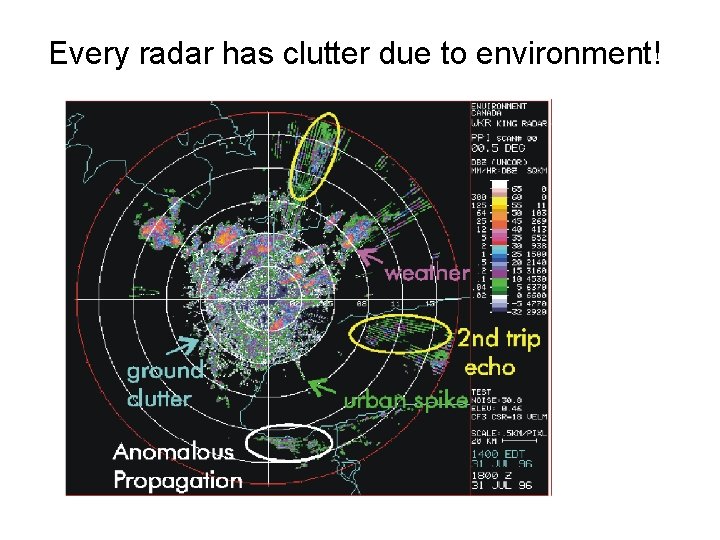
Every radar has clutter due to environment!
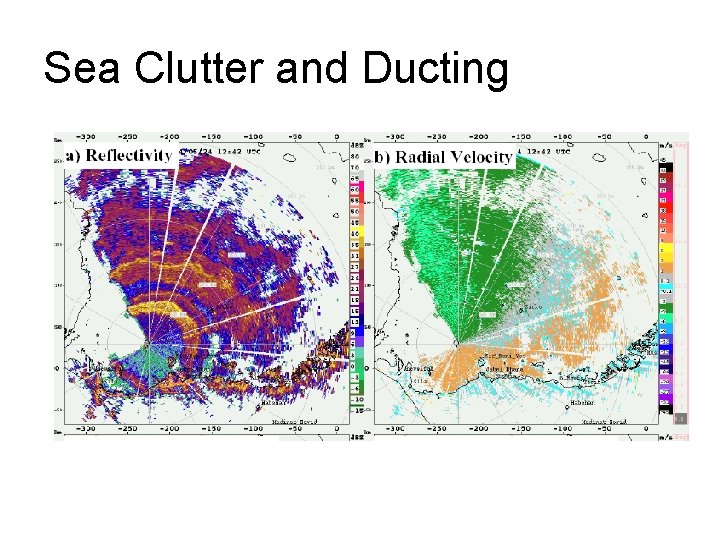
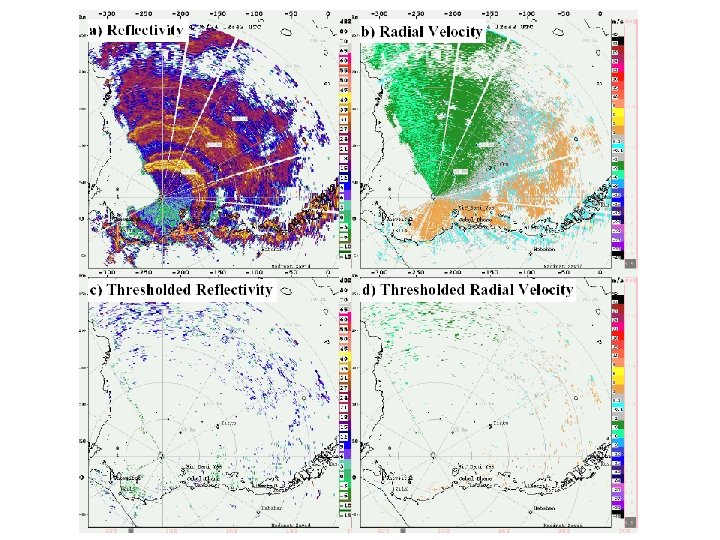
Sea Clutter and Ducting
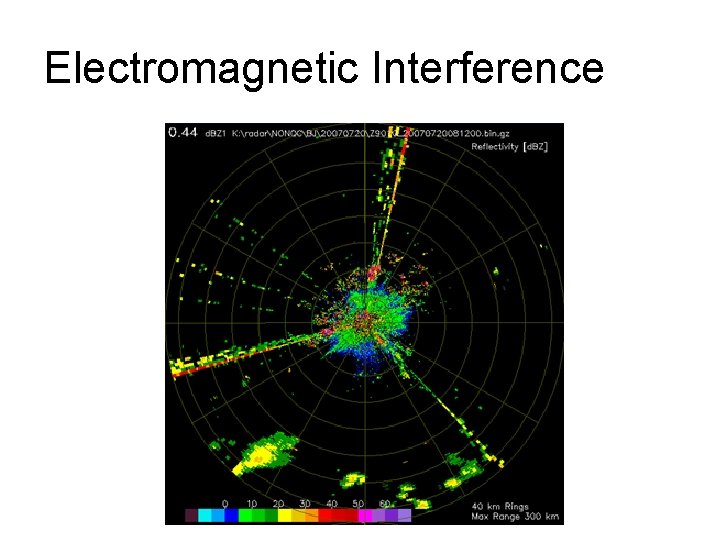
Electromagnetic Interference
Techniques
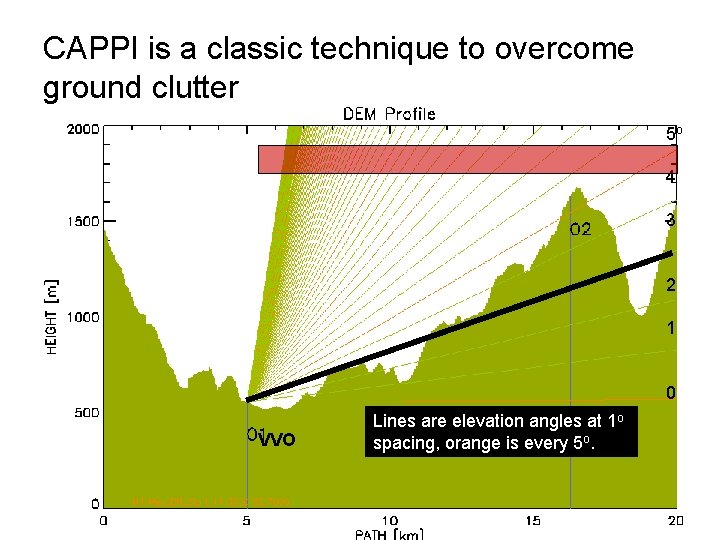
CAPPI is a classic technique to overcome ground clutter 5 o 4 3 2 1 0 VVO Lines are elevation angles at 1 o spacing, orange is every 5 o.
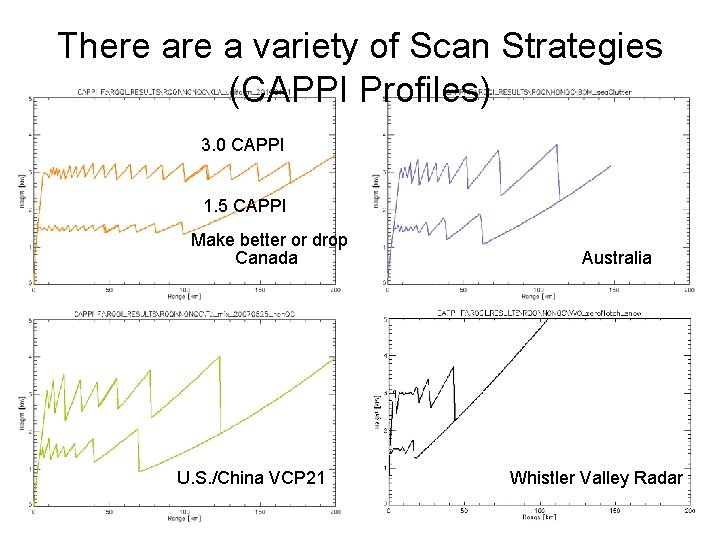
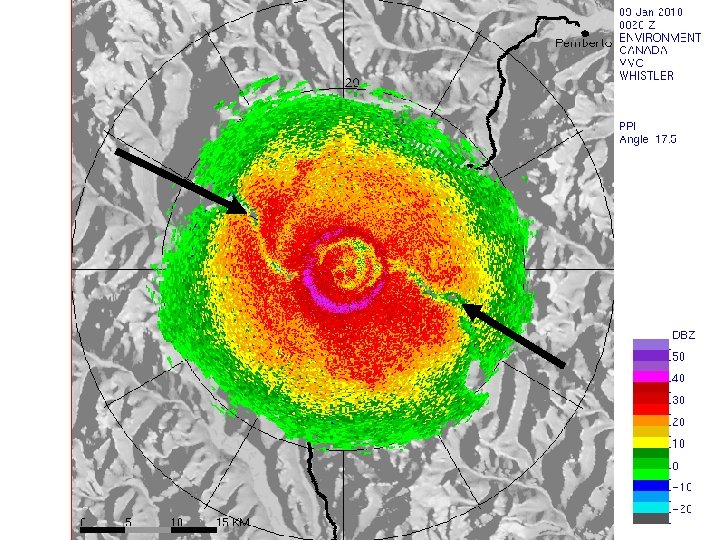
There a variety of Scan Strategies (CAPPI Profiles) 3. 0 CAPPI 1. 5 CAPPI Make better or drop Canada U. S. /China VCP 21 Australia Whistler Valley Radar
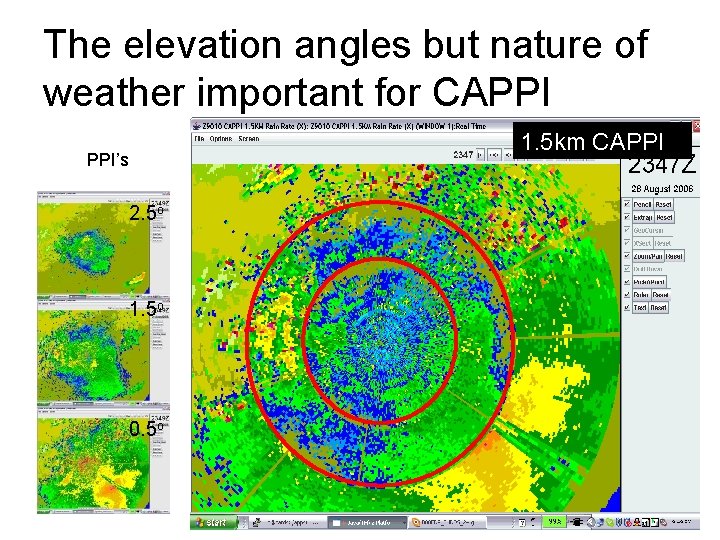
The elevation angles but nature of weather important for CAPPI 1. 5 km CAPPI PPI’s 2. 5 o 1. 5 o 0. 5 o
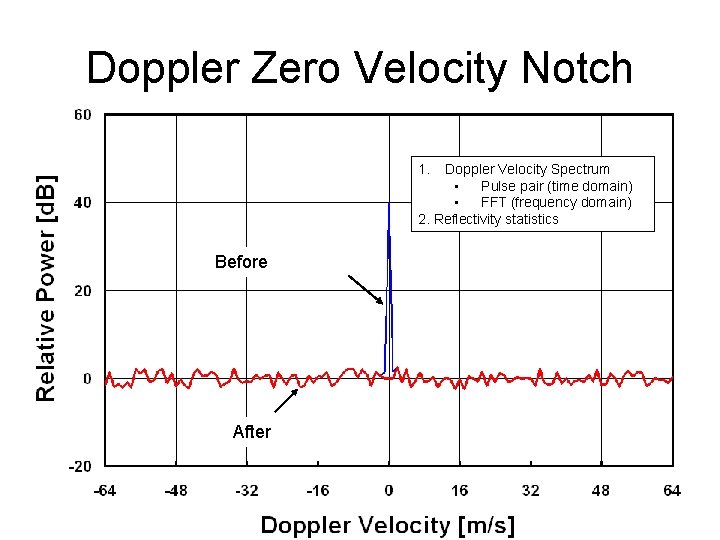
Doppler Zero Velocity Notch 1. Doppler Velocity Spectrum • Pulse pair (time domain) • FFT (frequency domain) 2. Reflectivity statistics Before After
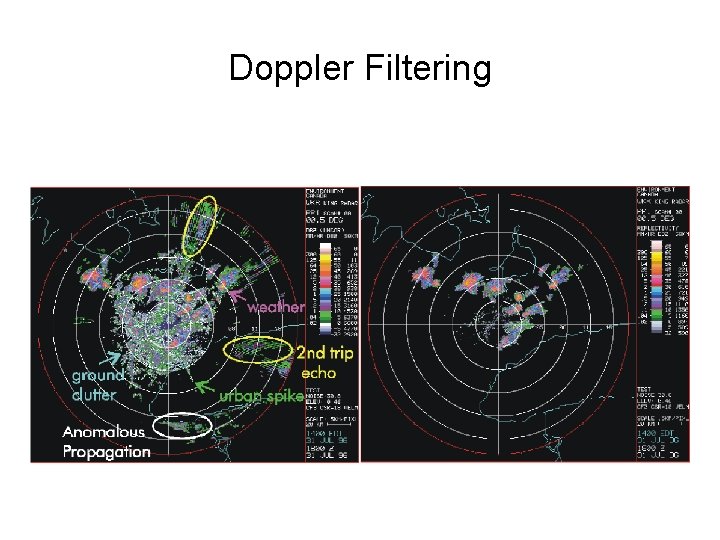
Doppler Filtering
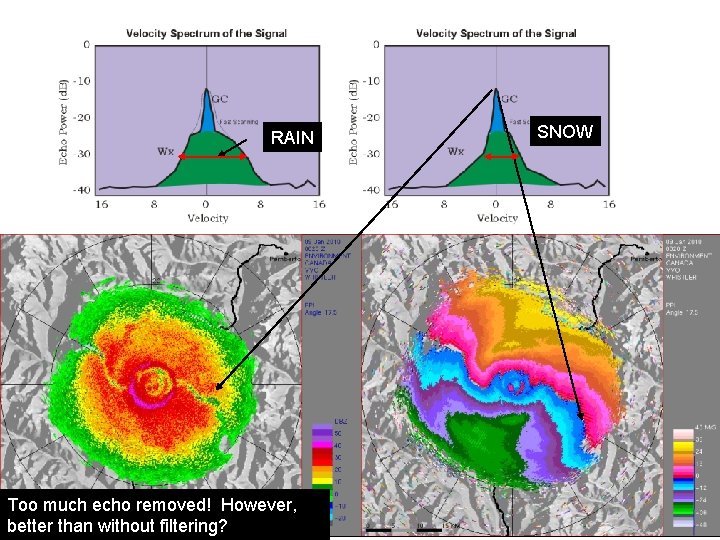
RAIN Too much echo removed! However, better than without filtering? SNOW
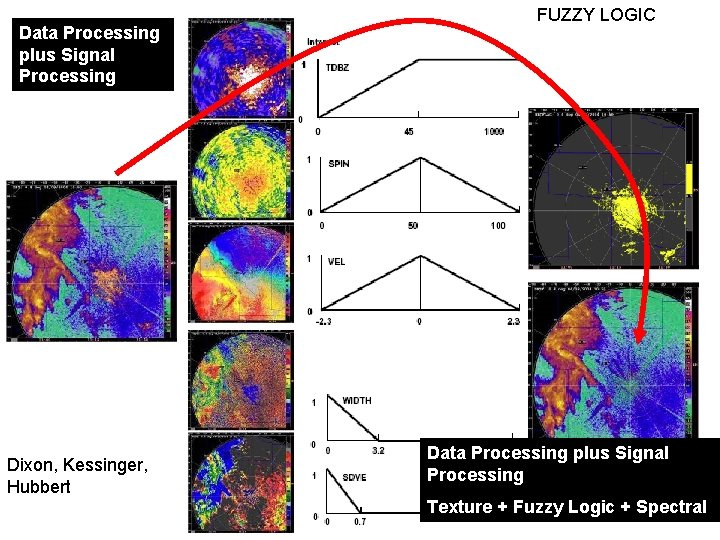
Data Processing plus Signal Processing Dixon, Kessinger, Hubbert FUZZY LOGIC Data Processing plus Signal Processing Texture + Fuzzy Logic + Spectral
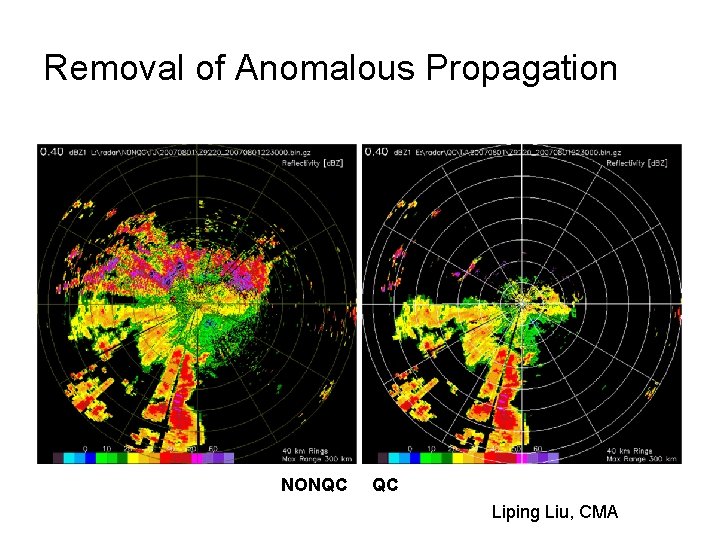
Removal of Anomalous Propagation NONQC QC Liping Liu, CMA
The Metric of Success
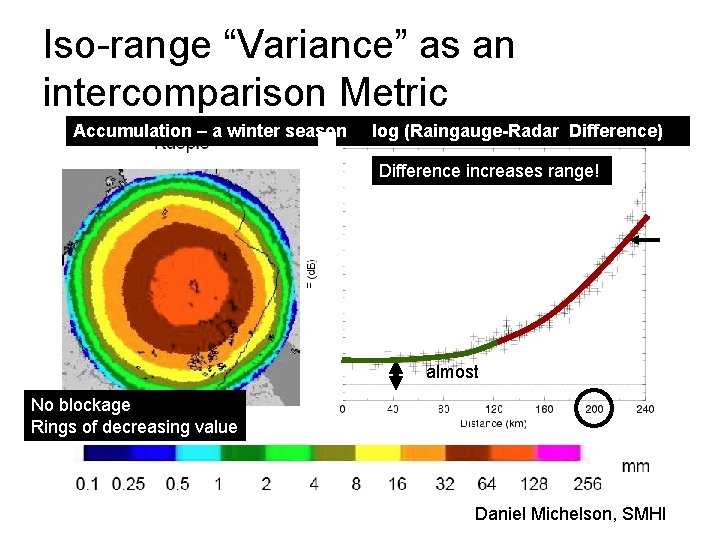
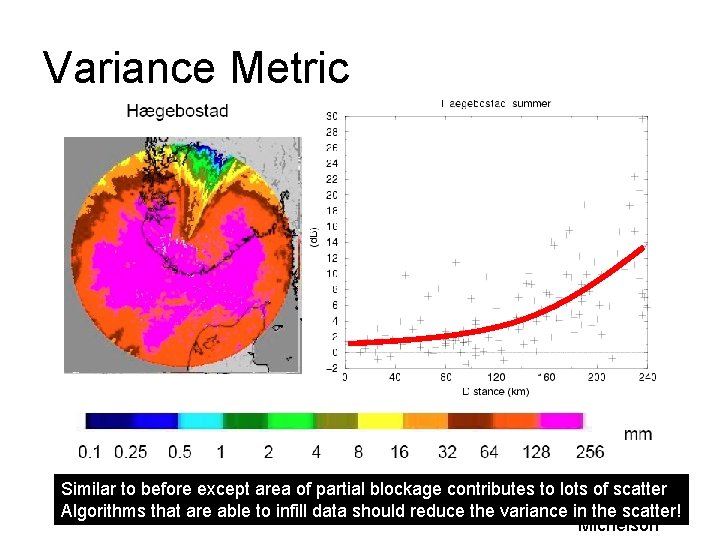
Iso-range “Variance” as an intercomparison Metric Accumulation – a winter season log (Raingauge-Radar Difference) Difference increases range! almost No blockage Rings of decreasing value Daniel Michelson, SMHI
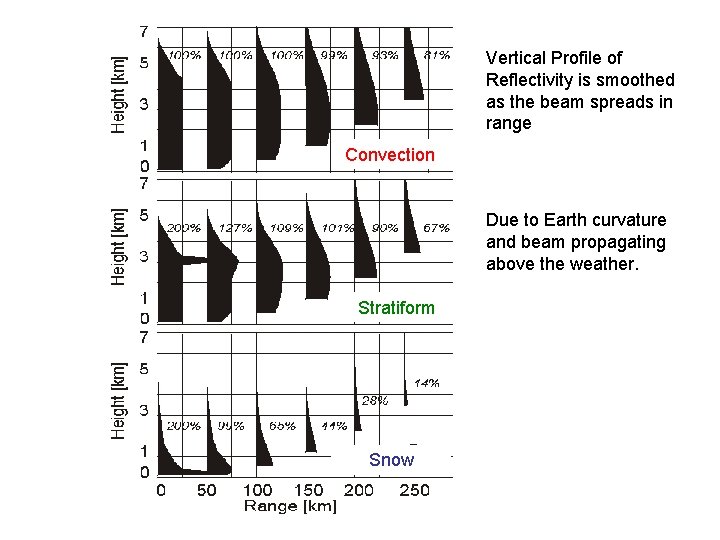
Vertical Profile of Reflectivity is smoothed as the beam spreads in range Convection Due to Earth curvature and beam propagating above the weather. Stratiform Snow
Variance Metric Similar to before except area of partial blockage contributes to lots of scatter Algorithms that are able to infill data should reduce the variance in the scatter! Michelson
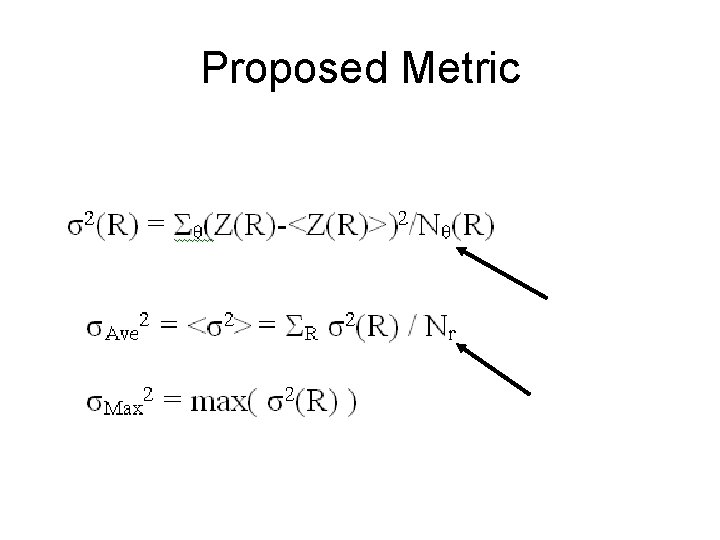
Proposed Metric
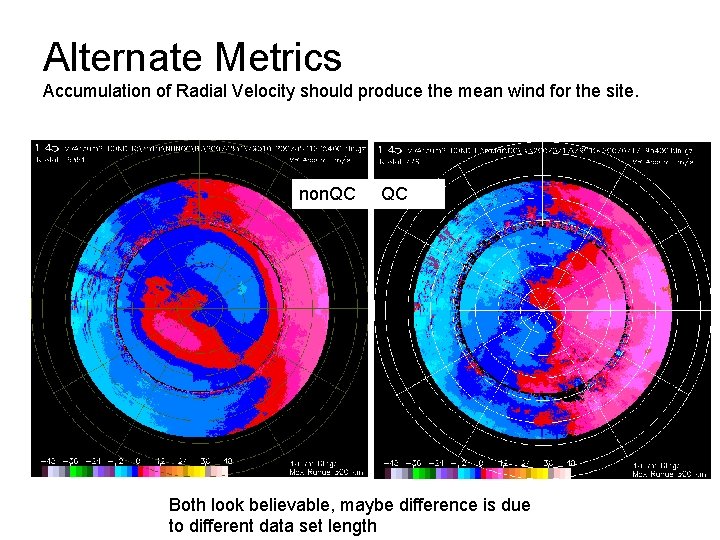
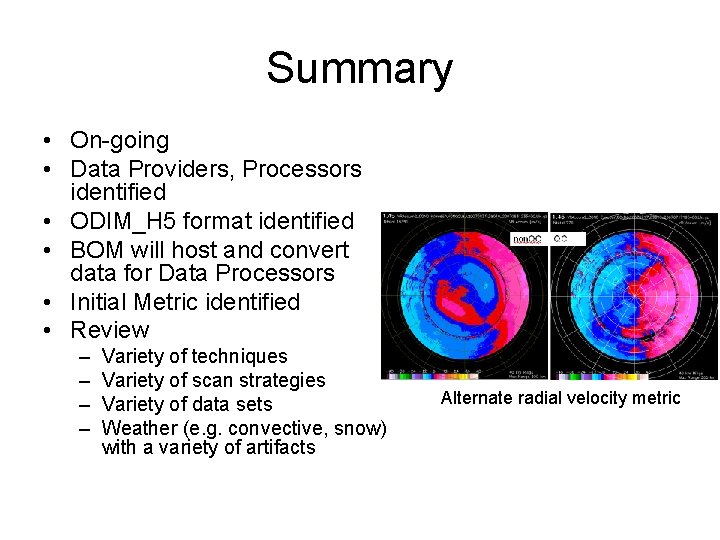
Alternate Metrics Accumulation of Radial Velocity should produce the mean wind for the site. non. QC QC Both look believable, maybe difference is due to different data set length
Modality • Need a variety of techniques • Need a variety of scan strategies • Need a variety of data sets that integrate to a uniform pattern • Need weather with a variety of artifacts
Pilot Study Purpose is to test the assumptions of the project modality -Short data sets for uniformity -Check the interpretation of the metric -Variety of scan strategies, algorithms, etc -Evaluate feasibility
Uniform Fields
Sample Cases • • Uniform with local clutter (XLA) Uniform with partial blocking (WVY) Urban Clutter/Niagara Escarpment (WKR) Strong Anomalous Propagation Echo (TJ 2006) Strong AP with Weather (TJ 2007) Sea Clutter (Sydney AU, Kurnell) Sea Clutter / Multi-path AP (Saudi 2002) Convective Weather with Airplane Tracks - One season (TJ Radar 2007)
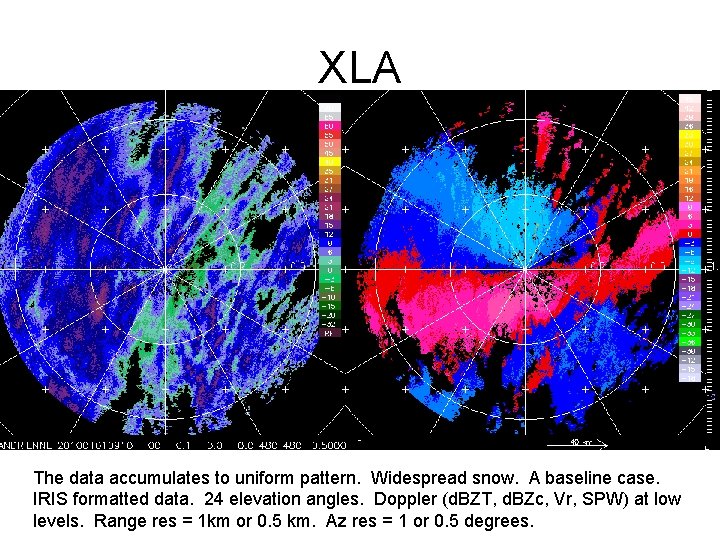
XLA The data accumulates to uniform pattern. Widespread snow. A baseline case. IRIS formatted data. 24 elevation angles. Doppler (d. BZT, d. BZc, Vr, SPW) at low levels. Range res = 1 km or 0. 5 km. Az res = 1 or 0. 5 degrees.
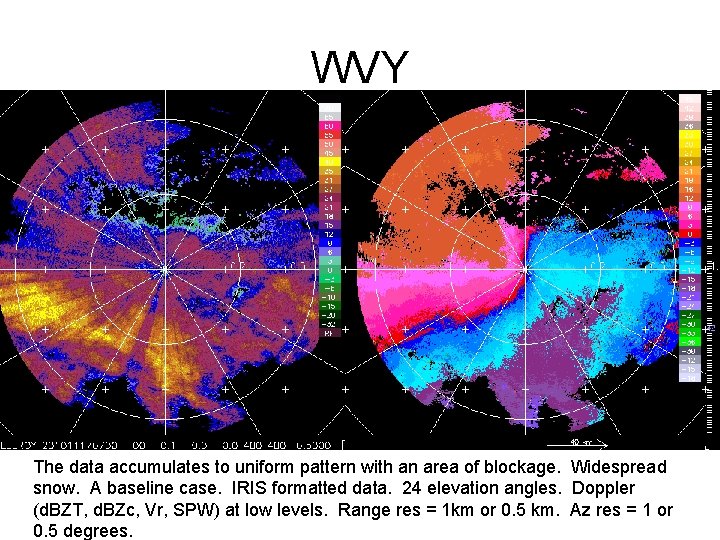
WVY The data accumulates to uniform pattern with an area of blockage. Widespread snow. A baseline case. IRIS formatted data. 24 elevation angles. Doppler (d. BZT, d. BZc, Vr, SPW) at low levels. Range res = 1 km or 0. 5 km. Az res = 1 or 0. 5 degrees.
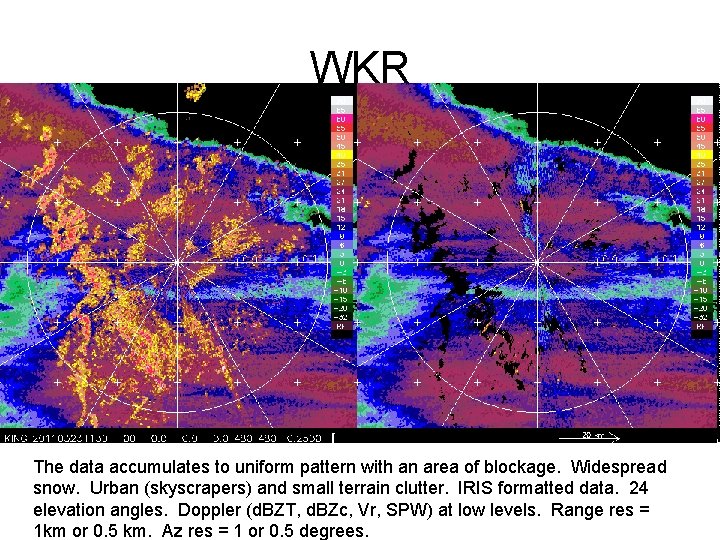
WKR The data accumulates to uniform pattern with an area of blockage. Widespread snow. Urban (skyscrapers) and small terrain clutter. IRIS formatted data. 24 elevation angles. Doppler (d. BZT, d. BZc, Vr, SPW) at low levels. Range res = 1 km or 0. 5 km. Az res = 1 or 0. 5 degrees.
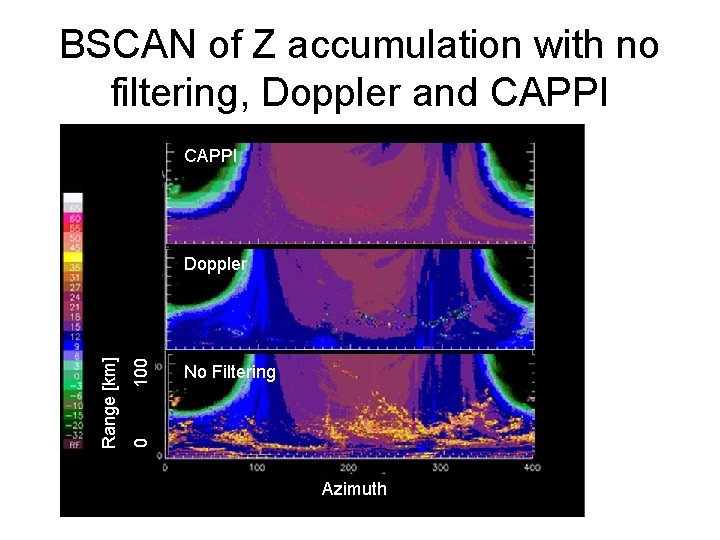
BSCAN of Z accumulation with no filtering, Doppler and CAPPI 100 No Filtering 0 Range [km] Doppler Azimuth
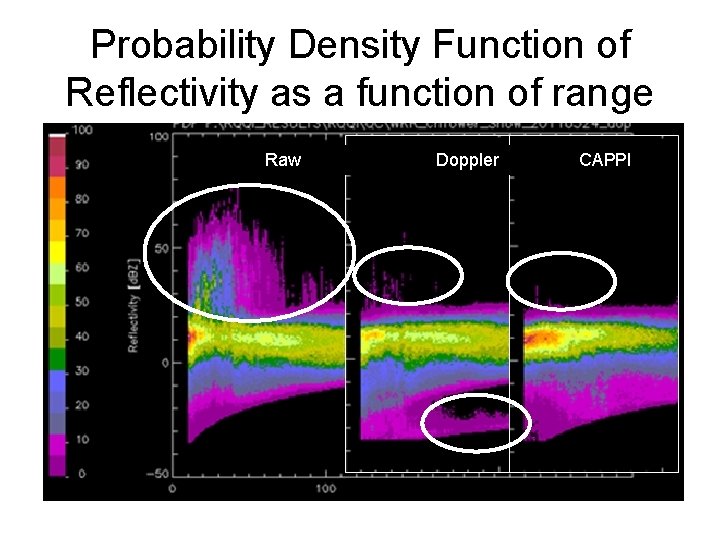
Probability Density Function of Reflectivity as a function of range Raw Doppler CAPPI
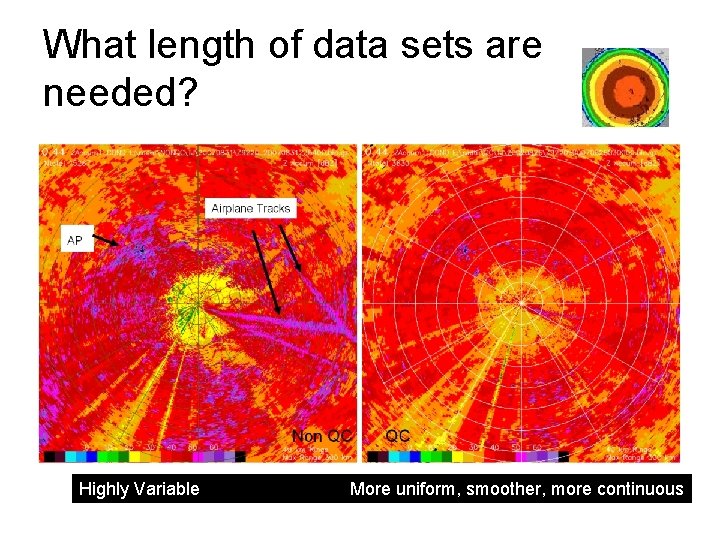
What length of data sets are needed? Highly Variable More uniform, smoother, more continuous
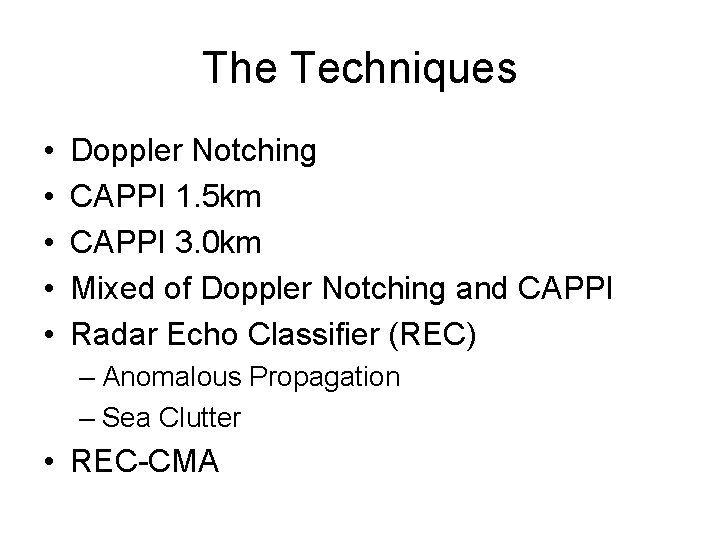
The Techniques • • • Doppler Notching CAPPI 1. 5 km CAPPI 3. 0 km Mixed of Doppler Notching and CAPPI Radar Echo Classifier (REC) – Anomalous Propagation – Sea Clutter • REC-CMA
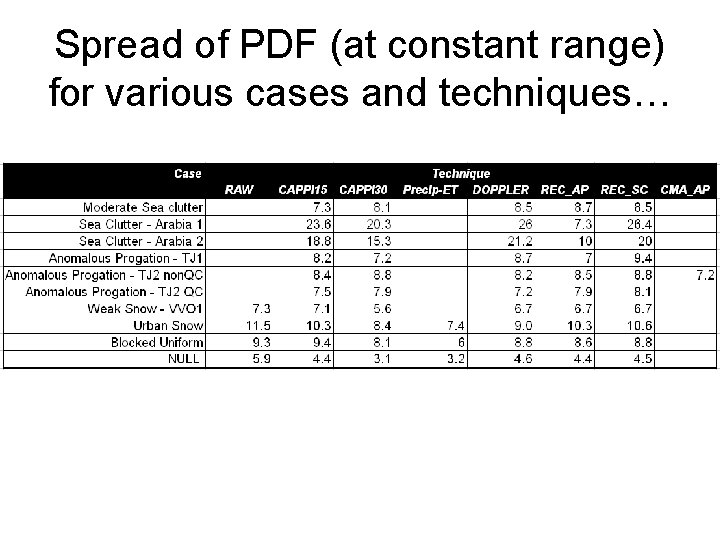
The Statistic
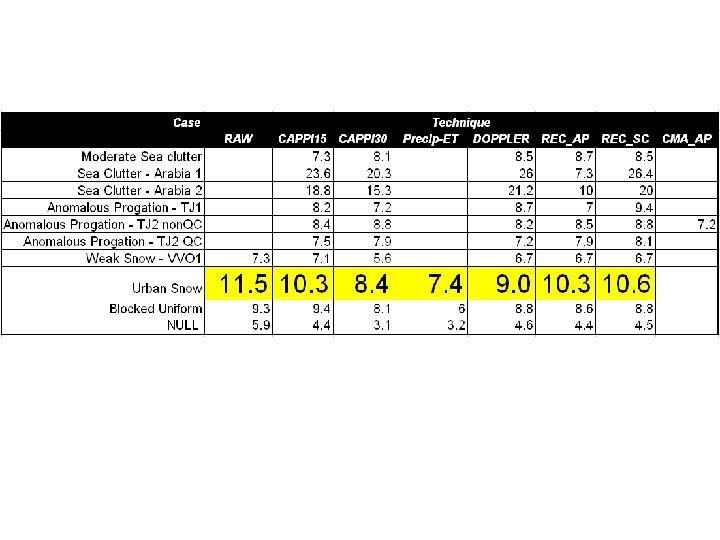
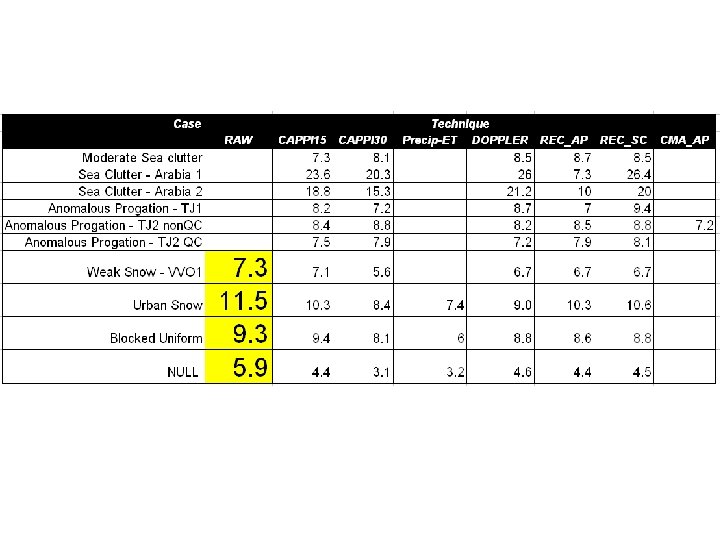
Spread of PDF (at constant range) for various cases and techniques…
Status
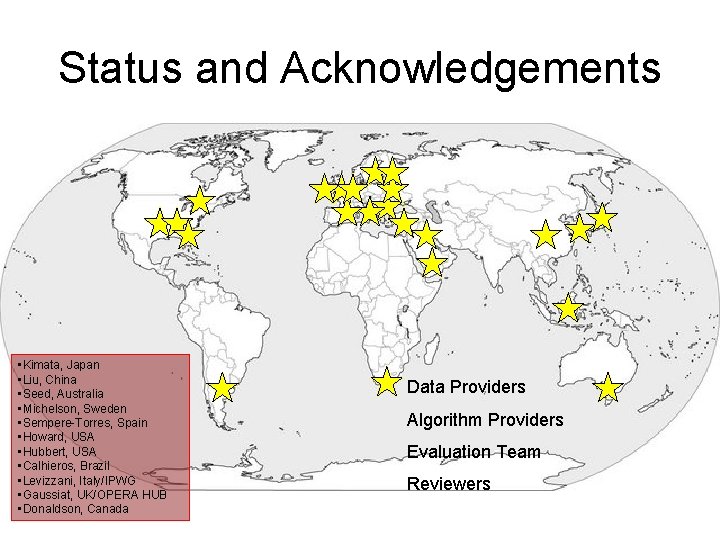
Status and Acknowledgements • Kimata, Japan • Liu, China • Seed, Australia • Michelson, Sweden • Sempere-Torres, Spain • Howard, USA • Hubbert, USA • Calhieros, Brazil • Levizzani, Italy/IPWG • Gaussiat, UK/OPERA HUB • Donaldson, Canada Data Providers Algorithm Providers Evaluation Team Reviewers
Summary • On-going • Data Providers, Processors identified • ODIM_H 5 format identified • BOM will host and convert data for Data Processors • Initial Metric identified • Review – – Variety of techniques Variety of scan strategies Variety of data sets Weather (e. g. convective, snow) with a variety of artifacts Alternate radial velocity metric