
Radar Modeling Cloud observation attenuation case 3 radars

Radar Modeling Cloud observation, attenuation case 3 radars data fusion Leonid Tolstoy, UMass-UPRM Collaborative Ph. D. Student Sandra Cruz-Pol, Ph. D.

Approach Modeled area observed by radar with parameters: n Area: 100 x 100 pixels n Beamwidth: 2 deg, n Range gate width: 2 pixels n (1 pixel ≈ 1 km) Range Gate
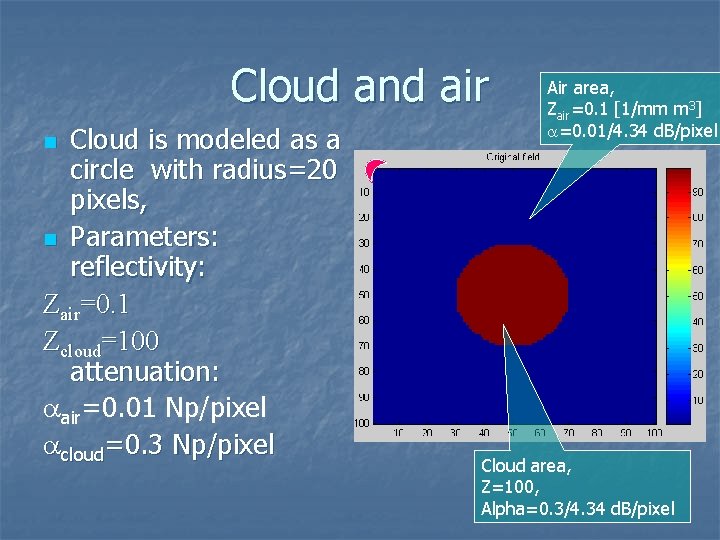
Cloud and air Cloud is modeled as a circle with radius=20 pixels, n Parameters: reflectivity: Zair=0. 1 Zcloud=100 attenuation: aair=0. 01 Np/pixel acloud=0. 3 Np/pixel n Air area, Zair=0. 1 [1/mm m 3] a=0. 01/4. 34 d. B/pixel Cloud area, Z=100, Alpha=0. 3/4. 34 d. B/pixel
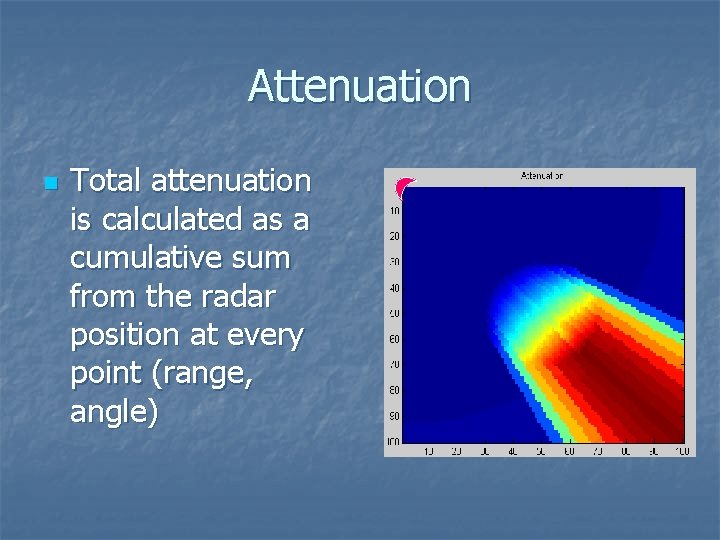
Attenuation n Total attenuation is calculated as a cumulative sum from the radar position at every point (range, angle)
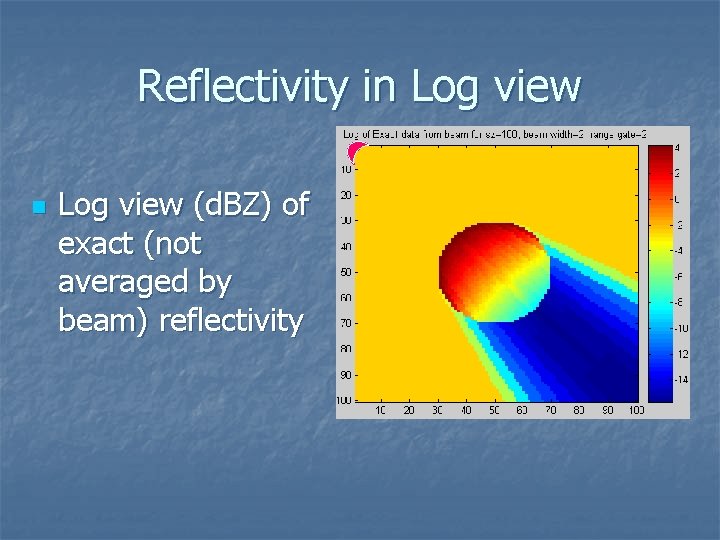
Reflectivity in Log view (d. BZ) of exact (not averaged by beam) reflectivity
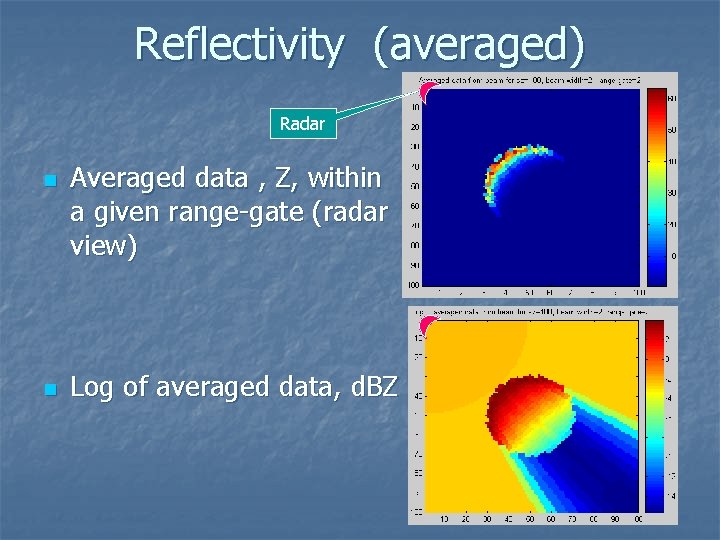
Reflectivity (averaged) Radar n n Averaged data , Z, within a given range-gate (radar view) Log of averaged data, d. BZ
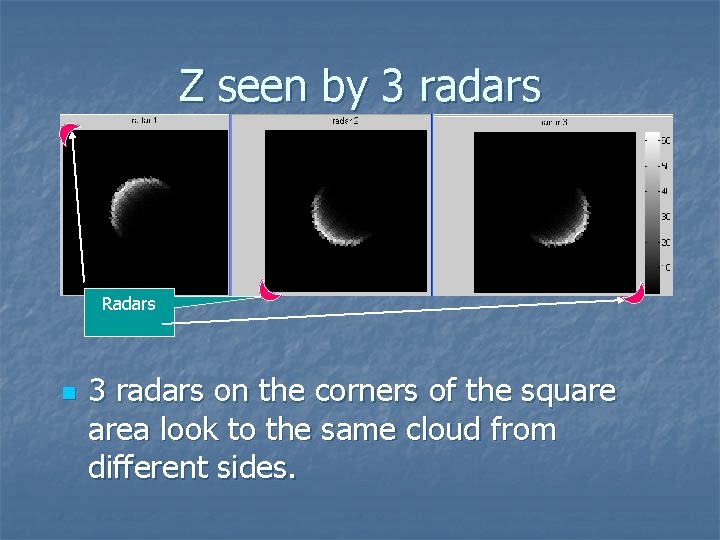
Z seen by 3 radars Radars n 3 radars on the corners of the square area look to the same cloud from different sides.
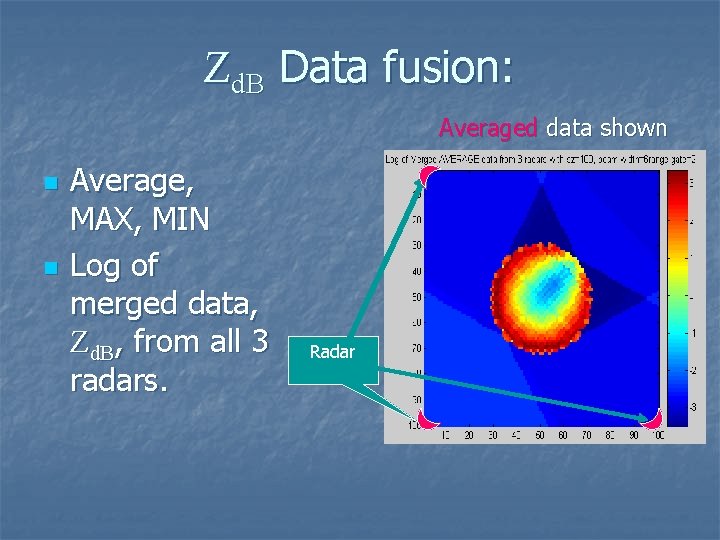
Zd. B Data fusion: Averaged data shown n n Average, MAX, MIN Log of merged data, Zd. B, from all 3 radars. Radar
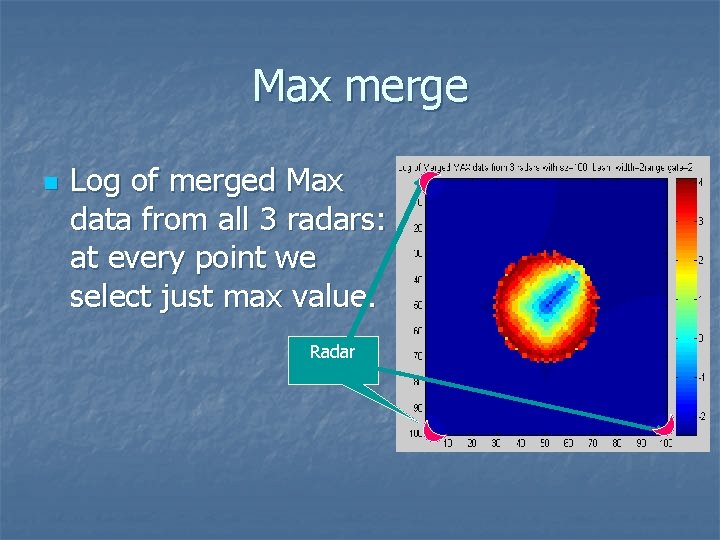
Max merge n Log of merged Max data from all 3 radars: at every point we select just max value. Radar
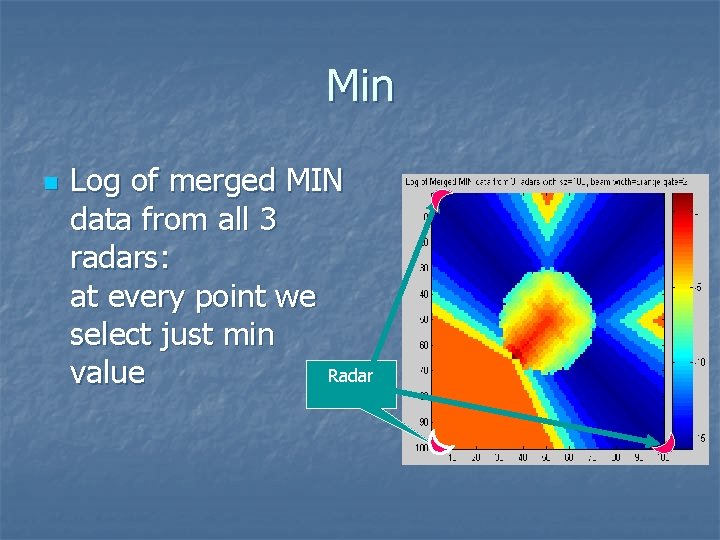
Min n Log of merged MIN data from all 3 radars: at every point we select just min Radar value
Conclusions n n n Averaging data from three radars looking at same cloud provides with better estimate than using max or min for data fusion. Need to add 3 rd dimension (elevation angle) Run with different cloud/air parameter conditions.
- Slides: 11