
RAD TECH A WEEK 2 FINAL RADIOGRAPHIC EQUIPMENT




- Slides: 104
RAD TECH A WEEK 2 (FINAL) RADIOGRAPHIC EQUIPMENT Spring 2011 1
Game Plan • Identify generic components of the radiographic equipment • Describe various planes of x-ray tube and table movement • Discuss contrast and density – Exposure Factors 2
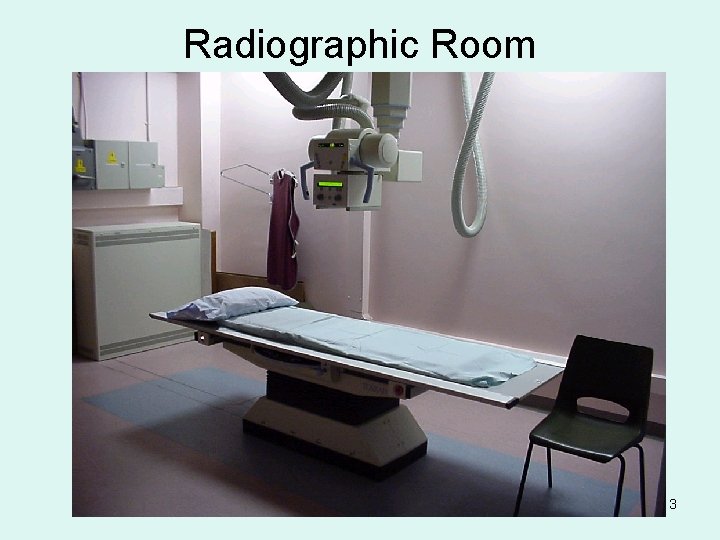
Radiographic Room 3
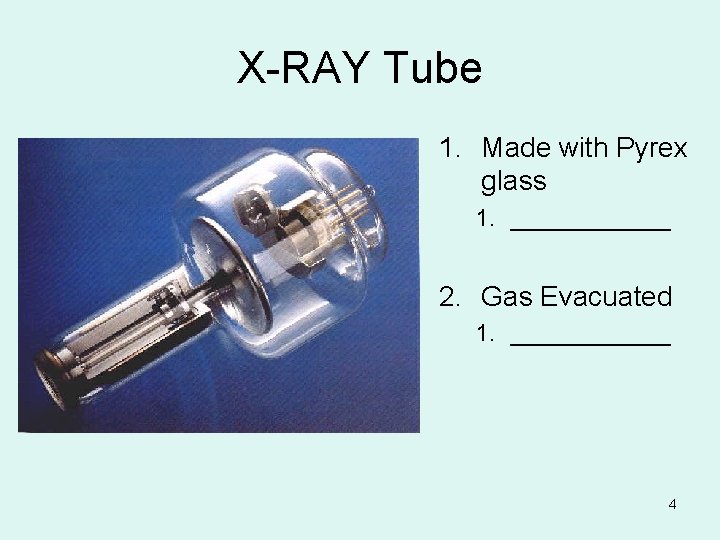
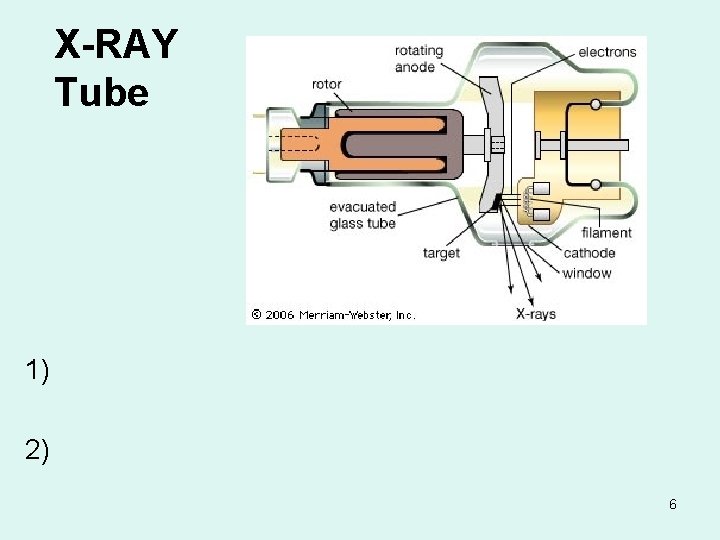
X-RAY Tube 1. Made with Pyrex glass 1. ______ 2. Gas Evacuated 1. ______ 4
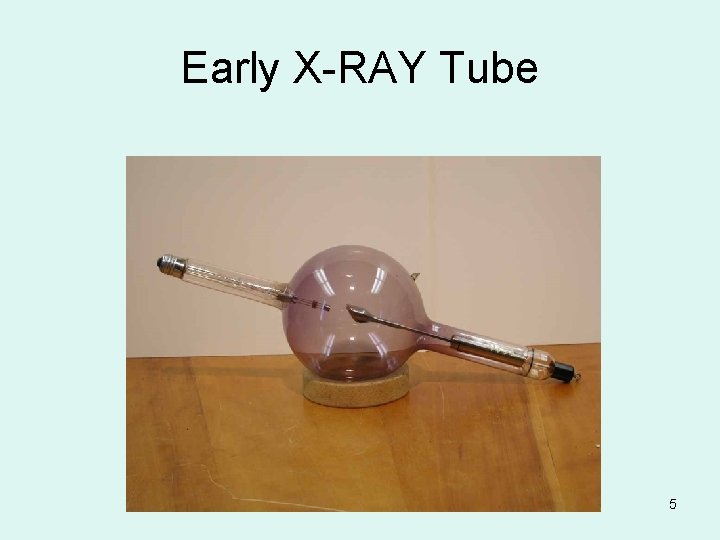
Early X-RAY Tube 5
X-RAY Tube 1) 2) 6
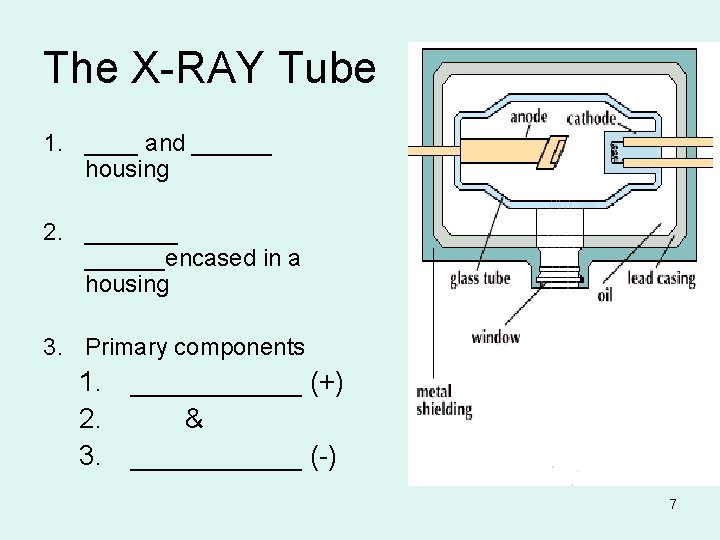
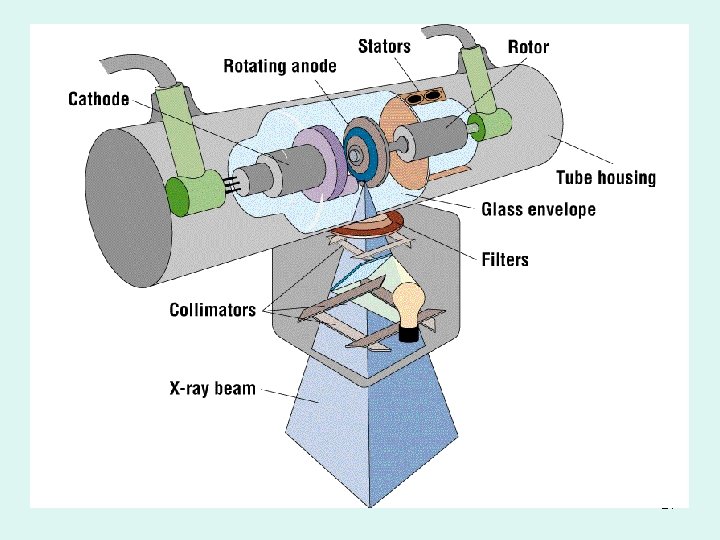
The X-RAY Tube 1. ____ and ______ housing 2. _______encased in a housing 3. Primary components 1. ______ (+) 2. & 3. ______ (-) 7
8
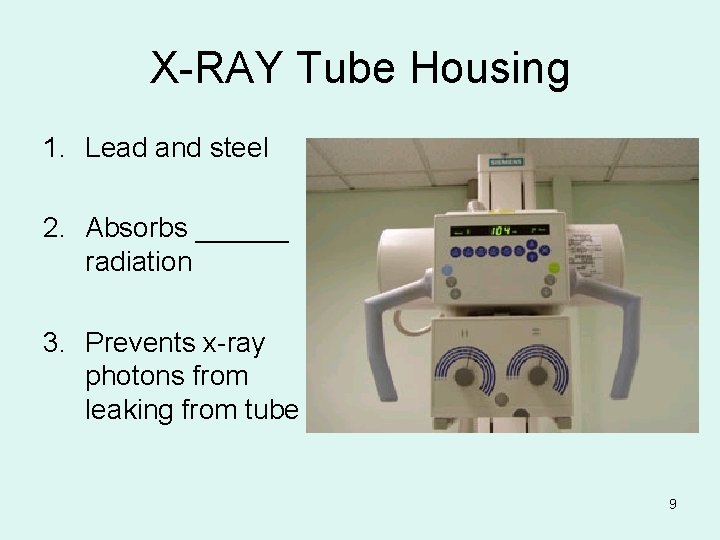
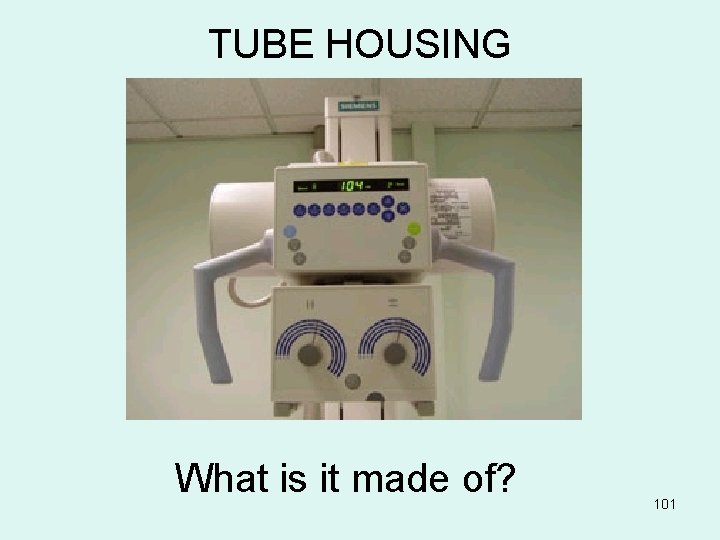
X-RAY Tube Housing 1. Lead and steel 2. Absorbs ______ radiation 3. Prevents x-ray photons from leaking from tube 9
X-Ray Machine • Purpose: 1. provide a specific current (m. A) & voltage (k. Vp) to the x-ray tube 1. _____ controls the energy of the x-ray photons 2. _____ controls the number of x-ray photons 2. convert electrical energy to electromagnetic energy (x- ray photons) 10
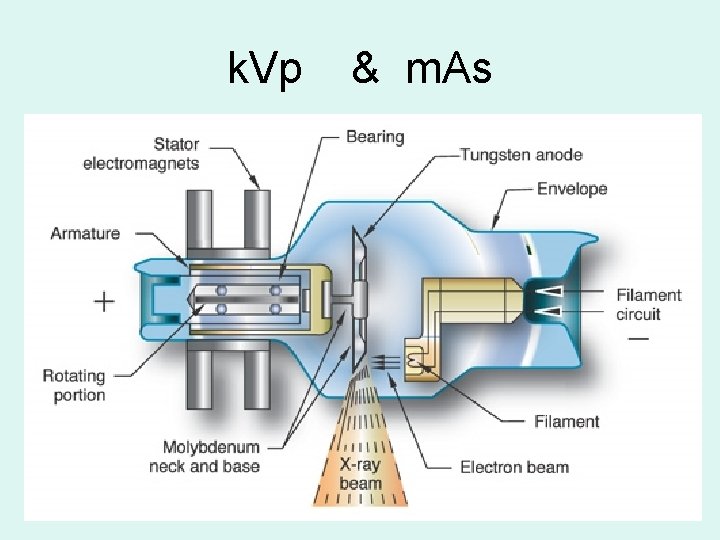
k. Vp & m. As 11
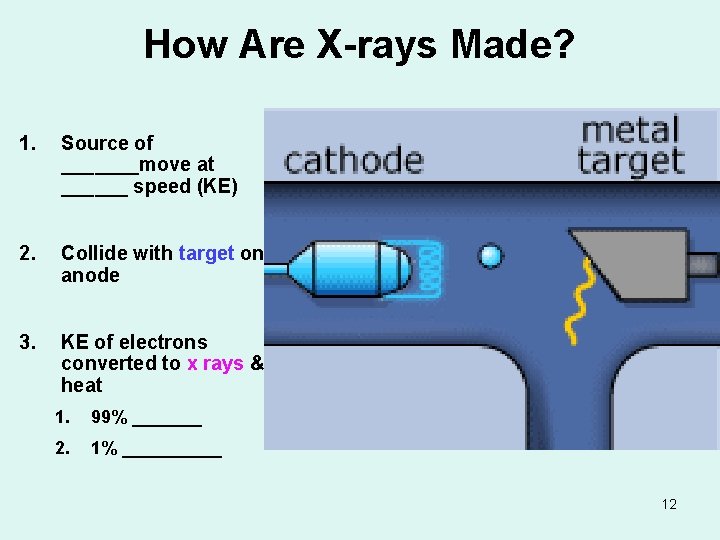
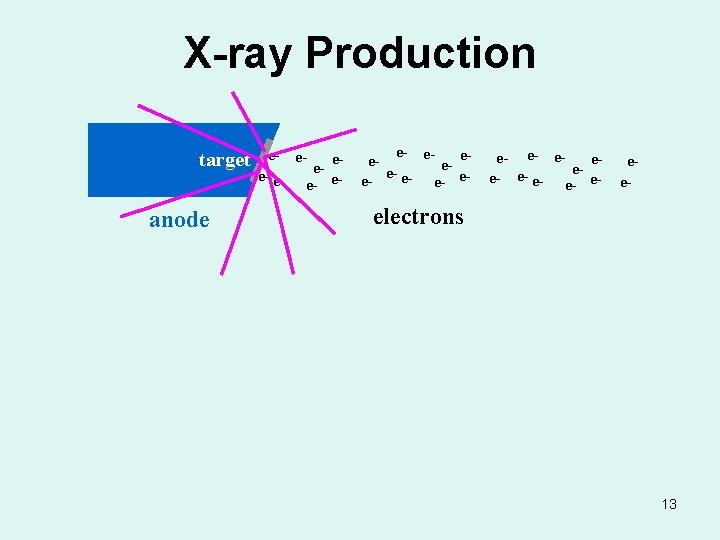
How Are X-rays Made? 1. Source of _______move at ______ speed (KE) 2. Collide with target on anode 3. KE of electrons converted to x rays & heat 1. 99% _______ 2. 1% _____ 12
X-ray Production e- eee- e- eetarget eee- e- anode e- eeeee- e- eeee- e- e- electrons 13
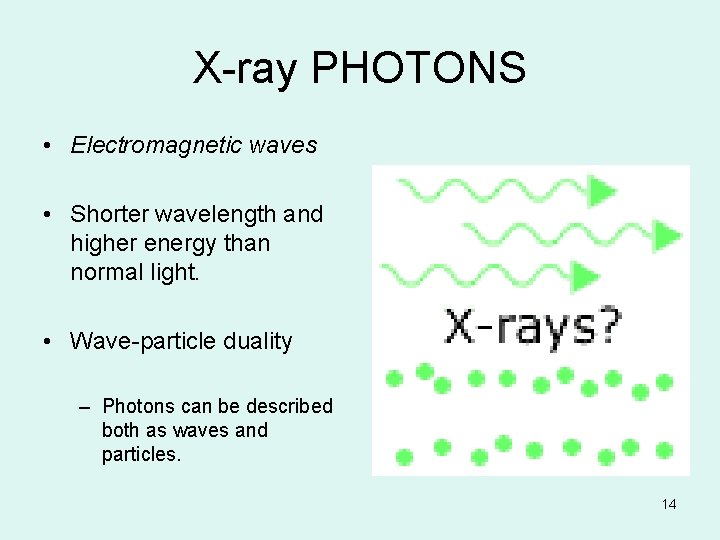
X-ray PHOTONS • Electromagnetic waves • Shorter wavelength and higher energy than normal light. • Wave-particle duality – Photons can be described both as waves and particles. 14
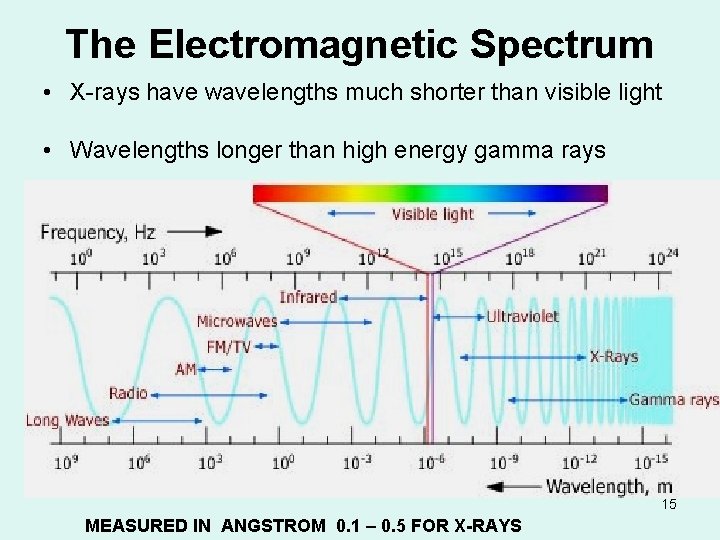
The Electromagnetic Spectrum • X-rays have wavelengths much shorter than visible light • Wavelengths longer than high energy gamma rays 15 MEASURED IN ANGSTROM 0. 1 – 0. 5 FOR X-RAYS
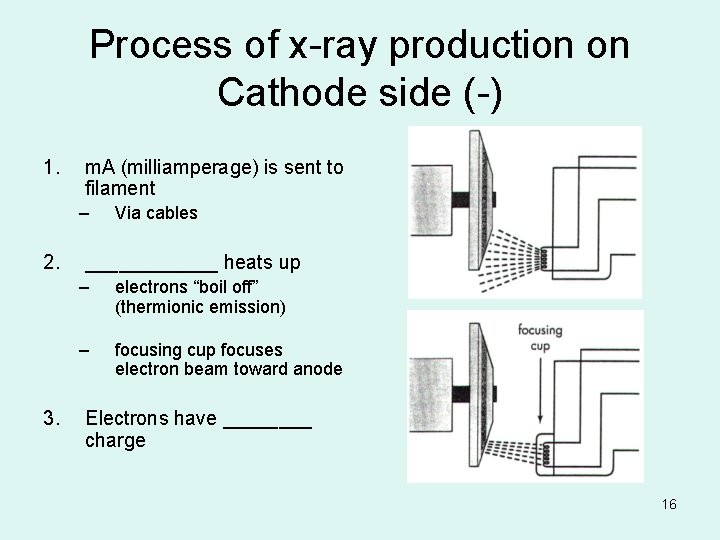
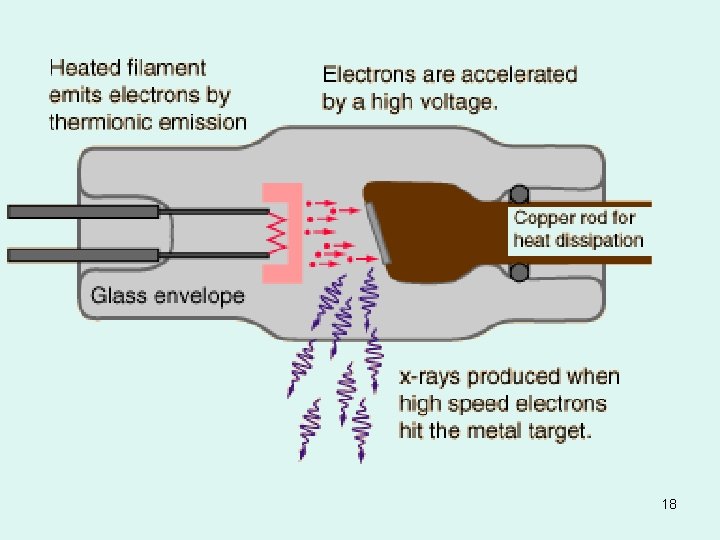
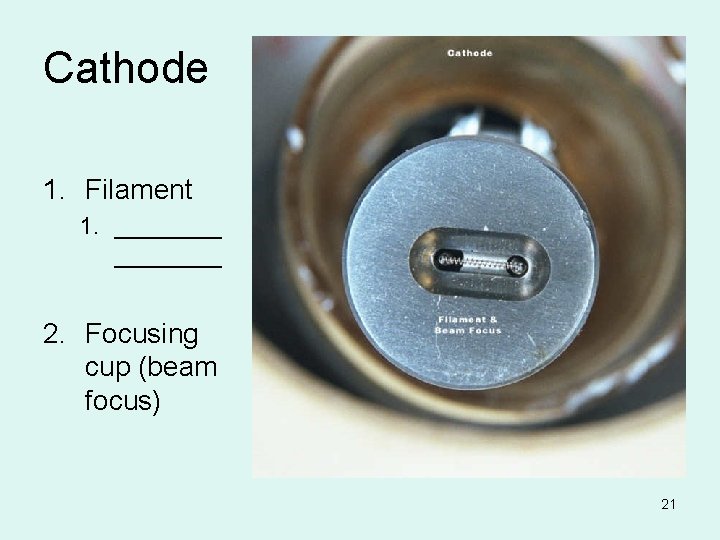
Process of x-ray production on Cathode side (-) 1. m. A (milliamperage) is sent to filament – 2. 3. Via cables ______ heats up – electrons “boil off” (thermionic emission) – focusing cup focuses electron beam toward anode Electrons have ____ charge 16
Process of x-ray production on Anode side (+) 1. Positive voltage (k. Vp) is applied 2. Causes electrons to _____ towards anode – Laws of attraction 3. Electrons “slam into” target of anode – suddenly stopped. 4. ___________ARE CREATED 17
18
TO PRODUCE X-RAYS YOU NEED • A SOURCE OF ELECTRONS • A FORCE TO MOVE THEM QUICKLY • SOMETHING TO STOP THEM SUDDENLY 19
Cathode
Cathode 1. Filament 1. ________ 2. Focusing cup (beam focus) 21
Anode
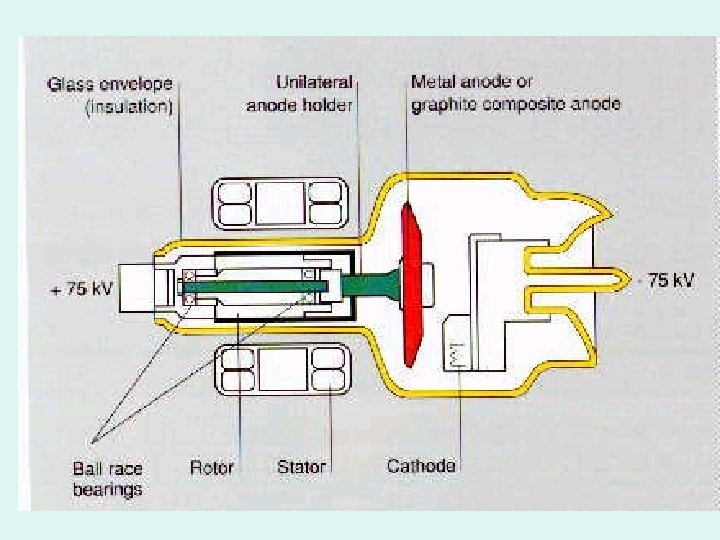
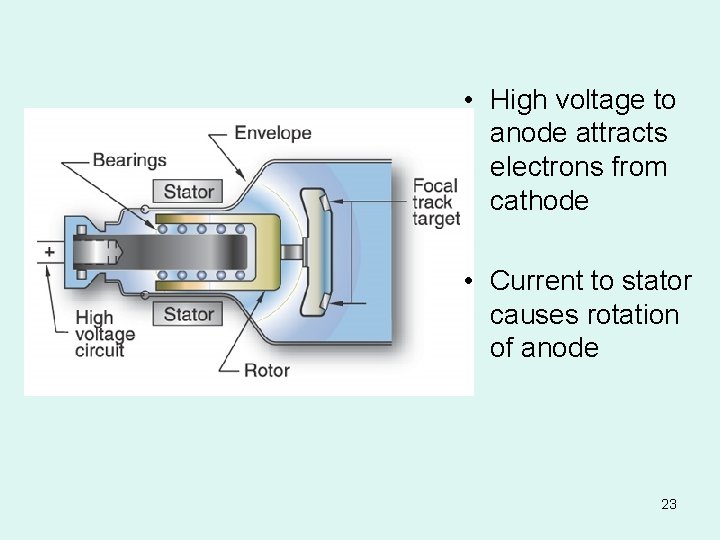
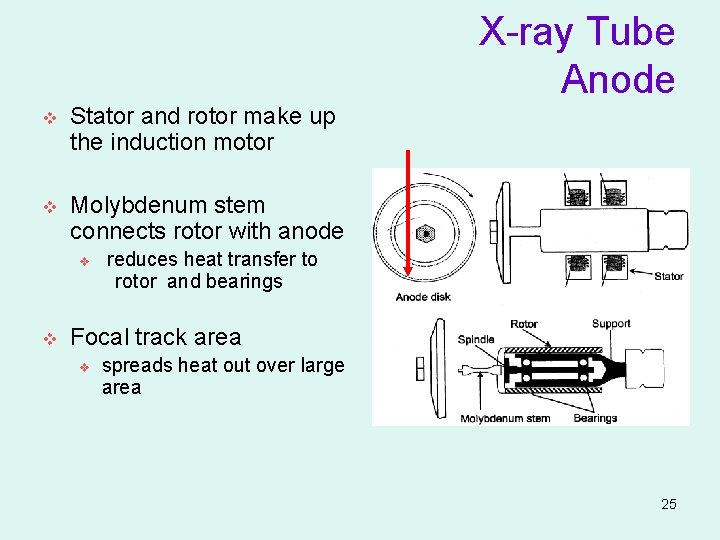
• High voltage to anode attracts electrons from cathode • Current to stator causes rotation of anode 23
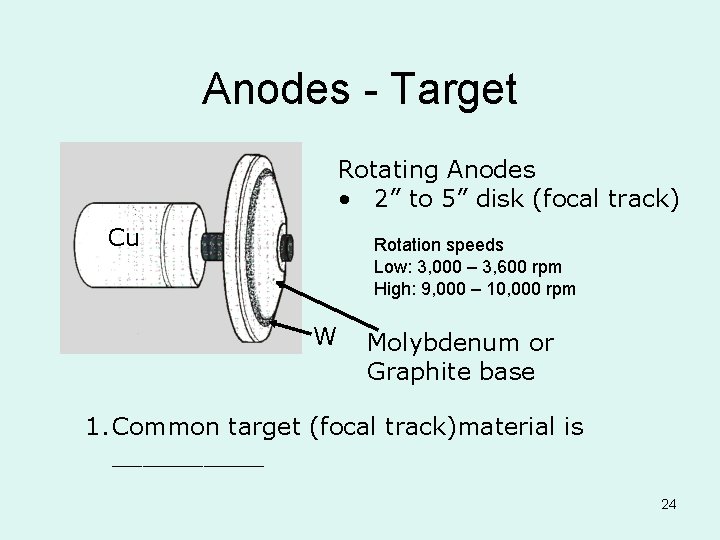
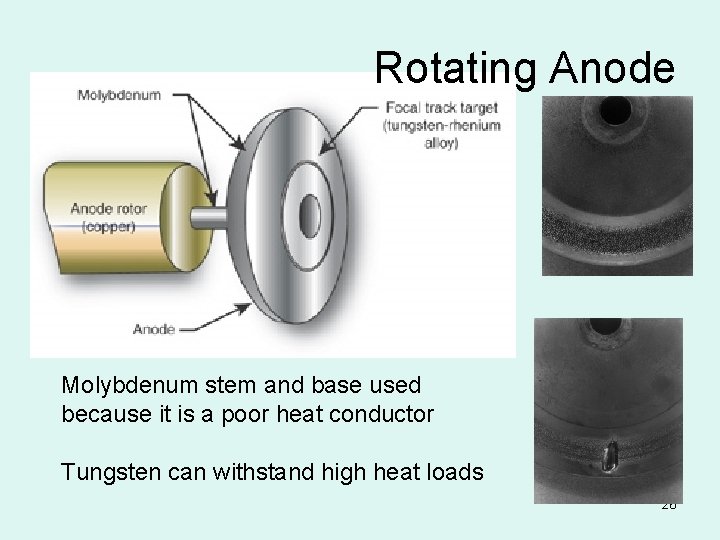
Anodes - Target Rotating Anodes • 2” to 5” disk (focal track) Cu Rotation speeds Low: 3, 000 – 3, 600 rpm High: 9, 000 – 10, 000 rpm W Molybdenum or Graphite base 1. Common target (focal track)material is _____ 24
X-ray Tube Anode v Stator and rotor make up the induction motor v Molybdenum stem connects rotor with anode v v reduces heat transfer to rotor and bearings Focal track area v spreads heat out over large area 25
Rotating Anode Molybdenum stem and base used because it is a poor heat conductor Tungsten can withstand high heat loads 26
27
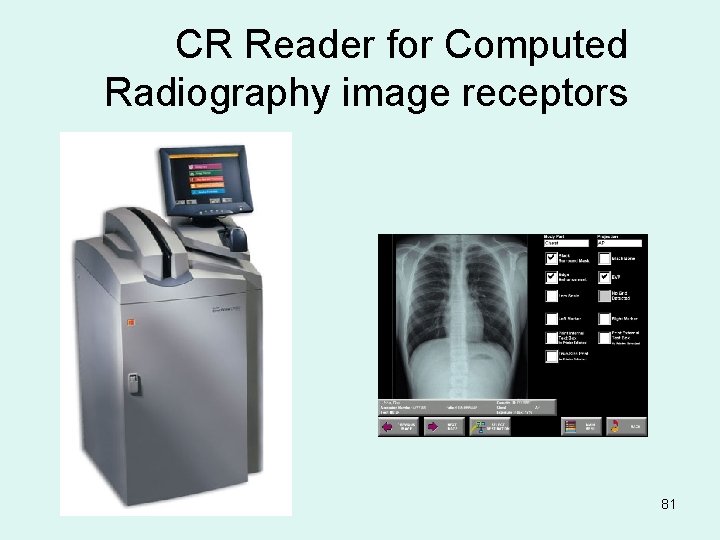
Ancillary Equipment l l l l l 28 Table Tube supports Grids Collimators View boxes and viewing computers Control console Darkroom Processors and Readers Misc Equipment
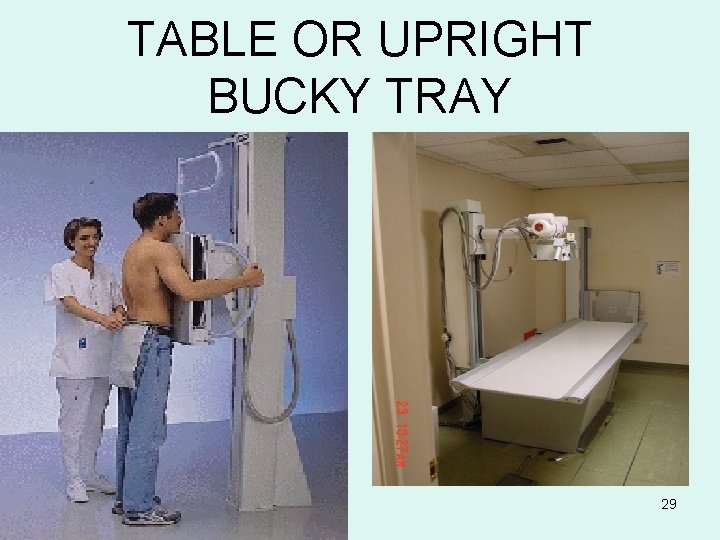
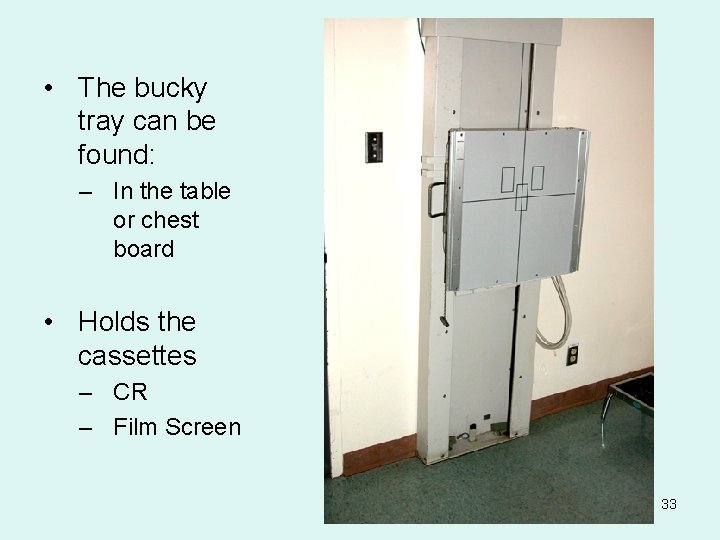
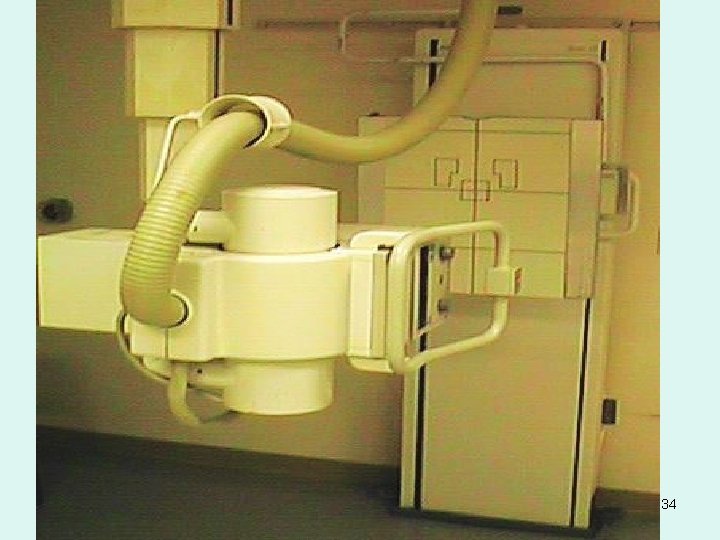
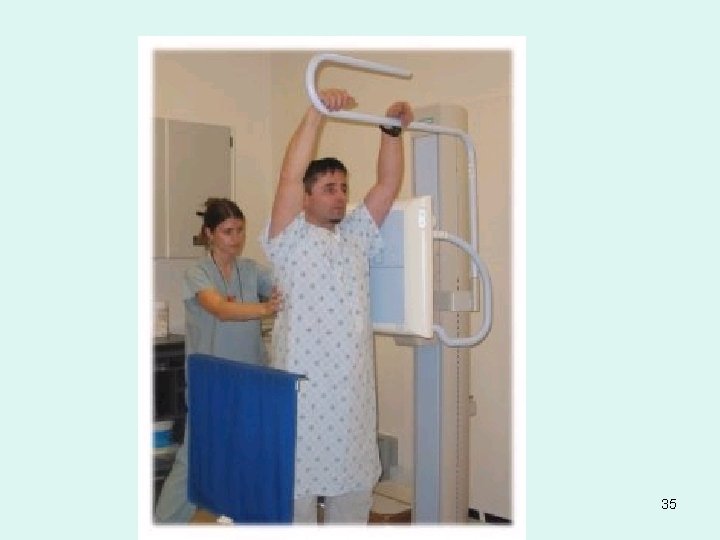
TABLE OR UPRIGHT BUCKY TRAY 29
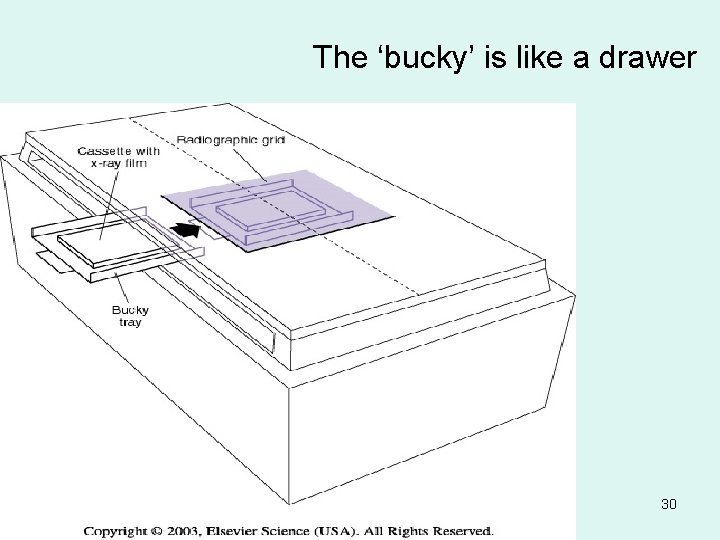
The ‘bucky’ is like a drawer 30
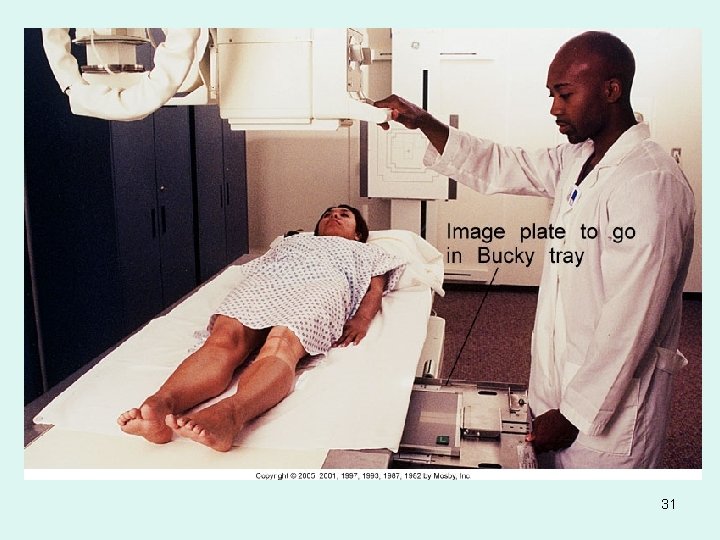
31
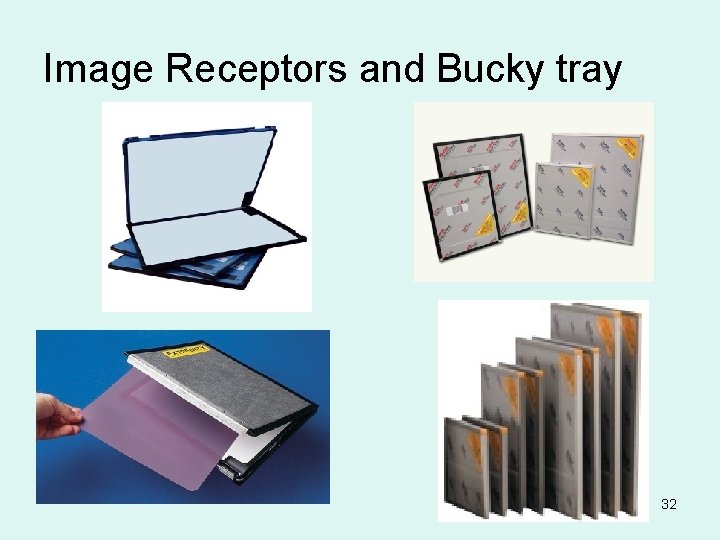
Image Receptors and Bucky tray 32
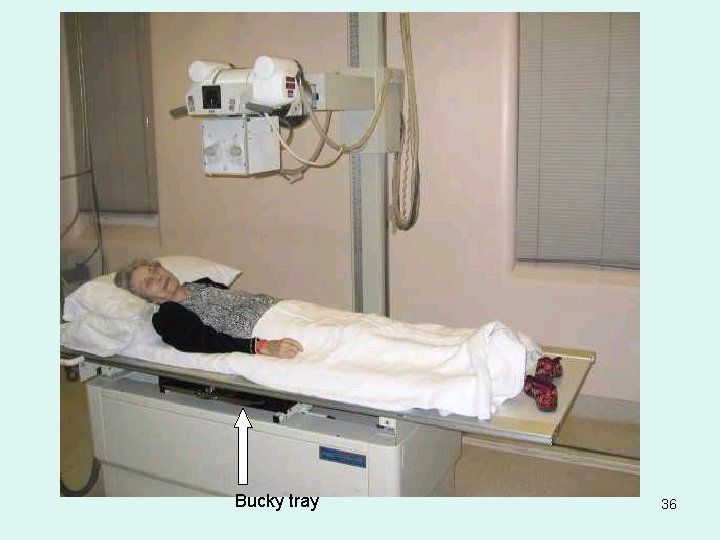
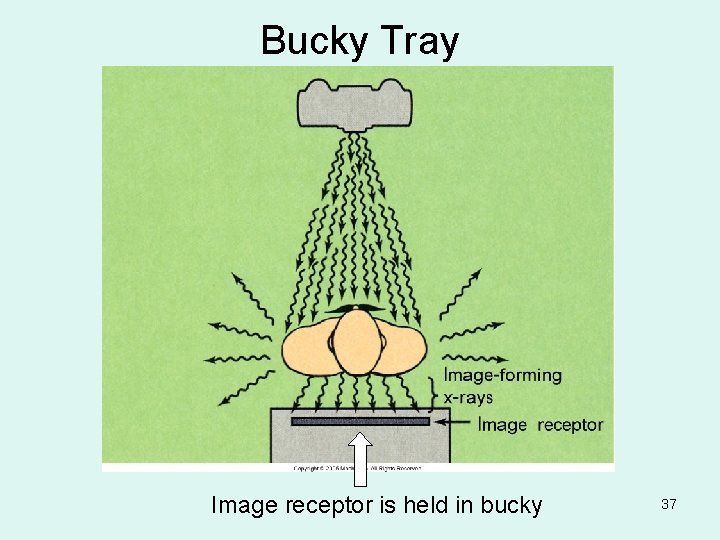
• The bucky tray can be found: – In the table or chest board • Holds the cassettes – CR – Film Screen 33
34
35
Bucky tray 36
Bucky Tray Image receptor is held in bucky 37
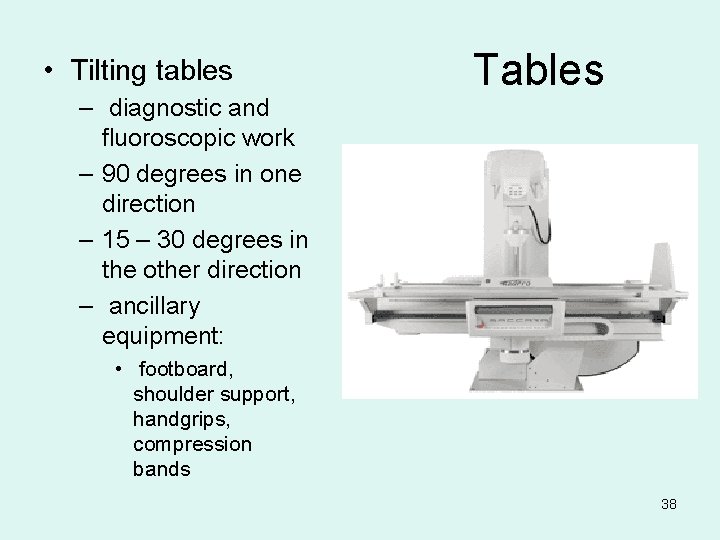
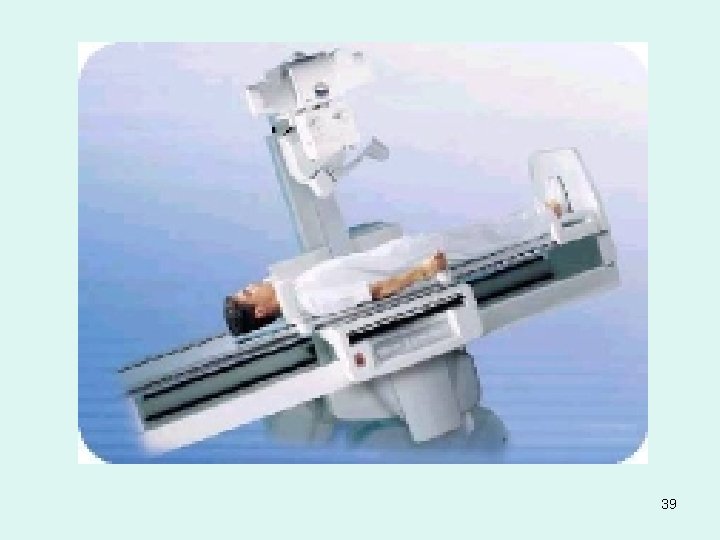
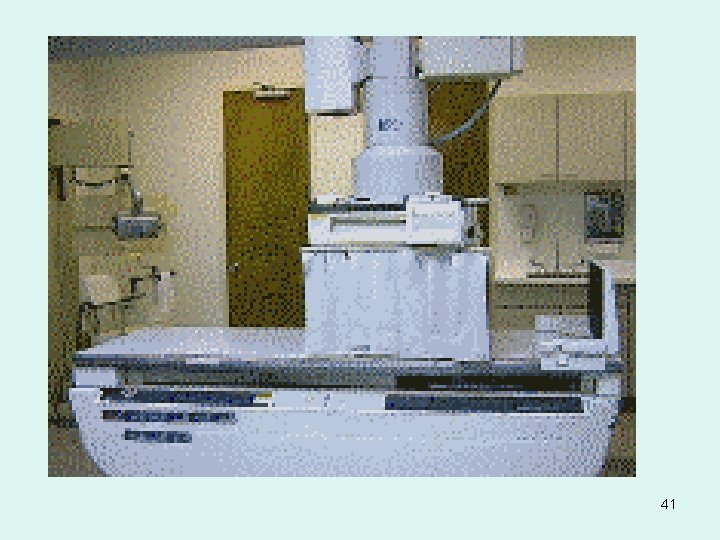
• Tilting tables – diagnostic and fluoroscopic work – 90 degrees in one direction – 15 – 30 degrees in the other direction – ancillary equipment: Tables • footboard, shoulder support, handgrips, compression bands 38
39
40
41
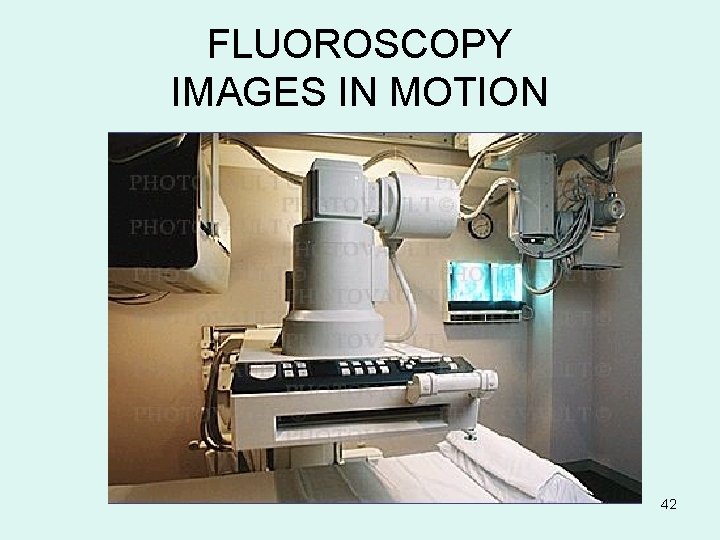
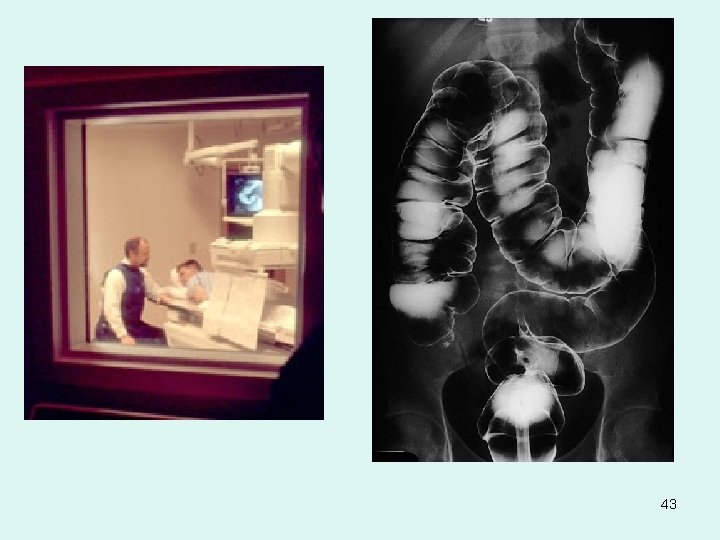
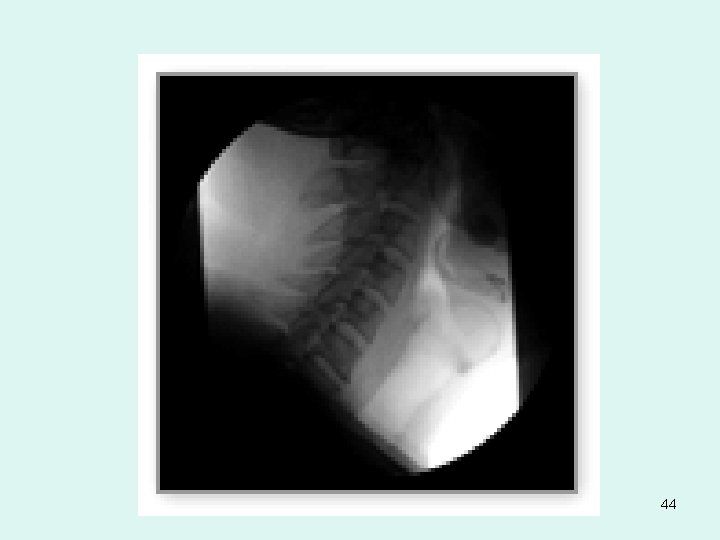
FLUOROSCOPY IMAGES IN MOTION 42
43
44
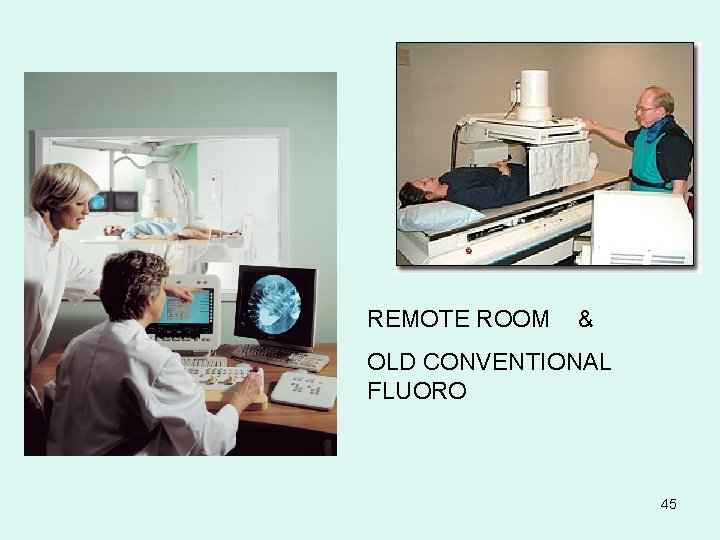
REMOTE ROOM & OLD CONVENTIONAL FLUORO 45
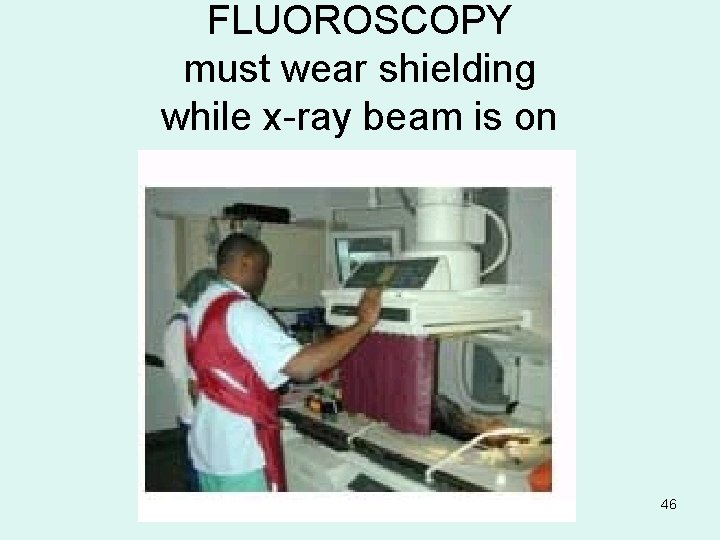
FLUOROSCOPY must wear shielding while x-ray beam is on 46
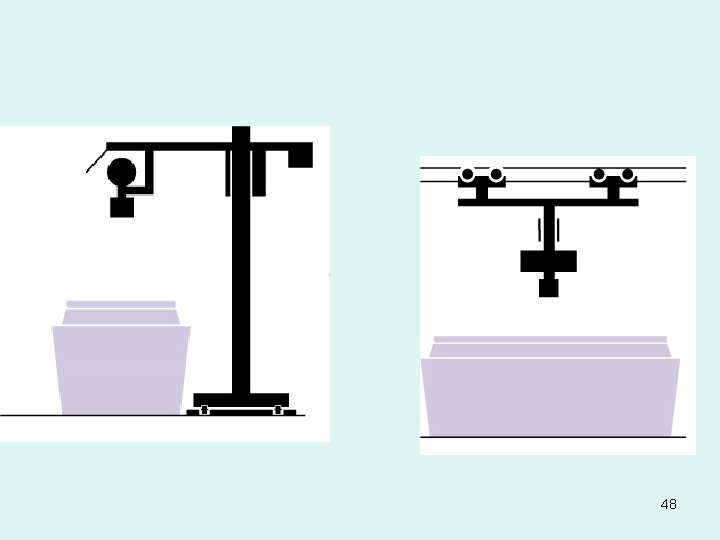
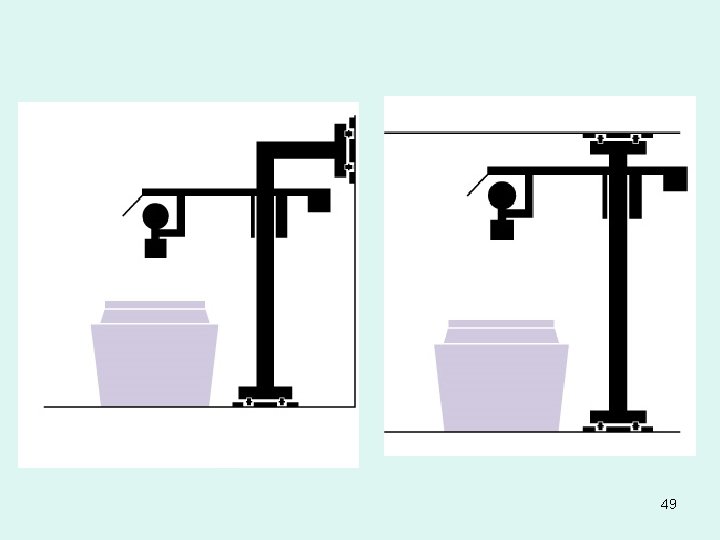
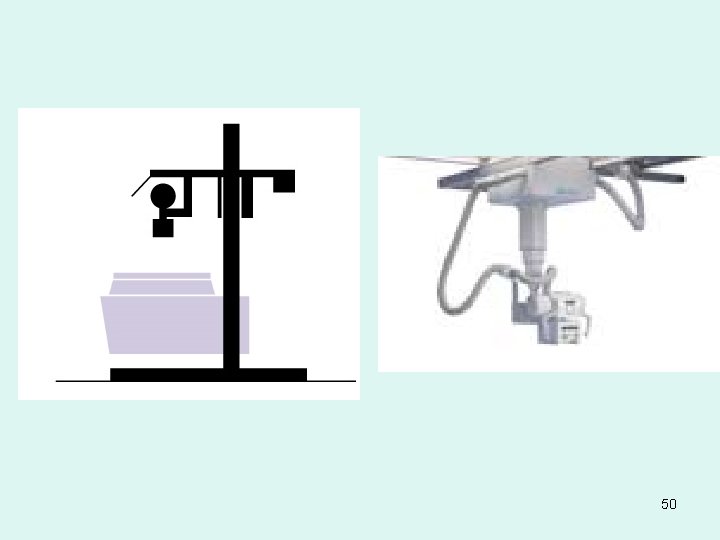
Tube Supports • Designed to help technologists with various tube locations for creative imaging. • Tube suspension systems are available in 5 versions 47
48
49
50
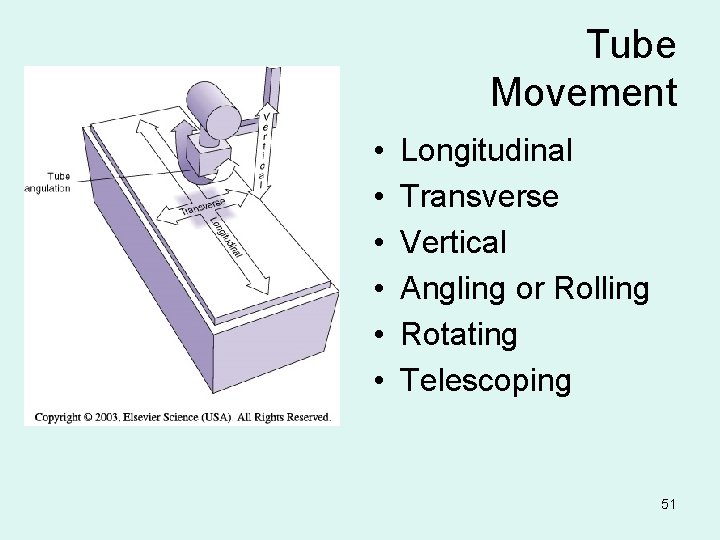
Tube Movement • • • Longitudinal Transverse Vertical Angling or Rolling Rotating Telescoping 51
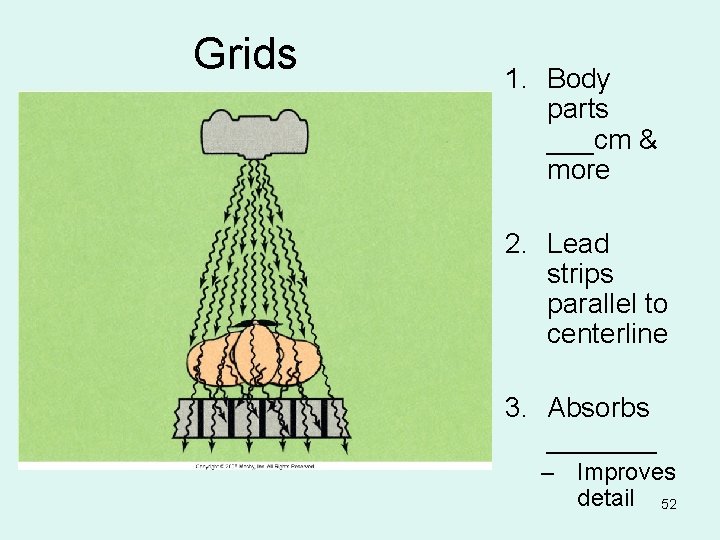
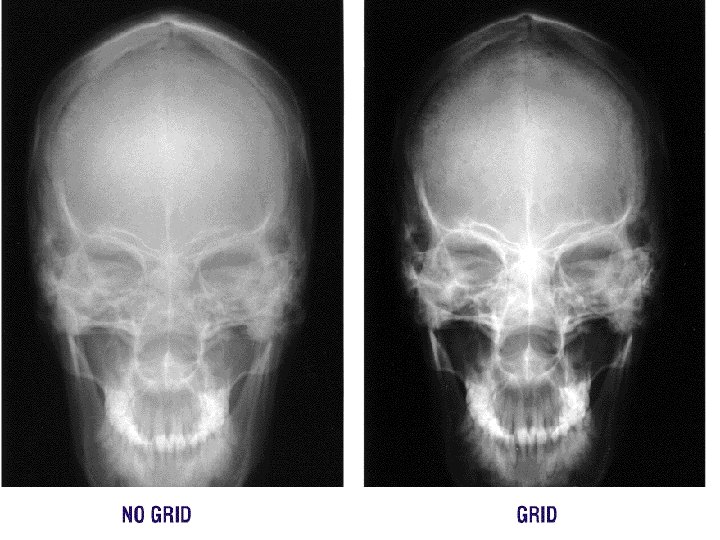
Grids 1. Body parts ___cm & more 2. Lead strips parallel to centerline 3. Absorbs _______ – Improves detail 52
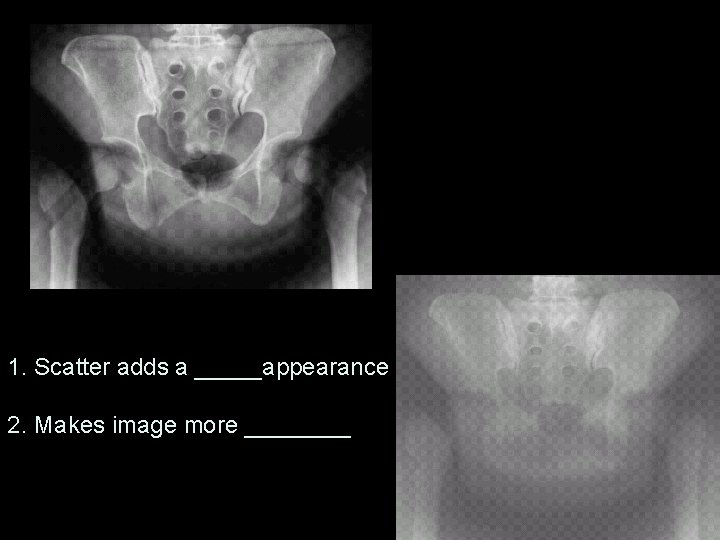
1. Scatter adds a _____appearance 2. Makes image more ____ 53
54
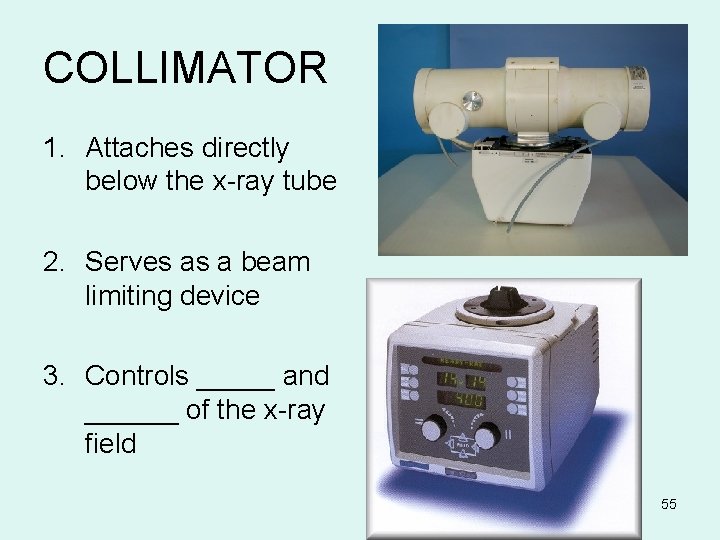
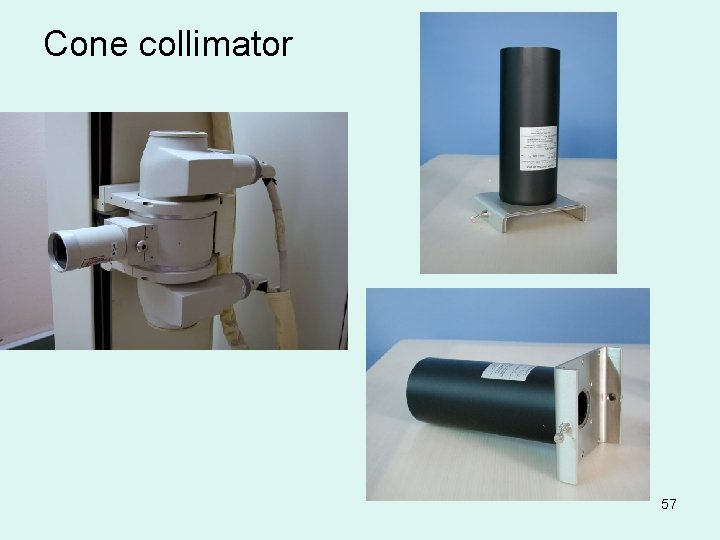
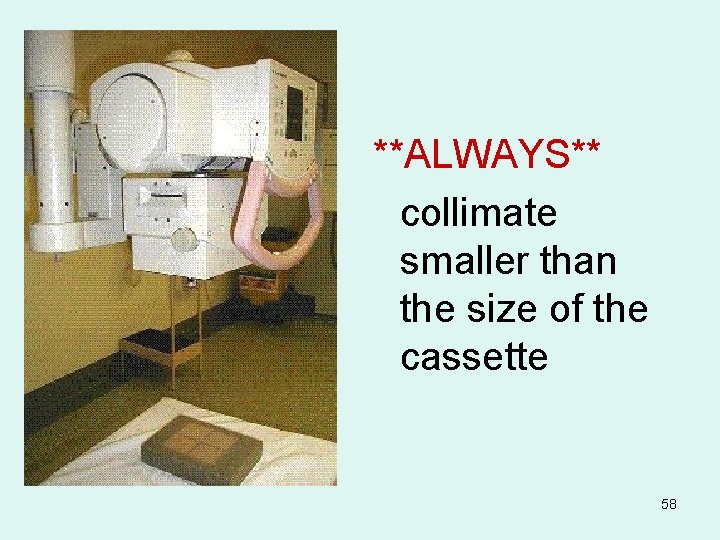
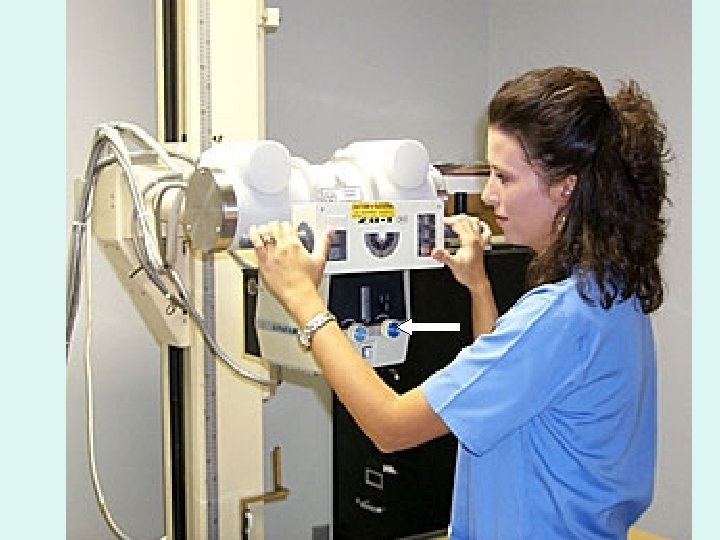
COLLIMATOR 1. Attaches directly below the x-ray tube 2. Serves as a beam limiting device 3. Controls _____ and ______ of the x-ray field 55
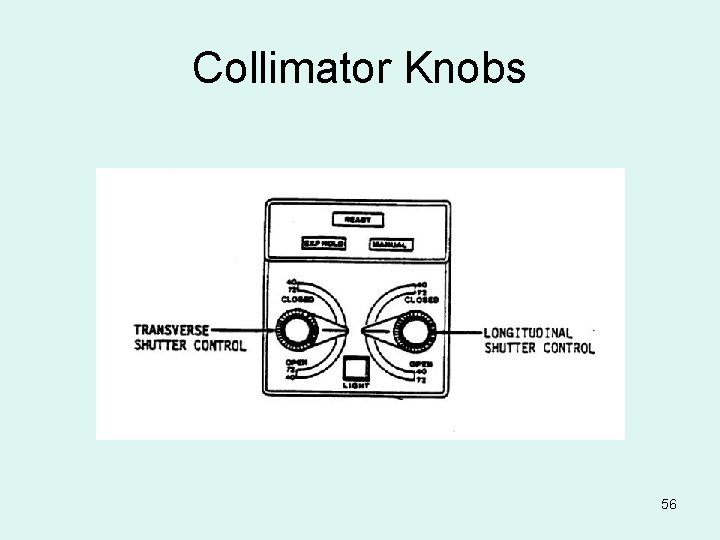
Collimator Knobs 56
Cone collimator 57
**ALWAYS** collimate smaller than the size of the cassette 58
59
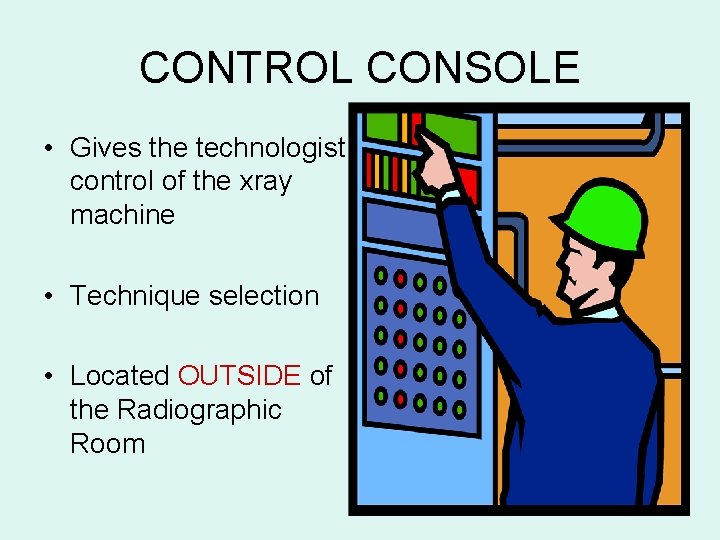
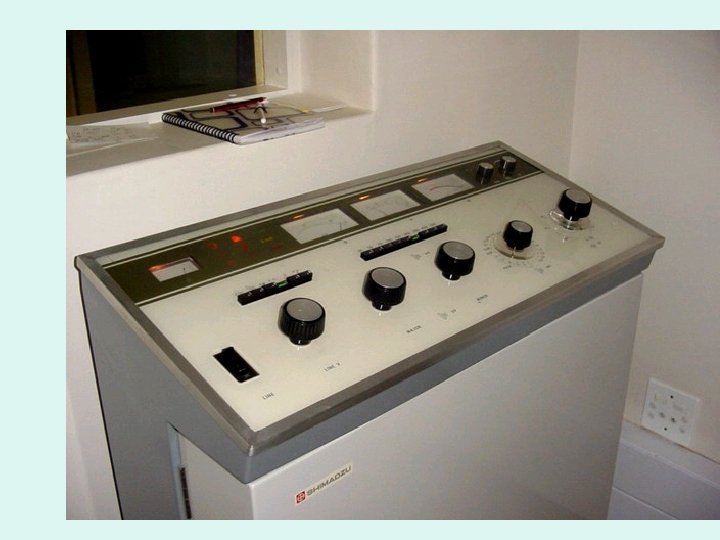
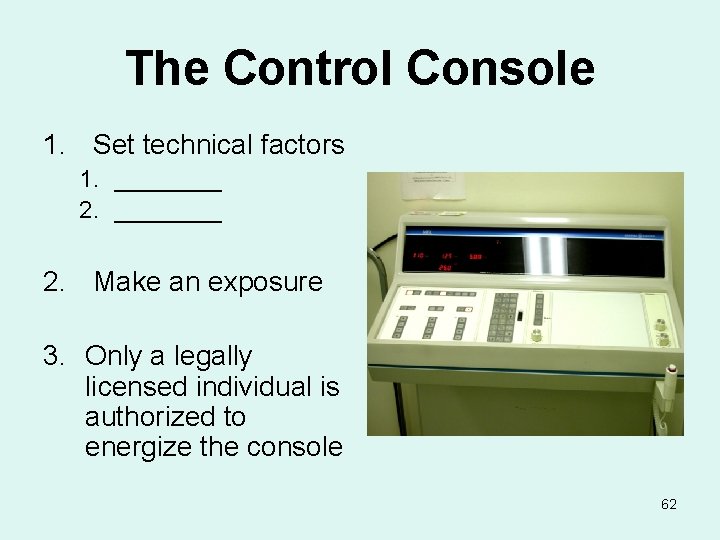
CONTROL CONSOLE • Gives the technologist control of the xray machine • Technique selection • Located OUTSIDE of the Radiographic Room 60
61
The Control Console 1. Set technical factors 1. ________ 2. Make an exposure 3. Only a legally licensed individual is authorized to energize the console 62
“Technique” k. Vp , m. As (m. A x s) • What is set at the control panel • How the “image” is created on the “film” or Image receptor (digital) • k. Vp controls the “ENERGY” of the beam • The Higher k. Vp – more penetrating • Ranges is 50 -110 in Diagnostic x-ray 63
“Technique” k. Vp , m. As (m. A x s) • m. A- is the current in combination with the time – determines HOW LONG the beam will stay on • Controls the density on the film/image 64
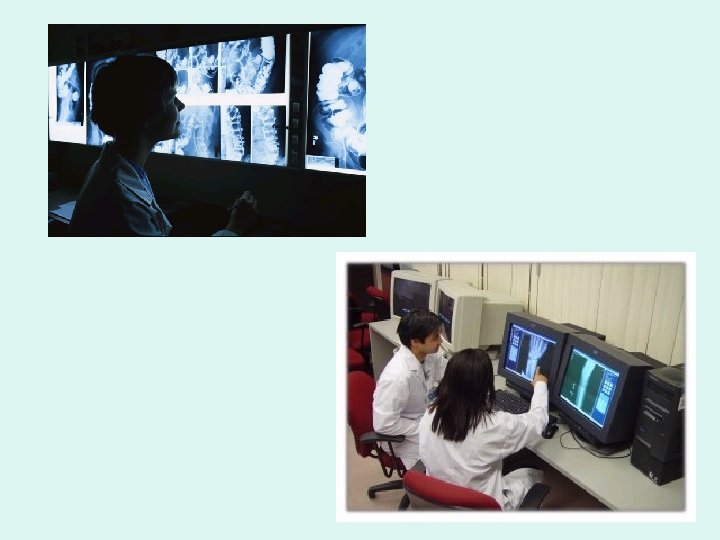
RADIOGRAPH • PERMANENT RECORD MADE USING RADIATION – RADIO- RADIATION (usually x rays) – GRAPH PERMANENT RECORD 65
66
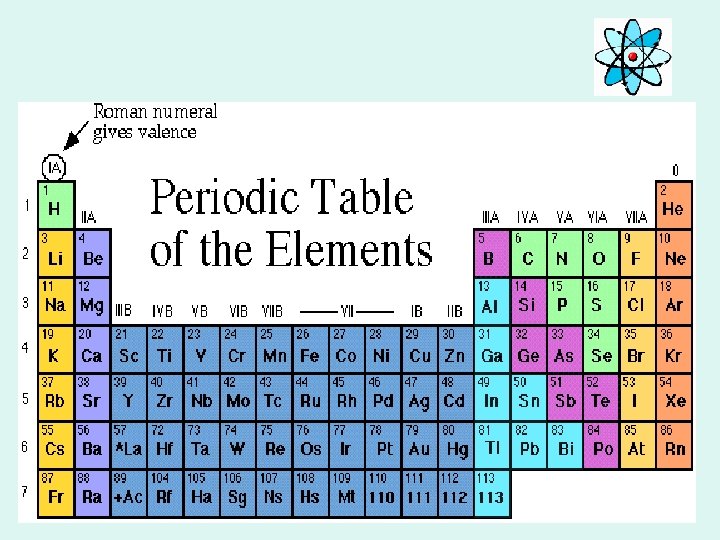
IMAGE CREATION • ATOMS • INTERACTION WITH “MATTER” • ATOMIC NUMBER 67
68
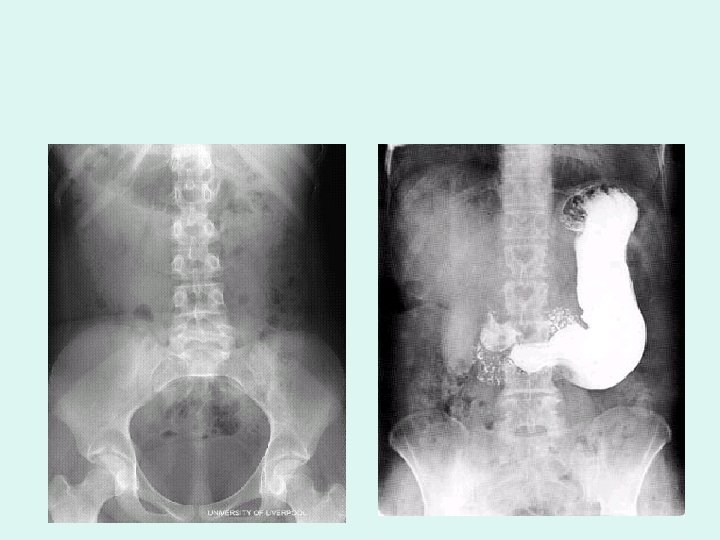
Barium has a higher z# more asorbtion of photons 69
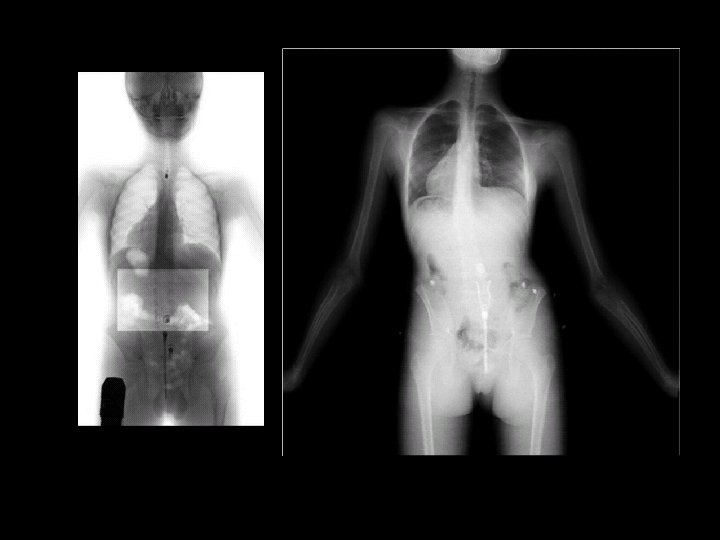
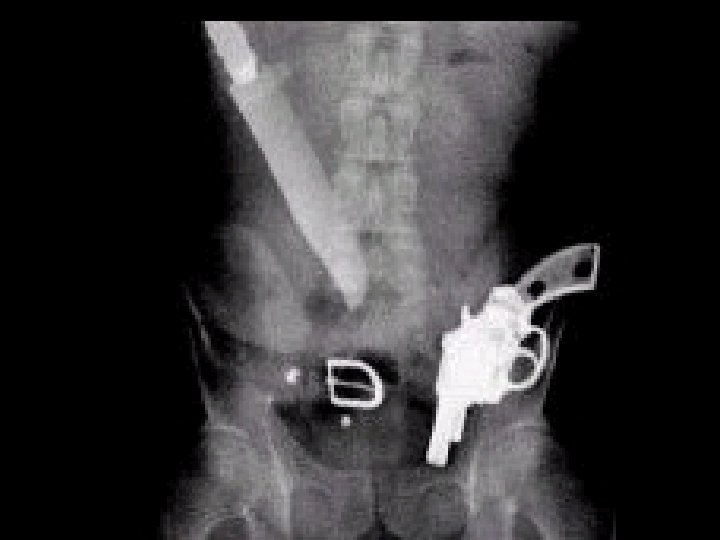
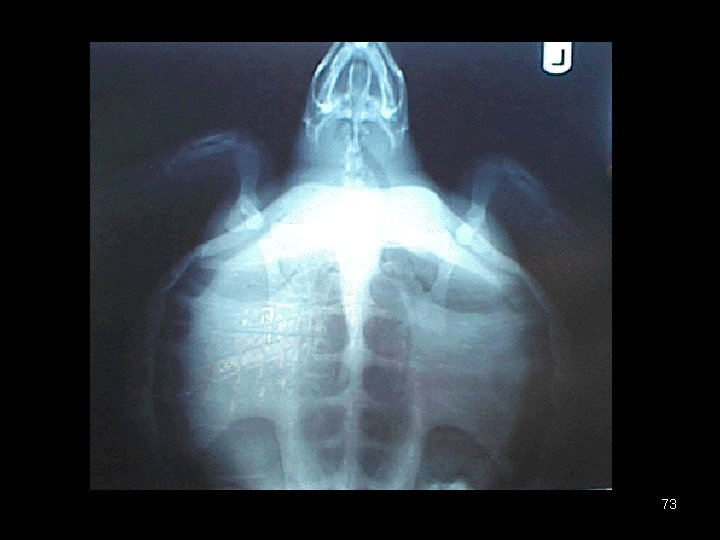
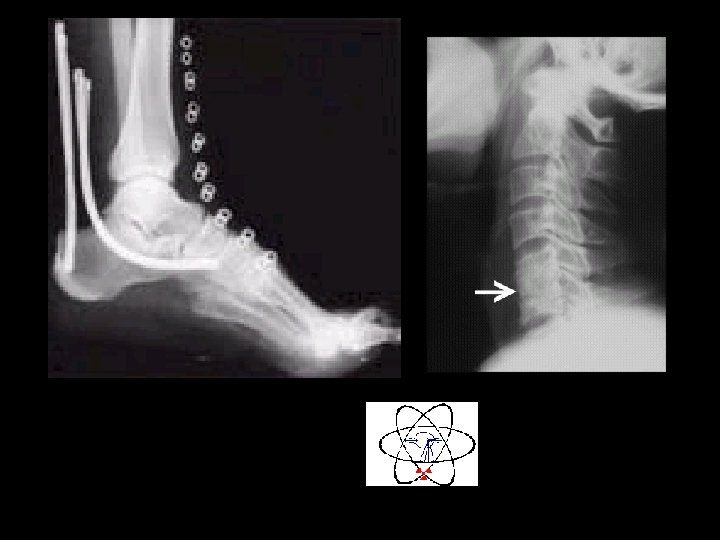
Why you see what you see • The films or images have different levels of density – different shades of gray • X-rays show different features of the body in various shades of gray. • The gray is darkest in those areas that do not absorb X-rays well – and allow it to pass through • the images are lighter in dense areas (like bones) that absorb more of the X-rays. 70
71
72
73
74
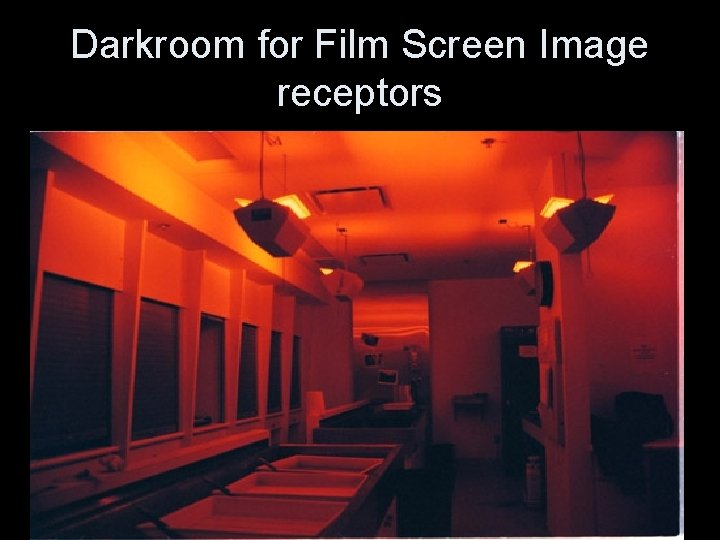
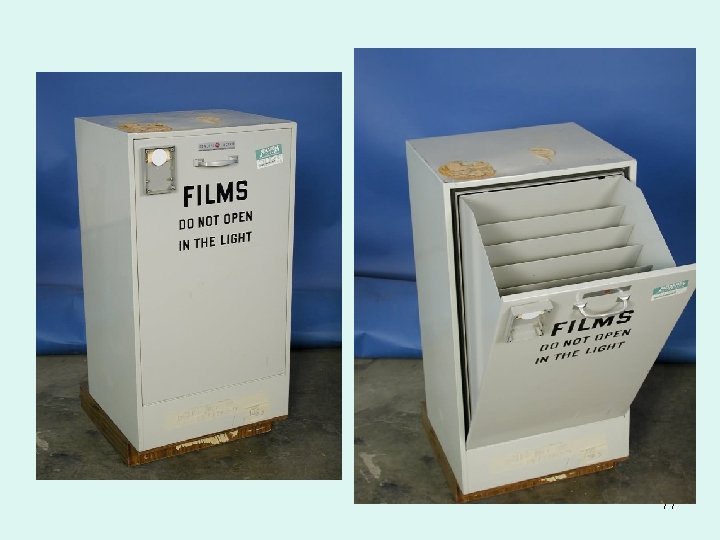
Darkroom for Film Screen Image receptors 75
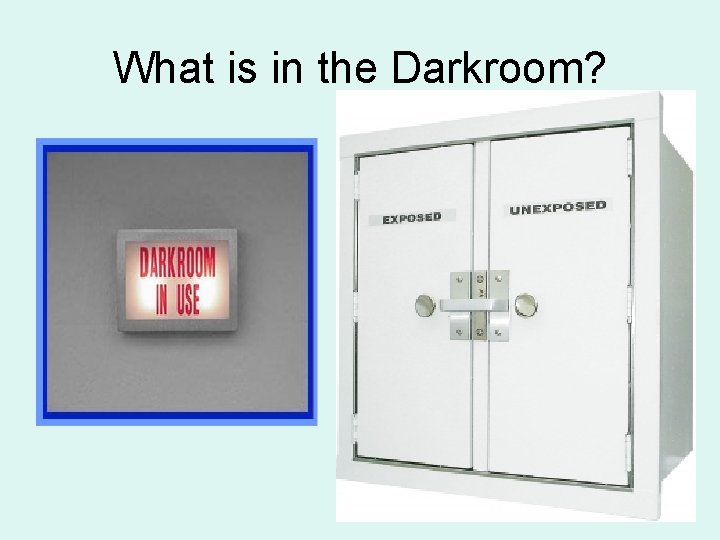
What is in the Darkroom? 76
77
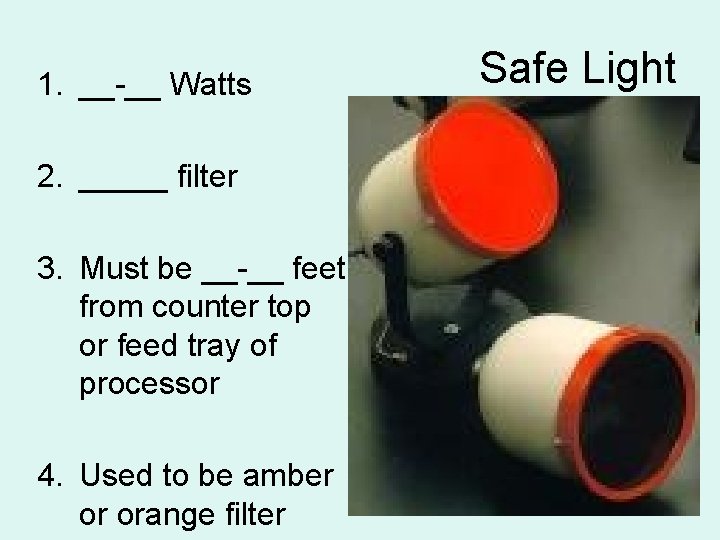
1. __-__ Watts Safe Light 2. _____ filter 3. Must be __-__ feet from counter top or feed tray of processor 4. Used to be amber or orange filter 78
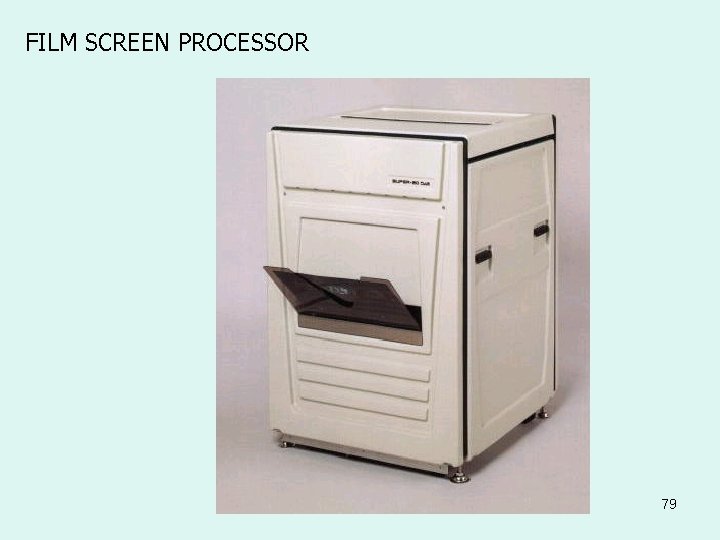
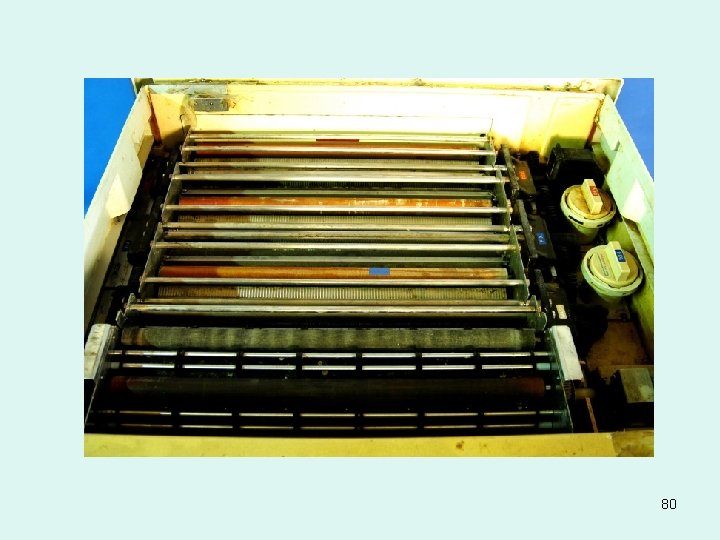
FILM SCREEN PROCESSOR 79
80
CR Reader for Computed Radiography image receptors 81
Other x-ray equipment • Positioning phantoms • Pixie 82
Other x-ray equipement • Positioning sponges • Lead markers 83
Positioning sponges 84
85
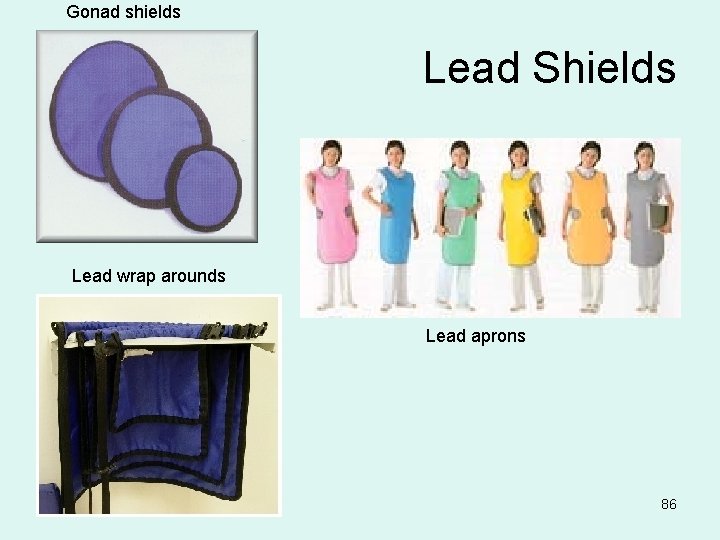
Gonad shields Lead Shields Lead wrap arounds Lead aprons 86
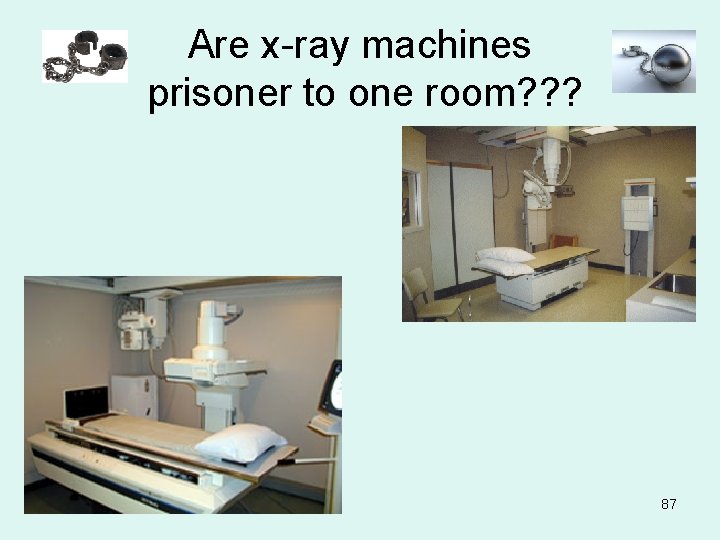
Are x-ray machines prisoner to one room? ? ? 87
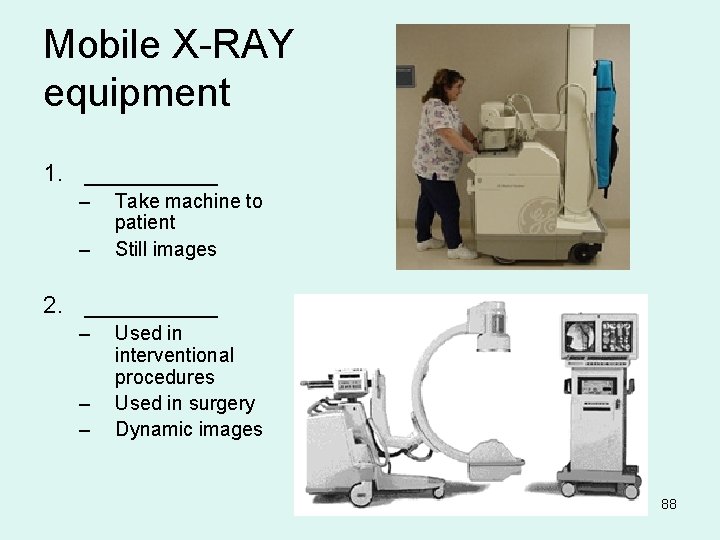
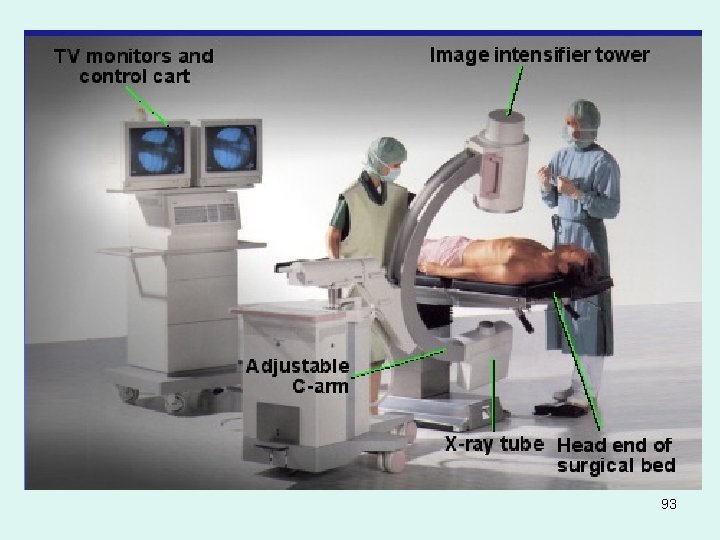
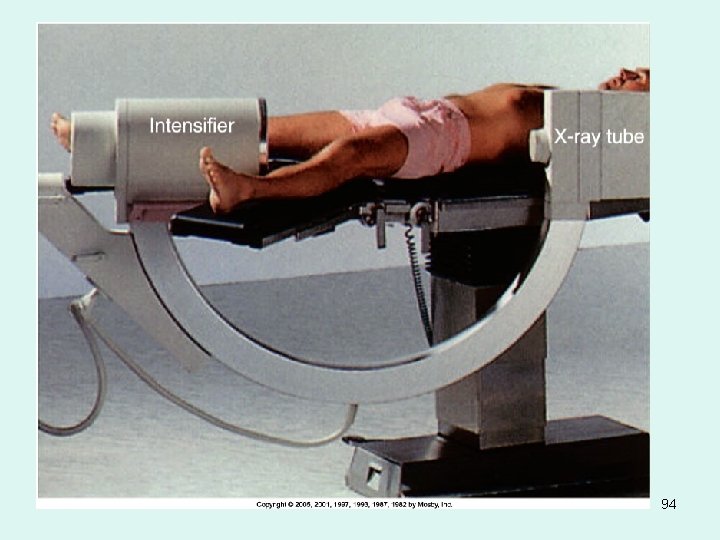
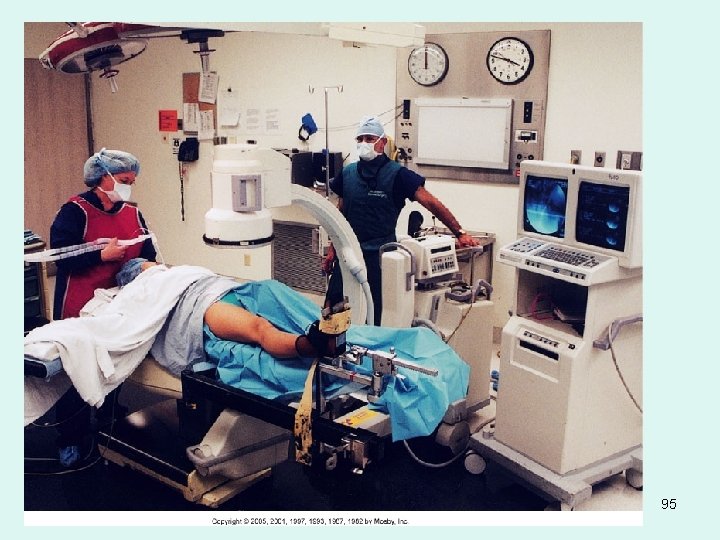
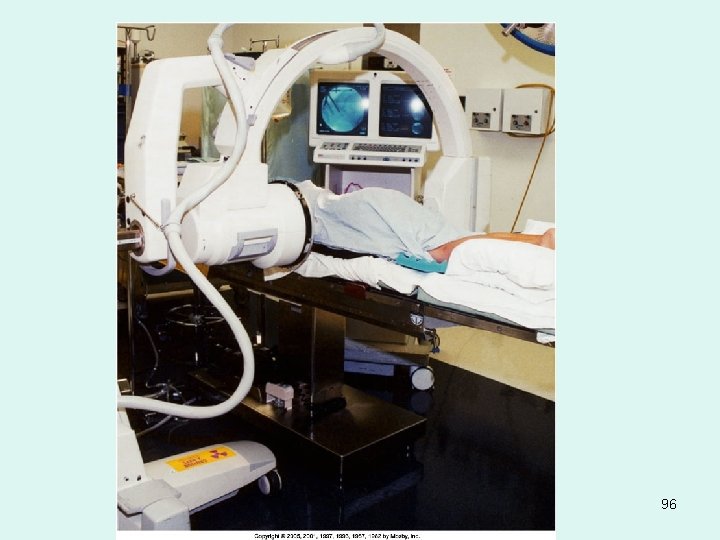
Mobile X-RAY equipment 1. _____ – – Take machine to patient Still images 2. _____ – – – Used in interventional procedures Used in surgery Dynamic images 88
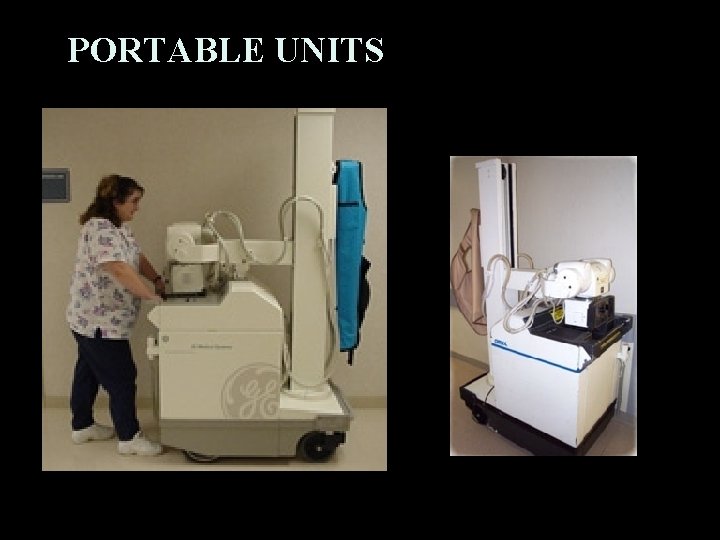
PORTABLE UNITS 89
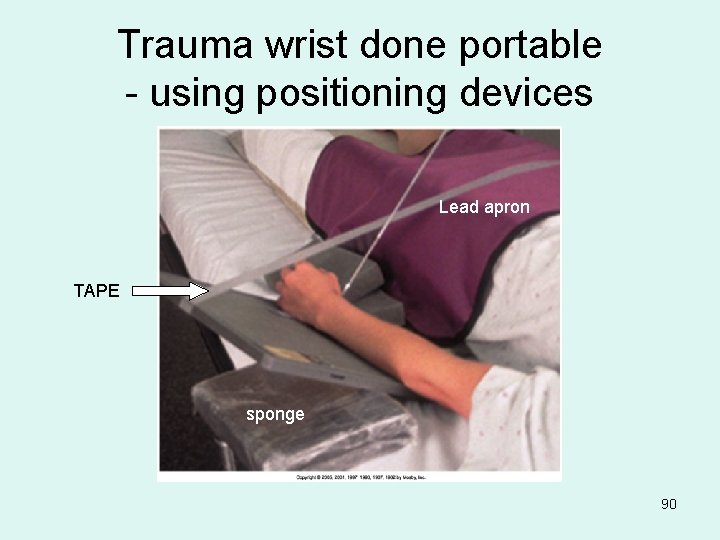
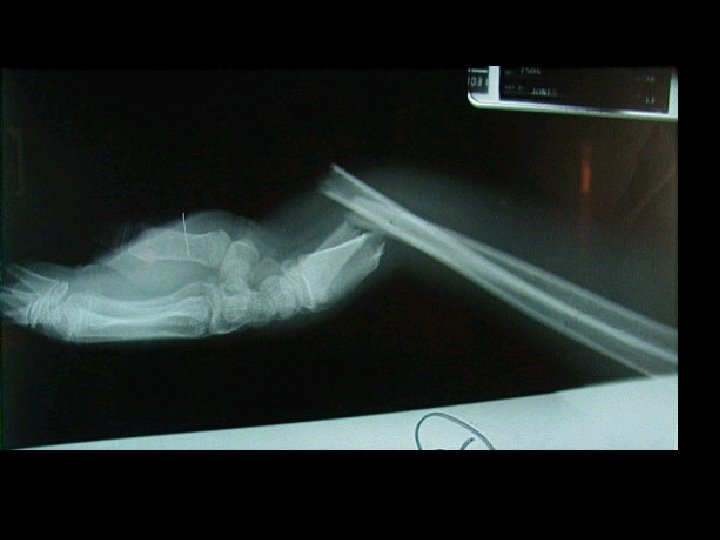
Trauma wrist done portable - using positioning devices Lead apron TAPE sponge 90
91
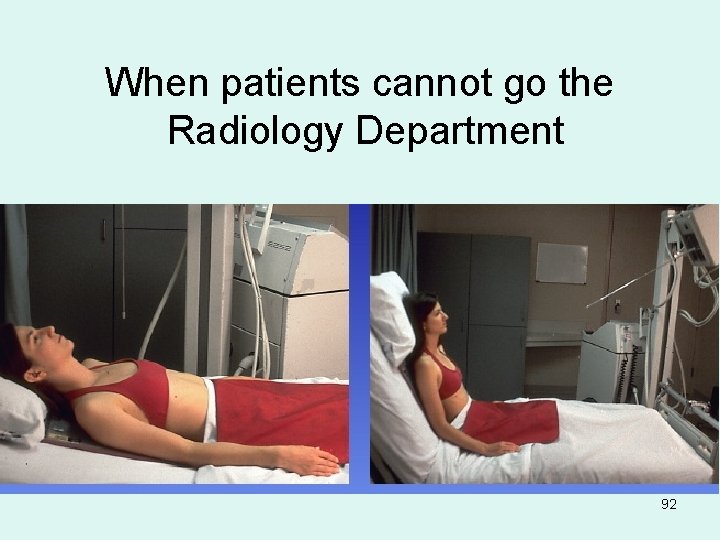
When patients cannot go the Radiology Department 92
93
94
95
96
97
Review
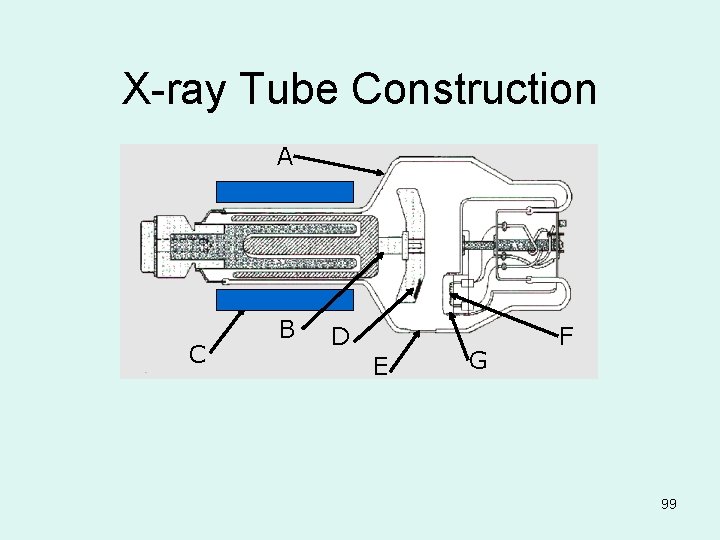
X-ray Tube Construction A C B D E G F 99
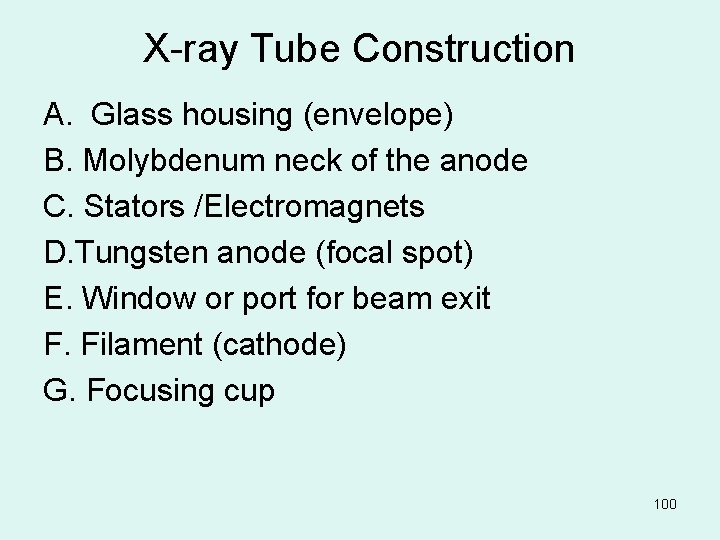
X-ray Tube Construction A. Glass housing (envelope) B. Molybdenum neck of the anode C. Stators /Electromagnets D. Tungsten anode (focal spot) E. Window or port for beam exit F. Filament (cathode) G. Focusing cup 100
TUBE HOUSING What is it made of? 101
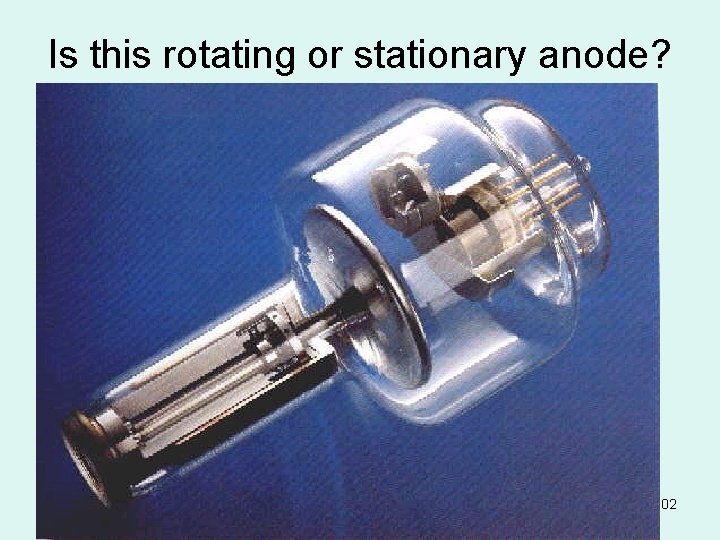
Is this rotating or stationary anode? 102
What is required to produce x-rays?
What is required to produce x-rays? Requirements: – a source of fast moving electrons – sudden stop of the electrons’ motion (KE) – kinetic energy (KE) is converted to EMS energies • Heat • x-ray photons 104