
Rad Mon Radiation Monitoring System for the LHC
- Slides: 22
Rad. Mon Radiation Monitoring System for the LHC Machine and experimental caverns T. Wijnands, C. Pignard, D. Mc. Farlane, E. Dimovasili, K. Cwalina CERN TS department – LHC experimental areas Acknowledgements : Radiation facilities : UCL Louvain-La-Neuve, PSI Villingen, TSL Uppsala, CIS-BIO (CEA Saclay), Ljubljana, PROSPERO (CEA-Valduc) Radiation community : Special thanks : PH/MIC, Radecs community, ESA, JPL LHCCWG P. Proudlock, J-J Cloye, A-L Perrot, B. Hallgren, F. Locci, J. Palluel, R. Tesarek (FNAL), TS/DEM 24 April 2006
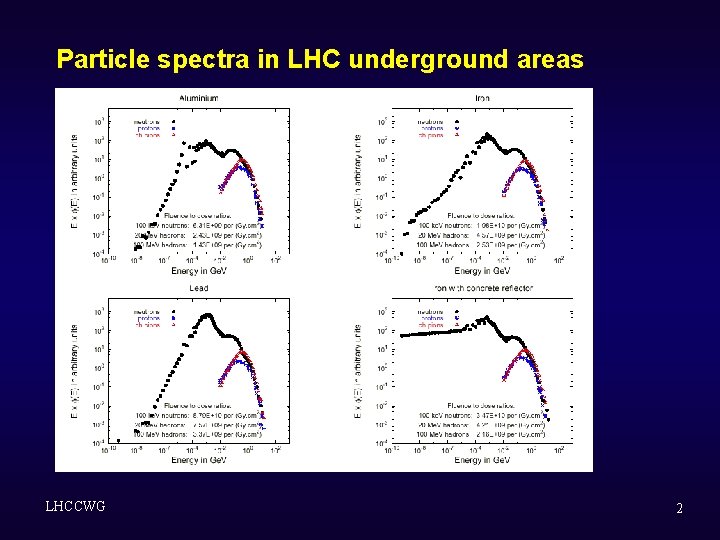
Particle spectra in LHC underground areas LHCCWG 2
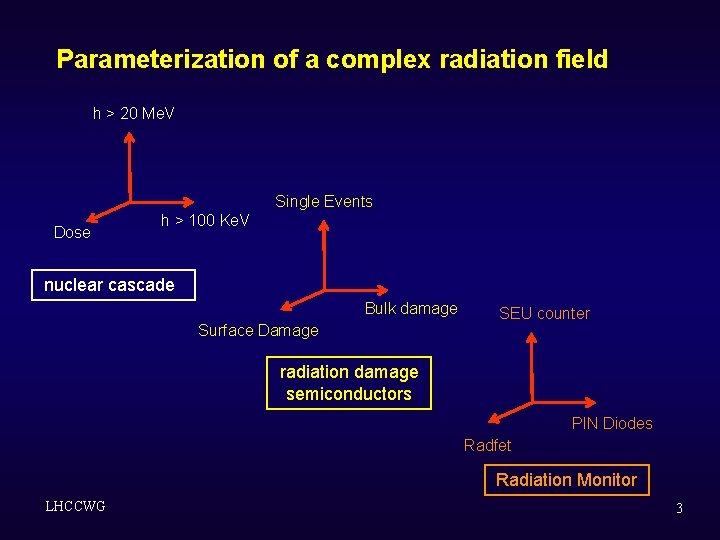
Parameterization of a complex radiation field h > 20 Me. V Single Events Dose h > 100 Ke. V nuclear cascade Bulk damage Surface Damage SEU counter radiation damage semiconductors PIN Diodes Radfet Radiation Monitor LHCCWG 3
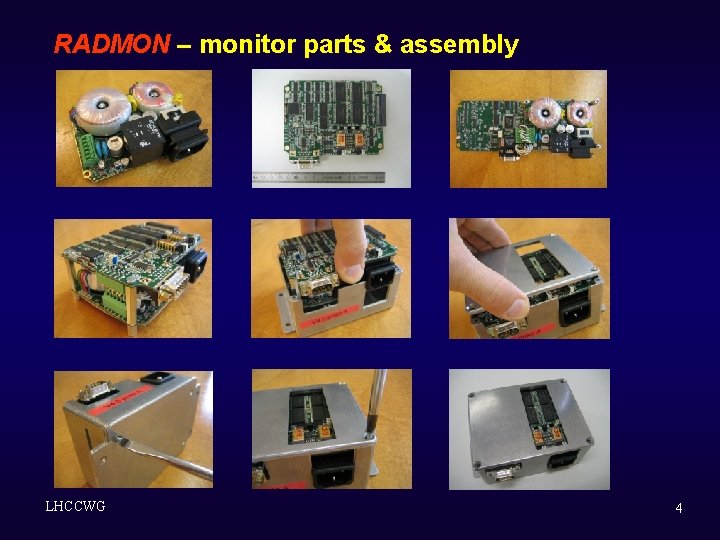
RADMON – monitor parts & assembly LHCCWG 4
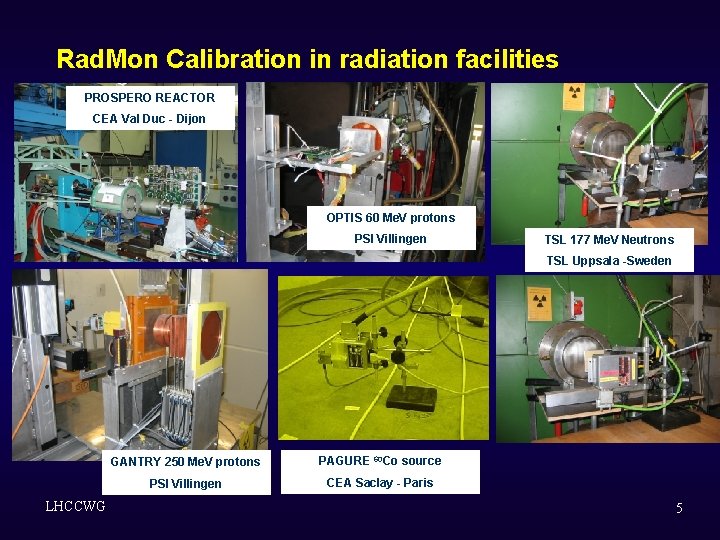
Rad. Mon Calibration in radiation facilities PROSPERO REACTOR CEA Val Duc - Dijon OPTIS 60 Me. V protons PSI Villingen TSL 177 Me. V Neutrons TSL Uppsala -Sweden LHCCWG GANTRY 250 Me. V protons PAGURE 60 Co source PSI Villingen CEA Saclay - Paris 5
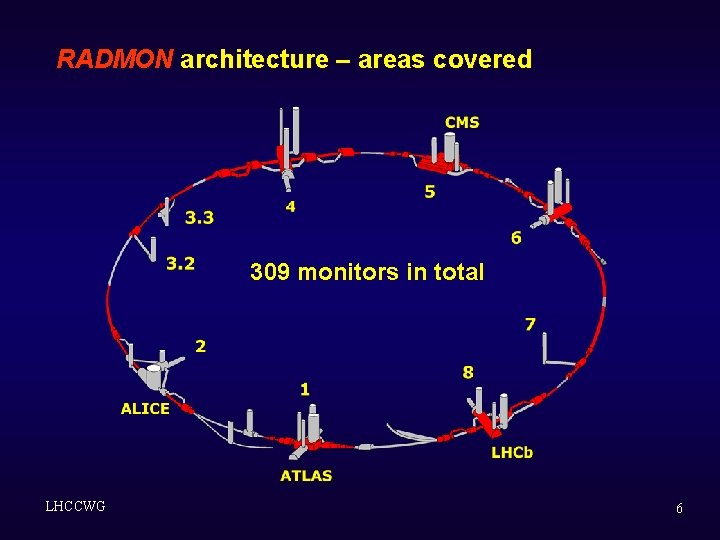
RADMON architecture – areas covered 309 monitors in total LHCCWG 6
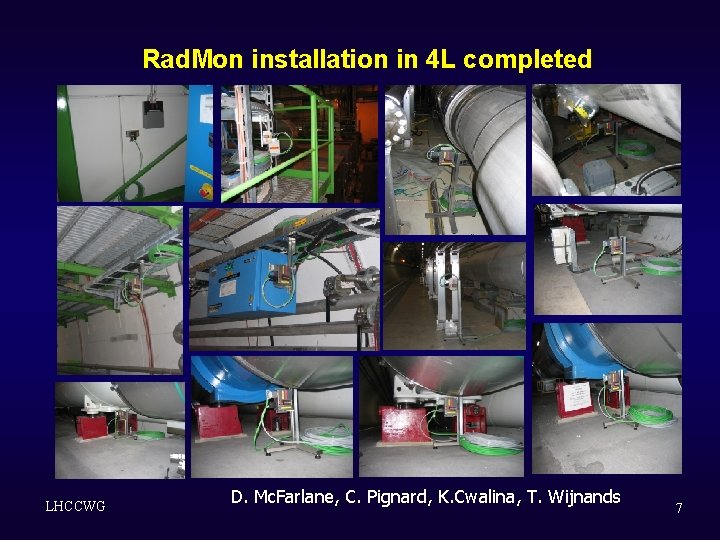
Rad. Mon installation in 4 L completed LHCCWG D. Mc. Farlane, C. Pignard, K. Cwalina, T. Wijnands 7
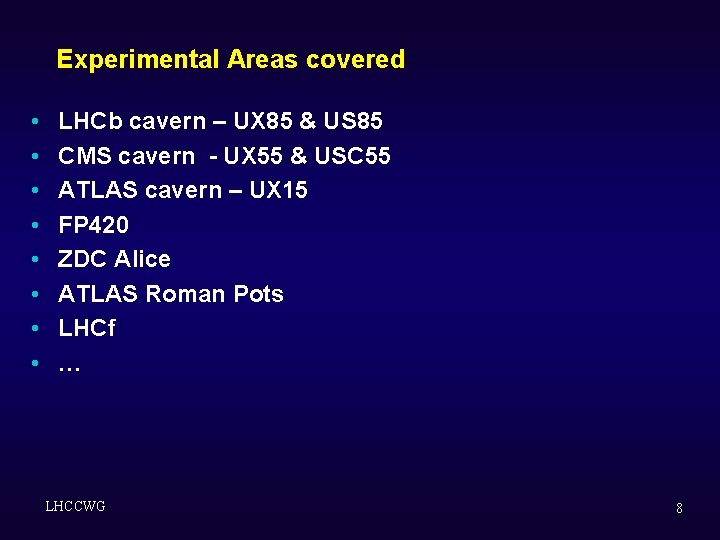
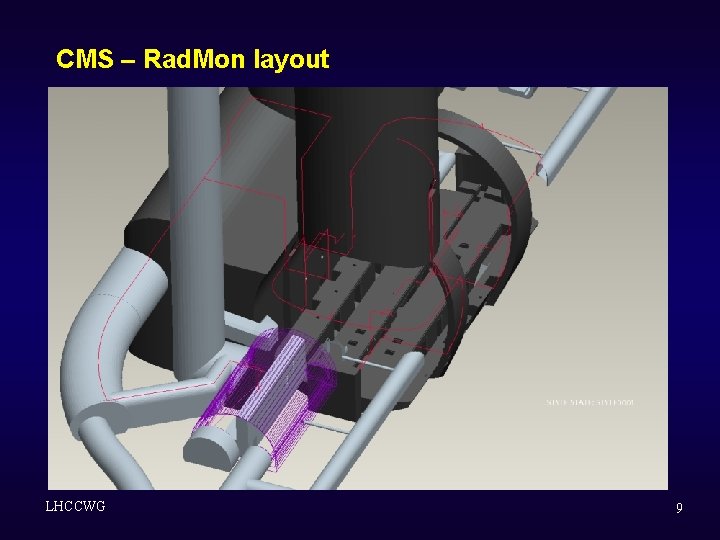
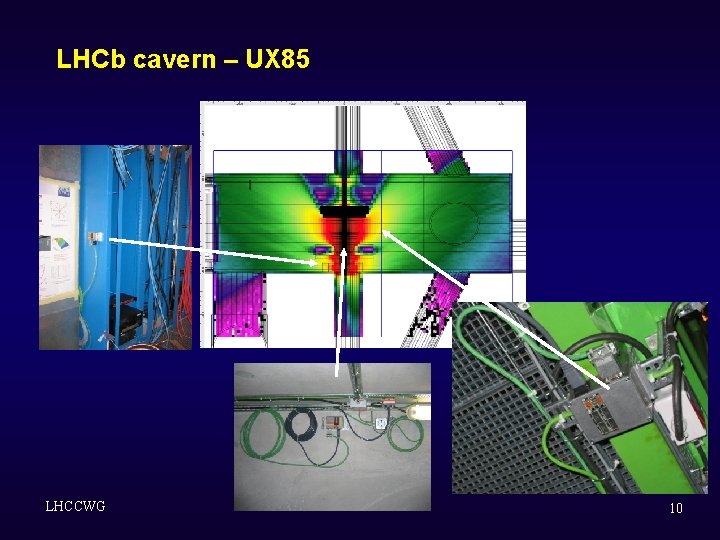
Experimental Areas covered • • LHCb cavern – UX 85 & US 85 CMS cavern - UX 55 & USC 55 ATLAS cavern – UX 15 FP 420 ZDC Alice ATLAS Roman Pots LHCf … LHCCWG 8
CMS – Rad. Mon layout LHCCWG 9
LHCb cavern – UX 85 LHCCWG 10
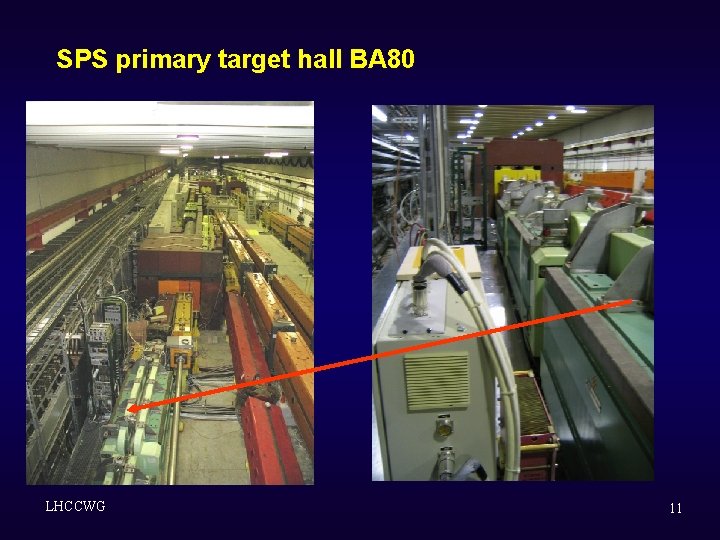
SPS primary target hall BA 80 LHCCWG 11
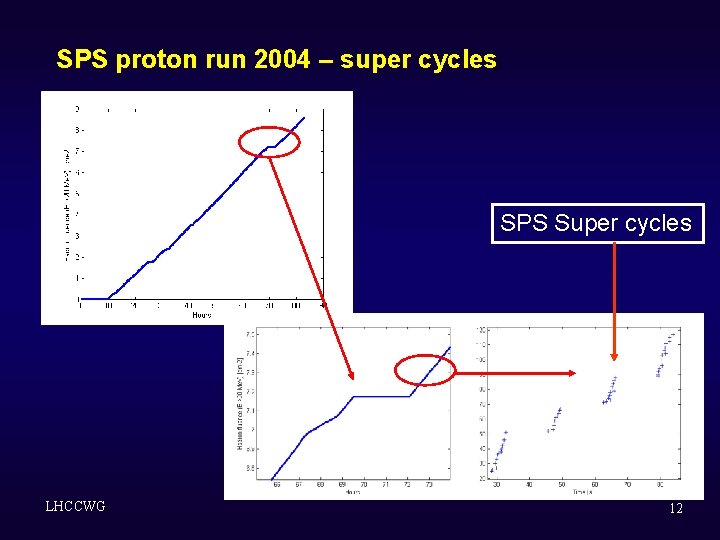
SPS proton run 2004 – super cycles SPS Super cycles LHCCWG 12
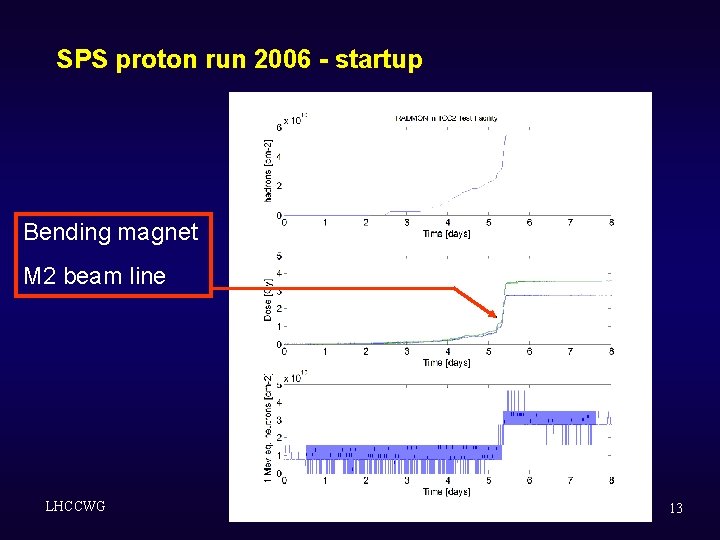
SPS proton run 2006 - startup Bending magnet M 2 beam line LHCCWG 13
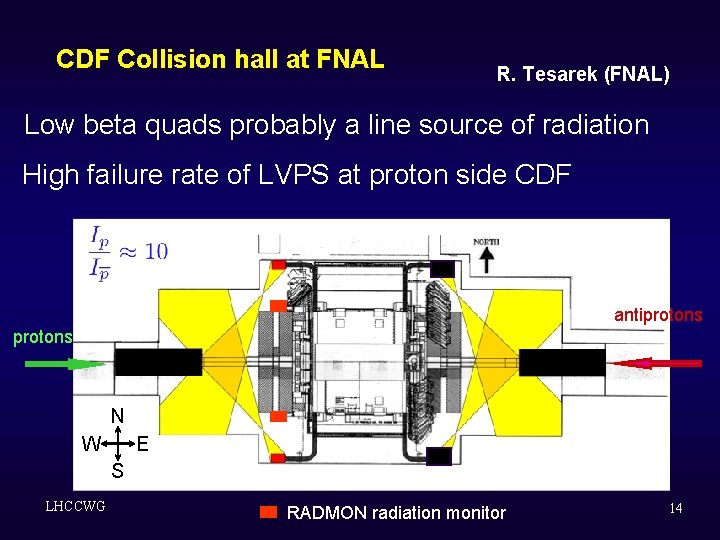
CDF Collision hall at FNAL R. Tesarek (FNAL) Low beta quads probably a line source of radiation High failure rate of LVPS at proton side CDF antiprotons N W E S LHCCWG RADMON radiation monitor 14
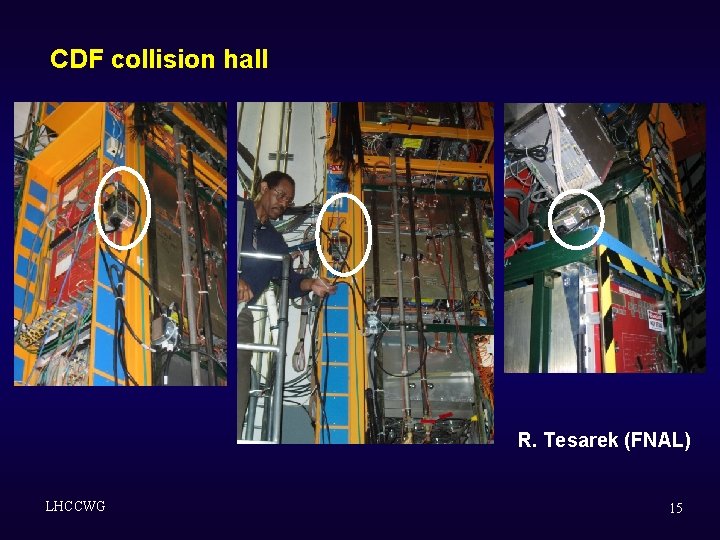
CDF collision hall R. Tesarek (FNAL) LHCCWG 15
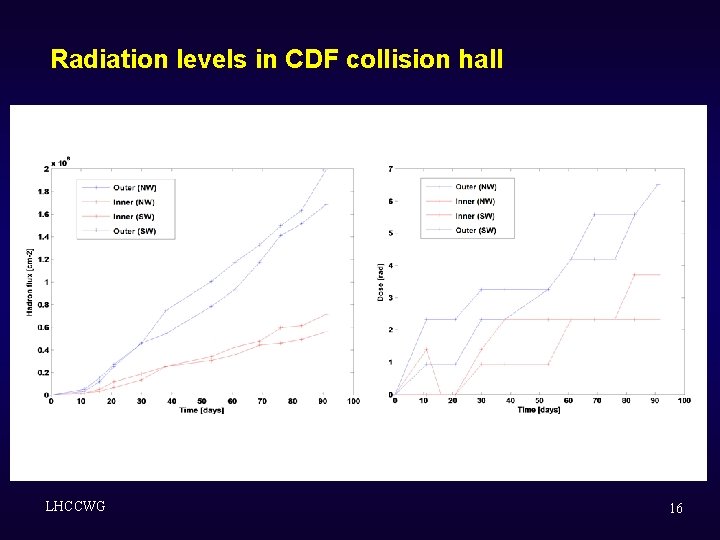
Radiation levels in CDF collision hall LHCCWG 16
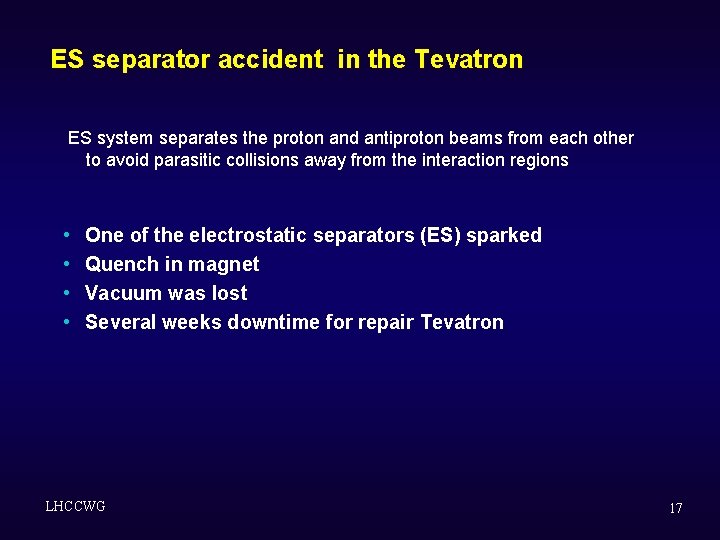
ES separator accident in the Tevatron ES system separates the proton and antiproton beams from each other to avoid parasitic collisions away from the interaction regions • • One of the electrostatic separators (ES) sparked Quench in magnet Vacuum was lost Several weeks downtime for repair Tevatron LHCCWG 17
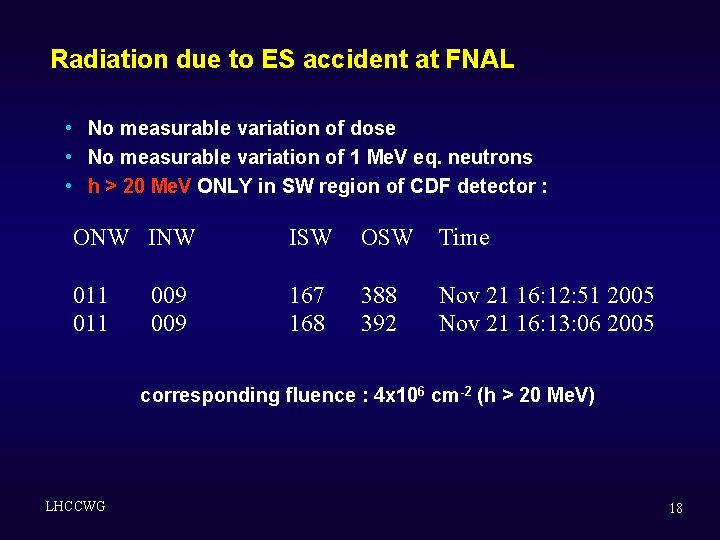
Radiation due to ES accident at FNAL • No measurable variation of dose • No measurable variation of 1 Me. V eq. neutrons • h > 20 Me. V ONLY in SW region of CDF detector : ONW ISW OSW Time 011 167 168 388 392 Nov 21 16: 12: 51 2005 Nov 21 16: 13: 06 2005 009 corresponding fluence : 4 x 106 cm-2 (h > 20 Me. V) LHCCWG 18
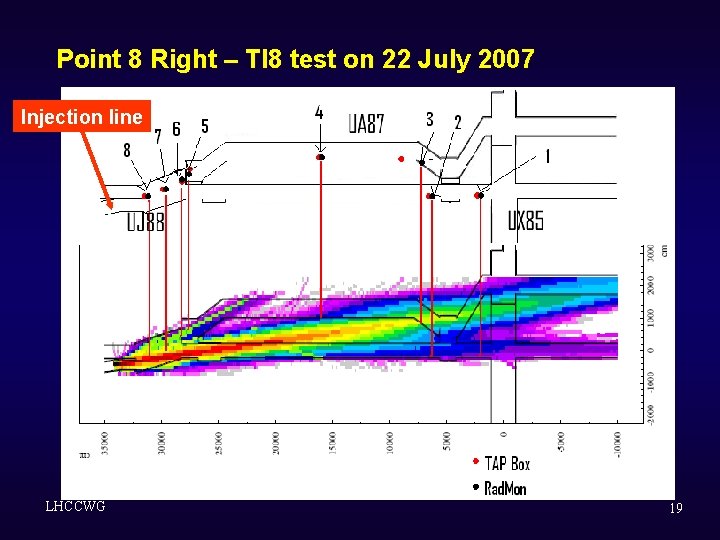
Point 8 Right – TI 8 test on 22 July 2007 Injection line LHCCWG 19
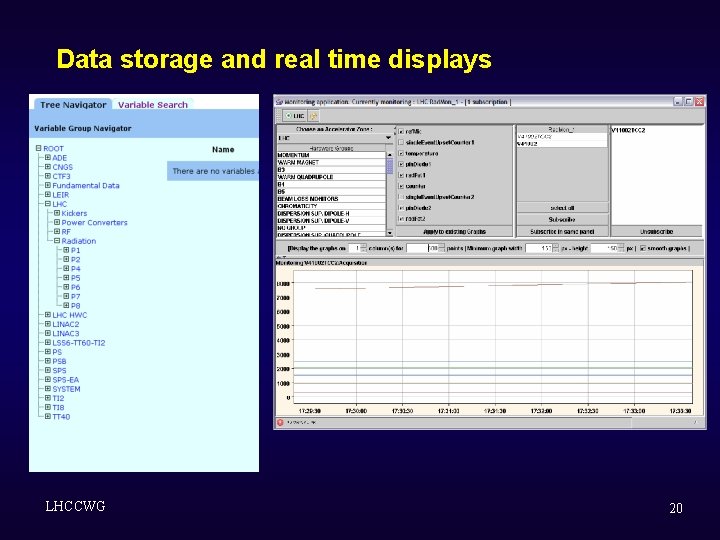
Data storage and real time displays LHCCWG 20
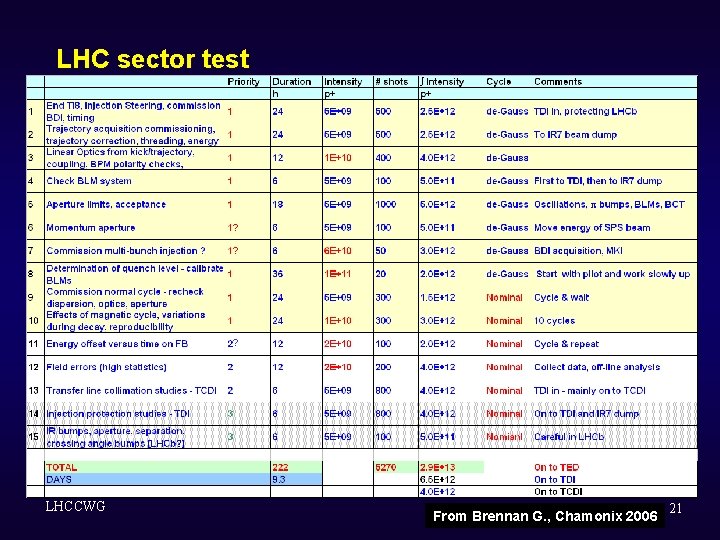
LHC sector test ? ? ? LHCCWG From Brennan G. , Chamonix 2006 21
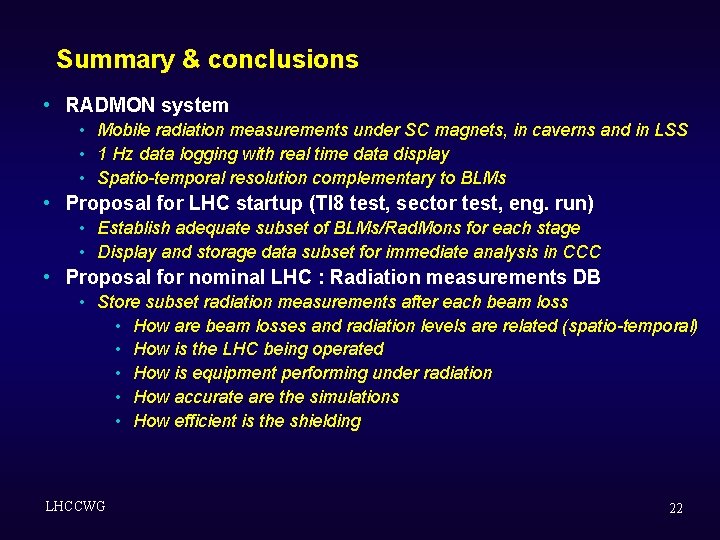
Summary & conclusions • RADMON system • Mobile radiation measurements under SC magnets, in caverns and in LSS • 1 Hz data logging with real time data display • Spatio-temporal resolution complementary to BLMs • Proposal for LHC startup (TI 8 test, sector test, eng. run) • Establish adequate subset of BLMs/Rad. Mons for each stage • Display and storage data subset for immediate analysis in CCC • Proposal for nominal LHC : Radiation measurements DB • Store subset radiation measurements after each beam loss • How are beam losses and radiation levels are related (spatio-temporal) • How is the LHC being operated • How is equipment performing under radiation • How accurate are the simulations • How efficient is the shielding LHCCWG 22