
Rad Map Demonstration GISBased Government Information Tool for
Rad. Map Demonstration: GIS-Based Government Information Tool for Radiation Monitoring Stations For the Spring 2015 Low-Level Radioactive Waste Forum, Inc. Supporting a State and Regional Approach to Complex Environmental Issue
Agenda Ø Rad. Map: Overview, Background, Purpose, Sampling Media Ø Demonstration Ø Emergency Responders Ø Future Application 2
Rad. Map: Overview “Rad. Map is an interactive desktop tool featuring a nationwide GIS map of long-term radiation monitoring locations across the United States. It also provides access to key information about the monitor and the area surrounding it. ” 3
Rad. Map: Background Ø Geographic Information System (GIS) based on free ESRI download Ø Not a regulatory program – hosted at EPA’s Radiation Protection Division Ø Requested by CRCPD Task Force HS/ER-1 Task Force for EPA’s Creation of National Monitoring System Ø Recommended by Science Advisory Board ü Project review of Rad. Net Ø About 2, 200 records. Ø Latest updated to Esri data and maps (2009). 4
Rad. Map: Purpose Ø Making radiation monitor information available before an event Ø Supports Homeland Security Efforts Ø Provide emergency responders with quick and easy access to available radiation monitoring location information nationally. Ø Includes following info ü Monitoring system, location, organization, equipment, Contact info ü Url for online – when available ü Population data, Infrastructure, etc
Rad. Map: Sampling Media Ø Air Ø Surface Water Ø Precipitation Ø Drinking Water Ø Biota
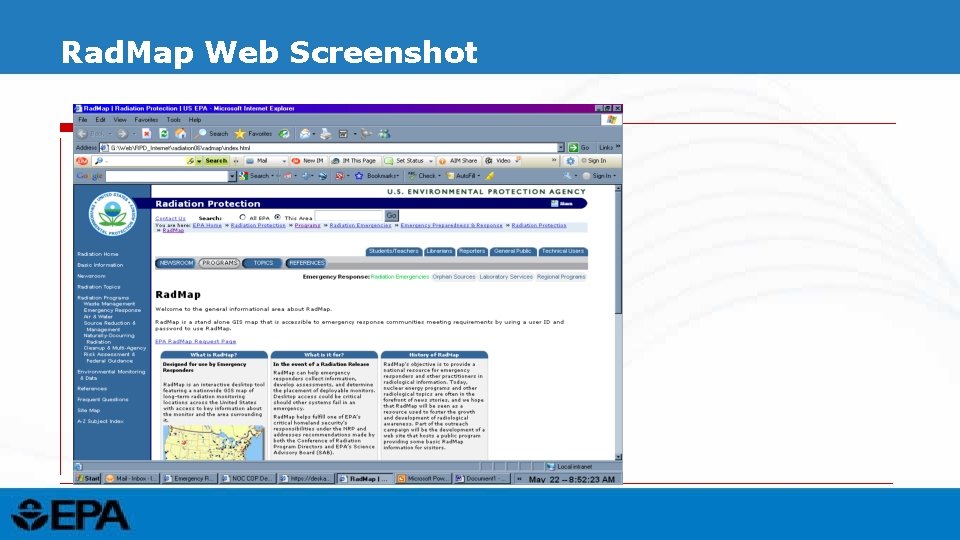
Rad. Map Web Screenshot
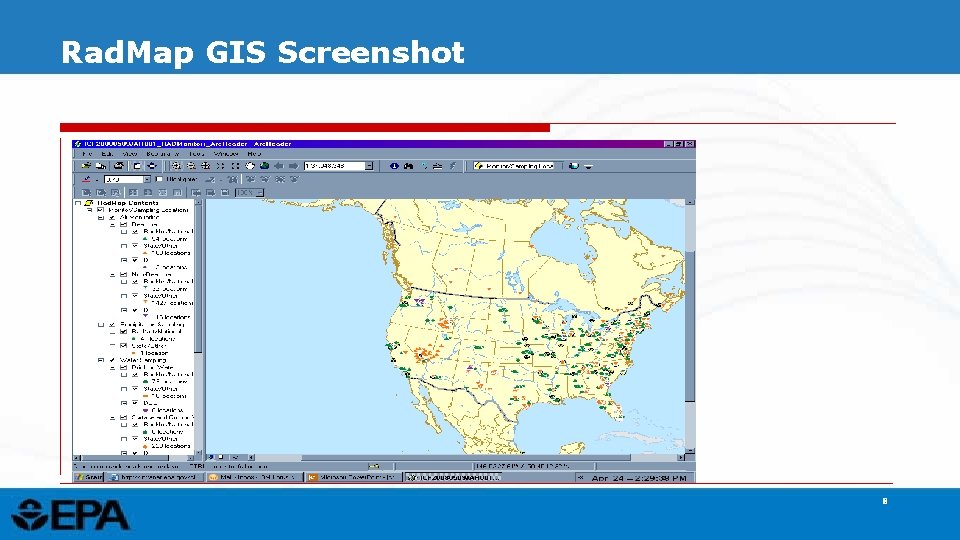
Rad. Map GIS Screenshot 8
Emergency Responders Ø Decision Makers – How many? Ø First Responders: Fire & Policing Ø DOMOPS Information and RFA Model 9
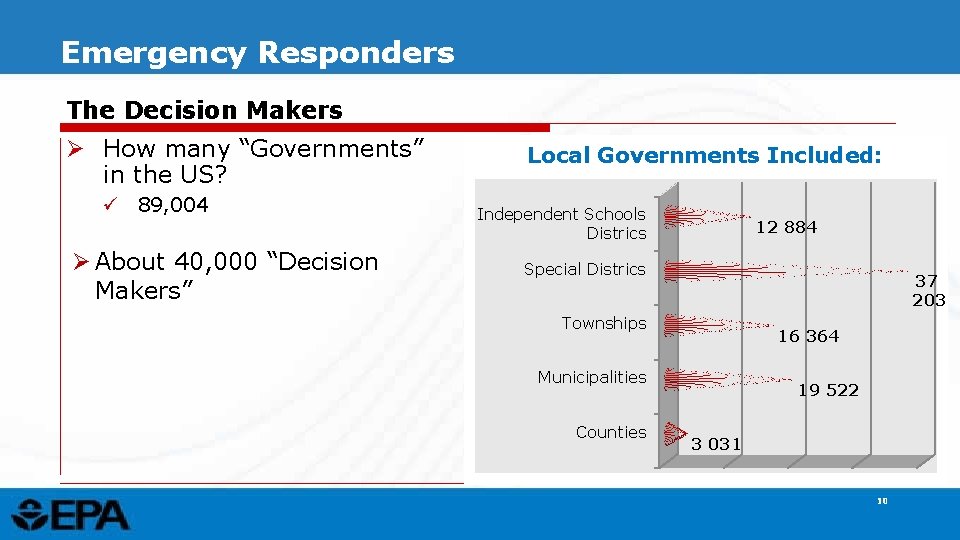
Emergency Responders The Decision Makers Ø How many “Governments” in the US? ü 89, 004 Ø About 40, 000 “Decision Makers” Local Governments Included: Independent Schools Districs 12 884 Special Districs 37 203 Townships 16 364 Municipalities Counties 19 522 3 031 10
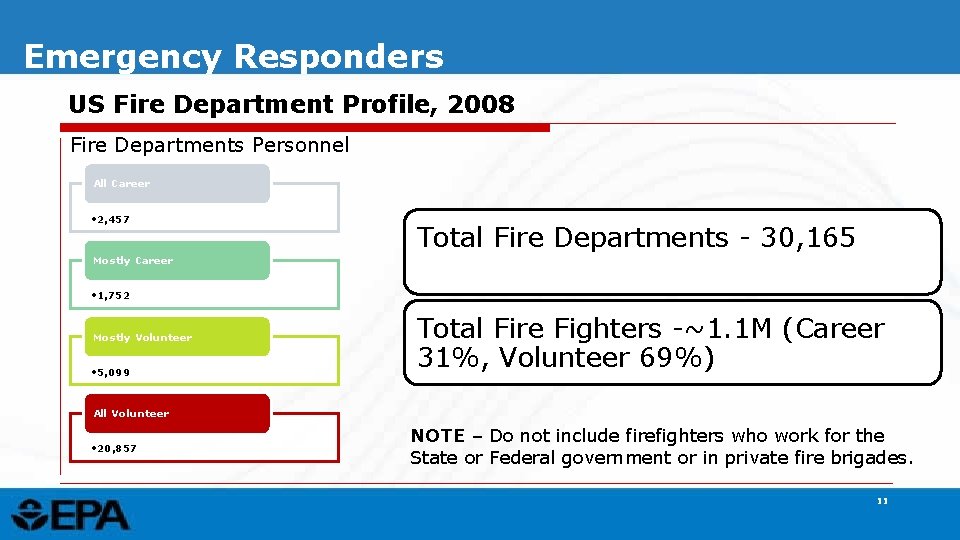
Emergency Responders US Fire Department Profile, 2008 Fire Departments Personnel All Career • 2, 457 Total Fire Departments - 30, 165 Mostly Career • 1, 752 Mostly Volunteer • 5, 099 Total Fire Fighters -~1. 1 M (Career 31%, Volunteer 69%) All Volunteer • 20, 857 NOTE – Do not include firefighters who work for the State or Federal government or in private fire brigades. 11
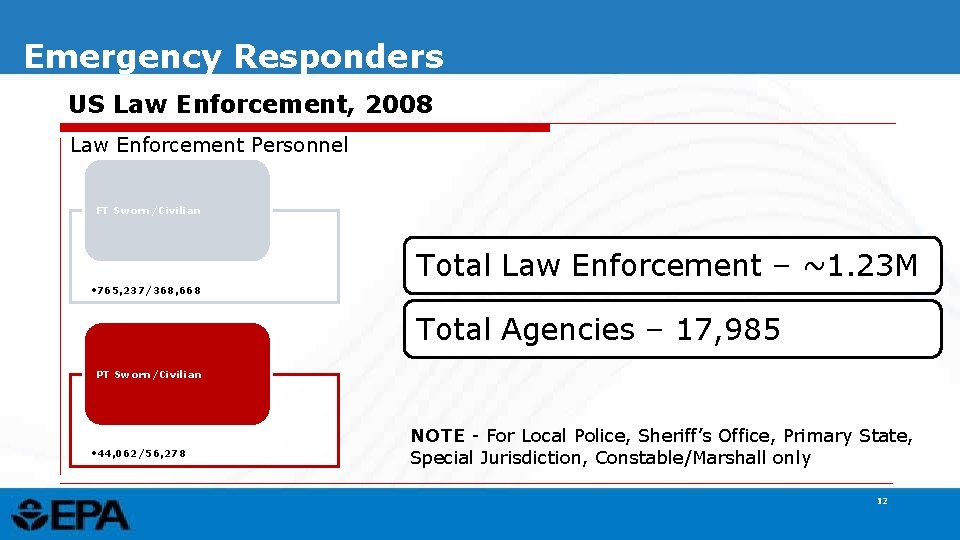
Emergency Responders US Law Enforcement, 2008 Law Enforcement Personnel FT Sworn/Civilian Total Law Enforcement – ~1. 23 M • 765, 237/368, 668 Total Agencies – 17, 985 PT Sworn/Civilian • 44, 062/56, 278 NOTE - For Local Police, Sheriff’s Office, Primary State, Special Jurisdiction, Constable/Marshall only 12
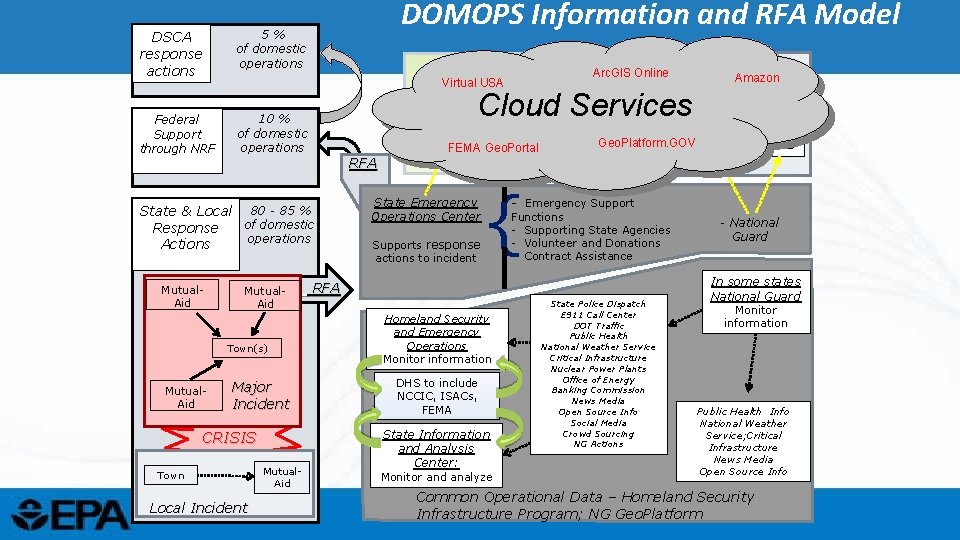
DSCA response actions Federal Support through NRF DOMOPS Information and RFA Model 5% of domestic operations Mutual. Aid Town(s) Mutual. Aid Major Incident CRISIS Town Local Incident Mutual. Aid External Information Flow Cloud Services 10 % of domestic operations FEMA Region FEMA Geo. Portal Civilian RFA State & Local 80 - 85 % of domestic Response operations Actions Mutual. Aid Arc. GIS Online Virtual/USA DHS FEMA State Emergency Operations Center Supports response actions to incident Geo. Platform. GOV DCE Military { DHS to include NCCIC, ISACs, FEMA State Information and Analysis Center: Monitor and analyze NGB - Emergency Support Functions - Supporting State Agencies - Volunteer and Donations - Contract Assistance RFA Homeland Security and Emergency Operations Monitor information Amazon NORTHCOM State Police Dispatch E 911 Call Center DOT Traffic Public Health National Weather Service Critical Infrastructure Nuclear Power Plants Office of Energy Banking ate. Commission News Media Open Source Info Social Media Crowd Sourcing NG Actions - National Guard In some states National Guard Monitor information Public Health Info National Weather Service; Critical Infrastructure News Media Open Source Info Common Operational Data – Homeland Security Infrastructure Program; NG Geo. Platform
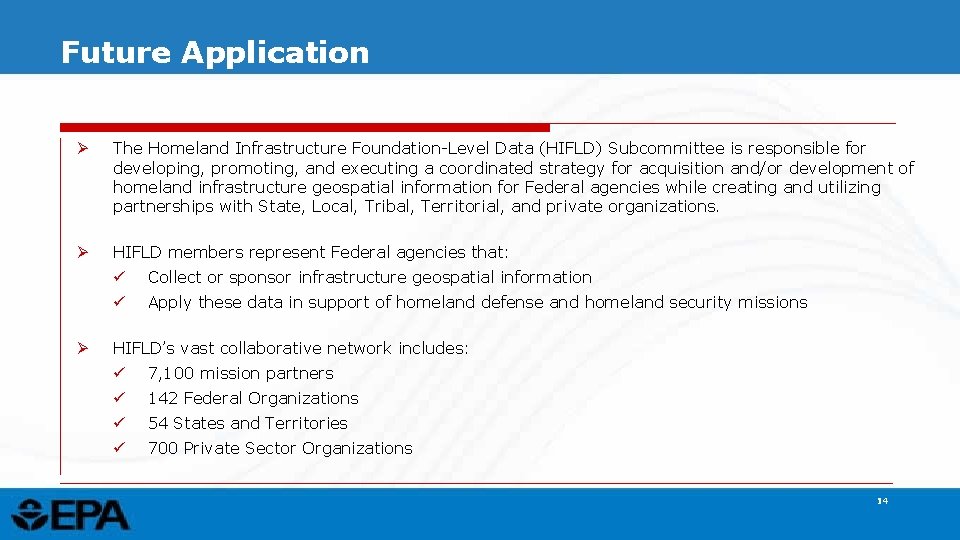
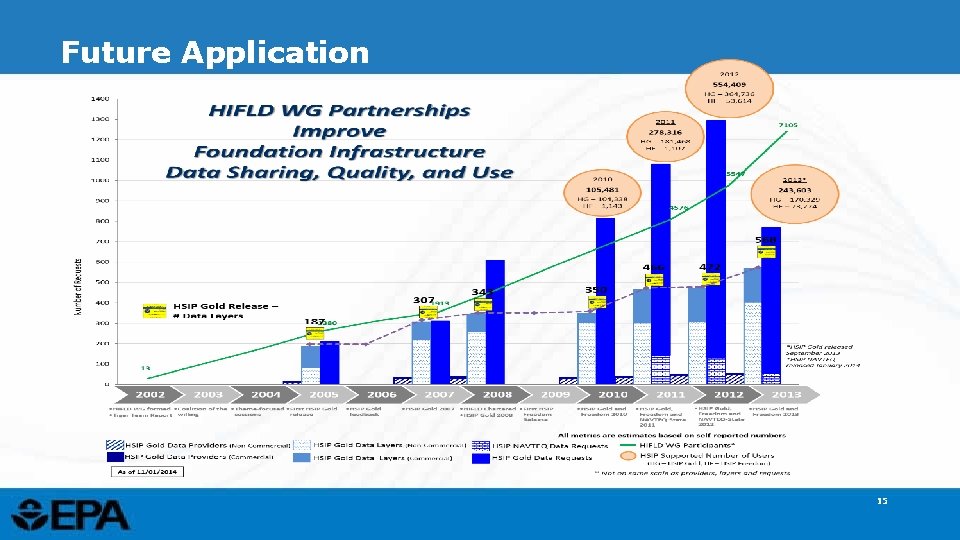
Future Application Ø The Homeland Infrastructure Foundation-Level Data (HIFLD) Subcommittee is responsible for developing, promoting, and executing a coordinated strategy for acquisition and/or development of homeland infrastructure geospatial information for Federal agencies while creating and utilizing partnerships with State, Local, Tribal, Territorial, and private organizations. Ø HIFLD members represent Federal agencies that: Ø ü Collect or sponsor infrastructure geospatial information ü Apply these data in support of homeland defense and homeland security missions HIFLD’s vast collaborative network includes: ü 7, 100 mission partners ü 142 Federal Organizations ü 54 States and Territories ü 700 Private Sector Organizations 14
Future Application 15
Questions Thank You Dennis Hellberg hellberg. dennis@epa. gov 16
- Slides: 16