
Racial Profiling TCOLE Course 3256 AND INSTRUCTOR George


- Slides: 82
Racial Profiling TCOLE Course # 3256 AND INSTRUCTOR George D. Little Deputy Chief, INTEL, Homeland Security & TRAINING BCCO PCT #4 Power. Point UNIT THREE
COURSE/LESSON OVERVIEW Participants will be able to identify the legal aspects of racial profiling.
Learning Objectives Learning Objective 3. 0: The participant will understand the difference between racial profiling verses reasonable suspicion. Learning Objective 3. 1 : The participant will able to identify the elements of both inappropriate and appropriate traffic stops.
Learning Objective 3. 2 : The participant will be able to identify and explain DEA Operation Pipeline. Learning Objective 3. 4 : The participant will be able to identify elements of a traffic stop which would constitute reasonable suspicion of drug courier activity. Learning Objective 3. 5 : The participant will be able to identify elements of a traffic stop which could constitute reasonable suspicion of criminal activity.
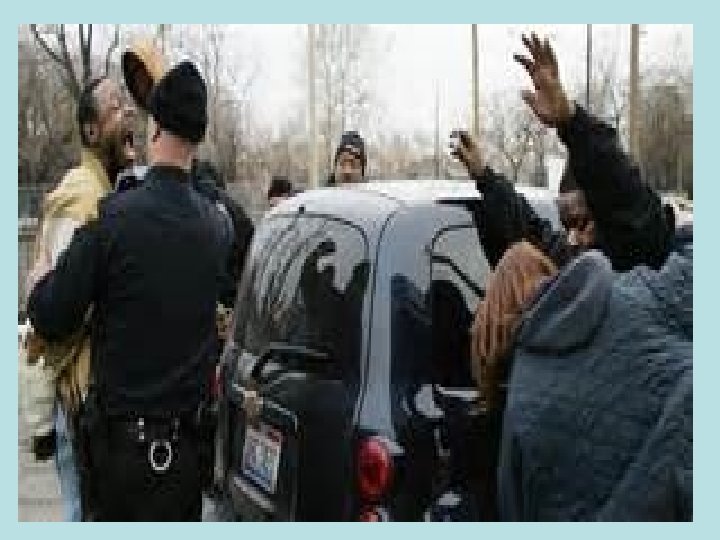
3. 0 Racial Profiling verses Reasonable Suspicion. Racial Profiling A. The consideration of race, ethnicity, or national origin by an officer of the law in deciding when and how to intervene in an enforcement capacity
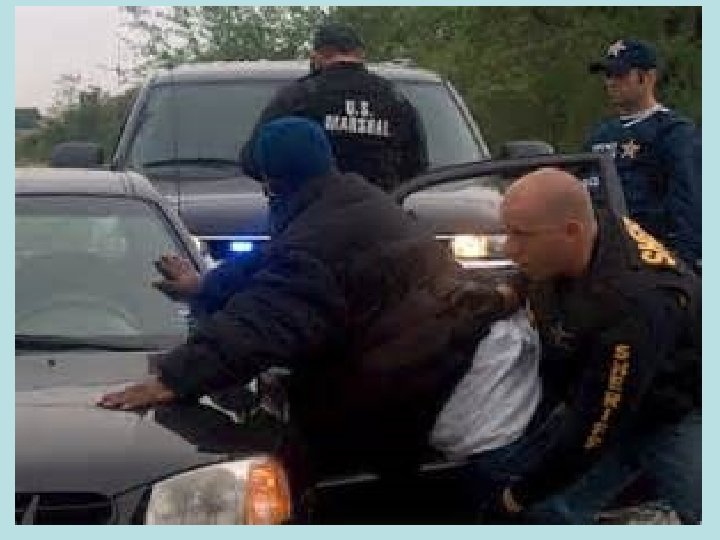
Most Common Racial Profiling B. The most common form of racial profiling occurs when police stop, question, and search African American, Hispanic American, or members of other racial minorities disproportionately based solely on disproportionately the individuals' race or race ethnicity.
What is a “PROFILE” ? C. A profile is a set of characteristics C. which we arbitrarily ascribe to human behavior or to a social situation, situation and by which we judge, evaluate, and categorize people, places, and things. These things characteristics are derived from our life experiences, and are applied either consciously or subconsciously.
D. Profiling, as a criminal investigation tool, is naturally derived from our work experiences as law enforcement officers. We intuitively officers form insights regarding people we insights professionally interact with, particularly the criminal element
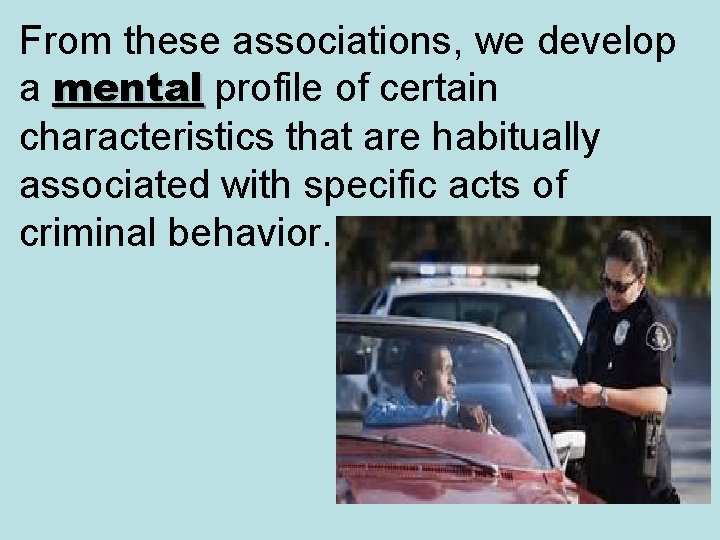
From these associations, we develop a mental profile of certain mental characteristics that are habitually associated with specific acts of criminal behavior.
E. Essentially, Modis Operandi (MO), E. or methods of operation, and criminal profiles are closely related concepts. Based on a criminal’s MO, an experienced and insightful investigator, particularly a specialist, can usually formulate a reasonably accurate profile of the perpetrator. profile
F. Reasonable suspicion is a term used to describe if a person has been or will be involved in a crime based on specific facts and circumstances In order to stop a vehicle, for instance, a police officer must be able to explain that a traffic violation or a criminal act had occurred.
Reasonable suspicion F. Cont’d: is something less than probable cause, but is more than a vague suspicion, an unexplainable hunch, or a “gut feeling. ” If you cannot articulate the reason(s) for the stop, you probably don’t have grounds for a legal stop in the first place.
Articulate the “FACTS” G. To validate and justify a traffic stop or a street field interview, you must be capable of reasonably and intelligently articulating, verbally articulating and in writing, the basis for the writing stop.
G. G. Cont’d: Articulating simply means you must be able to persuasively explain or demonstrate to a court that you had probable cause to stop the vehicle or person in the first place, and that you had reasonable place suspicion for any further detaining or investigative actions you conducted following the stop
3. 1 Elements of Appropriate and Inappropriate Traffic Stops APPROPRIATE STANDARD A. Competence and fairness are Competence fairness the keys to professional police work, especially in confronting citizens in proactive field stops; anything less is ethically and professionally unacceptable.
INAPPROPRIATE B. Police work, by its very nature, B. however, can be driven by a single minded determination to just getting minded the job done; an “ends justify the means attitude”. This is personified by the old cop adage: “Do something take some kind of action even if it’s the wrong thing. ”
“There is no right way to do a wrong thing”
Race-Based Complaints (Vehicle Stops) C. Most race-based complaints come from vehicle stops, often since race is used as an race inappropriate substitute for drug courier profile elements
D. "DWB" – " Driving While DWB Black" a nickname for the public Black perception that a Black person may be stopped solely because of their race (especially with the suspicion that they are a drug courier), often extended to other minority groups or activities as well ("Driving While Brown, " "Flying While Black, " etc. ) Brown
E. A typical traffic stop resulting from racial profiling 1. The vehicle is stopped on the basis of a minor or contrived traffic violation which is used as a violation pretext for closer inspection of the vehicle, driver, and passengers
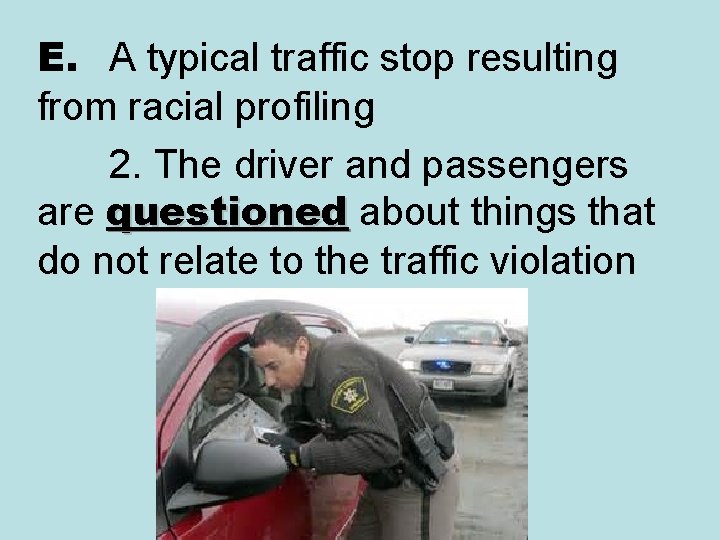
E. A typical traffic stop resulting from racial profiling 2. The driver and passengers are questioned about things that questioned do not relate to the traffic violation
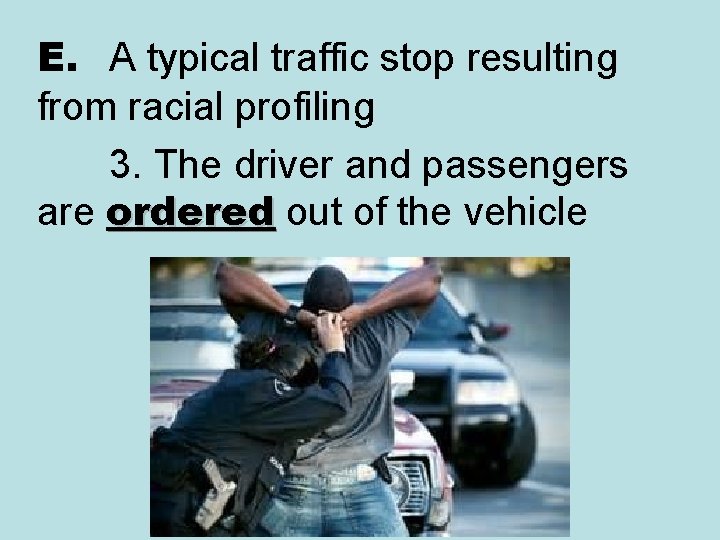
E. A typical traffic stop resulting from racial profiling 3. The driver and passengers are ordered out of the vehicle ordered
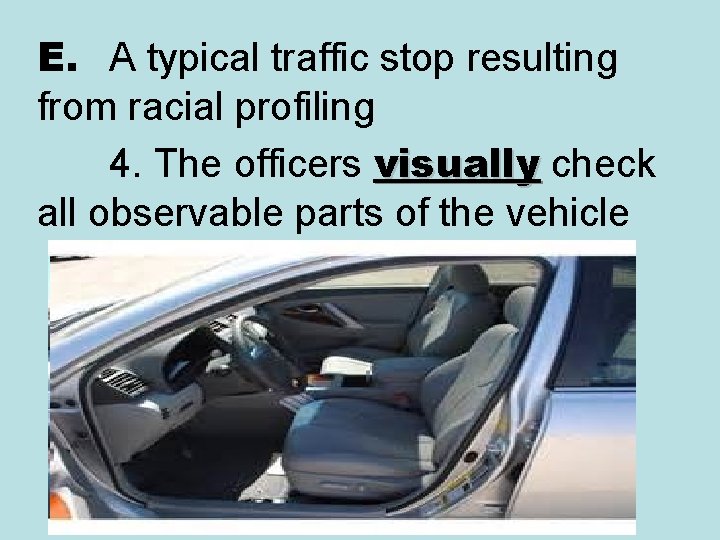
E. A typical traffic stop resulting from racial profiling 4. The officers visually check visually all observable parts of the vehicle
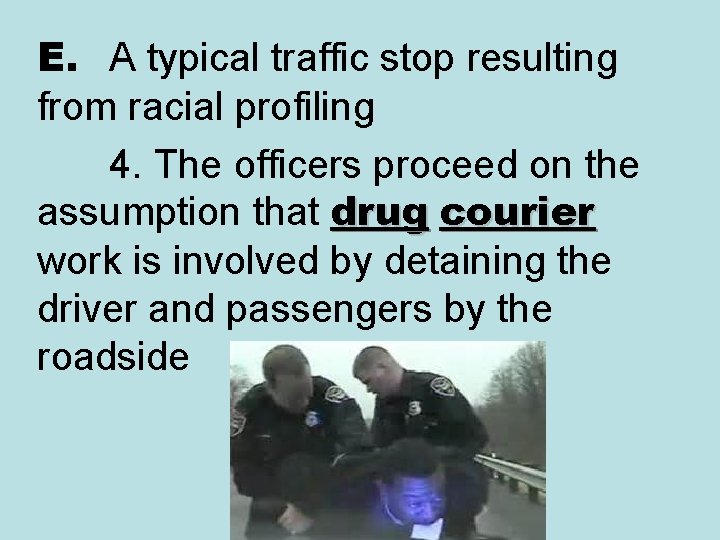
E. A typical traffic stop resulting from racial profiling 4. The officers proceed on the assumption that drug courier work is involved by detaining the driver and passengers by the roadside
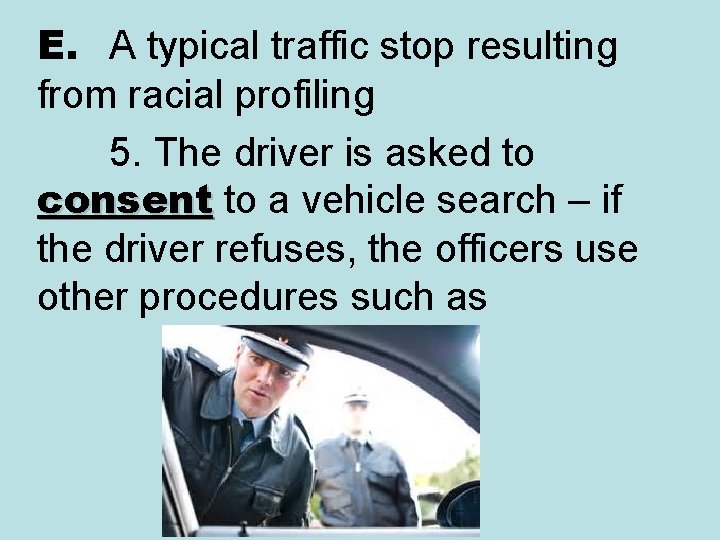
E. A typical traffic stop resulting from racial profiling 5. The driver is asked to consent to a vehicle search – if consent the driver refuses, the officers use other procedures such as
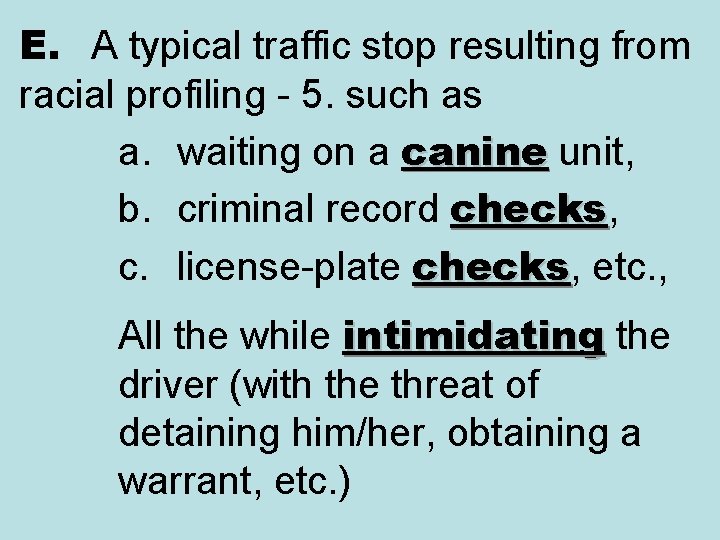
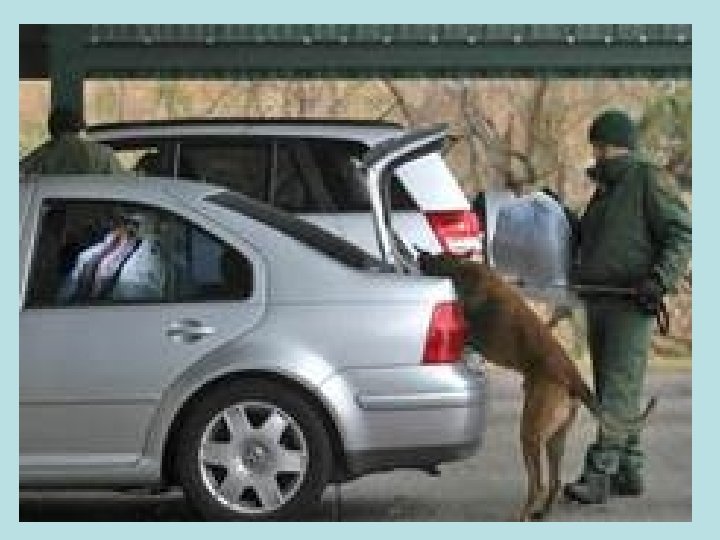
E. A typical traffic stop resulting from racial profiling - 5. such as a. waiting on a canine unit, canine b. criminal record checks, checks c. license-plate checks, etc. , checks All the while intimidating the intimidating driver (with the threat of detaining him/her, obtaining a warrant, etc. )
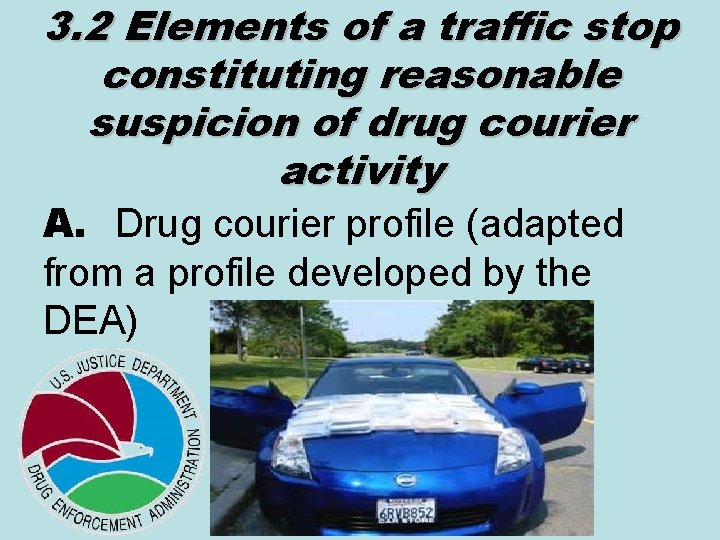
3. 2 Elements of a traffic stop constituting reasonable suspicion of drug courier activity A. Drug courier profile (adapted from a profile developed by the DEA)
U. S. Drug Enforcement Administration A. – Cont’d: In 1986, the DEA instituted “Operation Pipeline, ” a highway drug interdiction program, which has since trained state and local police agencies in the use of pretext traffic stops in order to find drugs in vehicles.
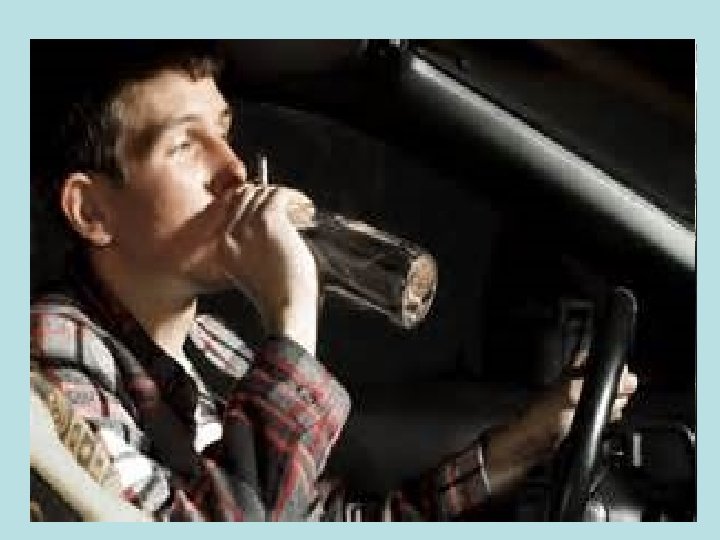
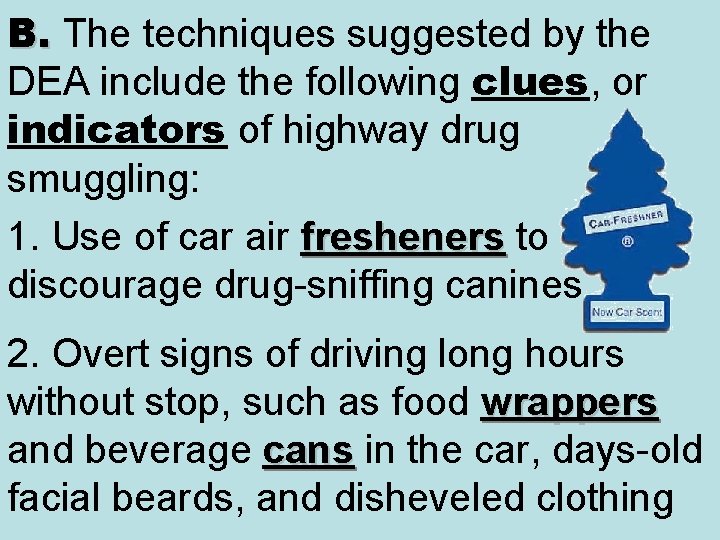
B. The techniques suggested by the B. DEA include the following clues, or indicators of highway drug smuggling: 1. Use of car air fresheners to fresheners discourage drug-sniffing canines 2. Overt signs of driving long hours without stop, such as food wrappers and beverage cans in the car, days-old cans facial beards, and disheveled clothing
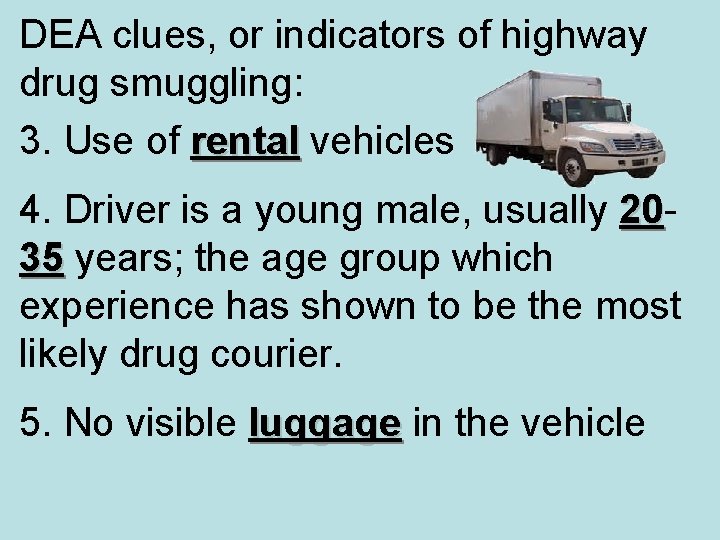
DEA clues, or indicators of highway drug smuggling: 3. Use of rental vehicles rental 4. Driver is a young male, usually 2020 35 years; the age group which 35 experience has shown to be the most likely drug courier. 5. No visible luggage in the vehicle luggage
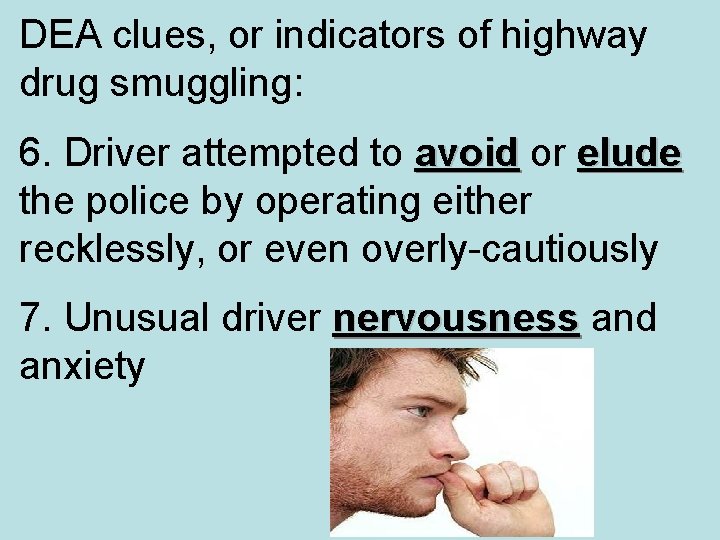
DEA clues, or indicators of highway drug smuggling: 6. Driver attempted to avoid or avoid elude the police by operating either recklessly, or even overly-cautiously 7. Unusual driver nervousness and nervousness anxiety
C. The DEA and local police agencies vigorously deny that race or ethnicity is a factor in drug courier profiles. These agencies say they neither teach nor condone racial profiling. If and when it does occur, they infer it is the result of over-zealous or errant zealous officers, the proverbial “bad apples” or “rogue cop” cliché. rogue MASKING THE TRUTH
D. Other Signs – cues or indicators used by civilian state, county and local law enforcement agencies. Copies DEA Standards
• Driver is nervous or anxious beyond the ordinary anxiety and ordinary cultural communication styles 2. Signs of long-term driving (driver is long unshaven, has empty food containers, etc. ) 3. Vehicle is rented 4. Driver is a young male, 2020 35
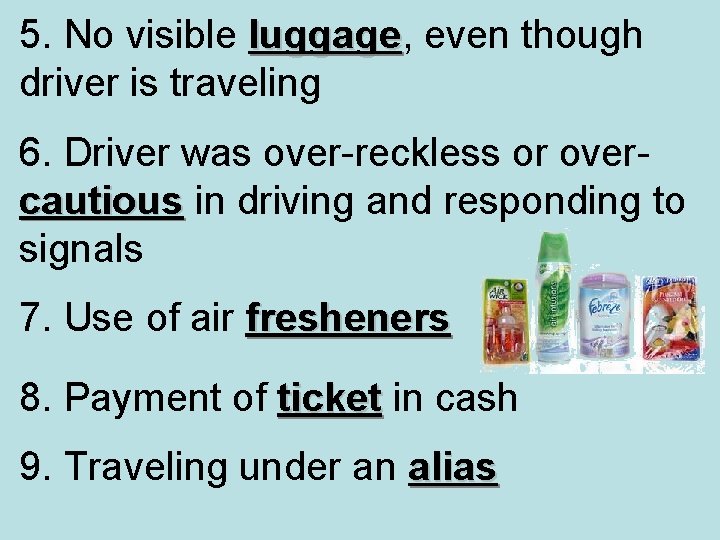
5. No visible luggage, even though luggage driver is traveling 6. Driver was over-reckless or overcautious in driving and responding to cautious signals 7. Use of air fresheners 8. Payment of ticket in cash ticket 9. Traveling under an alias
10. Traveling to and from a known drug suspect location. suspect 11. Leaving false call back number with ticketing agent. BR 549 12. Excessive travel to drug-source or distribution locales, i. e. frequent locales trips to Mexico (with no family ties there).
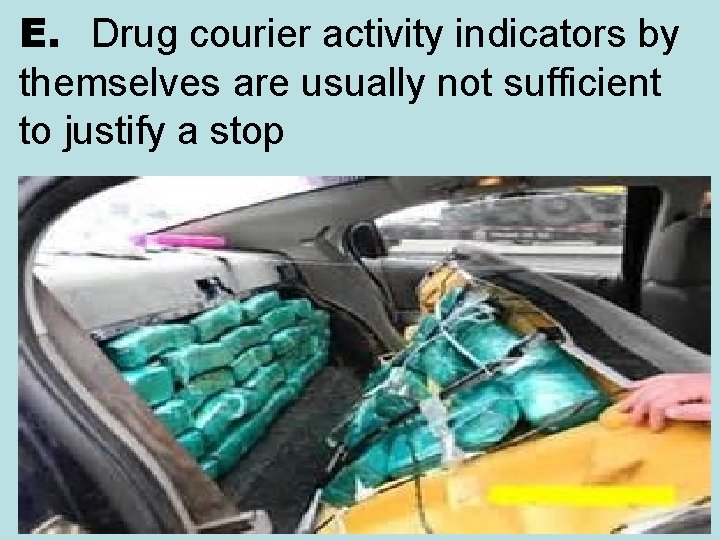
E. Drug courier activity indicators by themselves are usually not sufficient to justify a stop
3. 3 Identify elements of a traffic stop which could constitute reasonable suspicion of criminal activity A. Thinking about the totality of circumstances in a vehicle stop
B. Vehicle exterior 1. Non-standard repainting (esp. repainting on a new vehicle) 2. Signs of hidden cargo (heavy cargo weight in trunk, windows do not roll down, etc. ) 3. Unusual license plate suggesting a switch (dirty plate, bugs on back plate, etc. )
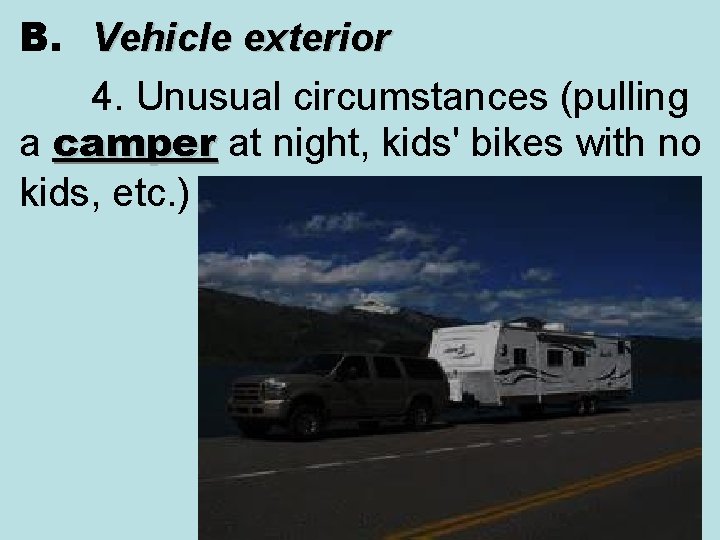
B. Vehicle exterior 4. Unusual circumstances (pulling a camper at night, kids' bikes with no camper kids, etc. )
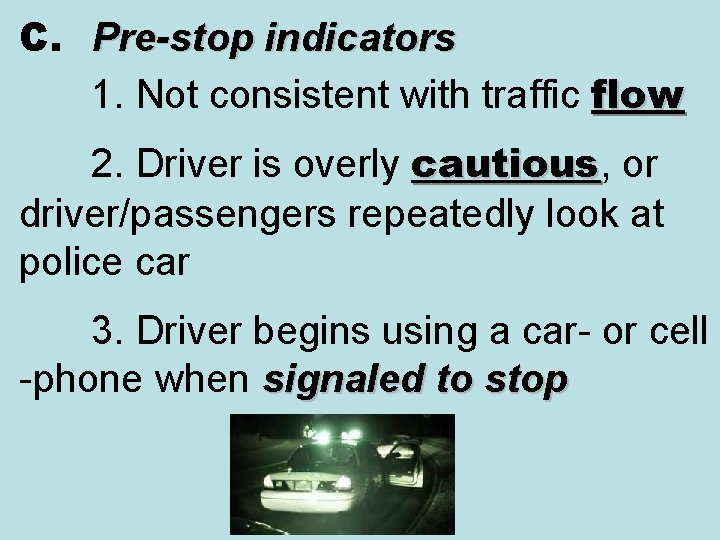
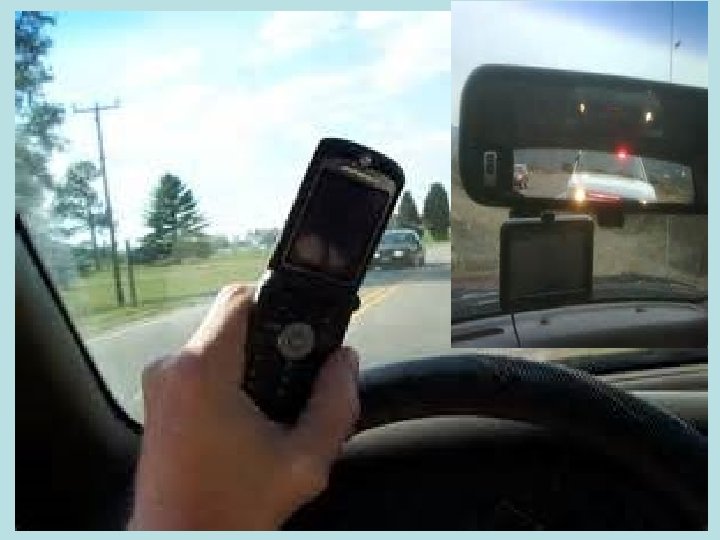
C. Pre-stop indicators 1. Not consistent with traffic flow 2. Driver is overly cautious, or cautious driver/passengers repeatedly look at police car 3. Driver begins using a car- or cell -phone when signaled to stop
C. Pre-stop indicators 4. Unusual pull-over behavior (ignores signals, hesitates, pulls onto new street, moves objects in car, etc. ) 5. Traveling to and from drug smuggling suspected location.
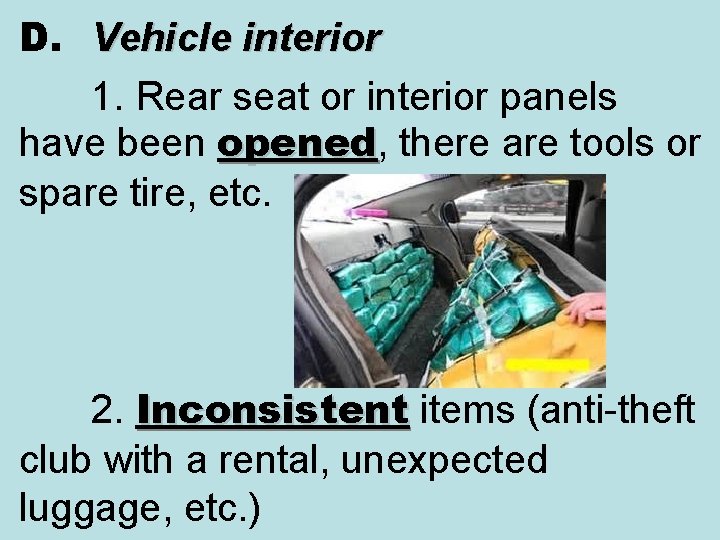
D. Vehicle interior 1. Rear seat or interior panels have been opened, there are tools or opened spare tire, etc. 2. Inconsistent items (anti-theft Inconsistent club with a rental, unexpected luggage, etc. )
3. 4 Interpersonal Communications (Key) A. Effective communication A. communication skills can be a police officer’s most important attribute. This is attribute particularly so when engaged in a traffic stop or a field interview on the street. A few particulars…:
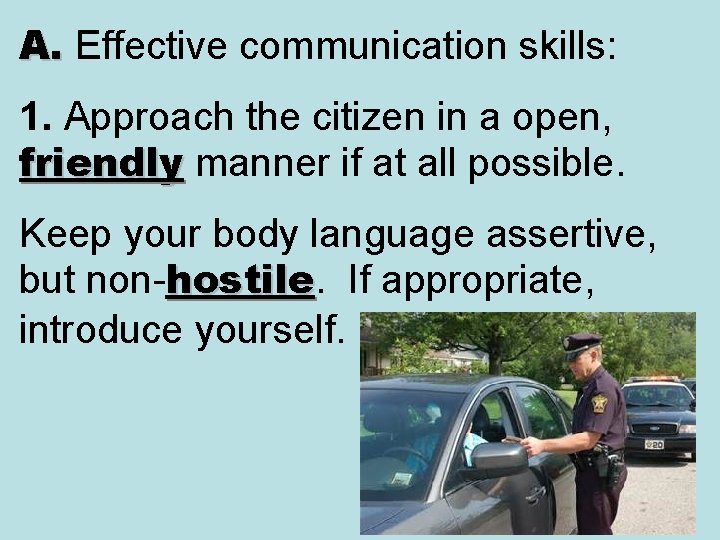
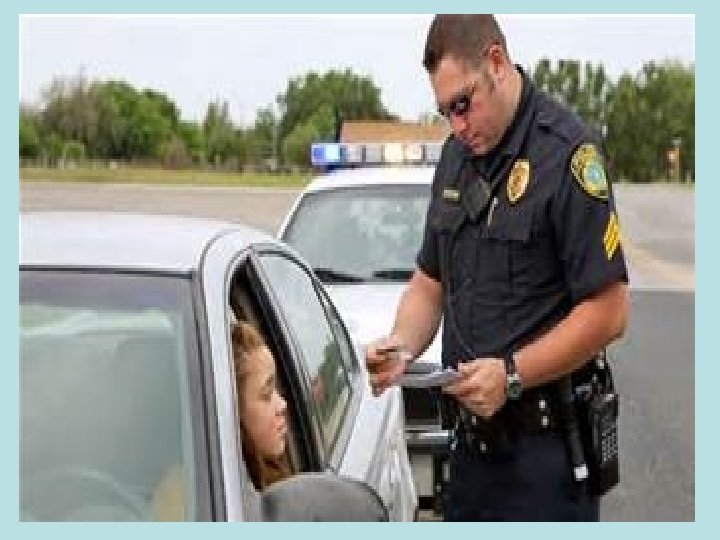
A. Effective communication skills: A. 1. Approach the citizen in a open, friendly manner if at all possible. friendly Keep your body language assertive, but non-hostile. If appropriate, hostile introduce yourself.
A. Effective communication skills: A. 2. Remember, the key elements in any stop are civility and caution. civility caution Sometimes it’s difficult to be courteous, but you should always be civil
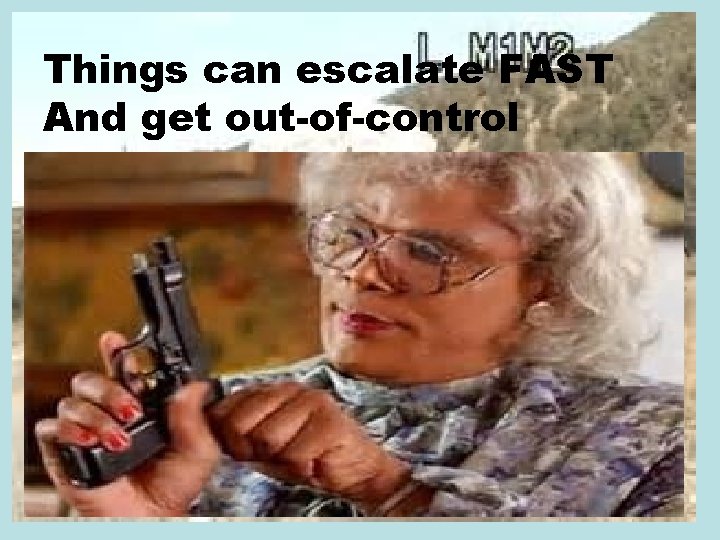
Things can escalate FAST And get out-of-control
A. Effective communication skills: A. 3. Tell the citizen why you stopped him. Unless it’s patently obvious, the citizen has a right to know and you are professionally obligated to inform professionally him, without any hostility or posturing on your part. 4. Avoid any excessive small-talk or talk inappropriate questioning.
A. Effective communication skills: A. 5. Be brief and to the point. brief Don’t detain anyone beyond the time needed to effect the necessary enforcement action or otherwise clarify a situation
A. Effective communication skills: A. 6. Keep your physical, or non-verbal indicators friendly and neutral, friendly neutral such as your: a. Eye contact Eye b. Stance c. Position of hands d. Facial expression
A. Effective communication skills: A. 7. According to studies conducted in several states, the number one citizen complaint about police officers is the officer’s verbal conduct. By comparison, only about onefourth of the complaints filed against police officers dealt with excessive force issues
A. Effective communication skills: A. 8. Speak civilly and in a moderate tone. Citizens seem more concerned about how officers speak to them, than by them what the officer actually says. Citizens are particularly aggrieved by what they perceive as an officer’s gruff or condescending tone of voice
A. Effective communication skills: A. 9. Listen actively. Communication is Listen a two-part process and listening is the other half. Regardless of the type of person you’re dealing with, stay focused and concentrate on what they’re saying (…or not saying).
B. CPR for Professionalism: B. 1. Civility – A state of affairs characterized by tolerance, kindness, consideration, and understanding. Civility can be expressed by positive action, or even inaction, as when police officers refrain from over-reacting to verbal outbursts from angry citizens
B. CPR for Professionalism: B. 2. Professionalism – In a broad sense, a concept of excellence or a continual striving for excellence. Its core elements include technical knowledge, moral judgments, a clientoriented practice, considerable discretion given to practitioners, and most importantly, an acknowledgement that policing is a
B. CPR for Professionalism: B. 2. Professionalism – Cont’d: “moral call” profession, in which members are duty bound to respond, whenever respond and wherever called, regardless of who calls them.
B. CPR for Professionalism: B. 3. Restraint – The self-control exercised by officers and their selection of the least intrusive means of accomplishing a legitimate police objective.
REMEMBER YOUR LAW ENFORCEMENT ETHICS C. Police cannot ascribe certain behavior traits to a person or a group merely on the basis of their race or race ethnic background. ethnic If police action is taken, it must be because the person in question has violated a law, not because he or she law is of a particular race, ethnicity, or gender.
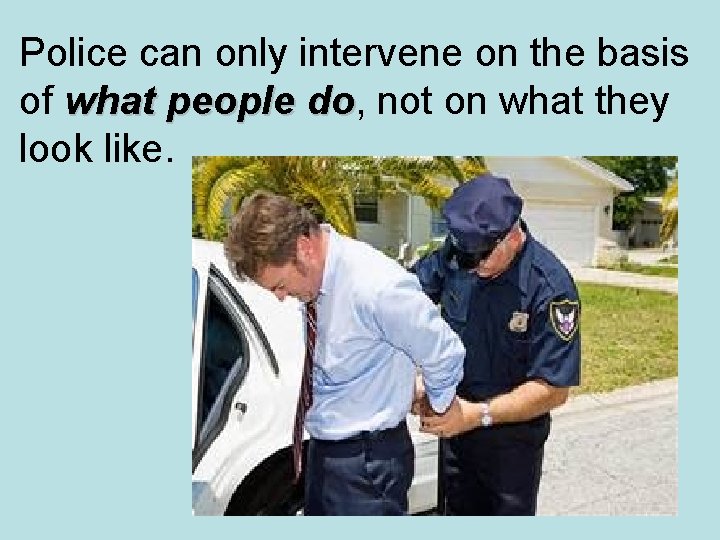
Police can only intervene on the basis of what people do, not on what they do look like.
Instructors Experience The “RACE CARD” is often played against law enforcement to defer or mask one’s actions; however it is not an affirmative defense against prosecution for one’s overt criminal activities.
RESPECT is a two-way street, if one wants Respect one must give RESPECT, despite the color of one’s skin or ethnicity. Simply put “Do unto other as you would have them do unto you”. Matthew 7: 12 Our duty and responsibility is to protect the flock against all would be perpetrators and predators.
Our government and our media are the biggest perpetrators and promoters of furthering “RACISM” in our country. It is our duty, responsibility and accountability to STOP RACISM and treat every American as an equal.
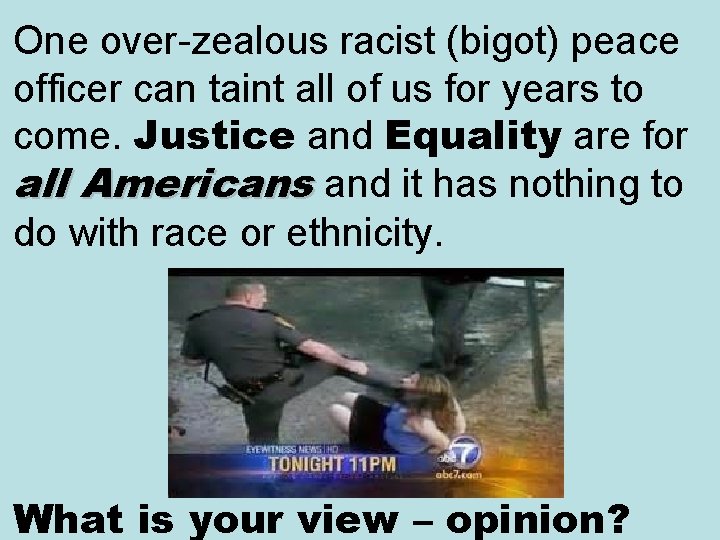
One over-zealous racist (bigot) peace officer can taint all of us for years to come. Justice and Equality are for all Americans and it has nothing to do with race or ethnicity. What is your view – opinion?
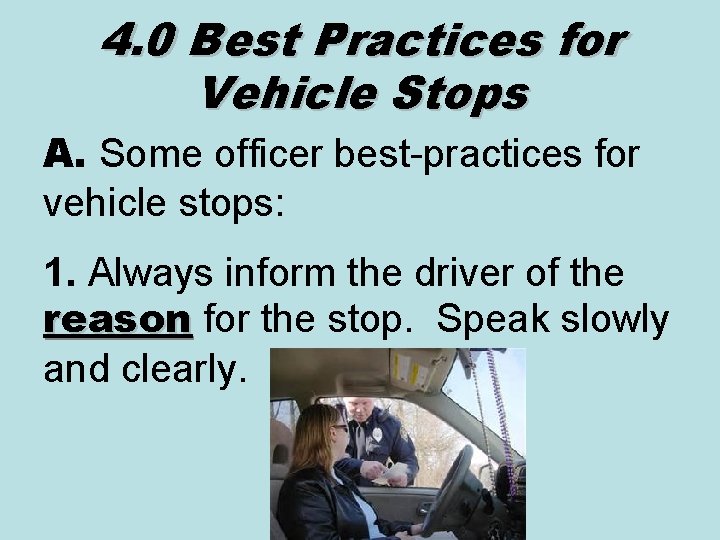
4. 0 Best Practices for Vehicle Stops A. Some officer best-practices for vehicle stops: 1. Always inform the driver of the reason for the stop. Speak slowly reason and clearly.
A. Some officer best-practices for vehicle stops: 2. Describe the violation in terms of what the vehicle was doing, not what doing the driver did. This non-accusatory approach can often enhance officerdriver rapport. 3. Ask the driver for the reason for the violation; allow them to vent/offer a stress-reducing explanation.
A. Some officer best-practices for vehicle stops: 4. Provide instructions. After you instructions obtain their license and registration, tell (explain to) them that you are going back to your police vehicle to review their documents and advise them to remain in their vehicle.
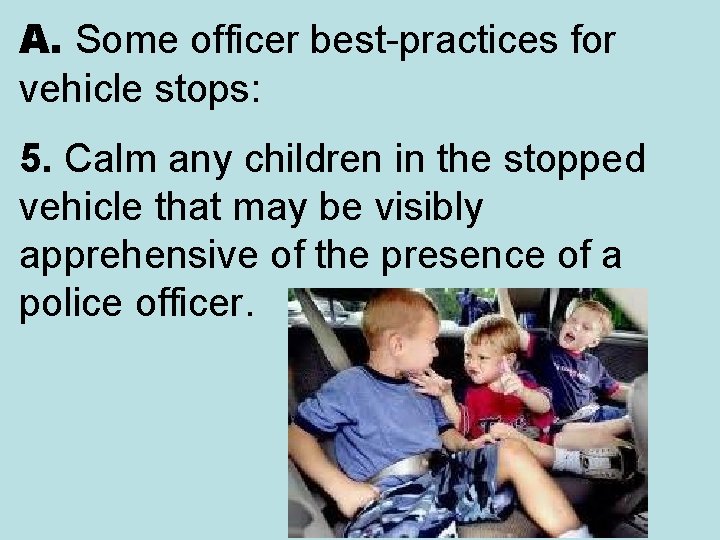
A. Some officer best-practices for vehicle stops: 5. Calm any children in the stopped vehicle that may be visibly apprehensive of the presence of a police officer.
B. Again, it’s worth repeating: Proactive traffic enforcement that is race or ethnic-based is neither legal: consistent with democratic ideals, values, and principles of American policing; nor in any way a policing legitimate and defensible public protection strategy.
C. Use the but/for test to determine if a stop was based on racial profiling. Say to yourself, But for this person’s race, ethnic heritage, gender, religious or sexual preference, would this driver have had this encounter with me?
C. Cont’d: If the answer is that they would not, then this was a profile stop and most likely a violation of the person’s Constitutional rights. US Department of Justice, NHTSA, Strengthening the Citizen and Police Partnership at the Traffic Stop: Professionalism is a Two-Way Street, (Draft) Washington, DC, Aug. 14, 2000, p. 8. Ibid.
SUMMARY • What did you learn? • How will you apply what you’ve learned? • DEFINE & PROCESS UNIT THREE
SOURCES All Course Sources and/or Resources are listed in your Participant Handout RACIAL PROFILING TCOLE # 3256 Bexar County Constable Office PCT #4
Questions?
“Knowledge is “POWER” Stay informed, stay SAFE, stay Vigilant & stay Alive”
TAKE A 15 -MINUTE BREAK