
Race police legitimacy and cooperation with the police
- Slides: 56
Race, police legitimacy, and cooperation with the police Tom Tyler Department of Psychology/Law School New York University Tom Tyler, NIJ/DOJ. 1
The Gates incident. o The recent encounter between Henry Louis Gates and the Cambridge police encouraged so much public debate because it touched on a wide variety of “hot button” issues related to race and policing. Tom Tyler, NIJ/DOJ. 2
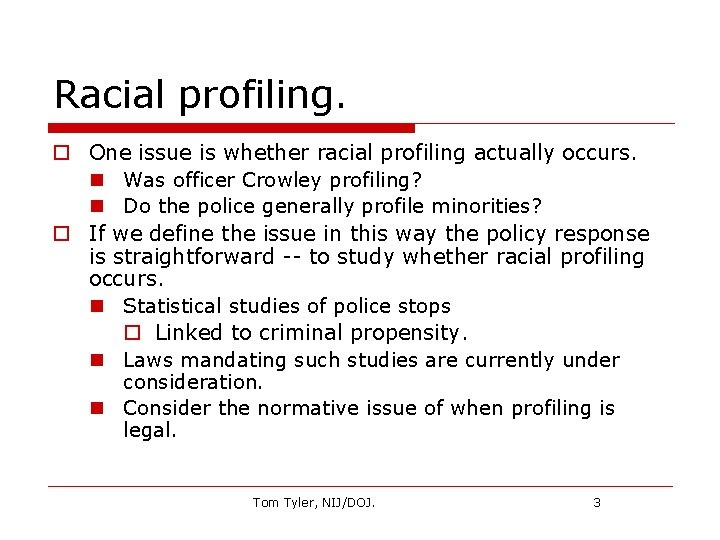
Racial profiling. o One issue is whether racial profiling actually occurs. n Was officer Crowley profiling? n Do the police generally profile minorities? o If we define the issue in this way the policy response is straightforward -- to study whether racial profiling occurs. n Statistical studies of police stops o Linked to criminal propensity. n Laws mandating such studies are currently under consideration. n Consider the normative issue of when profiling is legal. Tom Tyler, NIJ/DOJ. 3
Perceived discrimination. o I want to approach the Gates encounter from a different perspective. n Perceived discrimination. Tom Tyler, NIJ/DOJ. 4
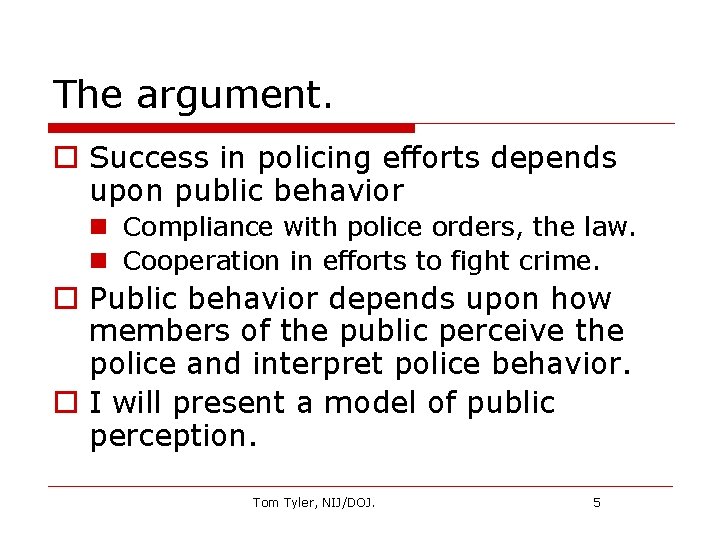
The argument. o Success in policing efforts depends upon public behavior n Compliance with police orders, the law. n Cooperation in efforts to fight crime. o Public behavior depends upon how members of the public perceive the police and interpret police behavior. o I will present a model of public perception. Tom Tyler, NIJ/DOJ. 5
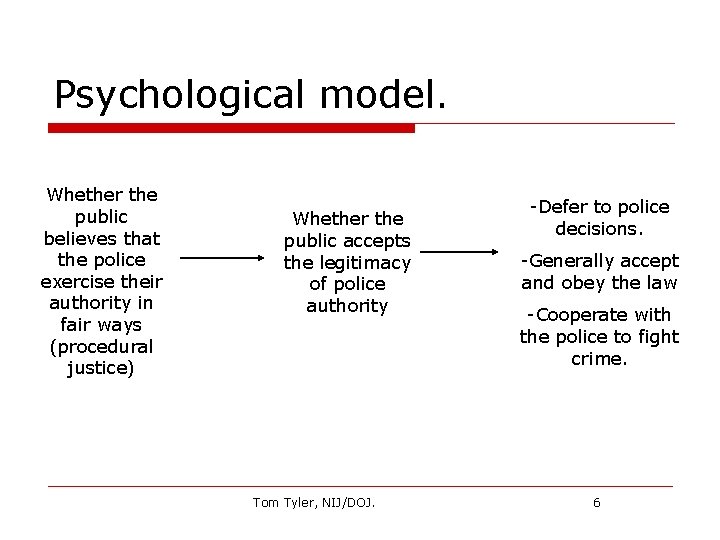
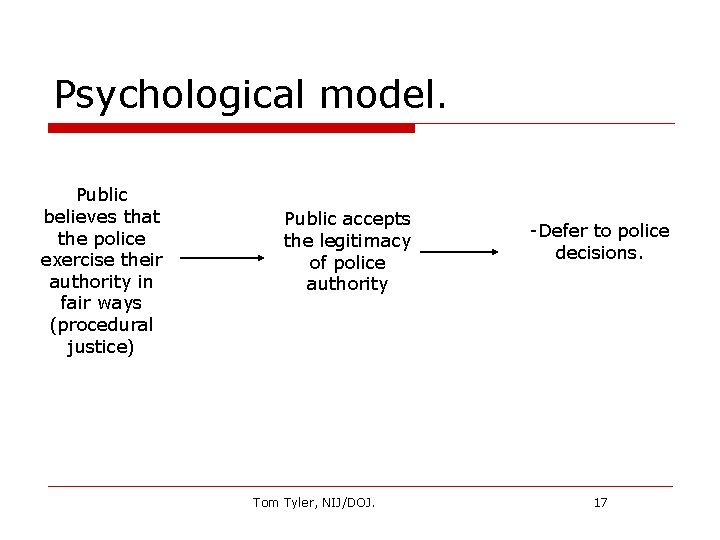
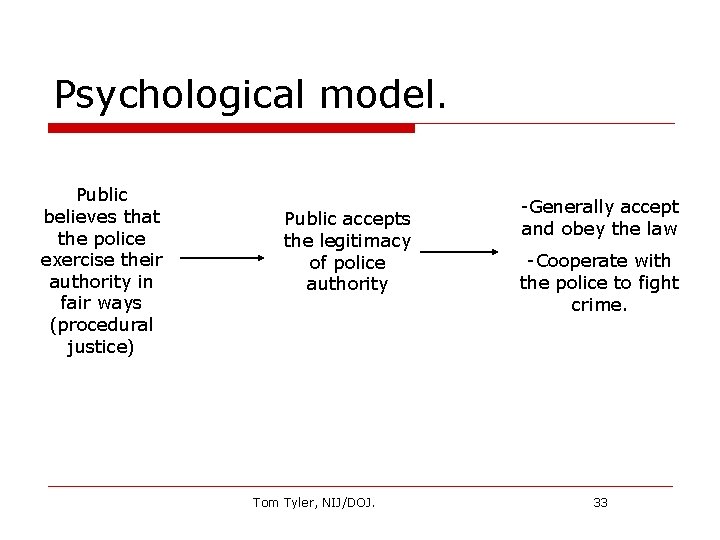
Psychological model. Whether the public believes that the police exercise their authority in fair ways (procedural justice) Whether the public accepts the legitimacy of police authority Tom Tyler, NIJ/DOJ. -Defer to police decisions. -Generally accept and obey the law -Cooperate with the police to fight crime. 6
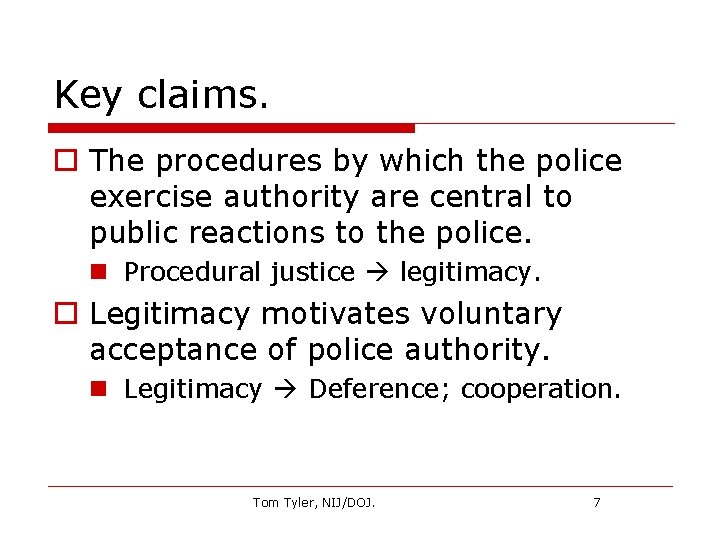
Key claims. o The procedures by which the police exercise authority are central to public reactions to the police. n Procedural justice legitimacy. o Legitimacy motivates voluntary acceptance of police authority. n Legitimacy Deference; cooperation. Tom Tyler, NIJ/DOJ. 7
The Gates incident. o Reflects the reality that there is a racial gap in public views about the police. Tom Tyler, NIJ/DOJ. 8
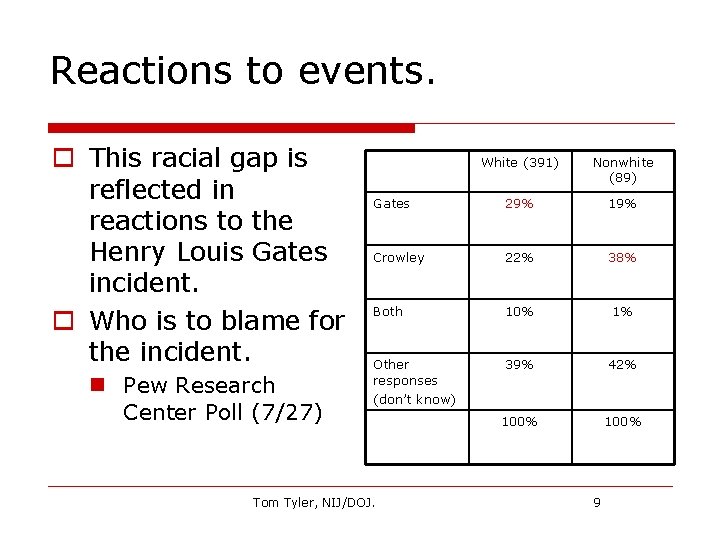
Reactions to events. o This racial gap is reflected in reactions to the Henry Louis Gates incident. o Who is to blame for the incident. n Pew Research Center Poll (7/27) White (391) Nonwhite (89) Gates 29% 19% Crowley 22% 38% Both 10% 1% Other responses (don’t know) 39% 42% 100% Tom Tyler, NIJ/DOJ. 9
Police stops. o The way that people understand events shapes the way they react to them. o Police stops. n Do people defer to the police and accept their decisions or are they resistant; defiant? Tom Tyler, NIJ/DOJ. 10
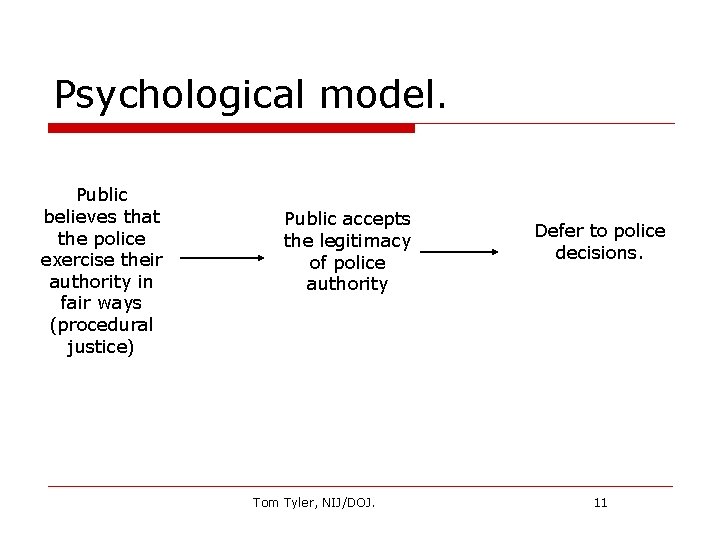
Psychological model. Public believes that the police exercise their authority in fair ways (procedural justice) Public accepts the legitimacy of police authority Tom Tyler, NIJ/DOJ. Defer to police decisions. 11
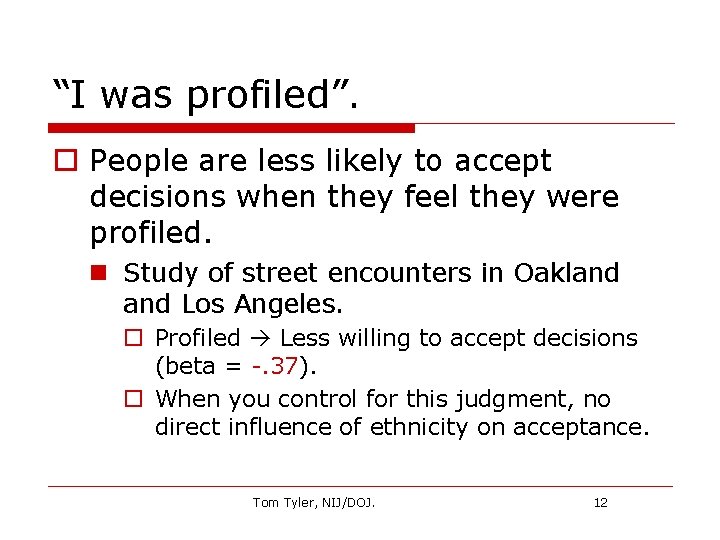
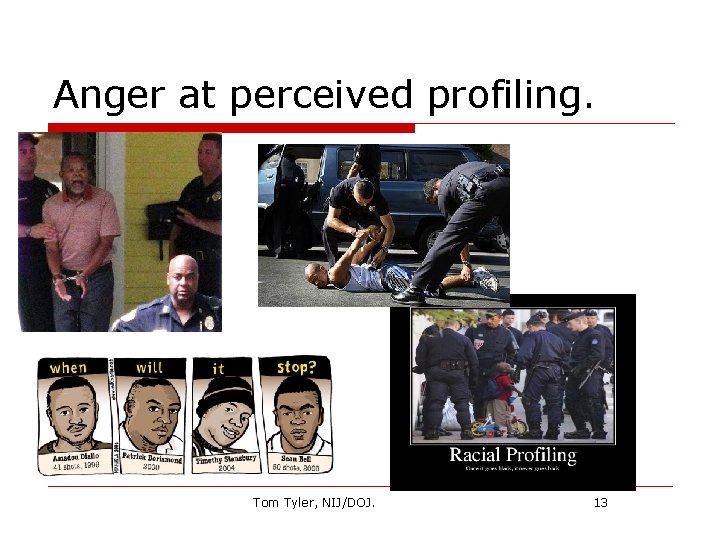
“I was profiled”. o People are less likely to accept decisions when they feel they were profiled. n Study of street encounters in Oakland Los Angeles. o Profiled Less willing to accept decisions (beta = -. 37). o When you control for this judgment, no direct influence of ethnicity on acceptance. Tom Tyler, NIJ/DOJ. 12
Anger at perceived profiling. Tom Tyler, NIJ/DOJ. 13
Why do people think they have been profiled during personal experiences? o Ethnicity—minorities, women, young are more likely to think they were stopped due to demographics o However, the key issue is the behavior of the police officer Tom Tyler, NIJ/DOJ. 14
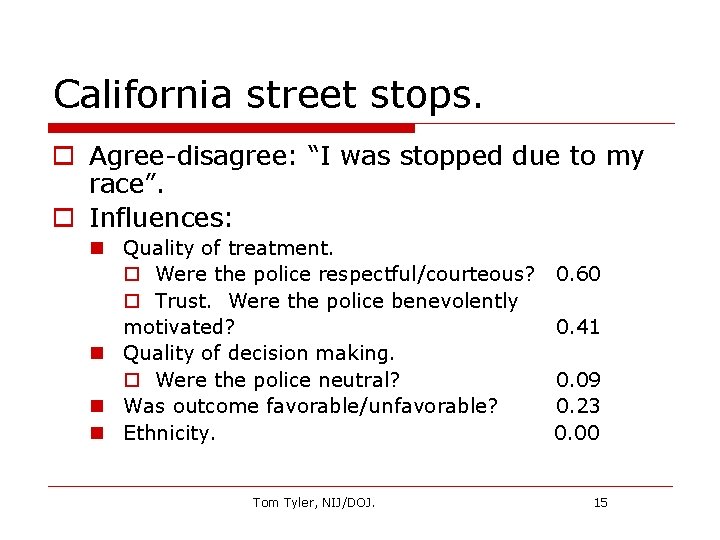
California street stops. o Agree-disagree: “I was stopped due to my race”. o Influences: n Quality of treatment. o Were the police respectful/courteous? 0. 60 o Trust. Were the police benevolently motivated? 0. 41 n Quality of decision making. o Were the police neutral? 0. 09 n Was outcome favorable/unfavorable? 0. 23 n Ethnicity. 0. 00 Tom Tyler, NIJ/DOJ. 15
Interpersonal treatment. o These findings are typical: There is a strong role of quality of interpersonal treatment. n Treatment with respect, dignity. n Rights are respected. n Believe authorities care about their needs and concerns. n Feel that their arguments are considered when decisions are made. Tom Tyler, NIJ/DOJ. 16
Psychological model. Public believes that the police exercise their authority in fair ways (procedural justice) Public accepts the legitimacy of police authority Tom Tyler, NIJ/DOJ. -Defer to police decisions. 17
Police actions as a key issue. o This point does not only apply to perceived racial profiling. o More generally, people react to the police in terms of quality of treatment. Tom Tyler, NIJ/DOJ. 18
Personal encounters with the police. o What legitimates decisions so that members of the public feel willing to accept them? n Focus on voluntary acceptance of decisions. o As opposed to anger; resistance; escalation. Tom Tyler, NIJ/DOJ. 19
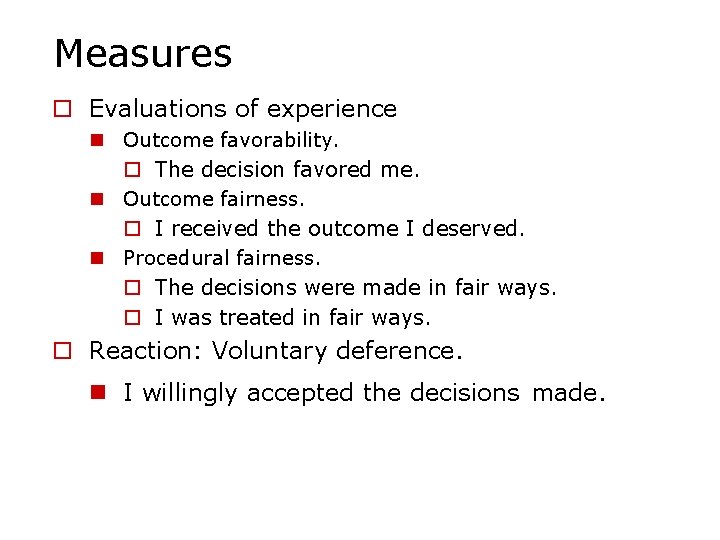
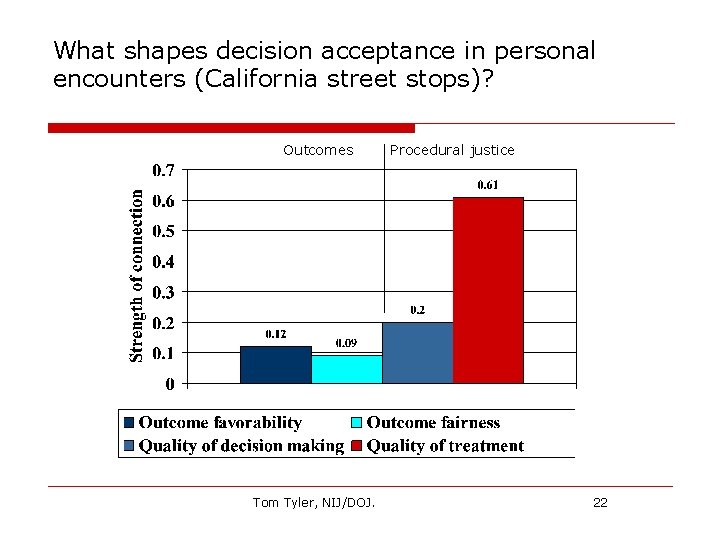
o Why do people voluntarily defer to police officers (and judges) and accept the outcomes they receive? n Study in Oakland Los Angeles (1, 656 interviews). o Of recent personal experiences with legal authorities 85% with police. o Police n Often deliver undesired outcomes— arrest, citation n Often fail to solve people’s problems n Outcomes negative around 30% of the time
Measures o Evaluations of experience n Outcome favorability. o The decision favored me. n Outcome fairness. o I received the outcome I deserved. n Procedural fairness. o The decisions were made in fair ways. o I was treated in fair ways. o Reaction: Voluntary deference. n I willingly accepted the decisions made.
What shapes decision acceptance in personal encounters (California street stops)? Outcomes Tom Tyler, NIJ/DOJ. Procedural justice 22
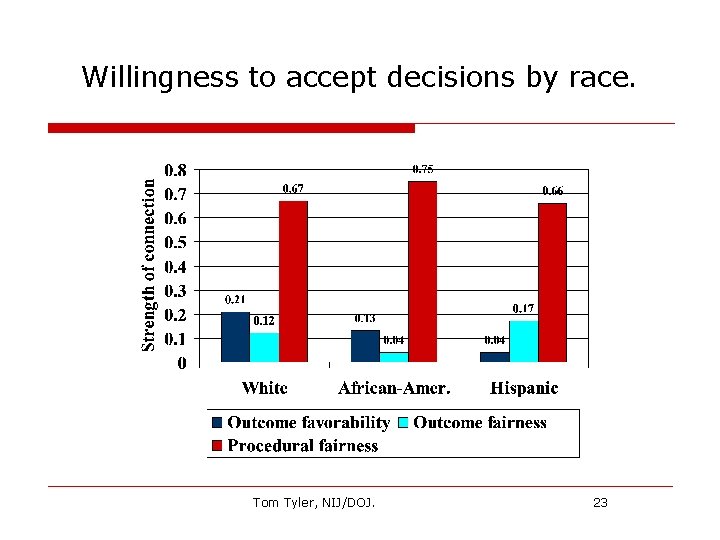
Willingness to accept decisions by race. Tom Tyler, NIJ/DOJ. 23
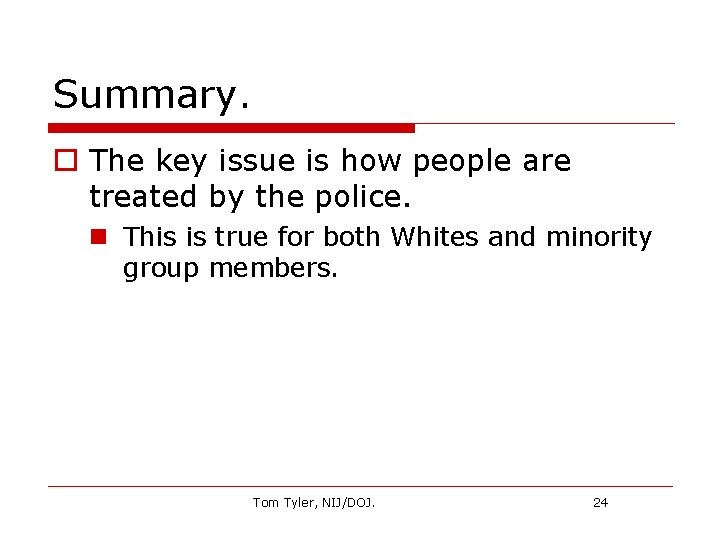
Summary. o The key issue is how people are treated by the police. n This is true for both Whites and minority group members. Tom Tyler, NIJ/DOJ. 24
New York City study of personal encounters with the police. o 255 people have a personal experience in time between two interviews. o Can the police engage in policing activities while simultaneously building legitimacy? Tom Tyler, NIJ/DOJ. 25
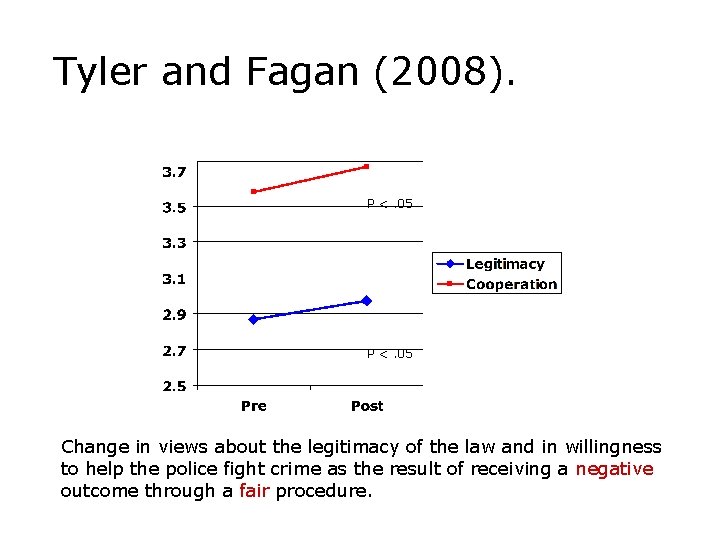
Tyler and Fagan (2008). P <. 05 Change in views about the legitimacy of the law and in willingness to help the police fight crime as the result of receiving a negative outcome through a fair procedure.
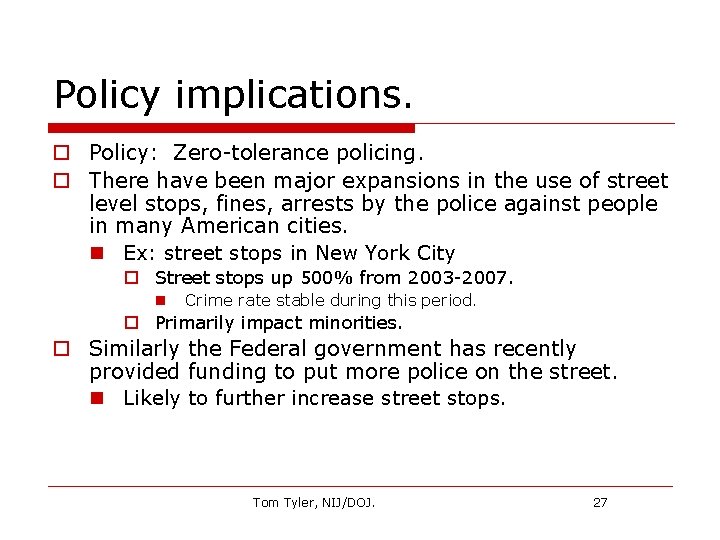
Policy implications. o Policy: Zero-tolerance policing. o There have been major expansions in the use of street level stops, fines, arrests by the police against people in many American cities. n Ex: street stops in New York City o Street stops up 500% from 2003 -2007. n Crime rate stable during this period. o Primarily impact minorities. o Similarly the Federal government has recently provided funding to put more police on the street. n Likely to further increase street stops. Tom Tyler, NIJ/DOJ. 27
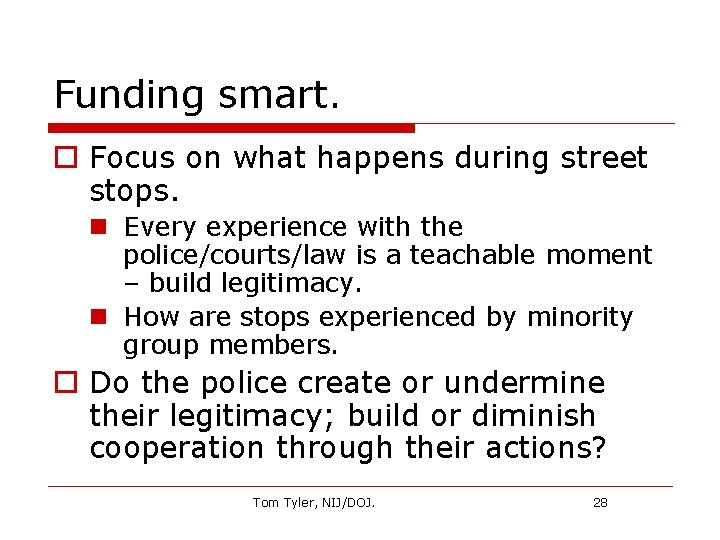
Funding smart. o Focus on what happens during street stops. n Every experience with the police/courts/law is a teachable moment – build legitimacy. n How are stops experienced by minority group members. o Do the police create or undermine their legitimacy; build or diminish cooperation through their actions? Tom Tyler, NIJ/DOJ. 28
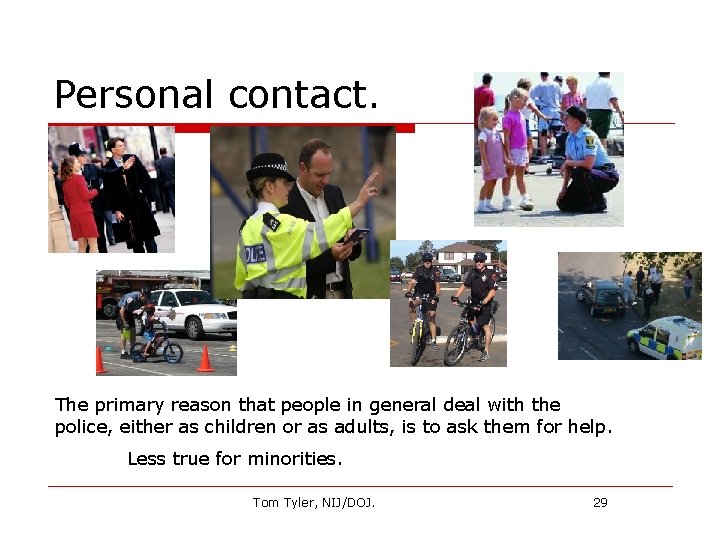
Personal contact. The primary reason that people in general deal with the police, either as children or as adults, is to ask them for help. Less true for minorities. Tom Tyler, NIJ/DOJ. 29
Issues of concern. o Police training n Change to increase focus upon how people are treated. Putting people at ease, creating legitimacy, should be a goal of policing. o What type of police behaviors are rewarded? n Is the focus only upon crime control efforts? n Expand to include building legitimacy. o Creating partnerships with communities, their leaders and the people within them. Tom Tyler, NIJ/DOJ. 30
Research implications. o Study how variations in the nature of police treatment shape people’s reactions. n Experimental studies. o How do partnerships work? n Planning how to deal with social order in the community (community voice). n Implementing procedural justice in personal encounters. o Test policing assumptions. n Are the police safer if they project force? n What policing models most effectively secure long-term compliance. Tom Tyler, NIJ/DOJ. 31
Broader concerns. o This is not just about personal encounters with the police. o Everyday views about the police; everyday behavior. n Comply with the law. n Help the police. Tom Tyler, NIJ/DOJ. 32
Psychological model. Public believes that the police exercise their authority in fair ways (procedural justice) Public accepts the legitimacy of police authority Tom Tyler, NIJ/DOJ. -Generally accept and obey the law -Cooperate with the police to fight crime. 33
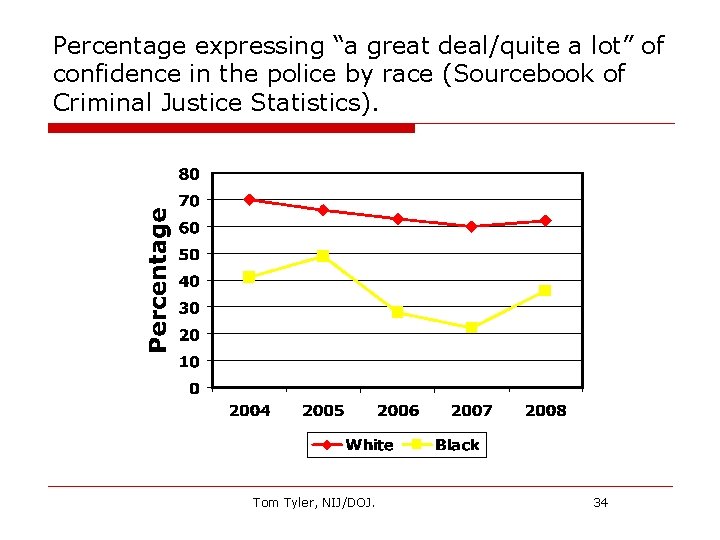
Percentage expressing “a great deal/quite a lot” of confidence in the police by race (Sourcebook of Criminal Justice Statistics). Tom Tyler, NIJ/DOJ. 34
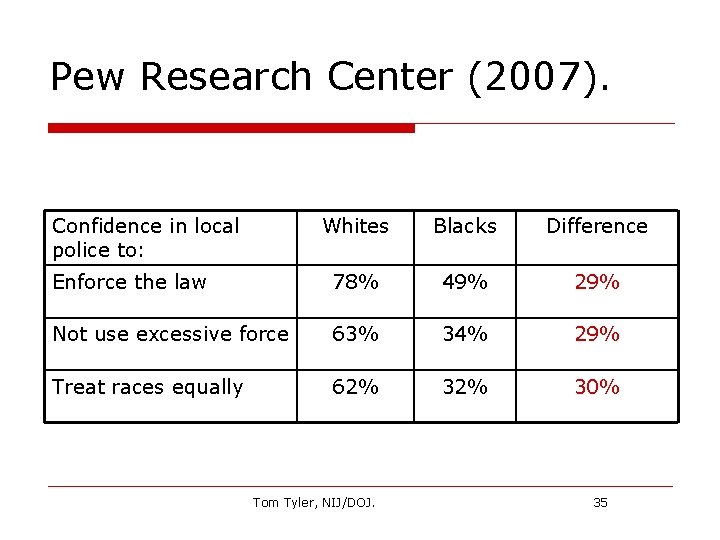
Pew Research Center (2007). Confidence in local police to: Whites Blacks Difference Enforce the law 78% 49% 29% Not use excessive force 63% 34% 29% Treat races equally 62% 30% Tom Tyler, NIJ/DOJ. 35
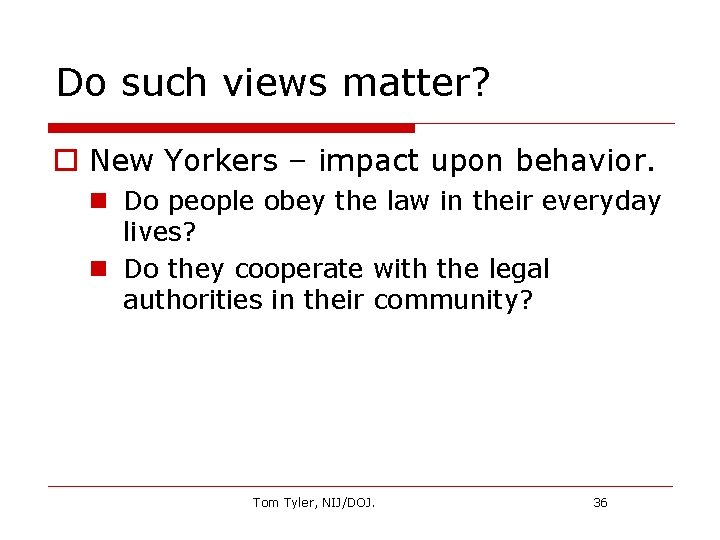
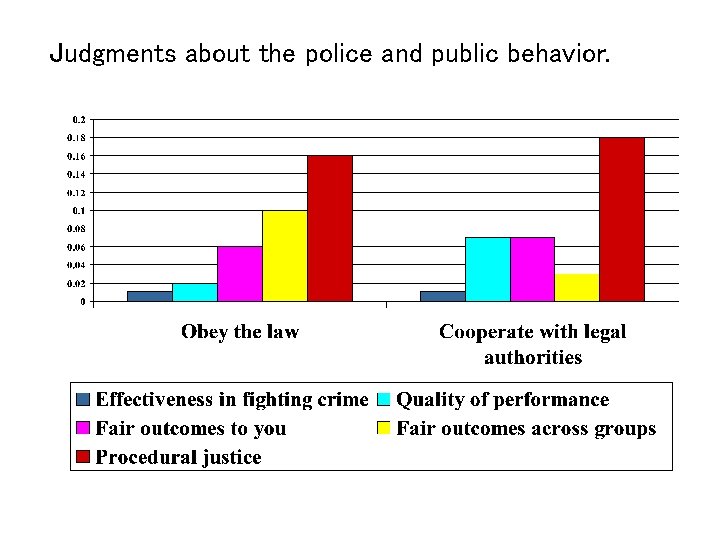
Do such views matter? o New Yorkers – impact upon behavior. n Do people obey the law in their everyday lives? n Do they cooperate with the legal authorities in their community? Tom Tyler, NIJ/DOJ. 36
Judgments about the police and public behavior.
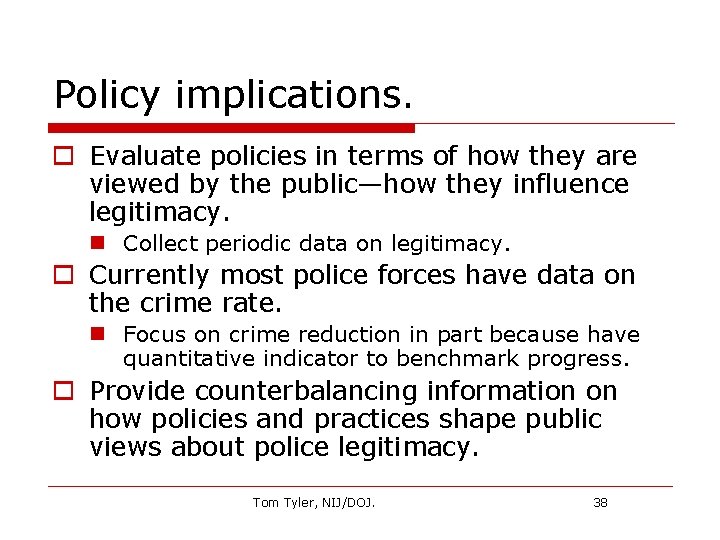
Policy implications. o Evaluate policies in terms of how they are viewed by the public—how they influence legitimacy. n Collect periodic data on legitimacy. o Currently most police forces have data on the crime rate. n Focus on crime reduction in part because have quantitative indicator to benchmark progress. o Provide counterbalancing information on how policies and practices shape public views about police legitimacy. Tom Tyler, NIJ/DOJ. 38
Areas of direct Federal responsibility. o Terrorism. o Immigration. Tom Tyler, NIJ/DOJ. 39
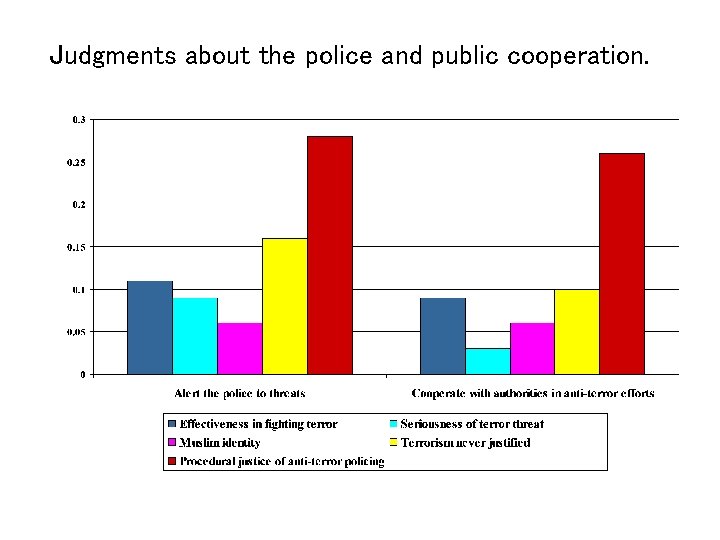
Terrorism. o Policing against terror threats. o Why do Muslims cooperate with the police/federal agents? o Sample of Muslims living in NYC. Tom Tyler, NIJ/DOJ. 40
Judgments about the police and public cooperation.
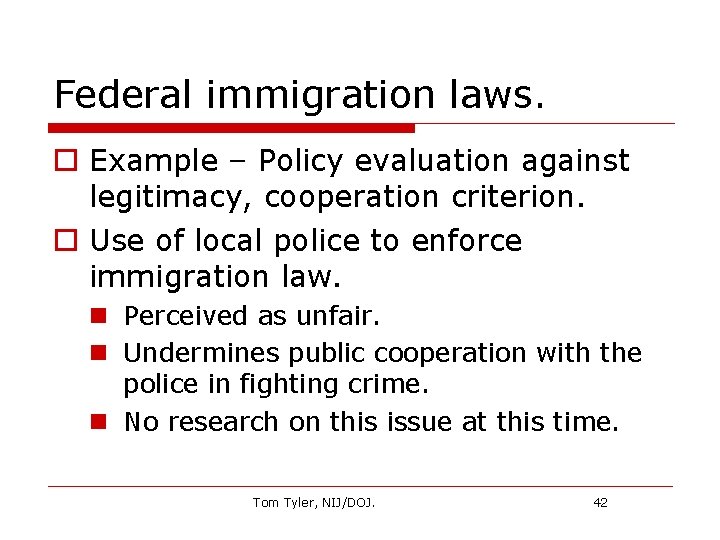
Federal immigration laws. o Example – Policy evaluation against legitimacy, cooperation criterion. o Use of local police to enforce immigration law. n Perceived as unfair. n Undermines public cooperation with the police in fighting crime. n No research on this issue at this time. Tom Tyler, NIJ/DOJ. 42
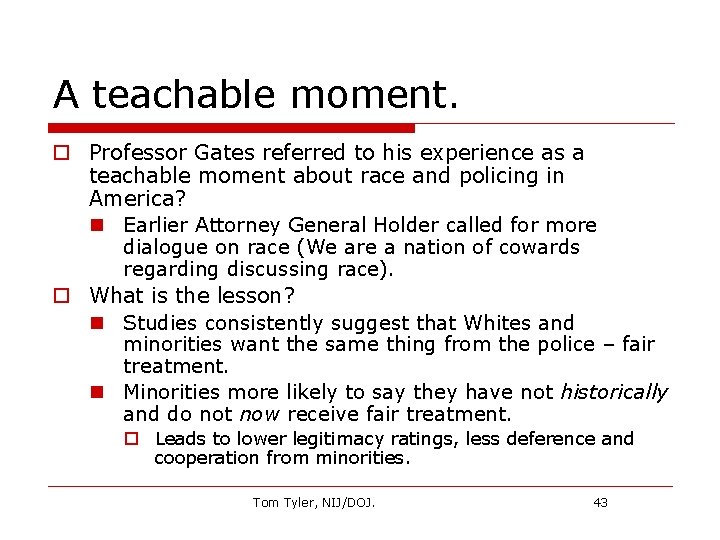
A teachable moment. o Professor Gates referred to his experience as a teachable moment about race and policing in America? n Earlier Attorney General Holder called for more dialogue on race (We are a nation of cowards regarding discussing race). o What is the lesson? n Studies consistently suggest that Whites and minorities want the same thing from the police – fair treatment. n Minorities more likely to say they have not historically and do not now receive fair treatment. o Leads to lower legitimacy ratings, less deference and cooperation from minorities. Tom Tyler, NIJ/DOJ. 43
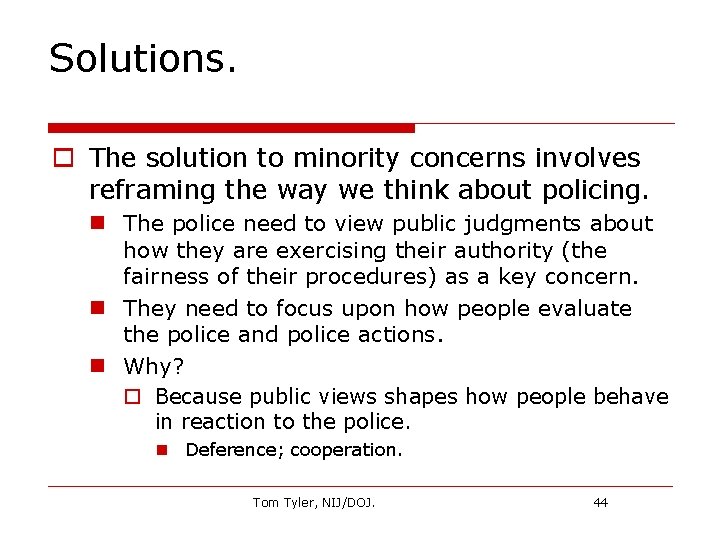
Solutions. o The solution to minority concerns involves reframing the way we think about policing. n The police need to view public judgments about how they are exercising their authority (the fairness of their procedures) as a key concern. n They need to focus upon how people evaluate the police and police actions. n Why? o Because public views shapes how people behave in reaction to the police. n Deference; cooperation. Tom Tyler, NIJ/DOJ. 44
What do the police gain? o A more efficient and viable strategy for managing social order. Linked to public cooperation. o A safer and less hostile working environment for the police. Tom Tyler, NIJ/DOJ. 45
Win-win solutions. o Emphasizing gains to the police is central to changing police culture. n Otherwise difficult to motivate desirable behavior. o Regulation. n Hard to make the police accountable. n Ex: lawsuits, litigation not particularly effective. o Need to change what the police want to do. Tom Tyler, NIJ/DOJ. 46
Why focus first on legitimacy? o Values work for most people, so we reap the general benefits of value based cooperation. o Using value based motivations does not undermine the possibility of using force against a small group later. n May be needed when dealing with a minority of people (10 -15%). Tom Tyler, NIJ/DOJ. 47
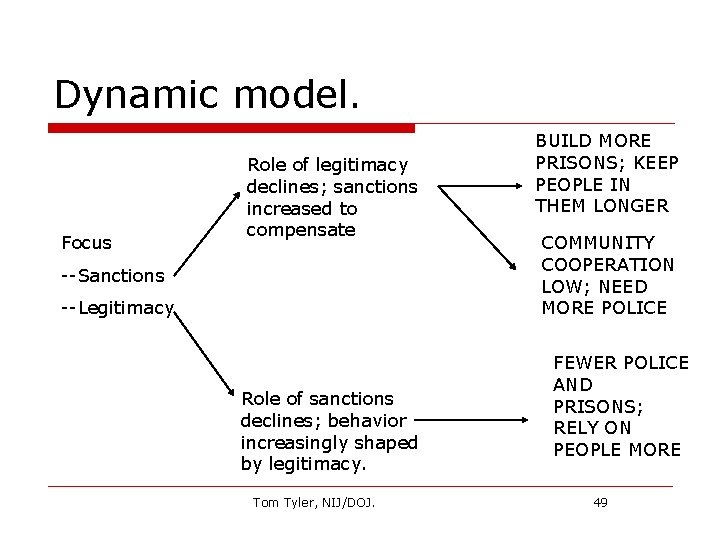
Currently the police focus on sanctions/force. o Undermines role of legitimacy. Threat become more and more important and other reasons for cooperation fade. o Undermines the relationship between the police and people in the community. Bad, since we want cooperation. Tom Tyler, NIJ/DOJ. 48
Dynamic model. Focus Role of legitimacy declines; sanctions increased to compensate --Sanctions --Legitimacy Role of sanctions declines; behavior increasingly shaped by legitimacy. Tom Tyler, NIJ/DOJ. BUILD MORE PRISONS; KEEP PEOPLE IN THEM LONGER COMMUNITY COOPERATION LOW; NEED MORE POLICE FEWER POLICE AND PRISONS; RELY ON PEOPLE MORE 49
Conclusion. o This is an ideal moment to consider transforming policing. n Put policies in place that encourage an approach in which public views are central. o Address concerns of both minority and general population. n Build upon that approach through policing styles that motivate voluntary acceptance and willing cooperation on the part of the public. o Based upon two arguments. Tom Tyler, NIJ/DOJ. 50
First argument. o Legitimacy matters. People are more likely to obey the police if they are legitimate/trusted. n This is distinct from fear of sanctioning. o Further, legitimacy promotes. n Voluntary deference. n Cooperative behavior. Tom Tyler, NIJ/DOJ. 51
Second argument. o Legitimacy is rooting in procedural justice. n People think that the police are legitimate if they feel that they are exercising their authority in fair ways. o Respect for people and their rights. o Neutral, transparent, rule based decision making. Tom Tyler, NIJ/DOJ. 52
Benefits-I. o Procedural justice bridges across social groups. n White/minority. n Rich/poor. n Liberal/conservative. o Works well in situations of multiculturalism. Tom Tyler, NIJ/DOJ. 53
Benefits-II. o Procedural justice is not costly. This strategy saves money when compared to models that rely upon deterrence based upon the threat of punishment and the use of force. Tom Tyler, NIJ/DOJ. 54
Broader view. o And, although it goes beyond the topic of today the perspective presented is part of a larger view about criminal justice. n There are many problems with deterrence and punitiveness as a social control strategy. n Three is a need to focus on building values that support rule following. n There is a similar need to emphasize rehabilitation following rule breaking. Tom Tyler, NIJ/DOJ. 55
o Thank you. n Collaborators: Anthony Braga; Jeff Fagan; Aziz Huq; Tracey Meares; Stephen Schulhofer; Chris Winship n Funders: NIJ; NSF; Public Policy Institute of California Tom Tyler, NIJ/DOJ. 56