
Rabies Rabies is a viral infection of the
Rabies

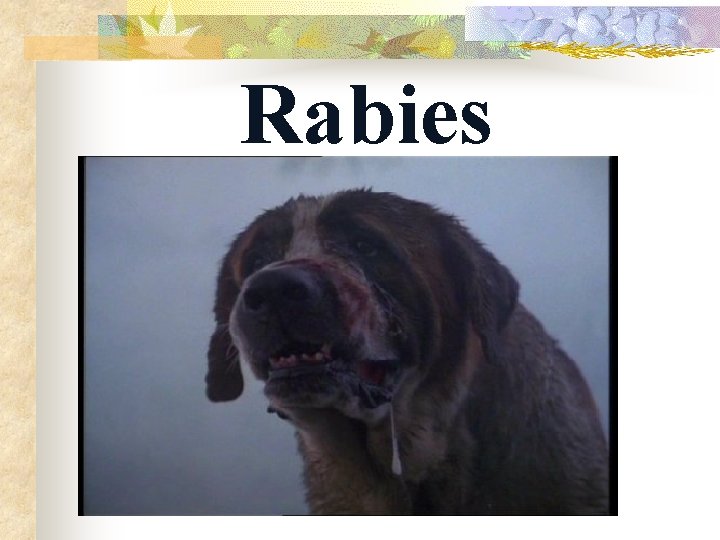
• Rabies is a viral infection of the central and peripheral NS , that causes encephalitis with or without paralysis. • Zoonosis Family: Rhabdoviridae Genus : Lyssavirus Bullet shaped virion 75 X 180 nm Envelop contains 10 -nm spike-like gp G (=400 spike) Protein matrix Helical nucleocapsid Nonsegmented ss. RNA of –ve sense

The rabies virus genome is RNA of approximately 12 kb. There is a leader-sequence (LDR) of approximately 50 nucleotides, followed by N, P, M, G, and L genes.
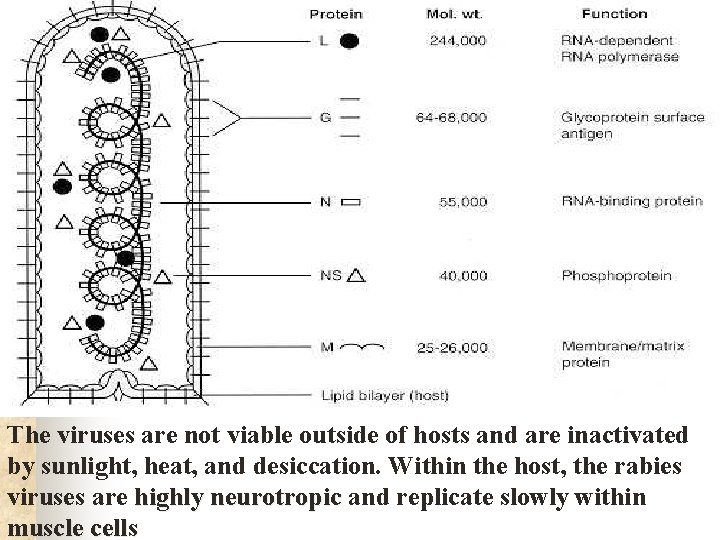
The viruses are not viable outside of hosts and are inactivated by sunlight, heat, and desiccation. Within the host, the rabies viruses are highly neurotropic and replicate slowly within muscle cells
Transmission • Zoonosis • Dogs, followed by cats and other wild animals e. g. foxes • Bats always considered rabid. Mode of transmission: 1. Inoculation of infected saliva through a rabid animal bite 2. Licking of animal on non intact skin 3. Transplantation : rare
Pathology ØNo gross abnormalities ØPerivascular cuffing & cell degradation. ØNegri’s bodies : pathognomic , eosinophilic intracytoplasmic inclusions (viral nucleocapsid aggregates)
Ø 4 clinical stages: ØIncubation period: ØAsymptomatic. Ø 1 – 3 m. (5 days -7 years; In rare cases, human rabies with an extended IP (2 -7 y) has been reported). ØDuration depends on: ØSize of saliva inoculation ØSize and depth of bite ØProximity of the brain. (age) ØProdromal period: ØNonspecific symptoms. ØPathognomic spesific symptoms
ØNeurologic stage : ØEncephalitis or meningo-encephalitis ØTwo forms: ØFurious form (encephalitic): ØHyperexcitability, Hyperactivity, and convulsions. ØHallucinations ØExcessive salivation ØHydrophobia(abnormal contraction of diaphragm, respiratory, laryngeal, pharyngeal) ØAerophobia sometimes. ØDumb form (paralytic): ØGeneralized flaccid paralysis ØCombined form
ØComa, and is associated with MOF regardless of the form of presentation. ØHematemesis occurs in approximately 30– 60% of patients during the last few hours of life. ØCardiac arrhythmias occur in almost all cases, with the cause of death related to cardiac and circulatory insufficiency. ØIt takes 4 -16 days from the beginnig of the illness up to death. ØVery few cases are reported to recover(~3)
Management: Ø Postexposure prohylaxis: 1. Wound care: • Wash with water, soap. Don’t scrub. Or • detergent (70% alcohol or ticture of aq. iodine). • Don’t suture unless excessive. 2. Anti-tetanus 3. Prophylactic antibiotics if indicated 4. Immunoprophylaxis: both active & passive.
• Passive immunization: • RIG, 20 IU/ml • Around the wound + I. M • Active immunization: • The following are safe and immunogenic: 1. Human cell diploid vaccine (HCDV) IM , on 0, 3, 7, 14, 21, ± 28 day 2. Rabies vaccine adsorbed (RVA) 3. Purified Chick embryo cell vaccine (PCEC) 4. Vero cell vaccine • Neural tissue vaccines are used in some developing countries: A. simple vaccine: brain tissue vaccine, (infected brain +β propol). 2 cc IM for 10 days. in the past : 5 ml around umblicus( SE: allergic encephalomyelitis 1: 2000 - 4000) B. Suckling mice brain tissue.
ØPre-exposure prophylaxis: • For persons at risk: vet, lab workers, health officers • Travellers to endemic area. • 3 doses • Vaccination is effective for 2 years.
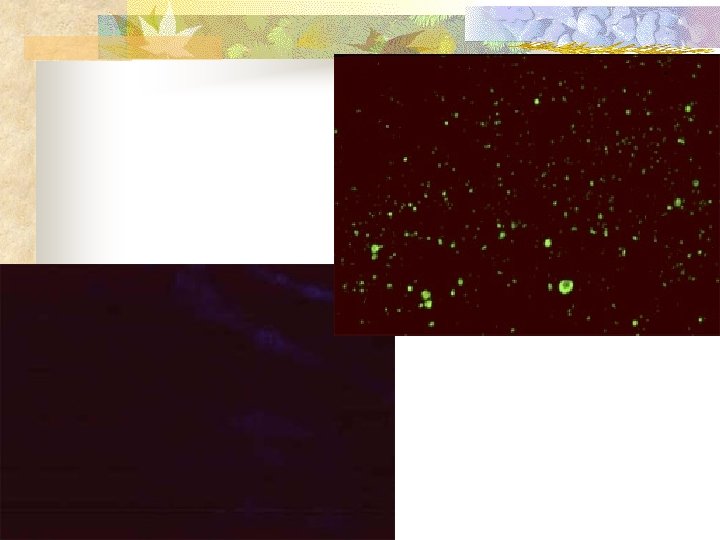
Antemortem diagnosis: ØAg detection: • Could be detected early • Skin biopsy: nape of the neck • Corneal impression: IF or ELISA Postmortem diagnosis: Brain biopsy: • Cell culture or IT inoculation Sections from hippocampus, cerebellum…. . of mice. • RT-PCR Histopathology /IHC ØAb detection: ØVirus isolation: • saliva or CSF • Appears after 8 days • In serum : diagnostic in un vaccinated pts • In CSF is diagnostic ALWAYS. They appear after
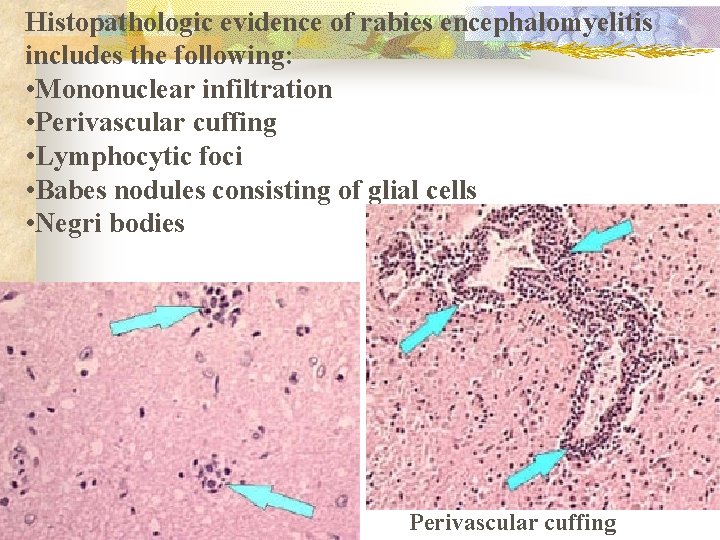
Histopathologic evidence of rabies encephalomyelitis includes the following: • Mononuclear infiltration • Perivascular cuffing • Lymphocytic foci • Babes nodules consisting of glial cells • Negri bodies Babes Nodules Perivascular cuffing
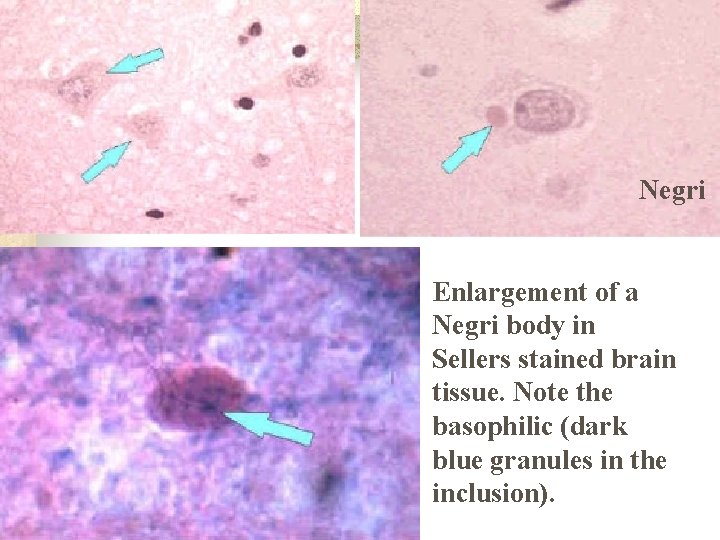
Negri Enlargement of a Negri body in Sellers stained brain tissue. Note the basophilic (dark blue granules in the inclusion).
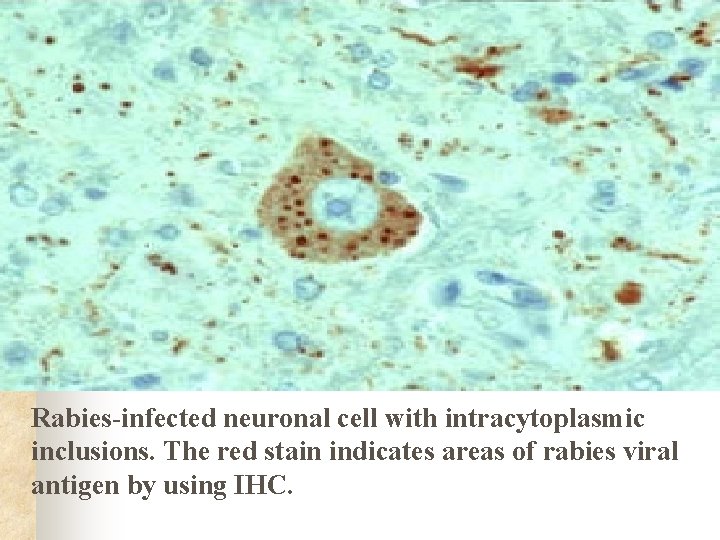
Rabies-infected neuronal cell with intracytoplasmic inclusions. The red stain indicates areas of rabies viral antigen by using IHC.
Rabies/Differential Diagnosis n n n Meningitis/Encephalitis: Japanese, eastern equine, West Nile V. , enterovirus 71, Epilepsy Drug toxicity Acute hepatic porphyria, neuropsychiatric disturbances Substance abuse, acute serotonin syndrome Pseudohydrophobia (hysterical reaction to animal bites)
- Slides: 18