
Rabbits PEER PROGRAM TEXAS AM UNIVERSITY http rabbitbreeders

Rabbits PEER PROGRAM, TEXAS A&M UNIVERSITY
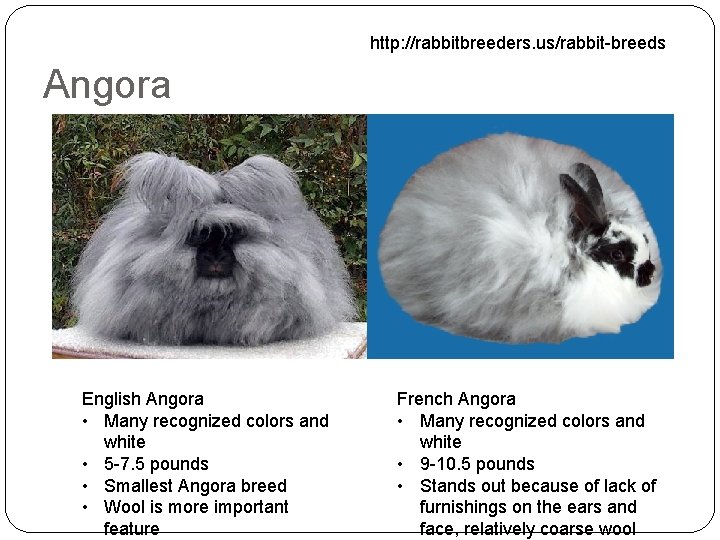
http: //rabbitbreeders. us/rabbit-breeds Angora English Angora • Many recognized colors and white • 5 -7. 5 pounds • Smallest Angora breed • Wool is more important feature French Angora • Many recognized colors and white • 9 -10. 5 pounds • Stands out because of lack of furnishings on the ears and face, relatively coarse wool
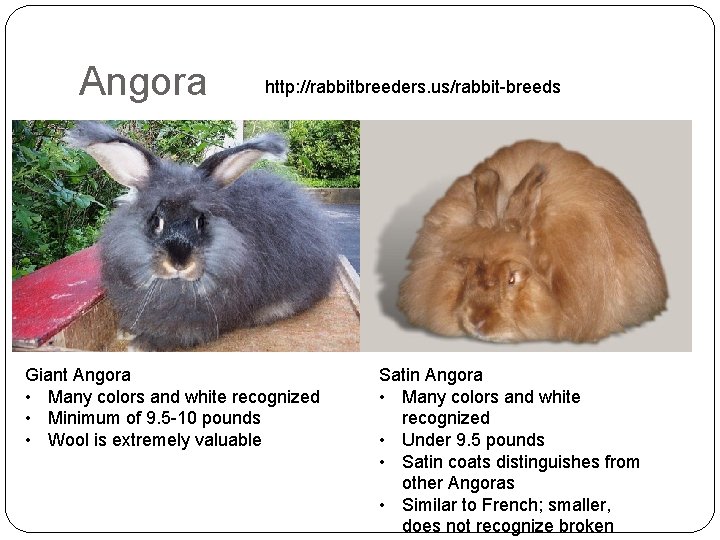
Angora http: //rabbitbreeders. us/rabbit-breeds Giant Angora • Many colors and white recognized • Minimum of 9. 5 -10 pounds • Wool is extremely valuable Satin Angora • Many colors and white recognized • Under 9. 5 pounds • Satin coats distinguishes from other Angoras • Similar to French; smaller, does not recognize broken
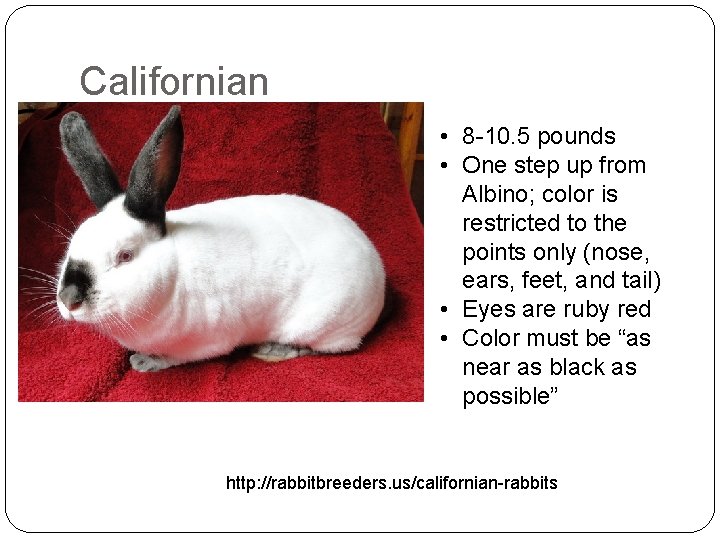
Californian • 8 -10. 5 pounds • One step up from Albino; color is restricted to the points only (nose, ears, feet, and tail) • Eyes are ruby red • Color must be “as near as black as possible” http: //rabbitbreeders. us/californian-rabbits
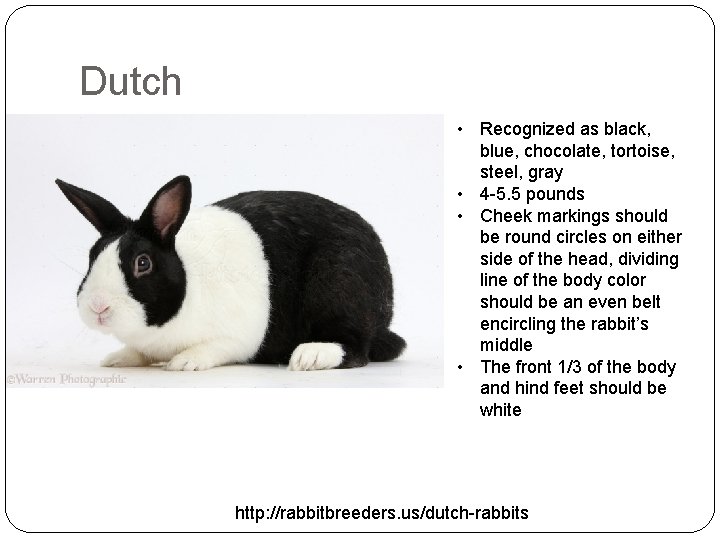
Dutch • Recognized as black, blue, chocolate, tortoise, steel, gray • 4 -5. 5 pounds • Cheek markings should be round circles on either side of the head, dividing line of the body color should be an even belt encircling the rabbit’s middle • The front 1/3 of the body and hind feet should be white http: //rabbitbreeders. us/dutch-rabbits
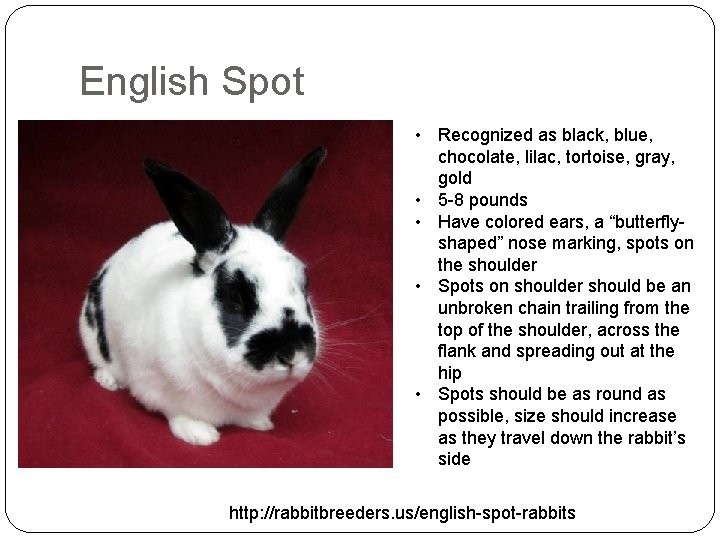
English Spot • Recognized as black, blue, chocolate, lilac, tortoise, gray, gold • 5 -8 pounds • Have colored ears, a “butterflyshaped” nose marking, spots on the shoulder • Spots on shoulder should be an unbroken chain trailing from the top of the shoulder, across the flank and spreading out at the hip • Spots should be as round as possible, size should increase as they travel down the rabbit’s side http: //rabbitbreeders. us/english-spot-rabbits
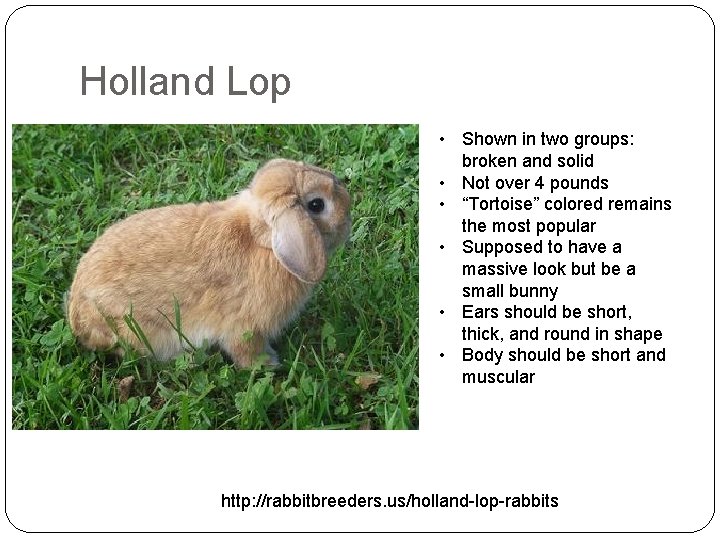
Holland Lop • Shown in two groups: broken and solid • Not over 4 pounds • “Tortoise” colored remains the most popular • Supposed to have a massive look but be a small bunny • Ears should be short, thick, and round in shape • Body should be short and muscular http: //rabbitbreeders. us/holland-lop-rabbits
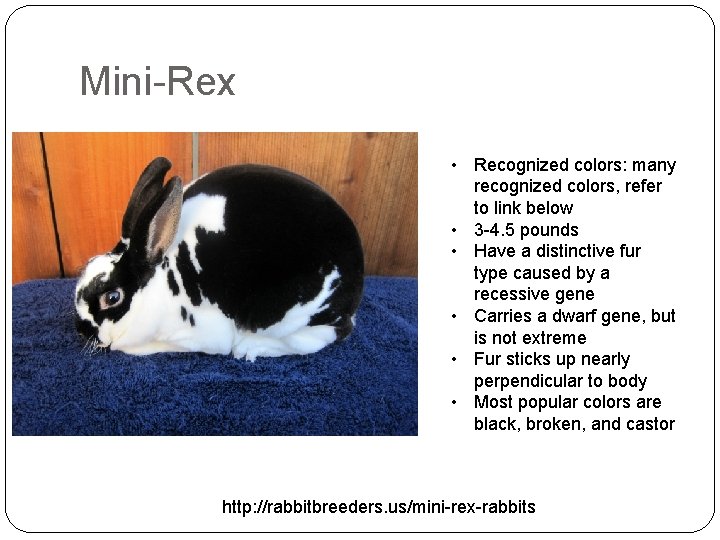
Mini-Rex • Recognized colors: many recognized colors, refer to link below • 3 -4. 5 pounds • Have a distinctive fur type caused by a recessive gene • Carries a dwarf gene, but is not extreme • Fur sticks up nearly perpendicular to body • Most popular colors are black, broken, and castor http: //rabbitbreeders. us/mini-rex-rabbits
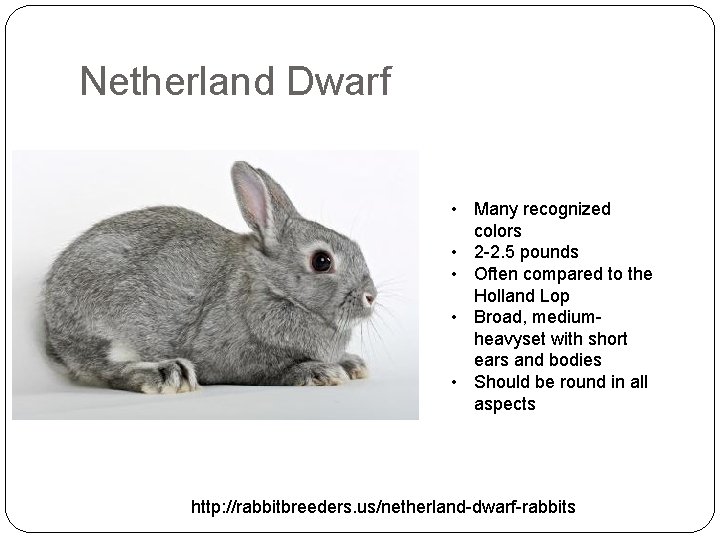
Netherland Dwarf • Many recognized colors • 2 -2. 5 pounds • Often compared to the Holland Lop • Broad, mediumheavyset with short ears and bodies • Should be round in all aspects http: //rabbitbreeders. us/netherland-dwarf-rabbits
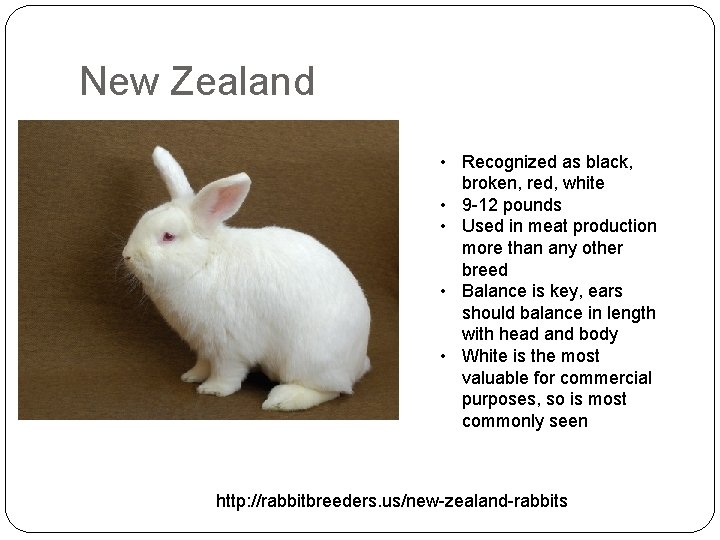
New Zealand • Recognized as black, broken, red, white • 9 -12 pounds • Used in meat production more than any other breed • Balance is key, ears should balance in length with head and body • White is the most valuable for commercial purposes, so is most commonly seen http: //rabbitbreeders. us/new-zealand-rabbits
- Slides: 10