
Rabbitfish Biology and Suitability for Aquaculture Simon Ellis
Rabbitfish Biology and Suitability for Aquaculture Simon Ellis
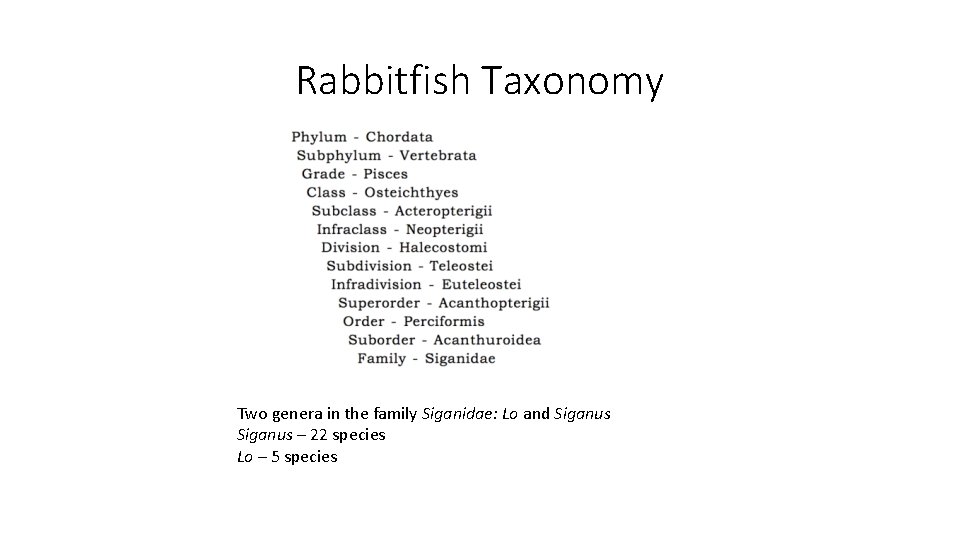
Rabbitfish Taxonomy Two genera in the family Siganidae: Lo and Siganus – 22 species Lo – 5 species
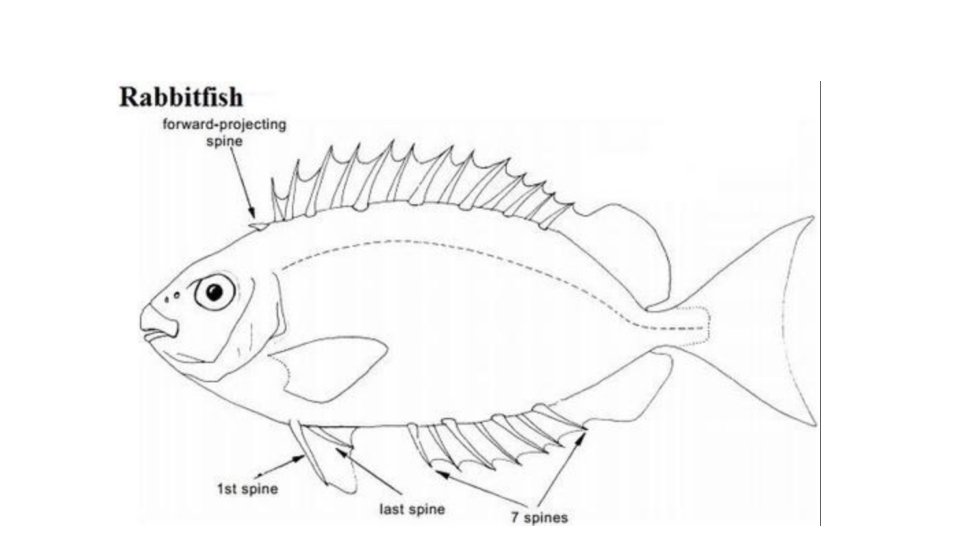
Family Characteristics • Deep compressed body with a snout resembling a rabbit • 13 dorsal spines and 7 anal fin and 2 pelvic fin spines • Generally split into two characteristically separate groups: 15 species are gregarious schoolers and the rest form pairs and tend to inhabit coral reef areas. • The paired species are found on coral reefs and are of limited commercial or aquaculture value • The gregarious schoolers can handle large changes in salinity and temperature and are non-aggressive. They are the most commercially valuable species and have the best aquaculture potential.
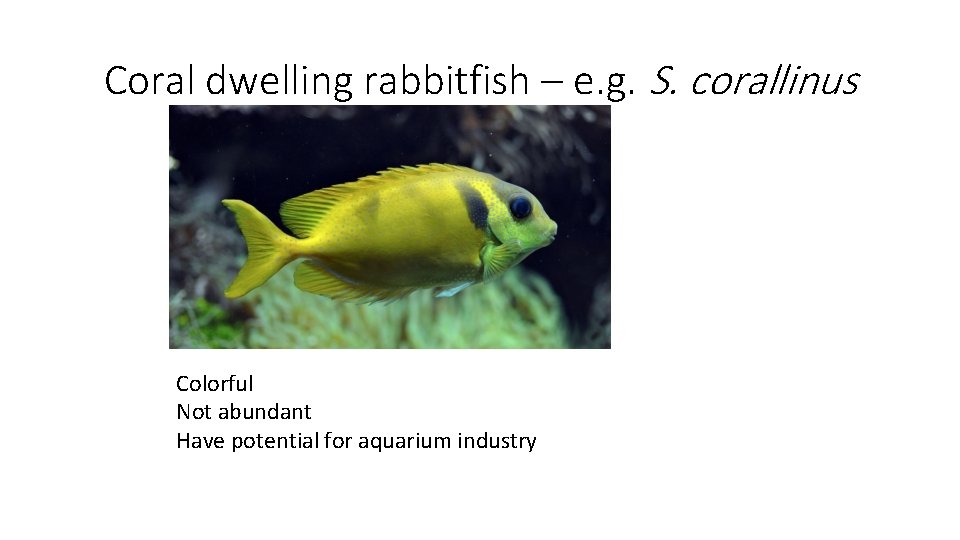
Coral dwelling rabbitfish – e. g. S. corallinus Colorful Not abundant Have potential for aquarium industry
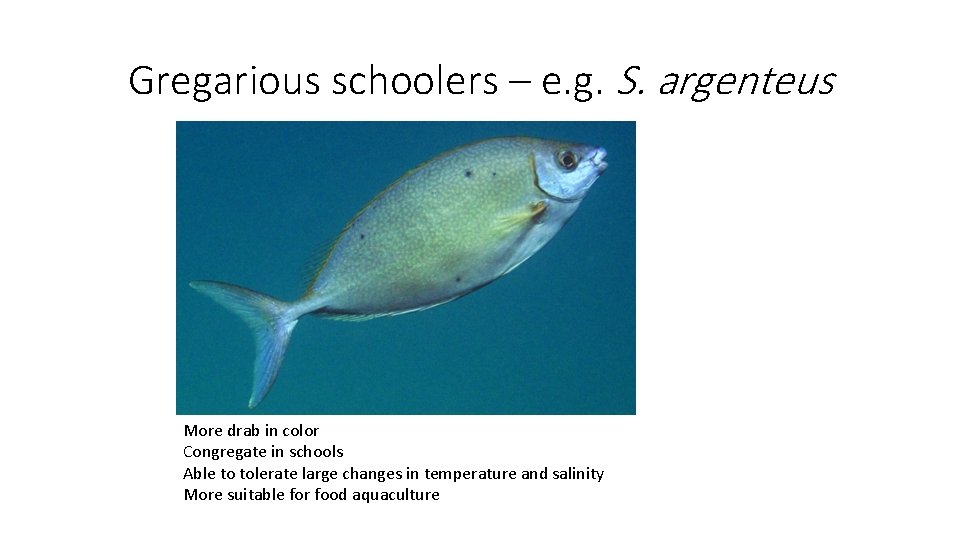
Gregarious schoolers – e. g. S. argenteus More drab in color Congregate in schools Able to tolerate large changes in temperature and salinity More suitable for food aquaculture
Distribution • Naturally occurring in the Indo-Pacific region • One species passed through the Suez canal and is now common in the Mediterranean area – S. rivulatus • In Micronesia there are 13 species present • 8 species gregarious schoolers • 5 species coral pairers
Habitats • Different species occupy different habitats ranging from reef edges to reef flats and sea grass beds and mangrove areas. • While they can tolerate large changes in salinity only S. lineatus is truly estuarine. • They are often found in very shallow areas feeding on algae • Most Siganids are herbivores – another reason they are called rabbitfishes
Life Cycle • Rabbitfishes generally mature within 1 -2 years • Spawning tends to occur in the period between the new moon and full moon. Most aggregating species have seasons. Pairs tend to spawn more frequently • Large adults can produce up to 1 million eggs which are quite small 0. 5 to 0. 75 mm. • Eggs are demersal (sinking) and adhesive (sticky). Unlike many marine fish.
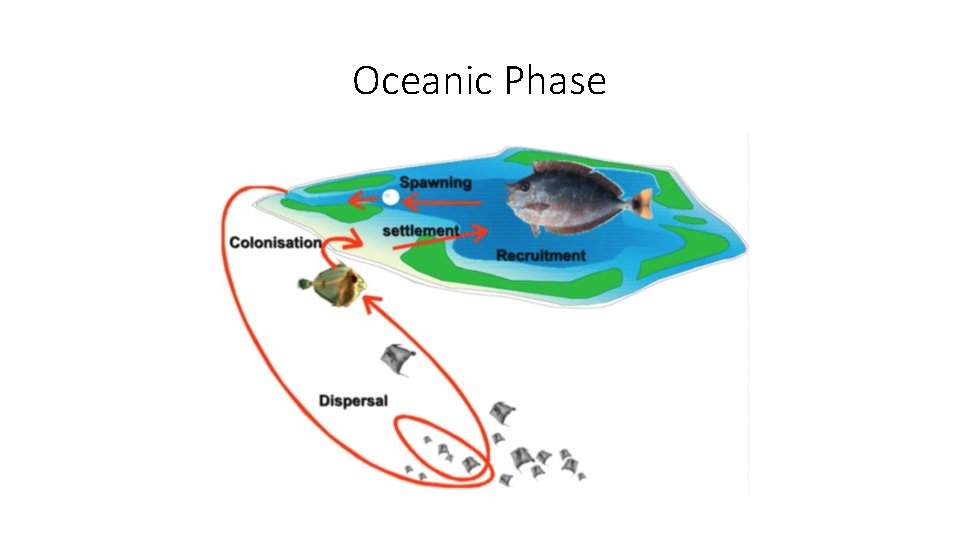
Oceanic Phase
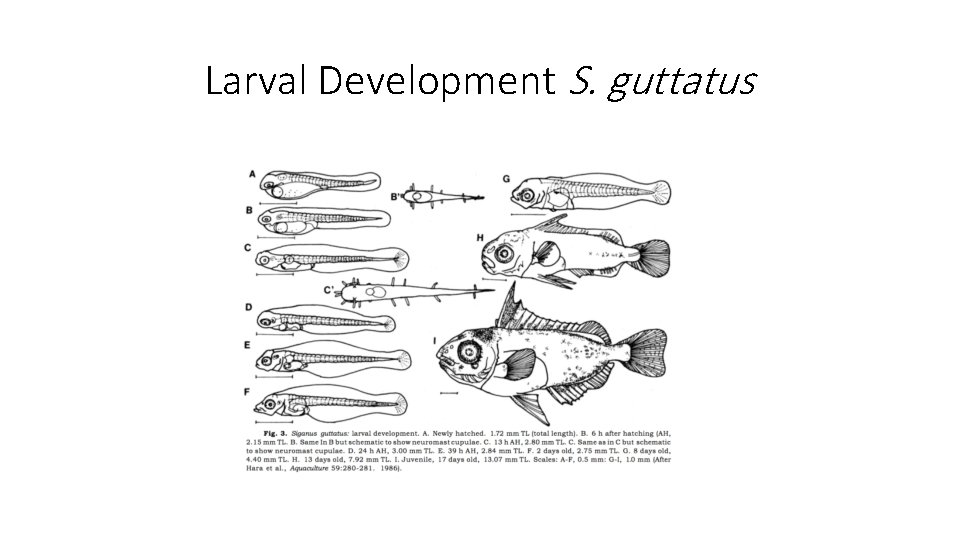
Larval Development S. guttatus
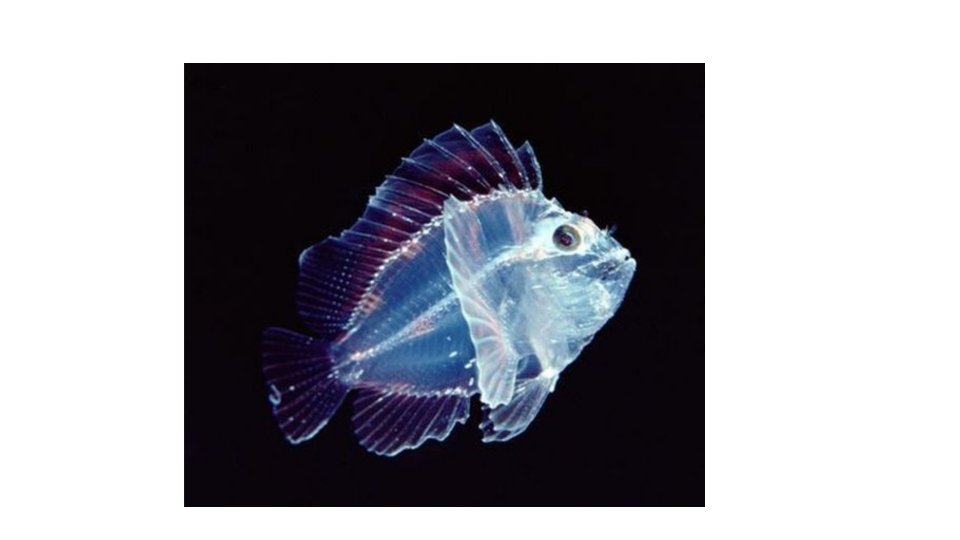
Settlement and Recruitment • Larvae settle between 25 and 60 days after hatching • They usually come in during new moon periods • Often in large numbers • They tend to settle in sea grass and mangrove areas • Juveniles can often be seen in large numbers in these areas • After a period of weeks to months they will migrate to their adult habitat
Rabbitfish Suitability for Aquaculture • Only some species have shown to be suitable for aquaculture • Desirable traits are: • fast growth • schooling behavior • non aggressive behavior • tolerance of changing temperatures and salinity • Tolerance of poor water quality • Good feed conversion – mainly herbivorous
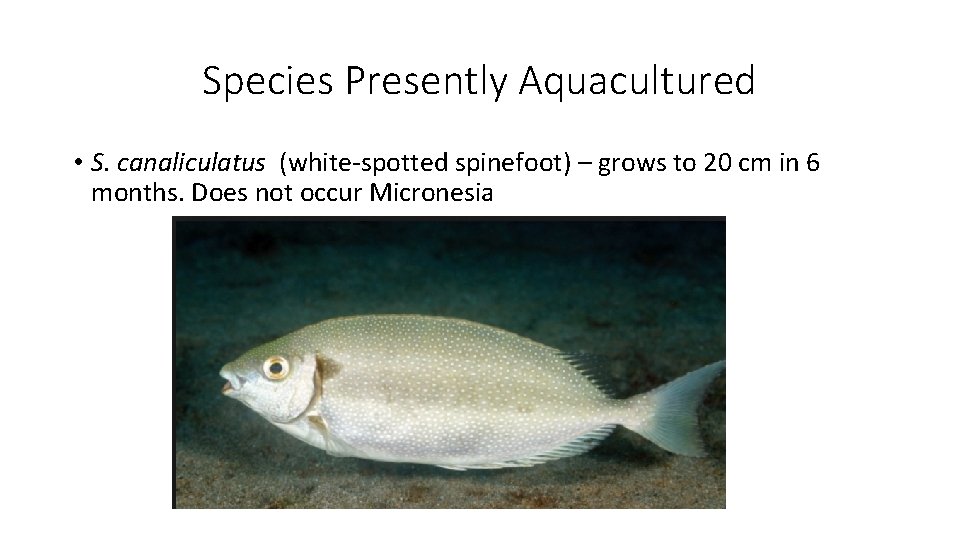
Species Presently Aquacultured • S. canaliculatus (white-spotted spinefoot) – grows to 20 cm in 6 months. Does not occur Micronesia

S. Guttatus – Golden rabbitfish Can be bred in hatcheries Occurs in Micronesia Yet to see it settle in sampling conducted at MERIP
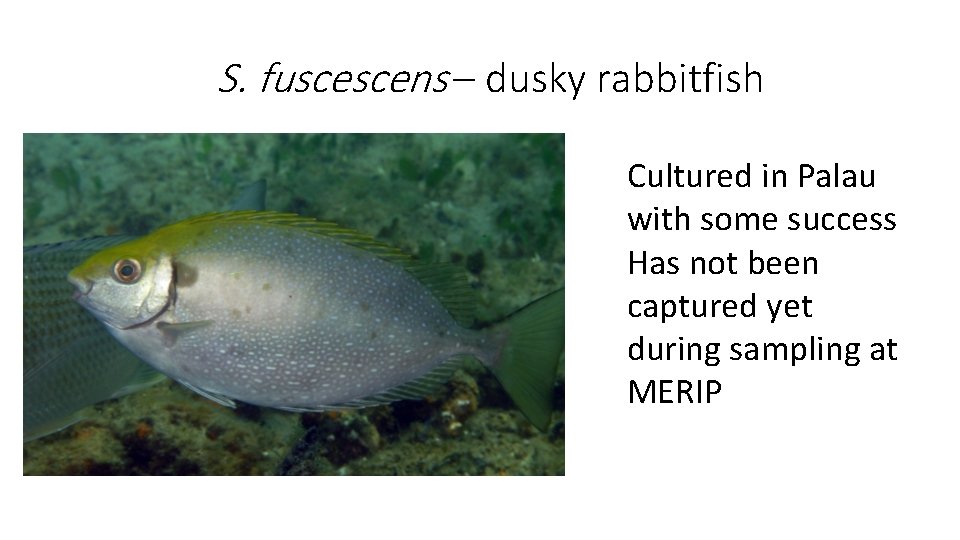
S. fuscescens – dusky rabbitfish Cultured in Palau with some success Has not been captured yet during sampling at MERIP

S. argenteus – forktail rabbitfish Best success to date at MERIP Very little information in the literature for culture of this species Successfully captured and farmed at MERIP for 3 years Settle from plankton in April and May

S. randalli – Randall’s rabbitfish Popular fish in Pohnpei Kioak Has been captured in the mangroves and is being farmed Growth rates so far are ok Hatchery technology is understood Studied in Guam
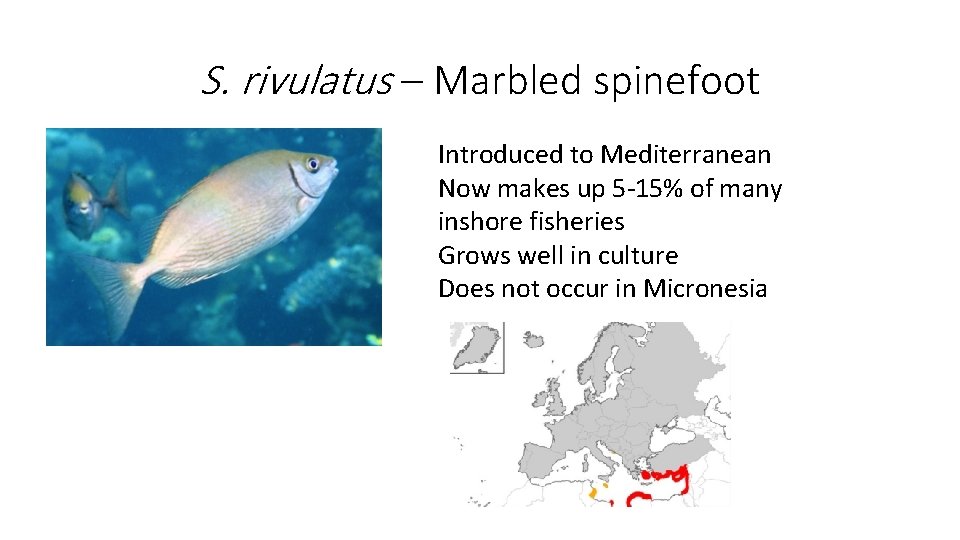
S. rivulatus – Marbled spinefoot Introduced to Mediterranean Now makes up 5 -15% of many inshore fisheries Grows well in culture Does not occur in Micronesia
Hatchery Rearing Success • S. randalli - Guam • S. canaliculatus • S. lineatus – New Caledonia • S. fuscescens – Palau • S. rivulatus
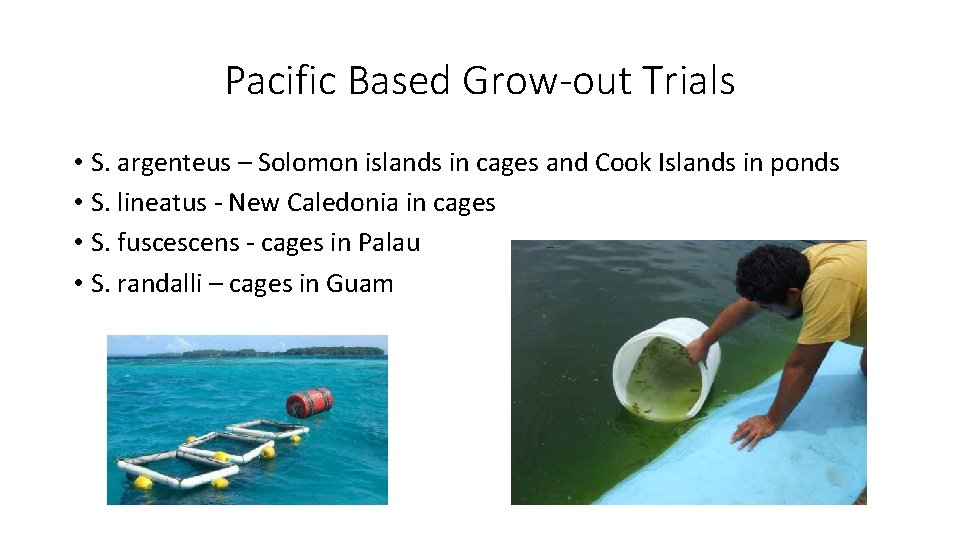
Pacific Based Grow-out Trials • S. argenteus – Solomon islands in cages and Cook Islands in ponds • S. lineatus - New Caledonia in cages • S. fuscescens - cages in Palau • S. randalli – cages in Guam
- Slides: 22