
R 4 Troubleshooting Refrigeration 1 Compressors Problems 2004
R 4 Troubleshooting Refrigeration #1 Compressors Problems © 2004 Refrigeration Training Services - R 4 Subject 1 Compressor Problems v 1. 2
Common Causes of Compressor Failures 1. 2. 3. 4. Liquid slugging Floodback Flooded start Overheating © 2004 Refrigeration Training Services - R 4 Subject 1 Compressor Problems v 1. 2 2
Liquid Slugging • • • “Slug” of liquid on piston head Breaks valves, pistons, rods, and crankshafts Compressors cannot compress liquid © 2004 Refrigeration Training Services - R 4 Subject 1 Compressor Problems v 1. 2 3
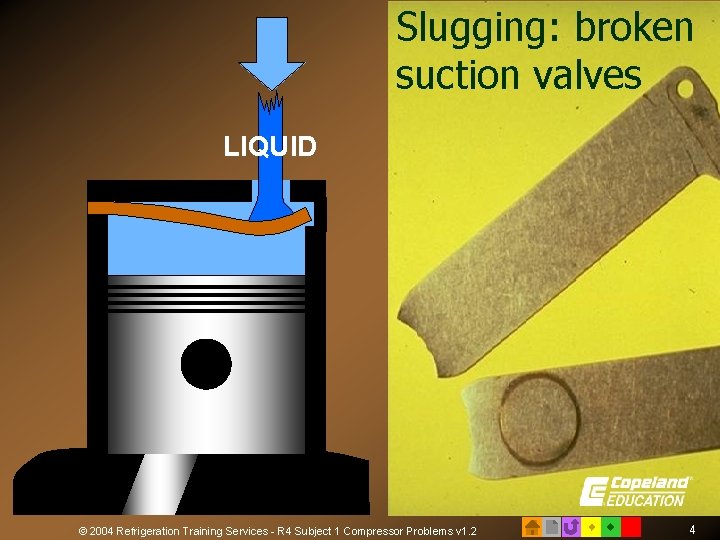
Slugging: broken suction valves LIQUID © 2004 Refrigeration Training Services - R 4 Subject 1 Compressor Problems v 1. 2 4
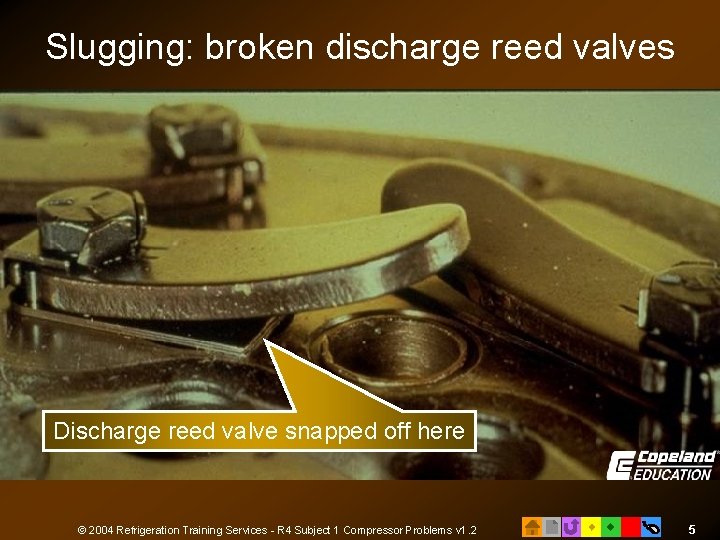
Slugging: broken discharge reed valves Discharge reed valve snapped off here © 2004 Refrigeration Training Services - R 4 Subject 1 Compressor Problems v 1. 2 5
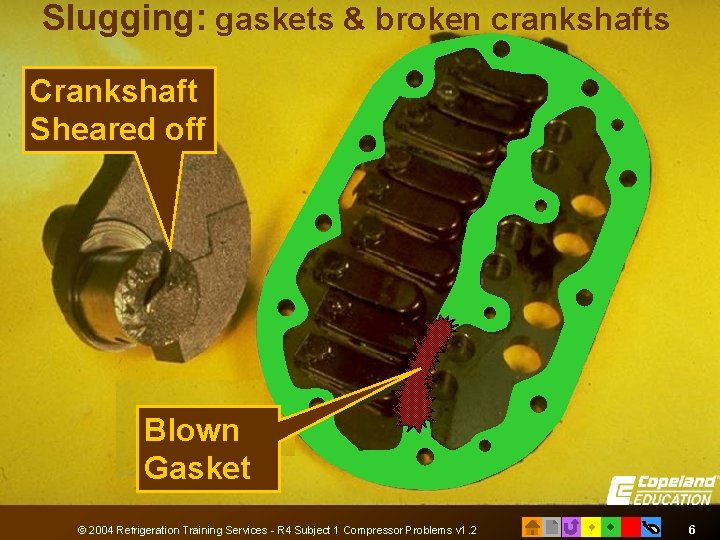
Slugging: gaskets & broken crankshafts Crankshaft Sheared off Blown Gasket © 2004 Refrigeration Training Services - R 4 Subject 1 Compressor Problems v 1. 2 6
Floodback Liquid droplets in suction vapor Air cooled compressors: • Washes lubricant from cylinder walls Suction cooled compressors: • Washes lubricant from crankshaft © 2004 Refrigeration Training Services - R 4 Subject 1 Compressor Problems v 1. 2 7
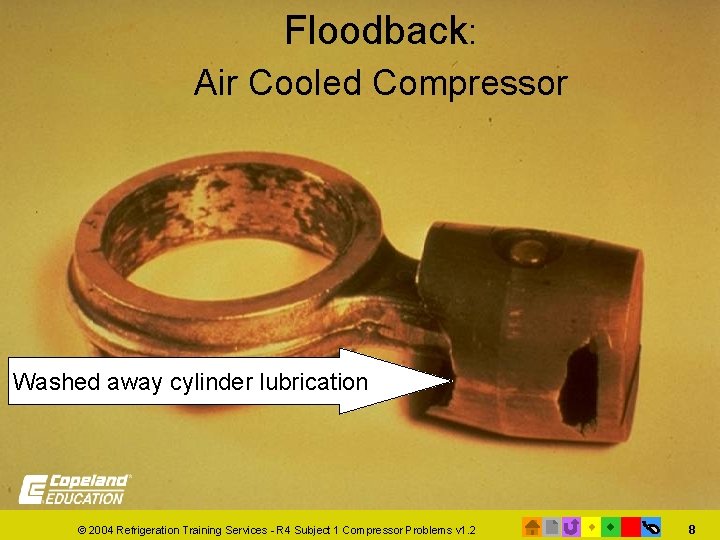
Floodback : Picture of piston worn by lack of Air Cooled Compressor lubrication Washed away cylinder lubrication © 2004 Refrigeration Training Services - R 4 Subject 1 Compressor Problems v 1. 2 8
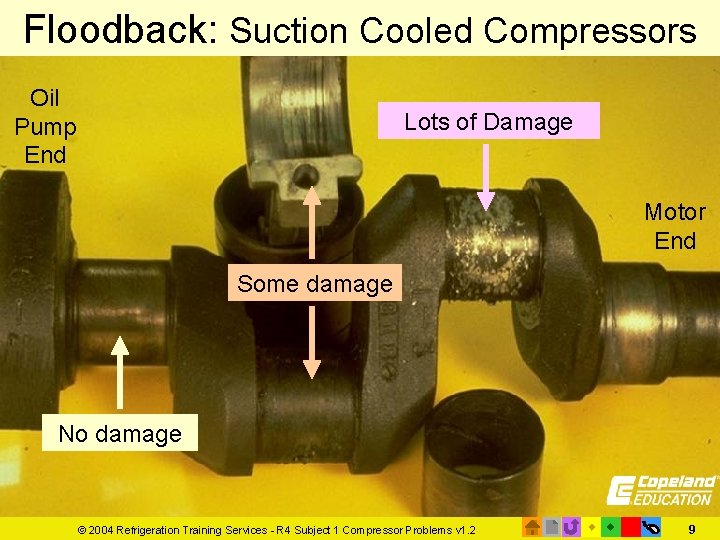
Floodback: Suction Cooled Compressors Picture of crankshaft damaged by flooding Oil Lots of Damage Pump End Motor End Some damage No damage © 2004 Refrigeration Training Services - R 4 Subject 1 Compressor Problems v 1. 2 9
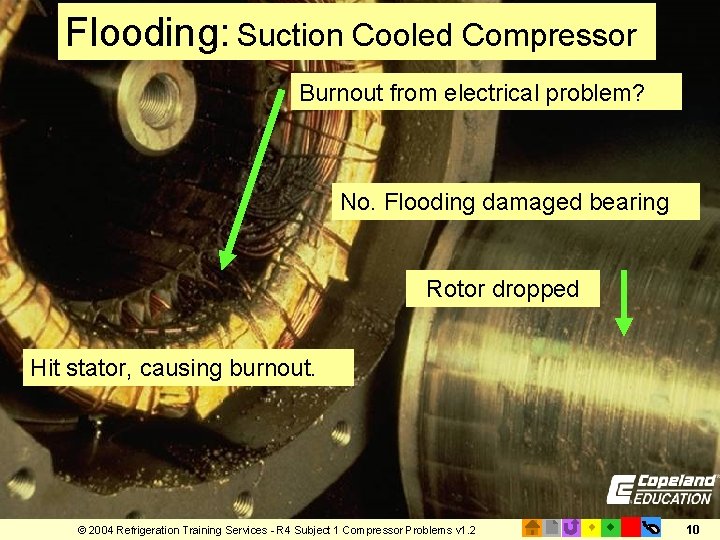
Flooding: Suctionburn Cooled Compressor Picture: motor from bearing Burnout electrical problem? damage by from flooding No. Flooding damaged bearing Rotor dropped Hit stator, causing burnout. © 2004 Refrigeration Training Services - R 4 Subject 1 Compressor Problems v 1. 2 10
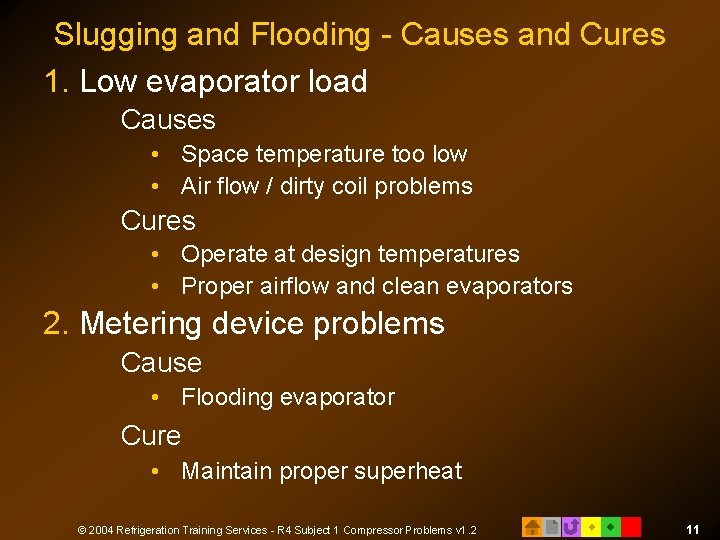
Slugging and Flooding - Causes and Cures 1. Low evaporator load Causes • Space temperature too low • Air flow / dirty coil problems Cures • Operate at design temperatures • Proper airflow and clean evaporators 2. Metering device problems Cause • Flooding evaporator Cure • Maintain proper superheat © 2004 Refrigeration Training Services - R 4 Subject 1 Compressor Problems v 1. 2 11
Diagnosing suction line frost • What does it mean? – Floodback? – Slugging? – Low on charge? • Frost means: – The suction line is below 32° – You must determine IF there is a problem © 2004 Refrigeration Training Services - R 4 Subject 1 Compressor Problems v 1. 2 12
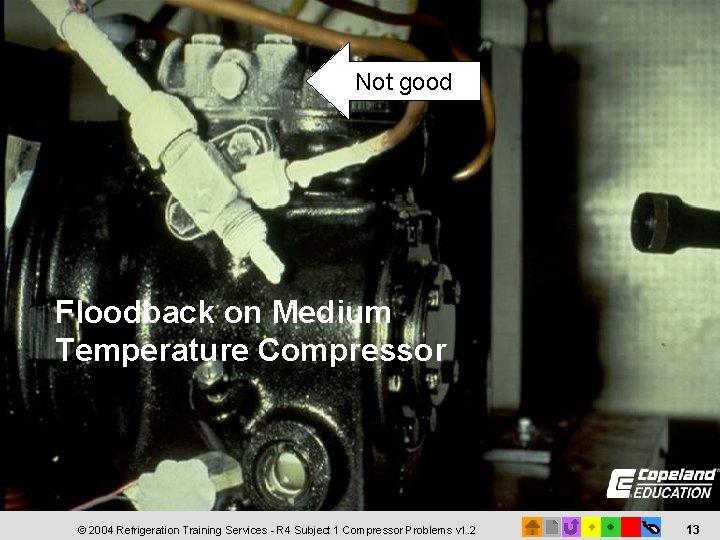
Picture: Floodback on Med. Temp Not good compressor Floodback on Medium Temperature Compressor © 2004 Refrigeration Training Services - R 4 Subject 1 Compressor Problems v 1. 2 13
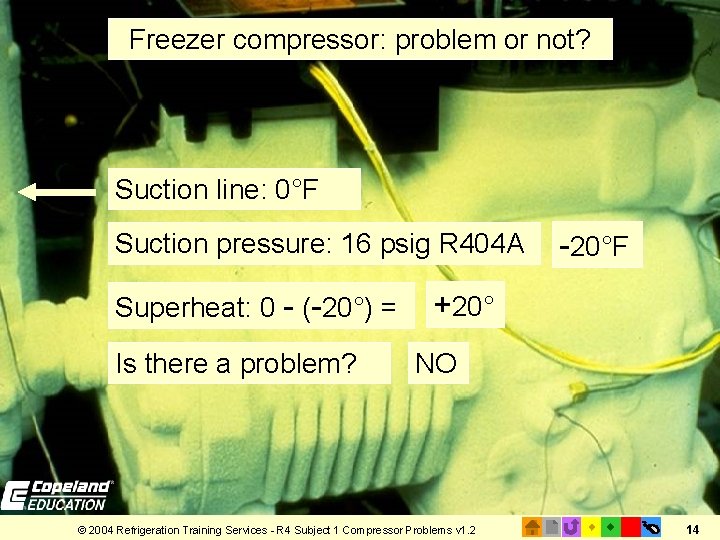
Freezer compressor: problem or not? Picture: frost on freezer compressor Suction line: 0°F Suction pressure: 16 psig R 404 A Superheat: 0 - (-20°) = Is there a problem? -20°F +20° NO © 2004 Refrigeration Training Services - R 4 Subject 1 Compressor Problems v 1. 2 14
Flooded Start During “off-cycle”: • • • Refrigerant vapor migrates to coldest spot Vapor condenses to liquid in crankcase Liquid refrigerant sinks under compressor oil During start-up: • • Liquid under the oil “explodes” within crankcase Dilutes oil on crankshaft bearing surfaces © 2004 Refrigeration Training Services - R 4 Subject 1 Compressor Problems v 1. 2 15
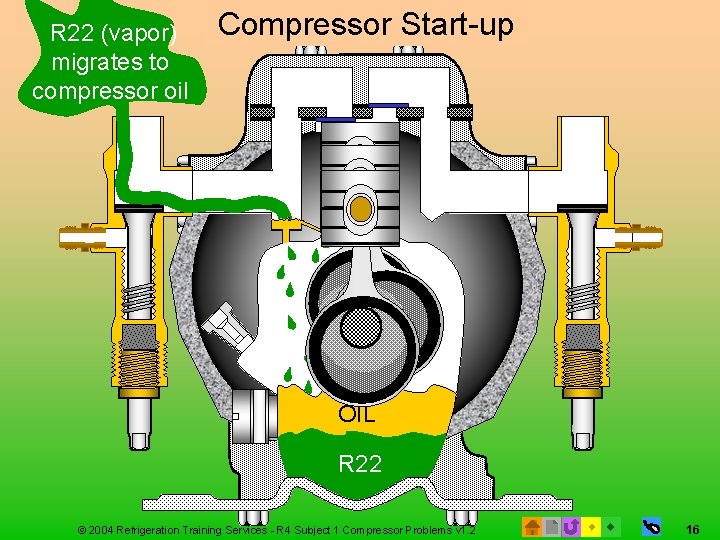
R 22 (vapor) migrates to compressor oil Compressor Start-up is OFF Refrigerant Migration OIL R 22 © 2004 Refrigeration Training Services - R 4 Subject 1 Compressor Problems v 1. 2 16
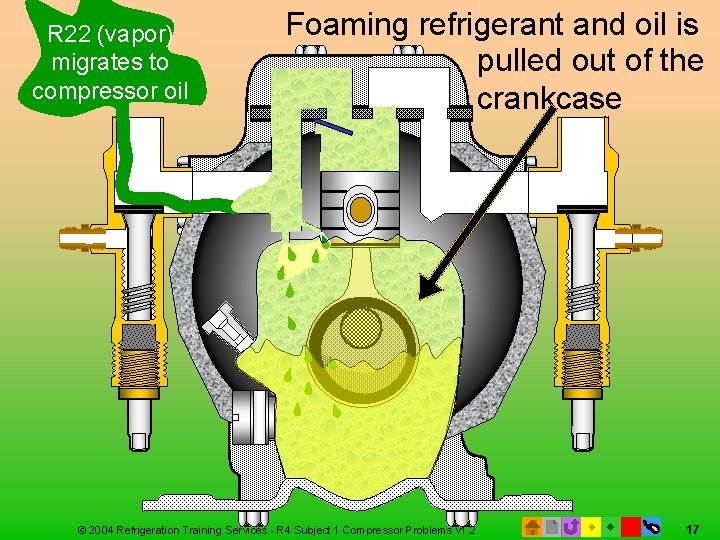
R 22 (vapor) migrates to compressor oil Compressor Foaming. Start-up refrigerant and oil is Refrigerant pulled out of the Migration crankcase OIL R 22 © 2004 Refrigeration Training Services - R 4 Subject 1 Compressor Problems v 1. 2 17
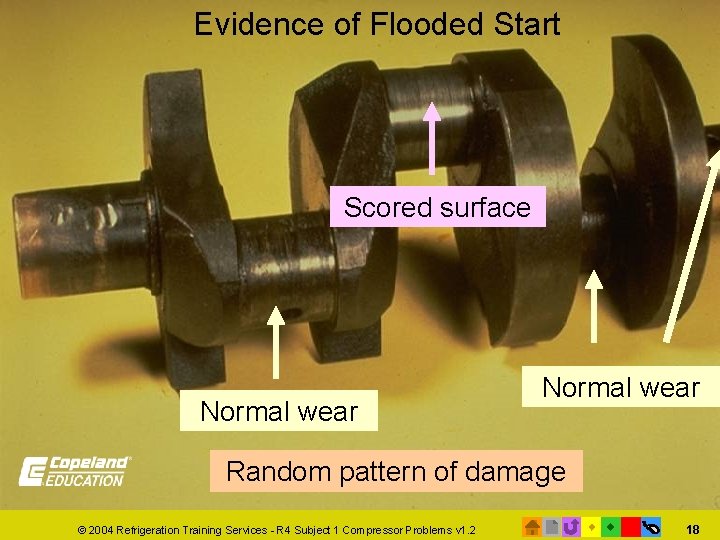
Evidence of Flooded Start Picture: crankshaft damaged by flooded start Scored surface Normal wear Random pattern of damage © 2004 Refrigeration Training Services - R 4 Subject 1 Compressor Problems v 1. 2 18
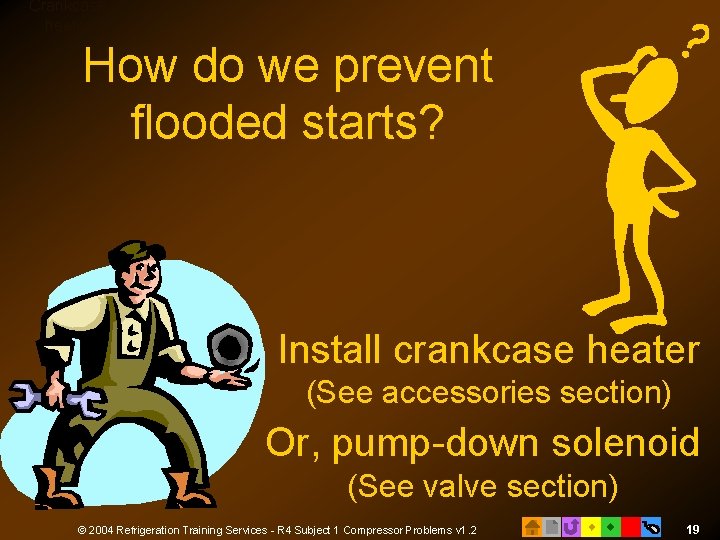
Crankcase heater How do we prevent flooded starts? Install crankcase heater (See accessories section) Or, pump-down solenoid (See valve section) © 2004 Refrigeration Training Services - R 4 Subject 1 Compressor Problems v 1. 2 19
Compressor Overheating High heat causes lubrication breakdown – Parts seize – Carbon deposits form: • On valve plates • Clog filter-driers © 2004 Refrigeration Training Services - R 4 Subject 1 Compressor Problems v 1. 2 20
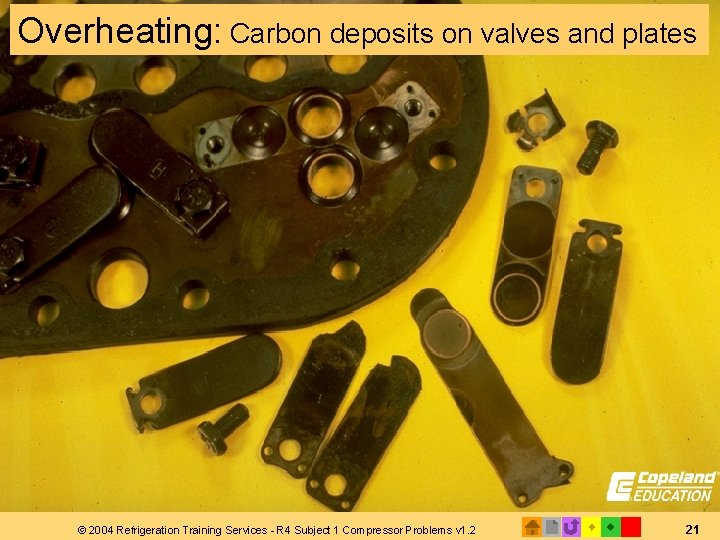
Overheating: Carbon deposits on valves and plates Picture: carbon deposits on valves & plates © 2004 Refrigeration Training Services - R 4 Subject 1 Compressor Problems v 1. 2 21
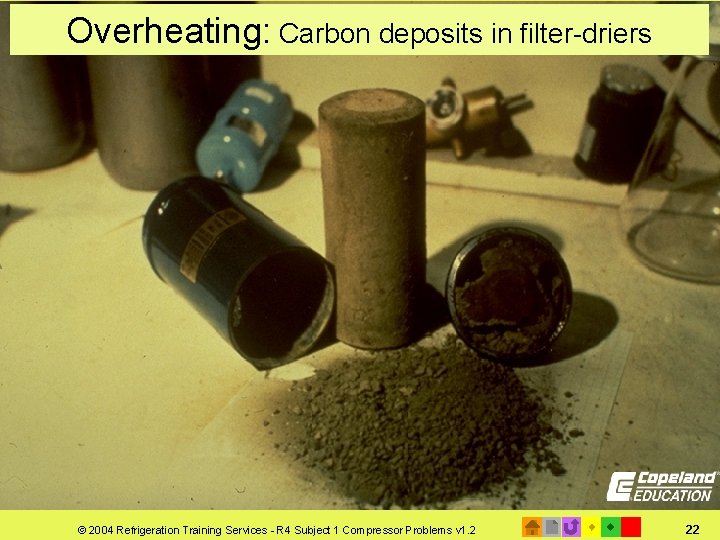
Overheating: Carbon deposits in filter-driers Picture: drier clogged with carbon deposits © 2004 Refrigeration Training Services - R 4 Subject 1 Compressor Problems v 1. 2 22
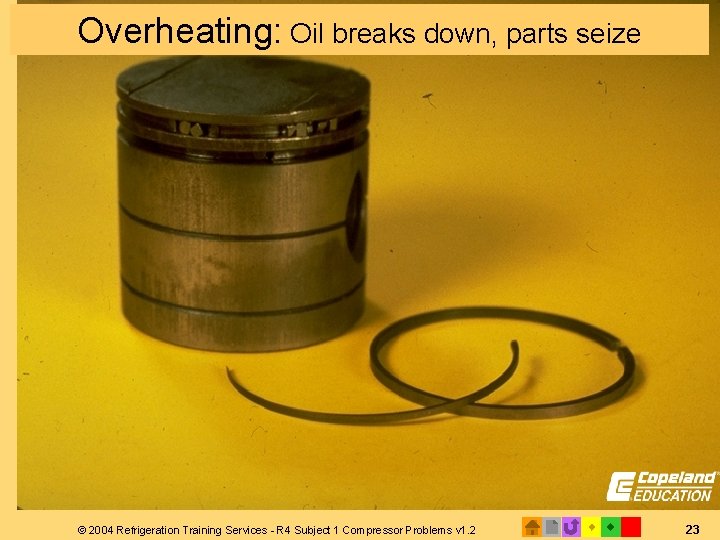
Overheating: Oil breaks down, parts seize Picture: piston rings damaged by heat © 2004 Refrigeration Training Services - R 4 Subject 1 Compressor Problems v 1. 2 23
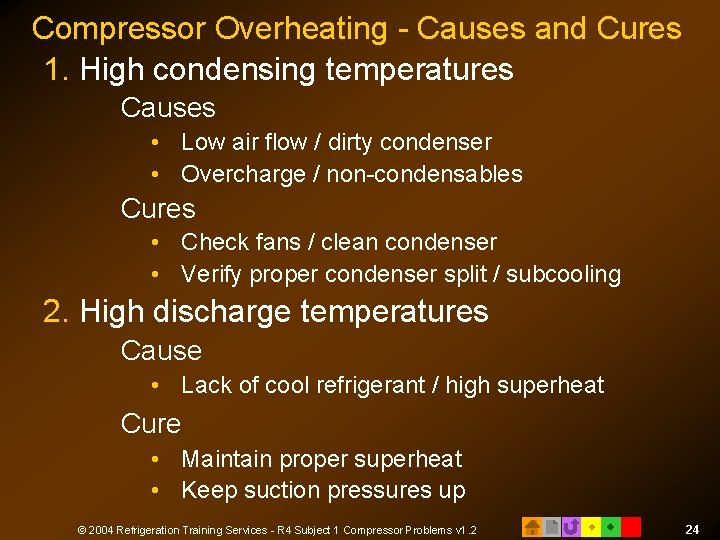
Compressor Overheating - Causes and Cures 1. High condensing temperatures Causes • Low air flow / dirty condenser • Overcharge / non-condensables Cures • Check fans / clean condenser • Verify proper condenser split / subcooling 2. High discharge temperatures Cause • Lack of cool refrigerant / high superheat Cure • Maintain proper superheat • Keep suction pressures up © 2004 Refrigeration Training Services - R 4 Subject 1 Compressor Problems v 1. 2 24
Inside View of Valve and Gasket Problems The following 4 slides describe: – Bad discharge valve • From overheating or liquid slugging – Worn piston or rings • From overheating or floodback – Broken suction valve • From liquid slugging – Blown head gasket • From liquid slugging © 2004 Refrigeration Training Services - R 4 Subject 1 Compressor Problems v 1. 2 25
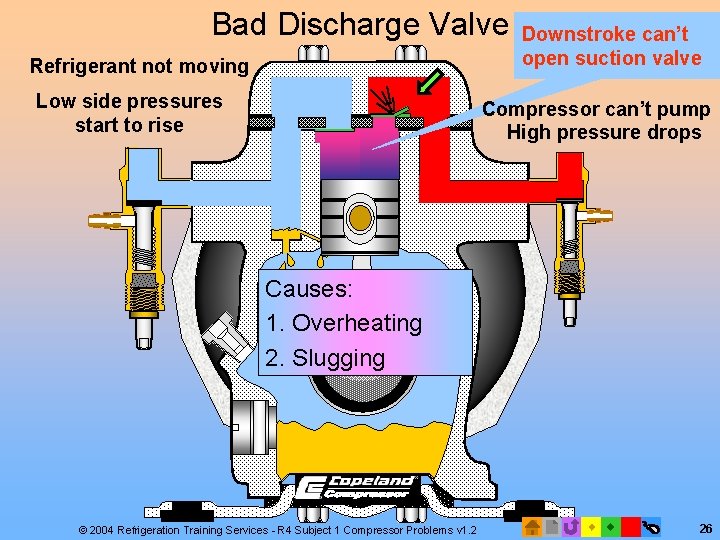
Bad Discharge Valve Refrigerant not moving Low side pressures start to rise Downstroke can’t open suction valve Compressor can’t pump High pressure drops Causes: 1. Overheating 2. Slugging © 2004 Refrigeration Training Services - R 4 Subject 1 Compressor Problems v 1. 2 26
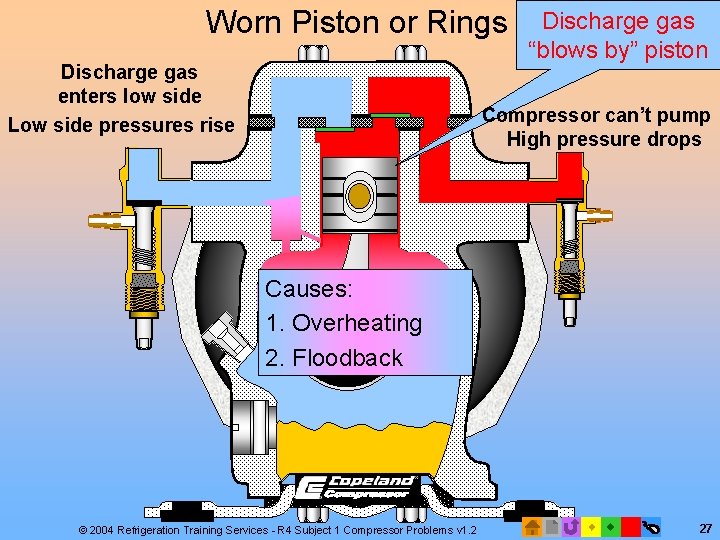
Worn Piston or Rings Discharge gas enters low side Low side pressures rise Discharge gas “blows by” piston Compressor can’t pump High pressure drops Causes: 1. Overheating 2. Floodback © 2004 Refrigeration Training Services - R 4 Subject 1 Compressor Problems v 1. 2 27
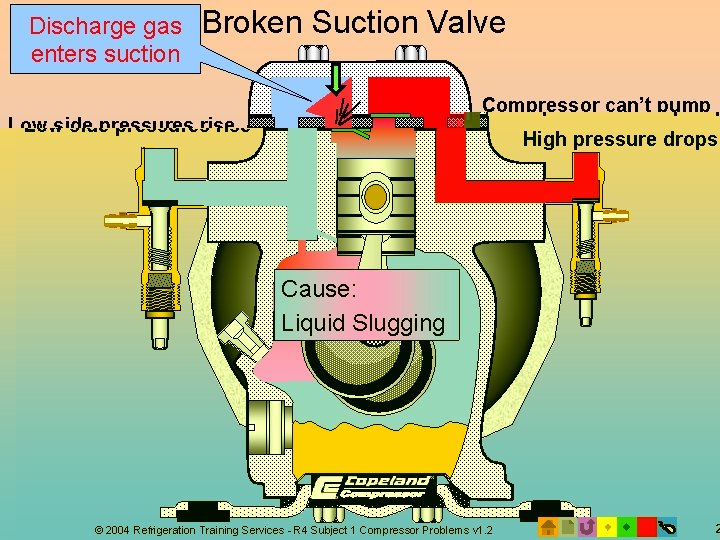
Discharge gas enters suction Broken Suction Valve Compressor can’t pump Low side pressures rise High pressure drops Cause: Liquid Slugging © 2004 Refrigeration Training Services - R 4 Subject 1 Compressor Problems v 1. 2 28
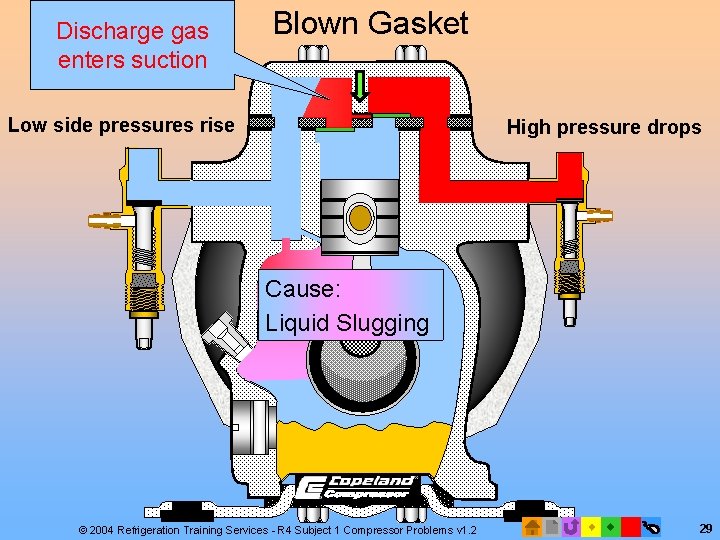
Discharge gas enters suction Blown Gasket Low side pressures rise High pressure drops Cause: Liquid Slugging © 2004 Refrigeration Training Services - R 4 Subject 1 Compressor Problems v 1. 2 29
© 2004 Refrigeration Training Services - R 4 Subject 1 Compressor Problems v 1. 2 30
- Slides: 30