
R 2 IM Robust and Resilient Intersection Management
R 2 IM -- Robust and Resilient Intersection Management of Connected Autonomous Vehicles Mohammad Khayatian, Rachel Dedinsky, Sarthake Choudhary, Mohammadreza Mehrabian and Aviral Shrivastava The 23 rd IEEE International Conference on Intelligent Transportation Systems
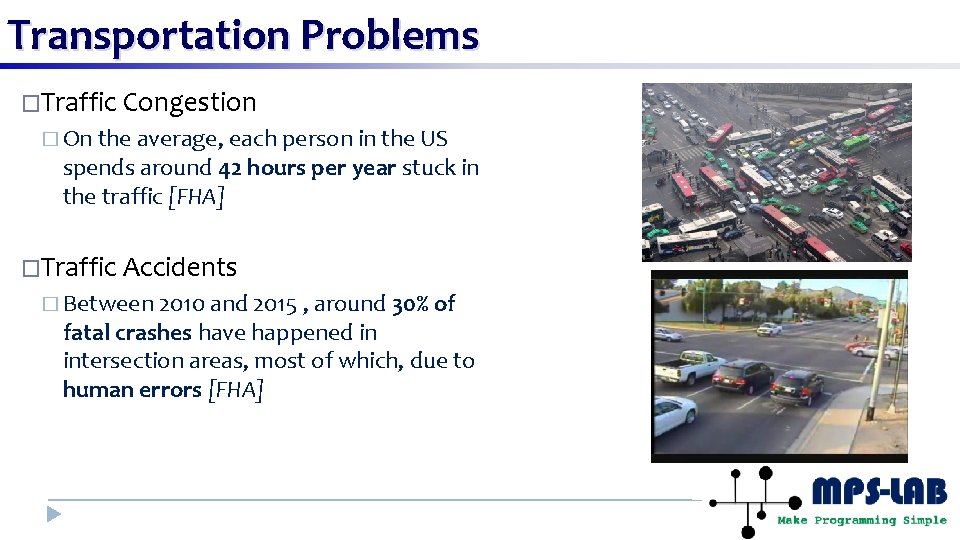
Transportation Problems �Traffic Congestion � On the average, each person in the US spends around 42 hours per year stuck in the traffic [FHA] �Traffic Accidents � Between 2010 and 2015 , around 30% of fatal crashes have happened in intersection areas, most of which, due to human errors [FHA]
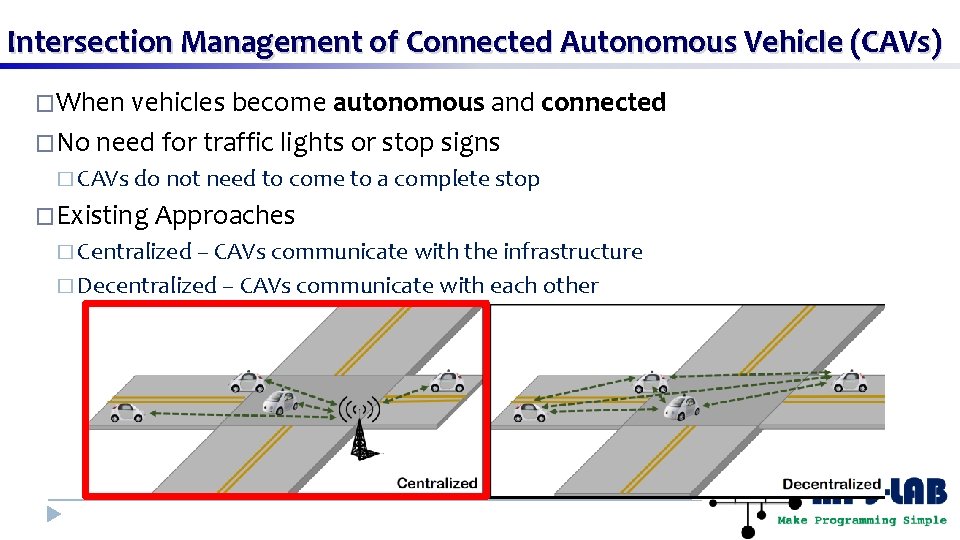
Intersection Management of Connected Autonomous Vehicle (CAVs) �When vehicles become autonomous and connected �No need for traffic lights or stop signs � CAVs do not need to come to a complete stop �Existing Approaches � Centralized – CAVs communicate with the infrastructure � Decentralized – CAVs communicate with each other
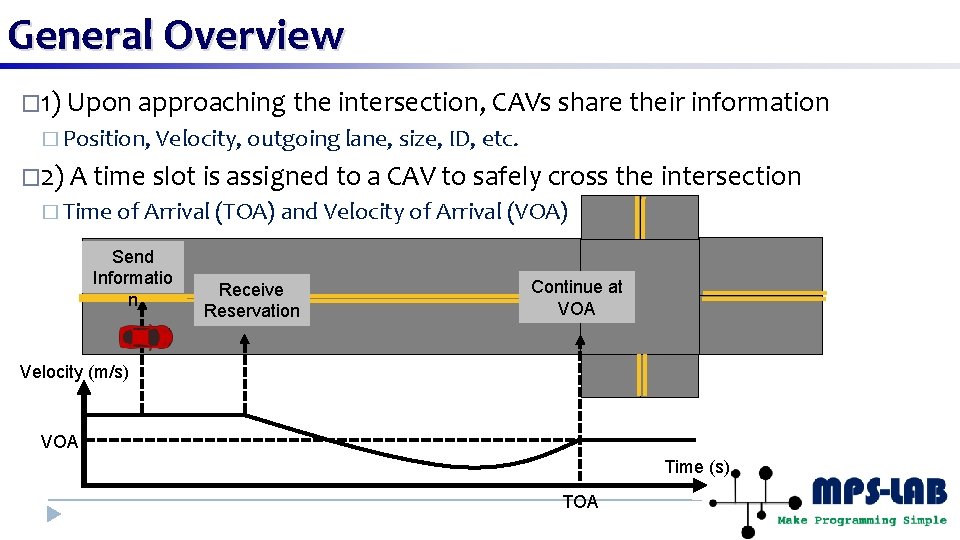
General Overview � 1) Upon approaching the intersection, CAVs share their information � Position, Velocity, outgoing lane, size, ID, etc. � 2) A time slot is assigned to a CAV to safely cross the intersection � Time of Arrival (TOA) and Velocity of Arrival (VOA) Send Informatio n Receive Reservation Continue at VOA Velocity (m/s) VOA Time (s) TOA
Related Works � There are more than 120 papers on intersection management of CAVs � Most of them assuming ideal conditions � Some existing works consider more realistic factors � Localization error exist � Solution: Consider a buffer around the CAV – the CAV is assumed to be larger � Communication delay can be large or unbounded � Solution: Consider a timeout – the CAV will slow down and stop if the response is not received within a threshold � Strong assumptions in almost existing works: � 1) CAVs are honest and share accurate information � 2) CAVs behave as expected and follow the assigned trajectory
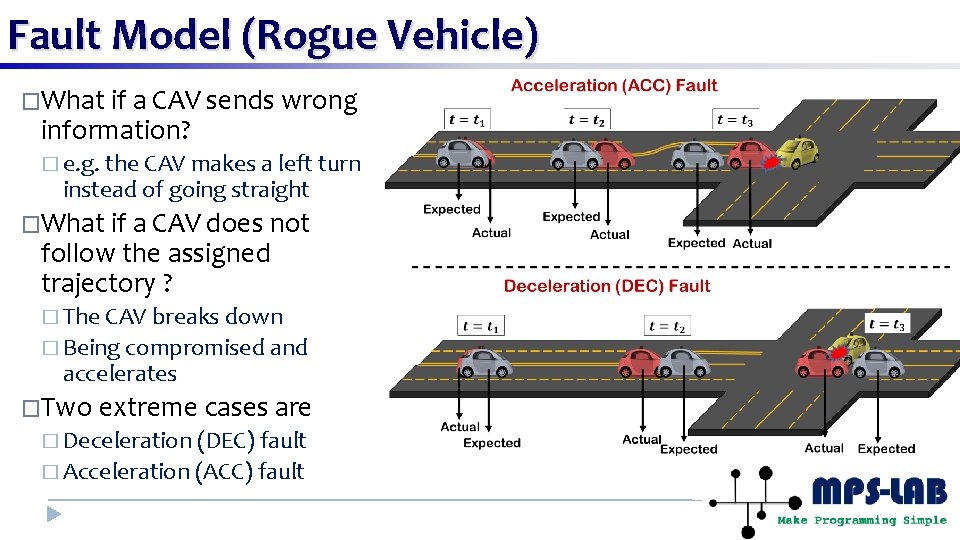
Fault Model (Rogue Vehicle) �What if a CAV sends wrong information? � e. g. the CAV makes a left turn instead of going straight �What if a CAV does not follow the assigned trajectory ? � The CAV breaks down � Being compromised and accelerates �Two extreme cases are � Deceleration (DEC) fault � Acceleration (ACC) fault
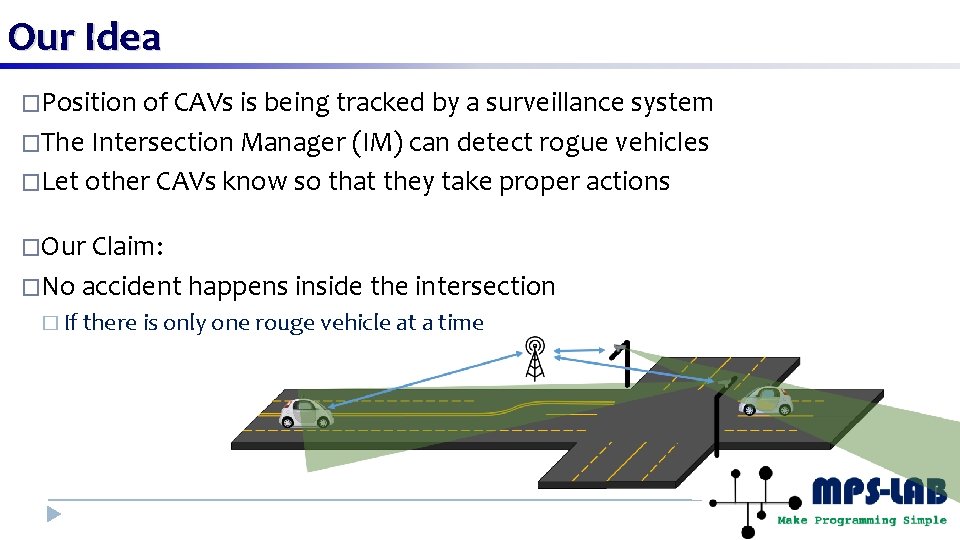
Our Idea �Position of CAVs is being tracked by a surveillance system �The Intersection Manager (IM) can detect rogue vehicles �Let other CAVs know so that they take proper actions �Our Claim: �No accident happens inside the intersection � If there is only one rouge vehicle at a time
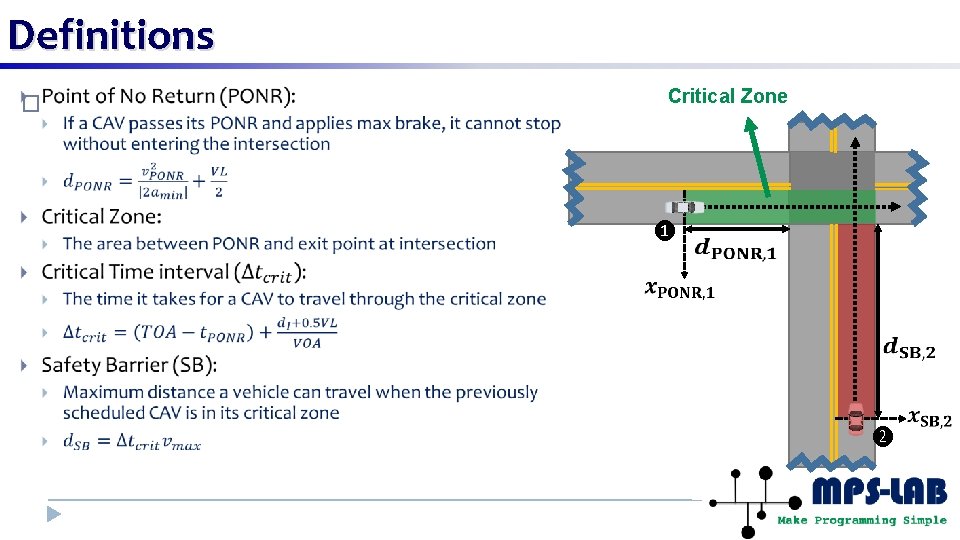
Definitions � Critical Zone ❶ ❷
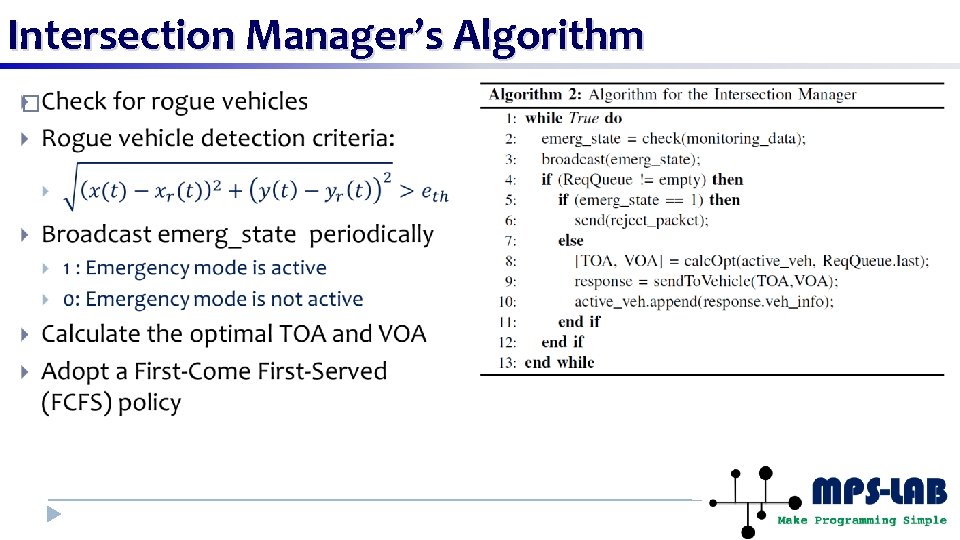
Intersection Manager’s Algorithm �
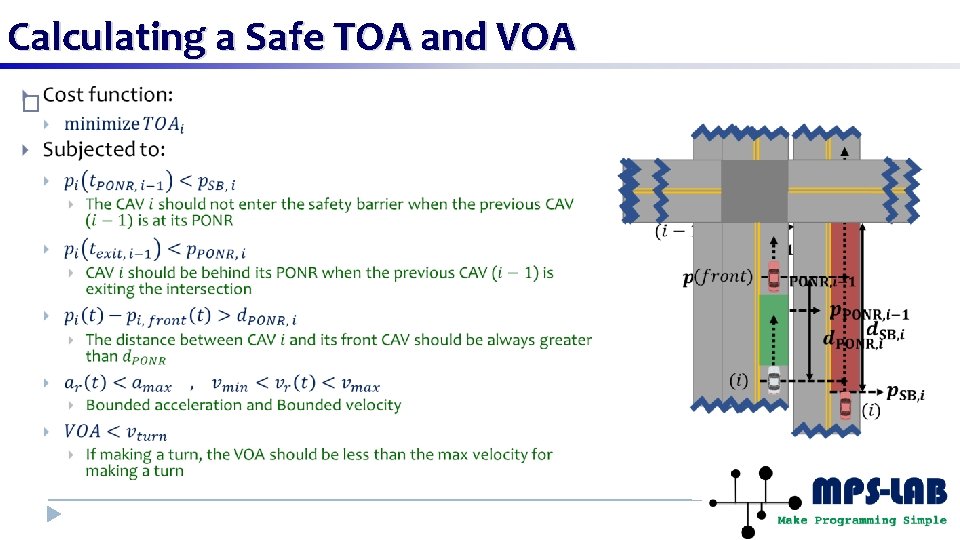
Calculating a Safe TOA and VOA �

CAV’s Algorithm
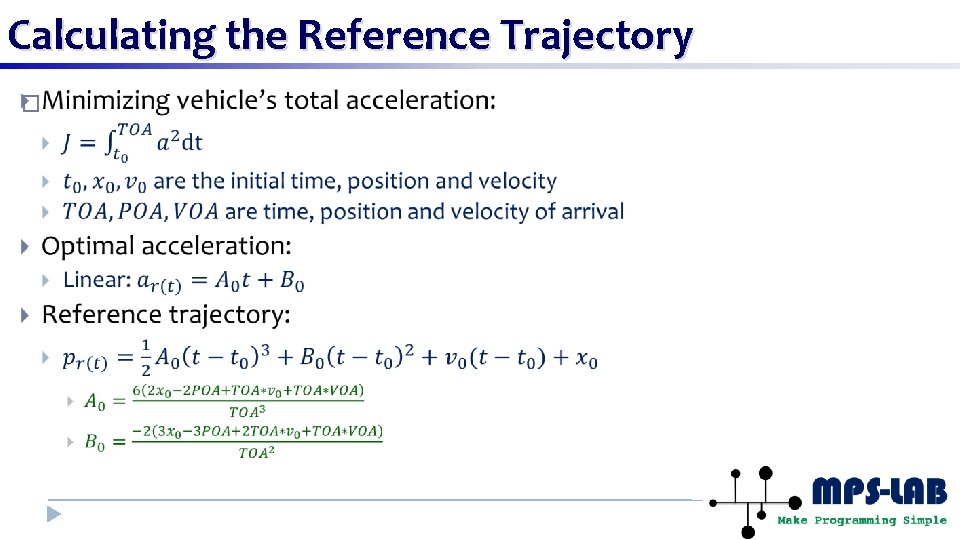
Calculating the Reference Trajectory �
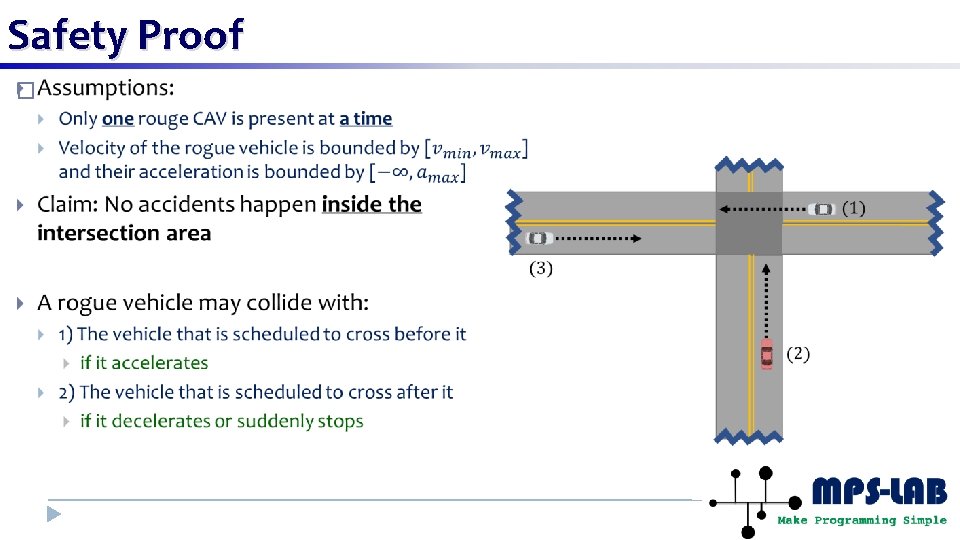
Safety Proof �
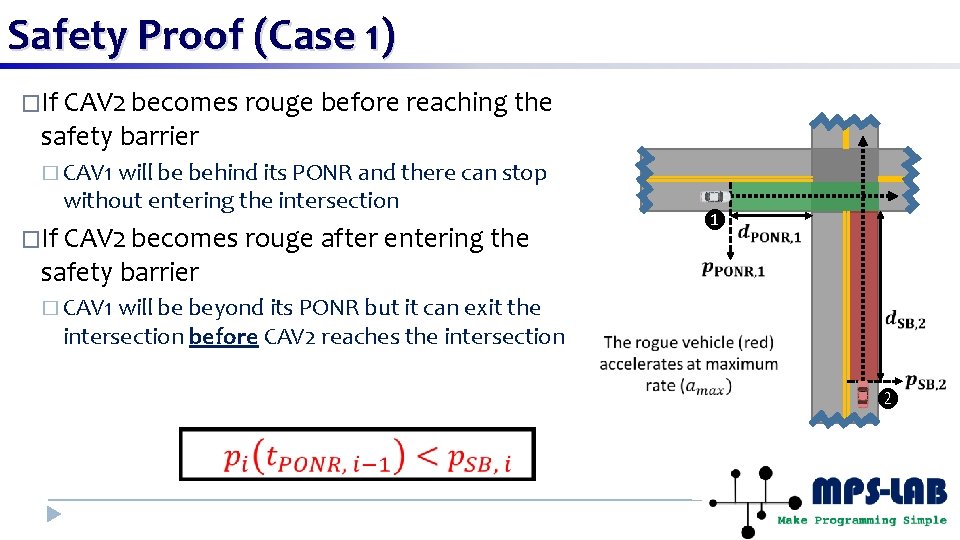
Safety Proof (Case 1) �If CAV 2 becomes rouge before reaching the safety barrier � CAV 1 will be behind its PONR and there can stop without entering the intersection �If CAV 2 becomes rouge after entering the ❶ safety barrier � CAV 1 will be beyond its PONR but it can exit the intersection before CAV 2 reaches the intersection ❷
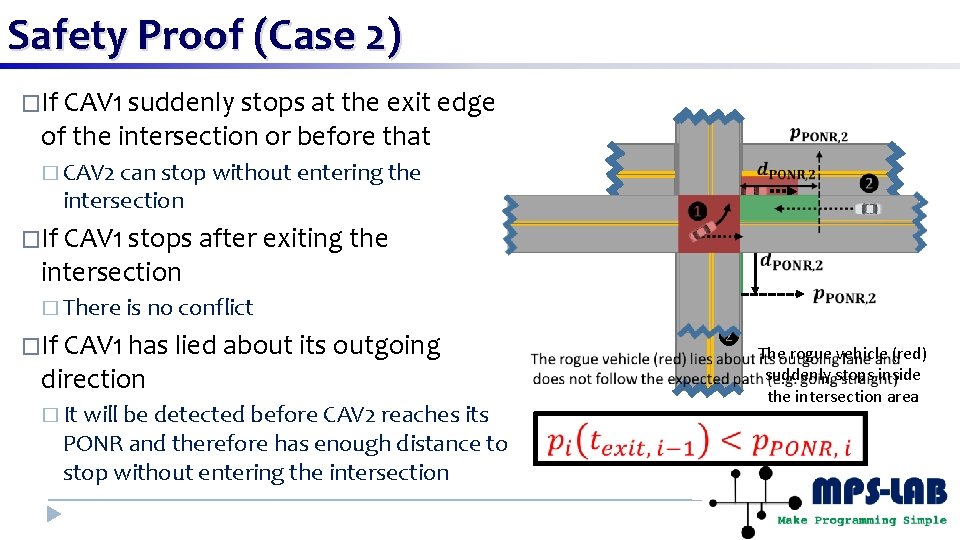
Safety Proof (Case 2) �If CAV 1 suddenly stops at the exit edge of the intersection or before that � CAV 2 can stop without entering the intersection ❶ �If CAV 1 stops after exiting the intersection � There is no conflict �If CAV 1 has lied about its outgoing direction � It will be detected before CAV 2 reaches its PONR and therefore has enough distance to stop without entering the intersection ❷ The rogue vehicle (red) suddenly stops inside the intersection area
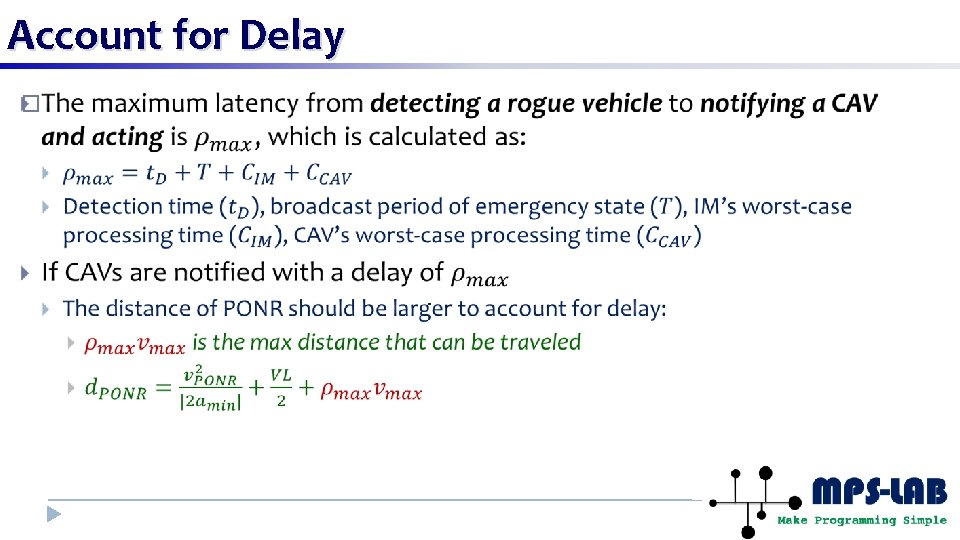
Account for Delay �
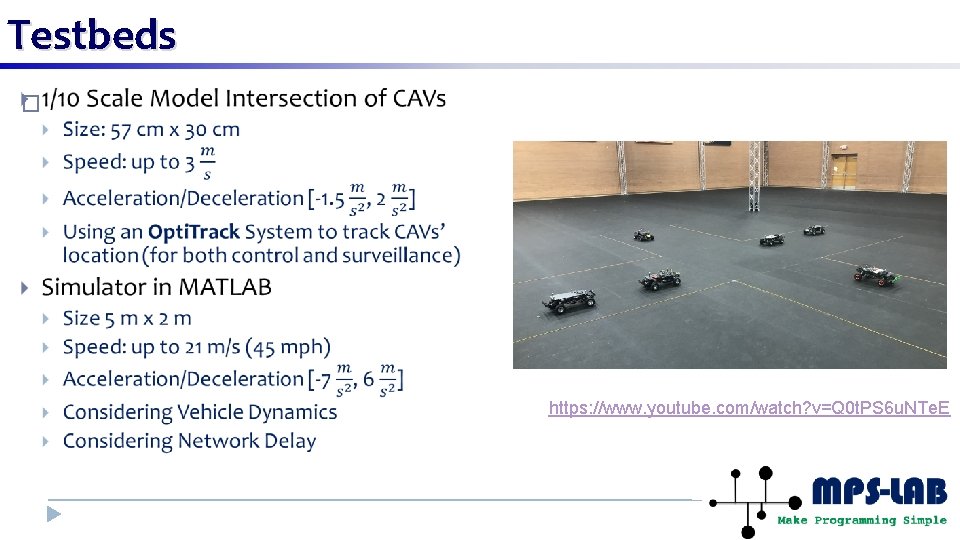
Testbeds � https: //www. youtube. com/watch? v=Q 0 t. PS 6 u. NTe. E
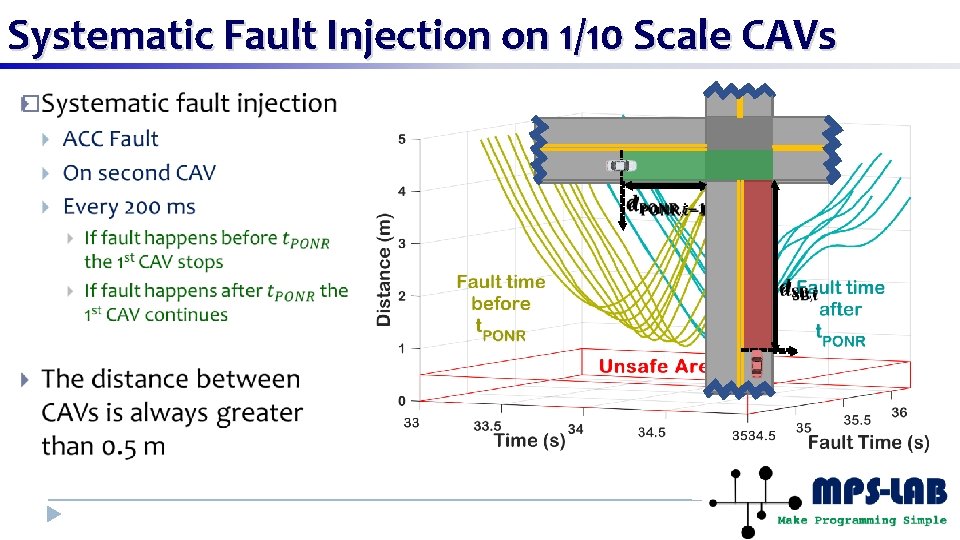
Systematic Fault Injection on 1/10 Scale CAVs �
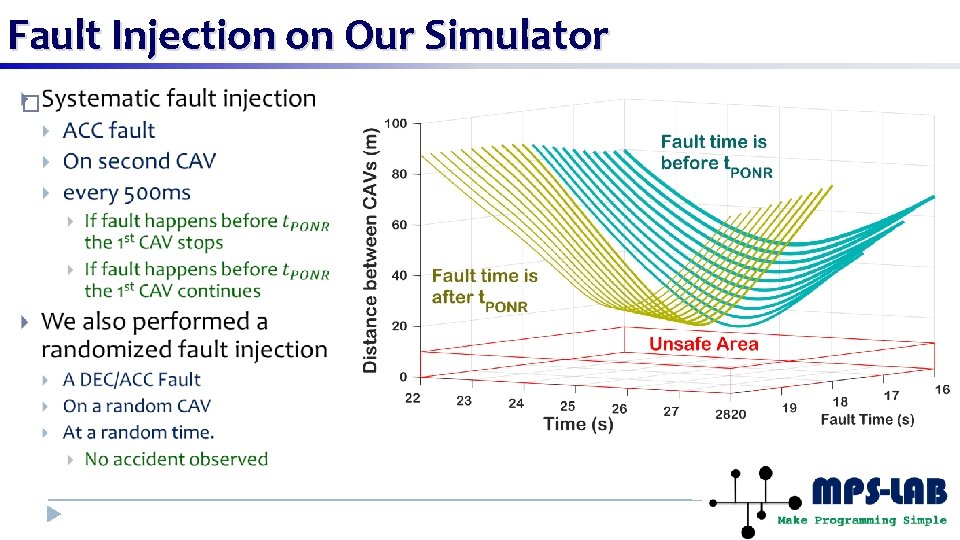
Fault Injection on Our Simulator �
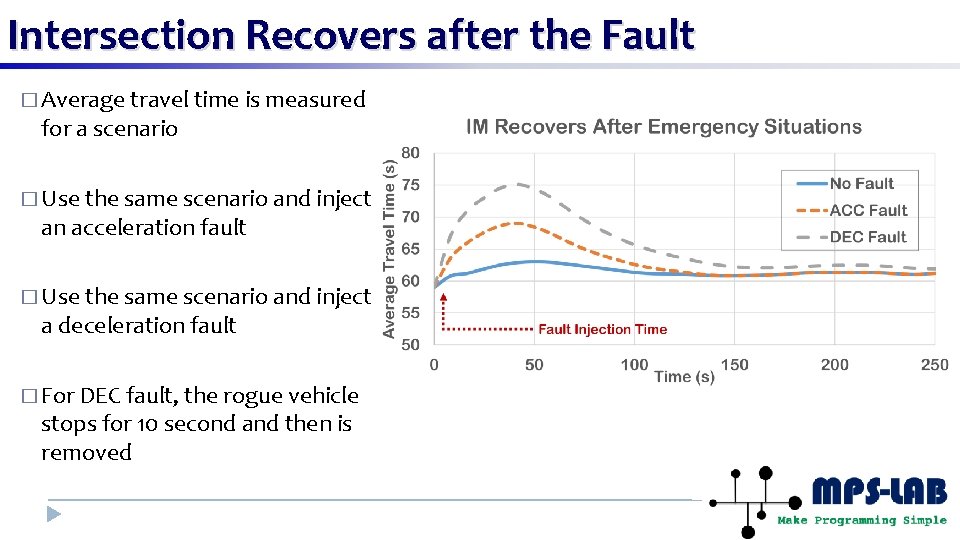
Intersection Recovers after the Fault � Average travel time is measured for a scenario � Use the same scenario and inject an acceleration fault � Use the same scenario and inject a deceleration fault � For DEC fault, the rogue vehicle stops for 10 second and then is removed
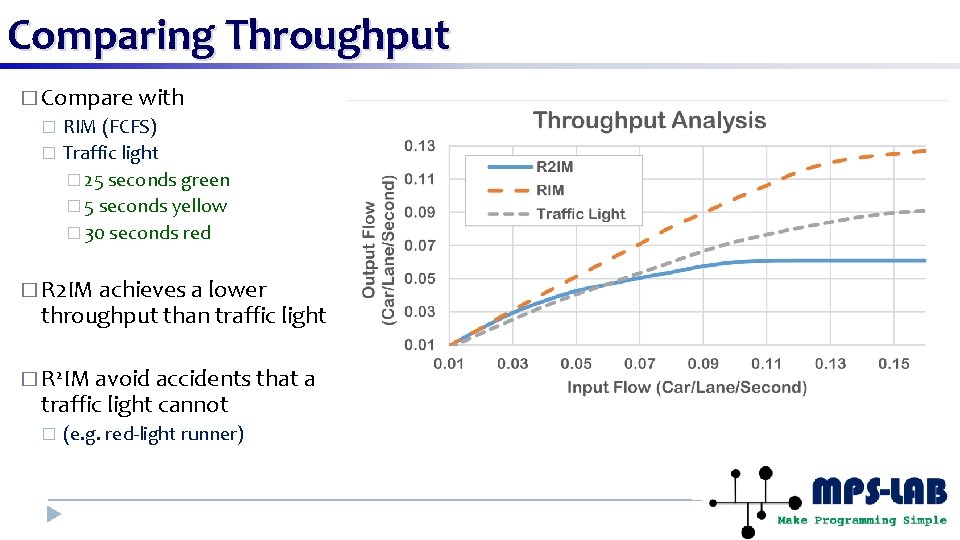
Comparing Throughput � Compare with RIM (FCFS) � Traffic light � 25 seconds green � 5 seconds yellow � 30 seconds red � � R 2 IM achieves a lower throughput than traffic light � R 2 IM avoid accidents that a traffic light cannot � (e. g. red-light runner)
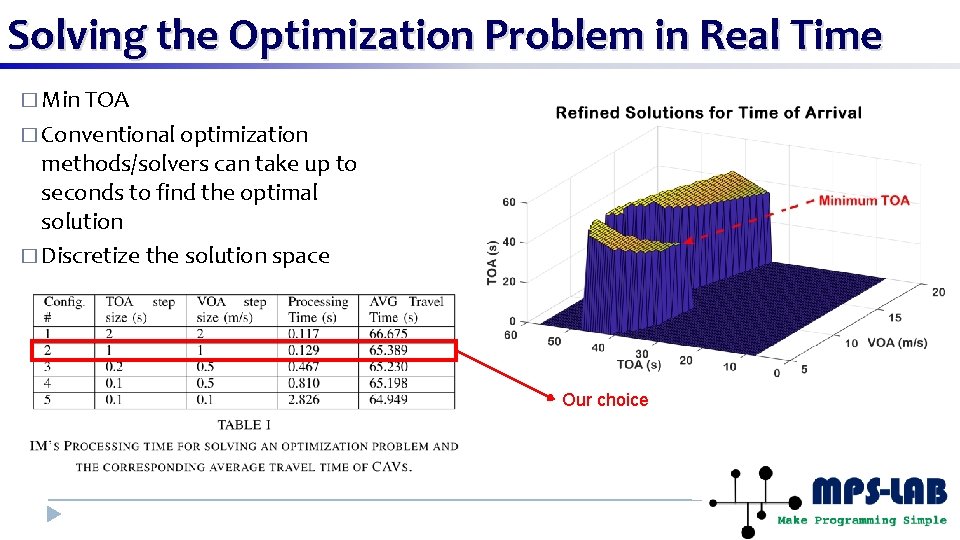
Solving the Optimization Problem in Real Time � Min TOA � Conventional optimization methods/solvers can take up to seconds to find the optimal solution � Discretize the solution space Our choice
Conclusion and Future Works �We proposed an intersection management for CAVs resilient to rogue vehicles (Accelerate/suddenly stop/share wrong information) �We performed systematic and randomized fault injection on our 1/10 scale mode intersection and our simulator �We also analyzed the performance of our approach in terms of recovery, throughput and processing time of the IM �Future works include extending our approach to multi-lane intersections and distributed implementation of R 2 IM
Thank You for Your Attention
- Slides: 24