
QUICK WINS SCHOOL TURNAROUND STRATEGIES FOR BRINGING OUT

QUICK WINS & SCHOOL TURNAROUND: STRATEGIES FOR BRINGING OUT THE BEST IN STAFF & STUDENTS 2015 National Title I Conference February 7, 2015 2: 00 -3: 00 Room 355 BC Scott Neil, Ph. D Paul Gavoni, Ed. D.

Paul Gavoni, Ed. D Scott Neil, Ph. D 2 Session Outcomes By the end of the session participants will… • Develop a shared understanding of how Quick Wins impact the school turnaround process • Learn specific strategies to build momentum for change and the self-efficacy of staff and students through Quick Wins • Understand the role data and social networks play in creating Quick Wins • Learn the importance of Intrinsic Motivation through the Quick Wins process
Paul Gavoni, Ed. D Scott Neil, Ph. D 3 WHAT ARE QUICK WINS? “Change can exist without renewal, but renewal cannot exist without change. ” ~Raymond Calabrese

Paul Gavoni, Ed. D Scott Neil, Ph. D 4 What are Quick Wins? • Successful turnaround leaders choose a few high-priority goals with visible payoffs and use early success to gain momentum. • While these “wins” are limited in scope, they are high- priority, not peripheral, elements of organization performance. • Early wins are critical for motivating staff and disempowering naysayers. Hassel & Hassel (2009)
Paul Gavoni, Ed. D Scott Neil, Ph. D 5 Why are Quick Wins important? • Successful turnaround leaders first concentrate on a very limited number of changes to achieve early, visible wins for the school • This achievement in an important area, motivates staff for further change, and reduces resistance by those who oppose change • Silences the critics with quick, visible results and reduces the leader’s time spent addressing “politics” and increases time spent leading for results Center on Innovation and Improvement (2008)
Paul Gavoni, Ed. D Scott Neil, Ph. D 6 School Highlights • Student poverty rates of 84% and 94% • Both schools moved from a C to an A with the Florida School Accountability Report Card in two years or less • Double digit gain across all grades in all subject areas and the highest achievement scores in 28 year history of the school • Increased percent proficient by an average of 24% across all subgroups in two years or less • Reduced teacher turnover from 28% to 7% with zero teacher transfers in two separate schools • Reduced the percentage of student discipline referrals by 67% in less than two years and decreased out-of-school suspension rate from 6. 4% to 0. 5% in one year.
Paul Gavoni, Ed. D Scott Neil, Ph. D GETTING THINGS STARTED “To respond is positive, to react is negative. ” ~Zig Ziglar 7
Paul Gavoni, Ed. D Scott Neil, Ph. D 8 The Big Bang Theory… (and then a whimper) • Principals make great speeches at the beginning about the new vision and direction • Teachers & staff go to training and hear about what they should do • Schools & districts spend a lot of money on new technology
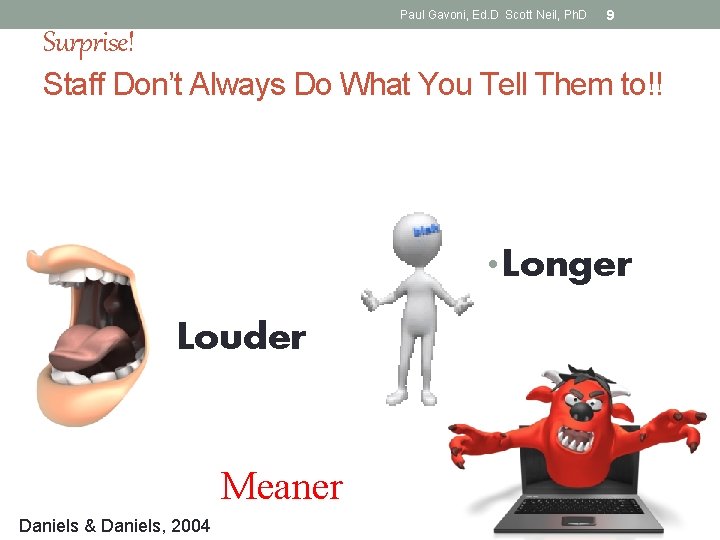
Paul Gavoni, Ed. D Scott Neil, Ph. D 9 Surprise! Staff Don’t Always Do What You Tell Them to!! • Longer Louder Meaner Daniels & Daniels, 2004
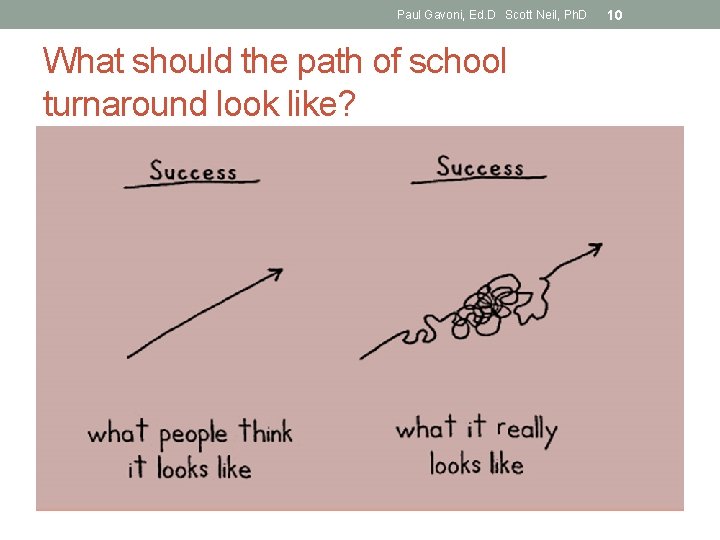
Paul Gavoni, Ed. D Scott Neil, Ph. D What should the path of school turnaround look like? 10
Paul Gavoni, Ed. D Scott Neil, Ph. D 11 Getting started… • Share an inspiring vision of what the change and success will look like when the school gets there • Leverage “Hard and Soft” data • Be transparent about setbacks and implementation dips • Listening is leading • Get the “biggest bang for your buck” in the shortest amount of time • Creating a “want” vs. “want to avoid”
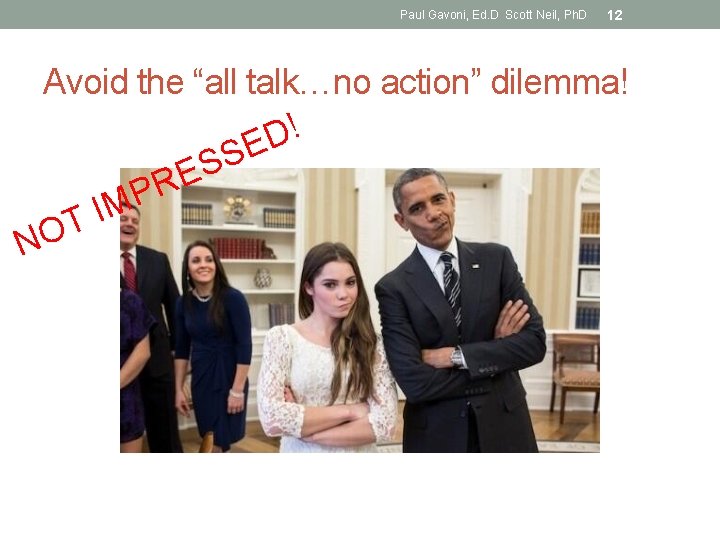
Paul Gavoni, Ed. D Scott Neil, Ph. D 12 Avoid the “all talk…no action” dilemma! ! D E S S E R P M I T O N

Paul Gavoni, Ed. D Scott Neil, Ph. D 13 Pinpoint Behavior and Results Leading Indicators Lagging Indicators • Student behavior • Mid or end of Year or • Staff behavior referral data • Staff retention • Staff perception • Union Grievances • Attendance • Parent Complaints • Formative assessments • Summative assessments
Paul Gavoni, Ed. D Scott Neil, Ph. D 14 Leading Indicators I just wanted to let you know that this has been the BEST first week of school that I have ever had! There has been such a positive vibe around SLE. I see it not only in the teachers, but the students as well! Thank you so much for all that you have done to make this all happen. This is going to be a great year for SLE!!! St. Lucie Elementary Teacher I just really want to say thank you for such a great week. I feel more valued as a teacher than I ever have and I know it will make for a great year. The PBS and CHAMPS training was extremely meaningful. I am hoping this doesn't sound too gushy. . . but , I really do feel this way and wanted you guys to know. St. Lucie Elementary Teacher
Paul Gavoni, Ed. D Scott Neil, Ph. D 15 Leading Indicators-cont. I just wanted to say Thank You so much for such a wonderful start to a school year!!!!! Both of you have been absolutely AMAZING! It means the world to us to know how much support we have and how you make the time to come around and be with the students. Thank you also for thinking of us yesterday with the goodies in our mailbox. . you know the way to a pregnant girl's heart (peanut butter M&M's)!!! : ) I already see a huge difference in the attitude of our staff and how positive everything is and how smooth the school is running! Thank you again for all you've done! I'm looking forward to a terrific school year! 2 nd Grade Teacher St. Lucie Elementary
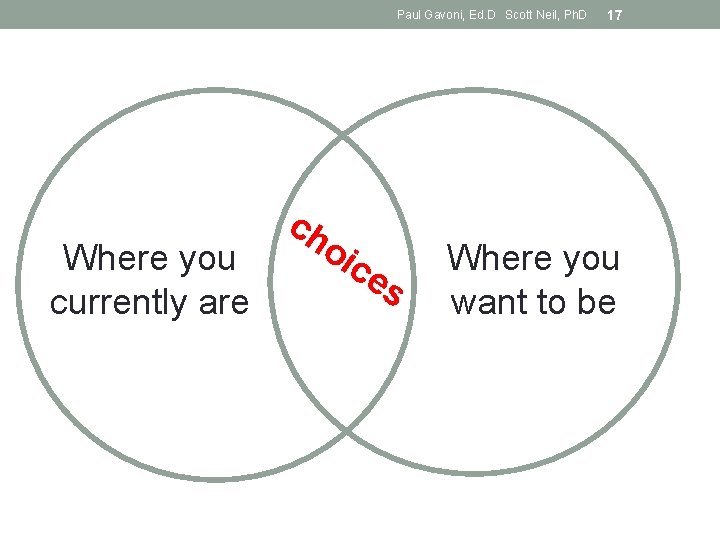
Paul Gavoni, Ed. D Scott Neil, Ph. D 16 GAINING MOMENTUM FOR CHANGE “When it is obvious that the goals cannot be reached, don't adjust the goals, adjust the action steps. ” -Confucius
Paul Gavoni, Ed. D Scott Neil, Ph. D Where you currently are ch oi ce s 17 Where you want to be
Paul Gavoni, Ed. D Scott Neil, Ph. D 18 School turnaround: one step at a time n o i s i V or G BHA Milestone Annual Goal Milestone
Paul Gavoni, Ed. D Scott Neil, Ph. D 19 Things change! What’s The Function? 90 80 WTF? 70 60 50 40 30 20 10 0 1955 1960 1965 1970 1975 1980 1985 1990 1995 2000 2005 2010 2015 2020
Paul Gavoni, Ed. D Scott Neil, Ph. D Reinforcement: The fuel that drives behavior When the reinforcement (fuel) runs out, the behavior will stop (extinction) 20
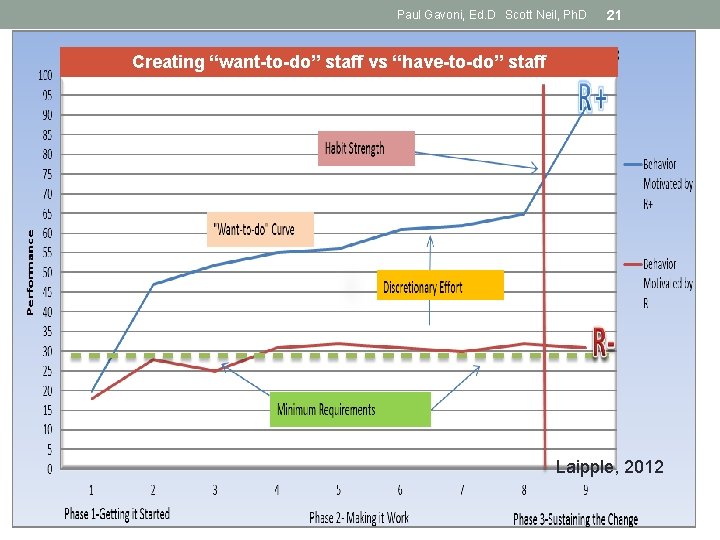
Paul Gavoni, Ed. D Scott Neil, Ph. D 21 Creating “want-to-do” staff vs “have-to-do” staff Laipple, 2012
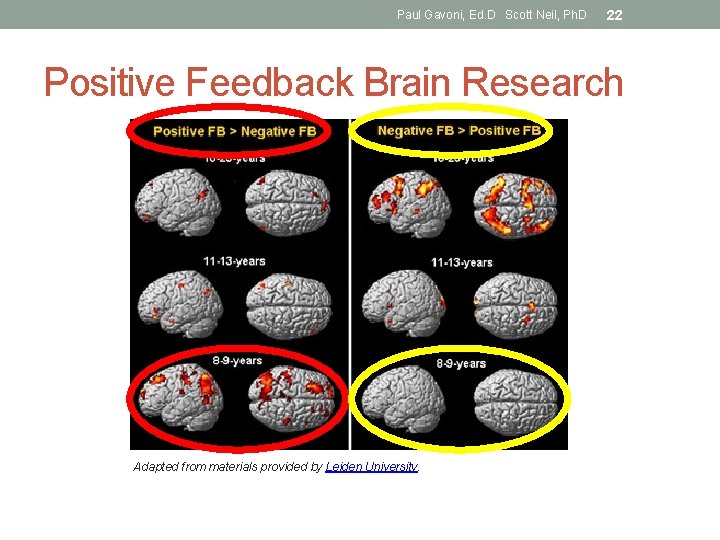
Paul Gavoni, Ed. D Scott Neil, Ph. D 22 Positive Feedback Brain Research Adapted from materials provided by Leiden University.
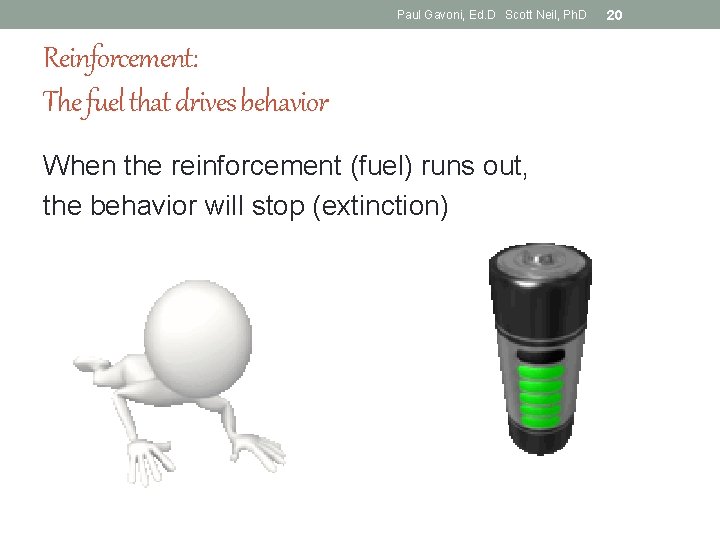
Paul Gavoni, Ed. D Scott Neil, Ph. D 23 Strategies for Gaining Momentum • Put the "stick away" Positive vs. Negative reinforcement • Getting people in touch with positive change through verbal feedback • It’s not what you say, but how and when you say it! • Align meaningful change with staff behavior • Graphic feedback (data) as a reinforcer • Errors in feedback • the "big but" error • the "gimmee more" error • The "sandwich" error
Paul Gavoni, Ed. D Scott Neil, Ph. D 24 Having a system for good systems Good systems… • Pinpoint targets • Measure success • Provide ongoing feedback • Utilize Positive Reinforcement (Daniels & Daniels, 2004)
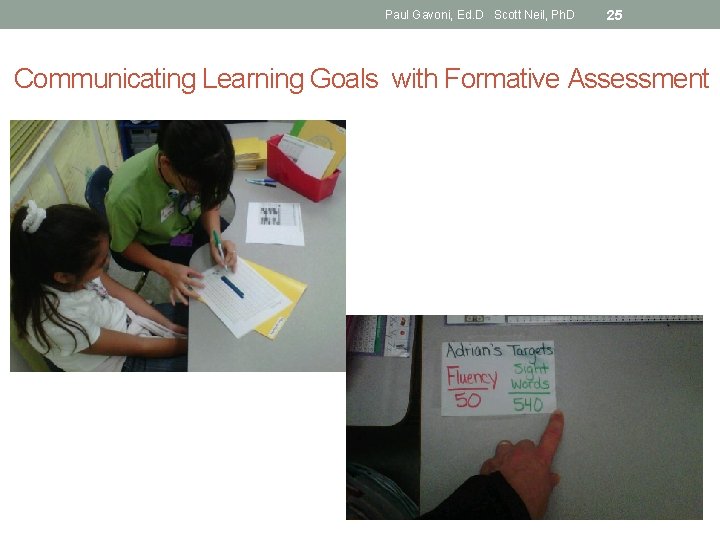
Paul Gavoni, Ed. D Scott Neil, Ph. D 25 Communicating Learning Goals with Formative Assessment
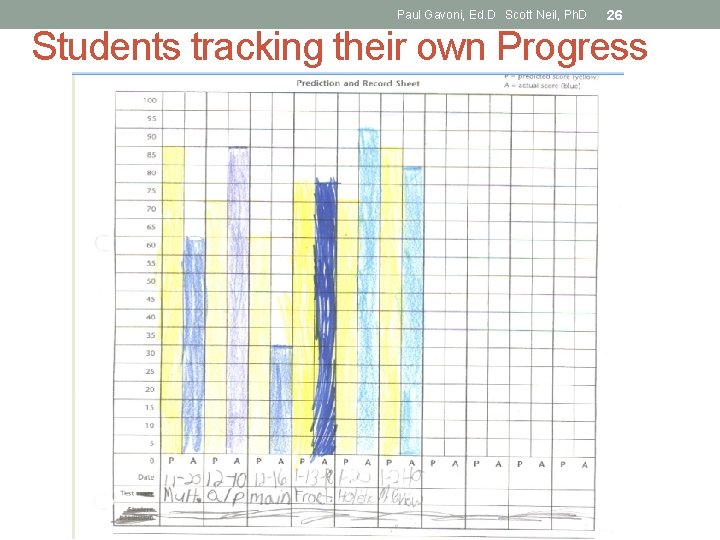
Paul Gavoni, Ed. D Scott Neil, Ph. D 26 Students tracking their own Progress

Paul Gavoni, Ed. D Scott Neil, Ph. D Celebrating Student and Teacher Success 27
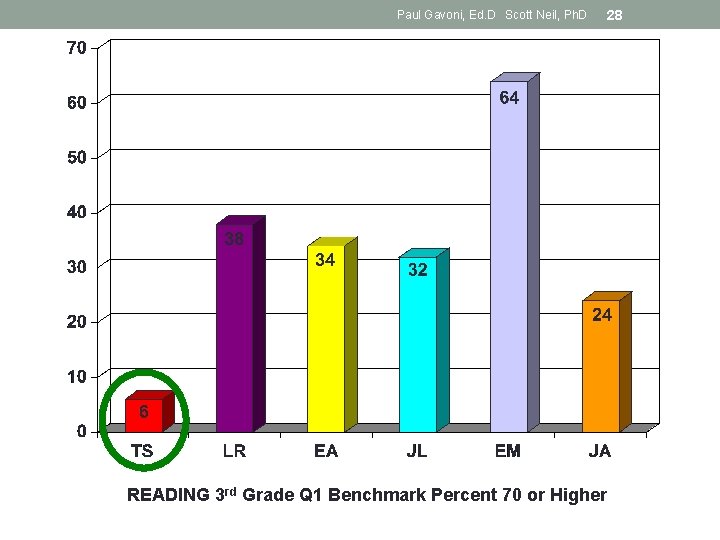
Paul Gavoni, Ed. D Scott Neil, Ph. D READING 3 rd Grade Q 1 Benchmark Percent 70 or Higher 28
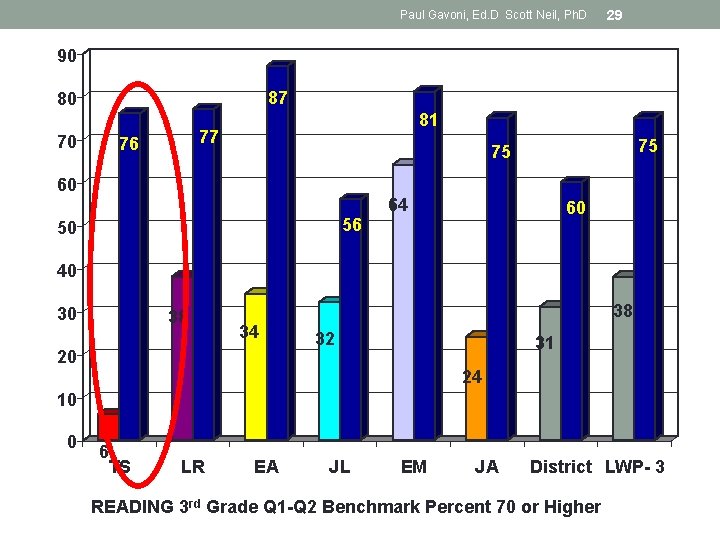
Paul Gavoni, Ed. D Scott Neil, Ph. D 29 90 87 80 70 81 77 76 75 75 60 56 50 64 60 40 30 38 38 34 20 32 31 24 10 0 6 TS LR EA JL EM JA District LWP- 3 READING 3 rd Grade Q 1 -Q 2 Benchmark Percent 70 or Higher
Paul Gavoni, Ed. D Scott Neil, Ph. D 30 INFLUENCE OF QUICK WINS ON THE MOTIVATION AND SELF ESTEEM “Whether you believe you can do a thing or not, you are right. ” ~Henry Ford

Paul Gavoni, Ed. D Scott Neil, Ph. D 31 Building Self-Efficacy with Quick Wins • Psychologist Albert Bandura has defined self-efficacy as one's belief in one's ability to succeed in specific situations. • One's sense of self-efficacy can play a major role in how one approaches goals, tasks, and challenges. Bandura, A. (1977)
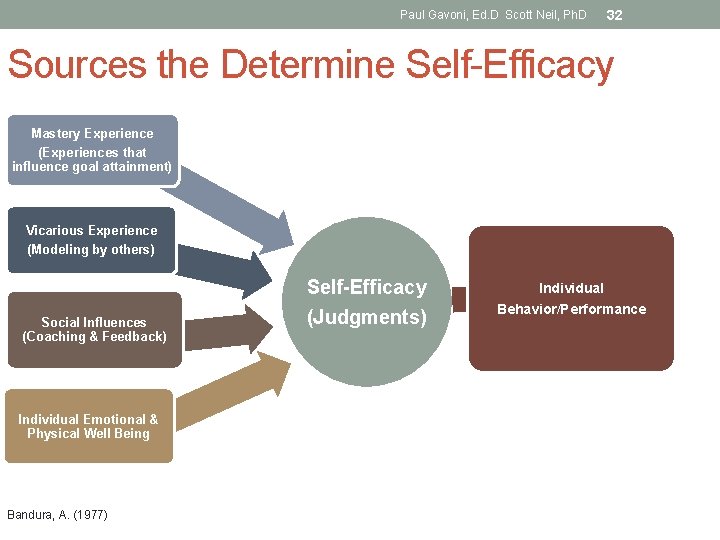
Paul Gavoni, Ed. D Scott Neil, Ph. D 32 Sources the Determine Self-Efficacy Mastery Experience (Experiences that influence goal attainment) Vicarious Experience (Modeling by others) Social Influences (Coaching & Feedback) Individual Emotional & Physical Well Being Bandura, A. (1977) Self-Efficacy (Judgments) Individual Behavior/Performance
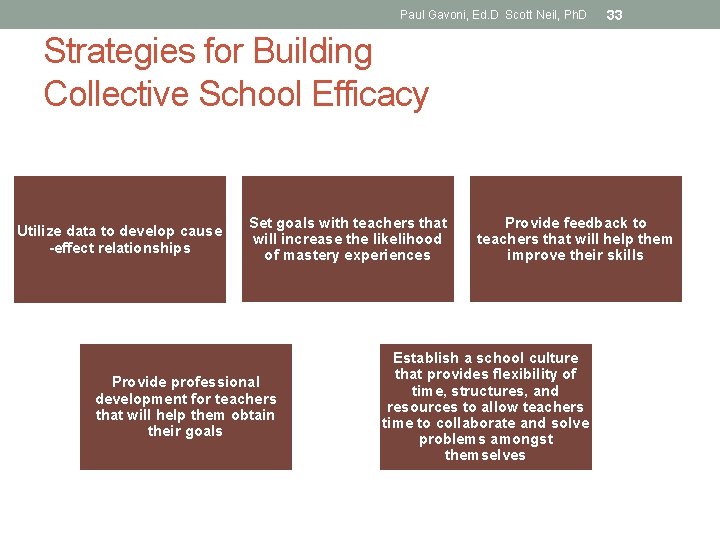
Paul Gavoni, Ed. D Scott Neil, Ph. D 33 Strategies for Building Collective School Efficacy Utilize data to develop cause -effect relationships Set goals with teachers that will increase the likelihood of mastery experiences Provide professional development for teachers that will help them obtain their goals Provide feedback to teachers that will help them improve their skills Establish a school culture that provides flexibility of time, structures, and resources to allow teachers time to collaborate and solve problems amongst themselves
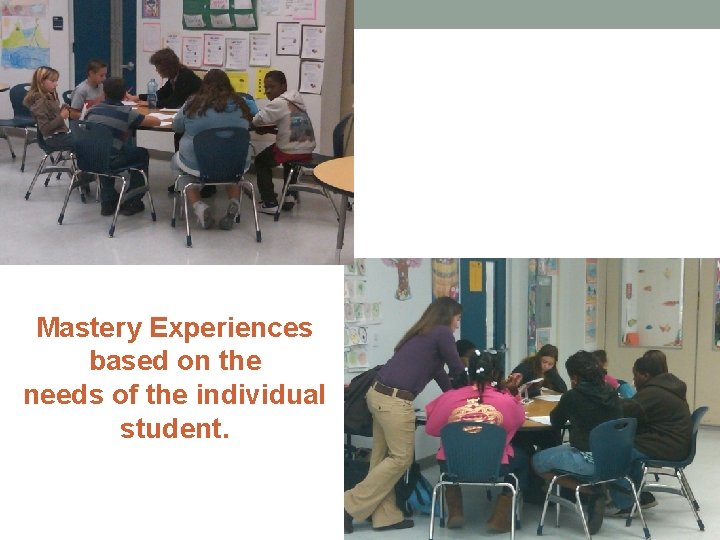
Mastery Experiences based on the needs of the individual student.
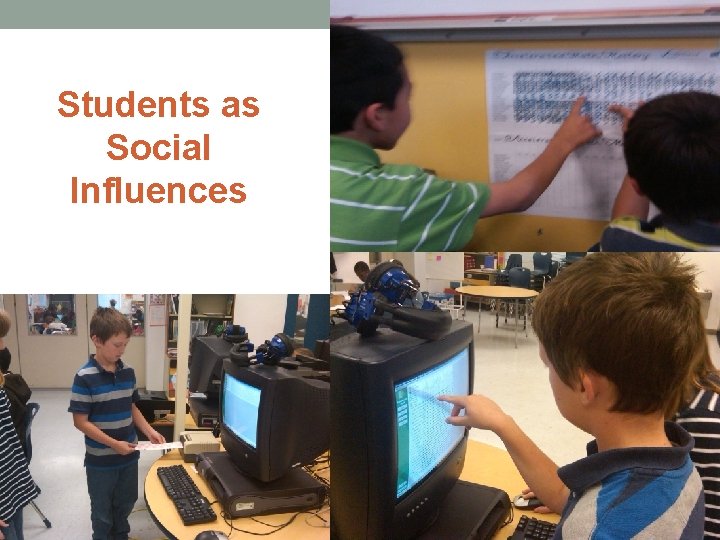
Students as Social Influences

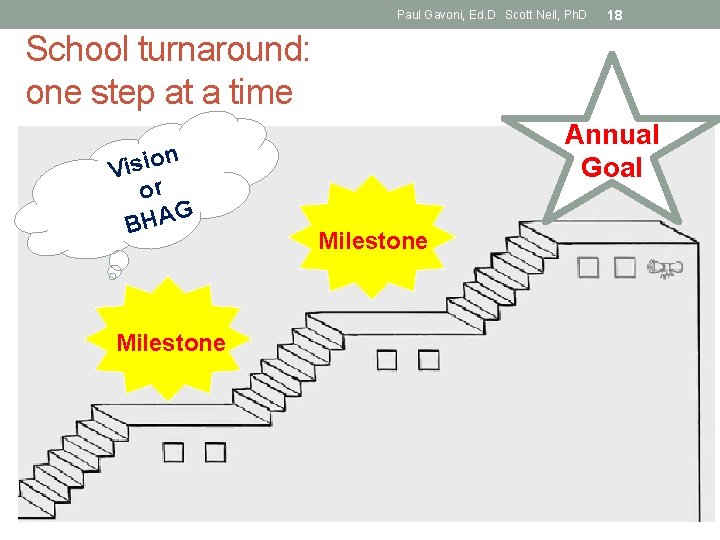
Paul Gavoni, Ed. D Scott Neil, Ph. D 36 Steps to Achieving Quick Wins • Set clear and incremental goals • Allowed staff and students autonomy of how to reach the goals (Tight-Loose Principle) • Provided support and resources (PD) needed to achieve the goals • Allowed realistic amount of time to achieve the goals • LOTS of FEEDBACK!! (Learned from setbacks) • Recognized and celebrated successes (small and large)
Paul Gavoni, Ed. D Scott Neil, Ph. D Questions? schoolleadershipsolutions. com @sleadsolutions Scott Neil sneil@schoolleadershipsolutions. com 772 -240 -2464 @scottmneil Paul Gavoni pgavoni@schoolleadershipsolutions. com 954 -829 -8882 @paulfgavoni 37
Paul Gavoni, Ed. D Scott Neil, Ph. D 38 Sources Bandura, A. (1977). Social learning theory. General Learning Press. Center on Innovation & Improvement (2008). School turnarounds: Action and results. Academic Development Institute. Daniels, A. , & Daniels, D. (2004). In Performance management: Changing behavior that drives organizational effectiveness. GA: Performance Management Publications. Hassel and Hassel, The big u-turn: How to bring schools back from the bring of doom to stellar success, Education Next, Winter, 2009 Laipple, J. (2012). Immediate change: Rapid change for the impatient leader. [Kindle DX]. Retrieved from www. PManagement. Pubs. com.
- Slides: 38