
Quick Review 1 What is the difference between
Quick Review • 1. What is the difference between a microbe and a pathogen? • 2. What are 2 (or more) bad things bacteria do? • 3. What are 2 (or more) good things bacteria do?
Quick Review • 1. What is the difference between a microbe and a pathogen? A microbe is an organism that you need a microscope to see. A pathogen is a type of microbe that makes you sick • 2. What are 2 (or more) bad things bacteria do? • 3. What are 2 (or more) good things bacteria do?
Quick Review • 1. What is the difference between a microbe and a pathogen? A microbe is an organism that you need a microscope to see. A pathogen is a type of microbe that makes you sick • 2. What are 2 (or more) bad things bacteria do? • Make you sick, food poisoning, red tide, mold, tooth decay • 3. What are 2 (or more) good things bacteria do?
Quick Review • 1. What is the difference between a microbe and a pathogen? A microbe is an organism that you need a microscope to see. A pathogen is a type of microbe that makes you sick • 2. What are 2 (or more) bad things bacteria do? • Make you sick, food poisoning, red tide, mold, tooth decay • 3. What are 2 (or more) good things bacteria do? • Help you digest, convert nitrogen for plants, make food like cheese and yogurt, clean up oil spills, make medicines, waste treatments
Microbes Continued March 4, 2019
Microorganisms
Microorganisms • Any living that is less than 1 mm
Microorganisms • Any living that is less than 1 mm • Includes a lot of bacteria, but there are even some animals!
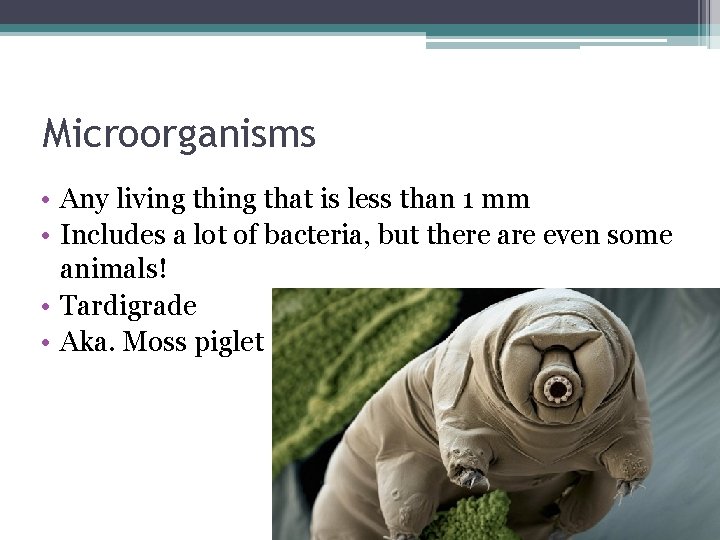
Microorganisms • Any living that is less than 1 mm • Includes a lot of bacteria, but there are even some animals! • Tardigrade • Aka. Moss piglet
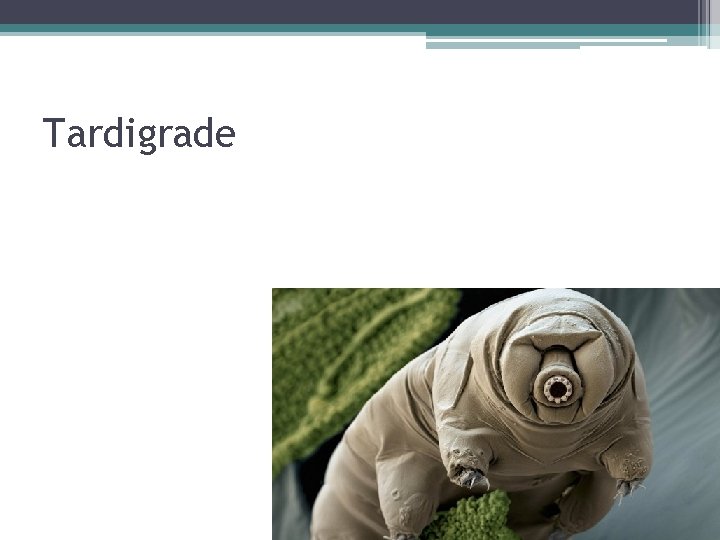
Tardigrade
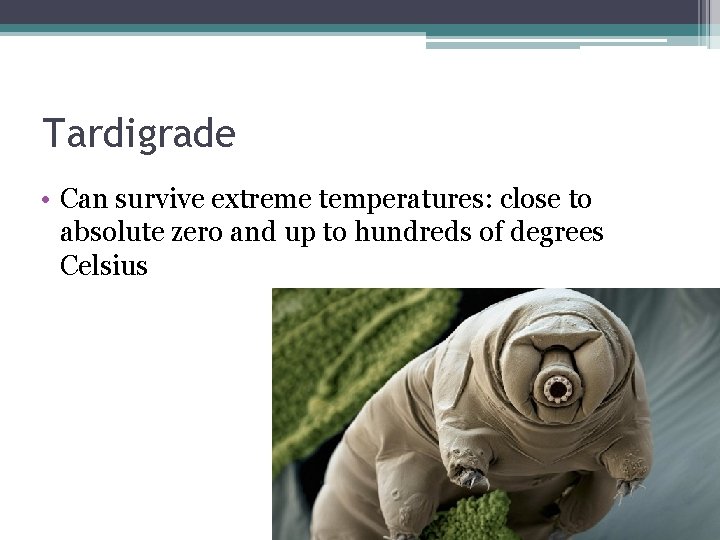
Tardigrade • Can survive extreme temperatures: close to absolute zero and up to hundreds of degrees Celsius
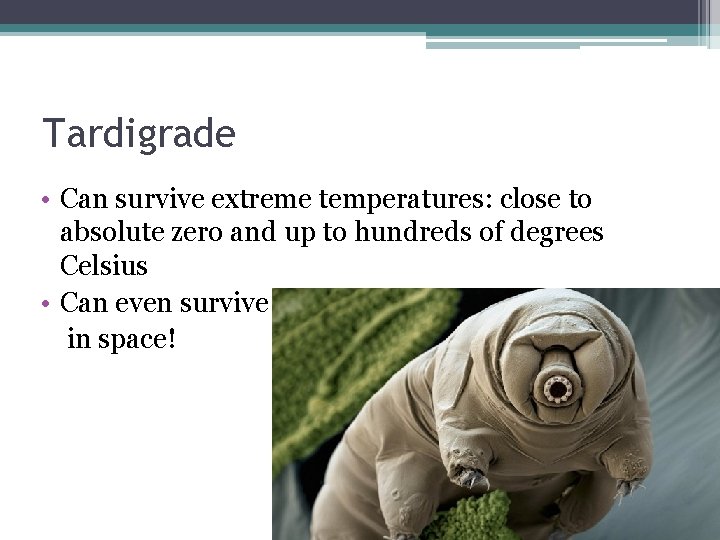
Tardigrade • Can survive extreme temperatures: close to absolute zero and up to hundreds of degrees Celsius • Can even survive in space!
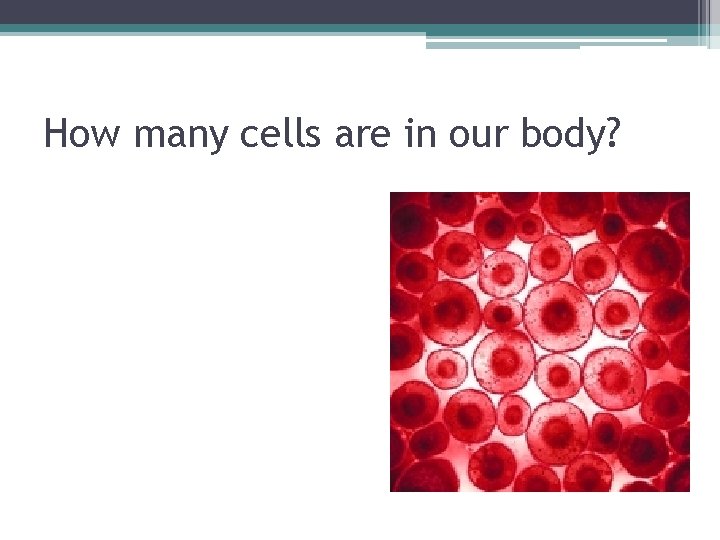
How many cells are in our body?

How many cells are in our body? • Over 10 trillion cells or 10, 000, 000
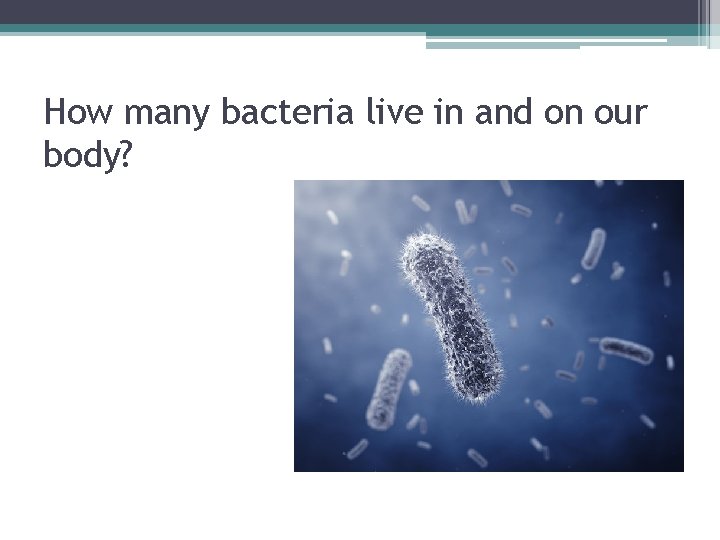
How many bacteria live in and on our body?
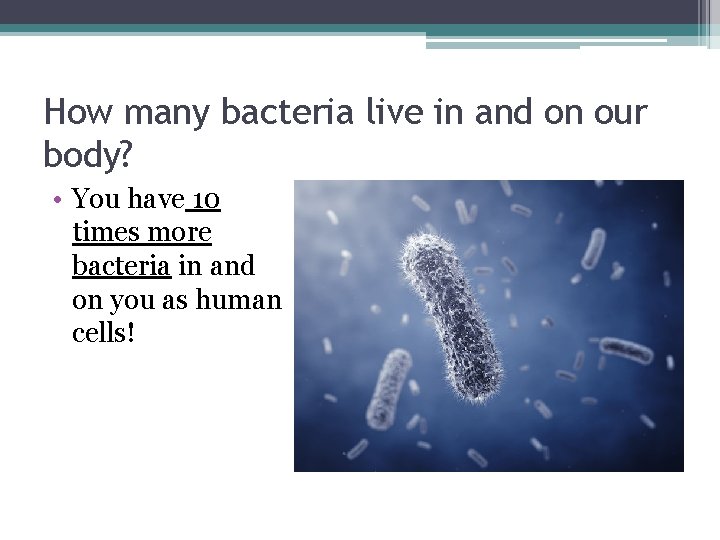
How many bacteria live in and on our body? • You have 10 times more bacteria in and on you as human cells!

Bacterial Growth
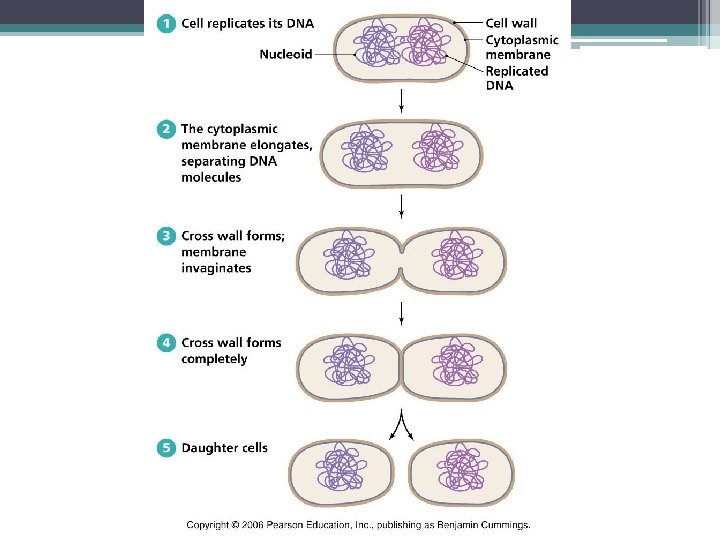
Bacterial Growth • Bacteria reproduces in a process called binary fission
Bacterial Growth • Bacteria reproduces in a process called binary fission • Each bacterial cell divides to produce an exact copy of itself
Bacterial Growth • Bacteria reproduces in a process called binary fission • Each bacterial cell divides to produce an exact copy of itself • This means the population doubles every 20 minutes
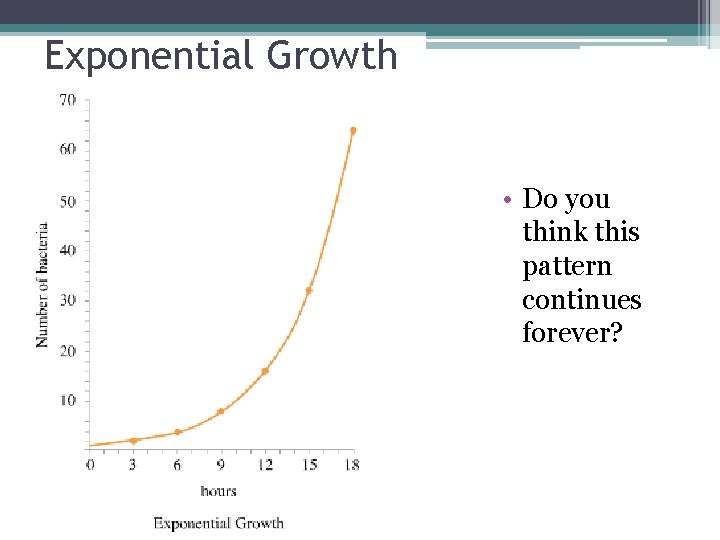
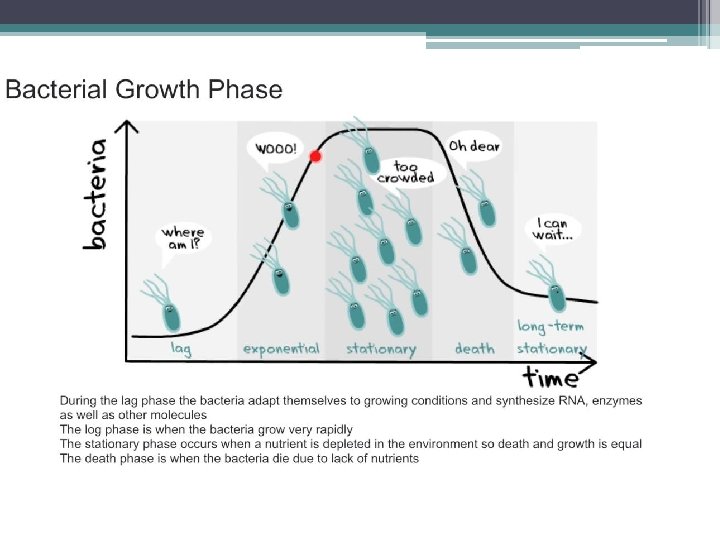
Exponential Growth • Do you think this pattern continues forever?

` • https: //www. youtube. com/watch? v=j 8_xo. M 8 W wgs

• https: //www. youtube. com/watch? v=1 xu. Eowt. B 7 qg

• https: //www. youtube. com/watch? v=si. Hop. HBd W 2 c
Why are we not always getting sick?
Our immune system
Our immune system • The body system that defends from pathogens and infection
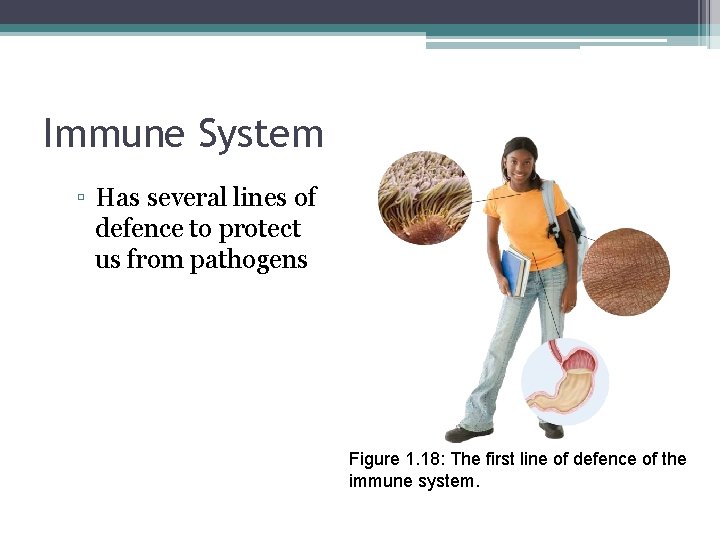
Immune System ▫ Has several lines of defence to protect us from pathogens Figure 1. 18: The first line of defence of the immune system.
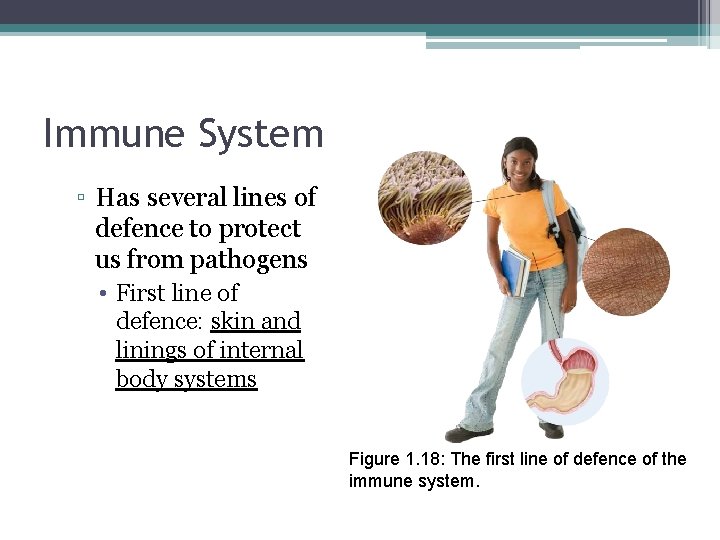
Immune System ▫ Has several lines of defence to protect us from pathogens • First line of defence: skin and linings of internal body systems Figure 1. 18: The first line of defence of the immune system.
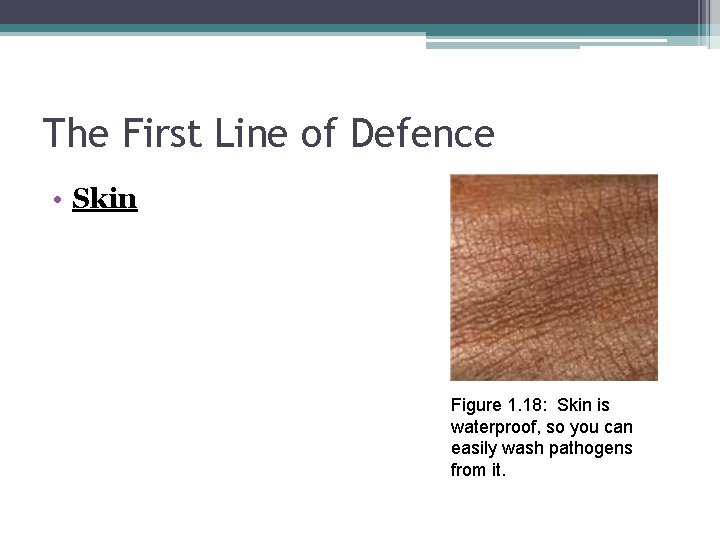
The First Line of Defence • Skin Figure 1. 18: Skin is waterproof, so you can easily wash pathogens from it.
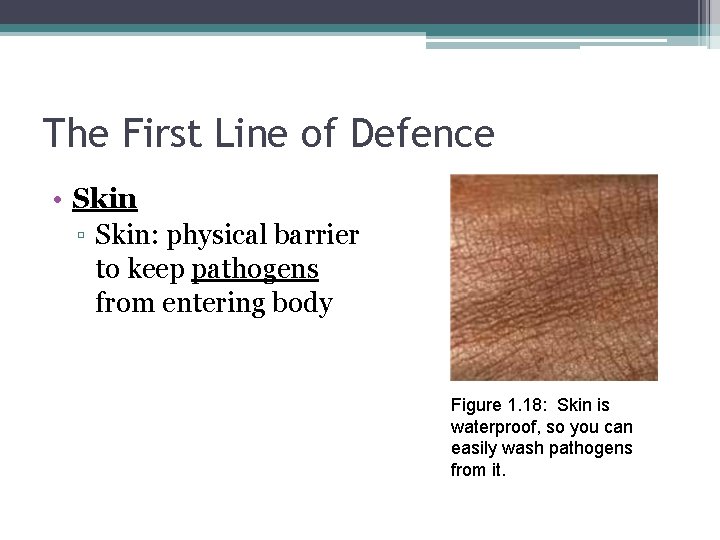
The First Line of Defence • Skin ▫ Skin: physical barrier to keep pathogens from entering body Figure 1. 18: Skin is waterproof, so you can easily wash pathogens from it.

The First Line of Defence • Skin ▫ Skin: physical barrier to keep pathogens from entering body ▫ Sweat and natural body acids: kill pathogens on surface of skin Figure 1. 18: Skin is waterproof, so you can easily wash pathogens from it.
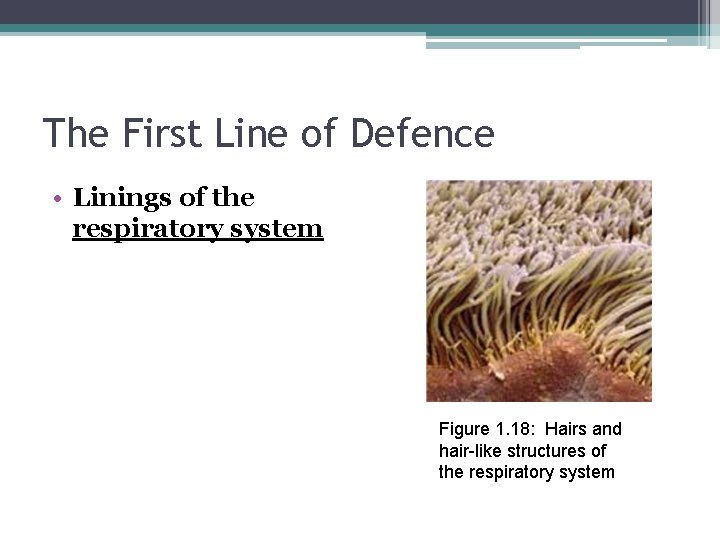
The First Line of Defence • Linings of the respiratory system Figure 1. 18: Hairs and hair-like structures of the respiratory system
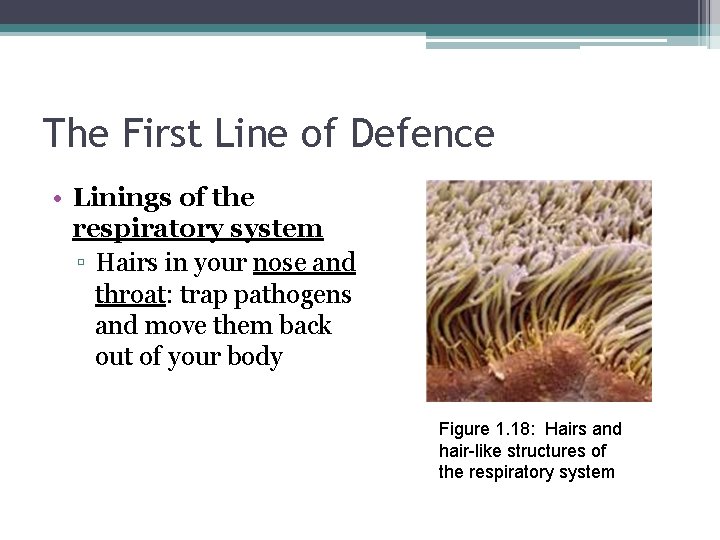
The First Line of Defence • Linings of the respiratory system ▫ Hairs in your nose and throat: trap pathogens and move them back out of your body Figure 1. 18: Hairs and hair-like structures of the respiratory system
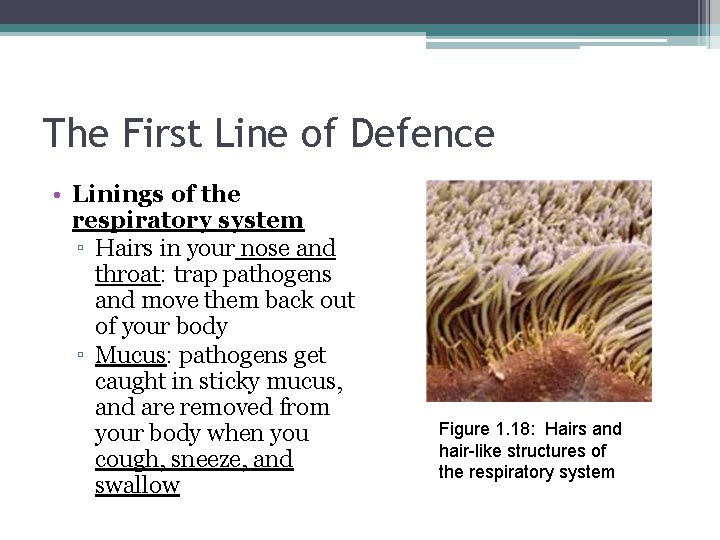
The First Line of Defence • Linings of the respiratory system ▫ Hairs in your nose and throat: trap pathogens and move them back out of your body ▫ Mucus: pathogens get caught in sticky mucus, and are removed from your body when you cough, sneeze, and swallow Figure 1. 18: Hairs and hair-like structures of the respiratory system
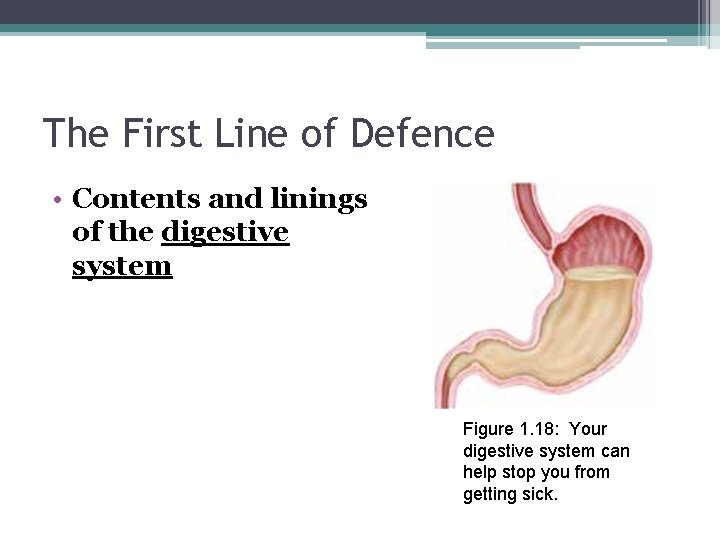
The First Line of Defence • Contents and linings of the digestive system Figure 1. 18: Your digestive system can help stop you from getting sick.
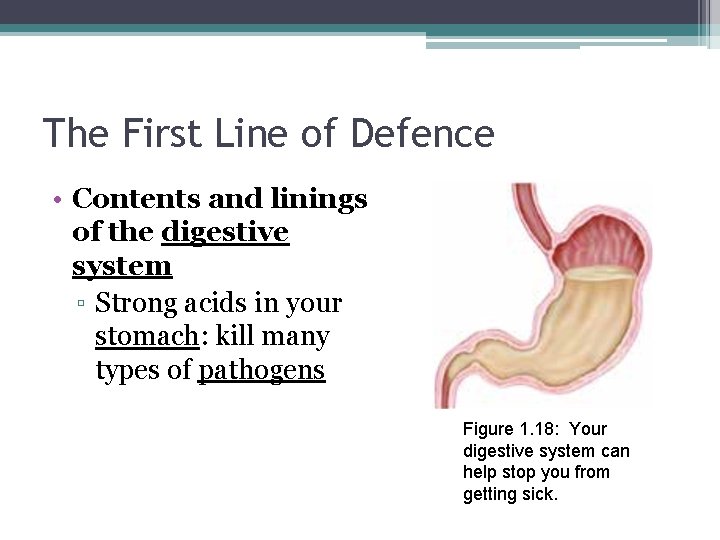
The First Line of Defence • Contents and linings of the digestive system ▫ Strong acids in your stomach: kill many types of pathogens Figure 1. 18: Your digestive system can help stop you from getting sick.
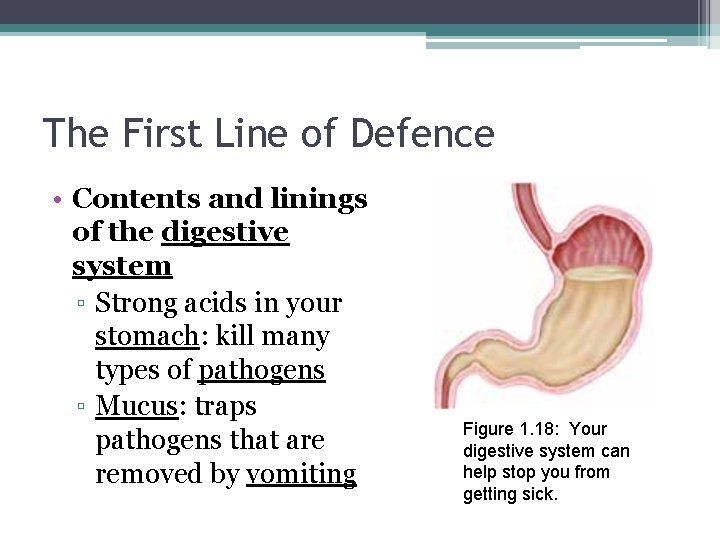
The First Line of Defence • Contents and linings of the digestive system ▫ Strong acids in your stomach: kill many types of pathogens ▫ Mucus: traps pathogens that are removed by vomiting Figure 1. 18: Your digestive system can help stop you from getting sick.
Reminders • Virus worksheet & bacteria worksheet due tomorrow • Interim signed and returned tomorrow • Heads up: Microorganism test next Thursday
- Slides: 42