
Quick Overview Moral Foundations Theory MFT Gene W

- Slides: 12
Quick Overview Moral Foundations Theory ( MFT) Gene W. Matthews, JD, Director Southeastern Regional Center Network for Public Health Law North Carolina Institute for Public Health UNC Gillings School of Global Public Health gmatthews@networkforph. org
Gene Matthews Quick Overview Moral Foundations Theory
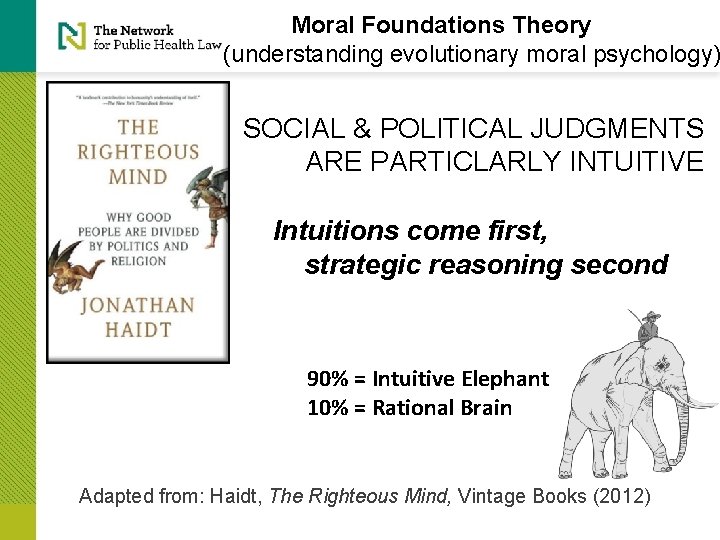
Moral Foundations Theory (understanding evolutionary moral psychology) SOCIAL & POLITICAL JUDGMENTS ARE PARTICLARLY INTUITIVE Intuitions come first, strategic reasoning second 90% = Intuitive Elephant 10% = Rational Brain Adapted from: Haidt, The Righteous Mind, Vintage Books (2012)
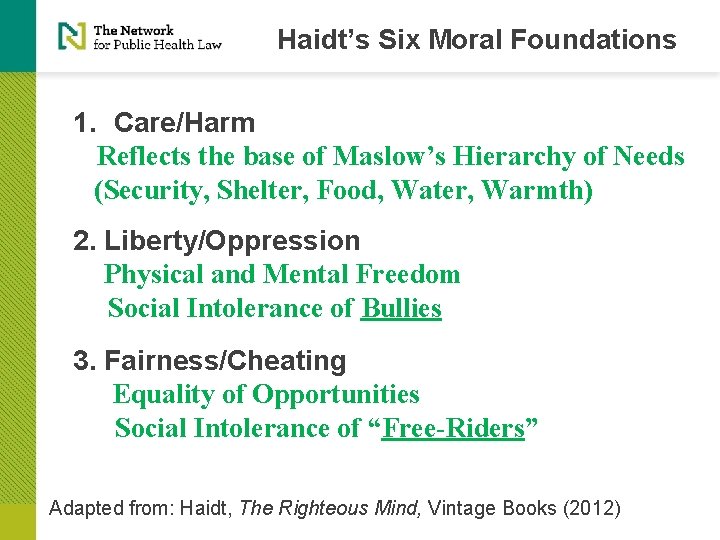
Haidt’s Six Moral Foundations 1. Care/Harm 2. Liberty/Oppression 3. Fairness/Cheating 4. Loyalty/Betrayal 5. Authority/Subversion 6. Sanctity/Degradation Adapted from: Haidt, The Righteous Mind, Vintage Books (2012)
Haidt’s Six Moral Foundations 1. Care/Harm Reflects the base of Maslow’s Hierarchy of Needs (Security, Shelter, Food, Water, Warmth) 2. Liberty/Oppression Physical and Mental Freedom Social Intolerance of Bullies 3. Fairness/Cheating Equality of Opportunities Social Intolerance of “Free-Riders” Adapted from: Haidt, The Righteous Mind, Vintage Books (2012)
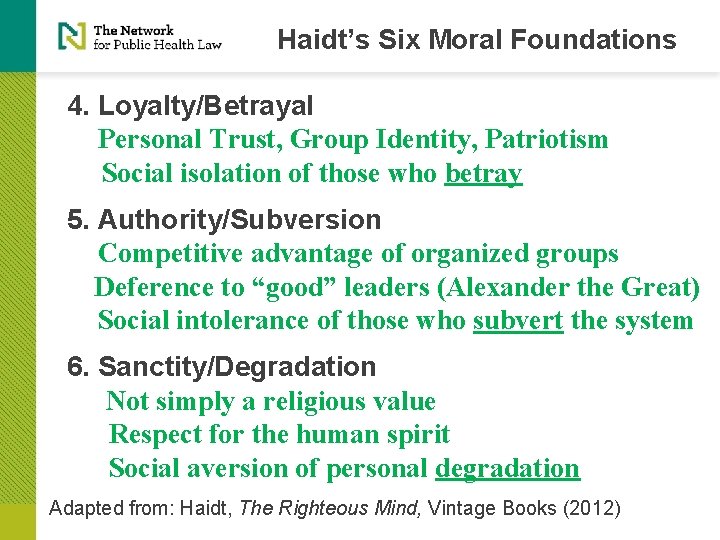
Haidt’s Six Moral Foundations 4. Loyalty/Betrayal Personal Trust, Group Identity, Patriotism Social isolation of those who betray 5. Authority/Subversion Competitive advantage of organized groups Deference to “good” leaders (Alexander the Great) Social intolerance of those who subvert the system 6. Sanctity/Degradation Not simply a religious value Respect for the human spirit Social aversion of personal degradation Adapted from: Haidt, The Righteous Mind, Vintage Books (2012)
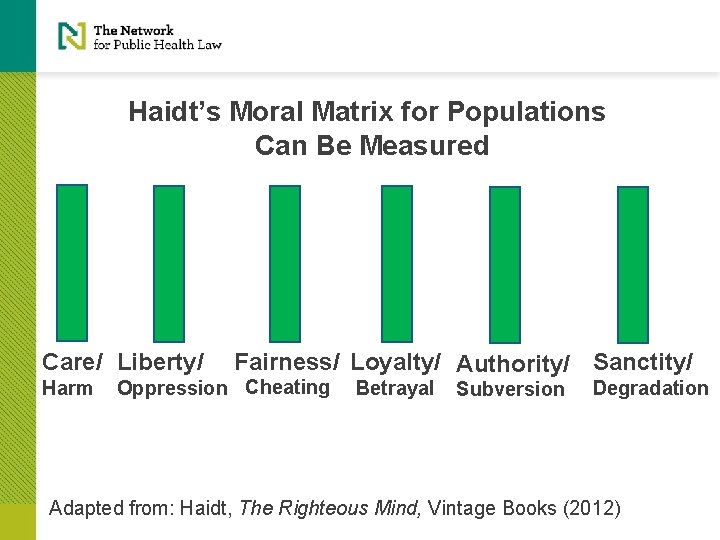
Haidt’s Moral Matrix for Populations Can Be Measured Care/ Liberty/ Harm Fairness/ Loyalty/ Authority/ Sanctity/ Oppression Cheating Betrayal Subversion Degradation Adapted from: Haidt, The Righteous Mind, Vintage Books (2012)
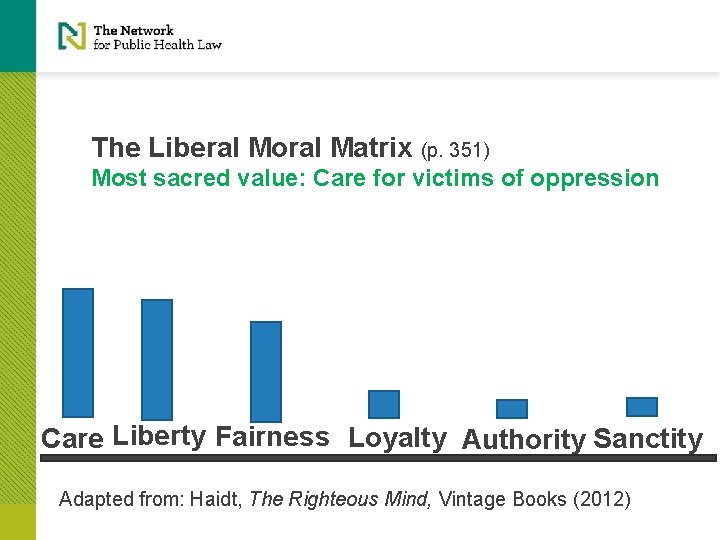
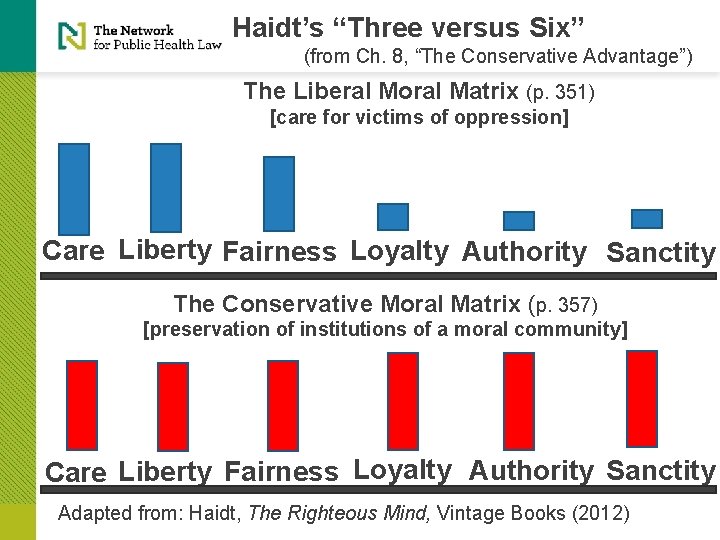
The Liberal Moral Matrix (p. 351) Most sacred value: Care for victims of oppression Care Liberty Fairness Loyalty Authority Sanctity Adapted from: Haidt, The Righteous Mind, Vintage Books (2012)
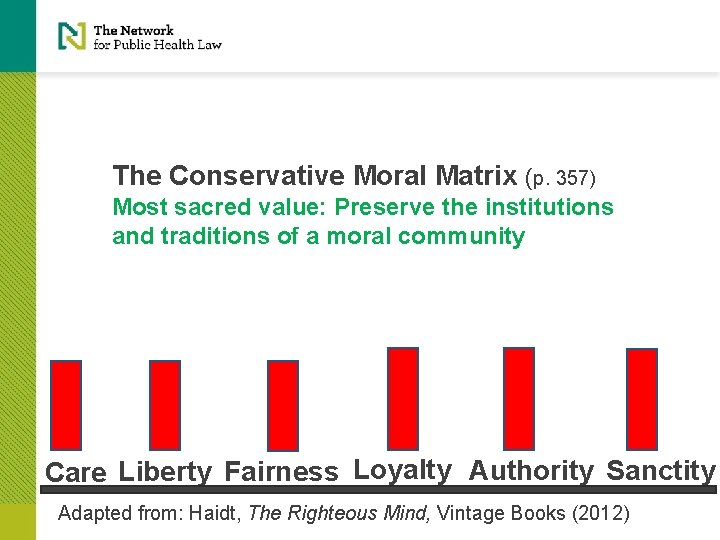
The Conservative Moral Matrix (p. 357) Most sacred value: Preserve the institutions and traditions of a moral community Care Liberty Fairness Loyalty Authority Sanctity Adapted from: Haidt, The Righteous Mind, Vintage Books (2012)
Haidt’s “Three versus Six” (from Ch. 8, “The Conservative Advantage”) The Liberal Moral Matrix (p. 351) [care for victims of oppression] Care Liberty Fairness Loyalty Authority Sanctity The Conservative Moral Matrix (p. 357) [preservation of institutions of a moral community] Care Liberty Fairness Loyalty Authority Sanctity Adapted from: Haidt, The Righteous Mind, Vintage Books (2012)
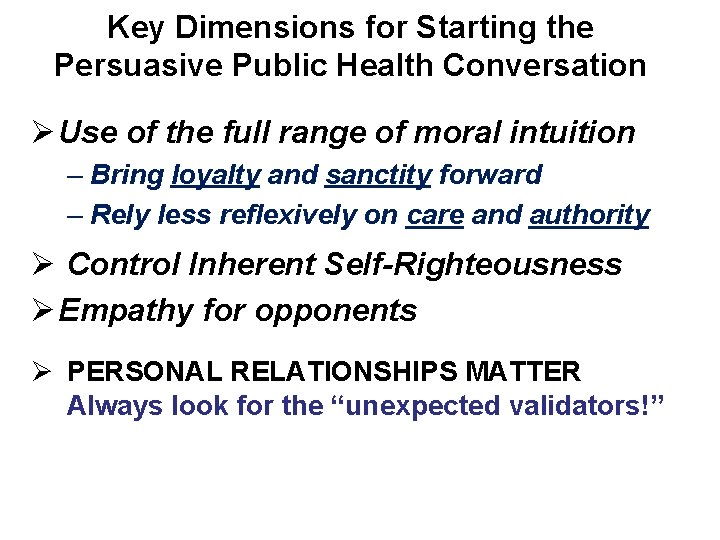
Key Dimensions for Starting the Persuasive Public Health Conversation Ø Use of the full range of moral intuition – Bring loyalty and sanctity forward – Rely less reflexively on care and authority Ø Control Inherent Self-Righteousness Ø Empathy for opponents Ø PERSONAL RELATIONSHIPS MATTER Always look for the “unexpected validators!”
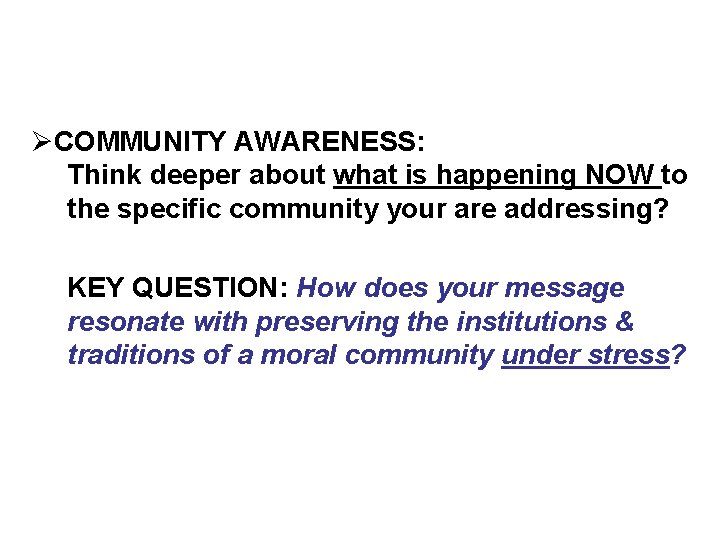
ØCOMMUNITY AWARENESS: Think deeper about what is happening NOW to the specific community your are addressing? KEY QUESTION: How does your message resonate with preserving the institutions & traditions of a moral community under stress?