
Quick Neurological Examination Conscious level Glasgow Coma Score





- Slides: 20
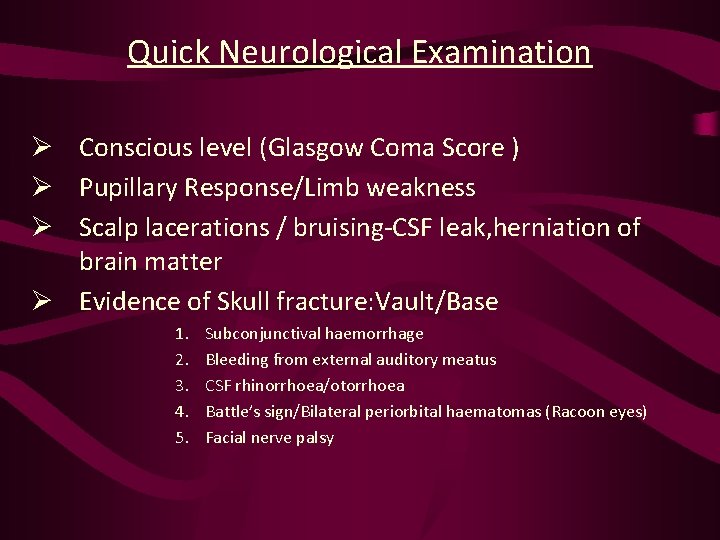
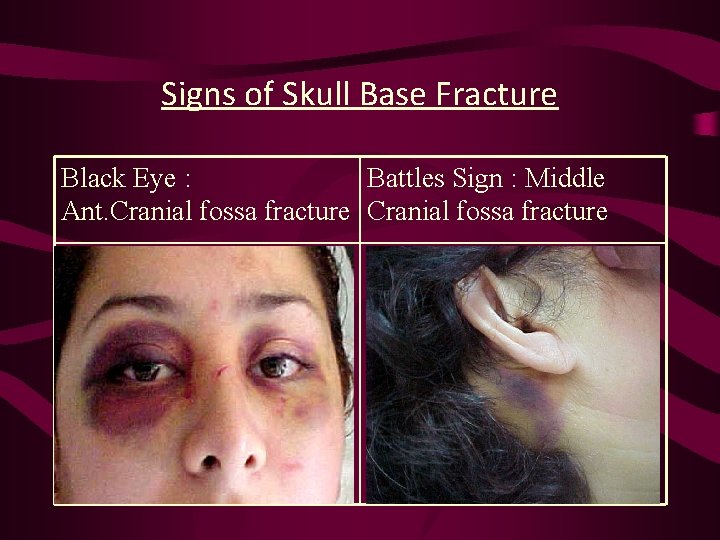
Quick Neurological Examination Ø Conscious level (Glasgow Coma Score ) Ø Pupillary Response/Limb weakness Ø Scalp lacerations / bruising-CSF leak, herniation of brain matter Ø Evidence of Skull fracture: Vault/Base 1. 2. 3. 4. 5. Subconjunctival haemorrhage Bleeding from external auditory meatus CSF rhinorrhoea/otorrhoea Battle’s sign/Bilateral periorbital haematomas (Racoon eyes) Facial nerve palsy
Signs of Skull Base Fracture Black Eye : Battles Sign : Middle Ant. Cranial fossa fracture
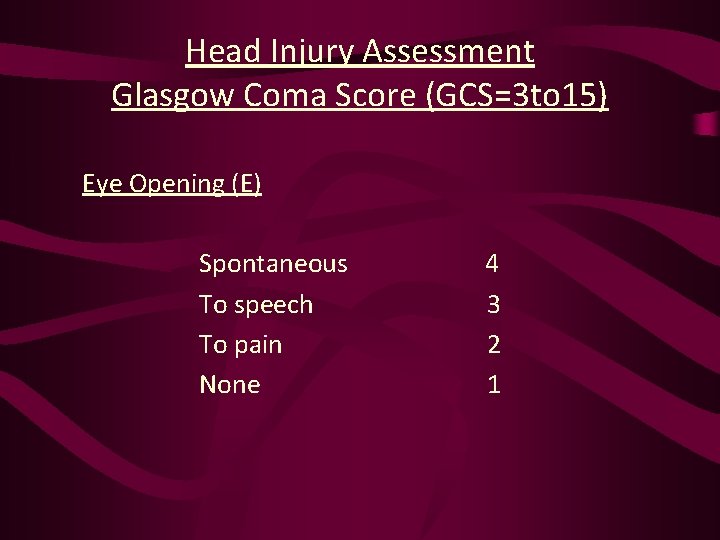
Head Injury Assessment Glasgow Coma Score (GCS=3 to 15) Eye Opening (E) Spontaneous To speech To pain None 4 3 2 1
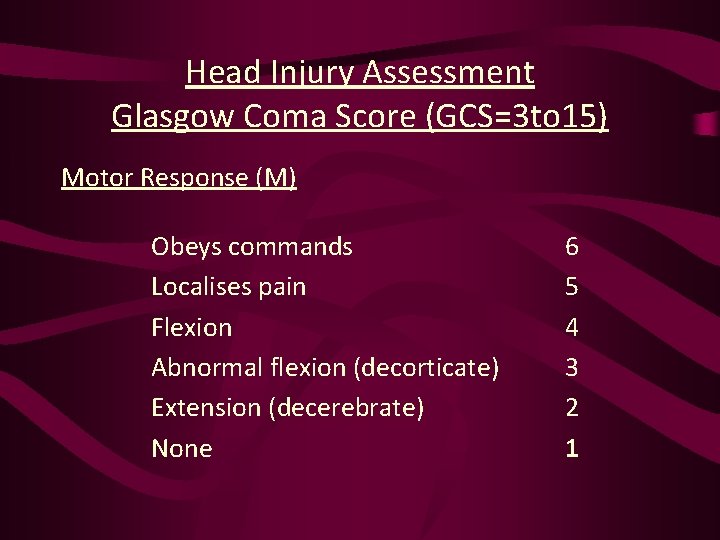
Head Injury Assessment Glasgow Coma Score (GCS=3 to 15) Motor Response (M) Obeys commands Localises pain Flexion Abnormal flexion (decorticate) Extension (decerebrate) None 6 5 4 3 2 1
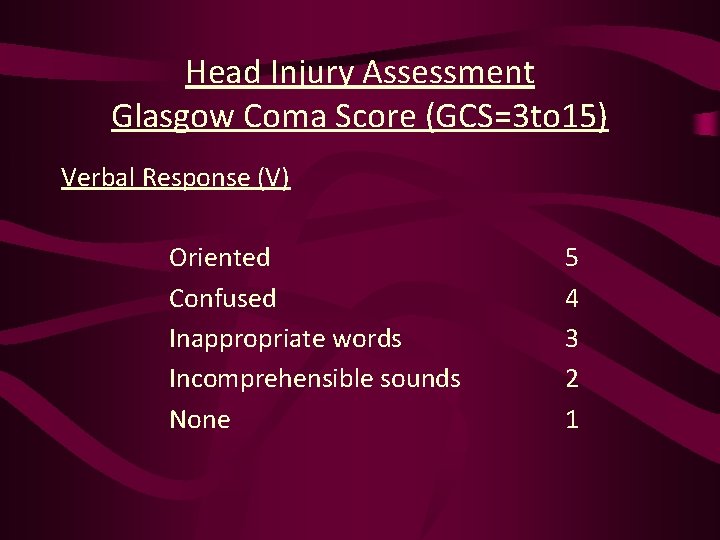
Head Injury Assessment Glasgow Coma Score (GCS=3 to 15) Verbal Response (V) Oriented Confused Inappropriate words Incomprehensible sounds None 5 4 3 2 1
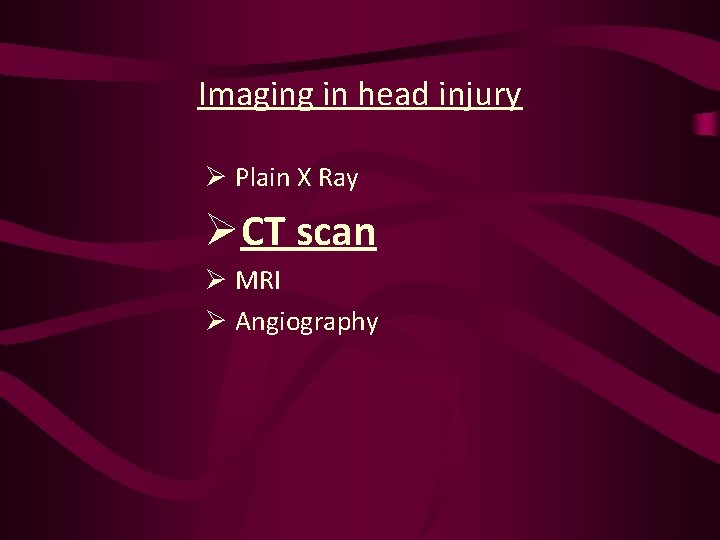
Imaging in head injury Ø Plain X Ray ØCT scan Ø MRI Ø Angiography
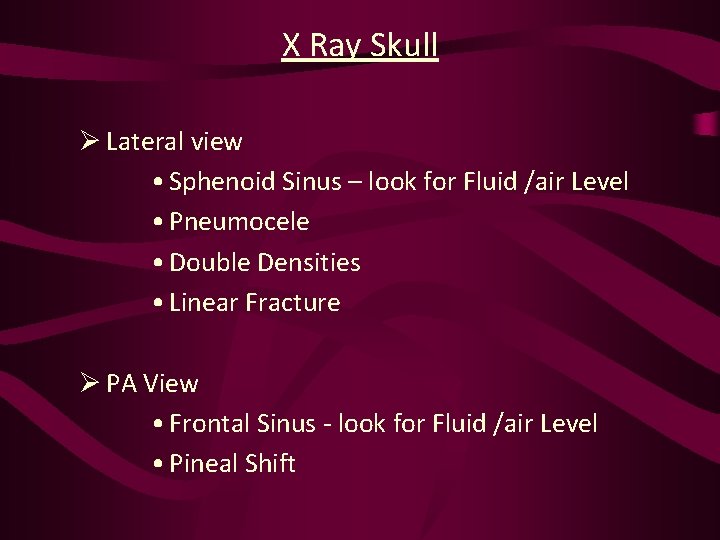
X Ray Skull Ø Lateral view • Sphenoid Sinus – look for Fluid /air Level • Pneumocele • Double Densities • Linear Fracture Ø PA View • Frontal Sinus - look for Fluid /air Level • Pineal Shift
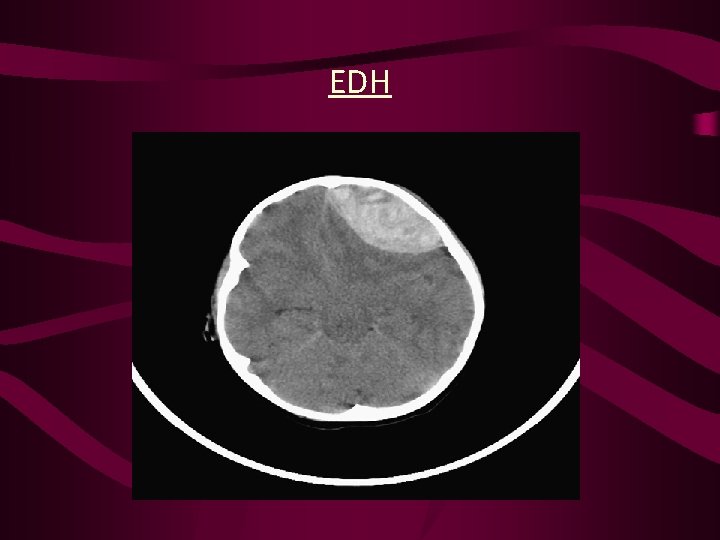
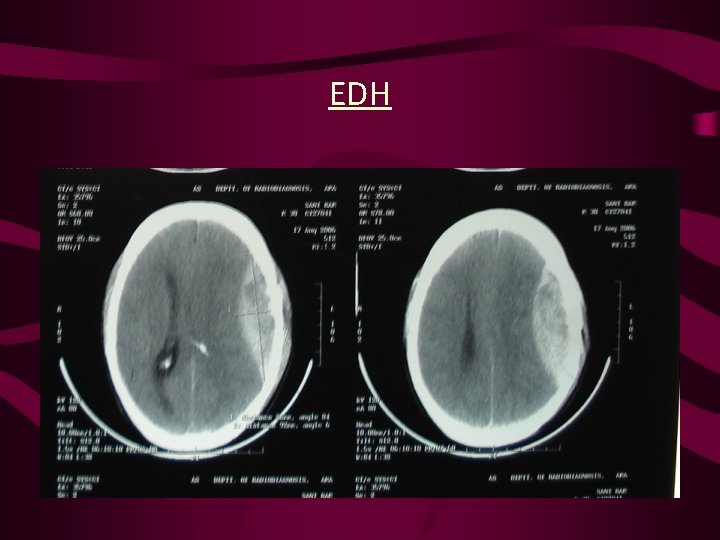
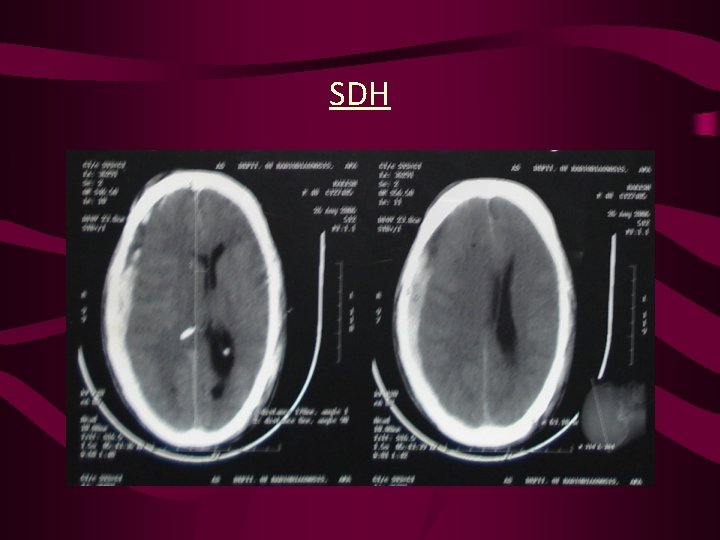
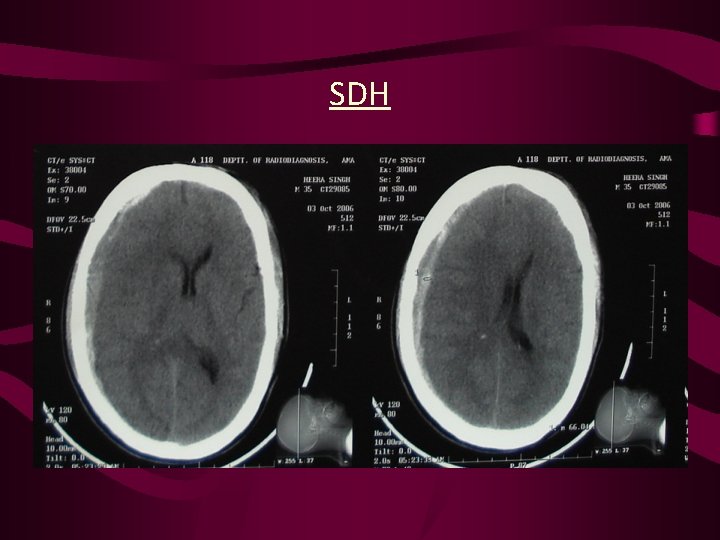
CT Scan ØIt is the most important investigation as it clearly depicts the extent of injury. ØUsually a Plain CT head with bone window is required ØMany times the first CT scan is done quite early a repeat CT scan should be done, preferably within 12 -24 hours after injury.
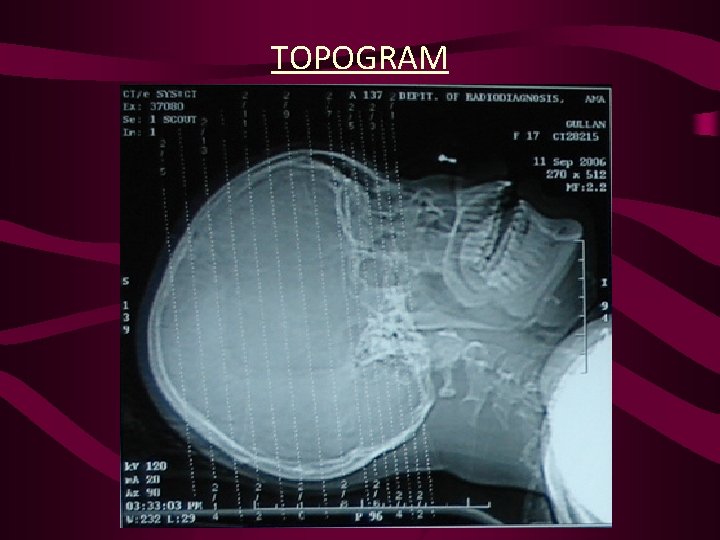
TOPOGRAM
EDH
EDH
EDH
EDH
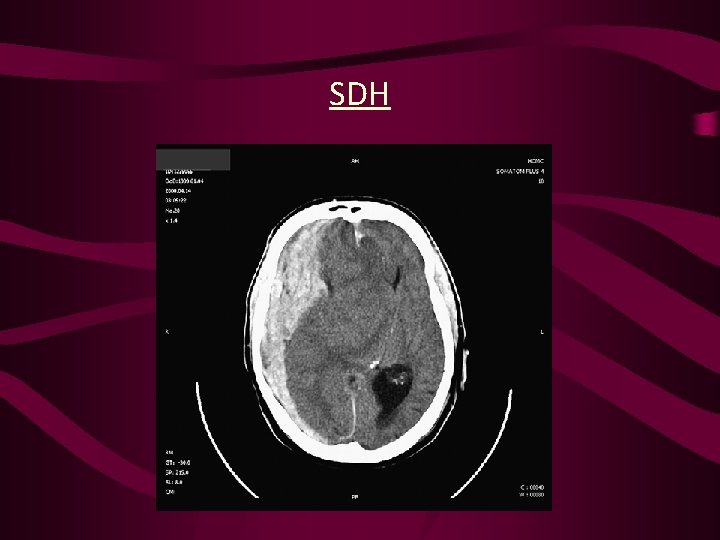
SDH
SDH
SDH
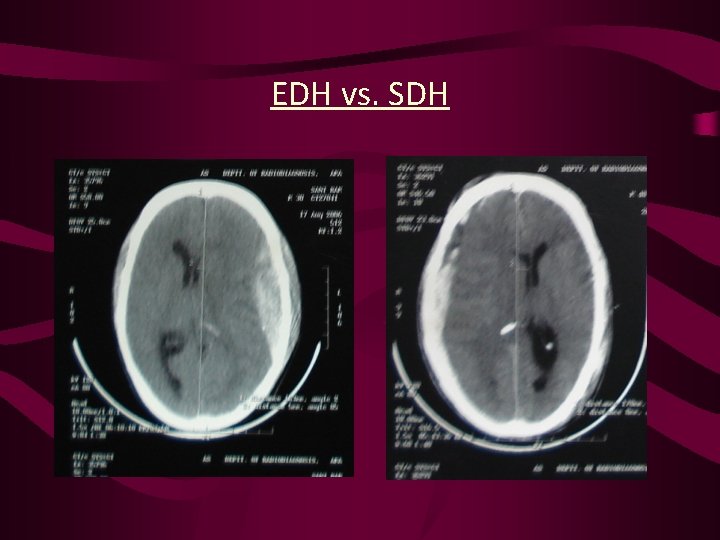
EDH vs. SDH
Contusion
Contusion
Contusion