
QUICK AND RELIABLE BEDSIDE ULTRASOUND IN DIAGNOSIS AND
QUICK AND RELIABLE BEDSIDE ULTRASOUND IN DIAGNOSIS AND MANAGEMENT OF SHOCK FREIDOON GHAZI, MD, FACC, FASCI, FESC TRIHEALTH HEART INSTITUTE
DEFINITION OF SHOCK: • A state of hemodynamic collapse due to ineffective circulation of blood
ETIOLOGY OF SHOCK • Hypovolemic →→Hemorrhage • Cardiogenic →→ Myocardial infarction • Obstructive →→ Cardiac tamponade and pulmonary embolism • Distributive →→ Sepsis, Pleural effusion, Ascites
SHOCK IN OBSTETRIC PATIENTS: • Massive bleeding • Myocardial Infarction due to coronary artery dissection • Pulmonary embolism • Amniotic fluid embolism
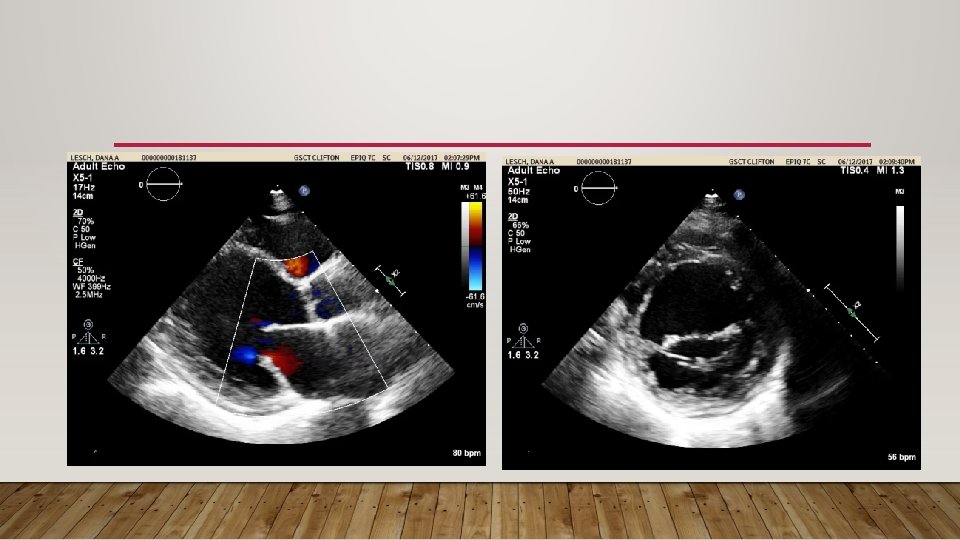
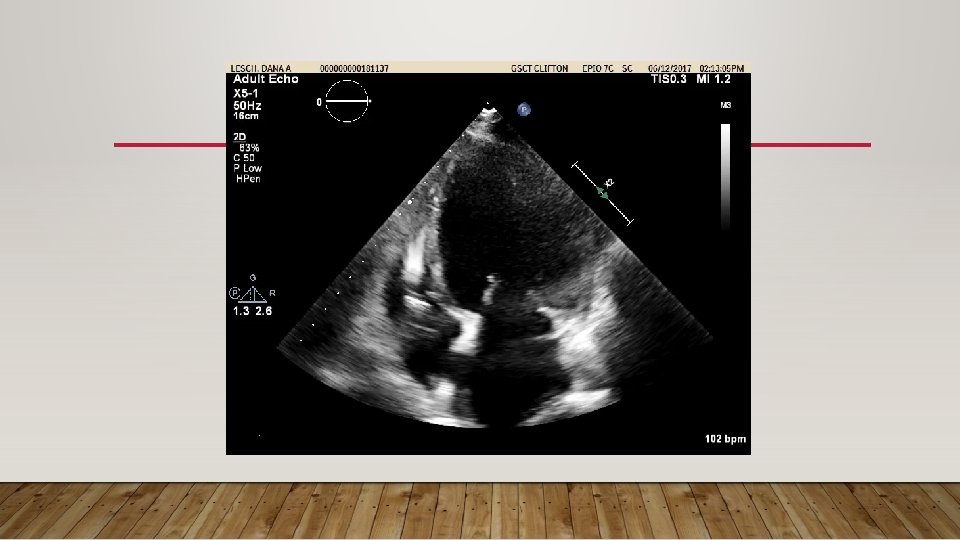
RAPID ULTRASOUND IN SHOCK “ RUSH” PROTOCOL • Step 1: The Pump • Left ventricular contractility • Right ventricular size and contractility • Pericardial effusion • Step 2: The Tank • Assessment of intravascular volume • Size of the IVC and vena contract • IVC < 2. 1 cm that collapses > 50% with inspiration seen in hypovolemic shock • IVC > 2. 1 cm that collapses <50% seen in pulmonary embolism and cariogenic shock
RAPID ULTRASOUND IN SHOCK “ RUSH” PROTOCOL, CONTINUED • Step 3: The Pipes • Dissection or rupture of an abdominal aortic aneurysm AAA • Deep vein thrombosis DVT
RUSH PROTOCOL SUMMARY: “PUMP” • Hypovolemic shock: • Obstructive shock: • Hypercontractile heart • Pericardial effusion • Small heart size • RV strain in PE • Cariogenic shock: • Distributive shock: • Hypocontractile heart • Hypercontractile heart in early sepsis • Dilated heart • Hypocontractile heart in late sepsis
RUSH PROTOCOL: “TANK” • Hypovolemic shock: • Obstructive shock: • Flat IVC • Tamponade and PE • Peritoneal fluid • Distended IVC • Pleural fluid • Distended JV • Cariogenic shock: • Distributive Shock: • Distended IVC • Normal IVC • Flat JV • Normal JV • Pleural effusion • Ascites
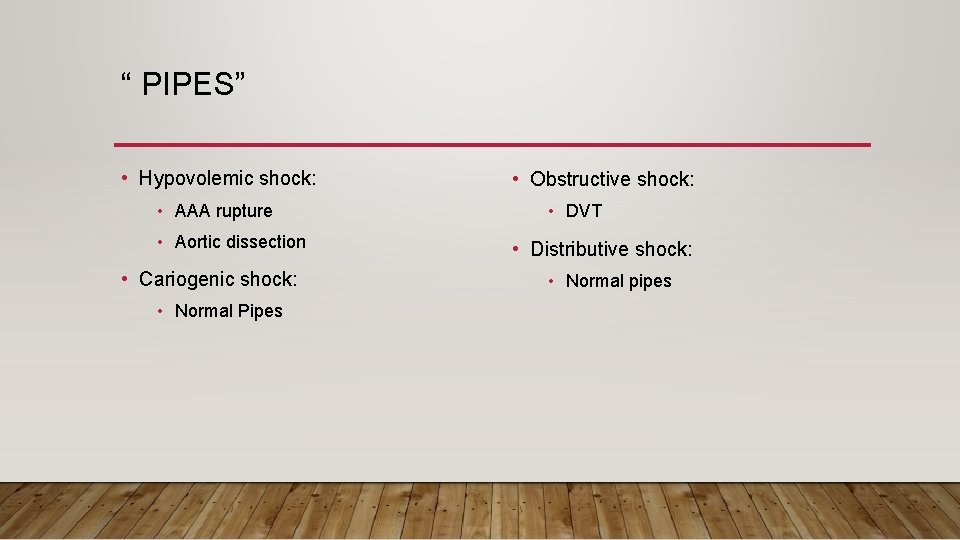
“ PIPES” • Hypovolemic shock: • AAA rupture • Aortic dissection • Cariogenic shock: • Normal Pipes • Obstructive shock: • DVT • Distributive shock: • Normal pipes
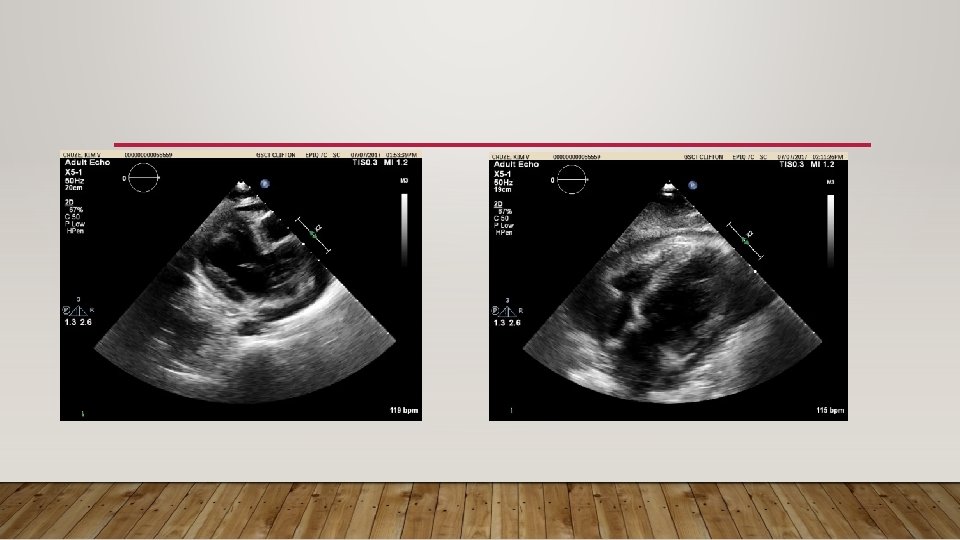
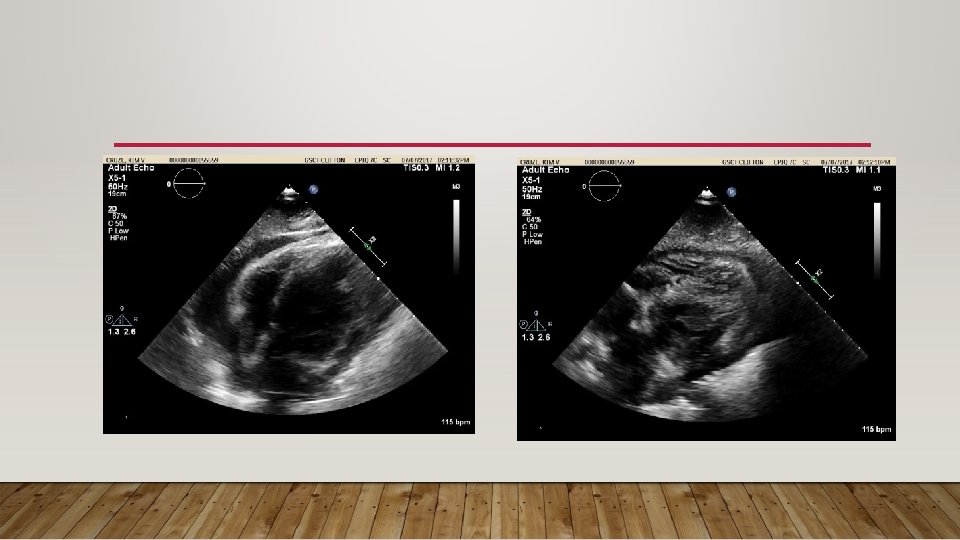
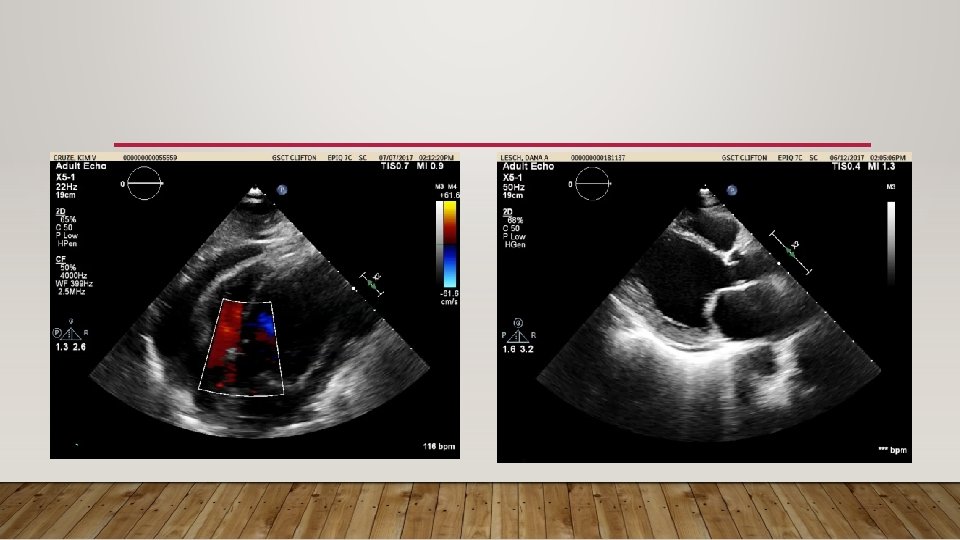
CONCLUSION • Bedside ultrasound examination is a quick and effective diagnostic tool for many life threatening conditions • Early recognition and appropriate treatment of shock decreases mortality. • Incorporation of bedside ultrasound in patient with undifferentiated shock allows rapid evaluation of reversible causes of shock. • “RUSH” protocol is a valuable tool in the emergency room for quick differentiation of shock etiology and providing life saving treatment.
- Slides: 15