
Queue Mining Service Perspectives in Process Mining Ph
![Hand-made Performance Modeling Yom-Tov and Mandelbaum [2014] 4](https://slidetodoc.com/presentation_image_h/a842725af6c238ce55242d018312e1bb/image-4.jpg "Hand-made Performance Modeling Yom-Tov and Mandelbaum [2014] 4")
![Approach I – Model-Based From Rozinat et al. [2009]; Rogge-Solti et al. [2013] 8](https://slidetodoc.com/presentation_image_h/a842725af6c238ce55242d018312e1bb/image-8.jpg "Approach I – Model-Based From Rozinat et al. [2009]; Rogge-Solti et al. [2013] 8")
![Approach II – Supervised Learning From van der Aalst et al. [2011] 9](https://slidetodoc.com/presentation_image_h/a842725af6c238ce55242d018312e1bb/image-9.jpg "Approach II – Supervised Learning From van der Aalst et al. [2011] 9")
![Approach I – Model-Based From Rozinat et al. [2009]; Rogge-Solti et al. [2013] 12](https://slidetodoc.com/presentation_image_h/a842725af6c238ce55242d018312e1bb/image-12.jpg "Approach I – Model-Based From Rozinat et al. [2009]; Rogge-Solti et al. [2013] 12")
![Approach II – Supervised Learning From van der Aalst et al. [2011] 14](https://slidetodoc.com/presentation_image_h/a842725af6c238ce55242d018312e1bb/image-14.jpg "Approach II – Supervised Learning From van der Aalst et al. [2011] 14")
![Queue-Length Predictors Service 1 Queue n Abandonments from Whitt [1999] 26](https://slidetodoc.com/presentation_image_h/a842725af6c238ce55242d018312e1bb/image-26.jpg "Queue-Length Predictors Service 1 Queue n Abandonments from Whitt [1999] 26")
![Approach I for Multi-Class Queues Information Systems [2014] with Weidlich, Gal, Mandelbaum Assuming priority](https://slidetodoc.com/presentation_image_h/a842725af6c238ce55242d018312e1bb/image-36.jpg "Approach I for Multi-Class Queues Information Systems [2014] with Weidlich, Gal, Mandelbaum Assuming priority")
![Bus Traveling Time Prediction Information Systems [2015] with Weidlich, Schnitzler, Gal, Mandelbaum 42](https://slidetodoc.com/presentation_image_h/a842725af6c238ce55242d018312e1bb/image-40.jpg "Bus Traveling Time Prediction Information Systems [2015] with Weidlich, Schnitzler, Gal, Mandelbaum 42")
![Conformance checking: A Queueing Network Perspective Information systems [2015] with Yedidsion, Weidlich, Gal, Mandelbaum,](https://slidetodoc.com/presentation_image_h/a842725af6c238ce55242d018312e1bb/image-51.jpg "Conformance checking: A Queueing Network Perspective Information systems [2015] with Yedidsion, Weidlich, Gal, Mandelbaum,")
- Slides: 59
Queue Mining: Service Perspectives in Process Mining Ph. D Defense Arik Senderovich 13/2/2017
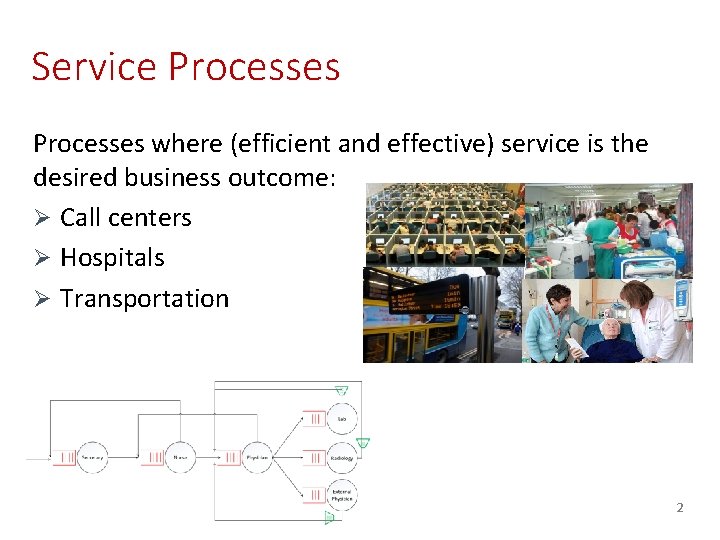
Service Processes where (efficient and effective) service is the desired business outcome: Ø Call centers Ø Hospitals Ø Transportation 2
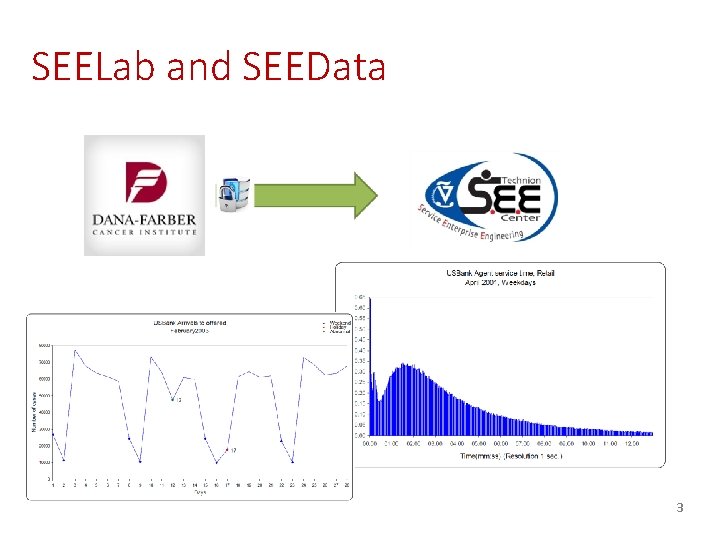
SEELab and SEEData 3
Hand-made Performance Modeling Yom-Tov and Mandelbaum [2014] 4
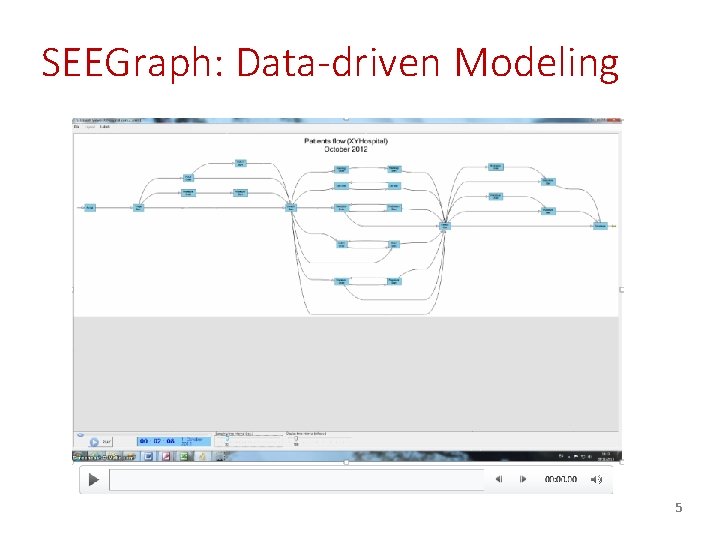
SEEGraph: Data-driven Modeling 5
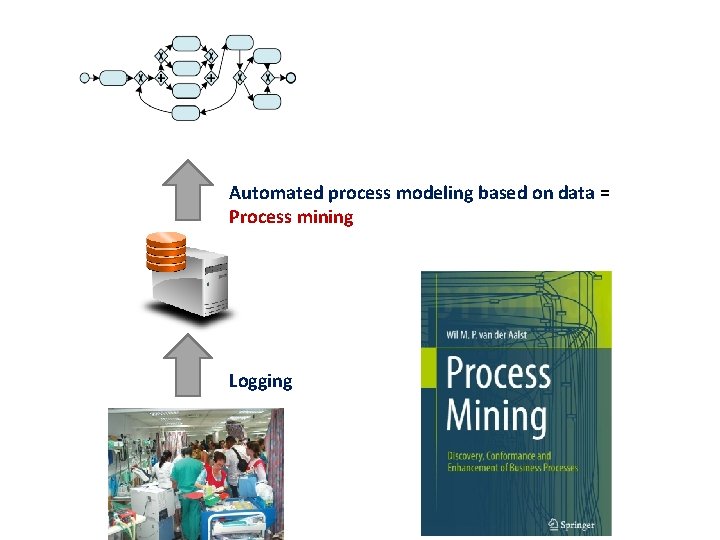
Automated process modeling based on data = Process mining Logging
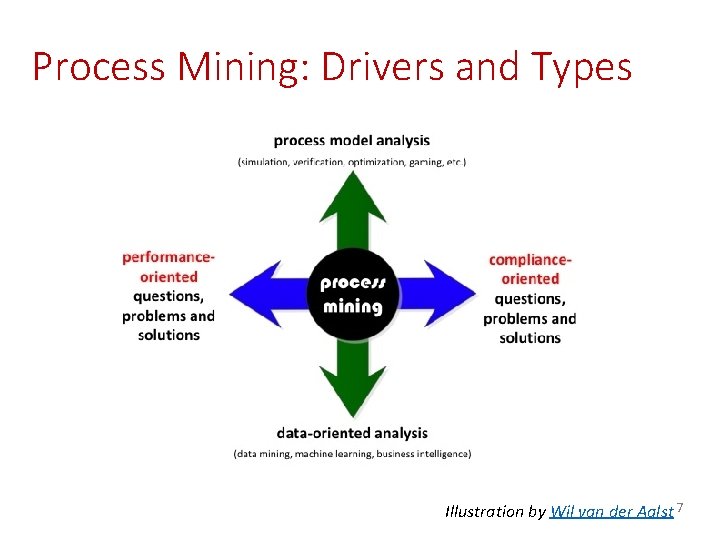
Process Mining: Drivers and Types Illustration by Wil van der Aalst 7
Approach I – Model-Based From Rozinat et al. [2009]; Rogge-Solti et al. [2013] 8
Approach II – Supervised Learning From van der Aalst et al. [2011] 9
Please Mind the Gap Ø Interactions between cases that share (scarce) resources must be considered when modeling and predicting system’s performance Ø Especially in service processes where queueing for resources prevails 10
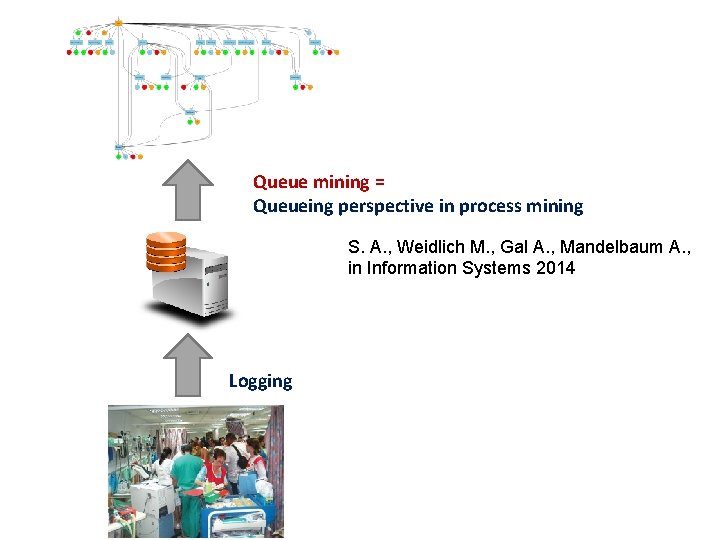
Queue mining = Queueing perspective in process mining S. A. , Weidlich M. , Gal A. , Mandelbaum A. , in Information Systems 2014 Logging
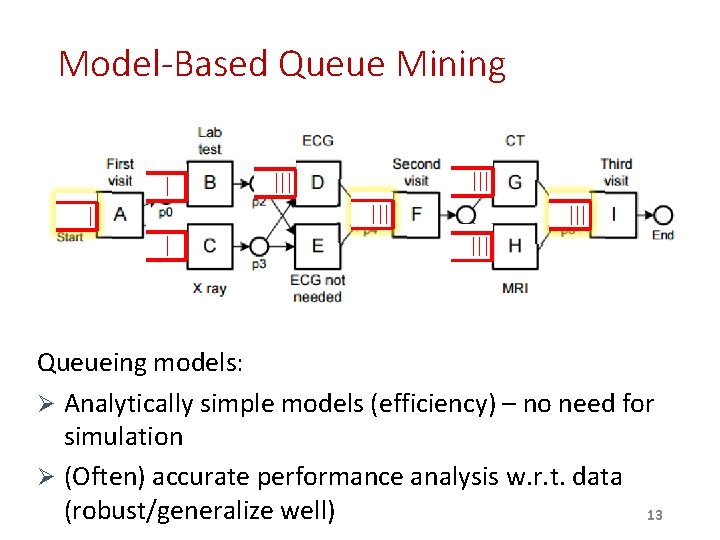
Approach I – Model-Based From Rozinat et al. [2009]; Rogge-Solti et al. [2013] 12
Model-Based Queue Mining Queueing models: Ø Analytically simple models (efficiency) – no need for simulation Ø (Often) accurate performance analysis w. r. t. data (robust/generalize well) 13
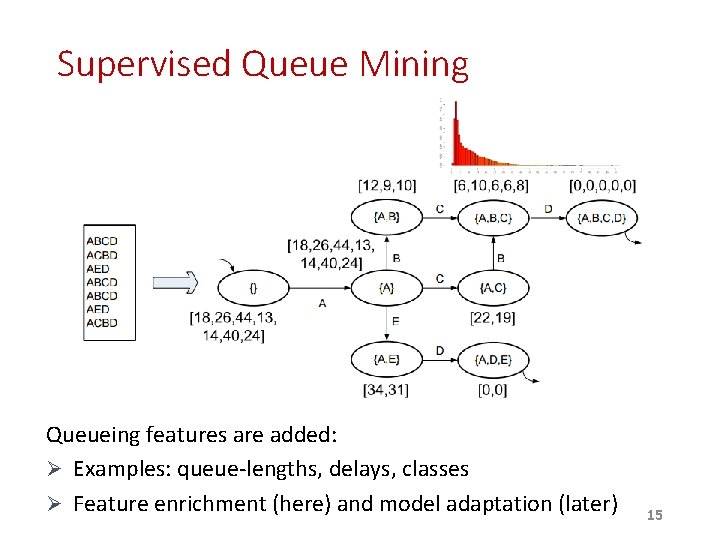
Approach II – Supervised Learning From van der Aalst et al. [2011] 14
Supervised Queue Mining Queueing features are added: Ø Examples: queue-lengths, delays, classes Ø Feature enrichment (here) and model adaptation (later) 15
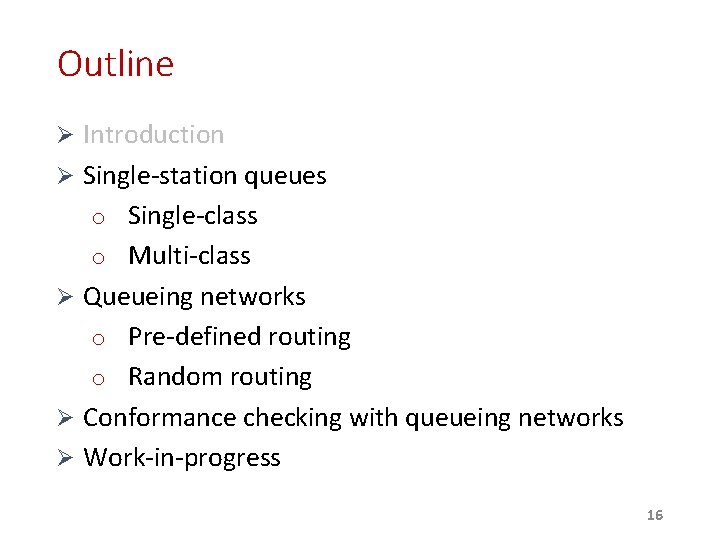
Outline Ø Introduction Ø Single-station queues o Single-class o Multi-class Ø Queueing networks o Pre-defined routing o Random routing Ø Conformance checking with queueing networks Ø Work-in-progress 16
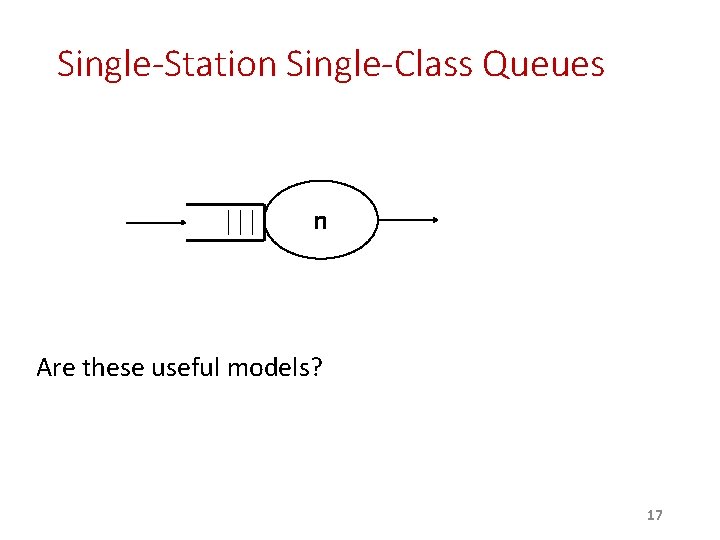
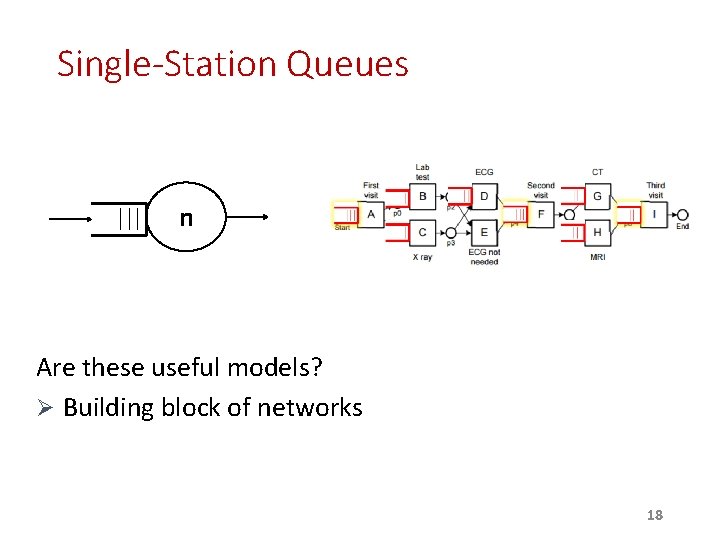
Single-Station Single-Class Queues n Are these useful models? 17
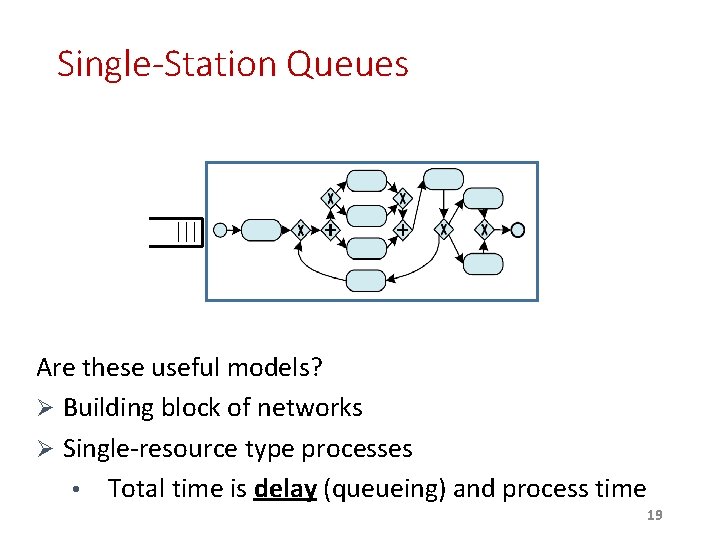
Single-Station Queues n Are these useful models? Ø Building block of networks 18
Single-Station Queues Are these useful models? Ø Building block of networks Ø Single-resource type processes • Total time is delay (queueing) and process time 19
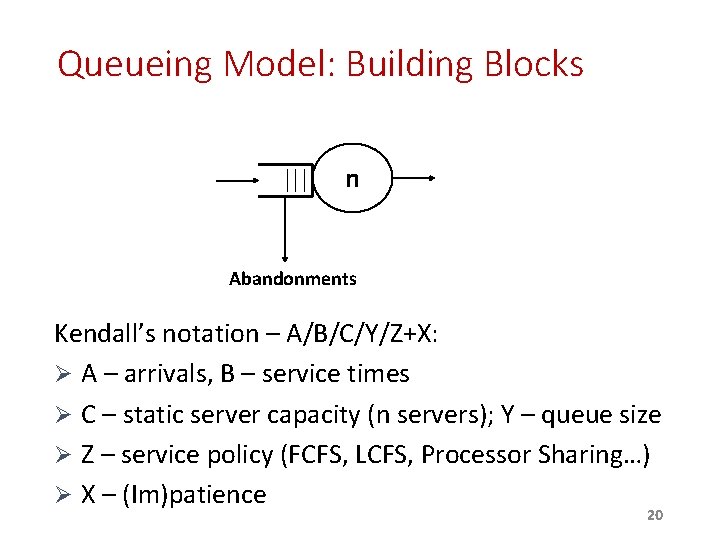
Queueing Model: Building Blocks n Abandonments Kendall’s notation – A/B/C/Y/Z+X: Ø A – arrivals, B – service times Ø C – static server capacity (n servers); Y – queue size Ø Z – service policy (FCFS, LCFS, Processor Sharing…) Ø X – (Im)patience 20
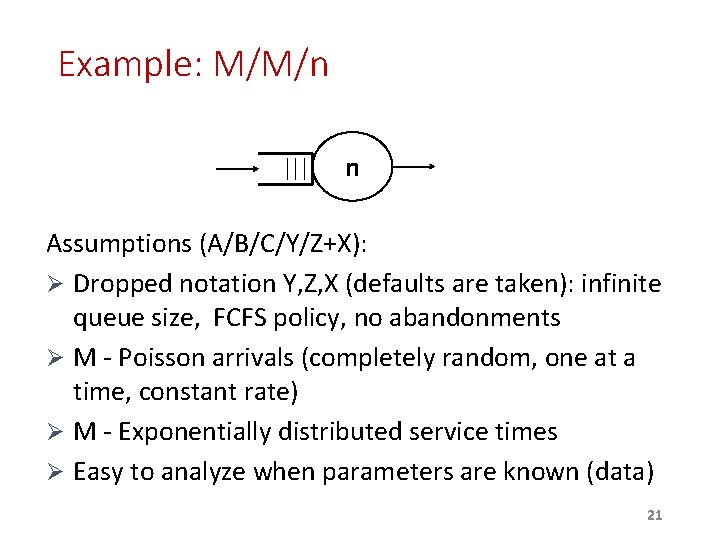
Example: M/M/n n Assumptions (A/B/C/Y/Z+X): Ø Dropped notation Y, Z, X (defaults are taken): infinite queue size, FCFS policy, no abandonments Ø M - Poisson arrivals (completely random, one at a time, constant rate) Ø M - Exponentially distributed service times Ø Easy to analyze when parameters are known (data) 21
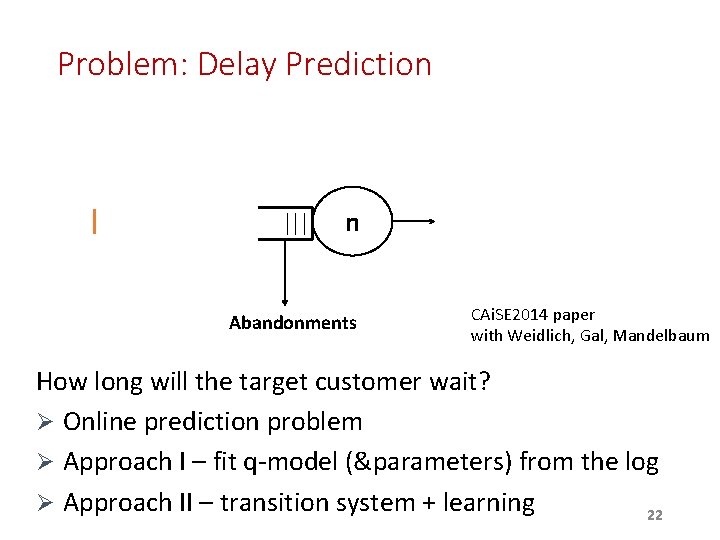
Problem: Delay Prediction n Abandonments CAi. SE 2014 paper with Weidlich, Gal, Mandelbaum How long will the target customer wait? Ø Online prediction problem Ø Approach I – fit q-model (¶meters) from the log Ø Approach II – transition system + learning 22
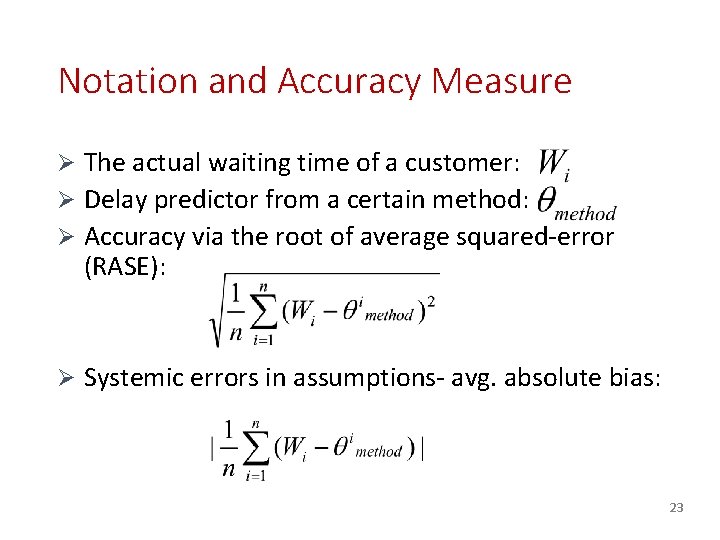
Notation and Accuracy Measure Ø The actual waiting time of a customer: Ø Delay predictor from a certain method: Ø Accuracy via the root of average squared-error (RASE): Ø Systemic errors in assumptions- avg. absolute bias: 23
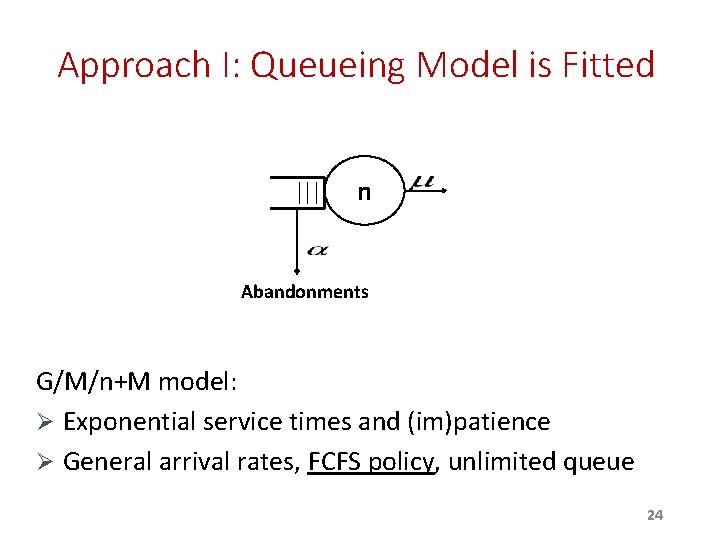
Approach I: Queueing Model is Fitted n Abandonments G/M/n+M model: Ø Exponential service times and (im)patience Ø General arrival rates, FCFS policy, unlimited queue 24
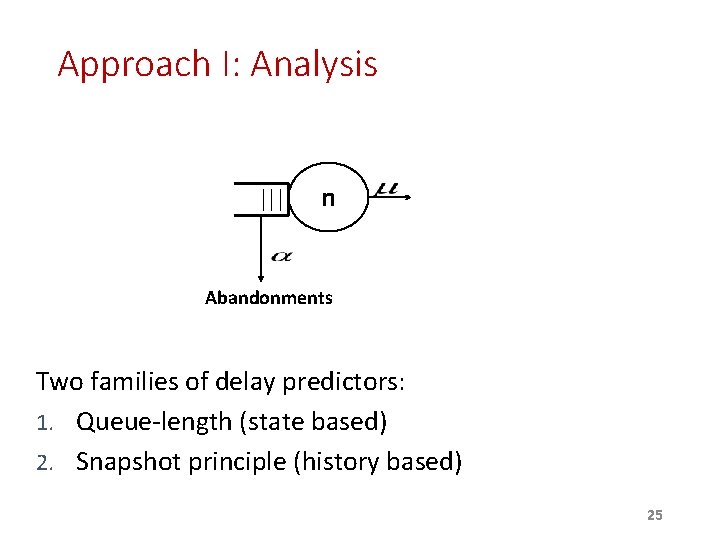
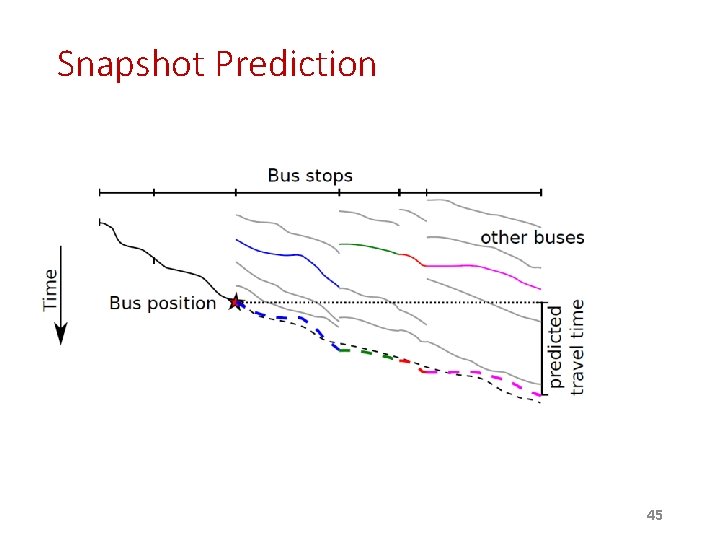
Approach I: Analysis n Abandonments Two families of delay predictors: 1. Queue-length (state based) 2. Snapshot principle (history based) 25
Queue-Length Predictors Service 1 Queue n Abandonments from Whitt [1999] 26
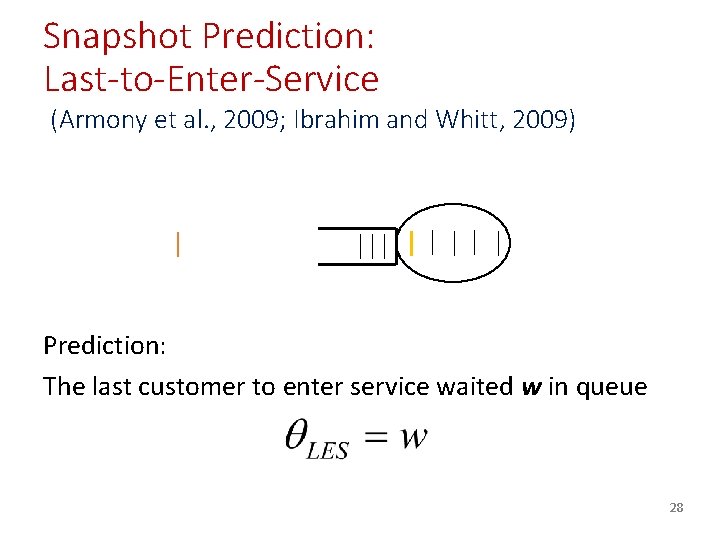
Snapshot Prediction: Last-to-Enter-Service (Armony et al. , 2009; Ibrahim and Whitt, 2009) Prediction: The last customer to enter service waited w in queue 28
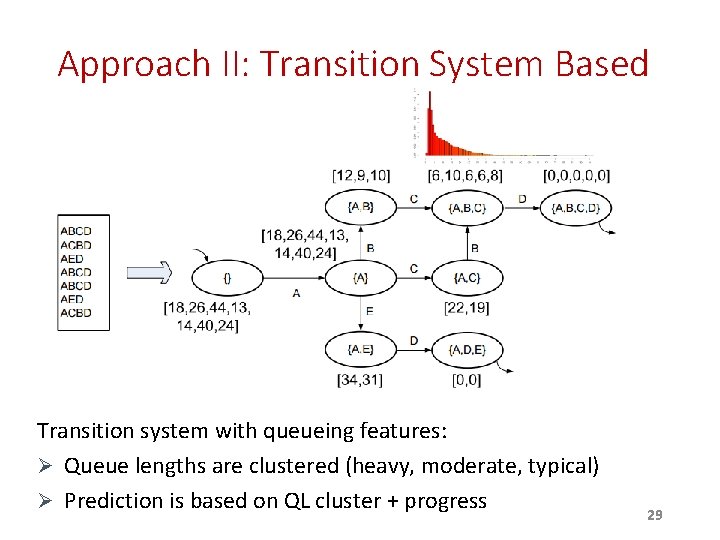
Approach II: Transition System Based Transition system with queueing features: Ø Queue lengths are clustered (heavy, moderate, typical) Ø Prediction is based on QL cluster + progress 29
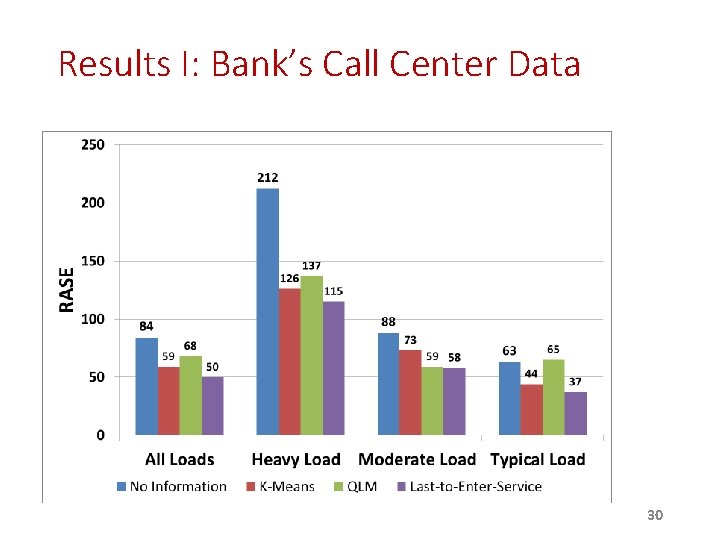
Results I: Bank’s Call Center Data 30
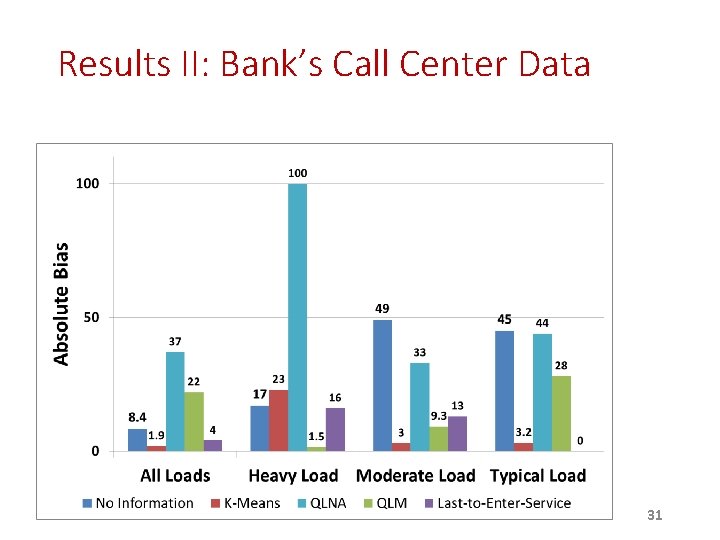
Results II: Bank’s Call Center Data 31
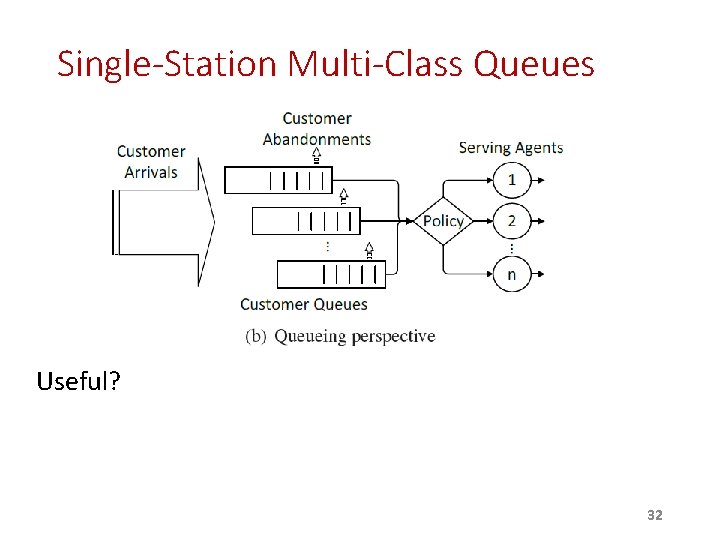
Single-Station Multi-Class Queues Useful? 32
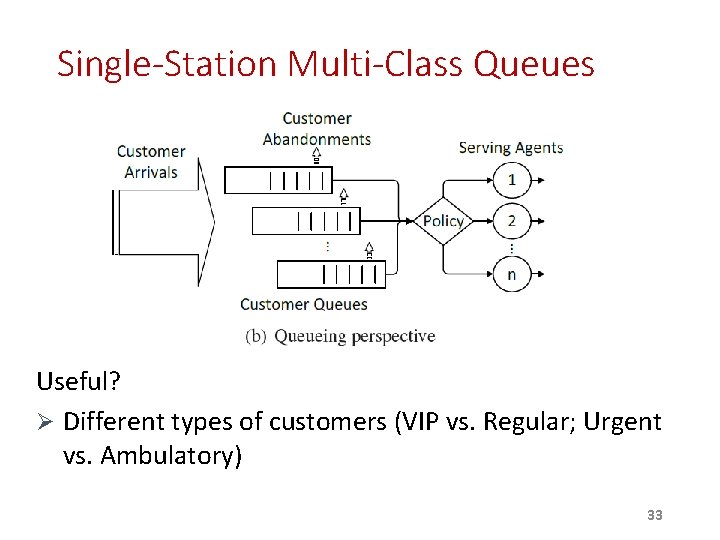
Single-Station Multi-Class Queues Useful? Ø Different types of customers (VIP vs. Regular; Urgent vs. Ambulatory) 33
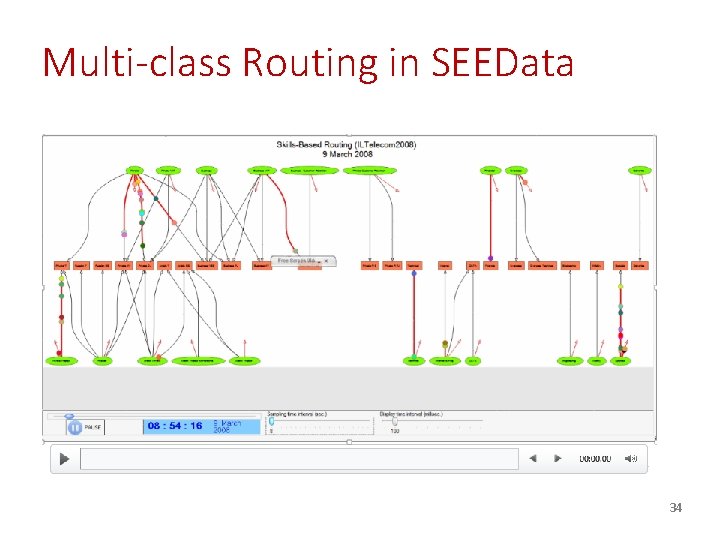
Multi-class Routing in SEEData 34
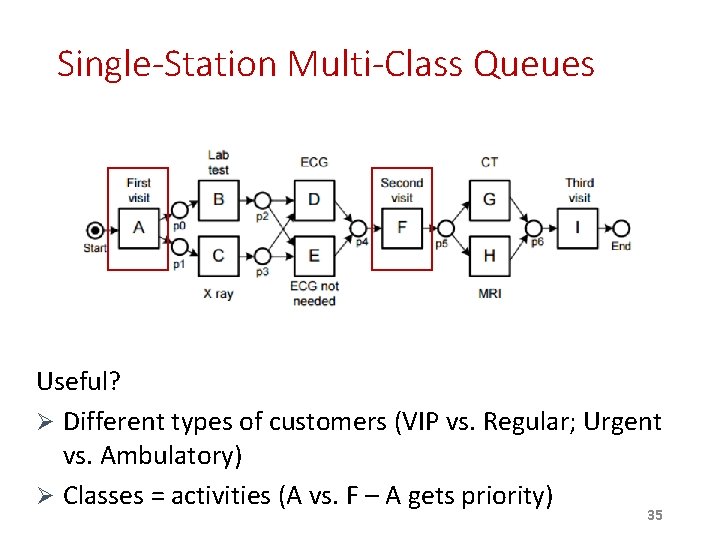
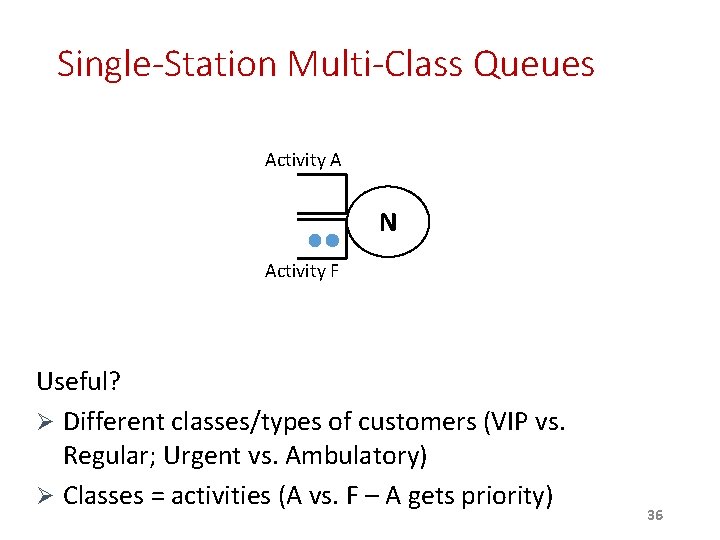
Single-Station Multi-Class Queues Useful? Ø Different types of customers (VIP vs. Regular; Urgent vs. Ambulatory) Ø Classes = activities (A vs. F – A gets priority) 35
Single-Station Multi-Class Queues Activity A N Activity F Useful? Ø Different classes/types of customers (VIP vs. Regular; Urgent vs. Ambulatory) Ø Classes = activities (A vs. F – A gets priority) 36
Approach I for Multi-Class Queues Information Systems [2014] with Weidlich, Gal, Mandelbaum Assuming priority queues model: Ø Queue length predictors – derived upper and lower bounds Ø Snapshot principle (based on Reiman and Simon [1990]) 37
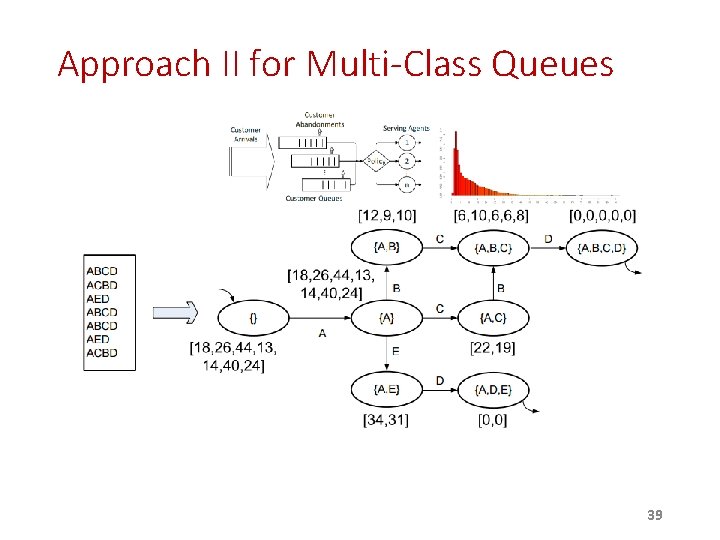
Approach II for Multi-Class Queues 39
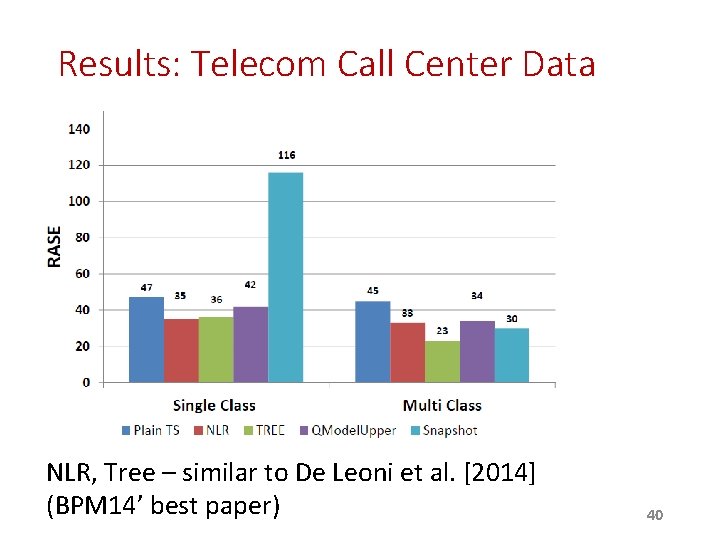
Results: Telecom Call Center Data NLR, Tree – similar to De Leoni et al. [2014] (BPM 14’ best paper) 40
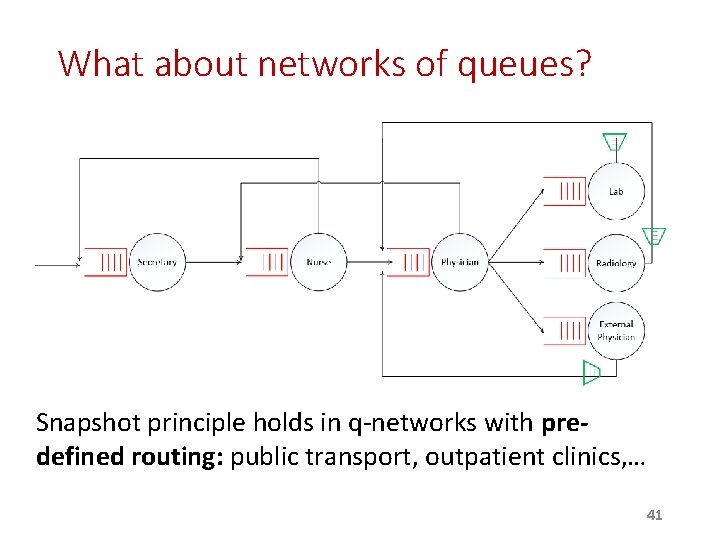
What about networks of queues? Snapshot principle holds in q-networks with predefined routing: public transport, outpatient clinics, … 41
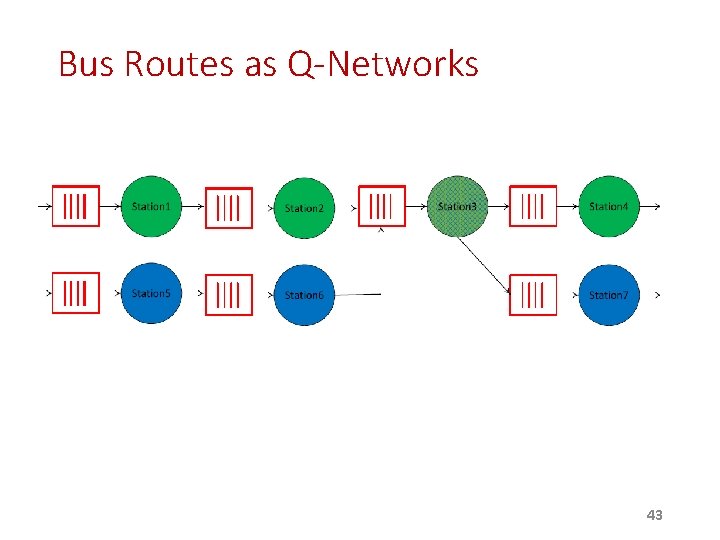
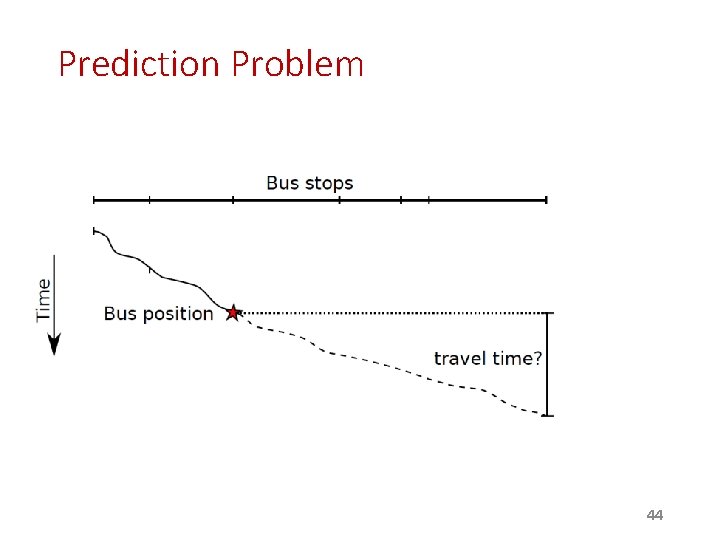
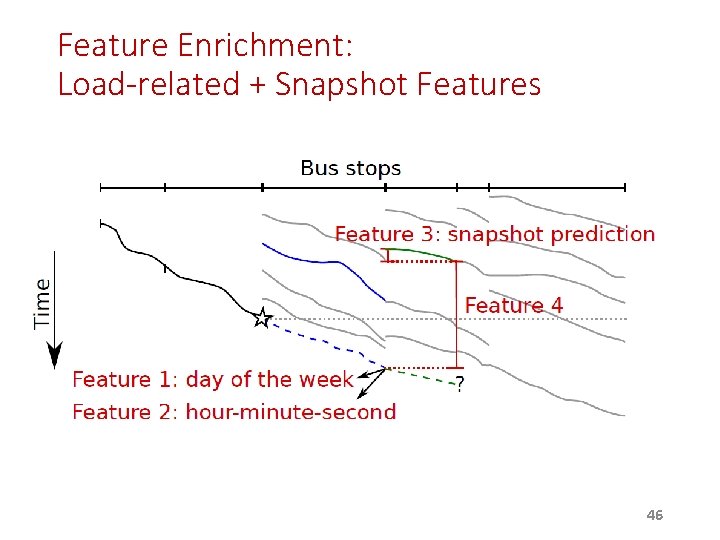
Bus Traveling Time Prediction Information Systems [2015] with Weidlich, Schnitzler, Gal, Mandelbaum 42
Bus Routes as Q-Networks 43
Prediction Problem 44
Snapshot Prediction 45
Feature Enrichment: Load-related + Snapshot Features 46
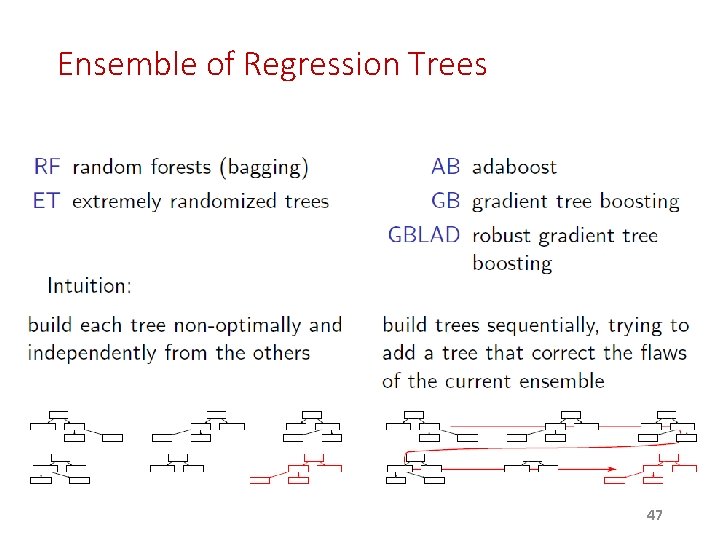
Ensemble of Regression Trees 47
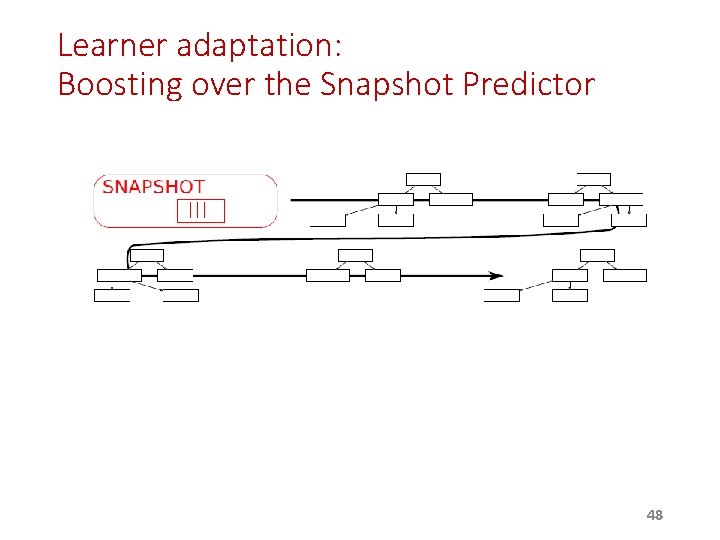
Learner adaptation: Boosting over the Snapshot Predictor 48
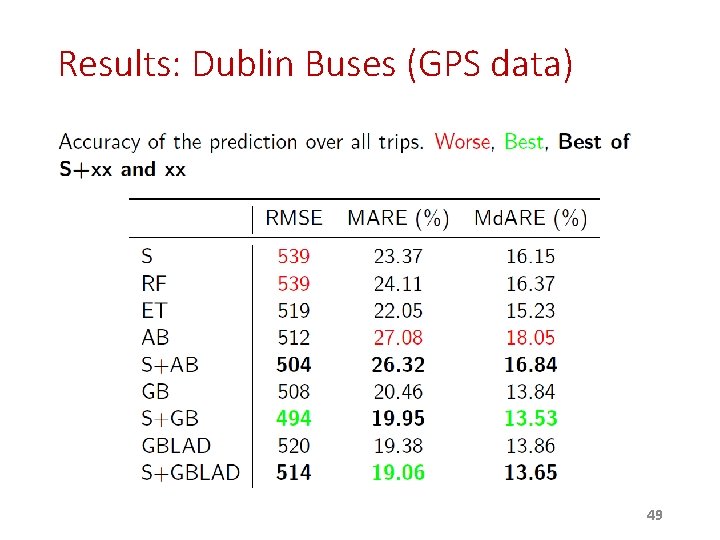
Results: Dublin Buses (GPS data) 49
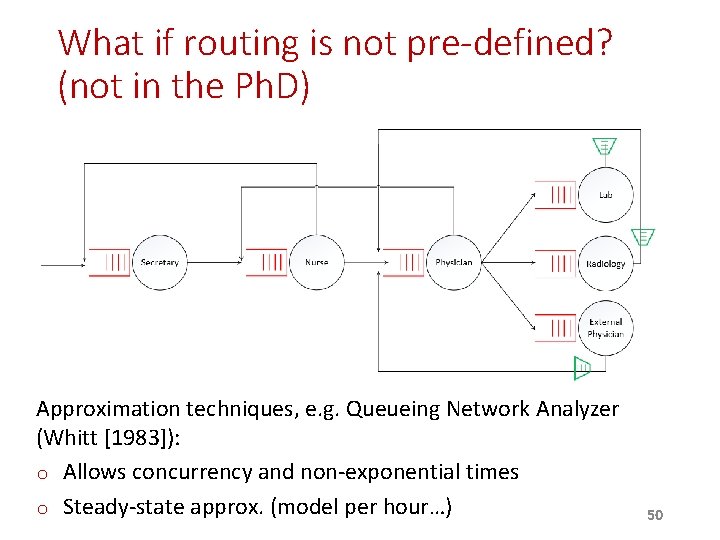
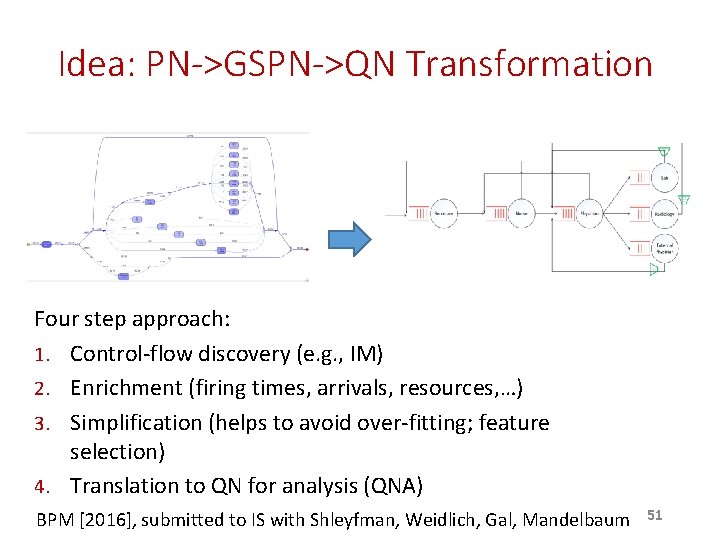
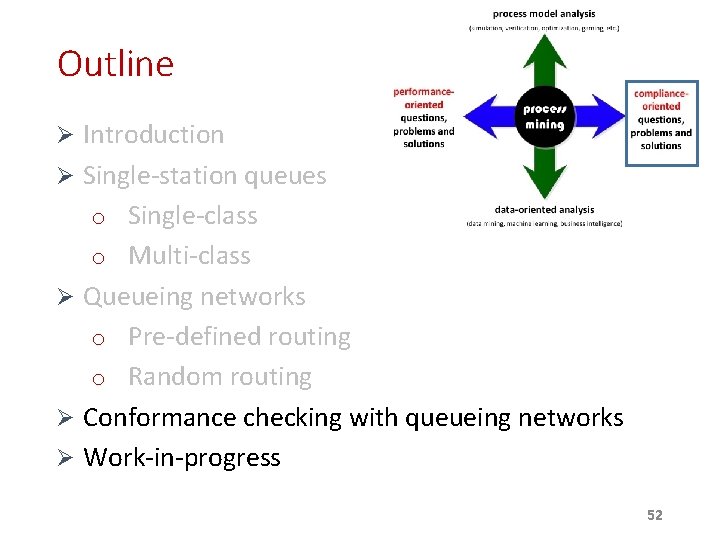
What if routing is not pre-defined? (not in the Ph. D) Approximation techniques, e. g. Queueing Network Analyzer (Whitt [1983]): o Allows concurrency and non-exponential times o Steady-state approx. (model per hour…) 50
Idea: PN->GSPN->QN Transformation Four step approach: 1. Control-flow discovery (e. g. , IM) 2. Enrichment (firing times, arrivals, resources, …) 3. Simplification (helps to avoid over-fitting; feature selection) 4. Translation to QN for analysis (QNA) BPM [2016], submitted to IS with Shleyfman, Weidlich, Gal, Mandelbaum 51
Outline Ø Introduction Ø Single-station queues o Single-class o Multi-class Ø Queueing networks o Pre-defined routing o Random routing Ø Conformance checking with queueing networks Ø Work-in-progress 52
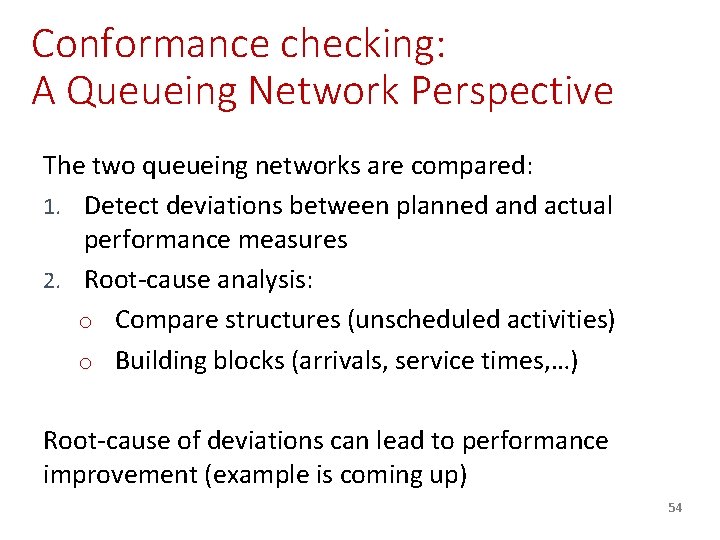
Conformance checking: A Queueing Network Perspective Information systems [2015] with Yedidsion, Weidlich, Gal, Mandelbaum, Kadish, Bunnel 53
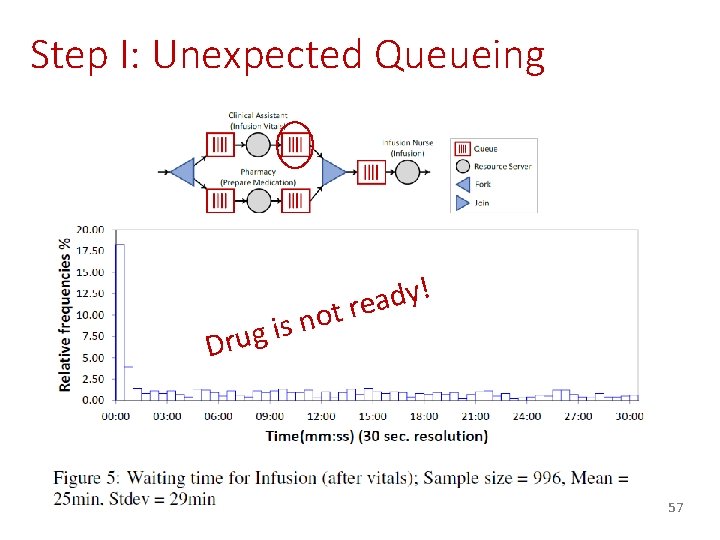
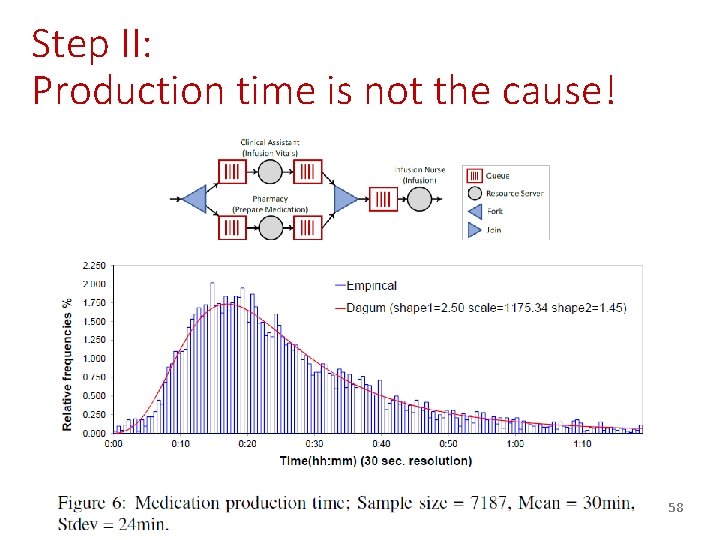
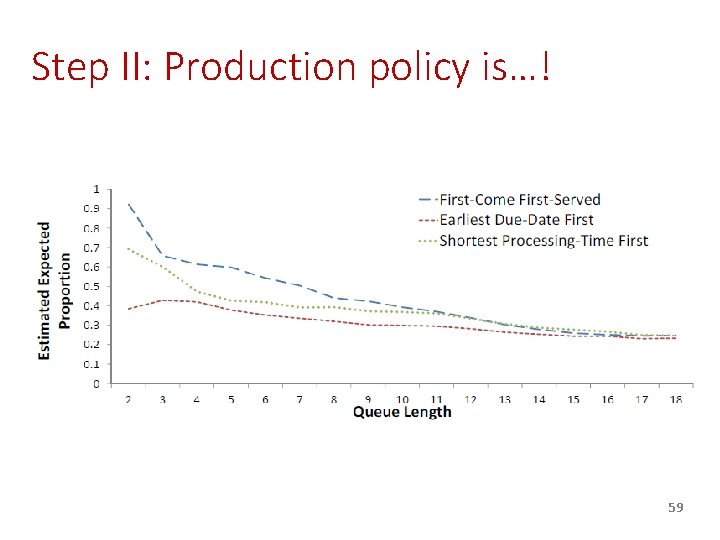
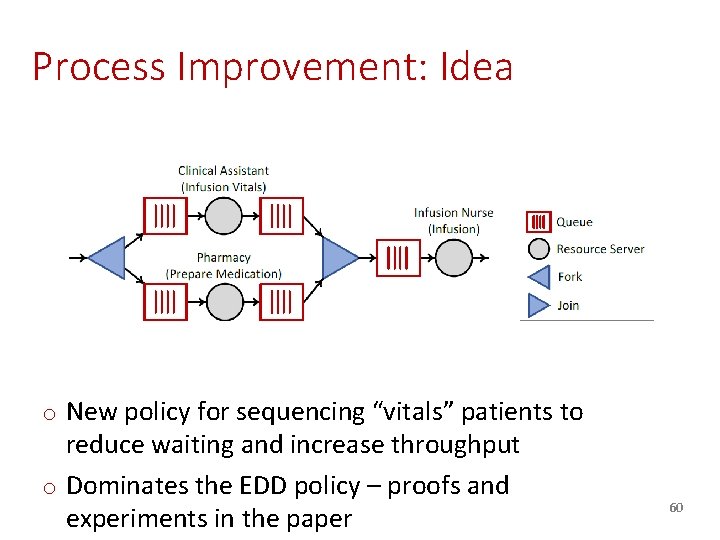
Conformance checking: A Queueing Network Perspective The two queueing networks are compared: 1. Detect deviations between planned and actual performance measures 2. Root-cause analysis: o Compare structures (unscheduled activities) o Building blocks (arrivals, service times, …) Root-cause of deviations can lead to performance improvement (example is coming up) 54
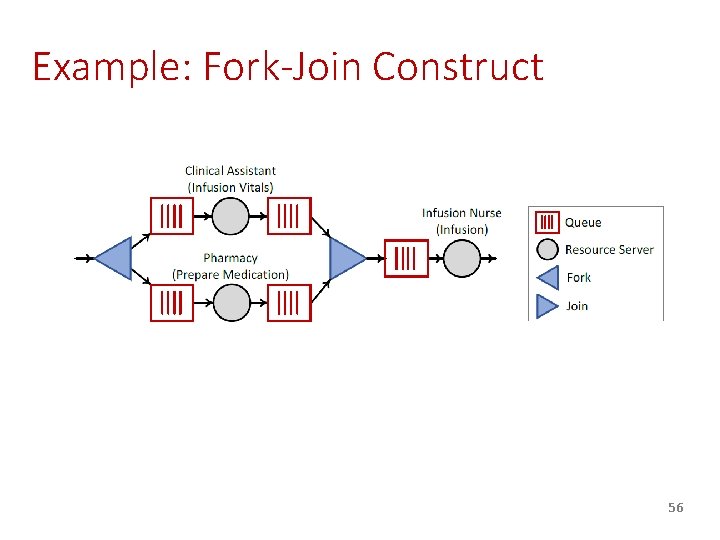
Example: Fork-Join Construct 56
Step I: Unexpected Queueing ! y d a t re D o n s i rug 57
Step II: Production time is not the cause! 58
Step II: Production policy is…! 59
Process Improvement: Idea o New policy for sequencing “vitals” patients to reduce waiting and increase throughput o Dominates the EDD policy – proofs and experiments in the paper 60
Outline Ø Introduction Ø Single-station queues o Single-class o Multi-class Ø Queueing networks o Pre-defined routing o Random routing Ø Conformance checking with queueing networks Ø Work-in-progress 62
Work-in-Progress Ø Data-driven scheduling (with Gal, Karpas, Beck) Ø Feature learning in congested systems (with Weidlich, Gal) Ø Time series prediction with inter-case dependencies (with Di Francescomarino, Maria-Maggi) 63