
Questions Do you belong to an ethnic group
Questions: Do you belong to an ethnic group? Take a moment to examine… What are the physical characteristics of others in your group? What are the elements from your culture and daily life that link you to others around you? What are the shared memories or history, real or mythical, that help you feel connected to a particular group of people? Are there language (dialects, accents, or slang) that connect you to a particular group? Is there a common religion or belief system that you share with this group? https: //www. census. gov/schools/pdf/2010 form_info. pdf
Ethnicity

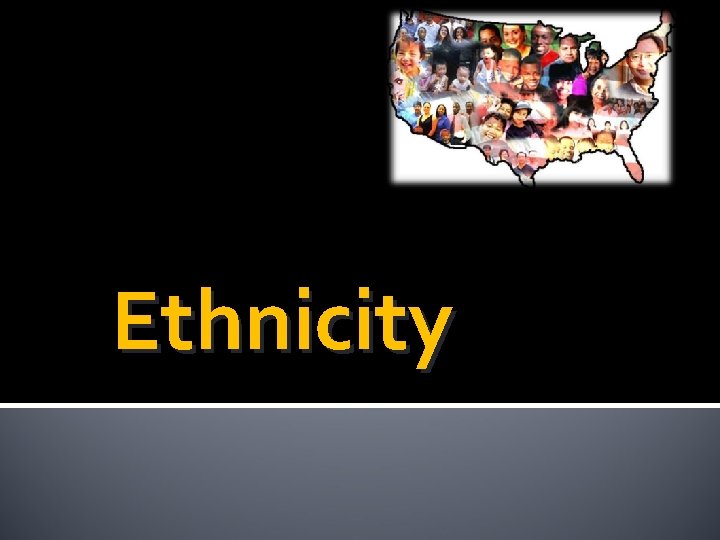
Ethnicity = from the Greek ethnikos, meaning “people, multitude, nation” Ethnicities (ethnic groups) share a cultural identity with people from the same homeland or hearth/ history Ethnicities have distinctive cultural traits
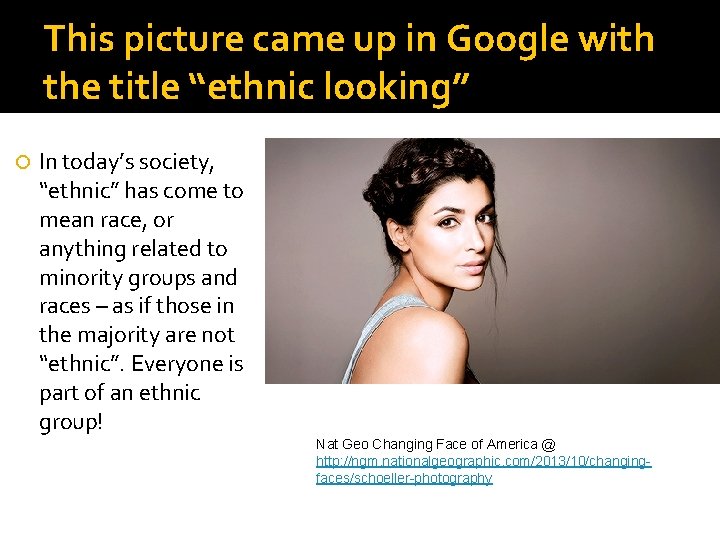
This picture came up in Google with the title “ethnic looking” In today’s society, “ethnic” has come to mean race, or anything related to minority groups and races – as if those in the majority are not “ethnic”. Everyone is part of an ethnic group! Nat Geo Changing Face of America @ http: //ngm. nationalgeographic. com/2013/10/changingfaces/schoeller-photography
Ethnicity vs. Race The categorization of humans into groups based on various sets of hereditary characteristics (skin color, cranial and facial characteristics, hair texture, etc. ) Biological features are highly variable among people from the same race. Race does not exist on a scientific level, despite influence on the idea ▪ Socially constructed To review: An ethnic group is a group that has a distinct culture of its own. It tends to be a group that shares an ancestral heritage. A race, is defined more by physical characteristics. Thus, a black Dominican and an African American would be of the same race, but not of the same ethnicity.
Distribution of Ethnicities in the United States Distribution of ethnicities in the United States Hispanics (Latinos) = 15 percent of the U. S. population African Americans = 13 percent of the U. S. population Asian Americans = 4 percent of the U. S. population Native Americans= 1 percent of the U. S. population
Clustering of Ethnicities Clustering of ethnicities can occur on two scales 1. 2. Particular regions of a country Particular neighborhoods within a city
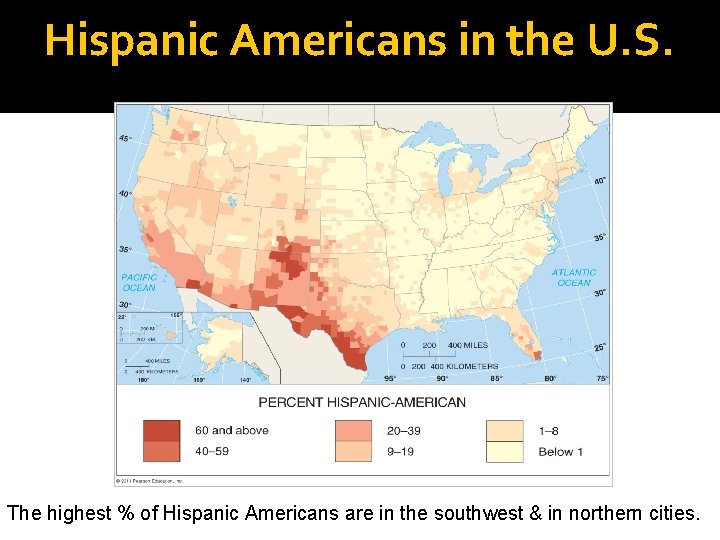
Hispanic Americans in the U. S. The highest % of Hispanic Americans are in the southwest & in northern cities.
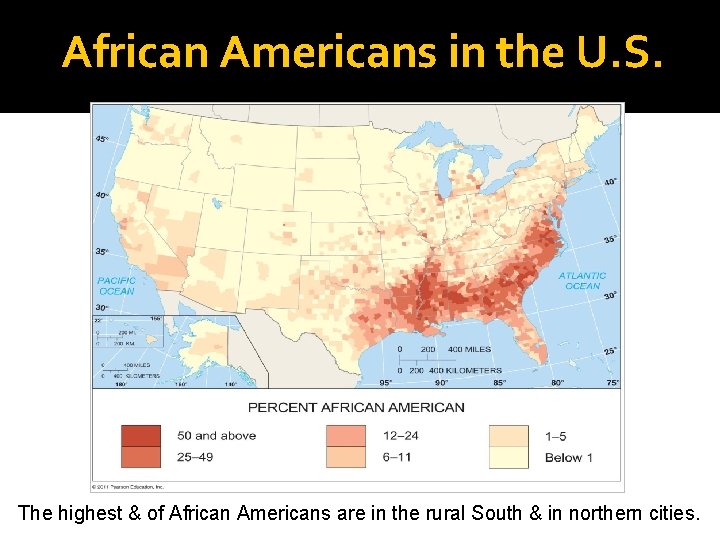
African Americans in the U. S. The highest & of African Americans are in the rural South & in northern cities.
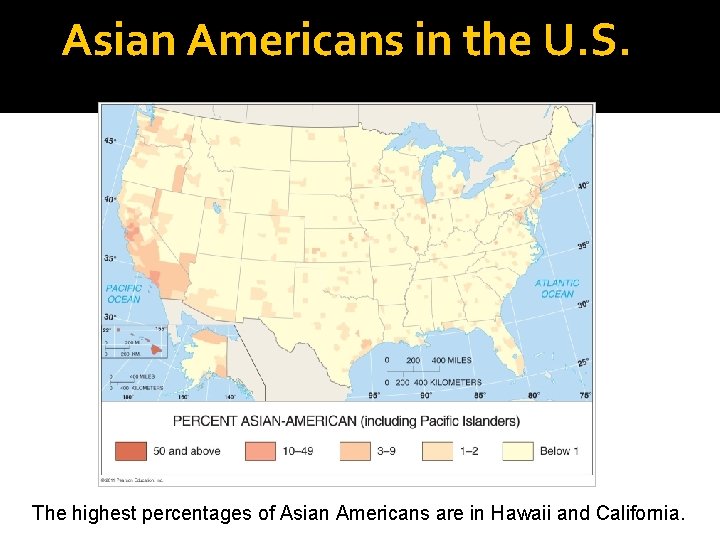
Asian Americans in the U. S. The highest percentages of Asian Americans are in Hawaii and California.
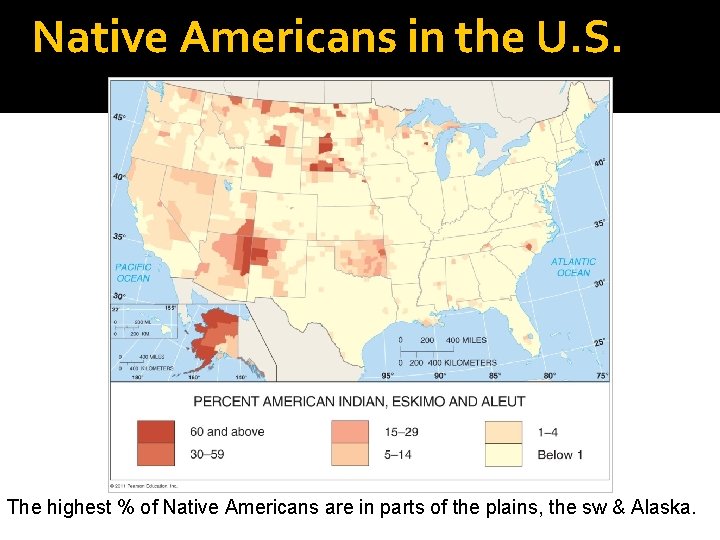
Native Americans in the U. S. The highest % of Native Americans are in parts of the plains, the sw & Alaska.
Concentration of Ethnicities in Cities Concentrations are most notable when seen on the local scale. 90 percent of African Americans and Hispanics live in cities Remnants of 20 c European migration still evident on the landscape (ethnic enclaves) ▪ Example: clustering of restaurants in Little Italy, Greektown, Little Havana, Chinatown, etc…
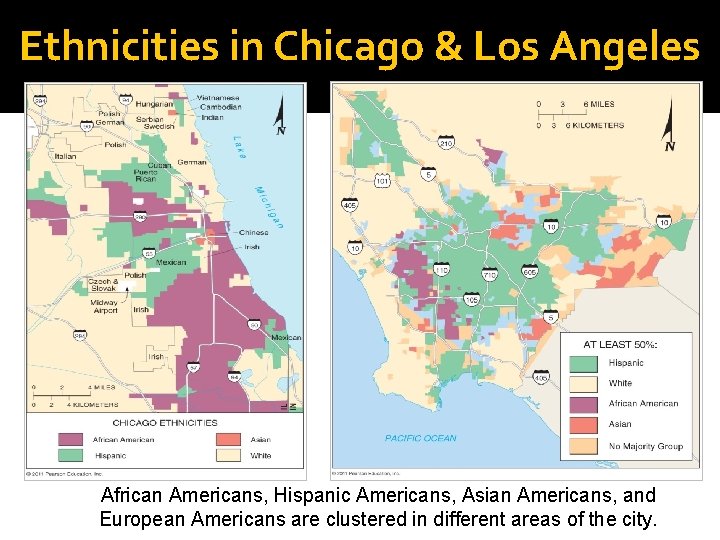
Ethnicities in Chicago & Los Angeles African Americans, Hispanic Americans, Asian Americans, and European Americans are clustered in different areas of the city.
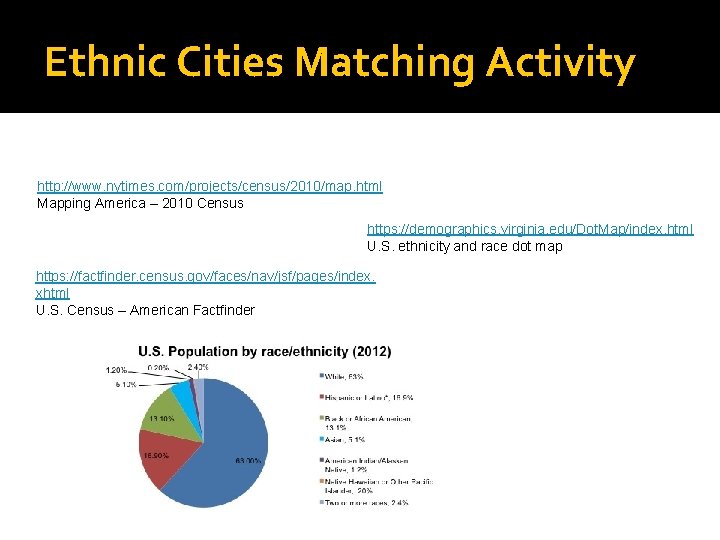
Ethnic Cities Matching Activity http: //www. nytimes. com/projects/census/2010/map. html Mapping America – 2010 Census https: //demographics. virginia. edu/Dot. Map/index. html U. S. ethnicity and race dot map https: //factfinder. census. gov/faces/nav/jsf/pages/index. xhtml U. S. Census – American Factfinder
African-American Migration Patterns African American migration patterns Three major migration patterns 1. Forced migration from Africa (eighteenth century) ▪ The triangular slave trade 2. Immigration from southern to northern cities (first half of the twentieth century) ▪ Identifiable paths of migration 3. Immigration out of inner cities to other urban areas (second half of the twentieth century to present) ▪ The ghetto
Immigration to the North 2. Sharecropping declined in the early 20 th c. African – Americans were being pulled to jobs in the industrial cities of the North. Ø Two major waves of migration to the North Ø 1910 -1920 before and after WWI Ø 1940 -1950 before and after WWII Ø Ø
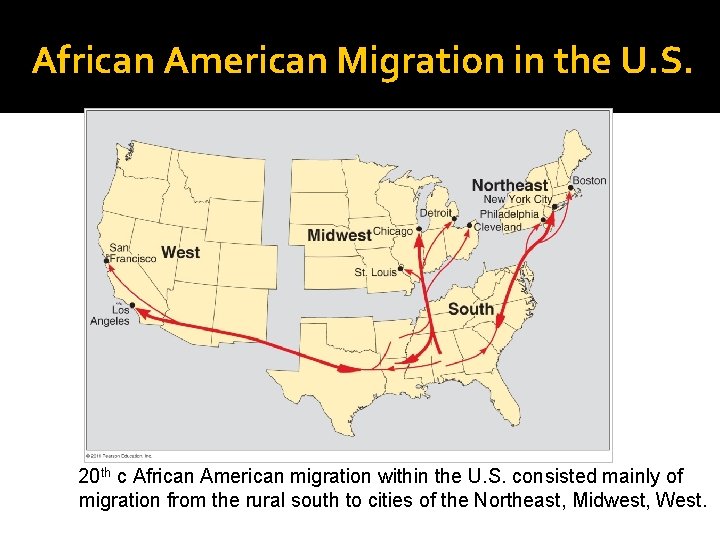
African American Migration in the U. S. 20 th c African American migration within the U. S. consisted mainly of migration from the rural south to cities of the Northeast, Midwest, West.
Differentiating Ethnicity and Race Ø Ø Often confusing Race = traits that are shared genetically Ø Biological features within one racial group are highly variable. Ø Biological classification of people into distinct racial groups can be the basis for racism. Ø Spatial effects of racism Ø “Separate but equal” Ø “White Flight” – segregation laws eliminated during 1950 s/60 s ØBlockbusting Ø Apartheid in South Africa Ethnicities can become nationalities, but they CANNOT become races.
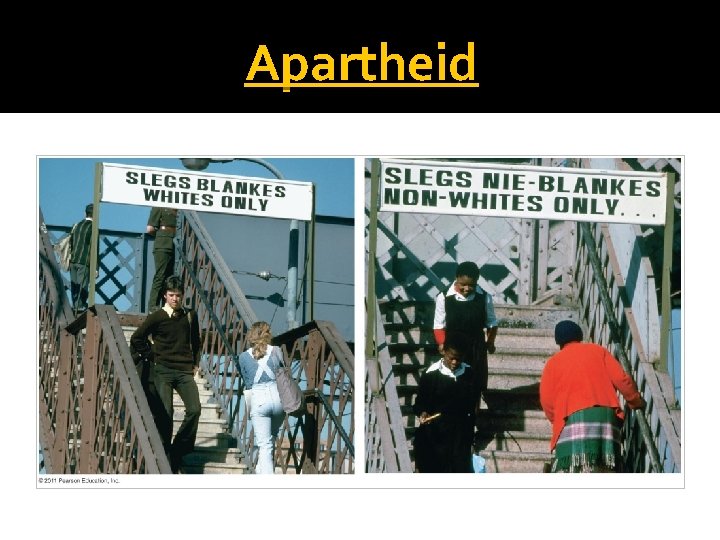
Race Issues Division of Race in South Africa – Ø The physical separation of different races into different geographical areas Ø Apartheid System – in South Africa, under apartheid, a newborn baby was classified as being black, white, colored (mixed white and black), or Asian. South Africa’s population is 76% black and 13% whites, 9% colored, and 3% Asian. Under apartheid, each of the four “races” had a different legal status in South Africa. Ø
Apartheid
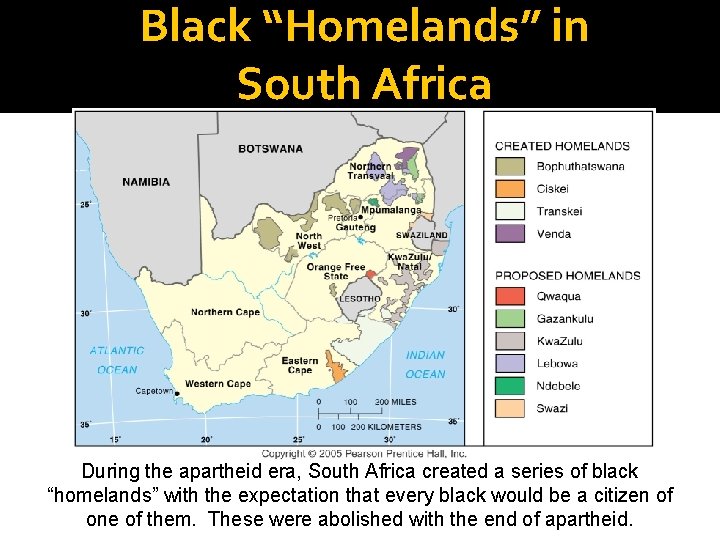
Black “Homelands” in South Africa During the apartheid era, South Africa created a series of black “homelands” with the expectation that every black would be a citizen of one of them. These were abolished with the end of apartheid.
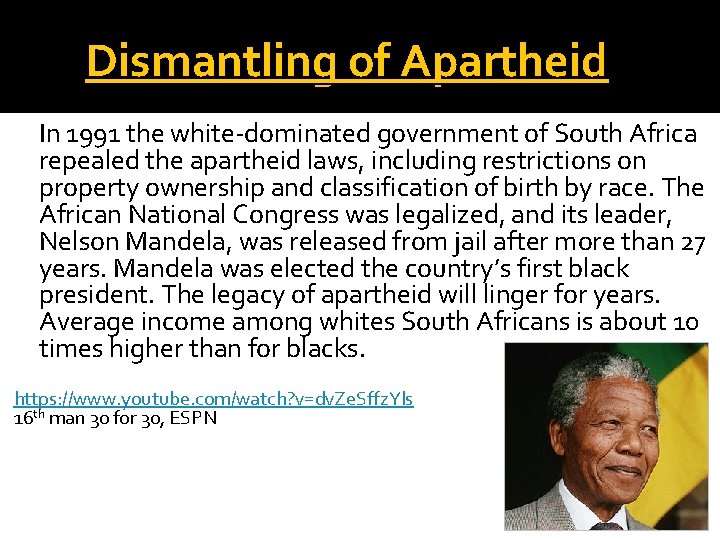
Dismantling of Apartheid In 1991 the white-dominated government of South Africa repealed the apartheid laws, including restrictions on property ownership and classification of birth by race. The African National Congress was legalized, and its leader, Nelson Mandela, was released from jail after more than 27 years. Mandela was elected the country’s first black president. The legacy of apartheid will linger for years. Average income among whites South Africans is about 10 times higher than for blacks. https: //www. youtube. com/watch? v=dv. Ze. Sffz. Yls 16 th man 30 for 30, ESPN
Ethno-nationalism Ethnicity is social, nationalism is political Nationality = identity with a group of people who share a common allegiance to a particular country (ex. Voting regulations, obtaining a passport, performing civic duties). Confusion between ethnicity & nationality can lead to violent conflicts. Nationalism = loyalty and devotion to a nationality Ethnicity has the potential to become nationalism Often used by political leaders as tool to achieve political goals. The fusion of nationalism and ethnicity is called ethno-nationalism
Why Have Ethnicities Been Transformed into Nationalities? Multi ”……” states Multiethnic state ▪ A state with multiple ethnic groups, all of whom might contribute to a larger national identity ▪ Example: the United States Multinational state ▪ A state with multiple ethnic groups who retain their own distinctive national identity ▪ Example: the United Kingdom ▪ Example: Russia (the largest multinational state) Revival of ethnic identity
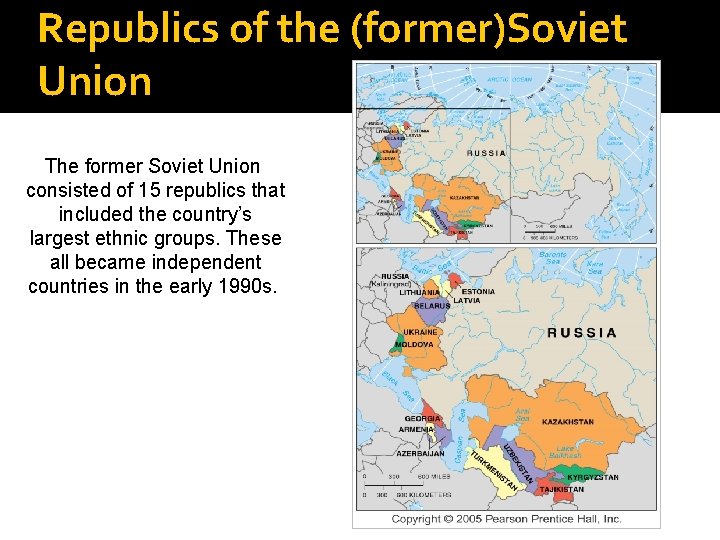
Republics of the (former)Soviet Union The former Soviet Union consisted of 15 republics that included the country’s largest ethnic groups. These all became independent countries in the early 1990 s.
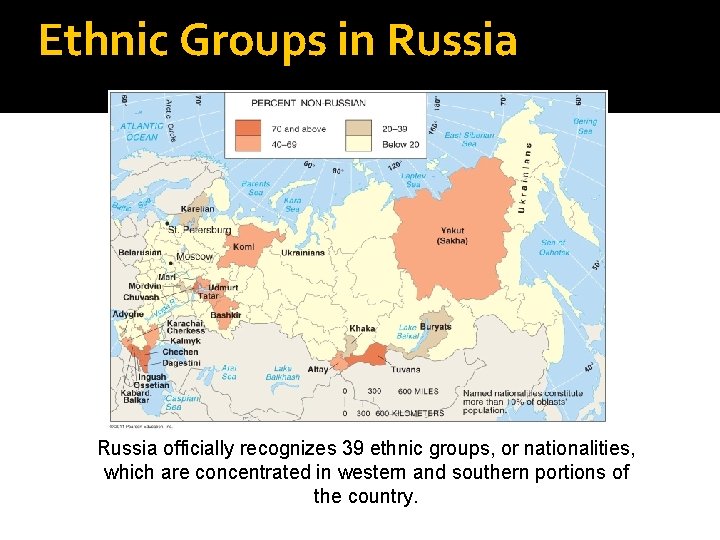
Ethnic Groups in Russia officially recognizes 39 ethnic groups, or nationalities, which are concentrated in western and southern portions of the country.
Nationalism (continued) Nationalism is loyalty and devotion to a nationality. Nationalism promotes one nationality and culture above that of other nations. DNA Journey @ https: //www. youtube. com/watch? v=tya. EQE mt 5 ls
How is nationalism fostered? Mass media (controlled in some states— believed to be a risk to the government) Flags, songs, symbols, holidays Propaganda (often negative images about other countries)
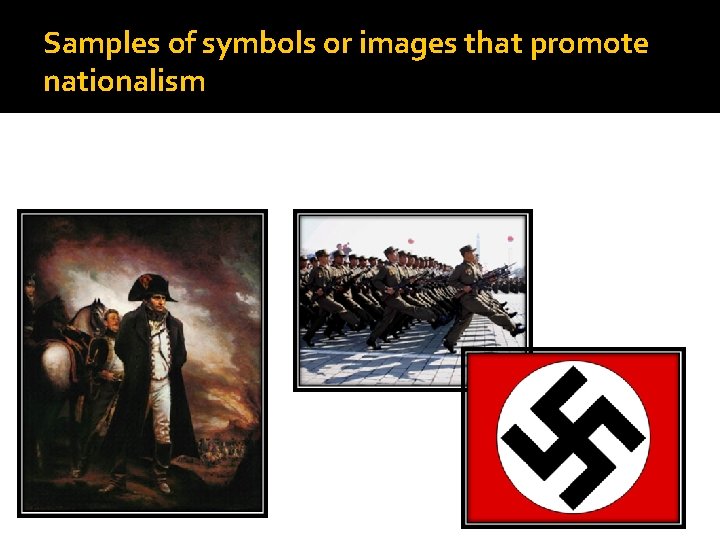
Samples of symbols or images that promote nationalism
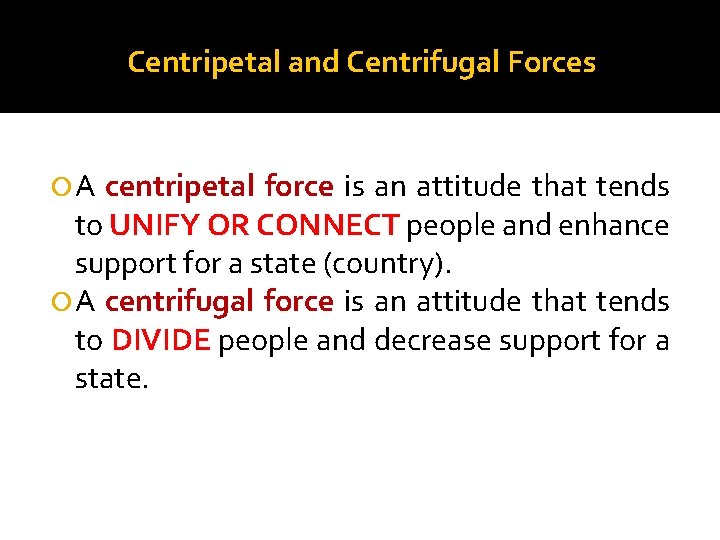
Centripetal and Centrifugal Forces A centripetal force is an attitude that tends to UNIFY OR CONNECT people and enhance support for a state (country). A centrifugal force is an attitude that tends to DIVIDE people and decrease support for a state.
- Slides: 30