
Quel temps verbal on verra on verra Le
Quel temps verbal?

on verra
on verra • Le futur simple - simple tense - future root (ends in “r”) - “avoir” endings • Translation: “one will see” / “we will see”

je travaille
je travaille • Le présent de l’indicatif - simple tense - nous/vous/ils endings often ons/ez/ent • Translation: “I work” or “I am working”

elle est rentrée
elle est rentrée • Le passé composé - compound tense - auxiliary verb in present - past participle • Translation: “she returned/has returned”

il parlait
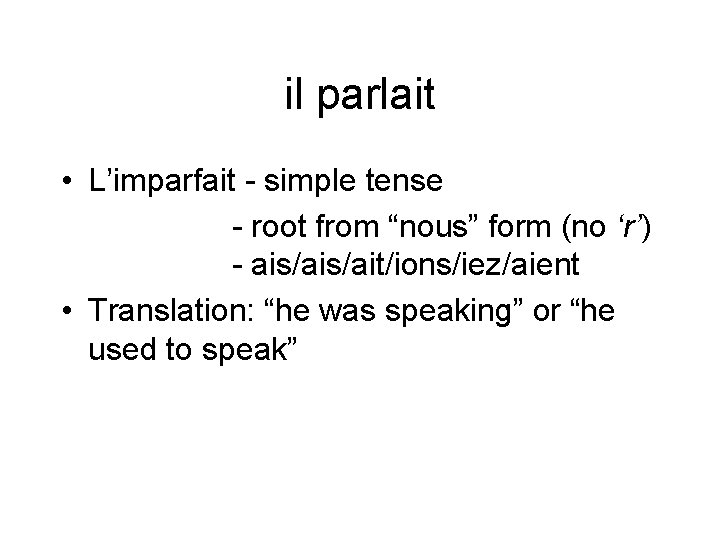
il parlait • L’imparfait - simple tense - root from “nous” form (no ‘r’) - ais/ait/ions/iez/aient • Translation: “he was speaking” or “he used to speak”

vous avez dormi
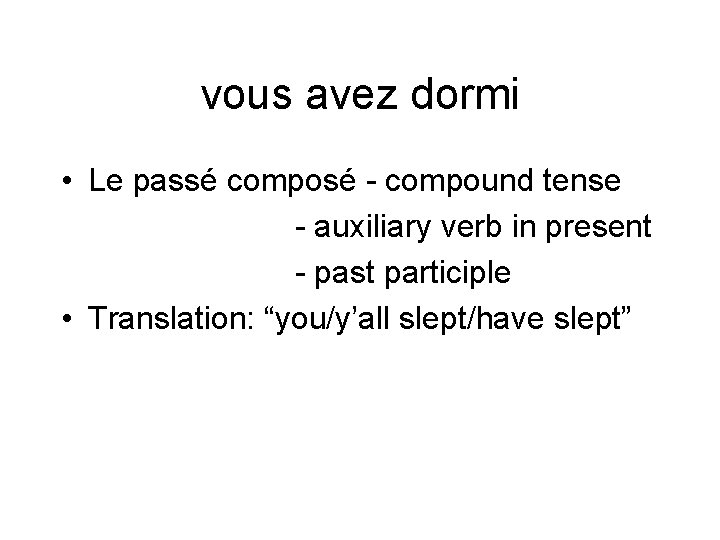
vous avez dormi • Le passé composé - compound tense - auxiliary verb in present - past participle • Translation: “you/y’all slept/have slept”
ils étaient revenus
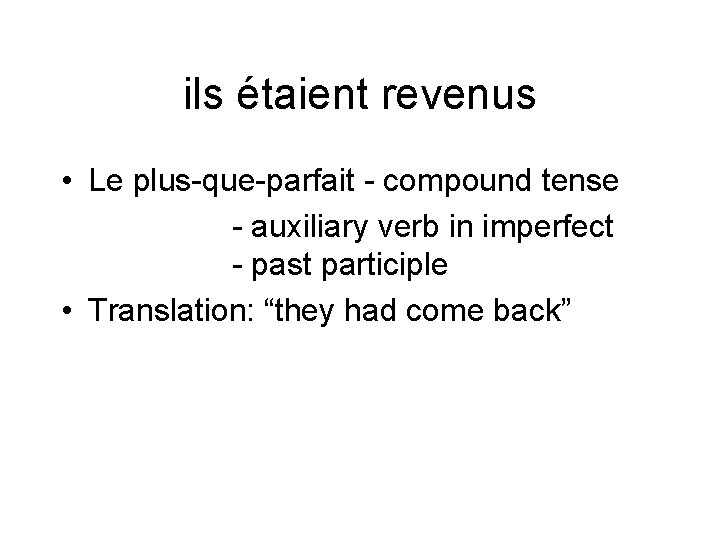
ils étaient revenus • Le plus-que-parfait - compound tense - auxiliary verb in imperfect - past participle • Translation: “they had come back”

tu partiras
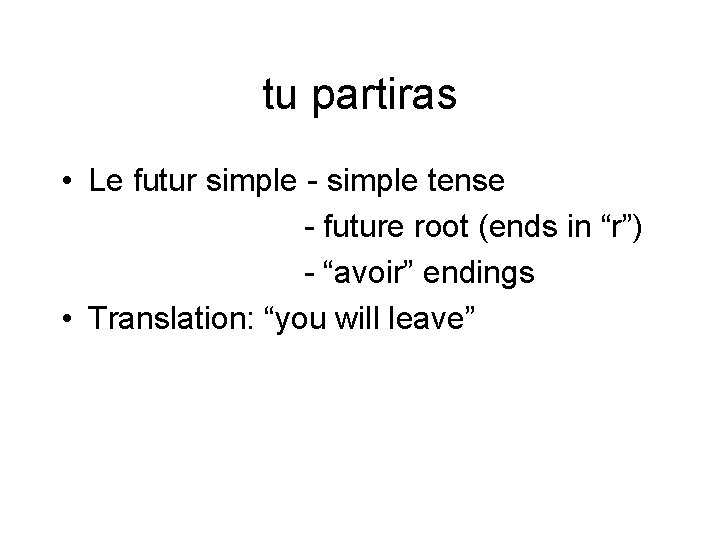
tu partiras • Le futur simple - simple tense - future root (ends in “r”) - “avoir” endings • Translation: “you will leave”

vous dormiriez
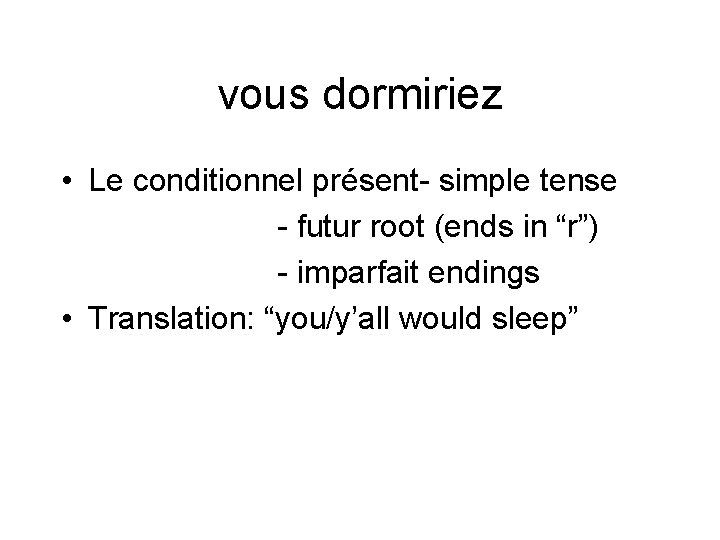
vous dormiriez • Le conditionnel présent- simple tense - futur root (ends in “r”) - imparfait endings • Translation: “you/y’all would sleep”

vous dormiez
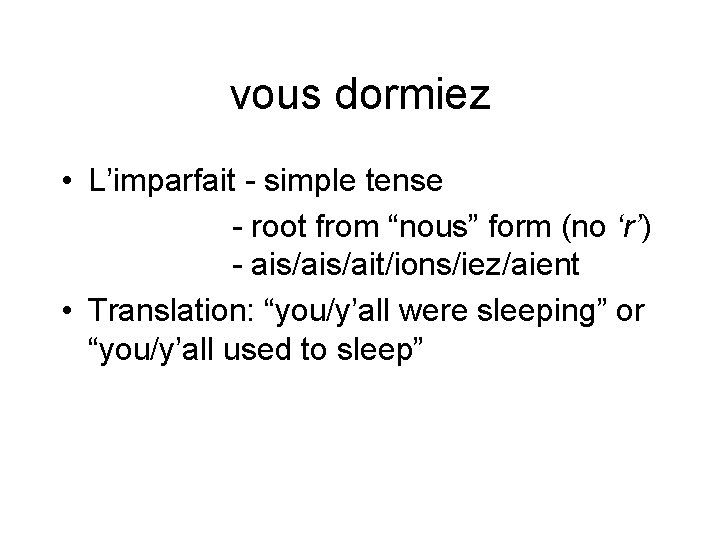
vous dormiez • L’imparfait - simple tense - root from “nous” form (no ‘r’) - ais/ait/ions/iez/aient • Translation: “you/y’all were sleeping” or “you/y’all used to sleep”

ils viendront
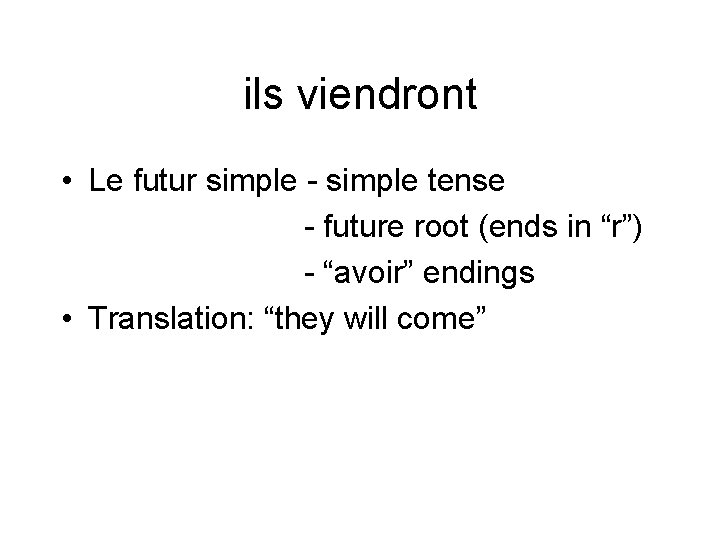
ils viendront • Le futur simple - simple tense - future root (ends in “r”) - “avoir” endings • Translation: “they will come”

je me lavais
je me lavais • L’imparfait - simple tense - root from “nous” form (no ‘r’) - ais/ait/ions/iez/aient • Translation: “I washing (myself)” or “I used to wash (myself)”

elle était partie
elle était partie • Le plus-que-parfait - compound tense - auxiliary verb in imperfect - past participle • Translation: “she had left”

j’aurai travaillé
j’aurai travaillé • Le futur antérieur - compound tense Auxiliary verb: - future root (ends in “r”) - “avoir” endings • Translation: “I will have worked”
tu t’étais réveillé(e)
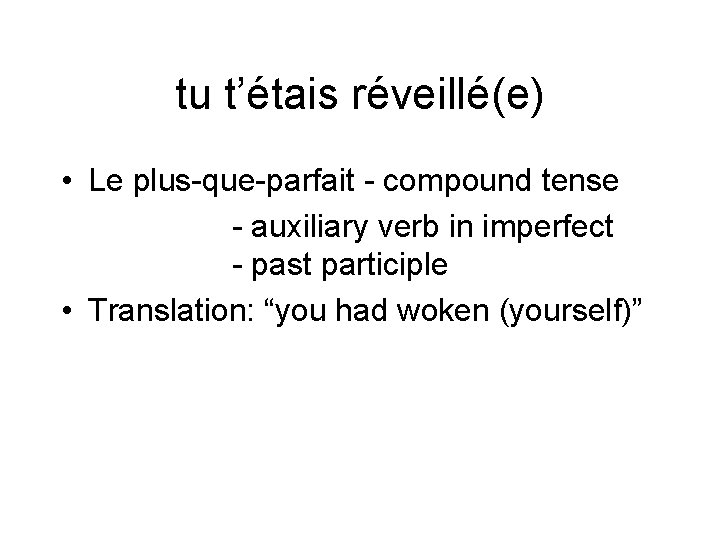
tu t’étais réveillé(e) • Le plus-que-parfait - compound tense - auxiliary verb in imperfect - past participle • Translation: “you had woken (yourself)”

je voyagerai
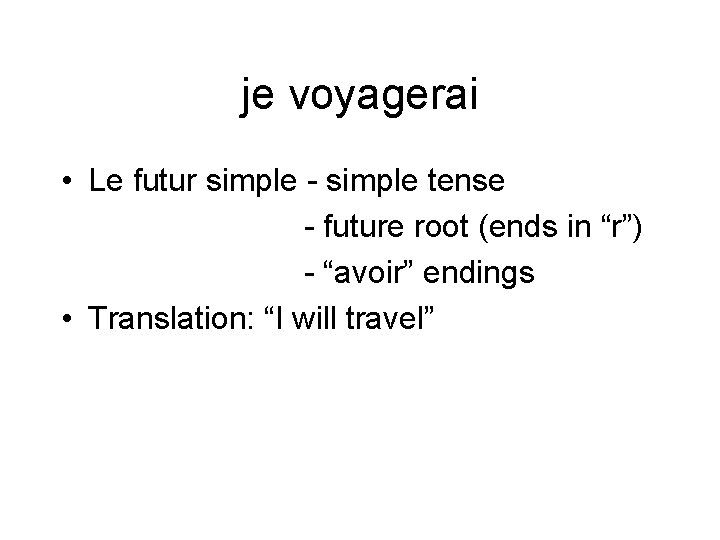
je voyagerai • Le futur simple - simple tense - future root (ends in “r”) - “avoir” endings • Translation: “I will travel”

il a mangé
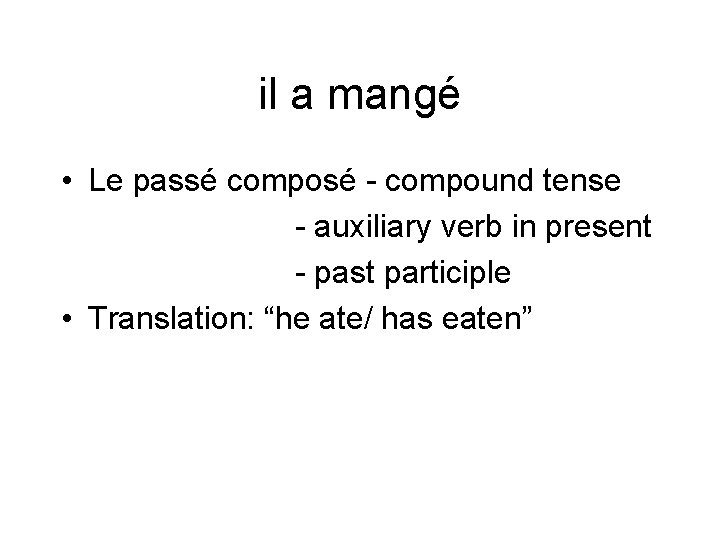
il a mangé • Le passé composé - compound tense - auxiliary verb in present - past participle • Translation: “he ate/ has eaten”
je suis venu(e)
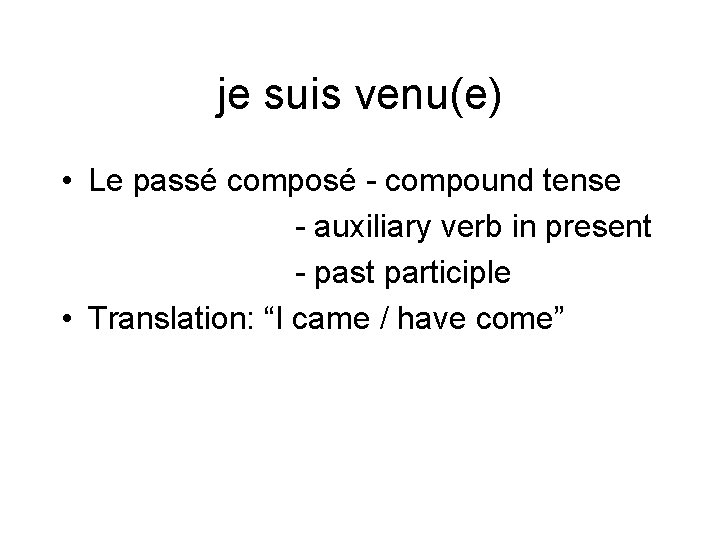
je suis venu(e) • Le passé composé - compound tense - auxiliary verb in present - past participle • Translation: “I came / have come”

je préférerais
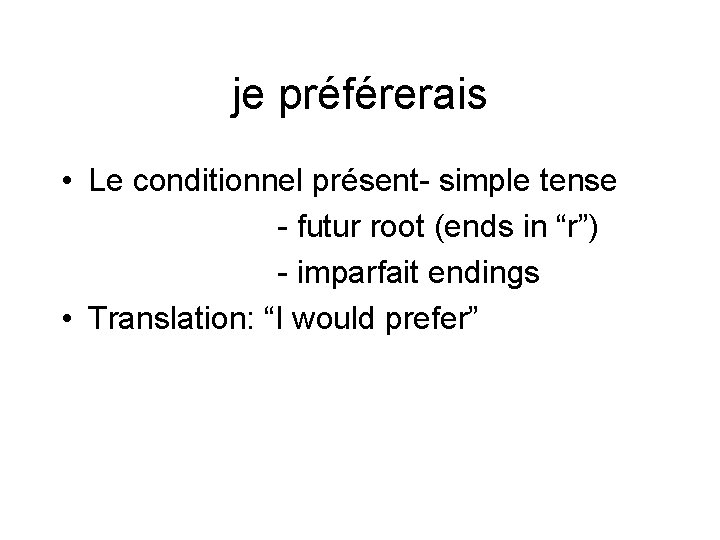
je préférerais • Le conditionnel présent- simple tense - futur root (ends in “r”) - imparfait endings • Translation: “I would prefer”

elle sera partie
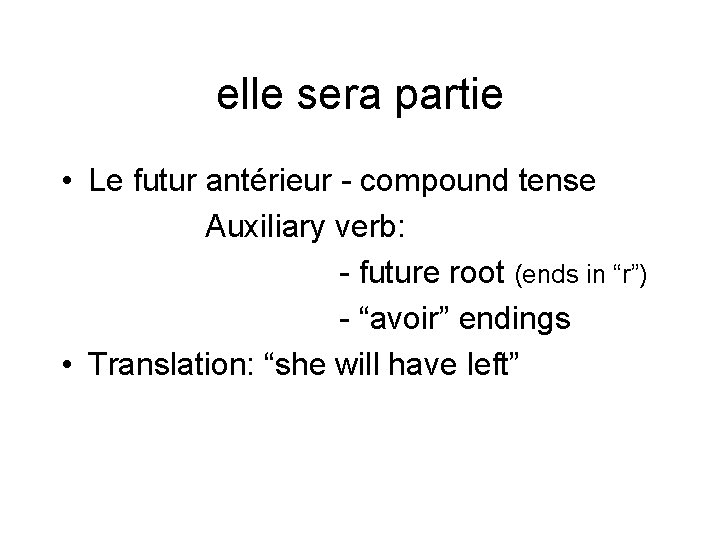
elle sera partie • Le futur antérieur - compound tense Auxiliary verb: - future root (ends in “r”) - “avoir” endings • Translation: “she will have left”

nous écrivions
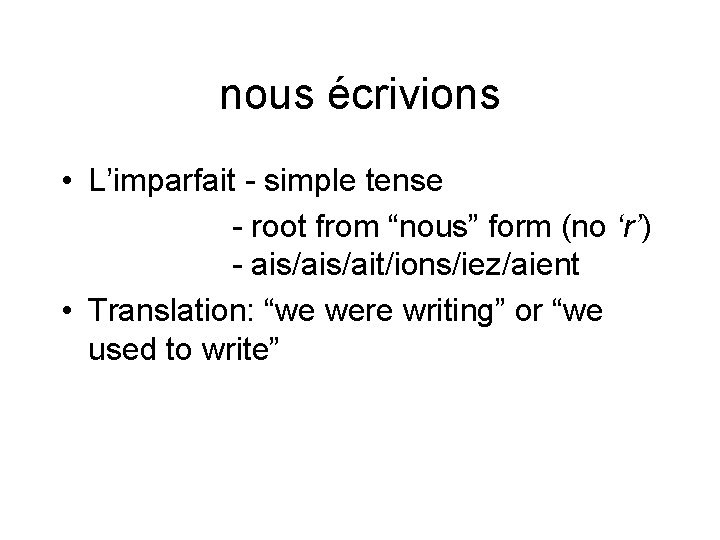
nous écrivions • L’imparfait - simple tense - root from “nous” form (no ‘r’) - ais/ait/ions/iez/aient • Translation: “we were writing” or “we used to write”
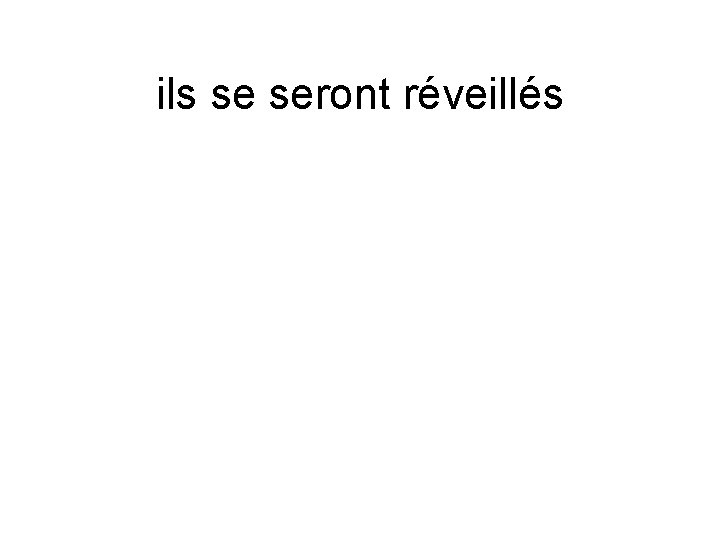
ils se seront réveillés
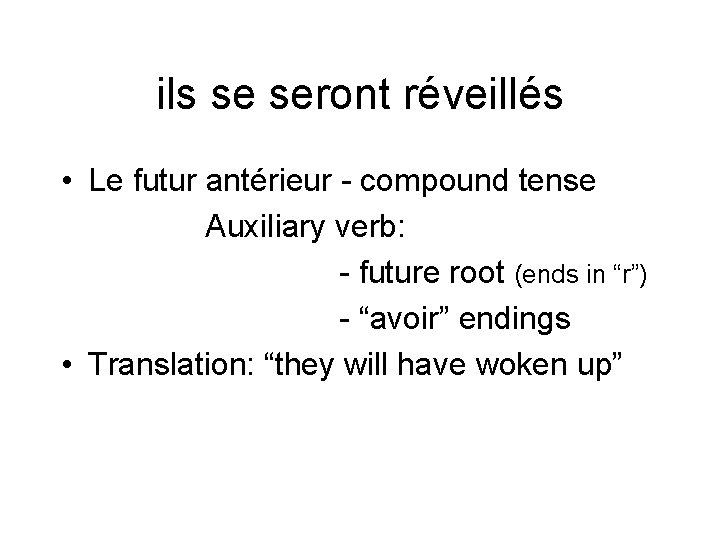
ils se seront réveillés • Le futur antérieur - compound tense Auxiliary verb: - future root (ends in “r”) - “avoir” endings • Translation: “they will have woken up”
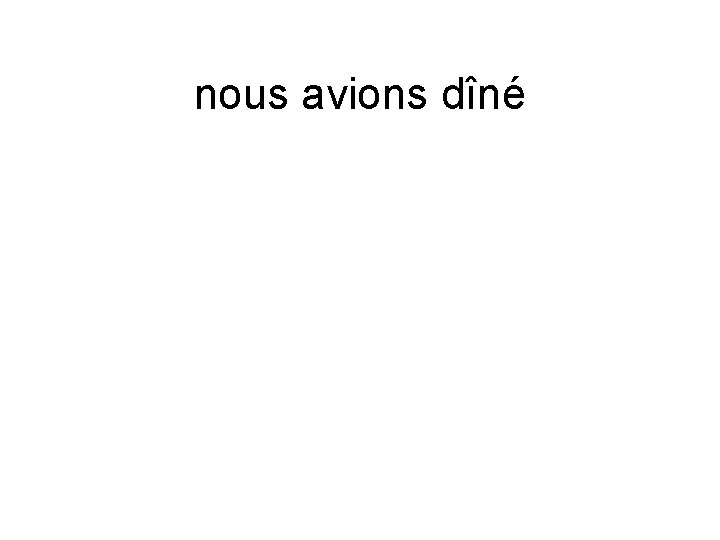
nous avions dîné
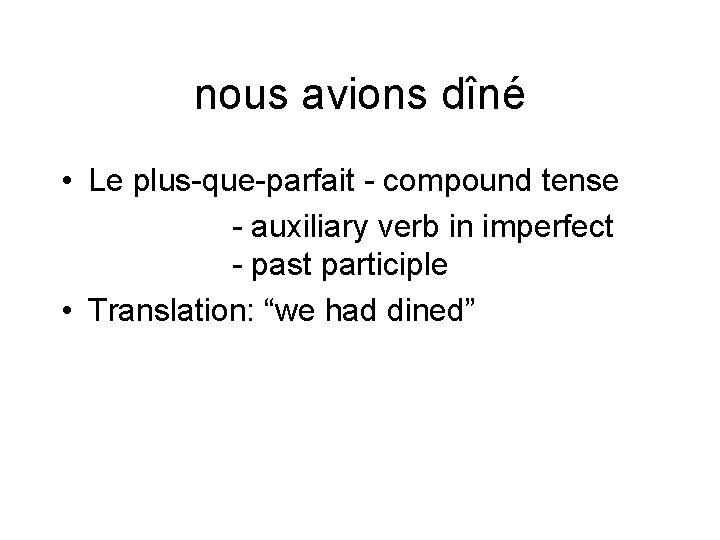
nous avions dîné • Le plus-que-parfait - compound tense - auxiliary verb in imperfect - past participle • Translation: “we had dined”
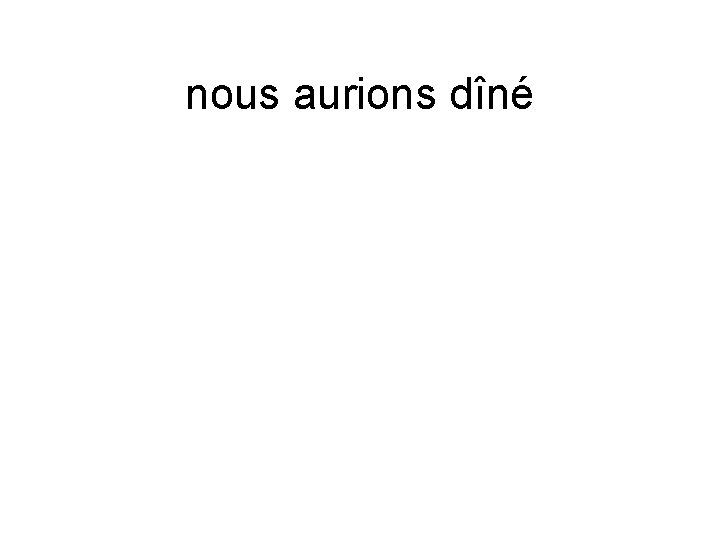
nous aurions dîné
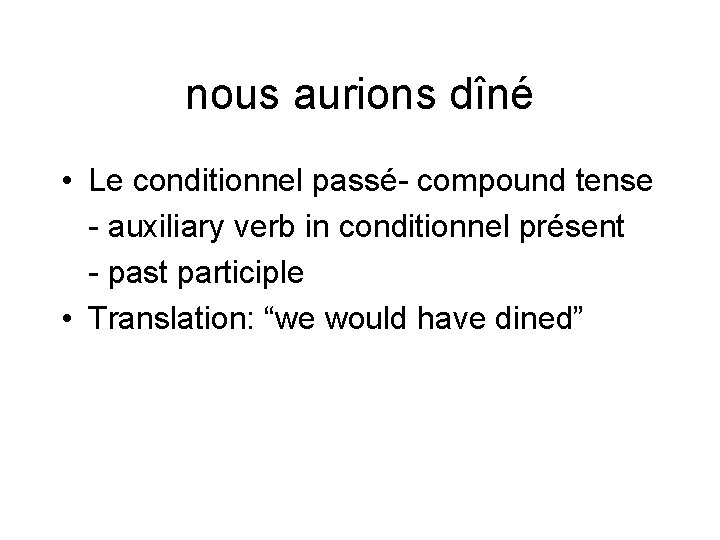
nous aurions dîné • Le conditionnel passé- compound tense - auxiliary verb in conditionnel présent - past participle • Translation: “we would have dined”
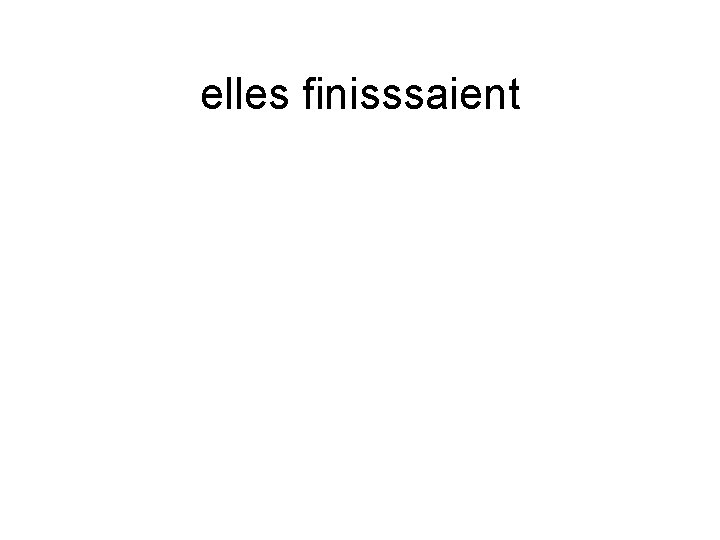
elles finisssaient
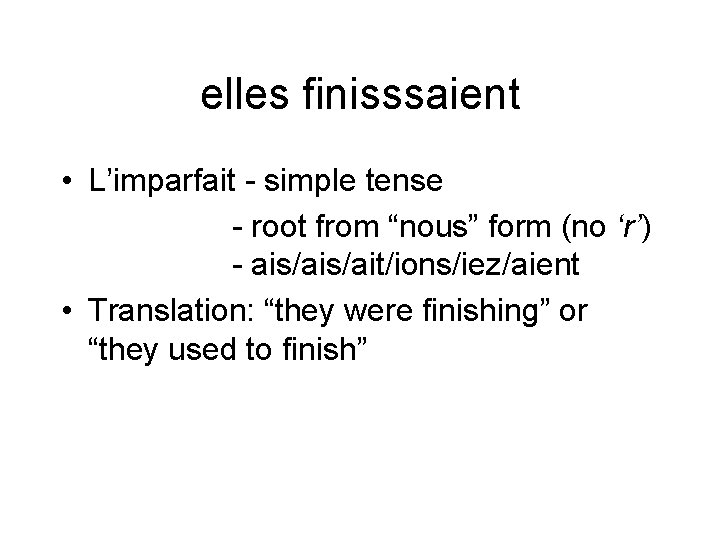
elles finisssaient • L’imparfait - simple tense - root from “nous” form (no ‘r’) - ais/ait/ions/iez/aient • Translation: “they were finishing” or “they used to finish”

vous attendrez
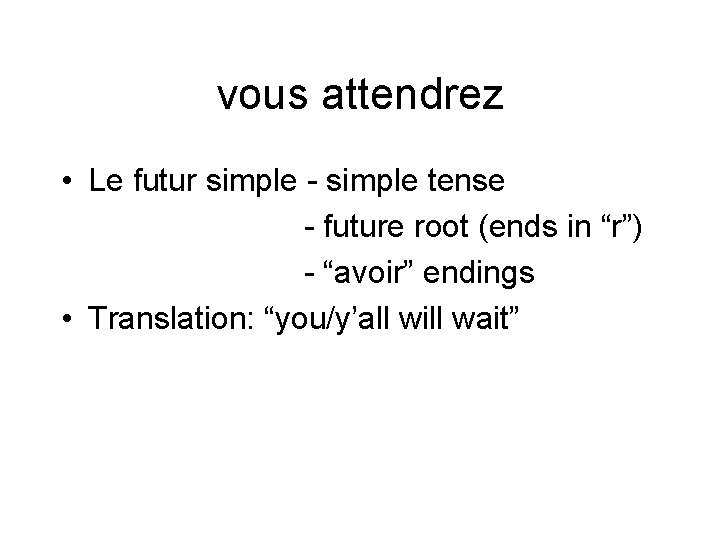
vous attendrez • Le futur simple - simple tense - future root (ends in “r”) - “avoir” endings • Translation: “you/y’all will wait”
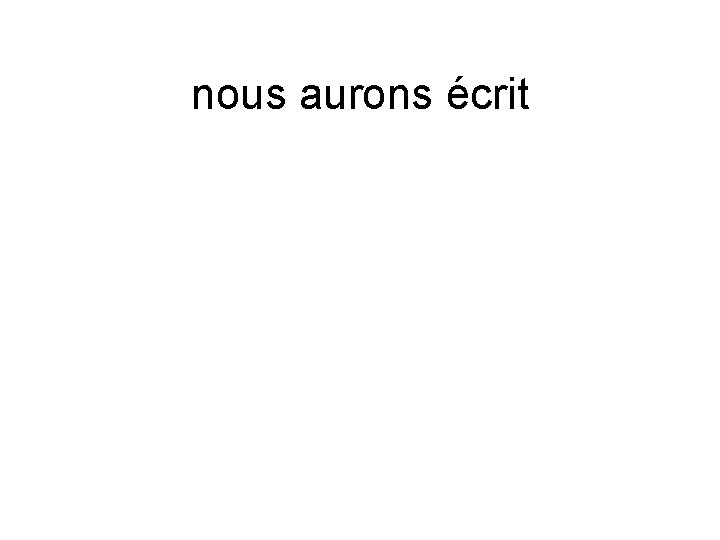
nous aurons écrit
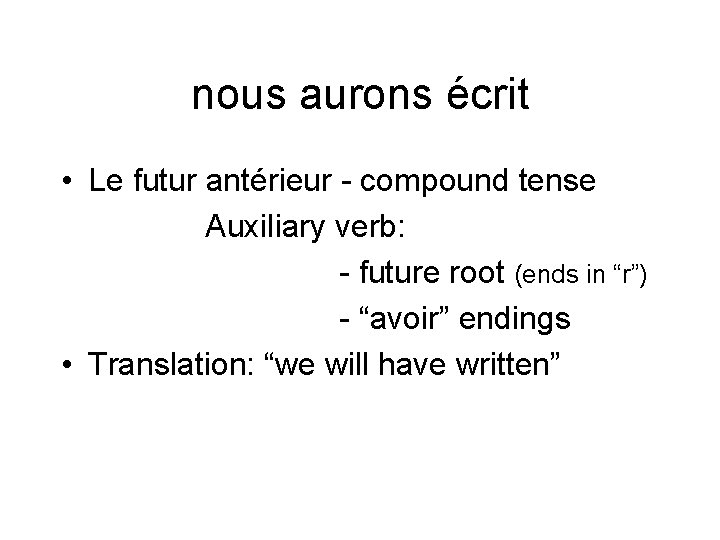
nous aurons écrit • Le futur antérieur - compound tense Auxiliary verb: - future root (ends in “r”) - “avoir” endings • Translation: “we will have written”
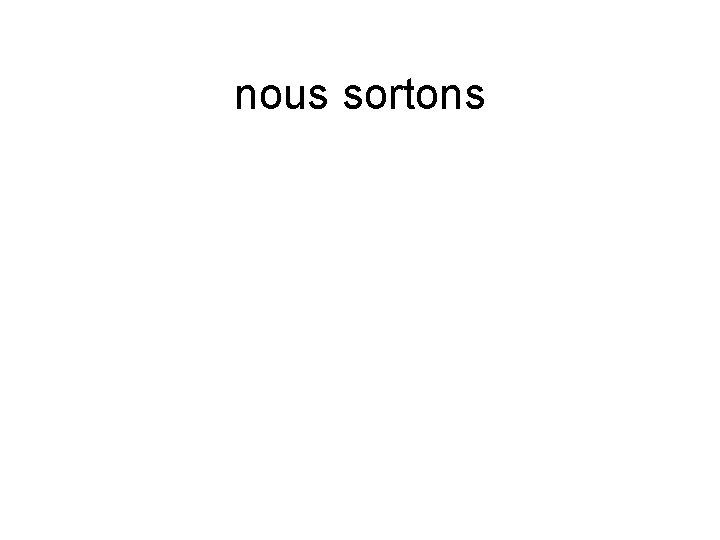
nous sortons
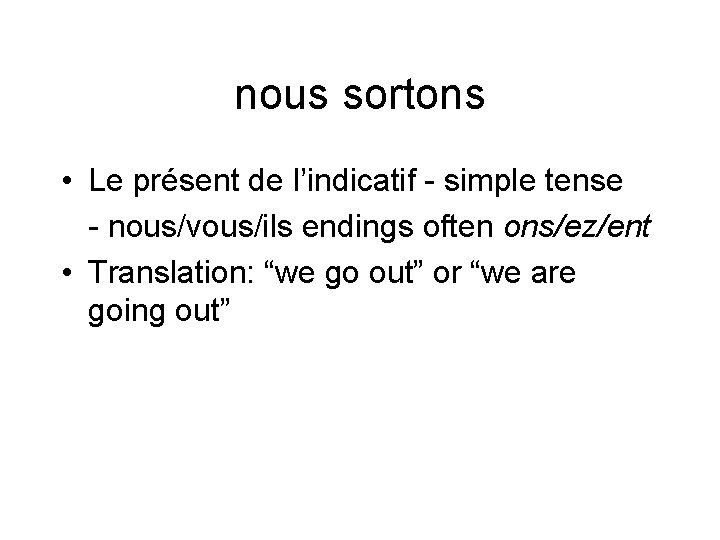
nous sortons • Le présent de l’indicatif - simple tense - nous/vous/ils endings often ons/ez/ent • Translation: “we go out” or “we are going out”

il parlerait
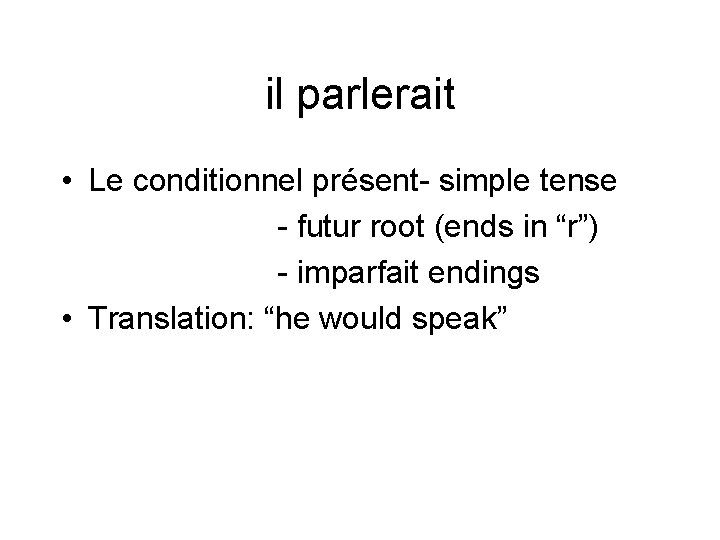
il parlerait • Le conditionnel présent- simple tense - futur root (ends in “r”) - imparfait endings • Translation: “he would speak”
elles maigrissent
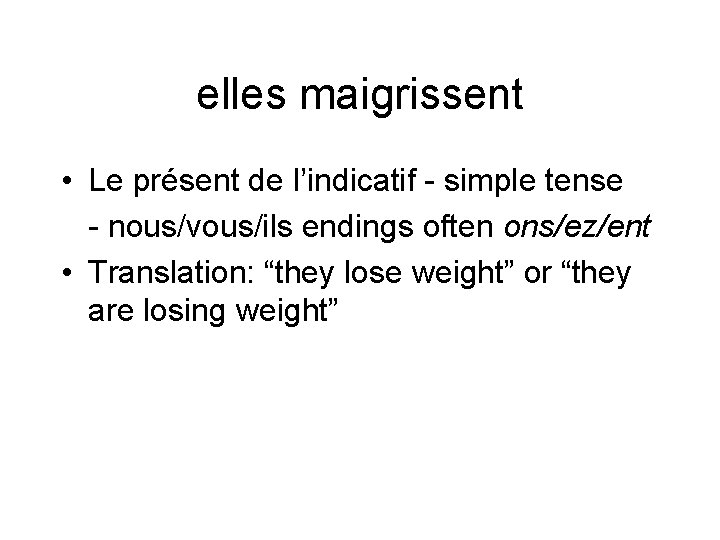
elles maigrissent • Le présent de l’indicatif - simple tense - nous/vous/ils endings often ons/ez/ent • Translation: “they lose weight” or “they are losing weight”

nous voudrions
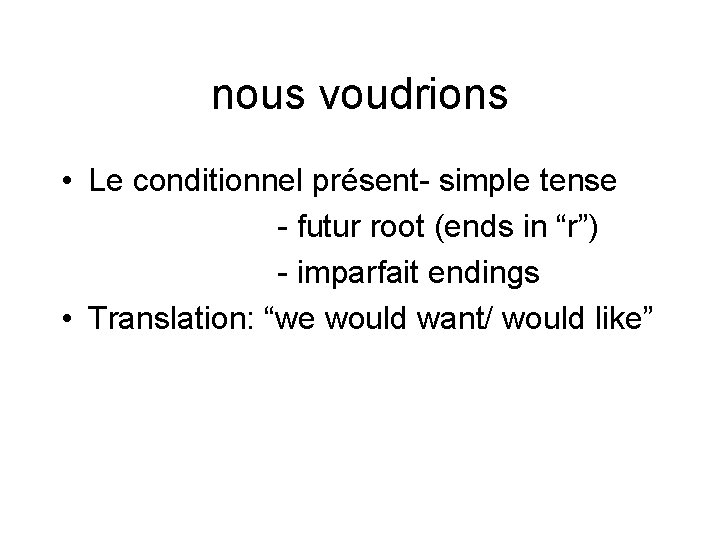
nous voudrions • Le conditionnel présent- simple tense - futur root (ends in “r”) - imparfait endings • Translation: “we would want/ would like”
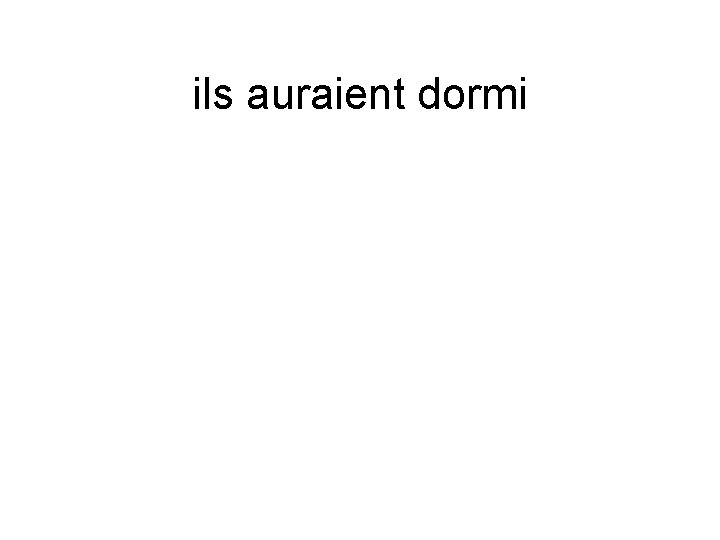
ils auraient dormi
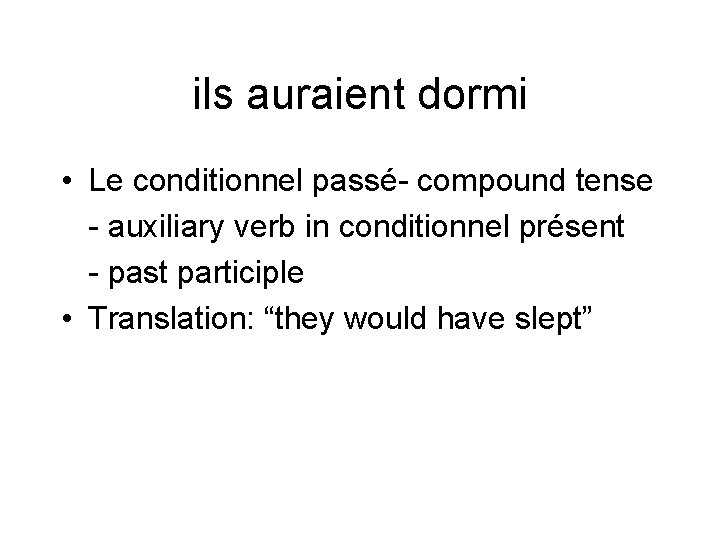
ils auraient dormi • Le conditionnel passé- compound tense - auxiliary verb in conditionnel présent - past participle • Translation: “they would have slept”

j’aurais travaillé
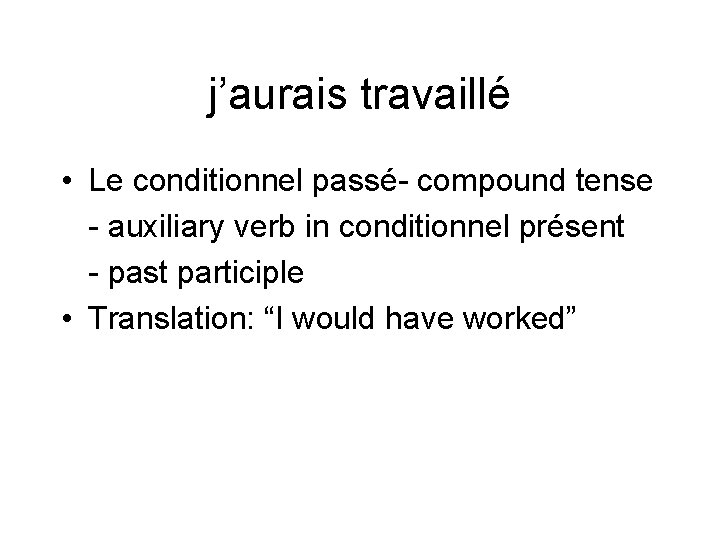
j’aurais travaillé • Le conditionnel passé- compound tense - auxiliary verb in conditionnel présent - past participle • Translation: “I would have worked”

tu as répondu
tu as répondu • Le passé composé - compound tense - auxiliary verb in present - past participle • Translation: “you replied / have replied”

elle serait partie
elle serait partie • Le conditionnel passé- compound tense - auxiliary verb in conditionnel présent - past participle • Translation: “she would have left”

ils se lavent
ils se lavent • Le présent de l’indicatif - simple tense -nous/vous/ils endings often ons/ez/ent • Translation: “they wash (themselves)” or “they are washing (themselves)”

vous auriez fini
vous auriez fini • Le conditionnel passé- compound tense - auxiliary verb in conditionnel présent - past participle • Translation: “you/y’all would have finished”

vous aurez fini
vous aurez fini • Le futur antérieur - compound tense Auxiliary verb: - future root (ends in “r”) - “avoir” endings • Translation: “you/y’all will have finished”

elles finiraient
elles finiraient • Le conditionnel présent- simple tense - futur root (ends in “r”) - imparfait endings • Translation: “they would finish”

vous aviez commencé
vous aviez commencé • Le plus-que-parfait - compound tense - auxiliary verb in imperfect - past participle • Translation: “you/y’all had started”

vous étudiez
vous étudiez • Le présent de l’indicatif - simple tense - nous/vous/ils endings often ons/ez/ent • Translation: “You/y’all study” or “You/y’all are studying”
- Slides: 81