
QuasiRational Assets A presentation by Patrick R Gillespie
Quasi-Rational Assets A presentation by Patrick R. Gillespie 1
Overview u Introduction u What is Bounded Rationality? u A model using 2
What is Bounded Rationality? Theories of Bounded Rationality; u Recognize the limits of knowledge u Account for the complexity of a decision u Often incorporate `heuristics’ into models. But there’s more… 3
What is Bounded Rationality? u To understand BR, one must understand the alternative u The alternative: Rational Economic Man – Also known as `Homo Economicus’ 4
What is Bounded Rationality? u The assumptions of the Neoclassical Model, as taken from (Kreps, 1990, Ch. 2) – Preferences are asymmetric. – Preferences are negatively transitive. – The choice function c is non-empty valued. – The choice function c satisfies Houthakker’s axiom of revealed preference. 5
What is Bounded Rationality? Meet Rational Economic Man u Knows every alternative available u Understands outcomes of all alternatives u Probability distribution of outcomes u Chooses the optimal bundle 6
What is Bounded Rationality? Rational Economic Man or Superman? u Countable infinity of alternatives u Unforeseen u Nothing u Like consequences but the best. clockwork. No unpredictability. 7
What is Bounded Rationality? If not REM, then who? u Homo Economicus vs. Homo Sapiens u Behavioural Economics u Computable Economics 8
What is Bounded Rationality? Behavioural Economics u Herbert Simon and IPS u Satisficing vs. Maximising u Incorporation Psychology of Cognitive 9
What is Bounded Rationality? Herbert Simon and IPS u Stands for Information Processing Systems u Computer thinking simulation of Human 10
What is Bounded Rationality? u Computable Economics – Concerned with the digital nature of economic data. – Asks if problems are solvable, computable, and how complex they are. – Diophantine Equations and Turing Machines. 11
‘Why Bounded Rationality? ’ (Conlisk, 1996) u The Debate – Neoclassical Economics u ‘As if’ Rationale u Learning u Survival u Performance u Sidewalk Twenties 12
‘Why Bounded Rationality? ’ (Conlisk, 1996) u The Debate – Neoclassical Economics u Track Record u Framework u Tractability u Economics behaviour’ and Definite Outcomes as `the study of optimizing 13
Methodological Philosophy u Rational Economic Man is not realistic. u Milton Friedman and Instrumentalism u Samuelson’s `F-Twist’ u Boland’s Logic Argument u Boylan’s `Causal Holist’ u Irony 14
Bounded Rationality in Practice u The Neoclassical approach – Parallels informational approaches – `Plug and Play’ 15
Bounded Rationality in Practice u Conlisk and Deliberation cost – P and F(P) u Always treat P u Treat F(P) or not – Closure u Optimal Closure u Adaptive Closure – Infinite Regress? 16
Bounded Rationality in Practice u Behavioural Finance – Takes much from Cognitive Psychology u Kahneman and Tversky – Prospect Theory – Loss aversion – Framing effects 17
Bounded Rationality in Practice u Behavioural Finance – Thaler, Russell, De. Bondt and Benartzi u Myopic Loss Aversion u Naïve (1/n) Diversification u Overreaction Effects 18
The Capital Asset Pricing Model u Modern Portfolio Theory – Due to Harry Markowitz – If assets are MVN, how to invest? – Assumptions u Mean-variance optimisers u Known probability distribution of assets u Same risk free rate of borrowing u No transaction costs. 19
The Capital Asset Pricing Model u Modern Portfolio Theory – If all agents have the same information, they hold the same portfolio, the market portfolio. – Assets may have different weights. – The Securities Market Line (SML) 20
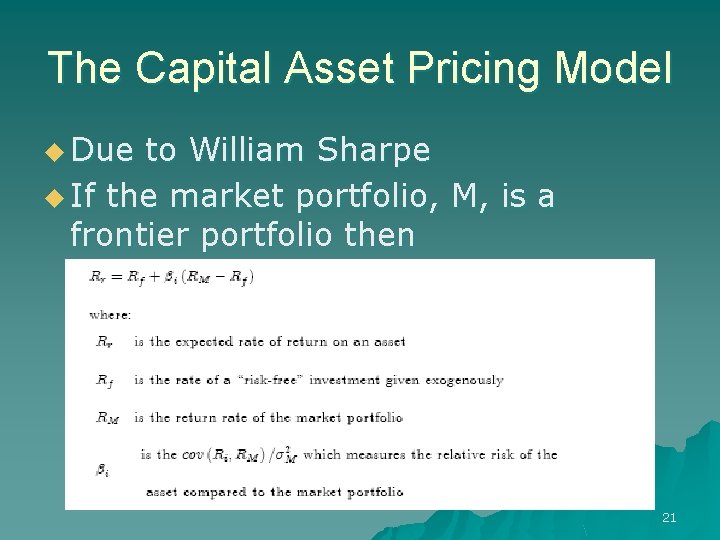
The Capital Asset Pricing Model u Due to William Sharpe u If the market portfolio, M, is a frontier portfolio then 21
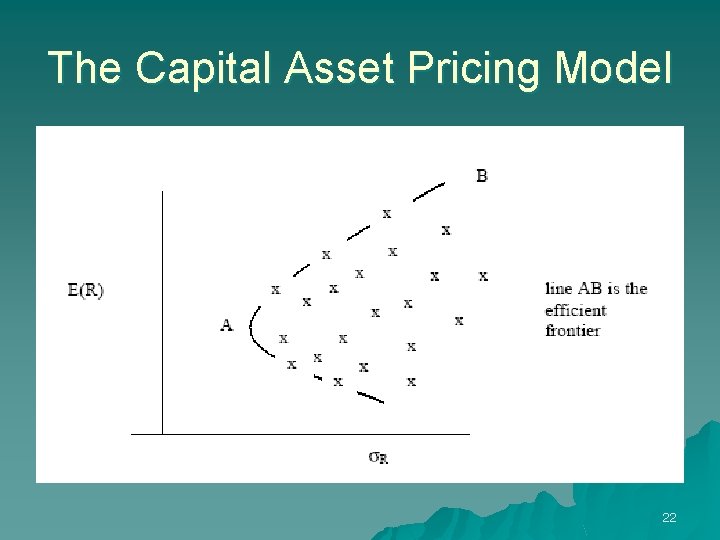
The Capital Asset Pricing Model 22
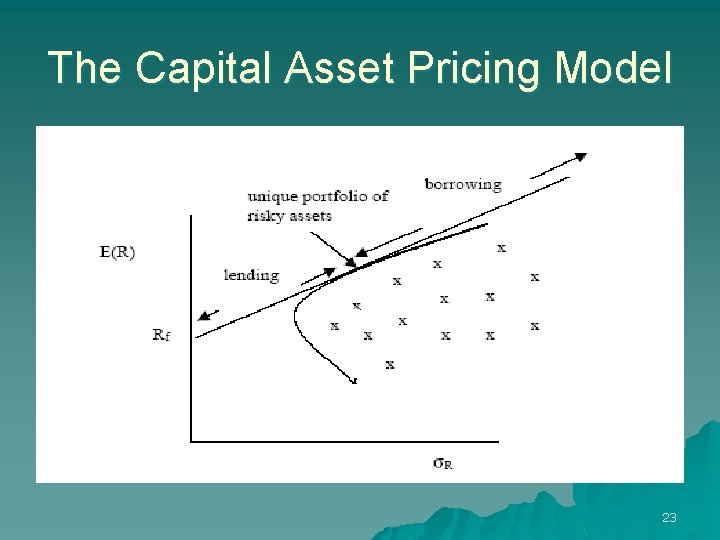
The Capital Asset Pricing Model 23
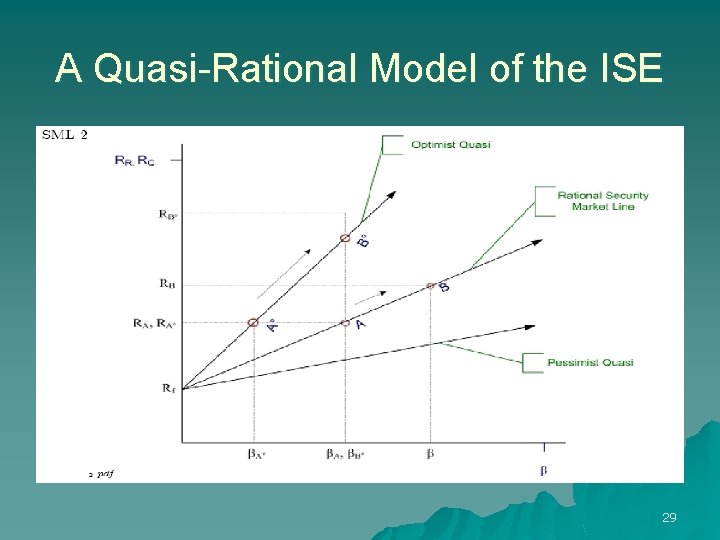
A Quasi-Rational Model of the ISE u `Quasi-rational’ taken from Thaler (1985) u Maximisers that make mistakes u Systematic mistakes; overreaction and loss aversion u Takes a macro approach 24
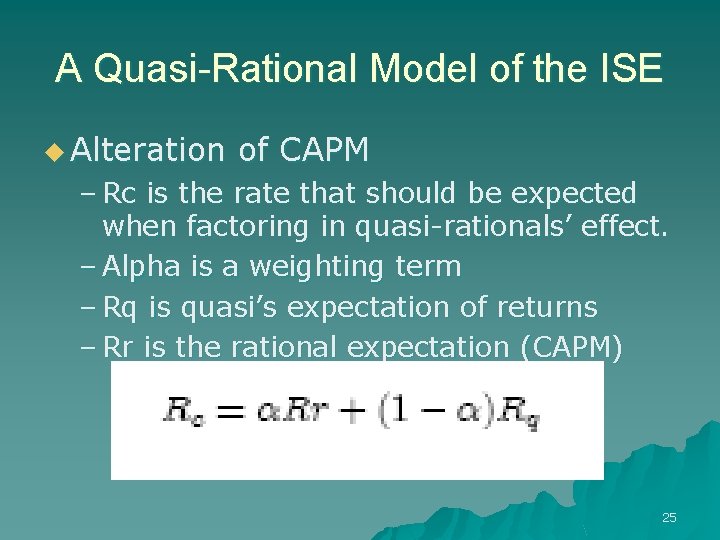
A Quasi-Rational Model of the ISE u Alteration of CAPM – Rc is the rate that should be expected when factoring in quasi-rationals’ effect. – Alpha is a weighting term – Rq is quasi’s expectation of returns – Rr is the rational expectation (CAPM) 25
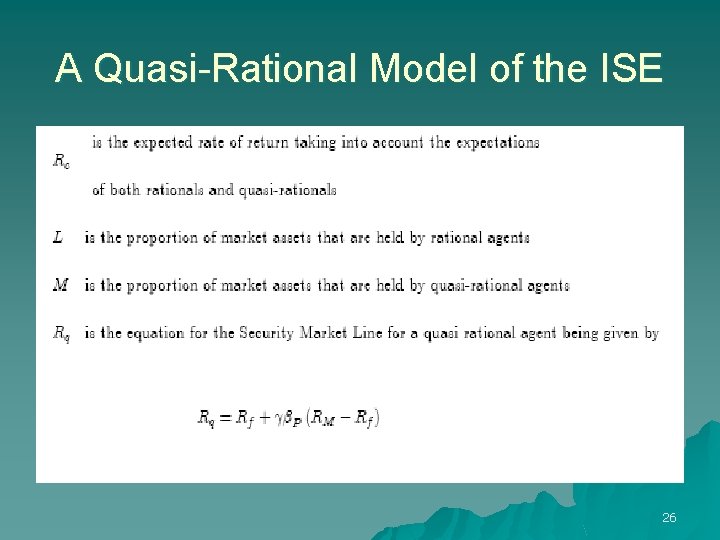
A Quasi-Rational Model of the ISE 26
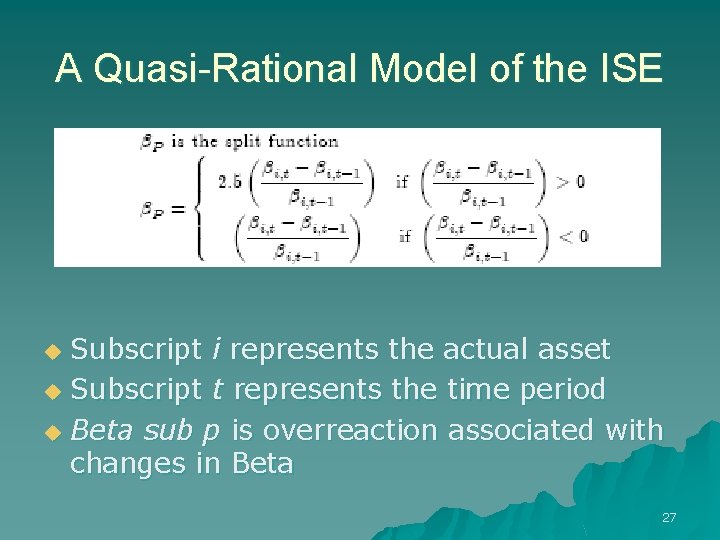
A Quasi-Rational Model of the ISE Subscript i represents the actual asset u Subscript t represents the time period u Beta sub p is overreaction associated with changes in Beta u 27
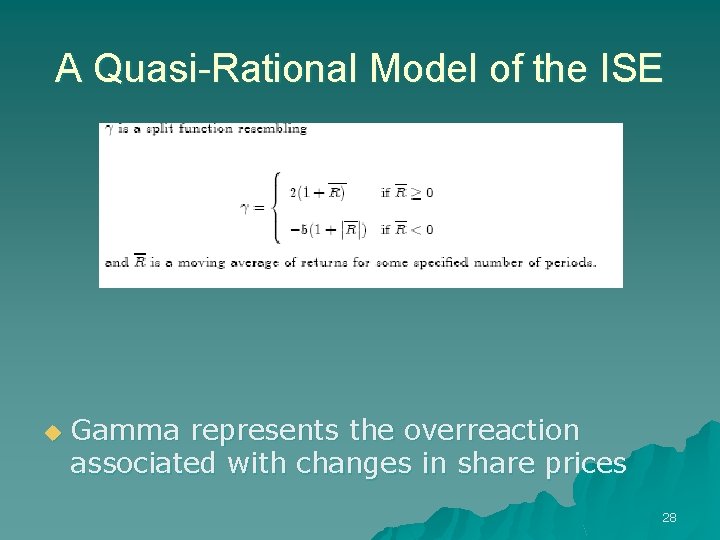
A Quasi-Rational Model of the ISE u Gamma represents the overreaction associated with changes in share prices 28
A Quasi-Rational Model of the ISE 29
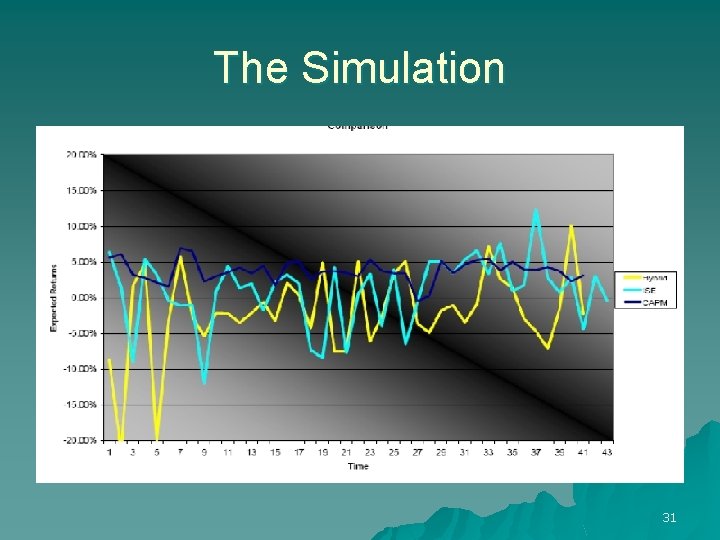
The Simulation u Simulation done in Excel – Compared with data from the Irish Stock Exchange u Price data u Beta Values u ISEQ Overall Index – Initial Conditions u First 3 periods (monthly model) actual data u Rest was simulated 30
The Simulation 31
The Simulation u Used Wilcoxon Signed Ranks Test – Non-parametric u Median mean returns – CAPM model differed significantly – Hybrid model did not u Weaknesses – Not conclusive – Sections where model has opposite sign! 32
The Semantic Web u The Internet – The World Wide Web and Internet Search Engines – Limitations of WWW u The Semantic Web – Web Agents – Ontologies 33
The Semantic Web u The effect of the Internet on Asset markets – Barber and Odean – Choi et al. u Increased liquidity Volatility and inconsitent – Day Trading – Pensioners – Individuals 34
The Semantic Web u The effect of the Semantic Web on asset markets – The investor’s worst enemy, himself – Reducing autonomy u Financial Planning u Making it boring – Reduced Quasi-rational behaviour u Leads to reduced volatility u `Bubbles’ become less frequent and less severe. 35

Conclusion 36
- Slides: 36