
Quasi Fat Trees for HPC Clouds and their
- Slides: 21
Quasi Fat Trees for HPC Clouds and their Fault-Resilient Closed-Form Routing Eitan Zahavi* Isaac Keslassy Avinoam Kolodny HOTI 2014 Technion - EE Department; *and Mellanox Technologies
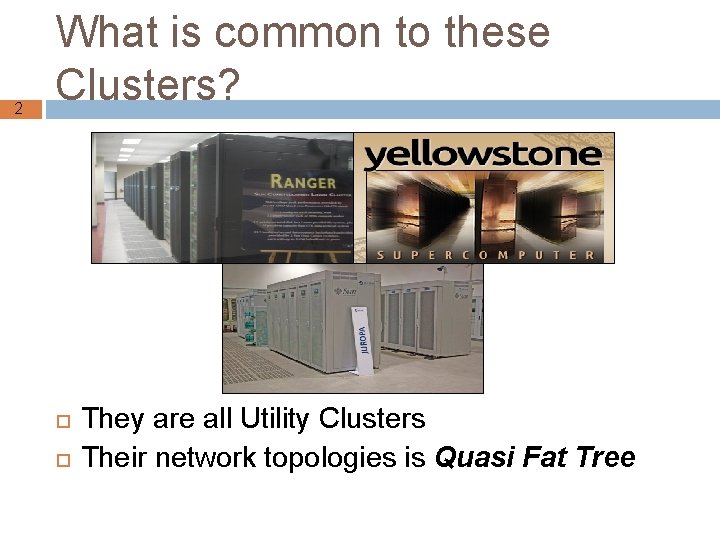
2 What is common to these Clusters? They are all Utility Clusters Their network topologies is Quasi Fat Tree
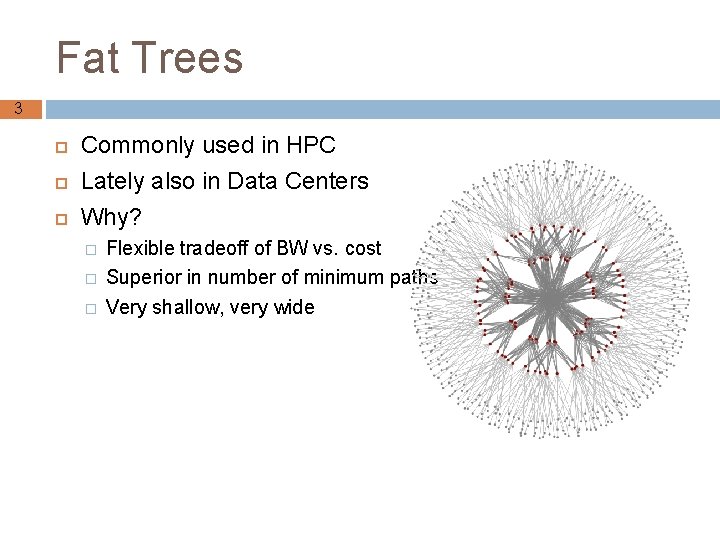
Fat Trees 3 Commonly used in HPC Lately also in Data Centers Why? � � � Flexible tradeoff of BW vs. cost Superior in number of minimum paths Very shallow, very wide
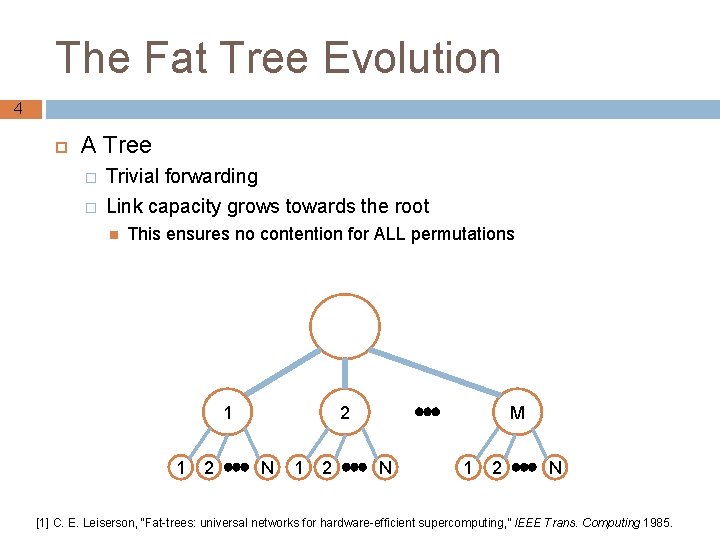
The Fat Tree Evolution 4 A Tree � � Trivial forwarding Link capacity grows towards the root This ensures no contention for ALL permutations 1 2 M 2 1 N 1 2 N [1] C. E. Leiserson, “Fat-trees: universal networks for hardware-efficient supercomputing, ” IEEE Trans. Computing 1985.
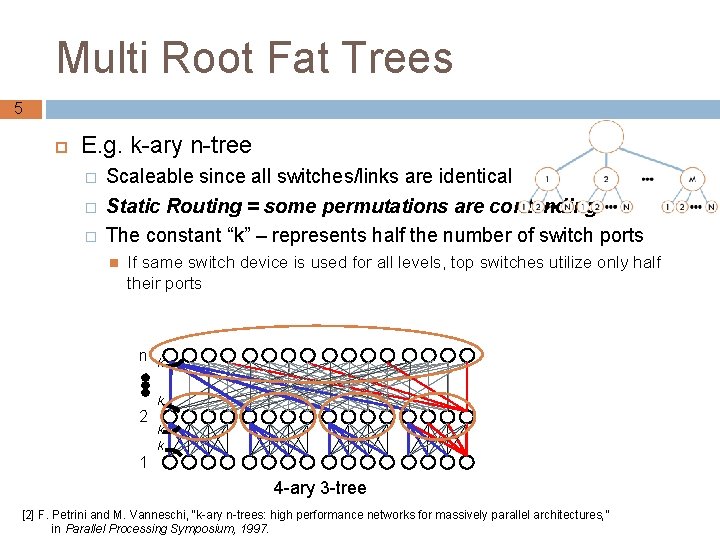
Multi Root Fat Trees 5 E. g. k-ary n-tree � � � Scaleable since all switches/links are identical Static Routing = some permutations are contending The constant “k” – represents half the number of switch ports If same switch device is used for all levels, top switches utilize only half their ports n k k 2 k k 1 4 -ary 3 -tree [2] F. Petrini and M. Vanneschi, “k-ary n-trees: high performance networks for massively parallel architectures, ” in Parallel Processing Symposium, 1997.
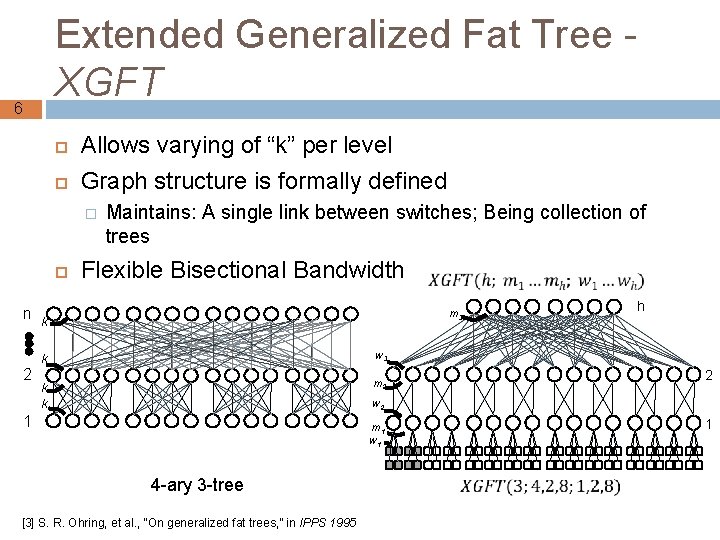
Extended Generalized Fat Tree - XGFT 6 Allows varying of “k” per level Graph structure is formally defined � n 2 Maintains: A single link between switches; Being collection of trees Flexible Bisectional Bandwidth h m 3 k k w 3 k k m 2 2 w 2 1 1 m 1 w 1 4 -ary 3 -tree [3] S. R. Ohring, et al. , “On generalized fat trees, ” in IPPS 1995
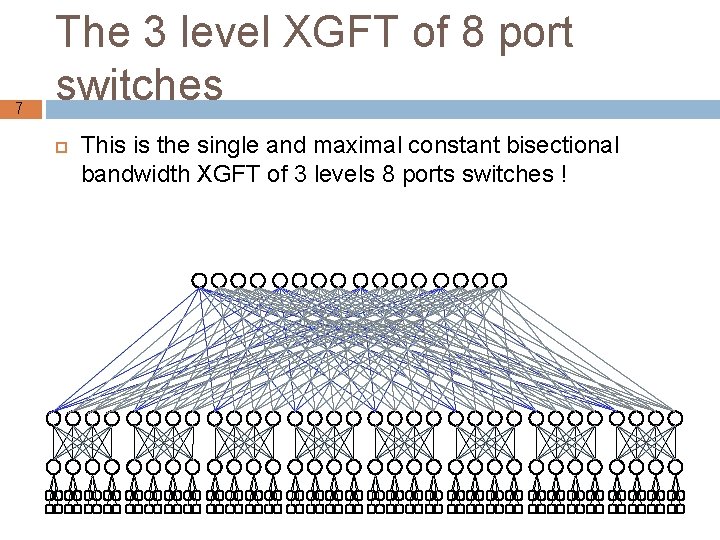
7 The 3 level XGFT of 8 port switches This is the single and maximal constant bisectional bandwidth XGFT of 3 levels 8 ports switches !
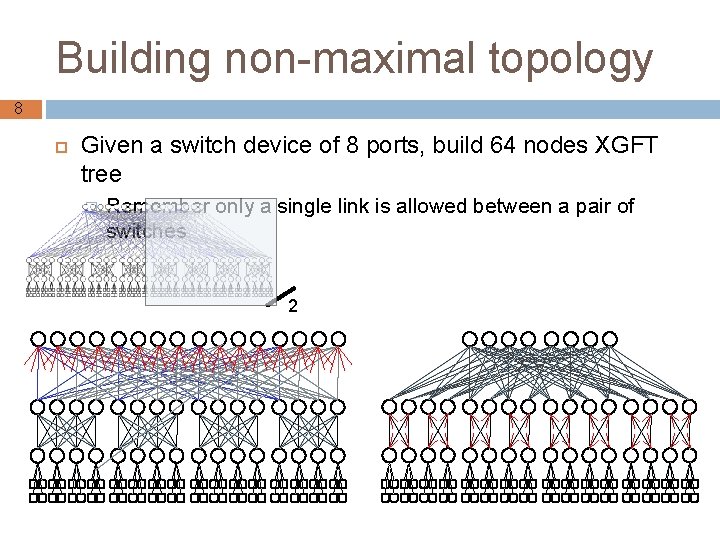
Building non-maximal topology 8 Given a switch device of 8 ports, build 64 nodes XGFT tree � Remember only a single link is allowed between a pair of switches 2
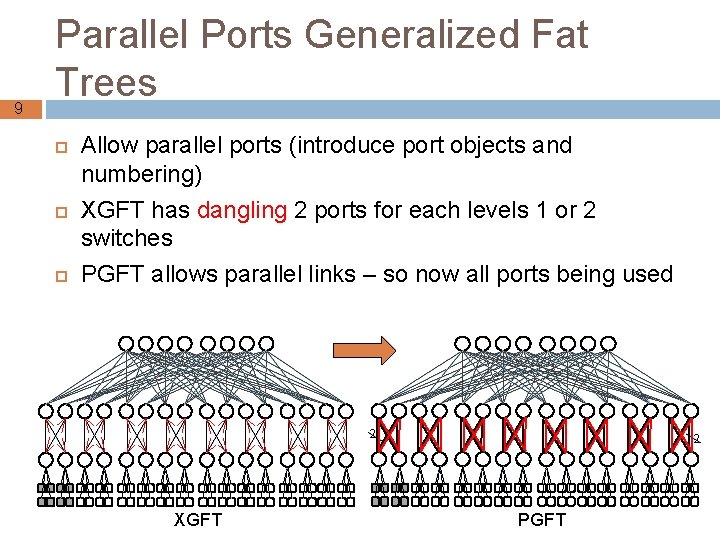
9 Parallel Ports Generalized Fat Trees Allow parallel ports (introduce port objects and numbering) XGFT has dangling 2 ports for each levels 1 or 2 switches PGFT allows parallel links – so now all ports being used 2 XGFT 2 PGFT
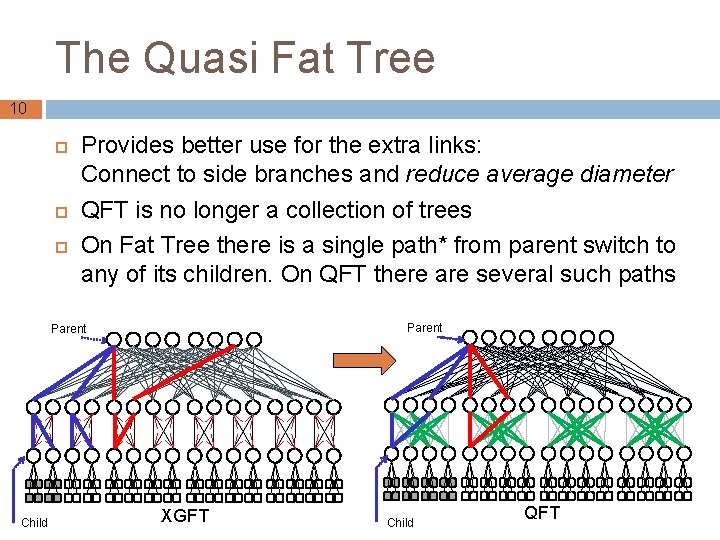
The Quasi Fat Tree 10 Provides better use for the extra links: Connect to side branches and reduce average diameter QFT is no longer a collection of trees On Fat Tree there is a single path* from parent switch to any of its children. On QFT there are several such paths Parent Child XGFT Child QFT
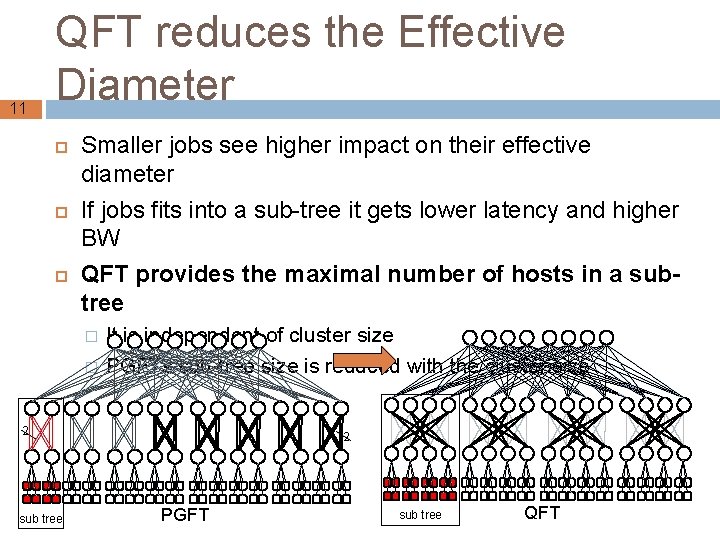
11 QFT reduces the Effective Diameter Smaller jobs see higher impact on their effective diameter If jobs fits into a sub-tree it gets lower latency and higher BW QFT provides the maximal number of hosts in a subtree � � It is independent of cluster size PGFTs sub-tree size is reduced with the cluster size 2 sub tree 2 PGFT sub tree QFT
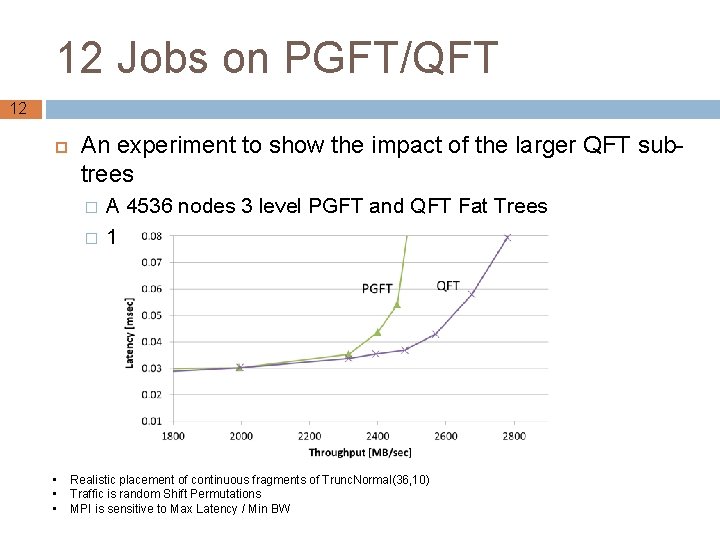
12 Jobs on PGFT/QFT 12 An experiment to show the impact of the larger QFT subtrees � � • • • A 4536 nodes 3 level PGFT and QFT Fat Trees 12 jobs of job size Normal(300, 20) Realistic placement of continuous fragments of Trunc. Normal(36, 10) Traffic is random Shift Permutations MPI is sensitive to Max Latency / Min BW
13 From Many Small Jobs to Single Large Job So far, we showed why QFT provides better performance then other Fat Trees for many concurrent small jobs Can QFT compete with other Fat Trees for single largest MPI job performance?
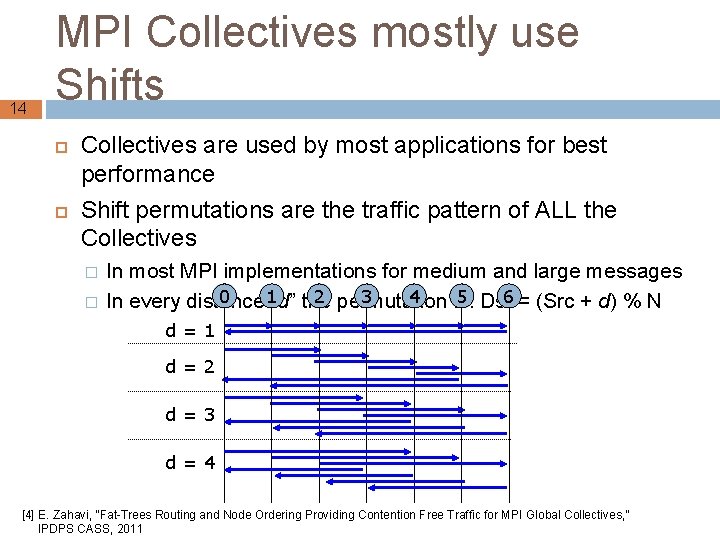
14 MPI Collectives mostly use Shifts Collectives are used by most applications for best performance Shift permutations are the traffic pattern of ALL the Collectives � � In most MPI implementations for medium and large messages 0 1 2 3 4 5 6 In every distance “d” the permutation is: Dst = (Src + d) % N d=1 d=2 d=3 d=4 [4] E. Zahavi, “Fat-Trees Routing and Node Ordering Providing Contention Free Traffic for MPI Global Collectives, ” IPDPS CASS, 2011
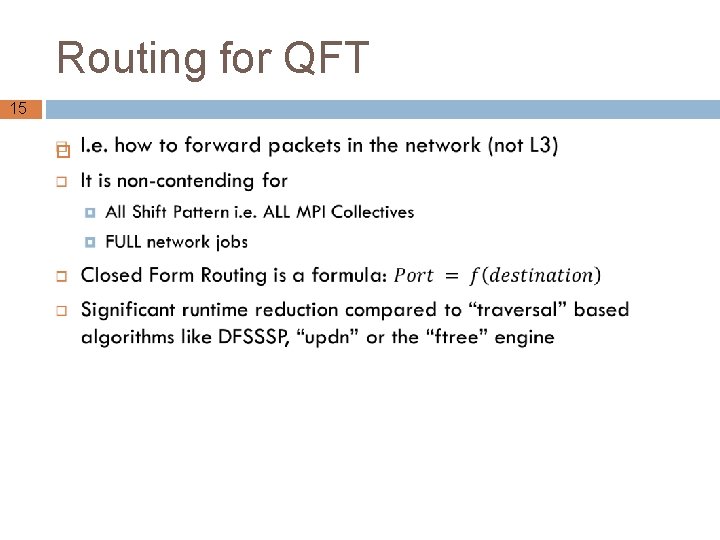
Routing for QFT 15
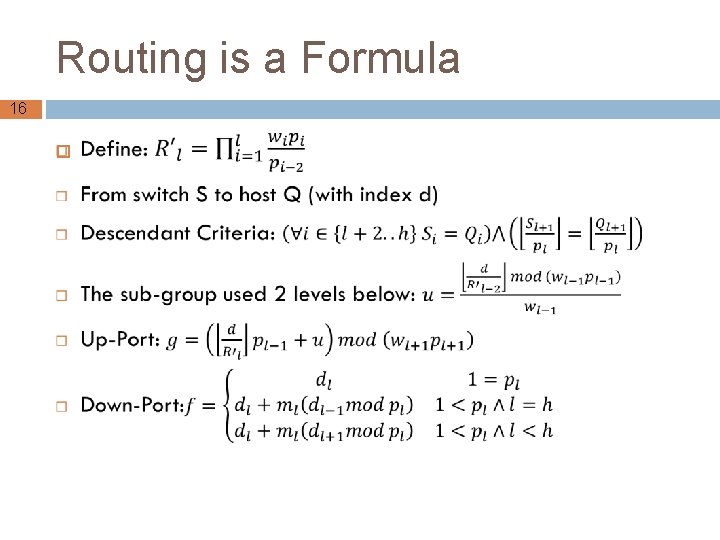
Routing is a Formula 16
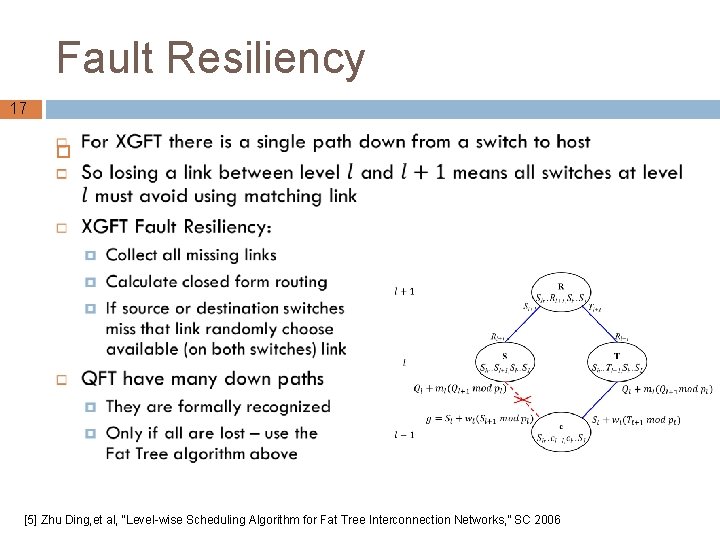
Fault Resiliency 17 [5] Zhu Ding, et al, “Level-wise Scheduling Algorithm for Fat Tree Interconnection Networks, ” SC 2006
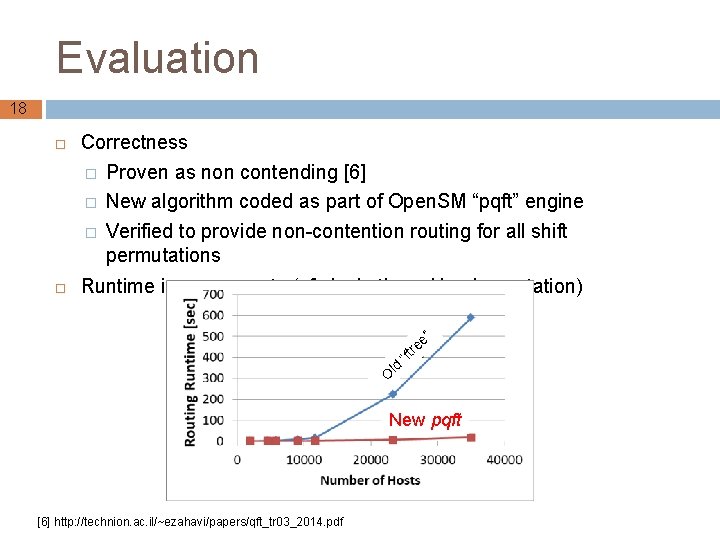
Evaluation 18 Correctness � Proven as non contending [6] � New algorithm coded as part of Open. SM “pqft” engine � Verified to provide non-contention routing for all shift permutations Runtime improvements (of single thread implementation) e” ld O re “ft New pqft [6] http: //technion. ac. il/~ezahavi/papers/qft_tr 03_2014. pdf
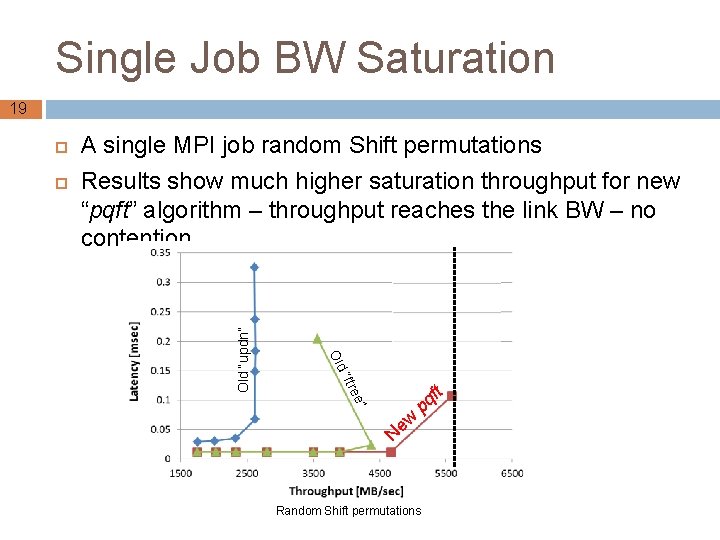
Single Job BW Saturation 19 A single MPI job random Shift permutations Results show much higher saturation throughput for new “pqft” algorithm – throughput reaches the link BW – no contention ft d “ Ol t ” ree Old “updn” N w e f pq Random Shift permutations
Conclusions 20 We defined and formulate QFT Non-Contention routing for global shifts This routing is closed form and resilient QFT outperforms other known Fat Tree flavors in both single job and multiple jobs scenarios
Thank you Questions?