
Quantum phase transitions from antiferromagnets and superconductors to
- Slides: 112
Quantum phase transitions: from antiferromagnets and superconductors to black holes Reviews: ar. Xiv: 0907. 0008 ar. Xiv: 0810. 3005 (with Markus Mueller) Talk online: sachdev. physics. harvard. edu HARVARD
Lars Fritz, Harvard Frederik Denef, Victor Galitski, Maryland Harvard+Leuven Max Metlitski, Harvard Sean Hartnoll, Harvard Eun Gook Moon, Harvard Christopher Herzog, Princeton Markus Mueller, Trieste Pavel Kovtun, Victoria Joerg Schmalian, Iowa Dam Son, Washington HARVARD
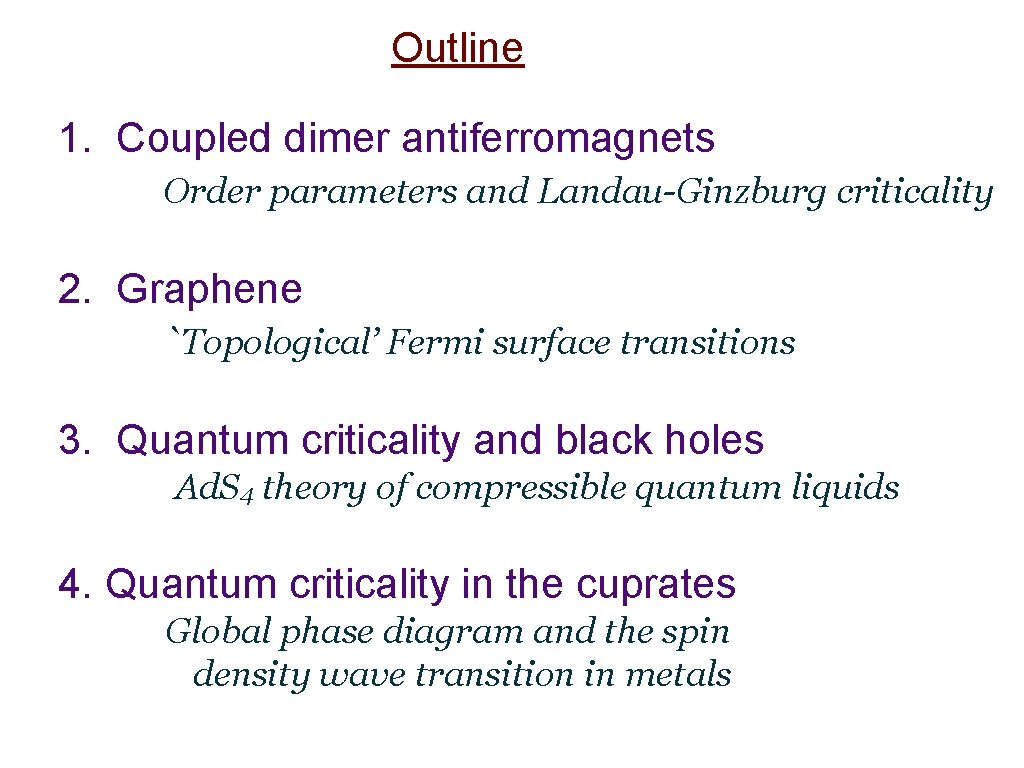
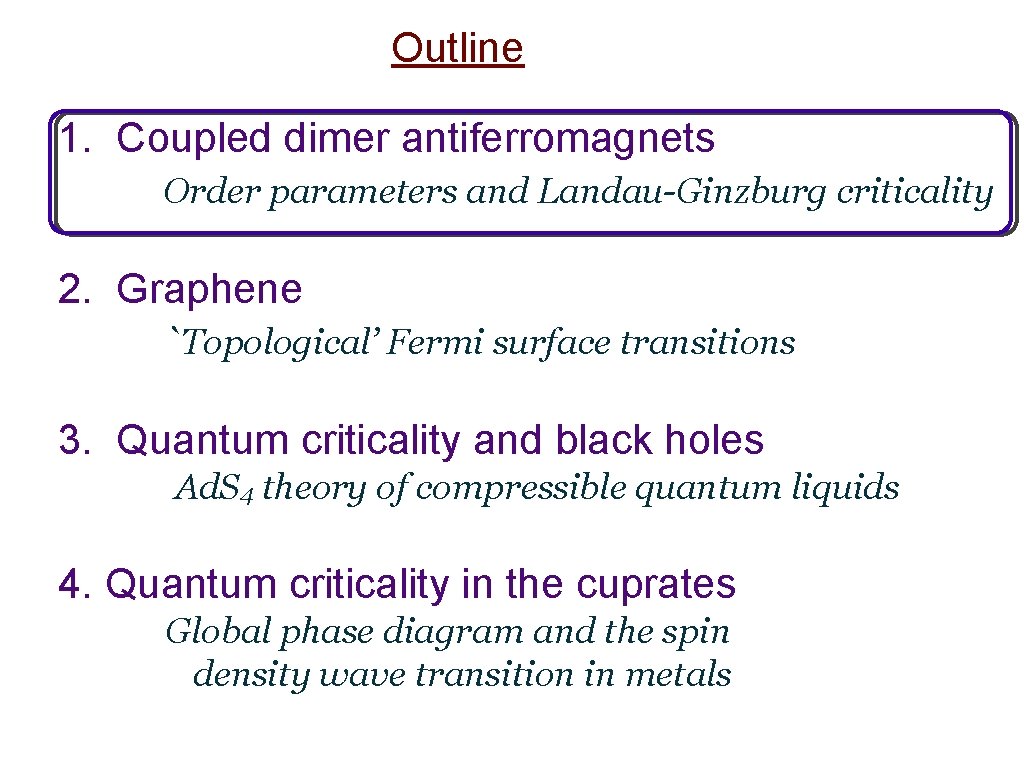
Outline 1. Coupled dimer antiferromagnets Order parameters and Landau-Ginzburg criticality 2. Graphene `Topological’ Fermi surface transitions 3. Quantum criticality and black holes Ad. S 4 theory of compressible quantum liquids 4. Quantum criticality in the cuprates Global phase diagram and the spin density wave transition in metals
Outline 1. Coupled dimer antiferromagnets Order parameters and Landau-Ginzburg criticality 2. Graphene `Topological’ Fermi surface transitions 3. Quantum criticality and black holes Ad. S 4 theory of compressible quantum liquids 4. Quantum criticality in the cuprates Global phase diagram and the spin density wave transition in metals
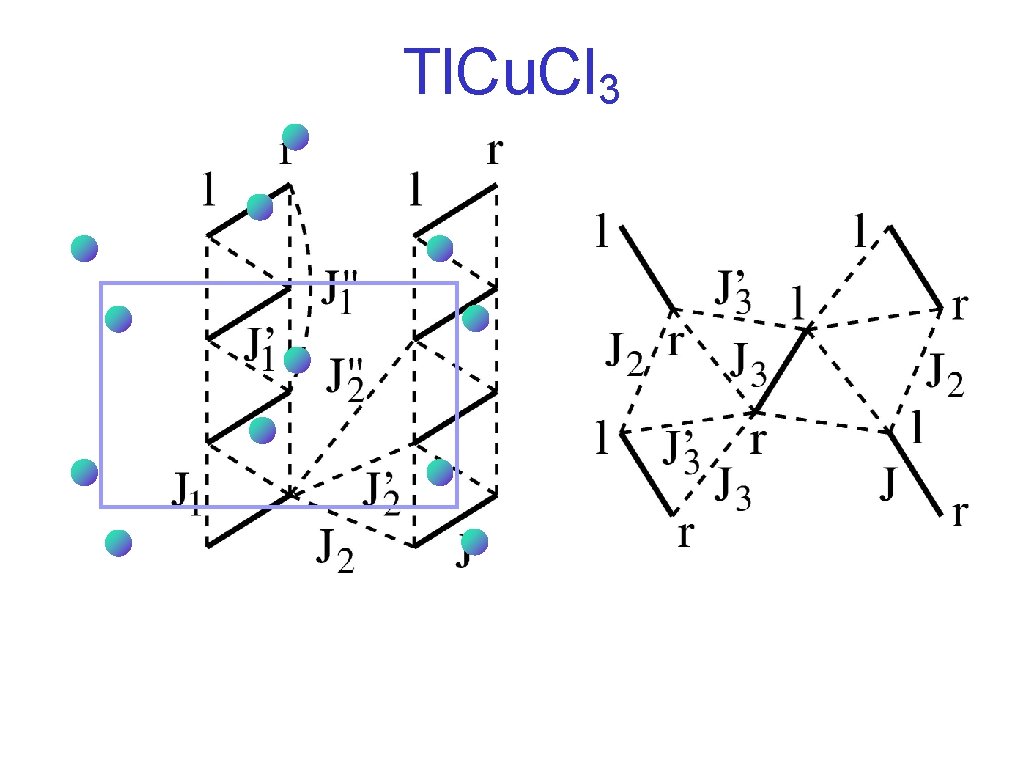
Tl. Cu. Cl 3
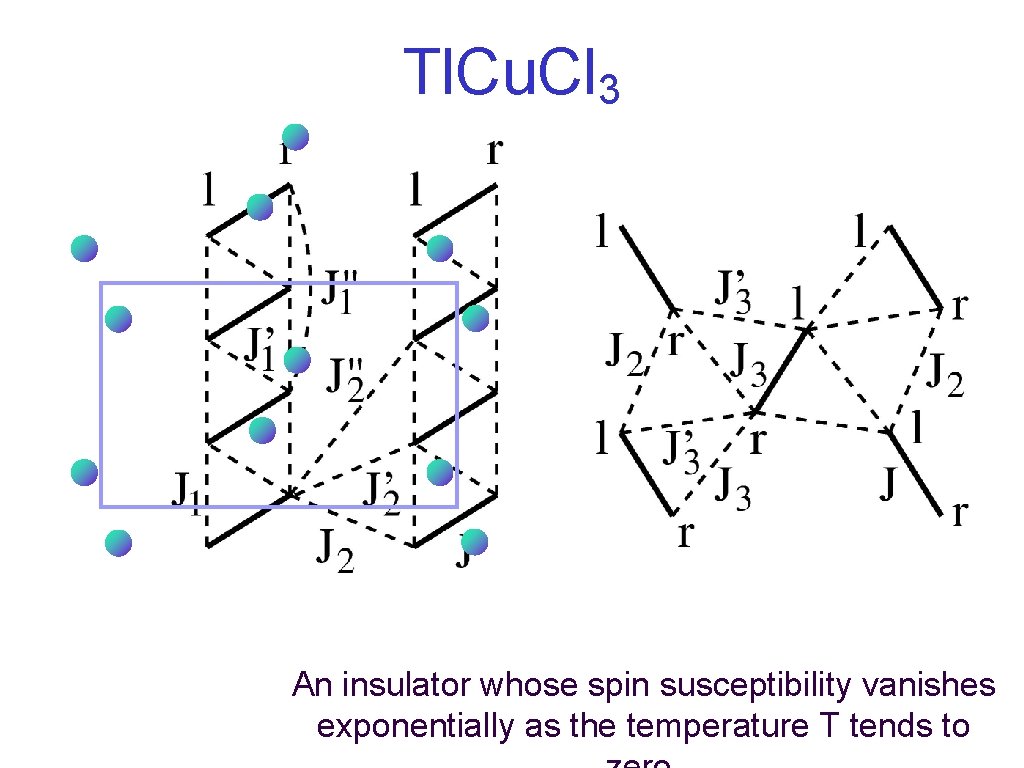
Tl. Cu. Cl 3 An insulator whose spin susceptibility vanishes exponentially as the temperature T tends to
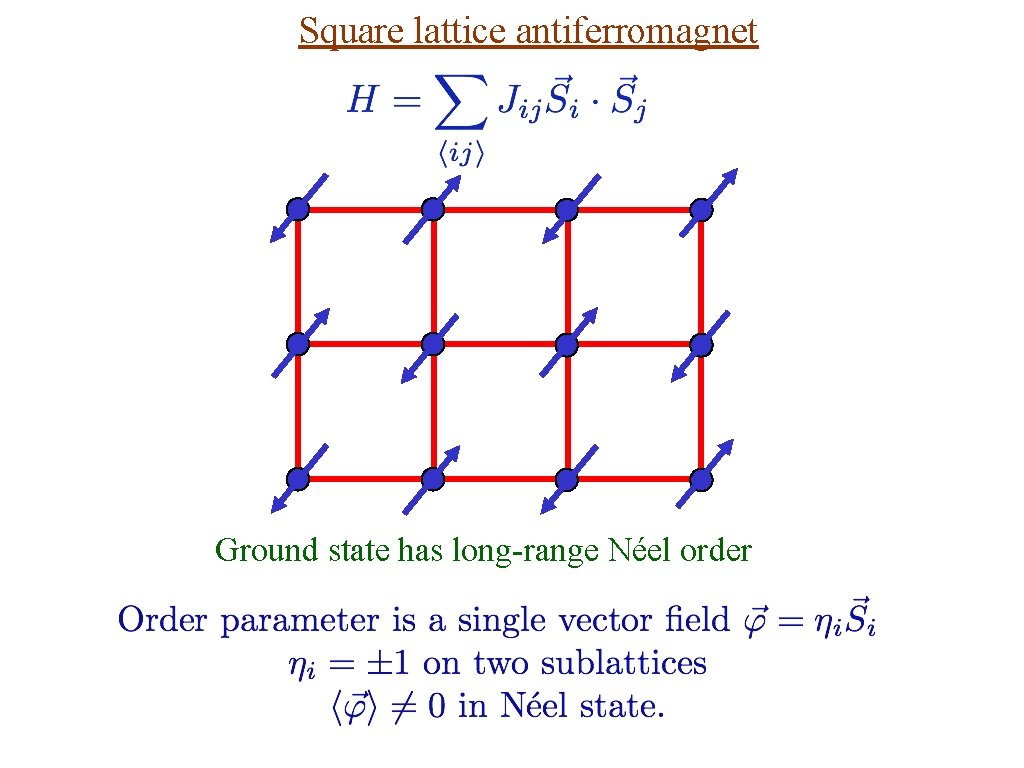
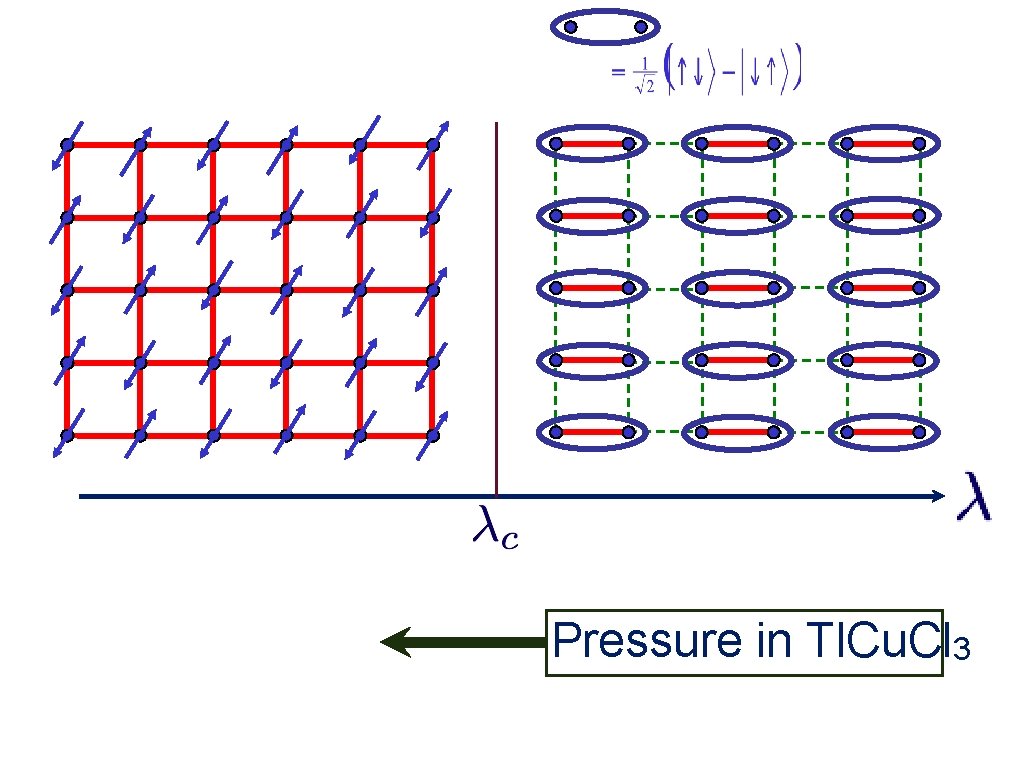
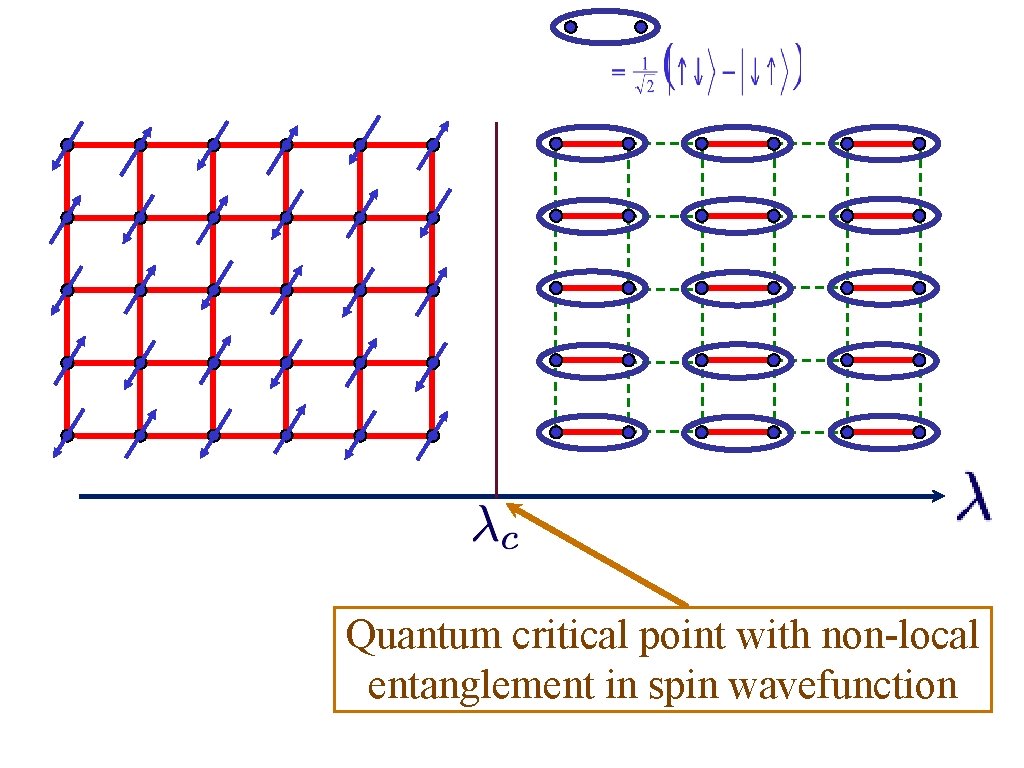
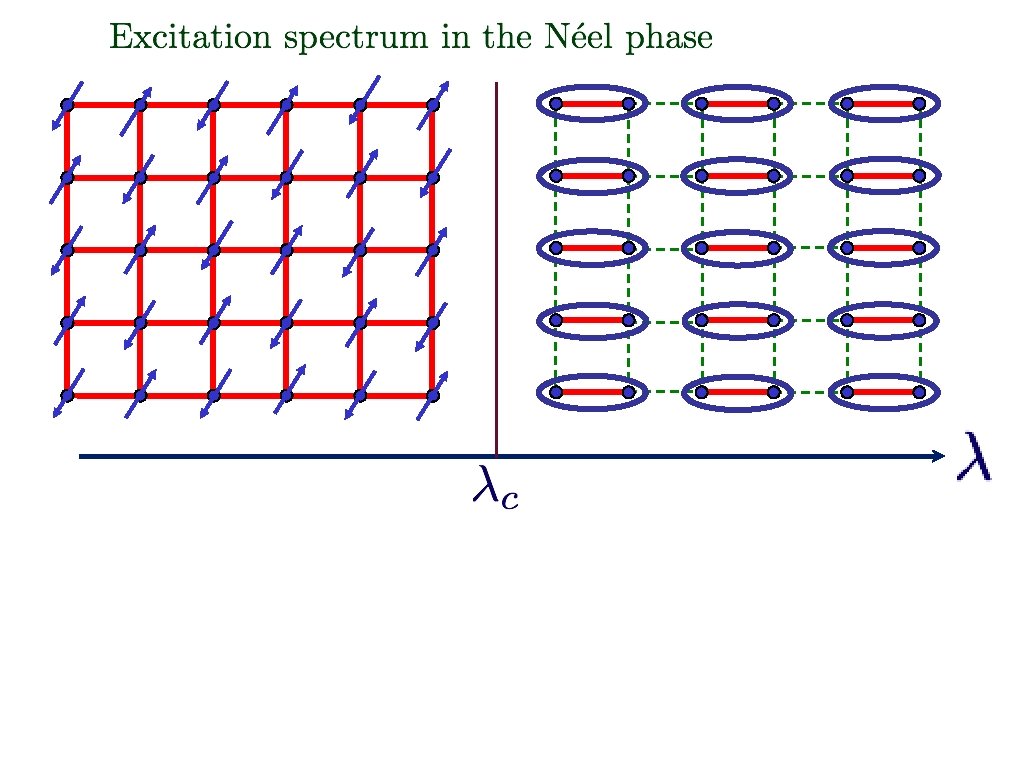
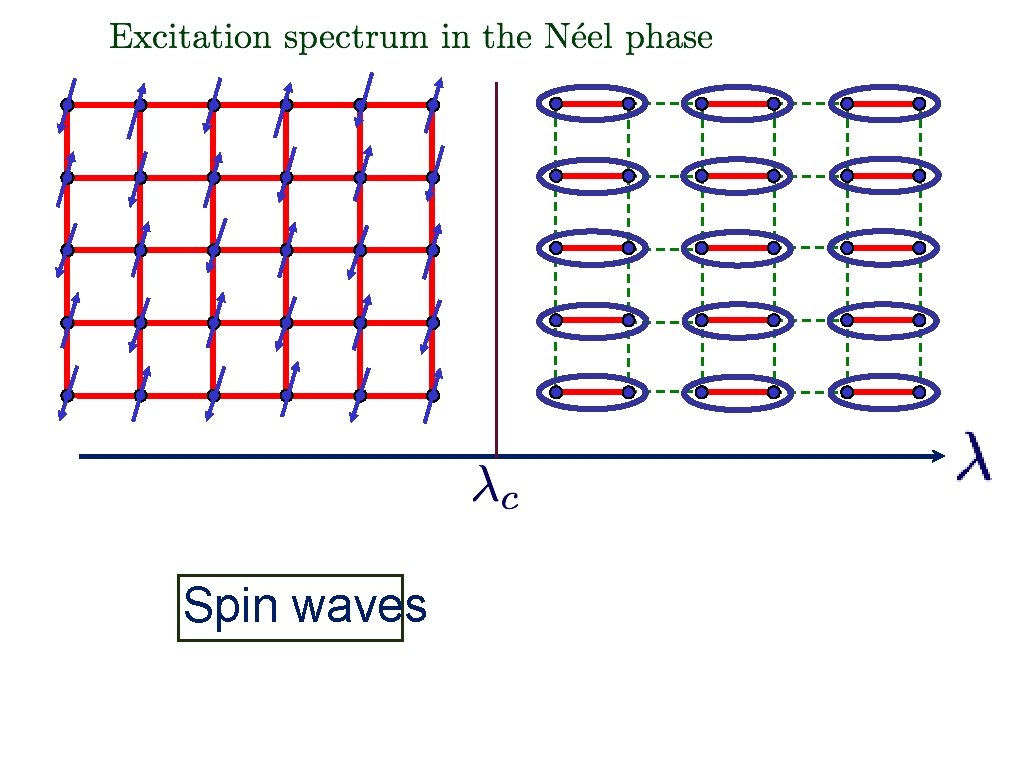
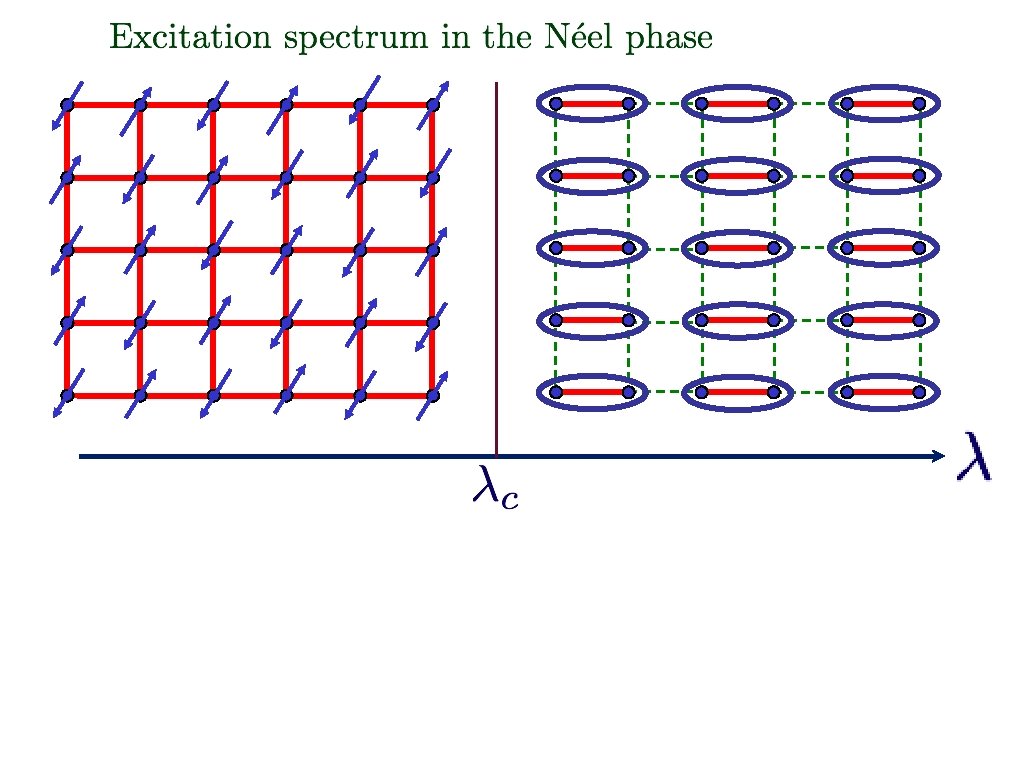
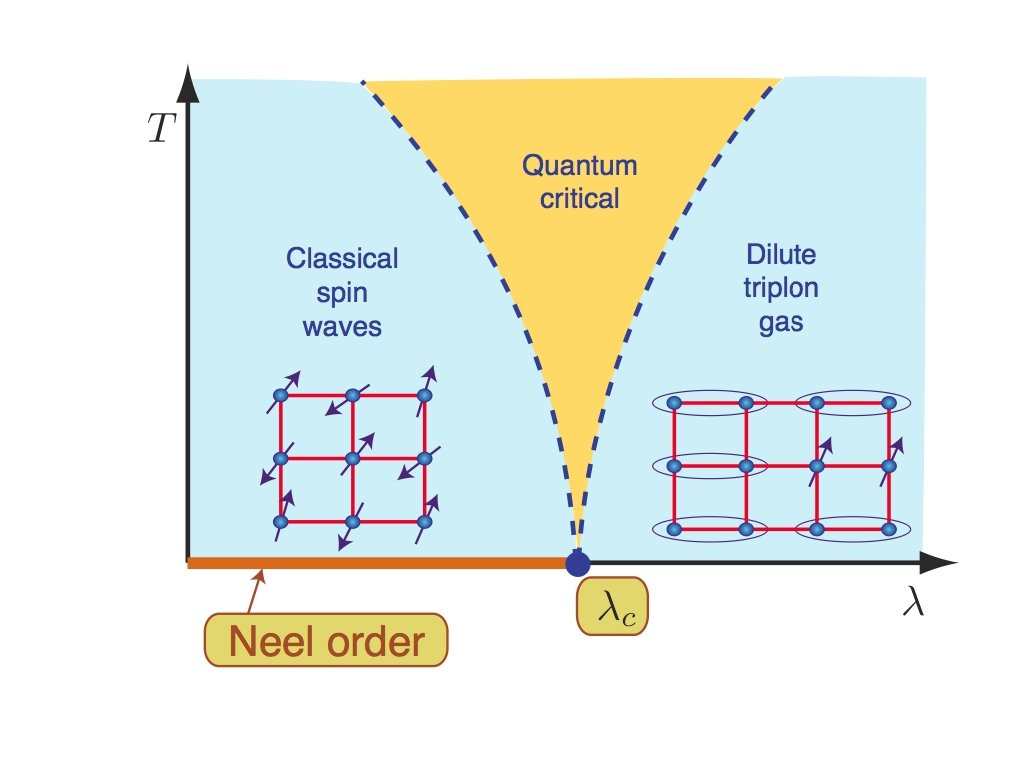
Square lattice antiferromagnet Ground state has long-range Néel order
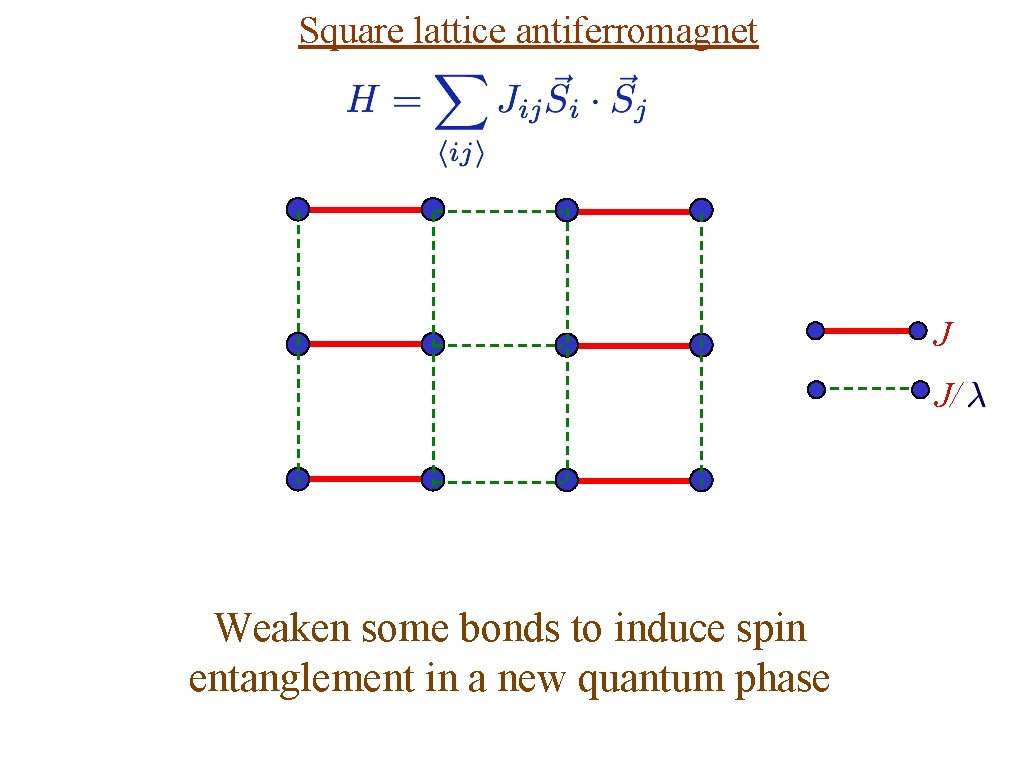
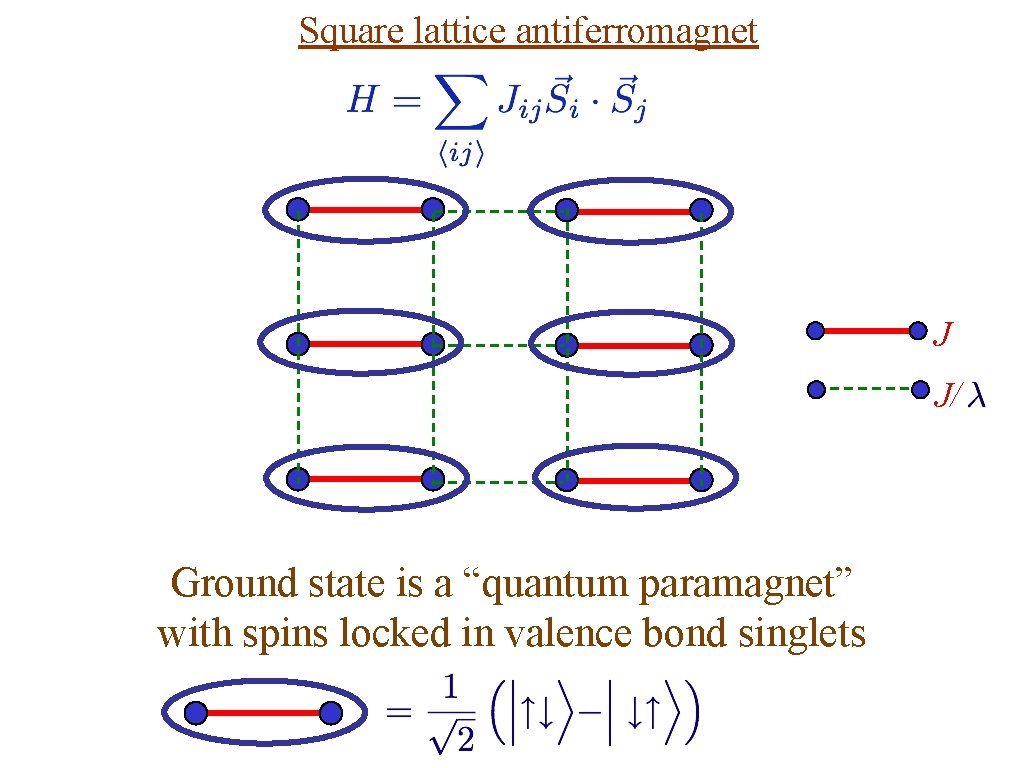
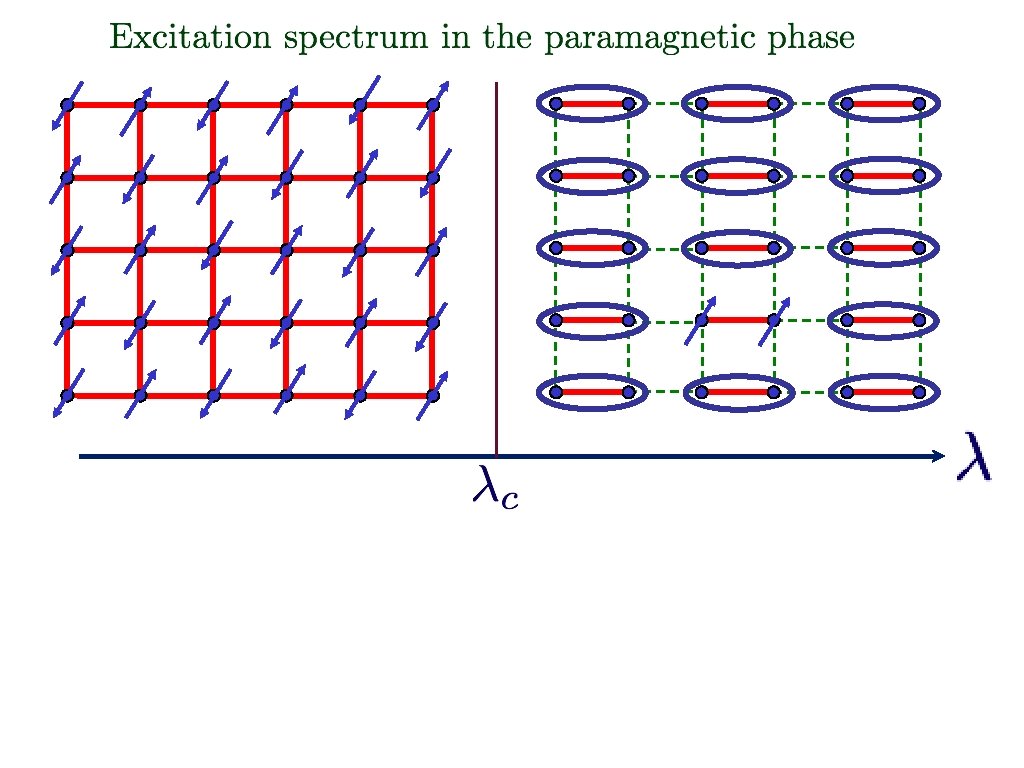
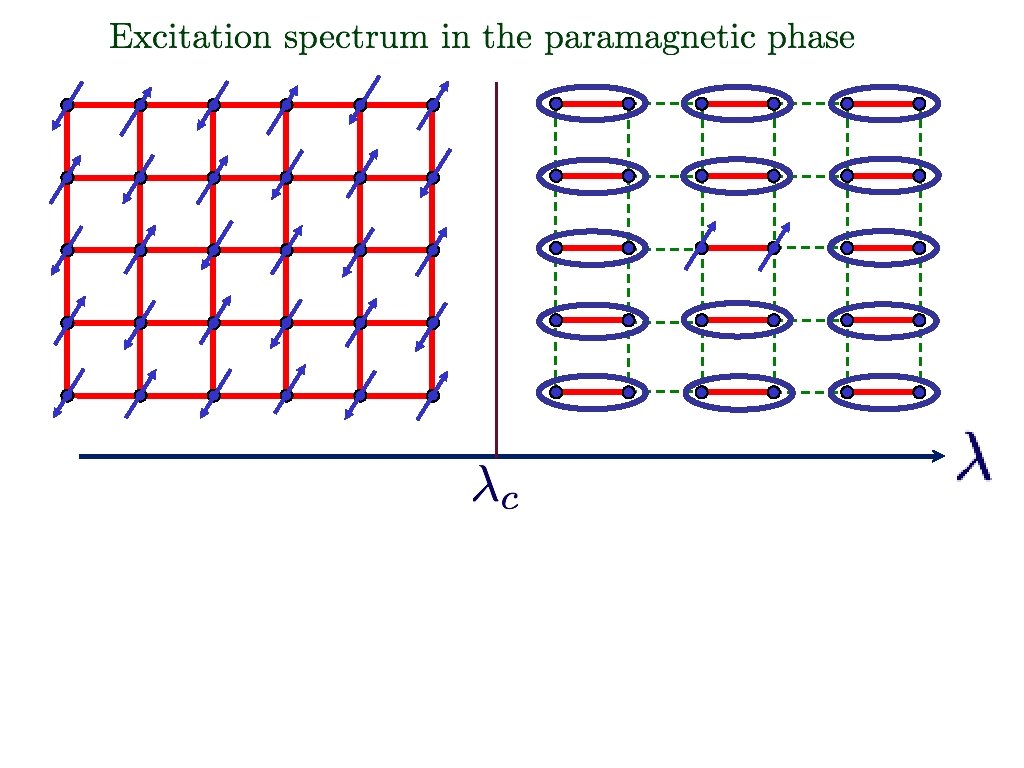
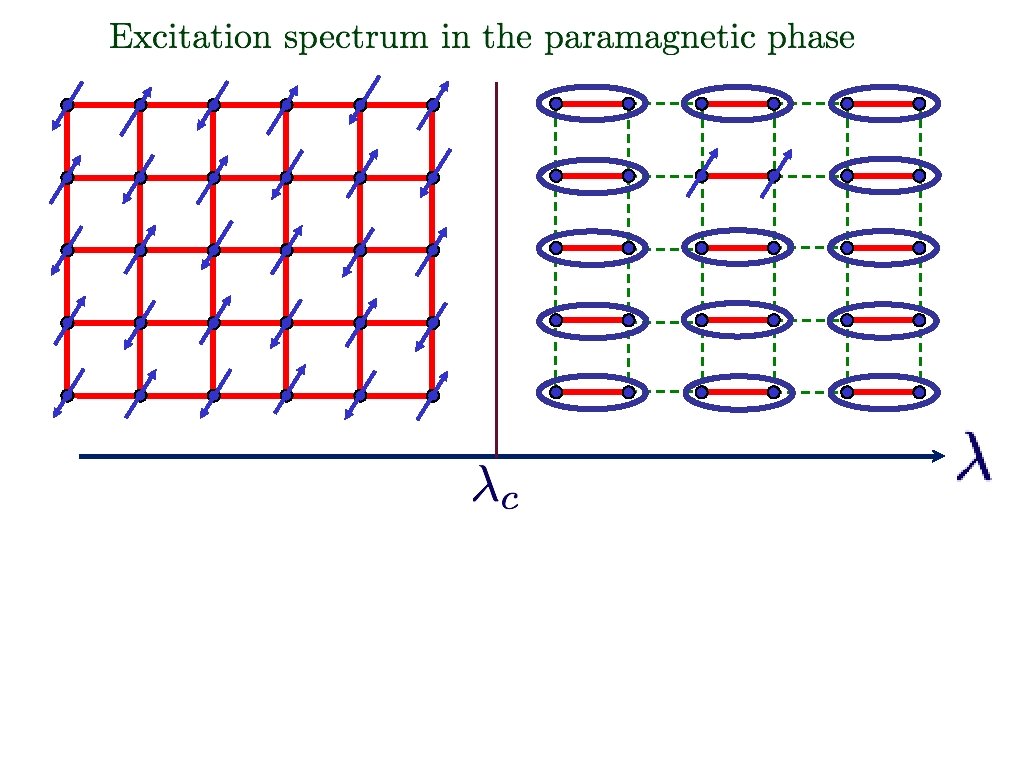
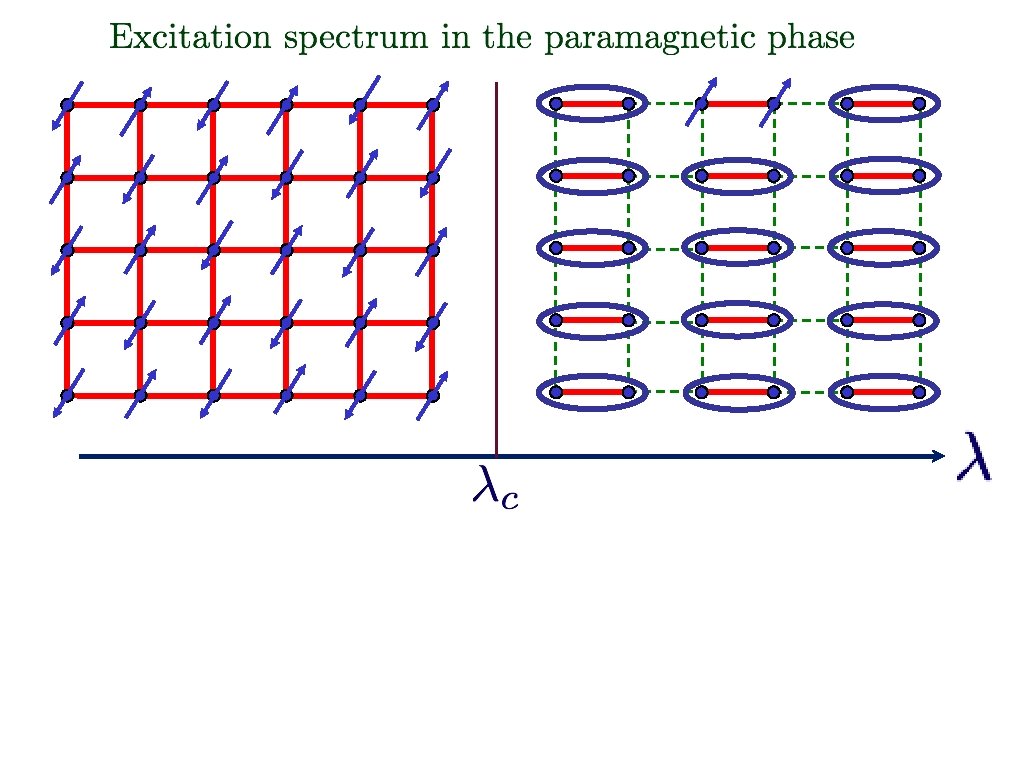
Square lattice antiferromagnet J J/ Weaken some bonds to induce spin entanglement in a new quantum phase
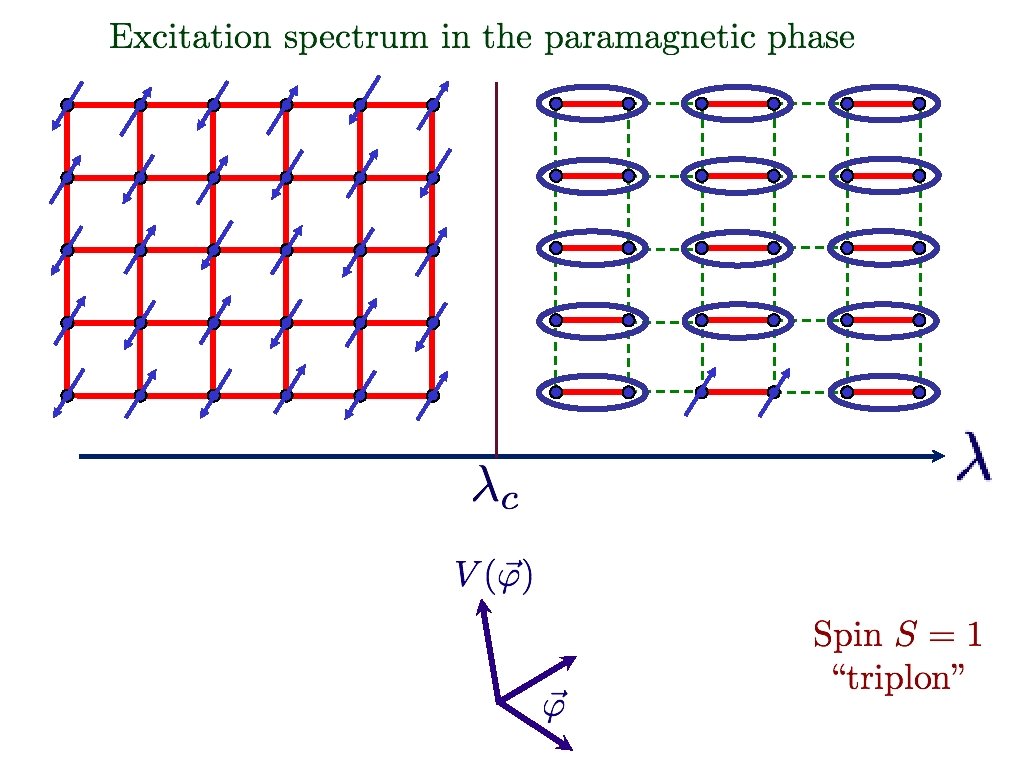
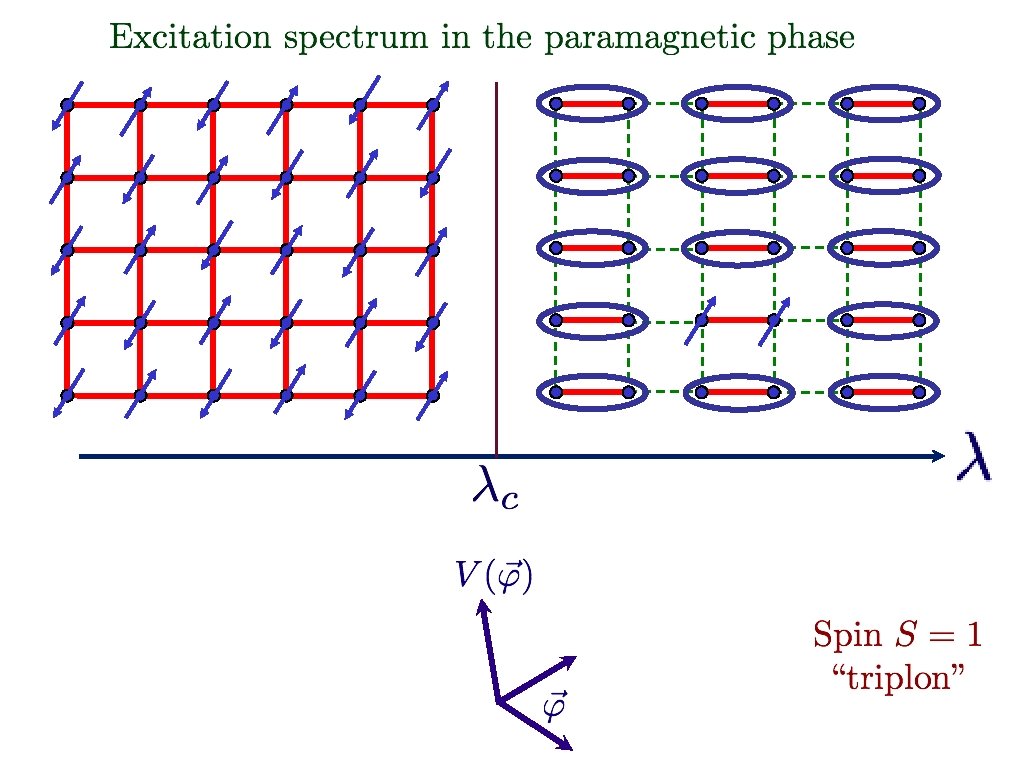
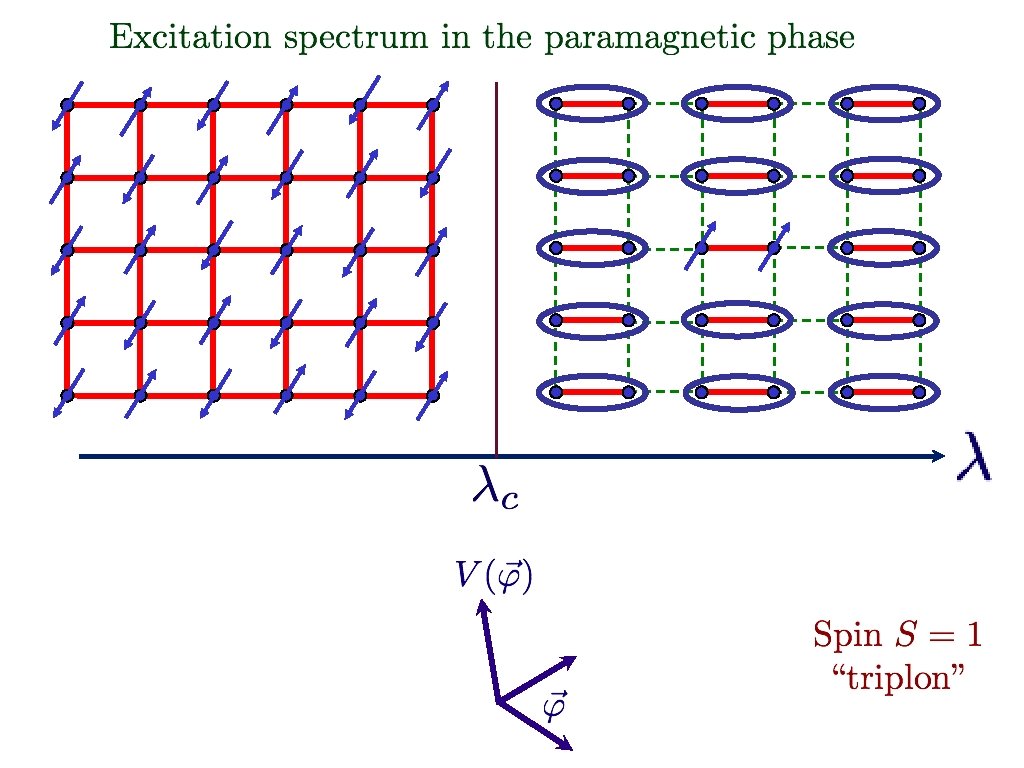
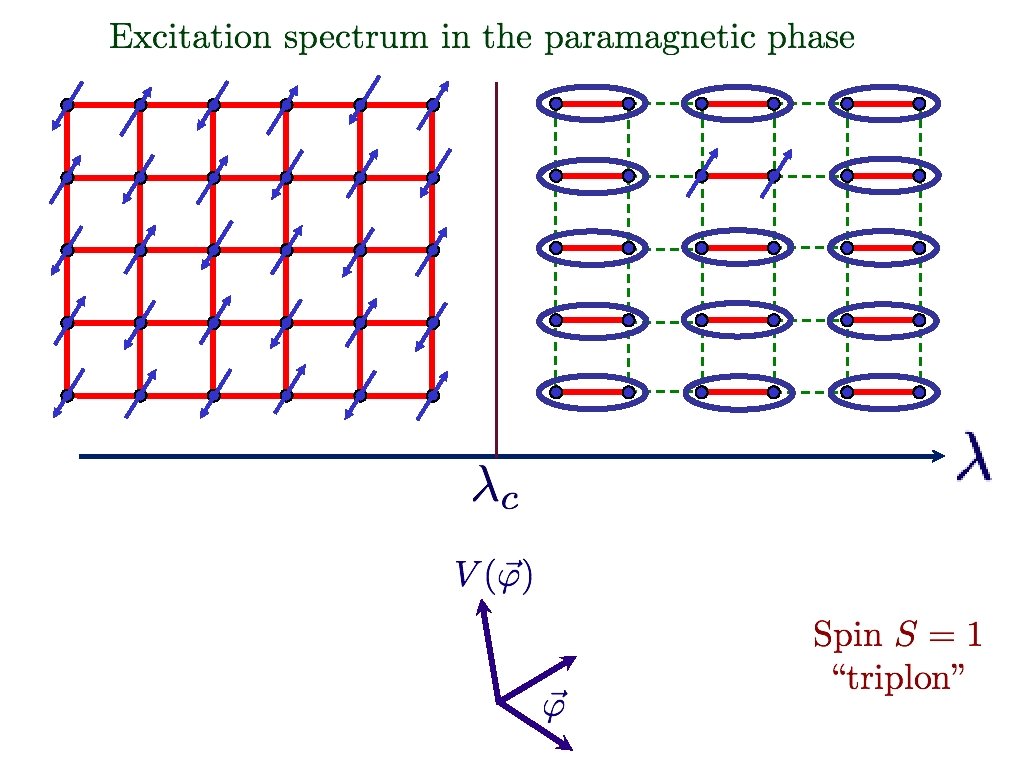
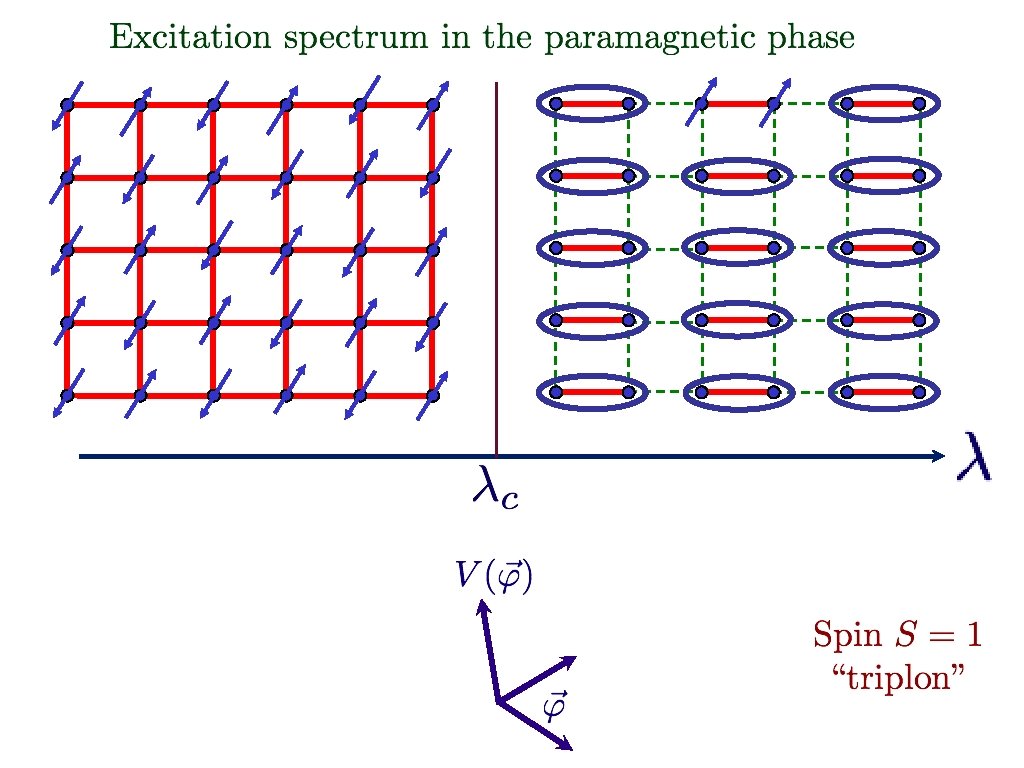
Square lattice antiferromagnet J J/ Ground state is a “quantum paramagnet” with spins locked in valence bond singlets
Pressure in Tl. Cu. Cl 3
Quantum critical point with non-local entanglement in spin wavefunction
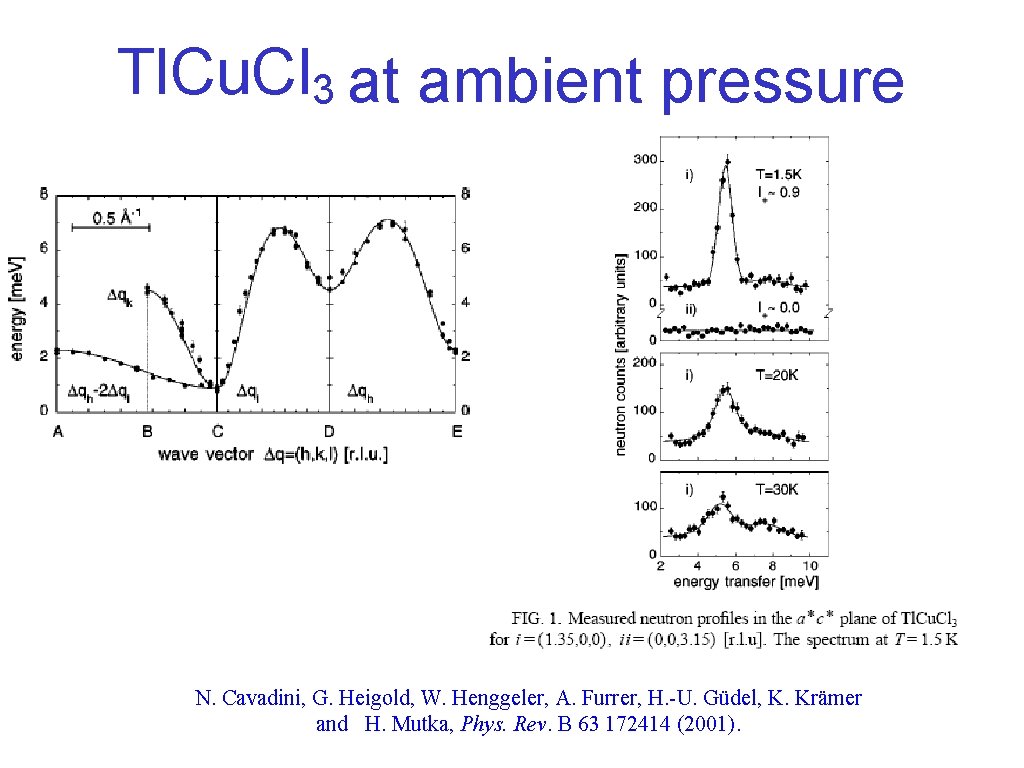
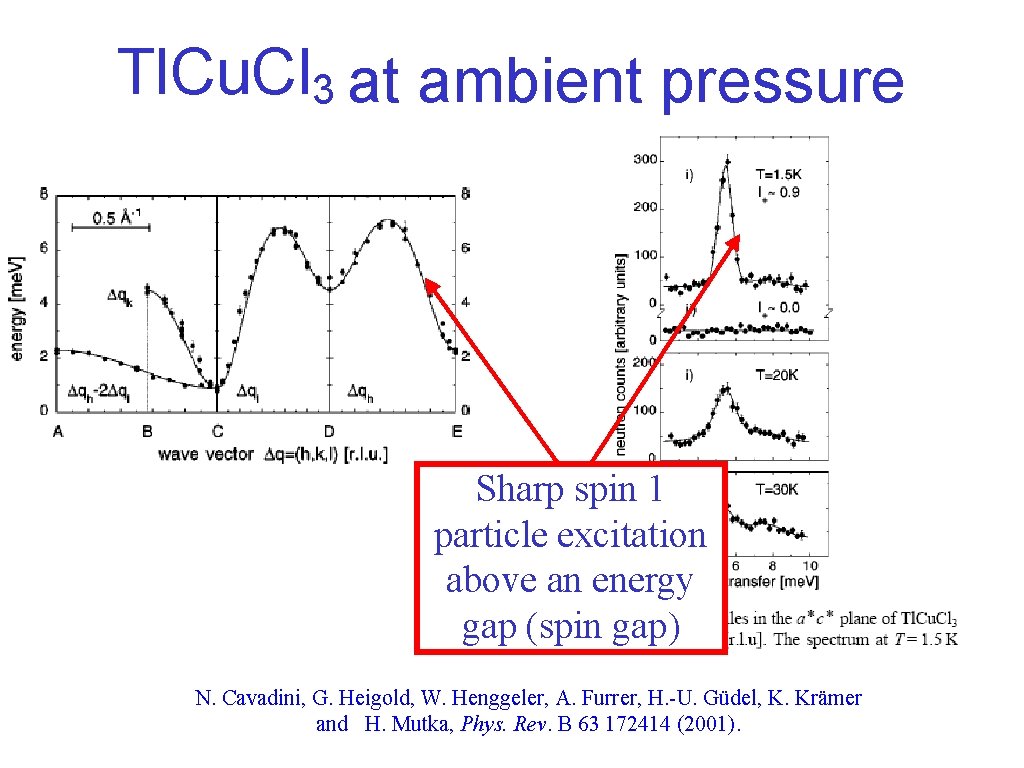
Tl. Cu. Cl 3 at ambient pressure N. Cavadini, G. Heigold, W. Henggeler, A. Furrer, H. -U. Güdel, K. Krämer and H. Mutka, Phys. Rev. B 63 172414 (2001).
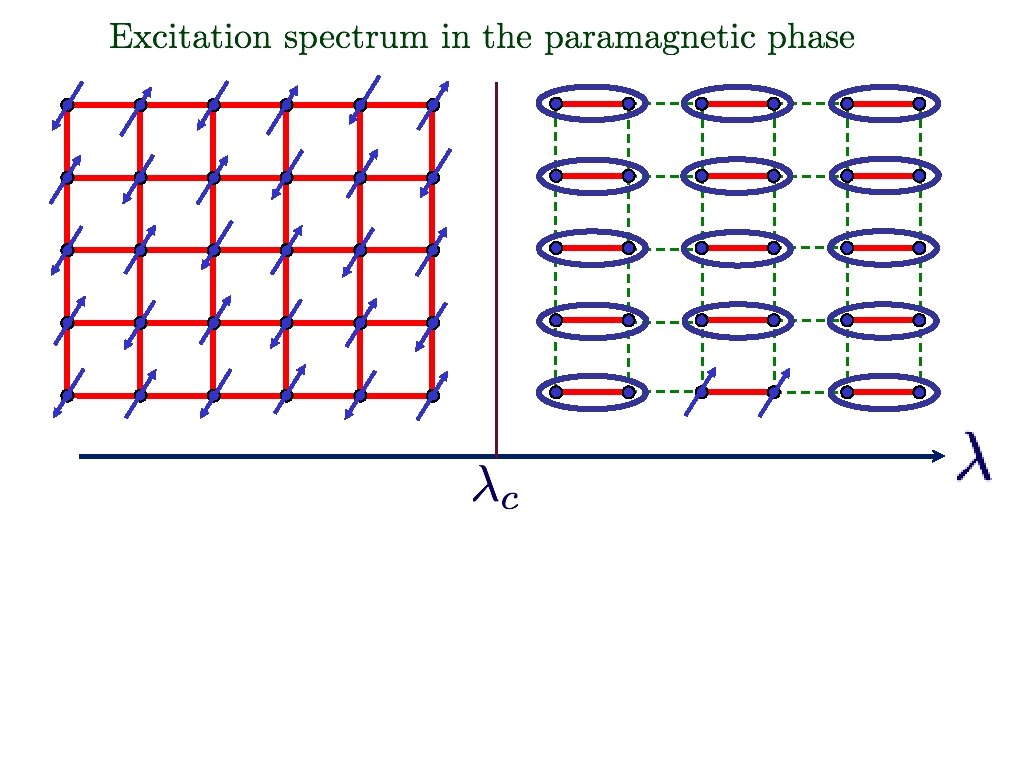
Tl. Cu. Cl 3 at ambient pressure Sharp spin 1 particle excitation above an energy gap (spin gap) N. Cavadini, G. Heigold, W. Henggeler, A. Furrer, H. -U. Güdel, K. Krämer and H. Mutka, Phys. Rev. B 63 172414 (2001).
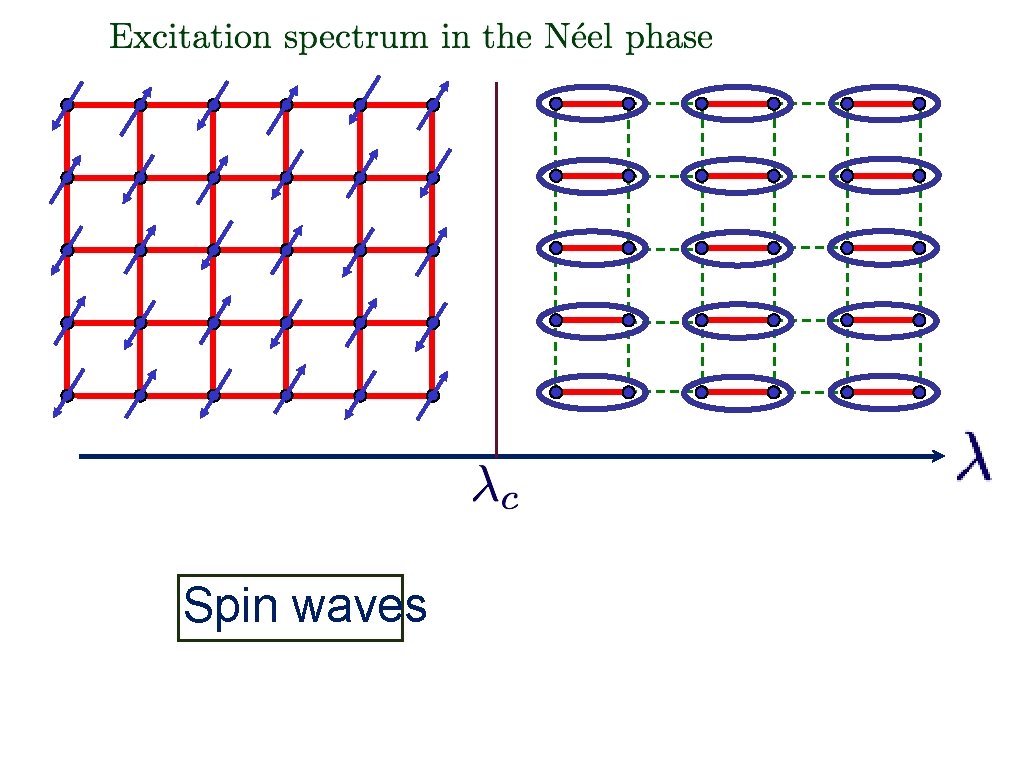
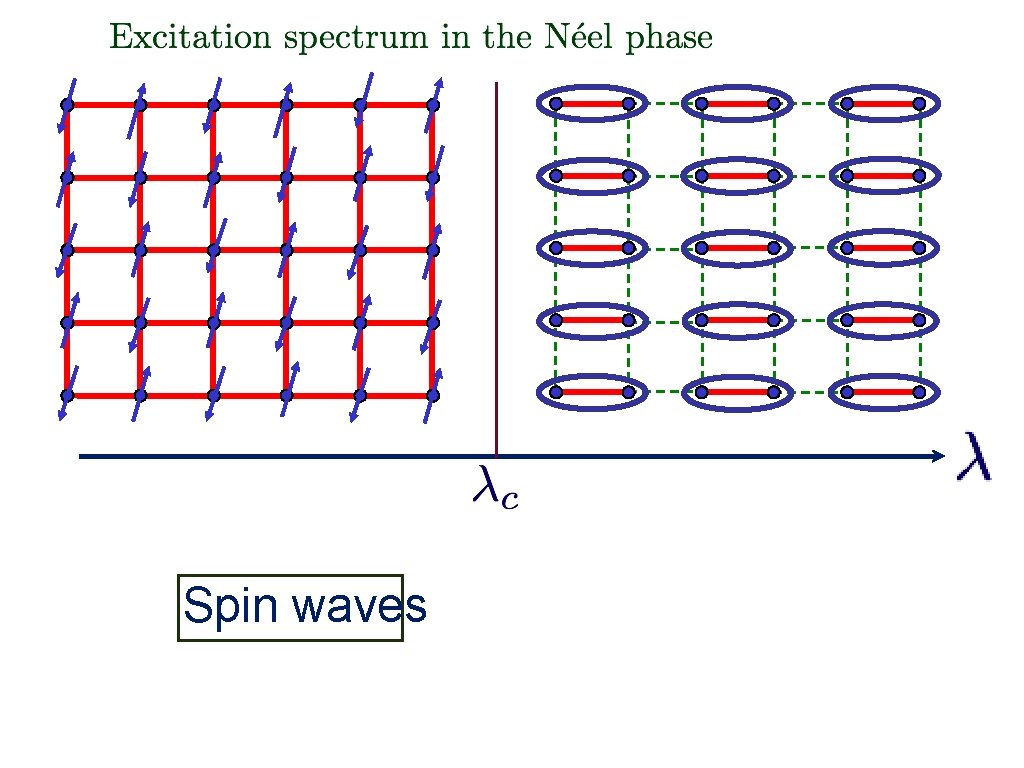
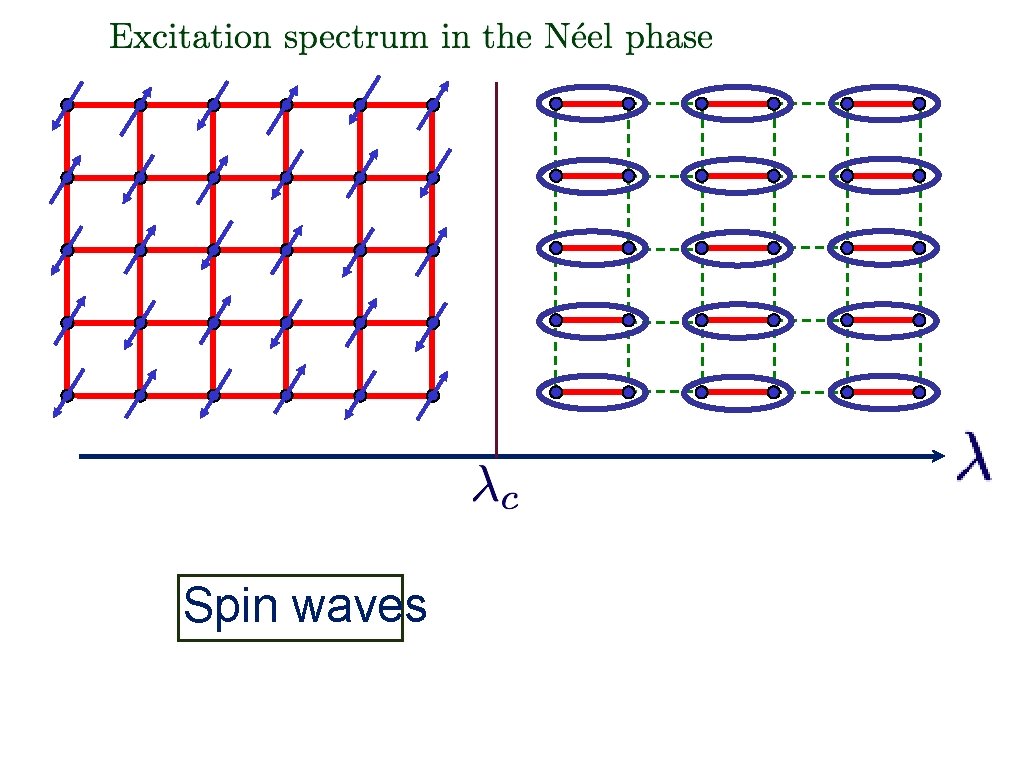
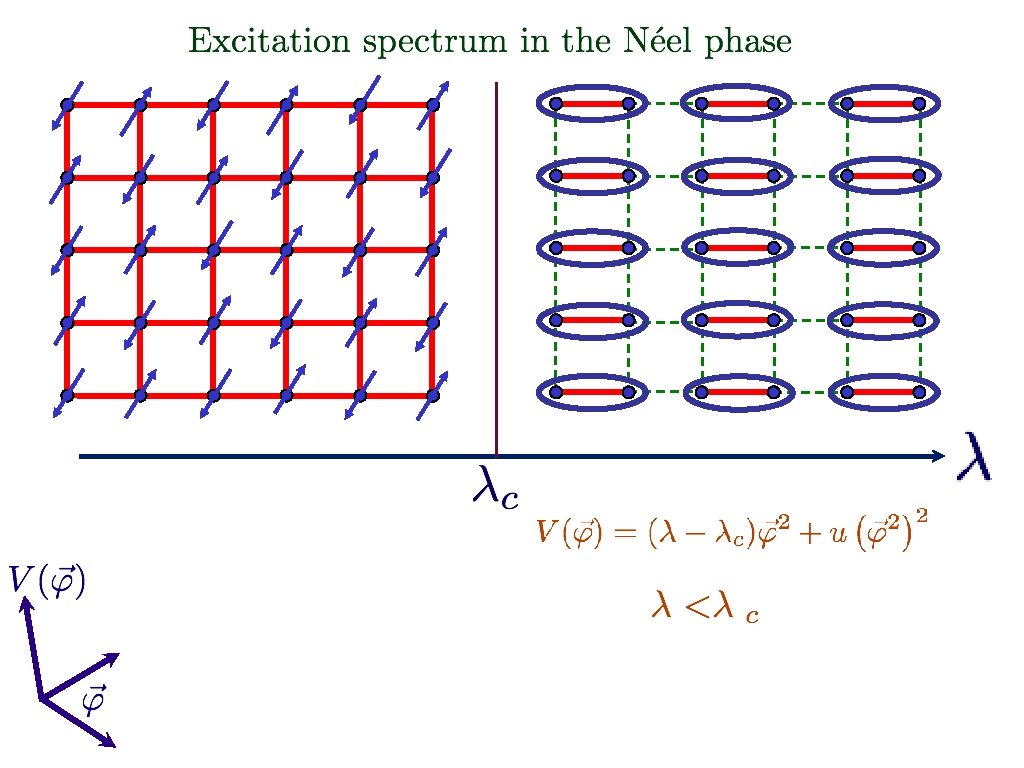
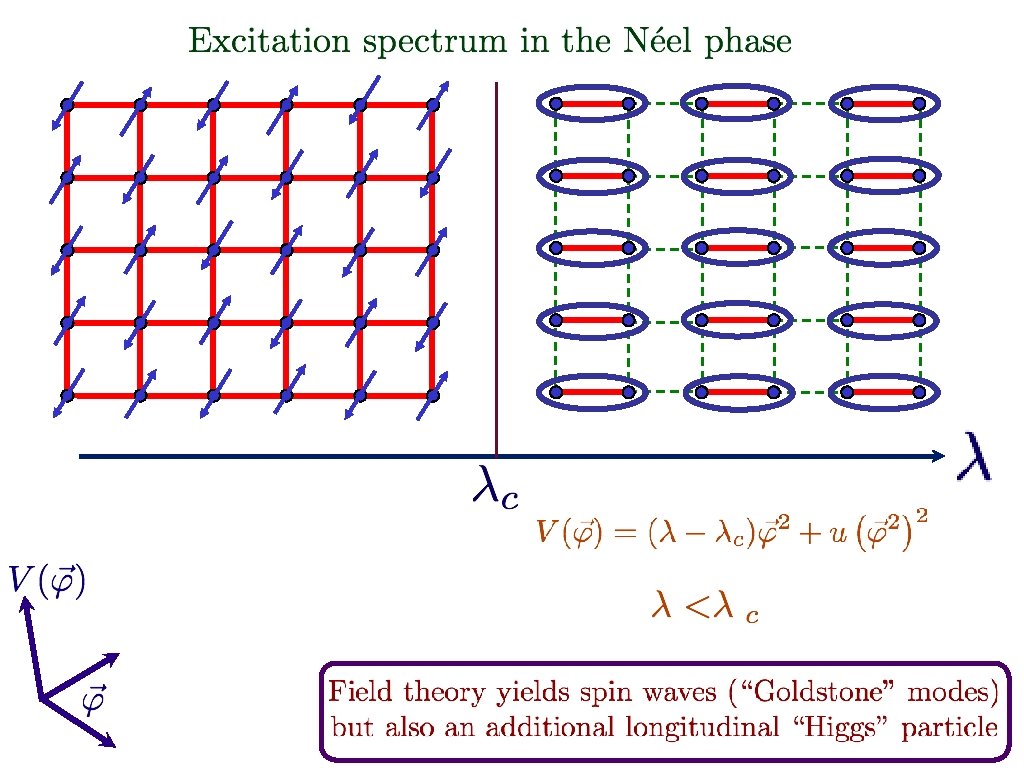
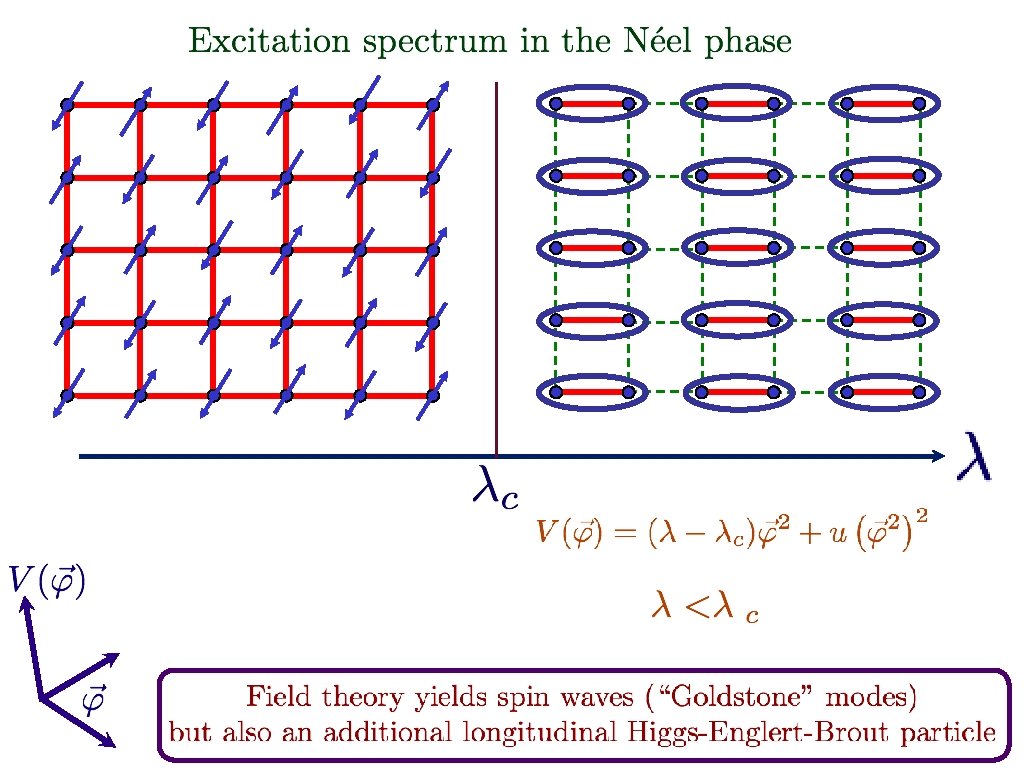
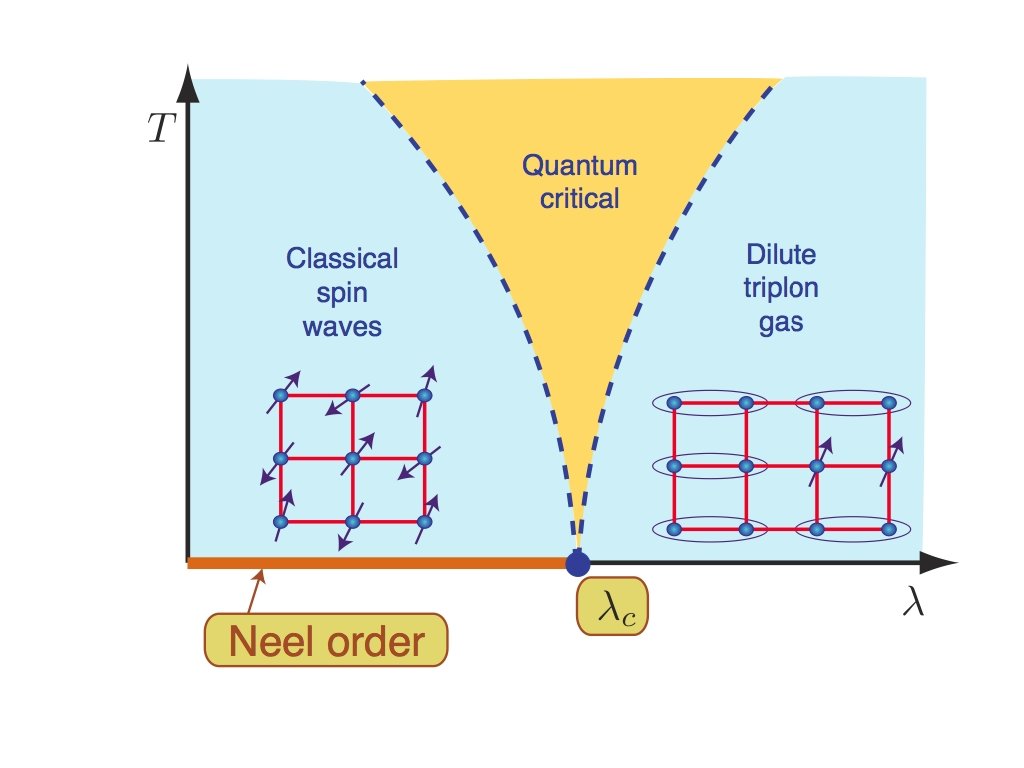
Spin waves
Spin waves
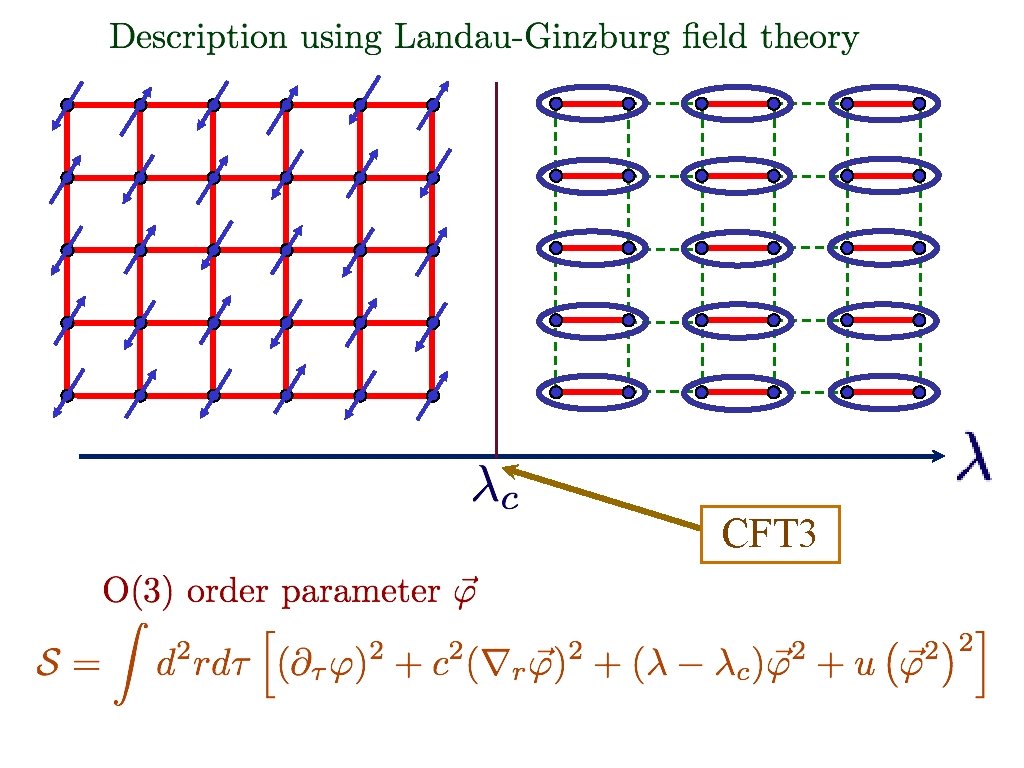
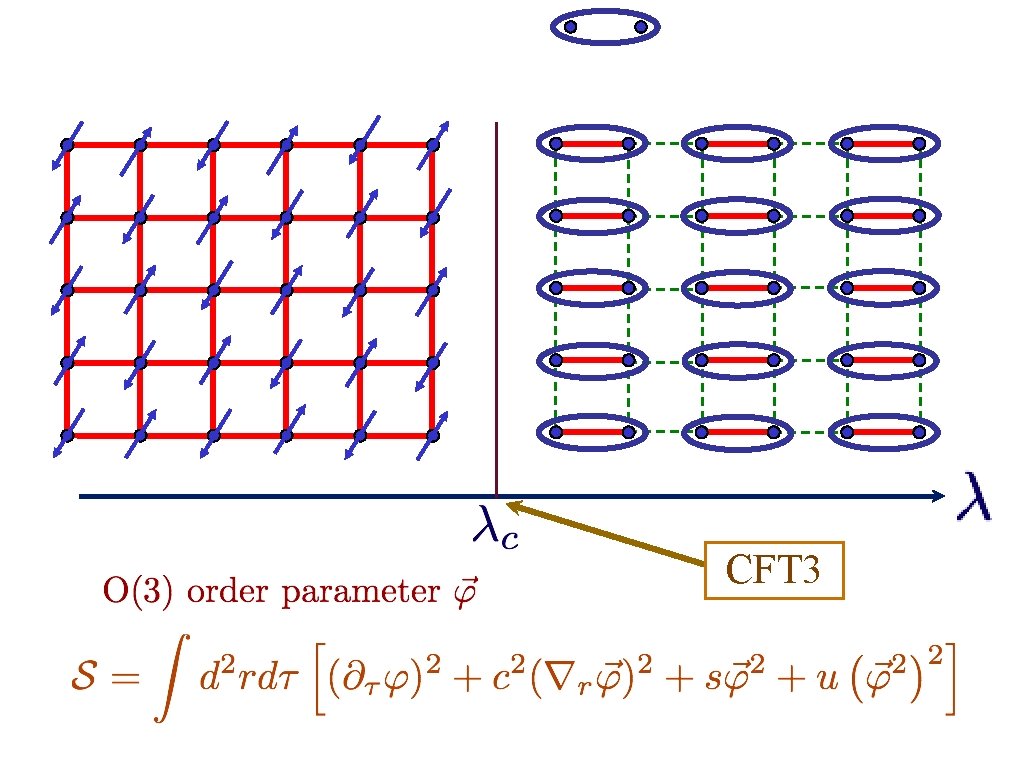
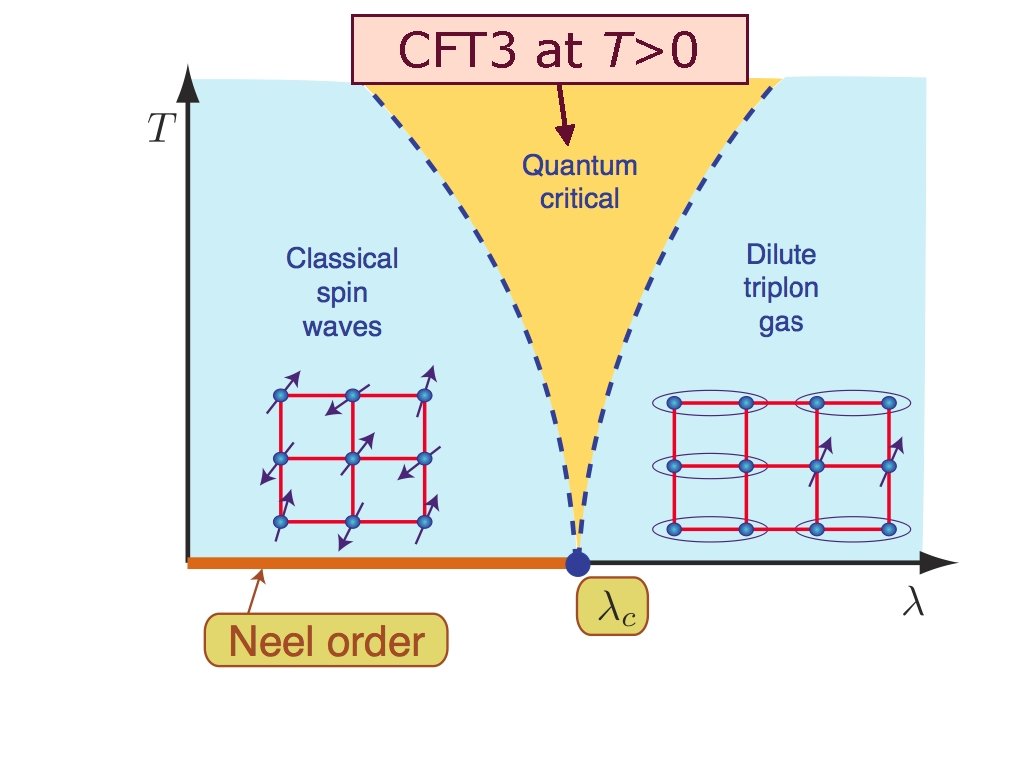
CFT 3
Spin waves
Spin waves
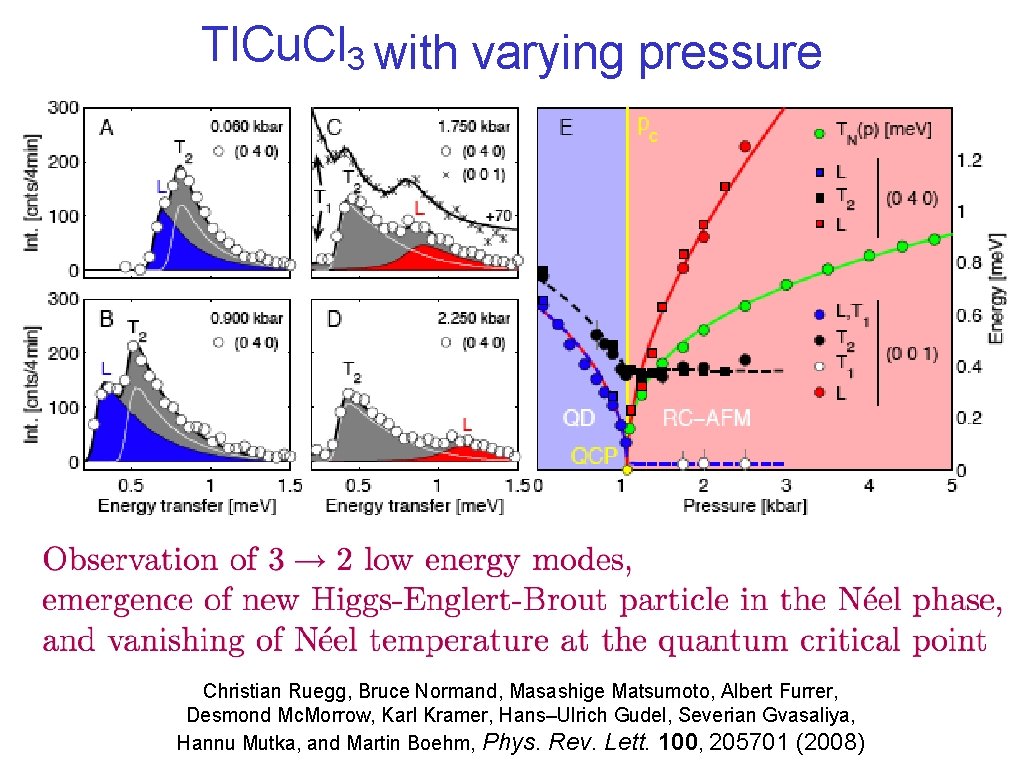
Tl. Cu. Cl 3 with varying pressure Christian Ruegg, Bruce Normand, Masashige Matsumoto, Albert Furrer, Desmond Mc. Morrow, Karl Kramer, Hans–Ulrich Gudel, Severian Gvasaliya, Hannu Mutka, and Martin Boehm, Phys. Rev. Lett. 100, 205701 (2008)
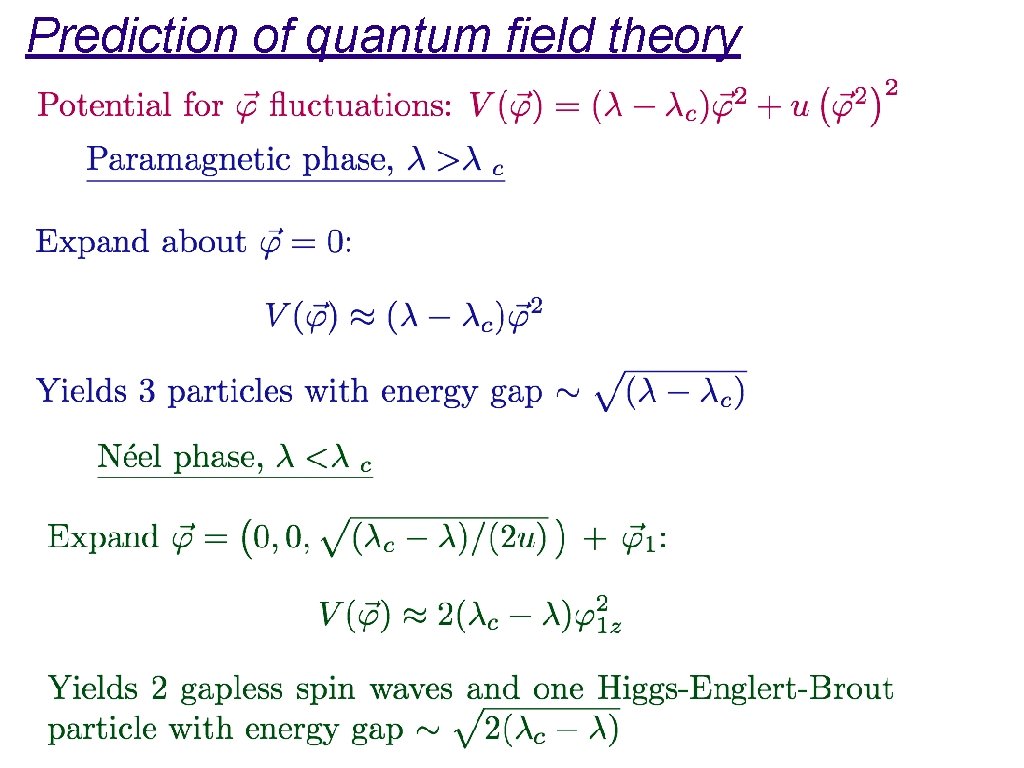
Prediction of quantum field theory
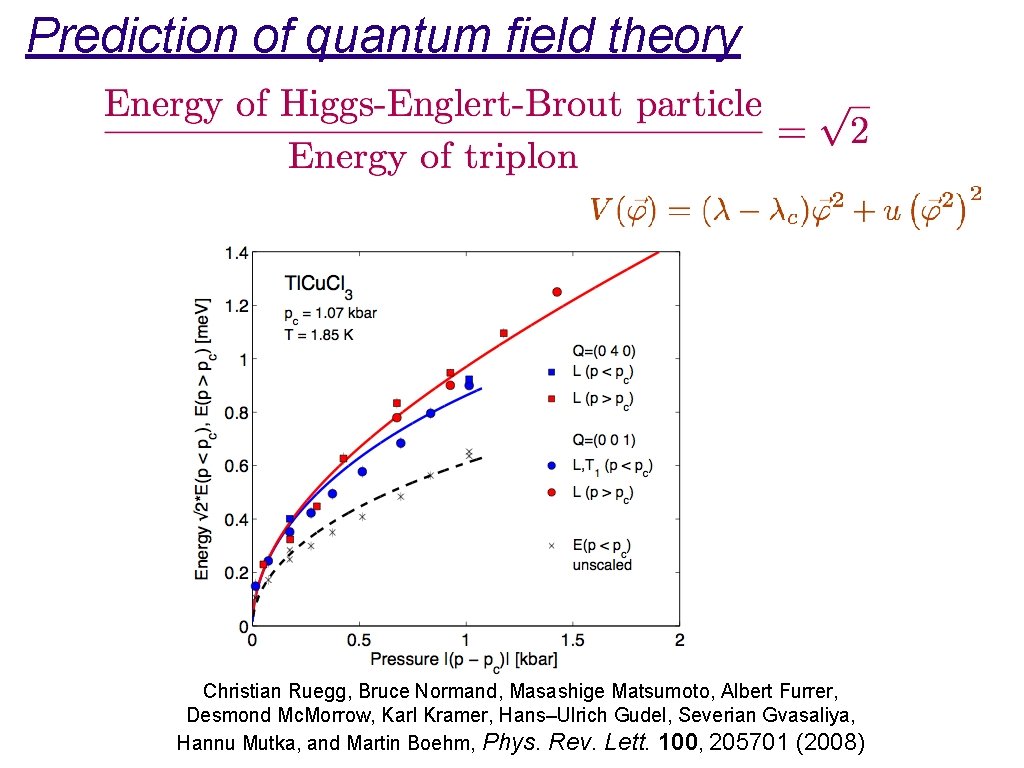
Prediction of quantum field theory Christian Ruegg, Bruce Normand, Masashige Matsumoto, Albert Furrer, Desmond Mc. Morrow, Karl Kramer, Hans–Ulrich Gudel, Severian Gvasaliya, Hannu Mutka, and Martin Boehm, Phys. Rev. Lett. 100, 205701 (2008)
CFT 3
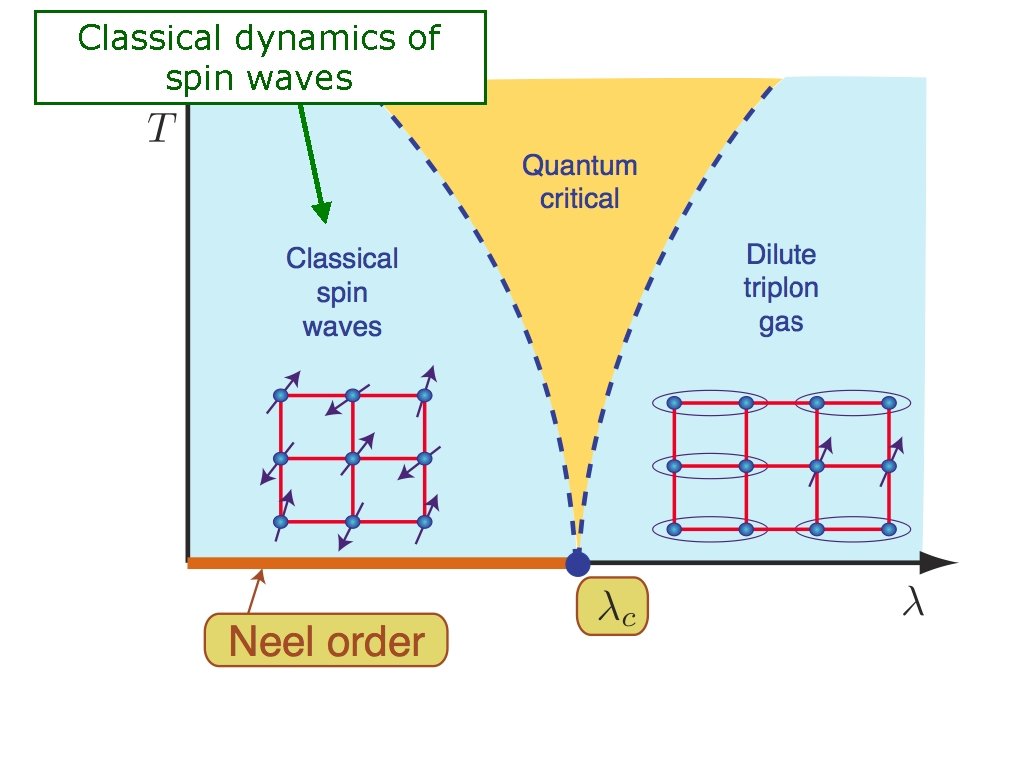
Classical dynamics of spin waves
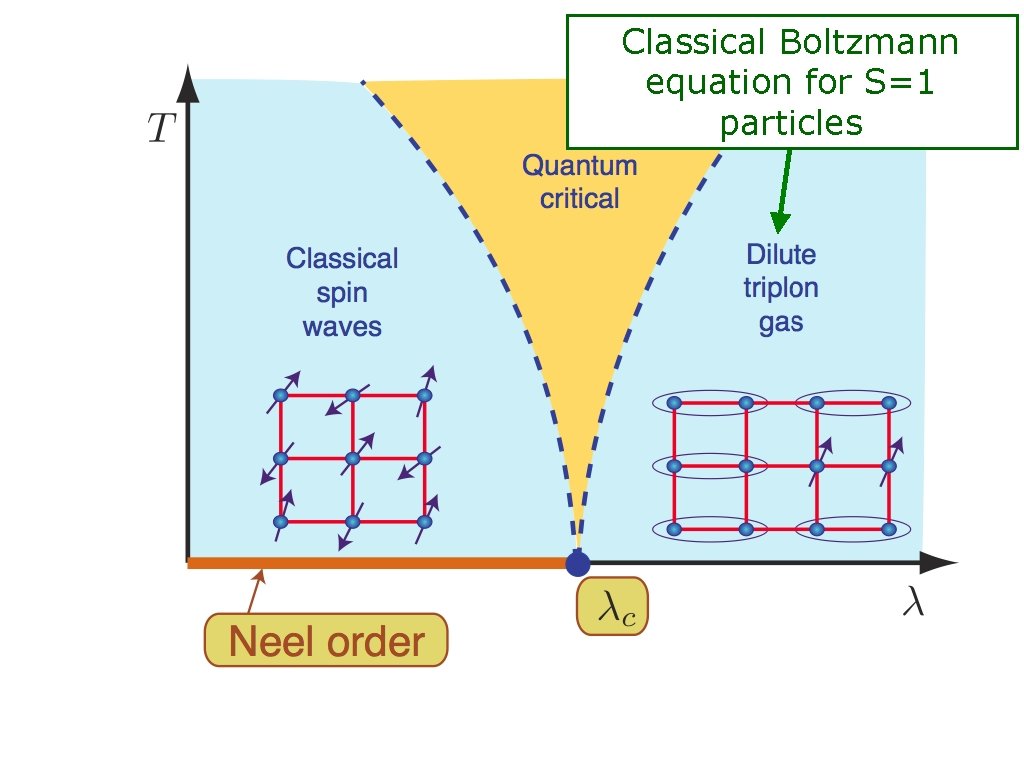
Classical Boltzmann equation for S=1 particles
CFT 3 at T>0
Outline 1. Coupled dimer antiferromagnets Order parameters and Landau-Ginzburg criticality 2. Graphene `Topological’ Fermi surface transitions 3. Quantum criticality and black holes Ad. S 4 theory of compressible quantum liquids 4. Quantum criticality in the cuprates Global phase diagram and the spin density wave transition in metals
Outline 1. Coupled dimer antiferromagnets Order parameters and Landau-Ginzburg criticality 2. Graphene `Topological’ Fermi surface transitions 3. Quantum criticality and black holes Ad. S 4 theory of compressible quantum liquids 4. Quantum criticality in the cuprates Global phase diagram and the spin density wave transition in metals
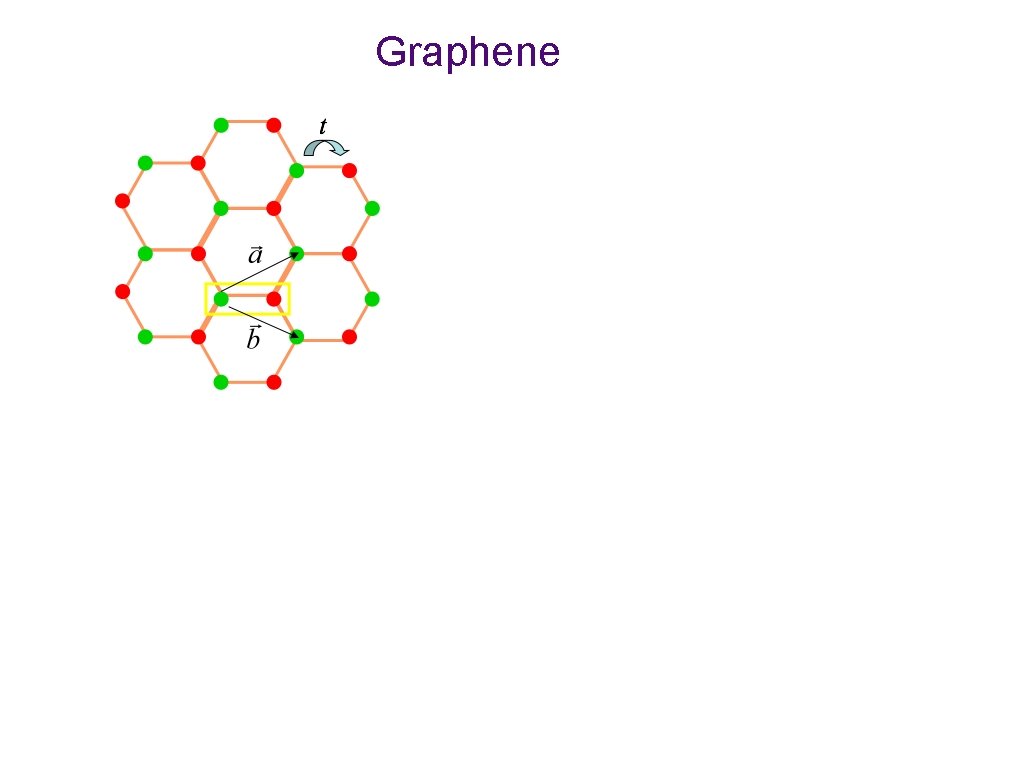
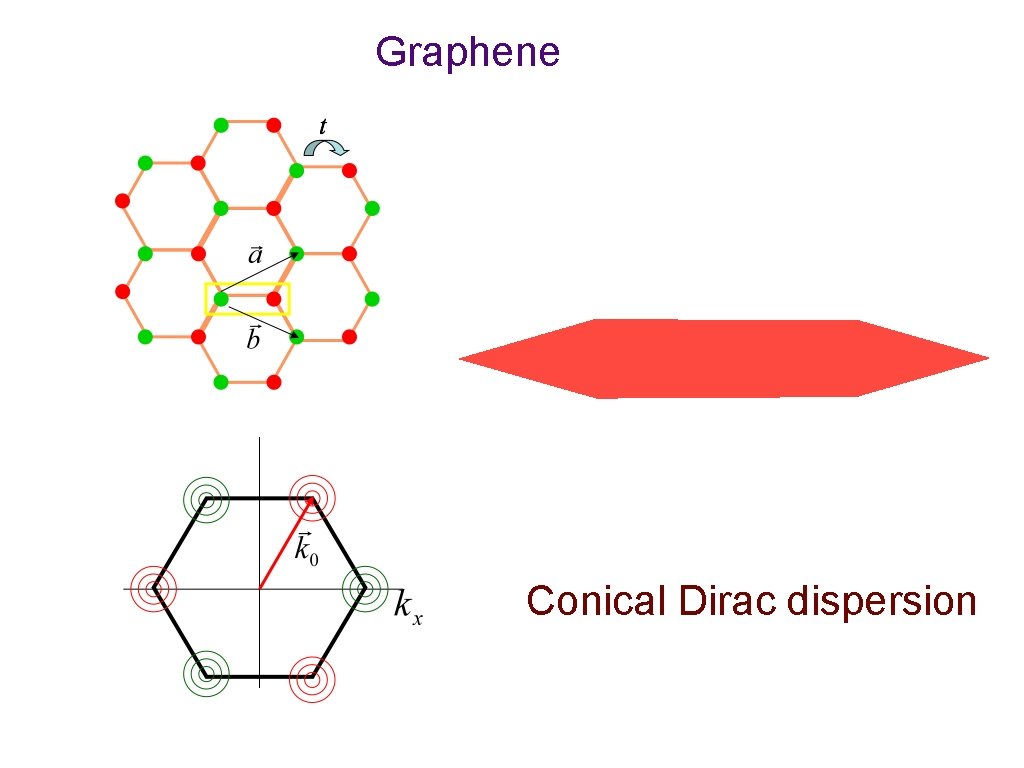
Graphene
Graphene Conical Dirac dispersion
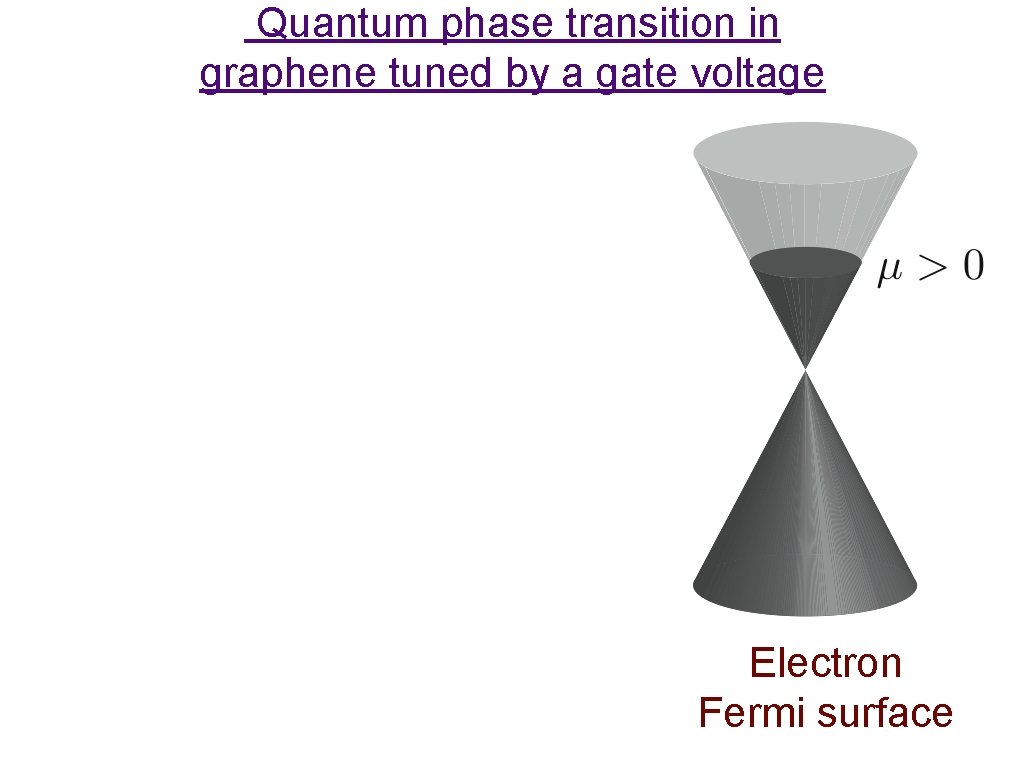
Quantum phase transition in graphene tuned by a gate voltage Electron Fermi surface
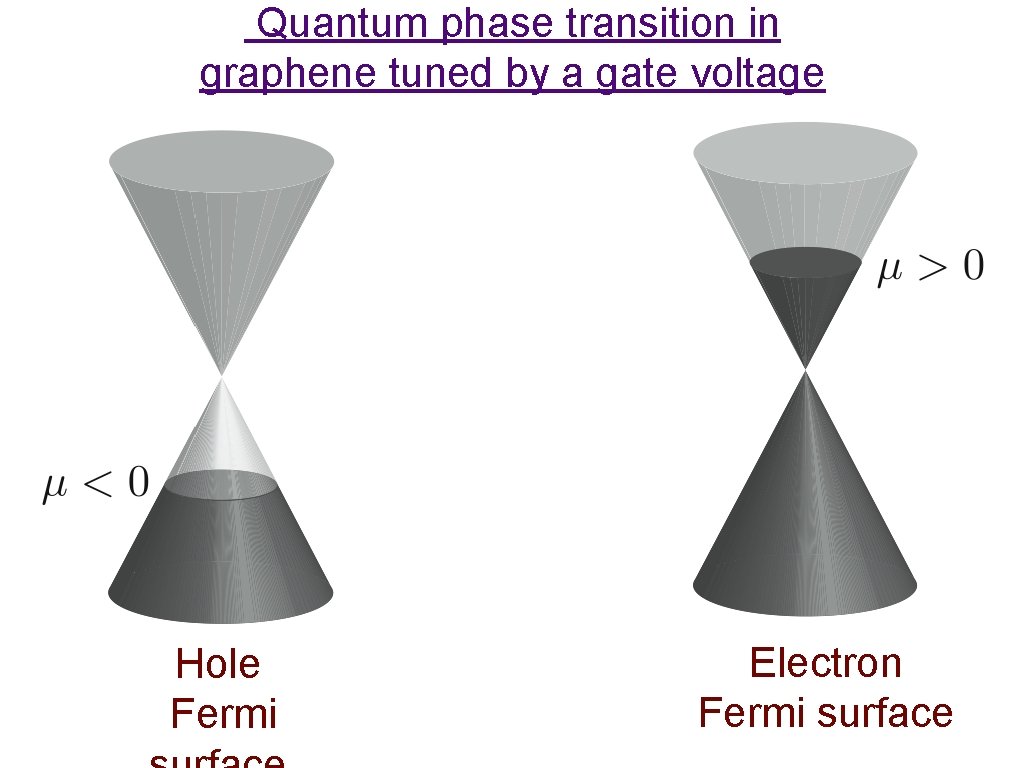
Quantum phase transition in graphene tuned by a gate voltage Hole Fermi Electron Fermi surface
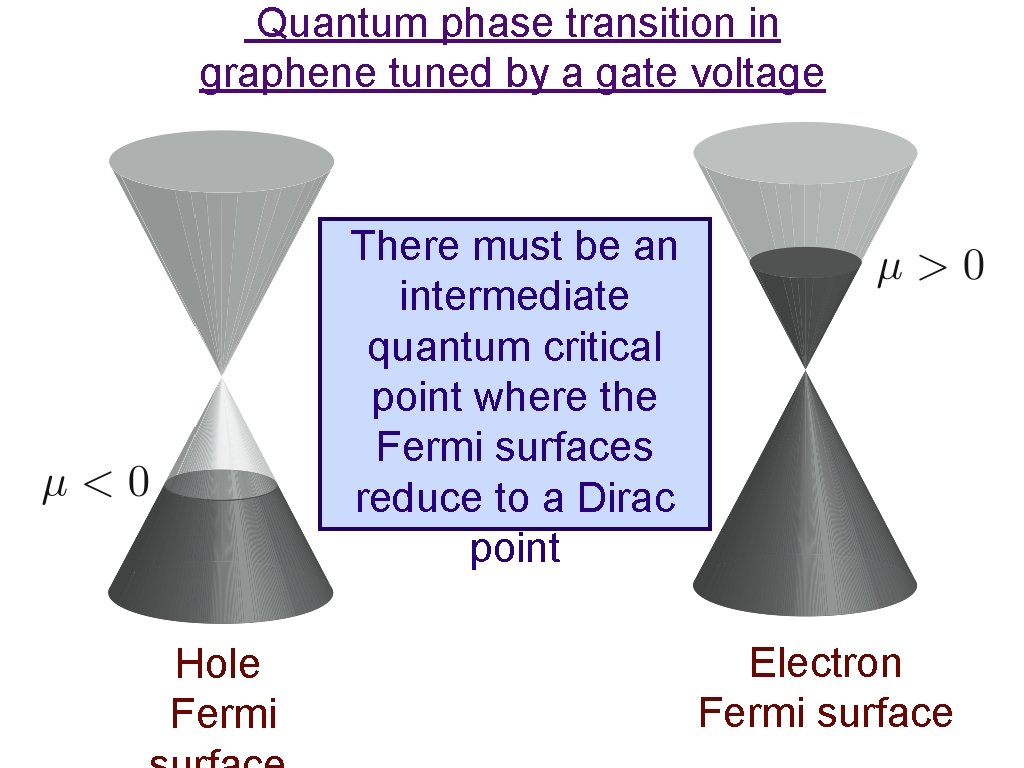
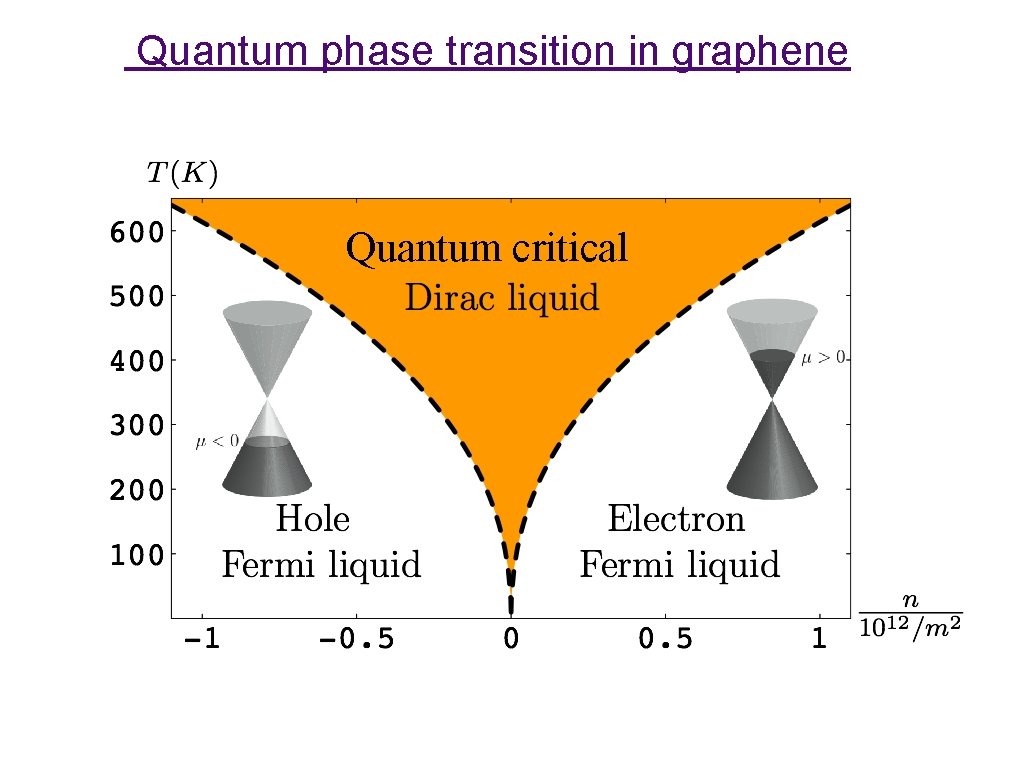
Quantum phase transition in graphene tuned by a gate voltage There must be an intermediate quantum critical point where the Fermi surfaces reduce to a Dirac point Hole Fermi Electron Fermi surface
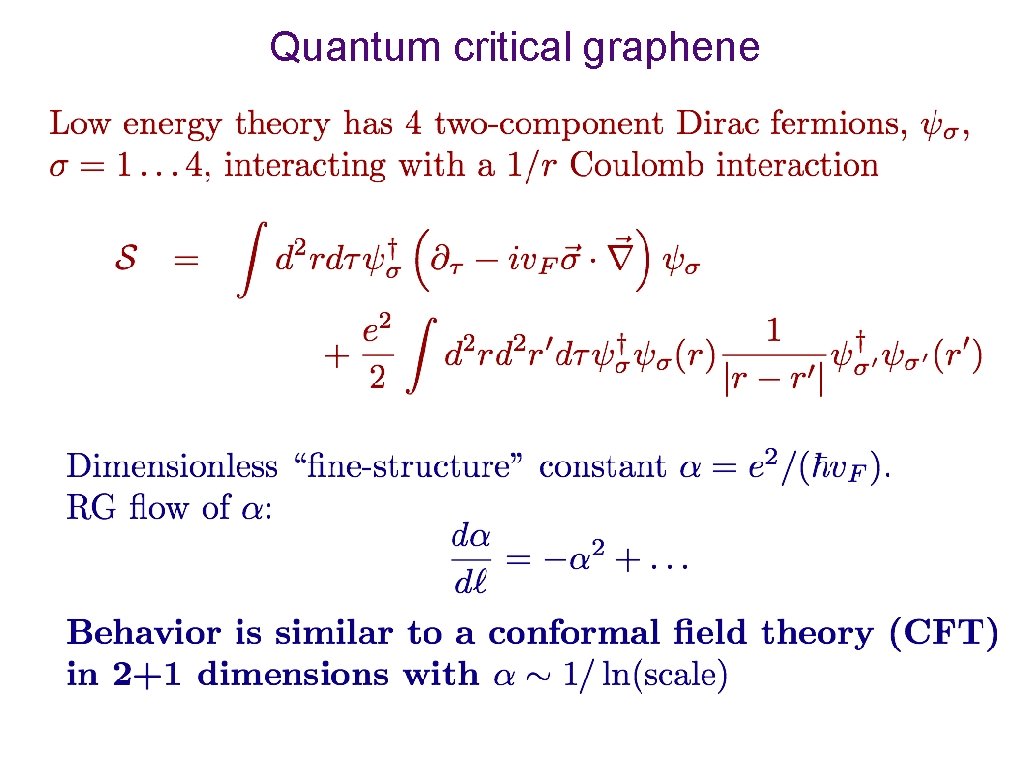
Quantum critical graphene
Quantum phase transition in graphene Quantum critical
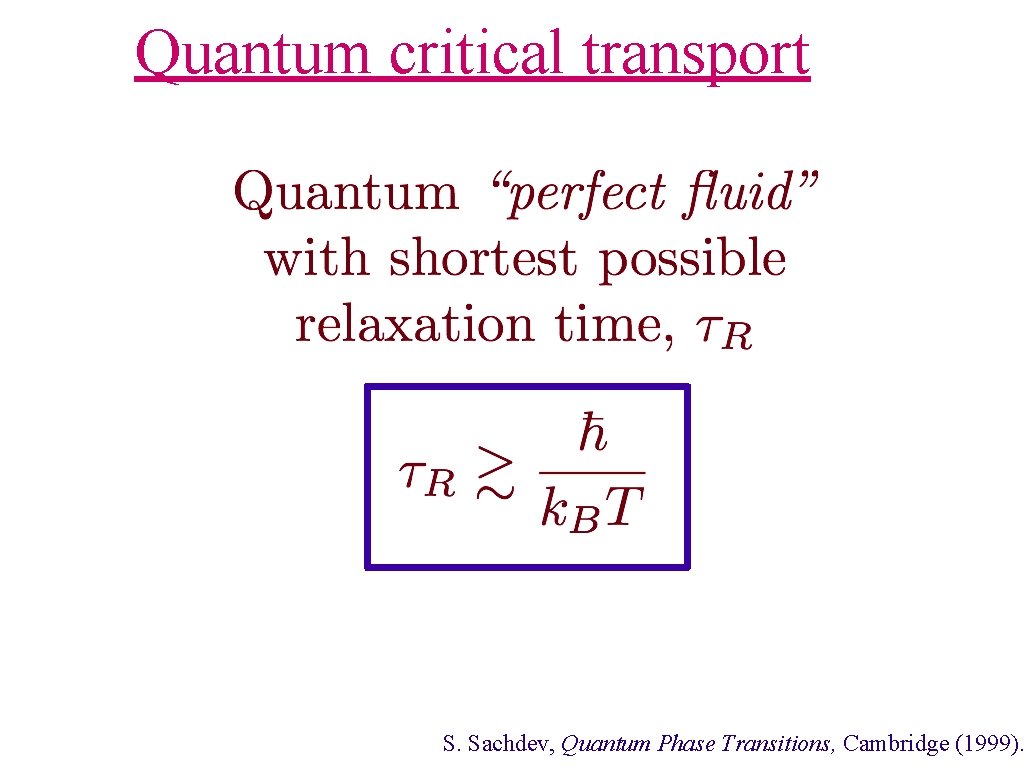
Quantum critical transport S. Sachdev, Quantum Phase Transitions, Cambridge (1999).
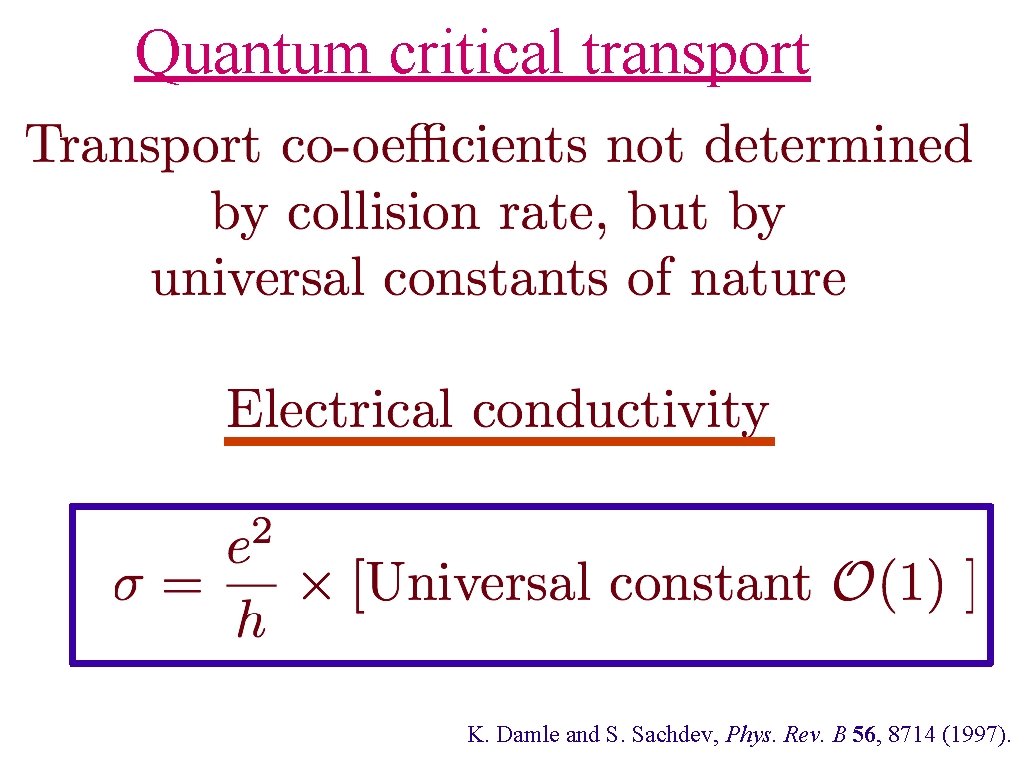
Quantum critical transport K. Damle and S. Sachdev, Phys. Rev. B 56, 8714 (1997).
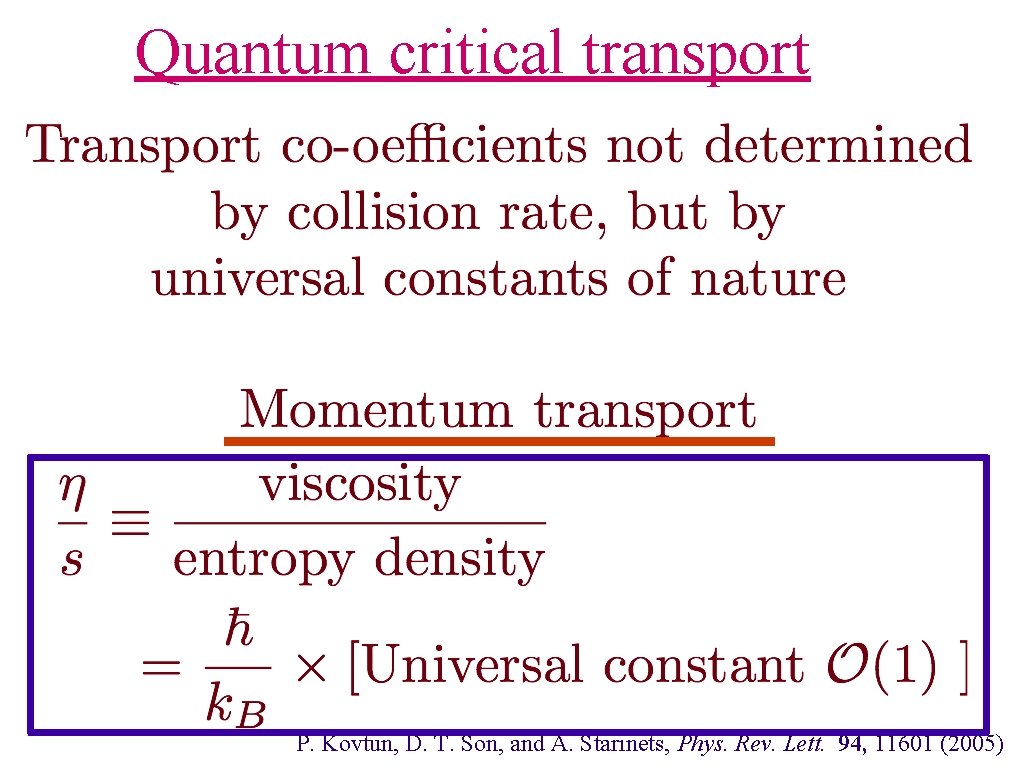
Quantum critical transport P. Kovtun, D. T. Son, and A. Starinets, Phys. Rev. Lett. 94, 11601 (2005)
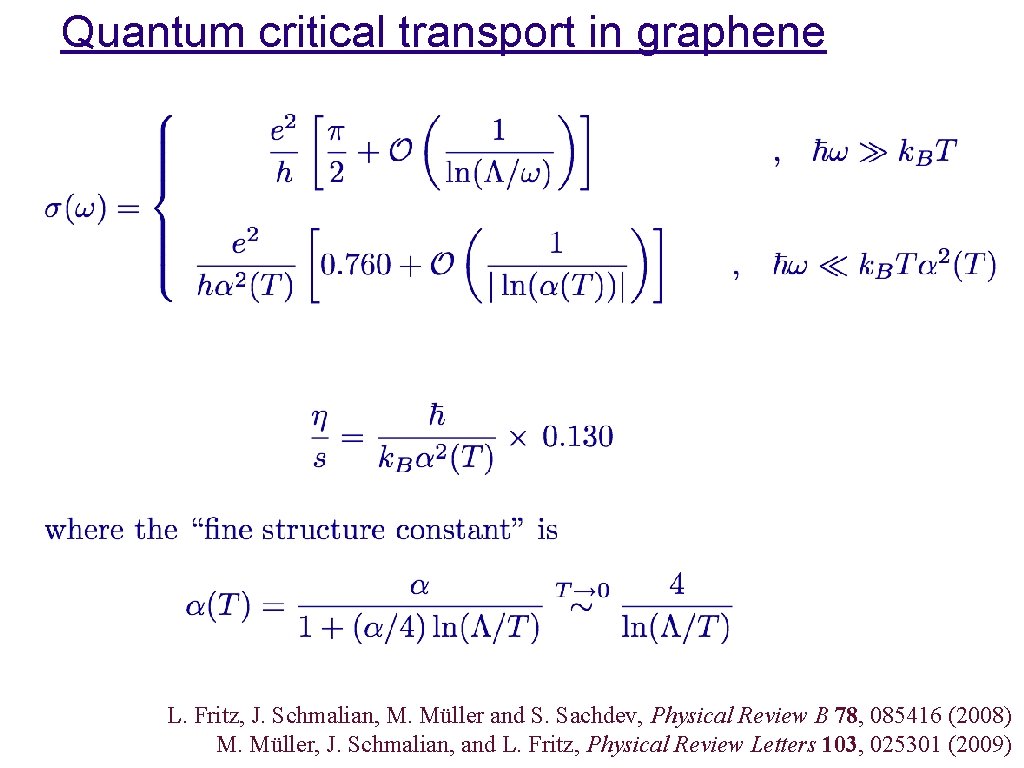
Quantum critical transport in graphene L. Fritz, J. Schmalian, M. Müller and S. Sachdev, Physical Review B 78, 085416 (2008) M. Müller, J. Schmalian, and L. Fritz, Physical Review Letters 103, 025301 (2009)
Outline 1. Coupled dimer antiferromagnets Order parameters and Landau-Ginzburg criticality 2. Graphene `Topological’ Fermi surface transitions 3. Quantum criticality and black holes Ad. S 4 theory of compressible quantum liquids 4. Quantum criticality in the cuprates Global phase diagram and the spin density wave transition in metals
Outline 1. Coupled dimer antiferromagnets Order parameters and Landau-Ginzburg criticality 2. Graphene `Topological’ Fermi surface transitions 3. Quantum criticality and black holes Ad. S 4 theory of compressible quantum liquids 4. Quantum criticality in the cuprates Global phase diagram and the spin density wave transition in metals
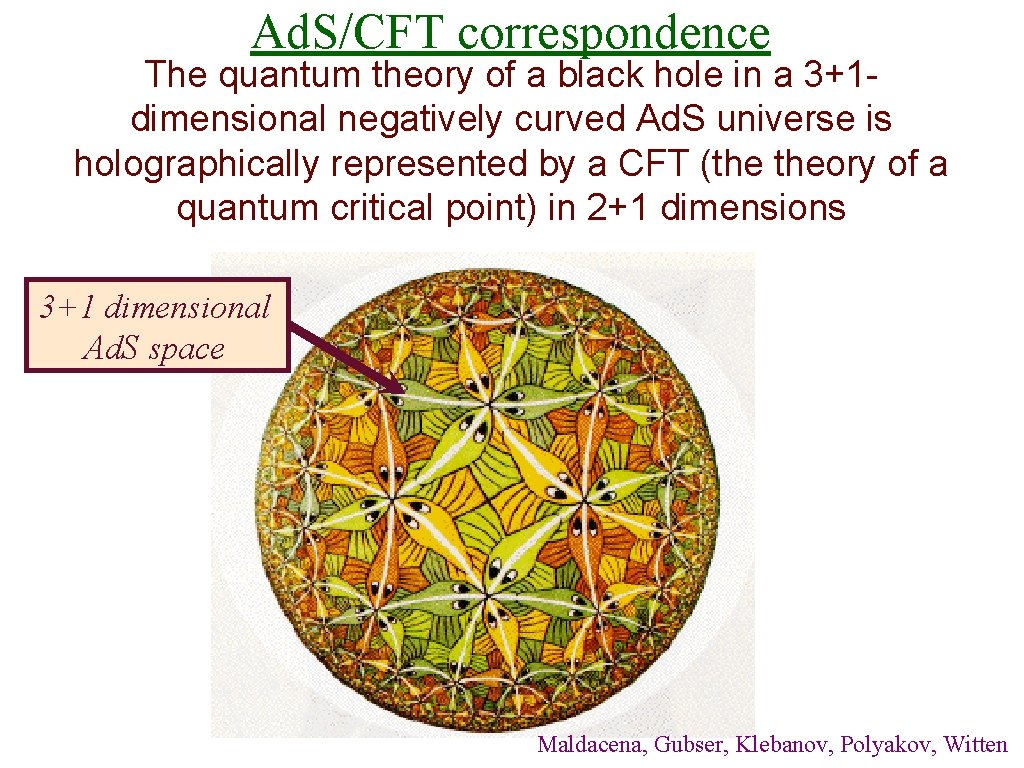
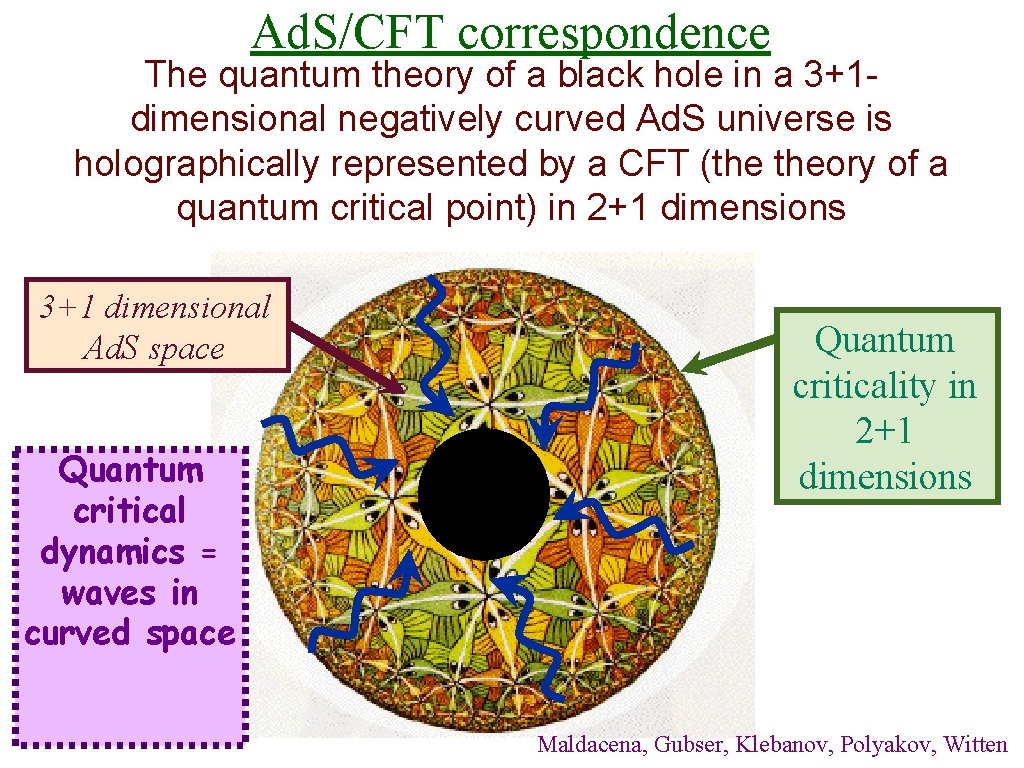
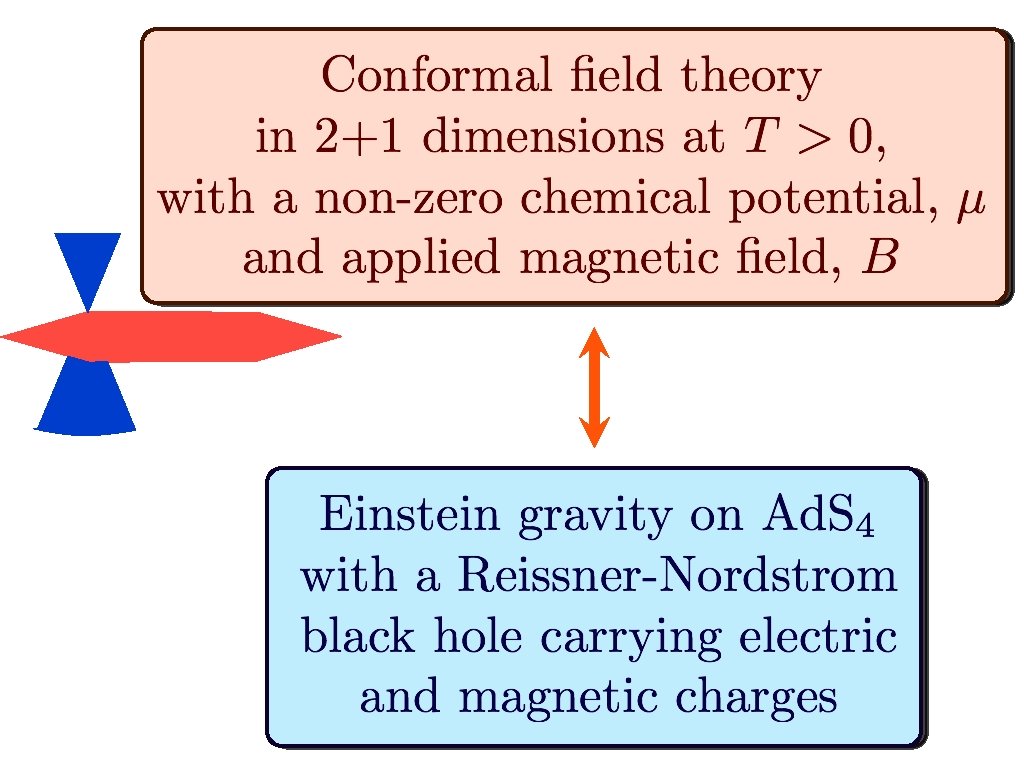
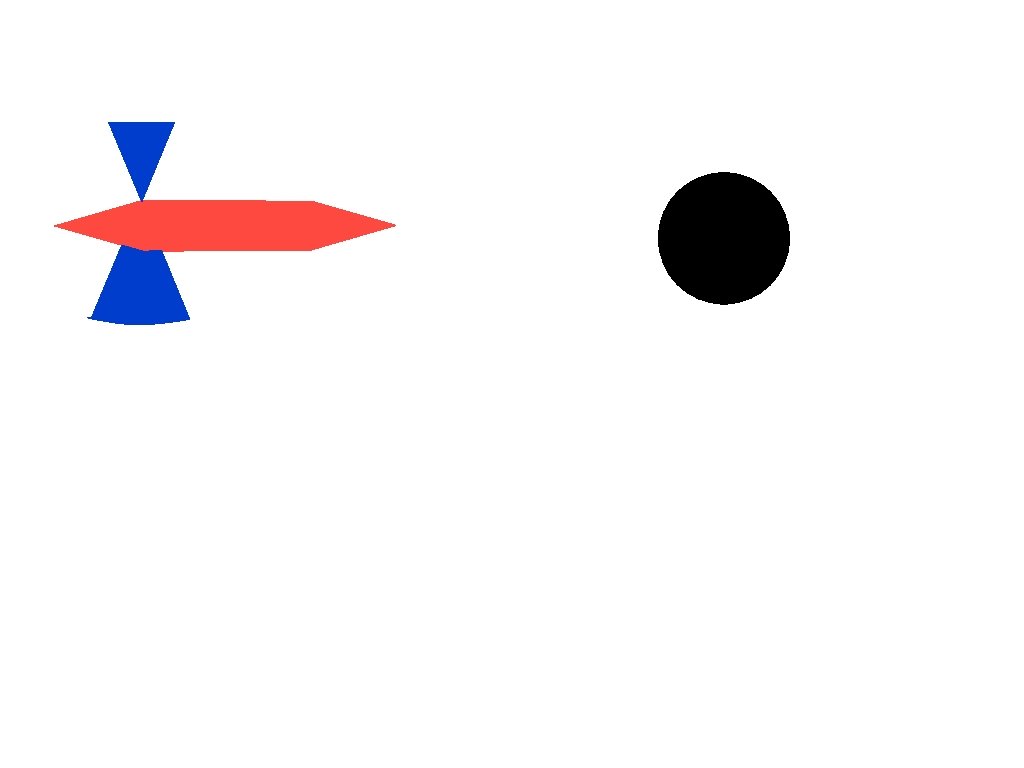
Ad. S/CFT correspondence The quantum theory of a black hole in a 3+1 dimensional negatively curved Ad. S universe is holographically represented by a CFT (the theory of a quantum critical point) in 2+1 dimensions 3+1 dimensional Ad. S space Maldacena, Gubser, Klebanov, Polyakov, Witten
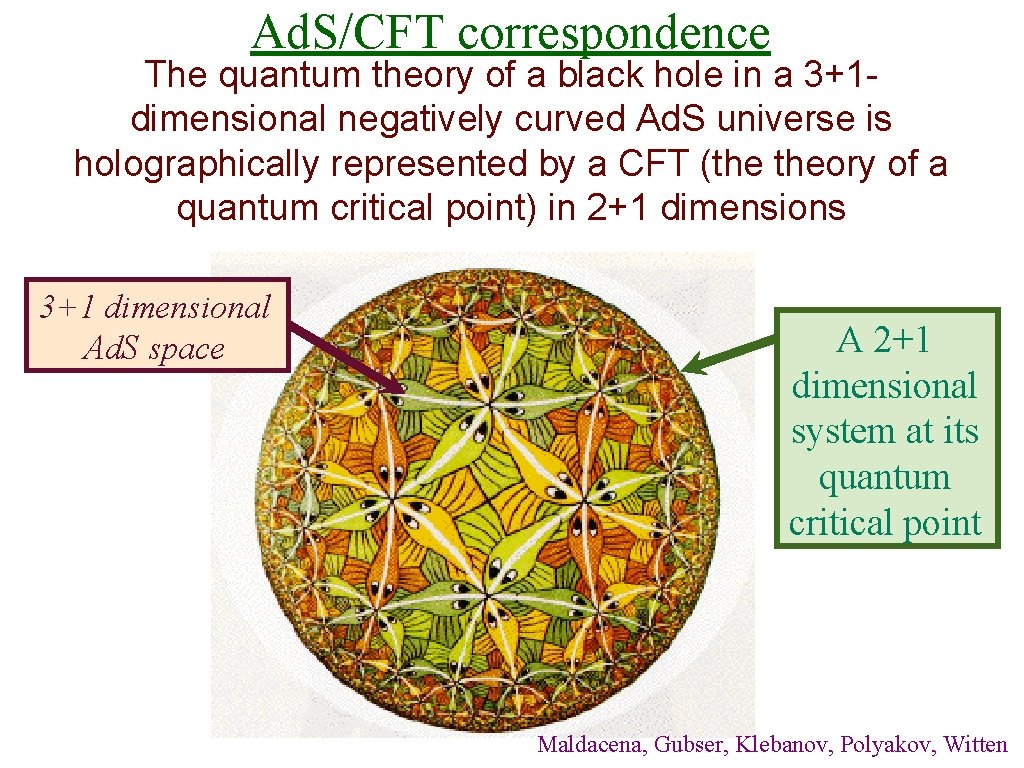
Ad. S/CFT correspondence The quantum theory of a black hole in a 3+1 dimensional negatively curved Ad. S universe is holographically represented by a CFT (the theory of a quantum critical point) in 2+1 dimensions 3+1 dimensional Ad. S space A 2+1 dimensional system at its quantum critical point Maldacena, Gubser, Klebanov, Polyakov, Witten
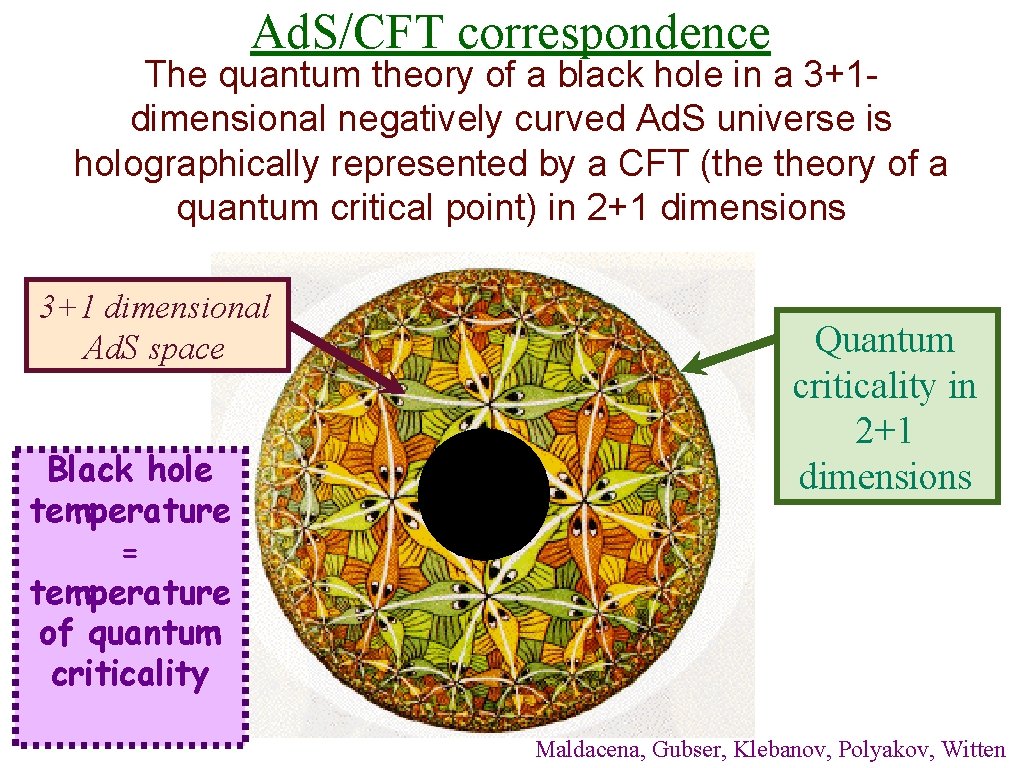
Ad. S/CFT correspondence The quantum theory of a black hole in a 3+1 dimensional negatively curved Ad. S universe is holographically represented by a CFT (the theory of a quantum critical point) in 2+1 dimensions 3+1 dimensional Ad. S space Black hole temperature = temperature of quantum criticality Quantum criticality in 2+1 dimensions Maldacena, Gubser, Klebanov, Polyakov, Witten
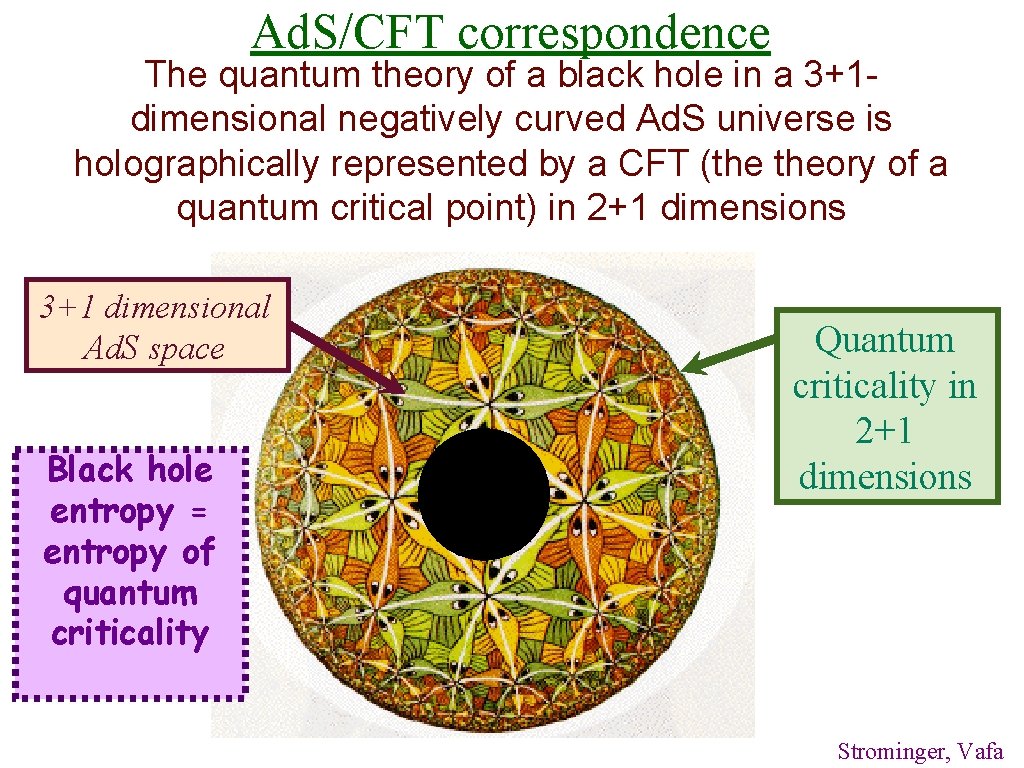
Ad. S/CFT correspondence The quantum theory of a black hole in a 3+1 dimensional negatively curved Ad. S universe is holographically represented by a CFT (the theory of a quantum critical point) in 2+1 dimensions 3+1 dimensional Ad. S space Black hole entropy = entropy of quantum criticality Quantum criticality in 2+1 dimensions Strominger, Vafa
Ad. S/CFT correspondence The quantum theory of a black hole in a 3+1 dimensional negatively curved Ad. S universe is holographically represented by a CFT (the theory of a quantum critical point) in 2+1 dimensions 3+1 dimensional Ad. S space Quantum critical dynamics = waves in curved space Quantum criticality in 2+1 dimensions Maldacena, Gubser, Klebanov, Polyakov, Witten
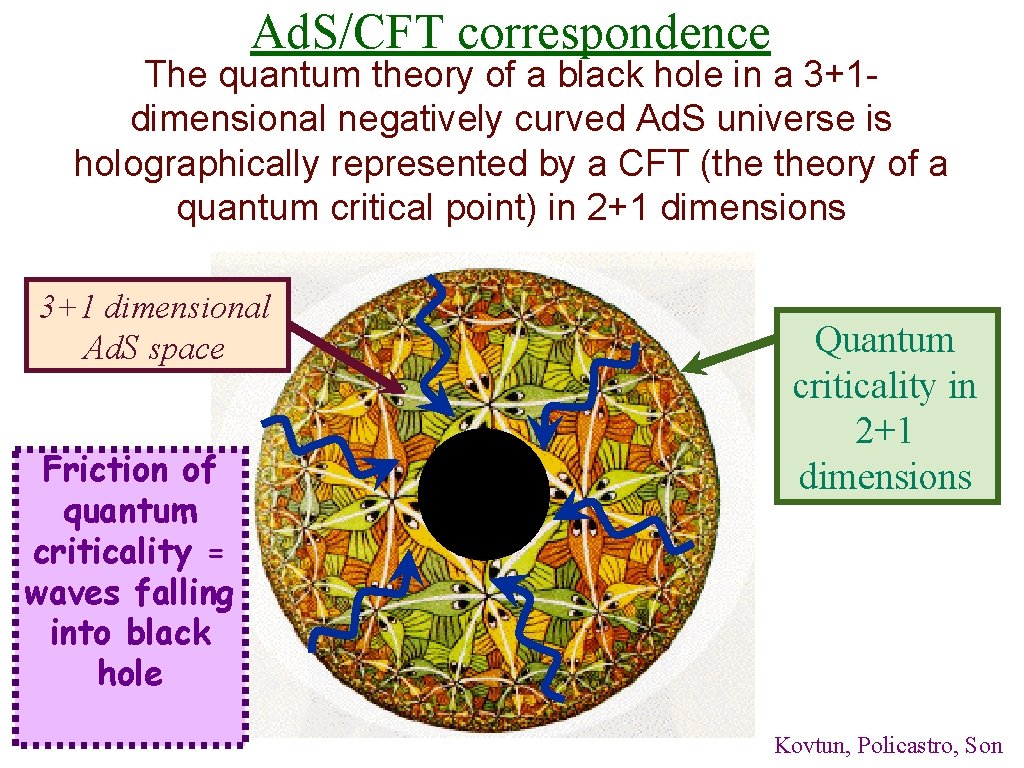
Ad. S/CFT correspondence The quantum theory of a black hole in a 3+1 dimensional negatively curved Ad. S universe is holographically represented by a CFT (the theory of a quantum critical point) in 2+1 dimensions 3+1 dimensional Ad. S space Friction of quantum criticality = waves falling into black hole Quantum criticality in 2+1 dimensions Kovtun, Policastro, Son
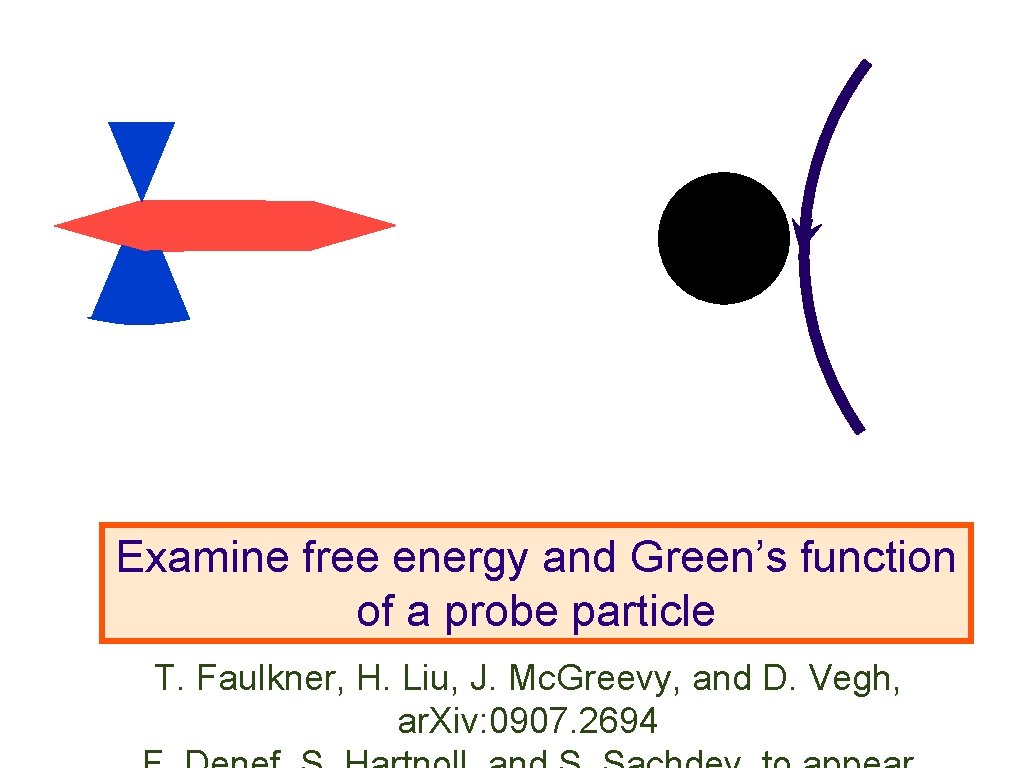
Examine free energy and Green’s function of a probe particle T. Faulkner, H. Liu, J. Mc. Greevy, and D. Vegh, ar. Xiv: 0907. 2694
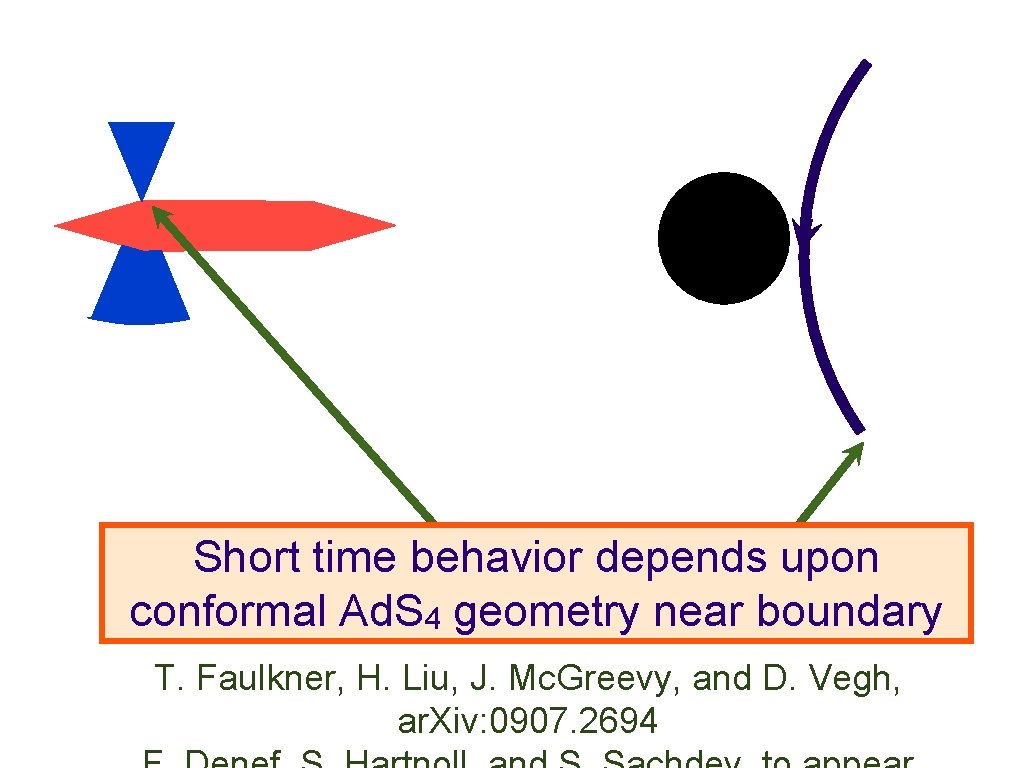
Short time behavior depends upon conformal Ad. S 4 geometry near boundary T. Faulkner, H. Liu, J. Mc. Greevy, and D. Vegh, ar. Xiv: 0907. 2694
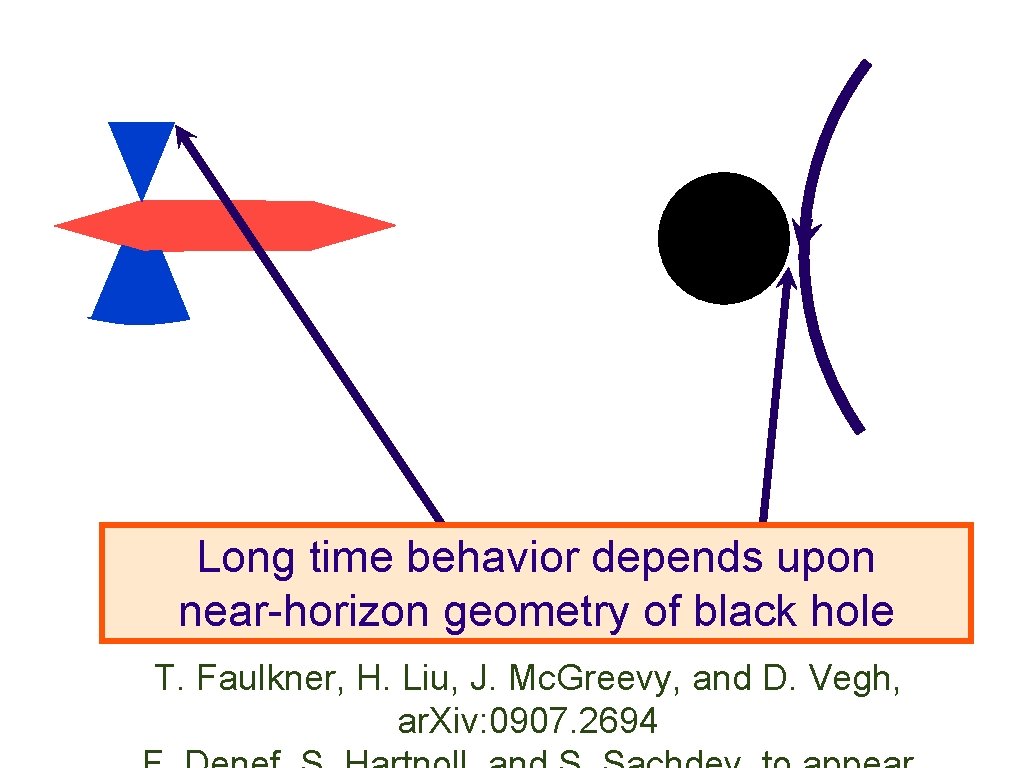
Long time behavior depends upon near-horizon geometry of black hole T. Faulkner, H. Liu, J. Mc. Greevy, and D. Vegh, ar. Xiv: 0907. 2694
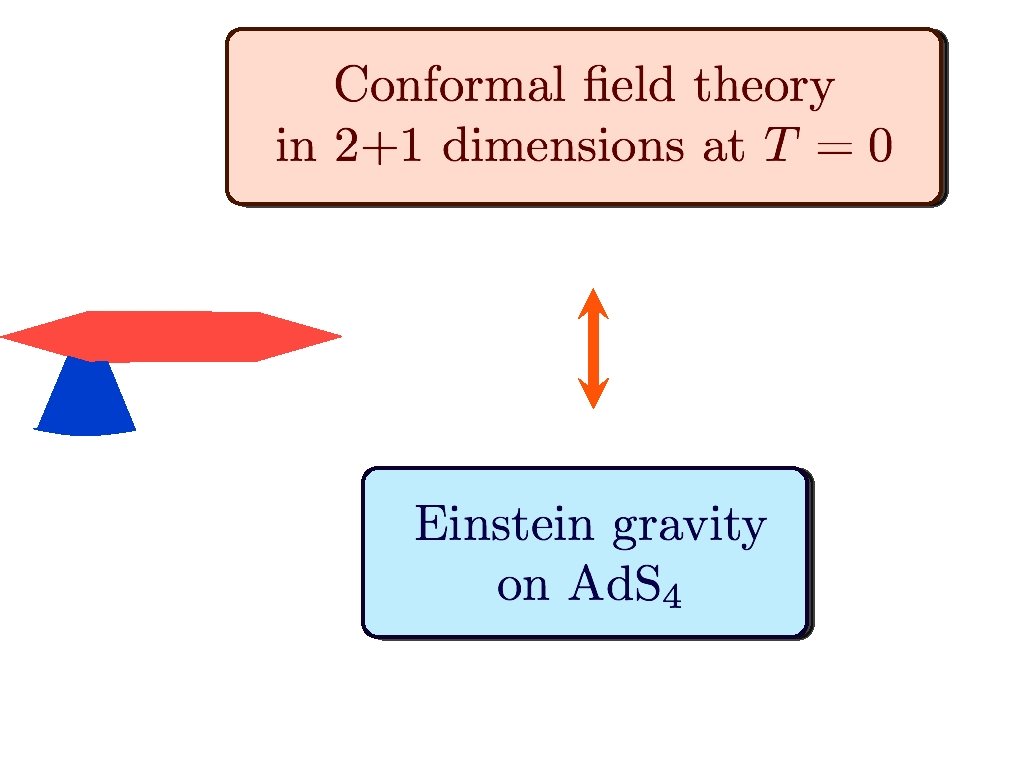
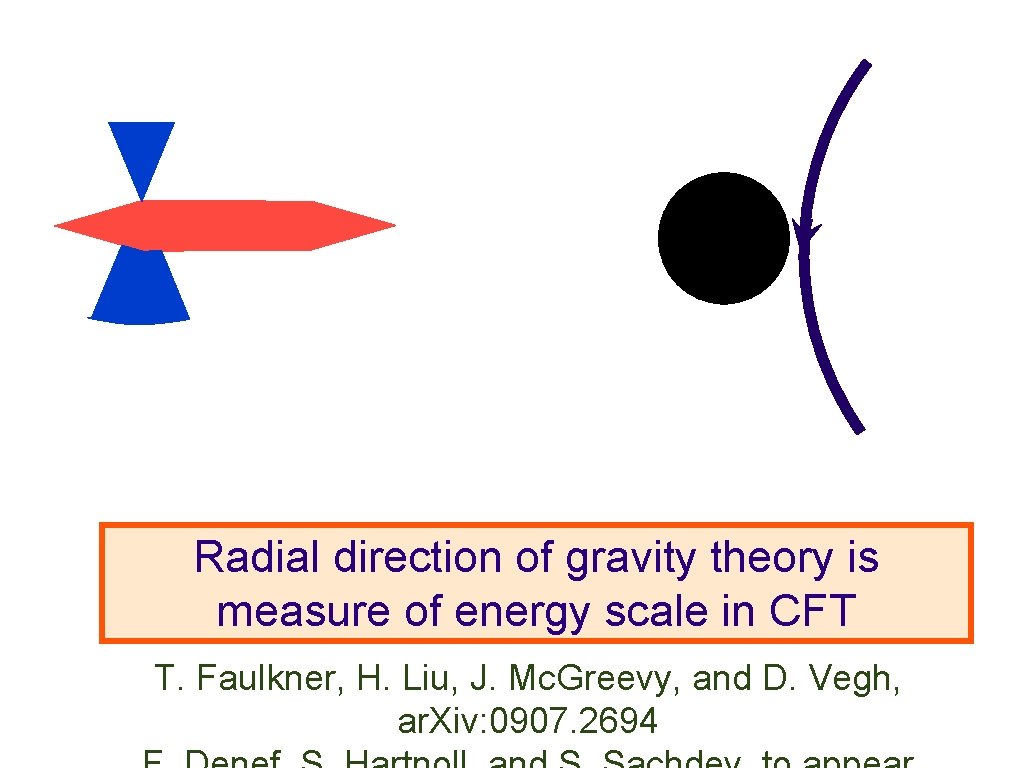
Radial direction of gravity theory is measure of energy scale in CFT T. Faulkner, H. Liu, J. Mc. Greevy, and D. Vegh, ar. Xiv: 0907. 2694
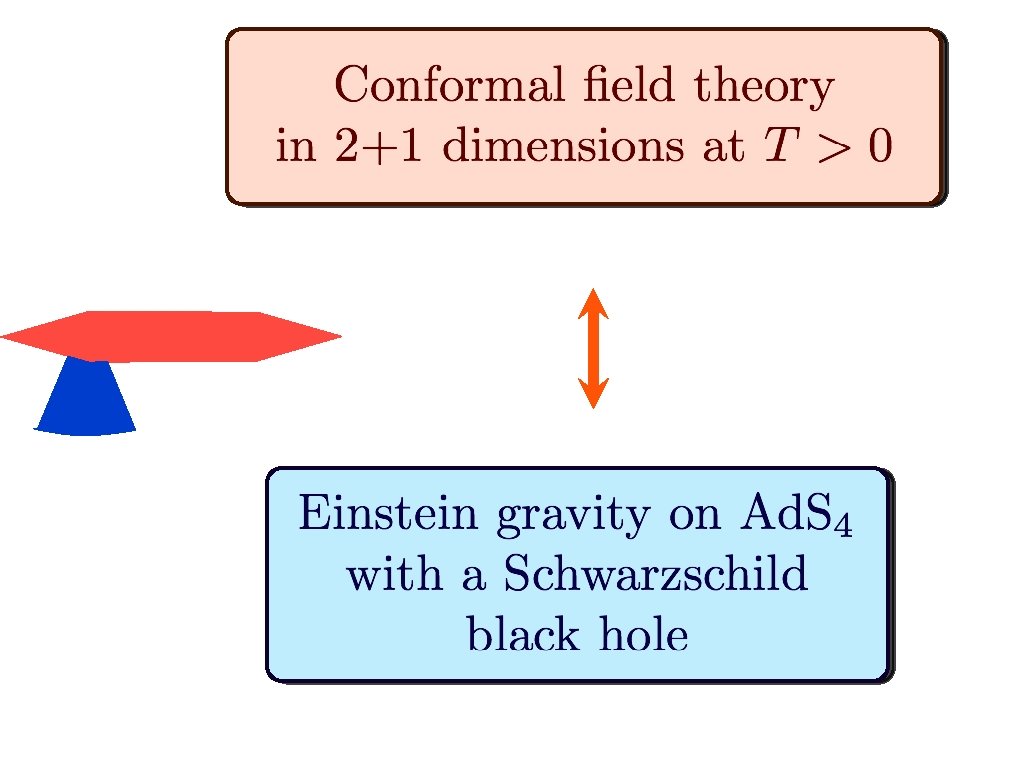
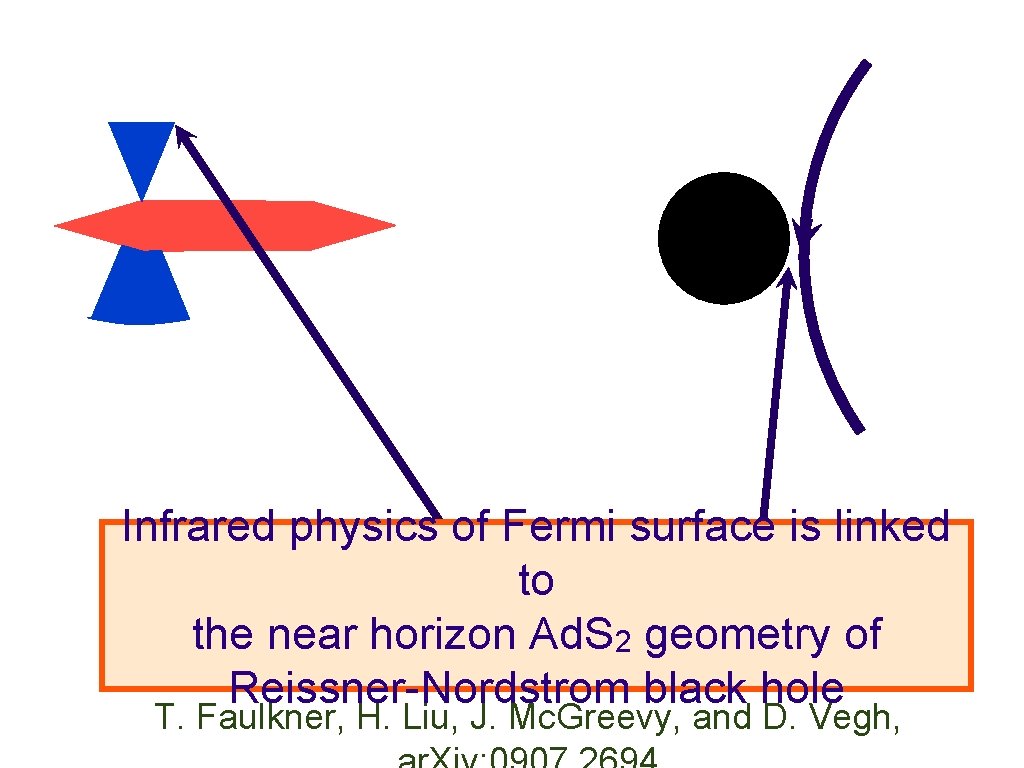
Infrared physics of Fermi surface is linked to the near horizon Ad. S 2 geometry of Reissner-Nordstrom black hole T. Faulkner, H. Liu, J. Mc. Greevy, and D. Vegh,
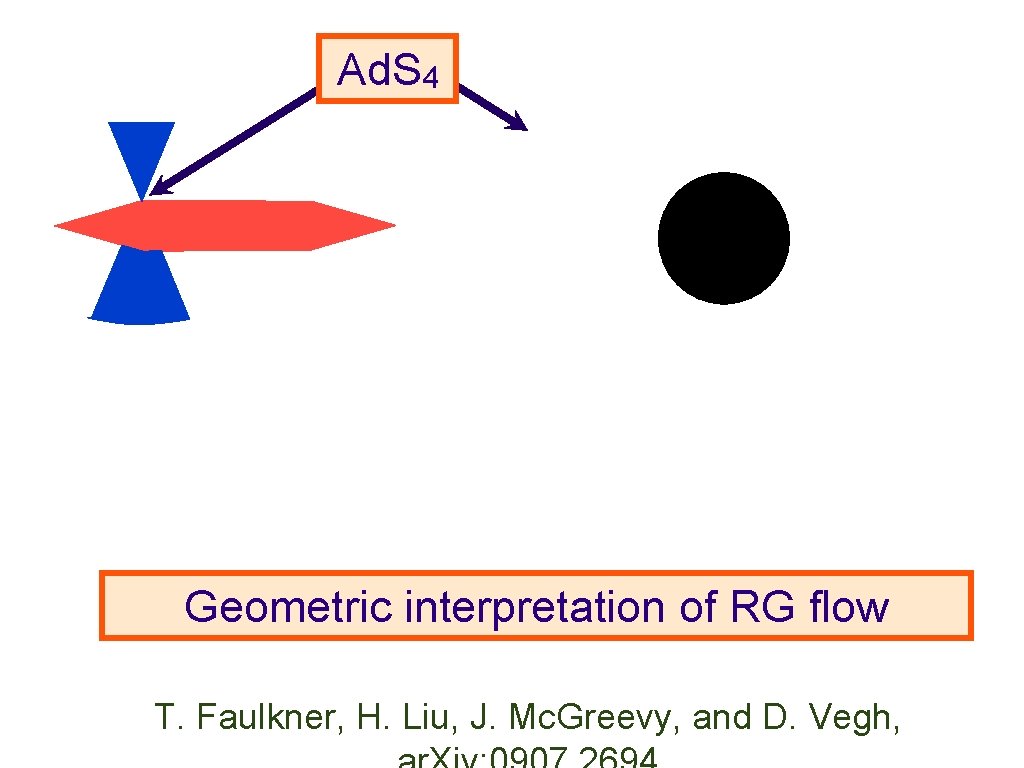
Ad. S 4 Geometric interpretation of RG flow T. Faulkner, H. Liu, J. Mc. Greevy, and D. Vegh,
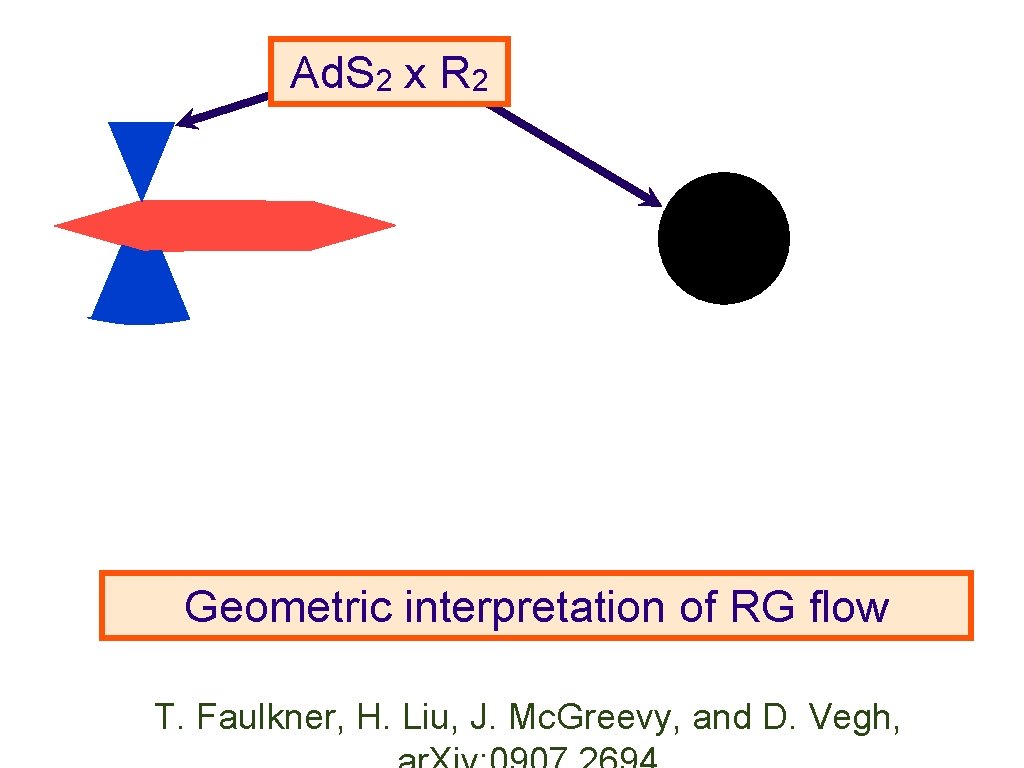
Ad. S 2 x R 2 Geometric interpretation of RG flow T. Faulkner, H. Liu, J. Mc. Greevy, and D. Vegh,
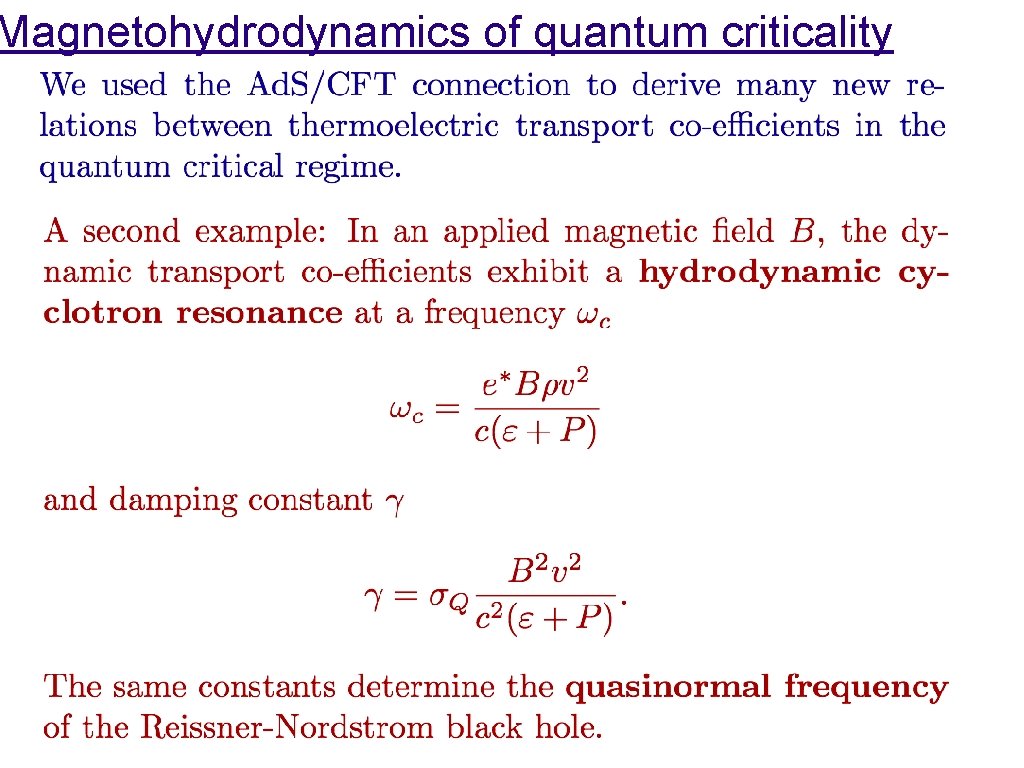
Magnetohydrodynamics of quantum criticality S. A. Hartnoll, P. K. Kovtun, M. Müller, and S. Sachdev, Phys. Rev. B 76 144502 (2007)
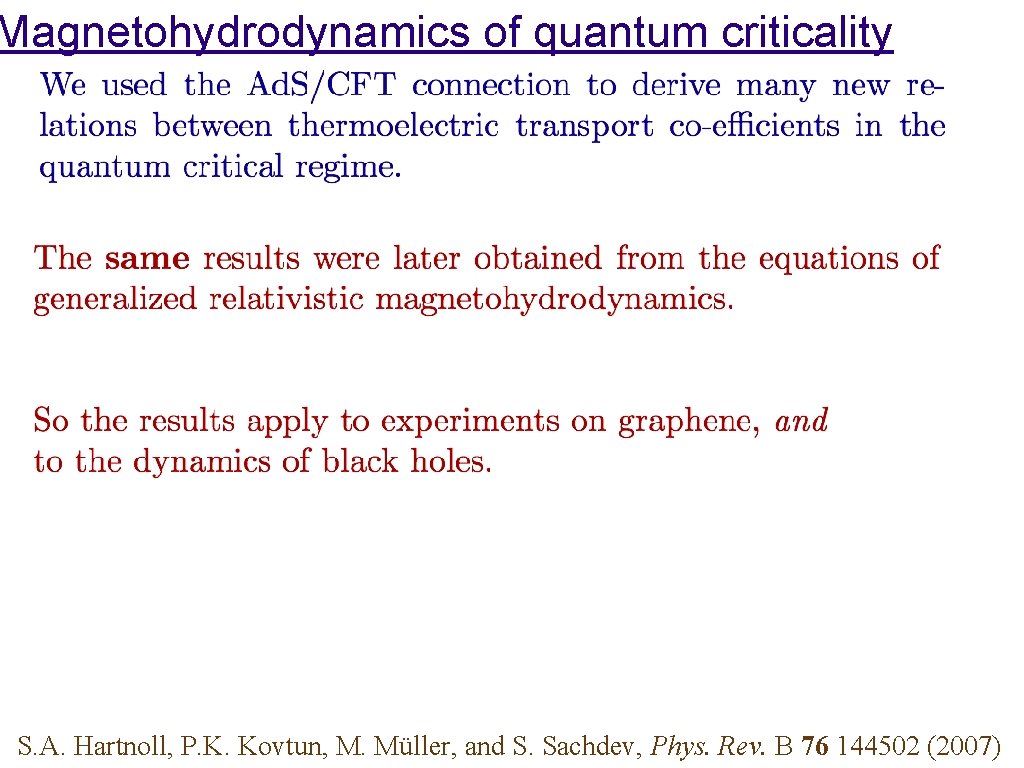
Magnetohydrodynamics of quantum criticality S. A. Hartnoll, P. K. Kovtun, M. Müller, and S. Sachdev, Phys. Rev. B 76 144502 (2007)
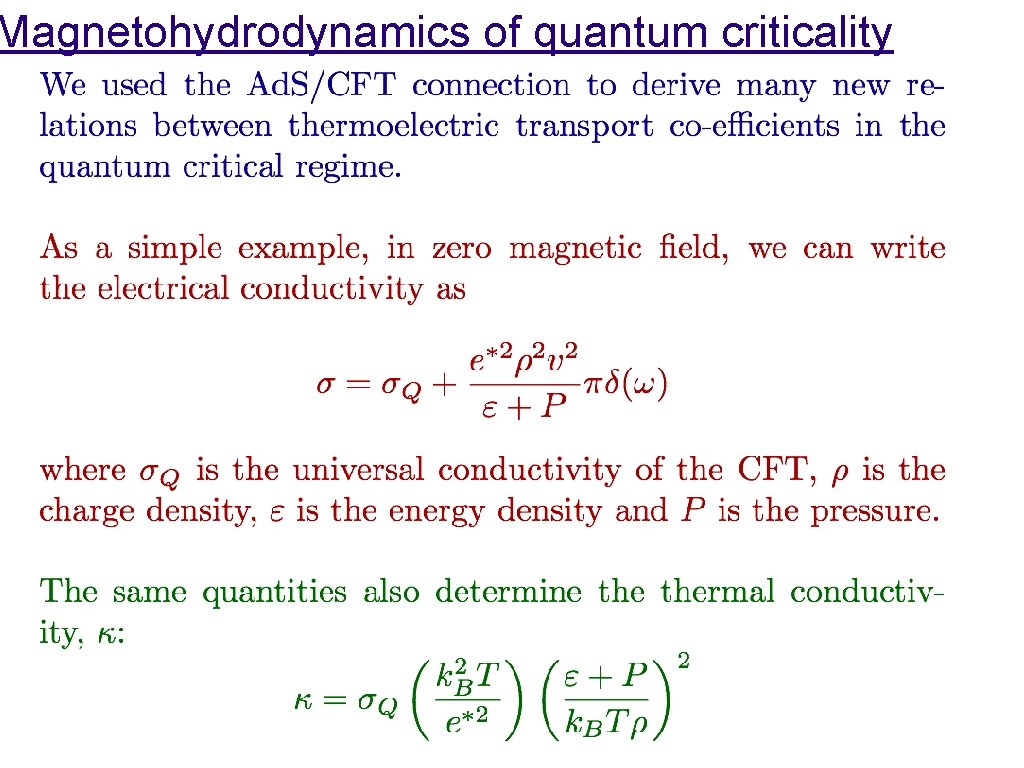
Magnetohydrodynamics of quantum criticality
Magnetohydrodynamics of quantum criticality
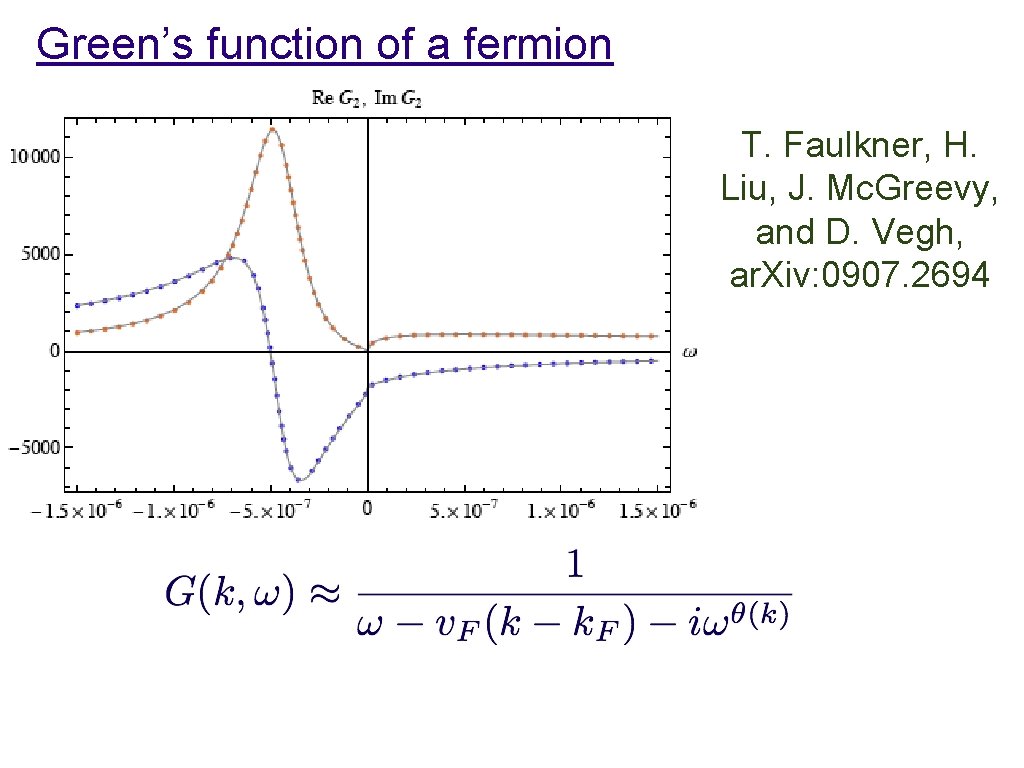
Green’s function of a fermion T. Faulkner, H. Liu, J. Mc. Greevy, and D. Vegh, ar. Xiv: 0907. 2694
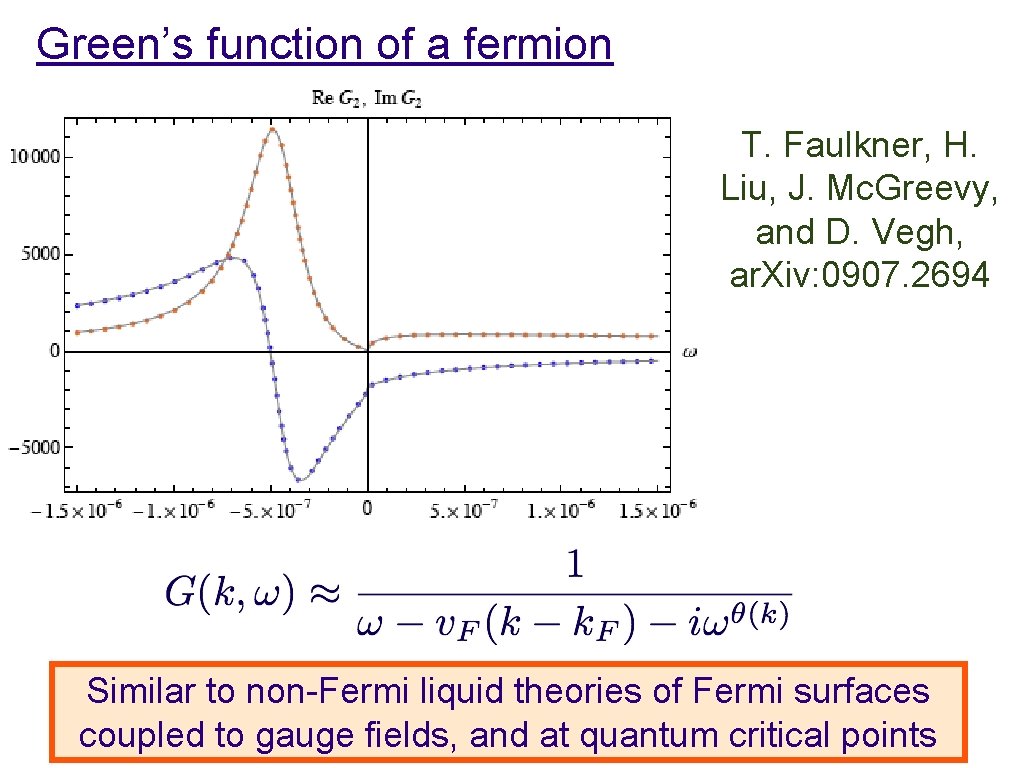
Green’s function of a fermion T. Faulkner, H. Liu, J. Mc. Greevy, and D. Vegh, ar. Xiv: 0907. 2694 Similar to non-Fermi liquid theories of Fermi surfaces coupled to gauge fields, and at quantum critical points
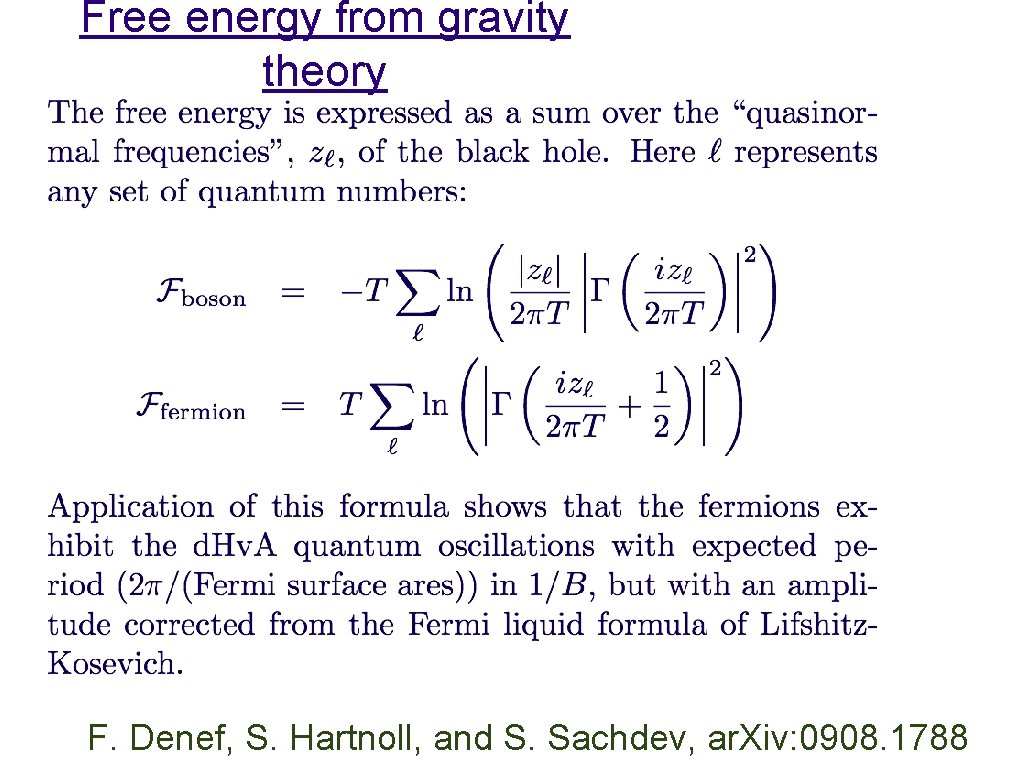
Free energy from gravity theory F. Denef, S. Hartnoll, and S. Sachdev, ar. Xiv: 0908. 1788
Outline 1. Coupled dimer antiferromagnets Order parameters and Landau-Ginzburg criticality 2. Graphene `Topological’ Fermi surface transitions 3. Quantum criticality and black holes Ad. S 4 theory of compressible quantum liquids 4. Quantum criticality in the cuprates Global phase diagram and the spin density wave transition in metals
Outline 1. Coupled dimer antiferromagnets Order parameters and Landau-Ginzburg criticality 2. Graphene `Topological’ Fermi surface transitions 3. Quantum criticality and black holes Ad. S 4 theory of compressible quantum liquids 4. Quantum criticality in the cuprates Global phase diagram and the spin density wave transition in metals
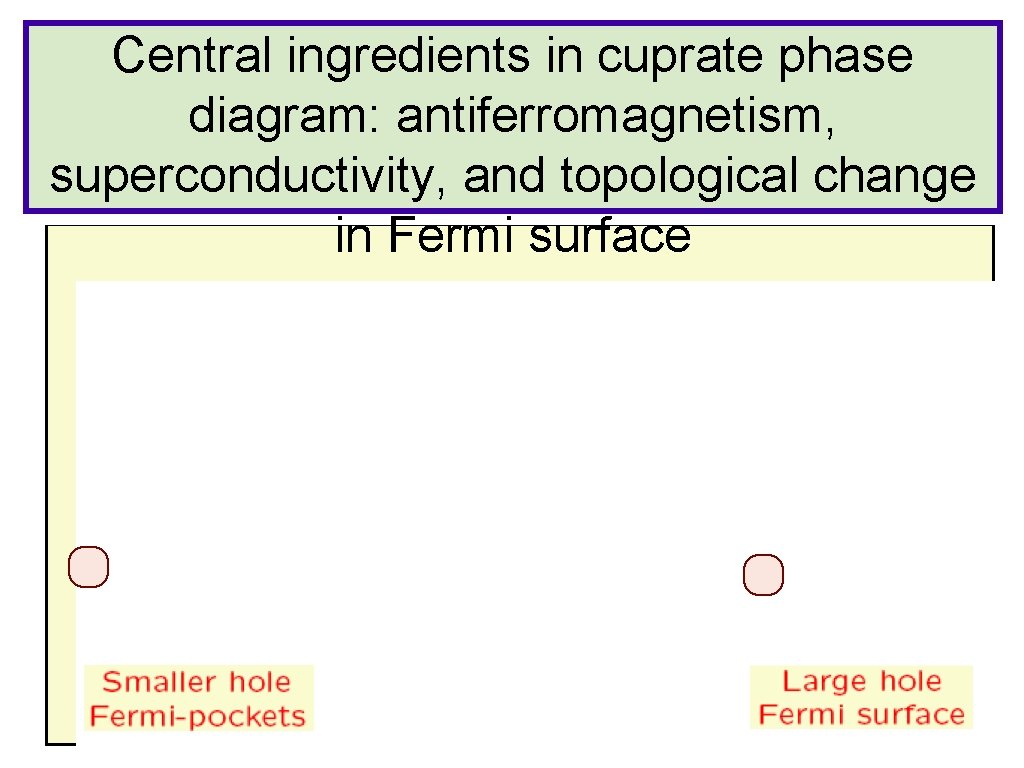
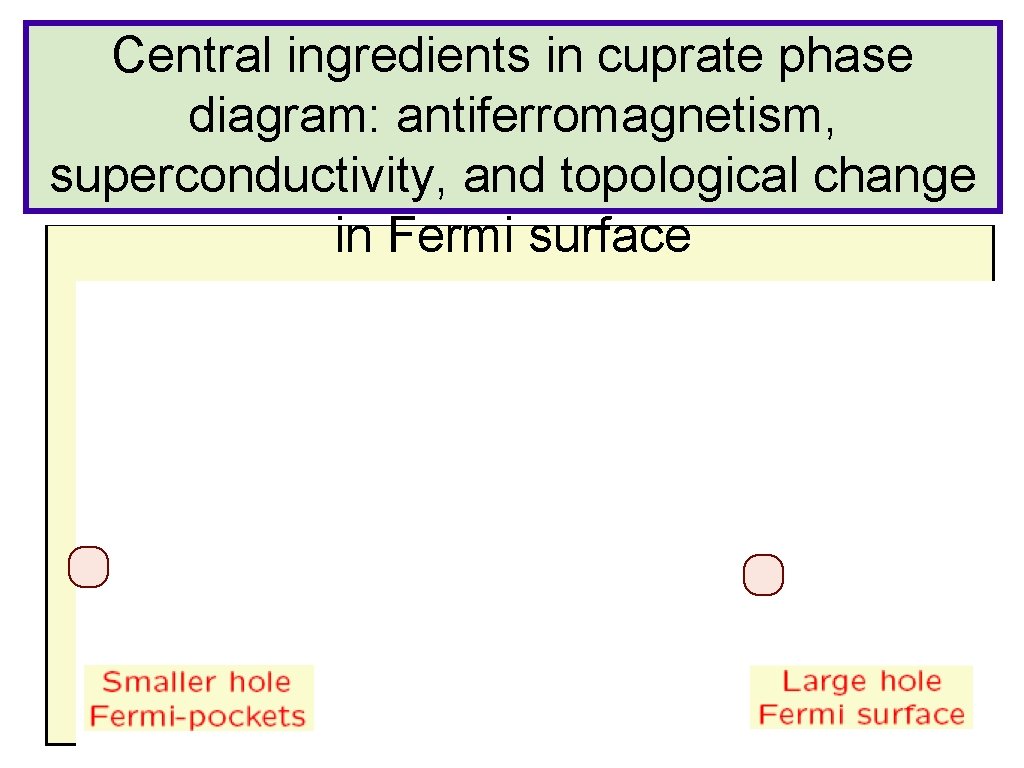
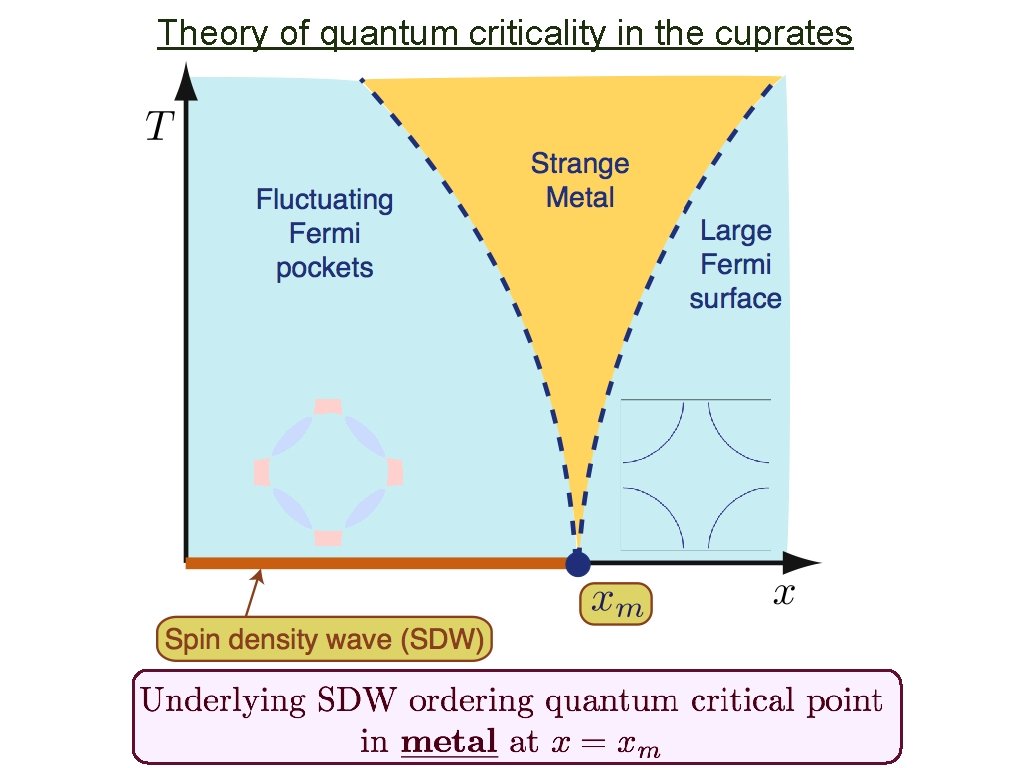
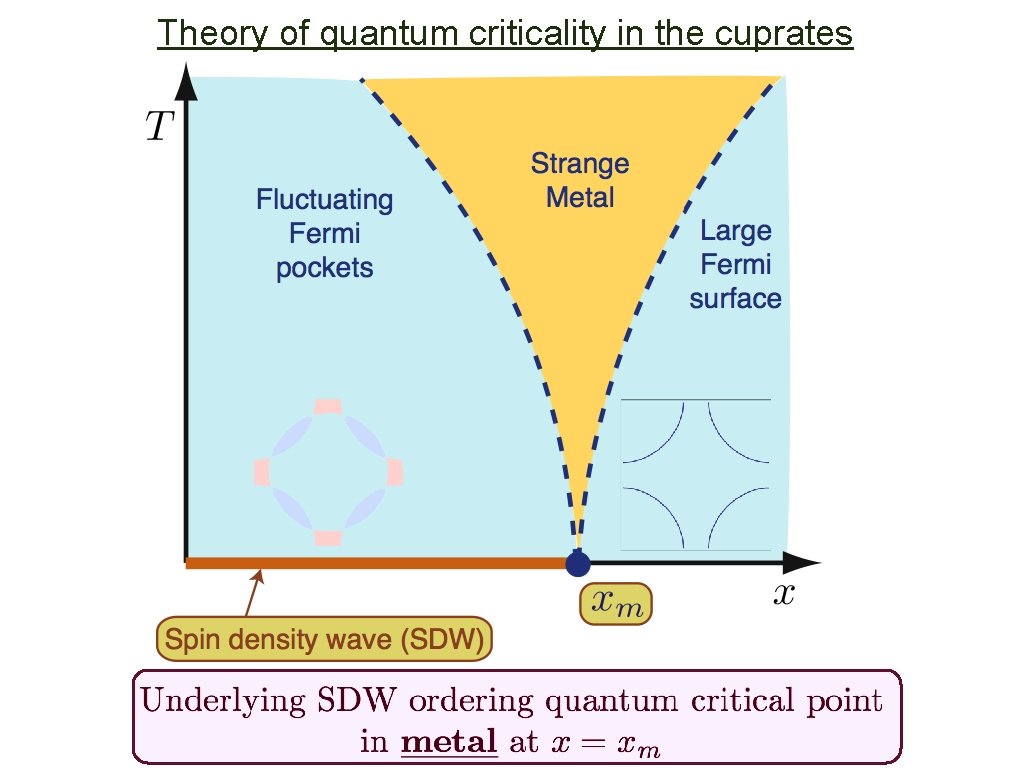
Central ingredients in cuprate phase diagram: antiferromagnetism, superconductivity, and topological change in Fermi surface
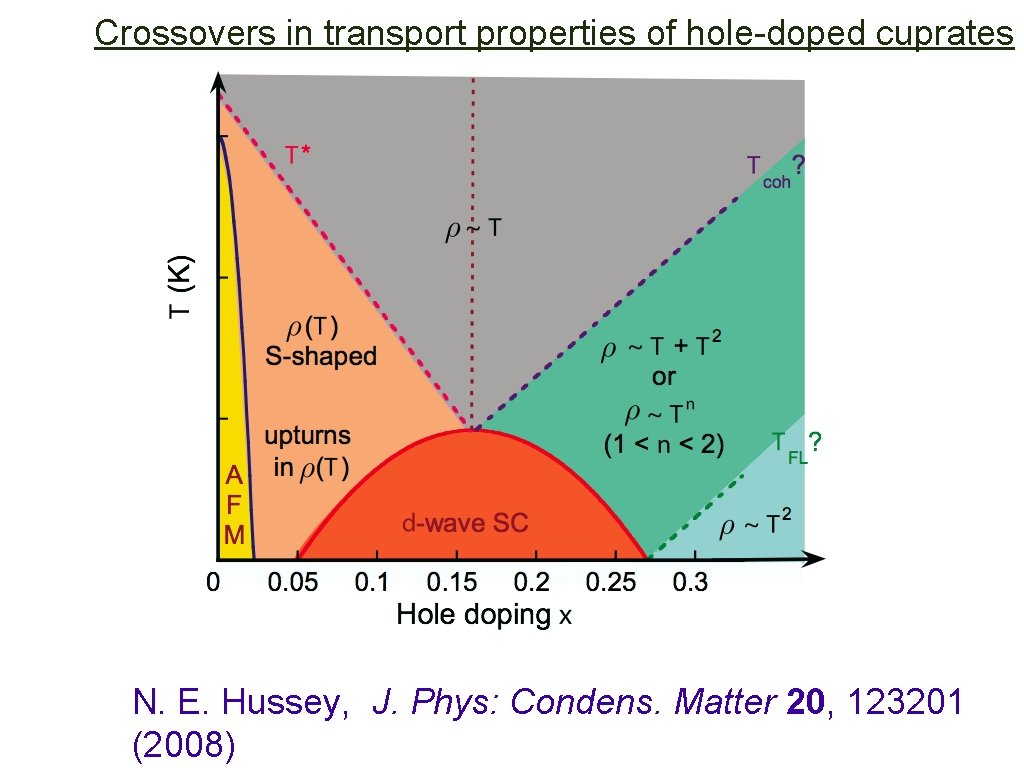
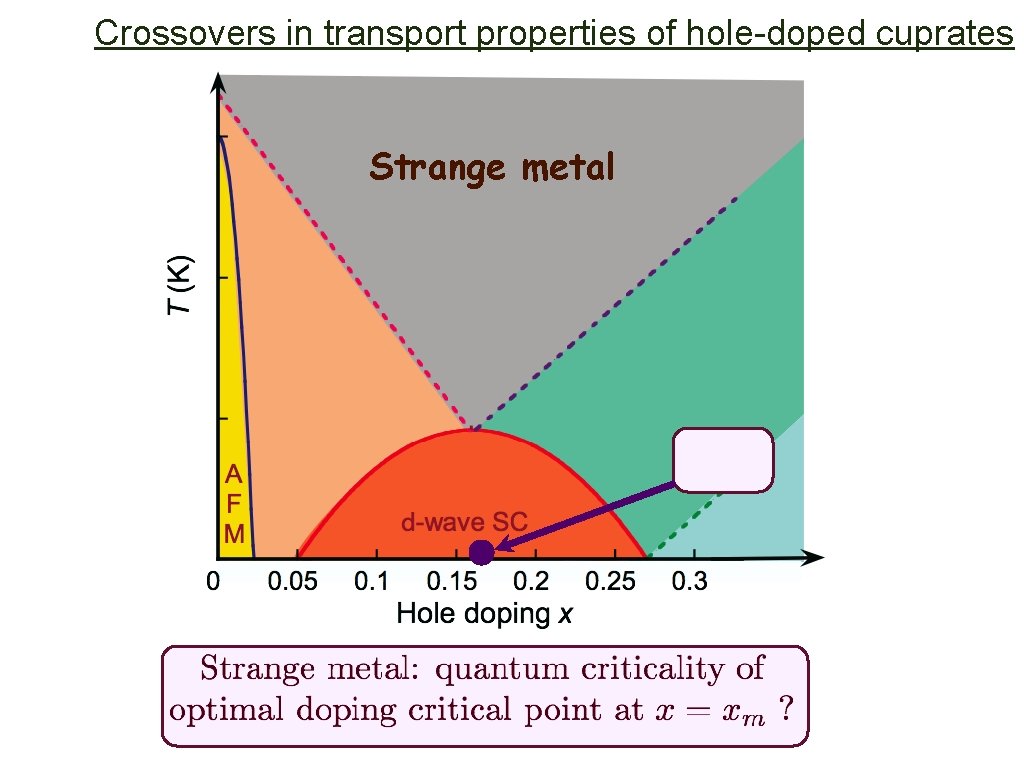
Crossovers in transport properties of hole-doped cuprates N. E. Hussey, J. Phys: Condens. Matter 20, 123201 (2008)
Crossovers in transport properties of hole-doped cuprates Strange metal
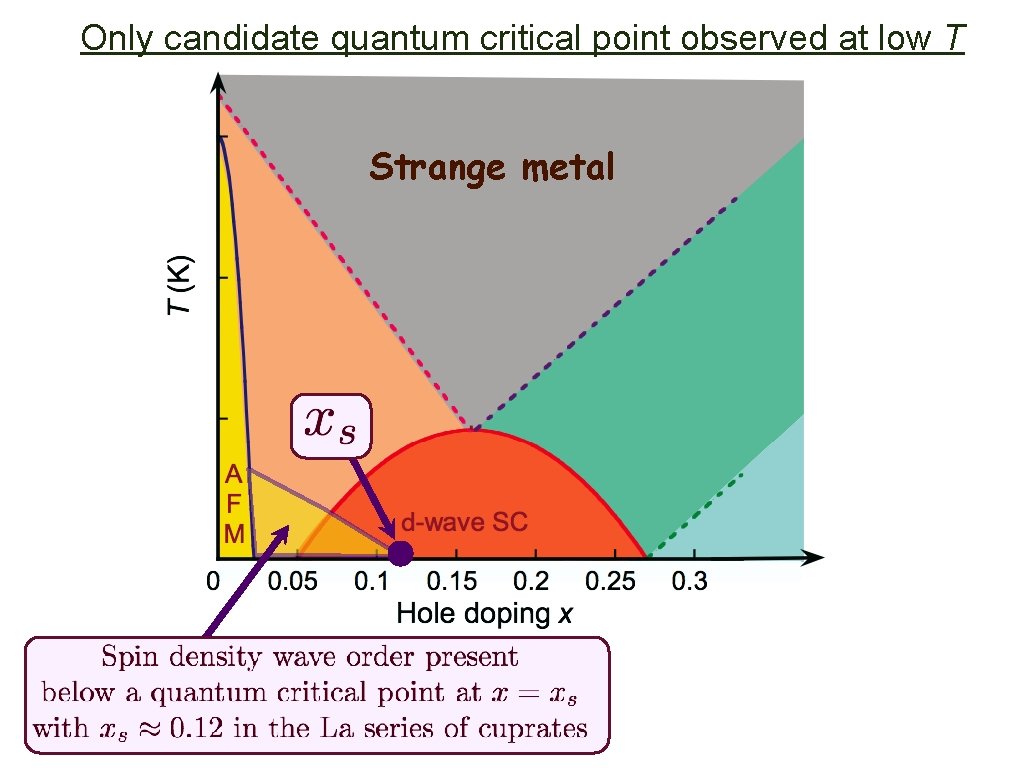
Only candidate quantum critical point observed at low T Strange metal
Central ingredients in cuprate phase diagram: antiferromagnetism, superconductivity, and topological change in Fermi surface
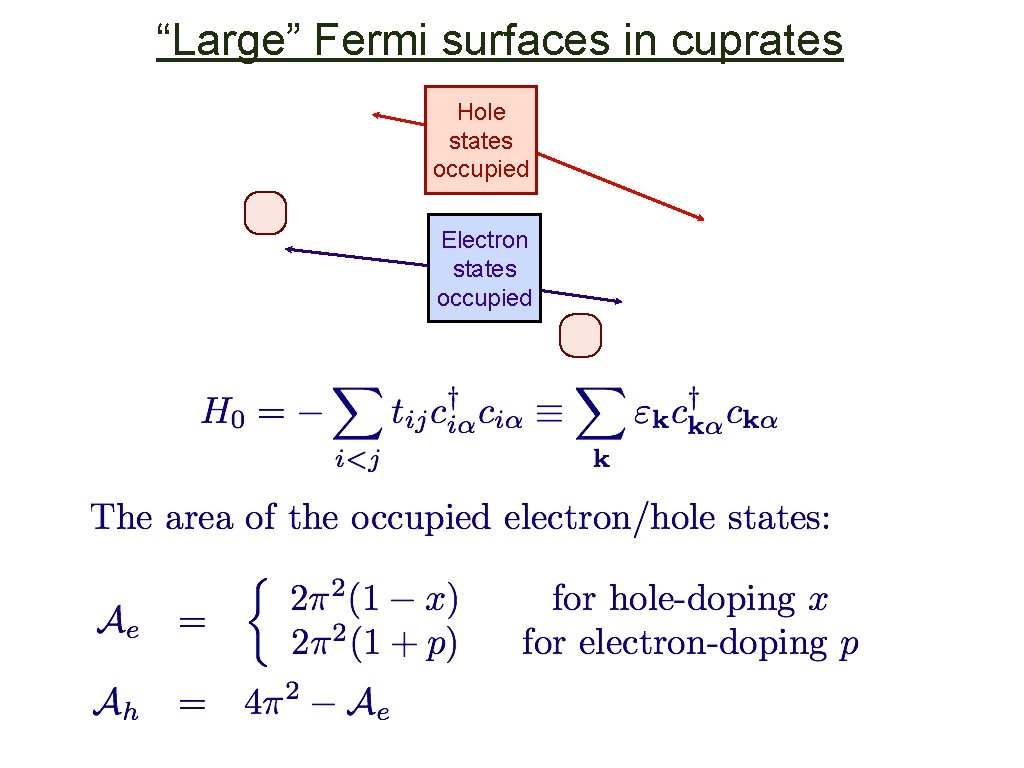
“Large” Fermi surfaces in cuprates Hole states occupied Electron states occupied
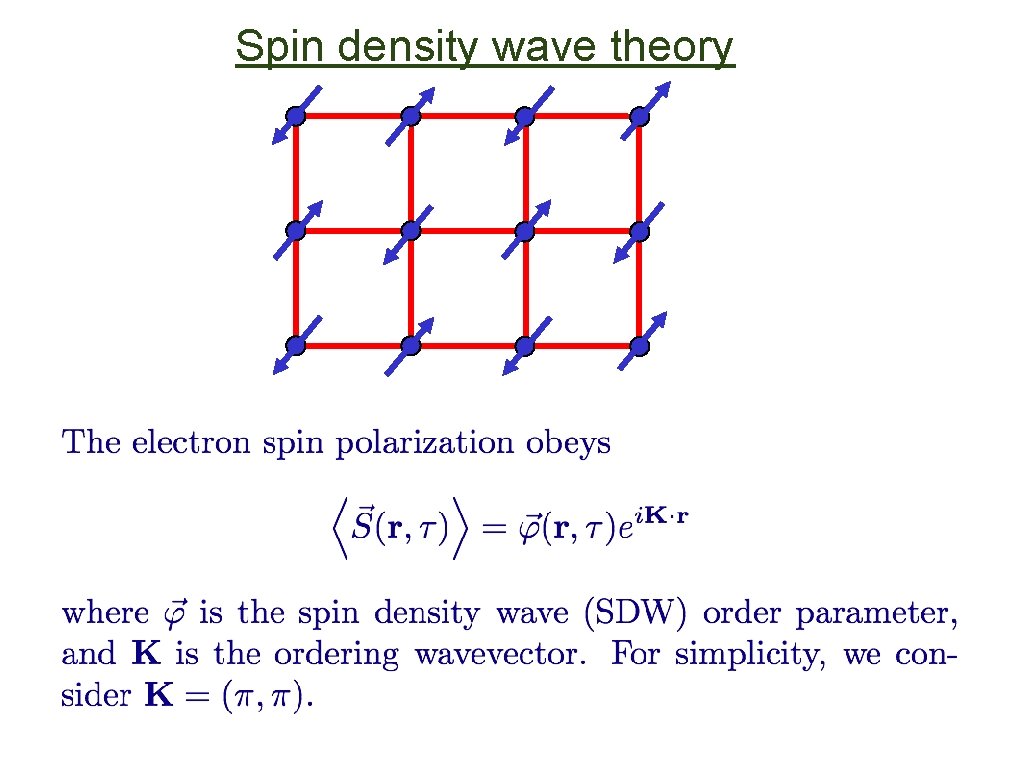
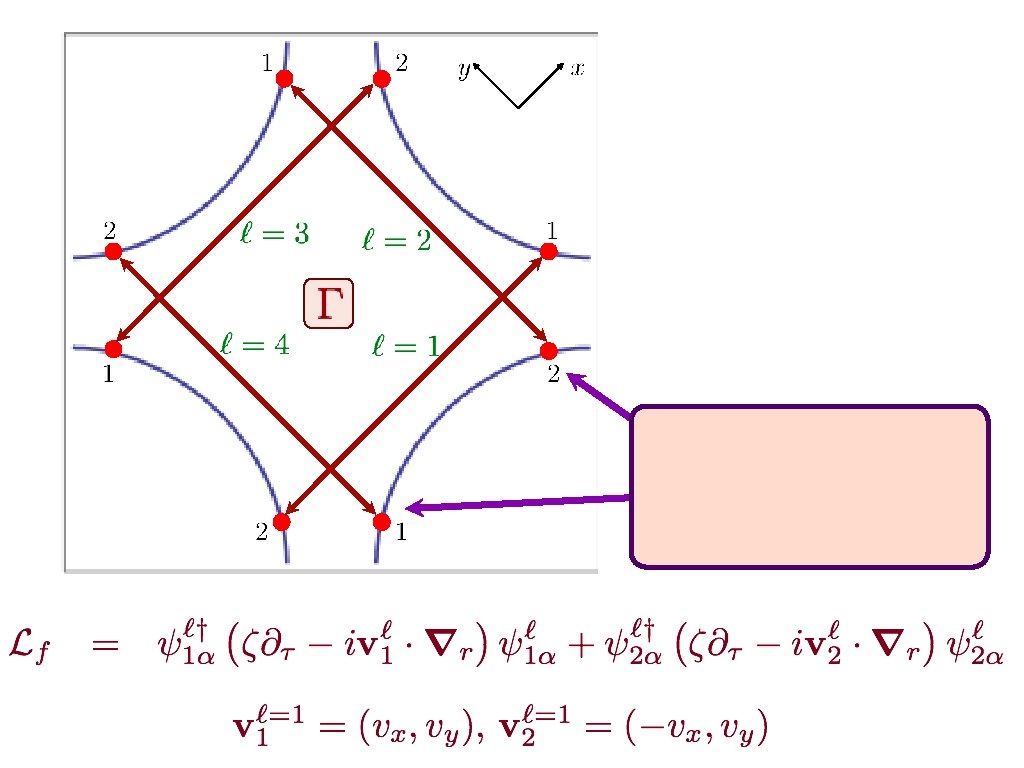
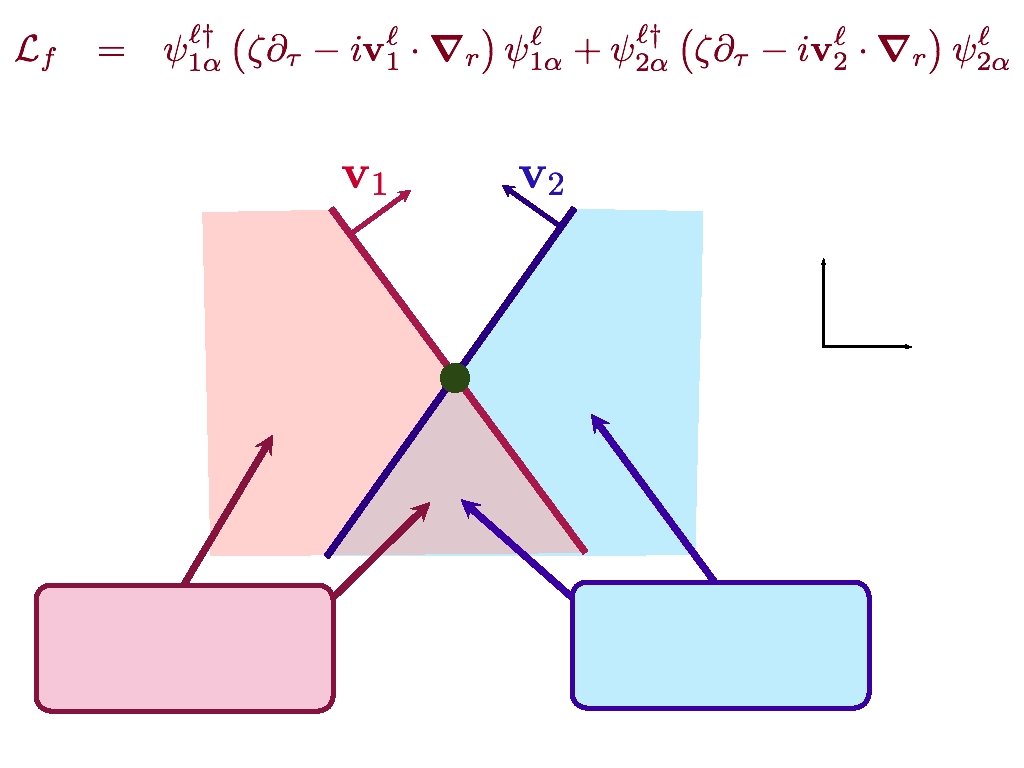
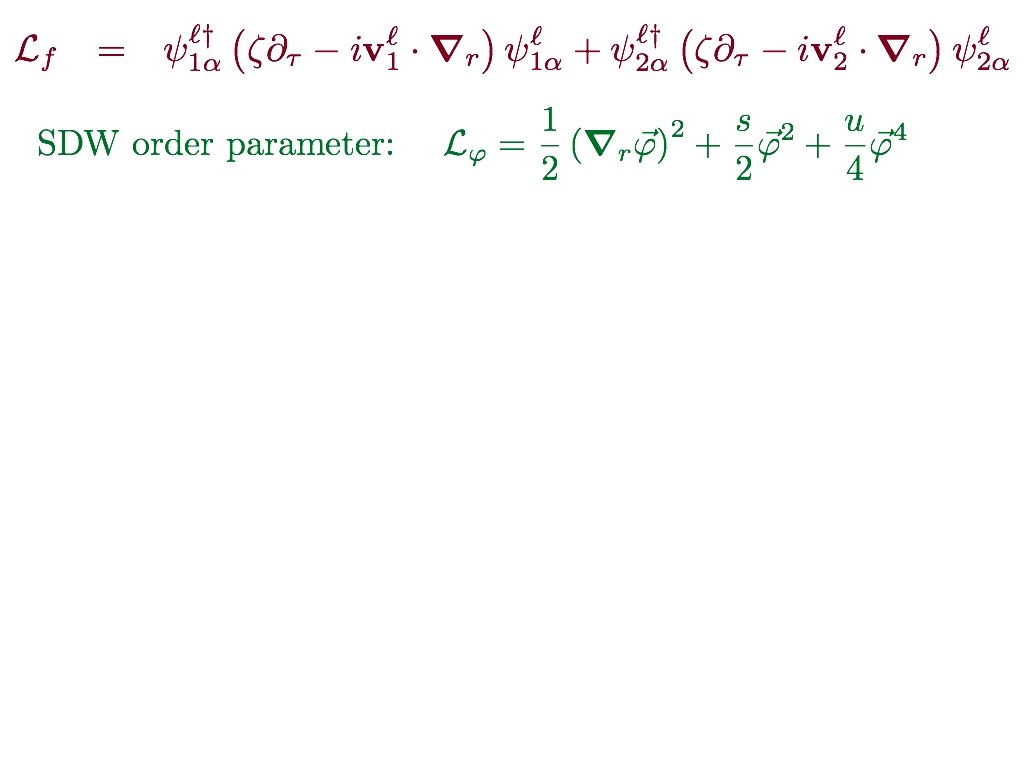
Spin density wave theory
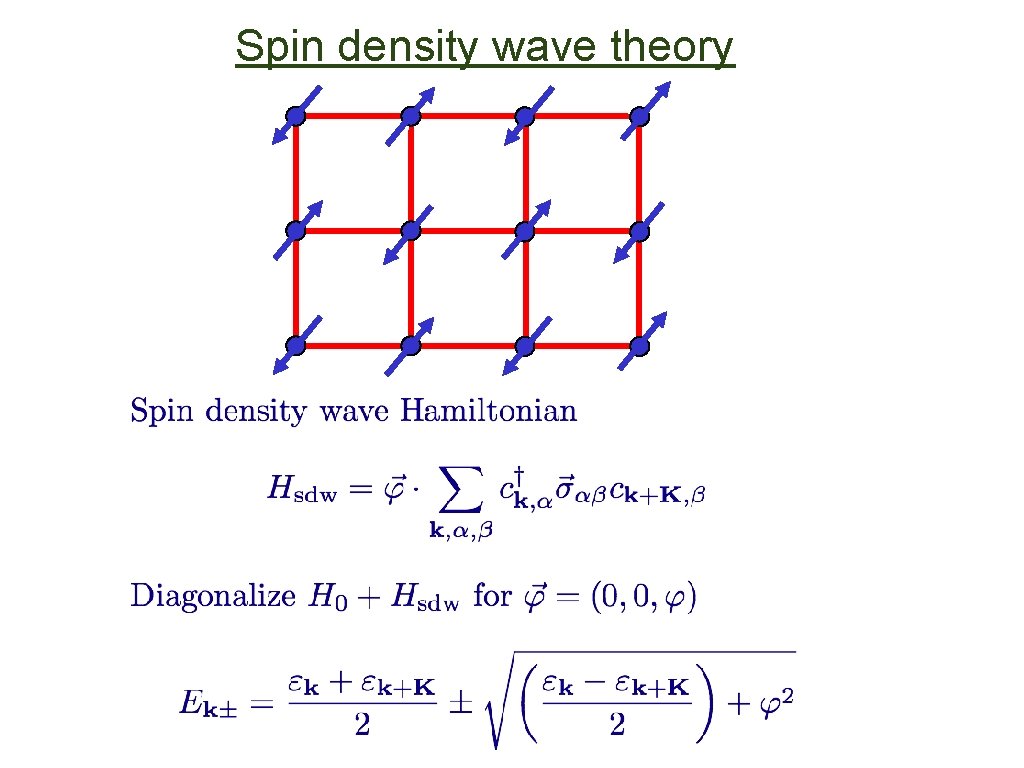
Spin density wave theory
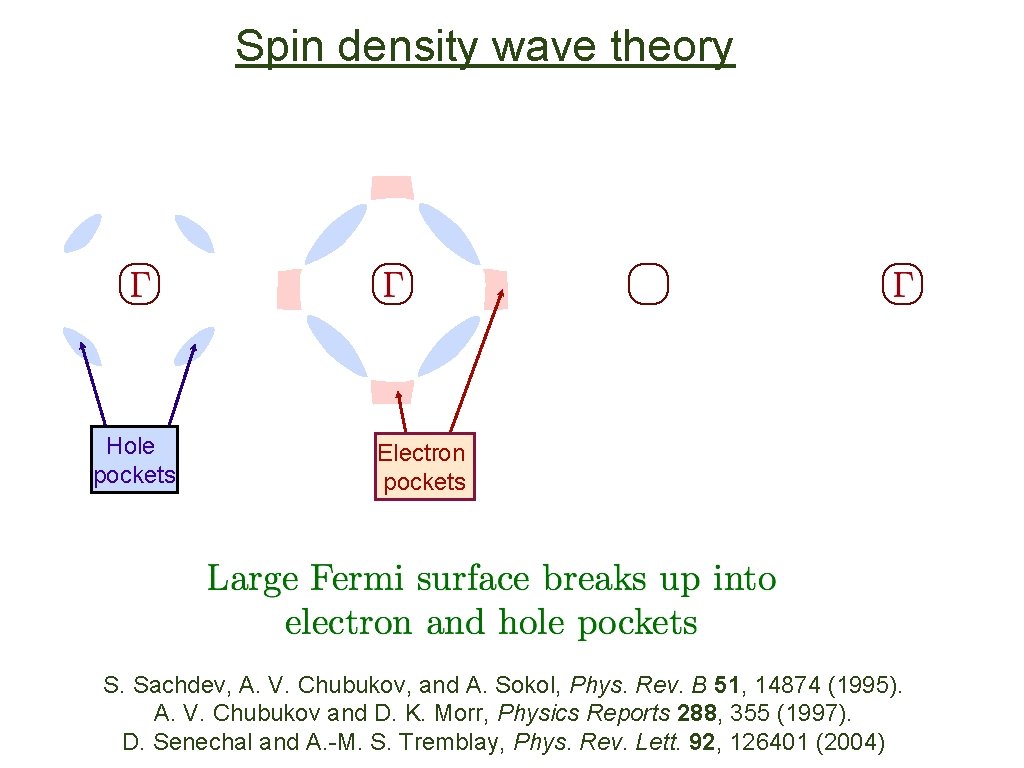
Spin density wave theory Hole pockets Electron pockets S. Sachdev, A. V. Chubukov, and A. Sokol, Phys. Rev. B 51, 14874 (1995). A. V. Chubukov and D. K. Morr, Physics Reports 288, 355 (1997). D. Senechal and A. -M. S. Tremblay, Phys. Rev. Lett. 92, 126401 (2004)
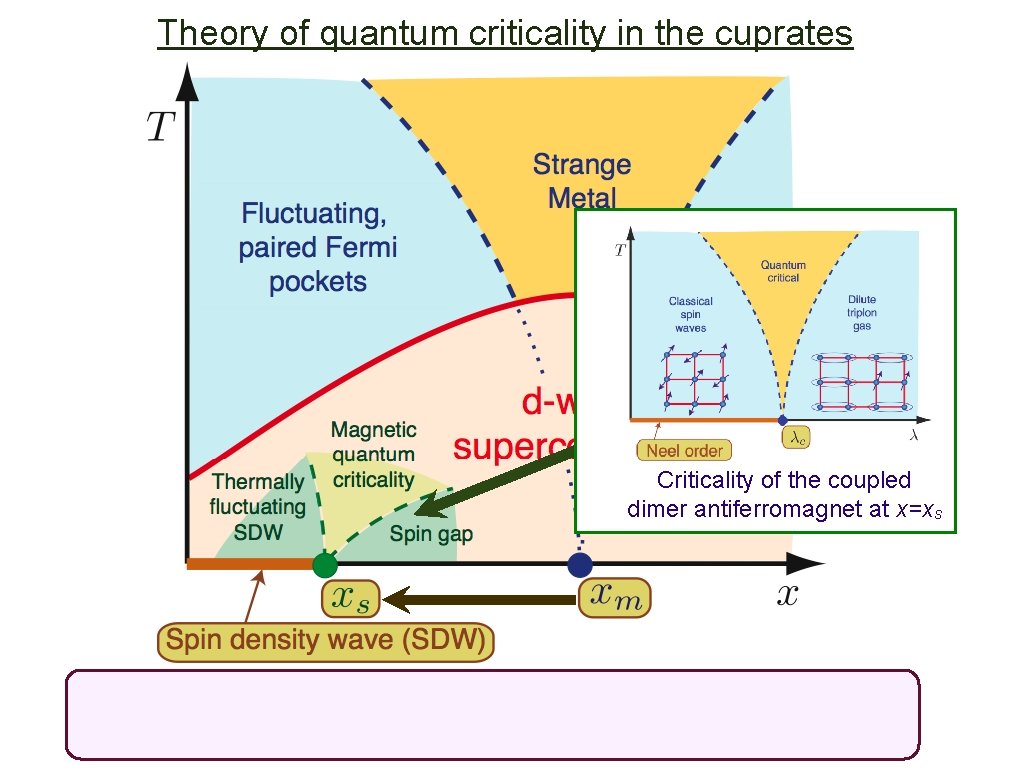
Theory of quantum criticality in the cuprates
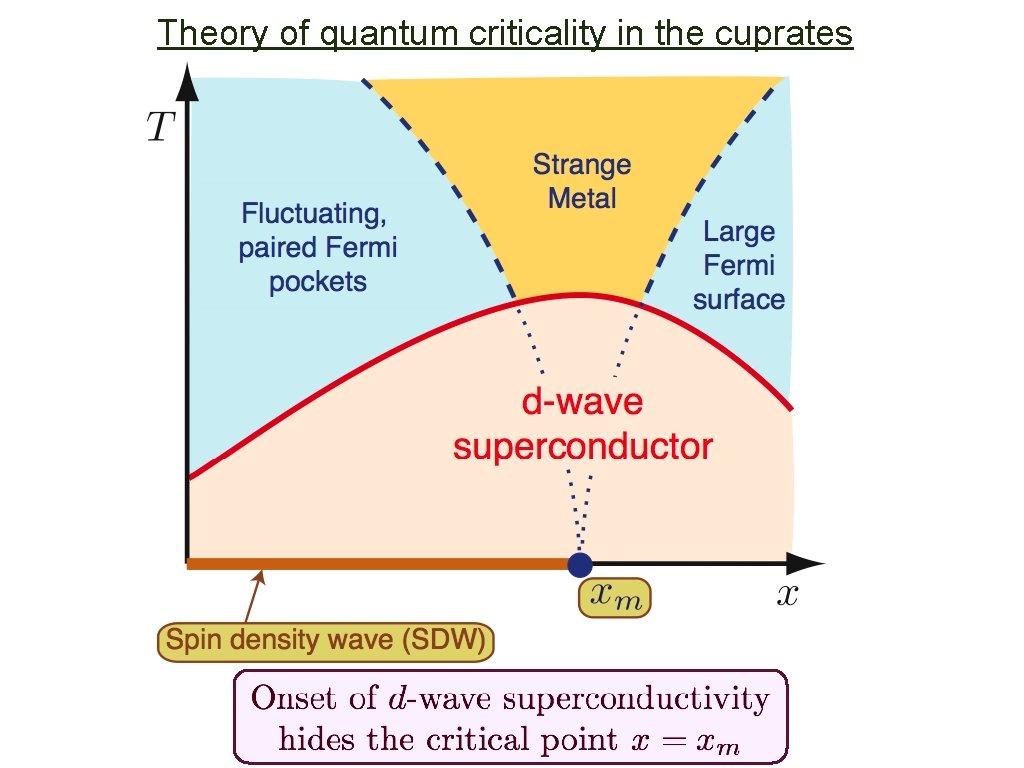
Theory of quantum criticality in the cuprates
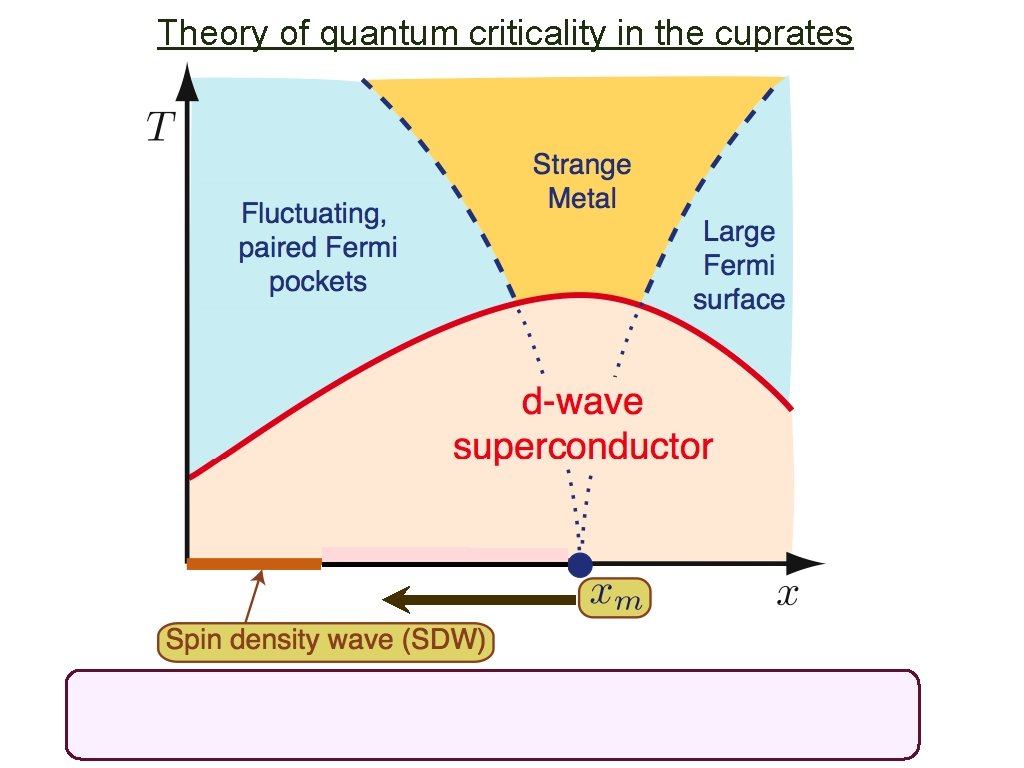
Theory of quantum criticality in the cuprates
Theory of quantum criticality in the cuprates
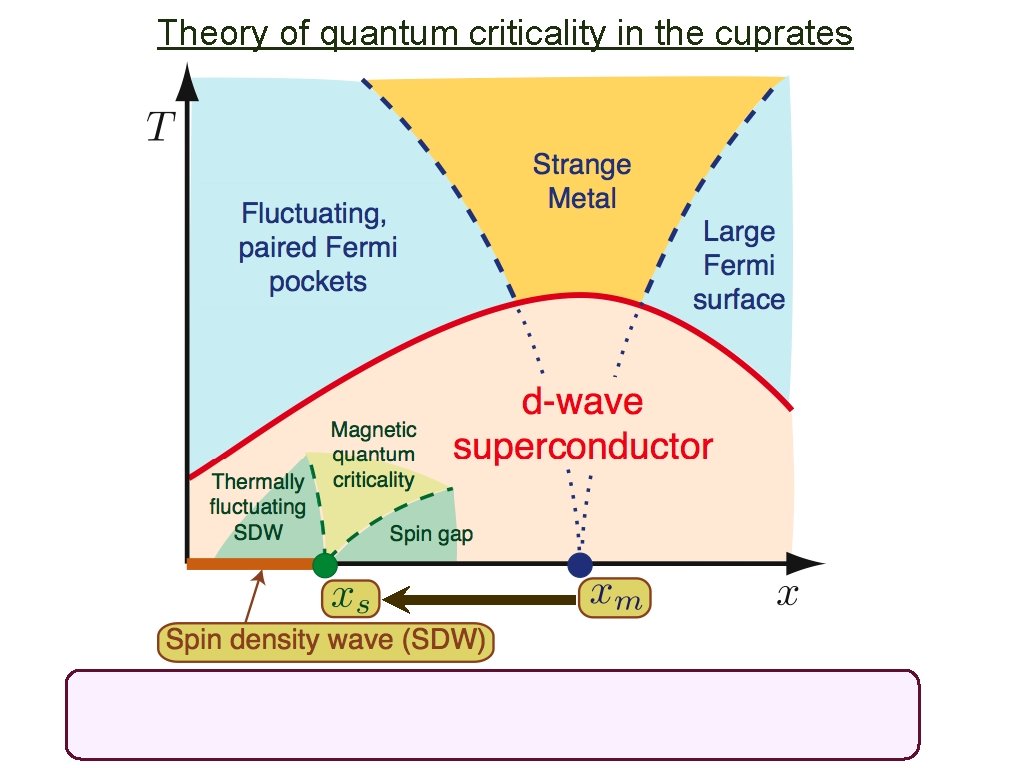
Theory of quantum criticality in the cuprates Criticality of the coupled dimer antiferromagnet at x=xs
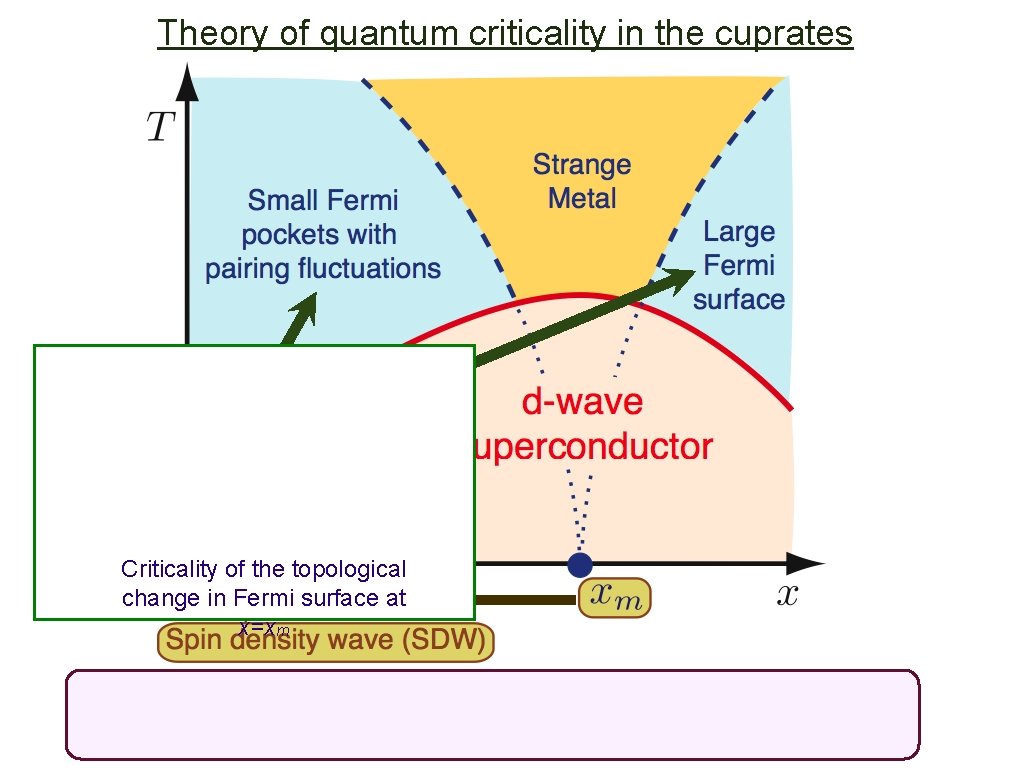
Theory of quantum criticality in the cuprates Criticality of the topological change in Fermi surface at x=xm
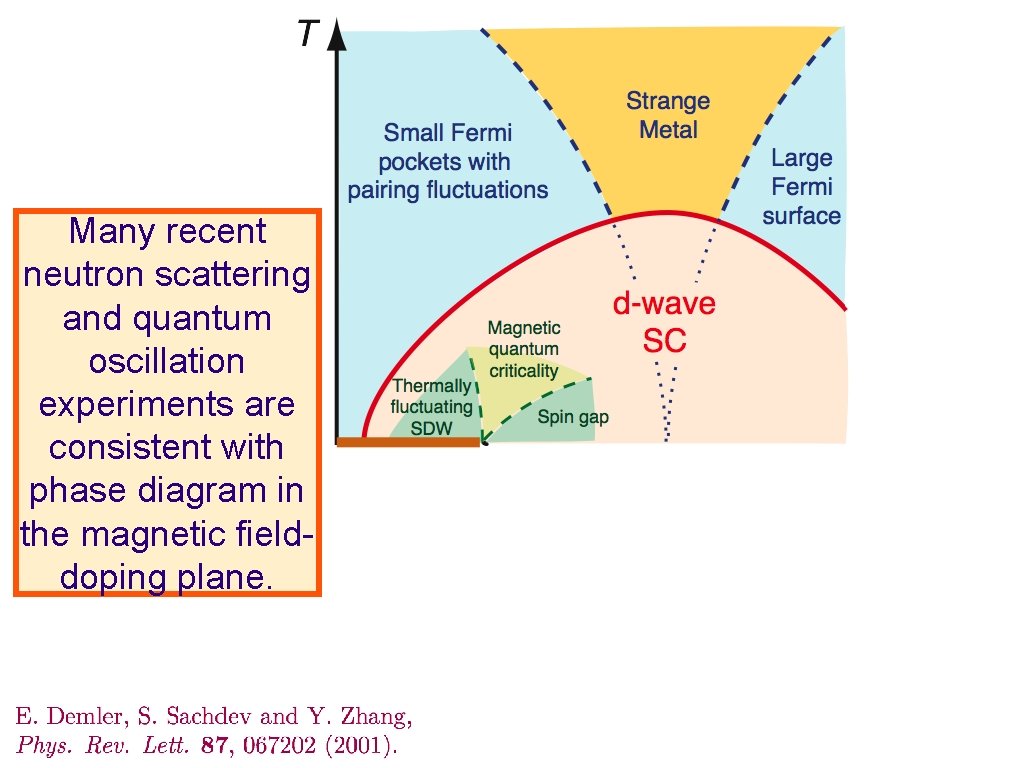
Many recent neutron scattering and quantum oscillation experiments are consistent with phase diagram in the magnetic fielddoping plane.
Theory of quantum criticality in the cuprates
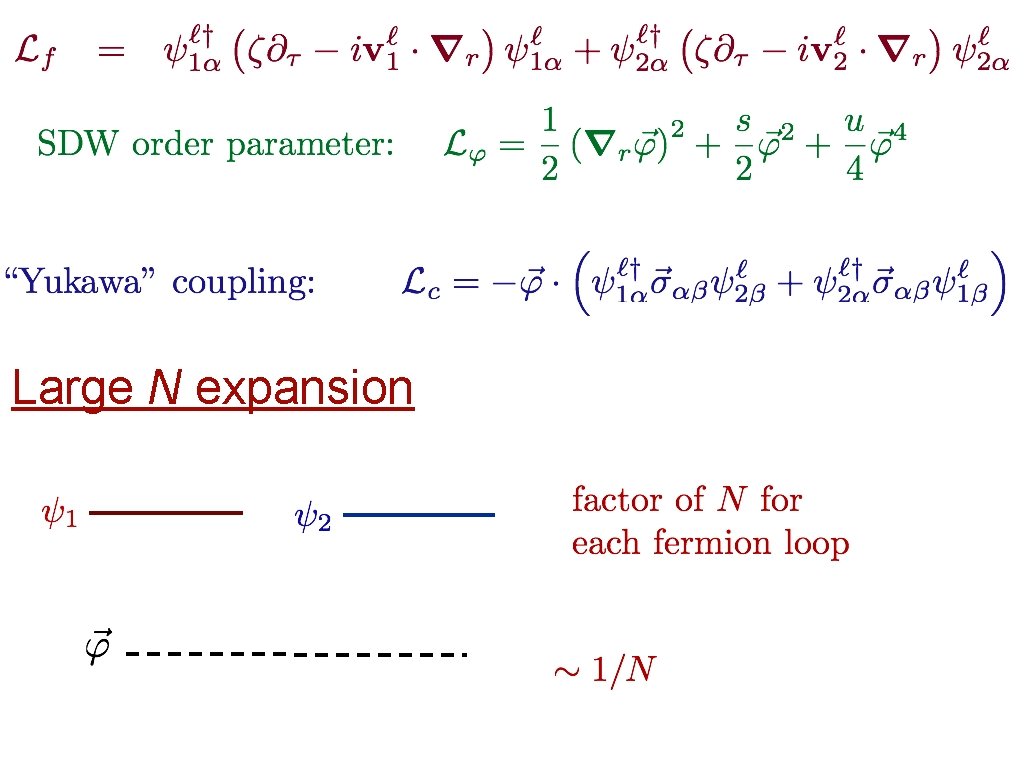
Large N expansion
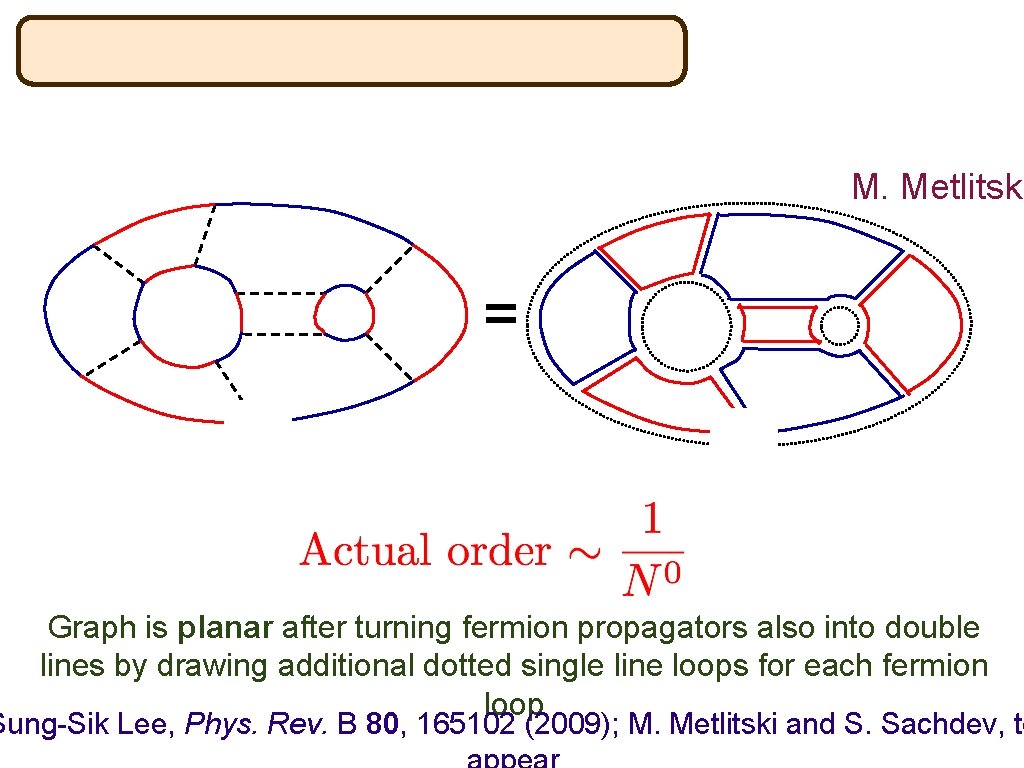
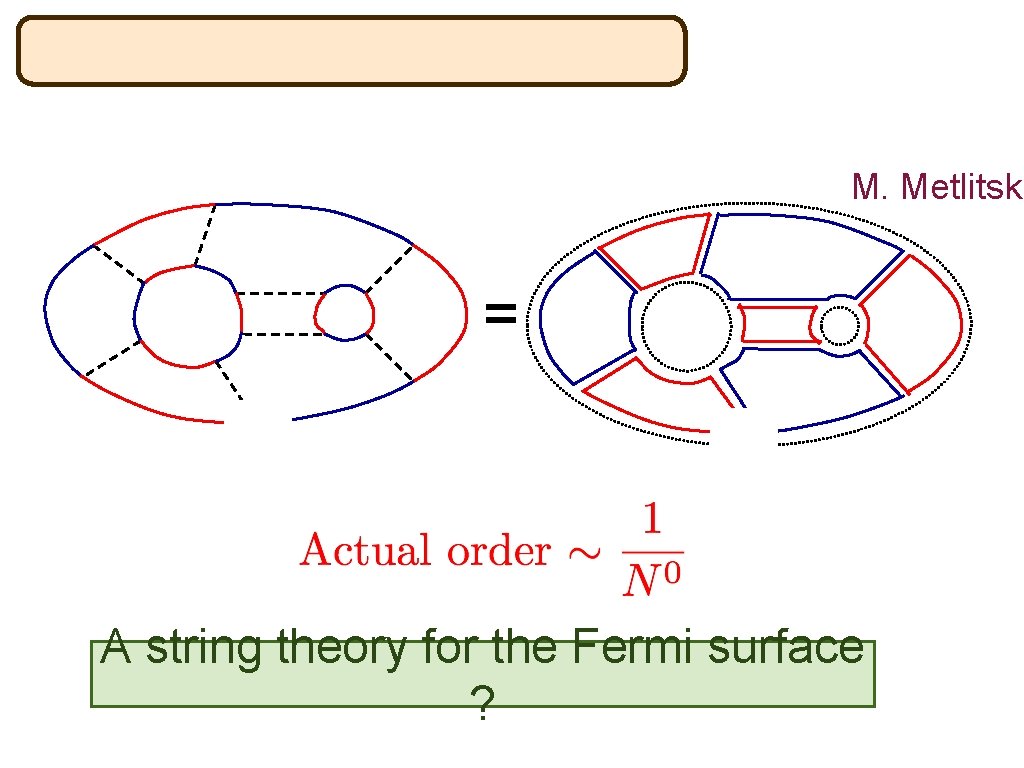
M. Metlitski = Graph is planar after turning fermion propagators also into double lines by drawing additional dotted single line loops for each fermion loop Sung-Sik Lee, Phys. Rev. B 80, 165102 (2009); M. Metlitski and S. Sachdev, to
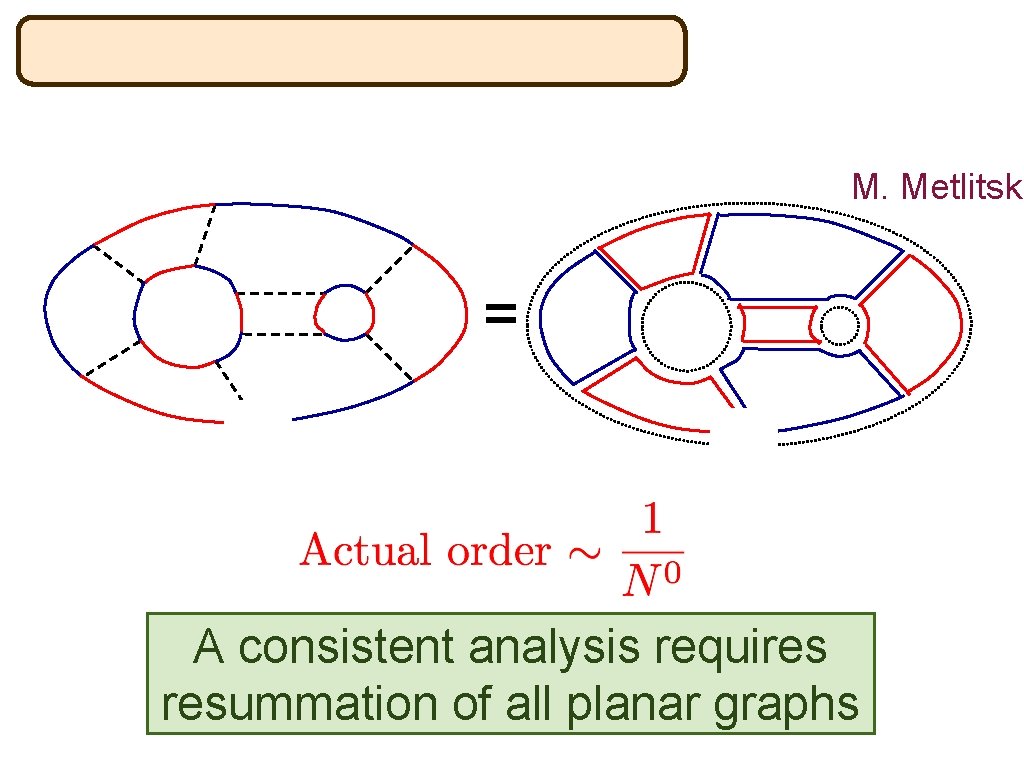
M. Metlitski = A consistent analysis requires resummation of all planar graphs
M. Metlitski = A string theory for the Fermi surface ?
Conclusions General theory of finite temperature dynamics and transport near quantum critical points, with applications to antiferromagnets, graphene, and superconductors
Conclusions The Ad. S/CFT offers promise in providing a new understanding of strongly interacting quantum matter at non-zero density
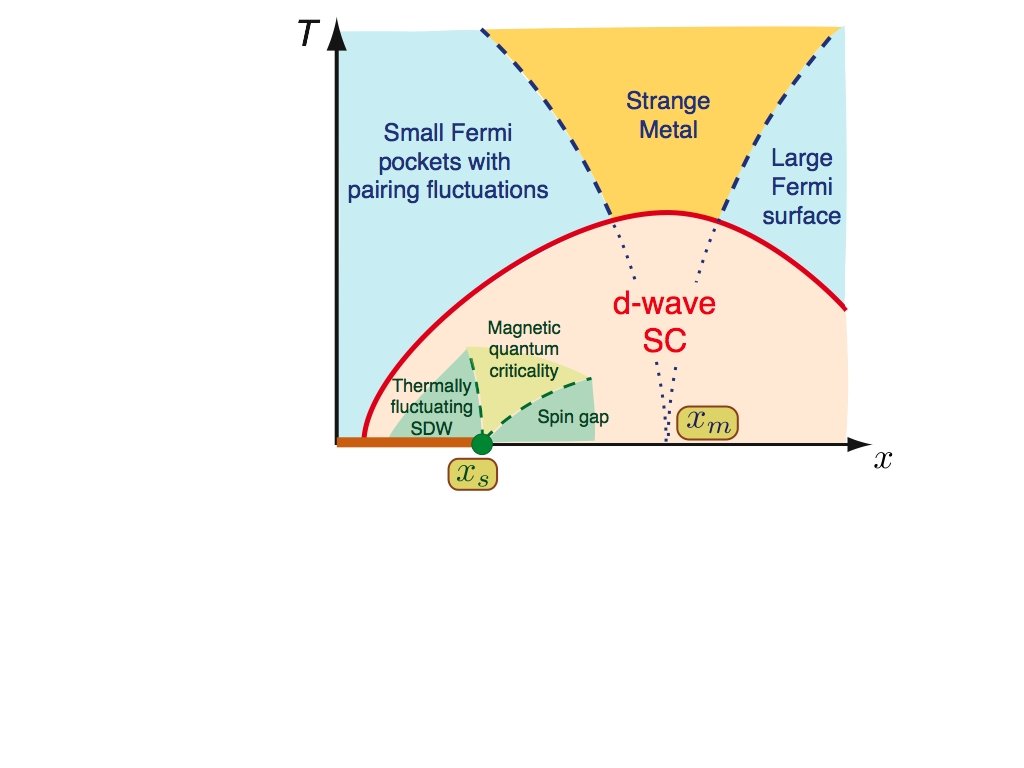
Conclusions Identified quantum criticality in cuprate superconductors with a critical point at optimal doping associated with onset of spin density wave order in a metal Elusive optimal doping quantum critical point has been “hiding in plain sight”. It is shifted to lower doping by the onset of superconductivity