
Quantum Mechanics and Spectroscopy Lauri Partanen Getting to
- Slides: 23
Quantum Mechanics and Spectroscopy Lauri Partanen
Getting to know operators Work with your pair: (10 mins) 1) Why is the concept of an operator important in quantum mechanics? How are eigenvalues connected to operators? 2) How are the concepts of the wavefunction and operator connected? 3) Give an example of an operator, its eigenfunction and its eigenvalue.
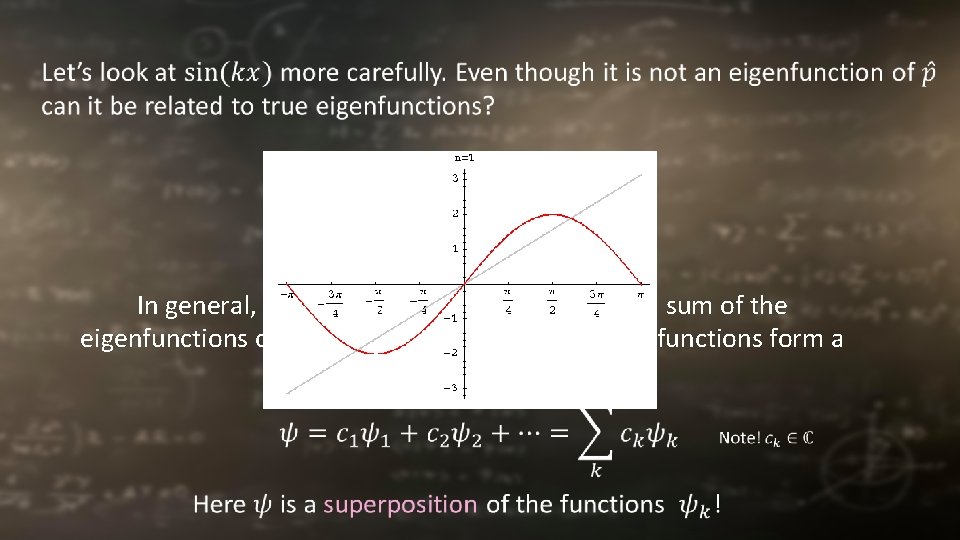
In general, we can represent any function as a sum of the eigenfunctions of an operator (as long as the eigenfunctions form a complete set)
Hermitian operators Work with your pair: (5 mins) 1) What are Hermitian operators? 2) What qualities do Hermitian operators have that make them central for quantum mechanics? 3) What is the Hamiltonian operator? Is it Hermitian?
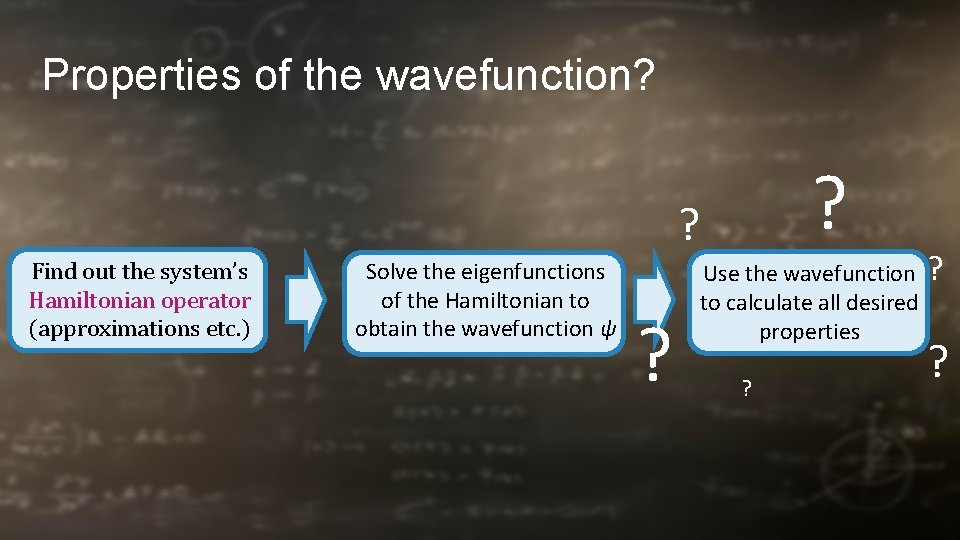
Properties of the wavefunction? ? ? Find out the system’s Hamiltonian operator (approximations etc. ) Solve the eigenfunctions of the Hamiltonian to obtain the wavefunction ψ ? Use the wavefunction ? to calculate all desired properties ? ?
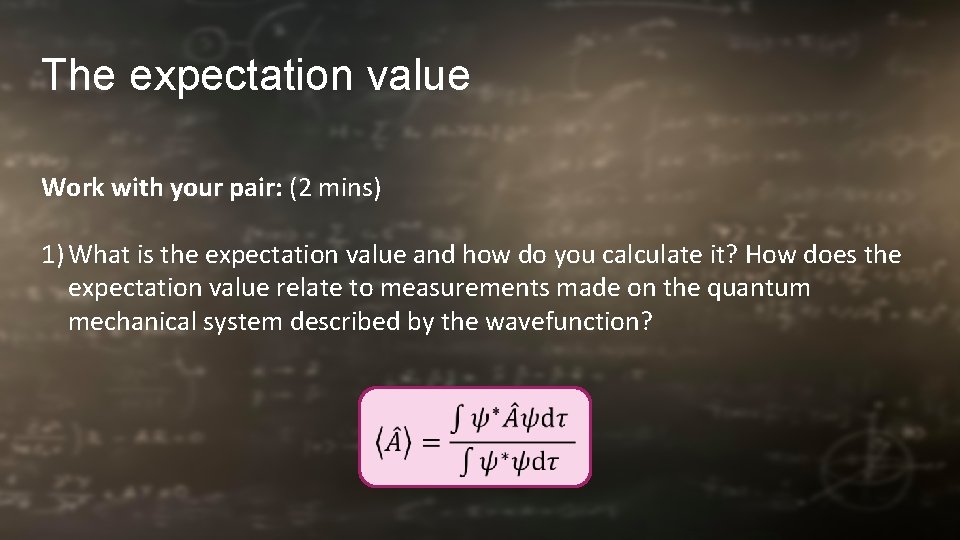
The expectation value Work with your pair: (2 mins) 1) What is the expectation value and how do you calculate it? How does the expectation value relate to measurements made on the quantum mechanical system described by the wavefunction?
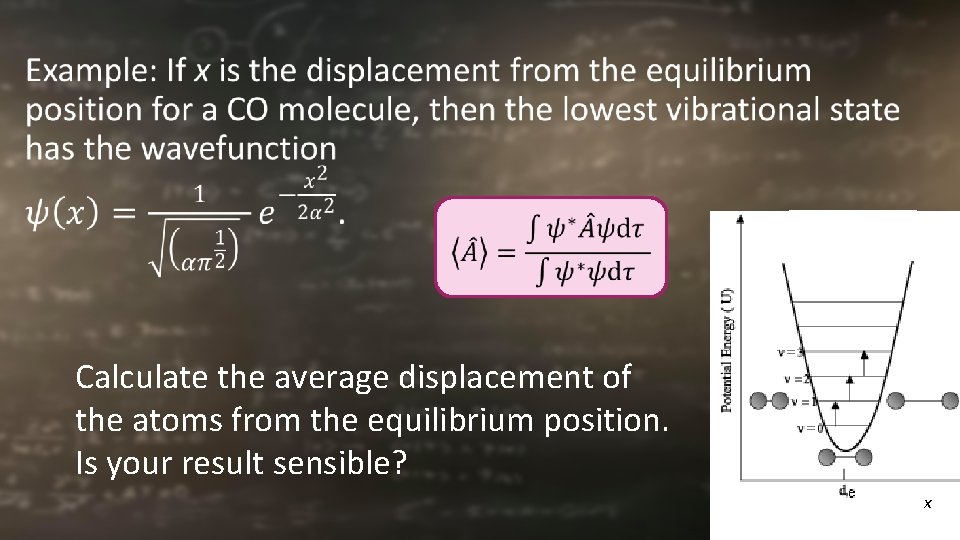
Calculate the average displacement of the atoms from the equilibrium position. Is your result sensible? x
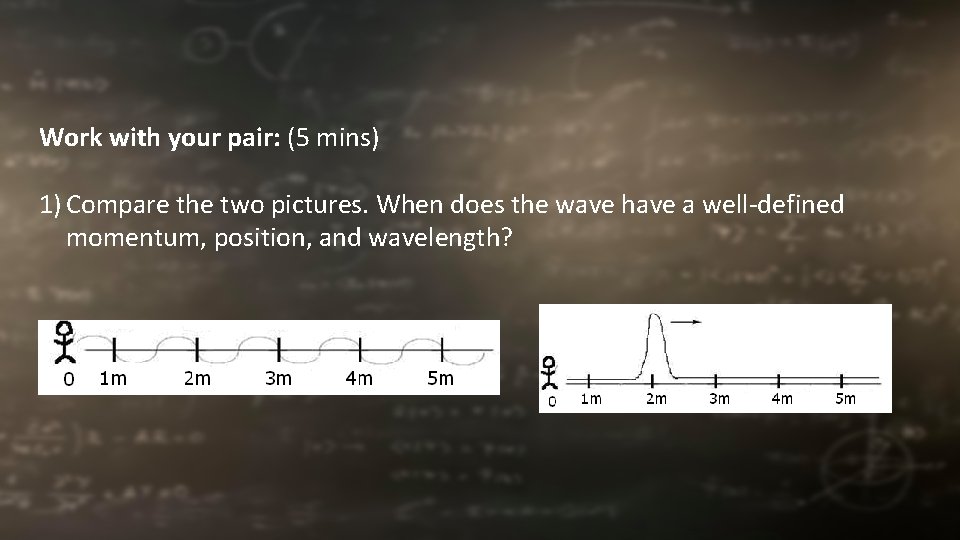
Work with your pair: (5 mins) 1) Compare the two pictures. When does the wave have a well-defined momentum, position, and wavelength?
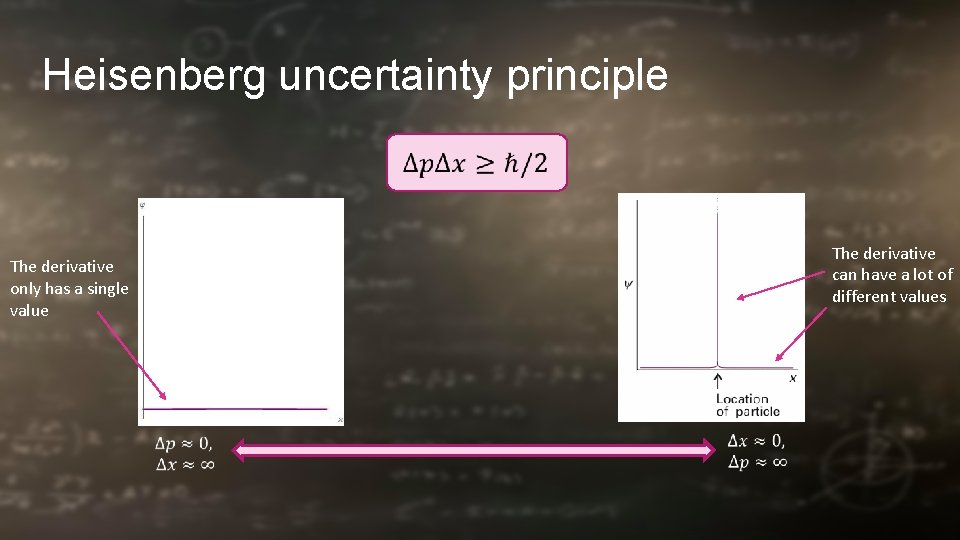
Heisenberg uncertainty principle The derivative can have a lot of different values The derivative only has a single value
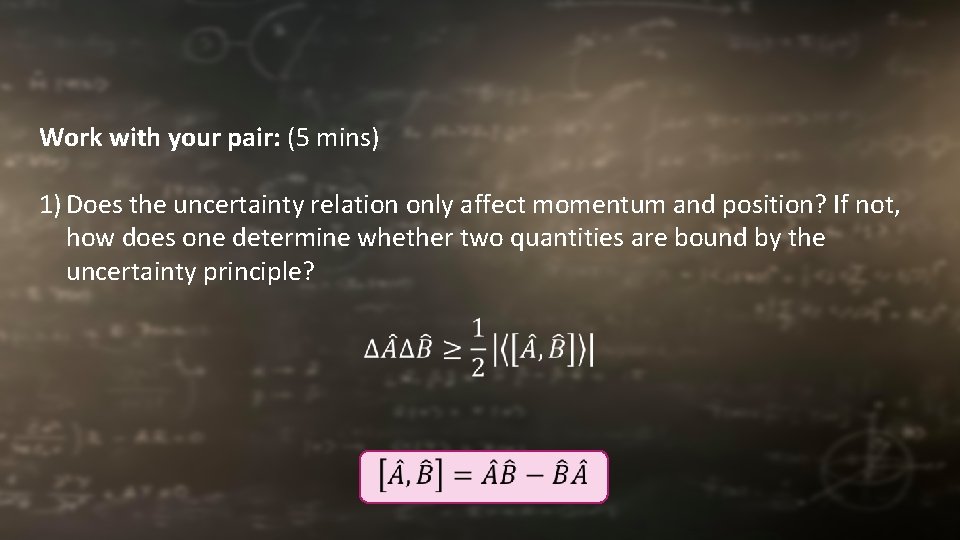
Work with your pair: (5 mins) 1) Does the uncertainty relation only affect momentum and position? If not, how does one determine whether two quantities are bound by the uncertainty principle?
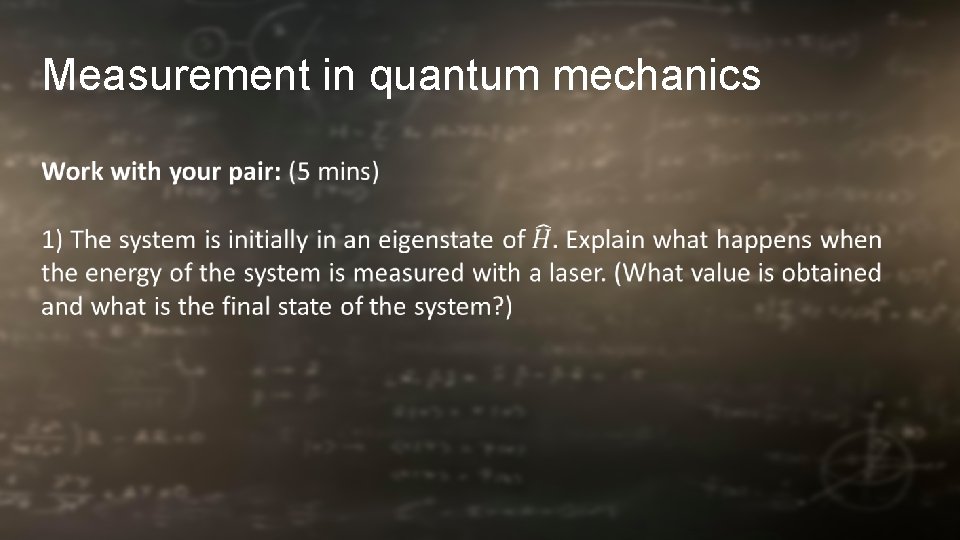
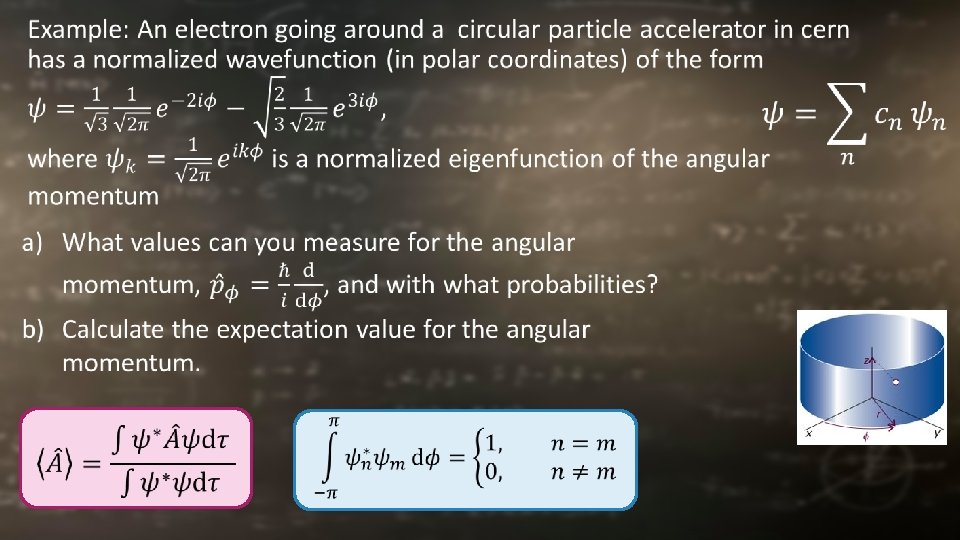
Measurement in quantum mechanics
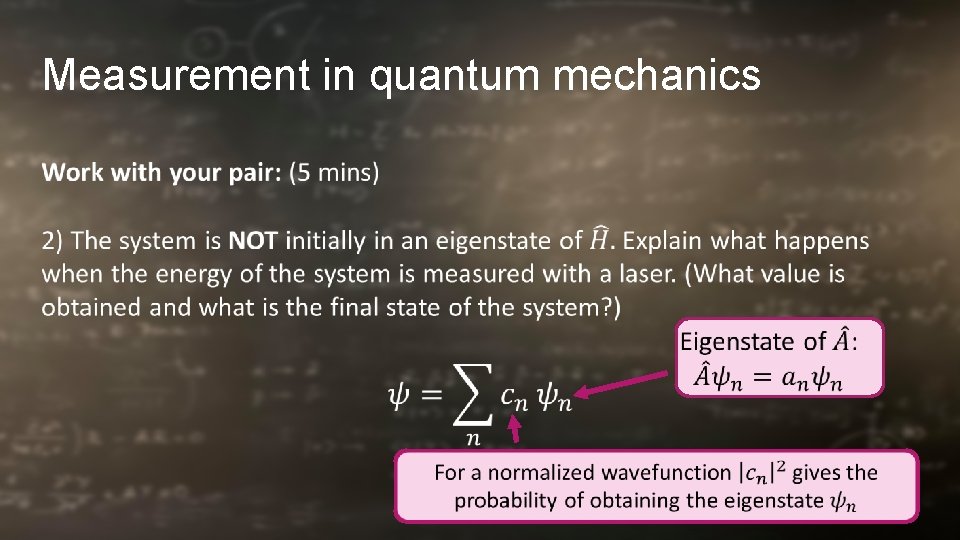
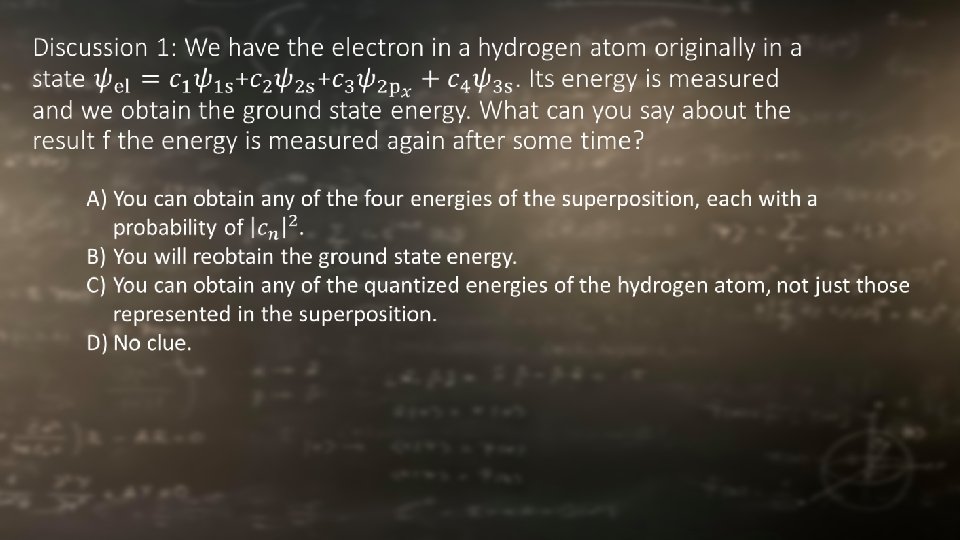
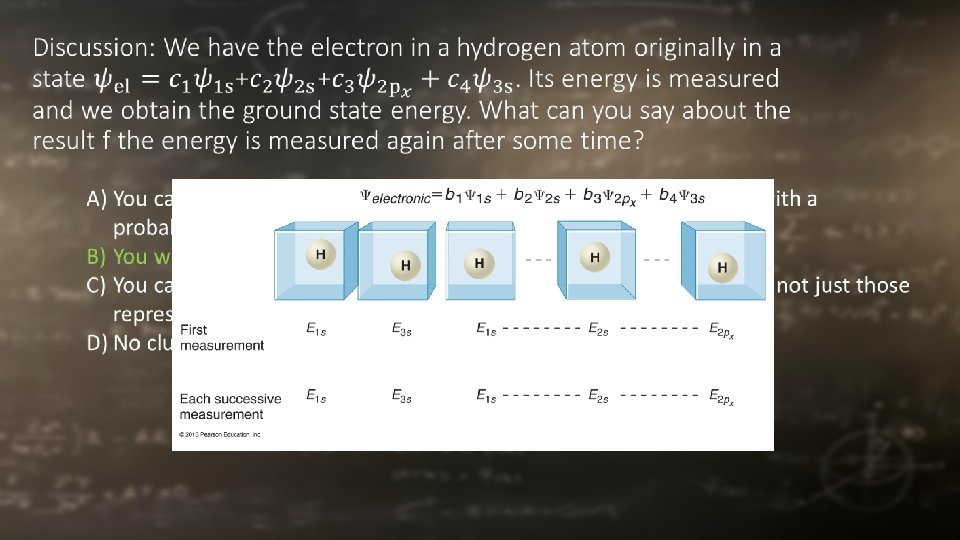
Measurement in quantum mechanics
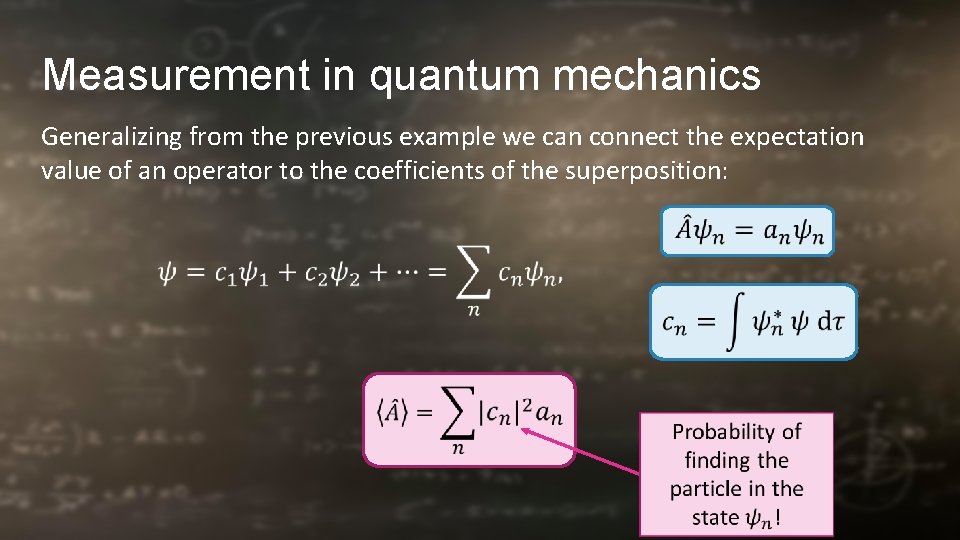
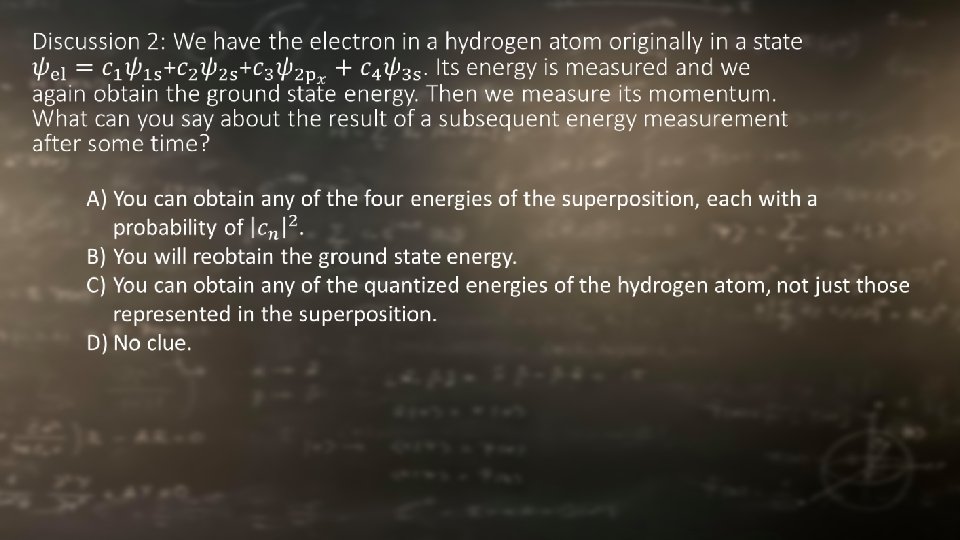
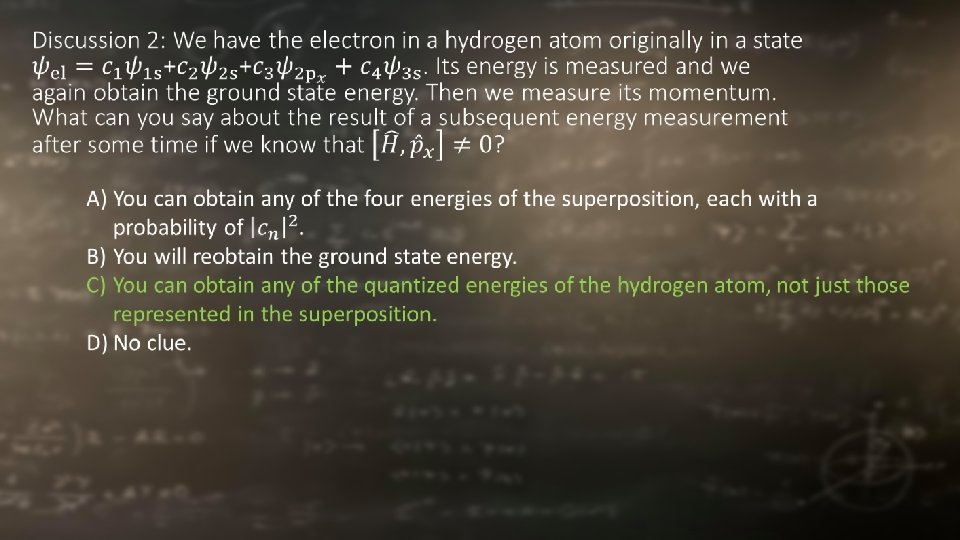
Measurement in quantum mechanics Generalizing from the previous example we can connect the expectation value of an operator to the coefficients of the superposition:
Figure references Unless otherwise noted all Figures are taken from Chapter 7 of Atkins, P. ja De Paula, J. , L. (2014), Atkins’ Physical Chemistry, 10 th edition, Oxford University Press, Oxford, New York.