
Quantum Hall Effect in a Spinning Disk Geometry
- Slides: 26
Quantum Hall Effect in a Spinning Disk Geometry Syed Ali Raza Supervisor: Dr. Pervez Hoodbhoy
Outline �A brief Overview of Quantum Hall Effect �Spinning Disk with magnetic Field �Percolation �Future investigations
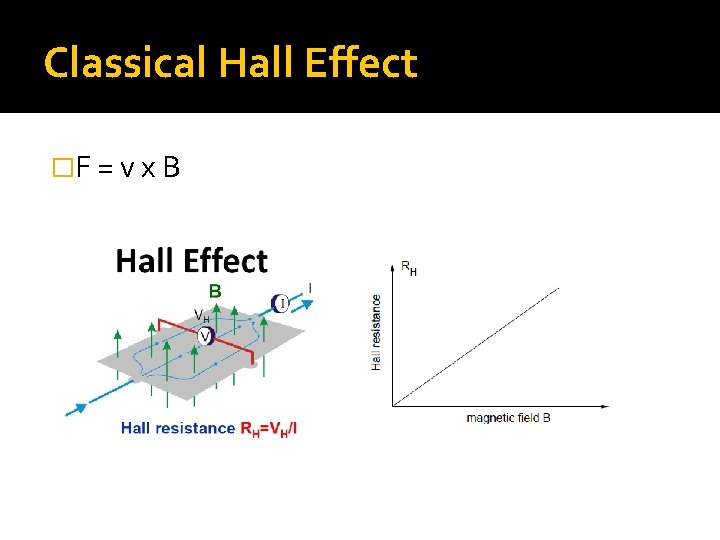
Classical Hall Effect �F = v x B
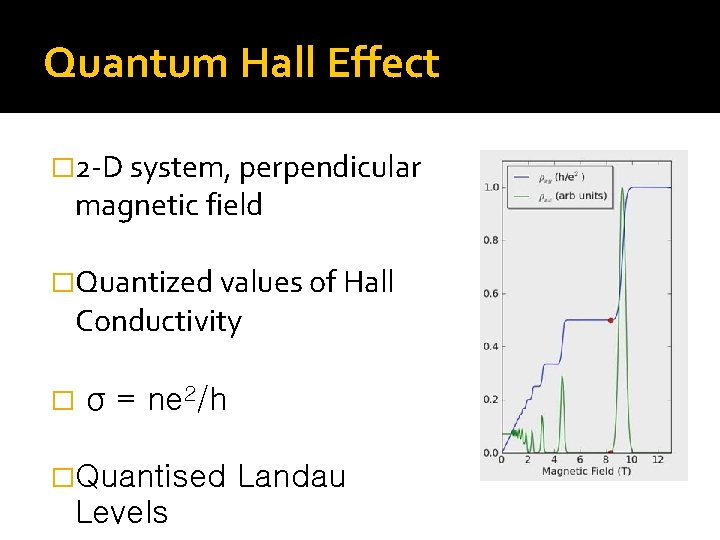
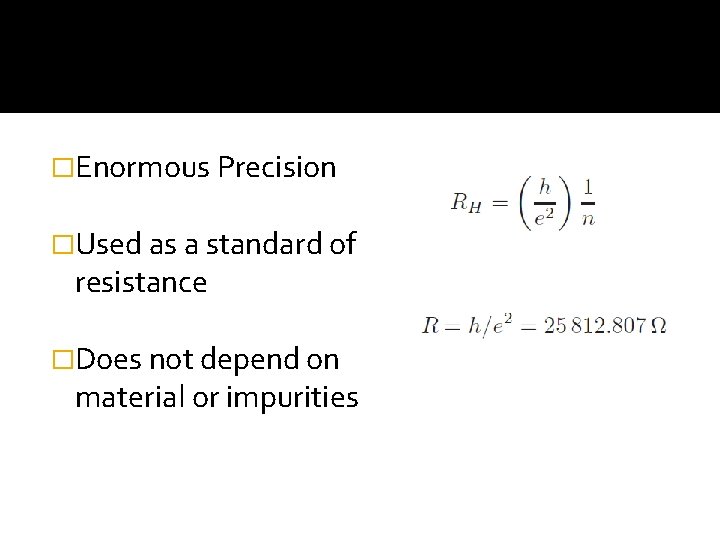
Quantum Hall Effect � 2 -D system, perpendicular magnetic field �Quantized values of Hall Conductivity � σ = ne 2/h �Quantised Levels Landau
�Enormous Precision �Used as a standard of resistance �Does not depend on material or impurities
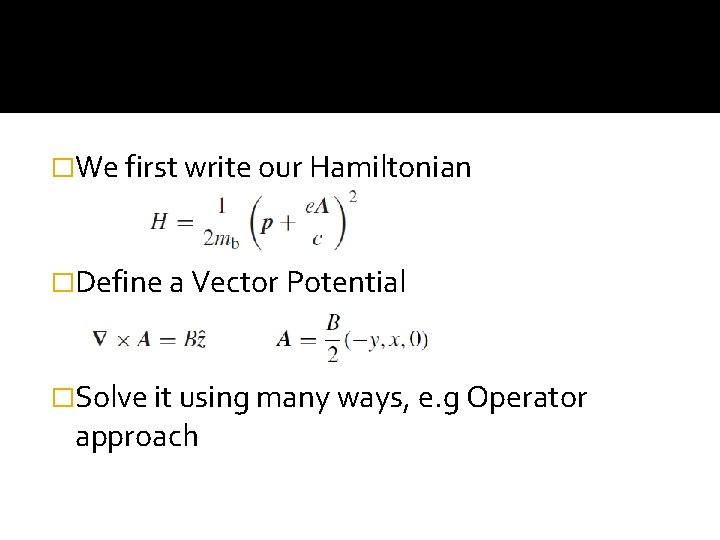
�We first write our Hamiltonian �Define a Vector Potential �Solve it using many ways, e. g Operator approach
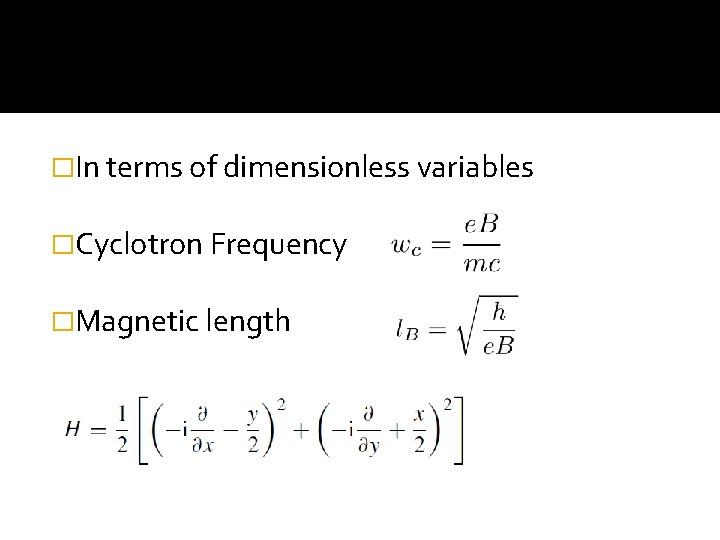
�In terms of dimensionless variables �Cyclotron Frequency �Magnetic length
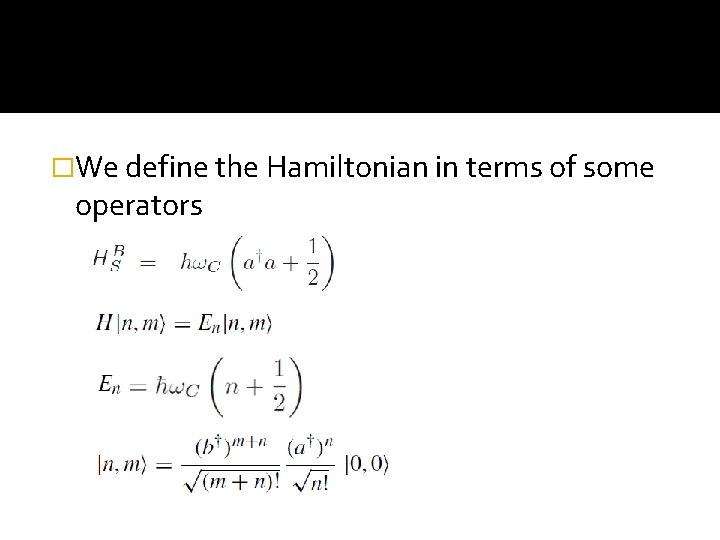
�We define the Hamiltonian in terms of some operators
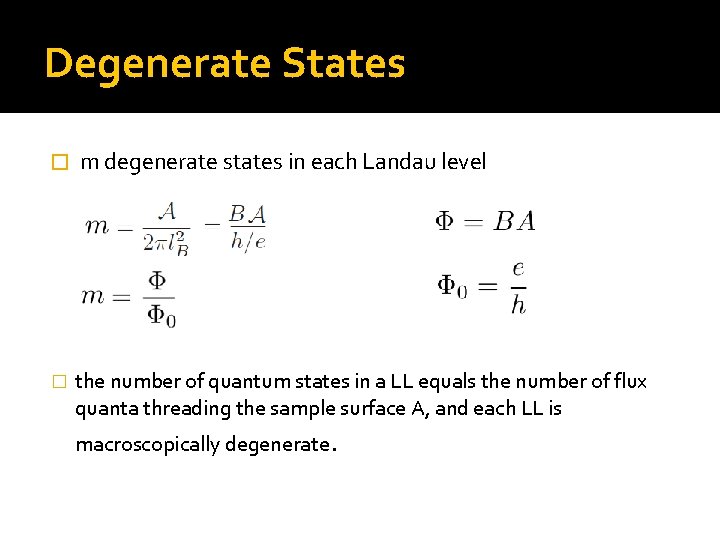
Degenerate States � m degenerate states in each Landau level � the number of quantum states in a LL equals the number of flux quanta threading the sample surface A, and each LL is macroscopically degenerate.
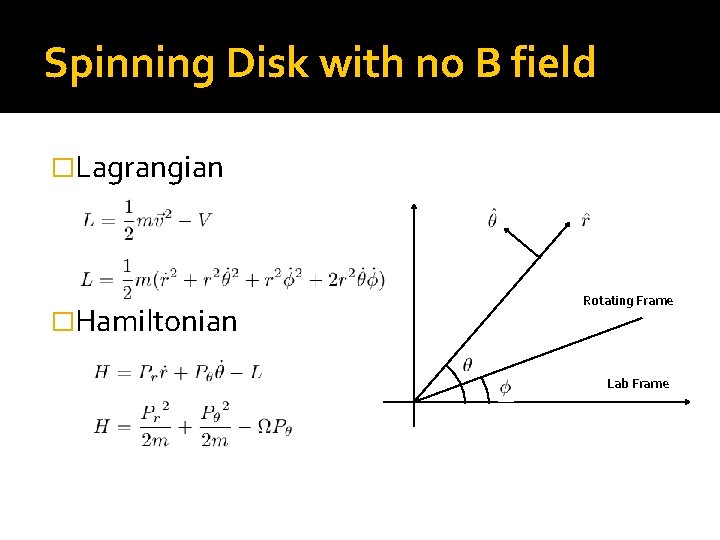
Spinning Disk with no B field �Lagrangian �Hamiltonian Rotating Frame Lab Frame
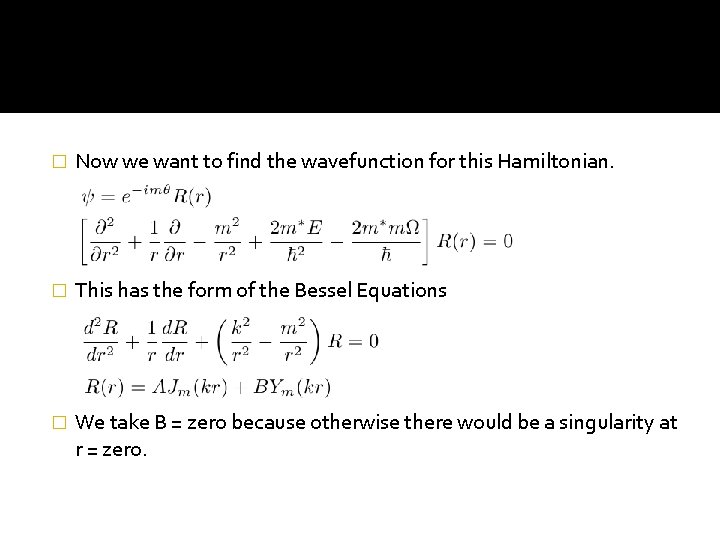
� Now we want to find the wavefunction for this Hamiltonian. � This has the form of the Bessel Equations � We take B = zero because otherwise there would be a singularity at r = zero.
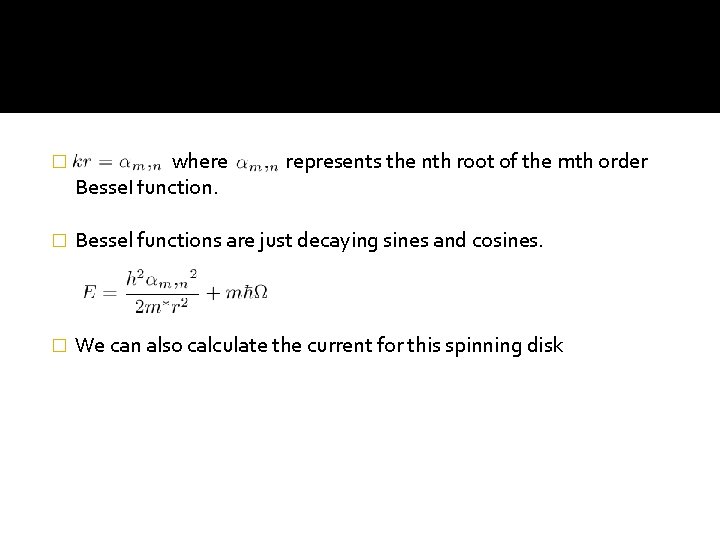
� where Bessel function. represents the nth root of the mth order � Bessel functions are just decaying sines and cosines. � We can also calculate the current for this spinning disk
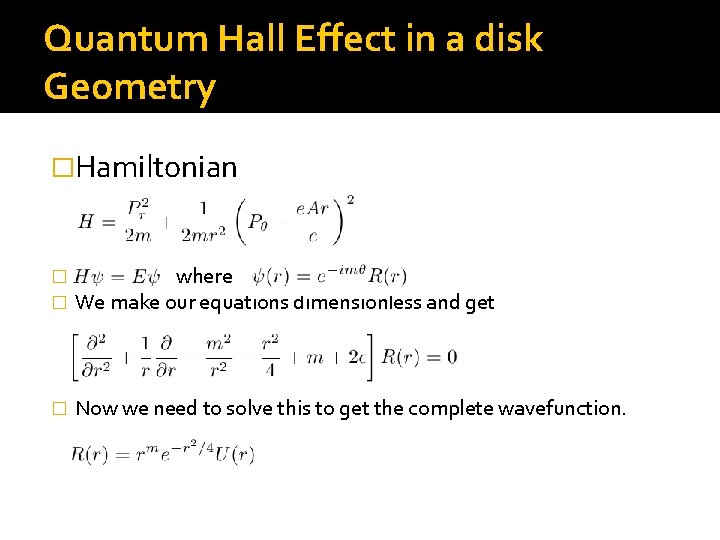
Quantum Hall Effect in a disk Geometry �Hamiltonian � � where We make our equations dimensionless and get � Now we need to solve this to get the complete wavefunction.
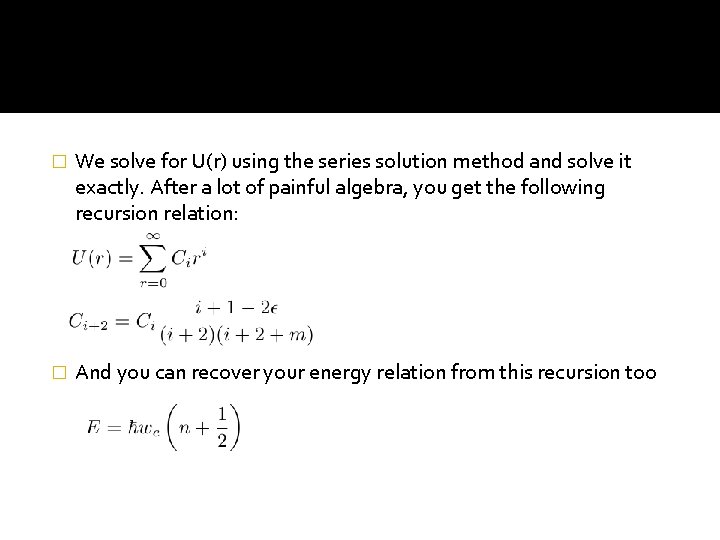
� We solve for U(r) using the series solution method and solve it exactly. After a lot of painful algebra, you get the following recursion relation: � And you can recover your energy relation from this recursion too
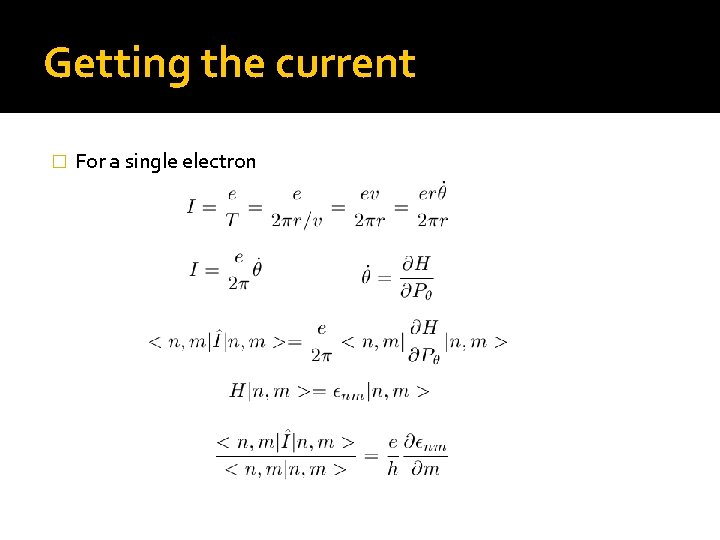
Getting the current � For a single electron
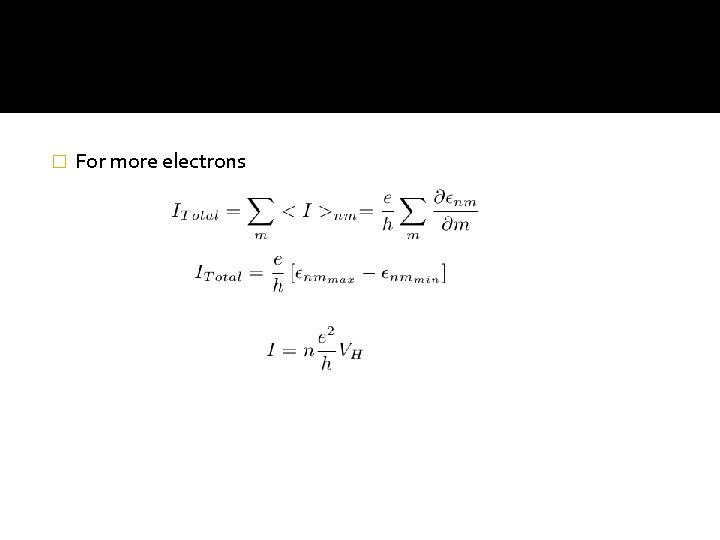
� For more electrons
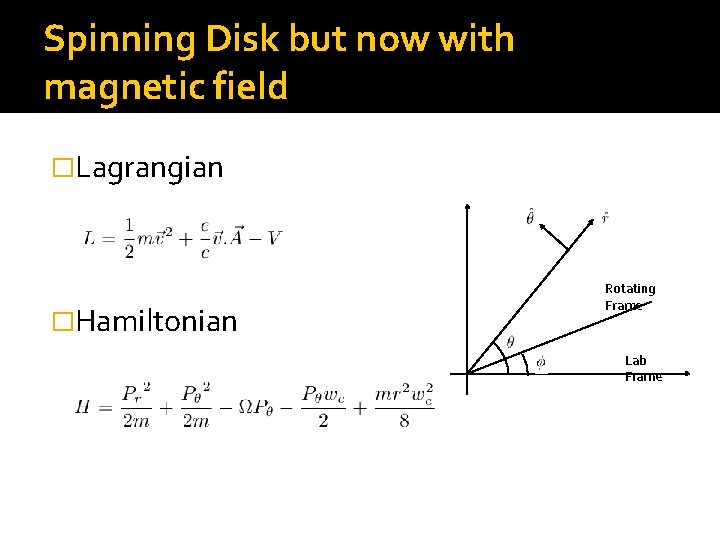
Spinning Disk but now with magnetic field �Lagrangian �Hamiltonian Rotating Frame Lab Frame
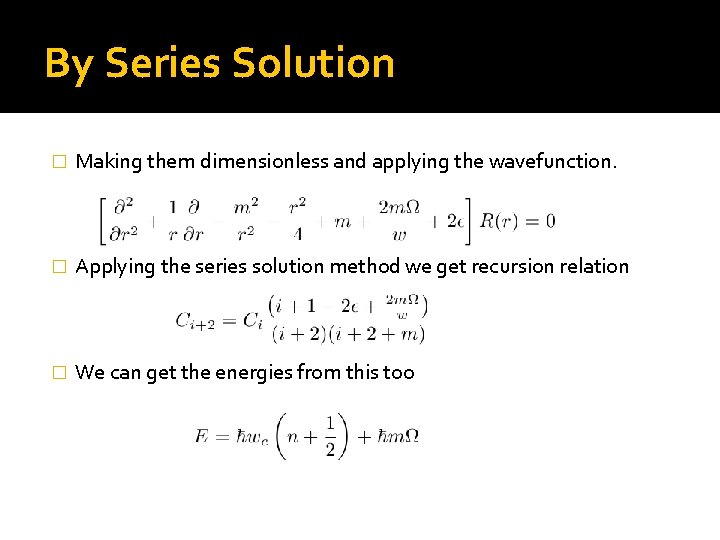
By Series Solution � Making them dimensionless and applying the wavefunction. � Applying the series solution method we get recursion relation � We can get the energies from this too
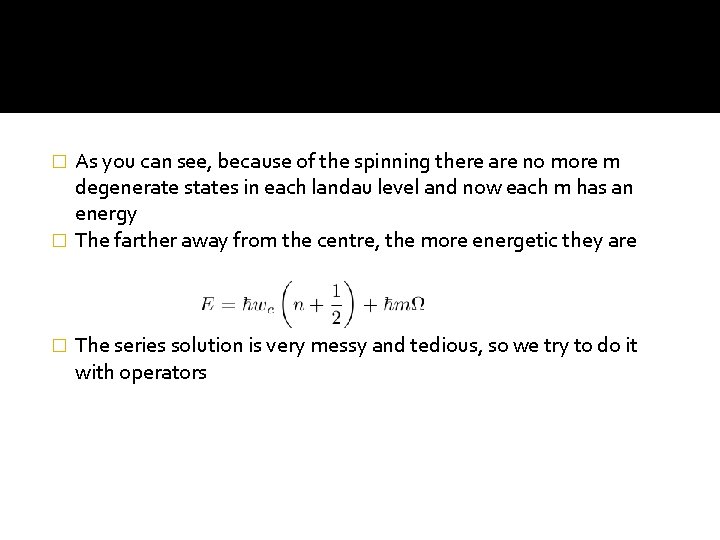
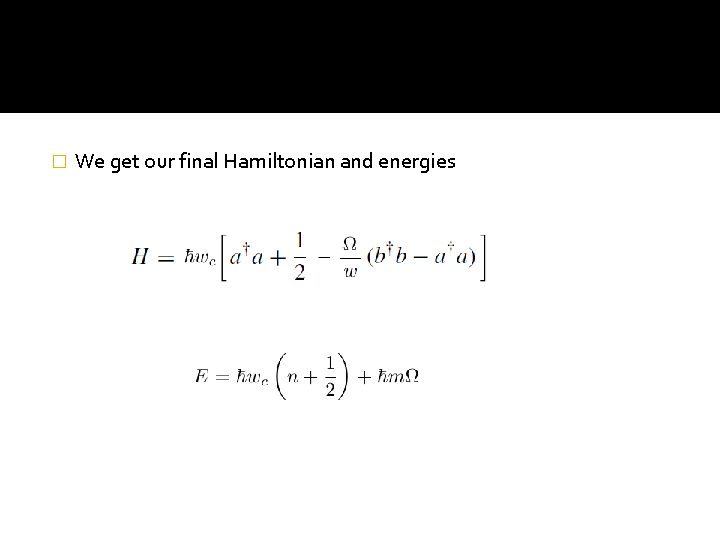
As you can see, because of the spinning there are no more m degenerate states in each landau level and now each m has an energy � The farther away from the centre, the more energetic they are � � The series solution is very messy and tedious, so we try to do it with operators
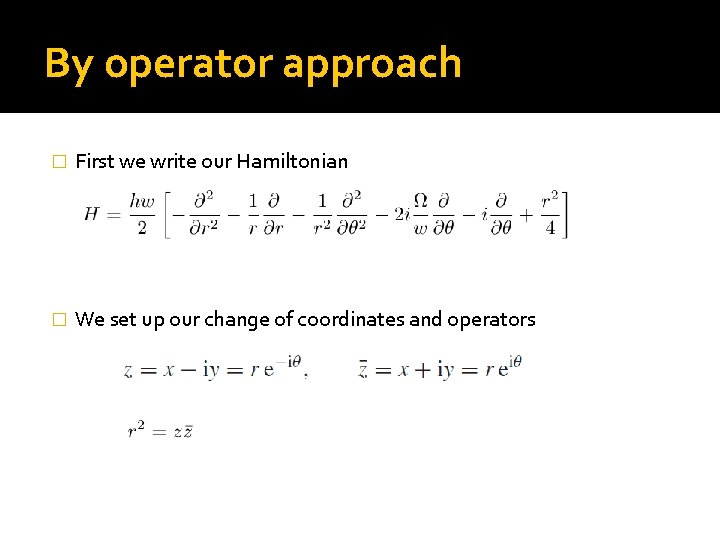
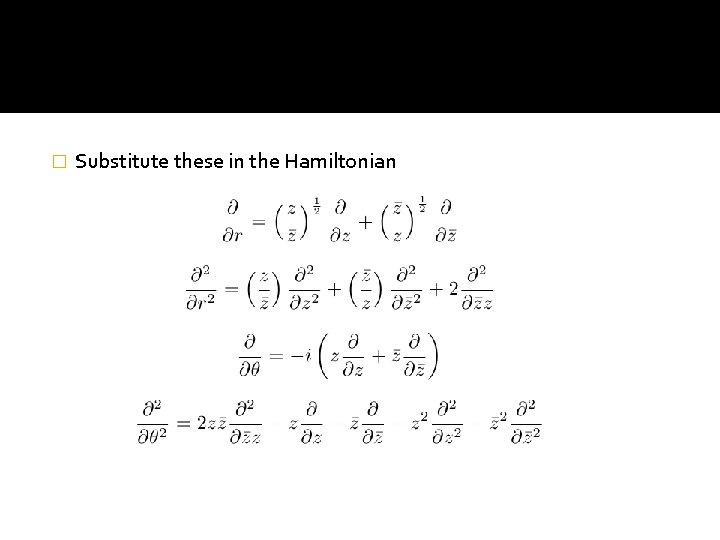
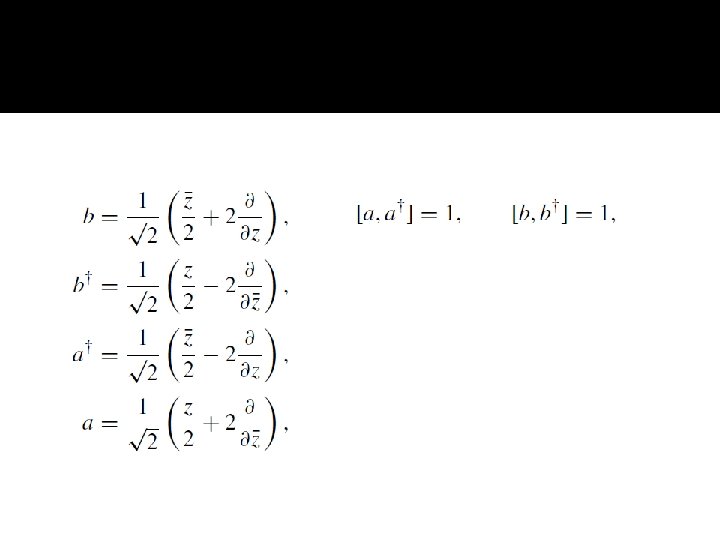
By operator approach � First we write our Hamiltonian � We set up our change of coordinates and operators
� Substitute these in the Hamiltonian
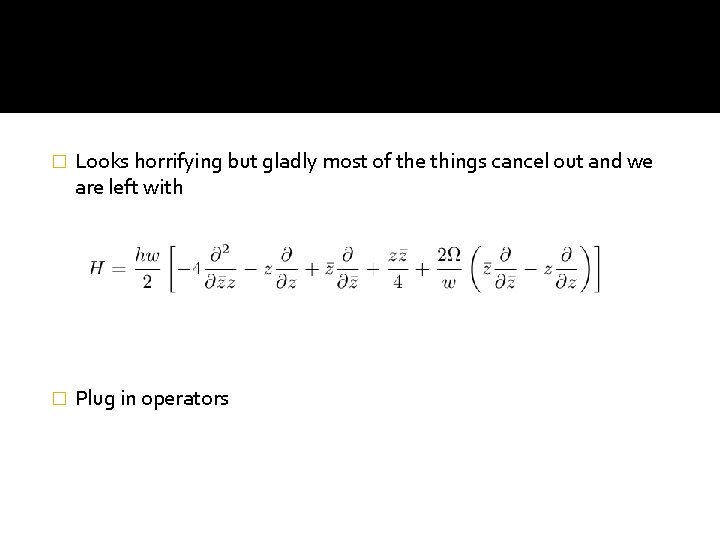
� Looks horrifying but gladly most of the things cancel out and we are left with � Plug in operators
� We get our final Hamiltonian and energies
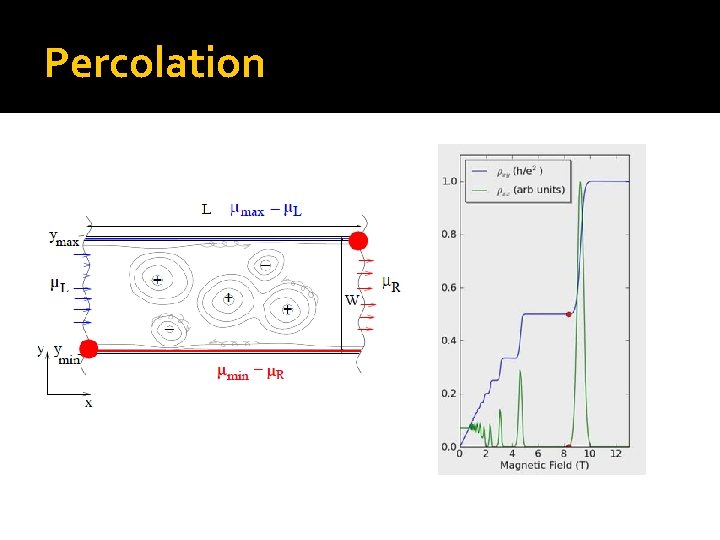
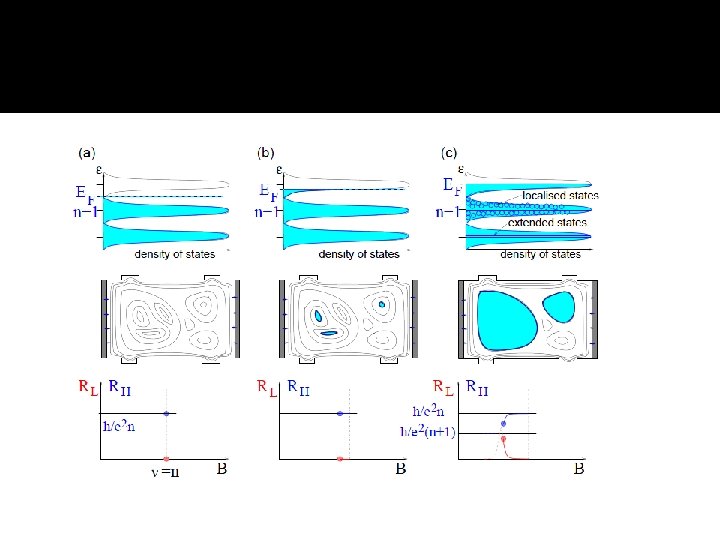
Percolation