
Quantum entanglement and beyond Entanglement discord and harnessing
Quantum entanglement and beyond: Entanglement, discord and harnessing noise Natalia Korolkova St Andrews, UK
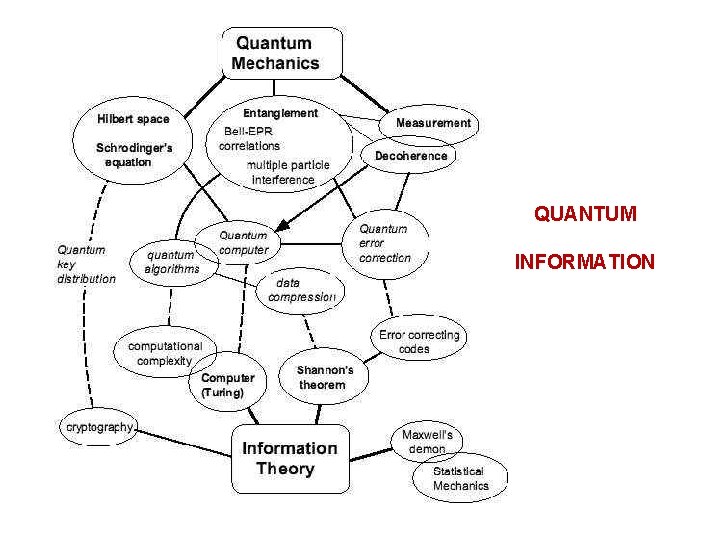
QUANTUM INFORMATION
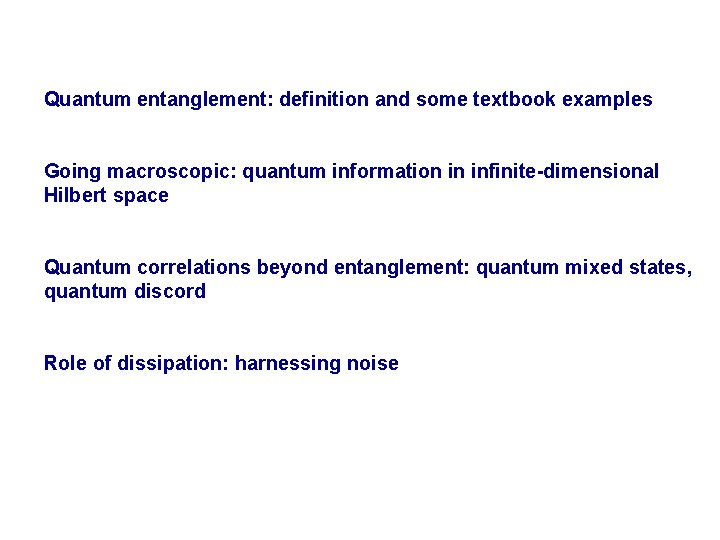
Quantum entanglement: definition and some textbook examples Going macroscopic: quantum information in infinite-dimensional Hilbert space Quantum correlations beyond entanglement: quantum mixed states, quantum discord Role of dissipation: harnessing noise
Quantum entanglement: definition and some textbook examples

Entanglement – nonlocal bi-partite superposition state - separable - entangled
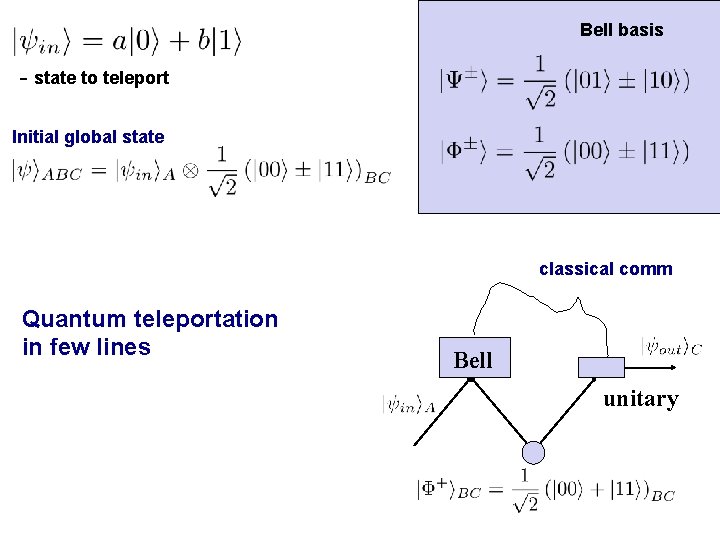
Bell basis - state to teleport Initial global state classical comm Quantum teleportation in few lines Bell unitary
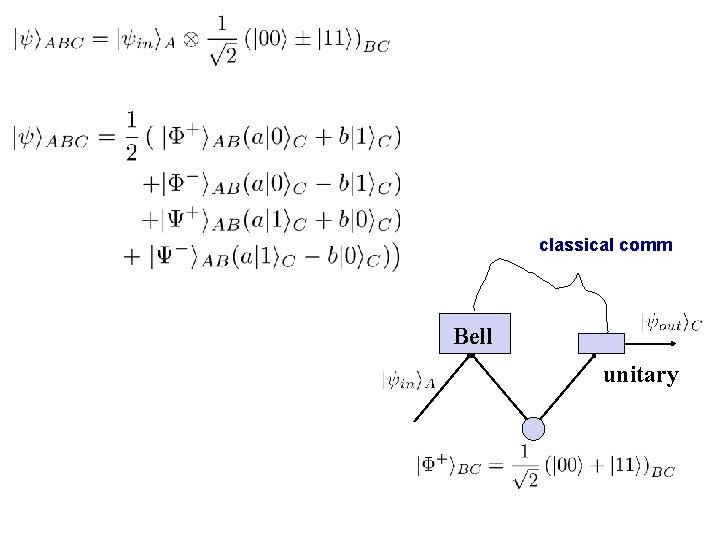
classical comm Bell unitary
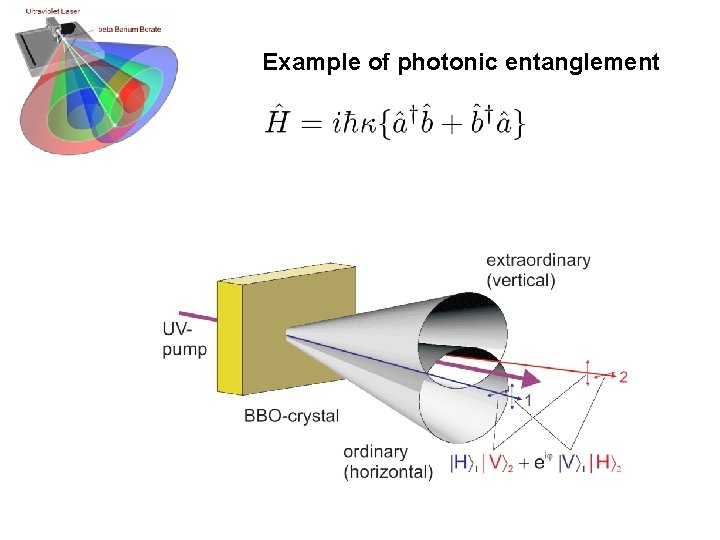
Example of photonic entanglement
Going macroscopic: quantum information in infinitedimensional Hilbert space Not only single quanta are quantum: Quiet light, tangled atoms and beating eavesdropper with merely a laser beam
Not only single quanta are quantum
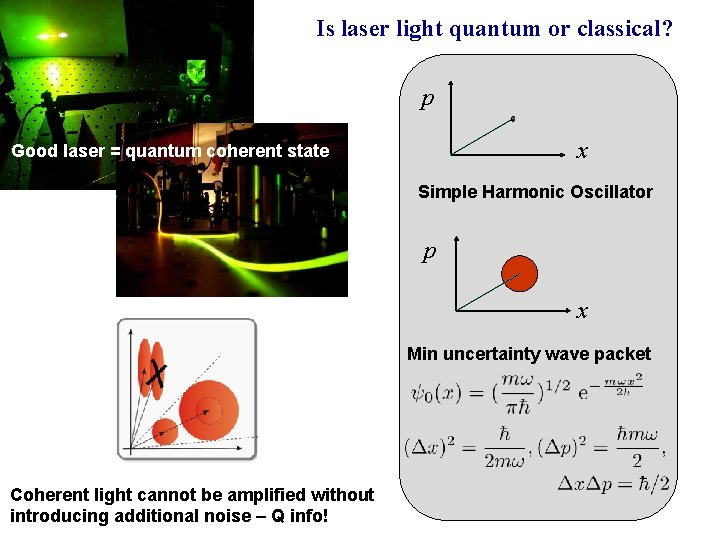
Is laser light quantum or classical? p x Good laser = quantum coherent state Simple Harmonic Oscillator p x Min uncertainty wave packet Coherent light cannot be amplified without introducing additional noise – Q info!
Quantum information: - cannot be copied (non-cloning theorem) - cannot be read/manipulated without disturbance This holds also for such macroscopic states as bright laser beams or atomic ensemble with millions atoms
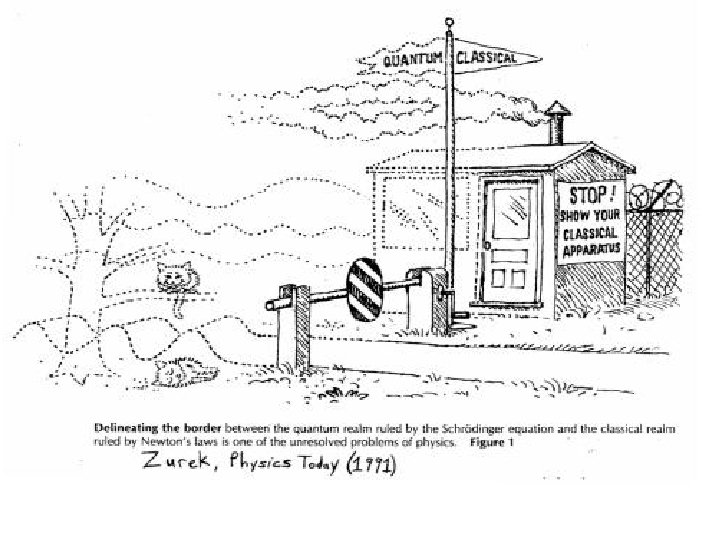
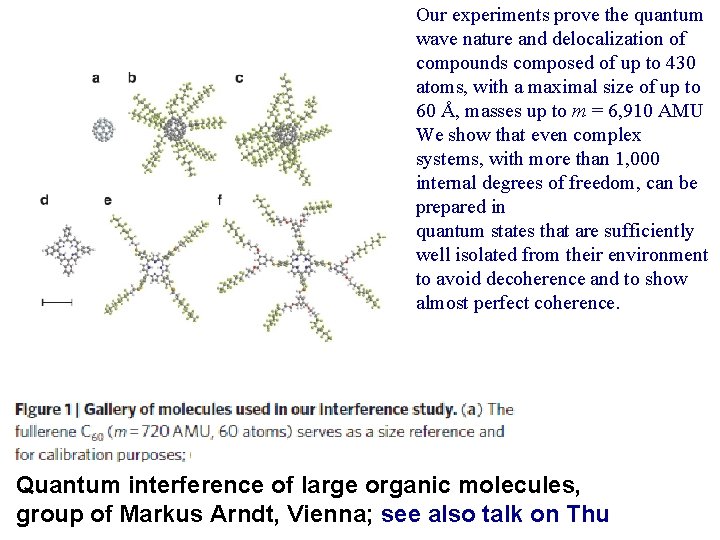
Our experiments prove the quantum wave nature and delocalization of compounds composed of up to 430 atoms, with a maximal size of up to 60 Å, masses up to m = 6, 910 AMU We show that even complex systems, with more than 1, 000 internal degrees of freedom, can be prepared in quantum states that are sufficiently well isolated from their environment to avoid decoherence and to show almost perfect coherence. Quantum interference of large organic molecules, group of Markus Arndt, Vienna; see also talk on Thu
Quiet and strange light
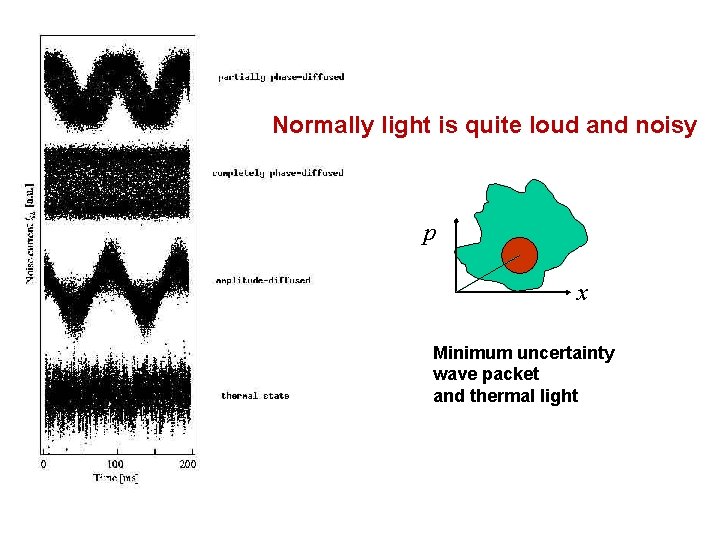
Normally light is quite loud and noisy p x Minimum uncertainty wave packet and thermal light
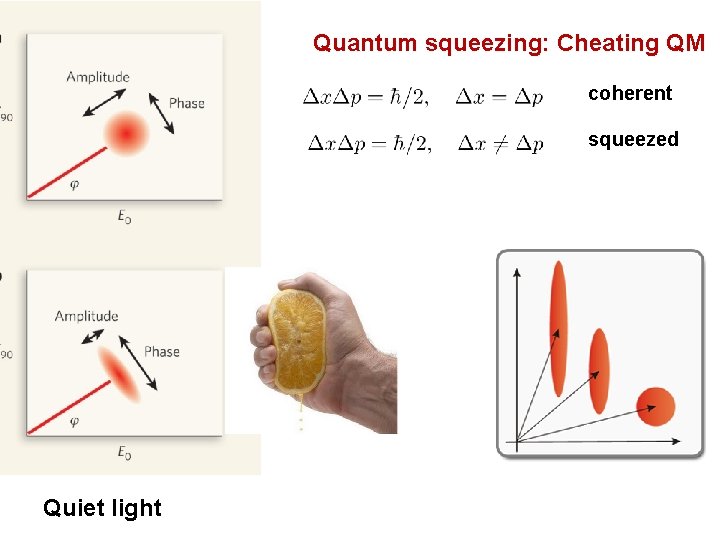
Quantum squeezing: Cheating QM coherent squeezed Quiet light
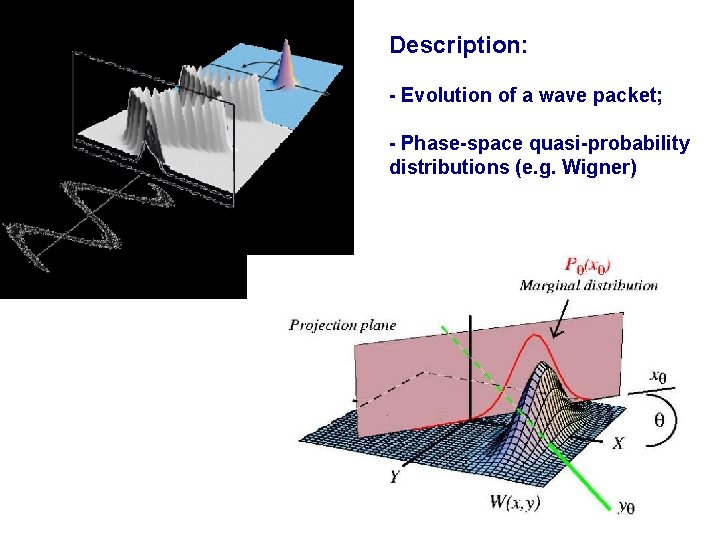
Description: - Evolution of a wave packet; - Phase-space quasi-probability distributions (e. g. Wigner)
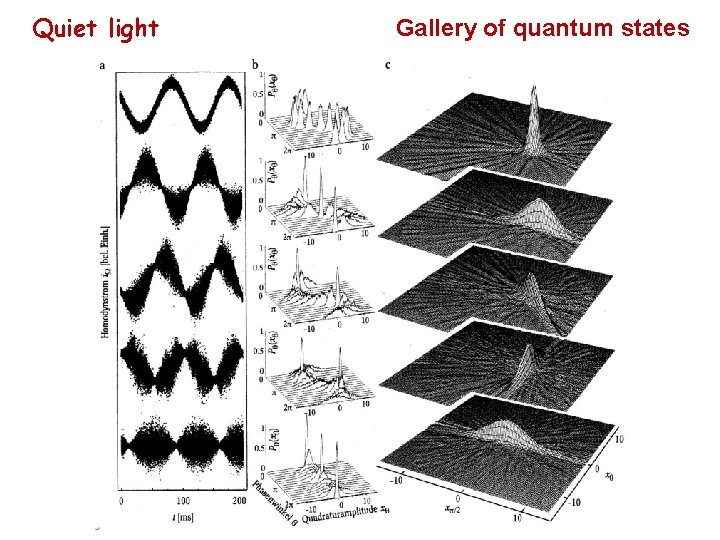
Quiet light Gallery of quantum states
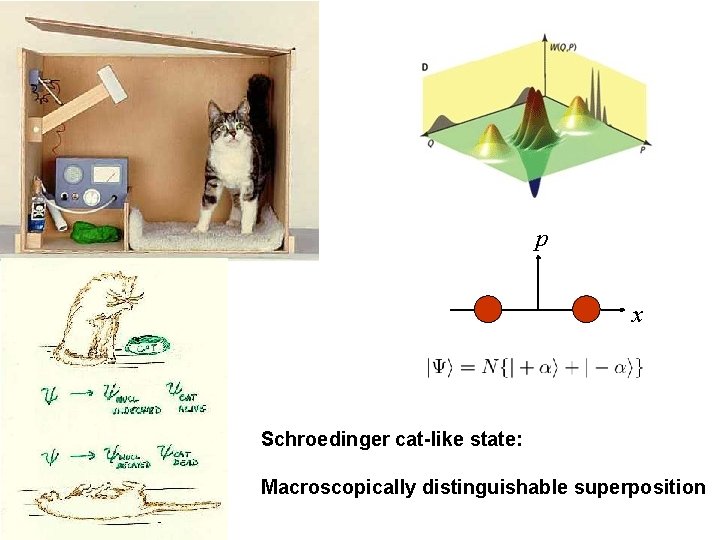
p x Schroedinger cat-like state: Macroscopically distinguishable superposition
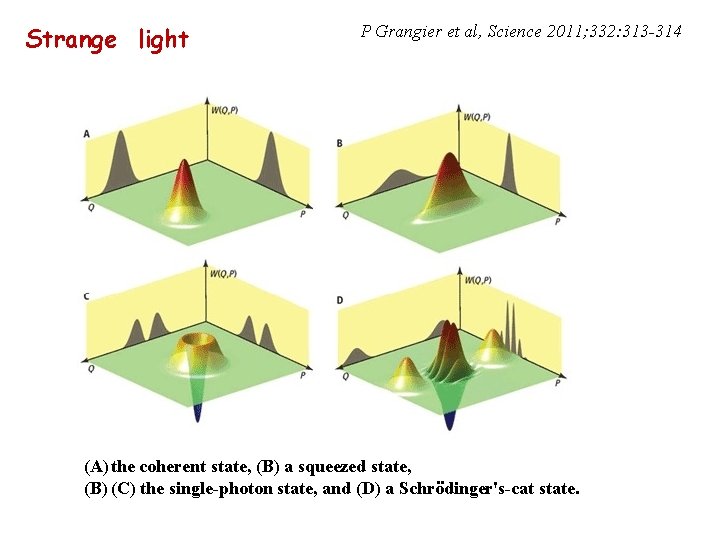
Strange light P Grangier et al, Science 2011; 332: 313 -314 (A) the coherent state, (B) a squeezed state, (B) (C) the single-photon state, and (D) a Schrödinger's-cat state.
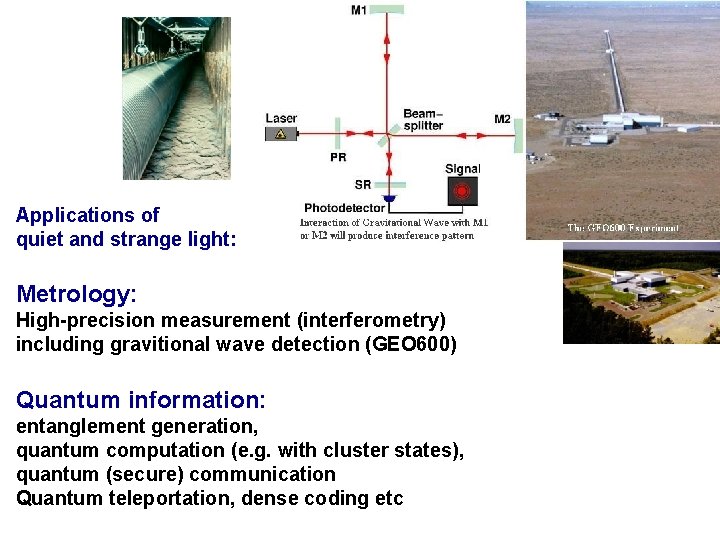
Applications of quiet and strange light: Metrology: High-precision measurement (interferometry) including gravitional wave detection (GEO 600) Quantum information: entanglement generation, quantum computation (e. g. with cluster states), quantum (secure) communication Quantum teleportation, dense coding etc
Mesoscopic entanglement (continuous variable or infinite dimensional entanglement)
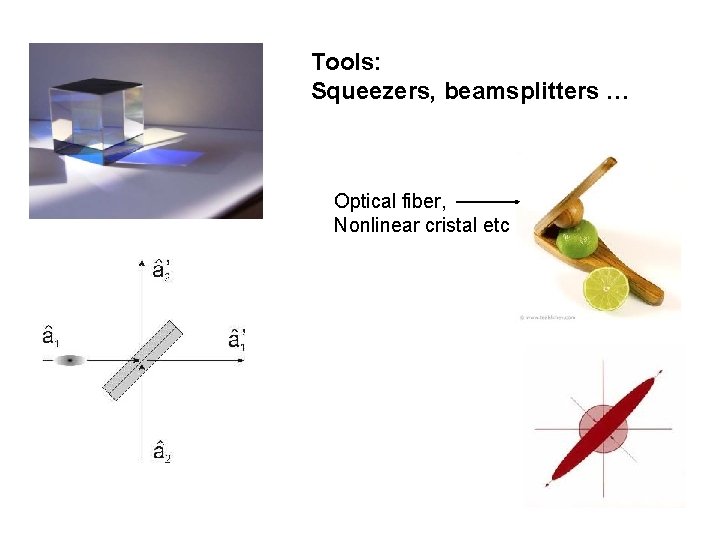
Tools: Squeezers, beamsplitters … Optical fiber, Nonlinear cristal etc
Macroscopic EPR entanglement Example: Entangled femtosecond pulses 10^8 photons each (optical soliton pulses in fibers)
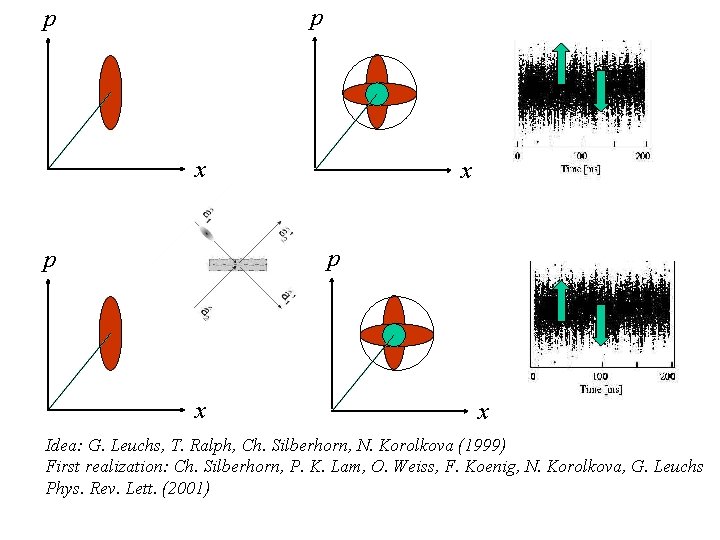
p p x x Idea: G. Leuchs, T. Ralph, Ch. Silberhorn, N. Korolkova (1999) First realization: Ch. Silberhorn, P. K. Lam, O. Weiss, F. Koenig, N. Korolkova, G. Leuchs Phys. Rev. Lett. (2001)
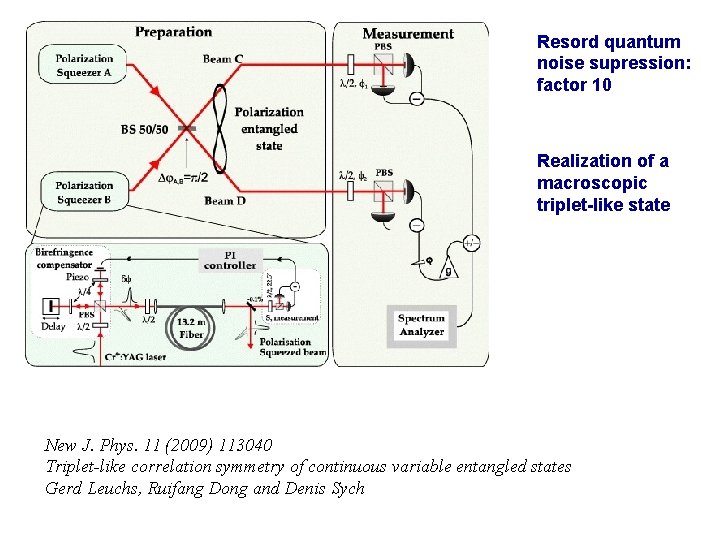
Resord quantum noise supression: factor 10 Realization of a macroscopic triplet-like state New J. Phys. 11 (2009) 113040 Triplet-like correlation symmetry of continuous variable entangled states Gerd Leuchs, Ruifang Dong and Denis Sych
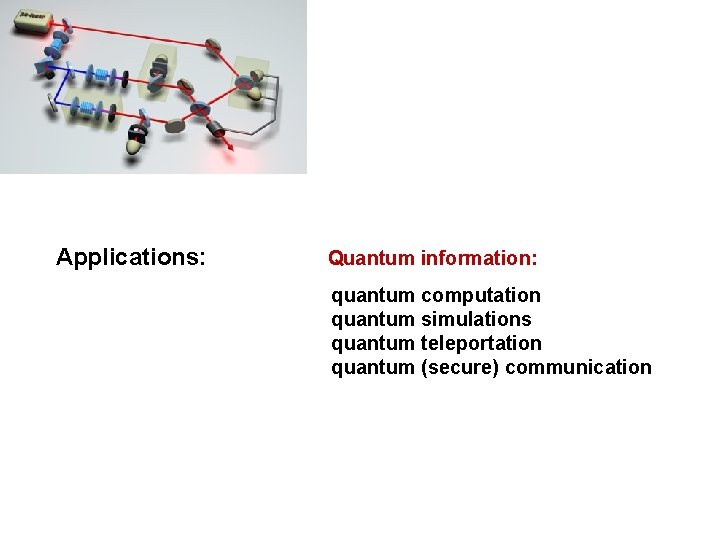
Applications: Quantum information: quantum computation quantum simulations quantum teleportation quantum (secure) communication
Beating eavesdropper with merely a laser light
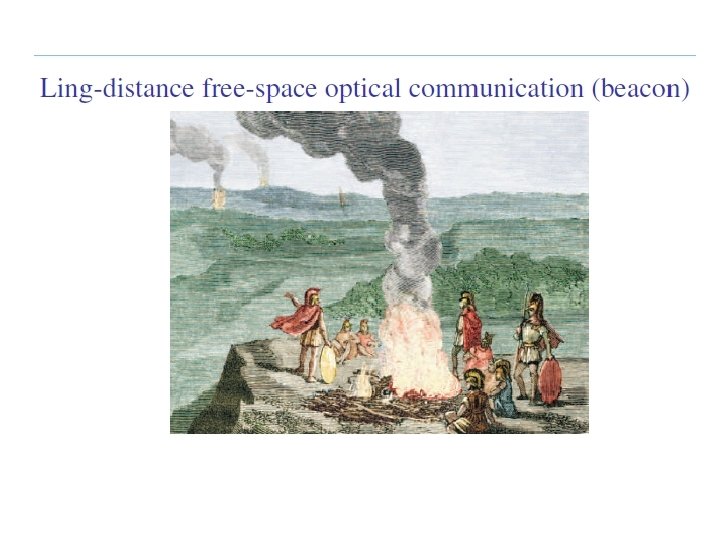
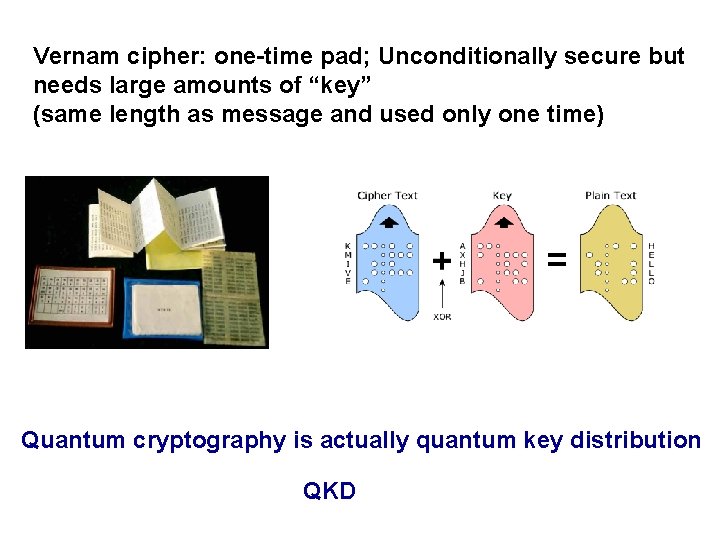
Vernam cipher: one-time pad; Unconditionally secure but needs large amounts of “key” (same length as message and used only one time) Quantum cryptography is actually quantum key distribution QKD
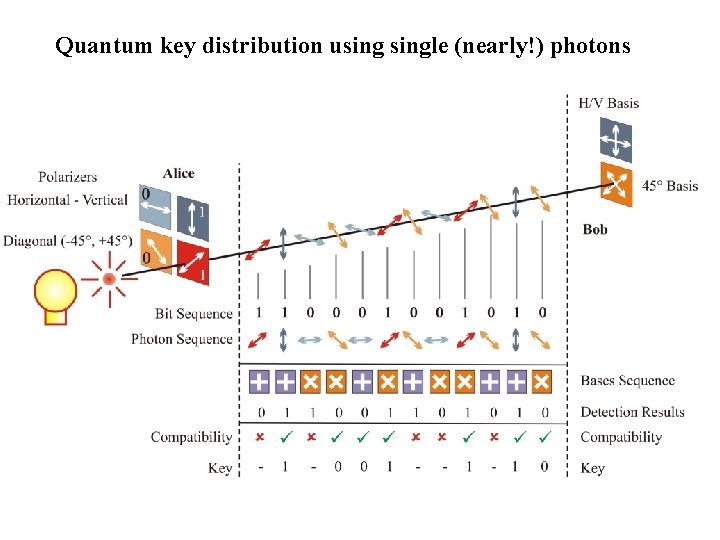
Quantum key distribution usingle (nearly!) photons
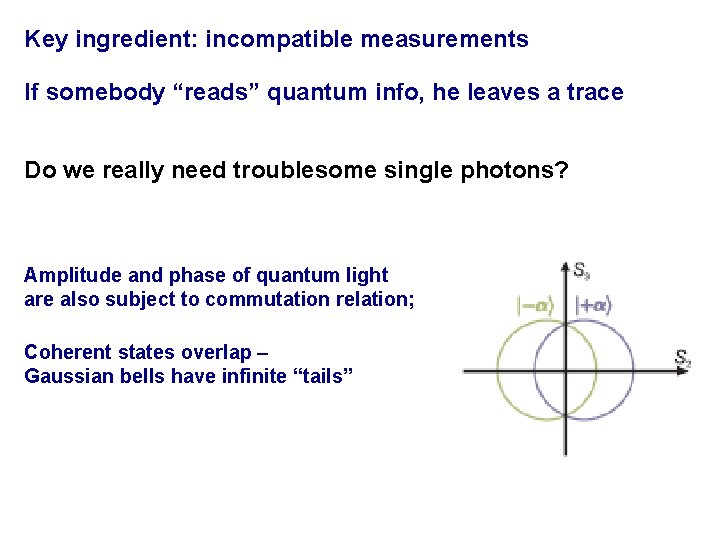
Key ingredient: incompatible measurements If somebody “reads” quantum info, he leaves a trace Do we really need troublesome single photons? Amplitude and phase of quantum light are also subject to commutation relation; Coherent states overlap – Gaussian bells have infinite “tails”
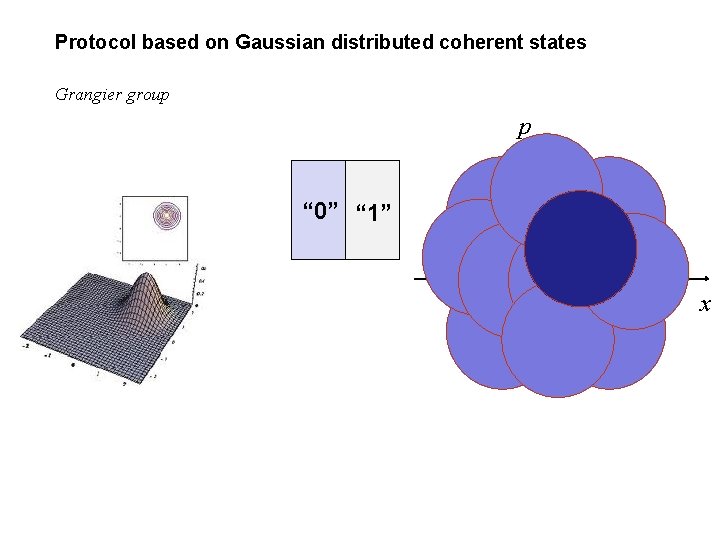
Protocol based on Gaussian distributed coherent states Grangier group p “ 0” “ 1” x
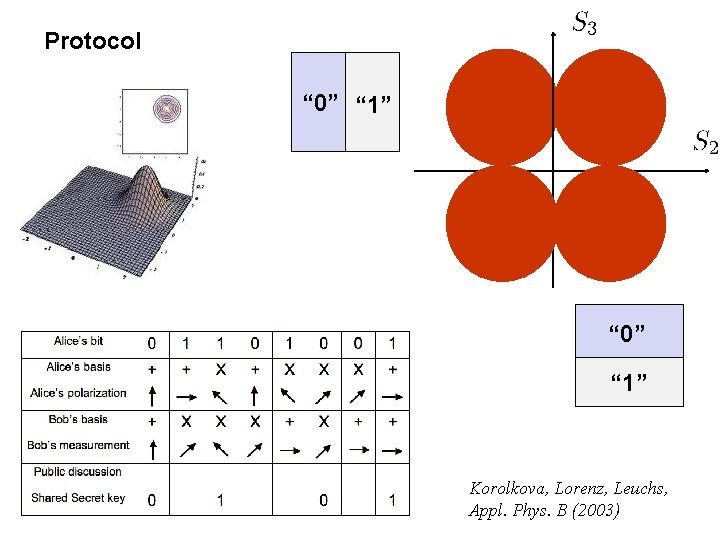
Protocol “ 0” “ 1” Korolkova, Lorenz, Leuchs, Appl. Phys. B (2003)
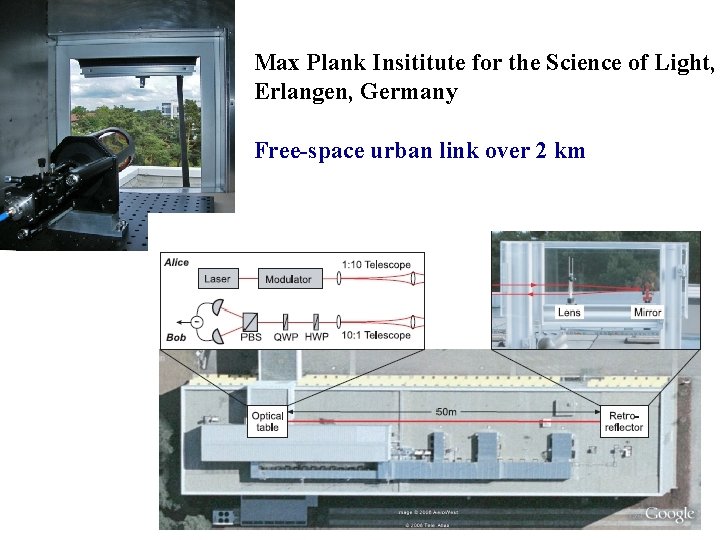
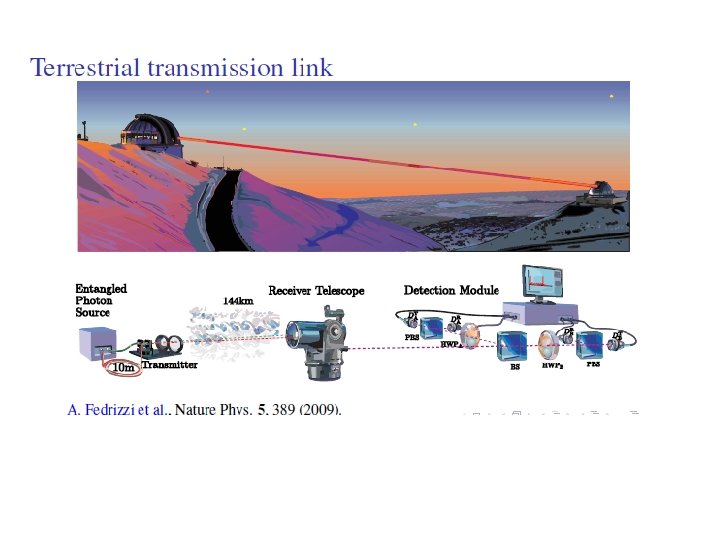
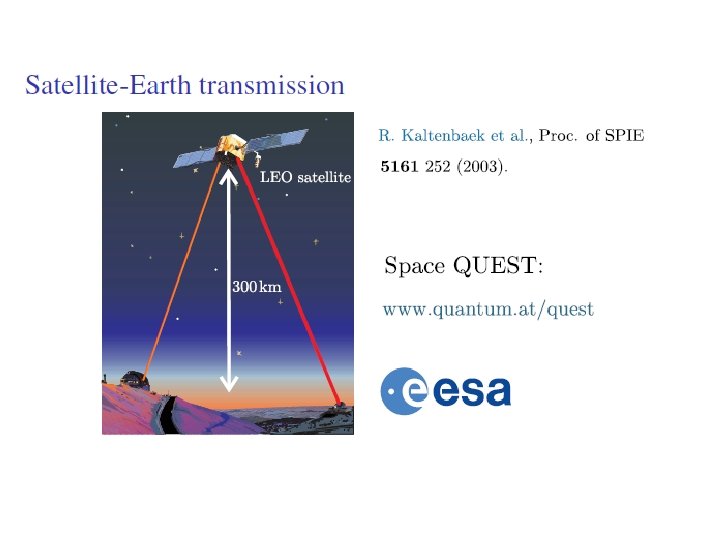
Max Plank Insititute for the Science of Light, Erlangen, Germany Free-space urban link over 2 km
Quantum correlations beyond entanglement: quantum mixed states, quantum discord Role of dissipation
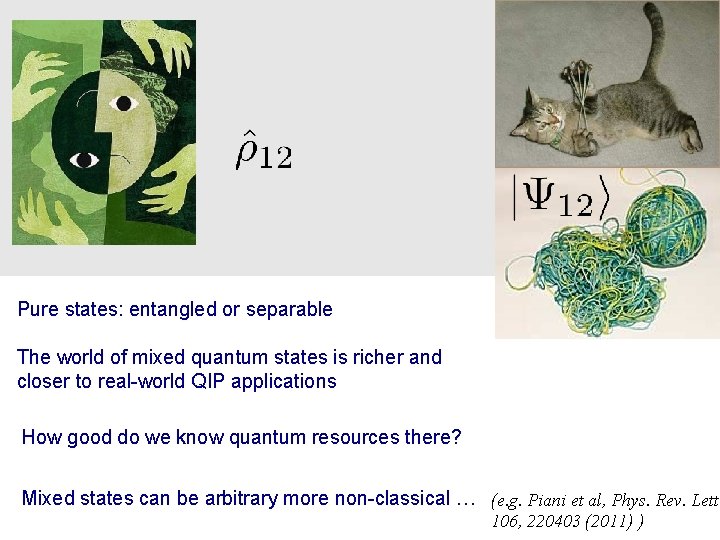
Pure states: entangled or separable The world of mixed quantum states is richer and closer to real-world QIP applications How good do we know quantum resources there? Mixed states can be arbitrary more non-classical … (e. g. Piani et al, Phys. Rev. Lett. 106, 220403 (2011) )
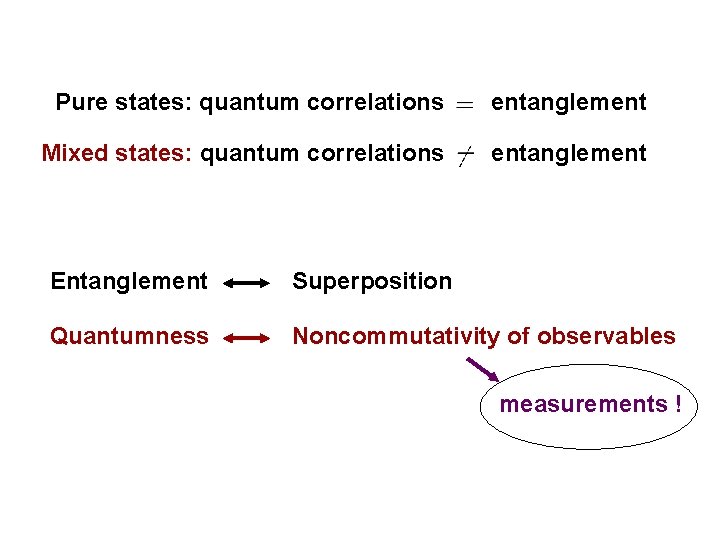
Pure states: quantum correlations entanglement Mixed states: quantum correlations entanglement Entanglement Superposition Quantumness Noncommutativity of observables measurements !
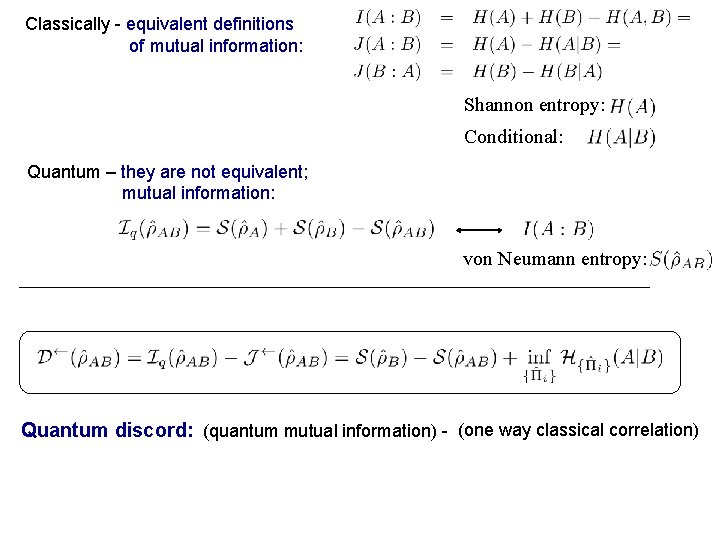
Classically - equivalent definitions of mutual information: Shannon entropy: Conditional: Quantum – they are not equivalent; mutual information: von Neumann entropy: Quantum discord: (quantum mutual information) - (one way classical correlation)
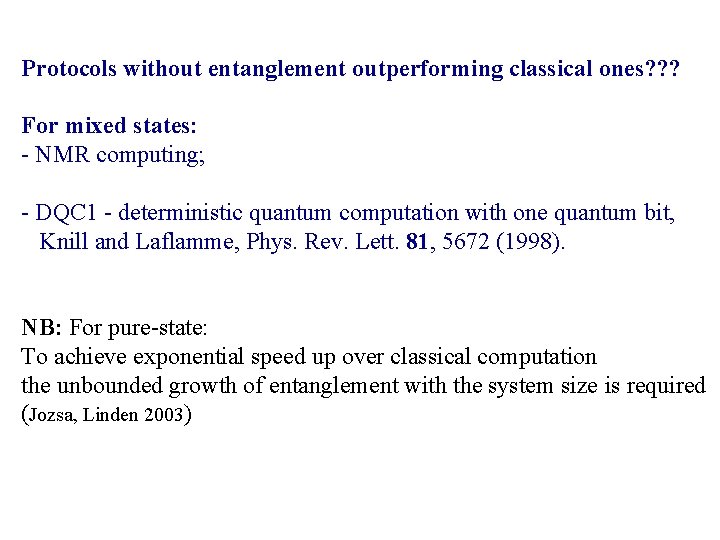
Protocols without entanglement outperforming classical ones? ? ? For mixed states: - NMR computing; - DQC 1 - deterministic quantum computation with one quantum bit, Knill and Laflamme, Phys. Rev. Lett. 81, 5672 (1998). NB: For pure-state: To achieve exponential speed up over classical computation the unbounded growth of entanglement with the system size is required (Jozsa, Linden 2003)

Zoology of the non-classicality measures Quantum discord H. Ollivier and W. H. Zurek, Phys. Rev. Lett. 88, 017901 (2001); L. Henderson and V. Vedral, J. Phys. A 34, 6899 (2001) G. Adesso and A. Datta, Phys. Rev. Lett. 105, 030501 (2010) - CV P. Giorda and M. G. A. Paris, Phys. Rev. Lett. 105, 020503 (2010) Measurement-induced disturbance (MID) S. Luo, Phys. Rev. A 77, 022301 (2008) Ameliorated MID (AMID) CV -L. Mista, R. Tatham, D. Girolami, N. Korolkova, G. Adesso, quant-ph (2010), accepted by Phys. Rev. A (2011) etc ….
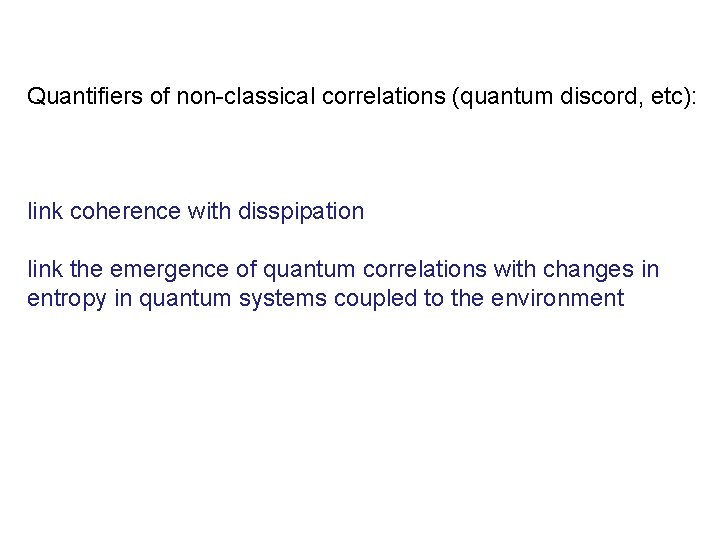
Quantifiers of non-classical correlations (quantum discord, etc): link coherence with disspipation link the emergence of quantum correlations with changes in entropy in quantum systems coupled to the environment
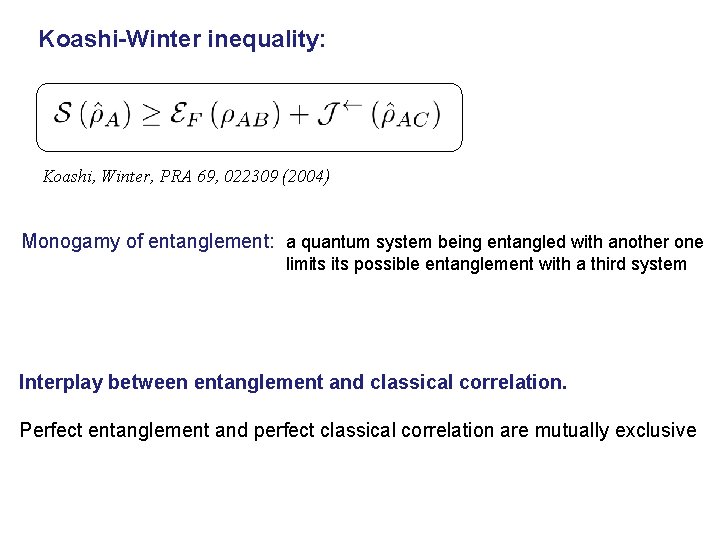
Koashi-Winter inequality: Koashi, Winter, PRA 69, 022309 (2004) Monogamy of entanglement: a quantum system being entangled with another one limits possible entanglement with a third system Interplay between entanglement and classical correlation. Perfect entanglement and perfect classical correlation are mutually exclusive
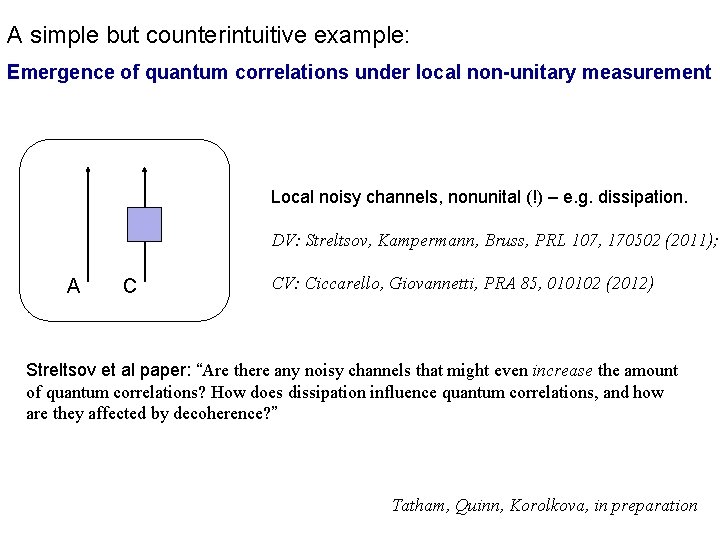
A simple but counterintuitive example: Emergence of quantum correlations under local non-unitary measurement Local noisy channels, nonunital (!) – e. g. dissipation. DV: Streltsov, Kampermann, Bruss, PRL 107, 170502 (2011); A C CV: Ciccarello, Giovannetti, PRA 85, 010102 (2012) Streltsov et al paper: “Are there any noisy channels that might even increase the amount of quantum correlations? How does dissipation influence quantum correlations, and how are they affected by decoherence? ” Tatham, Quinn, Korolkova, in preparation
A mixed state is not a fundamental object, but a sign of our ignorance. Purification: every mixed state acting on finite dimensional Hilbert spaces can be viewed as the reduced state of some pure state. Ansatz: mixed quantum state + environment = pure quantum state
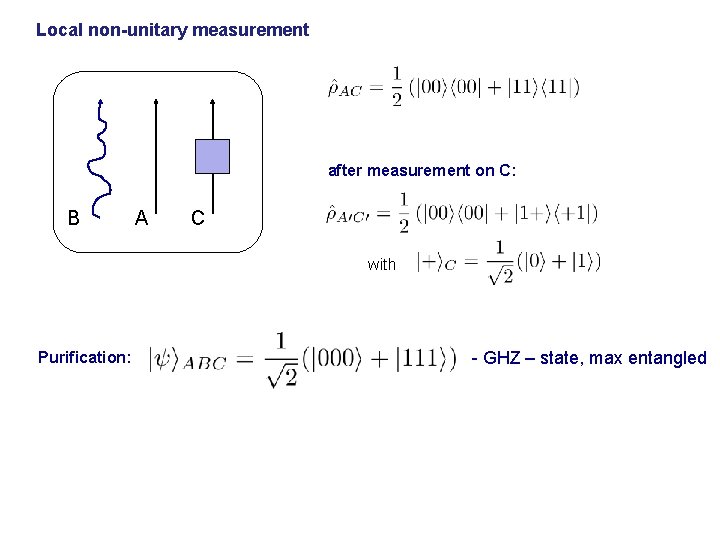
Local non-unitary measurement after measurement on C: B A C with Purification: - GHZ – state, max entangled
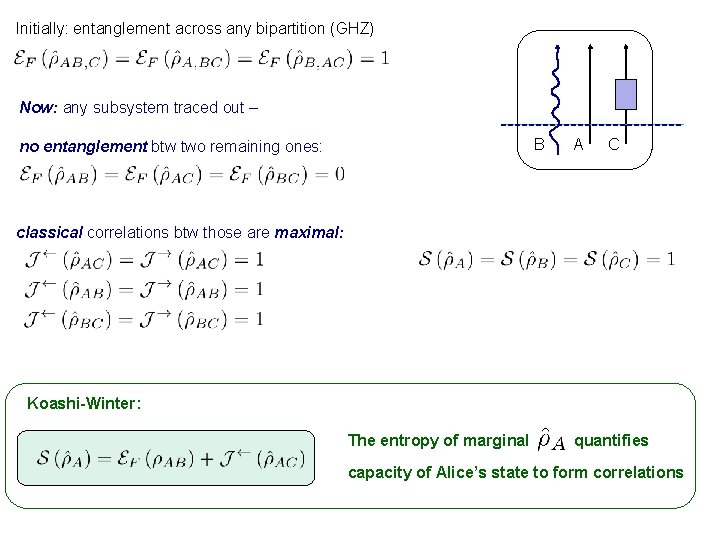
Initially: entanglement across any bipartition (GHZ) Now: any subsystem traced out – B no entanglement btw two remaining ones: A C classical correlations btw those are maximal: Koashi-Winter: The entropy of marginal quantifies capacity of Alice’s state to form correlations
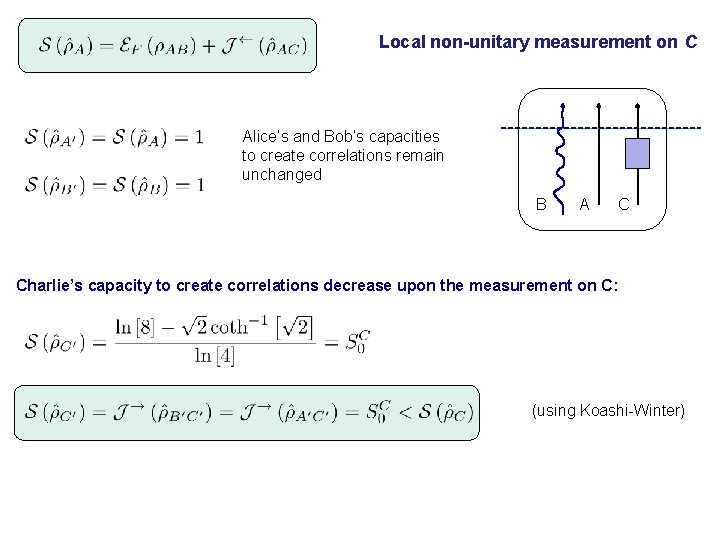
Local non-unitary measurement on C Alice’s and Bob’s capacities to create correlations remain unchanged B A C Charlie’s capacity to create correlations decrease upon the measurement on C: (using Koashi-Winter)
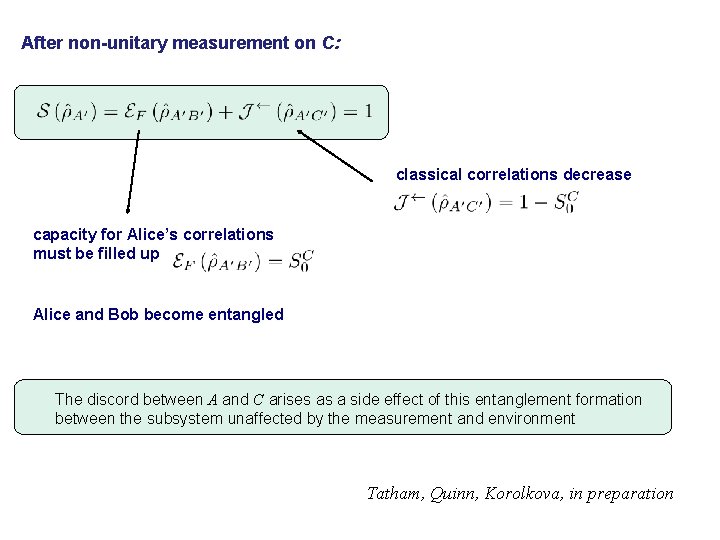
After non-unitary measurement on C: classical correlations decrease capacity for Alice’s correlations must be filled up Alice and Bob become entangled The discord between A and C arises as a side effect of this entanglement formation between the subsystem unaffected by the measurement and environment Tatham, Quinn, Korolkova, in preparation
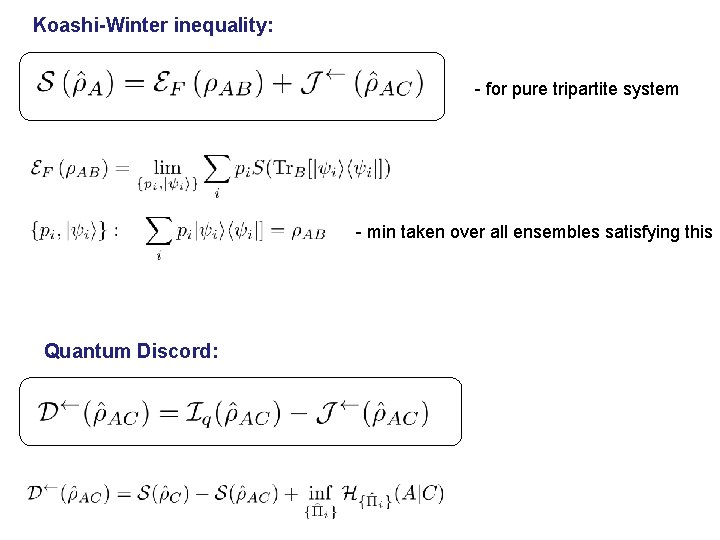
Koashi-Winter inequality: - for pure tripartite system - min taken over all ensembles satisfying this Quantum Discord:
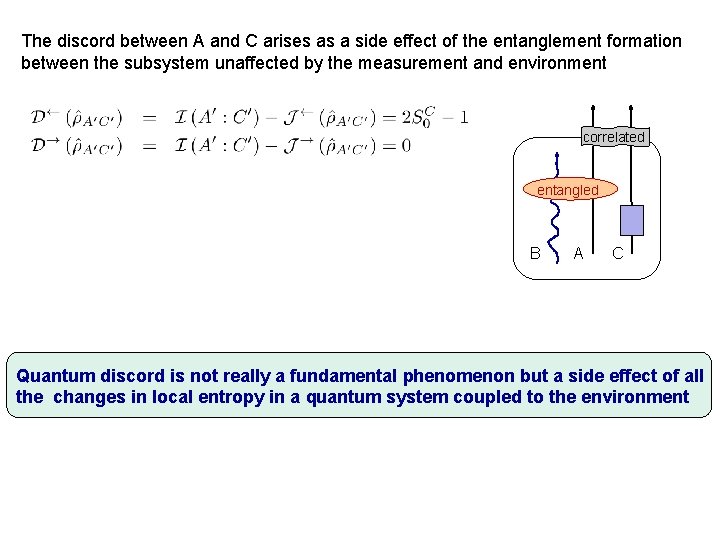
The discord between A and C arises as a side effect of the entanglement formation between the subsystem unaffected by the measurement and environment correlated entangled B A C Quantum discord is not really a fundamental phenomenon but a side effect of all the changes in local entropy in a quantum system coupled to the environment
Dissipation-induced coherence non-classical correlations, such as quantified by quantum discord, unite coherence with changes in entropy in quantum systems coupled to the environment link coherent and dissipative dynamics together Quantum optics: correlations, coherence, correlation functions, ability to interfere …. Quantum information: quantum entropy, entropy of entanglement …. Quantum discord: correlations via changes in local entropy across dissipative system linking coherence and correlations to the entropy flow in a global system
Quantum resource: correlations induced by controlled dissipation Tailored dissipation as a tool: (quantum) environment becoming your friend
Emerging new field: Entanglement via dissipation Correlations via dissipation Correlated noise to counteract decoherence Dissipatevely-driven quantum computation
www. st-andrews. ac. uk/~qoi Quantum Optics Quantum Information in St. Andrews Theoretical Quantum Optics group (U. Leonhardt, S. Horsley, T. Philbin, S. Sahebdivani, W. Simpson) Theoretical Quantum Information group (N. Korolkova, S. Ivanov, D. Vasylyev, L. Mista*, D. Milne, R. Tatham, N. Quinn) Experimental Quantum Optics group (F. Koenig, S. Kehr, J. Mc. Lenaghan, M. Rybak) *- regular visitor from Olomouc
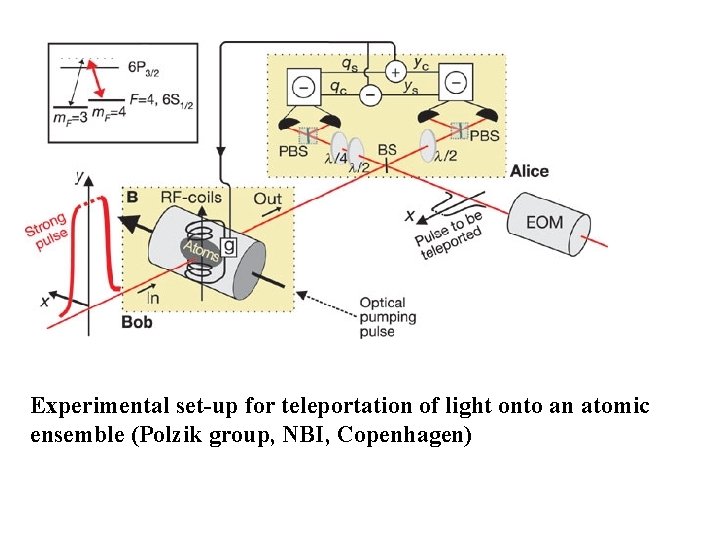
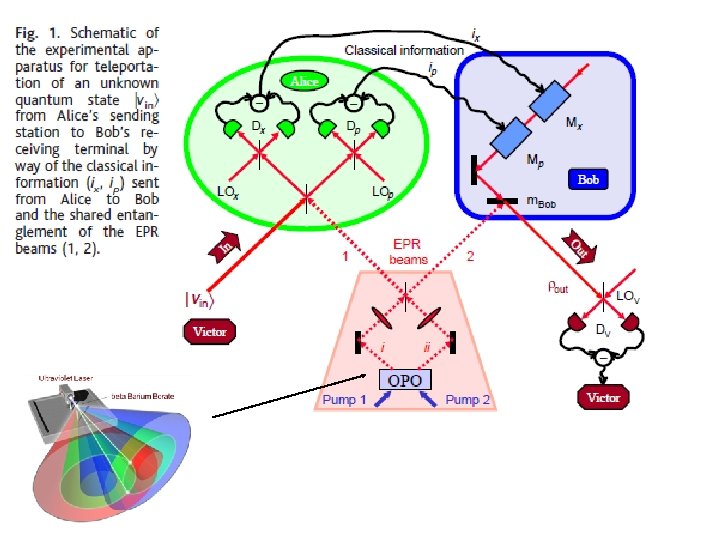
Experimental set-up for teleportation of light onto an atomic ensemble (Polzik group, NBI, Copenhagen)

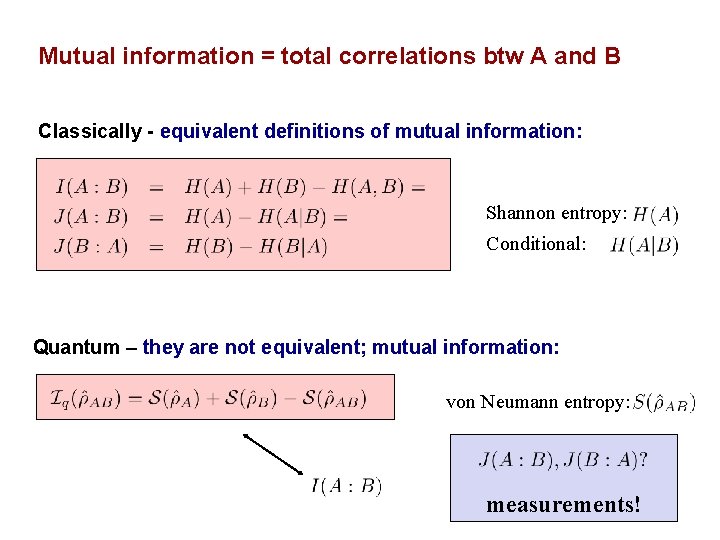
Mutual information = total correlations btw A and B Classically - equivalent definitions of mutual information: Shannon entropy: Conditional: Quantum – they are not equivalent; mutual information: von Neumann entropy: measurements!
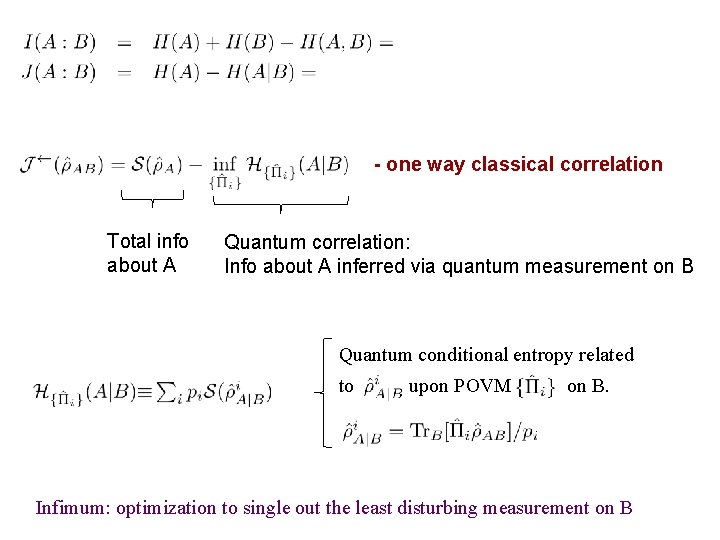
- one way classical correlation Total info about A Quantum correlation: Info about A inferred via quantum measurement on B Quantum conditional entropy related to upon POVM on B. Infimum: optimization to single out the least disturbing measurement on B
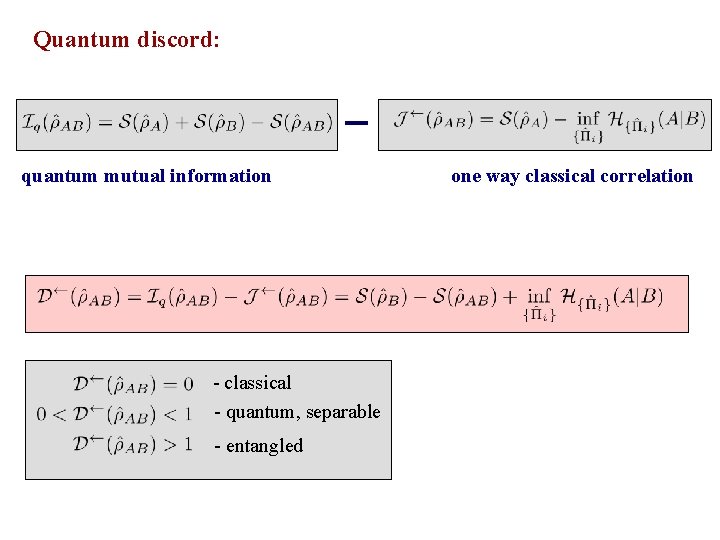
Quantum discord: quantum mutual information - classical - quantum, separable - entangled one way classical correlation
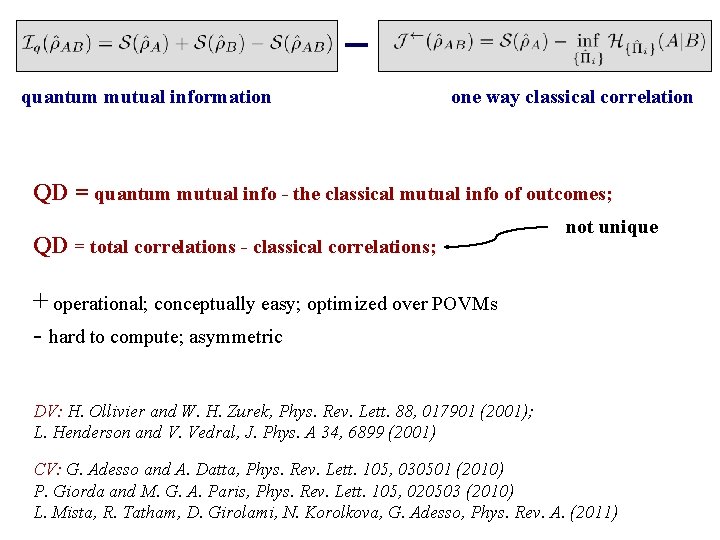
quantum mutual information one way classical correlation QD = quantum mutual info - the classical mutual info of outcomes; QD = total correlations - classical correlations; not unique + operational; conceptually easy; optimized over POVMs - hard to compute; asymmetric DV: H. Ollivier and W. H. Zurek, Phys. Rev. Lett. 88, 017901 (2001); L. Henderson and V. Vedral, J. Phys. A 34, 6899 (2001) CV: G. Adesso and A. Datta, Phys. Rev. Lett. 105, 030501 (2010) P. Giorda and M. G. A. Paris, Phys. Rev. Lett. 105, 020503 (2010) L. Mista, R. Tatham, D. Girolami, N. Korolkova, G. Adesso, Phys. Rev. A. (2011)
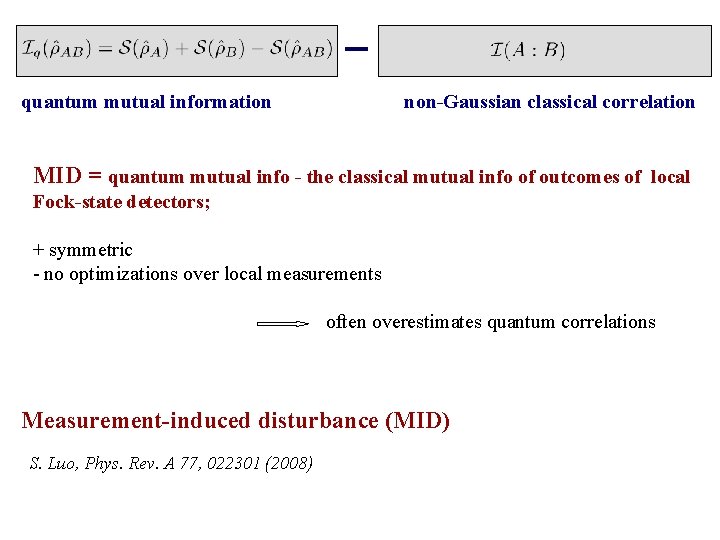
quantum mutual information non-Gaussian classical correlation MID = quantum mutual info - the classical mutual info of outcomes of local Fock-state detectors; + symmetric - no optimizations over local measurements often overestimates quantum correlations Measurement-induced disturbance (MID) S. Luo, Phys. Rev. A 77, 022301 (2008)
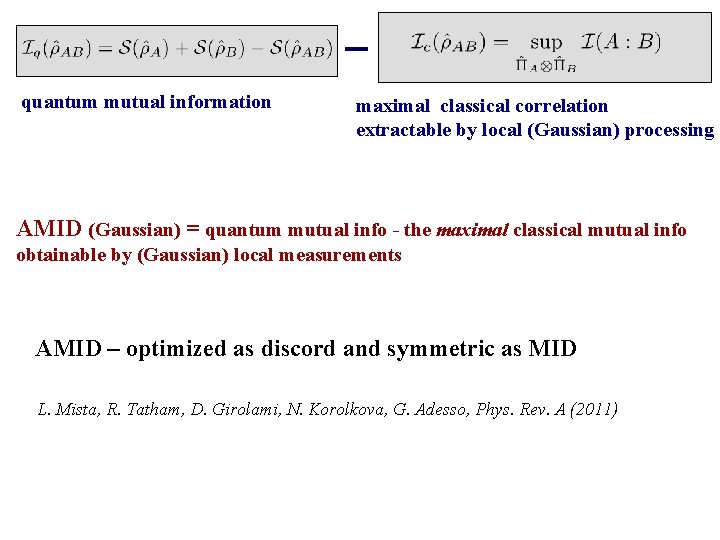
quantum mutual information maximal classical correlation extractable by local (Gaussian) processing AMID (Gaussian) = quantum mutual info - the maximal classical mutual info obtainable by (Gaussian) local measurements AMID – optimized as discord and symmetric as MID L. Mista, R. Tatham, D. Girolami, N. Korolkova, G. Adesso, Phys. Rev. A (2011)
Protocols without entanglement outperforming classical ones? ? ? For mixed states: - NMR computing; - DQC 1 - deterministic quantum computation with one quantum bit, Knill and Laflamme, Phys. Rev. Lett. 81, 5672 (1998). NB: For pure-state: To achieve exponential speed up over classical computation the unbounded growth of entanglement with the system size is required (Jozsa, Linden 2003)
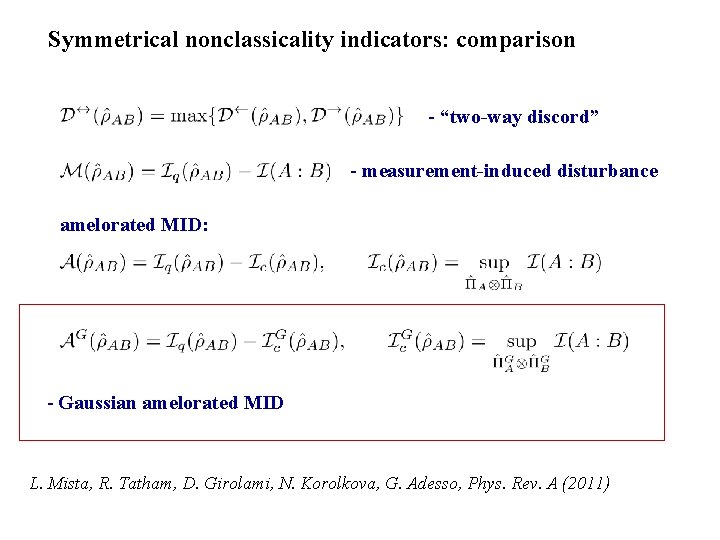
Symmetrical nonclassicality indicators: comparison - “two-way discord” - measurement-induced disturbance amelorated MID: - Gaussian amelorated MID L. Mista, R. Tatham, D. Girolami, N. Korolkova, G. Adesso, Phys. Rev. A (2011)
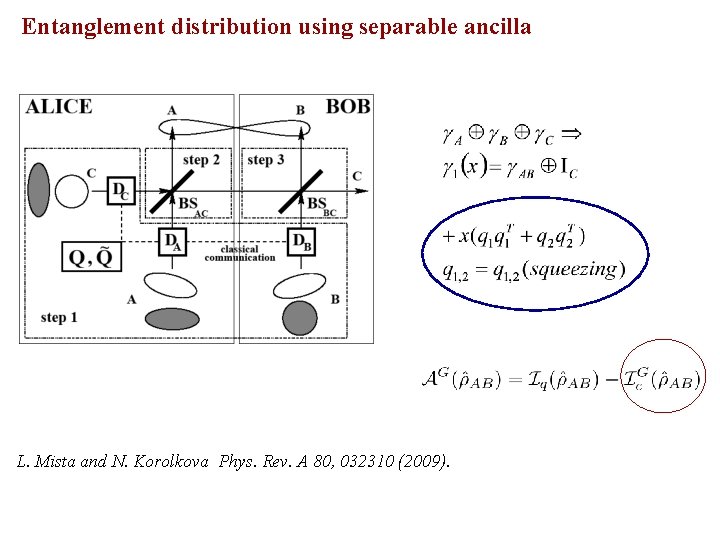
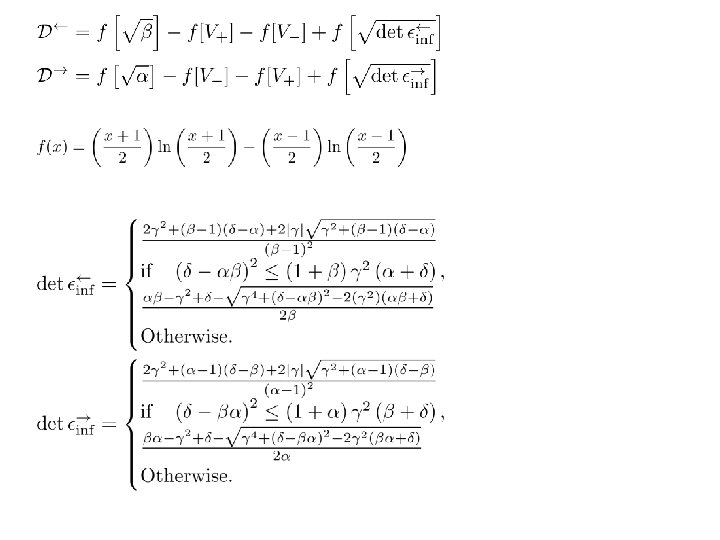
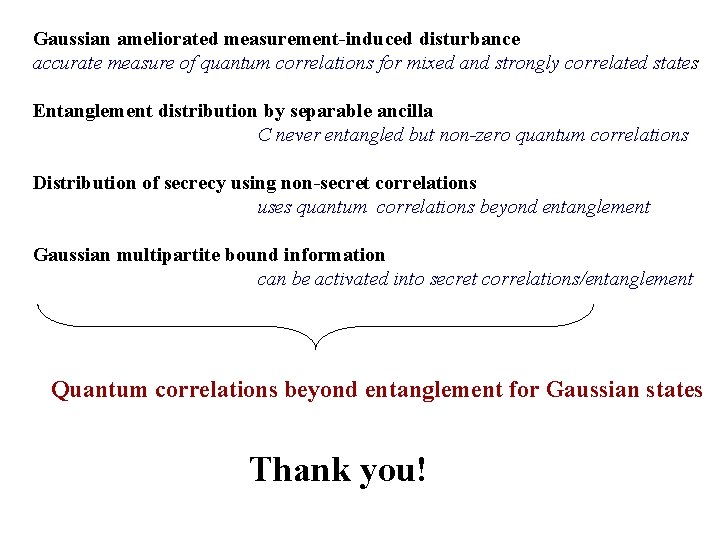
Entanglement distribution using separable ancilla This term correspond to CM of specially designed (classically correlated) noise L. Mista and N. Korolkova Phys. Rev. A 80, 032310 (2009).
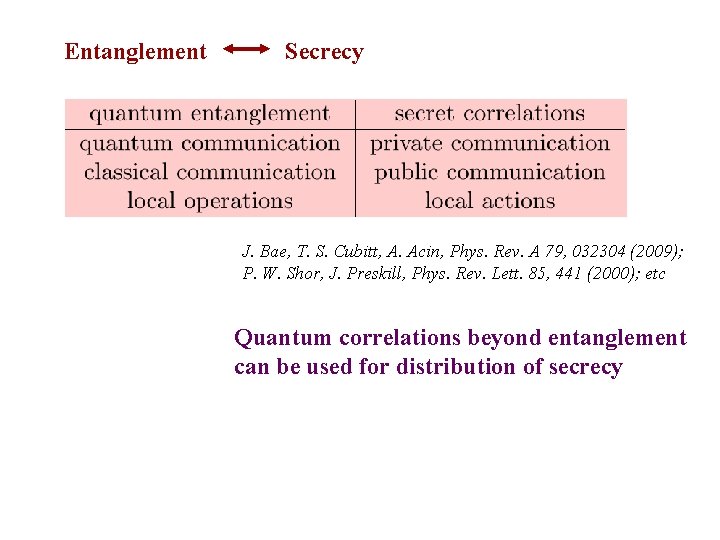
Entanglement Secrecy J. Bae, T. S. Cubitt, A. Acin, Phys. Rev. A 79, 032304 (2009); P. W. Shor, J. Preskill, Phys. Rev. Lett. 85, 441 (2000); etc Quantum correlations beyond entanglement can be used for distribution of secrecy
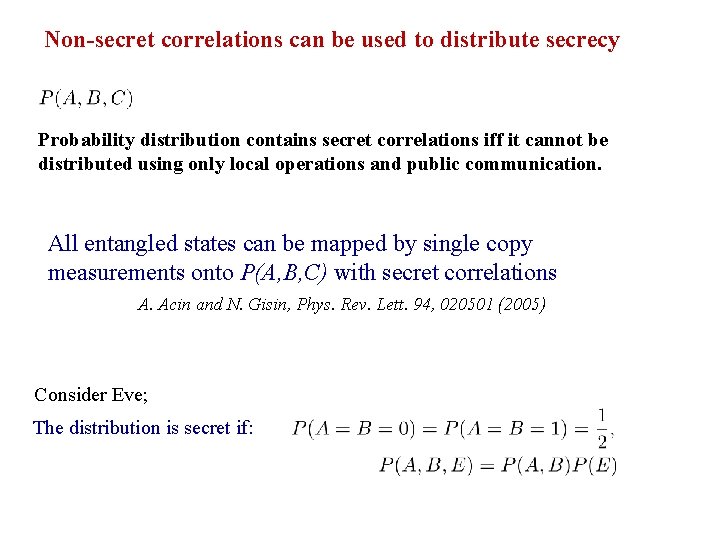
Non-secret correlations can be used to distribute secrecy Probability distribution contains secret correlations iff it cannot be distributed using only local operations and public communication. All entangled states can be mapped by single copy measurements onto P(A, B, C) with secret correlations A. Acin and N. Gisin, Phys. Rev. Lett. 94, 020501 (2005) Consider Eve; The distribution is secret if:
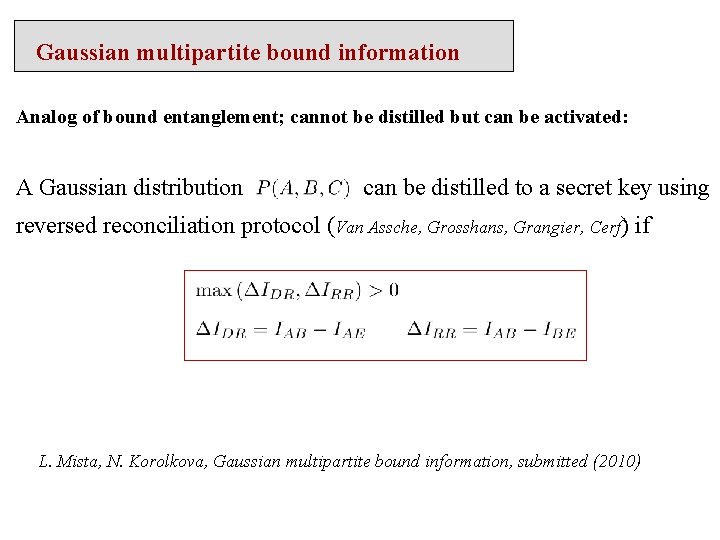
Gaussian multipartite bound information Analog of bound entanglement; cannot be distilled but can be activated: A Gaussian distribution can be distilled to a secret key using reversed reconciliation protocol (Van Assche, Grosshans, Grangier, Cerf) if L. Mista, N. Korolkova, Gaussian multipartite bound information, submitted (2010)
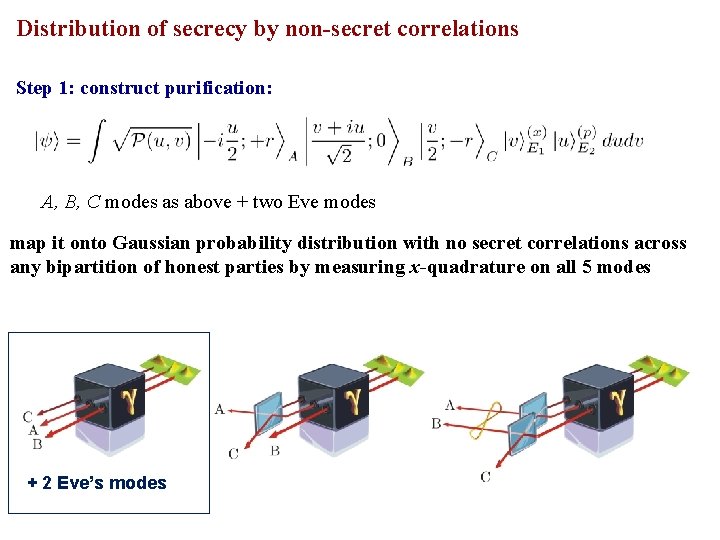
Distribution of secrecy by non-secret correlations Step 1: construct purification: A, B, C modes as above + two Eve modes map it onto Gaussian probability distribution with no secret correlations across any bipartition of honest parties by measuring x-quadrature on all 5 modes + 2 Eve’s modes
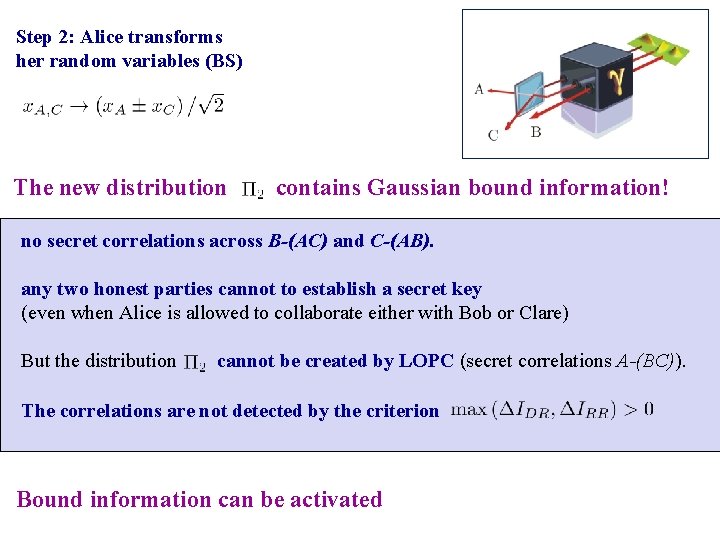
Step 2: Alice transforms her random variables (BS) The new distribution contains Gaussian bound information! no secret correlations across B-(AC) and C-(AB). any two honest parties cannot to establish a secret key (even when Alice is allowed to collaborate either with Bob or Clare) But the distribution cannot be created by LOPC (secret correlations A-(BC)). The correlations are not detected by the criterion Bound information can be activated
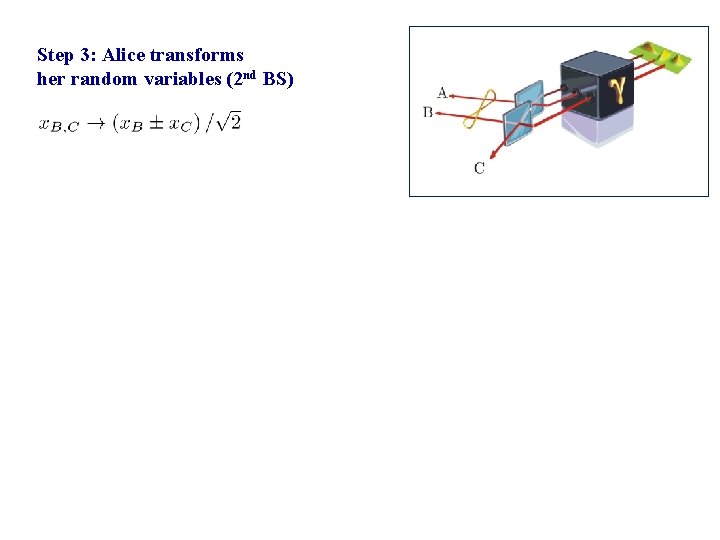
Step 3: Alice transforms her random variables (2 nd BS)
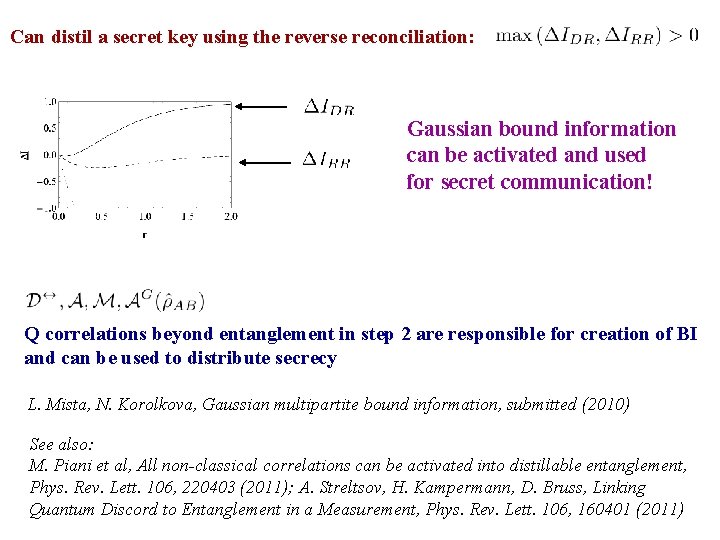
Can distil a secret key using the reverse reconciliation: Gaussian bound information can be activated and used for secret communication! Q correlations beyond entanglement in step 2 are responsible for creation of BI and can be used to distribute secrecy L. Mista, N. Korolkova, Gaussian multipartite bound information, submitted (2010) See also: M. Piani et al, All non-classical correlations can be activated into distillable entanglement, Phys. Rev. Lett. 106, 220403 (2011); A. Streltsov, H. Kampermann, D. Bruss, Linking Quantum Discord to Entanglement in a Measurement, Phys. Rev. Lett. 106, 160401 (2011)
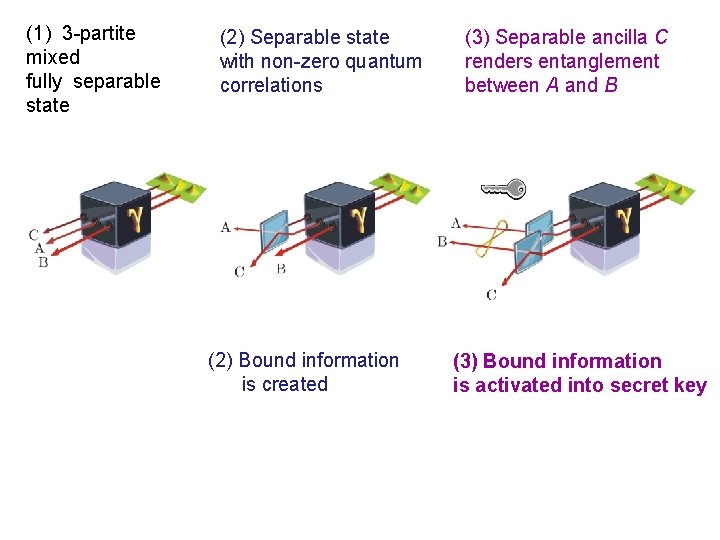
(1) 3 -partite mixed fully separable state (2) Separable state with non-zero quantum correlations (2) Bound information is created (3) Separable ancilla C renders entanglement between A and B (3) Bound information is activated into secret key
Gaussian ameliorated measurement-induced disturbance accurate measure of quantum correlations for mixed and strongly correlated states Entanglement distribution by separable ancilla C never entangled but non-zero quantum correlations Distribution of secrecy using non-secret correlations uses quantum correlations beyond entanglement Gaussian multipartite bound information can be activated into secret correlations/entanglement Quantum correlations beyond entanglement for Gaussian states Thank you!
www. st-andrews. ac. uk/~qoi Quantum Optics Quantum Information in St. Andrews Theoretical Quantum Optics group (U. Leonhardt, S. Horsley, T. Philbin, S. Sahebdivani, W. Simpson) Theoretical Quantum Information group (N. Korolkova, L. Mista*, D. Milne, R. Tatham, N. Quinn, NN – postdoc position open) Experimental Quantum Optics group (F. Koenig, S. Kehr, J. Mc. Lenaghan, S. Rohr) *- regular visitor from Olomouc
- Slides: 81