
Quantum Convolutional Coding Techniques Mark M Wilde Communication
- Slides: 23
Quantum Convolutional Coding Techniques Mark M. Wilde Communication Sciences Institute, Ming Hsieh Department of Electrical Engineering, University of Southern California, Los Angeles, California 90089
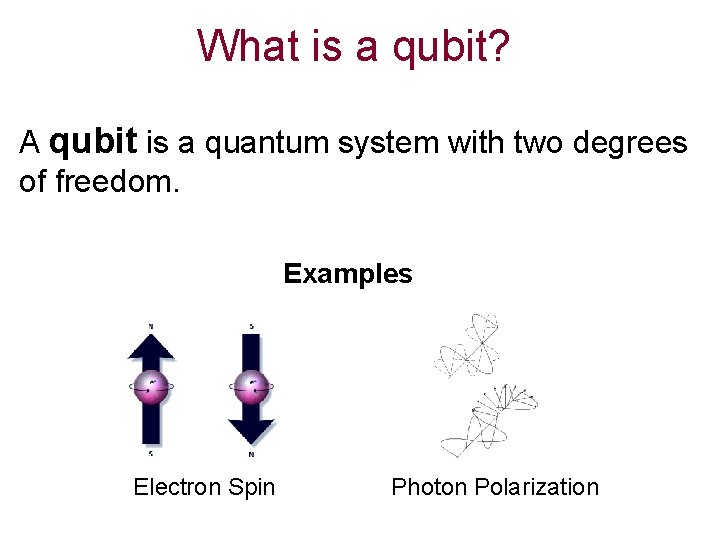
What is a qubit? A qubit is a quantum system with two degrees of freedom. Examples Electron Spin Photon Polarization
What are qubits good for? • Shor’s algorithm (1994) breaks the cryptography algorithm in polynomial time. public key • Grover’s algorithm (1997) gives a quadratic speedup for database search. • Simulation of quantum processes such as chemical reactions and molecular dynamics perhaps has the most potential.
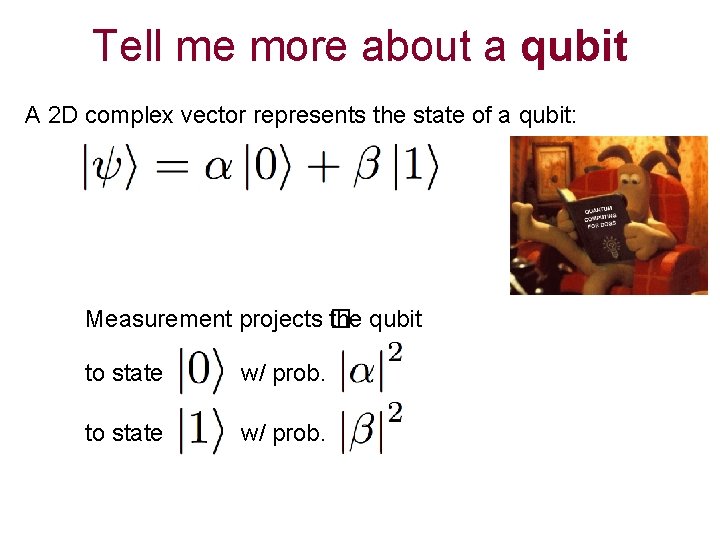
Tell me more about a qubit A 2 D complex vector represents the state of a qubit: Measurement projects � the qubit to state w/ prob.
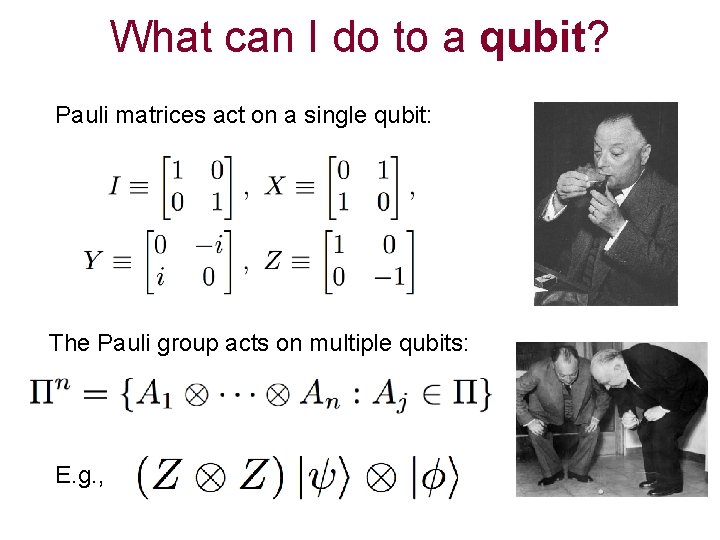
What can I do to a qubit? Pauli matrices act on a single qubit: The Pauli group acts on multiple qubits: E. g. ,
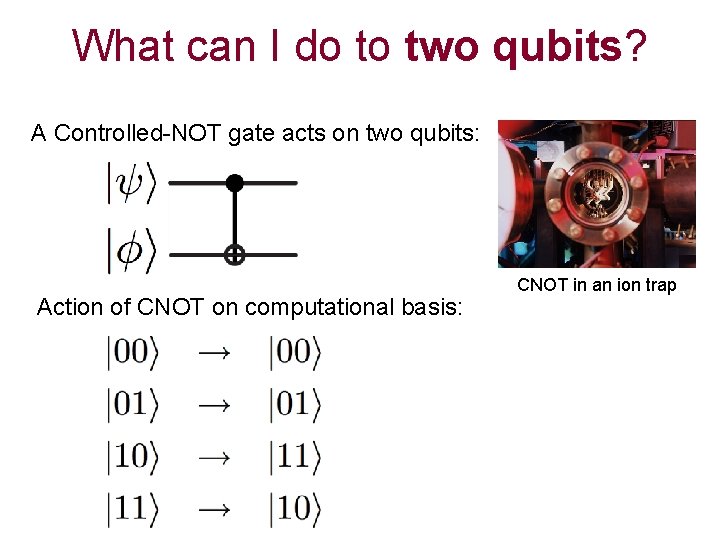
What can I do to two qubits? A Controlled-NOT gate acts on two qubits: Action of CNOT on computational basis: CNOT in an ion trap
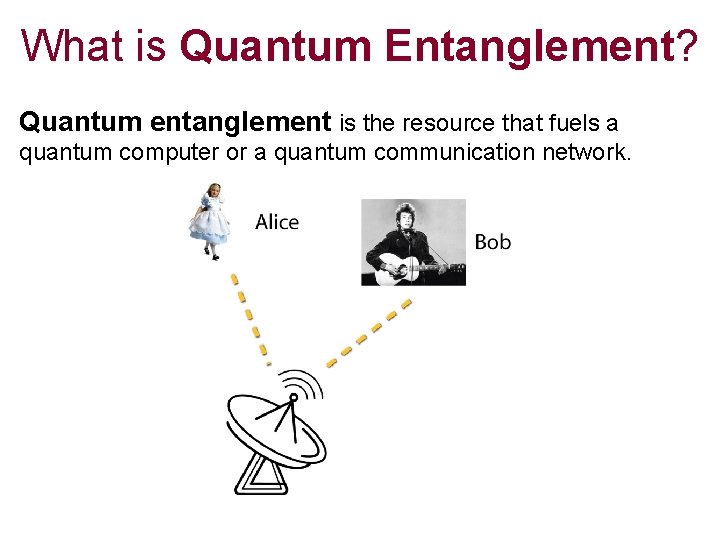
What is Quantum Entanglement? Quantum entanglement is the resource that fuels a quantum computer or a quantum communication network.
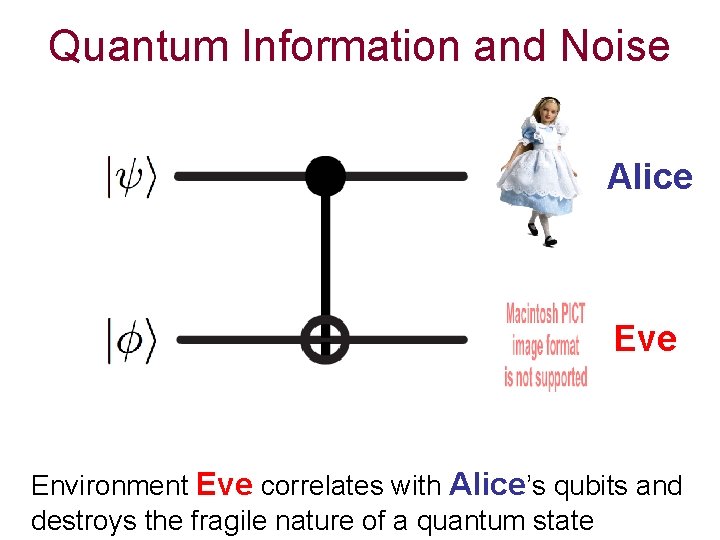
Quantum Information and Noise Alice Eve Environment Eve correlates with Alice’s qubits and destroys the fragile nature of a quantum state
Can We Correct Quantum Errors? Classical Measuring codes a quantum do learn not accumulate about state errors small by Quantum errors are continuous and No-Cloning Classical Theorem Error Correction prohibits copies general errors measuring destroys over time its bits quantum because classical errors small may build up over ittime. copying classical oferrors quantum information. toinformation. protect are discrete What BUT to todo? What BUT to do? BUT
Shor’s Solution • Use extra ancilla qubits for redundancy • Perform particular measurements that learn only about errors • Measurement projects the encoded qubits and effectively digitizes the errors. Shor, PRA 52, pp. R 2493 -R 2496 (1995).
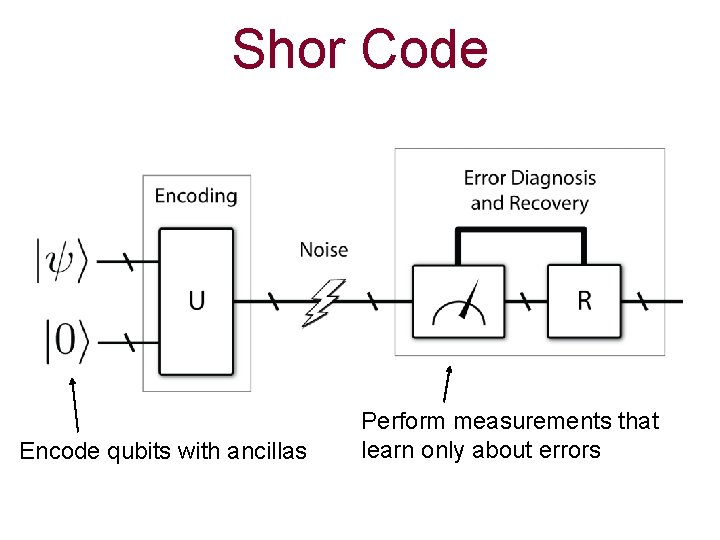
Shor Code Encode qubits with ancillas Perform measurements that learn only about errors
Our Research @ Novel forms of Quantum Error Correction Decoherence-free subspaces and subsystems (Lidar) Entanglement-assisted quantum error correction (Brun, Devetak, Hsieh) Entanglement-assisted quantum convolutional coding Convolutional entanglement distillation (Wilde, Krovi, Brun) (Wilde, Brun)
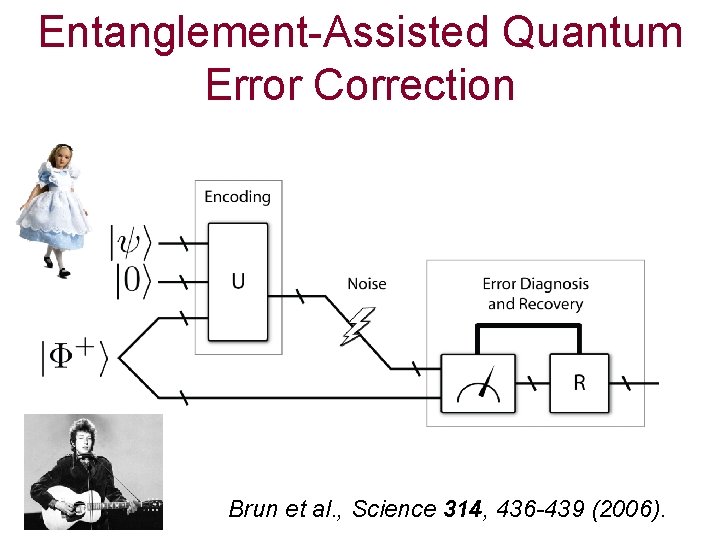
Entanglement-Assisted Quantum Error Correction Brun et al. , Science 314, 436 -439 (2006).
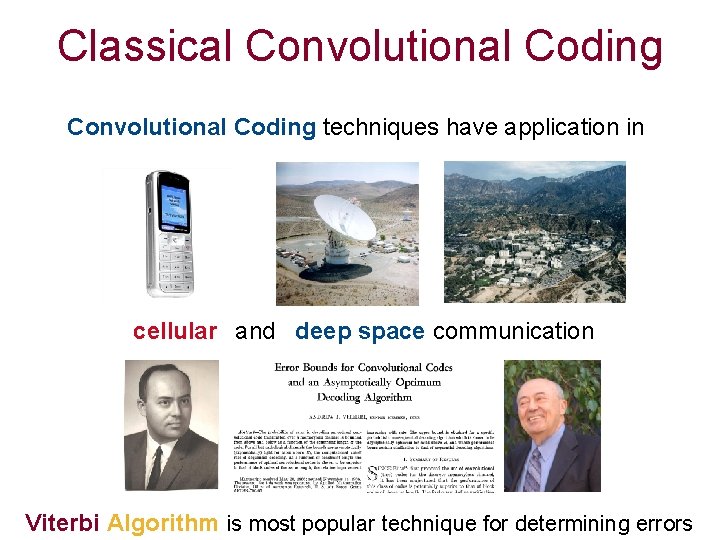
Classical Convolutional Coding techniques have application in cellular and deep space communication Viterbi Algorithm is most popular technique for determining errors
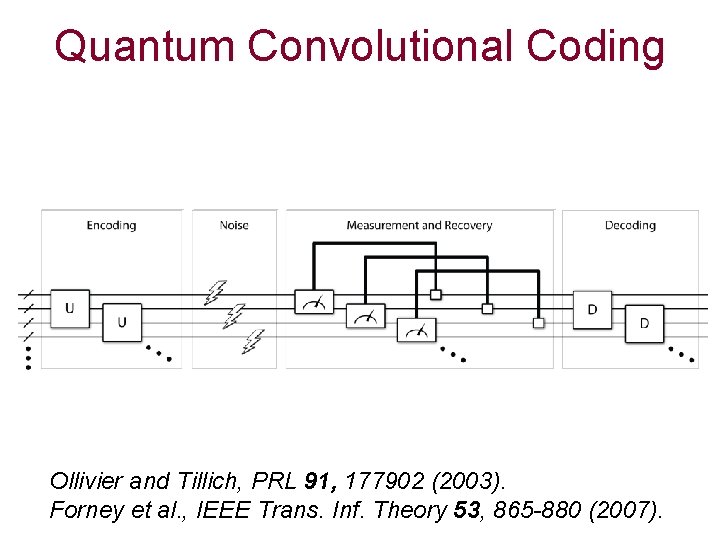
Quantum Convolutional Coding Ollivier and Tillich, PRL 91, 177902 (2003). Forney et al. , IEEE Trans. Inf. Theory 53, 865 -880 (2007).
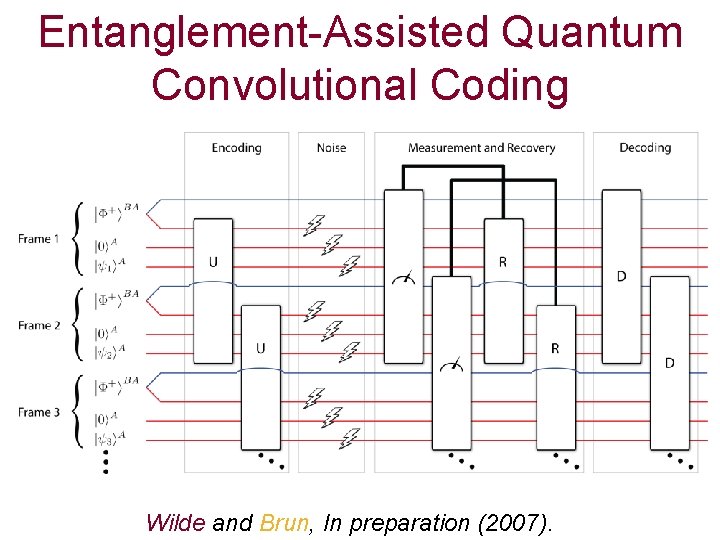
Entanglement-Assisted Quantum Convolutional Coding Wilde and Brun, In preparation (2007).
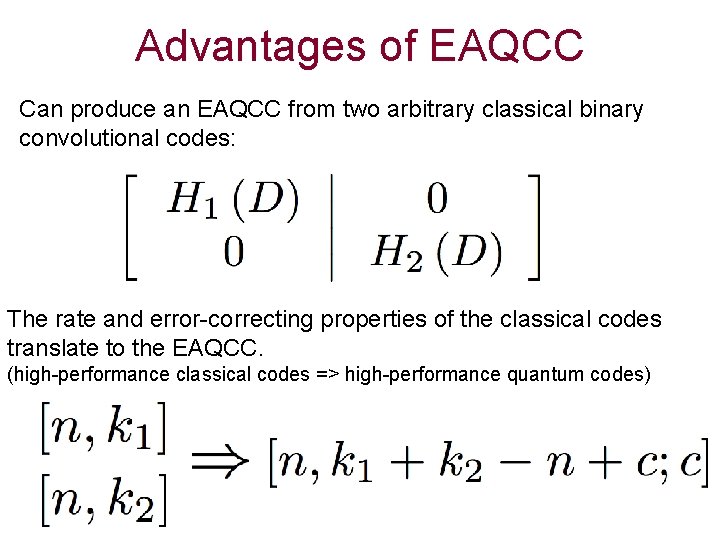
Advantages of EAQCC Can produce an EAQCC from two arbitrary classical binary convolutional codes: The rate and error-correcting properties of the classical codes translate to the EAQCC. (high-performance classical codes => high-performance quantum codes)
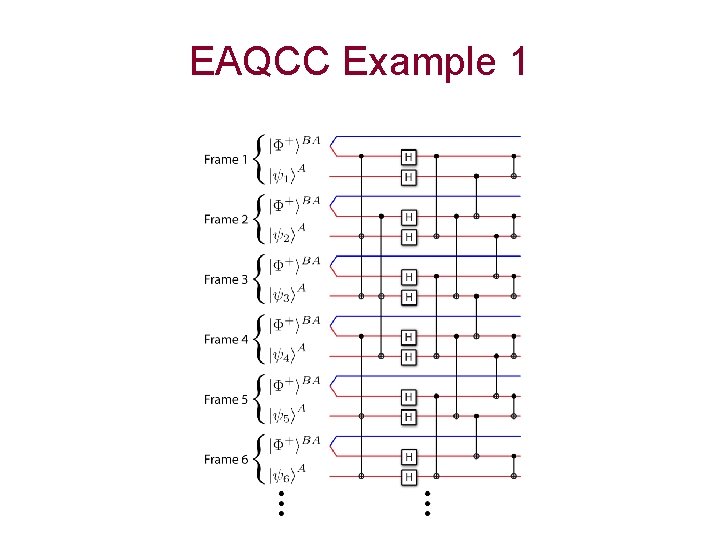
EAQCC Example 1
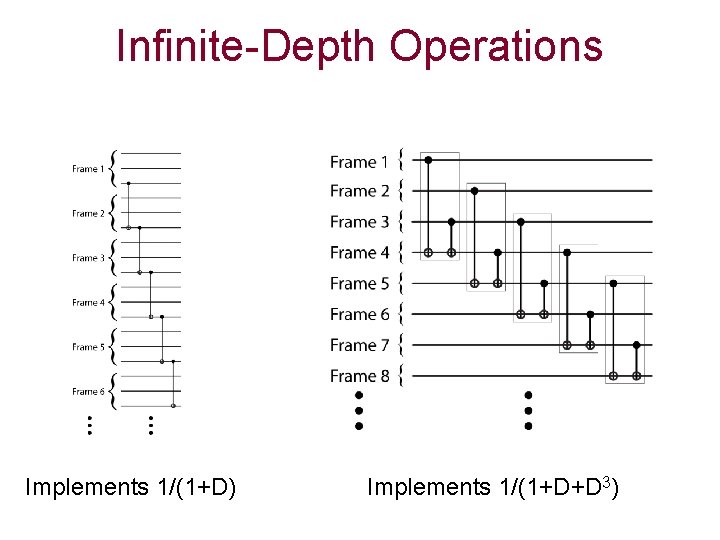
Infinite-Depth Operations Implements 1/(1+D) Implements 1/(1+D+D 3)
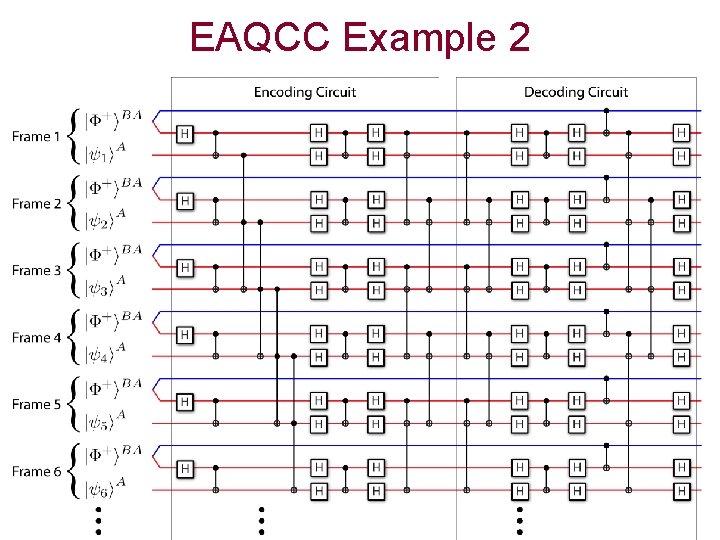
EAQCC Example 2
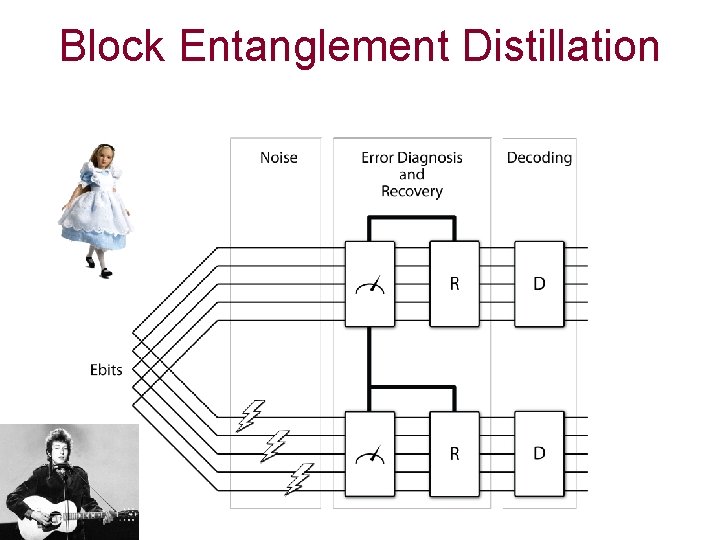
Block Entanglement Distillation
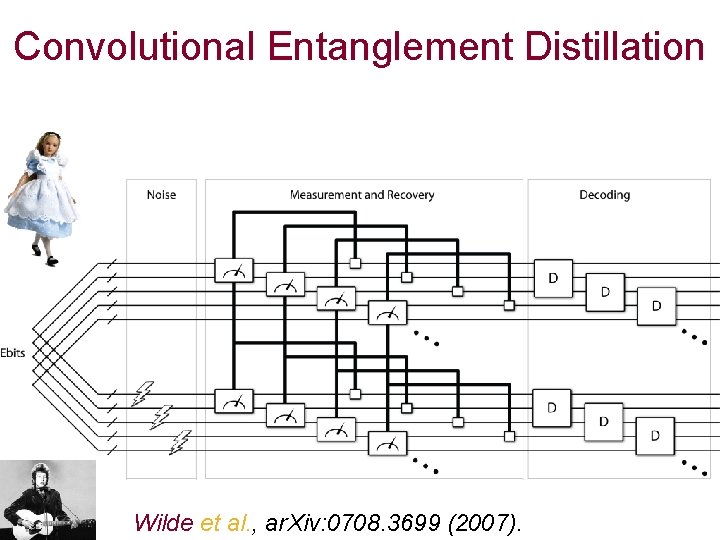
Convolutional Entanglement Distillation Wilde et al. , ar. Xiv: 0708. 3699 (2007).
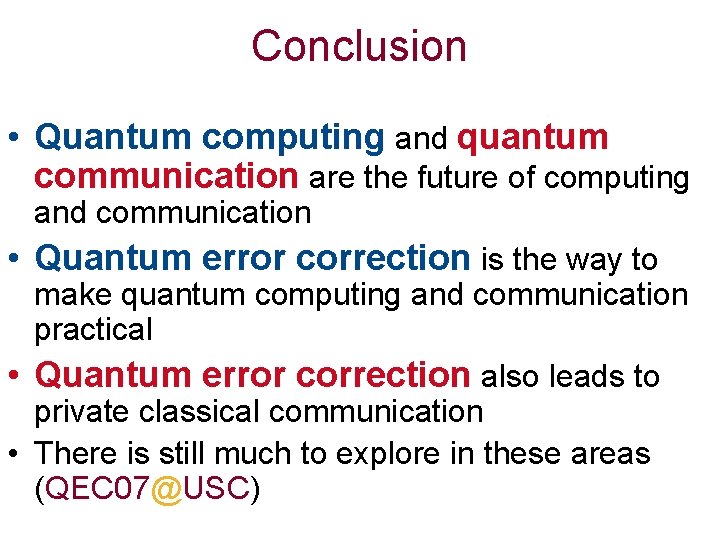
Conclusion • Quantum computing and quantum communication are the future of computing and communication • Quantum error correction is the way to make quantum computing and communication practical • Quantum error correction also leads to private classical communication • There is still much to explore in these areas (QEC 07@USC)