
Quantum Computing from theory to experiments Artur Ekert






- Slides: 31
Quantum Computing from theory to experiments Artur Ekert
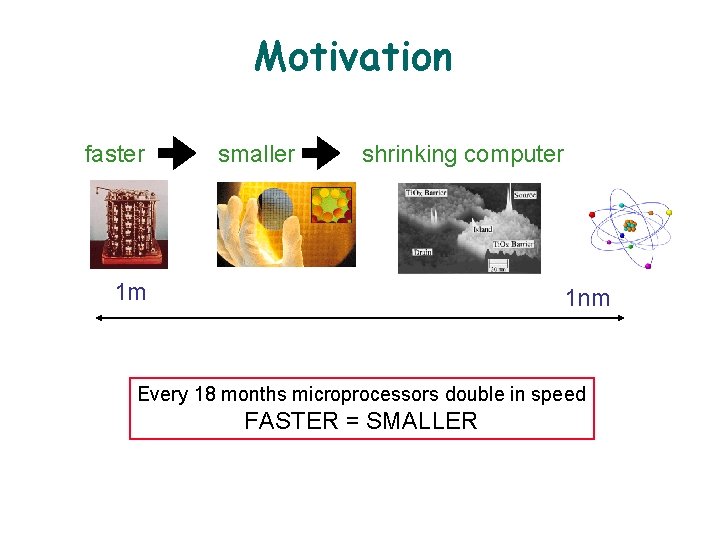
Motivation faster smaller shrinking computer 1 m 1 nm Every 18 months microprocessors double in speed FASTER = SMALLER
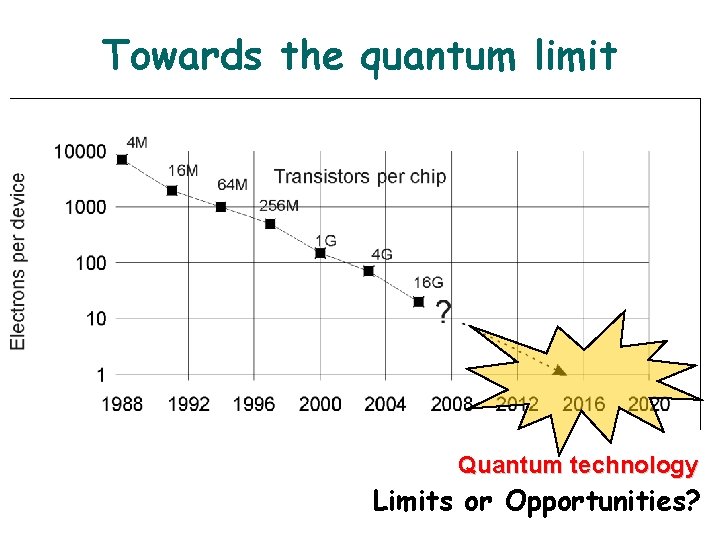
Towards the quantum limit Quantum technology Limits or Opportunities?
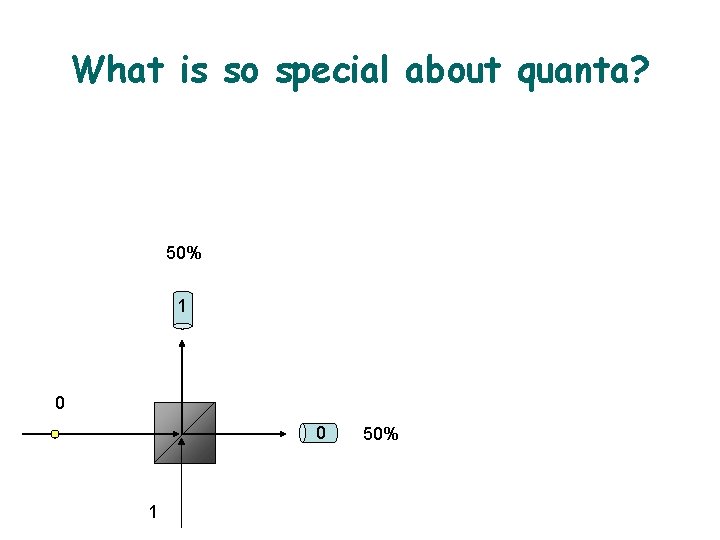
What is so special about quanta? 50% 1 0 0 1 50%
They do weird things 0 1 1 0 0 1
They defy logic 0 1 0 1 1 0 NOT
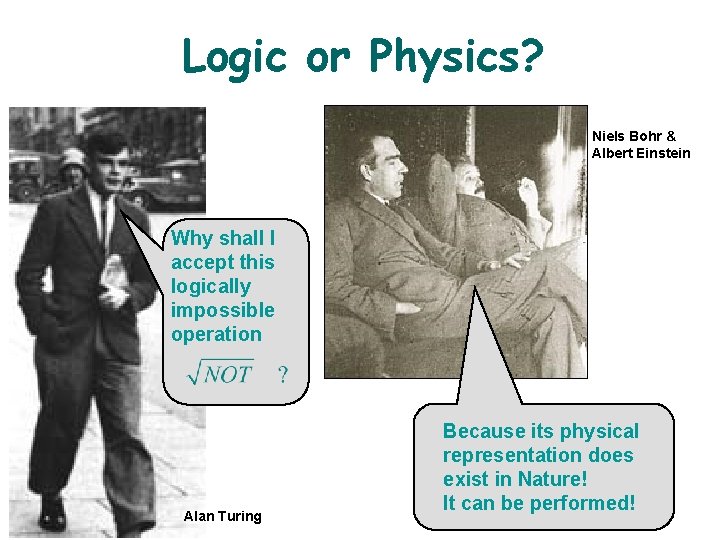
Logic or Physics? Niels Bohr & Albert Einstein Why shall I accept this logically impossible operation Alan Turing Because its physical representation does exist in Nature! It can be performed!
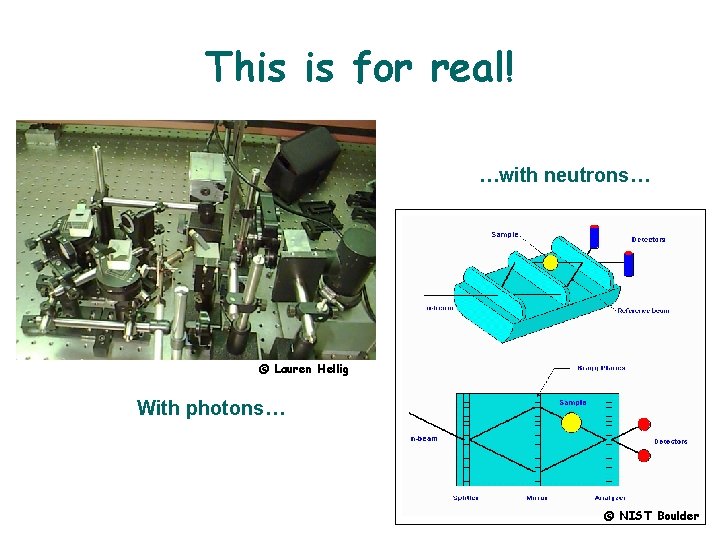
This is for real! …with neutrons… © Lauren Hellig With photons… © NIST Boulder
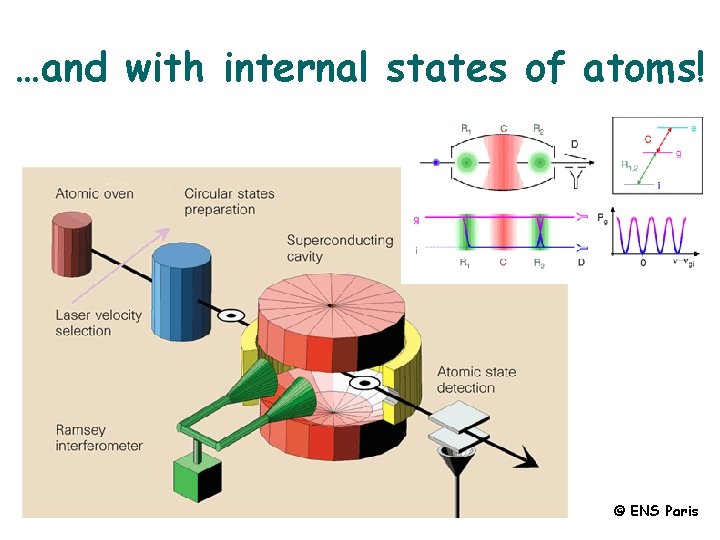
…and with internal states of atoms! © ENS Paris
Experiment © ENS Paris
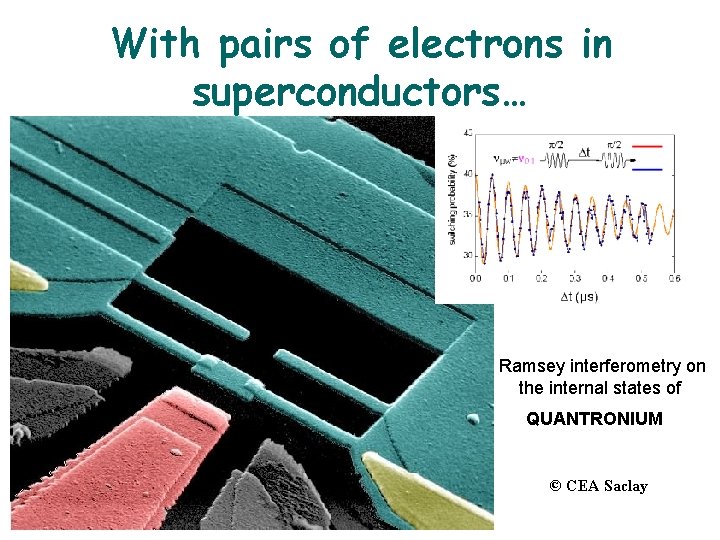
With pairs of electrons in superconductors… Ramsey interferometry on the internal states of QUANTRONIUM © CEA Saclay
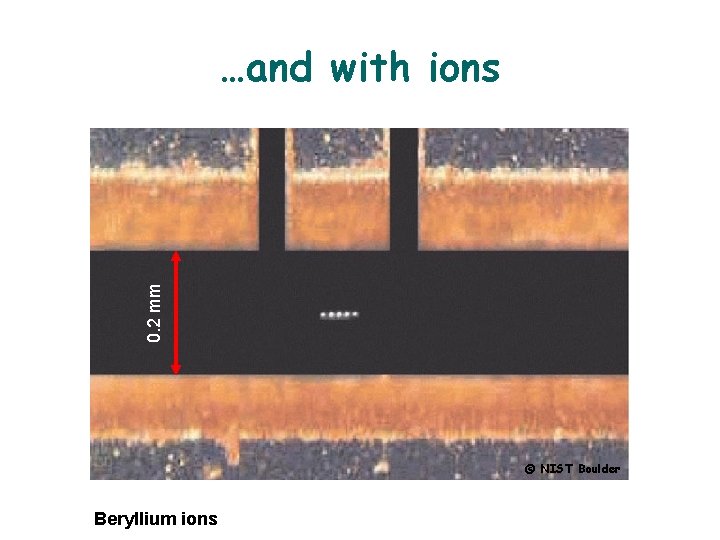
0. 2 mm …and with ions © NIST Boulder Beryllium ions
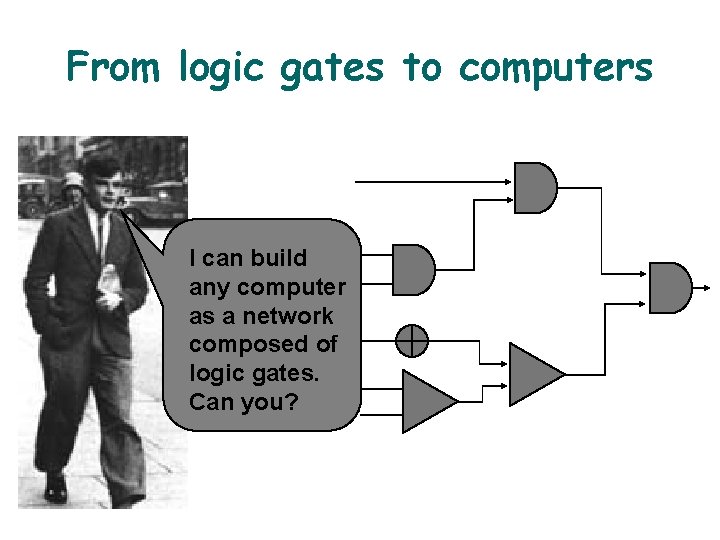
From logic gates to computers I can build any computer as a network composed of logic gates. Can you?
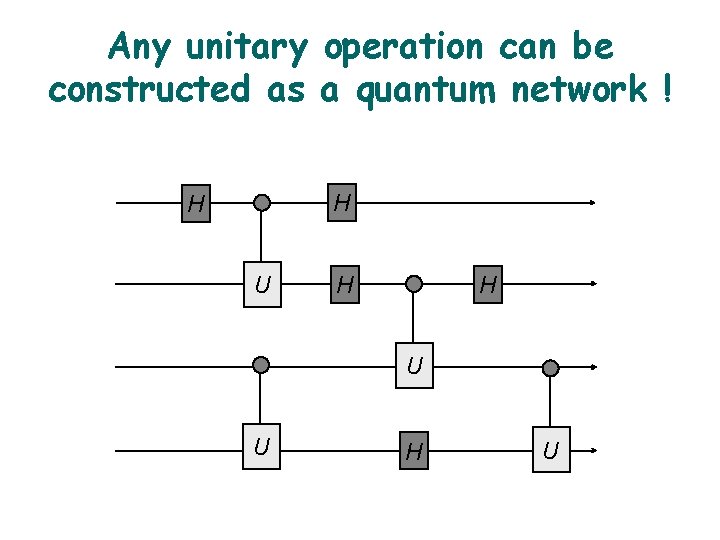
Theoretical physicist perspective Sure, we can ! H H U U H U Quantum logic gates in a network = Quantum Computer
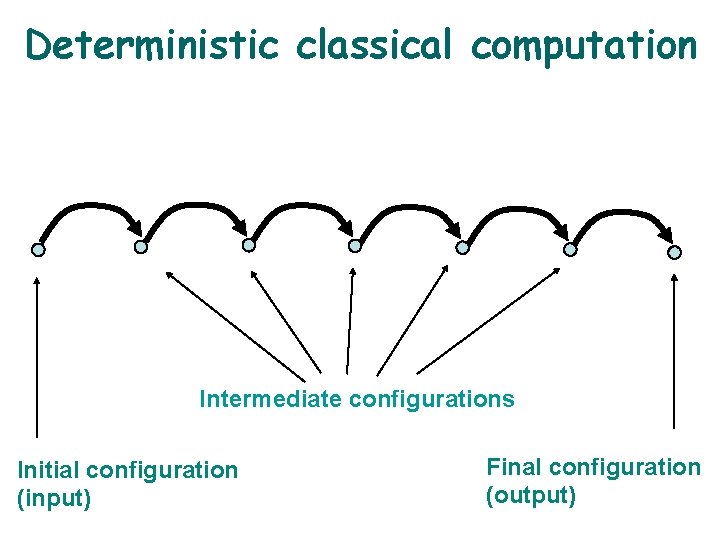
Deterministic classical computation Intermediate configurations Initial configuration (input) Final configuration (output)
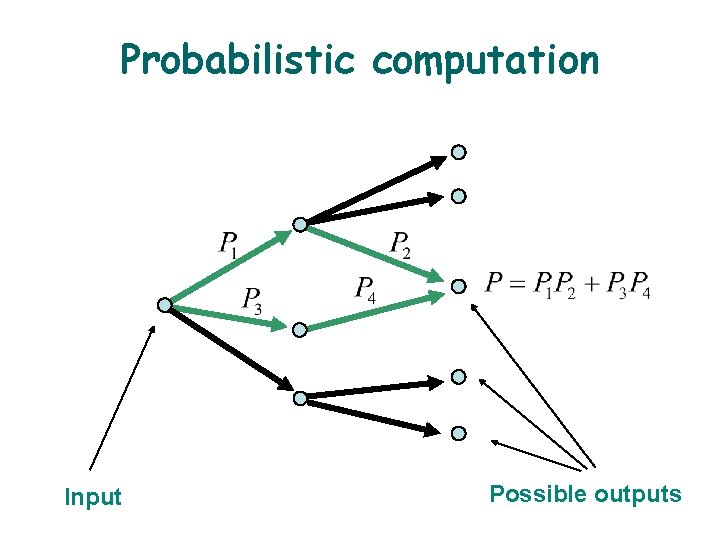
Probabilistic computation Input Possible outputs
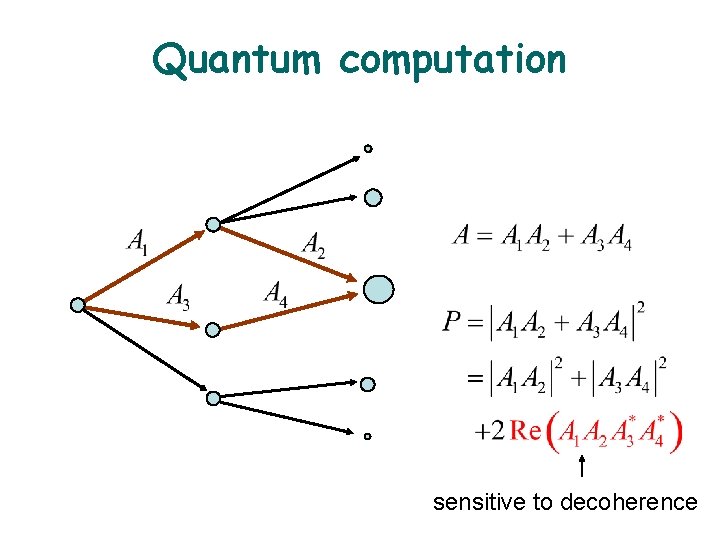
Quantum computation sensitive to decoherence
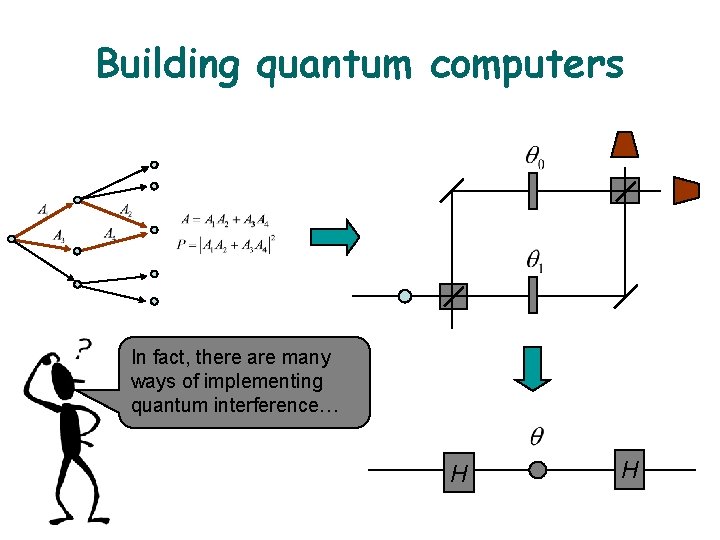
Building quantum computers In fact, there are many ways of implementing quantum interference… H H
Any unitary operation can be constructed as a quantum network ! H H U U H U
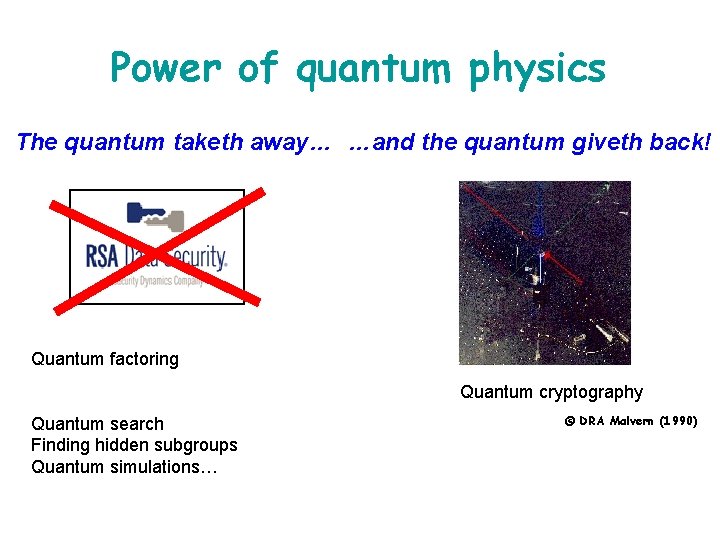
Power of quantum physics The quantum taketh away… …and the quantum giveth back! Quantum factoring Quantum cryptography Quantum search Finding hidden subgroups Quantum simulations… © DRA Malvern (1990)
Impact on Logic Traditional approach: proof = physical record Is A true or not ? Yes, A is true! Testing 10100 different possibilities in quantum superpositions Proof = physical process
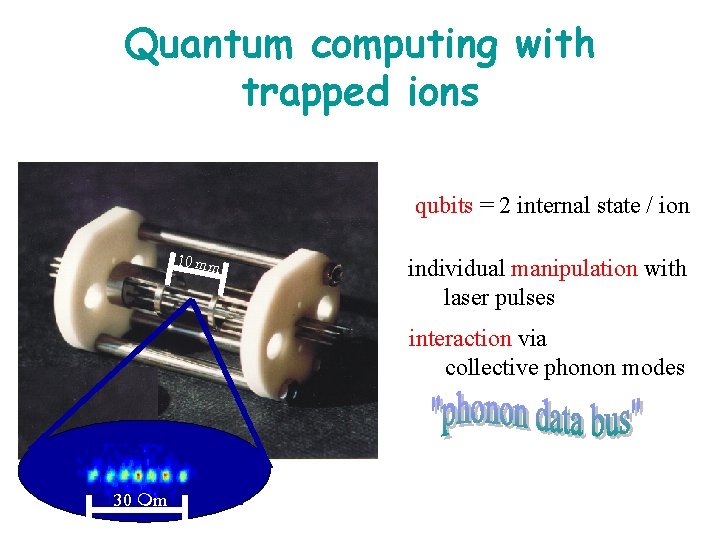
Quantum computing with trapped ions qubits = 2 internal state / ion 10 mm individual manipulation with laser pulses interaction via collective phonon modes 30 m
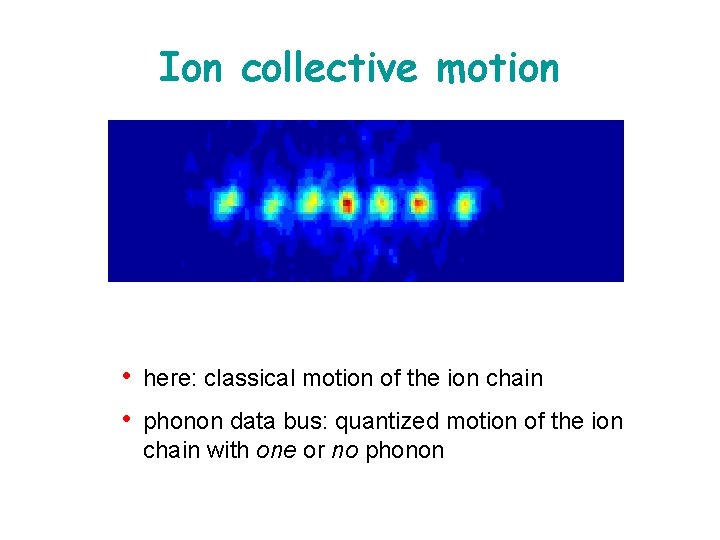
Ion collective motion • here: classical motion of the ion chain • phonon data bus: quantized motion of the ion chain with one or no phonon
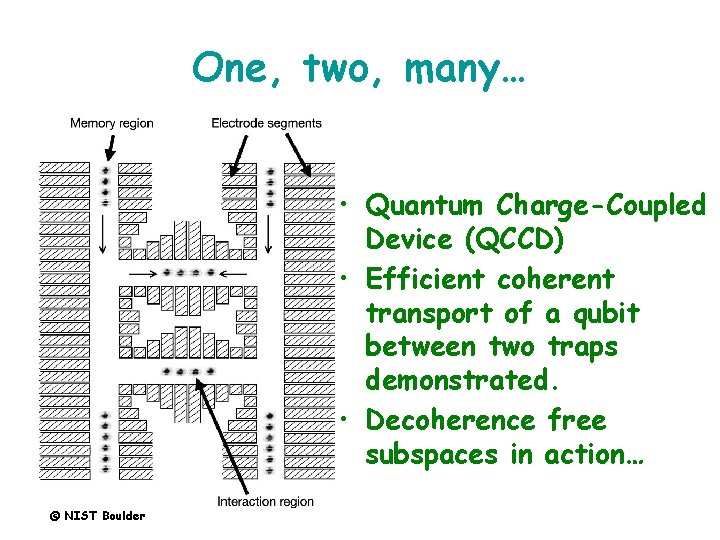
One, two, many… • Quantum Charge-Coupled Device (QCCD) • Efficient coherent transport of a qubit between two traps demonstrated. • Decoherence free subspaces in action… © NIST Boulder
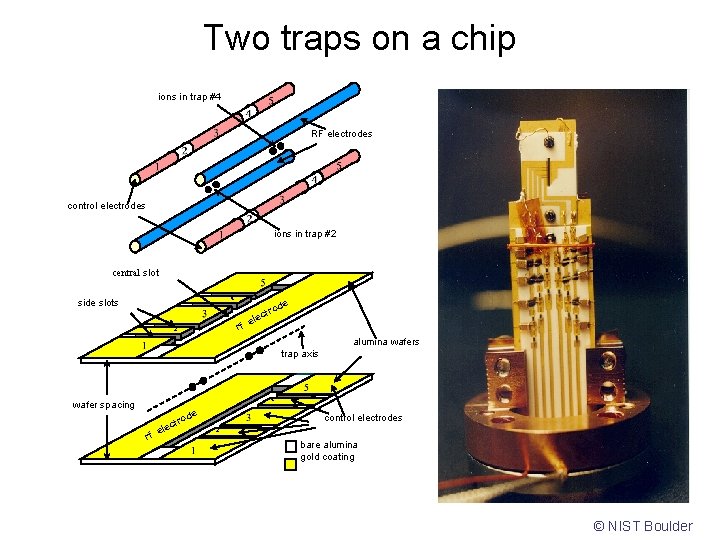
Two traps on a chip ions in trap #4 RF electrodes control electrodes ions in trap #2 central slot 4 side slots rf 2 e od tr lec e alumina wafers trap axis 4 wafer spacing tro rf c ele de control electrodes 2 bare alumina gold coating © NIST Boulder
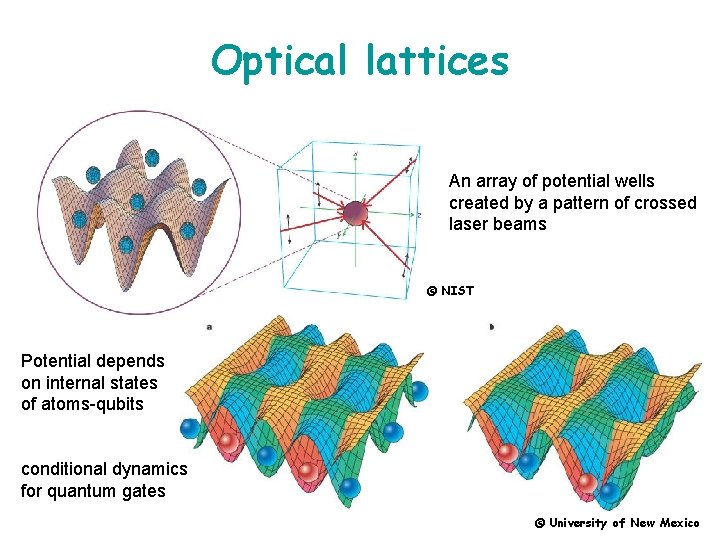
Optical lattices An array of potential wells created by a pattern of crossed laser beams © NIST Potential depends on internal states of atoms-qubits conditional dynamics for quantum gates © University of New Mexico
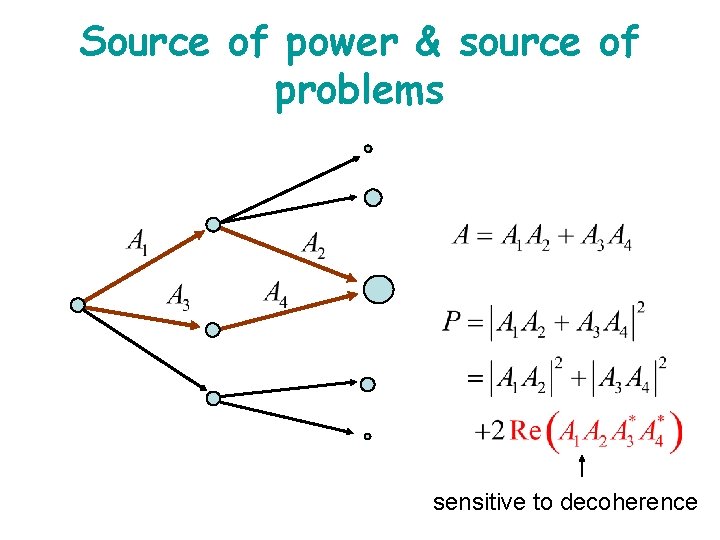
Source of power & source of problems sensitive to decoherence
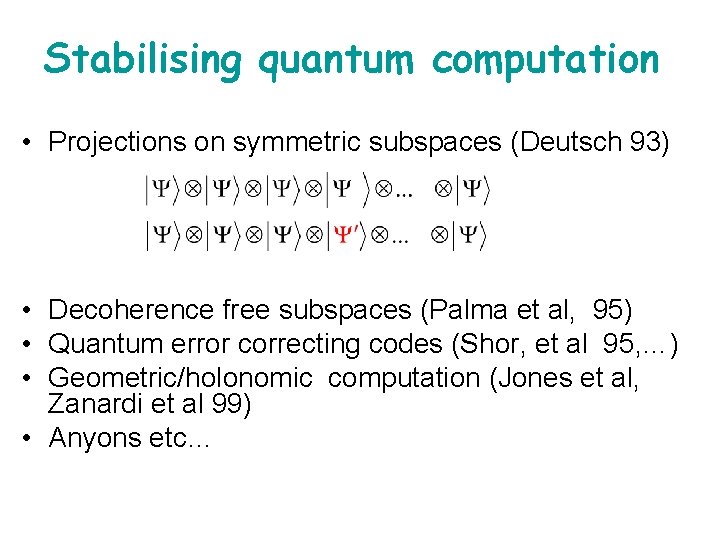
Stabilising quantum computation • Projections on symmetric subspaces (Deutsch 93) • Decoherence free subspaces (Palma et al, 95) • Quantum error correcting codes (Shor, et al 95, …) • Geometric/holonomic computation (Jones et al, Zanardi et al 99) • Anyons etc…
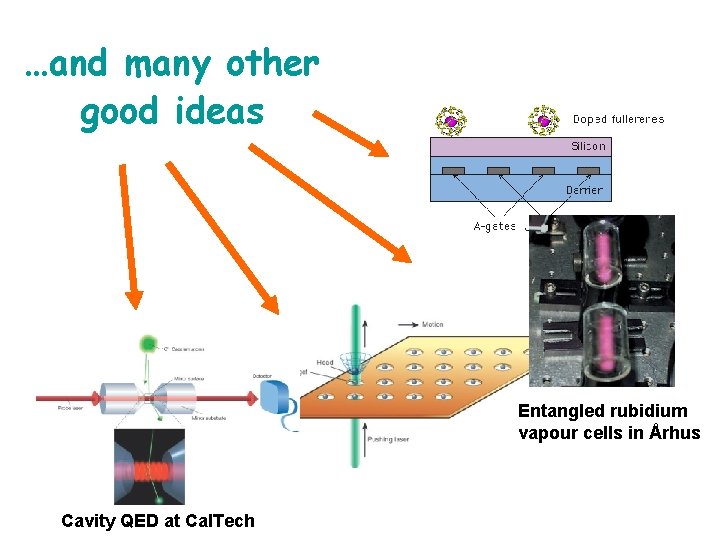
…and many other good ideas Entangled rubidium vapour cells in Århus Cavity QED at Cal. Tech
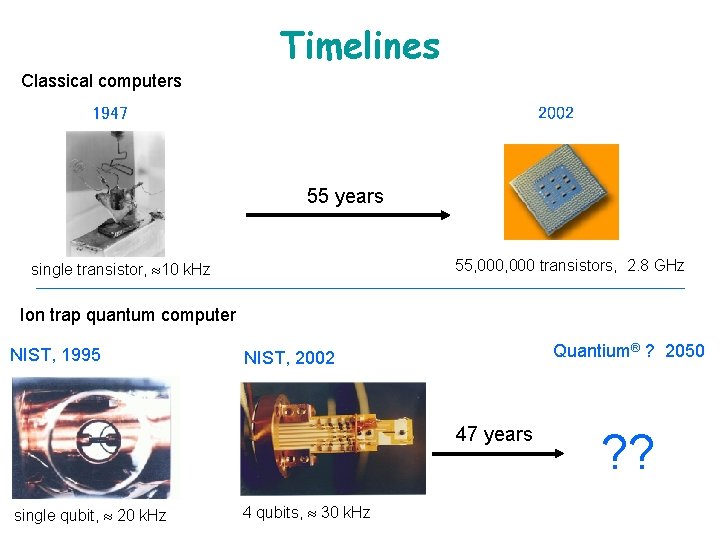
Timelines Classical computers 1947 2002 55 years 55, 000 transistors, 2. 8 GHz single transistor, 10 k. Hz Ion trap quantum computer NIST, 1995 Quantium® ? 2050 NIST, 2002 47 years single qubit, 20 k. Hz 4 qubits, 30 k. Hz ? ?
So what have we learned ?