
Quantum Chemistry Chem 108 Electron Configurations The Periodic










- Slides: 49
Quantum Chemistry Chem 108 Electron Configurations & The Periodic Table Dr. Ron Rusay
Quantum Theory Based on experimental observations of light and particles ð Developed through rigorous mathematical computations ð Bridges physics and chemistry ð Generally described as quantum mechanics aka quantum chemistry ð
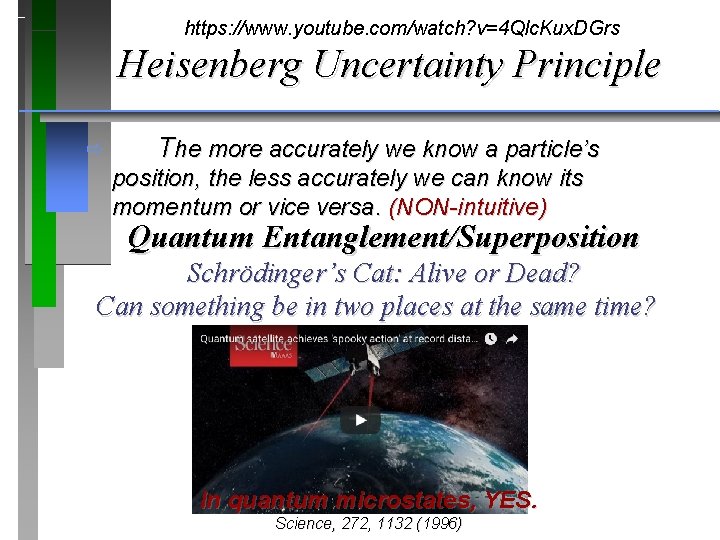
https: //www. youtube. com/watch? v=4 Qlc. Kux. DGrs Heisenberg Uncertainty Principle ð The more accurately we know a particle’s position, the less accurately we can know its momentum or vice versa. (NON-intuitive) Quantum Entanglement/Superposition Schrödinger’s Cat: Alive or Dead? Can something be in two places at the same time? In quantum microstates, YES. Science, 272, 1132 (1996)
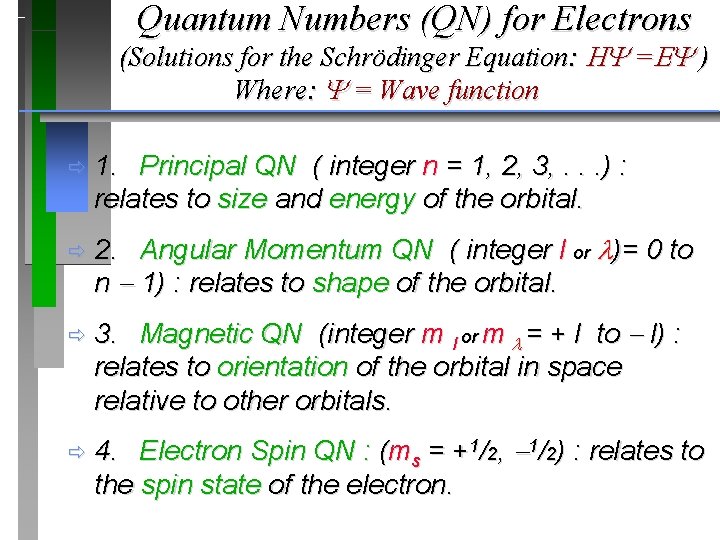
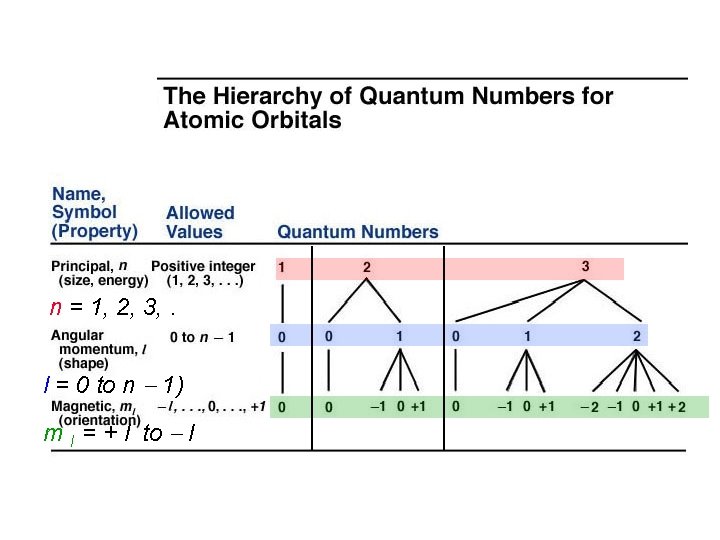
Quantum Numbers (QN) for Electrons (Solutions for the Schrödinger Equation: = ) Where: = Wave function ð 1. Principal QN ( integer n = 1, 2, 3, . . . ) : relates to size and energy of the orbital. ð 2. Angular Momentum QN ( integer l or )= 0 to n 1) : relates to shape of the orbital. ð 3. Magnetic QN (integer m l or m = + l to l) : relates to orientation of the orbital in space relative to other orbitals. ð 4. Electron Spin QN : (ms = +1/2, 1/2) : relates to the spin state of the electron.
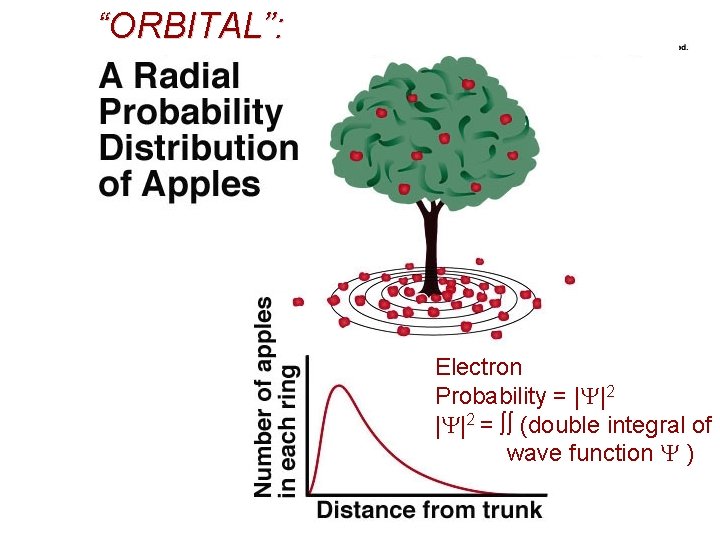
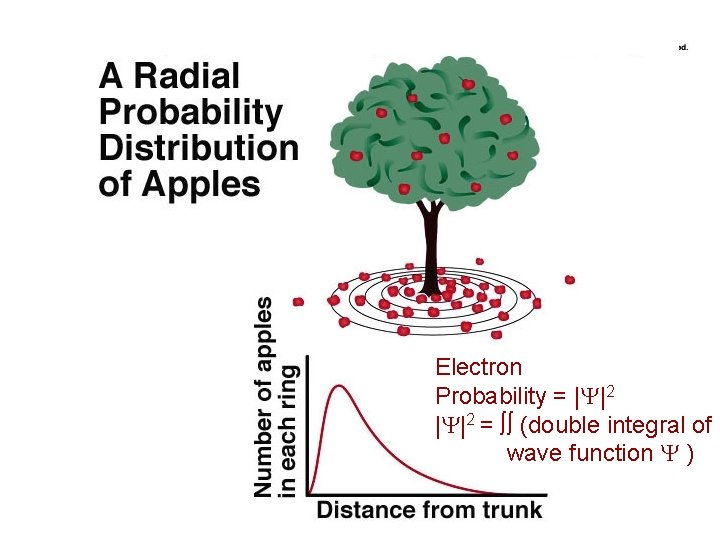
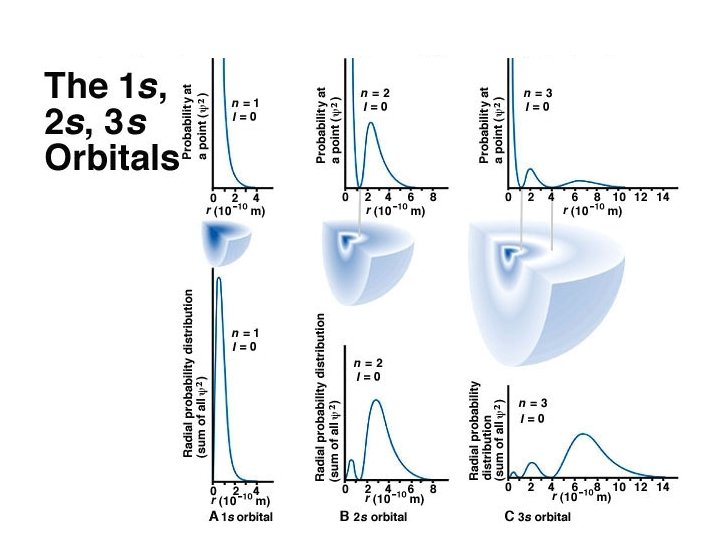
“ORBITAL”: Electron Probability = | |2 = (double integral of wave function )
n = 1, 2, 3, . l = 0 to n 1) m l = + l to l
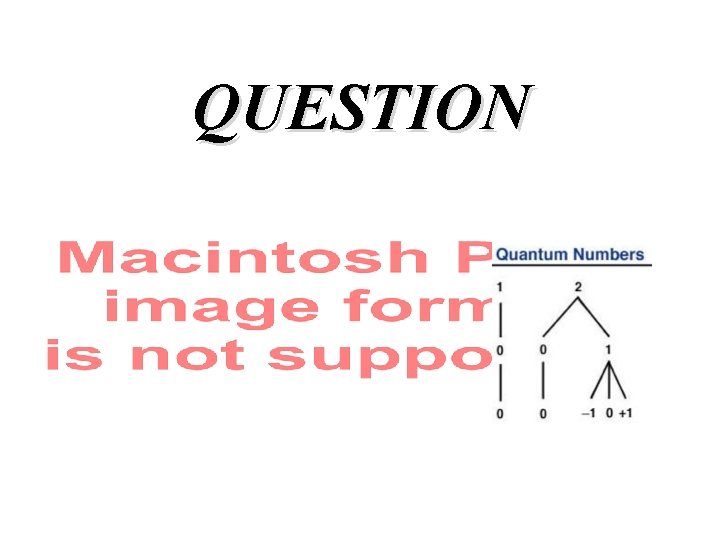
QUESTION
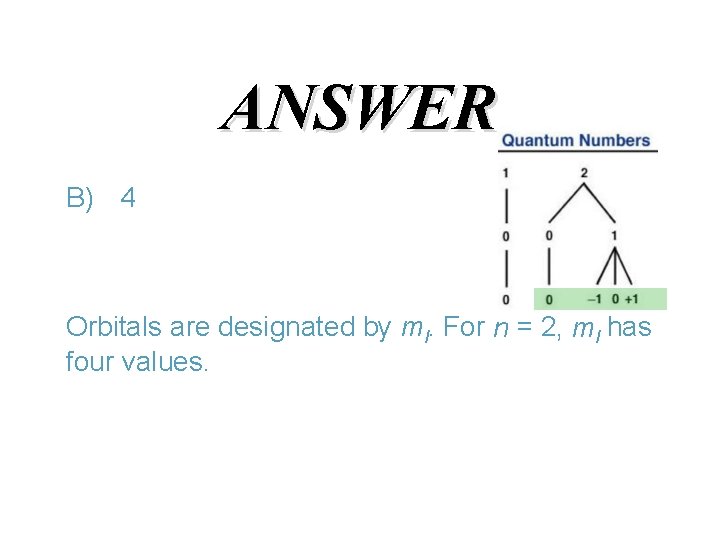
ANSWER B) 4 Orbitals are designated by ml. For n = 2, ml has four values.
QUESTION
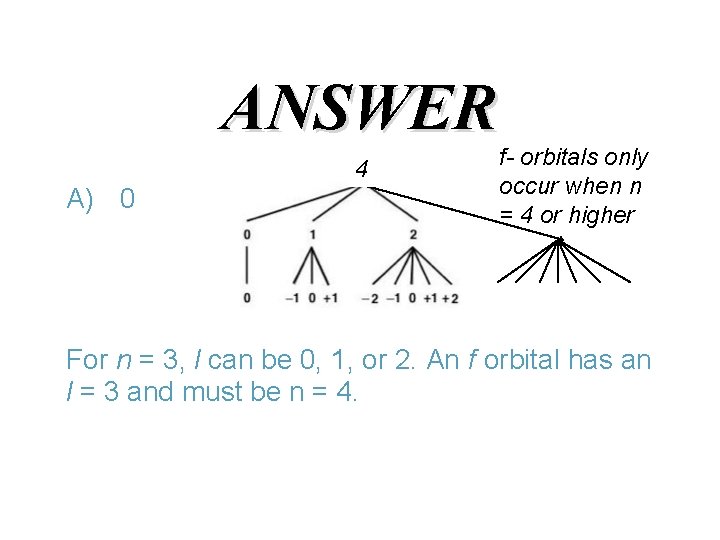
ANSWER 4 A) 0 f- orbitals only occur when n = 4 or higher For n = 3, l can be 0, 1, or 2. An f orbital has an l = 3 and must be n = 4.
QUESTION
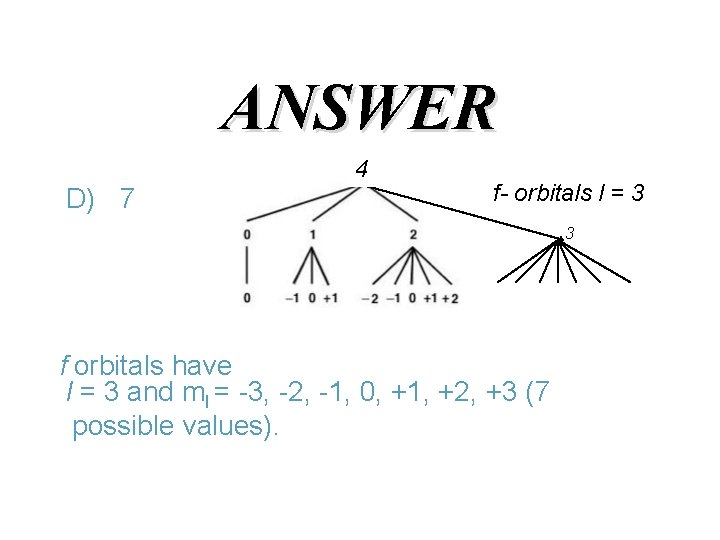
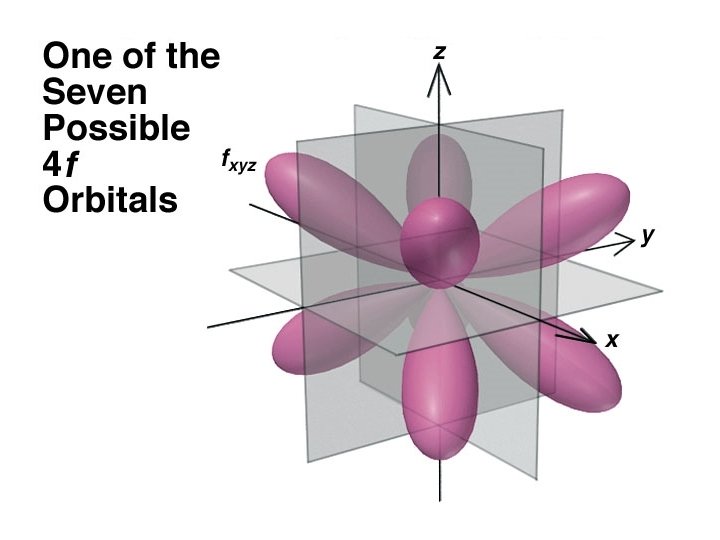
ANSWER 4 D) 7 f- orbitals l = 3 3 f orbitals have l = 3 and ml = -3, -2, -1, 0, +1, +2, +3 (7 possible values).
Quantum Numbers : l, ml Orbital Shape & Orientation
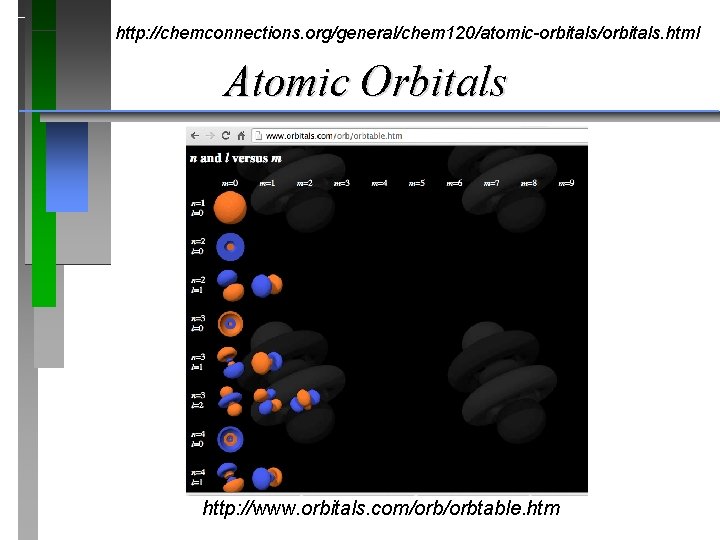
http: //chemconnections. org/general/chem 120/atomic-orbitals/orbitals. html Atomic Orbitals http: //www. orbitals. com/orbtable. htm
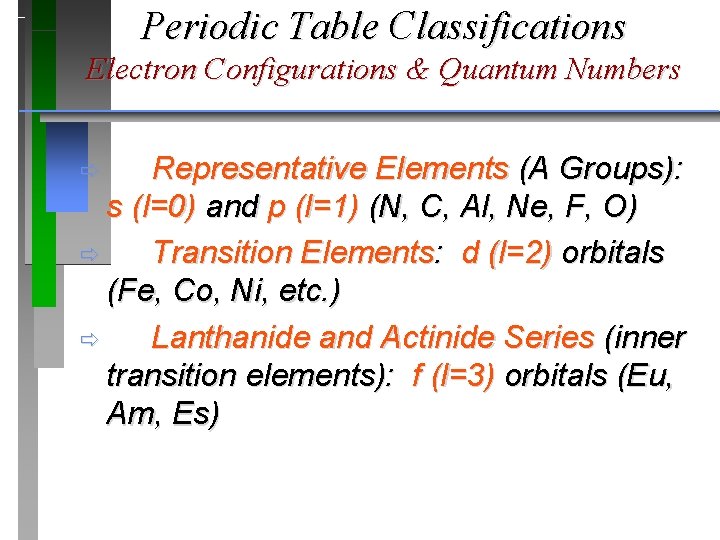
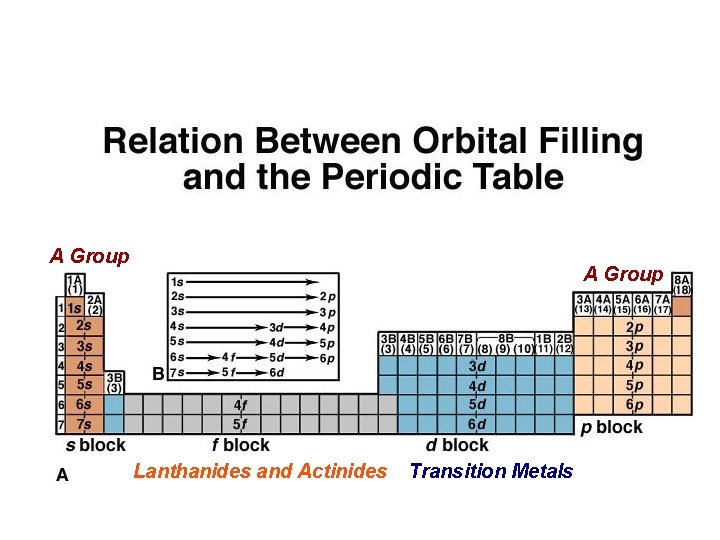
Periodic Table Classifications Electron Configurations & Quantum Numbers Representative Elements (A Groups): s (l=0) and p (l=1) (N, C, Al, Ne, F, O) ð Transition Elements: d (l=2) orbitals (Fe, Co, Ni, etc. ) ð Lanthanide and Actinide Series (inner transition elements): f (l=3) orbitals (Eu, Am, Es) ð
A Group Lanthanides and Actinides Transition Metals
Valence Electrons (A Group) Valence electrons are the outermost electrons in the highest principal quantum level of an atom. They are found in the s- and p- orbitals and are the bonding electrons. Examples: Inner electrons are called core electrons.
Valence Electrons (A Group) The A Groups’ outer s- and p- orbitals contain the bonding electrons; the A group number equals the total s- and p- electrons, which are the “valence electrons” Inner electrons are called core electrons.
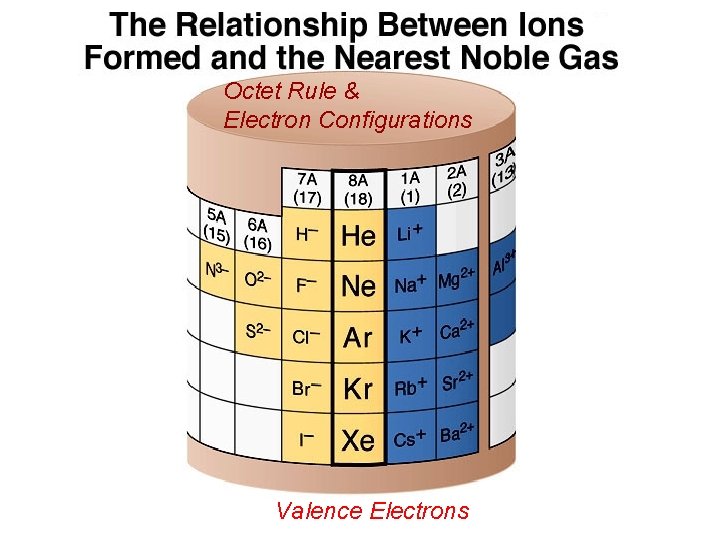
Octet Rule & Electron Configurations Valence Electrons
QUESTION
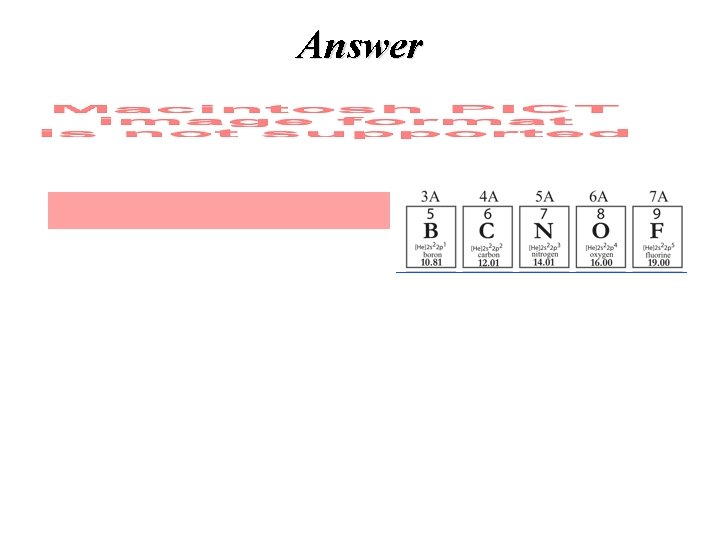
Answer
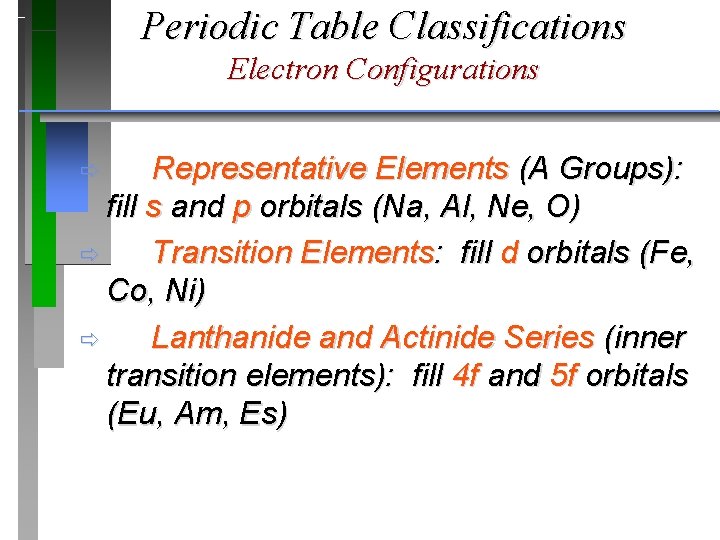
Periodic Table Classifications Electron Configurations Representative Elements (A Groups): fill s and p orbitals (Na, Al, Ne, O) ð Transition Elements: fill d orbitals (Fe, Co, Ni) ð Lanthanide and Actinide Series (inner transition elements): fill 4 f and 5 f orbitals (Eu, Am, Es) ð
Multi-electron Atoms Electron Configuration http: //chemconnections. org/general/movies/Quantum-Periodicity/electronconfig. MOV
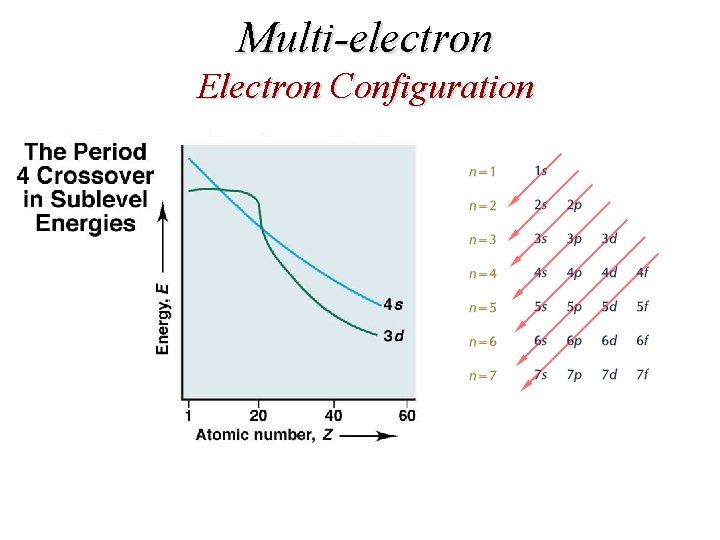
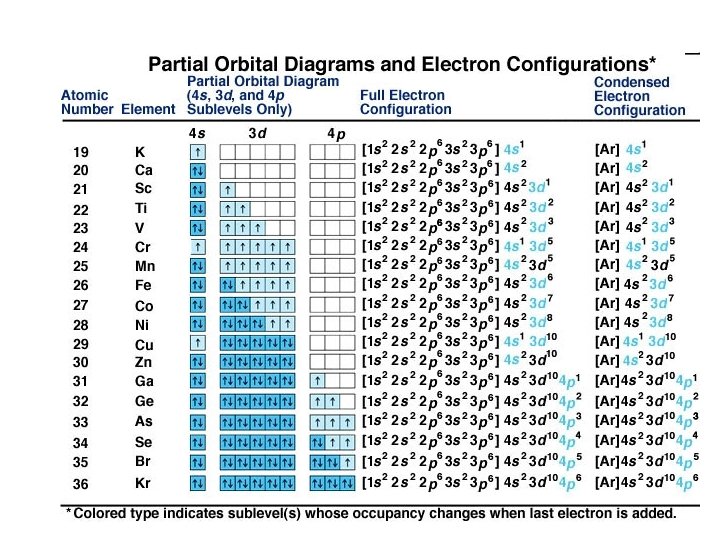
Multi-electron Electron Configuration
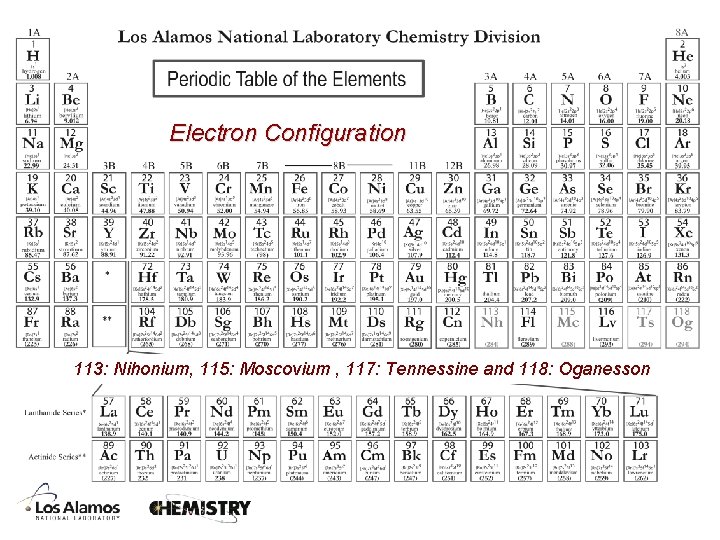
Electron Configuration 113: Nihonium, 115: Moscovium , 117: Tennessine and 118: Oganesson
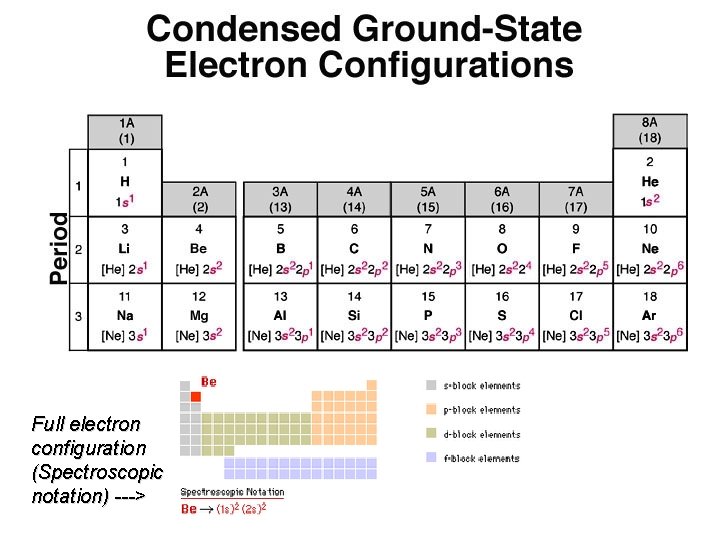
Full electron configuration (Spectroscopic notation) --->
QUESTION
ANSWER 2 B) [Xe] 6 s [Xe] denotes a shorthand version of the electron configuration for Xe. Noble-gas configurations are used to reduce writing time.
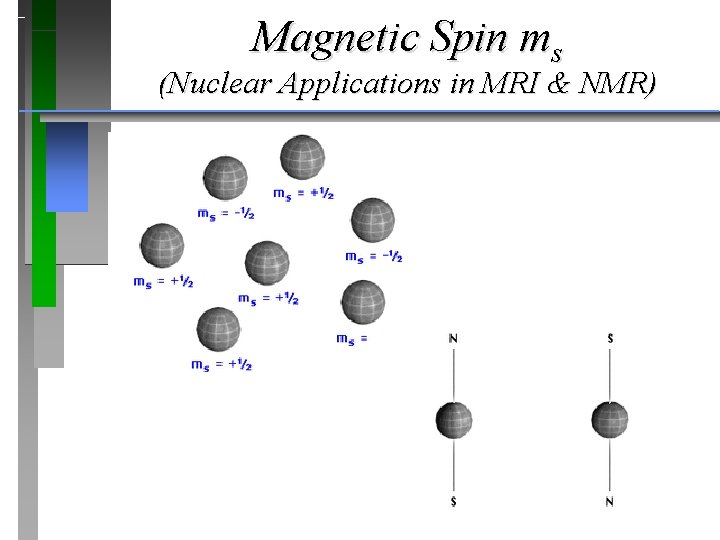
Magnetic Spin ms (Nuclear Applications in MRI & NMR)
QUESTION
Answer
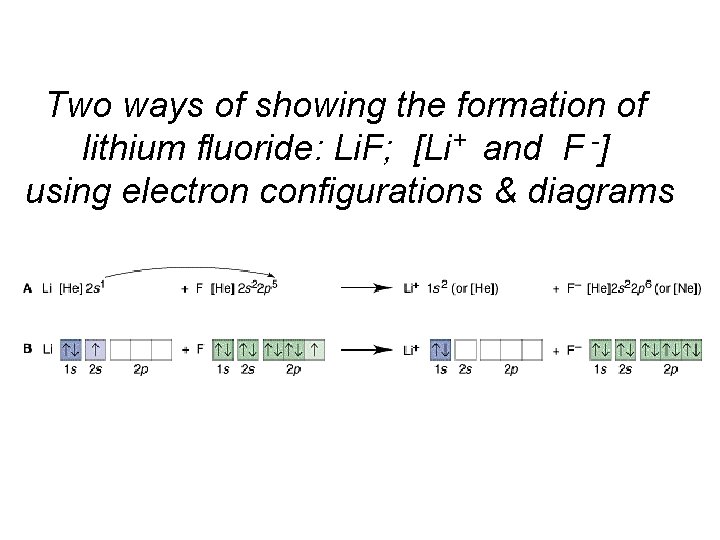
Two ways of showing the formation of lithium fluoride: Li. F; [Li+ and F -] using electron configurations & diagrams
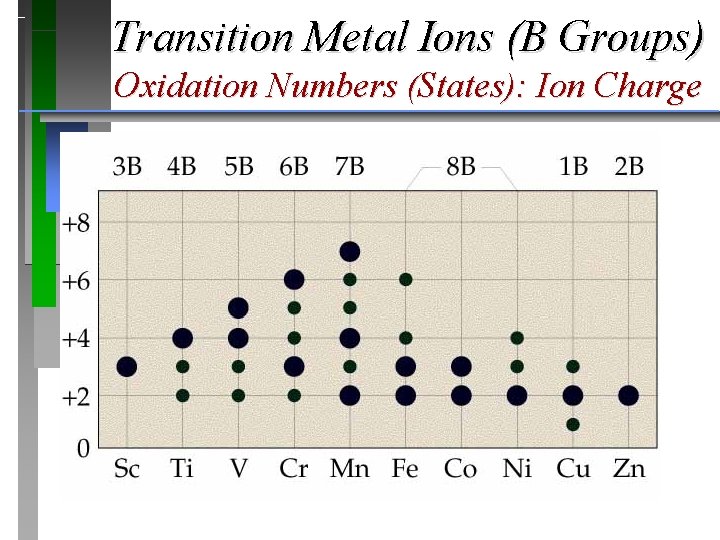
Transition Metal Ions (B Groups) Oxidation Numbers (States): Ion Charge
Summary: Information from the Periodic Table 1. Can obtain Group A valence electron configurations ð 2. Can determine individual electron configurations. ð This information can be used to: a. Predict the physical properties and general chemical behavior of the elements. ð b. Identify metals and nonmetals. ð c. Predict ions & formulas of compounds ð
Electron Probability = | |2 = (double integral of wave function )
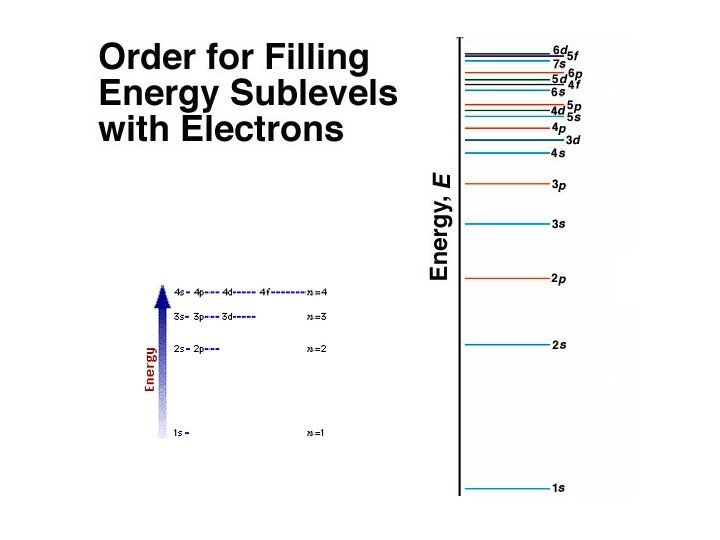
Aufbau Principle ð As protons are added one by one to the nucleus to build up the elements, electrons are similarly added to these hydrogen-like orbitals.
Pauli Exclusion Principle In a given atom, no two electrons can have the same set of four quantum numbers ( n, l, ml , ms ). ð Therefore, an orbital can hold only two electrons, and they must have opposite spins. ð
QUESTION
ANSWER C) 14 For l = 3, ml = – 3, – 2, – 1, 0, 1, 2, 3 and each of these orbitals can hold two electrons.
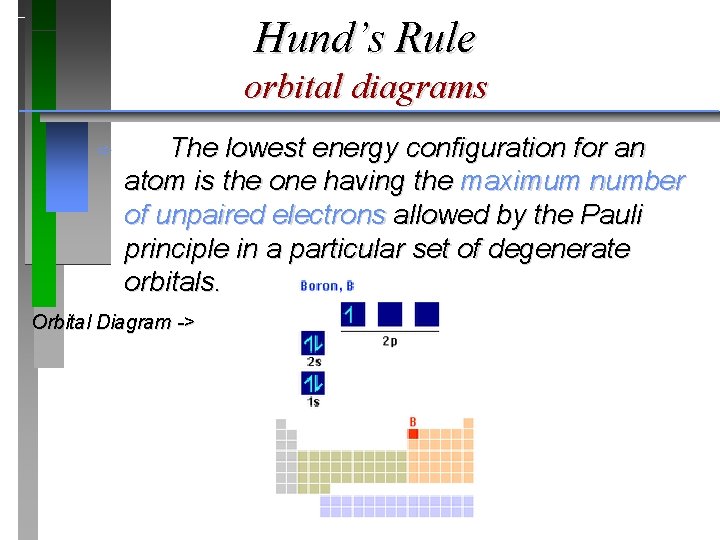
Hund’s Rule orbital diagrams ð The lowest energy configuration for an atom is the one having the maximum number of unpaired electrons allowed by the Pauli principle in a particular set of degenerate orbitals. Orbital Diagram ->